Showing posts with label Far Right. Show all posts

Friday, April 04, 2025

Where Does Religion Fit in Today’s Politics?


What do you think about religion? Does it have a place in everyday society? What about in public education or in politics? In 1962, the Supreme Court ruled in Engel vs. Vitale (370 U.S. 421), to remove mandatory prayer in public schools. On November 17, 1980, the Supreme Court ruled in Stone vs Graham that a Kentucky Statute requiring the Ten Commandments be posted in every school was a violation of the 1st Amendment.

So, here we are, having seemingly completed some cosmic cycle. Again, we’re addressing the issue religion in not just society, but in our schools and as a part of our politics. The political Far Right (aka "Christian Right" or "Christian Fundamentalists") routinely call for voting their faith, provided that faith is Christian of course. After all, they argue, America was founded as a Christian nation while others are permitted to practice their faiths out of Christian kindness.

The Left, however, have a very different opinion. They argue that religion---any religion---does not belong in the public domain, especially our school system and in particular politics. Schools should be secular. If a parents wants their child to have religion inserted in their education, there’s plenty of private and religious based schools available.

As for  politics, candidates should be chosen not on their faith, but on their actions as it pertains to the overall public good. Religion in politics runs the risk of creating a fascist theocracy little different from Iran’s.  After all, doesn’t the Constitution call for a separation of church and state? Besides, if the Founding Fathers want a national religion, wouldn’t they have made it official?

Well, to address the first things first, no, the Constitution doesn’t call for a separation of church and state. That’s a misconception. The separation between church and state, while never specifically stated in the Constitution, is implied according to a Supreme Court ruling in 1868.

The court argued that the 14th amendment (which pertains to citizenship) also requires states to guarantee fundamental rights such as the First Amendment’s against the establishment of religion. In other words, neither the federal government nor states “may make no law respecting the establishment of religion” (aka “the establishment clause”).  

In 1947, the Supreme Court again addressed the issue when Justice Hugo Black wrote on behalf of the court in the matter of Everson vs Board of Education of the Township of Ewing (330 U.S. 1:1947), “Neither a state or the Federal Government can set up a church. Neither can it pass laws which aid one religion, aid all religions, or prefer one religion over another…In the words of Thomas Jefferson, the clause against the establishment of religion by law was intended to erect a ‘wall of separation between Church and State”.

While many of the Founding Fathers where “Christian” in the broad understanding of the term, their personal religious beliefs differed from person to person, and indeed, varied greatly over their lifetime. However, the main reason was that the monarchies of Europe tended to have a formal church which, while not necessarily adhered to, must still be financial supported.

 England had the Church of England (Anglian Church). France, Poland, and Italy had the Catholic Church as did the Austro-Hungarian Empire and Bavaria in Germany while most of Northern Europe had Lutheranism. Czarist Russia was Orthodox as was much of Eastern and Southeastern Europe.

Everyone, whether a member or the official church or not, was required to pay homage since, after all, the ruling monarch was the head of the church and/or ordained by “God” under the concept of “Divine Right” or “God’s mandation” to rule.

This political and religious doctrine established the legitimacy of a kingship and asserted that a monarch was not subject to any earthly authority. In the case of Catholics, since the pope was seen as God’s vicar on earth, monarchs were subject to his dictates on religious matters (though these were occasionally ignored).  

The Founding Fathers wanted to make their new experiment in democracy a nation open to all faiths. This meant that citizens weren’t required to acknowledge any religion but theirs. It meant that under the law, all religious persuasions were equal. It didn’t forbid, for instance, religious symbols in public property. It simply meant that all religions beliefs had the same access to public property. It meant too that no particular religious dogma held priority over any other.

There have been many instances throughout our history where there was a serious concern that one or another religious sect was going to try and assert dominance over the government. For instance, the Puritans and Pilgrims, who settled in the 1600’s, intended on establishing a religious community along their particular interpretations of the bible including that of premillennialism.  William Penn acquired large tracts of land in what’s now Pennsylvania for groups like the Quakers and Mennonites to practice their faith unimpeded.   

There was the First Great Awakening of the swept through the colonies in the 1730’s and 1740’s.  It was an early forerunner of today’s fundamentalists. The Second Great Awakening (approx. 1790 – 1840), which began in Kentucky and Tennessee, expanded the concept of “revivalism”.

A Third Great Awakening, running from around 1855 to 1930, fueled the belief in a postmillennial or pretribulation world and an imminent “Second Coming”. This was a new intensity in revivalism known as “Social Gospel” which applied biblical interpretation of societal issues such as poverty, establishing orphanages, education, ending slavery, prohibition, and to so forth.

Many pietistic movements also started backing the Republican party because of its adoption of an abolitionist platform. Certain  individuals came to prominence  like Dwight Moody who started his Moody Bible Institute or William Booth who established the Salvation Army or Carrie Nation’s Temperance Movement.

 Individuals like Martin Luther King Jr., Billy Graham, Pope John Paul II, the emergence “megachurches” and televangelists like Jerry Farwell and Pat Robertson are seen as early leaders of  what some call a  “Fourth Great Awakening”.

President Ronald Reagan is credited with firmly aligning Christian fundamentalism within the Republican Party which incorporates a conservative social conformity by merging issues like pro-Life, prayer in school, home schooling, patriotism or opposition teaching a LGBQT/transgender/gay agenda in school and what they identify as "socialism" into political action and ultimately legislation.  

President Trump’s election has rekindled the fervor in the fundamentalist movement which had faded under Clinton, Obama, and Biden, which brings us to the question about what Americans in general think about mixing religion and politics. Do the two belong in the same pew?

According to a March 19, 2024 Pew Poll, 80% of Americans said that organized religion was losing its influence on society. 82% of Protestants  and Catholics agreed as did 76% of Black Protestants and 74% of Hispanic Protestants. Also in agreement were 76% of Jews  who were polled.

When asked if their religious beliefs made them feel as if they were part of a minority, only Jews and Muslims said yes with 83% and 55% respectively. However, 48% of those surveyed said their religious beliefs put them in conflict with America’s current culture. This was especially true among white evangelicals (78%) and Jews (59%).

Politically, 84% of registered Republicans and those who identified as conservative said that religion’s influence was in decline. Democrats and liberals weren’t far behind with 78% agreeing that organized religion was in decline. In looking at age groups, those 18 to 60+ years of age were all in agreement with an average of 81%.

When addressing politics and public education, 49% of adults in general didn’t think any religious group was trying to impose their religious beliefs on society. This opinion was held by 65% of Protestants and peaked with 79% of white evangelicals and 71% of Hispanic Protestants. 39% of Black Protestants disagreed.

Among Catholics, 54% also thought no particular religious group was trying to impose their faith on them. However, 76% of Jews disagreed as did 72% of the religiously unaffiliated. 85% of agnostics also said religious groups were trying to impose their beliefs on them.

When we turn to politics again, 75% of Republicans and those leaning conservative thought that other conservative Christians weren’t trying to influence them. But 72% of Democrats and those who are liberal leaning said conservative Christians were trying to impose their beliefs on them.

That opinion was also held by those 18 to 49 years of age with a clear majority believing that they were being negatively impacted by conservative Christians. It was almost the exact opposite for those 50 and up with about 55% saying no.  

So, where does that leave us? In a 2022 poll by Pew, 73% of Americans said they wanted to keep religion away from politics. However, while the Constitution prohibits using religion as a criteria to run for or hold public office, there is nothing to prevent voters from using their own religious standards in determining who to vote for or what issues to support.

Therefore, our political landscape could very well be determined based not on one’s personal religion (or lack thereof) but on that of the voters. The more religiously conservative voters who show up at the polls the more like minded individuals will likely get elected.

For some, that idea is nothing short of terror, while for others its couldn’t come soon enough. The notion itself represents just one of the many growing divides facing America. The question is whether, in this no-compromise environment, can a compromise be reached before it’s too late?


Thank you for reading "Another Opinion", the Op/Ed blog page for the "militant middle".  Here at "A/O" we truly value our readers. At A/O we seek the facts as they exist, not partisan talking points.  We hope you find our articles informative and engaging. Comments are welcome, provided they are not vulgar, insulting or demeaning.  Another Opinion is offered without charge and is directed toward all independent and free-thinking individuals. We ask, however, that you "like" us on whatever platform you found us on in order to keep our articles available for free to others. Lastly, in order to keep costs down, we depend on passive marketing, and therefore, depend on our readers to please forward our posts along. Below you will find links to the sources we used in writing this article. Thank you. 


What is Separation of Church and State?


BRIA 13 4 a separating Church and State


Everson v. Board of Education


Justia: Everson v. Board of Education, 330 U.S. 1 (1947)


Divine right of kings


Americans Have Positive Views About Religions Role inSociety But Want It Out of Politics


First Great Awakening


Religions Role in Public Life


Christian Right


Religion in Politics


Saturday, May 11, 2024

Has America's Republic Faded Away?


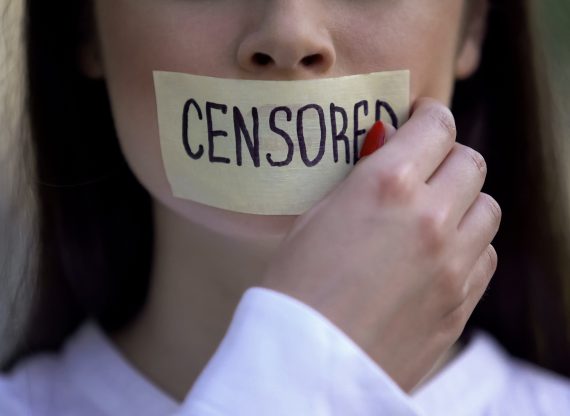
As most everyone knows, much of our freedoms are actively under attack these days, especially our freedom of speech and expression. Ironically, most of those doing the attacking are individuals and groups who publicly claim to be "protecting" those very same freedoms. (it reminds me of when the police haul you in for "protective custody" when typically they are the ones you need protection from!).

 Nevertheless, apparently the freedom of speech or expression these groups and individuals are actually interested in is protecting theirs while the rest of us face censorship, which include gag warnings  for violating their "community standards" (which means they can say or imply what they want, but you can't even post the truth), suspension, being blocked, or wind up on some "government list".  

It's almost "as if" speaking out or having a different opinion is now somehow "un-American". It kind of reminds me of the McCarty Era when everyone was afraid of being accused of being a "Red" (that is, a communist). Thousands of lives, mostly innocent, were ruined by the atmosphere created by that U.S. Senator from Wisconsin who, albeit misguidedly, thought he was doing America a great service.  

Many will tell you that today's censorship is coming from the Left this time, which is true, at least to a point. Most of the groups and individuals (particularly those on college campuses) tend to lean not just Left, but Far Left, the money behind them and organization it takes doesn't come from Left wing organizations.

Instead, much of the money, especially the big money, comes from shell corporations created under such civic sounding euphemisms as "Society for Intellectual Enlightenment, the "so and so" foundation, and so on.  These philanthropic organizations are often fronts for very powerful Wall Street corporations and extremely rich individuals and families.

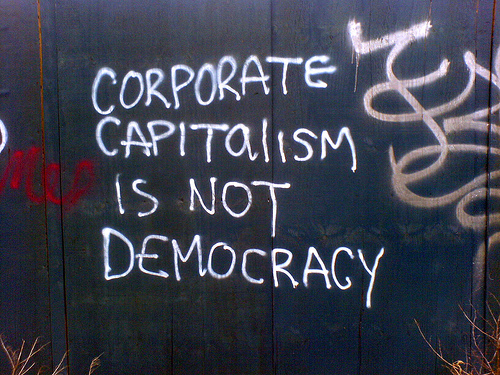
Ironically, this is the opposite of what most of us would expect. After all, the majority of these people are highly conservative and corporations only active out of self interest. So what gives? Well, America is no longer a Republic. It's a neo-fascist corporatocracy, not to mention a surveillance state.  Being fascist is typically thought of as being Far Right Wing, which to an extent it is.

However, fascism, especially the American version, isn't what we'd expect it to be. Fascism, historically speaking, involved close cooperation between the state and Big Business with the state often serving as the "senior partner". In fact, the so called "founder" of modern fascism, Italian dictator Benito Mussolini once said the fascism should more properly be called "Corporatism", which reflects its true character.

As a quick aside, claims of "socialism" or "Communism", which you often see online promoting some group or cause, are false. First off, fascism is different from most ideologies in that it borrows from both sides of the political spectrum, depending on the history and traditions of a given country (it should be noted that a theocracy, while a rule under some form of religion such as in medieval Europe or modern Iran, are considered fascist as well).

That's why the fascism of Italy differed from that of Germany, which differed from that of Spain or Argentina, Hungary or Romania. Typically fascists will adopt or kept some aspect of the Left in order to keep the people pacified. The more content the people are (at least in the beginning), the easier it is to consolidate control.

Secondly, under Communism, there is no independent ownership of private property. The government owns literally everything. That includes your home, the bank or grocery store down the corner. There would be no Wall Street. The company you work for would be owned by the state and you would be assigned where to work by the state.  

Under "socialism", the masses own and control everything. It would be a nation of worker owned  businesses, worker based committees, co-ops, credit unions, etc.  I'm sure you get the picture. As an aside, it bears mentioning that there has never been an actual "socialist" nation despite several countries calling themselves "socialist". It's like North Korea  or East Germany calling themselves a "democratic republic" or China proclaiming that it's a "People's Republic. The only things Communism has in common with fascism are that both are totalitarian forms of government and neither are big on freedom.

Modern fascism differs in that Big Business is the senior partner. It greatly influences legislation through aggressive lobbying, underwriting political campaigns and funding "leadership PACS" (which some consider to be a form of indirect bribery), run their own independent campaigns in the form of mailings and media spots through benign sounding non-profit shell political action committees (PACs). They often work to help head off or defeat any challengers. In exchange, all the politician has to do is play along, which can be extremely profitable privately.

Big Business, through its PACs and lobbyists, work to dilute or kill  any pending bills which could affect their ability to operate without government interference (at least of consequence) or impacts their bottom line (you didn't think those "loopholes" in all those laws were accidental did you?).

In fact, most people don't realize that corporate lobbyists either write or help write legislation and work to get it through the various committees and ultimately passed into law.   In addition, Big Business quietly works to undo previous laws which were aimed at protecting employees, especially those pertaining to organized labor.

Some freedoms will disappear rather quickly under the pretext of "national security" and often with the assurance by the government of being "temporary".  You know, it's funny how  permanent "temporary" can become if the public isn't paying attention.   

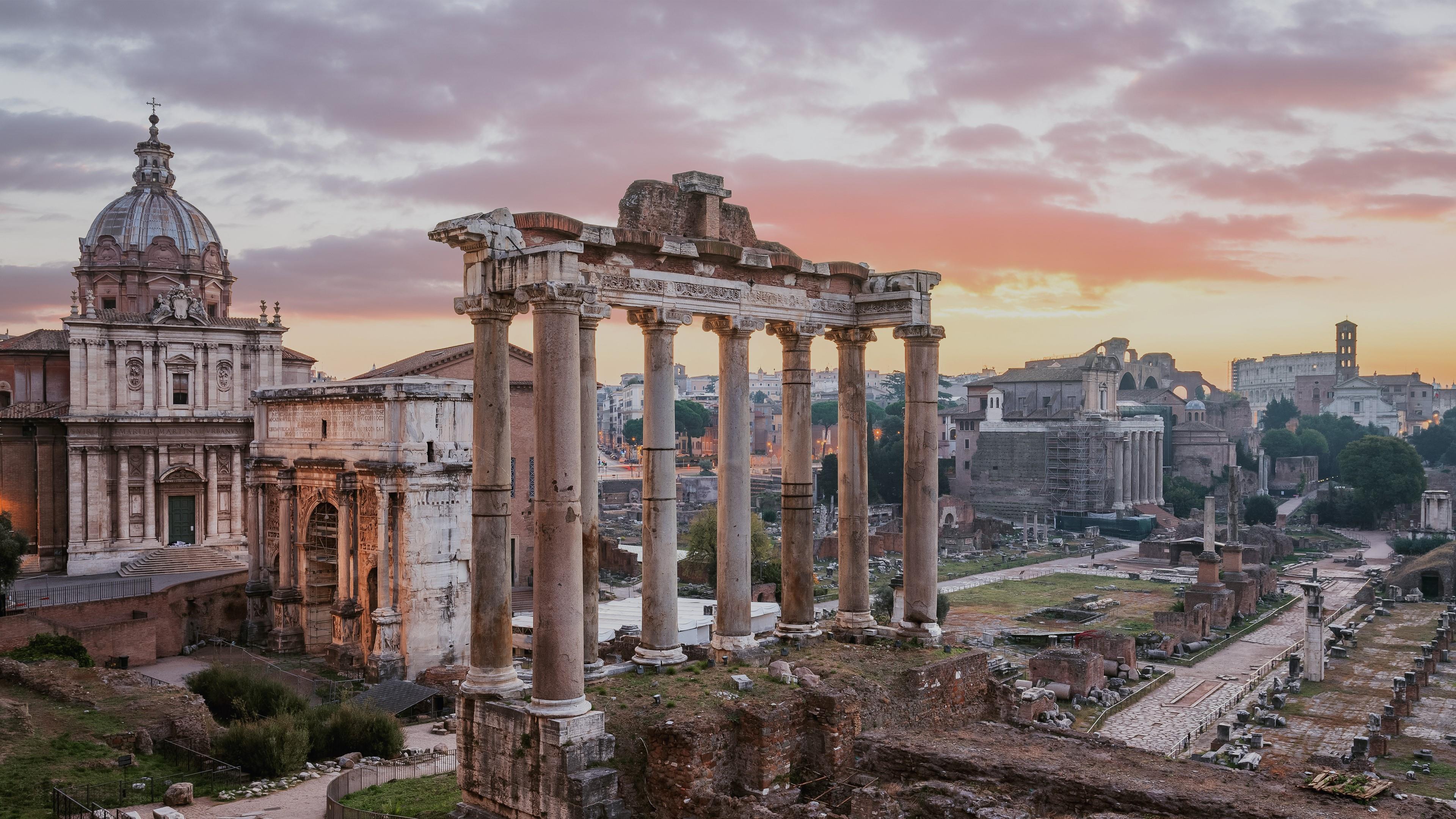
So, the next time you hear or read that we're on our way to Communism or socialism, you'll know better and be able to properly respond. Nevertheless, that doesn't change the fact that our Republic has all but faded away just as the Rome's Republic did, and like the Roman Republic, the more it faded into memory the more the dictatorship of the Empire took hold. Before long it was all but impossible to restore the Republic. Don't let our Republic become just a memory.


If you enjoyed the article, please consider passing it along to others and don't forget to subscribe. It's free! Lastly please be sure to "like" us on whatever platform you use to read anotheropinionblog.com. It helps beat the algorithms and keeps our articles in circulation. Thank you!


America Is Eerily Retracing Rome's Steps To A Fall. Will It Turn Around Before It's Too Late?


The State of Democracy in the United States 2022


The Strange Decline of Pax America


American dream far from reality for most Americans: Poll


German politician convicted over gang rape warning


Saturday, September 23, 2023

What is 'Antifa' and is it a Threat?


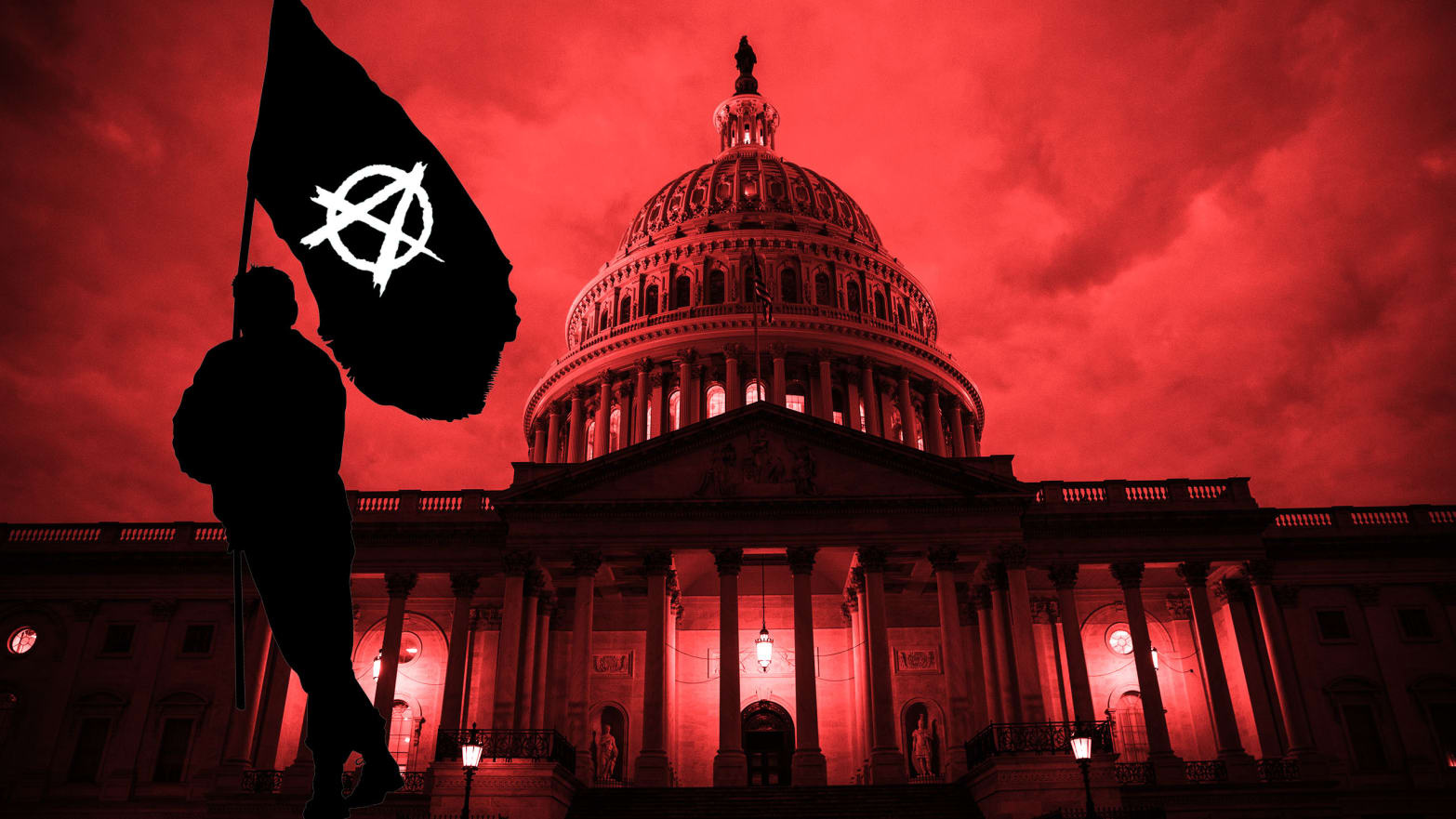
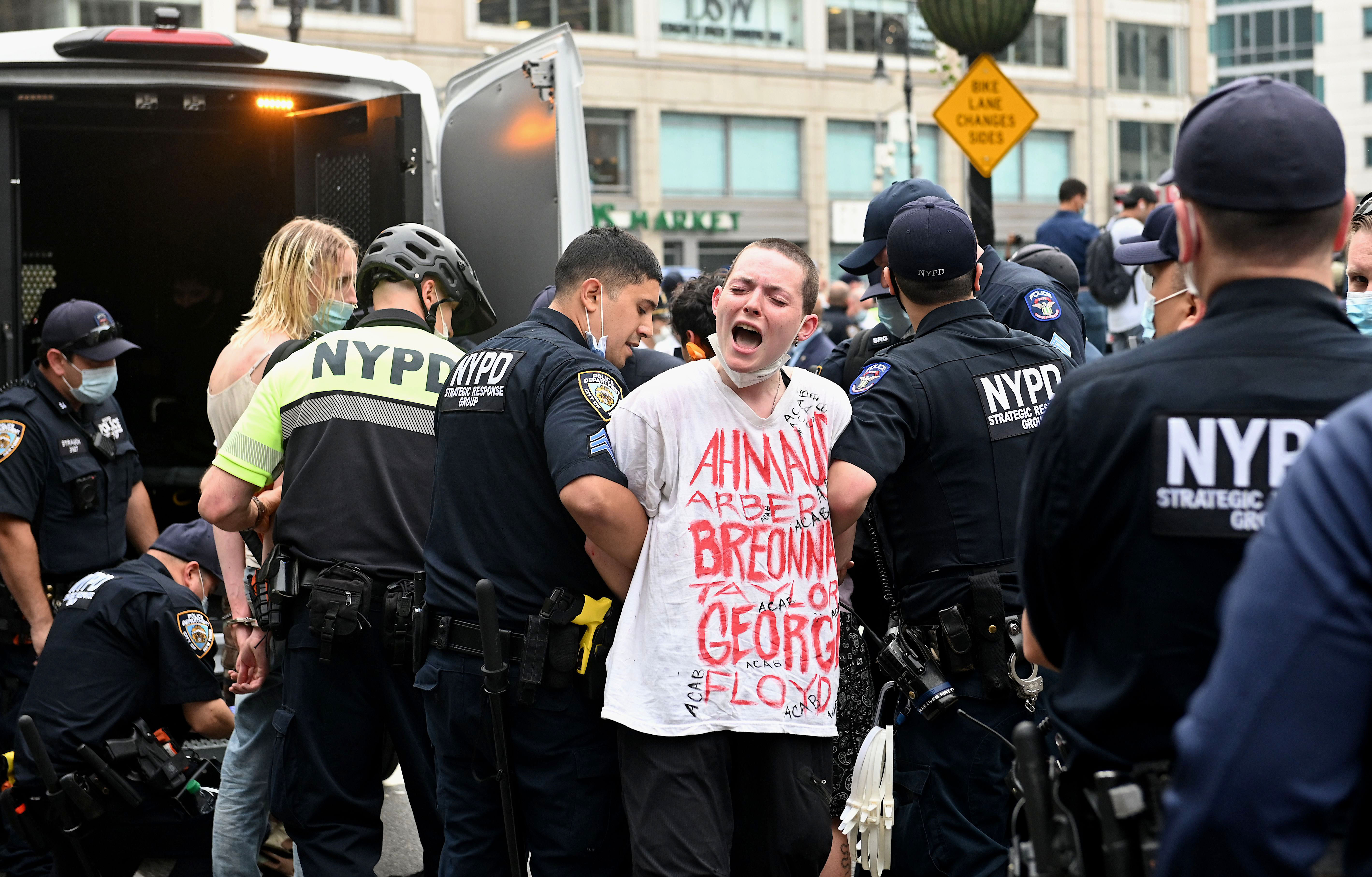
So, just who or what is "Antifa"? The answer depends really on who you ask. To the Far Left, it's a largely benign and loosely organized groups and individuals on the political Left spectrum, ranging from climate change activists, radical feminists, anarchists, members of LGBQT, so-called "socialists" and Communists, and groups like Black Lives Matter.

 Many define Antifa as a ideology and a movement rather than as an organization or political party (which incidentally was how Fascism and Nazism were originally defined. How ironic). 

To those on the Right, especially the Far Right, they are hardly benign or loosely organized. They tend to be decentralized (that is without a identifiable organizational structure) and yet operate with a specific purpose, leading some to speculate that there are coordinated cells within the larger mass of protesters charged with attacking specific targets.

They're those who call for the "defunding" or closure of police departments and the creation of "citizen policing", especially of minority communities by fellow minorities. Some groups went as far as to take up arms and attempt to menace the police by carrying weapons (or taking up roof top "sniper" positions) or pointing small handheld lasers at the police.

The mainstream media generally glosses over the mayhem and damage they cause (such as setting fires, looting, vandalizing), or attacking specific groups or individuals physically aside from minor irritants such as blocking traffic. Instead, the media calls these riots "peaceful protests". 

Case in point is Donald Trump's inauguration when they staged attacks on parts of Washington DC and surrounding areas by starting fires, flipping cars, breaking out store windows, and spray painting almost everything in sight. Their objective, of course, was to and divert attention from the inauguration to them. 

On several occasions, they've aggressively denied individuals the opportunity to speak, even when previously invited and especially on college campuses. It's as if these individuals live in a political bubble they're afraid will get popped if additional facts are let in. So much for higher education and critical thinking skills!

When George Floyd and Breonna Taylor were killed (some would say "murdered"), they staged massive demonstrations in cities and towns across America, especially in Minneapolis, Minnesota and Louisville, Kentucky, where the two incidents happened.  While chaos ensued, police officers were ordered to stand down and respond only when actually attacked, and then only in moderation in order to deescalate the situation, which the media again downplayed.

Meanwhile, whenever small pockets of Far-Right groups showed up "to observe", the media heralded them as "neo-Nazis" or "hate groups". It's worth noting that in no instances during the Floyd and Taylor "peaceful" riots, did the Far Right show up enmasse. In most instances, their appearances were limited to around a dozen or so individuals, albeit with many in military garb.

So, what's the truth? Just who is Antifa and what is their objective? Indeed, given the political diversity of Antifa, is there a single objective?  The name ("Antifa") is a abbreviation for "Anti-Fascism", which also kinda sums up their mission statement if you will. To be more specific, the overarching goal of Antifa is reputedly the creation of a more "open", "accepting" and "liberal" society and the total destruction of whatever they deem as being "fascist". If that sounds contradictory, it's because it is.

However, there's little or no consensus as to exactly what that would entail. Some favor creating a "Communist" style of government based on Stalinism or Maoism (neither of which had any actual basis in Marxism). This would call for a total elimination of capitalism from the ownership of private property to total government control and regulation of business (including Wall Street).

Others favor a form of anarchy, which calls for the annihilation of government itself.  Even currency would be abolished in favor of some sort of barter method. There are those who favor a form of socialism with greater government regulation of key industries, expanded social programs, overhauling the tax code, while some want legalization of all drugs, open borders, the complete confiscation of all guns, free education, debit forgiveness and medical care.

There are those who want a complete redistribution of wealth and the creation of a universal base income to fight poverty paid for by the elimination of the military (perhaps leaving a small volunteer national guard), and defunding or elimination of police departments and the creating of community policing. In a limited sense, this has already happened in some cities such as Portland Oregon.  

 In fact, approximately 20 cities have, in some form or fashion, have defunding their police departments with one report from 2021 saying that police department budgets across the country have been cut $870 million dollars.  

Meanwhile, other participants of Antifa are more focused on climate warming and are demanding extreme changes in environmental laws with stronger enforcement. Many want changes in laws concerning the LGBTQ community including adopting the normalization of multi-genders (they claim there are  72 genders) and the adoption of asexual or non-binary  pronouns. Surprisingly, this segment of Antifa has been perhaps the most successful.

In a early victory of sorts, there are five U.S. cities which have banned the use of gender specific pronouns such as "he" and "she" on government documents and forms or used in laws and policies. These cities are San Diego, Oakland, Berkeley California as well as Boston Massachusetts. 11 states have approved the use of a "third gender" on forms and documents. The reputed goal, according to various local and state officials, to create a "open and welcoming" environment for the approximately 1% of the U.S. population which self-identifies as neither male or female.

As an aside, there are roughly six states which have adopted a LGBQT "inclusive" health education curriculum which numerous more  who quietly promote gay identity through the use of "gay pride" flags in the classroom or allowing individuals in full drag queen attire to read to young school children. In addition, there has been changes in various local law to allow individuals to use the restrooms of the gender they self-identify as. 

 Another group affiliated with Antifa is Black Lives Matter which seeks to promote everything from the creation of autonomous or semi-autonomous zones exclusive to blacks to additional funding of black or minority owned businesses, housing or other social programs. Despite instances of violence and looting, BLM's aim has been to reduce what they believe is police violence and harassment of blacks in general.

Statistics indicate that blacks, who make up 13.6% of the U.S. population, are three times more likely than whites to be killed police officers although blacks are shown to be 1.3 time less likely than whites to be armed. One third of the incidents have occurred when the suspect is attempting to flee on foot or vehicle. 43%  of deaths happened during the commission of a violent crime or in the possession of a weapon while 22% was during a non-violent offence. 

Other groups under the Antifa umbrella include those who want to confiscate all firearms, make changes in medical care of seniors, the handicapped, or mentally ill, eliminate student debt, raise minimum wage, reform the judicial system (including the prison system by closing all privately own prisons), make changes in election laws to permit more ballot access or eliminate mandatory voter ID laws.  Of course, there are plenty of those who simply enjoy causing mayhem and violence.

What makes Antifa so dangerous, however, is a lack of formal structure and thus a centralized hierarchy.  Interestingly, within Antifa demonstrations there are "legal observers" from the National Lawyers Guild (NLG). They monitor and video tape the actions of the police department and assist individuals who are arrested with bail money and legal representation (demonstrators often write NLG's  phone number somewhere on their body in anticipation of arrest).

The NGL allegedly uses the video (along with video and pictures obtained from assorted cell phones) to bully cities with threats of lawsuits for various supposed civil rights violations. The City of Denver Colorado had to pony up 1.6 million dollars while Austin Texas coughed up $17 million. Many cities find it cheaper just to pay off NLG than to contest the lawsuit (this tactic is known as "lawfare"). As a result, it's taxpayers who ultimately end up funding Antifa.

As an aside, the NLG also engages in passive resistance training and related tactics for protestors (many of the techniques were gleaned from lessons learned during the protest movements of the 50's, 60's, and 70's).  Instruction is often either online through private chats or in person just before a protest or other action begins. There is typically someone designated to ensure everyone follows their instructions.

Antifa reminds me less of the "Red Front", the paramilitary arm of the Communist Party of the Weimar Republic, and more like the Nazi "Brownshirts"  or Mussolini's "Blackshirts" of the same era (in fact, Antifa is known for dressing head to toe in all black clothing).

It's worth pointing out that while the Far Right are typically demonized by the media as being extremist, they have not been able to organize as effectively as Antifa has, and they are certainly aren't as well funded. Antifa has engaged in over 140 mass protests across the country (many of which have degenerated into riots) as of 2022, while aside from the January 6th protest, the Far Right hasn't had any major protests and or riots.  

As many observers of Antifa have pointed out, despite their name, action is louder than words and their actions are more fascist than not. Some have called Antifa a new type of political guerilla warfare in the footsteps of Mao. And while there is strength in numbers, there is also guilt by association, and this doesn't apply any more strongly than in the political arena.

As Antifa is expected to be labeled a "domestic terrorist organization" by the U.S. Justice Department, it could have a negative impact on those groups seeking to affect changes in the law or society as a whole.  Affiliated groups have managed to achieve some success based on individual issues and data than through their relationship with Antifa. So, is Antifa an actual threat?

 In some aspects, yes. It has caused chaos as well as a great deal of property damage. It has injured police officers, journalists, and innocent bystanders. It has expressed itself as an opponent of capitalism and the Constitution. It's no friend of critical thought, the open exchange of ideas, or open debate, preferring instead to remain isolated in its political and social bubble. 

At the same time, it has attracted more publicity than perhaps it deserves.  Besides, Antifa hasn't truly faced any real opposition either from the conservative or independent intelligencia or on the streets by law enforcement or the Far Right, so their actual strength or clout has yet to be measured. Thus, they've yet to reach the critical mass of Mao's youthful "Red Guards" they imagine themselves to be or the Nazi "Brownshirts" which they emulate by their actions. 

I suspect Antifa will gradually fade much like the Weathermen and similar groups of the 1960's and 70's as new avenues are found to affect change through non-violent means much like Cesar Chavez and Rev. Martin Luther King. Ultimately, social change requires the support of the populace and that's not likely to be achieved with indiscriminate violence.

If you enjoyed the article, please consider passing it along to others and don't forget to subscribe. It's free! Lastly please be sure to "like" us on whatever platform you use to read anotheropinionblog.com. It helps with the algorithms and keeps our articles in circulation. Thank you!


Fox News Video: Antifa: The Truth Behind The Mask (10:24)


VICE News Video: So, What is Antifa?  (5:47)


These US cities defunded the police: 'We're transferring money to the community'


Mapping Police Violence


Who funds Antifa protests? We all do


Examining Extremism: Antifa


Friday, February 18, 2022

Keep on Truckin! The Canadian Anti-Mandate "Freedom Convoy"

At present there appears to be approximately 250 ongoing protests in 110 countries over government imposed restrictions pertaining to various issues, from strikes over austerity to economic cutbacks to anti-corruption to  calls for democracy . 78% of these are aimed at authoritarian or authoritarian leaning governments.

Of these 250 protests, which involve hundreds of thousands of people (if not millions) worldwide. 25 of these protests are directly related to anti-Covid mandates, which range from mandatory masking, lockdowns, quarantines, employment restrictions, and vaccinations. In many cases, the anti-mandates protests are accompanied by protests against other restrictions to human freedom.

In Belgium, the people are protesting rules on mandatory masking at locations where "Covid Passes" are already required.  "Covid Passes" have become common in most of Europe. They provide documentation that the holder has been vaccinated. Those who are unvaccinated and/or don't have a Covid Pass are prohibited from entry into restaurants or other public locations.

In the Netherlands the protests concern mandatory lockdowns. Unlike Belgium, the protests in the Netherlands have become increasingly violent with shots being fired and fires started in the middle of the street. Many of protestors are seen waving "Gadsden flags" and carrying banner reading "Resistance" and "Freedom".

France is facing similar problems, especially on the island territory of Guadeloupe, where there have been previous protests over the Covid Passes and lockdowns. As in the Netherlands, there has also been gunshots aimed at the police. Austria, the UK, and Italy, countries outside of Europe such as Argentina, New Zealand, Australia, Brazil, Croatia, the Czech Republic, Israel, and about a dozen others  have been dealing with similar problems, which also stem from quarantines, lockdowns, and Covid Passes. In short, people are demanding liberty.

Germany had the largest mass protest in its history---and estimated 188,000 people turned out to demonstrate against enforced masks, vaccinations, lockdowns, Covid Passes, and "vax-to-work" requirements. What's even more interesting is that the protests brought together those on Germany's extreme Left and on its Far Right, uniting them on at least this one issue.

Since the Covid measures started almost three years ago, there have been at least 1046 protests throughout German towns and cities.  If there's one thing Germans know, its tyranny and its impact on individual rights.

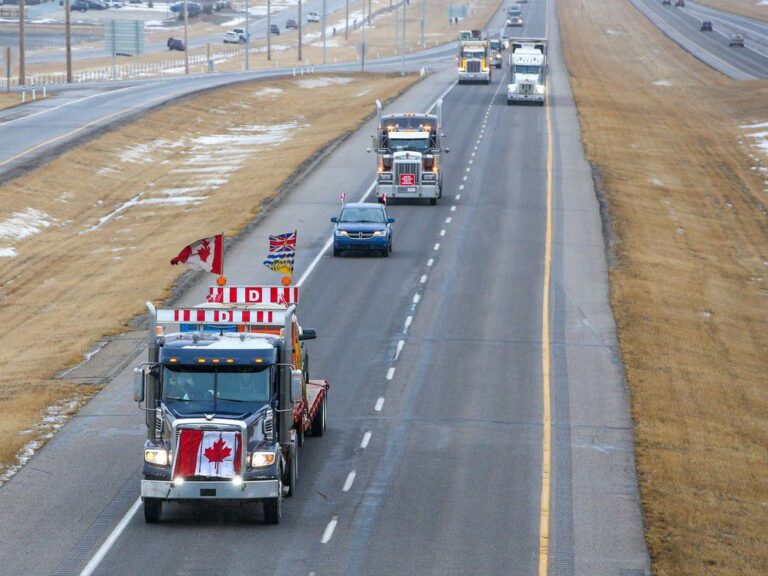
But perhaps one of the most underreported protests is taking place in Canada and involving the truck drivers and their self proclaimed "Freedom Convoy". Perhaps the reason the "Freedom Convoy" is so underreported is the popularity of it by the masses.

The mainstream media tries to create the picture of an unpopular protest (trying to tie it to Far Right and hate groups, including the use of the Gadsden, Nazi, and Confederate flags and pro-Trump signs), and yet upwards of over 800 trucks plus hundreds of other vehicles are involved (some estimates have put that number to around 50,000 or more).

When Canadian Prime Minister Trudeau issued a National State of Emergency and ordered citizens to stay home. Instead thousands came out in support. They lined the route to the national capital in Ottawa. They joined the truckers in Ottawa and on the Ambassador Bridge on the Canadian-U.S. border between Detroit and Windsor, Ontario. 

When the police ordered Canadian citizens not to fuel the trucks or face possible arrest, fines, or jail, thousands showed up with gas cans. When a judge shut down a "Go Fund Me" account in support of the truckers, other sites sprung up immediately.  Canadians authorities are now threatening to forcefully remove protestor's semi trucks as well as the protestors themselves. I don't think that's a smart idea.

Meanwhile, there is a rising concern over the lack of shipment coming into the U.S., which could have a added negative effect on the economy given the already severe backlog of unloaded ships at U.S. ports due to Covid restrictions. In some places, store shelves are already sparse and the country is increasingly in the grip of a rising inflation.

The continued scarcity will only make things worse by driving up prices.  Truckers are the backbone of not just the American economy, but pretty much the economy of every industrial society on the planet. Without truckers, very little gets delivered, be it food, medicine, clothes, or whatever.

So what's fired up the normally docile and overly polite Canadians? Pretty much the same as everyone else. The truckers were ordered to get vaccinated or face suspension, fines, or loss of the job, particularly if their load crosses into the U.S.. The protest was organized by Tamara Lich, the secretary of the relatively new conservative leaning Maverick Party which supports greater autonomy for Western Canada (perhaps that's the reason for the media's link to neo-Nazis and such). However, the truckers insist that they are grown ass men and women and they can make their own informed decisions. You know, pretty much like everybody else.

As an aside, Ms. Lich and others leaders of the Freedom Convoy were arrested in the wee morning hours of February 18th. At the time, Ms. Lich was simply standing out front of a building in downtown Ottawa talking with supporters.  Her arrest fueled rumors that the police, under orders from Trudeau, were planning on taking some sort of aggressive action (the following morning, the police, some on mounted horses), arrested about 100 individuals and began forcefully moving trucks, which is only the beginning. 

It should be noted that the protesters have been very peaceful and orderly to date. Residents in Ottawa also received a notice on their front porches that morning advising them that any violent behavior wouldn't be tolerated. 

After all this time and the peaceful nature of the protest, why would anyone assume there would suddenly be violence unless the police were planning on doing something violent and they want residents to stay away? Trudeau also threatened truckers with a loss of their commercial licenses if they didn't leave now. Trudeau is showing himself to be a petty tinpot tyrant and incapable of handling a peaceful and legal protest. Obviously he lacks the backbone and insight to lead to Canada. 

In addition, the trucker protest has sparked fears here in the States as smaller protests seem to be forming ad hoc. There's currently a trucker convoy, which originated in San Diego, headed along the southern coastal highway headed up to Washington D.C. or the 100+ cowboys (yes, cowboys) on horseback the "Freedom Convoy" from the American side of the border, not to mention similar protests popping up in places like New Zealand and the Netherlands.

Nevertheless, the Canadian trucker "Freedom Convoy" isn't getting a great deal of press, at least not on television in the States, and certainly not anything positive. Even coming up with pictures for this article is difficult). The same goes for the other anti-mandate protests taking place around the world. What coverage there is presents the protestors as something most aren't, namely extremist, uncaring, or racist (tell that to the Hispanic, Asian, or black truckers and protestors).  

Counter protestors have started showing up using not just the usual signs, bull horns, and throwing of trash (among other things), they are also blaring a pretty vulgar "porno-metal" "gay cowboy" song to disrupt or shut down anti-mandate channels.  Meanwhile, the mainstream media continues to report that the anti-mandate convoy is in "chaos" and has become "disorganized" and is "falling apart"; something that the organizers and those on the scene deny. Why the disparity of observations?

I think it's because the protests themselves doesn't present the government, be it the U.S., Canadian, or any of the other governments, in a particular good light. The reality is open challenge to the government's authority. It shows the people are rejecting government dictates as we have the right to do. They are rejecting "We-Say-So" herd mentality in favor of informed individuality.

If people want to mask up or vaccinate, then do it by all means. It's your right to, but don't try to impose it on everyone else. It's a short step from mandates vaccines to "everyone's good" to imposing mandatory religious beliefs, social values, or political ideology. That's not what democracy is all about. At least I hope not.

While the government can and should make recommendations, especially when it comes to public health, it is "We The People" who have the absolute final say. We, as individuals, assume the risk and responsibility either way. The government works for us, not the other way around.


If you want to know more, please take a look at the links below. If you enjoyed the article, please consider passing along to others and don't forget to subscribe. It's free! Lastly please be sure to "like" us on Facebook or whatever platform you use to read A/O. It helps with the algorithms and keeps our articles in circulation.


Covid: Huge protests across Europe over restrictions


Carrots, sermons, sticks: Vaccine mandates face oppositionaround the globe


250,000 trucks are participating in the "Freedom Convoy" in Canada


Canadian Trucker Convoy Descends on Ottawa to ProtestVaccine Mandates


'Snowball effect': Canada's trucker convoy sparks anti-mandate protests globally


Global Protests Tracker


Largest Ever Protests in the History of Germany Are Anti-Vax & It Won't Matter


Protests against Germany's Covid restrictions turn violent as Europe moves to stem Omicron


Europe's COVID mandate protests are getting big and violent


Ram Ranch Resistance: How a gay cowboy song became ananti-convoy anthem


Friday, February 19, 2016

What Difference Does a Name Make?


I get emails and posts from all over the world; mostly political of course. Some are from individuals but most are from organizations pleading their cause---from both the political left and right, as well as the middle. Many of the stories are BS; inflated of some event. Some are downright false or misleadingly provide some imaginary "what if" scenario. When you write as often as I do on the subject of politics, especially global politics, it just comes with the territory. But it seems that most of emails and posts I get that are the worse at misleading comes from the political extremes. By that, I mean the ones I find most troubling in how they attempt to mislead their perspective readers. Let me give you an example, in fact, the most common example and the one which seems to be showing up the most, especially with the Presidential primaries under way and the unexpected death of Supreme Court Justice Anthony Scalia.

There's been this sudden rash of "news" (very much in quotes) claiming the Scalia was "murdered" while on his hunting trip in Texas; a misconstrued report that there was a pillow over his head. It turns out that the pillow was up against the headboard above his head, not over his face. But never let the facts get in the way of a good story as the late great William Randolph Heart said (as would some more modern media outlets would still agree). It seems, as they claim, there was a "conspiracy" by a secret "Communist" or "Socialist" (the terms are used interchangeably) within or associated with the Obama Regime to silence this great arbiter of the Conservative Right. Uh, no. No conspiracy. He simply died of a heart attack in his bed. Now, as for this secret "Communist" or "Socialist" cabal, that raises another matter.

It seems that too often---all too often---the political Far Right allege that there is a "Communist" or "Socialist" plot afoot or that somehow America is being transformed in a neo-Communist (or, again, Socialist) worker's gulag. Some even allege that Obama and Company have been working hand in red glove with Russia's Putin or with China to overthrow the government. Listen folks, as much as I dislike Obama and just about everything he stands for (which is something of an oxymoron), there is no Marxist plot here. Sorry. Yes, Obama has done some really stupid things (the "Fast and Furious" blunder comes immediately to mind), I think this is more of a reflection of his lack of political and professional experience (yes, Obama had some questionable influences on his early life, not to mention a somewhat mysterious adolescence and early adulthood). That lack of "seasoning" is reflected in his refusal to stop illegal immigration and gutting ICE and the Border Patrol instead of enforcing the Will of the American People. But to be fair, Ronald Reagan set the stage when he authorized amnesty for illegals then living in the United States, and then all of his successors, including George W. Bush, repeatedly refused to do anything about illegals in this country except provide a lot of lip service until they decided to just ignore us altogether.
Then too, Obama has done just about everything he can to prod us into a boot war with Syria while doing little with regards to ISIS, Boko Harem, or even Al Qaeda (yes, Osama bin Laden was eliminated under his administration, but it was the independent actions of the Secretary of Defense and Joint Chiefs of Staff which made it happen amid Obama's tendency to delay which is why he looks to dumbfounded in the photos I suspect) and opening the doors for Moslem refugees. But again to be fair, "Dubya" was the one who opened this hornet's nest (more like Pandora's Box) when he toppled Saddam Hussein without either a long term occupation plan or contingency plan (because they didn't understand the regional politics) in case things went south. Turned out there was no weapons of mass destruction. Just a bunch of greedy Western bastards looking to control oil and gas reserves while tweaking Iran's and Russia's noses. But, none of this constitutes "Communism" or "Socialism". Just basically incompetence combined with a power grab for control of resources.

What about Benghazi? Well, that again wasn't about "Communism" or anything else except internal US politics, mishandling of intelligence, a lack of political fortitude, incompetence (again) and a cover up that appears to be nothing less than treasonous or perhaps criminal behavior (or both). In fact, none of this is any indication of "Communism" or "Socialism, but I think I know what is. The Affordable Healthcare Act or as it's more commonly known, Obamacare. It seems this one item is where this all starts. The idea is that healthcare is a "right" and that all Americans are entitled to basic health coverage. The concept isn't unique to Obama. It's not even unique to Bill Clinton's administration. Actually, national healthcare goes back decades. Even folks like Teddy Roosevelt, his cousin FDR, Truman, Kennedy, Johnson and even Richard Nixon thought some form of national healthcare was a good idea. However, none of them tried to enact it because they thought (correctly) that the political Will just wasn't there, as well as the fact that it would be a hard sell to the American Medical Association, national insurance providers, doctors, hospitals and so forth. However, in Europe and most of the developed world, some form of national healthcare exists. Most of it paid for through the government in the form of taxes, either individual and/or corporate. The US was the only industrial nation without some form of national healthcare for all its citizens. Kind of embarrassing if you think about it.

Where the Obama Regime went wrong was in both the type of healthcare it proposed and how it was enacted. The type of coverage most legislators were willing to at least consider, and would be the most easily administrated was the Single Healthcare Payer Program. This would provide a single source for insurance with different healthcare agencies opting to provide specific programs or underwriting a basic policy; additional coverage could be purchased via the marketplace depending on need and income level. Even most unions and small businesses agreed that this made the most sense. However, as we all know, that's not what we got. Secondly, the Supreme Court took the highly unusual (and some argue illegal) step of rewriting the bill brought before it. The Supreme Court is supposed to vote up or down on an issue, not rewrite it to fit the intent, which it did by redrafting it as a tax instead of leaving it as a policy proposal. As written, it was unconstitutional. As a tax, however, it was constitutional. In addition, Obama lied--blatantly and knowingly lied--to the members of Congress and more importantly, to the American People, about what the new law would allow. He wanted ACA to be his legacy. It will be his lie that will ultimately be his legacy. But is this "Socialism" or "Communism" any more than Social Security, Medicare, Medicaid, food stamps, or unemployment? Personally, I see it as a social safety net just like these and other programs, albeit done in a backhanded way. So, just what is "Socialism" and "Communism" and is that really where we're headed?

Socialism, which is an age old philosophy, calls for the common ownership of property, including the means of production and distribution with decisions to be made equally by the common ownership, that is, democratically. Direct democracy and republican democracy are an offshoot as well since the people decide among themselves how to govern. Think of it as a business where the employees are the owners. They all participate equally in the day to day operation of the business, as well as the decision making (unless agreed by vote otherwise) along with sharing the profit...or loss...equally. It's been in use in varying degrees in Northern Europe and Scandinavia with success since the end of World War II. There is, however, private ownership of homes, cars and so forth. However, with the recent influx of immigrants from Africa and the Middle East, mostly uneducated and untrained, the system throughout has begun to falter since the premise is that everyone contributes to the system. Many, if not the majority of these individuals have discovered that they can simply draw on the system without contributing anything back, so perhaps the greatest failure in the system is the lack of a common work ethic and a sense of community.

Communism, which has been discussed philosophically for more than two millennia in various forms, gained notice with the 1871 Paris Commune uprising following the fall of France's Napoleon III. However, other various attempts were made by agrarian and religious groups including some early and recent Christian sects. Nevertheless, it owes its familiarity to Germans Karl Marx and Freidrich Engels through their works, "Das Kapital" and "The Communist Manifesto". Essentially, Communism espouses a classless society where all are treated as equal in every aspect with common ownership of the means of production and distribution under worker councils or "soviets" in Russian with the ultimate goal of doing away with government altogether. What changed was it application with the success of Lenin's Bolsheviks in 1917, wherein a "dictatorship of the proletariat" was imposed in order to "aid in the transition" to a Communist society. Lenin's successor, Joseph Stalin, ensured that the dictatorship remained permanent and all control---economic, social and cultural---fell to the State; nothing would remain in private hands. Not home ownership, not businesses, not capital, not the media, not wage distribution and obviously, not guns or home defense; nothing. The State controlled workforce was viewed as a nationalized union managed by a single political party---the Communist Party. Even children were regarded as property of the State. Ultimately the system failed because it decayed from a lack of individualistic innovation; there was nothing to motivate productivity, quality or advances in technology, and it couldn't up with the Cold War.

Now, does either of these sound like what's happening to you? No, I didn't think so. So, where does that leave us? It leaves us with ideology which is just as bad as Communism and that is Fascism. It's origins date back to the ancient Greek Oligarchs of Athens, Rome's Caesars, other authoritarian governments. Modern Fascism came about through Italy's Benito Mussolini, who also referred to it a "Corporatism". Fascism is somewhat similar to Communism except in place of the State, corporations control government. Fascism borrows ideas from socialism and Communism such as national healthcare, unemployment, and so forth. However, unions are either outlawed or made impotent; to serve the needs to the corporation only by keeping employees on the work line and off the strike line; by making them accept whatever cuts or changes management deems necessary. With Fascism, corporations and government work hand in hand, though usually corporations have the senior hand while government serves as intermediary and manager but not always as each nation's traditions and culture is different and Fascism is nothing if not adaptable. This often includes public funding of corporations for private profits, a government/corporate "revolving door" , corporate dictate of government policies, influence or indirect control of elections and the judicial system and so forth. Essentially politicians wind up as little more than pawns or puppets and mouthpieces.

Under Fascism, we often see an increase in the militarization of law enforcement, gun control, surveillance and repression of opposing groups not to mention character assassinations, national militarization including "demonizing" other ideologies and governments as well as (justifying) direct and indirect military ventures, a perpetual "enemy" and an increase in propaganda through control of the media. Worse yet, is we tend to see an decline in wages, greater debt, and a separation of wealth. In most countries where Fascism was been applied, we see extreme wealth side by side with extreme poverty; a society of elites and one of everybody else. Both Fascism and Communism tend to had a single political apparatus. Under Communism, the party is the State which is also the powerbrokers. However, under Fascism this is not set in concrete so long each political party understand who is master. Also, capitalism, as an economic system, isn't compatible with Communism while it is with Socialism and Fascism (principal difference being in its application).

America, as most of you know, is now an Oligarchy, especially ever since the Supreme Court's error in upholding the Citizen's United ruling which determined corporations were "individuals" with the same rights as you and I, except one critical one. The Justices decided that money represents "free speech" and as such, corporations were free to donate what they like while you and I are capped. Obviously, some are more equal than others. This means corporations can essentially buy who they want openly and regardless of party affiliation. Meanwhile, we've all but lost our middle class with our largest and deepest income divide between the rich and everyone else. We have a surveillance state and a militarization of the nation's police forces, not to mention a perpetual war on "terror" and "war economy" to keep the nation's economic engine chugging along. With high unemployment and serious debt among the nation's youth (especially minorities), who also just so happen to be in the military recruitment range, we have a steady stream of available candidates for economic ventures under the guise of national security and expansion of "democracy". Meanwhile the government continues to make life easier for its corporate benefactors while chanting its populist rhetoric and all but ignoring our Founding Documents.

So, now that you have a better grasp of the definitions, where do you think America is actually headed now? The next time you read or hear someone say something is "Socialist" or "Communist" just ask yourself who benefited. You'll recognize the truth. In the end, your party affiliation doesn't matter, it's who benefits. For the diehard political partisans, drink up your blue or red Kool-Aide because as every six grader knows, blue and red makes green and that's the only color that matters.


Monday, November 02, 2009

New York’s 23rd Congressional Race and Future of the GOP

The race for New York’s 23rd Congressional District has got to be one of the important elections to come along since the election of Obama; perhaps even more so. However, ever since the election of Ronald Reagan, the Grand Ole Party has shifted further and further to right, especially on social issues while the majority of country has remained pretty much in the middle. Many have referred to this shift as the take over or hijacking of the Republican Party. First, a little history.

For decades, the GOP was primarily a center right political party. That is, it premise was to maintain a small Federal government; low taxes (especially for the middle class), support for small business and middle class, creating opportunities for poorer Americans to make it to the middle class, and an attitude that government in any form doesn’t belong in your life; especially your bedroom. It was this basic philosophy which made the GOP so successful in winning elections, especially the Presidency. But beginning with Richard Nixon’s “Southern Strategy” in the early 1970’s of wooing conservative, mainly White Protestant Democrats, to the GOP, the party has gradually shifted its ideology further and further to the right of the political spectrum in order to accommodate these newcomers. This strategy peaked with the election of Ronald Reagan. It was this strategy which lead to the so-called takeover the GOP by the social conservatives or religious fundamental Far Right.


Social conservatives in droves switched to the Republican Party in the late 1970’s and early 1980’s, which enabled the GOP to win hereto un-winnable seats throughout the South. However, there was a high price to pay for these victories, and it appears we are j now seeing just how high a price. As the social conservatives began to exert a greater and greater influence on the GOP, they, at the same time, adopted a philosophy of ousting those within the party who didn’t agree with their definition of what it means to be a Republican, even if that meant support a Democrat against GOP nominee. Libertarian-leaning Republicans in the northeast and well as middle and upper western states were the first to find that they were no longer welcome. As a result, many either left the GOP to join the Libertarian or Democrat Party. Some just walked away from politics all together.

Next to be targeted was the Rockefeller Republicans (also called “Eisenhower Republicans”), who were predominate in the Central and Eastern portions of the US, including upper state New York, Vermont, New Hampshire, and Maine. These were the moderate or centrists, who at one point, constituted the largest segment of the GOP and were responsible for much of the Republican’s electoral success throughout the decades (these are the so-called “RINOs” or “Republican In Name Only” oft referred to by the Far Right). The high water mark of these same social conservatives was the election of George W. Bush (who, later, was aggressively criticized for not being conservative enough). The end result was the election of Barak Obama. And this brings me to the 23rd Congressional race.

The GOP nominated a centrist Republican, Dede Scozzafava, to run in a special election to fill an empty seat in upper state New York, which has traditional been fairly liberal and where centrists in both parties have done well. Ms. Scozzafava is pro-choice and supports gay marriage; both of which are considered serious indictments against her qualifications as a Republican by the Far Right. Enter the very conservative Doug Hoffman. Now, as a political observer and someone who has over 30 years of political experience, comes the interesting part.

Social conservatives from across the country has swarmed in to help Mr. Hoffman, a American Conservative Party candidate, defeat Ms. Scozzafava. Media types like Glenn Beck, Rush Limbaugh to name just two have joined in the fray to condemn Ms. Scozzafava. What’s more is the number of Republicans who turned their back on their party’s nominee and endorsed Mr. Hoffman, a member, as I said, of a competing party (even referring to him as “the real Republican”). We’re talking some of the biggest names in the Republican stable. Ms. Scozzafava has been forced to drop out of the race, and as a result of the GOP’s failure to have her back as it were, endorsed the Democrat, Bill Owens.

My concern is not whether or not members of the Far Right support, or even like Ms. Scozzafava. It’s the fact that we have members, and especially elected leaders of the Republican Party, who have taken an oath to actively and aggressively support the nominee of their party, backing a candidate in another party. That’s just so wrong on so many levels to me. First off, the 23rd District and Ms. Scozzafava’s views appear to be a good match. Secondly, she won the party’s nomination. Third, you back your party’s nominee period. The failure of Republicans, Democrats, or anyone else, to back their own speaks volumes about their character, and this election will speak volume to the American People about the character of today’s Republican Party. This race may not just decide who wins a congressional seat, but whether the GOP continues its present path to regional irrelevance or returns to become a major national player

While I can understand why Ms. Scozzafava quit the race, I am also a strong believer in never backing down from a just fight. Never. She should have stood her ground and demanded publicly that the GOP man-up. I believe there is a place; an important place for the social conservatives in the political makeup of this country. But I believe that there is an equally important place for the libertarian-leaning and moderates too. To win elections, you need candidates whose social and economic views match their future constituents. One size doesn’t fit all anymore in politics than it does life.


The Great Energy Debate Pop Quiz
by Scott Bittle & Jean Johnson,
Authors of Who Turned Out the Lights: Your Guided Tour to the Energy Crisis

The energy issue is very confusing, and frankly, most of us will never catch up with the experts on all the details. Still, there are some basic facts that are good to know. Do you know them?

True or false? When it comes to global warming and air pollution, nuclear power is one of the most dangerous forms of energy.

Not true. The accidents at Chernobyl and Three Mile Island left lots of people worried about nuclear plant safety, but if you're worried about climate change, nuclear power is one of the least dangerous forms of energy we have. Generating electricity from nuclear power releases virtually no carbon dioxide (the major green house gas) into the atmosphere, and it doesn't cause air pollution either.28 Small amounts are emitted during mining and processing the uranium (you need uranium for nuclear power) and in other related activities, but it's nearly impossible to do anything from start to finish without releasing some green house gases. Experts say the carbon dioxide released in these associated activities puts nuclear power roughly on a par with wind or hydroelectric power.29 Like every form of energy we've discovered so far, nuclear power does have drawbacks, but global warming isn't one of them. The big drawback to nuclear power is that the leftover waste, the spent fuel, has to be stored very, very carefully, and it lasts a really, really long time. Even so, nuclear power is widely used in Europe and Japan, and despite the controversies about it, it supplies 19 percent of electricity in the United States -- enough electricity to keep air conditioners, TiVos, and iPods going in California, New York, and Texas.30 Scientists are working on other ways to dispose of nuclear waste, including recycling it into the nuclear power plant itself, but the problem hasn't been solved yet.31 See Chapter 9 for a more complete discussion of the pros and cons of relying more on nuclear power, including the safety issues.

True or false? ExxonMobil, BP, and Chevron control nearly half of the world's known oil reserves.

Not even close. In fact, none of the big multinational oil companies we complain about so often even makes the top ten list. So who's controlling the lion's share of the world's oil reserves?

The national oil company of Saudi Arabia (Saudi Aramco) has the most oil reserves, followed by the national companies of Iran, Iraq, Kuwait, Abu Dhabi, Venezuela, Libya, Nigeria, China, and Lukoil, the largest oil company in Russia. ExxonMobil comes in at number 13, BP at 15, and Chevron/Texaco at number 20.32 Congress likes to have the corporate heads of the major oil companies appear in hearings so our elected representatives can have their fifteen minutes of fame asking tough questions about gas prices, but in many ways, the big multinationals such as ExxonMobil have much less control over the country's oil situation than they once did.

Which country is guiltiest when it comes to releasing green house gases into the atmosphere, the United States or China?

It's a trick question because, frankly, the United States and China are running neck and neck for worst greenhouse gas polluter in the world.33 There are several ways to look at this, and none of them exactly puts the United States in the clear. Global warming is caused by the accumulated green house gases in the atmosphere (carbon dioxide and its brethren). Since the United States got a head start (we started using large quantities of coal about the time of the Civil War), our country alone is responsible for about 29 percent of the total accumulated gases, compared to just 8 percent for China.34 Then there's the per person measure. In 2005, each American gushed out about 20 metric tons of carbon dioxide, compared to about 5 metric tons for each person in China.35 But China has a billion more people than we do, and they are building and manufacturing and transporting like crazy there now. If the average Chinese person begins emitting greenhouses gases at the same rate as the average American, it will just wallop the environment. As of now, China is producing about 21 percent of the world's carbon dioxide emissions.36 Bottom line? The United States and China need to stop pointing fingers at each other. Both our countries really need to get with the plan.

Who sets the price for a barrel of crude oil?
A. OPEC
B. Oil companies such as ExxonMobil and Saudi Aramco
C. The U.S. Department of Energy
D. The New York Stock Exchange
E. None of the above

The answer is none of the above. The price is actually set by bidding, buying, and selling on major commodities trading exchanges in New York, London, and Singapore.37 These are different from the stock market, but they operate in a similar way. Basically, traders buy and sell all day at the best price they can get, which is why the price for a barrel of oil goes up and down so much and generally changes daily.38 That doesn't mean that OPEC and other oil producers have no impact on prices. As OPEC itself puts it, member countries "do voluntary restrain their crude oil production in order to stabilize the oil market and avoid harmful and unnecessary price fluctuations."39 In other words, they calculate how much they're willing to pump based on the price they want to get. One of the disputes about oil that erupts from time to time is the degree to which the OPEC countries are producing as much as they can or whether they are holding back. (You can read more about what affects the price of oil in Chapter 6.) On the other hand, since the oil is theirs to extract and sell, it's also fair to ask whether, from their point of view, they should produce as much as they can as quickly as they can, or whether they want to preserve some of their countries' natural resources for the future.

What percent of the world's known oil and natural gas reserves are in the United States? A. About 20 percent B. 10 to 20 percent C. 5 to 10 percent D. Less than 5 percent

In area, the United States is the world's third-largest country; only Russia and Canada have more territory than we do.40 Unfortunately that doesn't mean we control a substantial share of the world's oil and natural gas reserves. According to 2008 estimates, the United States has about 2.4 percent of known world oil reserves and about 3.6 percent of natural gas reserves.41 These are figures for the "known" or "proved" reserves -- that is, geologists actually know the stuff is there -- so more exploration could definitely up those numbers a tad. However, as we mentioned earlier, many experts believe that the remaining U.S. supplies of both oil and natural gas are in less convenient places and less convenient forms (such as tar pits). That means they'll be costlier to extract. Just to make your day, would you like to know that Iran, which is tiny in comparison with the United States, has more than four times as much oil42 and natural gas as we have?43

True or false? As long as global warming doesn't increase world temperatures more than 5 or 10 degrees, the effects will be easily manageable.

Not according to the climatologists who worry about global warming. In 2007, the UN's Intergovernmental Panel on Climate Change summed up the judgment of scientists worldwide predicting that average global temperatures will rise 3.5 to 8 degrees by the year 2100.44 It sounds minor. After all, most of us would be hard pressed to say whether the temperature was 70, 75, or 80 on a nice spring day. But sustained changes like this over time cause glaciers to melt and sea levels to rise. People living near water, especially poor ones in poor countries, can be displaced, and miserable, disease-carrying microbes can flourish. It changes what crops you can grow where, which can cause serious economic and social upheaval. In 2008, the U.S. government released a report summing up the scientific consensus on what climate change could mean here in the United States.45 Among the conclusions: it is "very likely" that "abnormally hot days and nights and heat waves" will be more frequent, increasing the number of people who die from heat-related causes, especially the elderly, frail, and poor. The report warned that "climate change can also make it possible for animal-, water-, and food-borne diseases to spread or emerge in areas where they had been limited or had not existed." Lyme disease and West Nile virus are two examples mentioned.46 As we said before, there are a lot of good reasons to revamp the country's energy policies, and global warming is only one of them. But if you'd like to see exactly what the scientists are worried about, you might want to check out NASA's "Eyes on the Earth" interactive global time line showing the changes in sea levels and the polar ice cap that scientists are already observing. It's at www.nasa.gov/multimedia/mmgallery/index.html.

NOTES
28 EIA Kids Page, "Nuclear Energy (Uranium), Energy from Atoms," www.eia.doe.gov/kids/energyfacts/sources/non-renewable/nuclear.html.

29 International Atomic Energy Agency, "Nuclear Power Worldiwde: Status and Outlook," State News Service, September11, 2008, www.iaea.org/NewsCenter/PressReleases/2008/prn200811.html.

30 EIA Kids Page. "Nuclear Energy (Uranium), Energy from Atoms."

31 See, for example, Global Nuclear Energy partnership, www.energy.gov/media/GNEP/06-GA50035b.pdf.

32 Based on an analysis by Pricewaterhouse Coopers presented at the 2005 Global Energy, Utilities and Mining Conference, November 16-17, 2005, http://www.pwc.com/extweb/industry.nsf/docid/49f2db1ed1eb0236852571c6005adc63/$file/tom-collins-noc-presentation-for-web-site.pdf. This Analysis and others are available at the Energy information Administration's Web page" Energy-in-Brief: Who Are the major Players Supplying the World Oil Market?" accessed April 2, 2009, http://tonto.eia.doe.gov/energy_in_brief/world_oil_market.cfm.

33 EIA, www.eia.doe.gov/pub/international/iealf/tableh1co2.xls.

34 World Resources Institute, Navigating the Number: Greenhouse Gas Data and International Climate Policy, http://pdf.wri.org/navigating_numbers_chapter6.pdf.

35 EIA, "Frequently Asked Questions -- Environment: How Much co2 Does the United States Emit? Is It More Than Other Countries?" updated August 14, 2008, http://tonto.eia.doe.gov/ask/environment_faqs.asp#greenhouse_gases_definition.

36 EIA, Emissions of Greenhouse Gases Report: U.S. Emissions in a Global Perspective, Report #DOE/EIA-0573, December 3, 2008, www.eia.doe.gov/oiaf/1605/ggrpt/index.html.

37 OPEC, "Frequently Asked Questions: Does OPEC Set Crude Oil Prices?" www.opec.org/library/FAQs/aboutOPEC/q20.htm.

38 www.nymex.com/CL_spec.aspx.

39 OPEC, "Frequently Asked Questions: Does OPEC Set Crude Oil Prices?"

40 CIA, The World Factbook 2008www.cia.gov/library/publications/the-world-factbook/geos/us.html.

41 BP, Statistical Review of World Energy, 2009. http://www.bp.com/liveassets/bp_internet/globalbp/globalbp_uk_english/reports_and_publications/statistical_energy_review_2008/STAGING/local_assets/2009_downloads/statistical_review_of_world_energy_full_report_2009.pdf.

42. Ibid.

43 Ibid.

44 See, for example, www.nytimes.com/2007/02/02/science/earth/02cnd-climate.html.

45 National Science and Technology Council. Scientific Assessment of the Effects of Global Change on the United States, Report of the Committee on Environment and Natural Resource, May 29, 2008. www.climatescience.gov/Library/scientific-assessment.

46 Andrew C. Revkin, "Under Pressure, White House Issues climate Change Report," New York Times, May 30, 2008, www.nytimes.com/2008/05/30/washington/30climate.html?_r=us&oref=slogin.

The above is an excerpt from the book Who Turned Out the Lights: Your Guided Tour to the Energy Crisis by Scott Bittle & Jean Johnson. The above excerpt is a digitally scanned reproduction of text from print. Although this excerpt has been proofread, occasional errors may appear due to the scanning process. Please refer to the finished book for accuracy.
Copyright © 2009 Scott Bittle & Jean Johnson, authors of Who Turned Out the Lights: Your Guided Tour to the Energy Crisis
Author Bios

Scott Bittle, co-author of Who Turned Out the Lights: Your Guided Tour to the Energy Crisis, is executive editor of PublicAgenda.org, where he has prepared citizen guides on more than twenty major issues including the federal budget deficit, Social Security, and the economy. He is also the website director for Planet Forward, an innovative PBS program designed to bring citizen voices to the energy debate.
Jean Johnson, co-author of Who Turned Out the Lights: Your Guided Tour to the Energy Crisis, is co-founder of PublicAgenda.org, and has written articles and op-eds for USA Today, Education Week, School Board News, Educational Leadership, and the Huffington Post Website.
For additional energy resources and supplemental material, please visit www.whoturnedoutthelights.org

Quiz Results

Our last quiz asked you if Obama deserved the Noble Peace Prize. 50% of you said no. 33% of you thought he did, while the remainder was undecided. Personally, I think you actually have to do something to earn something. Based on the rules of the Noble Committee, Obama would have had to accomplish something during the previous year. Well, the previous year, Obama was giving political speeches. That’s all. Words are cheap; especially in today’s managed and packaged political campaigns. Obama did not earn and should not have accepted the award, and the Noble Committee succeeded only in cheapening the award.