Home of the Militant Middle, Another Opinion ("A/O") is an Independent oriented "OpEd" blog for those looking for unbiased facts free of partisan drama and who are willing to question the Status Quo.
Showing posts with label RINO. Show all posts
Wednesday, June 22, 2016
America's Electoral Blind Spot: Who Is Being Represented?
For months now, there's been talk about how the Republican Party's "status quo" who run everything have been working diligently behind the scenes to knock Donald Trump off his perch as the potential GOP nominee. They've done everything in their power to find some candidate or combination of candidates to bump him off. They even appeared to have worked quietly in partnership with the Democrats as well as the corporate controlled media to make "The Donald" look like a buffoon or "not ready for primetime" candidate. Not only did that failed, but the harder they tried, the better Trump did in the polls and with the turnouts he was getting. With all their efforts failing, the talk turned to defeating Trump at the Republican Convention using the "small print" strategy; that is, using the built-in party platform rules to deny Trump, and the voters, the right to have their selection upheld.
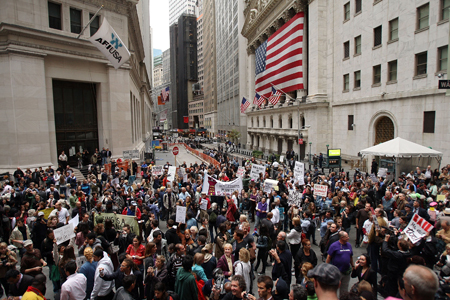
Meanwhile, "somebody" has underwritten efforts to terrorize Trump supporters (a few have admitted that they were paid, and bussed in to cause mischief but had no idea who it was for or against). They've blocked traffic on streets and highways to try and keep people from hearing Trump's message. They started fights. They sneaked in to his speaking engagements and tried to disrupt events there by shouting, heckling, holding signs, throwing items and even trying to storm the stage to attack Trump himself. The corporate media has cherry picked and slanted stories to convince viewers or listeners into thinking that Trump or his supporters are behind all the violence while any rational person can see for themselves who's doing what to whom. Meanwhile absolutely nothing whatsoever is going on at Hillary Clinton's campaign stops. It's all very reminiscent of the Hitler's Brownshirts, Mussolini's Blackshirts or the turn of the century union busters.
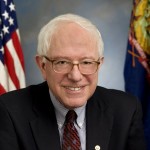
As for Bernie Sanders, he has no hope in winning the nomination. At best, he may be able to exert some influence onto the Democratic platform that Hillary will campaign on. Of course, you have to hand it to Bernie, his message of democratic socialism has hit a nerve with the largest demographic bloc of voters, the Millennials, who are largely liberal or even Leftist on most social issues, are disappointed in both Obama and in Clinton. If a younger and more charismatic Sanders type comes along in the near future, I predict that candidate would stand a pretty fair chance of getting elected. In the interim, a lot of Millennials are taking another look at the Green Party's Jill Stein and the Libertarian Party's Gary Johnson (in several polls taken of Millennials, there is a slight majority who favor libertarianism while a substantial minority favors democratic socialism, and hence the strong popularity of Ron Paul among the under 30 demographic), which brings me to the topic I want to address in this article.
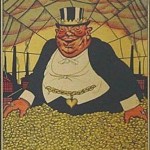
If you were to listen only to the corporate controlled media, you would think that we, as voters, have only two choices---Democrat or Republican. Only those parties seem to get media coverage, which is by design. The Oligarchy which rules this nation now, and with it, the six---yes six---corporations responsibly for 98% of news we get. They also control both of the major parties and are responsible for the thousands of lobbyists who descend on Capitol Hill like locusts every single day and often late into the night. They are the ones who don't just advise lawmakers, their staff, and the President, they also write much of the legislation which is then chaperoned through the the various committees and onto the House and Senate floor for the final vote. In addition, thanks in large part to Citizens United which decided corporations are "individuals", but with greater rights than you and I, removed the financial cap restricting corporations while retaining it on ordinary voters. It is into this morass that we, as voters, must wade. As most you know by now, we are given the illusion of choice. These corporate "Frankensteins" have already pre-vetted each of the candidates and are assured of their loyalty...to them not to us. We get to choose from some metaphorical unsweetened blue "Kool-Aid" or a slightly sweetened red "Kool-Aid". Regardless, the aftertaste is equally bitter. However, like me, most voters have put down their cups of flavored hemlock. Most Americans, some 43% of the population and rapidly growing have changed our registration to Independent (including 50% of Millennials). We see both political parties and their one percent Overlords as the root of American's decline. We've accepted the fact the media can be counted on to toe the line with their snippets of news, slanted whichever way they're told. The Democrats have the second highest registration, with just over 30% and the Republicans are a distant third. Perhaps it's because, while most Americans are centrists, slight Left or Right depending on the topic, both major parties have blindly purged their parties of moderates; labeling them "Dinos" or "Rinos", Democrat or Republican in Name Only.
As an aside, of all the billions of dollars we have put into euphemistically named "nation building", not one country has modeled itself on our form of government. Instead, they chose the British proportional representation style. Why? Because under the British system, your party is allotted a specific number of seats based on how well your party did in the election, thus even if your party lost the election, you still have individuals in office to represent you. While in the US "winner-take-all" setup, if your party loses, tough luck. For the next two or four or six years you have no one representing you. They may be of some assistance on individual issues, but they don't represent your interests or values on social, domestic or foreign matters. I guess it could be considered taxation without representation again. Personally, I've always been of the mindset that, under our current system, when you take the oath of office, you publically resign from your political party and openly swear to represent your district and/or nation unfettered by your former party. That is, you cease being partisan and swear to represent everyone equally.
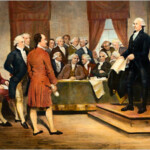
So, where does that leave us? It leaves us with the likes of Gary Johnson and Jill Stein. It leaves us with the hope of third parties and Independents bringing their ideas...fresh ideas...to the American People. I think most of us have come to accept the fact that today's government in Washington, or indeed, in our states, do not bare the faintest resemblance to what our Founding Fathers intended. In fact, we are no longer even a democratic republic. We are a defacto Oligarchy with increasingly fascist (or corporatist to use the other proper term) tendencies, complete with a militarized police and surveillance state. I strongly suspect that if the Founders could come back and see us now, they would unanimously agree that they should have paid that damn tea tax and got over it. Now you may be wondering at this point why don't we just sweep the corrupt Republican and Democrat parties to the "dustbin of history" to quote Karl Marx. The answer is quite simple really. The whole damn thing is rigged tighter than a Mafia backed boxing match or horse race.
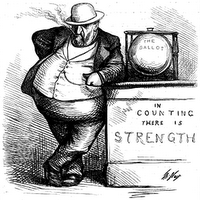
We hear of, sparsely to be sure, the Libertarian and Green parties only because they've been around awhile and have been successful in building up their membership over the years, and with it, their coffers (there are other third party organizations out there such as the Constitution Party). Money is the life blood of politics. Both parties are usually successful in getting out the message for their two top candidates while down ballot candidates get little or any support, especially financial. Also, ever since Ross Perot's history making race on the Reform Party ticket, both major parties, in the spirit of bipartisan cooperation, agreed not to include any third party or Independent in any debate, or to ever share the stage with them (including appearing on TV or radio). When the non-partisan League of Women Voters, which had been hosting the presidential debates, starting in 1976, refused to go along with this arrangement (13 changes in all), they were booted off and the two parties created their own organization, the Commission on Presidential Debates (CPD), which is headed jointly by the former chairmen of the Democratic and Republican national committees. The CPD then sells the rights to host the debates to the highest bidder, as well as commercial air time. You just have to admire the deviousness of it all.
In addition, Independents and third parties often struggle to get enough money to mount a serious campaign since most corporate donors invest in either of the two major parties, and who can blame them? They know what they're buying with them and odds are pretty strong that the Indies and/or third party candidates are interested in real election and political reforms, and that can't be allowed. Then there is ballot access, which in many states is patently unfair if not outright illegal (but, once again, it takes lots of money and time to challenge these laws, and while Indies and third parties may have the time, it's money that's in short supply).
In most states, simply filling to run for office won't work. You see, to run as a Democrat or Republican, you have to get the signature of between approximately two and five hundred individuals who are all members of your party and live in your district, county, or state, depending on what you're running for (this, of course, varies from state to state), plus pay a filing fee which can run from a few dollars to over a thousand dollars. However, if you're an Independent or third party candidate, all that goes out the window in most cases. Some states, like Maryland, require 10,000 signatures on a petition if you're running as an Independent or a third party candidate with less than 1% registration. In North Dakota, it's 1000 signatures for statewide races or 300 signatures for a legislative office for an Independent candidate . Texas requires a registered political party to have either 5% of the vote statewide or signatures of 1% of the total number of votes from the previous election for governor while an Independent must have 1% of the total vote from the last election for governor. Kentucky, like most states, also use a percentage to determine eligibility. If a party's candidate for president is less than 2% in the state, it's considered a "political group" whereas if it received between 2% and 20%, it's a "political organization", and if they received greater than 20%, they are a "political party". Thus, if you're a political organization or party, you need only two signatures while political groups or Independents will need between 25 and 5000 signatures, depending on the office. Everyone has to pay the same filing fee.
Obviously, all of this can be quite confusing and easily disqualify or discourage anyone from running who isn't aligned with one of the two main parties. What's more, is how Independents, who are the largest voting bloc, are penalized and discouraged from running along with third parties. So, what to do? First, let's make the requirements for everyone who is running the same. If candidates from the two main parities are required to have only two signatures from individuals who are of their party and in their district for instance, then so should any third party candidate (Independents would be allowed the signature of anyone who is registered). Any filing fees required would be the same regardless. All registered candidates should be allowed to participate in any and all debates as well as receive equal radio, TV and print coverage. Lastly, until such time as there is serious campaign finance reform, there needs to be term limits imposed of twelve years regardless of office. If a politician can't get what they want accomplished by then, they don't need to be in office. Twelve years is also enough time to build seniority (especially since everyone else will be operating from the same playbook) and obtain ample experience while, at the same time, it's short enough to not encourage the level of corruption and arrogance many of these politicians exhibit. We should also demand that corporations (including unions) not be allow to donate, either directly as they do now or indirectly as they previously have done, money or in-kind gifts to any candidate or party. In fact, I think that only individuals---flesh and blood people---should be allowed to donate to any political campaign, though I would raise or remove the cap to help offset the loss of corporate dollars. Meanwhile, if corporations or unions want to donate, then allow them to donate to a general fund to cover the costs of the election process itself. This could even be used to reduce the overall costs of campaigns by being used to cover media costs during the last 30 days of the general election.
I think we should end taxpayer based coverage of the primary. That's right, taxpayers pay for the primaries of both parties. Taxpayers pick up the tab for both the Republican and Democrat primaries. That has to end. Let both parties be responsible for their own bill, not the taxpayers. Lastly, we should ensure that the law apply equally all those elected, up to and including insurance coverage. We should end lifetime payment of the salaries, benefits, plus terminate taxpayer paid security after four years. We need to restrict the "revolving door" arrangement between government and private industry, including consulting or lobbying, by requiring a ten year wait period in order to reduce any possible "friendship deals". While some or all of this may sound harsh, it's this kind of toughness that we need if we are ever going to regain control of the government which is now in the hands of the 1%, and we know that power is never ever given up willingly. But if we are serious in wanting to restore our democratic republic from the Oligarchs who rule this country, then this is what we must do. Otherwise, we will continue to see our freedoms and opportunities vanish.
Ballot Access
https://en.wikipedia.org/wiki/Ballot_access
The Liberal Millennial Revolution
http://www.theatlantic.com/politics/archive/2016/02/the-liberal-millennial-revolution/470826/
Millennials Political Views Don't Make Any Sense
http://www.theatlantic.com/politics/archive/2014/07/millennials-economics-voting-clueless-kids-these-days/374427/
Self-described "liberal" Millennials are Actually Libertarian
http://townhall.com/columnists/cathyreisenwitz/2014/07/14/selfdescribed-liberal-millennials-are-actually-libertarian-n1861177
Pew Research: Political Trends
http://www.pewsocialtrends.org/2014/03/07/chapter-1-political-trends/
Labels:
1%,
2016 Presidential Race,
democracy,
Democrats,
DINO,
Donald Trump,
Gary Johnson,
Green Party,
Hillary Clinton,
Independents,
Jill Stein,
Libertarians,
Oligarchy,
Protests,
Republic,
Republicans,
RINO,
Third Parties
Sunday, March 01, 2015
Are We There Yet?
There are these "go along to get along" types. They are mostly incumbents who've make their peace with the status quo. Then there are the so-called "reformers". These typically are the candidates running for office and the newly elected wannabe powerbrokers. They're the ones who'll gently rock the boat while dutifully paddling on until they are given a position--a committee for instance---of note. Pretty soon, they rowing in unison with everyone else. Each election cycle might find them harping about all the good they've done and how much "change" they made, and of course, just how much more "change" could be made if they could just be given a little more time. Always a little more time. Of course, most of the time they've made no serious change. They may have slightly tweaked the system here or there but there's been no reform; certainly not on the level we need it. The average citizen has given up on lasting positive results from government. They simply hopes that no one screws it up worse. It's a sad commentary that most Americans actually hope for political deadlock because they know that with deadlock they're usually safe, albeit briefly, from tax increases and incompetence. Is it any wonder that the majority in each House are usually of opposite parties or at least opposite from the president?
Too often the true would be "reformer" finds their energies siphoned off through endless committee assignments, assigned to them by one of the powerful committee chairmen and running the gauntlet of the bureaucratic maze. No one, not even the bravest of these "reformers" would dare challenge one of the fiefdom chiefs. While the individual may or may be not be consulted about their assignments, the committee assignment is part of the dues paying process the power brokers as a way of flexing their muscle and letting everyone know that "reform" is just fine for sound bites, but not in practice. In the end, they're often too tired or too frustrated to focus on any the projects they originally had in mind. Politics as it's played today is a game of give and take like two vultures bargaining over a dying antelope. Who is your enemy this morning may be your accomplice in the afternoon. In addition, don't forget that real power; real authority has often been removed from the hands of politicians to avoid the taint of responsibility, and assigned to a bureaucratic functionary; an apparatchik; some unmemorable agency to carry out much of the unpleasant or mundane tasks of governing. There, as President Ronald Reagan once quipped, is the closest thing Man will come to immortality.
If Congress or the State legislature or even local government really could make a difference by now, don't you think they would? Instead, we have name calling. One party is out to destroy the poor and middle class while the other party is supposedly guilty of destroying the moral fiber of this country or its small businesses. Yeah, right. Let's get this straight. This is about money and power which translates quiet simply to control. It's not about making life better or improving this or that. And it sure as hell isn't about the Constitution of the United States. If something of benefit actually occurs, then you can bet it's because of one of two things. First, it was just pure happenstance. Someone somewhere simply got lucky. I would recommend they go but a lottery ticket before their luck changes. The other possibility (and the more likely), someone is financially benefiting and a way to split the spoils has been figured out, and in this void between what each get some group has temporarily benefitted. Politics is about accommodation; of getting some of what you wanted. "Mr. Smith" isn't in Washington anymore. He was railroaded out.
It's often said that people vote with their feet by leaving. Voters make their opinions known through ballots, though these days, with gerrymandering and corporate control of our two party dictatorship, apparently citizens are doing both---voting with their ballot and with their feet, or registration to be more accurate. More to the point, according to the most recent Gallup Poll report (February 8-11-2015), 25% of registered voters are Republicans while 29% are Democrats. As for everybody else, well 43% are Independent. Yelp, the majority of Americans did some walking and left both political party---a duopoly or two-party dictatorship as they're often called. But of course, it hasn't always been this way. As recent as January 2009, it was pretty much as three way tie with Republicans last, making up 30%, Indies second with 33%, and Democrats were on top with 36% of the registered voters.
Another issue of concern is the largest voting bloc next to whites, Hispanics. A record 25.2 million Latinos are eligible to vote now, making up 11% of all voters; an increase of 3.9 million voters from 2010 according to a 2014 Pew Report. 2/3 of these voters are located in just a few States, but what States they are in terms electoral voters---California, Texas, Florida, New York, Arizona, and Illinois. Among political parties, support for the GOP is up slightly, 28% in 2014 compared to 22% in 2010. That still means that as of October 2014, Democrats had a 57% share of Hispanic voters.
A Pew Poll indicated that 58% of Hispanic voters were registered Democrat while 13% were Independent and 26% were signed on as Republicans. As for Asians, the fourth largest minority (expected to tied for third with black in approximately 20 years), 66% are Democrat, 24% are Republican, and 9% are Independent. The really interesting part is that according to this poll, only 50% of all eligible Hispanics are registered voters with about 60% of all Asians registered. By comparison, around 80% of white and black voters are registered, with the majority of black registered as Democrats by the way.
Who are these radical independents that make up the majority of voters--43%--anyway and how dare they think for themselves!? They need to belly-up and pick either the red or blue Kool-Aid and take a big ole gulp of "Weownya"! Well, simply put, the independents are largely former moderate Democrats and Republicans who've been run out of their respective parties by the growing extremism. To the GOP, these were the Rockefeller/Eisenhower Republicans (known in some circles as RINOs--Republican In Name Only). For the Democrats, these were the Kennedy and even some Bill Clinton Democrats (known as DINOs--Democrat In Name Only). They're sometimes referred to as "third way" or Centrists. Some are "Second Wave" Babyboomers, but most are younger; the Millennials or under 35 crowd who are now replacing the "First Wave" Babyboomers. They are considered to be very liberal when compared to other groups. Most are keenly non-partisan issue oriented individuals who are strongly interested in humanitarian and environmential issues while exhibiting a libertarian streak; a tendency towards working in ad hoc groups to problem solve; and a preference for democratic socialist idealism. They tend to be quite liberal on social issues. If forced with their arm tied behind them to pick a party, most would pick Democrat because of its more open minded social positions. As a group, they are incredibly racially diverse; very well educated with big academic debt to match; technologically comfortable; and really active on social media. They are also extremely distrustful of the corporate media and usually look for alternative media sources. They've had it up here with income inequality and corporate power (and control over government).
So what does this tells us? It tells us that the people have had it with all the BS from Washington regardless of which of the two-party dictatorships allegedly started it. The tighter the circle that both the GOP and Democrats make, the more voters and potential voters they lose. Over time, many of the traditional party boys will retire or die off as they slowly watch power slip from their grasp as these groups find ways to work around "grease-my-palm" politics and look to resolve problems not political turf wars. Former House Speaker Tip O'Neil once said "all politics is local", but I think most politicians have forgotten that all politics is ultimately about people. Not imagined influence. Not money. Not power. Just ordinary people.
2015 Gallup Poll: Party Affiliation
http://www.gallup.com/poll/15370/party-affiliation.aspx
2014 Pew Research Center: Latino Voters and the 2014 Midterm Elections
http://www.pewhispanic.org/2014/10/16/latino-voters-and-the-2014-midterm-elections/
2014 Pew Research Center: Latino Support for Democrats Fall
http://www.pewhispanic.org/2014/10/29/latino-support-for-democrats-falls-but-democratic-advantage-remains/
2013 Gallup Poll: In US Voter Registration Lags Among Hispanic and Asian Voters
http://www.gallup.com/poll/165752/voter-registration-lags-among-hispanics-asians.aspx
Truth to Power/McClatchy DC: As independent numbers rise, GOP hurt most
http://www.mcclatchydc.com/2014/01/21/215122/as-independent-voters-numbers.html
Labels:
Asians,
Babyboomers,
Blacks,
changing demographics,
Congress,
Corporate bailouts,
Democrats,
DINO,
Hispanics,
Independents,
Millennials,
Oligarchy,
Republicans,
RINO,
Socialism,
unions,
voters,
Whites
Saturday, February 21, 2015
Does Obama 'Love' America?
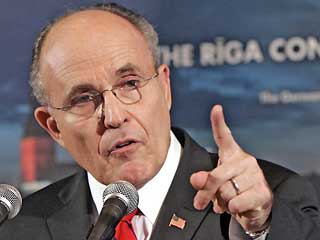
Former New York Mayor Rudy Giuliani recently remarked that he wasn't sure that President Obama truly 'loves' America in the same way he (and presumably) others like him do. Giuliani, a Republican, is not regarded as one of those run-of-the-mill social and economic conservative Republicans or ultra Right Wing religious zealot types. In fact, he is usually seen as one of the few remaining moderate voices coming from the Right (what others on that side of political aisle refer to as a "RINO"---Republican In Name Only for their refusal to fully partake of the red Kool-Aid. Apparently, most of these "RINOs" opted for the more moderate "Purple Punch" brand of common sense politics that many on the Right have rejected which examines issues and people as they are, not the morally delinquent lazy hedonists or even the tried and true pinko commie perspective.
I don't know if I would agree with the former mayor's assessment of Obama, but I have noticed
his tendency to not to assert the levelof leadership one would expect for an American President (or for that matter, the skill set one would expect from someone in is position). Perhaps that stems from his lack of prior experience in either the real world or politics. I've noticed too that Obama always seems to be long of rhetoric (he still gives upbeat speeches with catchy sound bites ), but his follow through is almost always short on results. In fact, although he's nearly through his second term, I still can't get the images of his "world apology" tour from his first term out of my mind. Nor, it would seem, that I can easily forget seeing him refuse to put his right hand over his heart during a Pledge of Allegiance moment, or his stumbling over those Benghazi and "Operation Fast and Furious" cover-ups.
Of course there is also his blatant lying to the American People about the costs and affects of Obamacare, or his repeated and gross miscalculation of events in Iraq and Afghanistan, while hard selling an invasion of Syria to a reluctant American Public. Ultimately, he called for a reduction of US military strength to pre-World War II levels (yes, you read that right-pre WWII levels, when we were considered woefully unprepared even by those standards), and we still have no coherent plan for dealing with the Middle East, except if you want calling the terrorists everything but what they actually are and downplaying their threats a plan. At the same time, his repeated violations of his Constitutional authority when it comes to granting amnesty or his gutting much of the enforcement power of our border agents and ICE regarding illegal immigration.
Who can forget his ordering of then US Attorney General Eric Holder's office to sue the State of Arizona for enforcing existing US federal immigration laws, and then, in a unprecedented move, allowing a foreign power--Mexico-- to join in the lawsuit? Speaking of immigration, Obama has opened the door to allow immigrants from the places like Syria and Iraq into the US while admitting that some could in actuality be terrorists (in fact, if these terrorists can be believed, they claim to already be here thanks to Obama. And as an aside, many conservative pundits claims that the Obama Regime is "full" of closet members of the extremist Moslem Brotherhood). Of course, he's gone the full Monty on surveillance and monitoring of US citizens, but I don't want to "drone" on. I will say, however, that if you're not on some government watch list by now you should be ashamed of yourself!
Then there was, of course, his bailouts of Wall Street for being "too big to fail" while denying ordinary American homeowners and small business owners the same chance at financial relief. Why did the already cash strapped US taxpayers have to bailout Wall Street for their bad business decisions which were largely based on greed? Why did he fail to act---even say anything---when some of this money when to pay overpaid executives additional cash bonuses while ordinary homeowners were losing their homes? I should add at this point that the American People--regardless of their political leanings---were very vocal in their opposition to these bailouts. We can't forget that the 2005 Supreme Court "Citizens United" mis-decision happened on his watch too. This allowed corporations to come out of the shadows and openly buy elections by removing all financial shackles on them in the name of "free speech" and affording them the same...actually greater...rights than flesh and blood human beings. Of course the corporate media, irrespective of Left or Right, soft-pedaled most all of any of this. It seems they could support or oppose the President's actions within limits by either downplaying or ignoring it or simply glossing over it like a can of Pledge.
For the record too, none of what Obama has done was to initiate or advance "socialism". I think those who advocate that arguement are guilty of either being misinformed or trying to throw everyone off the track. Obama is as far from actual socialism as he can get despite his alleged past associates. Socialism is about public ownership and control for the benefit of the people (Communism is where the State owns everything). I don't see weaker corporate power or Wall Street going away do you? I do see an America which have become an oligarchy. I do see an America with a nearly dead middle class while the top 1% own the majority of the nation's wealth--42% while the bottom 80% controls just 7%. I do see an income and wealth gap greater and deeper than at nearly any time in US history---something that wouldn't exist under socialism. This is a prelude to fascism plain and simple. Fascism borrows from the Left and the Right. While it varies from country to country, based on its history and traditions, the end goals is a ruling partnership between the political class and the most powerful corporations and financial elites. It usually starts with an oligarchy, and using a militarized Police State and some defined or undefined "enemy", gradually morphs into a fascist nation...for your own good of course.
So, back to the top---I don't know if I would fully agree with Mayor Giuliani's assessment that President Obama doesn't "love America" as perhaps he thinks he should. I think Obama does, in his own way, love America. The trouble, however, is that his America is not ours.
Rudy Giuliani: Obama 'Doesn't Love' America
http://www.huffingtonpost.com/2015/02/19/rudy-giuliani-obama-love-america_n_6712428.html?1424356358
Rudy Giuliani: I Received Death Threats In Wake of Obama Comment
http://www.huffingtonpost.com/2015/02/21/rudy-giuliani-obama-death-threats_n_6726772.html
How Unequal We are
http://thinkprogress.org/economy/2011/10/03/334156/top-five-wealthiest-one-percent/
Labels:
Afganistan,
Benghazi,
Conservatives,
Corporate bailouts,
Democrats,
Eric Holder,
fascism,
ICE,
illegal immigration,
Iraq,
Israel,
President Obama,
RINO,
Rudy Giuliani,
Socialism,
Syria,
Terrorism,
Wall Street
Monday, November 02, 2009
New York’s 23rd Congressional Race and Future of the GOP
The race for New York’s 23rd Congressional District has got to be one of the important elections to come along since the election of Obama; perhaps even more so. However, ever since the election of Ronald Reagan, the Grand Ole Party has shifted further and further to right, especially on social issues while the majority of country has remained pretty much in the middle. Many have referred to this shift as the take over or hijacking of the Republican Party. First, a little history.
For decades, the GOP was primarily a center right political party. That is, it premise was to maintain a small Federal government; low taxes (especially for the middle class), support for small business and middle class, creating opportunities for poorer Americans to make it to the middle class, and an attitude that government in any form doesn’t belong in your life; especially your bedroom. It was this basic philosophy which made the GOP so successful in winning elections, especially the Presidency. But beginning with Richard Nixon’s “Southern Strategy” in the early 1970’s of wooing conservative, mainly White Protestant Democrats, to the GOP, the party has gradually shifted its ideology further and further to the right of the political spectrum in order to accommodate these newcomers. This strategy peaked with the election of Ronald Reagan. It was this strategy which lead to the so-called takeover the GOP by the social conservatives or religious fundamental Far Right.
Social conservatives in droves switched to the Republican Party in the late 1970’s and early 1980’s, which enabled the GOP to win hereto un-winnable seats throughout the South. However, there was a high price to pay for these victories, and it appears we are j now seeing just how high a price. As the social conservatives began to exert a greater and greater influence on the GOP, they, at the same time, adopted a philosophy of ousting those within the party who didn’t agree with their definition of what it means to be a Republican, even if that meant support a Democrat against GOP nominee. Libertarian-leaning Republicans in the northeast and well as middle and upper western states were the first to find that they were no longer welcome. As a result, many either left the GOP to join the Libertarian or Democrat Party. Some just walked away from politics all together.
Next to be targeted was the Rockefeller Republicans (also called “Eisenhower Republicans”), who were predominate in the Central and Eastern portions of the US, including upper state New York, Vermont, New Hampshire, and Maine. These were the moderate or centrists, who at one point, constituted the largest segment of the GOP and were responsible for much of the Republican’s electoral success throughout the decades (these are the so-called “RINOs” or “Republican In Name Only” oft referred to by the Far Right). The high water mark of these same social conservatives was the election of George W. Bush (who, later, was aggressively criticized for not being conservative enough). The end result was the election of Barak Obama. And this brings me to the 23rd Congressional race.
The GOP nominated a centrist Republican, Dede Scozzafava, to run in a special election to fill an empty seat in upper state New York, which has traditional been fairly liberal and where centrists in both parties have done well. Ms. Scozzafava is pro-choice and supports gay marriage; both of which are considered serious indictments against her qualifications as a Republican by the Far Right. Enter the very conservative Doug Hoffman. Now, as a political observer and someone who has over 30 years of political experience, comes the interesting part.
Social conservatives from across the country has swarmed in to help Mr. Hoffman, a American Conservative Party candidate, defeat Ms. Scozzafava. Media types like Glenn Beck, Rush Limbaugh to name just two have joined in the fray to condemn Ms. Scozzafava. What’s more is the number of Republicans who turned their back on their party’s nominee and endorsed Mr. Hoffman, a member, as I said, of a competing party (even referring to him as “the real Republican”). We’re talking some of the biggest names in the Republican stable. Ms. Scozzafava has been forced to drop out of the race, and as a result of the GOP’s failure to have her back as it were, endorsed the Democrat, Bill Owens.
My concern is not whether or not members of the Far Right support, or even like Ms. Scozzafava. It’s the fact that we have members, and especially elected leaders of the Republican Party, who have taken an oath to actively and aggressively support the nominee of their party, backing a candidate in another party. That’s just so wrong on so many levels to me. First off, the 23rd District and Ms. Scozzafava’s views appear to be a good match. Secondly, she won the party’s nomination. Third, you back your party’s nominee period. The failure of Republicans, Democrats, or anyone else, to back their own speaks volumes about their character, and this election will speak volume to the American People about the character of today’s Republican Party. This race may not just decide who wins a congressional seat, but whether the GOP continues its present path to regional irrelevance or returns to become a major national player
While I can understand why Ms. Scozzafava quit the race, I am also a strong believer in never backing down from a just fight. Never. She should have stood her ground and demanded publicly that the GOP man-up. I believe there is a place; an important place for the social conservatives in the political makeup of this country. But I believe that there is an equally important place for the libertarian-leaning and moderates too. To win elections, you need candidates whose social and economic views match their future constituents. One size doesn’t fit all anymore in politics than it does life.
The Great Energy Debate Pop Quiz
by Scott Bittle & Jean Johnson,
Authors of Who Turned Out the Lights: Your Guided Tour to the Energy Crisis
The energy issue is very confusing, and frankly, most of us will never catch up with the experts on all the details. Still, there are some basic facts that are good to know. Do you know them?
True or false? When it comes to global warming and air pollution, nuclear power is one of the most dangerous forms of energy.
Not true. The accidents at Chernobyl and Three Mile Island left lots of people worried about nuclear plant safety, but if you're worried about climate change, nuclear power is one of the least dangerous forms of energy we have. Generating electricity from nuclear power releases virtually no carbon dioxide (the major green house gas) into the atmosphere, and it doesn't cause air pollution either.28 Small amounts are emitted during mining and processing the uranium (you need uranium for nuclear power) and in other related activities, but it's nearly impossible to do anything from start to finish without releasing some green house gases. Experts say the carbon dioxide released in these associated activities puts nuclear power roughly on a par with wind or hydroelectric power.29 Like every form of energy we've discovered so far, nuclear power does have drawbacks, but global warming isn't one of them. The big drawback to nuclear power is that the leftover waste, the spent fuel, has to be stored very, very carefully, and it lasts a really, really long time. Even so, nuclear power is widely used in Europe and Japan, and despite the controversies about it, it supplies 19 percent of electricity in the United States -- enough electricity to keep air conditioners, TiVos, and iPods going in California, New York, and Texas.30 Scientists are working on other ways to dispose of nuclear waste, including recycling it into the nuclear power plant itself, but the problem hasn't been solved yet.31 See Chapter 9 for a more complete discussion of the pros and cons of relying more on nuclear power, including the safety issues.
True or false? ExxonMobil, BP, and Chevron control nearly half of the world's known oil reserves.
Not even close. In fact, none of the big multinational oil companies we complain about so often even makes the top ten list. So who's controlling the lion's share of the world's oil reserves?
The national oil company of Saudi Arabia (Saudi Aramco) has the most oil reserves, followed by the national companies of Iran, Iraq, Kuwait, Abu Dhabi, Venezuela, Libya, Nigeria, China, and Lukoil, the largest oil company in Russia. ExxonMobil comes in at number 13, BP at 15, and Chevron/Texaco at number 20.32 Congress likes to have the corporate heads of the major oil companies appear in hearings so our elected representatives can have their fifteen minutes of fame asking tough questions about gas prices, but in many ways, the big multinationals such as ExxonMobil have much less control over the country's oil situation than they once did.
Which country is guiltiest when it comes to releasing green house gases into the atmosphere, the United States or China?
It's a trick question because, frankly, the United States and China are running neck and neck for worst greenhouse gas polluter in the world.33 There are several ways to look at this, and none of them exactly puts the United States in the clear. Global warming is caused by the accumulated green house gases in the atmosphere (carbon dioxide and its brethren). Since the United States got a head start (we started using large quantities of coal about the time of the Civil War), our country alone is responsible for about 29 percent of the total accumulated gases, compared to just 8 percent for China.34 Then there's the per person measure. In 2005, each American gushed out about 20 metric tons of carbon dioxide, compared to about 5 metric tons for each person in China.35 But China has a billion more people than we do, and they are building and manufacturing and transporting like crazy there now. If the average Chinese person begins emitting greenhouses gases at the same rate as the average American, it will just wallop the environment. As of now, China is producing about 21 percent of the world's carbon dioxide emissions.36 Bottom line? The United States and China need to stop pointing fingers at each other. Both our countries really need to get with the plan.
Who sets the price for a barrel of crude oil?
A. OPEC
B. Oil companies such as ExxonMobil and Saudi Aramco
C. The U.S. Department of Energy
D. The New York Stock Exchange
E. None of the above
The answer is none of the above. The price is actually set by bidding, buying, and selling on major commodities trading exchanges in New York, London, and Singapore.37 These are different from the stock market, but they operate in a similar way. Basically, traders buy and sell all day at the best price they can get, which is why the price for a barrel of oil goes up and down so much and generally changes daily.38 That doesn't mean that OPEC and other oil producers have no impact on prices. As OPEC itself puts it, member countries "do voluntary restrain their crude oil production in order to stabilize the oil market and avoid harmful and unnecessary price fluctuations."39 In other words, they calculate how much they're willing to pump based on the price they want to get. One of the disputes about oil that erupts from time to time is the degree to which the OPEC countries are producing as much as they can or whether they are holding back. (You can read more about what affects the price of oil in Chapter 6.) On the other hand, since the oil is theirs to extract and sell, it's also fair to ask whether, from their point of view, they should produce as much as they can as quickly as they can, or whether they want to preserve some of their countries' natural resources for the future.
What percent of the world's known oil and natural gas reserves are in the United States? A. About 20 percent B. 10 to 20 percent C. 5 to 10 percent D. Less than 5 percent
In area, the United States is the world's third-largest country; only Russia and Canada have more territory than we do.40 Unfortunately that doesn't mean we control a substantial share of the world's oil and natural gas reserves. According to 2008 estimates, the United States has about 2.4 percent of known world oil reserves and about 3.6 percent of natural gas reserves.41 These are figures for the "known" or "proved" reserves -- that is, geologists actually know the stuff is there -- so more exploration could definitely up those numbers a tad. However, as we mentioned earlier, many experts believe that the remaining U.S. supplies of both oil and natural gas are in less convenient places and less convenient forms (such as tar pits). That means they'll be costlier to extract. Just to make your day, would you like to know that Iran, which is tiny in comparison with the United States, has more than four times as much oil42 and natural gas as we have?43
True or false? As long as global warming doesn't increase world temperatures more than 5 or 10 degrees, the effects will be easily manageable.
Not according to the climatologists who worry about global warming. In 2007, the UN's Intergovernmental Panel on Climate Change summed up the judgment of scientists worldwide predicting that average global temperatures will rise 3.5 to 8 degrees by the year 2100.44 It sounds minor. After all, most of us would be hard pressed to say whether the temperature was 70, 75, or 80 on a nice spring day. But sustained changes like this over time cause glaciers to melt and sea levels to rise. People living near water, especially poor ones in poor countries, can be displaced, and miserable, disease-carrying microbes can flourish. It changes what crops you can grow where, which can cause serious economic and social upheaval. In 2008, the U.S. government released a report summing up the scientific consensus on what climate change could mean here in the United States.45 Among the conclusions: it is "very likely" that "abnormally hot days and nights and heat waves" will be more frequent, increasing the number of people who die from heat-related causes, especially the elderly, frail, and poor. The report warned that "climate change can also make it possible for animal-, water-, and food-borne diseases to spread or emerge in areas where they had been limited or had not existed." Lyme disease and West Nile virus are two examples mentioned.46 As we said before, there are a lot of good reasons to revamp the country's energy policies, and global warming is only one of them. But if you'd like to see exactly what the scientists are worried about, you might want to check out NASA's "Eyes on the Earth" interactive global time line showing the changes in sea levels and the polar ice cap that scientists are already observing. It's at www.nasa.gov/multimedia/mmgallery/index.html.
NOTES
28 EIA Kids Page, "Nuclear Energy (Uranium), Energy from Atoms," www.eia.doe.gov/kids/energyfacts/sources/non-renewable/nuclear.html.
29 International Atomic Energy Agency, "Nuclear Power Worldiwde: Status and Outlook," State News Service, September11, 2008, www.iaea.org/NewsCenter/PressReleases/2008/prn200811.html.
30 EIA Kids Page. "Nuclear Energy (Uranium), Energy from Atoms."
31 See, for example, Global Nuclear Energy partnership, www.energy.gov/media/GNEP/06-GA50035b.pdf.
32 Based on an analysis by Pricewaterhouse Coopers presented at the 2005 Global Energy, Utilities and Mining Conference, November 16-17, 2005, http://www.pwc.com/extweb/industry.nsf/docid/49f2db1ed1eb0236852571c6005adc63/$file/tom-collins-noc-presentation-for-web-site.pdf. This Analysis and others are available at the Energy information Administration's Web page" Energy-in-Brief: Who Are the major Players Supplying the World Oil Market?" accessed April 2, 2009, http://tonto.eia.doe.gov/energy_in_brief/world_oil_market.cfm.
33 EIA, www.eia.doe.gov/pub/international/iealf/tableh1co2.xls.
34 World Resources Institute, Navigating the Number: Greenhouse Gas Data and International Climate Policy, http://pdf.wri.org/navigating_numbers_chapter6.pdf.
35 EIA, "Frequently Asked Questions -- Environment: How Much co2 Does the United States Emit? Is It More Than Other Countries?" updated August 14, 2008, http://tonto.eia.doe.gov/ask/environment_faqs.asp#greenhouse_gases_definition.
36 EIA, Emissions of Greenhouse Gases Report: U.S. Emissions in a Global Perspective, Report #DOE/EIA-0573, December 3, 2008, www.eia.doe.gov/oiaf/1605/ggrpt/index.html.
37 OPEC, "Frequently Asked Questions: Does OPEC Set Crude Oil Prices?" www.opec.org/library/FAQs/aboutOPEC/q20.htm.
38 www.nymex.com/CL_spec.aspx.
39 OPEC, "Frequently Asked Questions: Does OPEC Set Crude Oil Prices?"
40 CIA, The World Factbook 2008www.cia.gov/library/publications/the-world-factbook/geos/us.html.
41 BP, Statistical Review of World Energy, 2009. http://www.bp.com/liveassets/bp_internet/globalbp/globalbp_uk_english/reports_and_publications/statistical_energy_review_2008/STAGING/local_assets/2009_downloads/statistical_review_of_world_energy_full_report_2009.pdf.
42. Ibid.
43 Ibid.
44 See, for example, www.nytimes.com/2007/02/02/science/earth/02cnd-climate.html.
45 National Science and Technology Council. Scientific Assessment of the Effects of Global Change on the United States, Report of the Committee on Environment and Natural Resource, May 29, 2008. www.climatescience.gov/Library/scientific-assessment.
46 Andrew C. Revkin, "Under Pressure, White House Issues climate Change Report," New York Times, May 30, 2008, www.nytimes.com/2008/05/30/washington/30climate.html?_r=us&oref=slogin.
The above is an excerpt from the book Who Turned Out the Lights: Your Guided Tour to the Energy Crisis by Scott Bittle & Jean Johnson. The above excerpt is a digitally scanned reproduction of text from print. Although this excerpt has been proofread, occasional errors may appear due to the scanning process. Please refer to the finished book for accuracy.
Copyright © 2009 Scott Bittle & Jean Johnson, authors of Who Turned Out the Lights: Your Guided Tour to the Energy Crisis
Author Bios
Scott Bittle, co-author of Who Turned Out the Lights: Your Guided Tour to the Energy Crisis, is executive editor of PublicAgenda.org, where he has prepared citizen guides on more than twenty major issues including the federal budget deficit, Social Security, and the economy. He is also the website director for Planet Forward, an innovative PBS program designed to bring citizen voices to the energy debate.
Jean Johnson, co-author of Who Turned Out the Lights: Your Guided Tour to the Energy Crisis, is co-founder of PublicAgenda.org, and has written articles and op-eds for USA Today, Education Week, School Board News, Educational Leadership, and the Huffington Post Website.
For additional energy resources and supplemental material, please visit www.whoturnedoutthelights.org
Quiz Results
Our last quiz asked you if Obama deserved the Noble Peace Prize. 50% of you said no. 33% of you thought he did, while the remainder was undecided. Personally, I think you actually have to do something to earn something. Based on the rules of the Noble Committee, Obama would have had to accomplish something during the previous year. Well, the previous year, Obama was giving political speeches. That’s all. Words are cheap; especially in today’s managed and packaged political campaigns. Obama did not earn and should not have accepted the award, and the Noble Committee succeeded only in cheapening the award.
Sunday, June 15, 2008
Getting Pumped at the Pump
On the way to work last Wednesday, I stopped to buy gas, at what I thought was an outrageous price of $3.98 a gallon. On the way home, the price here in Louisville had jumped to $4.15 a gallon! What on earth happened between 7:30 AM and 6:00 PM? Had some refinery been blown up? Had there been some cataclysmic rupture of a pipeline, spilling millions of gallons of crude on the frozen tundra of Alaska (again)? Had some oil tanker run aground (again)? Nope, it was none of those. As it turned out, according to the local news, the price of gas was simply “adjusting” to the new barrel price of $131. Whew, and I thought it was something serious like some greedy little oil sheik or profit grubbing oil execs. It was just some harmless “self adjusting”. Kind of like the type we’re all making in our buying habits, like paying for more for cans of peas, corn, bread, steaks, fish, and even butter (I just read where people are starting to give up their pets because they no longer can afford the pet food). It seems that the pump prices where just catching up to near current pricing of oil. The price I had paid that morning was the based on the price of oil from a couple of months ago. The price on the way home was based on the cost of the same barrel a few weeks ago. According to the oil industry analyst being interviewed, the price at the pump was still “adjusting” and should settle down at around $5.00 to $5.50 a gallon. Luckily that will just be in time for summer vacations. We sure don’t want a fluctuating pump price while visiting all those national parks, resorts, and beaches do we? Then again, who can afford to go on vacation?
I guess what got my goat (which I may have to start riding to work) was what had happened the day before. The Republicans already have some serious issues to contend with, like a “to-be-named-later” official recession, devastating natural disasters affecting homes, businesses, a housing market collapse brought on by speculative lending practices, and crop failures, as well as two wars, and ongoing terrorists threats (not to mention illegal immigration, China, North Korea, exporting of jobs, a health care crisis, a collapsing airline industry, and deteriorating national infrastructure). And to make matters worse, George W Bush is still president. So, what is the dumbest thing the National GOP could do? The Senate GOP blocked a bill that would have imposed a tax on the billions of windfall profits the oil companies are raking in.
According to GOP House leaders, the windfall tax would do little to reduce the price of gas at the pump. Well, maybe it wouldn’t, but it sure would make the public feel better to know somebody was at least trying to do something to stop economic rape of the public. The Democrat sponsored bill would have added a 25% tax on “unreasonable” profits made the oil companies, who, for the first three months of this year, racked up $36 billion dollars in pure profit. Republican leaders commented that they thought the tax would “do more harm than good”. Yeah, but to whom? The people they were elected to represent or the folks who pay for their junkets? The Democrats needed 60 votes to get the bill through. The received only 51, including from seven Republicans who voted for the people, while one Democrat and the remaining Republicans voted “no” in support of the oil companies. The bill would have also rescinded tax breaks to the oil companies, which is expected to save them $17 billion dollars over the next 10 years.
In a second act of stupidity the same day, the Senate Republicans voted to block extending tax credits, which were scheduled to expire, for wind, solar, and other alternative energy development, including energy conservation and efficiency research. I don’t care what your party affiliation is, but when the people you represent are suffering emotionally and financially and you are in a position to do something about it (even if only symbolically), then you do it. Failure to do so is arrogance at best, and borders on political suicide. The failure to help voters at the pump now will---not may--- result in the voter helping the GOP out of office in November. Frankly, I hate to see it, but perhaps a little comeuppance will do the GOP leadership some good.
The Future of the Right
I came across a recent article in which presidential historians are predicting that based on past trends, the John McCain led Republicans are headed for a serious thumping this November. Given what I cited in the previous article, I started thinking about the GOP and its future. Certainly, as a national player, the Republican Party won’t fade away, though many political pundits think it could, at least for awhile, devolve into little more than a regional player (mainly in the Bible-belt South). It is also certainly true that many of the traditional Republicans in the Northeast and Central Western States have already walked away.
Historically, the Republicans were a conglomeration of several third parties. Today, there appears to be three principal groups. The prevalent group most people are familiar with are the Christian Right Republicans (sometimes called Social Conservative Republicans). They are less interested in fiscal issues or government size than they are with social ones such as abortion, same sex marriage, prayer in school, posting of the Ten Commandments, etc. They are best illustrated by George W Bush, Jerry Farwell, and Pat Robertson.
The next group is the Goldwater or Libertarian Republicans. As the name implies, they are interested in getting government out of your life as much as possible. They believe in the old adage that “the government which governs the least governs the best”. Keen on small government, low (or no) taxes, they support private initiatives over public programs. Barry Goldwater, the “father” of the modern Conservative Movement, Ronald Reagan, and Ron Paul are the three best examples.
The last group is the Progressive Republicans (sometimes called the Teddy Roosevelt or Moderate Republicans). It is this group which has historically been the most successful. They are quite at home before a corporate Board of Directors as they are in a Union Hall (in fact, they’ve often been some of Labor’s biggest supporters). Progressives believe government should be kept to a minimal if possible, but should always be used to keep and maintain a level playing field. Unlike the Christian Right or Libertarian Republicans, they believe social issues are essentially private issues. Who you love and choose to marry is a personal issue (whether or not they personally agree with it). Abortion, while it should never be used as a form of birth control, is primarily a private issue and should at least remain an option when the life or health of either the mother or child is at risk. They believe in avoiding foreign wars unless national security is at risk. They supported breaking big business rackets or trusts. They support national programs (like the creation of national parks, the Clean Air and Clean Water Acts, employee protection such as OSHA and various anti-discrimination legislation, etc.) when private action alone won’t work. However, they are firm believers that there is no room for hyphenated Americans. Once a citizen, you are an American first and last. Your loyalty is to this country alone, and that means not only learning the language, but also civic participation. The group is best represented by Teddy Roosevelt, Eisenhower, Nixon, Ford, and George H. Bush.
The Moderate and Libertarian Republicans having either been leaving the GOP since the Newt Gringrich led “Republican Revolution” and the rise of the Social Conservatives, or forced to sit on the sidelines. The Social Conservatives under the Reagan and Gringrich leadership could do no wrong, and it seemed the Democrats could do no right. Nevertheless, their results were at first astonishing. Following on the heels of the “Revolution” however was Bill Clinton, and despite his inability to keep his pants zipped, lead the country to the best economic growth it had ever seen. Internally, the Socially Conservative Republicans (perhaps because of their stinging loss of the presidency) began “Rino” hunting. The term “Rino” is intended to be a derogatory word meaning “Republican in Name Only” and implied that, in a phrase, “if you ain’t with us, you’re against us” (the Democrats have a similar term for ultra conservatives in their party, whom they call a “Dino”). Their idea was to work against a fellow Republican, even if it meant supporting a Democrat if that Republican wasn’t conservative enough. Such was the widening fissures in the Right’s control of the GOP and weakening of the party.
Lastly was the election of George W. Bush. Starting off as the butt of every late night comedy routine, Bush emerged as the dynamic leader of a stricken nation following the cowardly 9/11 attacks. And for awhile, he was. However, Bush (and many would say Rove, Cheney, and Rumsfeld) led the nation into a military and economic quagmire that we may be decades in extricating ourselves from. Now we are faced with a so-called Republican moderate in Senator John McCain and a unproved Junior Senator from Illinois by the name of Barack Obama for President.
The Chinese philosopher and military strategist, Sun Tzu once said “know your enemy and know yourself and you will find victory”. To which I reply, know your enemy’s philosophy and know your own, and you will find victory. The Republicans want to take America back to a time of Ronald Reagan. The Democrats want to take America forward to a “time of Hope”. Americans have seen the past. We know the promises it held. But we know where those same promises have also led us. I think Americans will choose a future which holds out a promise of hope over a past which has led no where.
As for the Republicans, perhaps it’s time to return to the future and again embrace the values which made it so successful like personal responsibility, an entrepreneurial spirit, and a sense of social moderation.
I alluded earlier to the failure of government to maintain our infrastructure. Regular contributor “Moderate Man” has a few words on the subject himself. See what you think.
America’s Infrastructure Needs an Overhaul
America’s infrastructure needs an overhaul from top to bottom. It desperately needs leadership from the executive office. Someone with vision and determination. It also needs funding and tax reform to make it work for centuries to come. Our country started over two centuries ago with no infrastructure and a smaller population. My, look at what we have grown into! Not only has our land mass expanded, but so has our technology and population. We have 8,420,000 total road miles (2,308,602 are urban and 6,111,987 are rural), of which 87,944 miles are interstate and of those, only 46.5% are listed in good condition, according to the Department of Transportation. The county has 169,346 miles of oil pipelines and 1,437,500 miles of natural gas pipelines. America has 157,000 miles of high voltage transmission power lines with 10,000 power plants. Usually there are disruptions in service in the summer months. There are networks consisting of 120,000 miles of major railroads.
Meanwhile, the country’s publicly funded rail, Amtrak, has only 505 stations in 46 states on 22,000 route miles. It only owns 3% or 730 route miles. America has over 25,000 miles of commercially navigable waterways and over 19,900 airports. This vast system also includes over 500 major urban public transit operators and more than 300 ports on the coasts, Great Lakes, and inland waterways with 26,000 total miles of navigable channels. According to the Department of Transportation, 72,520 of America’s bridges (599,766 total bridges in America) are listed as structurally deficient and 79,804 are listed as functionally obsolete. That will make you feel safe the next time you cross a bridge. America has 79,000 total dams blocking 600,000 miles of rivers (about 17% of all rivers in America). Dams don’t last forever. Experts indicate there are one TRILLION dollars needed in water and sewer projects around the country. Think about that the next time you brush your teeth. Transportation contributes 11 percent of the nation’s gross domestic product, amounting to approximately one trillion. Transportation accounts for 19 percent of spending by the average household in America-as much as food and health care combined-and second only to spending on housing. Although it might be more due to the recent fuel increase costs.
The U.S. transportation system carries over 4.7 trillion passenger miles of travel and 3.7 trillion ton miles of domestic freight generated by about 270 million people, 6.7 million business establishments, and 88,000 units of government. Rail and maritime transportation each account for over 11 percent of the tonnage carried. America’s transportation system each year carried 2.7 trillion miles of travel by cars and trucks, more than 9 billion trips on public transit, more than 640 million passengers boarding’s on airplanes, 21 million trips on Amtrak, and nearly 700 million rail freight train miles. Our country in short, uses the infrastructure very heavily. It needs maintenance and replacement in sections. We don’t need to be rebuilding other country’s infrastructure. Fix our own first! The solution is simple, but not easy. Infrastructure should be revenue dedicated and untouchable for other federal agency expenditures. The same for national defense and social security. There should be a tax at the point of profit for these 3 items and a fourth for the rest of the federal government expenses. This doesn’t include any state or city taxes that could be added. Take care of America first!
Moderate Man
Poll Results
With gas prices rising, I asked if oil companies should be nationalized. 40% of you said “no” and the free market should dictate prices. 35% of you thought oil companies needed stronger governmental regulation, while 15% thought oil companies should be nationalized.
Subscribe to:
Posts (Atom)