Showing posts with label Greatest Generation. Show all posts

Thursday, November 20, 2025

Honoring the Greatest Generation

Tuesday, June 6, 1944. It was perhaps the greatest moment of the greatest generation. The weather was miserable. It had been pouring down rain with heavy gusts off and on for days, and when it wasn't raining, it was gloomy and overcast. Weather reports at the time said the weather was more akin to Fall than the Summer. However, there was expected to be a brief break. It wouldn't be much of one.

 It would still be overcast and the waters choppy, but the rain would stop and the wind over Northern France would be relatively calm. The invasion had already been postponed once because of the weather. The next anticipated break wouldn't in until early July...at best. That would give the Germans additional time to reinforce their already formable defenses. Perhaps worse, it could give time for mistakes to be made. 

Meanwhile, there were some 156,000 men chomping to go. They had been honed to a razor's edge.  Many had already been loaded onto the waiting ships three days prior. Most of them were seasick from the choppy water rocking the ships back and forth and up and down. At the same times, planes---bombers, fighters and transports---sat on the ground; fueled, armed, and awaiting their green light to load up, fire up, and go. Scattered at sites all over England millions more waited for the order to go.

Many were civilian or former veterans to old for regular service, while others were military; reserve and auxiliary, both men and women. They were on ships, at airfields, sitting in radar, communication, or command stations, air raid and observation outposts which scanned the skies looking for any hint that the Germans might preempt the pending invasion. The tension was palpable. It was like thousands of rubber bands twisted to the breaking point just waiting to be released. This was Operation Overlord, the code-name for the invasion of France by the Allies. Some 15 nations were taking part in this, the largest invasion ever attempted in history.

Just across the English Channel lay France. On a clear day, you could just make out its shores. But these weren't welcoming shores awaiting its liberators. These shores represented the first visible signs of Hitler's Fortress Europe, and the soldiers behind its more than ample fortifications knew the Allies were coming; they had been for many months. They were waiting, dug in behind massive reinforced concrete barriers, and just as tense and sharp as their counterparts. Many were combat experienced. 

Waiting for the Allied troops on those not-so-distant shores was sixty combat divisions, which made up approximately 850,000 German troops and ten panzer divisions. including the famous 21st Panzer Division which was one of the two divisions which had made up the famous Afrika Korp. This was Fortress Europe, designed by Organization Todt starting in 1940 with the Fall of France, using thousands of mostly forced labor alongside highly skilled German engineers, craftsmen, and builders. 

Fortress Europe (or "Festung Europa" in German) was the name given to the Atlantic Wall; a vast series of massive gun emplacements housed near impenetrable bunkers, observation posts supported by the MG42 machine gun which could spit 1500 rounds per minute with deadly accuracy, miles of razor wire and an estimated six million landmines along the beaches and roads near Normandy. 

The overall commander was General Field Marshal Gerd von Rundstedt, who, fortunately for the Allies, was not among Germany's best generals. As commander of Army Group "A", he issued the "halt order" at Dunkirk allowing thousands of British and French to escape, to England. Then as commander of Army Group South during the invasion of Soviet Russia, was responsible for largest encirclements in history---the surrounding of the Germany Army by the Russians at the Battle of Kursk. Finally, he ordered a unapproved withdrawal of troops during the battle at Rostov. For his repeated failures and incompetence, he was appointed Commander-in-Chief in the West. Why you ask? Because he was also Hitler's favorite "yes man". 

General Field Marshal Erwin Rommel, the famed "Desert Fox" of North Africa, was second in command, and considered by some to be among Germany's very best generals. He was in commander of Army Group "B" and responsible for the defenses in and around Normandy up through the southern portion of the Netherlands. Other key officers included Walter Model, Paul Hausser, and Gunther von Kluge. 

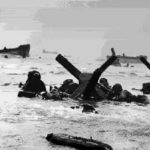
Angled and sharpen telephone poles like giant pongee sticks designed to destroy gliders and other aircraft (nicknamed "Rommel's asparagus"), and 200,000 steel barriers made up of railroad tracks all along the beaches, designed to be hidden at high tide and would ripe the bottoms of landing craft open like a can of flailing sardines. In addition, there was a myriad of concrete enforced trenches and underground rail lines to quickly move men, ammunition, and other material. Beyond that were numerous barracks and other fortifications, often camouflaged as haystacks, barns or houses. Lastly was overlapping communication lines. 

The Atlantic Wall itself ran from Brittany coast in far Western France all along the Northern coastline to include Belgium and Holland. In addition, German troops had fortified the coastlines all along Denmark and Norway. This truly was a "Festung Europa". As an interesting aside, German troops had painted in minute detail everything within view from their gun emplacement on the inside walls of their bunkers right down to every bush. If something appeared which wasn't on that permanent map, it was destroyed. 

So, what do you do when the enemy knows you're coming? You distract them, and that's exactly what the Allies did months ahead of the planned invasion (code-named "Operation Fortitude). The Allies used everything trick in the book, and then some, to make the Germans believe, not that there would be no invasion, but that the invasion would take place 370 miles away, at the Pas de Calais (driving time would be roughly 6 to 7 hours). What was significant about this particular area is that it's the closest point between France and the UK. It's also where Hitler had previously considered invading England from. Thus, the Allies played on Hitler's ego by convincing him that his idea for using Calais was the correct one. 

The Allies did everything from planting false plans, notes, and letters on individuals (and even once used a corpse) knowing that they would be intercepted by the Germans which would only fed their preconceived notions. Meanwhile, unknown to German intelligence, all of their spies had been captured. Many were "convinced" to work for the British, and thus would send false reports back to Berlin.

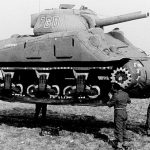
The Allies even built up an entire fake army around General George Patton, whom the Germans believed was the best Allied general and the man most likely to lead an invasion. They even created inflatable planes, trucks, tanks, and false radio traffic for the Germans to monitor. On top of this was around the clock bombing by US and British bombers to ensure the Germans always operated under pressure. 

Just prior to the invasion, the Allies stepped up their bombing campaign over France to further weaken the Germans. Finally, after months of planning, delays, setbacks, and mounting pressure from Stalin to open another front, it was decided by overall Allied Commander, General Dwight D Eisenhower and his staff, composed of senior Allied officers which included Arthur Tedder, Bernard Montgomery, and Bertram Ramsey, late in the evening on June 5th to go the following morning. It was then or never. The invasion was on. In private, Eisenhower composed two messages for broadcast. The first was to announce the success of the landing, which he hoped to give. The second for the all too real potential failure which he half expected to deliver.

The Allies amassed the greatest armada of ships the world had ever seen. Some 5,333 ships and landing crafts were prepared to sail. Ahead of the land assault was the aerial assault by approximately 23,400 US paratroopers from the 82nd and 101st Airborne along with British 6th Airborne and RAF Pathfinders silently coming in by glider. Their jobs would be to seize key bridges, rail points, and key crossroads in order to prevent German reinforcements from reaching the beachheads. 

In addition to being the largest naval armada in the annals of world history, there were also 3,455 operational heavy bombers, 989 operational light and medium bombers, and 3,824 fighters available on June 6th. However, due to a shortage of aircrews, not all of these flew on D-Day. Nevertheless, some 7,774 planes did fly that day (that number jumps to 9,000 if you include transports and gliders. By contrast, the Luftwaffe had available just 815 assorted planes). The sight and sound of all those planes must have been mind numbing. 

Unfortunately though, the landing took place at low tide causing the men to wade to shore yards out than anticipated since the drafts of landing craft prevented them from getting closer in to shore. As a result, hundreds of men stepped off wearing 80 pound backpacks into water over their heads; the weight of their equipment dragging them down to drown. Tanks, jeeps, and other vehicles also sank as the water was to deep or to rough. 

However, the low tide exposed the beach barricades which would had destroyed the landing craft had they tried to land at high tide. They also provided a measure of protection for the men to hide behind, saving who knows how many lives. Meanwhile, entire landing crafts were ranked by the murderous fire of the MG42s and small arms fire, often killing entire landing crews before they had a chance to step off. 

The Allies were, however, lucky in other ways too. First, many of the heavy gun emplacements were yet to be installed either or were manned by smaller caliber artillery pieces. Of the sixty combat infantry divisions and ten Panzer divisions, including key SS units, which comprised the 850,000 troops and 1,555 tanks in France at the time, the majority---the most experienced---were stationed at Port of Calais, there were only 80,000 troops at Normandy on June 6th and elements of just one Panzer division.

To make matters worse for the Germans, of the 80,000 or so troops in Normandy, the majority had little or no combat experience. In fact, most were Auxiliary and conscripts (many as young as 16) who came from the Eastern territories. Also, many of the tanks on hand weren't yet combat operational; needing repairs or refitting. Those which were working hadn't been brought up the front at previously instructed. 

Finally, the top command of German forces, including the commander for Army Group B, which covered Normandy, Field Marshal Erwin Rommel, were away. Some had decided to take some extended leave time in Paris and surrounding areas, not expecting an invasion due to weather, while Rommel had returned home on a surprise visit for his wife's birthday---June 6th. Meanwhile, Hitler was so convinced that the invasion would come at the Pas de Calais, that he had given strict instructions that no units---men, tanks, artillery, or plane---could be released without his personal approval. 

As a result, the Germans were poorly prepared for any attack, but the cherry on the top of the streusel was than when it was confirmed that the attack was indeed underway, Hitler was asleep. Suffering from bouts of insomnia, Hitler had taken a sleeping pill just hours before and his aides were afraid to wake Hitler up, and so the Allies were able to establish a foothold while Hitler counted sheep (Aryan no doubt).

 By the time Hitler finally awoke, the damage had been done. Even then, he was persuaded to release only a fraction of what was available (notably the 12th SS Panzer Division and the Panzer Lehr Division). In fact, while it should had only taken about six or so hours for reinforcing Hitler's Panzer units to make the journey from Pas de Calais to Normandy, French resistance fighters were able to use the delay to, give the Allies nearly three extra days to reinforce their positions by blocking or destroying roads, bridges, cutting powerlines, ambushing soldiers, and destroying fuel depots.   

Finally, to give some additional weight to the overall complexity of D-Day, besides the 150,000+ soldiers who participated in the landing and the 5,333 ships which got them there (including 200 warships which participated in the offshore bombardment) and the 9000 aircraft which flew a total of 11,085 missions, there were 200,000 vehicles plus 1,550 tanks landed on the beaches that day along with 1,695 tons of material.

Meanwhile Allied bombers dropped 7,616 tons of bombs that night before the invasion followed by 10,395 tons of bombs during the day of the invasion. 27 amphibious tanks were sunk at Utah beach, 120 Allied ships were damaged by German shelling, plus another 59 Allied ships which were sunk. Lastly, because of overwhelming Allied air superiority, the once famed Luftwaffe was only able to get just 100 or so planes up. 

D-Day, June 6th 1944 marked the beginning of the end for the German occupation of France, and eventually for the rest of Europe". By May 1945, the war in Europe would be over, and by August the war in the Pacific would come to a close too. There's another matter we must take into consideration too. 

Field Marshall Rommel remarked, about a pending invasion of Fortress Europe, that whenever and wherever it happened, it would be the "longest day" of the war. For approximately 5000 men it was indeed their "longest day" because for them that day never ended. They were the ones who died on that day. In addition, some 15,000 French civilians living in and around Normandy also died, mostly from Allied shelling. 

On the German side, around 9000 soldiers were killed, wounded or taken prisoner including 28 generals. When calculated for the entire Normandy Campaign, which lasted from June 6 to August 30th, there were 209,000 Allied casualties. For the Germans, it was roughly 200,000. As an aside, the average age of a GI at the time was just 19 while the average age of an officer (excluding senior officers) was only 23. 

While it's hard to believe that these old men with their walkers, canes, and wheelchairs accomplished these feats for which have all but been consigned to history books and the movies, there is no doubt that 81 years ago these were men of unbreakable will and character. They lived through a depression, fought a war, and came home to remake a nation. The same can be said of all the women who served as well and those who supported the war effort at home.

According to the Veterans Administration, out of the millions who served during WWII, there are approximately only 66,000 remaining, and we're losing on average 250 of these national treasures a day. Make no mistake that these men and women were indeed our greatest generation and we should feel blessed that they existed.

If you want to know more about this article's topic, please check out the links below. If you enjoyed the article, please consider passing it along to others and don't forget to subscribe. It's free! Lastly please be sure to "like" us on whatever platform you use to read anotheropinionblog.com. It helps with the algorithms and keeps our articles in circulation. Thank you!

Saturday, December 16, 2023

The Pronoun Wars: The Coming of a New Generational Conflict?


How should you react when you're introduced to someone, such as a potential job candidate, as "Zie", "They", "Hir" or similar salutary title? Are you taken back or perhaps try to suppress an amused smile or smirk? 

What about when you're at a social gathering and refer to someone as a male or female and you're informed that your "gender assumption" is disrespectful. They go on to say that there are 72 genders, not two. You should first inquire to how they identify before assuming they're male or female. How do you react?

In today's labor market, employers are going to find more and more examples like these walking through their doors. Federal and state labor laws have clearly defined your limitations. In today's "politically correct" social environment, you risk the possibility of a lawsuit or social censure ("cancelled")  if you don't handle the situation correctly.

There have been several instances where companies have risked serious damage to their customer base by being labeled "chauvinistic" or "patronizing" over something as innocuous as holding the door or pulling out a chair for a female.  Repairing one's public image can also be highly expense, often involving the services of a specialty PR team equipped with lawyers and social media experts, and a long term endeavor. But in the short term, protests and online campaigns to discredit you or your company can take a significant toll on your bottom line.  

Some groups chalk up the issue of gender identity, along with the so-called "body art" as nothing more than generational rebellion, something which has been going on since the beginning of time. Therefore it will pass and there's no need to really need to take it too seriously. In the 1950's social rebellion often nothing more than "bobby socks", 'ducktales", and customized fast cars.  By the 1960's, it was "make love not war" and "flower power" and "sex, drugs, and rock n roll" in the 1970's.

The message of the rebellion was often transmitted through magazines, newspapers, social interaction, and, of course, word of mouth contact (which typically involved a change of vocabulary to set them apart from the previous generation and create a new sense of identity). Movies and especially music helped with the transformation. Both were essentially, for instance, with the growth of the anti-Vietnam War movement.

It's never changed and likely will never change, and yet employers found ways to adapt, but this seems to be different because of the extreme nature of the "rebellion". Previously, it was mostly just music, cloths, long hair and beards, and a pseudo-primitivism in the form of communes. As they matured, many decided to "clean up" and conform rather than "tune in, turn on, and drop out" of society. Albeit late to adapt, much of their lifestyle went mainstream thanks to the marketing industry looking to cash in.  

Today, technology has evolved to the point where the message can bypass societal buffers or gatekeepers such as newspaper or magazine editors, radio program directors, or music executives. Smart phones, the internet, and so forth can almost instantaneously send images around the world. They can call together protests or "rushes" in minutes. No more need for leaflets and waiting days.      

Tattoos were once the domain of bikers, sailors, construction workers and the seeders aspect of society. Proper society avoided not just tattoos, but even those with tattoos! Today we commonly see not just tattoos on biceps and forearms, but nearly full body tattoos which encompasses hands, legs, feet, neck, the face, plus the ever popular and nearly ubiquitous "tramp stamp"!   

Body piercings aren't just two or three earrings, but giant ear inserts which look more like the hose washers than a piece of jewelry.  Eyebrows, nostrils, lips, and even tongues! A few even go to extremes by trying to change their entire appearance into something akin to a mythical creature.

But unlike simply getting a haircut and a change of clothes, some of these "personal statement" ornamentations aren't going away. Nevertheless, time is not going to be kind to many of these individuals as the body graphics fade and warp thanks to ageing and gravity.  Meanwhile, how are  your client and customer base going to react  to these representatives of your company, be it a cashier, a salesperson, a onsite tech advisor, or a manager?    

Babyboomers (1946-1964) were once most largest customer base out there. They were the ones with the deepest pockets, ran the most businesses or held the most senior positions in companies. They also had the most disposable cash of any generation before or since. However, with the youngest Boomer now age 59, many are quickly closing in on retirement. While Boomers were once the most vocal and rebellious of generations (think Woodstock), the majority have mellowed and become fairly conservative.

According to the latest Gallup poll on the topic, about 44% of Boomers are socially conservative. Another 27% are moderate, while just 17% remain liberal. Older generations, such "the Greatest Generation" (1901-1927) and the "Silent Generation" (1928-1945) remain a economic factor in the marketplace despite their declining numbers.

Perhaps it was the influence of the Great Depression, WWII, or the Korean War, that's the reason  the Greatest Generation and the Silent Generation children are just as socially conservative as ever. 48% identify as conservative while 26% are social moderates. 15% of them still see themselves as liberal (I suspect this the "Dobie Gillis" or Beatnik portion of the Silents).

Currently, the largest demographic are the Millennials (1981-1996), but they aren't the latest. After the Millennials is Generation Z (1997-2012) and the Alpha Generation (2013-2025). Together, these three generations represent not just a future down the road, but the immediate near term. Millennials are already well into the labor market and entering the medical and legal professions.

Many have already started to  run for political office. Alexandra Ocasio - Cortez (D-NY) is perhaps the best known of her Millennial cohort. This is also the generation most responsible for the change in attitude toward socialism,  gender identity, body art, and even race.

While mixed racial relations having been occurring since time immoral, there seems to a growing trend in the U.S.  among these three generations. Mixed races were uncommon in 1940's and 1950's (and in some states, downright illegal), they still happened (the most common was white/European and Native American or Hispanic). Same goes for the '60's, '70's and even into the 1980's, which accounted for just 5% of births,  but then things began to change. As of 2015, 14% of all children born were mixed race. Now, nearly half---48%---of Gen Z is of mixed race.  

The Alpha Generation is still pretty young right now, with the oldest being about 10 years old. In addition, polling has suggested that the majority of mixed race individuals tend to vote Democrats because of perceived bigotry among conservatives and Republicans. Remember too that these three generations are among the largest registered Independent. Ideologically, they're split between their support of democratic socialism and libertarianism.

As an aside, when individuals with Latino and some other race  are factored in, they are projected to be the dominated race by 2050 with their population tripling. Latinos are currently the largest minority in North America, just behind white/Europeans. Blacks, once the largest minority, are currently the second largest minority and expect to fall even further behind. By 2050, they will be only slightly ahead of Asians, although in certain areas, especially on the West Coast, Asians will be the largest. 

These three generations---the Greatest Generation, the Silent Generation, and the Boomers--- are also the least likely to tolerate the gender related changes mentioned at the beginning of this article. So, it appears that we've reached a crossroad, or perhaps impasse among the six generations. The question, therefore, is whether we can cross this divide together or will it fundamentally divide us as we make this generational transition.

Although historically, the first two are the ones most associated with race inequality, they've done remarkably well in adapting, especially given that their great grandparents with the Civil War generation while their great grandchildren are likely to be of mixed race.  They also have had well over half a century of unprecedented social change to get use to.

While the Greatest Generation and the Silents laid the foundation, the Boomers were largely at the forefront in bringing those changes about. Everything from the Civil Rights Movement to the anti-war movement, the women's rights ("women's liberation"), gay rights, and other social movements such as the largely Hispanic led United Farm Worker marches, the environmental movement, Labor activism, the Grey Panther protests, and the Native American "Red Power" movement, did much to bring about not just fundamental social change in this country, but forced us to come to terms with our past and present.  

These movements led to a greater sense of tolerance and cooperation among diverse groups which otherwise would have had little to do with each other. it showed that we could work together to bring about real change. It forced a lethargic Congress to act.  But just how far should change go? Is there a limit to tolerance? As suggested in the beginning, how do you respond to someone insisting there are 72 genders or that they need to be personally address as "em" or some other nearly unintelligible word? 

The use of the term "offended" is often bandied about by Millennials, Gen Z and the Alphas. It seems like anything they disagree with, from a word, an item, an expression to political speech, is labeled as "offensive", requiring an immediate retreat to a "safe space", often free from whites, straights and especially while males,  who all are caustically categorized as "the oppressor class" with the same degree of distain that the Nazis had for the Jews in the 1930's, before the boxcars, the camps, and the ovens. Talk about being "cancelled". Even a glance can be labeled as a "micro-aggression".

Individuals attending Christian oriented schools now demand Christian symbolism be removed as being "offensive" as they cruise through school of a scholarship provided by the same school. They've even employed "Diversity Officers" to enforce compliance. I have to wonder if "papers" will soon be required from all of us.

Today, anyone who self-identifies as a female is supposed to be granted unfettered access to a biological woman's locker room or restroom. They are permitted to play in women's sports, despite inherent and unalterable biological differences. Is that fair (or safe) for natural women? Do we need to make provisions for those who self-identify as trees or cats?  How far are we to go in validating the fantasies of others? Aren't we doing more harm by reaffirming these delusions?

Their "revolutionary" predecessors of the '60's and 70's promoted free speech and expression. The current generations seek to silence those they disagree with "by any means necessary". They block traffic, loot, arson, shoplift enmasse, vandalize, loot, rudely interrupt people  attempting to peaceful dine out or blocking access to restrooms, and then claim their acts are peaceful. They claim to oppose fascism while adopting fascist behavior. They decry "cultural appropriation" instead of understanding it as cultural appreciation while committing the same imaginary crime. 

These same groups speak of diversity while rejecting it (hint: diversity is not ordering a taco at Taco Bell). They freely accuse others of prejudice while not seeing it in themselves. Racism isn't a one way street. It goes both ways. A few claim to demand "justice" for an injustice not done to them and which has long since been paid with interest. The real reason for their failures can usually found in the mirror.

One can be proud of their ancestry and culture while respecting, or even admiring the same of others. Their youthful eyes are yet willfully blind to the brutal truth that all Mankind is equally guilty of the same crimes. The only salvation of our species is our universal acceptance and forgiveness of our collective past transgressions. Such is inheritance of the noble ape.  

Today's would be revolutionaries lack the focus of Chavez's UFW or dedication of Drs. King and Abernathy's "Freedom Marches" which made their point without breaking a single pane of glass (though the same can't be said of their opponents). They certainly lack the bravery of the "Freedom Riders" who didn't commit one act of arson or vandalism although they endured it. The greatest acts of defiance were sitting in a bus seat and lunch counter or boycotting public transportation without impeding anyone else. They know tactics but lack organization. They have passion but not the compassion.

Of these wannabe anarchists, self-imposed outcasts, and social media rebels, I don't doubt they're totally committed to the shock value of their actions, be it outrageously dyed hair, body piercings that look like they were done by an "Iron Lady", being inked from head to toe while accusing others of crimes that belong to the past, opposing fascism with fascism, or self-identifying as a cat, have somehow missed the point.

They've failed to understand that there's nothing new under the sun, nor does the child inherit the sins of the parent. Change comes slowly, and only through planning and dedication. It happens by bringing people together, not driving them apart.  But perhaps it's merely the pride and arrogance of youth which they've mistaken for wisdom as has every generation before them and all those yet to come. 

If you enjoyed the article, please consider passing it along to others and don't forget to subscribe. It's free! Lastly please be sure to "like" us on whatever platform you use to read anotheropinionblog.com. It helps beat the algorithms and keeps our articles in circulation. Thank you!


The Surge of Young Americans from Minority - White Mixed Families & Its Significance for the Future


 Earth Day 1970 was than a protest. It built a movement


United Farm Workers History


Saturday, March 21, 2020

What History Can Teach Us About Dealing with a Crisis...and Hoarders


A lot has already been said about this virus, COVID-19. Perhaps too much. Mainstream media, in its never ending search for ratings (which drives revenue), seems to have got caught up in its own feeding frenzy. The same goes with social media. The speculation and nonsense has become as contagious as the virus itself. I would even dare say that the speculation and hype has done more harm than good.

I'm not saying we shouldn't be informed. We should. In fact, it's very important that we take this pandemic seriously and takes steps to mitigate its spread through some simple changes in how we go about our day. Things like washing your hands thoroughly with soap, reducing your trips to the store, avoiding large crowds as much as possible, staying home if you're sick or think you're getting sick. Again, these are common sense steps we can take to minimize exposure and to slow down the spread of the virus. However, that doesn't seem to be the major problem here.

The biggest issue facing us right now is hoarding. I'm not talking about buying a few extra packages of meat or cans of vegetables or even a few extra rolls of paper towels, cleaning supplies, or the ever important toilet paper. During a natural disaster or bad weather, people routinely run out and buy extra loafs of bread, eggs, milk, and munchies. That's to be expected. But that's not what's happening is it?

The answer is, of course, a definite "no". What we are seeing is Americans at their worse instead of their best. We're seeing Americans panic and act of fear brought on by mainstream and social media. I am talking about people overloading their shopping carts with as many rolls of toilet paper, paper towels, hand sanitizers, and food stuffs (especially meats, canned veggies, bread, and frozen foods) as they can. Then, as if that's not bad enough, they come back for more or raid other stores. They go after things like aspirin or other over the counter medicines. Heck, they're even raiding gun stores and hoarding ammo!

The result is that it creates an artificial shortage, which causes others to panic which in turn, triggers more hoarding and panic. It means that other people---people who might be neighbors, friends, or even family---will get nothing. It means that seniors, the disabled, those with serious medical conditions or those who depend on others as their lifeline will do without. Can you imagine how our parents, grandparents or great grandparents---the "Greatest Generation"---would react our behavior?

They experienced the worse economic downturn this country has ever seen, lasting just over 10 years. With the collapse of the Stock Market and bank closures, many Americans lost practically everything they had. There were no credit cards. Savings accounts were rare and retirement accounts were unheard of. Businesses had massive layoffs or closed, leaving people with no or little steady work. Many were evicted from the their homes or farms as banks, in desperate for cash, called in loans early. People depended on the generosity of others as well as on their own ingenuity to survive.

In the 1930's, 85% of Americans lived on farms. However, the "Dust Bowl" destroyed tens of thousands of farms, which ultimately affected every single American, and with the absence of crops to sell, they couldn't pay their mortgages and there was little to buy at the store. As a result farmers were booted off their farms, leaving behind most of their possessions since there was no way to move them or any place to move them to. Many ended up as sharecroppers, the lowest rung on the agricultural ladder. It was a hand-to-mouth existence.

But despite the hardship, hoarding was unheard of. So too was people fighting over who got the last (or most) of some item. People pulled together to help each other. Soup kitchens sprung up just about everywhere. Even Chicago mobster Al Capone opened up soup kitchens throughout Chicago's Southside. People made room..and time...for each other. Still, it wasn't uncommon to see people, even whole families, living in cars, flop houses, or in cardboard boxes (called "Hoovervilles" after President Hoover.

As if the Great Depression and Dust Bowl weren't bad enough, many who weren't much more than pre-teens and young adults at the time, would soon find themselves going off to war; fighting in the Pacific, North Africa, and Europe. Approximately 420,000 of them would die or get wounded. Worldwide some 75 - 80 million would perish in this war.

At home their parents, family, wives, significant others as well as their children, friends, neighbors and even total strangers pulled together to support the war effort and one another. People accepted shortages. They forwent items they wanted, from nylon to rubber to pots and pans, in order to help the war effort. There were ration coupons for meat, gas, and a whole host of items. Even certain types of clothes, spare parts for cars, and medicine were rationed. There was scrap metal drives along side with war bond drives. Nearly everyone played a part.

People of all religions, races, national origin, economic class and political leaning came together as ordinary Americans helping each other. This self absorbed greed mentality which we're see today would have been unheard of and not well received. Following the end of the war in 1945, those who went off to fight came home to a very different America from the one they had left.

Women were firmly entrenched in the economy as workers. Businesses were more streamlined. Unions were stronger than ever. It seemed that innovations were happening everywhere. The millions of men and women returning from the war were still quite young and were well trained, but for the first time ever, they got the opportunity to go back to school thanks to the Servicemen's Readjustment Act of 1944, better known as the "G.I. Bill", and it transformed America. It expanded the Middle Class, created a host of new businesses, the development of suburbia and a hugely successful economy. This was truly our "Greatest Generation", yet they weren't entirely unique.

It was their parents, those who lived through the decades leading up to and after the "war to end all wars", the "Great War" which we commonly refer to as World War One (1914 - 1918) who set the standard. While the U.S. was directly involved for just over a year, Americans wasted no time in coming together to support the war effort, and in doing so, sparked an boom economy known as the "Roaring Twenties".

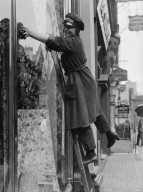
Women, for the first time in our history, left home not just to become teachers, maids, nurses, secretaries or employed in textile, but to work in the factories building cars, operating drill presses, cranes, driving trucks and so forth . Some took over the businesses their fathers or husbands left behind. This gave them a new found sense of personal freedom and self-confidence their mothers and grandmothers never experienced, not to mention the pride of earning their own paycheck. It was in no small part that this helped to motivate them to achieve the vote (which they did in 1920).

The "Great War" also triggered many new innovations, especially in aviation, automobile manufacturing, industry, roads, communications, and in particular, medicine, which were to be tested in the extreme. Just as the war was showing signs of coming to a close, a new and unexpected enemy emerged. This one would prove to be more widespread and lethal than the one being fought in the air, trenches or at sea.

This unknown enemy soon had a name; a most unusual name. It was called H1N1. It became better known as the "Spanish Flu" and it would kill an estimated 40 million people worldwide, more than those killed or wounded in the "Great War" (as an aside, it struck in two devastating waves between January 1918 and December 1920).

To put it in better perspective, the Spanish Flu killed more people in 24 weeks than HIV/AIDs killed in 24 years. Only the "Black Death" of the 14th Century killed more people with estimates ranging as high as 200 million people (in Europe as much as 60% of the population was affected. It took nearly 200 years for Europe to recover). The Spanish Flu was what our great grandparents faced and it was terrifying. By the time it was over, it had killed more Americans than were lost in both world wars combined.

Our great grandparents had never faced anything like this. They lacked the medicines and treatments that we take for granted. But as frightening and deadly as this was, they found ways to come together as a nation. Americans did what we've always done. We looked out for each other as best as we could. We checked on the elderly to make sure there were okay, even if it meant walking several miles to do so (or, as often as not, hitching up a wagon and bringing them what we thought they might need). We looked in on expecting mothers or on those with young children (back then almost everyone had "young children" since large families were common).

The one thing we don't read much of is mass hysteria. Naturally they were afraid, but they fought through whatever fears they had, and part of that was by depending on each other. I read through several articles about this pandemic and noticed something else which was missing. That was talk about hoarding. Once again, people respected each other to the point where they were willing to share what little they had. Back then that might have meant exchanging canned goods or food stuffs like venison, milk, cheese or perhaps doing something in-kind like making a quilt or fixing a broken chair.

Perhaps this was simply a different America or maybe it was simply a different kind of American. Individuals who were more self-reliant but at the same time more than willing to help a friend, neighbor, or even a stranger. Don't get me wrong. In looking around America today, I see acts of kindness and generosity in abundance. Nevertheless, what I'm also seeing are acts of pure greed, selfishness, and a disregard for others.

I see individuals acting purely out of selfish self-interest; many of whom whose sole intent is to take advantage of others. I fully expect to see all these opportunistic parasites trying to sell their toilet paper, paper towels, cleaning supplies, and can goods online on sites like EBay or in yard sales and flea markets at greatly marked up prices. Meanwhile, others are forced to do without, especially seniors, the handicapped or have serious pre-existing medical conditions and may be limited in their ability to get out and shop; the very individuals who are most vulnerable and afraid.

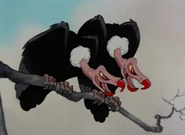
In many ways these hoarders are nothing more than vultures preying on the weak. They are thieves who have used their greed to steal from all of us. In previous times of revolutionary in places like France, Spain, Germany, and Russia, these types of individuals were often rounded up and shot or hanged by authorities, that is if their fellow citizens didn't beat them to death first. Even in the postwar South, hoarders were viewed little different than were looters...and were often treated the same way.

We need to strongly discourage hoarding. We need to call them out; to publicly shame them. They serve no one but themselves. Stores need to restrict purchases to curtail hoarding. In its place, we need to encourage compassion for others. We need to check in on our senior and those who are sick or disabled. If we can't do it in person or by phone, then ask authorities to do so. We need to be the kind of American we once were and can be again.


How the Horrific 1918 Flu Spread Across America


History: The Great Depression


The Library of Economics and Liberty: Great Depression


Women in the Factories


Saturday, June 08, 2019

June 6, 1944: The Greatest Moment of the Greatest Generation


Tuesday, June 6, 1944. It was perhaps the greatest moment of the greatest generation. The weather was miserable. It had been rainy and windy off and on for days, and when it wasn't raining, it was gloomy and overcast. Weather reports at the time said the weather was more akin to Fall than the Summer. However, there was expected to be a brief break. It wouldn't be much of one. It would still be overcast and the waters choppy, but the rain would stop and the wind over Northern France would be relatively calm. The invasion had already been postponed once because of the weather. The next anticipated break wouldn't in until early July at best.

Meanwhile, there were some 156,000 men ready to go. Many had already been loaded onto ships three days prior. The majority of them were seasick from the choppy water rocking the ships back and forth and up and down. At the same times, planes---bombers, fighters and transports---sat on the ground; fueled, armed, and awaiting their green light to load up and go. Scattered at sites all over England millions more waited for the order to go. Some were civilian while others were military; reserve and auxiliary, both men and women. They were on ships, at airfields, sitting in radar, communication, or command stations, air raid and observation outposts which scanned the skies looking for any hint that the Germans might preempt the pending invasion. The tension was palpable. It was like thousands of rubber bands twisted to the breaking point just waiting to be released. This was Operation Overlord, the code-name for the invasion of France by the Allies. Some 15 nations were taking part in this, the largest invasion ever attempted in history.

Just across the English Channel lay France. On a clear day, you could just make out its shores. But these weren't welcoming shores awaiting its liberators. These shores were the first visible signs of Hitler's Fortress Europe, and the soldiers behind its more than ample fortifications knew the Allies were coming; they had for many months and they were waiting.

Waiting for the Allied troops on those not-so-distant shores was sixty combat divisions, which made up approximately 850,000 German troops and ten panzer divisions. including the famous 21st Panzer Division which was one of the two divisions which made up the Afrika Korp. This was Fortress Europe, designed by Organization Todt starting in 1940 with the Fall of France, using thousands of mostly forced labor alongside highly skilled German engineers, craftsmen, and builders.

Fortress Europe ("Festung Europa" in German) was the name given to the Atlantic Wall; a vast series of massive gun emplacements housed near impenetrable bunkers, observation posts, miles of barbwire and an estimated six million landmines were laid along the beaches and roads near Normandy, angled and sharpen telephone poles like giant pongee sticks designed to destroy gliders and other aircraft (nicknamed "Rommel's asparagus"), and 200,000 steel barriers made up of railroad tracks all along the beaches, designed to be hidden at high tide and would ripe the bottoms of landing craft open like a can of sardines. In addition, there was a myriad of concrete enforced trenches and underground rail lines to quickly move men, ammunition, and other material. Beyond that were numerous barracks and other fortifications, often camouflaged as haystacks, barns or houses. Lastly was overlapping communication lines.

The Atlantic Wall itself ran from Brittany in far Western France all along the Northern coastline to include Belgium and Holland. In addition, German troops had fortified the coastlines of Denmark and Norway. This truly was a "Festung Europa". As an interesting aside, German troops had painted in minute detail everything within view from their gun emplacement on the inside walls of their bunkers right down to every bush. If something appeared which wasn't on that permanent map, it was destroyed.

So, what do you do when the enemy knows you're coming? You distract them, and that's exactly what the Allies did months ahead of the planned invasion (code-named "Operation Fortitude). The Allies used everything trick in the book, and then some, to make the Germans believe, not that there would be no invasion, but that the invasion would take place several miles away, at the Pas de Calais. What was significant about this particular area is that it's the closest point between France and the UK. It's also where Hitler had previously considered invading England from. Thus, the Allies played on Hitler's ego by convincing him that his idea for using Calais was the correct one.

The Allies did everything from planting false plans, notes, and letters on individuals (and even once used a corpse) knowing that they would be intercepted by the Germans which would only fed their preconceived notions. Meanwhile, unknown to German intelligence, all of the spies had been captured. Many were "convinced" to work for the British, and thus would send false reports back to Berlin. The Allies even built up an entire fake army around General George Patton, whom the Germans believed was the best Allied general and the man most likely to lead an invasion. They even created inflatable planes, trucks, tanks, and false radio traffic for the Germans to monitor. On top of this was around the clock bombing by US and British bombers.

Just prior to the invasion, the Allies stepped up their bombing campaign over France to further weaken the Germans. Finally, after months of planning, delays, setbacks, and mounting pressure from Stalin, it was decided by overall Allied Commander, General Dwight D Eisenhower and his generals, composed of senior Allied officers, late in the evening on June 5th to go the next morning. The invasion was on. In private, Eisenhower composed two messages fir broadcast. The first to announce the success of the landing. The second for its all too real potential failure.

The Allies amassed the greatest armada of ships the world had ever seen. Some 5,333 ships and landing crafts were prepared to sail. Ahead of the land assault was the aerial assault by approximately 23, 400 US paratroopers from the 82nd and 101st Airborne along with British 6th Airborne and RAF Pathfinders silently coming in by glider. Their jobs would be to seize key bridges, rail points, and crossroads in order to prevent German reinforcements from reaching the beachheads.

In addition to being the largest naval armada in the annals of world history, there were also 3,455 operational heavy bombers, 989 operational light and medium bombers, and 3,824 fighters available on June 6th. However, due to a shortage of aircrews, not all of these flew on D-Day. Nevertheless, some 7,774 planes did fly that day (that number jumps to 9,000 if you include transports and gliders. By contrast, the Luftwaffe had available just 815 assorted planes). The sight and sound of all those planes must have been mind numbing.

Unfortunately though, the landing took place at low tide causing the men to wade to shore from further out than anticipated since the landing craft couldn't get closer in to shore. As a result, hundreds of men drowned; the weight of their equipment dragging them down. Tanks, jeeps, and other vehicles also sank as the water was to deep or to rough. However, the low tide exposed the beach barricades which would had destroyed the landing craft had they tried to land at high tide. They also provided a measure of protection for the men to hide behind, saving who knows how many lives.

The Allies were lucky in other ways too. First, many of the heavy gun emplacements were either still empty or manned by smaller caliber artillery pieces. Of the sixty combat infantry divisions and ten Panzer divisions, including key SS units, which comprised the 850,000 troops and 1,555 tanks in France at the time, the majority---the most experienced---were stationed at Port of Calais, there were only 80,000 troops at Normandy on June 6th and element of just one Panzer division. To make matters worse for the Germans, of the 80,000 or so troops in Normandy, the majority had little or no combat experience. In fact, most were Auxiliary and conscripts (many as young as 16) from the Eastern territories. Also, many of the tanks on hand weren't yet combat operational; needing repairs or refitting. Those which were working hadn't been brought up the front at previously instructed.

Finally, the top command of German forces, including the commander for Army Group B, which covered Normandy, Field Marshal Erwin Rommel, were away. Some had decided to take some extended leave time (not expecting an invasion due to weather), while Rommel had returned home on a surprise visit for his wife's birthday---June 6th. Meanwhile, Hitler was so convinced that the invasion would come at the Pas de Calais, that he had given strict instructions that no units---men, tanks, artillery, or plane---could be released without his personal approval.

As a result, the Germans were poorly prepared for any attack, but the cherry on the top was than when it was confirmed that the attack was indeed underway, Hitler was asleep. Suffering from bouts of insomnia, Hitler had taken a sleeping pill just hours before and his aides were afraid to wake Hitler up, and so the Allies were able to establish a foothold while Hitler counted sheep. Although the battle for Normandy lasted until August, by the time Hitler finally awoke, the damage had been done. In fact, while it should had only taken about six hours for Hitler's Panzers to make the journey from Calais to Normandy, French resistance fighters were able to delay them nearly three days, giving the Allies more time reinforce their positions.

Finally, to give some additional weight to the overall complexity of D-Day, besides the 150,000+ soldiers to participate in the landing and the 5,333 ships which got them there (including 200 warships which participated in the bombardment) or the 9000 aircraft which flew a total of 11,085 missions, 200,000 vehicles plus 1,550 tanks landed on the beaches that day along with 1,695 tons of material. Meanwhile Allied bombers dropped 7,616 tons of bombs that night before the invasion followed by 10,395 tons of bombs during the day of the invasion. 27 amphibious tanks were sunk at Utah beach, 120 Allied ships were damaged by German shelling, plus another 59 Allied ships which were sunk.

D-Day, June 6th 1944 marked the beginning of the end for the German occupation of France, and for the Nazi "Thousand Year Reich". By May 1945, the war in Europe would be over, and by August the war in the Pacific would come to a close too. There's another matter we must take into consideration too. Field Marshall Rommel remarked, about a pending invasion of Fortress Europe, that whenever and wherever it happened, it would be the "longest day" of the war.

For approximately 5000 men it was indeed their "longest day" because for them that day never ended. They were the ones who died on that day. In addition, some 15,000 French civilians living in and around Normandy also died, mostly from Allied shelling. On the German side, around 9000 soldiers were killed and some 200,000 were killed, missing, or taken prisoner including 28 generals. When calculated for the entire Normandy Campaign, which lasted from June 6 to August 30th, there were 209,000 Allied casualties. For the Germans, it was roughly 200,000. As an aside, the average age of a GI at the time was just 19 while the average age of an officer (excluding senior officers) was only 23.

While it's hard to believe that these old men with their walkers, canes, and wheelchairs accomplished these feats for which have all but been consigned to history books and the movies, there is no doubt that 75 years ago these were men of unbreakable will and character. They were a physically strong as they were sharp as knives. They lived through a depression, fought a war, and came home to remake a nation. The same can be said of all the women who served as well. While we're losing on average 300 of these individuals a day, make no mistake that these were the greatest generation and we should feel blessed that they existed.


D-Day Causalities: Total Allied and Axis Numbers

Figures of the Normandy Landing

Atlantic Wall


Normandy Landing

Operation Fortitude