Showing posts with label Ronald Reagan. Show all posts

Thursday, August 28, 2025

Why Is There A Labor Day?


Welcome to the last “official” long weekend holiday of the summer!  It typically marks the closing of pools, the beginning of the school year, and the last quick vacation. But what is Labor Day really? Simply a day marking the end of summer or something more?

 Labor Day was established on June 28, 1894 and reluctantly signed into law by President Grover Cleveland, making the first Monday of each September a federal day set aside to celebrate the efforts of organized labor and the gains---financial and social--- it has made on behalf of  organized labor and the working class. Before then, there was something of  a “unofficial” day set by various unions, the date varying from place to place.

 It bears mentioning that organized labor, and those pushing for a day of recognition for organized labor were regarded as “socialist”, and indeed, they were. Most of those who belonged to labor unions were affiliated with various socialist political parties including the Socialist Party of America. Also, unions tended to become popular in jobs sectors with a history of abusing its employees such as mining, the auto industry, the garment industry, and shipping (train and cargo ships) and employed mostly immigrants and minorities.

 Later on, various other laws such as Social Security, minimum wage, 40 hour work week, child labor laws, women’s right to vote, job safety and the creation of OSHA, worker’s compensation, unemployment, and welfare were all labeled as “socialist” (or even “communist”) and vigorously opposed by Big Business.

Not long after the first Labor Day parade was held on September 5, 1882 in New York City, the New York State legislature began work to introduce a bill to formally recognize organized labor. However, it was Oregon which was first sign into law a bill establishing a day honoring labor on February 27, 1887.  Later that same year, four other states, New Jersey, Massachusetts, Colorado, and New York signed into law bills which not just acknowledged organized labor but also established them as state recognized holidays.

By 1890, Nebraska, Pennsylvania, and Connecticut join the growing list of states to celebrate organized labor. Four years later, 23 states  passed laws to honor working men and women. Finally, on June 28, 1894, Congress decided to get on the act, thus establishing Labor Day as an official federal holiday.

While this was a major victory for the working class, who was the first person to propose a day recognizing labor? Not surprisingly, the answer isn’t so clear cut. However, there are two individuals most often cited. The earliest records show that in 1882, Peter J. McGuire, the son of poor Irish Catholic immigrants and general secretary for the United Brotherhood of Carpenters and Joiners as well as the co-founder of the American Federation of Labor (“AFL”) first suggested setting aside a day to honor the working class.

The other contender was Matthew Maguire, another child of Irish immigrant parents. Maguire was the secretary of Local 344 of the International Association of Machinists and Blacksmiths located in Paterson, New Jersey. He made the proposal in 1882 while serving as the recording secretary of the Central Labor Union in New York. Maguire was also a New York alderman.

Additionally, the New Jersey Historical Society reported that according to an editorial in the Paterson Morning Call newspaper, “Alderman Maguire” President Cleveland should give Maguire a ”souvenir pen”.  As an aside, in 1896, Maguire ran as the vice presidential candidate for the Socialist Labor Party of America alongside the presidential candidate, Charles H. Matchett.

 Labor membership continued to growing, reaching almost 1/3 of the workforce by the end of the 1950’s, although in terms of actual numbers, it reached its highest point in 1979, hitting 29 million dues paying members. Nevertheless, union membership began its decline in the 1960s, accelerating in the 1980’s under President Ronald Reagan as companies began closing plants and exporting jobs overseas.

The once powerful public sector unions have also lost much of their clout following the infamous 1981 strike by the Professional Air Traffic Controllers Organization (PATCO) which resulted in the firing of some 11,000 striking air traffic controllers over pay, hours, and job safety issues by President Reagan, which, among other things, prohibits public unions from striking.  

 Another reason for the decline of union membership is growing trend of “Right to Work” legislation., which stems from Section14(b) of the 1947 Taft-Harley Act which gives state the authority to prohibit mandatory union membership even in a closed (or union) shop. Under “Right to Work”, employees may elect not to join a union and thus are not required to pay union dues.

 However, these employees still benefit from any and all collective bargaining agreements, including the use of a shop steward to assist them with any employment issue. The result is a drain on union resources. Currently there are 27 "Right to Work" states which include Kentucky, Texas, Florida, Alabama, Georgia, and Indiana. 

 Today, organized labor makes up roughly 10% of the workforce or about 14.3 million workers, with public unions comprising the bulk of union membership (33%) compared to just 6% who belong to private unions. The states with the highest union membership is Hawaii with 26.5% of its workforce belonging to a union. Hawaii is followed by New York with 20% and Alaska with 17.7%.

 Education and protective services such as teachers, police, EMS, and fire have the highest percentage of union membership. Black employees are most likely to belong to a union, more so than Hispanics, Whites, Asians, or Native Americans.  Meanwhile, men are slightly more likely to belong to a union than women (10.5% to 9.5% respectively).

I guess I've always tended to support unions, employee owned workplaces. and employee initiatives. Most of my relatives belonged to unions, especially mining and railroad. I've worked primarily for several non-union companies. Most were decent, but some seriously "used and abused" their employees. 

This resulted in high employee turnover, sloppy work, very low morale, heated outbursts, and hostile work conditions amid poor management skills. In fact, they were so bad, I used them as examples in the undergraduate and graduate classes I taught. Amusingly, few of my students believed the examples were from a real---albeit unnamed---company!  

In every place I worked, I was asked by fellow employees to serve as the employee representative. I'm not sure why I was repeatedly chosen. Perhaps they thought I'd be fair and balanced or perhaps it was because I wasn't bashful about challenging authority figures. Regardless, I was always honored by the trust and confidence my fellow employees had in me to take on management.

My last position before retiring was that of "Special Coordinator to the President for Special Projects". Basically, this was an assistant vice president position which functioned similar to my previous roles as an employee/management liaison (some saw it as a “non-union shop steward”). I provided a comprehensive report to the company president and the Regional Vice President with recommendations for the improvement of company morale and productivity (in addition to my role as Senior Legal Manager).

In addition to serving on several non-profit boards, I was appointed state chairperson of a national writers union (UAW/NWU 1981) where I served for 11 years. I handled state based issues and served on the local labor council. I was elected as the National Vice Chairperson of the At Large Chapter and served on several national committees. I also liaised with several labor oriented organizations and served on the Greater Louisville Central Labor Council.

Equality and fairness in the workplace has always been a historically important union issue. Unions backed social causes like the Women's Suffrage Movement, Civil Rights, and the Chicano Movement of migrant farm workers and sharecroppers for fair wages, not to mention the Family Medical Leave Act,  and the Uniformed Services Employment and Reemployment Rights Act (USERRA) which guaranteed returning military personal their old job back or paid training for a similar job in the event their earlier job or place of employment was gone. Many also unions opposed President Clinton's "NAFTA", which turned out to be a disaster for many American businesses as well as the working class.

Unions are said to have created the middle class, which may very well be true, but it's not been all wine and roses. If you look at countries with no or weak unions, you tend to find a weak middle class and widespread poverty. Of course, that isn’t to say unions are the answer to every social or economic problem, nor are unions always applicable to every job sector, but they aren’t the villain they are often made out to be by Big Business.

Additionally, unions have faced a lot of problems over the years, externally and internally. One of which is their refusal to think outside of the box, or to be more accurate, outside of the hip pocket of the Democratic Party which, like the Republicans, greedily serves Wall Street, leaving unions to “manage” the employees on behalf of management rather than represent them.

Union leadership has consistently failed to protect the best interests of its members by not making the major parties or candidates compete for their support. Labor must look elsewhere, even if it means forming its own political party (did you know that we're the only industrial nation---and one of the few nations period--- without a Labor party?) or face eventual extinction. It’s not a question of “if”, but “when”.

So, as you and yours do whatever you do on this last long weekend of the summer, take a moment to remember what Labor Day is all about---the working class of America.


Thank you for reading "Another Opinion", the Op/Ed blog page for the "militant middle".  Here at "A/O" we truly value our readers. At A/O we seek the facts as they exist, not partisan talking points.  We hope you find our articles informative and engaging. Comments are welcome, provided they are not vulgar, insulting or demeaning.  Another Opinion is offered without charge and is directed toward all independent and free-thinking individuals. We ask, however, that you "like" us on whatever platform you found us on in order to keep our articles available for free to others. Lastly, in order to keep costs down, we depend on passive marketing, and therefore, depend on our readers to please forward our posts along. Below you will find links to the sources we used in writing this article. Thank you. 


Labor Day


History of Labor Day


Right To Work—What It Is And More Importantly, What It Isn’t?


Labor unions in the United States


Unions, Workers, And Wages At The Peak Of The AmericanLabor Movement


US labor union membership slips in 2024 to record low


Right to Work


The Consequences Of Reagan Breaking The 1981 Air TrafficControllers Strike


Matthew Maguire


Charles H. Matchett


Peter J. McGuire


AFL-CIO: Peter J. McGuire


Socialist Labor Party of America


Thursday, September 19, 2024

The Great Swift & Trump Dustup: The Impact of Celebrity Endorsements

Celebrates have long sought to use their fame (or at least perceived fame) to push every type of product there is, from video games and deodorant to restaurants to clothes. Back in the days of radio and early television, it wasn't uncommon to see some of your favorite movies stars hawking "Chesterfield" cigarettes, Colgate toothpaste, or some perfume. It seems like everything and everyone had a sponsor.

It's not much difference when it comes to politics which is, after all, nothing more than a popularity contest that much different from the ones you had in Junior high school when running for school council or class president, talent contests, or the glitzy high budgeted "Miss America". pageant. Always with the contestants trying to be everything to everyone while promising the moon. The only real difference is that with political races the outcomes are actually matter.

These celebrities (which includes athletes, television and radio "personalities" and entertainers)  are often treated as a sort of royalty, as if their opinions were somehow gospel. They get asked  by the media about world affairs, the economy, national policy, and so forth as if they're are experts. Now, why everyone is entitled to an opinion, the majority of these folks known little and the topics they're speaking. They tend to exist in a make believe world, which may be why they also tend to be highly liberal. It's only in a highly liberal world that they are allowed to fully express themselves.

When it comes to performers and politics, endorsing candidates is nothing new. The famous Al Jolson endorsed  the Republican Warren G. Harding for President in 1927 (including writing and performing a song for the campaign at campaign stops). The "Chairman of the Board", Frank Sentara, joined with Humphrey Bogart, Rita Hayworth, Orson Wells, and other notables endorsed Franklin D. Roosevelt of President, including holding several fundraisers.

Meanwhile, Bob Hope and Bing Crosby backed Thomas E. Dewey. Sammy Davis Jr and football legend, Jim Brown, Ronald Reagan,  John Wayne, and "The King", Elvis Presley, were Nixon supporters while "Babs" (aka Barbara Streisand) openly helped both Bill and Hillary Clinton.

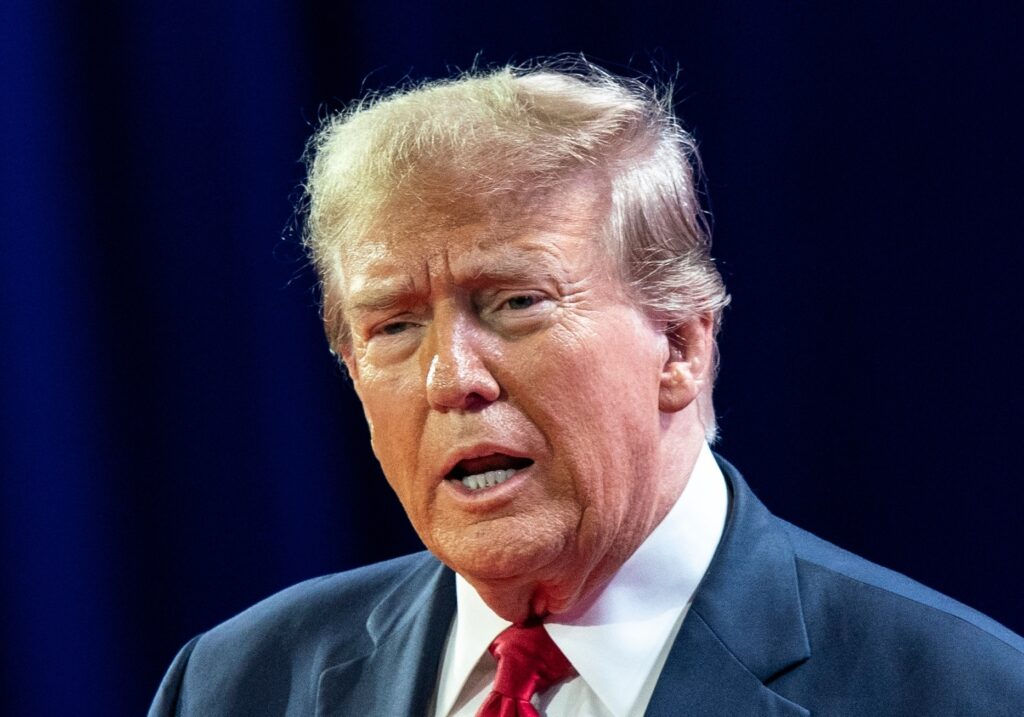
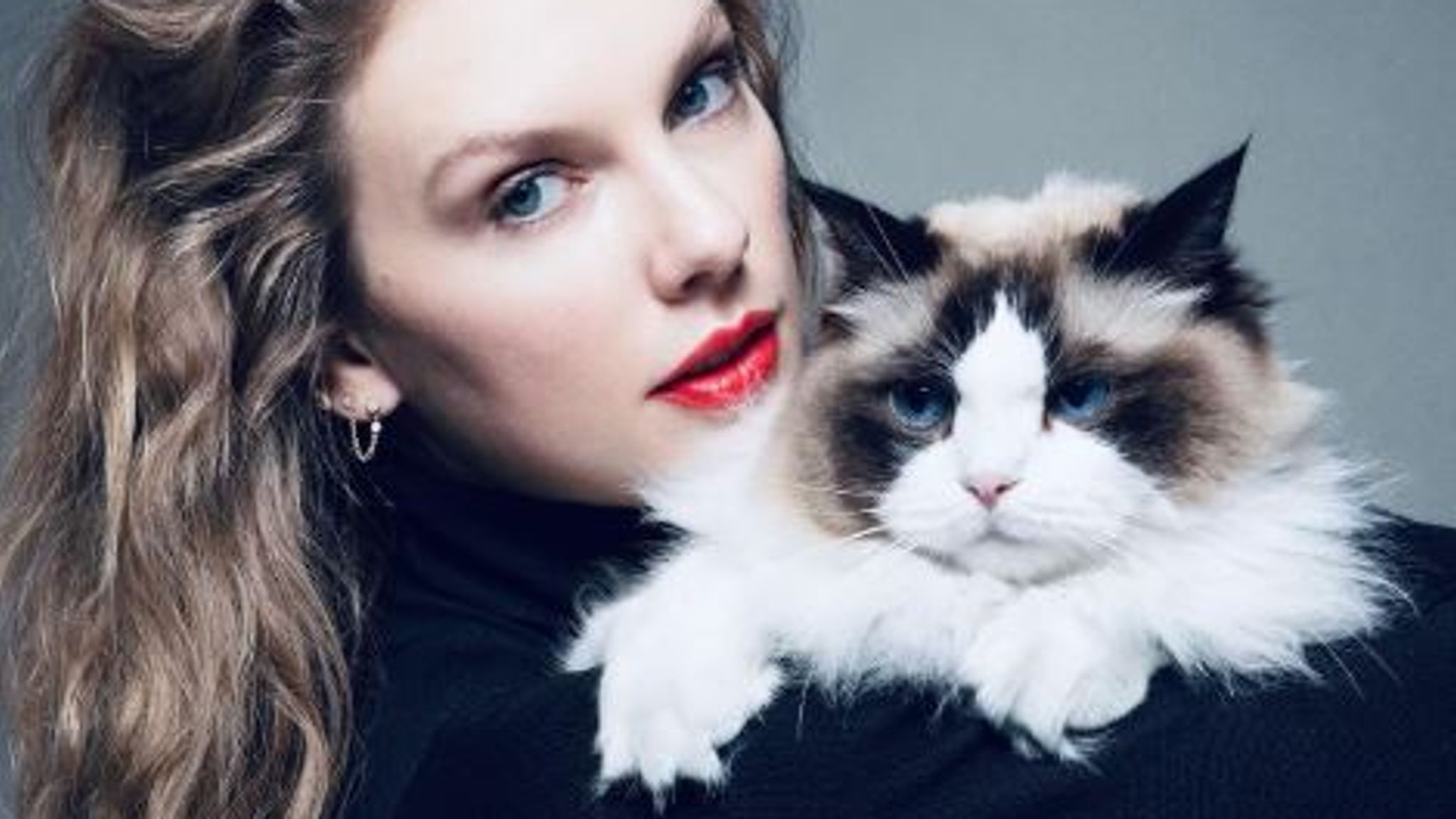
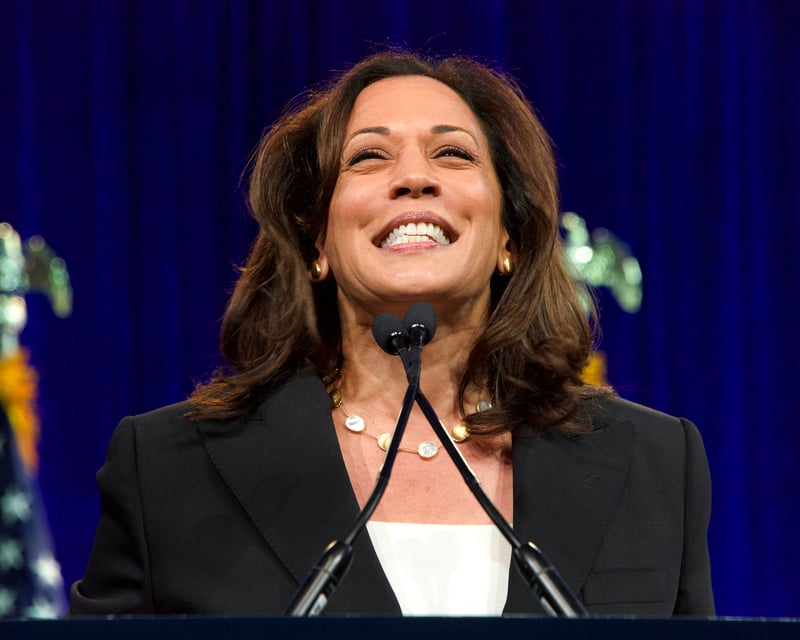
Fast forward to 2024, and we find former President Trump with the likes of Rosanna Barr, Kid Rock, Hulk Hogan, 50 Cents, Ted Nugent, Elon Musk, and Mike Tyson are among a great number of other popular individuals in his corner. On the other hand, Vice President Kamala Harris has the majority of the wealthy "Limousine Liberals" working it for her, with names such as  Spike Lee, Oprah Winfrey, Mark Hamill, Beyonce',  Mark Cuban,  Jane Fonda, and George Clooney (historically, they've always supported liberal Democrats). However, the biggest name to come out of in support of Harris was that of billionaire pop performer Taylor Swift.

Following the recent debate between Donald Trump and Kamala Harris on September 11th, Swift issued a statement (signed "Childless Cat Lady") via the social media platform, Instagram, to her approximately 283 million Instagram followers announcing her support for Harris. Nevertheless, following Swift's Instagram post, musical legend Stevie Nicks, Aubrey Plaza, Dan Levy, and "Lil Nas X" (aka Montero Lamar Hill) all followed suit.

This apparently resulted  in some 406,000 individuals visiting the Votegov.com site to register to vote (presumably Democrat and again, presumably for Harris).  Many of these are part of the new wave voters comprised of Millennials, Gen Y, which will eventually replace  Gen X and Babyboomers.

Somewhat amusingly, the former president responded that he hated Taylor Swift  (presumably referring to Swift's music) and add that he liked "Mrs. (Brittney) Mahomes better" Mahomes is a former professional soccer player and co-owner the Kansas City Current soccer team. As a side note, I have to admit that I'm not a fan of Swift or Pop music in general). Brittney is also married to Kansas City Chiefs quarterback, Patrick Mahomes.  Ironically, Mahomes came out in support of Taylor Swift shortly after his comment.

Taylor Swift is the first ever musical performer to occupy the Hot 100's top ten records and end up as Billboard's year-end number one performing artist (male or female) in three decades---2009, 2015, and 2023. At 34 years old and with an estimated net worth of $1.3 billion dollars, Taylor Swift has sold an estimated 114 million albums (11 albums certified platinum) and has received more awards than any other artist. 

What kind of impact could Taylor Swift potentially have in the election? A recent survey by Statista indicated that 22.56% of adults identified themselves as fans of the performer (they self-identify as "Swifties"). Digging further into the demographics of her fanbase, we find that 41% of her fans are between ages 18 and 24, making them members of Gen Z.  If that age bracket is expanded to age 34, then we find that the personage of fans jumps to 78% (the difference is comprised mostly of males). 

Looking at gender, 61.5% of "Swifties" are female. As an aside, the data shows that the older the age bracket (up to age 44), the more likely the fanbase will be comprised of males. Over the last 12 months, Swift has seen a growth in her overall fanbase of 25% on Instagram and 75% on TikTok. Swift is seen as the quintessential social media super star.

On YouTube, she as 50.3 million followers. On Facebook and Twitter (aka "X") it's 76.9 and 92 million respectively. Instagram shows 232.9 million fans. TikTok show her having 92 million followers while Soundcloud has 428,500.  There are 62.5 million followers on Spotify. Deezer has 9.4 million "Swifties".

 By comparison, former Beatle and musical legend, Paul McCarthy, has "just" 4.5 million on Instagram. Black Sabbath front man and bat connoisseur, Ozzy Osborne has 75.8 million follower on TikTok. Rock masters, Queen has only 3.3 million on TikTok.  On Twitter/X, Led Zeppelin reaches 721.2,000.  Lastly, the greatest band of all time, The Beatles, have 8.5 million fans on YouTube.

Given the ages, gender, and active  engagement of her  fanbase, there's little question that her support of Kamala Harris can have a substantial impact. None of Trump's celebrity backers can come close to matching Taylor Swift and her "Swifties". Should Harris win her race for president, she'll owe a huge debt to "The Childless Cat Lady".

So, if we go by the what we see here, Taylor Swift's endorsement of Kamala Harris could have a serious impact on the outcome of the race. Celebrity endorsement can give a candidate access to an entire base of potential voters they may otherwise not have access to. They also raise the prospects of more financial donations coming into the coffers.

However, celebrity endorsements are a double edge sword. Not everyone likes a given celebrity or their opinion for whatever reason. As such, their endorsement may bring out that "anti-celebrity" crowd, and with it, their vote and possible donations. Secondly, many voters see celebrity endorsements as nothing more than an attempt to bring attention to themselves, especially if their career is sagging or passé (such as can be said of Roseanne Barr or Kathy Griffin). Media endorsements can be seen as just as useless since they tend to promote their own agendas, which rarely benefits the people.

Taylor Swift's endorsement of Kamala Harris, the Vice President with the longest and worst approval rating in U.S. history, has breathed new life in her campaign. It has also diverted attention from the particulars of the race to the sideshow. Untimely, how much will it impact the race? I guess we'll know in just two months. Hopefully, however, the American People will stay focused on the issues and not on the circus performers.


 If you enjoyed the article, please consider passing it along to others and don't forget to subscribe. It's free! Lastly please be sure to "like" us on whatever platform you use to read anotheropinionblog.com. It helps beat the algorithms and keeps our articles in circulation. Thank you!


From Sinatra to Streisand: 100 Years of Celebrity PoliticalEndorsements


Trump Celebrity Endorsements: A Full List of Celebrities  Supporting the Ex-POTUS


Celebrates who Support Trump


These celebrates have endorsed either Harris or Trump forpresident


All the Musicians Supporting Kamala Harris  in the 2024  Presidential Election


Lists of awards and nominations received by Taylor Swift


How to Build a Fanbase That Can Break Ticketmaster


Sunday, July 11, 2010

Obama Sues Arizona over SB1070

President Obama has ordered the Justice Department to formally file suit against Arizona. Their allegation is that the Arizona’s new tough anti-illegal law is “unconstitutional” in that matters relating to immigration fall exclusively to the federal government. In what could be dubbed as “Showdown at the OK Corral” over the issue of illegal immigration, Arizona’s Governor Brewer may want to hang out a “Welcome to Tombstone Mr. President” as his administration bumbles into a lawsuit they really don’t want any part of.

The general rule regarding federal law versus state law is that a state law can not impede or contradict existing federal law. It does not matter if the federal law is haphazardly enforced or not. At present, the federal government does not have a single coherent law regarding illegal immigration, and certainly takes an uneven approach to its enforcement with little in the way of “teeth”. As a result, illegals have little fear at being stopped. An arrest and deportation is of only minor inconvenience, and they’re often right back in this country within a few days. Employers too have little to fear from federal government which rarely investigates and even more rarely prosecutes (lack of personnel and money). Individuals seen “running for the border” are often not stopped under existing federal law, who must be stopped in the act.

Arizona’s new law, however, provides law enforcement officials with the legal authority to stop and arrest anyone thought to be here illegally provided they have justifiable probable cause. To avoid charges of discrimination, Arizona requires all law enforcement personnel to take racial sensitivity classes, with an emphasis on avoiding racial profiling. In short, Arizona lawmakers anticipated the Justice Department’s lawsuit and took every step to ensure its law would be compliant with existing federal law.

Seventeen other states have begun to take steps to enact similar legislation as Arizona’s. Three states, Utah, South Carolina, and Oklahoma have already taken steps to stop illegal immigration (http://www.washingtonpost.com/wp-dyn/content/article/2010/07/07/AR2010070703017.html). Oklahoma has, for instance, made it a felony for transport or shelter illegal immigrants, and they’ve blocked efforts by illegal immigrates to obtain driver’s licenses and in-state tuition. 

 A bill will be introduced in 2011 to seize the property of any business that knowingly employs illegal immigrants. A good step, but I wonder if this includes religious groups who act as if they are exempt from local, state, and federal laws when it comes to illegal immigration. They often smuggle, shelter, and find housing and jobs for illegal aliens, and at the same time, instruct them in steps they can take to circumvent existing laws concerning public assistance.

Meanwhile, Obama has ratcheted up the rhetoric about providing illegal immigrates with blanket amnesty. Obama said during a speech, which received little national press coverage, at American University on July 1 that he would seek to provide the estimate 11 million illegals with “pathway for legal status” and went on to claim that our southern border have never been more secure. 

Under his version, illegal immigrants would have to acknowledge that they broke the law; register; pay their taxes and possibly a fine; learn English. Geez, I wonder if that would have worked for Al Capone? (“Ah, sorry about that St. Valentine Day’s thing. I’d like to pay back taxes on my rackets in cash. Anyone want a beer?”). Obama has even hinted that he may bypass Congress and issue an executive order. Wouldn't surprise me one bit. Obama has become quite adapt at doing end runs around Congress. For more, I suggest checking out: FairUs 

Book Review

There’s an old joke that if you remember the sixties, you probably weren’t there. That’s the basic premise behind Bernard von Bothmer’s new book, “Framing the Sixties: The Use and Abuse of a Decade from Ronald Reagan to George W. Bush”, at least, if you’re a Republican. The sixties, as the author correctly points out, was really two eras. The first, “the good sixties”, was from the late 1950’s to the Kennedy assassination in 1963. 

In fact, up until Kennedy’s murder, America was still basking in the afterglow of the Eisenhower Years, with a few exceptions such as the failed Bay of Pigs invasion, Cuban Missile Crisis, which brought the world to the literal brink of nuclear war (Soviet Premier Khrushchev ordered the Russian Navy to stand down due to, in large part according to Khrushchev, Kennedy’s “lack of experience”), Sputnik, the Berlin Wall, and America’s first tentative steps into Vietnam.

Von Bothmer goes to describe “the bad sixties” as 1964 to 1974 as a time of America’s quagmire in Southeast Asia, student protests, the SLA, Black Panthers, the Gray Panthers, the SDA, set-ins, campus takeovers, Chicago Police Riots during the Democratic Conventions, the murders of Dr. King and RFK, the War on Poverty, moon landings, and finally, America’s military defeat in Vietnam and Watergate. In between we had the Civil Rights, Women’s, and Gay movements. We had NOW, rock’n’roll, love-ins, the Summer of Love, Hell’s Angels, the Green Movement, drugs, and sex galore. It was an era of pushing the limits…any limits.

The book, all 232 pages of it, was interesting; though provocative may be the more operative word since von Bothmer contends there is a subtle battle raging between the Left and Right as to who will ultimately “own” the legacy of the 1960’s. According to the author, it was the Right who broke the 1960’s into essentially the “good” and “bad” years, with the obviously the Republican afterglow of Eisenhower representing the best part and the Democratic led latter years as representational of all that was bad about the era (of course, Watergate serves as a explanation point for the Democrats while Vietnam underscores the decade for the Republicans).

It has often been said that the victors write the history. Personally, I don’t believe the history of the sixties has yet to be written. The sixties was as much about conservative blue collar white kids and poor blacks marching off to a unpopular war as it was for the sons of the rich being deferred or the burning of draft cards, bras, and communes. 

The book makes a great effort at trying to make some sense of an incredible era in today’s political light, though it is clear that the author lays much of the blame at misrepresenting the icons of the 1960’s at the feet of the Republicans. There was much that good about the 1960’s, and much that was bad. I don’t think either side is any more right or wrong as the other. It was also a time when people believe we could do better as a society, and they tried. Oh, and by the way, I was there.

Poll Results

Our last poll asked if you thought the federal government should sue Arizona for enforcing existing immigration laws. 37% of you said they should while 63% of you did not. Actually, I think it’s a good idea. Have I lost my mind you wonder? No; at least I don’t think so. The reason is because I see this blunder by the DOJ as something of a “friendly” lawsuit. The lawsuit will show the true intent of Arizona’s law was to protect its citizens. Secondly, that it was designed to be compliant with federal law (such as it is). Third, a decision in favor of Arizona will spur on other states to enact similar legislation. And fourthly and perhaps most importantly, a defeat of the DOJ may, just may mind you, prompt Obama and Congress to do something about illegal immigration instead of sit there on Capitol Hill like a bunch of bobble heads.

Monday, November 02, 2009

New York’s 23rd Congressional Race and Future of the GOP

The race for New York’s 23rd Congressional District has got to be one of the important elections to come along since the election of Obama; perhaps even more so. However, ever since the election of Ronald Reagan, the Grand Ole Party has shifted further and further to right, especially on social issues while the majority of country has remained pretty much in the middle. Many have referred to this shift as the take over or hijacking of the Republican Party. First, a little history.

For decades, the GOP was primarily a center right political party. That is, it premise was to maintain a small Federal government; low taxes (especially for the middle class), support for small business and middle class, creating opportunities for poorer Americans to make it to the middle class, and an attitude that government in any form doesn’t belong in your life; especially your bedroom. It was this basic philosophy which made the GOP so successful in winning elections, especially the Presidency. But beginning with Richard Nixon’s “Southern Strategy” in the early 1970’s of wooing conservative, mainly White Protestant Democrats, to the GOP, the party has gradually shifted its ideology further and further to the right of the political spectrum in order to accommodate these newcomers. This strategy peaked with the election of Ronald Reagan. It was this strategy which lead to the so-called takeover the GOP by the social conservatives or religious fundamental Far Right.


Social conservatives in droves switched to the Republican Party in the late 1970’s and early 1980’s, which enabled the GOP to win hereto un-winnable seats throughout the South. However, there was a high price to pay for these victories, and it appears we are j now seeing just how high a price. As the social conservatives began to exert a greater and greater influence on the GOP, they, at the same time, adopted a philosophy of ousting those within the party who didn’t agree with their definition of what it means to be a Republican, even if that meant support a Democrat against GOP nominee. Libertarian-leaning Republicans in the northeast and well as middle and upper western states were the first to find that they were no longer welcome. As a result, many either left the GOP to join the Libertarian or Democrat Party. Some just walked away from politics all together.

Next to be targeted was the Rockefeller Republicans (also called “Eisenhower Republicans”), who were predominate in the Central and Eastern portions of the US, including upper state New York, Vermont, New Hampshire, and Maine. These were the moderate or centrists, who at one point, constituted the largest segment of the GOP and were responsible for much of the Republican’s electoral success throughout the decades (these are the so-called “RINOs” or “Republican In Name Only” oft referred to by the Far Right). The high water mark of these same social conservatives was the election of George W. Bush (who, later, was aggressively criticized for not being conservative enough). The end result was the election of Barak Obama. And this brings me to the 23rd Congressional race.

The GOP nominated a centrist Republican, Dede Scozzafava, to run in a special election to fill an empty seat in upper state New York, which has traditional been fairly liberal and where centrists in both parties have done well. Ms. Scozzafava is pro-choice and supports gay marriage; both of which are considered serious indictments against her qualifications as a Republican by the Far Right. Enter the very conservative Doug Hoffman. Now, as a political observer and someone who has over 30 years of political experience, comes the interesting part.

Social conservatives from across the country has swarmed in to help Mr. Hoffman, a American Conservative Party candidate, defeat Ms. Scozzafava. Media types like Glenn Beck, Rush Limbaugh to name just two have joined in the fray to condemn Ms. Scozzafava. What’s more is the number of Republicans who turned their back on their party’s nominee and endorsed Mr. Hoffman, a member, as I said, of a competing party (even referring to him as “the real Republican”). We’re talking some of the biggest names in the Republican stable. Ms. Scozzafava has been forced to drop out of the race, and as a result of the GOP’s failure to have her back as it were, endorsed the Democrat, Bill Owens.

My concern is not whether or not members of the Far Right support, or even like Ms. Scozzafava. It’s the fact that we have members, and especially elected leaders of the Republican Party, who have taken an oath to actively and aggressively support the nominee of their party, backing a candidate in another party. That’s just so wrong on so many levels to me. First off, the 23rd District and Ms. Scozzafava’s views appear to be a good match. Secondly, she won the party’s nomination. Third, you back your party’s nominee period. The failure of Republicans, Democrats, or anyone else, to back their own speaks volumes about their character, and this election will speak volume to the American People about the character of today’s Republican Party. This race may not just decide who wins a congressional seat, but whether the GOP continues its present path to regional irrelevance or returns to become a major national player

While I can understand why Ms. Scozzafava quit the race, I am also a strong believer in never backing down from a just fight. Never. She should have stood her ground and demanded publicly that the GOP man-up. I believe there is a place; an important place for the social conservatives in the political makeup of this country. But I believe that there is an equally important place for the libertarian-leaning and moderates too. To win elections, you need candidates whose social and economic views match their future constituents. One size doesn’t fit all anymore in politics than it does life.


The Great Energy Debate Pop Quiz
by Scott Bittle & Jean Johnson,
Authors of Who Turned Out the Lights: Your Guided Tour to the Energy Crisis

The energy issue is very confusing, and frankly, most of us will never catch up with the experts on all the details. Still, there are some basic facts that are good to know. Do you know them?

True or false? When it comes to global warming and air pollution, nuclear power is one of the most dangerous forms of energy.

Not true. The accidents at Chernobyl and Three Mile Island left lots of people worried about nuclear plant safety, but if you're worried about climate change, nuclear power is one of the least dangerous forms of energy we have. Generating electricity from nuclear power releases virtually no carbon dioxide (the major green house gas) into the atmosphere, and it doesn't cause air pollution either.28 Small amounts are emitted during mining and processing the uranium (you need uranium for nuclear power) and in other related activities, but it's nearly impossible to do anything from start to finish without releasing some green house gases. Experts say the carbon dioxide released in these associated activities puts nuclear power roughly on a par with wind or hydroelectric power.29 Like every form of energy we've discovered so far, nuclear power does have drawbacks, but global warming isn't one of them. The big drawback to nuclear power is that the leftover waste, the spent fuel, has to be stored very, very carefully, and it lasts a really, really long time. Even so, nuclear power is widely used in Europe and Japan, and despite the controversies about it, it supplies 19 percent of electricity in the United States -- enough electricity to keep air conditioners, TiVos, and iPods going in California, New York, and Texas.30 Scientists are working on other ways to dispose of nuclear waste, including recycling it into the nuclear power plant itself, but the problem hasn't been solved yet.31 See Chapter 9 for a more complete discussion of the pros and cons of relying more on nuclear power, including the safety issues.

True or false? ExxonMobil, BP, and Chevron control nearly half of the world's known oil reserves.

Not even close. In fact, none of the big multinational oil companies we complain about so often even makes the top ten list. So who's controlling the lion's share of the world's oil reserves?

The national oil company of Saudi Arabia (Saudi Aramco) has the most oil reserves, followed by the national companies of Iran, Iraq, Kuwait, Abu Dhabi, Venezuela, Libya, Nigeria, China, and Lukoil, the largest oil company in Russia. ExxonMobil comes in at number 13, BP at 15, and Chevron/Texaco at number 20.32 Congress likes to have the corporate heads of the major oil companies appear in hearings so our elected representatives can have their fifteen minutes of fame asking tough questions about gas prices, but in many ways, the big multinationals such as ExxonMobil have much less control over the country's oil situation than they once did.

Which country is guiltiest when it comes to releasing green house gases into the atmosphere, the United States or China?

It's a trick question because, frankly, the United States and China are running neck and neck for worst greenhouse gas polluter in the world.33 There are several ways to look at this, and none of them exactly puts the United States in the clear. Global warming is caused by the accumulated green house gases in the atmosphere (carbon dioxide and its brethren). Since the United States got a head start (we started using large quantities of coal about the time of the Civil War), our country alone is responsible for about 29 percent of the total accumulated gases, compared to just 8 percent for China.34 Then there's the per person measure. In 2005, each American gushed out about 20 metric tons of carbon dioxide, compared to about 5 metric tons for each person in China.35 But China has a billion more people than we do, and they are building and manufacturing and transporting like crazy there now. If the average Chinese person begins emitting greenhouses gases at the same rate as the average American, it will just wallop the environment. As of now, China is producing about 21 percent of the world's carbon dioxide emissions.36 Bottom line? The United States and China need to stop pointing fingers at each other. Both our countries really need to get with the plan.

Who sets the price for a barrel of crude oil?
A. OPEC
B. Oil companies such as ExxonMobil and Saudi Aramco
C. The U.S. Department of Energy
D. The New York Stock Exchange
E. None of the above

The answer is none of the above. The price is actually set by bidding, buying, and selling on major commodities trading exchanges in New York, London, and Singapore.37 These are different from the stock market, but they operate in a similar way. Basically, traders buy and sell all day at the best price they can get, which is why the price for a barrel of oil goes up and down so much and generally changes daily.38 That doesn't mean that OPEC and other oil producers have no impact on prices. As OPEC itself puts it, member countries "do voluntary restrain their crude oil production in order to stabilize the oil market and avoid harmful and unnecessary price fluctuations."39 In other words, they calculate how much they're willing to pump based on the price they want to get. One of the disputes about oil that erupts from time to time is the degree to which the OPEC countries are producing as much as they can or whether they are holding back. (You can read more about what affects the price of oil in Chapter 6.) On the other hand, since the oil is theirs to extract and sell, it's also fair to ask whether, from their point of view, they should produce as much as they can as quickly as they can, or whether they want to preserve some of their countries' natural resources for the future.

What percent of the world's known oil and natural gas reserves are in the United States? A. About 20 percent B. 10 to 20 percent C. 5 to 10 percent D. Less than 5 percent

In area, the United States is the world's third-largest country; only Russia and Canada have more territory than we do.40 Unfortunately that doesn't mean we control a substantial share of the world's oil and natural gas reserves. According to 2008 estimates, the United States has about 2.4 percent of known world oil reserves and about 3.6 percent of natural gas reserves.41 These are figures for the "known" or "proved" reserves -- that is, geologists actually know the stuff is there -- so more exploration could definitely up those numbers a tad. However, as we mentioned earlier, many experts believe that the remaining U.S. supplies of both oil and natural gas are in less convenient places and less convenient forms (such as tar pits). That means they'll be costlier to extract. Just to make your day, would you like to know that Iran, which is tiny in comparison with the United States, has more than four times as much oil42 and natural gas as we have?43

True or false? As long as global warming doesn't increase world temperatures more than 5 or 10 degrees, the effects will be easily manageable.

Not according to the climatologists who worry about global warming. In 2007, the UN's Intergovernmental Panel on Climate Change summed up the judgment of scientists worldwide predicting that average global temperatures will rise 3.5 to 8 degrees by the year 2100.44 It sounds minor. After all, most of us would be hard pressed to say whether the temperature was 70, 75, or 80 on a nice spring day. But sustained changes like this over time cause glaciers to melt and sea levels to rise. People living near water, especially poor ones in poor countries, can be displaced, and miserable, disease-carrying microbes can flourish. It changes what crops you can grow where, which can cause serious economic and social upheaval. In 2008, the U.S. government released a report summing up the scientific consensus on what climate change could mean here in the United States.45 Among the conclusions: it is "very likely" that "abnormally hot days and nights and heat waves" will be more frequent, increasing the number of people who die from heat-related causes, especially the elderly, frail, and poor. The report warned that "climate change can also make it possible for animal-, water-, and food-borne diseases to spread or emerge in areas where they had been limited or had not existed." Lyme disease and West Nile virus are two examples mentioned.46 As we said before, there are a lot of good reasons to revamp the country's energy policies, and global warming is only one of them. But if you'd like to see exactly what the scientists are worried about, you might want to check out NASA's "Eyes on the Earth" interactive global time line showing the changes in sea levels and the polar ice cap that scientists are already observing. It's at www.nasa.gov/multimedia/mmgallery/index.html.

NOTES
28 EIA Kids Page, "Nuclear Energy (Uranium), Energy from Atoms," www.eia.doe.gov/kids/energyfacts/sources/non-renewable/nuclear.html.

29 International Atomic Energy Agency, "Nuclear Power Worldiwde: Status and Outlook," State News Service, September11, 2008, www.iaea.org/NewsCenter/PressReleases/2008/prn200811.html.

30 EIA Kids Page. "Nuclear Energy (Uranium), Energy from Atoms."

31 See, for example, Global Nuclear Energy partnership, www.energy.gov/media/GNEP/06-GA50035b.pdf.

32 Based on an analysis by Pricewaterhouse Coopers presented at the 2005 Global Energy, Utilities and Mining Conference, November 16-17, 2005, http://www.pwc.com/extweb/industry.nsf/docid/49f2db1ed1eb0236852571c6005adc63/$file/tom-collins-noc-presentation-for-web-site.pdf. This Analysis and others are available at the Energy information Administration's Web page" Energy-in-Brief: Who Are the major Players Supplying the World Oil Market?" accessed April 2, 2009, http://tonto.eia.doe.gov/energy_in_brief/world_oil_market.cfm.

33 EIA, www.eia.doe.gov/pub/international/iealf/tableh1co2.xls.

34 World Resources Institute, Navigating the Number: Greenhouse Gas Data and International Climate Policy, http://pdf.wri.org/navigating_numbers_chapter6.pdf.

35 EIA, "Frequently Asked Questions -- Environment: How Much co2 Does the United States Emit? Is It More Than Other Countries?" updated August 14, 2008, http://tonto.eia.doe.gov/ask/environment_faqs.asp#greenhouse_gases_definition.

36 EIA, Emissions of Greenhouse Gases Report: U.S. Emissions in a Global Perspective, Report #DOE/EIA-0573, December 3, 2008, www.eia.doe.gov/oiaf/1605/ggrpt/index.html.

37 OPEC, "Frequently Asked Questions: Does OPEC Set Crude Oil Prices?" www.opec.org/library/FAQs/aboutOPEC/q20.htm.

38 www.nymex.com/CL_spec.aspx.

39 OPEC, "Frequently Asked Questions: Does OPEC Set Crude Oil Prices?"

40 CIA, The World Factbook 2008www.cia.gov/library/publications/the-world-factbook/geos/us.html.

41 BP, Statistical Review of World Energy, 2009. http://www.bp.com/liveassets/bp_internet/globalbp/globalbp_uk_english/reports_and_publications/statistical_energy_review_2008/STAGING/local_assets/2009_downloads/statistical_review_of_world_energy_full_report_2009.pdf.

42. Ibid.

43 Ibid.

44 See, for example, www.nytimes.com/2007/02/02/science/earth/02cnd-climate.html.

45 National Science and Technology Council. Scientific Assessment of the Effects of Global Change on the United States, Report of the Committee on Environment and Natural Resource, May 29, 2008. www.climatescience.gov/Library/scientific-assessment.

46 Andrew C. Revkin, "Under Pressure, White House Issues climate Change Report," New York Times, May 30, 2008, www.nytimes.com/2008/05/30/washington/30climate.html?_r=us&oref=slogin.

The above is an excerpt from the book Who Turned Out the Lights: Your Guided Tour to the Energy Crisis by Scott Bittle & Jean Johnson. The above excerpt is a digitally scanned reproduction of text from print. Although this excerpt has been proofread, occasional errors may appear due to the scanning process. Please refer to the finished book for accuracy.
Copyright © 2009 Scott Bittle & Jean Johnson, authors of Who Turned Out the Lights: Your Guided Tour to the Energy Crisis
Author Bios

Scott Bittle, co-author of Who Turned Out the Lights: Your Guided Tour to the Energy Crisis, is executive editor of PublicAgenda.org, where he has prepared citizen guides on more than twenty major issues including the federal budget deficit, Social Security, and the economy. He is also the website director for Planet Forward, an innovative PBS program designed to bring citizen voices to the energy debate.
Jean Johnson, co-author of Who Turned Out the Lights: Your Guided Tour to the Energy Crisis, is co-founder of PublicAgenda.org, and has written articles and op-eds for USA Today, Education Week, School Board News, Educational Leadership, and the Huffington Post Website.
For additional energy resources and supplemental material, please visit www.whoturnedoutthelights.org

Quiz Results

Our last quiz asked you if Obama deserved the Noble Peace Prize. 50% of you said no. 33% of you thought he did, while the remainder was undecided. Personally, I think you actually have to do something to earn something. Based on the rules of the Noble Committee, Obama would have had to accomplish something during the previous year. Well, the previous year, Obama was giving political speeches. That’s all. Words are cheap; especially in today’s managed and packaged political campaigns. Obama did not earn and should not have accepted the award, and the Noble Committee succeeded only in cheapening the award.