Showing posts with label guns. Show all posts

Friday, July 25, 2025

Ours is Bigger Than Yours: The World's Military and the Ultimate Outcome

There’s no question that the Untied States spends more on its military---$886 billion---than the next nine nations combined. That includes China ($296B), Russia ($109B), India ($84B), the UK ($75B), France ($61B), and Germany ($67B). That’s 40% of all military related expenditures in the world by just one country---the U.S.. But is it the largest military?

America has 1.328 million men and women in uniform. India has 1.455 million active duty personnel. Russia has 1.13 million. North Korea has 1.28 million active duty personnel. Nevertheless, the largest military in the world belongs to China. Their Peoples Liberation Army has 2.04 million.

However, these numbers are a bit deceiving. Although China has the largest number of active duty troops, when reservists and paramilitary are included, China has only the fourth largest military in the world  with a grand total of 3,045,000. India’s military jumps up to third place with 4,246,000 which includes 1,155,000 reservists and 1,616,050 paramilitary units (compared to China’s 510,000 reservists and 500,000 paramilitary).

Russia has a total of 3,203,000 under arms including 1,500,000 reservists and another 569.000 paramilitary. As an aside, Ukraine has only 990,000 individuals in uniform of which 730,000 are regular military with no reservists and 260,000 paramilitary (not including those forcibly conscripted).

The world’s largest military is actually North Korea which has essentially militarized its entire military age population! It has 1,280,000 regular troops, 600,000 reservists, and a whopping 5,7 million paramilitary personnel, bring its total to 7,580,000 men and women under arms. By comparison, South Korea has 3,100,000 reservists and 3,013,000 to augment its regular military of 500,000, bringing its total to 6,613,000, making it the second largest.  

As for the United States, we have 1,315,000 active duty personnel in addition to 797,200 reservists, bringing our total up to 2,112,00 individuals in uniform. While the U.S. doesn’t officially have a “paramilitary”, we just might have something a little bit better and that’s the millions of U.S. citizens who come packing.

There’s an old expression that America could never be invaded because behind every rock, tree, and bush, will be someone with gun. Although there are no official numbers,  estimates are that approximately 32% of Americans own at least one gun. That’s about 82 million gun toting Americans.

Of those, some 14.4 million classify themselves as active hunters, meaning they’re probably a pretty good shot (additionally, some 25.87 million Americans has hunted at least once and those numbers don’t included the number of individuals who shot skeet, target shoot, and enjoy “plinking”  (shooting homemade targets like garbage can lids, bottles, cans, and the occasional speed limit sign).  

Broken down by individual household, guns can be found in 44% of households. While other countries, like Switzerland and Serbia, have high gun ownership, no other nation even comes close to the U.S. in terms of gun ownership.

As an aside, Montana has the largest percentage of gun owners of any state with 66.3% of residents owning at least one firearms followed by Wyoming with 66.2%. It’s 60% in Idaho and 59% in West Virginia, while around the Ozarks, it averages 56% of households. In Kentucky, it’s just over half with 54.6% of the population owning at least one firearm. Texas is surprisingly low, with just 46% of the population own a gun, which is less than in Maine where 47%  and Vermont at 51% owning a firearm.

In New York, despite its reputation for gun related violence, just 20% of the population legally own a pistol or rifle while in nearby Connecticut it’s 24%.  In California, 28% of it residents legally own a gun, matching Illinois. New Jersey and Massachusetts has the least with about 14.9% of the population own a gun. Finally, despite being a “Southern” state, gun ownership in Florida is only 35%. It must be due to all those Yankee carpetbaggers.

Another factor to consider, like it or not, is that guns are a part of the American persona. They go hand-in-hand with freedom and independence.  It’s just not part of our history, it’s part of our culture and our collective American mythology as a nation from the frontiersmen and “mountain men” to the Wild West and our very founding as a nation.

Firearms and the notion of self-defense from a tyrannical government was seen as so important, ownership of firearms was built into our Constitution.  As long as Americans own firearms, this country will never be invaded. But there is more to national defense than just pistols and rifles.

Who has the largest air force? In terms of most modern and powerful, that goes hands down to the United States with roughly 14,486 manned and unmanned aircraft. Russia is ranked second in the world with approximately 4,211 aircraft while China possesses 3,304. Next on the list comes India with 2,296, Japan with 1,459, and Pakistan following closely behind with 1,434. South Korea has 1,171 aircraft compared to North Korea which possesses just 951.

 It bears mentioning that the individual branches of the U.S. military have more airplanes, helicopters, and drones than the entire air forces of most countries!  For example, the U.S. Army has some 5,714 aircraft compared to entire Russia military which has a total number of planes and helicopters of 4,211. Of course, being former Navy, I have to mention that the best pilots in the world are U.S. Navy pilots.

Speaking of the Navy, who has the world’s largest seagoing fleet? In terms of numbers, the largest fleet belongs to Russia. Once virtually landlocked due to a lack of warm water ports, Russia now has a fleet of some 781 ships. It’s worth noting too that Russia built the largest submarine ever as part of “Project 941---Akula”, a nuclear powered Typhoon class “boomer” with a displacement of 48,000 tons and a length of 574 feet and a width of 75 feet, it is truly a leviathan.   

 China is second with 730 deep water ships, including two operational aircraft carriers (and a third on the drawing board) along with three helicopter carriers. As an aside, China also has the most modern military navy in the world, turning out more new ships than any nation. 70% of its ships were built after 2010 compared to just 25% of the U.S. Navy.

Third place belongs to North Korea with 505 ships, though analysis question their operational status given shortages of replacement parts. North Korea also doesn’t possess any aircraft or helicopter support ships (South Korea has 200 military ships). Next, in fourth place, is the United States Navy with 11 aircraft carriers and nine support helicopter carrier ships.  

The U.S. Department of Defense published a report in 2024 noting that the Navy was badly in need of a total fleet overhaul; everything from drydocking its fleet for a refit to retiring some of its submarines, destroyers, and even a carrier or two (the DoD was also critical of the wartime capabilities of the U.S. Air Force and U.S. Army. Only the Marines were said to be a proper fighting strength).

Following the U.S. is Sweden, which has traditionally been a seagoing nation for centuries. Sweden currently has 353 deep water naval vessels, followed by Indonesia with 333 military ships. Italy has 309 while India and Thailand have 294 and 293 respectively. The largest navy in South America is Columbia which stands at 237 followed by Mexico with 194. In Africa, Algeria has the continent’s largest navy with 213 ships. Egypt is second with 140 ships.

Speaking of submarines, at 70, all nuclear, submarines, the U.S. Navy possesses the world’s largest submarine fleet. Second place belongs to Russia with 63 nuclear and conventional submarines. The Chinese have 61, which includes nuclear and electric diesel. Their emphasis is primarily the Indian and Pacific oceans.  

In fourth place is Iran which operates 25 conventional attack and miniature submarines throughout the Persian Gulf.  Egypt has the largest submarine fleet in Africa with eight Type 209  conventional subs it acquired from Germany (who know a few things about submarines). Algeria has six and South Africa has three, also Type 209.

Lastly, nukes. What nation has the most? Russia is believed to have 5,500 nuclear tipped missiles in various stages of readiness. The U.S has some 5,000 nuclear armed missiles, also in varying stages of readiness. China too has nuclear missiles  (around 600) as does France (290), the UK (225), India (180), Pakistan (170), and Israel (90).

North Korea claims to have around 50 while Iran is desperately trying to become the newest member of “global damnation club”.  It deserves mentioning that in terms of missiles in general, Russia is also thought to possess the largest number of missiles, especially Intercontinental Ballistic Missiles or “ICBMs”, both nuclear and conventional. China is also busily expanding its missile capabilities. 

All told,  there are approximately 12,331 nuclear weapons at play, down from about 70,000 during the Cold War. These range from so-called “tactic”  or low yield warheads which have a explosive capability 20 times that of what was used as Hiroshima and Nagasaki up to a three stage thermonuclear warhead (the Soviet era “Tsar Bomba”) whose explosive output is 1,570 times that which was used on the two Japanese cities. Anyway, you look at it, in a nuclear exchange only cockroaches would survive.

Other missiles systems being made operational include hypersonic missiles which travel at Mac 5 or five times the speed of sound (and thus may be able to evade various anti-missile defense systems) as well as GBU 7a/b “bunker buster” which can penetrate 200 feet into the earth or through 20 feet of solid concrete. The EMP” of electro-magnetic pulse bomb which disrupts or destroys anything electronic or electrical  such as power grids, communication systems, computer systems, electrical circuits, and so forth.

In the final analysis, we seem to be pretty good at developing ways to kill each other. In a world where poverty, hunger, and disease is on the rise, and budgets funding social safety nets are being cut, the budget for the “defense” is virtually unlimited. We kill to gain access to and protect resources or global markets. Besides, war is profitable.

War artificially stimulate economies and reduces unemployment and regulates “excess” populations. Most of our scientific and medical advances are byproducts of weapons research (but then, so are many of our new diseases). It pits us against each other in order to protect the “haves” from the “have nots”. Hell, we’ll even kill each other over whose god or prophet is the most benign. Many of us pray for a divine or even alien intervention to put a stop to our species based insanity. But the sad truth is that no one or nothing is coming from the sky or anywhere else to save us. We’re on our own babies.


Thank you for reading "Another Opinion", the Op/Ed blog page for the "militant middle".  Here at "A/O" we truly value our readers. At A/O we seek the facts as they exist, not partisan talking points.  We hope you find our articles informative and engaging. Comments are welcome, provided they are not vulgar, insulting or demeaning.  Another Opinion is offered without charge and is directed toward all independent and free-thinking individuals. We ask, however, that you "like" us on whatever platform you found us on in order to keep our articles available for free to others. Lastly, in order to keep costs down, we depend on passive marketing, and therefore, depend on our readers to please forward our posts along. Below you will find links to the sources we used in writing this article. Thank you. 


The World’s Largest Armies


Mapped: US States With The Most Guns


Largest Air Forces in the World


U.S. Military Working on Rebuild Readiness and Modernize


Military Readiness


Why the U.S. Military is in Serious Trouble


Top 10 countries with the largest submarine fleets in 2025


Project 941 submarine


Which countries have nuclear weapons?


Friday, March 28, 2025

Federal Employees Play “DOGE” ball with Elon Musk's Cuts as President Trump Fulfils His Campaign Promises

As we close in on Trump’s first 100 days, he’s has cut through the Washington quagmire like General Sherman's march through Georgia. With Elon Musk leading the charge through “DOGE” (Department of Government Efficiency), over 200,000 federal employees in 18 agencies have had their employment come to an end, not to mention 75,000 who have accepted buyouts.

 That number includes 2,400 Veterans Administration employees, 1,700 workers from the consumer watchdog agency, Consumer Financial Protection Bureau,  2,000 from the Department of Energy, and 2000 from the Department of the Interior, including 800 from the Bureau of Land management.

The IRS has seen 6,000 employees terminated and 5,400 probationary workers from the Department of Defense with an estimated 70,000 who may be let go by the time it’s over. 700 workers at the Centers for Disease Control have fired along 388 employees from the Environmental Protection Agency.  

The Department of Homeland Security has seen a reduction of 400 individuals, of which half were from FEMA, the Federal Emergency Management Agency. The Small Business Administration has seen a reduction of 20% of its workforce.

 Lastly, 10,000 individuals from the U.S. Agency for International Development (USAID) have been placed on indefinite leave. The move is estimated to reduce government “bloat” and save billions in taxpayers dollars.

Meanwhile, some 530,000 immigrants have seen their temporary legal status revoked while some 27,000 illegal immigrants have been deported back to their country of origin as the Pentagon has announced the deployment of some 10,000 active duty and National Guard personnel to our southern border while so-called “sanctuary cities” are facing the possible loss of the  federal funding which keeps them afloat.

So, what do Americans think of the Trump-Musk blitz on the Status Quo? Are all the cuts and reductions justified or is this another example of government going too far? 48% of Americans surveyed by a Pew poll see illegal immigration as problem, so there’s presumably happy with President Trump’s handling of the problem.

As for the mass layoffs, 57% of those polled though the budget deficit was a serious issue, so the reduction in the federal work force would presumably be a good thing. While the layoffs have little or nothing to do with the corruption, 72% believe money in politics is problem. Perhaps Trump can take steps to reduce the control Wall Street has on Washington, such as overturing Citizens United, term limits, and honest to goodness campaign finance reform.

But for that to happen, we’d have to have a level of bipartisan cooperation that we haven’t seen in decades. The divisiveness in today’s politics borders on political turmoil or even a possible civil war. Maybe that’s why 56% of respondents are concerned about the failure of the two corporate owned parties to work together. 48% are worried about the failure of our political system itself and why not?

Afterall, given our “winner-take-all” system, the majority of voters have no representation. Only those whose side wins have any form of representation, while the losing side is out of luck, and when you consider that the largest percentage of voters are Independents, that means that no more than 28% or 29%  of voters (the respective size of the two parties by registration) can claim to have a voice in politics. Of course, when we consider that Washington serves Wall Street and gives Main Street lip service at best, a pretty good argument can be made that voters have little real representation at all.

One issue which has come to the forefront lately is the Trump-Musk duumvirate cutting social services like Welfare, food stamps, Social Security, and  Veteran’s benefits. Supposedly, these cuts will affect just the administrative staff of these agencies and have little impact on benefits. 47% of those polled said they were concerned about the financial solvency of the Social Security and Medicare while 67% are worried about the cost of healthcare.

Of course, cutting back the staff will certainly impact wait times. As anyone who’s applied for Social Security or Veteran benefits already knows, it can sometimes take weeks or months before they receive benefits, which can seem like an eternity when you’re needing the money.

Nevertheless, the reductions are designed to improved the financial stability of safety net programs like Medicare and Medicaid, so that they’ll be available for future generations. One change which will likely occur is changing the minimum age requirement to receive benefits to 70, which makes sense.  For instance, when Social Security was introduced by President Roosevelt in 1933, an applicant had to be at least 65 years of age. That was ten years beyond the average male life expectancy. Today the average life expectancy is 78 years old.

Another possible change is allowing individuals the option of allowing future recipients to invest a portion of their SSN payments themselves into something like an IRA account. Currently the federal government handles all that. Some people may prefer a more aggressive strategy. Of course, should their investments not live up to their expectations,  they could end up receiving a smaller social security check at an age when they need the money most and then what?

In a related area,  63% of those surveyed are concerned about the impact of inflation. It seems that every time we go out to eat or go to the grocery store, food prices have skyrocketed. From 2020 through 2024, food prices have jumped 24%. Egg prices are up 37.5%. thanks in large part to another round of Bird Flu. The average price for a dozen regular size eggs is $5.90. Drought and feed prices has resulted in a reduction of cattle for consumption to the lowest level in 70 years, resulting in 5% increase in the price of beef. Chicken has seen comparable increases in price.  

The price of coffee has increased 1.9%. Orange juice and other frozen juices have spiked 17.2%. The reason is primarily because of weather conditions. Brazil, which is responsible for 30% of our orange juice, has just face one of the worse harvest its had in decades thanks to flooding (due to hurricanes) in some regions and drought in others, as well as a citrus greening disease.  Analysts, reflecting the opinions of 41% of those polled, said climate change may be the culprit.  As a result, don’t expect to see prices go down anytime soon.

Rising prices and taxes coupled with stagnant or declining wages are fostering concerns about the poverty rate. 53% of those polled were worried about the declining middle class and the growing number of individuals slipping into poverty.  As of 2023, 11.5% or 37.9 million Americans were living at or below the national poverty level.

44% of those polled admitted being concerned about natural disasters, which are usually handled by FEMA.   Last year, in 2024, there were 27 weather or climate related disasters in the United States according to the National Centers for Environmental Information, with each exceeding $1 billion dollars in damage and a total of 588 deaths.

In 2024, there were 90 declared “major disasters” according to FEMA. That’s roughly a declared disaster every four days. 41% or 137 million individuals lived in an area affected by a natural disaster. Also in 2024, there was 64,897 wildfires reported. That’s up from 56,580 in 2023. 8,924,884 acres were destroyed compared to 2,693,910 acres in 2023.

California by far experienced the most damage, followed by Alaska, Mew Mexico, Texas, and Oregon (together, they accounted for 46% of all fires).  The cost in terms of private property and economic impact to the affected areas was between $ 250 and $275 billion dollars.

Aside from natural disasters, crime and violence is another area where America’s are concerned. 48% said they were worried about gun violence while 47% were the rise in violent crime. The District of Columbia, New Mexico, Louisiana, Mississippi, and Alabama had the highest number of gun related deaths.

The Department of Homeland Security reports that gang related violence is on the rise thanks to the expansion of ultra-violent gangs from South and Central America and the growth of the fentanyl market.

 Most of the violence is occurring in inner cities, which is sparking fear among city leaders that their city will turn into gang controlled “narco-cities”.  51% of respondents said the drug problem is our biggest concern. 50% said declining morals and values are a contributing factor.

Will Trump’s crusade help ease the concerns of Americans or will it backfire? According to an NBC News Poll conducted in March by the Hart Research Associates/Public Opinion Strategies, 46% of those surveyed thought DOGE was a good idea. 40% didn’t while 14% had no opinion. However, the numbers flipped when asked about Trump appointee, Elon Musk, who is leading DOGE. 51% disapproved the billionaire tech president. While just 39% actually approved.

However, in another poll conducted by Quinnipiac, 54% of their respondents said the DOGE was actually hurting the country. 60% disapproved of how DOGE dealt with federal employees while just 36% approved. The poll also indicated that 50% of those polled did not approved of how Trump handled the termination of the federal employees. 82% of Republicans thought Trump was doing a good job when it came to DOGE. 94% of Democrats disagreed.  

The polling results shouldn’t come as a great surprise. They go to show the extent of our divide. It’s also another case of “NIBY” or “Not in my back yard”. Many Americans appear to want to cut the size and scope of the federal government, but not if it adversely affects them.  

We’ve become too dependent on the government. It’s a sense of entitlement. We’ve come to expect it as normal. We want everything but we don’t want to pay for it. Unfortunately, life doesn’t work that way. There’s a cost to everything. President Trump campaigned on what large numbers of Americans said they wanted, and in keeping with his promises, he is acting on them. But, as the American People are coming to realize, the consequences of having often doesn't match the anticipation wanting.


Thank you for reading "Another Opinion", the Op/Ed blog page for the "militant middle".  Here at "A/O" we truly value our readers. At A/O we seek the facts as they exist, not partisan talking points.  We hope you find our articles informative and engaging. Comments are welcome, provided they are not vulgar, insulting or demeaning.  Another Opinion is offered without charge and is directed toward all independent and free-thinking individuals. We ask, however, that you "like" us on whatever platform you found us on in order to keep our articles available for free to others. Lastly, in order to keep costs down, we depend on passive marketing, and therefore, depend on our readers to please forward our posts along. Below you will find links to the sources we used in writing this article. Thank you. 


Americans Continue to View Several Economic Issues as TopNational Problems


Here are all the federal agencies where workers are beingfired


NCEI: Billion Dollar Weather and Climate Disasters  


As Trump Works to cut FEMA, data shows there was a major disaster every four days in 2024


National Poverty In America Awareness Month: January 2025


Food Prices are on the rise again. What’s behind theincrease


Trump’s early immigration enforcement record, by the numbers


Poll: Voters like the idea of DOGE, but Elon Musk and hisearly results raise red flags


Voters frustrated with Elon Musk ‘s DOGE cuts, new pollfinds


How the Trump Administration Could Leave Families Hungary: Potential Cuts to SNAP in 2025 and Beyond


Friday, June 14, 2024

Where has Patriotism Gone and Other Trends

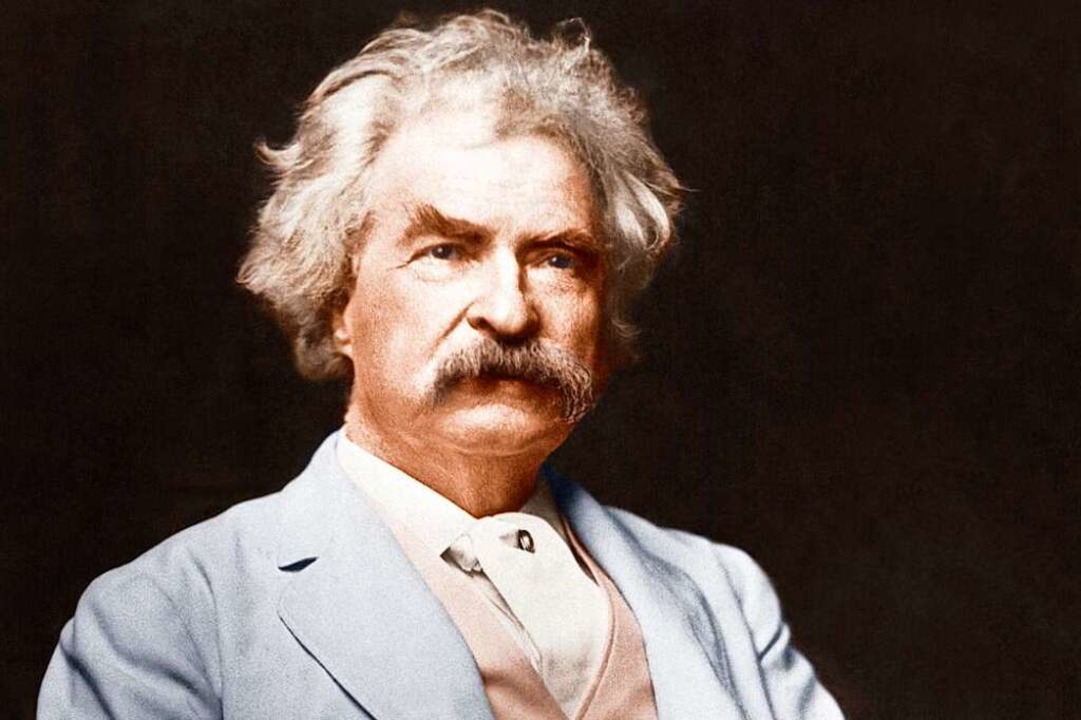
The indomitable Mark Twain was once quoted as saying "There are three kinds of lies: lies, damned lies, and statistics" and he was absolutely right. Extracting the desired data from statistics is generally referred to a "manipulating" the data, which couldn't be a more accurate description of the process. The ideal use of statistics is to uncover what the information tells us, hidden in all those numbers and responses.

However, manipulating the data can and is often used in more deceiving ways too. It can be used to manufacture a desired outcome or create a certain impression. This is often the case in politics or the media when they try to persuade voters, legislators , or the general population to think, support, or vote a certain way.

I've long had an interest in applied (or predictive) social demographics and trends. Ever since I began working on my undergraduate degree in economics back in 1984,  my fascination with demographics, trends, percentages and interpreting them has only grown as regular readers of A/O know ad nausem!  

Recently I came across a recent study regarding patriotism and how would individuals respond to a invasion of America by some foreign power. What made the study particularly interesting is that the survey focused on registered voters belonging to one of the two corporate owned political parties, the Democrats and the Republicans along with the largest voting bloc, Independents.  

A survey conducted in March 2022 by Connecticut's Quinnipiac University asked registered Republican and Democrat voters whether they would be willing to help defend in the United States in the event of a Ukrainian style invasion. Perhaps naively, I expected the answer would be an overwhelming "yes" regardless of party affiliation. I was surprised by the results.

According to the survey, 52% of Democrats said they'd bail on the U.S. and attempt to find somewhere safe outside of the country. Just 40% said they'd stick around and fight while the rest---8%---were undecided. The survey explained that pacifists and conscientious objectors and those under 18 were excluded, so the respondents were adult males and females.

When the question was posed to registered Republicans, 68% of the respondents said they'd help defend this country. While that's a pretty decent response, it also means that around 32% would bug out. I guess conservatism or protecting our way of life only goes so far.

It's worth noting that of the nation's largest political demographic, Independents, 57% said they'd stand and fight.  As an aside, the same question was asked of active duty and reserve military personnel  and veteran households. The majority---68%---would defend America, yet surprisingly 27% would bail with the rest undecided.

The survey also broke down the respondents by gender (sorry, but only two were available to pick from), race and age brackets. 75% of men would fight (there goes that "macho" thing again) while 40% of women would remain. The age bracket indicated that those 35 years and older were the ones most likely to take up arms and defend the country. 48% of those 34  and under (which covers mainly Millennials and Gen Z) said they'd hit the road.  

Then we look at race, the poll lists only Black, White and Hispanic. Asians, Native Americans, and Pacific Islanders were evidently excluded because their percentages were too low. So, when examining  the category of race, 57% of whites and 61% of Hispanics said they were willing fight while only 38% of black Americans would remain. 35% of whites, 33% of Hispanics and a whopping 59% of blacks said they'd leave.

Here's where data results can be a little deceiving (presumably unintentional in this case). When I cross checked a Pew survey from December 2019, which was just three years before the Quinnipiac University poll, I found some conflicting results. According to Pew, as of 2017, 57% of  the combined U.S. military were white while 43% belonged a minority population.

Delving into that 43% percentage we find that Asians make up 10% of the military and another 15% belonged to a mixed or different races such as Native American. Hispanics made up 36% and are the fasting growing minority in the military. However, the largest minority---39%---serving in the Armed Forces were Black Americans.  Meanwhile, 2/3 or 68.8% percent of active duty military are classified as white.

It's worth mentioning that out of the 3,535 Medal of Honor Awards given,  94  went to black military personnel.  61 individuals of Hispanic origin have won the Medial Honor while 22 Native Americans have shared that honor. 35 Asian or Pacific Islanders have also been so honored. As an aside, out of the 3,535 Medal of Honor recipients, only 103 are still alive. Most were award for their valor during the Civil War. The second highest was in World War II followed by the "Indian Wars" and the Vietnam War.

Given the original survey question and the resulting data raises an interesting question. I wonder what would happen if China for instance would attempt an invasion. Would we react to the Chinese-Americans the way we did to Japanese-Americans during WWII?  For those unfamiliar with the history of that era, following the attack on Pearl Harbor in 1941 by Japan, the U.S. ordered the incarceration of all Japanese living in America, citizen or not. They were held in what could be at best called "concentration camps".  

Another factor that is often overlooked is that while a small percentage of the U.S. population---just 2.9%---some 19% of Native Americans and Native Alaskans ("Eskimos") serve in the U.S. military. That's a pretty significant percentage when you consider that Black-Americans make up 14% of the U.S. population and comprise 21% of active duty military personnel (they serve in the Army at a higher ratio of any racial minority based on population size).

Hispanics are the second largest population (and rapidly growing) behind whites account for just under 19% of the total U.S. population or approximately 62.1 million Hispanics or individuals of Hispanic origin in the U.S.. However, based on their population size, they are heavily underrepresented in our military, but according to survey, most Hispanics---61%---are willing to defend this country.

So, what can we glean from the above information? Well, according to the survey the majority of males who are of white or Hispanic origin, middle age or older and are either Republican  and/or conservative as well as the predominantly centrist Independents are most likely to come to America's defense should the nation need them.

The least likely are women of any race, Black Americans, and those 34 and under (which intriguingly  comprises Millennials and Gen Z. Those are the two generations replacing us aging Babyboomers and Gen Xers) and Democrats, which presumably encompasses progressives or liberals well.  

On a related note, a 2022 survey from Statista reported that 48% of Republicans/Conservatives personally own a firearm while another 66% said there is a gun in their household. 32% of Independents own a gun and 42% live in a home where there is one or more.

By contrast, only 20% of Democrats have a gun. Just 32% acknowledged one being in their home. So, taken all together,  I guess if the proverbial "SHTF" should ever occur, you know who's most likely to make a stand to protect this country, and who knows, maybe your butt too. Just saying.


If you enjoyed the article, please consider passing it along to others and don't forget to subscribe. It's free! Lastly please be sure to "like" us on whatever platform you use to read anotheropinionblog.com. It helps beat the algorithms and keeps our articles in circulation. Thank you!


Quinnipiac University Poll March 7, 2022


Pew Research: The changing profile of the U.S. military:Smaller size, more diverse, more women in leadership


USNI News: Department of Defense Demographic Profile


Latinos Claim Larger Share of U.S. Military Personnel


Black Americans In The U.S. Army


OMH: Hispanic/Latino health


United States Army: Medal of Honor Award


Statista: Percentage of population in the United Statesowning at least one gun, by political party affiliation


Friday, October 16, 2020

The Seeds We Plant Today

 ***Due to Blogger's new format change, there are random changes font size and colors***


As many of you know, I'm a lifelong student of history and the social sciences. I've written about it, spoken about, and taught it from sophomore level in college all the way up to graduate school. I've been lucky enough to even receive a few national and regional awards for my efforts.

I have a keen interest in trends as well. One such interest is whether the U.S. can continue on its present path and survive as a country. There's an old saying that every revolution contains within it the seeds of its own destruction. I think that's proving to be true now.

We are a nation of immigrants. Immigrants from all over the world (most notably Western Europe) were instrumental in creating the foundation of this nation and for building it very structure. What they created was based on Classical Greek democracy, the Roman Republic, the Enlightenment and its emphasis on rational inquiry, Judeo-Christianity morality, and other esoteric philosophies which encouraged free thinking as well as critical and open debate (as in Freemasonry).

We incorporated into our national charter---the Constitution and Bill of Rights---that all men were free and equal; that we each had a Divine or natural right to the pursuit of happiness, the freedom of religion, and the freedom of expression.  To safeguard these and other "natural rights" (that is, rights we inherit by virtue of our birth and/or imparted on us by Providence), the right to bear arms. Not so much for providing food for ourselves or our families. Not to protect us from predators. No. We have this natural right to protect ourselves and others from a different type of predator--a tyrannical government.  

And yet, here we are in the first half of the 21st century engaged in a slow motion civil war over these very issues. We are a nation of immigrants, but we oppose illegal immigration because we are foremost a nation of laws. Among those laws is the establishment of our nation and the securing of our borders. They are part of what constitutes our national sovereignty. 


The majority of illegal immigrants are what is termed as "economic immigrants". They are coming here to seek a better economic life. They want a piece of what this country offers but they don't want to take the legal steps we ask of all potential immigrants. They want to skip ahead of the line.  We support their drive; we all want a better economic life, but we reject their refusal to follow the law.

Others come here as "political" or "social" immigrants. They are trying to evade some tin pot despot or fleeing ethnic or religious persecution. We tend to have more sympathy for these individuals than we do for the economic immigrants but why? The former want to work. The latter's lives are endangered because of their origin or their beliefs (one they can change the other they can't).

We say that all men are created equal, and yet women were essentially second class citizens until the early part of the 20th Century. Some would argue they are and cite wage parity and other issues. Many argue that the inequality doesn't end with the workplace. We still debate the "right" to an abortion or not; at what point does a woman's right over her body begins and ends when it comes to pregnancy?

We argue the right to terminate a pregnancy if she doesn't want to have a child at that point in her life while others claim that the unborn fetus has a right to a life all its own. Some try to interject their religious beliefs onto the issue irrespective of the expectant woman's beliefs. One person's faith, no matter how sincere, doesn't extend to the next person. That too was bequest to us by our right of religious freedom, yet we don't allow human or animal sacrifices or so-called "honor killings".  

Of course, some see the issue of abortion as poor decision making. Don't want children? No problem. Use contraceptives. They are readily available and fairly cheap (or free as most clinics), or consider the totally unrealistic option of simply not having sex. Others cite different alternatives such as adoption.


What about the issue of slavery? Certainly it was on the minds of the Founding Fathers. Many of them owned slaves (albeit most inherited them and many freed them upon their owner's deaths, often with farmland and equipment). Nevertheless, slavery was not part of the equality tenet of which they wrote.

However, theirs was as much an economic consideration as it was a political or moral one. The colonial South was where most of the successes of the revolution had come from, and they depended on slavery to power their economic engines which also powered a growing industrialized North. If they withdrew their support for the revolution, the revolution would fail. That would have meant the Founding Fathers, as Benjamin Franklin so aptly stated, would have "hanged separately" by not hanging in their together.

Despite steps taken to nullify slavery such as restricting and finally ending the importation of slaves or outlawing it in some communities and eventually in states, it continued  until 1861, which marked the beginning of the bloodiest war in the nation's history. It's true that the Civil War wasn't fought solely over the issue of slavery, but an issue it remained. In the end, four years later, some 620,000 lay dead and another million or so went missing, were wounded, or died of disease resulting from the war (by comparison just over 405,000 died in WWII and around 58,000 in Vietnam).

Nevertheless, despite the frightful cost of the war and the devastation it did to the South (which in many ways, remains), the equality of former slaves didn't come about in 1865...or 1925...or 1945. Although there were some exceptions, full integration didn't begin until 1965, but it did happen. This wasn't a simple matter of legislatively mandating change. This had to be a fundamental shift in society and it's mindset.


In World War II, it was believed blacks couldn't or wouldn't fight. They did and magnificently so. It was said  they couldn't lead or follow orders. They did no matter how desperate the circumstances. They said they couldn't fly. They did so spectacularly (the same thing was said of the women too and with the same results). It wasn't long before the military was fully integrated. But when they came home, they faced the same old divisions. It took twenty more years before there was equality.

Today Black Americans, like other minorities, have no limitations except those they place on themselves, but the notion of "equality" has changed. Equality came to mean a preference; a quota to be filled. It came to mean having those things which others were either forbidden by law or by social pressure  from having such as dedicated colleges, academic funding, business and social associations, political caucuses, media including magazines, radio stations, or television networks, not to mention specific genres of music, TV programming, contests, and pageants. That is not equality.

Nowadays, we have demands for "reparations"; something that even those who suffered under slavery never demanded. They want the U.S. Government to pay them for something they never experienced; for something that few even understand. Why not demand "reparations" from the British, Portuguese, Spanish, Dutch or Arabs? They introduced and actively engaged in slavery.  Why not from the African tribes which captured and sold them into slavery? Perhaps that's too close to home.

They claim "institutional" or "systemic" racism, and yet we never heard of it from their parents or grandparents. They cite police brutality, and yet run from the police when confronted, or worse, assault the police. They know they will lose that fight every time. Why not instill respect for the law instead?


Why not teach them while they are young to respect authority figures, even the ones they disagree with? If they want change, there are plenty of nonviolent ways to bring it about. Today the definition of "equality" is to make one side more equal at the expense of others to paraphrase the quote from George Orwell's "Animal Farm". Become the change they want; become lawyers, scientists, teachers, cops, or influencers.

Lastly religion. In the days of our Founding Fathers, countries had state religions which everyone had to support regardless of what they believed. America has been from almost the beginning a nation of religious tolerance with a few notable exceptions. Nevertheless, our Founding Father's supported the radical idea of no state religion. They didn't oppose religious symbols on public property as some claim today. They just didn't believe it was limited to one faith alone. What's good for one was good for all.

Now, however, we have religions which oppose our collective moral beliefs---"honor killings", child marriage, female genital mutilation, and pedophilia, secondary status for women (including suppression of their right to free speech). They oppose a woman's legal right to vote, to drive, to own property, and so on. How do we respond when religious and cultural beliefs conflict with ours? 

What if, as in Europe, they demand that certain food products, alcohol, and tobacco be removed because it "offends" their religious sensibilities?  What do we do when they claim a "religious obligation" to stamp out all other religious beliefs up to and including murdering them? How should we respond?

Obviously, murder is a big "no no" regardless if it comes from some "divine" entity or the voices in your head with few exceptions such as self defense or wars (which is state sanctioned murder). Yet, for some it's a fundamental religious mandate.  Do we cite our man-made civil laws? Do we seek some counter justification in a religious text?  In this increased globalization, religious and cultural conflicts are going to become all the more common and all the more violent.

Take a look at Europe, where religious and cultural conflicts have resulted in a increase in rapes, assaults, and murder. Governments cower and "encourage" changes in dress codes so as not to "offend" the new immigrants who demand that society conform to them and not the other way around. Stores are harassed into removing "offensive" products. Restaurants are threatened with violence for displaying pork products or liquor on their menus. Patrons who order the taboo items almost have to hide while consuming their meals or drink. Is that coming to an American city soon?


Every revolution brings with it the seeds of its own destruction. These are just a few of ours. If we continue to allow an elite few to divide us, these seeds will grow much faster than our ability to cope with them. Should that happen, America will cease to exist not just as a country, but even as an idea. These seeds will grow and envelop the achievements this wonderful nation has given the world. There are those things which we, as a nation, must conserve in order to remain a free nation.

We can't change the past, but we can learn from it, and in doing so, perhaps influence the future. Who knows, maybe we can make this a better world for all. If we choose to join the partisan charade (or worse, to do nothing), we will surely turn this world into a nightmare for our children and their children.


United States Military Casualties of War


Number of military fatalities in all major wars involvingthe United States


Saturday, March 24, 2018

Protesting to Stop Gun Violence: The Solution is Closer to Home/Book Review: Crashing The Parties


Apparently there are dozens of "anti-gun" protests happening all over America this weekend (March 24/25 2018) under the banner of 'March For Our Lives". Literally hundreds of thousands of individuals, most of them junior and high school age as well many who are in college, are showing up in towns, cities, and even the cesspool known as Washington DC to protest gun violence. I wouldn't be surprised to the final count is well over 1 or 2 million.

Being a child of the 1960's and 70"s, it brings warm cockles of my heart to see so many people take to the streets to protest for something they believe in. I grew up watch the Civil Rights marches; the anti-war protests, and later on, marches against gender discrimination. Most of the those marches were peaceful, or at least started out as peaceful, but ended up becoming violent when they clashed with the police or occasionally, the National Guard. Thus far, these protests against gun violence has been peaceful, which they should be quite proud of.

Nevertheless, my main concern over the marches is the issue itself and the proposed solutions being tossed around. There is no question that gun related violence is on the increase, especially with regards to attacks in schools. Many (if not all) of the attacks have come from a fellow student (or students). From all that I've read, these individuals were usually marginalized by their fellow classmates; treated as "odd" or "weirdoes" or whatever. They tended to be excluded from normal school events and functions. They had little positive interaction with their teachers too. They, in effect, went through school largely unnoticed, and when noticed, it was almost always in some negative way.

It's not uncommon for schools, and society in general to treat these individuals as being "mentally ill", which they're not; not really. They are simply different. Perhaps if this "difference" was channeled in another direction, these same would-be mass murders who, instead, become artists, designers, or even writers. Instead, they're drugged in order to control their behavior when in reality, it's simply so their parents or teachers don't have to deal with them.

Speaking of parents, another thing these kids have in common is that they tend to come from middle class or upper middle class families and are often left on their own. In fact, it's the parent who are often most surprised to see their child's picture and/or name of the TV screen as being the prime suspect, and their first remarks often include phrases like "we gave them everything", "we gave him his own space", and so forth. What, in reality, they are saying is that they were so focused on their own lives or those of their other children, those who needed their attention the most were ignored.

Many of these kids look elsewhere for some form of validation. They tend to embrace the negativity of which they're accused. A few emerge themselves into a "Gothic" persona. Some dive headfirst into the darker aspects of Heavy Metal or go the into a completely different direction such as fantasy, role-play. Hopefully, this will be limited to concerts or "Cosplay" events where they interact with like minded individuals who are often a marginalized. While this isn't ideal, it does help create some personal bonds and relationships which is much better than being alone and feeling like an outcast. I can't think of many things worse than being a teenager, and all that involves, and having no one of your own age to talk to. The lonesomeness and isolation would be crushing.

A few of these same kids also look to history (I believe the demonic duo at Columbine High School were guilty of this). The kids (and they really are still "kids") look to people like Adolf Hitler, Heinrich Himmler, Joseph Stalin, or some other demented individual like Jeffery Dahmer, John Wayne Gacy, or some fictional characters like "Jason" or "Freddie Kruger" for inspiration. As crazy as it sounds to us, it makes perfect sense from their perspective. After all, most of the people were outcasts themselves. They were misfits; marginalized or ignored, yet they went on to command the world's attention.

The "how" aspect doesn't really matter to them, nor does the "why"; not really. All that matters is the results (and as we all know, mostly from personal experience, teenagers and even young adults don't always think things through to a logical conclusion). This really isn't about revenge, although I'm sure that comes into play if the opportunity represents itself. For a brief moment, they can garner the respect (or fear, it's the same thing to them) they've longed for, even if it means they must die in the accomplishment of it. I suppose them old adage than "any attention, even bad attention, is better than no attention" holds true here.

So, while I applaud the hundreds of thousands to young men and women taking to the streets to oppose gun violence, especially in schools, I don't think banning guns is the answer, although I agree that the system has to often failed to do proper background checks. So instead of demanding tighter controls on gun purchases, how about enforcing the ones already on the books? Also, instead of trying to regulate what kind of firearms someone has, how about focusing on requiring gun safety training so they know how to properly use them? Besides, we all know that even if guns suddenly were outlawed tomorrow, criminals would still have them and we'd look like a flock of sheep to a bunch of hungry wolves. Of course, the government would see us the same way!

I think the solution to gun violence in schools lies much closer to home; it lays in the way they treat their fellow students. It lies in the way that bullying---physical, psychological, and cyber--- is still allowed to happen without recourse. Yes, it's "illegal" but so what? So is stealing but it happens anyway, and no amount of signs is going to change that. The worse tolerance of bullying still comes from the kids themselves who allow it among themselves. They know who is doing it, yet they say nothing and do nothing, and then pretend to be so surprised when someone commits suicide...or shoots up the school.

Sometimes a solution is so simple it's overlooked. People, usually in desperation, tend to "paint with a wide brush" when a small one would do just as well or better. Stop the bullying and intimidation in schools, especially the cyber-bullying. Don't accept cliquish behavior; don't be a part of it. Don't ignore "gangbangers". Report them. Call the police if necessary. These are the purveyors of violence in society. They have no place in school or anywhere near schools, playgrounds, parks, or kids in general.

Lastly, don't tolerate attacks on teachers by some loser of a student, and don't allow them to interrupt the class. If they don't want to learn and want to remain woefully ignorant, so be it, but let them do it elsewhere. Students have a powerful voice in stopping this behavior. Teachers and parents need to take an active interest in everyone as much as possible. Don't assume drugging your child, even if a teacher or counselor, recommends it, at least not without a second or even third opinion; and be open to alternatives.

Let's start demanding that federal, state, and local officials in charge of reviewing gun applications actually do their jobs, and that means having the resources and proper training to do their jobs. Too many of these incidents are the result of someone in the chain dropping the ball. Lastly, taking personal responsibility to ensure their firearms are properly secured. Also, let's make sure those who own firearms are properly trained in their usage, including maintaining and cleaning them as well as gun safety. I think these steps will go a long way to cutting back on gun violence, be it in the schools or in general.


BOOK REVIEW

Crashing The Parties: A Proposal for a Populist Centrist Party That Can Break The Left-Right Divide and Save America
By M.D. Couturier

As many of you all know, one of the perks of this job is getting to review books, usually on current events, history, theology, and naturally, on politics. I've reviewed hundreds of books over the years on behalf of various publishing companies, as well as a few on my own. Some have been pretty good; a few were quite enlightening, and some not so much. Regardless, I try to make sure you get an honest assessment.

I was asked to take a look as Mr. Couturier's book, "Crashing The Parties"; a populist and centrist oriented booklet. I had the distinct advantage of long being a proponent of Centrism (and perhaps the best known Centrist activist and writer in Kentucky), so I was keenly interested in Mr. Couturier's booklet, which is only about 15 pages long. The book itself is very well written and obviously a quick read. Mr. Couturier does an excellent job in addressing a wide variety of topics in short but concise statements. The booklet starts off listing and then defining the three main tenets of American Populist Centrism, which includes the nation, the government, and the American People. He then delves into some well thought out tenants comprising his alternative to the antiquated Left/Right paradigm that we face today.

These include controversial topics such as immigration, jobs and the economy, and education. I am particularly pleased to see Mr. Couturier, a native of South Korea and now a US Citizen, address the issue of illegal immigration and once again re-embrace the concept of America as a "melting pot", and the need to make English our official national language. Mr. Couturier also addresses the need for election reform (such as ending gerrymandering) as well as national security and ending the role of permanent alliances, perpetual wars, and America as the world's policeman. He goes on to address many other hot issues, such as abortion, the role of prayer in schools, gun control, healthcare, the economy, taxes, and the need to revitalized labor unions in order to breathe life back into what's left of the middle and working classes. For all of these, Mr. Couturier should be applauded, but his treatise goes much further. I can't say that I completely agree with everything Mr. Couturier says (nor would I expect to), but he provides does provide for some well reasoned perspectives.

For anyone interested in current events from a fresh perspective, I encourage you to read Mr. Couturier's "Crashing The Parties". The read will be short, but the takeaway will be immense, especially if you're tired of the old retread ideologies of the corporate owned Democrats and Republicans or the bankrupt Left/Right paradigm. I think you will enjoy his ideas and his writing style, which are clear and to the point and more in line with the majority of Americans. I know I did.

"Crashing The Parties: A Proposal for a Populist Centrist Party That Can Break The Left-Right Divide and Save America" by M.D. Couturier is available from Goodreads and Amazon.