Showing posts with label Slavery. Show all posts

Friday, August 15, 2025

Examining Racial and Ethnic Reality Part 1: Introduction, Home and Hearth, and Education


Growing up in the United States in the 1960’s and 1970's, we were often told that “polite society” doesn’t publicly discuss religious, political, or sexual preferences.  Race was another such topic. Today, things have changed and it seems that everything is on the table.  There are those who seem to expect some sort of positive reinforcement for wearing their political, religious, racial, or sexual allegiance on their sleeve.

They feel entitled to an obligatory pat on the back, a celebratory ice cream cone, or handout, and when that reward isn’t forthcoming, they become offended, indignant, or defensive. They become upset that their life choices or fluke of genetics aren’t being rewarded or as impressive as they think they should be to others. 

You’re expected to embrace their world view or face being ostracized (aka “cancelled”), shouted down, physically attacked, or worse yet, being called a name and incredibly, they become indignant when they are the ones called out.  Race and ethnicity are such topics, and ones which warrant critical examination.  

Introduction

For example, when we examine race, we find something similar in the reaction. Individuals, almost two centuries removed, want not just sympathy for what some ancestor may or may not have endured, but they want to be compensated for what they never experienced. Those who look beyond color and (to quote Dr. Martin Luther King), judge people by the “content of their character” are often considered the worst offenders.

They behave as if this was a one off historical phenomena. Just one group--- white Europeans---were somehow solely responsible for the institution of slavery, forgetting that the most prolific dealers of human flesh weren’t Europeans, but the Arabs of Northern Africa (who put a premium on white flesh).

They give no thought to the historical fact that forced servitude has existed since Mankind existed. Every people and every race has at one time or another been slave and master. It’s a chain we all wear. They have also conveniently ignored the fact that it was these same white Europeans who all but put an end to this hateful institution or that they implemented legislation and taxpayer supported programs balance the scale that has existed since we roamed the African savannahs.

Equally, they’ve chosen to disavow the historical fact that it was their brethren who betrayed them and sold them into slavery, which sadly still continues to this day in Africa as well as parts of Asia. Perhaps the ancestors of the person on the street they randomly call “brother” or “sister” may been responsible for the plight of their ancestor, only to have later been caught up in the net? Such twists of fate aren’t as uncommon as one might think. It’s well documented that blacks owned black slaves in the U.S. or that native Americans had slaves of all races.

Nevertheless, for some reason, they “demand” to be compensated for what they aren’t entitled to (and arguably have already been given). They “demand” that the people who freed their distant ancestors from bondage must also assume some form of self-imposed “guilt” for doing so. Why is that? Is this anger at the people who delivered them from slavery justified or is it anger at themselves for not taking the initiative to free themselves and their refusal to place the blame where it truly belongs?

Shouldn’t their anger be more accurately directed to those who ensured their bondage in the first place, or is that just a little too close to home? If there is some sort of guilt to be had, perhaps it should be their failure to take responsibility for their own future, trading a “master” on a plantation for a politician or bureaucrat? What of the millions of immigrants who’ve come here from a different culture and customs, not speaking the language, and with next to nothing in their pockets, but have adapted very quickly?

They took advantage of the opportunities available, and as a people, kept their independence, and succeeded while the so-called “freed” people who’ve had the advantage of time, language and integration remain in a state of self-imposed bondage, blaming others for their poverty, broken homes, crime, high unemployment, alcoholism and drug abuse. If it was systematic, there should be few or no exceptions, but there are many.

In their anger at themselves, they lash out at others, such as in Cincinnati a few weeks ago, violently attacking individuals who were of no threat to them or looting the businesses of immigrants who’ve succeeded. Is this self-loathing, reversed racialism, opportunism or a combination? Let’s set aside emotions, pre-conceived ideas, and bias in order to examine the data and see what it can tell us.

Home and Hearth

According to the U.S Census Bureau, Whites have 50.5% of all live births while Blacks have 13.9%. Asians and Pacific Islanders are responsible for 6.2%. Native Americans have 0.7% of all live births, and Hispanics make up 25%. Nevertheless, the overall percentage of White and Black fertility rates have been in decline over the past several decades as has Native Americans.

 However, Hispanics, Asians, and Pacific Islanders on the other hand have seen their fertility rates increase, meaning that Asian and Hispanic populations are growing relatively faster than that of whites and blacks. By 2050, the U.S. is expected to reach a near racial parity with no dominate race. How that will work out remains a guess but often cited as a key factor for an eventual (and likely) balkanization of the United States.

A key factor in predicting the eventual success of a child is whether or not they are born in a dual or single parent homes. According to the Center for Equal Opportunity, Black Americans have the highest rate of illegitimate children. According to the Center, nearly 70% of Black children---69.3%-- are born out of wedlock. Compare that to 41.6% of Hispanics and 21.9% of Whites. It’s 59.3% for Native Americans. For Asians of Chinese origin, that number is 6.4% while Japanese Americans it’s 9.7%.

Two interesting asides worth mentioning are these. 45% of Black professionals (including managers) have had at least one illegitimate child compared to just 3% of White professionals.73% of Black high school students admit to having sex. That compares to 52% of Hispanic students and 44% of White students. Also, Black adults have the highest divorce rates while Asians have the lowest. Native Americans have the second highest and Hispanics have the second lowest.

When it comes to preschool care, Hispanic children are most likely to receive home centered care from a parent.  Black children are most likely to receive some form of home based care from a non-parent relative (like grandparent, aunt, uncle, etc.). White kids are most likely to receive home based care from a non-parent or relative such as a nanny or babysitter. Children of mixed race were most likely to receive preschool care from some sort of center (such as a daycare). When it came to subsidized care, Hispanic and black children were most often the beneficiaries.

The National Library of Medicine reported that Black infants tended to have lower birth weights than other groups. They also reported than less than 1/3 of children living at or under the national poverty rate took advantage of programs such as Head Start, and while Head Start tends to provide higher quality care than other centers, Black children receive poorer quality care compared to children of other races. The reasons cited were the birth weight (including high nutritional foods, as well a poor educational levels Black as well as Hispanic ethnicity, especially in family care centers.

 Interestingly, a 2013 study by the Centers for Disease and Prevention reported that 70% of Black fathers who live with their kids were active in their lives compared to 60% of Whites and 45% of Hispanics. 78% of Black fathers tended to have dinner with their children every day while 74% of White fathers and 64% of Hispanic fathers did. Additionally, 27% of Black fathers took their children to and from activities. By contrast, just 20% of White fathers did.  When it came to the all important homework and childcare, 41% of Black fathers stepped up. Meanwhile, only 29% of Hispanic fathers and 28% of White fathers helped out.  

Education

When it comes to graduation, Asian and White students have the highest rates with Asians leading the way. Among Asians and Pacific Islanders, the graduation rate is 94%. For Whites it’s 90%. Hispanic graduation rates are 83% while for Black students it’s 81% and 74% for Native Americans.  

Some additional statistics along the same lines that I found was that 68% of Asians have a bachelor’s degree or higher. That compares to just 25% of Hispanics and 44% of Whites.  On the other side of spectrum, just 4% of Asian had less than a high school diploma. Only 5% of Blacks didn’t have a high school degree along just 7% of whites. However, just over 20% of Hispanics lacked a high school diploma.

It bears mentioning the Black females graduate at a higher percentage than Black males. 64.1% go on to college and graduate. Of those, 71.5% earn a master’s degree, and out of those, an impressive 65.9% obtain a doctorate although more Black males  overall have a doctorate or professional degrees such as a law  or medical degree. It bears mentioning that Black female students face a unique hurdle their counterparts don’t.

For those that tend to be “overachievers”, they are often harassed or treated as social outcasts for their academic performance, often being accused as “acting White”, coming most often from their Black male peers. There have been instances reported where Black students have asked that they not be singled out publicly for some achievement or award to avoid being bullied.

 Some actively try to downplay their academic performance, and even join in with the “bad crowd” in order to blend in. Some have reported being coerced into skipping assignments or school, drinking, drugs, violence, crime, and sex in order no to stand out. The result is that they usually end up holding the proverbial  “bag” and sidetracking their lives.

Finally, it bears mentioning that there are 180 “Black Only” academic scholarships and over 25 “Hispanic Only” scholarships and about 12 scholarship programs directed toward Asian-Americans. Native Americans can apply for approximately 150 “Native American Only” scholarships plus individual tribal scholarships. As for Whites, there are none. The reason, it's argued, is that Whites aren't a minority (the U.S. Census Bureau would disagree. White males are in fact a minority). 

Nevertheless, as the counter argument runs, scholarships should not be based on racial or other quotas, but rather on financial need based on their social-economic situation. It’s also worth noting that prior to 2023, ranked racial quotas were used by many colleges and universities in order to increase  on campus “diversity”, even bypassing higher qualified candidates.

In part two of our look at race, we'll take a look at employment and unemployment, Affirmative Action and quotas, racial equality in politics, crime  and prison sentencing. Finally, we’ll address the issues of reparations, the future of race relations, and what does all this mean, if anything?

Thank you for reading "Another Opinion", the Op/Ed blog page for the "militant middle".  Here at "A/O" we truly value our readers. At A/O we seek the facts as they exist, not partisan talking points.  We hope you find our articles informative and engaging. Comments are welcome, provided they are not vulgar, insulting or demeaning.  Another Opinion is offered without charge and is directed toward all independent and free-thinking individuals. We ask, however, that you "like" us on whatever platform you found us on in order to keep our articles available for free to others. Lastly, in order to keep costs down, we depend on passive marketing, and therefore, depend on our readers to please forward our posts along. Below you will find links to the sources we used in writing this article. Thank you. 


Trans-Saharan slave trade


Barbary slave trade


Barbary Pirates and English Slaves


Percentage of Births to Unmarried Women


Study: Black dads more involved in activities with theirchildren than other groups


Quality Disparities in Child Care for At-Risk Children:Comparing Head Start and Non-Head Start Settings


Fast Facts: Women of Color in Higher Ed


Race and Intelligence


First Divorce Rate by Age and Race/Ethnicity  


Friday, December 27, 2024

The Ghost of Christmas Past: Understanding Charles Dickins and His Legacy

When English author Charles Dickens wrote "A Christmas Carol" in 1843, I doubt he had any idea that it would become the seminal classic it has become or that the name "Scrooge" would become a common pejorative to describe someone stingy or greedy. The story of the miserly ole Ebenezer Scrooge's Christmas awakening as one by one he is forced to confront his conscience in the form of the ghosts of Christmas past, present, and future and the ripple effect of his actions on the lives of others whether he is aware of them or not. Of course, in the end, ole Scrooge sees the many errors of his ways and learns a lesson about what's most important in life (which most certainly was not the sole pursuit of acquiring money).  

Politically, the Victorian era author would be what we'd call a "centrist" or "moderate" today.  Morally and fiscally, Dickens tended to be conservative, while socially he was a progressive. He wrote several books advocating for judicial reform between the wealthy and connected versus everyone else. He abhorred the snobbery, greed and insensitivity of the rich to the plight of the poor just as he despised employers who abused their workers and unsafe working conditions. 

He promoted educational reforms when and wherever he could. Many of his characters and storylines reflected his belief in these reforms as in the books "David Copperfield", "The Pickwick Papers", "Hard Time", "Oliver Twist", and "Bleak House". At the same time, Dickens was no Marxist or "socialist" as some would claim. He has been accused of being racist (in part for his support of the Confederacy during the Civil War) and nationalist for his belief in the British Empire.

In truth, Dicken's was what we'd might think of as a "racist", but that would be judging him by our standards today, and not by the accepted norms of his era. Dicken's did support the Confederacy because liked the concept of state's rights (and the fact that the Confederacy did not allow political parties). 

Nevertheless, Dickens was a strong and outspoken critic of slavery, serfdom, and other forms of enslavement (England abolished slavery throughout its empire in 1834). His distain especially extended to how Indians were typically treated even in their native India and to other parts of the empire. Charles Dickens was a nationalist (as was practically everyone during the early to late middle parts of the Victorian Era (so called because Queen Victoria ruled over this greatest expansion of British rule. It was said at the time that the sun never set on the British Empire). 

Unlike many of his social status, Dickens was a strong supporter of ideas which seemed outlandish at the time such as the right of women to vote and owning property and inheritance independent of their husband (or in the absence of a husband, some other adult male). Spousal abuse was unfortunately not uncommon in Great Britain (and elsewhere). Dickens spoke out in favor of shelters for abused women and children such as the "Urania Cottage", which was founded in 1846 and he helped to run (this also extended to cover prostitutes and women who were destitute).  

He believed the British Empire had a lot to offer to less developed countries such as industrial technology, medicine, trade, and education, but he still was left grappling with the notion of exploitation of people, culture, and resources (there's no question that Britain was the chief beneficiary of its expansionistic endeavors). 

Some of that era would add "Christianizing" the "backward savages" of its empire  as equally important, and went only slightly better than it did with "ignorant" natives of the Americas by the Spaniards. Such was the conceited arrogance of colonialism then and now.   

In sum, it could be said that Charles Dickens was a man slightly out of step with many of his contemporaries. He opposed political extremism in all its forms, preferring a moderate approach which focused on seeking solutions rather than elitist agendas (which tended to be very paternalistic). He disliked the rigid social caste system of his time, preferring meritocracy along with a liberal democracy. 

By the time of Dickens' death in 1870, the British Empire was near its zenith. Queen Victoria remained on the throne. The industrial revolution was in full swing, and the UK was crisscrossed with railroads, connecting the nation like never before. He had witnessed 18 imperial wars, beginning with the War of 1812 in which the British tried unsuccessfully to retake its unruly former colony, the United States, and ending with the Bhutan War (aka the "Duar War") in Northeast India, which had begun in 1864 and ended a year latter. 

During his lifetime, Charles Dickens wrote 15 novels, five novelettes, and hundreds of short stories and non-fiction articles, in addition to editing a weekly journal for over 20 years, proving him to one of England's most prolific and popular authors. He also wrote hundreds of letters promoting the rights of women, children, education, and social reforms, not including nearly as many public and private talks. 

Much of what he promoted eventually came to pass. Education is available to everyone regardless of gender or social class in the UK and throughout much of its former colonies (though not all. Some former colonies are far worse off now than they were under British rule such as Somalia, the Sudan and South Sudan, Nigeria, and Gambia).

 Quality healthcare is also available to all, and many of the illnesses affecting children, which he often wrote about, are eradicated. During his lifetime, there was over two hundred thousand cesspools throughout London. Even the basement of Buckingham Palace smelled like an open sewer. By one estimate, 4/5 of the "mud" in the streets of London was actually human waste. Diseases like cholera and tuberculosis were rampant, while the air was black with coal soot. Issues like extreme poverty, a lack of sanction, and a social safety net now exists in lieu of the dreaded "poor houses" and debtor prisons".

Women just don't have the right to own property in their own name or have the right to vote, women now hold elected office. Some have even been Prime Minister such Margaret Thatcher, Theresa May, and Liz Truss. Countess Margaret Markiewicz became the first women ever elected to Parliament in 1918.  Born in London, the trailblazer was a suffragette, a Irish revolutionary, a member of the first free Irish Parliament (aka "Dail"), and Irish Minister of Labour. 

Dickens would, I think, be a bit dismayed by the fact that the empire was no more. The United States had already set its own course despite a failed attempt by the Crown in 1812. India, the crown jewel of the empire, is now a prosperous independent nation, although it retains a status of "Commonwealth" and many of its British traditions. Pakistan, having split off from India, is its own nation and Afghanistan remains as fiercely unconquered as ever. As mentioned above, many of the colonies during Dickens' lifetime have spun off with varying success (most retaining their ties with England as Commonwealth nations). 

Perhaps his biggest surprised would be the independent of Ireland. During Dicken's life, the Irish experienced one of the worse famines of recent history, which lasted from 1845 to 1845. During those years, in what's known as "The Great Hunger", Ireland lost more than 25% of its population to death by starvation, disease, or forced immigration. Best estimates indicate that at least one million men, women, and children died of starvation while roughly one million were forced to immigrate, many to the United States, Canada, and Australia. 

Many attributed the famine to natural causes, the extent of the devastation falls squarely on the shoulders of British domestic policies (widespread absentee landlords, predatory-like laissez-faire economics, and dependence on single crop farming), and a callous indifference by the English ruling elites which chose to put the blame on Irish "laziness" or the result of  "divine punishment" due to a lack of "moral character" by the Irish. There were some efforts by the English to provide relief, but it was a matter of to little to late.

Perhaps the one blemish on Dickens' legacy is the Irish. While Dickens made three visits to Ireland, he found little to say about the famine. except that the severity likely stemmed from the "devotion to Roman Catholicism" which was uncharacteristically callous for man so interested in social reform. 

Nevertheless, Dickens, like many of the English, often spoke of the Irish as barely being human, often calling them "wild", "unruly, and "untamed". The Irish were often equated with Blacks in the American South with many of the same epitaphs, being called "England's Negros". Its also been written that Dickens took more note of the Irish in America than he did of the Irish in living in England or Ireland, and yet, as a group, he referred to the Irish as being "racially repellent".    

Another such group were Jews. Dickens once said the criminal class is almost always of the Jewish race.   Many of his character, such as "Fagin" in "Oliver Twist, usually were written as a stereotype caricatures (shifty", "sneaky", "greedy", "cheap", a "money lender", etc.), yet, later in life, Dickens said of Jews that they deserved the upmost respect.  His character "Riah" in "Our Mutual Friend" is portrayed as "righteous" and loyal. 

So, which was it? Was Dickens anti-semitic or not? Most of his critics see Fagin and Riah as two sides of the same Shekel. Extreme in example, but still, well written and relatable characters. In the end, Dickens had to struggle with the accepted anti-semitism of his day and the his conscience.   

During his lifetime, the Royal British Navy was the master of the seas. No one held a candle to the might of the Queen's navy. Today, the UK still maintains a powerful sea force, although Britannia no longer rules the Seven Seas. That honor goes to its former colonies, the United States. However, if one includes all of the Commonwealth nations, it is still the largest in the world. 

The British military was of the best (perhaps second only to the Imperial German military). Combined with the East India Company (a semi-independent corporation), it could flex its muscle on every one of the world's continent. While the East India Company is gone (having been dissolved just three years after the death of Dickens), British corporations still reach around the world and exert powerful influence, including as examples Lloyds Banking, BP, and Barclays. 

During his life, Charles Dickens achieved a level of celebrity that few authors then or now have been able to achieve. Thus, his literary recognition was something he had come to expect. Yet, here we are, just over a century and half--- 154 years---later and his books are as widely read as ever. In fact, his audience is global. His books have become stage plays and radio shows. But it's the tale of the beloved Tiny Tim, Bob Marley, Bob Cratchit and his wife, "Ole Fezziwig", Fred, Belle, and of course, Ebenezer Scrooge and those three Christmas ghosts becoming the most endearing of them all and is retold every year. 

What is it about this story which has become a enduring holiday tradition? Is it the characters? The storyline and the simplicity of the Victorian Era? Perhaps it's the subplot and the morality tale reminding us of what's important or, like Bob Marley, it's how our actions ripple over time. Perhaps it's that memories often carry a seed of regret as with Ebenezer and Belle. In the end, as with most great literary works, we each find that unique personal message we subconsciously seek. Let's hope Tiny Tim Marley had right when he "May God bless us everyone". 


Thank you for reading "Another Opinion", the Op/Ed blog page for the "militant middle".  Here at "A/O" we truly value our readers. At A/O we seek the facts as they exist, not partisan talking points.  We hope you found our articles informative and engaging. Comments are welcome, provided they are not vulgar, insulting or demeaning.  Another Opinion is offered without charge and is directed toward all independent and free thinking individuals. We do ask, however, that you "like" us on whatever site you found us on, and that you please pass our post along. Below you will find links to the sources we used in writing this article. Thank you. 


Charles Dickens


Left, Right, and Dickens


Charles Dickens: A Sympathizer with the Oppressed


Victorian Class System


War of 1812


Duar War


Great Famine (Ireland)


The Crisis That Nearly Cost Charles Dickens His Career


Friday, May 24, 2024

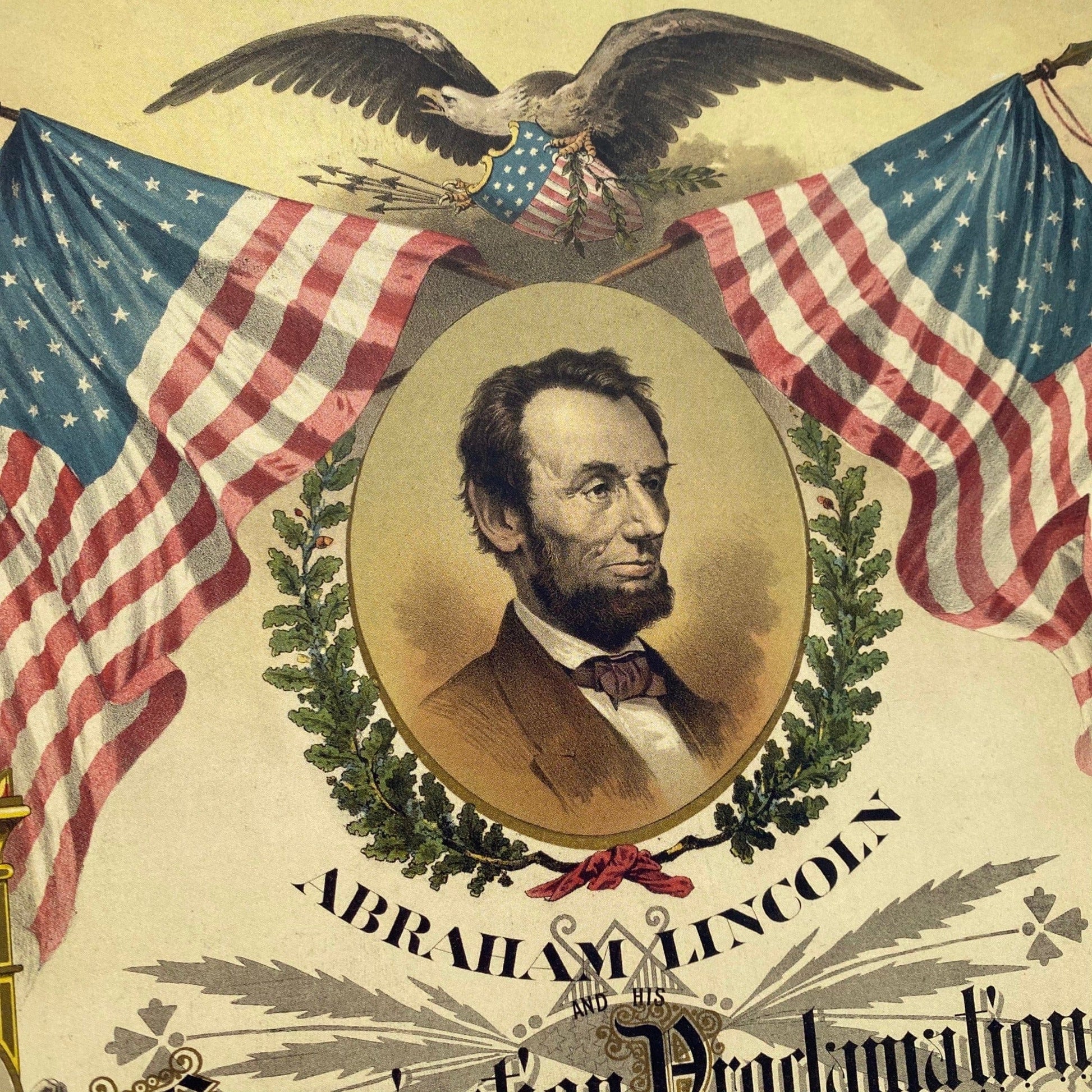
Lincoln's Emancipation Proclamation and the 14th Amendment: Surprising Facts You Didn't Know

 Everybody knows at least the basics of what Abraham Lincoln's "Emancipation Proclamation" was about. Once upon a time (before the dumbing down of public education), students everyone in the U.S. had to memorize at least a portion of it. In some schools, all of it, along with the Preamble of the Constitution. and the Gettysburg Address. It was part of the Civics program which went hand-in-hand with our history classes (which have also largely gone by the wayside).

Of course, if you know anything about the proclamation then you should be familiar with the 14th Amendment which was passed by Congress in 1868. Well, I'm going to provide you with some interesting and often overlooked facts about both which you probably didn't know.  I suspect that it may come as a shock for some of you. So, let's start with Lincoln's famous Emancipation Proclamation first.  

Contrary to popular belief, slavery was not the primary or sole reason for the start of the Civil War. However, it was seen as an important issue especially among certain groups, including Quakers, abolitionists, and some evangelical groups. One of the more famous abolitionist was, of course, John Brown, who attempted to spark something of a revolt with his ill-fated raid on a arms depot at Harpers Ferry, Virginia in 1859.

The question of slavery was a serious issue even before the Civil War with a majority of the states wanting to put an end to it, while the South refused, citing its dependence on the use of slaves. During our revolution for independence from the British, it was commonly accepted that without the support of the South the war would be lost (and indeed, the war was ultimately decided in the South), Therefore, the Northern representatives were left with no choice but to except the hated institution...for now.

Shortly after the end of the Revolutionary War in 1783. the importation of slaves into the U.S. was signed into law by President Thomas Jefferson in 1807 (becoming enforced in 1808) again caused a major riff between the industrialized Northern states and the largely agricultural Southern states. The riff came to a head  by the early 1800's and the United States came very close to ceasing to be.

However, a solution was reached in 1850 known as the "Great Compromise"  dealing with the admission of slave states into the union. It was engineered by Senator John C. Calhoun (D-SC),Senator Henry Clay (Whig-KY), and Senator Daniel Webster (Federalist-MA). Sadly, the "Great Compromise" is often overlooked in most history classes, and while it didn't "save" the nation as such, it did prolong the bloodiest war in U.S. history.

The issue of abolition was an important factor leading up the Civil War, thanks to individuals like Brown, Fredrick Douglas, Harriet Beecher Stowe, and John Quincy Adams, it was never the central cause despite what we're taught in our watered down and often distorted history classes in high school (or sometimes, even in college; all of which are intended to fit into a particular political agenda).

The key issues were more about economics and admission of free vs. slave (these are where slavery comes in), tariffs, and ultimately, the supremacy of the Federal government. This was more than interpretation of the Constitution's 10th Amendment. ("...the powers not delegated to the United States by the Constitution, nor prohibited by it to the States, are reserved to the States respectively, or to the people"), it was whether the states or the Federal government would be dominant.

Many Northern senators believed that the Federal government held all power not expressly assigned to the states as mentioned in the Constitution.  Most Southern senators said that the states held all governing powers not expressly given to the Federal government. That issue wouldn't be resolved until the final outcome of the Civil War.

Personally, based on my read of statement in question, and knowing how the Founding Fathers loathed a strong Federal government (and government in general), I tend to side with the South on their interpretation of the amendment, but that's just me. It should be noted that the descendants of most of the Founding Fathers also agreed with the South's position. So, what did Abraham Lincoln think about slavery as an issue and how did this affect his Emancipation Proclamation of 1863?

While campaigning for the presidency, Lincoln repeatedly said that he had no intention of trying to end  or interfere with slavery as an institution. That may come as a surprise to many people, especially those who've been taught to see Lincoln as a second coming of Moses, however, that wasn't the case, at least in the beginning. 

Even after winning the election, Lincoln said in his First Inaugural Address to the nation on March 3, 1861 that the Federal government "held no authority to interfere with the institution of slavery where it already exists". He went on to say that, as president, he wouldn't seek to interfere with any state's right to govern the institution.

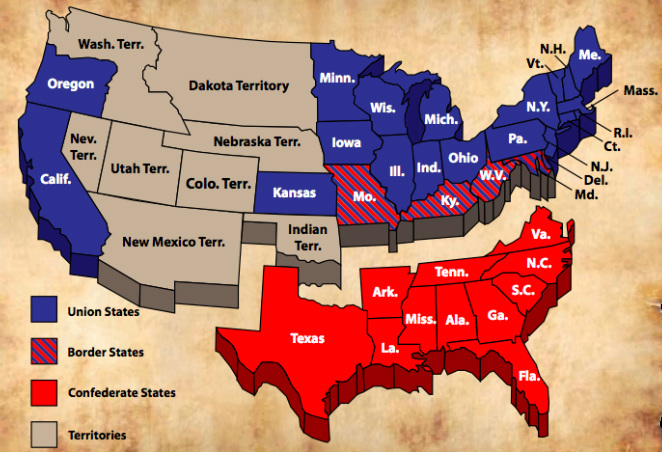
That doesn't mean that Lincoln agreed with slavery as an institution ("I am naturally anti-slavery. If slavery is not wrong, then nothing is wrong"). His first and primary goal was the preservation of the union. Secondly, he wanted to restrict (if not outright ban) the entry of pro- slave territories into the union as new states. Nevertheless, despite his best efforts, he failed. before he even had begun. The first state to secede was South Carolina in November 1860 following Lincoln's election. Other states soon followed until there were 11 in total, forming the Confederate States of America (CSA).

While all of the states were slaveholding, four states that held slaves didn't secede ---Maryland, Kentucky, Delaware, and Missouri (in anticipation of their leaving, Kentucky and Missouri were given stars on the Confederate flag). As an aside, did you know that several Native American tribes sided with the Confederacy? In 1861 the Cherokee, Chickasaw, Choctaw, Seminole, Muscogee (Creek) all signed agreements of support in exchange of being guaranteed title to territories west of the Mississippi River.

 The War between the States began (officially) on April 12, 1861 with the assault on Ft. Sumter in Charleston Harbor (with South Carolina having seceded in 1860, the fort was viewed as foreign occupiers on their territory). The war was naively expected by both sides to be over in a matter of weeks. Bull Run, Shiloh, and Antietam soon removed the nation from that illusion.

By the time of Lincoln's Emancipation Proclamation in 1863, the war had gone worse than expected by the North. Unless something dramatic was done to strategically shift the balance of power, the best outcome that could be expected was a draw.  

As in nearly every conflict down through history, the ability to successfully wage war rests on the economy's ability to sustain the effort. The South's ability to wage war rested on its agriculture. According to the last census before the war in 1860, there were approximately 4 million slaves in the South, making up roughly 30% of its population (compare that to the West Indies where about 85% of the entire population were enslaved).

It should be pointed out that only a few landowning families--mostly large plantations--- owned any slaves. The overwhelming majority of Southerners were too poor to own any slaves at all.  Nevertheless, if, somehow, the South's economy could be disrupted, Lincoln thought, then perhaps the war could be brought to a close.

At this point in late 1862, Lincoln had to accept that despite his promises not to interfere with the institution of slavery, the country was at war with itself,  men were dying daily (the average was 504 per day), and the abolitionists hadn't gone away. If anything, they had grown in number and become a powerful political force. It was time for Lincoln to play his trump card.

On January 1, 1863 Lincoln delivered the "Emancipation Proclamation". It's often overlooked by nearly everybody that the proclamation didn't end slavery in America as claimed. The proclamation freed those enslave only in the states which had seceded from the union and were now a part of the Confederacy ("...that all persons held as slaves within the rebellious states are, and henceforward are free").  But what about the slaveholding states which remained part of the union?

It meant that those slaveholding states which didn't secede, regardless of their sentiment, were excluded from the proclamation. Thus slavery continued in Kentucky, Maryland, Delaware, West Virginia, and Missouri until the end of the war (the tribes which sided with the South were unaffected. Native American tribes long held slaves of all races  before, during, and after the war).

The second interesting observation is that despite Lincoln's decree, those states which had legally (at the time) left the union, were now part of a independent and separate nation known as the Confederate States of America with its own president (Jefferson Davis), its own Congress and Constitution, its own legal system and currency. and so forth.

That meant that President Lincoln was attempting to impose a unlawful degree on an defacto independent nation! It would be like a President issuing a decree to Canada or Mexico! The decree therefore had no legal standing, and no doubt Lincoln knew it. But if it could hamper the South's war efforts, it was worth the bluff. and it worked

At first slowly, then in droves as word spread, slaves began to abandon their fields and head north or to the western territories. Even though slavery comprised a small percentage of its population, the effect was cataclysmic for the South. With crops being left to rot in the field and the economy now in turmoil, soldiers began deserting to harvest the crops in order to prevent their families from starving. 

This left the South's military further undermanned. In addition there was diminishing food and supplies reaching  Confederate troops, whose supply lines were overstretched already. It give the North the edge it needed.  By 1865 the war was over and the South lay in ruins. It would be decades before it would recover. In some ways it never has. 

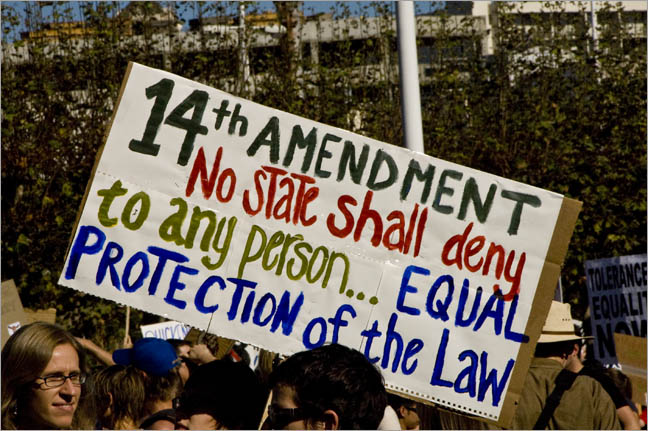
Following the war, the 14th Amendment essentially codified Lincoln's "Emancipation Proclamation",  along with the 13th which formally abolished slavery as an institution, was passed in 1868.  thus ensuring all those previously held as slaves were now fully U.S. citizens with all the rights which go along with it. The 15th amendment, passed in 1869, provided for the right to vote (it, however, excluded all Native Americans).  The trio of amendments prevented (at least on paper) any states from denying equal rights to all those held in slavery. 

The 14th also forbid any former member of the U.S. government who participated with the "rebellion" from public office and denied any and all compensation incurred by the Confederate government, including loans or contracts (as well as slaveholders, meaning they wouldn't be compensated for the loss of their slaves).

As an aside, Confederate soldiers were eventually allowed compensation for service connected injuries and pensions for Confederate widows as early as 1867 by the state whom they served. The Federal government expanded existing military benefits in two Congressional Acts to cover Confederate soldiers and their widows. One in 1927 and the other in 1957, long after many were dead. 

It should be pointed out that 28 of the existing 37 states were needed to ratified the amendment in order for it become law (which they received), but did you know that despite the passage of the 14th Amendment by Congress in 1868, several states didn't ratify it until later (in some cases, much later)? While most states ratified the law in 1868, several notable states held out. The 14th Amendment wasn't ratified by Texas or Mississippi until two years later, in 1870. 

Three of the slaveholding border states which didn't secede  decided to take their sweet time about it.   Delaware ratified it in 1901. Maryland got around to it in 1959 (as did California which had become a state in 1850).  But the "winner" was Kentucky. It waited until March 18, 1976, nearly 108 years later! The fourth slaveholding  border state, Missouri, was the 17th state to ratify the amendment in 1868 along with West Virginia, another slaveholding border state.


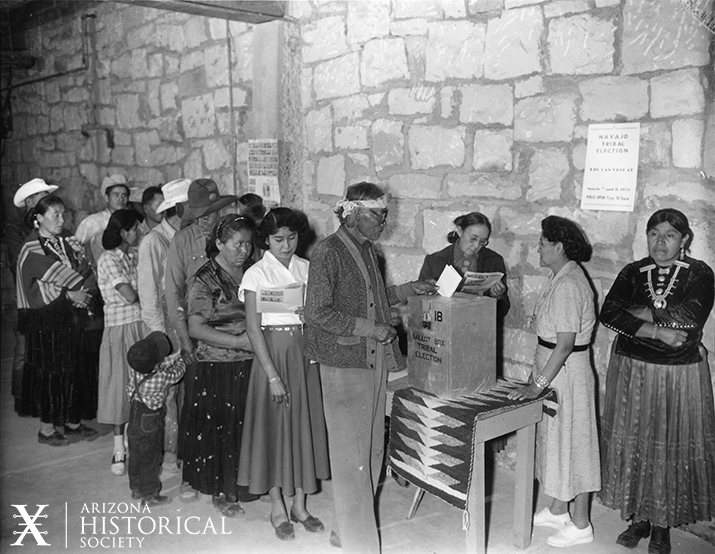
Lastly, I think it's important to point out that while the 14th Amendment provided equal rights and protection under the law to all former slaves as well as children born of foreign parents (legal or illegal), Native Americans weren't granted the same rights until 1924. That's 56 years after the passage of the 14th Amendment. 187 years after America's independence.

The  "Indian Citizenship Act of 1924", or the "Snyder Law" as it became known, was signed into law by President Calvin Coolidge (R) on June 2, 1924. It finally gave equal rights and protection under the law to all Native and Alaskan Americans. A sad commentary on "land of the free and home of the brave" don't you think? Never assume your freedoms are necessarily guaranteed or protected by anyone.


If you enjoyed the article, please consider passing it along to others and don't forget to subscribe. It's free! Lastly please be sure to "like" us on whatever platform you use to read anotheropinionblog.com. It helps beat the algorithms and keeps our articles in circulation. Thank you!


National Archives: Emancipation Proclamation


The Roles of State and Federal Government


Kentucky's Abraham Lincoln


14th Amendment: Citizenship Rights, Equal Protection,Apportionment, and Civil War Debt


Ratification of Constitutional Amendments


There were 4 million enslaved people counted in the 1860census...


What Is the Snyder Act of 1921 and who does it apply to?


Saturday, March 16, 2024

Is America Ashamed of its Flag? The Politicization of the Stars and Stripes

The U.S. Army's prestigious Academy at West Point has made the decision to remove the "Duty, Honor, Country" motto from its mission statement. In its place will be "Army Values", whatever the hell that is supposed to mean. The words "Duty, Honor, Country" has been part of West Point's code of conduct and its celebrated oath since 1925.and is just as venerated as our flag.

On March 11th, 2014 in St. Leon Indiana, a student named Cameron Blasek, was told to remove his American flag from the back of his pickup truck. Blasek, a senior at East Central High School, was hauled in front of the school principal and told that his flag was unacceptable and could not be displayed while on school property. Failure to do so would be grounds to be written up for subordination (which I presume is a big deal, at least to the principal)

The student refused and even cited chapter and verse from the school handbook as to what's permissible and what's not. Meanwhile, word got out and spread like wildfire throughout the entire school (as gossip is known to do in high school). The following day, the principal announced that they were reversing their decision and dropping the matter, but not before other students showed up flying their own American flags!  No explanation from the principal was ever given as to why he thought flying an American flag was not acceptable. Kudos everyone for standing up to bullying, even if it was the school principal!

In August 2023, "Jaiden", a 12 year old attending The Vanguard School in Colorado Springs Colorado, showed up wearing a Gadsden Flag patch sewn onto his backpack. Many of the teachers seemed to disapproved of this early American flag and eventually one teacher ordered him to remove it as being "disruptive to the classroom environment".

One of the teachers mistakenly claimed that the flag had "origins with slavery" (let's hope she doesn't teach history). In truth, it was often referred to as the 'Tea party flag". However, others reported that the only "disruption" was how excited the other students were at seeing the flag (probably because it had a snake on it). 

The young man  refused to remove the flag and as a result, his parents were brought in and despite giving the teacher in question a short history lesson about the flag, the matter was reported to the Vanguard School Board of Education. They called an emergency meeting to discuss whether displaying a symbol of the American Revolution on a personal backpack was permissible or not.

The incident was picked up by the local media and the next thing you know Colorado Governor Jared Polis (D) weighed in on the issue and reiterated what Jaiden's parents had said concerning the history of  the flag and the fact it had nothing to do with slavery. Governor Polis called this a "great teaching moment" (presumably for the history deficient teacher and members of the school board). Ironically, the flag's iconic motto, "Don't Tread on Me" was intended to warn the British not to ignore our liberties.  

The Gadsden flag with its familiar gold background and rattlesnake, is one of the first American flags of the American Revolution. Founding Father, Ben Franklin, even recommended it for our first official national flag. The naval version of the flag, with its red and white stripes in lieu of the gold background, is still flown on the bow of the U.S. Naval warships.

The final decision was that Jaiden was allowed to keep his Gadsden flag on his backpack. As an aside, it didn't take long after the decision was made for other students showing up with Gadsden sticker and put them all over their lockers. Way to go everyone, especially you Jaiden!

in 2016, the principal of Travelers Rest High School in South Carolina told students that they were prohibited from waving U.S. flags at their upcoming football game. In addition, the flag would not be flown outside of the school stadium. The reason? The opposing team was made up of mostly Hispanic students and the principal was afraid that a display of national pride would hurt the feelings of the other team.

The backlash from the school alumni, students, and the community immediate and loud. Nevertheless, the principal, Lou Lavely responded by saying that the presence of the flag could be seen as "taunting" and "unsportsmanlike" as well possibly provoking a hostile environment. However, school officials disagreed with Lavely and reversed his decision.

At the end of August 2021, a video showed up of a teacher for the Newport-Mesa Unified School District getting her class started for the day. As with most schools across America, this usually includes everyone standing to recite the Pledge of Allegiance, except on this occasion the teacher had a different idea.

The teacher, Kristen Pitsen, thought it would be a great idea to say the pledge to the rainbow colored LGBQT "Progress Pride" flag instead. When asked where the American flag was by students, Ms. Pitsen said it was "lost" but she'd try to find it. The video was, oddly enough, posted on Ms. Pitsen's own TikTok account. The video has subsequently been removed as has Ms. Pitsen.

The video was widely reported, including to the School Board and despite this being California, Ms. Pitsen was removed from the classroom pending further investigation. Ms. Pitsen taught English at the Back Bay HIgh School. Other reports indicate Ms Pitsen had previously posted videos of collection of LGBQT flags in her classroom and Ms. Pitsen saying in one video, "I pledge allegiance to queers".

As an aside, Ms. Pitsen apparently doesn't take saying the Pledge of Allegiance very seriously. She allegedly said in a  now deleted video, "I always tell my class to stand if you feel like it, don't stand if you feel like it, say the words if you want, don't say the words if they don't want to". In this case, the students stood but didn't say the pledge.

The spokesperson for the Newport-Mesa Unified School District said that all the LGBQT flags have been removed. They also posted on their webpage "showing respect for our nation's flag is an important value our district instills in our students and it's an expectation of our employees. We sake this matter seriously and are investigating and addressing it".  So do we.

In a related incident which occurred just a month later in September 2021, a Oregon teacher decided to take down the American flag too. The reason? "It stands for violence and menace and intolerance",  at least according to Ms. Gail Grobey. She also added that the flag is "the most political symbol there is".

Ms. Grobey is another English teacher Newberg High School in Newberg Oregon and former president of the Newberg Education Association. Ms Grobey went on to say that she's attempting to activate her union into opposing a recent ban on all "overtly political" symbols on school ground. This ordinance specifically includes Black Lives Matter and LGBQT flags and symbols.

She thinks that if these flags are banned, then so to should the American flag.  Accordingly, she has removed the American flag from her classroom and added that "Big Brother wants to control what we support or what we talk about". The Black Lives Matter is a political and social movement which many people believes symbolized hatred and racism.

The LGBQT and its symbols represent a different sexual orientation which certain segments of the population find offensive, mainly due to religious reasons. However, in a secular nation like ours, one's religious beliefs are purely theirs to act on but they don't apply to everyone else.

Thus you can oppose something because they offend your sense of morality, but you don't get to force everyone else to go along. They can, however, vote against proposed LGBQT bills or choose not to associate with members of the gay community, they can't make everyone else do the same. Nevertheless, LGBQT is still a political and social movement.

In the case of the U.S. flag, this is our sovereign flag. It was chosen to represent the American People, not the white European Americans. Not the Hispanic Americans. Not to Asian Americans. Not Black Americans. Not Christian, Jewish, Muslim, atheist, pagan, or agnostic Americans. 

It represents all Americans. And yes, some terrible things have been done under that flag (Native Americans come to mind as well as our attempts to overthrow popularly elected governments), but far more awe inspiring and magnificent things have too including the 1794 Slave Act which prohibited slaves from being brought to America.

These slaves, which I should remind some, were captured, beaten, and sold by other African tribes. Europeans didn't traipse through the jungle in search for victims. This was done by African tribes (who had been doing it long before Europeans ever showed up. They were sold to other Africans as well as the English, Spanish, Dutch, and Portuguese slavers along with Arabs. As an aside,  I've yet to hear the outrage and demand for "reparations" from these African tribes who preyed on their own people and who were most responsible for the slave trade in the first place.

What about the 19th Amendment giving women the right to vote, the Emancipation Proclamation in 1864 which followed on the heels of the British Slavery Abolition Act of 1833 which effectively ended slavery in the West? Throughout Mankind's long history on this planet, never had this been done on this scale and economic impact. Meanwhile, slavery continued in Africa (and still does), the Middle East (and still does) and parts of Asia (and still does).

There was the Civil Rights Act of 1964, the establishment of the Agricultural Labor Relations Board in 1975 to help protect migrant workers, the Clean Air Act of 1970 and Clean Water Act of 1972, and many more. And, of course, we're still trying to work through other issues as a nation. Things often don't happen the we think they should, but that doesn't mean we stop trying. That's why we still show respect to the American flag despite its checkered history, otherwise where does it stop?

If there can be BLM flags in classrooms, public streets, or in government buildings, why not Hispanic flags (especially the nationalist Chicano "Aztlan flag?) After all, Hispanics are our largest minority and projected to the largest population segment within the next 30 years.  Besides, much of what's Western America belonged to Mexico well into the early 19th century. 

What about Asians or Pacific Islanders? They have a strong presence on the West Coast and deserve representation too. Don't forget too that Japanese-Americans suffered the indignity of being forced into prison camps and the loss of the basic rights for merely being Asian. 

Personally, I think if anyone deserves special recognition it's Native Americans. They dealt with attempted genocide, countless broken treaties, planned starvation, repeated evictions of their land, discrimination, and forced settlement on reservations no better than rural ghettos which suffer from many of the same issues as inner city ghettos---rampant crime, drug and alcohol abuse, poverty, poor schools, high unemployment.  A lack of electricity, running water, and indoor plumbing is still not uncommon on many reservations. 

Why shouldn't Christian flags be flown on government property? That's our dominate religion and there are many who believe America was intended to be a "Christian nation". But if we allow them, why not the Jewish "Star of David"? Their influence on our nation is undeniable.  But why not Muslim, Buddhists, Wiccan, or atheist flags?  Because only the American flag unites all elements of society. There is one flag to represent all Americans just as their is one national anthem for all Americans. 

Nevertheless, that doesn't prevent some elements of society from still attempting to discredit national pride and its most basic symbol of America, our flag. The only flag which deserves to be flown or displayed in government buildings, public schools or on public property is the Stars and Stripes.  There are plenty of other places to display flags belonging to social moments, including private residences and property.

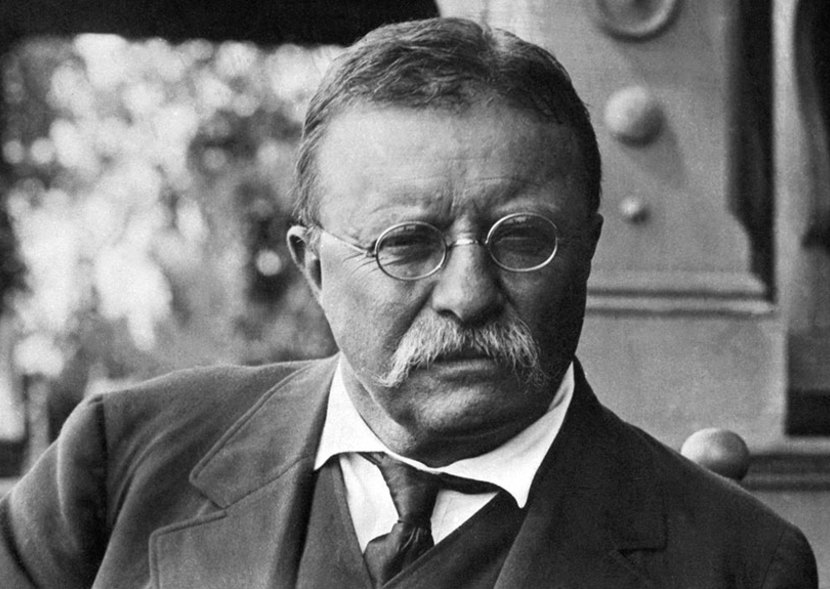
In closing, let me leave you with a quote from our 26th president, Teddy Roosevelt (and my personal favorite), which he delivered in 1912. It's just as true now (or maybe more so) and it was 112 years ago:

“In the first place, we should insist that if the immigrant who comes here in good faith becomes an American and assimilates himself to us, he shall be treated on an exact equality with everyone else, for it is an outrage to discriminate against any such man because of creed, or birthplace, or origin. But this is predicated upon the person's becoming in every facet an American, and nothing but an American...There can be no divided allegiance here. Any man who says he is an American, but something else also, isn't an American at all. We have room for but one flag, the American flag... We have room for but one language here, and that is the English language... and we have room for but one sole loyalty and that is a loyalty to the American people.”

If you enjoyed the article, please consider passing it along to others and don't forget to subscribe. It's free! Lastly please be sure to "like" us on whatever platform you use to read anotheropinionblog.com. It helps beat the algorithms and keeps our articles in circulation. Thank you!


Student says school told him to removeAmerican Flag from his truck


Colorado school is forced to let student keep Gadsden flagon his bag after teacher ordered him to remove it....


Teacher removed after Having The Class Pledge of Allegianceto the Pride Flag


Oregon teacher removes American flag from classroom, says it stands for 'violence, menace and intolerance'


The American Flag Was Banned at a South Carolina High School


GOP Lawmakers: Flying a Pride flag, a BLM flag, 'has no place inside our government buildings'


Saturday, July 10, 2021

Making It Respectable To Hate America

Since Trump, hating all things American has become the latest "cause-celeb" . Not even during the turbulent 50's, 60's, and 70's has the hatred of America been so visceral; so palpable. None of this would be possible without the support and encouragement of the media, and that means without the accomplice of the six corporations which own the 96%+ of all media, promulgating their own agendas.  

Today, athletes kneel during the national anthem or otherwise disrespecting the anthem which has filtered down from pro sports to high school and Pop Warner. They, in turn, get upset with fans when we boo and jeer them or boycott the games.  It's not necessarily because we disagree with their politics, but rather for forcing us to indirectly participate in their protest.

Games are played for our enjoyment and paid for with our dollars, which also pays their multi-million dollar salaries. We didn't buy an overpriced tickets or tune in for a political event. We're there to watch a sporting event and to be entertained. That's what sports ultimately are---entertainment. If they want to express themselves politically, do it on their own time, not ours. How about off season?

Actors and athletes spout off their opinions on topics they have little or any real understanding of. Nevertheless, the media treats it as gospel. Millennials and Gen Z often mimic what they see without considering the full effect of an issue. That's what happens when you live in a bubble. It's not to say there aren't a few who actually take the time to research the topic they want to talk about first., but those individuals are rare and far between.

Lately, we've starting hearing form a small group of athletes and mediocre celebrities demanding that the flag and National Anthem be changed because both represent slavery. It takes a pretty misinformed mind to make the leap from the National Anthem, which was written at the Battle of Fort McHenry during the War of 1812, to slavery.  

As for the flag, in what way does it have any connection with slavery? The stars represent the states. The symbol of the star was chosen since it represents the heavens and divine protection. The 13 stripes represent the original 13 colonies. The red symbolizes the bloodshed by those who fought for this country. The white stands for purity and truth, while the blue represents justice.  Maybe they should step out of their echo chambers. Better yet, read a book or take a history class.  

The media calls protests which involve looting, arson, assaults, and wanton destruction of property "peaceful" and "organized" when it done by BLM or Antifa which are  anything but! Meanwhile, they call the protest of the Capitol on January 6th an "insurrection" or "attempted coup" without having the vaguest idea what an insurrection or coup attempt would look like simply because these were individuals on the Right who supported Trump. 

Personalities in Congress, ran away like a bunch of scared mice, only later claiming they were there, willing to "stand and fight" when in reality they were hiding behind locked doors and quivering under their desks like frightened rabbits. Meanwhile, AOC tells the media how afraid she was when, in fact, she was blocks away in a very safe and secure location.

To make matters worse, we're giving individuals who are blatantly racist air time and acting as if this is perfectly acceptable in the name of political correctness. They talk about "systematic white racism" and "white privilege" as if such nonsense actually exists. I'm not aware of any privilege. I've worked my butt off all my life. I paid for college by serving in the military (and ended up a disabled vet for my efforts). I've worked two jobs and made a lot of sacrifices to get where I wanted to be. I can say too,  that my race, and perhaps gender, likely cost me a job.

Everyone I know, regardless of their race or other identifier, put in the effort to get where they are in life. Now, perhaps, there are those at the upper tier of the economic spectrum getting some sort of systematic privilege, but I doubt it's because of their race and has more to do with good old fashion cronyism and class privilege., not to mention writing the laws which benefit them and those like them.

I don't hear anyone discussing how other groups, be it Hispanics or Asians, who've come to America, often with literally nothing but the clothes on their back, unfamiliar with the language, customs, or culture, and within a few years are relatively successful. 

Why is that? Is it because culturally they put a premium on education? Is it because of their work ethic; that they'll take any job and put in the hours? Is it because, for them, being on the public dole is seen as a social stigma? That's what most of our ancestors who came here did.  Instead, I hear about "repartitions" based on what happened to someone else almost two hundred years ago. 

What if there was some sort of financial reparations and if fails as did the "War on Poverty" of the 1960's? Then what? Who will be blamed? Without a strong desire to succeed, which first requires an educational foundation and a strong work ethic, few, if any, will see their economic standing substantially improve. Hope without effort will only lead to failure, and ultimately to despair and anger. 

To make matters scarier, some are now calling whites "parasites", a "disease" equivalent with a plague which automatically discriminates against non-whites, or an infestation which needs to be eliminated.  In addition, they are "demanding" that assets, like houses, cars, property, etc  be turned over to waiting black families when they die. These are the same terms that the Nazis used in talking about the Jews, and we all know how that turned out! They are also reflective of what's happened in places like South Africa or Zimbabwe. This is not the America anyone should want. 

Now, let's be honest for a moment.  Much of what I'm saying is what most of you wish you could say. I know it. You know it. So, why am I saying it? The answer is because we need an honest and open national conversation not just about race, gender, or social class, but what is expected of us as a society.

Although the intentions were good, I think America lost track of what it was all about starting in the 1960's, when we created legislation designed to lift the poorest among us out of poverty but instead broke up families; forcing males away from the families they created. We encouraged individuals not to work by providing them with more incentives to remain on public handouts than to work. In effect, we removed many of the opportunities they had to move up the social ladder.

As a society, we allowed a subculture to develop out of this which discouraged education; where "being smart" was the equivalent of "acting white"  which often resulted in ridicule, being ostracized, or assaulted.  This same sub-culture also gave them an economic way out--through drugs and crime where, in the worst case scenario, they would go to prison where, again, the system would take care of them, not to mention living off the social safety net which was intended to be temporary.

 While we need a social safety net, it must be aimed at providing a helping hand up, not becoming a lifestyle choice. Education is the key to success, but so is a stable family unit. That means legislation which promotes rebuilding the family unit; to make it economically worthwhile to remain together. It doesn't take a village. It takes a mom and dad committed to making it work and raising their kids right.

We need to stop giving these so-called celebrities and athletes more credit than their due. Hollywood is a fantasy land. They make a living playing make believe. I'm sure some are actually intelligent and informed; some, but far from all. They also live in world where they are paid millions. Very few would be willing to practice what they preach to the rest of us.  The same argument can be made for athletes.

Both groups can have a greater impact by giving some of their millions to specific charities as well as doing commercials or special appearances...but on their own time, not ours. Movies, TV, music, and even sports are entertainment businesses. We are there to be entertained, not lectured, especially on our own dollar.

There is nothing wrong with any media or organization catering to a specific group. It's called marketing. However, to tell one group that not only can they not do the same thing, but that they have to "share" with other groups who are afforded exclusivity is wrong. If there's a Miss Asian America, a Miss Native America, Miss Black America, or a Miss Latina (and there are), plus an all inclusive Miss America, but not a Miss European America, isn't that too discrimination? Then again, why should we have a "beauty" pageant at all? Isn't that a form of sexual exploitation? 

If there are magazines like Jet or Ebony aimed at black readers, then why not all racial or ethnic groups without exception? Same goes with movie and music genres or networks and radio stations. If there can be a BET or Telemundo network, why not a WET? If there can be professional and fraternal associations which cater to one group or another based on race (and there are many), then why are whites excluded? Should groups like these even exist? 

If there are scholarships or grants based on race or other demographics, then why not all races and demographics? For that matter, maybe scholarships and grants should be exclusively based on need and academic performance.  The same applies to academic majors.Why are there Hispanic, African, Feminist, and gay majors but not a European/white major? There aren't any professional or civic associations based on my race or orientation, yet there are such associations dedicated exclusively to other groups. Personally, I would eliminate most of these qualifications across the board, but that's not "PC". In fact, none of this is. 

If there is Black Heritage Month (February), Asian Pacific Heritage Month (May), Hispanic Heritage Month (Sept 15--Oct 15), an Arab American Heritage Month (April), or Gay Pride Month (June), why isn't there a European Heritage Month? Or Traditional American Family Month? If you allow for one, shouldn't you allow for all? Isn't that what we mean when we say "equality"?

As an aside, white males are an official minority in this country according to the Census Bureau. Within the next ten years, America will no longer have a majority race society. It will be virtually equal between Hispanics and whites followed by blacks and Asians (Asians will outpace blacks in some areas and may, within the next 25 years, surpass them altogether). So, if we're going for equality under the law, then it has to apply to everyone, not just one group or another even if one is no longer a majority.

The crux of our racial and other manufactured problems, as I see it, are this. We've permitted ourselves (perhaps unwittingly) to be divided, be it racially, class, gender, religious, political, or sexual orientation. We've allowed government to take away our self-respect and responsibility for our own successes or failures---"You didn't build that" (Obama). That has created universal resentment; a sense of "us vs. them" mentality. 

That will ultimately create a balkanized America, which, for the Oligarchs now in control, will make it that much easier to dominate and manipulate us until we're nothing but puppets. We must stop defining ourselves as hyphenated Americans and simply as Americans. A slight against one America should be a slight against all Americans. 

We cannot and must not pigeonhole ourselves based on all these artificial divisions which are tearing this nation apart. Meanwhile, though it may sound cliché, the Golden Rule---"so unto others as you would have them do unto you"---is still a pretty good guide to living together don't you think?


Kneeling during the anthem? Americans opinions have shiftedover the years, polls show


Zimbabwe's white farmers: Who will pay compensation?


The growing fight in South Africa over land and identity


Zimbabwe asks exiled white farmers to return home meets withskepticism