Showing posts with label DOGE. Show all posts

Friday, March 28, 2025

Federal Employees Play “DOGE” ball with Elon Musk's Cuts as President Trump Fulfils His Campaign Promises

As we close in on Trump’s first 100 days, he’s has cut through the Washington quagmire like General Sherman's march through Georgia. With Elon Musk leading the charge through “DOGE” (Department of Government Efficiency), over 200,000 federal employees in 18 agencies have had their employment come to an end, not to mention 75,000 who have accepted buyouts.

 That number includes 2,400 Veterans Administration employees, 1,700 workers from the consumer watchdog agency, Consumer Financial Protection Bureau,  2,000 from the Department of Energy, and 2000 from the Department of the Interior, including 800 from the Bureau of Land management.

The IRS has seen 6,000 employees terminated and 5,400 probationary workers from the Department of Defense with an estimated 70,000 who may be let go by the time it’s over. 700 workers at the Centers for Disease Control have fired along 388 employees from the Environmental Protection Agency.  

The Department of Homeland Security has seen a reduction of 400 individuals, of which half were from FEMA, the Federal Emergency Management Agency. The Small Business Administration has seen a reduction of 20% of its workforce.

 Lastly, 10,000 individuals from the U.S. Agency for International Development (USAID) have been placed on indefinite leave. The move is estimated to reduce government “bloat” and save billions in taxpayers dollars.

Meanwhile, some 530,000 immigrants have seen their temporary legal status revoked while some 27,000 illegal immigrants have been deported back to their country of origin as the Pentagon has announced the deployment of some 10,000 active duty and National Guard personnel to our southern border while so-called “sanctuary cities” are facing the possible loss of the  federal funding which keeps them afloat.

So, what do Americans think of the Trump-Musk blitz on the Status Quo? Are all the cuts and reductions justified or is this another example of government going too far? 48% of Americans surveyed by a Pew poll see illegal immigration as problem, so there’s presumably happy with President Trump’s handling of the problem.

As for the mass layoffs, 57% of those polled though the budget deficit was a serious issue, so the reduction in the federal work force would presumably be a good thing. While the layoffs have little or nothing to do with the corruption, 72% believe money in politics is problem. Perhaps Trump can take steps to reduce the control Wall Street has on Washington, such as overturing Citizens United, term limits, and honest to goodness campaign finance reform.

But for that to happen, we’d have to have a level of bipartisan cooperation that we haven’t seen in decades. The divisiveness in today’s politics borders on political turmoil or even a possible civil war. Maybe that’s why 56% of respondents are concerned about the failure of the two corporate owned parties to work together. 48% are worried about the failure of our political system itself and why not?

Afterall, given our “winner-take-all” system, the majority of voters have no representation. Only those whose side wins have any form of representation, while the losing side is out of luck, and when you consider that the largest percentage of voters are Independents, that means that no more than 28% or 29%  of voters (the respective size of the two parties by registration) can claim to have a voice in politics. Of course, when we consider that Washington serves Wall Street and gives Main Street lip service at best, a pretty good argument can be made that voters have little real representation at all.

One issue which has come to the forefront lately is the Trump-Musk duumvirate cutting social services like Welfare, food stamps, Social Security, and  Veteran’s benefits. Supposedly, these cuts will affect just the administrative staff of these agencies and have little impact on benefits. 47% of those polled said they were concerned about the financial solvency of the Social Security and Medicare while 67% are worried about the cost of healthcare.

Of course, cutting back the staff will certainly impact wait times. As anyone who’s applied for Social Security or Veteran benefits already knows, it can sometimes take weeks or months before they receive benefits, which can seem like an eternity when you’re needing the money.

Nevertheless, the reductions are designed to improved the financial stability of safety net programs like Medicare and Medicaid, so that they’ll be available for future generations. One change which will likely occur is changing the minimum age requirement to receive benefits to 70, which makes sense.  For instance, when Social Security was introduced by President Roosevelt in 1933, an applicant had to be at least 65 years of age. That was ten years beyond the average male life expectancy. Today the average life expectancy is 78 years old.

Another possible change is allowing individuals the option of allowing future recipients to invest a portion of their SSN payments themselves into something like an IRA account. Currently the federal government handles all that. Some people may prefer a more aggressive strategy. Of course, should their investments not live up to their expectations,  they could end up receiving a smaller social security check at an age when they need the money most and then what?

In a related area,  63% of those surveyed are concerned about the impact of inflation. It seems that every time we go out to eat or go to the grocery store, food prices have skyrocketed. From 2020 through 2024, food prices have jumped 24%. Egg prices are up 37.5%. thanks in large part to another round of Bird Flu. The average price for a dozen regular size eggs is $5.90. Drought and feed prices has resulted in a reduction of cattle for consumption to the lowest level in 70 years, resulting in 5% increase in the price of beef. Chicken has seen comparable increases in price.  

The price of coffee has increased 1.9%. Orange juice and other frozen juices have spiked 17.2%. The reason is primarily because of weather conditions. Brazil, which is responsible for 30% of our orange juice, has just face one of the worse harvest its had in decades thanks to flooding (due to hurricanes) in some regions and drought in others, as well as a citrus greening disease.  Analysts, reflecting the opinions of 41% of those polled, said climate change may be the culprit.  As a result, don’t expect to see prices go down anytime soon.

Rising prices and taxes coupled with stagnant or declining wages are fostering concerns about the poverty rate. 53% of those polled were worried about the declining middle class and the growing number of individuals slipping into poverty.  As of 2023, 11.5% or 37.9 million Americans were living at or below the national poverty level.

44% of those polled admitted being concerned about natural disasters, which are usually handled by FEMA.   Last year, in 2024, there were 27 weather or climate related disasters in the United States according to the National Centers for Environmental Information, with each exceeding $1 billion dollars in damage and a total of 588 deaths.

In 2024, there were 90 declared “major disasters” according to FEMA. That’s roughly a declared disaster every four days. 41% or 137 million individuals lived in an area affected by a natural disaster. Also in 2024, there was 64,897 wildfires reported. That’s up from 56,580 in 2023. 8,924,884 acres were destroyed compared to 2,693,910 acres in 2023.

California by far experienced the most damage, followed by Alaska, Mew Mexico, Texas, and Oregon (together, they accounted for 46% of all fires).  The cost in terms of private property and economic impact to the affected areas was between $ 250 and $275 billion dollars.

Aside from natural disasters, crime and violence is another area where America’s are concerned. 48% said they were worried about gun violence while 47% were the rise in violent crime. The District of Columbia, New Mexico, Louisiana, Mississippi, and Alabama had the highest number of gun related deaths.

The Department of Homeland Security reports that gang related violence is on the rise thanks to the expansion of ultra-violent gangs from South and Central America and the growth of the fentanyl market.

 Most of the violence is occurring in inner cities, which is sparking fear among city leaders that their city will turn into gang controlled “narco-cities”.  51% of respondents said the drug problem is our biggest concern. 50% said declining morals and values are a contributing factor.

Will Trump’s crusade help ease the concerns of Americans or will it backfire? According to an NBC News Poll conducted in March by the Hart Research Associates/Public Opinion Strategies, 46% of those surveyed thought DOGE was a good idea. 40% didn’t while 14% had no opinion. However, the numbers flipped when asked about Trump appointee, Elon Musk, who is leading DOGE. 51% disapproved the billionaire tech president. While just 39% actually approved.

However, in another poll conducted by Quinnipiac, 54% of their respondents said the DOGE was actually hurting the country. 60% disapproved of how DOGE dealt with federal employees while just 36% approved. The poll also indicated that 50% of those polled did not approved of how Trump handled the termination of the federal employees. 82% of Republicans thought Trump was doing a good job when it came to DOGE. 94% of Democrats disagreed.  

The polling results shouldn’t come as a great surprise. They go to show the extent of our divide. It’s also another case of “NIBY” or “Not in my back yard”. Many Americans appear to want to cut the size and scope of the federal government, but not if it adversely affects them.  

We’ve become too dependent on the government. It’s a sense of entitlement. We’ve come to expect it as normal. We want everything but we don’t want to pay for it. Unfortunately, life doesn’t work that way. There’s a cost to everything. President Trump campaigned on what large numbers of Americans said they wanted, and in keeping with his promises, he is acting on them. But, as the American People are coming to realize, the consequences of having often doesn't match the anticipation wanting.


Thank you for reading "Another Opinion", the Op/Ed blog page for the "militant middle".  Here at "A/O" we truly value our readers. At A/O we seek the facts as they exist, not partisan talking points.  We hope you find our articles informative and engaging. Comments are welcome, provided they are not vulgar, insulting or demeaning.  Another Opinion is offered without charge and is directed toward all independent and free-thinking individuals. We ask, however, that you "like" us on whatever platform you found us on in order to keep our articles available for free to others. Lastly, in order to keep costs down, we depend on passive marketing, and therefore, depend on our readers to please forward our posts along. Below you will find links to the sources we used in writing this article. Thank you. 


Americans Continue to View Several Economic Issues as TopNational Problems


Here are all the federal agencies where workers are beingfired


NCEI: Billion Dollar Weather and Climate Disasters  


As Trump Works to cut FEMA, data shows there was a major disaster every four days in 2024


National Poverty In America Awareness Month: January 2025


Food Prices are on the rise again. What’s behind theincrease


Trump’s early immigration enforcement record, by the numbers


Poll: Voters like the idea of DOGE, but Elon Musk and hisearly results raise red flags


Voters frustrated with Elon Musk ‘s DOGE cuts, new pollfinds


How the Trump Administration Could Leave Families Hungary: Potential Cuts to SNAP in 2025 and Beyond


Thursday, March 13, 2025

Trump’s First 50 Days: How is He Doing?


With just over 50 days into office, Donald Trump’s approval rating stands at 47% as of March 11, 2025, a slight drop of 2% from his first 30 days, while his disapproval rating is currently 45%, which is up 4% from January according to an Emerson College Polling Survey. Compare that to President Obama’s job approval rating 50 days into his second term which stood at 41%. His disapproval rating was 53%.

Just for the record, incoming President John F. Kennedy had the highest approval rating with 72% (1961) followed by President Jimmy Carter in 1977 with 71%.  Dwight “Ike” Eisenhower, who had 67% in 1953. The worse approval rating for an incoming president was Donald Trump in 2017 with a 40% approval rating. These are all, of course, first terms.

Additionally, 40% of those polled thought that President Trump was doing a better job than expected thus far in his second term, with over 70 signed executive orders, more than any president in their first 100 days in 40 years. 35%  of those surveyed said he was actually doing worse than they originally thought he would and 25% thought he was doing as they thought he would. Overall, 51% of the population is giving Trump an overall thumbs up. Nevertheless, 49% disagree. So, it would appear that all in all, “The Donald” is off to a good start, or is he?

When it comes to the economy, public support isn’t where it should be with just 35% approving of Trump’s handling of the economy. 48% said they disapprove of how the economy is going under Trump. For reference purposes, Obama’s disapproval rating of the economy was 65% at the point in his second term.

53% of those polled said that tariffs are going to hurt the economy. 46% believe that Trump’s economy policies in general are hurting the economy while only 28% actually approve of his handling of the economy and 26% are either unsure at this point or don’t  think his policies will have a serious immediate impact.

However, 48% are happy with his handling of illegal immigration while 40% oppose his rounding up and ouster of illegal residents and tighter immigration standards. According to a Gallup Poll taken two weeks earlier, 46% was happy with Trump’s handling of the illegal immigration issue.

With respect to the economy, his approval rating was 42% two weeks ago according to Gallup. Foreign trade, which takes into consideration the tariffs Trump has imposed, has a disapproval rating of 53% with 5% unsure. 

When it came to foreign affairs, the Gallup poll reported that Trump’s handling of the situation in the Middle East between Israel and Hamas (as well as the Palestinians) polled a 51% disapproval rating with 9% not sure. As for the ongoing war between Ukraine and Russia, his approval percentage stood at 40% with a whooping 14% “unsure”, which statistically is a rather large number given that his disapproval rating was just 6 percentage points higher.

On a slightly unrelated matter, the same Gallup poll said that 93% of Republicans approved of Trump’s job performance thus far. On the other hand, only 4% of Democrats were happy with President Trump. Among the nation’s largest voting bloc, Independents, Trump had an approval rating of 37%. 

It bears mentioning that the 89% gap between Republican and Democrat approval rating is the largest Gallup has ever recorded for any president at any time. That dear readers is history making.

On single issues alone, Republican approval was 92% on immigration. Foreign affairs and the economy was 90% each. President Trump’s Foreign trade policies scored 89% with 80% of Republicans gave Trump a thumb’s up on his handling of the Ukraine/Russian War and the situation in the Middle East involving Israel.

On the same issues, Democrats gave the president an approval rating of 6% on immigration and foreign trade (tariffs being the biggest concern). When it came to foreign affairs, just 4% of Democrats approved of Trump’s policies while 5% like his handling of the economy (again, tariffs are a major factor). Trump polled the highest on his dealings with Ukraine/Russia and with the Middle East with a respective approval rating of 9% and 8%.

When the nation’s largest voting bloc, Independents, were asked, President Trump did a much better. With a 37% overall approval rate, Trump had a 40% positive rating on his handling of the illegal immigration issue. 37% like his handling of foreign affairs. However, when it came to foreign trade, the Middle East, and the Ukraine/Russian war, Trump managed only 33% each. His worse poll number was the economy with 31%.

As an aside, the Gallup Poll had some encouraging news for Congress. The approval rating for the “Millionaire’s Club” went from a pathetic 13% in May 2024 to a dismal 29% at the end of February 2025. Way to go folks! You need another raise.

A CNN Poll conducted on March 5th,  just after President Trump’s tariffs against China, Canada, and Mexico went into effect resulted in a drop of 1300 points in the Dow Jones Industrial Average. The S&P 500 fell 1.2% while the Nasdaq  saw a drop of  0.35% as the markets braced for the inevitable retaliatory response from America’s biggest importers.

Tariffs of 25% were imposed on imports from Canada and Mexico while an additional 10% tariff was added onto China’s already 10% tariff bringing the total tariffs on Chinese imports to 20%.

President Trump’s first address to Congress (which ran a record setting one hour and 40 minutes) was received well according to a poll conducted by a CBS poll. According to the results, 69% of viewers approved of the speech. A YouGov poll put the approval numbers higher at 76%. 

According to the CBS poll, the majority of the 37 million who watched Trump’s speech were Republicans, 51%, while 27% were Independents and 20% were Democrats. 74% thought Trump’s presentation was “presidential” as well as “entertaining” while 71% said they were “inspired” by the speech.

 63% of those surveyed said Trump focused on topics that mattered the most to them, especially eliminating government waste and cutting back on unnecessary spending (77%) which is being led by Elon Musk’s “DOGE” or Department of Government Efficiency program. Equally, 77% approved of President Trump’s plans for reducing illegal immigration and reforming our immigration system. Imposing tariffs on China, Canada, and Mexico as well as his comments regarding the Ukraine/Russian war also received strong approval numbers.

Meanwhile, Congressional Democrats received a wave of negative backlash to their “protest” of the president’s speech, most notably Trump’s introduction of 13 year old cancer survivor Devarjay “DJ” Danie (“DJ” has been fighting brain cancer). The most common response about the Democrat’s refusal to acknowledge the young man was “heartless” and “cruel”. It certainly wasn’t their best moment. In addition to be honored by the president, “DJ” was made an honorary Secret Service agent by Steve Curran, the new director of the Secret Service.

Rep. Al Green (D-Texas) heckling of the president got him booted from the chamber and censured by House leadership as other Democratic lawmakers sat in silence, played video games on their Smart phones, held signs on ping pong paddles, while others walked out at key moments of the speech. All in all, the strategy by Democratic leadership greatly backfired.  

Finally, where is President Trump falling down? According to a new CNN poll released March 12th, healthcare is really hurting the president. Just 48% of Americans approve of the president’s policies toward updating healthcare, which may mean reducing benefits (especially for seniors), higher premiums to offset promises of lower prescription costs on certain medications.

The poll also shows Trump’s tariff measures are increasingly unpopular with a 61% disapproval as was his management of government with just a 48% approval rating. In fact, out of eight key issues, the new poll showed Trump has positive numbers on just one---his handling of illegal immigration.

With every incoming administration there is a so-called “honeymoon” period, also known as the “100 days”. Few presidents anymore get the 100 days of their predecessors, and as for “The Donald”, it looks like the honeymoon period, if there really ever was one, is over and we’re headed for a rocky marriage at best.

So, where does that leave us?  Most of the mainstream media, with laughable façade of  “impartiality”, has long ago accused and indicted Trump while excusing the sins and treason of others, so don’t expect any objectivity. The partisan divide in America is perhaps too wide and too deep for Donald Trump, or any future president for that matter, to overcome.

The demonized conservative Right will in all likelihood laud his actions, no matter how austere, until they hit home while the ideological exhausted Left has already lit his effigy on the pyre of political wokeness. I suspect the only thing which can save the nation is some outside threat, which may explain America’s penchant for overthrowing governments and antagonizing nations.

 War has long been our more profitable export. It’s unaffected by tariffs or quotas.  It artificially stimulates the economy and rids us of “excess” human capital, reducing official unemployment numbers, while ensuring the empire expands. But is that what we really need or want?

What America needs is a strong leader who can redirect the economy to industrial and technological expansion, but that often means leaving people at the lowest rung of the ladder aside. That’s where trade and technical schools can help. A college education is not for everyone. However, equal opportunities doesn't always mean equal outcomes. Success comes with a lot of hard work and setbacks. Creating a level global playing field is another. Fair and balanced competition is good for all participants.

President Donald Trump is a “for profit” businessman attempting to manage a non-profit governmental system. The last “for profit” businessman to occupy the White House was “Silent” Cal Coolidge during the 1920’s. His famous maxim was “the business of America is business”, yet his policies in the long run helped set the stage for the Great Depression under Hoover’s watch. That led to FDR's "New Deal" and ultimately WWII. These are no less dangerous times for America.  There’s an old expression, made popular in 1929, “when America sneezes the rest of the world catches a cold” and there’s a strong cold wind blowing.


Thank you for reading "Another Opinion", the Op/Ed blog page for the "militant middle".  Here at "A/O" we truly value our readers. At A/O we seek the facts as they exist, not partisan talking points.  We hope you find our articles informative and engaging. Comments are welcome, provided they are not vulgar, insulting or demeaning.  Another Opinion is offered without charge and is directed toward all independent and free-thinking individuals. We ask, however, that you "like" us on whatever platform you found us on in order to keep our articles available for free to others. Lastly, in order to keep costs down, we depend on passive marketing, and therefore, depend on our readers to please forward our posts along. Below you will find links to the sources we used in writing this article. Thank you. 


Trump’s approval dips amid concerns over the economy: Poll


Dow Drops 1300 Points in Two Days Amid Trump’s Trade War


DJ Daniel, 13 year old cancer survivor, honored by Trump,has plenty to say about Al Green, Elon Musk, Rachel Maddow


New CNN poll: Americans are negative on Trump’s handling ofeconomy


Donald Trump Approval Rating: March 12 Update as Unease OverEconomy Grows


50 Wins In 50 Days: President Trump Delivers for the Americans 


Friday, February 07, 2025

Confronting Illegal Immigration: Understanding Who Illegal Immigrants Really Are

We previously published a brief history about U.S. immigration ("Our Never Ending War on Illegal Immigration: A Brief History"). As noted, every president since Ronald Reagan in the 1980’s has promised the American People that they would do whatever was necessary to end the onslaught coming primarily from across our southern border. And yet, virtually every one of those presidents lied.

Not only did they not take steps to halt illegal immigrations, most took steps to open the border even further. They’ve cut budgets, restricted enforcement, changed laws to allow for easier immigration, and permitted cities to openly defy federal immigration law.

President Obama even sued the State of Arizona to prevent them from enforcing immigration laws (and in a legal first, allowed a foreign power---Mexico---to join the lawsuit). The end result is that there are now some 11 million illegal residents now living in the United States.

According to a December 4, 2024 study by the Department of Government Efficiency, the U.S. is spending 2% of its budget on illegal immigration. How much is that to American taxpayers? Roughly $150.7 billion dollars.  While President Trump is doing what few before him has done---keep his word on illegal immigration---the question which arises is whether he can reverse decades of subversion to our national sovereignty?

With 11 million individuals illegally living in the U.S. (which, no doubt, has to include terrorist’s cells from the Middle East), just who are these people who knowingly broke our laws to be here? Why did they come? What are their long-term intentions? Are they hoping for amnesty and eventual citizenship or is this just about employment? In this issue, we’re going to take a look at who these people are.

When most of us think of illegal immigrants, a certain stereotype comes to mind. We tend to think of them as Hispanic, mainly Mexican, illiterate, minimally skilled, and so forth, but what’s the truth?

As of 2022, illegal immigrants represented 3.3% of the U.S. population and 23% of the foreign born population. Naturalized citizens make up roughly 23.4 million of the foreign born population or about 49%. Legal permanent residents number approximately 11.5 million people, which is 24% of the foreign born population living the U.S.  Temporary lawful residents (comprising 2 million people) are just 4% of the population. So, where do these individuals come from?

Mexico is the home of some 4 million illegally. Immigrants. Although Mexicans were historically has represented the largest segment, since 2022, that number has declined. Today, it’s just around 37% of “undocumented” immigrants. The majority of those here illegally come to fill temporary agricultural jobs (many return to Mexico after the harvesting season has ended), while some end up employed in domestic and service positions.  

The largest increase in the illegal population has come primarily from the Caribbean (mainly Haiti, Trinidad and Jamacia), Europe (especially southeastern Europe), Asia, and believe it or not, Canada (many of these are of Asian descent).  Central America has contributed a large percentage of illegal immigrants as well, especially the area known as the “Northern Triangle”.

 The “Northern Triangle” is comprised of El Salvador, Guatemala, and Honduras.  As of 2022, these three countries represented 1.9 million of the illegal population living in the U.S.(El Salvador 750,000, Guatemala 675,000, and Honduras 525,000).  India, which is typically considered a part of Asia, is responsible for approximately 725,000 illegal residents now in the U.S.

Other countries with large “undocumented” populations in the U.S. include Venezuela (which has jumped from approximately 55,000 in 2007 to  270,000 in 2022), Brazil, Columbia, Dominican Republic,  as well as the Philippines, China, and the former USSR.  

Where do the majority of these people tend to settle? California tops the list with about 1.8 million illegal residents. Following California is Texas (1.6 million), Florida (1.2 million), New York (650,000), New Jersey (475,000), and Illinois (400,000).

In addition, there are several other states with large populations of illegal immigrants, including Washington State, Arizona, Nevada, Georgia, North Carolina, Pennsylvania, Virginia, Maryland, and Massachusetts. The states with the fastest growing populations of “undocumented” residents are Florida, Texas, New York, New Jersey, Massachusetts, and Maryland. It’s not surprising that the majority of these states also provided so-called “sanctuary cities”.

Illegal residents, as of 2022, made up 4.8% of the total U.S. workforce (down from 5.4% in 2007). That’s roughly 8.3 million workers. The majority of these individuals tend to occupy the lower rungs of the labor market. Many of the women find jobs working in the hospitality industry in housekeeping, as domestic workers, cooks, or working in factories.

Men tend to be employed in construction related jobs, agriculture and farms (including racetracks), handymen, and odd jobs. Given that they make up 3.3% of the population and comprise 4.8% of the workforce, many obviously work multiple jobs.

Nevada has the largest percentage of illegal migrants in their workforce with 9%. Texas and Florida each have 8% while illegal workers make up 7% of the workforce for California, Maryland, and New Jersey each.

According to a November 24, 2024 Pew Poll, 64% of Americans believe that illegal residents should be offered a pathway to remain in the U.S. The largest majorities favoring a legal pathway for the “undocumented”  are naturalized or native born Hispanics, Asians, and Black Americans.

White Americans are nearly evenly divided, with a slight majority favoring some sort of legal pathway. It bears mentioning that 88% of Trump supporters favor immediate deportation of all illegal immigrants.

Younger Americans (mostly Gen Z and some Millennials) are mostly likely to support a means for illegals residents to remain while older adults (especially Boomers and Gen X) believe that illegals need to be deported and should follow the law if they want to come to America.   

Nevertheless, 96% agreed that breaking the law (in this case, immigration law) should not be rewarded or encouraged. 94%  also thought that allowing illegal immigrates to remain was unfair to those trying to the right thing and follow the law. Lastly, 83% said that illegal immigrants took resources aways from U.S. citizens.

When asked what a possible “pathway to legal residency” might look like, 79% said that a background check was mandatory. 52% said they must be employed. 25% believe that illegal residents must pay a fine or penalty if they want to remain. Not qualifying or solely qualifying for residency is having a “anchor baby” (a child born in the U.S. by a mother here illegally) by a margin of 84%.

Owning a resident should not qualify as the primary reason to be allowed to remain according to 88% of those polled. (half of those said it should be considered at all). 89% said owning a business in itself shouldn’t be the only reason to qualify for residency.  

Finally, why did some 11 million individuals leave their homes to come to America illegally? There’s little doubt they knew that doing so was an intentional violation of U.S. immigration law, if for no other reason, that their home country has similar, and more often, stricter immigration laws.

The majority of individuals come to America strictly for economic reasons. They’re looking for a job. Even low paying jobs here are viewed as far better than what’s available at home. Often, they leave poor countries with third world economies. There are few jobs for most workers, especially those without a good education or connections. It’s not uncommon for them to send money back home to support their families. There are some communities which depend on this money to survive.

Their home countries often lack an adequate social safety net. To make matters worse, their governments tend to be run by incompetent or corrupt leaders and bureaucracies, making actual reform unlikely. Often they can't even turn to the judicial system or churches (which has historically sided with the wealthy). As a result, many head to the U.S., bypassing other nations  even though some of them have a stronger economy, but due to stricter immigration laws, they are unable to remain.

Studies have shown that few of those who come to America illegally are actually interested in citizenship per se, and they have no interest in becoming part of the great “mixing pot”, often refusing to learn or use the English, adopt to the traditions, values, or laws (which is not unusual even among legal immigrants, depending on others to accommodate them instead).

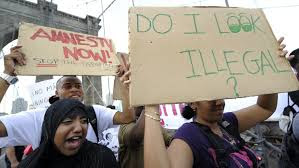
Increasingly, many of these immigrants come here claiming “amnesty”. However, according to international law, someone seeking amnesty must be fleeing their home country due to persecution for religious, racial, ethnic, or similar reasons.  Unfortunately, economic reasons don’t count. Secondly, they must seek sanctuary in the next closest (and safest) country. That means they don’t get to randomly choose what country they go to.

However, some do come here with the intent of staying permanently.  Pregnant women often use the 14th Amendment as a means to obtain residency (infamously known as “anchor babies”). While intended for the newly emancipated slaves, the laws states that any child born in the U.S. is automatically a U.S. citizen.  Of course, you can’t deny a child their mother…or father…or siblings…or grandparents, etc. It’s easy to see how it can spiral out of control, especially when dealing with individuals who come from strong extended family cultures.

Others simply try to blend in. Some even try to register to vote, thinking that might be a means to establish residency (and some states now allow illegal residents to vote in local elections). You also have various groups (mostly religious oriented) who aid newly arrived immigrants by providing them with “sanctuary” in a church. They assist them to find housing, employment, and even manipulate the system to get healthcare and other taxpayer benefits, and, of course, in evading immigration officials. They will even help to get their children into public schools complete with a translator at the taxpayer’s expense!

So, there you have it. A factual picture of those individuals who, for whatever reason, have decided to bypass the law and come to the United States illegally. The majority are here strictly for economic purposes, although some do come for legitimate reasons. Determining the difference is difficult, time consuming, and expensive.  Many of their home countries were happy to see them go regardless. They couldn’t afford to provide for them anyway.

Deportation, while providing an immediate solution, is also a temporary one. It doesn’t address the "why" these people are fleeing or prevent them from returning (which is likely) and thus perpetuating the cycle. What are some of the long term solutions? Certainly, addressing our foreign policy is one answer. We can’t be destabilizing countries solely because we disagree with their political or economic philosophy. Promoting increased trade and greater self-sufficiency at home through the development of natural resources as well as greater investment in R&D, especially in emerging technologies, is another.

 However, stricter immigration requirements (such as enforcing laws on employers on employers of illegal workers,  revoking tax exemption status on religious groups adding illegal immigrants and mandatory jail time and/or fines, making more green cards or visas available with improved tracking, requiring a minimum level proficiency in English, and tighter border security are just as important.  

 Thank you for reading "Another Opinion", the Op/Ed blog page for the "militant middle".  Here at "A/O" we truly value our readers. At A/O we seek the facts as they exist, not partisan talking points.  We hope you find our articles informative and engaging. Comments are welcome, provided they are not vulgar, insulting or demeaning.  Another Opinion is offered without charge and is directed toward all independent and free-thinking individuals. We ask, however, that you "like" us on whatever platform you found us on in order to keep our articles available for free to others. Lastly, in order to keep costs down, we depend on passive marketing, and therefore, depend on our readers to please forward our posts along. Below you will find links to the sources we used in writing this article. Thank you. 


Illegal Immigration Cost U.S. Taxpayers $150.7b: DOGE


What we know about unauthorized immigrants living in the U.S.


Most Americans say undocumented immigrants should be able tostay legally under certain conditions


Demographic Divides Immigration and Diversity 


Friday, November 22, 2024

America's Global Economic Performance and Our Failing Schools


Many of the things we took for granted when we were in school back in the 1950's, 60's, and '70's are not considered "politically correct" these days. It seems that the emphasis is more on not "offending" anyone or promoting a culture where nearly everything is acceptable, no matter how irrational. Kids can't tell time using a analog clock or write cursive but they get to pick which gender they want to be and no one has to even tell their parents! You send "Johnny" or "Mary  to elementary school in the morning and they come home as "Johanna" or "Mark"! What the hell?  I was happy if I got to pick out my shirt for school let along my gender! Besides, everyone knew girls had cooties. 

Today kids have story time read to them by individuals dressed like they belong in some sort of John Waters' movie.  They can now choose what they want to study (or not) based on their racial or gender identity.  Disrupting class isn't at all uncommon and often excused as being a part of their "learning culture" or symptomatic of some attention disorder we never heard of when we were kids in school.

 Assaulting teachers while trying to teach class or enforce discipline isn't unusual (and woe unto the teacher who physically responds). Teachers in their 20's or 30's getting caught having sex with kids barely in puberty happens so often it's barely news worthy.  Professional ethics aside, what about simple  morality?

 I personally happen to support saying the Pledge of Allegiance (if you don't want to participate, fine. Just don't interfere with those who do). Strict discipline in the classroom, active participation of the parent or guardian, and teaching civics are essential. If they don't understand the function of government and their role in society as citizens, how can they protect their freedoms? Volunteering 90 days at the end of senior year performing some civic service such as Habitat for Humanity, helping out at the VA hospital, Meals on Wheels, participate on a police or firefighter advisory board, helping seniors or working as an election officer should be mandatory before graduating. 

 I am especially keen on learning being the focus of education. Anything beyond that (sports, band, cheerleading, or whatever) should be a privilege for maintaining good grades. Poor grades or disciplinary issues and the privileges are suspended until the grade or behavior situation is corrected. Repeated offenses and they're revoked. Period.

Some individuals and groups want to promote the introduction of their agenda a denominational prayer in public school and teaching creationism in public school either alongside evolution or to the exclusion of evolution all together. If that's want you want for your child, great. Send them to a parochial school.

 I have no problem with a minute of silence to get yourself mentally ready for the day ahead. If you want to quietly say a little prayer (or have a little prayer circle), have at it. If you want to do a quick mediation, or some late minute cramming for the test you forgot about or get your homework in order, that's fine too. Just be respectful of others. I do not support the notion of mandatory participation in someone else's religious expressions unless it's part of a comparative religions class examining all faiths.

Another key issue is the emphasis on higher education. I also don't believe college is for everyone or necessary for every or even most jobs. Sure, there are some occupations where higher education is needed because of the intellectual nature of the work. However, there are jobs where someone with a proper high school education should be able to do quite well. One reason employers ask for a college degree is just to get a qualified applicant at what would otherwise be the high school  equivalent.

 I've seen high school "graduates" barely function on a 8th grade grammar or reading level or can do math much beyond a 6th or 7th grade level. You can all but forget about basic geography and history (but boy oh boy do they known or video games!).  One resulting outcome is the lowering of colleges and universities minimum admission standards to create an artificial parity based on race or gender rather than academic performance. This is nothing more than a quota system based on discrimination.  

Far too often, teachers and school administrators "fail students forward" rather than hold them back out of fear of being accused of racism, genderism, or whatever the victim card du jure happens to be.   The most common excuse is that failing little "Brad" or "Babs" hurts their self esteem. I think saddling them with a worthless education or bleak employment opportunities is worse than bruised feelings.

Is it any wonder that the United States consistently performs in the lower half of the second tier globally? The U.S. ranked 16th out of 81 industrial countries according to a 2022 test of 15 year olds as administered by the Organization for Economic Cooperation and Development (OECD). We placed 16th in science among the same 81 countries. When it came to mathematics, we were 34th. The top five highest scores all belonged to Asian nations with Japan, Taiwan, Singapore and Macao consistently being among the top performers. 

These are some of our current and future economic competitors for high paying jobs and market shares, which affects employment levels, quality of life, and other key metrics.  If we think of education as an investment in human capital or part of our economic national security, we're losing the battle.

Although the U.S. spends more taxpayer money per student than other countries, we are obviously not getting our money's worth. Incoming President Trump is putting together an advisory committee---the deceptively named "Department of Government Efficiency" (it's not an actual government agency)  led by Elon Musk and  Vivek Ramaswamy. Their job is to review various government projects, programs, and departments and find a way to make them work better and within budget.

 I suggest they start with our school system and find ways to improve our performance. After all, everything starts with education (there are some who, since the 1990's,  have been calling for the disbandment of the Department of Education and a return of educational authority back to the states). As an aside, the Department of Education was elevated to a cabinet level position in October 1979 by President Jimmy "Peanut" Carter (D-GA).

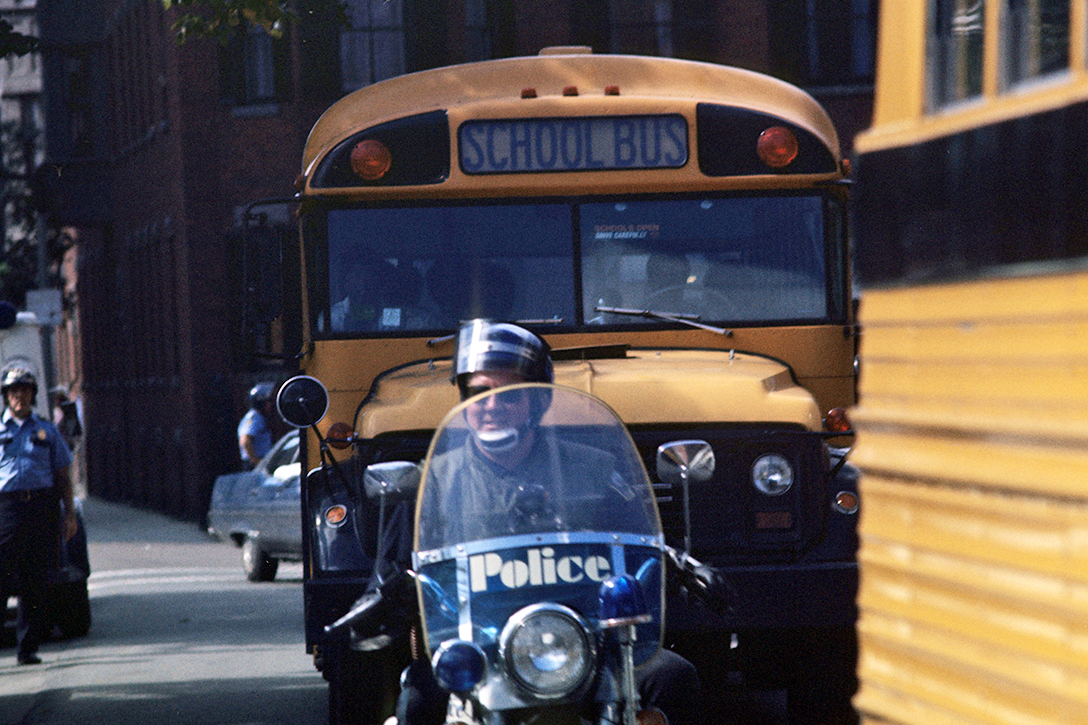
This was just four years after the advent of the disastrous court ordered  fiasco known as "forced busing" which effectively eliminated neighborhood schools. Students as young as six and seven years old, were put onto school buses and shipped all over town for hours at a time each way. This implementation of "social engineering" was intended to create balance in the schools academically and racially.

What it accomplished was a general lowering of academic performance which continues to this day. A better option would have equalizing the money spent on each student and rotating teachers. However, that would have produced a battle with the powerful teacher unions. So, what can we do about it?    

One potential solution is to weed out not just the academically unprepared, but also  redirect individuals who lack the interest or aptitude for higher education. One option would be to adopt a system similar to Germany's where students are tested periodically throughout years K - 8, and channeled into programs which lead to two years degrees, trade or technical schools, or on to higher education. It's one of the reason's Germany has one of the world's most advanced economies in the world.  Of course, the final decision belongs to the student (and parents) who may choose the academic path of their preference.

Students unprepared academically are re-immersed back into the subjects they poorly performed on via in person or online tutoring while extracurricular actives such as sports are put on hold. Students may be required to attend before or after school instruction. In some cases, this may take place during the summer. Until they can pass those courses, they should remain  suspended from  any non-academic events.  

The result is that the abilities and interests of the student is targeted  instead of trying to funnel them onto a path where they have little or no ability or interest. Trade or technical school is one such option. Unlike Europe, America faces a serious shortage of carpenters, welders, plumbers, electricians, glaziers, construction equipment operators, cyber security specialists, and other skills. It's a economic sector where there are real shortages and great opportunities. Making six figures annually isn't unheard of. Neither is owning your own business, where income opportunities can be even higher.

In a 2023 survey, there was a shortage of approximately 374,000 skilled workers in construction. The Association of General Contractors of America had a 70% positive response rate about concerns over the availability of skilled contractors and subcontractors in the upcoming years. 80% of those surveyed said they were worried about unfilled positions long term in the construction industry.

Between now and 2023, the renewable energy industry alone will need 1.1 million more workers worldwide and another 1.7 million to operate the equipment. According to a January 2024 U.S. Bureau of Labor report, the manufacturing industry in the U.S. has a staggering 584,000 unfilled job openings.

Among the reasons for the critical shortage of skilled workers is that the current workforce is slowing but steadily aging out. Almost 70% of supervisors in just the electrical trades are Babyboomers who are quickly reaching or passing retirement age.  More individuals are retiring and leaving than are replacing them. Another explanation is the push by school counselors, college recruiters, and a negative public perception about blue collar workers in general.

The truth is that training for a career in the trades is far shorter and cheaper than getting a Bachelor degree from a college or university. Training, on average, is two years or less plus a short apprentice period which may start simultaneously while being paid with benefits (the average apprentice earns roughly 50% of a skilled worker's salary). It takes about three weeks to qualify for your CDL license needed to be a long haul truck driver (the average salary--with experience--is just over $78,000 yearly).

Typically the cost of attending a trade or technical program can range from just a few thousand dollars to roughly $30,000 with an average cost of $15,000. Many of those attending a trade program are often hired before graduating (some start work will still attending school).

Compare that with the cost to obtain a four year degree. The current average is approximately $10,490 per year for in-state students. For out out-of-state students, that cost can jump to as high as $24,000 per year. If you plan on attending one of the top schools, the cost can be a lot higher. There are a few cheaper options (like attending a unaccredited institution), but remember that you get what you pay for and that's nowhere more true than in education.

Then there's the debt. On average, 61% of those who graduate from a public university leave with diploma in one hand and a bill for $31,960 in the other hand. Over their four years, the majority of students will occur a debt of at least $30,000 by the time they leave. The average federal student loan debt is $37,853 dollars. If you pursue a Masters degree, the costs and debt will be substantially higher.

It used to be that many American workers graduated from high school with a functional degree and would get a good paying job with benefits down at one of the local manufacturing companies. They'd join a union for job security and they were pretty much set. For a large percentage of the country, it was a near guarantee to their entry into the Middle Class. It wasn't uncommon for this path to be multigenerational, but those days are long gone.

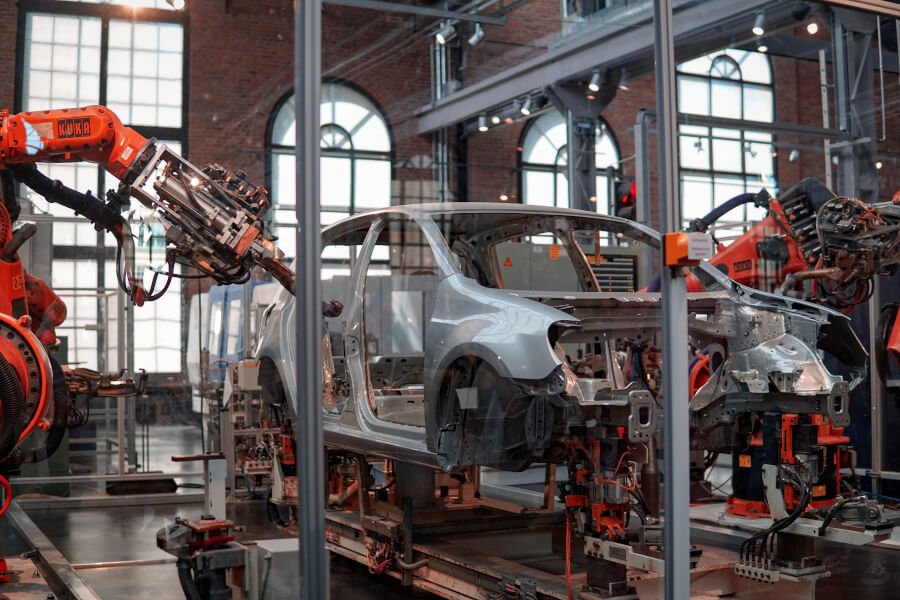
Starting in the late 1970's American began transitioning out of manufacturing and largely into the lower paying (and the less secure non-union) service industry. What industry remained has become more automated, replacing most positions. The only ones with job security and a good paycheck are the ones who repair or program the production line robot. But that's not the half of it.

Our parents and grandparents didn't have to face is the level of competition we do. Today, workers not just compete with each other for scarce well paying jobs, nor is their competition in the next town or state. Today's employee faces competition for work thousands of miles away, in countries like India and China where unions don't exist and people will work for next to nothing (and forget about benefits. They're happy just to have a job!). This is where America is losing ground, and when we look back at math and science score of our students, the future doesn't look to bright for the U.S..

When  it comes to technology, the world leader is Japan (Japan is also the world's most literate nation). Second is South Korea followed by China which has a knack of acquiring, studying, and adapting U.S. and global  technology. You don't have to look much further than the America's F-35 and China's J35A stealth fighter jets for proof.

In fourth place the good ole U.S. of A. Behind us is Germany, a country the size of Wisconsin and with a reputation for high quality engineering and efficiency thanks to their excellent dual avenue academic system which puts the trades on equal ground with higher education without the stigmatism as we mentioned earlier. Of course, we wouldn't expect anything else from the Germans.  As an aside, Russia graduates the most engineers of any country followed by the U.S. and Iran according to UNESCO.

 Singapore, a former British colony, is next (remember at the beginning of this article where I mentioned that the top five nations in academic math and science among 15 year olds were all Asian?). Coming in seventh place is Russia. Another country with a "gift" of mimicking U.S. technology. Great Britain, the United Arab Emirates (UAE), and Switzerland round out the top ten.

The key to the future is innovation. It's where tomorrow originates. So, who leads the world when it comes to innovation? That honor goes to Switzerland which dominates its second place competitor, Sweden. The United States has dropped to third place and is just ever so barely ahead of Singapore and the UK. For now, this may get us by, but not for long. Not at the pace the world is changing. How long can we hold on? Only time will tell. But one thing is for certain. If we don't do radically improve our school system and the quality of graduates, we may be facing a bleak future as the world's largest Banana Republic.


Thank you for reading Another Opinion! We hope you enjoyed this article and will pass it along. Please don't forget to subscribe. It's free! Lastly, please "like" us on whatever platform you use to read anotheropinionblog.com. It helps beat the algorithms and keeps our articles in circulation. Please find below the links we consulted in researching this article. 


Department of Government Efficiency


U.S. Education Rankings Compared to Other Countries


Tradespeople wanted: The need for critical trade skills inU.S.


These countries have the most technological expertise