Showing posts with label computer chips. Show all posts

Friday, March 24, 2023

How the Biden Administration Affected the Implosion of Two Banks and Shook the Financial Industry

We've just seen two major banks fail within days of each other while some financial pundits are alleging that 200 other banks are "vulnerable". What happened? Silicon Valley Bank was the first of the 2023 bank failures it was also the second largest failure in banking history (the largest was Washington Mutual in 2008).

The reason for its failure was due to having a high percentage of its investments in uninsured deposits and risky fixed rate "hold to maturity" bonds or "HTM" bonds (meaning they aren't readily tradable for other higher yield securities).

Silicon Valley Bank (SVB), based in Santa Clara California, represented 50% of the money available to venture capital firms, particularly those with interest in new and emerging technology as well as biogenetics. While it was one of the primary banks to venture capital firms, its total assets were relatively small compared to the major banks like JP Morgan Chase, Citibank, or Bank of America.

According to investigators, 93% of SVB's deposits were uninsured. This means that many of its customers had deposits in excess of $250,000, which exceeds the amount covered by the FDIC. This percentage second highest in the banking industry behind Mellon Bank of New York with 96% of its deposits uninsured. 94.4% of its investments were in long term HTM securities and loans, compared to Mellon's 31.2%, meaning Mellon had more available liquid assets on hand.

Back when technology industry was booming and stock prices were rising, SVB saw its deposits grow from $65 billion in 2019 to $189 billion three years later. ignoring all the warning signs, the inevitable bust came in November of 2021, resulting in many of its corporate investors (especially tech companies) to begin a drawdown of their money, especially in light of rising interest rates and a downturn in the stock market.

To cover all the hefty withdrawals, SVB first blew thru its cash reserves and their convertible short term liquates. They then had to turn to its hold-to-maturity (HTM) bonds, which they were forced to sell at a loss. As the big dollar investors withdrew their money, word eventually spread to the smaller depositors who joined in the feeding frenzy. It wasn't long before SVB was virtually bust.  

The second bank failure of 2023 was the better known Signature Bank. It's failure was primarily the result of a run on the bank by spooked depositors after learning of SVB's collapse (such is the power of mob mentality). However, the underlining reason for its failure was its highly speculative investment in cryptocurrency, resulting in the fourth largest bank failure in the industry's history.

Like SVB, Signature Bank had a similar percentage uninsured deposits at 89% along with 93% of its investments tied up in loans and HTM bonds. While SVB and Signature were the only two banks with investment ratios this high, their implosion sent shock waves through the financial industry. Banks and other financial institutions, both domestic and global, saw their stock prices take a hit amid fears of possible bank runs by depositors and the stability of the financial market in general.

While it's unlikely their will make any more bank runs, the collapse  of SVB and Signature Bank nevertheless reveals an underlining concern by the public and corporate investors alike about rising inflation rates along with rising interests rates amid a shaky U.S. economy and deep concerns about the prospects of a new world war which could quickly go nuclear.

The U.S. economy had been doing rather well, with inflation running from around 1.5% in 2015 to a low of .07% in 2017 under President Obama (the "ideal" rate of inflation is about 2%). When Donald Trump took office in 2017, inflation was still a respectable 2.1% before dropping to 1.4% in 2020. Under President Biden, inflation jumped to 7% in 2021 before dropping slightly to 6.5% in 2022.  It's now hovering at about 6%.

Under President Obama, the economy added 11.6 million new jobs (though the upward trend began under Clinton). Unemployment dropped to 4.7% with the poverty rate declining to .5%.  Median household incomes grew an average of 5.8% over his two terms (by comparison, median household incomes rose an average of 13.9% under President Clinton but dropped to 4.2% under George W Bush). Home prices rose by 20%. The number of uninsured Americans dropped by 15.2 million individuals.

It's worth noting that under Clinton, corporate profits rose 55.2% while under George W. Bush they skyrocketed 118.9% before falling back to 54.9% under Obama (during the Nixon-Ford years, corporate profits rose by a astonishing 125.4%).

During Trump's tenure as President, unemployment rose to 6.3% while 2,876,000 jobs were lost. Nevertheless, the number of job opening rose 25.7%. Poverty continued to decline by 1.3%. The median household income rate grew by 6%. and median home prices rose by 27.5%.

Although food stamp recipients dropped by 1.7%, the consumer price index (the change in consumer prices) rose 7.6%. The number of people without insurance increased to over 3 million individuals, affecting single parent households the most.  Wages for private sector workers, however, rose by 8.7% under President Trump.

Under President Biden, the numbers aren't so rosy. Speaking at the Conference of Mayors, Biden said that thus far under his administration, unemployment had dropped by 16 million. Impressive, but not true. Analysis shows that while unemployment has dropped, the numbers were a much less impressive 5 million.

Biden also claimed to increased the number of new jobs by a record 10 million. Again, not true. Biden's Administration has seen a net loss of 22 million jobs, and while a portion of those jobs have been recovered,  40% remaining unfilled or permanently lost. And, as an aside, President Jimmy Carter grew the largest number of new jobs at 8.4%, not Biden.

President Biden claimed in a Tweet on March 16th that food related prices have dropped. Again, not true.  Data from the Bureau of Labor Statistics shows that over the last year, food prices rose 11.8%. For cereals and bakery goods, overall prices rose 16.1% last year. Dairy and related products (like ice cream, cheese, cottage cheese, etc), prices went up 15.3%.

 Other grocery items such as eggs, fish, chicken and beef saw an increase in prices by 7.7%.  Fruits and veggies had a 8.4% jump in price. Thus far this year, prices are still rising but at a generally slower rate of roughly .03%. Another issue for customers has been the price of gas.

When Biden first took office, the average price of regular gas was $2.39 a gallon. Within a year of taking office, the national average was $5.00 per gallon for regular. Today the average price nationally is about $3.39. Biden falsely claimed in October 2022 that when he took office, the average price of gas was $5.00 and added that his policies were responsible for the decrease. Nevertheless, it our era of under regulated corporate industries, there's not much a president can do on his own about gas prices.

Another factor affecting the mood of the public and depositors alike is the war in Ukraine and rising tensions with Russia and China. The United States spends more on its military---$801 billion---than the next nine nations combined. Russia spends just $300 million on its military, which is less than the UK ($400 million) or India ($500 million), and yet we've allocated over $400 million to Ukraine (the same amount as the entire military budget for the UK!). NATO has contributed roughly $80 billion in military aid with much of that comes indirectly from the U.S..

The result has been a unnecessary prolonging of the war and thousands of needless dead and wounded individuals not to mention billions of dollars in destruction, and yet only China has proposed a peace plan. You would think that the European Union and/or the United States would want to see some sort of peaceful resolution, but nope.

 As a result of continued Western aid, Putin has deployed nuclear ICBM missiles along with threats of using them while various NATO nations (notably Poland) have indicated they might be "forced" to get more directly involved. If Poland does, it could enact Article 5 of the NATO agreement which calls for NATO to come to the aid of another NATO member if attacked. It was this kind of distorted mentality which lead to World War I and we all know how that worked out for Europe.

Beijing has at least put forward a peace proposal as it has strengthened its relationship with Russia, including the shipment of military aid. At the same time it has been aggressively beefing up its military. Having the world's second largest budget, China has already deployed two aircraft carriers and is beginning sea trials on a third. It has enlarged its fleet in everything from amphibious landing crafts and coastal ships to cruisers and destroyers. It has also added shipbuilding yards, bringing the total to six.

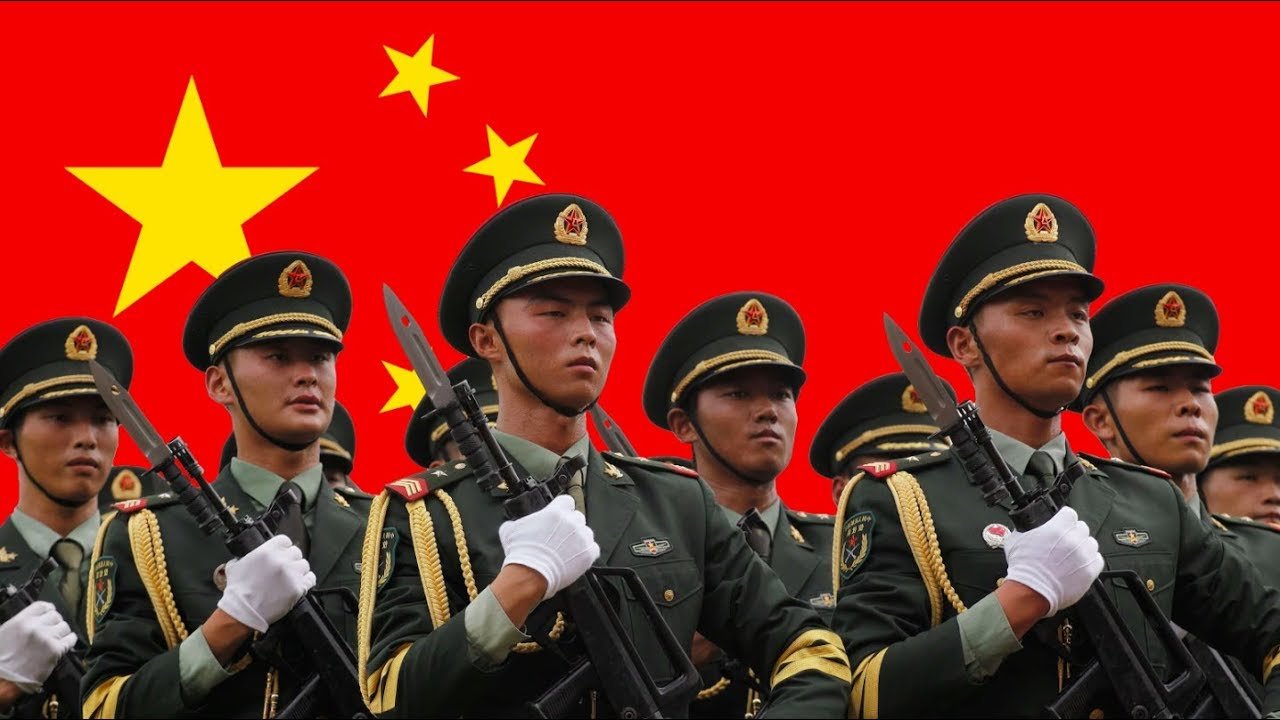
Beijing has upgraded its army in terms of training and armament as well as adding troop carriers, tanks, mobile missile launchers, and aircraft. Most notably, it has also enlarged its cyber-military capabilities which not only covers surveillance and communications eavesdropping, but cyber-hacking and electronic jamming capabilities.

To makes matters more intense, China has become much more aggressive in asserting its claim over Taiwan, its border with India, and has challenged the territorial water rights of Japan, South Korea, Philippines, India, Indonesia, and Australia while asserting its own rights over the South and East China Seas.

In terms of trade, China is a major player in the technology market (which directly affected key corporate clients of both Silicon Valley Bank and Signature Bank) dominates the field of electronics. In addition, China is believed to be heavily involved in bitcoin, Ethereum while holding as much as $6 billion in crypto currencies. All factors in the failure of both banks.

China is also a essential trading partner of the U.S.. It makes up 17.48% of our imports. Meanwhile, the United States accounts for just 6.59% of China's imports. Their top import partners are Japan and South Korea who making up  8.44% and 8.36% respectively of its total percentage of imports.

In the era of COVID, China is an essential importer of pharmaceuticals to the U.S. which covers the gambit from medical equipment, vaccines and commonly use drugs. For example, they account for 95% of our ibuprofen, 91% of our hydrocortisone, 70% of our acetaminophen, 45% of our penicillin, and 80% of the active pharmaceutical ingredients used in other drug manufacturing (they even provide the majority of those medical masks we wore during the outbreak of COVID!).

Technology, as stated earlier, is also a major Chinese import, especially in terms of cell phones, electronic chips used in computers, vehicles, televisions, microwaves, military equipment, as well as telecommunication equipment, computers, semiconductors, and various automotive parts.

Lastly, the Chinese have been doing a lot of shopping globally, buying up mineral and water rights, oil and natural gas rights, mines, agricultural (seeds, fertilizer, etc) manufactures, food processing firms, pipelines, concrete manufacturing plants, farmland, forests, and securing exclusive agreements as they go. If they can't conquer the world outright, then they'll buy it bit by bit.  So long Pax Americana!  

These are obvious reasons why big dollar depositors made a run on these two banks. There's plenty for corporate investors and ordinary depositors, as well as the public in general to be scared of as outlined above.  However, that's no excuse. Other banks, financial institutions, and businesses face these same issues and remain solvent.

Management will likely claim they were trying to maximize gains for their shareholders, which may be true,  but it will be the taxpayers who'll end up paying for their mistakes. Ultimately, it comes down to bad judgment and a failure to maintain a proper fiduciary responsibility in an industry which is in need of tighter regulation.   


 If you want to know more about this article's topic, please check out the links below. If you enjoyed the article, please consider passing it along to others and don't forget to subscribe. It's free! Lastly please be sure to "like" us on whatever platform you use to read anotheropinionblog.com. It helps with the algorithms and keeps our articles in circulation. Thank you! 


Why Did Silicon Bank Fail?


Analysis: Why Silicon Valley Bank and Signature Bank failedso fast


Current US Inflation Rates 2000-2023


Obama's Final Numbers


Trump's Final Numbers


Biden's Misleading Unemployment Statistic


Biden's Misleading Claims About the Economic Recovery and Unemployment


Fact Checking: Biden touts falling food prices when they areactually rising


China's Global Shopping Spree


Friday, March 17, 2023

Reading America's Fortune Cookie: Is War with China Likely?

Let's face it. The war in Ukraine isn't going well for anyone. Putin's military advisors anticipated a brief invasion followed by a ceasefire and talks about how to guarantee Ukraine's sovereignty without a NATO presence on Ukrainian soil and protecting Russian national security. But that didn't happen.

Instead, the U.S. and its European surrogate, NATO, immediately began pumping billions of dollars in weapons into Ukraine, not to mention providing intelligence about Russian troop movement. The Western media went into full propaganda mode to condemn not just the invasion (rightly so), but also to spin U.S. and NATO involvement and the reasons for the invasion in the first place.

The result has been a stalemate measured in dead civilians, massive destruction of towns and cities and the growing specter of nuclear war. Without U.S. and NATO involvement, the invasion would likely have been over with a few months at best with a practical compromise the likely result. But then again, had Russia not been forced to invade to protect its national security from an encirclement of NATO missiles on its western front, there would have been to need for anyone's involvement and nobody would be dead.  

The only nation to present a peace proposal thus far has been China, which the United States and its allies dismissed out of hand. The primary reason is that China is a ally of Russia, and besides, it has recently started providing military support to Russian troops operating in Ukraine.  You would think that after a year of war, the United Nations or someone would have stepped forward to offer a solution to stop the war, but apparently not. Why?

The most likely reason is pressure from Washington. Washington has long seen Russia a potential threat to its military and economic primacy, well, that is until the collapse of the USSR in 1989 and implosion of Soviet Russia in 1991.  Since then, the United States has sought to impose a "Pax Americana" and the global integration of economies under the auspices of a U.S. led "New World Order".  However, not everyone wants to play along.

Russia, along a few other countries such as Cuba, Brazil, Iran, and China, have been able to go about their merry way outside of this American hegemony. A few have formed their own economic solution, such as Brazil, Russia, India, and China, which formed "BRIC" in 2009. Subsequently, the name has been changed to "BRICS" with the addition of South Africa in 2010. 

There have been other economic blocs formed outside the sphere of American influence such as "The Regional Comprehensive Economic Partnership" (RCEP), which was signed into being in 2020 and took effect in 2022. RCEP is now the largest economic partnership in the world.

At its head is China, and it includes Vietnam, Australia, Brunei, Japan, Cambodia, Laos, Singapore, New Zealand, and Thailand. It doesn't not include the United States. RCEP accounts for some 30% of the world's economy, 30% of the world's population, and will have an economic reach of at least 2.2 billion potential customers.  

China has established itself not just as the world's second largest economy with a GDP of $17.73 billion dollars(compared to the U.S. with a GDP of $23.32 billion), but is expected to surpass the U.S. by 2035. By 2075 or sooner, India will also pass the U.S., leaving the U.S. as the third largest global economy.

China seeks to do more than just wrestle economic control of the Pacific Rim from the United States. It intends to back up with military might, with a particular focus on its navy.  The Chinese have embarked on the largest military upgrade of any nation since WWII although the United States still spends more on its military budget than the next nine nations combined including China.

In 2022, China spent roughly $293 billion dollars, or 13.9% of its GDP upgrading its military while the United States spent $801 billion dollars or 37.9% of the GDP on its military. Together, China and the U.S. make up 50% of all military expenditures with a combined $1.1 trillion dollars. 

By comparison, Russia spent just 3.1% of its GDP, or $65.9 billion on its military. The UK spent slightly more, or about $68.4 billion dollars. It's worth nothing that China's military expenditures have increased 27 years in a row. The result is that China now has the newest and largest navy in the world by tonnage.

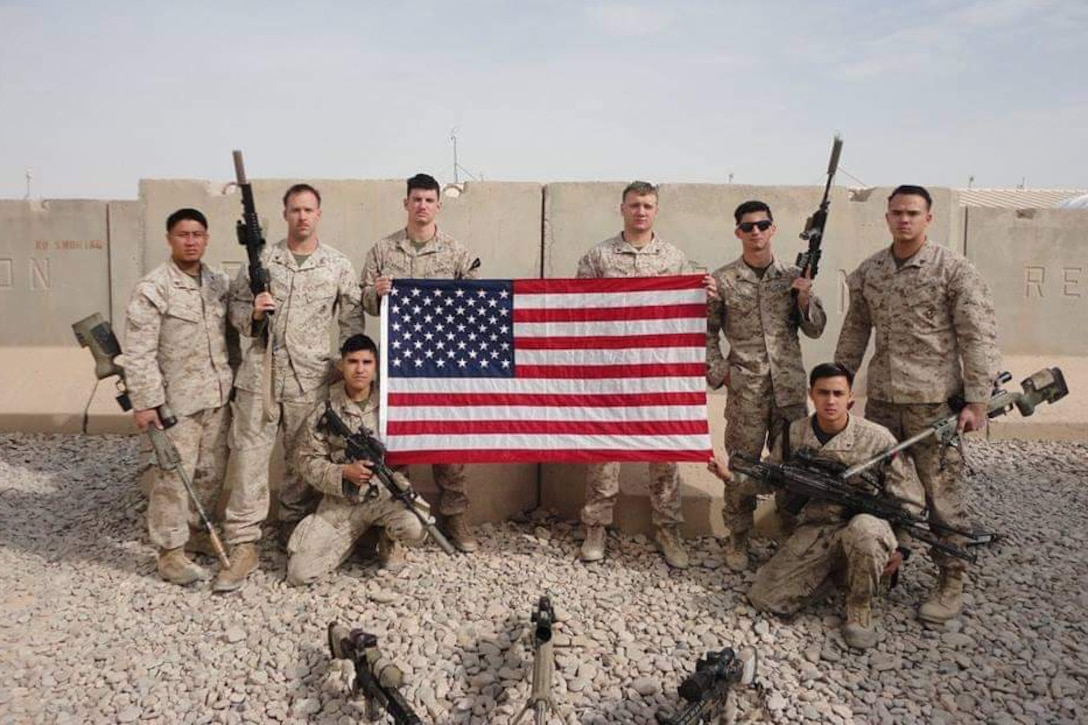
Meanwhile, the U.S. military is still the best trained and equipped, it's suffering from combat fatigue. After 20 years in Afghanistan, the United States left with virtually nothing to show for it. Yes, it took out Al Qaeda's top leadership including Osama bin Laden, but Al Qaeda barely skipped a beat, replacing leaders almost immediately and continuing with its operations. The same goes for the Taliban. In fact, the Taliban were already back in charge before the last U.S. military planes had left Kabul.  

To make matters worse, following the withdrawal, the U.S. military saw a rapid exodus of its highly skilled men and women (most of whom having served at least four tours of combat duty) with replacement proving to be slow and time consuming. In addition, the military is woefully in need of a total overhaul or replacement of practically everything from ships to tanks to aircraft.

During the course of the war, the United States flew 55,150 sorties and dropped over 337,000 bombs and missiles (including some 13,000 precision guided munitions) in Afghanistan. That works out to be an average of about 49 bombs per day every day. In 2019 alone, a record number of 7,423 bombs were dropped on Afghanistan.  The result was a severe shortage in our stockpile of practically everything from bombs to bullets, not to mention spare parts particularly for aircraft.

As an aside, while we were busy blowing up Afghanistan, we were also busy rebuilding it back in our image. U.S. taxpayers shelled out $145,000 billion dollars over the 20 years in rebuilding its infrastructure, schools, hospitals and office buildings, its electrical grid as well as training and equipping its security forces, stabilizing its government, and propping up its economy...and the Taliban got it all, not to mention billions in military equipment and hardware we left behind.

Starting between now and 2035, the U.S. military is expected to undergo a major overhauls of its ships (combat and auxiliary), aircraft, tanks, trucks, artillery, and so forth. If it moves or shoots, it's getting a makeover.  Some ships, however, are beyond the makeover phase. The Pentagon confirmed in late 2022 that 26 ships will be decommissioned, leaving the Navy shorthanded with just 276 active ships (300 is considered its minimal effective force)

However, over the next ten years the Navy is expected to be back up to its fighting weight with the addition of eight new "deep water" combat ships and a projected fleet of 500 ships by 2040; most of whom are destined for the Pacific (by comparison, the British Royal Navy, once the world's dominate naval power, has just 76 combat ships while Australia has a mere 44).

The problem is that China is already at or near its fighting weight. China currently has 355 combat ready ships, including two aircraft carriers and a third, the Fujian, preparing for sea trials. Analysts predict that by 2030, China will have five aircraft carriers and ten new submarines capable of carrying nuclear ballistic missiles. However, China still lacks adequately trained carrier based pilots. Nevertheless,  projections show that if China continues to build its fleet at the same rate it has over the past 27 years, it will have a whooping 425 warships by 2030.

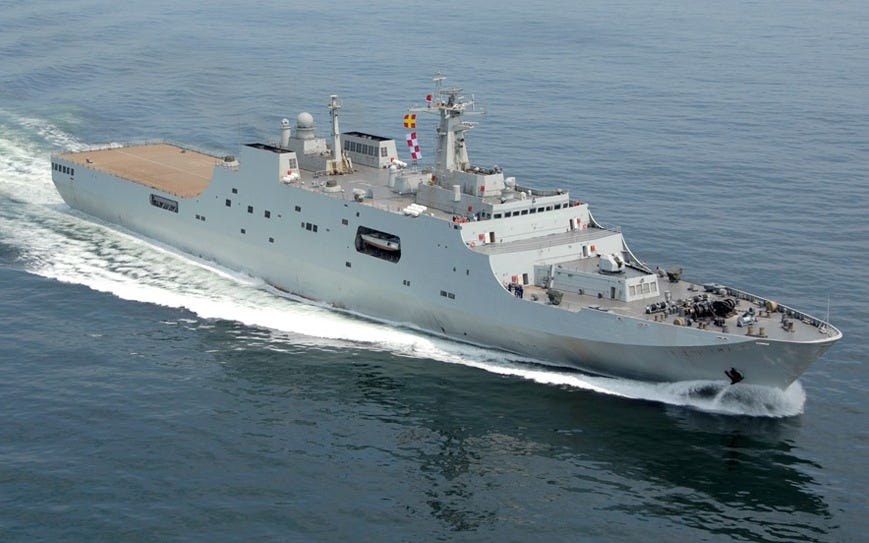
China is also increasing the number of missile carrying destroyers, cruisers and landing craft as well.  China's new Type 075 amphibious assault landing ship will come in at 40,000 metric tons with the capability of carrying 30 helicopters along with landing craft and just over 1000 assault troops.  The Type 075 replaces the Type 071 by 15,000 tons. There are now 32 Type 075's combat ready.

The Type 071 is another, albeit slightly smaller, amphibious land ship. Displacing 20,000 metric tons, it has capacity to carry four helicopters and roughly 800 combat troops. There are currently six known Type 071 ships in service at this time.

In addition to its combat fleet, China has greatly expanded its merchant fleet as well. Something you would expect with a growing economy. China now has 40.3% of the world's merchant shipbuilding market. Compare that to South Korea and Japan which has a 31.5% and a 22.2% share respectively.

China now has the second largest fleet of ships with 5,600, of which approximately 800 merchant ships. Greece has the largest, with 20.4% of the world's tonnage while China has 14.4% and Japan is third with 13% of the world's tonnage. China also has completed or updated the number of ship building facilities to six.

So, bringing this all together, what does it mean for the United States? The United States is still capable of projecting its military might around the world on a moment's notice. However, the question is whether it is still capable of maintaining that projection against a determined foe like Russia or China.

According to a report by the Heritage Foundation entitled "Index of U.S. Military Strength", only the Marines were rated at "strong" while the Navy and Space Force were categorized as "weak". The Air Force was rated as "very weak" and the Army was "marginal".  

Our stockpile of munitions and spare parts were badly depleted by our 20 year misadventure in Afghanistan, and much of what we were able to build back has found its way to Kyiv. The U.S. Navy, our principal tool in the projection of our foreign policy, is currently undergoing a phased overhaul and updating which isn't expected to be completed before 2035. The other branches are also undergoing their own updating which will take several years to complete.

Meanwhile, China is already at or near its ideal fighting weight, with the development of many of its ships progressing ahead of schedule. China's economy, while slowed, is still doing well while ours remains sluggish thanks to rising inflation and lingering effects of COVID on the economy.  Meanwhile, China has become much more aggressive.

It has claimed both the East and South China Seas as its own, and warned other nations to stay away. It has declared some of the territorial waters around South Korea, Japan, the Philippines, Indonesia, Australia, and India are in fact international waters, and thus has asserted its fishing rights there. China is also involved in a "warm war" with India along its mutual border in the Himalayas.

The creation of the Regional Comprehensive Economic Partnership (RCEP) may have a severe impact of America's ability to protect its interests in the Pacific, especially in light of China's growing economy, its expanded merchant fleet, along with a modernized navy capable and apparently ready to defend its economic interests.

For allies like Taiwan, the future doesn't look bright. Over the next seven to ten years, Taiwan will be particularly vulnerable. China has the means and ability to block off the South and East China Seas, and from there launch as rapid air and sea invasion of the island nation before the United States or anyone else has an opportunity to do anything.

This is especially true given our current preoccupation with Ukraine (and doubly so should we make the mistake up upping the ante and forcing Putin into some direct action against NATO. To make matters more interesting, China's ally, North Korea, could start something with South Korea which would further divert the attention a weakened U.S. military (some military analysts have states that given our current situation, we are unlikely to be able to operate effectively on two fronts). 

Of course, there's the economic angle. The U.S. is heavily dependent on Chinese imports, especially on electronics and computer chips. We depend on China for textiles, batteries, and machinery needed  in industry and even the military such as Neodymium which powers magnets used in hard drives or Praseodymium in the manufacture of aircraft engines which are "rare earth" metals.  

The U.S. doesn't manufacture these and other rare earth metals in abundance, but China does. In fact, they control 90% of the world's rare earth market. Heck, most of our cell phones---72%---are made in China!

 90% of our antibiotics come from China. 80% of the ingredients used in our medicines come from China. They also control 90% of the nine critical vitamins, 70% of acetaminophen, and 50% of the anti-coagulant Heparin.  Most of the medical devises we commonly use are of Chinese origin. 

Where does that leave us? The short answer is between a rock and a hard place. Internally we are increasingly unstable socially, economically, and politically. We can no longer afford to be arrogant about the supposed superiority of American capitalism or invincible military might as Vietnam, Iraq, and Afghanistan have shown.

We can't forget that China also owns about 20% or $1 billion dollars of our debt. They can call the tune economically with their influence on our domestic market, and even their growing economy and military power, they are likely to exert de facto regional control over the Pacific Rim and eventually they may surpass us as the world's most power nation. From all appearances, China has outfoxed the fox.    


 If you want to know more about this article's topic, please check out the links below. If you enjoyed the article, please consider passing it along to others and don't forget to subscribe. It's free! Lastly please be sure to "like" us on whatever platform you use to read anotheropinionblog.com. It helps with the algorithms and keeps our articles in circulation. Thank you! 


Asia forms world's biggest trade bloc, a China-backed group excluding U.S.


Ranked: Top Ten Countries by Military Spending


How is China Modernizing its Navy?


China's Navy Could Have 5 Aircraft Carriers, 10 ballistic Missile Submarines by 2030 Say CSBA Report


US military in decline, threats from China "formable" , report says


Executive Summary of the 2023 Index of U.S. MilitaryStrength


U.S. Dependent on China forVital Ingredients


We're Too Dependent on China For Too Many Critical Goods, Especially Medicine


Preparing for War with China, 2025-2032


What Will Drive China to War?


U.S. General's Prediction of War with China 'in 2025' Risks Turning Worse Fears Into Reality