Showing posts with label First Nations. Show all posts

Friday, June 14, 2024

Where has Patriotism Gone and Other Trends

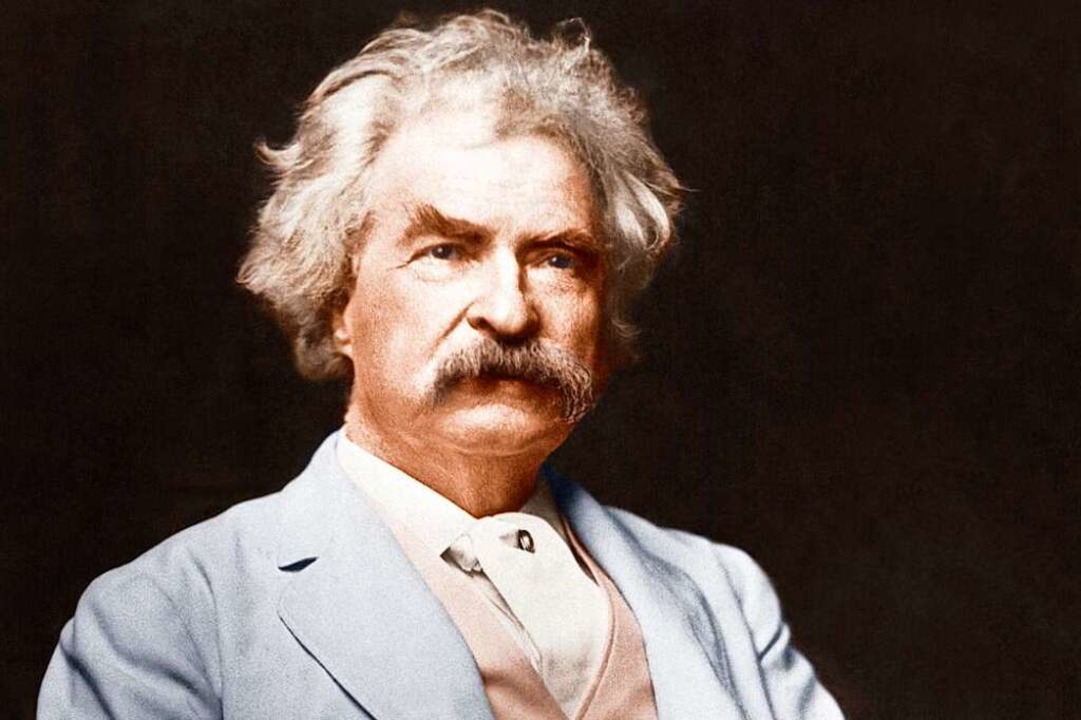
The indomitable Mark Twain was once quoted as saying "There are three kinds of lies: lies, damned lies, and statistics" and he was absolutely right. Extracting the desired data from statistics is generally referred to a "manipulating" the data, which couldn't be a more accurate description of the process. The ideal use of statistics is to uncover what the information tells us, hidden in all those numbers and responses.

However, manipulating the data can and is often used in more deceiving ways too. It can be used to manufacture a desired outcome or create a certain impression. This is often the case in politics or the media when they try to persuade voters, legislators , or the general population to think, support, or vote a certain way.

I've long had an interest in applied (or predictive) social demographics and trends. Ever since I began working on my undergraduate degree in economics back in 1984,  my fascination with demographics, trends, percentages and interpreting them has only grown as regular readers of A/O know ad nausem!  

Recently I came across a recent study regarding patriotism and how would individuals respond to a invasion of America by some foreign power. What made the study particularly interesting is that the survey focused on registered voters belonging to one of the two corporate owned political parties, the Democrats and the Republicans along with the largest voting bloc, Independents.  

A survey conducted in March 2022 by Connecticut's Quinnipiac University asked registered Republican and Democrat voters whether they would be willing to help defend in the United States in the event of a Ukrainian style invasion. Perhaps naively, I expected the answer would be an overwhelming "yes" regardless of party affiliation. I was surprised by the results.
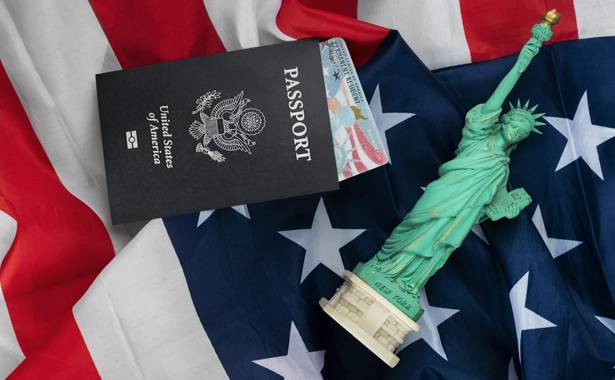
According to the survey, 52% of Democrats said they'd bail on the U.S. and attempt to find somewhere safe outside of the country. Just 40% said they'd stick around and fight while the rest---8%---were undecided. The survey explained that pacifists and conscientious objectors and those under 18 were excluded, so the respondents were adult males and females.

When the question was posed to registered Republicans, 68% of the respondents said they'd help defend this country. While that's a pretty decent response, it also means that around 32% would bug out. I guess conservatism or protecting our way of life only goes so far.

It's worth noting that of the nation's largest political demographic, Independents, 57% said they'd stand and fight.  As an aside, the same question was asked of active duty and reserve military personnel  and veteran households. The majority---68%---would defend America, yet surprisingly 27% would bail with the rest undecided.

The survey also broke down the respondents by gender (sorry, but only two were available to pick from), race and age brackets. 75% of men would fight (there goes that "macho" thing again) while 40% of women would remain. The age bracket indicated that those 35 years and older were the ones most likely to take up arms and defend the country. 48% of those 34  and under (which covers mainly Millennials and Gen Z) said they'd hit the road.  

Then we look at race, the poll lists only Black, White and Hispanic. Asians, Native Americans, and Pacific Islanders were evidently excluded because their percentages were too low. So, when examining  the category of race, 57% of whites and 61% of Hispanics said they were willing fight while only 38% of black Americans would remain. 35% of whites, 33% of Hispanics and a whopping 59% of blacks said they'd leave.

Here's where data results can be a little deceiving (presumably unintentional in this case). When I cross checked a Pew survey from December 2019, which was just three years before the Quinnipiac University poll, I found some conflicting results. According to Pew, as of 2017, 57% of  the combined U.S. military were white while 43% belonged a minority population.

Delving into that 43% percentage we find that Asians make up 10% of the military and another 15% belonged to a mixed or different races such as Native American. Hispanics made up 36% and are the fasting growing minority in the military. However, the largest minority---39%---serving in the Armed Forces were Black Americans.  Meanwhile, 2/3 or 68.8% percent of active duty military are classified as white.

It's worth mentioning that out of the 3,535 Medal of Honor Awards given,  94  went to black military personnel.  61 individuals of Hispanic origin have won the Medial Honor while 22 Native Americans have shared that honor. 35 Asian or Pacific Islanders have also been so honored. As an aside, out of the 3,535 Medal of Honor recipients, only 103 are still alive. Most were award for their valor during the Civil War. The second highest was in World War II followed by the "Indian Wars" and the Vietnam War.

Given the original survey question and the resulting data raises an interesting question. I wonder what would happen if China for instance would attempt an invasion. Would we react to the Chinese-Americans the way we did to Japanese-Americans during WWII?  For those unfamiliar with the history of that era, following the attack on Pearl Harbor in 1941 by Japan, the U.S. ordered the incarceration of all Japanese living in America, citizen or not. They were held in what could be at best called "concentration camps".  

Another factor that is often overlooked is that while a small percentage of the U.S. population---just 2.9%---some 19% of Native Americans and Native Alaskans ("Eskimos") serve in the U.S. military. That's a pretty significant percentage when you consider that Black-Americans make up 14% of the U.S. population and comprise 21% of active duty military personnel (they serve in the Army at a higher ratio of any racial minority based on population size).

Hispanics are the second largest population (and rapidly growing) behind whites account for just under 19% of the total U.S. population or approximately 62.1 million Hispanics or individuals of Hispanic origin in the U.S.. However, based on their population size, they are heavily underrepresented in our military, but according to survey, most Hispanics---61%---are willing to defend this country.

So, what can we glean from the above information? Well, according to the survey the majority of males who are of white or Hispanic origin, middle age or older and are either Republican  and/or conservative as well as the predominantly centrist Independents are most likely to come to America's defense should the nation need them.

The least likely are women of any race, Black Americans, and those 34 and under (which intriguingly  comprises Millennials and Gen Z. Those are the two generations replacing us aging Babyboomers and Gen Xers) and Democrats, which presumably encompasses progressives or liberals well.  
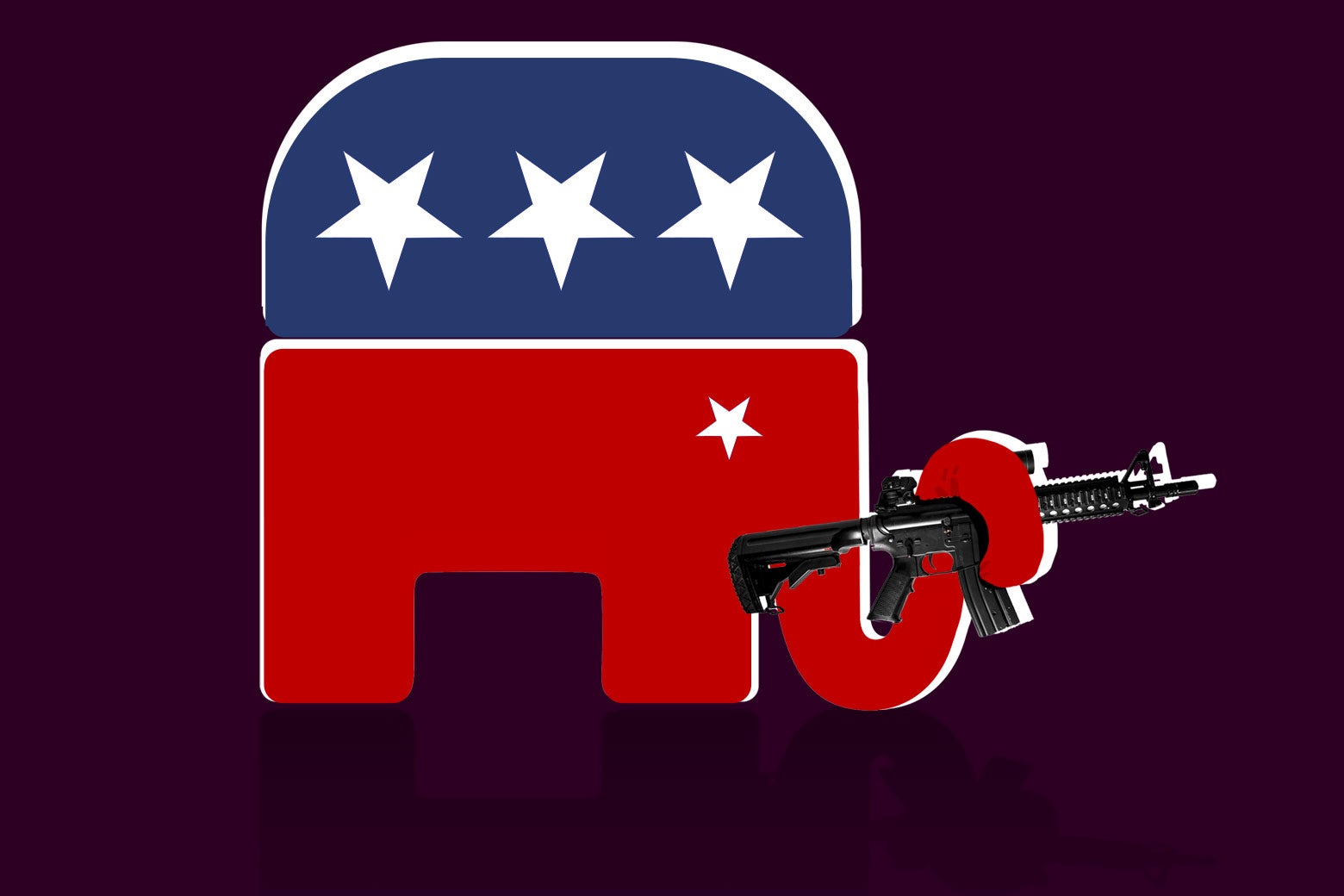
On a related note, a 2022 survey from Statista reported that 48% of Republicans/Conservatives personally own a firearm while another 66% said there is a gun in their household. 32% of Independents own a gun and 42% live in a home where there is one or more.

By contrast, only 20% of Democrats have a gun. Just 32% acknowledged one being in their home. So, taken all together,  I guess if the proverbial "SHTF" should ever occur, you know who's most likely to make a stand to protect this country, and who knows, maybe your butt too. Just saying.


If you enjoyed the article, please consider passing it along to others and don't forget to subscribe. It's free! Lastly please be sure to "like" us on whatever platform you use to read anotheropinionblog.com. It helps beat the algorithms and keeps our articles in circulation. Thank you!


Quinnipiac University Poll March 7, 2022


Pew Research: The changing profile of the U.S. military:Smaller size, more diverse, more women in leadership


USNI News: Department of Defense Demographic Profile


Latinos Claim Larger Share of U.S. Military Personnel


Black Americans In The U.S. Army


OMH: Hispanic/Latino health


United States Army: Medal of Honor Award


Statista: Percentage of population in the United Statesowning at least one gun, by political party affiliation


Monday, July 04, 2016

A Book Review: The New Trail of Tears: How Washington Is Destroying American Indians

There are few ethnic peoples in the world, certainly in the United States, that have suffered more or had more cause to demand justice than Native Americans. Ever since the first Europeans set foot in the New World, native peoples have been fighting a holding war, be it their lands, their customs and traditions, their religions, and even their languages. They've trusted these invaders and paid for it by the tens of thousands thanks to disease, wars, and ultimately, by the sheer numbers of these ever expanding invaders which must have seemed like endless waves drowning them little by little. Yet, with the echoes of the last of the Indian Wars having long faded away, the federal and state governments continues to wage a war of bungled good intentions and bureaucratic red tape on Native Americans when only equality is being sought.

Today, most Native Americans live on reservations; lands allotted to them by the federal government in exchange for vast and resource rich territory for the settlers is the official description given while in truth, it's more like lands that no one else wanted, and still they have little control over it or its use. Naomi Schaefer Riley just wrote an outstanding book entitled "The New Trail of Tears: How Washington Is Destroying American Indians" which delves into the plight of not just Native Americans, but offers comparisons to the First Nations of Canada. Ms. Riley expertly explains how the reservation system came about that both gives the Indians lands and at the same time, restricts or outright prohibits the buying and selling of it (75% of tribal members between the ages of 18 and 40, for instance, do not own a home), its development for commercial or residential purposes which leaves the reader with sense of the frustration the residents on these lands must feel.

Ms. Riley explores many of the reasons behind the exceptionally high unemployment rate (as high as 47% in some places) among Native Americans including a lack of adequately trained teachers, poor academic performance and the unexpected high dropout rate in tribal schools. Not surprisingly, drug abuse, crime, and alcoholism appears to be rampant across tribal lands due to the lack of jobs or businesses unable or willing to relocate their operations on tribal lands due to government and tribal red tape. Absence too are entrepreneurial opportunities for tribal members thanks to an array of restrictions; all of which has plunged Native Americans into poverty level that is two times the national average and has created an atmosphere of hopelessness and frustration.

Suicide is the leading cause of death for males between ages 10 and 14, at 57% for ages 15 to 24. Sexual abuse too has become a serious issue with 1 in 4 girls and 1 in 6 boys under the age of 18 having been molested, often by a family member. She boldly delves into the oft ignored subject of tribal politics too, including tribal nepotism, suspension of outsiders, corruption amid the federal and state bureaucratic quagmire created by such organizations as the Bureau of Indian Affairs, the tribal school boards, development boards and banks as well as the impact created by various federal legislation. Often breaking this cycle usually requires leaving the reservation behind, along with family, friends and often, their culture to seek a better life in "the white world". A bittersweet victory to be sure.

Perhaps the best part of "The New Trail of Tears" is how Ms. Riley is so able to allow the voices and emotion of those she has interviewed come through, while at the same time staying focused on the topic at hand; not the easiest thing to do when writing about social or economic justice issues. Finally, Ms Riley offers up potential solutions, if only to restart the conversation from a fresh perspective such as where education reforms have proven to be successful such as with Charter schools or ways in which funding has been attained and land ownership acquired with a minimum government intervention has accomplished, which allows for land improvements and the creation of jobs. If you have any interest in Native Americans or First Nations, history, politics, social or economic justice, then "The New Trail of Tears" by Naomi Schaefer Riley is an excellent place to start. The book is a compelling 185 pages in length.