Showing posts with label GenX. Show all posts

Friday, June 14, 2024

Where has Patriotism Gone and Other Trends

The indomitable Mark Twain was once quoted as saying "There are three kinds of lies: lies, damned lies, and statistics" and he was absolutely right. Extracting the desired data from statistics is generally referred to a "manipulating" the data, which couldn't be a more accurate description of the process. The ideal use of statistics is to uncover what the information tells us, hidden in all those numbers and responses.

However, manipulating the data can and is often used in more deceiving ways too. It can be used to manufacture a desired outcome or create a certain impression. This is often the case in politics or the media when they try to persuade voters, legislators , or the general population to think, support, or vote a certain way.

I've long had an interest in applied (or predictive) social demographics and trends. Ever since I began working on my undergraduate degree in economics back in 1984,  my fascination with demographics, trends, percentages and interpreting them has only grown as regular readers of A/O know ad nausem!  

Recently I came across a recent study regarding patriotism and how would individuals respond to a invasion of America by some foreign power. What made the study particularly interesting is that the survey focused on registered voters belonging to one of the two corporate owned political parties, the Democrats and the Republicans along with the largest voting bloc, Independents.  

A survey conducted in March 2022 by Connecticut's Quinnipiac University asked registered Republican and Democrat voters whether they would be willing to help defend in the United States in the event of a Ukrainian style invasion. Perhaps naively, I expected the answer would be an overwhelming "yes" regardless of party affiliation. I was surprised by the results.
According to the survey, 52% of Democrats said they'd bail on the U.S. and attempt to find somewhere safe outside of the country. Just 40% said they'd stick around and fight while the rest---8%---were undecided. The survey explained that pacifists and conscientious objectors and those under 18 were excluded, so the respondents were adult males and females.

When the question was posed to registered Republicans, 68% of the respondents said they'd help defend this country. While that's a pretty decent response, it also means that around 32% would bug out. I guess conservatism or protecting our way of life only goes so far.

It's worth noting that of the nation's largest political demographic, Independents, 57% said they'd stand and fight.  As an aside, the same question was asked of active duty and reserve military personnel  and veteran households. The majority---68%---would defend America, yet surprisingly 27% would bail with the rest undecided.

The survey also broke down the respondents by gender (sorry, but only two were available to pick from), race and age brackets. 75% of men would fight (there goes that "macho" thing again) while 40% of women would remain. The age bracket indicated that those 35 years and older were the ones most likely to take up arms and defend the country. 48% of those 34  and under (which covers mainly Millennials and Gen Z) said they'd hit the road.  

Then we look at race, the poll lists only Black, White and Hispanic. Asians, Native Americans, and Pacific Islanders were evidently excluded because their percentages were too low. So, when examining  the category of race, 57% of whites and 61% of Hispanics said they were willing fight while only 38% of black Americans would remain. 35% of whites, 33% of Hispanics and a whopping 59% of blacks said they'd leave.

Here's where data results can be a little deceiving (presumably unintentional in this case). When I cross checked a Pew survey from December 2019, which was just three years before the Quinnipiac University poll, I found some conflicting results. According to Pew, as of 2017, 57% of  the combined U.S. military were white while 43% belonged a minority population.

Delving into that 43% percentage we find that Asians make up 10% of the military and another 15% belonged to a mixed or different races such as Native American. Hispanics made up 36% and are the fasting growing minority in the military. However, the largest minority---39%---serving in the Armed Forces were Black Americans.  Meanwhile, 2/3 or 68.8% percent of active duty military are classified as white.

It's worth mentioning that out of the 3,535 Medal of Honor Awards given,  94  went to black military personnel.  61 individuals of Hispanic origin have won the Medial Honor while 22 Native Americans have shared that honor. 35 Asian or Pacific Islanders have also been so honored. As an aside, out of the 3,535 Medal of Honor recipients, only 103 are still alive. Most were award for their valor during the Civil War. The second highest was in World War II followed by the "Indian Wars" and the Vietnam War.

Given the original survey question and the resulting data raises an interesting question. I wonder what would happen if China for instance would attempt an invasion. Would we react to the Chinese-Americans the way we did to Japanese-Americans during WWII?  For those unfamiliar with the history of that era, following the attack on Pearl Harbor in 1941 by Japan, the U.S. ordered the incarceration of all Japanese living in America, citizen or not. They were held in what could be at best called "concentration camps".  

Another factor that is often overlooked is that while a small percentage of the U.S. population---just 2.9%---some 19% of Native Americans and Native Alaskans ("Eskimos") serve in the U.S. military. That's a pretty significant percentage when you consider that Black-Americans make up 14% of the U.S. population and comprise 21% of active duty military personnel (they serve in the Army at a higher ratio of any racial minority based on population size).

Hispanics are the second largest population (and rapidly growing) behind whites account for just under 19% of the total U.S. population or approximately 62.1 million Hispanics or individuals of Hispanic origin in the U.S.. However, based on their population size, they are heavily underrepresented in our military, but according to survey, most Hispanics---61%---are willing to defend this country.

So, what can we glean from the above information? Well, according to the survey the majority of males who are of white or Hispanic origin, middle age or older and are either Republican  and/or conservative as well as the predominantly centrist Independents are most likely to come to America's defense should the nation need them.

The least likely are women of any race, Black Americans, and those 34 and under (which intriguingly  comprises Millennials and Gen Z. Those are the two generations replacing us aging Babyboomers and Gen Xers) and Democrats, which presumably encompasses progressives or liberals well.  
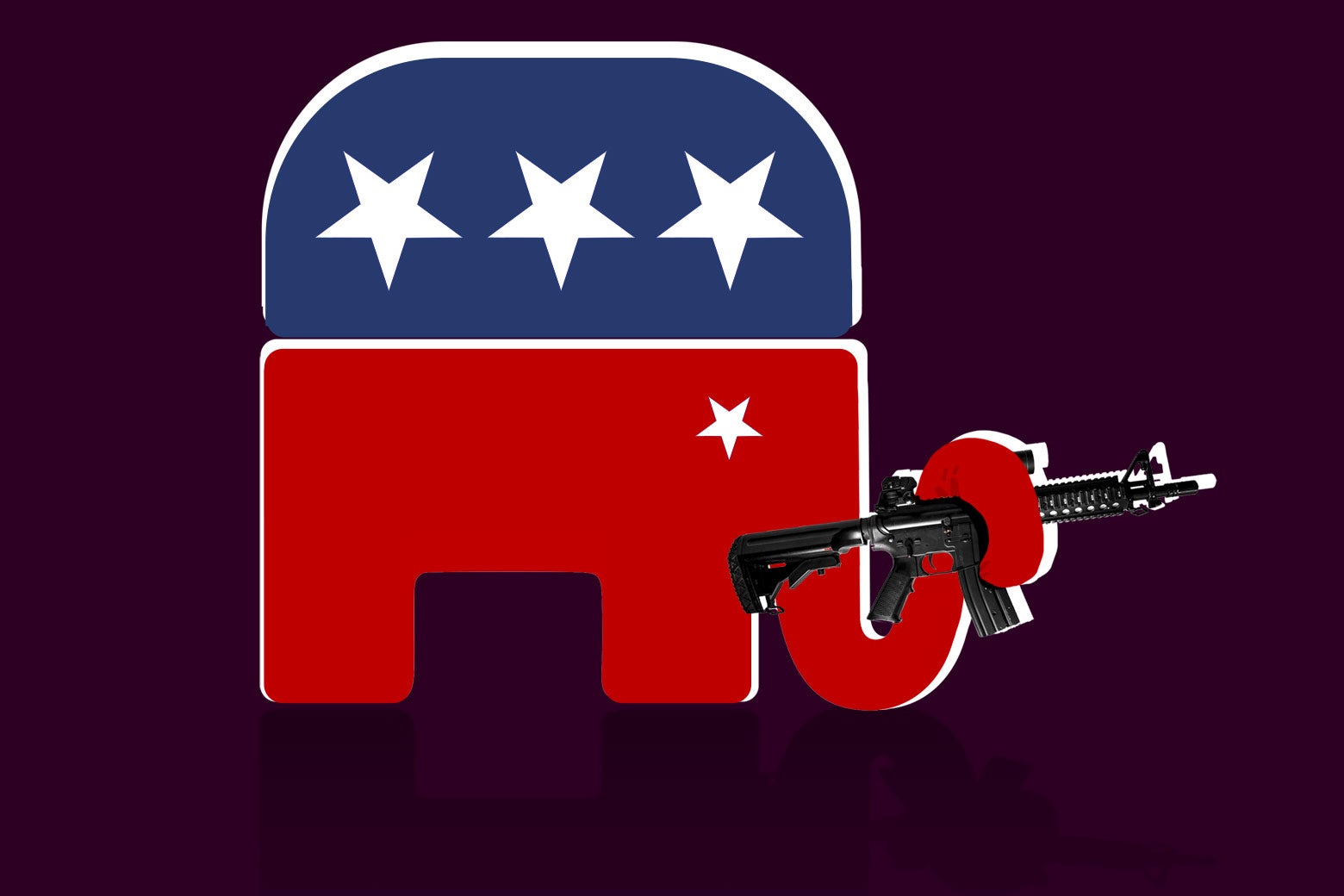
On a related note, a 2022 survey from Statista reported that 48% of Republicans/Conservatives personally own a firearm while another 66% said there is a gun in their household. 32% of Independents own a gun and 42% live in a home where there is one or more.

By contrast, only 20% of Democrats have a gun. Just 32% acknowledged one being in their home. So, taken all together,  I guess if the proverbial "SHTF" should ever occur, you know who's most likely to make a stand to protect this country, and who knows, maybe your butt too. Just saying.


If you enjoyed the article, please consider passing it along to others and don't forget to subscribe. It's free! Lastly please be sure to "like" us on whatever platform you use to read anotheropinionblog.com. It helps beat the algorithms and keeps our articles in circulation. Thank you!


Quinnipiac University Poll March 7, 2022


Pew Research: The changing profile of the U.S. military:Smaller size, more diverse, more women in leadership


USNI News: Department of Defense Demographic Profile


Latinos Claim Larger Share of U.S. Military Personnel


Black Americans In The U.S. Army


OMH: Hispanic/Latino health


United States Army: Medal of Honor Award


Statista: Percentage of population in the United Statesowning at least one gun, by political party affiliation


Monday, July 29, 2013

The Gulf of America


One of the greatest issues facing America is the increasing disparity between the rich and poor and the government's inability to save the Middle Class. Between 1947 and 1972, average hourly wages increased by 72%. Since then, the average hourly wage has increased by only 4%. There are more households living at or below the poverty line...some 47 million...since the Commerce Department started keeping records in 1959, and that's regardless of which party was in power. Meanwhile, the disparity between the well off and the working poor continues to widen. It was once part of the American Dream that a college education was considered a way up the economic ladder. No longer. The average 4 year graduate starts off with a debt of $32,500 with less job security than their parents. Since 1969, the top 1% saw their after tax income gains increase 155% while the middle 60% saw only a 37% increase. The next 19% fared better with a 58% increase and bottom 20% has an increase in the after tax income of 45%, Translated, it means the top 1% far out stripped the rest of America while everyone else pretty much balanced out, with less distinction between the Middle Class and the working poor. Welcome to the Gulf of America.

Wages for top CEOs have since an increase of 354% over that of the average employee (40 years ago it was only 20%). In Germany, Europe's economic powerhouse, it's 147% while in Japan, it's 67%. Companies who had the deepest cutbacks in jobs also had the highest increase in executive compensation; 42% for S&P 500 companies. Overall profits have increased by 20%. Meanwhile, since 1990, the cost of living has gone up 67% and despite the Great Recession, productivity has increased amid all the closures and layoffs, meaning the average American worker is doing just what you thought...working more for less. It would seem to that this dramatic decline of real growth of wages, the Middle Class, and jobs also appears to coincide with the decline of union membership. Between 1983, when union membership was about 20% of the workforce. It's dropped to only 12% by 2007. As an aside, you may be interested to know that the pay for several of Labor's top leaderships, would also put them in that same top 1% category they so decry. Kettle meet pot.

There are an estimated 12 million illegal immigrants in the US right now, perhaps more. Despite opposition by the majority of Americans, it appears likely that Congress (with its 14% approval rating) will pass some sort of amnesty deal. Interestingly, it's big business that's behind the push (which isn't surprising since they are behind most legislation). This support of amnesty isn't due to some sort of social conscientious, although their PR departments will tell you otherwise as will their surrogate mouthpieces, the media. The whole idea is simply the law of supply and demand. By flooding the job market with more eligible employees, and given the decreased amount of available jobs (thanks, in part, to the exportation of jobs), wages will drop as competition for employment increases. This will also drive down peripheral costs such as health and retirement benefits as well as safety and health standards. Those who complain can and will be quickly replaced.

There's also a little discussed side bonus for big business. America, for the first time in its history, is a minority nation. In the past, white Europeans were a solid majority with a small, mostly black minority. Now, Hispanics have not only replaced blacks but are near on par with whites while Asians are expected to supplant blacks in the near future for the third position. With basically a two-tier economic structure, the "have-nots" will be too busy fighting amongst themselves to focus their attention on the "haves". And so, they gulf between the rich and everyone else will increase as the working poor battle with each other over the few jobs and whatever scraps their "betters" thrown down their way. Government will continue to serve the needs of the corporate elites while expanding their role as the "overseer class". Welcome to the new feudalism.

Today, 81% of Americans do not trust their government and a whopping 50% believe the biggest domestic threat to Americans is the federal government. Although the media will be more than happy to tell you who to blame while trying to distract us with the "crisis-de-jour", the plain fact is that Americans know exactly who's to blame. Americans realize that that both political parties are to blame and the system is broke beyond repair. What they have yet to realize, however is what to do about it. Perhaps that's why the federal government is hell bent on expanding its surveillance capabilities and acquiring the apparatus of a police state.


A Guide to Statistics on Historical Trends in Income Inequality
http://www.cbpp.org/cms/?fa=view&id=3629

Income Inequality
http://inequality.org/income-inequality/

Union Leaders in Top 1%
http://www.bloomberg.com/news/2012-04-27/union-leaders-decrying-ceo-pay-also-in-top-1-bgov-barometer.html

Americans Express Historic Negativity toward Government
http://www.gallup.com/poll/149678/americans-express-historic-negativity-toward-government.aspx

Monday, June 11, 2012

Politics and Age

America is at the crossroads. We've heard it time and again how this or that election is somehow the "most critical" . Such hyperbole is generally used to create an emotional response on behalf of the electorate in order to get them to the polls. But something is in fact changing in America. There has not been such a broad and deep divide between people, and the role of the government since the decade preceding the Civil War. However, this series has examined a number of key topics such as gay marriage, race, and religion and its affect on current and perhaps future party affiliation. Continuing with our series on future trend of politics in America, I'm going to look at the age and party affiliation in this article, but first, let's define some terms.

The "Greatest Generation" are those born after 1929. They are our seniors today. Theirs was the generation of the Great Depression , WWII and the Korean War. Many served in senior positions during the early years of the Vietnam War. "Baby Boomers" are those born between 1946 and 1964., a span of 18 years. The first wave (Peace or Woodstock) was born between 1946 and 1955. The second wave (Protest) was born between 1956 and 1964. "Generation X" (GenX) was born between 1965 and 1979. They were first generation "technies". "Generation Y" (GenY or Millennials) were born between 1980 and 2005.

According to a Gallup Poll from 2009, Democrats do well across all age groups. Their greatest strength seems to be among the second Boomer wave and among those 20 and younger. Republicans, on the other hand, seem to do well among those in their 30s and 40s and among seniors. Independents, interestingly, do well among the younger and middle age groups, but begin to decline in number by age 40. Seniors are slightly more likely to be Republican than Democrat, except among the senior most, those in their 70's and 80's, where the trend is reversed in favor of Democrats.

As for a possible explanation, the younger groups are concerned about the costs of higher education, finding a job, and getting established in life. Therefore, they are looking more to government assistance which has been a Democratic issue since FDR. Among Boomers (which includes yours truly), it's about government's role in society. Boomers, who grew up with the Vietnam War, Woodstock, the murders of MLK, RFK and Kent State, the Chicago Police Riots, and Watergate, are less trustful of government, especially the corporate/government connection. They tend to be fiscally conservative but socially liberal or moderate. They are most concerned with retirement, IRAs, Social Security, Medicare, and other government programs.

On the other hand, you have the GenXers who came of age during the Reagan Years (think Alex P Keaton of Family Ties or Wallstreet's Gordon Gecko), a gorowing economy, small but successful military operations, and the fall of the Berlin Wall, the Warsaw Pact, and, later, of Communism itself in Russia. They later experienced George Bush (41) and a moderate Democrat in the person of Bill Clinton. This was the "go-go" generation of overpaid MBAs on Wallstreet; Newt's Republican Revolution, dotcoms, and an unrealistic real estate boom. Greed was good, for some. Bush's Operation Desert Storm made the world safe for oil producer states like Kuwait. Moderates were driven from the Republican Party and the birth of the Independents was born.

GenYs came started to come of age during Clinton and witnessed George Bush (43) in all his bumbling glory. GenYs did get a sense of patriotism not felt since their grandparent's generation when, on 9/11, America was attacked by cowards and provoked into the invasion of Afghanistan, and later, the ill advised invasion of Iraq while the economy began to tank. This, in turn, resulted in GenYs coming out in droves to support the other party as wars and depressions always do. It is also this same generation which is most disillusioned by their choice of president. However, while they appear to have lost their attraction to Obama, they haven't lost their attraction to the Democratic Party. It has often been said that the current generation is a reflection of their grandparent's generation. In this instance, it appears to be a fair comparison. We witnessed the rise of the Tea Party, the Occupy Movements, the hacker group Anonymous, the faltering of corporate capitalism, the rise of Chinese and Indian economies, and the greatest fundamental division among the American People since just before the Civil War. Perhaps an harbinger of things to come.

If the numbers are any guide, the future for the Republican Party, if it continues on its present course, is one of irrelevance, and finally, political oblivion. Whites, the GOP core, are declining. GOP influence among women, a key voting bloc, continues to decline. In a June 12th Gallup Poll, 41% of women leaned Democrat regardless of age compared to 27% who leaned Republican, which reaffirmed an earlier May 6, 2009 poll. While for the Democrats, its current coalition is doomed to be rearranged into something less familiar. Blacks, long the core of the Democratic Party, are no longer its key minority base. They have been replaced by Hispanics, and perhaps soon by Asians. Hispanics, on the other hand, tend to be socially moderate to conservative, which may cause the Democrats to move closer to the center on at least social issues.

So, what does all this mean? Simply that across the board, in terms of age, the Democrats hold the strongest positions. Especially important are the aging Boomers and the raising GenYs which will box in the more Republican leaning GenXers. When compared to my last two articles (Politics and Race and Politics and Religion), the future isn't very bright for the Grand Old Party, at least as it now stands. Trends across the board favor the Democrats and Independents. If things continue as they are, I could foresee a future where moderately conservative or libertarian Indies have largely replaced the GOP while small conclaves of the Republican Party exist here and there while a center left Democrat Party becomes the defacto party of America.

Obama may lose. I'll be surprised of he doesn't. But his defeat will not signal a victory for Romney or the Republicans, but merely the majority's rejection of Obama's policies. Romney will represent a short breathing space for a return to a Democratic White House. Meanwhile, public apathy toward Congress will worsen to outright contempt, especially among the conservative and predominately white minority (currently Congress has an 84% disapproval rating). It's at that point that things may be interesting.


Suggested Reading:

Gen Dems: The Party's Advantage Among Young Voters Widens

Democrats Do best Among Generation Y and Baby Boomers


GOP face Political ID Deficit Among All Age Groups

Republcians Face Steep Uphill Climb Among Women

Two Corpmen I Knew (anotheropinionblog.com)

Politics of Race (anotheropinionblog.com)

Politics of Religion (anotheropinionblog.com)