Showing posts with label United Nations. Show all posts

Saturday, March 23, 2024

2.2 Million Starving Gazans: What Price Victory Israel?

According to a recent United Nations report, 2.2 million people are facing starvation conditions in Northern Gaza along with a lack of drinking water. Approximately half or 1.1 million are facing "catastrophic" famine sometime between mid-March and May of this year.  

The Integrated Food Security Phase Classification (ICP), a multi-partner initiative involving governments, NGOs, the United Nations, and others, stated that "acute hunger and malnutrition has far exceed  the threshold for famine". In addition, the ICP said this represents the "highest number of people facing catastrophic hunger ever recorded". 

The ICP goes on to warn that people have already resorted to eating grass, animal feed, and drinking dirty water to survive. Pregnant women (or "birthing people" as they are known in "woken parts of the " United States), unable to produce enough milk, are begging government officials for baby formula and any other assistance.

Nevertheless, there are hundreds of tons of food, water, medicine, and other aid lined up on the Israeli-Gaza border waiting to cross over. Ships and cargo planes arriving almost daily bringing relief but little to none are reaching those who need it the most---the people of Gaza.

Some UN officials are blaming the Israeli Government of deliberately holding back the aid in an attempting to starve out the Gazans, and that opinion is spreading among other relief agencies such as the World Relief Programme's Executive Director, Cindy McCain, who said "the people of Gaza are starving to death right now. The speed at which this man-made hunger and malnutrition crisis has ripped through Gaza is terrifying".   
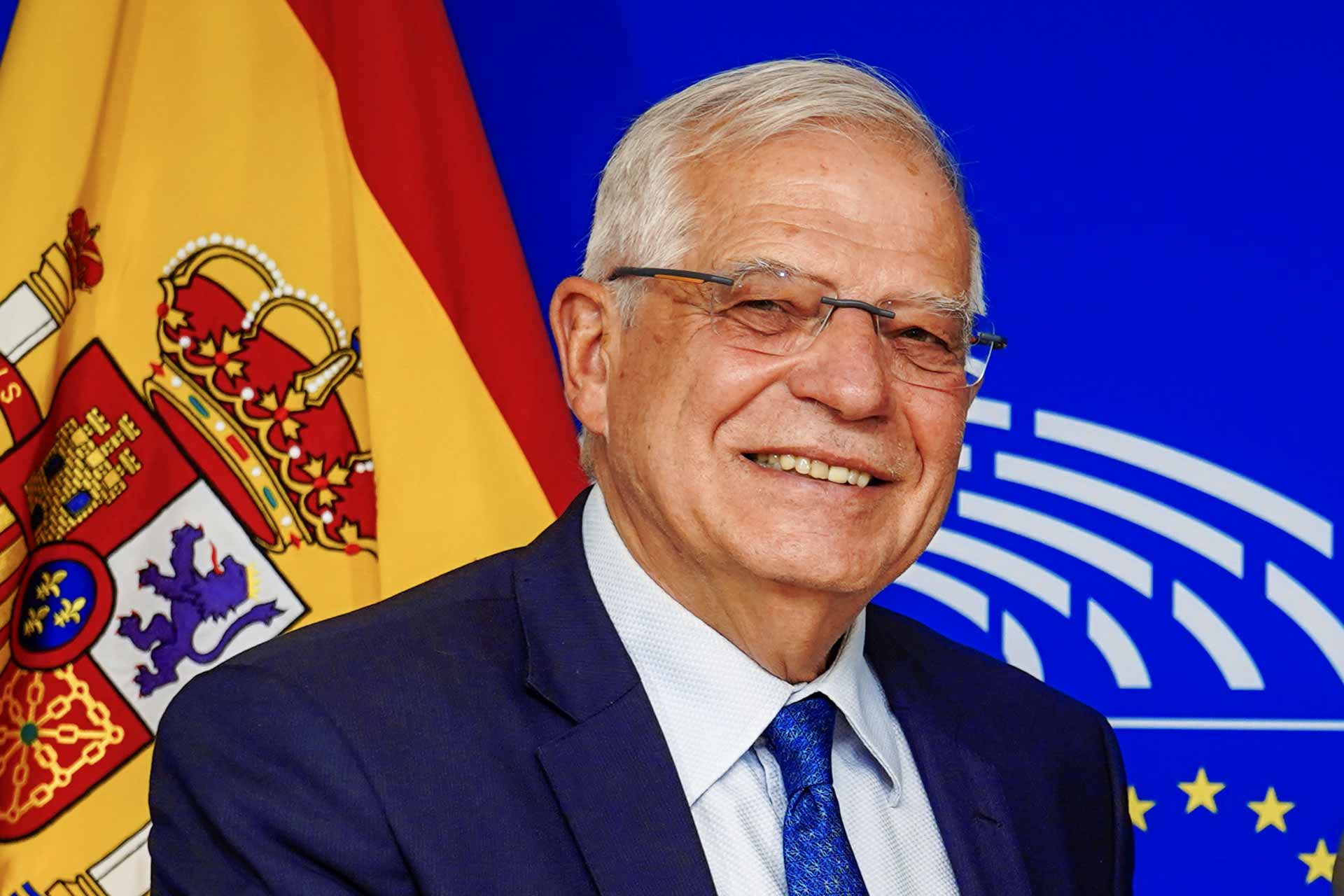
The European Union's top diplomat, Josef Borrell of Spain, has accused Israel of using starvation as a "weapon of war" by preventing humanitarian aid from entering Gaza, which Israeli officials have strongly denied.

Israeli Prime Minister, Benjamin Netanyahu said in a press conference that Israel does not intend to promote an artificial famine,  but to allow as much humanitarian aid into Gaza "as necessary". He added that it was Israel's intentions to be the sole entry point of all aide going into Gaza. Israel, according to Netanyahu, would see to it that Gaza got a much aide as it required.

Netanyahu's statements have been vigorously disputed by aide workers from various global agencies and even some government officials from neighboring countries. They report that Israel's "Coordinator of Government Activities in the Territories" (COGAT) has been the principal barrier preventing humanitarian aid from reaching the starving 2.2 million people in Gaza. The role of COGAT is monitor access to Gaza .

COGAT has been accused of issuing confusing and contradictory  instructions in which to intentionally delay or prevent food, medicine, fresh water, and other essentials from crossing into Gaza.  So, with an apparent standstill, where does that leave the people of Gaza?

Netanyahu has repeatedly vowed to annihilate the leadership of Hamas following its attack on Israeli civilians on October 7, 2023. 1139 mostly civilians were raped, beaten, tortured, and  finally murdered, including small children. Another 240 were taken prisoner.  

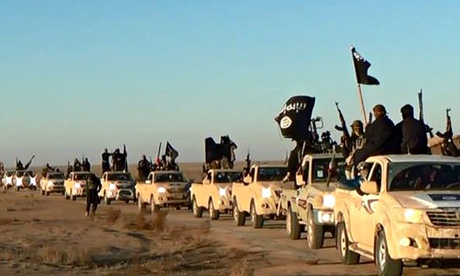
The early morning attack, which caught the vaulted Israeli intelligence forces and military totally off guard reminiscent of the 1973 Yom Kipper War. Hamas, along with soldiers from 9 other Palestinian paramilitary groups, the coordinated use of paragliders, scuba divers, small attack boats, and a mechanized unit comprised of several white Toyota pickups full of troops or mounted machine guns, a few dozen Honda motorcycles seating two fighters, and most impressive of all, surveillance/attack drones.

The highly coordinated training for the attacked largely took place just barely a mile from the border and watchful eyes of Israel. The training, which in some instances took over year to complete (such as for the paragliders and drones) took place in 14 training centers scattered throughout Gaza. Some of the training included the most efficient way to seize a house, destroy an Israeli tank, breach Israeli border walls to how to move Israeli hostages quickly while getting the maximum propaganda coverage.

Andreas King, a Senior Lecturer of Security Studies at Kings College in London  gave one of the best descriptions of how Israeli intelligence monitoring was beaten.  According to King, "while there was centralized planning, execution was decentralized, with each squad operating as it saw fit". Secondly, there was no effort to hide anything. Everything was done out in the open to make it look as routine as possible.

Hamas is considered a terrorist organization backed, supplied, trained, and financed by the Iranian government. Iran and Israel have a long history of  mutual hatred. Iran has repeatedly promised to "wipe Israel off the map" including the use of nuclear weapons regardless of the consequences to the people of Iran or the region. Iran also backs other terrorist groups regardless of whether they are Shia or Sunni such as Hezbollah, ISIS, Al Qaeda, and Boku Harem.  

Hamas was first "elected" to government to a series of political campaigns and  open warfare between Hamas and Fatah over the control of Gaza, the West Bank, and Palestinian refugee camps.  Fatah which was previously known as the Palestinian National Liberation Movement. Fatah is a nationalist social democrat political party originally founded by individuals like Yasser Arafat and Khalil al-Wazir.

Hamas was originally known as Islamic Resistance Movement, a group of radical Sunni Islamists who follow an extremist form of political religious of the Koran similar to Iran. Historically it has had a close relationship with the Muslim Brotherhood, including the pro-Nazi Grand Mufti of Jerusalem, Mohammed Amin al-Husseini.  It emphasizes their version of Sharia law everywhere, anti-Zionism, pan-Islamic unity, and full rejection of non-Muslim influences.

Hamas has managed to "win" and keep control of the Gaza pretty much since 2007. Their control has been a combination of intimidation and placation. However, their goal has always been on the removal of Israel and restoration of a united Palestine under their Sharia law.

In their attacks on Israel, Hamas has routinely used private homes to store munitions and military supplies. They typically operate rockets and missiles from mosques, minarets,hospitals, businesses and schools against Israel and also where they store their supplies.

It's commonplace that the homes of innocent civilians are used to fire on advancing Israelis while the residents are forced to remain in place. Hamas is well aware of the propaganda value of a retaliatory strike by Israel against a school full of students or a mosque full of worshipers, or hospital full of patients. But nothing is mentioned about the military use of these sites which prompted the Israel's retaliatory strikes. 

They've also developed an extensive and highly sophisticated network of tunnels extending well into Israel and Egypt which put the tunnels built by the Viet Cong or the Sinaloa drug cartel to shame. They use these tunnels to move terrorist cells, train, organize and plan. They even had munitions factories, repair shops, and well equipped Hamas only hospitals. Most importantly, smuggling of everything from advanced weapons to food, clothing, and medicine. Smuggling?  
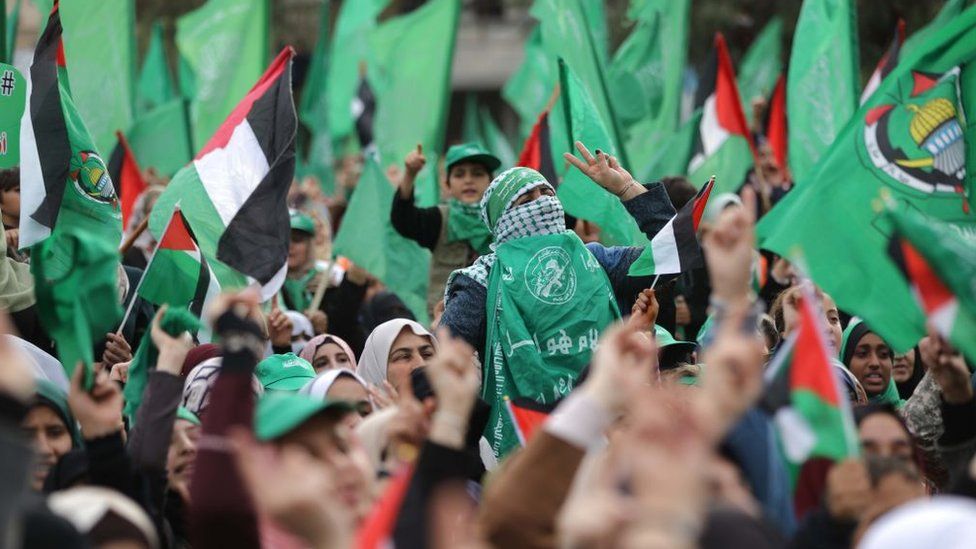
Yes. The majority of what they smuggle is used for Hamas purposes. Most is sold or traded on the black market, while hospitals and the public receive whatever is parceled out to appease the populace. In addition, Hamas takes in millions of aid  which follows a similar path. The smuggling generates between $12 and $15 million a month.

As a result, while the people of Gaza starve, Hamas spends at least $100 million annually on its military infrastructure.  Meanwhile, Hamas receives as much as $360 million dollars from oil rich Qatar as well as  millions more from other Arab countries like NATO/EU member, Turkey, and wealthy Arab families.

As an aside, despite the abject poverty of Gaza, the senior most Hamas leadership are all billionaires thanks to grafted "donations". For instance, its top three leaders are worth a purportedly $11 billion dollars which goes to support their luxury lifestyles in Qatar and elsewhere. 

 The United Nations spends over $600 million to fund and run schools and operate hospitals (much of that money comes indirectly from U.S. taxpayers). This means all of the needs of Hamas are provided from outside, leaving it with millions on it military while its people starve.

Israeli intelligence, including the famous Mossad and Shin Bet failed magnificently on October 7th, and to an extent, so did the numerous U.S. intelligence agencies like the NSA, CIA, and DIA. They never saw what was coming, which is likely how future operations such as this will play out.

Netanyahu is furious, and rightly so. He knows all too well that lesser failures like this have brought down Israeli governments.  He knows too that these kind of failures expose weaknesses in Israel's defenses. Yes, the Israeli military---the IDF---performed with brilliance in its recovering and counterpunch.

There's little doubt that COGAT is intentionally delaying the release of humanitarian aid to Gaza at the direction of  Prime Minister Netanyahu.  He knows better than most, including  some bureaucrat in the United Nations or in some ivory tower NGO, that little of those supplies will actually reach the average citizen in Gaza. The majority of those supplies will be diverted (likely at gun point) to Hamas.

 Just a few weeks ago video footage was secretly shot of bread being selectively passed out to Gazans to keep them from rioting. At the same time, Hamas soldiers were firing their guns into the crowd to keep them back and in abeyance. Obviously, Hamas, which brought the war to Gaza, can't  now lose control over the people. The aid lined up on Israeli check points stand an excellent chance of being sold on the black market by Hamas, and you can be sure than none of Hamas' leadership have lost any weight.

Netanyahu has vowed to destroy  Hamas at any cost. In that, he has been largely successful. As many as 10,000 Hamas and associated fighters have been killed with over four thousands taken prisoner. Several of Hamas' top leaders have been killed, however, their senior most likely left the area before the October 7th attack for someplace safe and relaxing (applying a lesson from ISIS and Al Qaeda).

However, Netanyahu has to be very careful about winning the battle and losing the war. A large number of countries, financial institutions, and powerful NGOs have openly accused Israel of genocide (and withholding aid would seem to support that). Even in the United States and Germany, two of Israel's strongest allies, public opinion shows 65% blame Hamas while a large minority---35%---blame Israel.

 But let us remember that it was Hamas---not Israel---which started this war knowing full well the hellfire which would rain down on the people of Gaza, and chose to do it anyway.  Let us also not forget that Hamas regularly launches tens of thousands of rockets and missiles against Israel on a monthly basis, although that's of cold comfort to the starving 2.2 million men, women and children Hamas has bequeath to the world. 

Israel must reach as a realistic deal for a single Palestinian state. That's at the heart of Israel's national security and would deprive its enemies of their key weapon. Perhaps a good start would be for Israeli troops to accompany a relief convoy into Gaza and pass out the aid themselves, thus ensuring the food, water, and medical supplies  goes where need and denying Hamas both a propaganda and humanitarian victory. Nevertheless, Hamas has to go. It must be replaced by a government which sincerely cares for the wellbeing of Gaza and truly wants peace. Until then, this level of carnage will only continue. 

If you enjoyed the article, please consider passing it along to others and don't forget to subscribe. It's free! Lastly please be sure to "like" us on whatever platform you use to read anotheropinionblog.com. It helps beat the algorithms and keeps our articles in circulation. Thank you!


How Hamasbuilt a force to attack Israel on 7 October


Integrated  Food Security Phase Classification


Hama's Main Source of Funding Might Surprise You


How Hamas secretly built a "mini-army' to fight Israel


Whichcountries have criticized Israeli attacks on Gaza


How HamasAttacked Unfolded----In Videos


Hamas leaders worth staggering 11B revel in luxury---while Gaza's people suffer


Friday, October 07, 2022

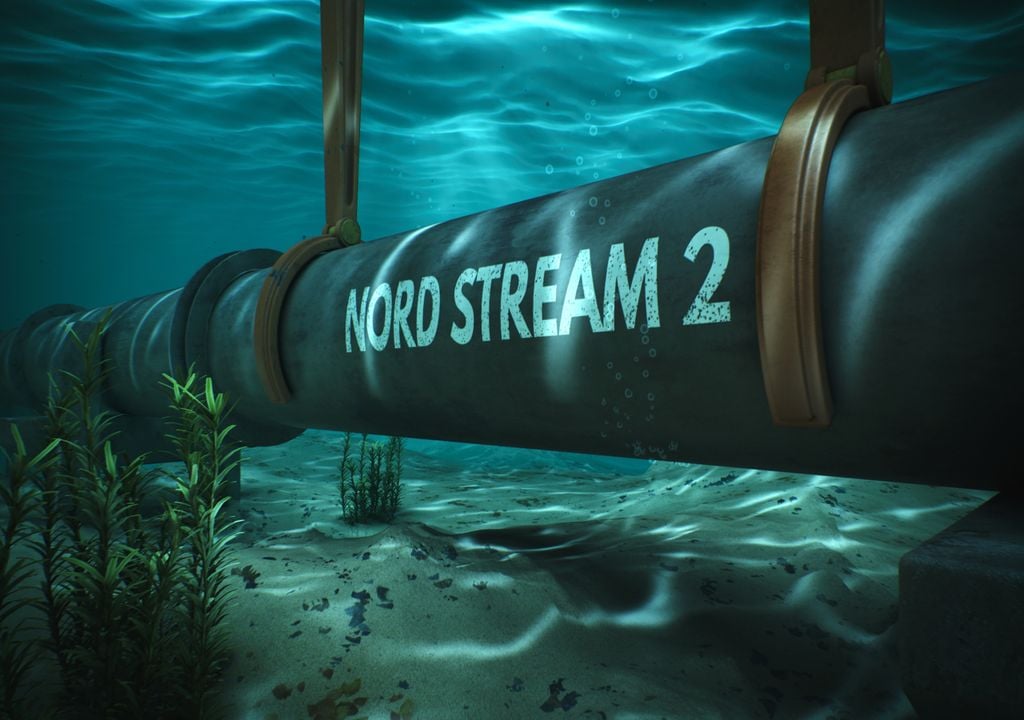
The Nord Stream Pipelines: The West vs. Russia Again

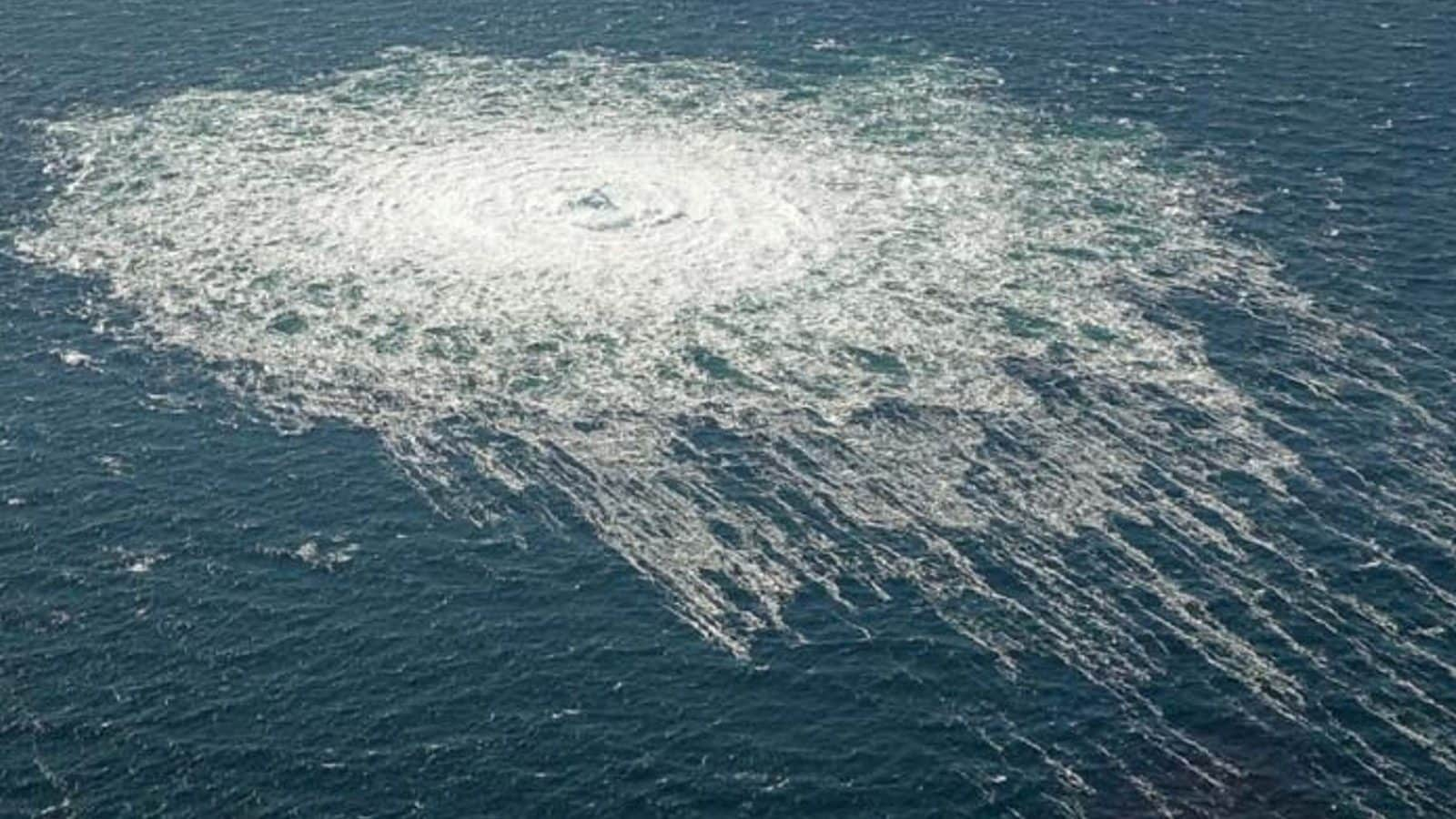
In the Baltic Sea, two Nord Stream gas and oil pipelines were destroyed in a series of three underwater explosions. The victims of sabotage.  One of the pipelines had been used to supply Europe (and particularly Europe's economic engine, Germany) with critically needed oil and natural gas.

Both lines had been shut down previously. The result of sanctions imposed by Russia's President Putin in light of the EU's support of Ukraine in its ongoing war with Russia. The other pipeline was still partially under construction. The result of the explosions was three or possible four ruptures.

Both pipelines were owned by Gazprom, the Russian owned energy giant, in conjunction with Western partners at a cost of several billion dollars (it's worth noting that Gazprom generates around $115 billion dollars annually and is the world's largest natural gas company).

The question which is now being hotly debated in the halls of Congress and the Pentagon, the United Nations Security Council,  the capital of the EU---Brussels---and the halls of other capitals in Europe, the Middle East, and China is who was responsible for the attack.

It's generally agreed that because of the location of the pipelines, at a depth of approximately 361 feet beneath the turbulent Baltic Sea, could have only been accomplished by a tiny handful of nations---Russia through its highly trained Spetsnaz special forces; the United States Navy and its premier global strike force, the SEALs.

 China has its specialized naval assault units, the Jiaolong Assault Team, which are better known as the "Sea Dragon Commandos"; and the British Special Boat Service, also referred to by its initials, the SBS  (as an aside, it's one of the very few type of operations that the Israelis, known for their daring and near impossible attacks anywhere in the world, wouldn't have been able to accomplish. Besides, Israel doesn't have a dog in this fight).   

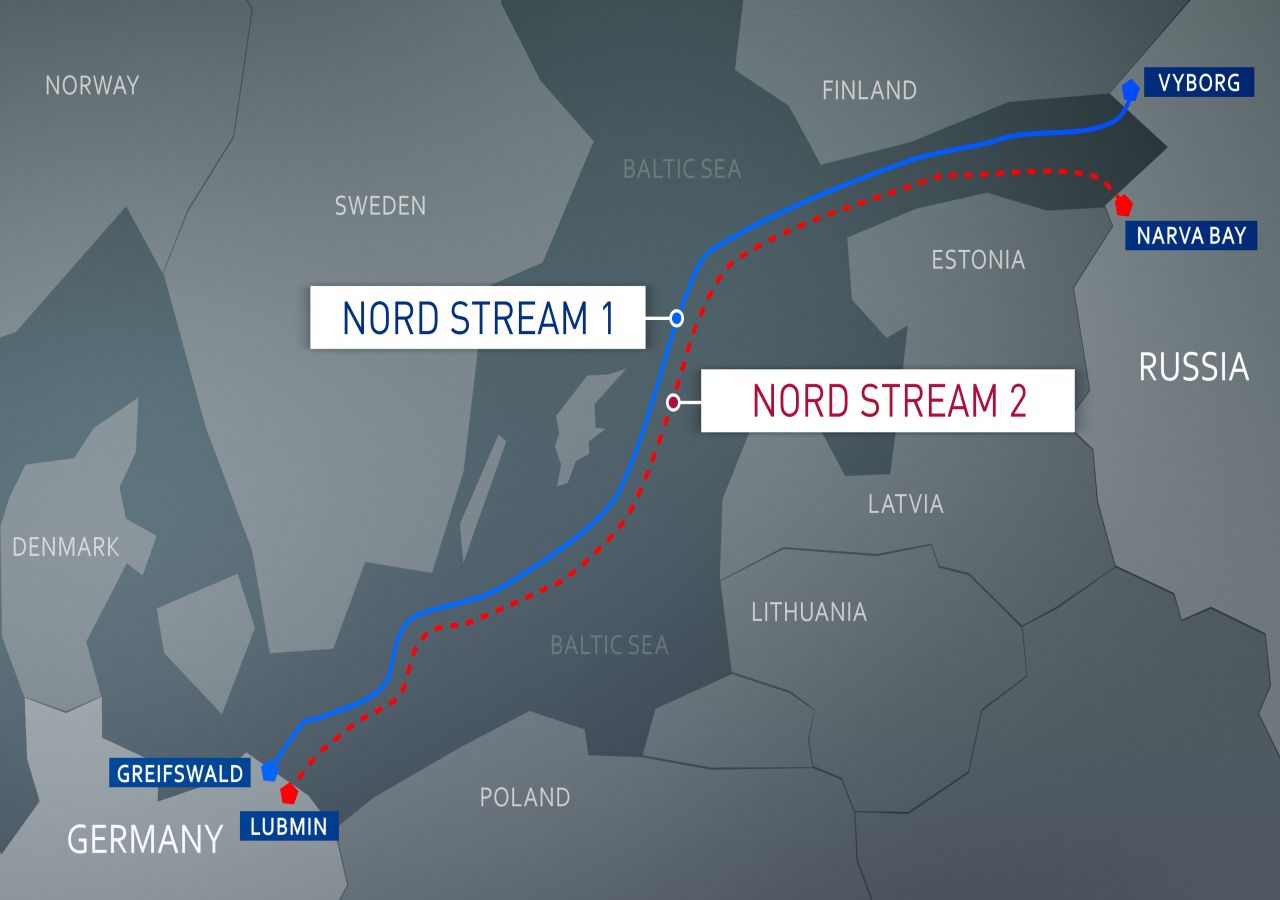
The two pipelines, known as Nord Stream 1 and 2, originate from Vyborg and Ust-Luga on the Russian coast bordering the Baltic and extends Greifswald in Germany. The first leak (Nord Stream 2) was reported by Swedish investigators on September 26th. The second incident involved two leaks involving pipeline 1 the following day, on September 27th. 

The damage on pipeline 1 are close together, while the damage between both pipelines aren't in close proximity to each other, which means the damage had to be closely coordinated, which again points to one of the major powers.

The majority of Western governments have either directly or indirectly indicated that Russia was behind the attacks. German Konteradmiral (Rear Admiral) and Chief of the Navy, Jan Christian Kaack, has stated that Russia has capability for such sabotage when he stated that Russia had "considerable capacity" in its underwater operations, which is true.

Looking at pipeline 1, it covers 745 miles from St. Petersburg in Russia to Germany's Northeastern coast while the second pipeline runs 767 miles. In addition, there are other transmissions lines running from both pipelines (the OPEL and the NEL pipelines, which connect to other lines throughout Europe). The oil and gas originates from Yuzhno-Russkoye petroleum field in the Krasnoselkupsky District of the Tyumen Oblast in West central Siberia.

The field, which was previously unreachable due to the historical dense permafrost, has been made harvestable thanks in large part to warming temperatures and improved technology, which has allowed full time operation. The field has proven gas reserves of 805.3 billion cubic meters of gas with estimated reserves of another 1000 billion cubic meters of natural gas.

Meanwhile, proven oil reserves are about 5.7 million tons. At present, Gazprom operates 26 gas wells  which reportedly produce an estimated 15 million cubic meters of natural gas every single day of the week all year long.

 It bears mentioning that Gazprom has been working on a deal with China to construct a pipeline from the Yuzhno-Russkoye field to Northwestern China via the "Power of Siberia 2" pipeline (aka the "Altai gas pipeline") and end in the Xinjiang region where it would connect with China's East-West pipeline.   The pipeline could also run through Mongolia, which would be a boon for the Mongolian economy.

 Xinjiang Province, however, is home to the Uyghurs, a minority Muslim population which in recent years has become increasing resistant to Beijing's rule in what's known as the "Xinjiang Conflict". An oil and natural gas pipeline of this magnitude would present a tempting target for the Salafist Turkistan Islamic Party and the East Turkestan Independence Movement, two separatist groups comprised of Uyghur Muslims, Buddhists, Taoists, and Confucian nationalists unified in their demand for autonomy from Beijing.

As for the two Nord Stream pipelines in the Baltic, they too present more than tempting targets. While Western leaders led by the U.S. and President Biden blame Russia for the damage to their own pipelines, Russia and its allies claim that the United States is behind the incident.

President Biden had previously made threats concerning the Nord Stream pipelines. Specifically, Biden previously said that if Russia invaded Ukraine, the Nord Stream pipeline "would not move forward" and added that "there will no longer be a Nord Stream 2. We will bring it to an end". 

Since the announcement of that the two pipelines were destroyed, the establishment media has tried to whitewash Biden's statements and do some fancy cover up.  Nevertheless, whether he intended that specifically to be threat or not, it doesn't look good.

In fact, President Putin took Biden's comments as a threat, and now with both pipelines out of commission it certainly appears to be a threat fulfilled. Of course, the U.S. has more than the capability and experience, not to mention intelligence expertise, to carry out an operation like this.

As a result, Putin announced that he intends to "destroy the West's energy infrastructure" as he blamed the "Anglo Saxons" for the damage (fortunately for me I'm mostly Celt and Scandinavian). The question is whether or not he can actually do it. While it remains to be seen, with Europe dependant on 40% of Russia's oil and gas to heat homes and run businesses (and Germany, Europe's industrial heart, depending on Russia for 70% of its oil and gas), it can't be good for the EU, even with limited U.S. support.

The importance of the pipelines to the Russian and European economies  and the amount of money invested in the projects can't be understated. Nord Stream 1 has been in operation since 2011 at a cost of $7.3 billion dollars while Nord Stream 2's price tag was around $11 billion dollars. It was started in 2011 and has been operational since September 2021.  

We can't overlook the possibility of routine failure. The pipelines are 361 feet down in water which average 51 degrees this time of year. At depths of 350+, the water temperature is around 15 to 20 degrees. Plus, while poor quality and/or workmanship shouldn't be an issue, but it can't be entirely ruled out. Pipeline failures aren't uncommon.

As for Russia being responsible for sabotaging either pipeline, it's unlikely. Russia has already imposed its own sanctions against the EU and shut off the valves. There's no need to destroy the pipelines on top of that. Besides, consider the costs to repair either line which could run potentially in the billions and take upwards of six months to complete. Just in closing the pipelines, Russia is taking a huge financial hit. Russia oil and gas shipments to Europe had been bringing in $120 billion annually.  

As long as the war in Ukraine continues, the cost will escalate on all sides until the unthinkable becomes the only logic option. Neither Moscow or Kyiv seems able to deliver a final knockout punch. Ukraine is hanging in there against the full might of the Russian military thanks largely to aide being provided by the EU/NATO, the United States, and an intensive Western PR campaign. Russia's mounting losses, in the face of U.S. led sanctions are starting to severely affect its economy.

As a result, President Putin has struck back by cutting off critically need oil and gas supplies, but that's may not be enough. Putin has strongly hinted at military intervention in certain European border countries and even the possibility of using tactical nukes to end the war. It's unlikely Putin would do so, but some analysis have cautioned not to rule it out entirely. Russian credibility is also on the line here.

Meanwhile, Europe is bracing for a colder than usual winter, as well as a serious blow to its economy with much higher prices for everything from food to rent to gas and staying warm thanks to Russian oil and gas sanctions.  Public unrest and riots shouldn't be ruled out.

In the United States, Washington's pro-Kyiv propaganda isn't working as well as the establishment media had hoped. Putin has proven to be popular in the U.S. (more so than Biden, who's approval ratings continue to hit record lows) as the U.S. economy slows amid rising prices and interest rates. The Republicans aren't doing any better.

Regardless of U.S. politics, the war in Ukraine needs to come to a quick end. It's cause was officially Kyiv's request to join NATO; something Russia has long opposed. The real issue was, and always has been over resources. In this case, oil and gas in the Donbas and Black Sea. With it, Ukraine becomes a new player on the block, especially if it has the protection of NATO. Without it, Ukraine is just another second tier economy.

The Washington led West is going all out to make Russia the bad guy, and in many ways they are, but wars are seldom black and white. Kyiv, Brussels, and Washington bear their share of responsibility for this war too. For Moscow, it's a matter of national security. There was nothing new about Moscow's refusal to allow NATO to encircle its western border or be forced to kneel to a "new global order", whatever that means. Meanwhile, while politicians dicker, generals plan, the rich get richer, ordinary people die.


If you want to know more, please take a look at the links below. If you enjoyed the article, please consider passing it along to others and don't forget to subscribe. It's free! Lastly please be sure to "like" us on whatever platform you use to read A/O. It helps with the algorithms and keeps our articles in circulation. Thank you! 


Nord Stream gas 'sabotage': who's to blame and why?


Biden says the Nord Stream 2 pipeline won't move ahead if Russia invades Ukraine


Russia Blows Up Gas Pipelines, Declaring an All-out EnergyWar It May Have Already Lost


Nord Stream repair may take at least six months, sayslawmaker


The Yuzhno-Russkoye Field


Russia has cut off gas supplies to Europe indefinitely


Sunday, July 15, 2018

Let's Talk About NATO Shall We?


President Trump recently ruffled some feathers while speaking to members the North Atlantic Treaty Organization or NATO. Ruffling feathers isn't anything new for Trump, who seems to take a devious delight in seeing whose golden goose he can drop kick across the Rose Garden. I can't say I blame him. Washington is deep up to its coffered comb overs in special interest muck. However, I was curious to see if Trump was right about this one. Are US Taxpayers picking up the lion's share of the bill needed for Europe's defense? For that matter, should Washington even be spending our money on Europe's military?

Before we get started, let's take a moment to remind ourselves why NATO was created and what it's all about. Historically, Europe had long been a continent interlocked by a complicated network of treaties and alliances which ebbed and flowed like Seine or Danube rivers. Today's friend was tomorrows arch-nemesis. This system of alliances reached the status of an art form under three key statesmen---Charles Maurice de Talleyrand (1754 - 1838), who career as French diplomat and foreign minister spanned decades, from King Louis XVI through the French Revolution, Napoleon, King Louis XVIII and Louis-Phillip. Known to be as brilliant as he was duplicitous.

Next was a younger contemporary, Klemens von Metternich (1773 - 1859). Von Metternich was Austria's Foreign Minister who represented the victorious powers following the second defeat of Napoleon. His diplomatic maneuvering resulted in the creation of the "Metternich System" of interlocking treaties and alliances designed to prevent any future "Napoleon" and ensure peace in Europe. The last, but less important diplomatic chess player was Prussia's Otto von Bismarck (1815 - 1898). Von Bismarck served first as the Minister President of Prussian, and then later as Chancellor of the German Empire; an empire he largely created himself.

All three men attempted to create a network of alliances designed to benefit their particular country just as any diplomat then or now would. But, given Europe's long history of bloody wars, also sought to create a system whereby war would become too costly economically and militarily to wage, and for a brief time, it held. However, Europe came to be dominated by lesser men with greater egos. Their systems were undone in one form or another. World War One all but destroyed any notion of wide ranging interconnecting alliances (in fact, it was misused of the existing cross-nation alliances which was to blame for the continent wide carnage). Out of the "Great War" or "War to End All Wars" as it was known, a more restricted system of alliances arose. However, these new political arrangments were little better and helped set the stage for next State sanction murder spree, World War Two.

When that war ended in 1945 to the tune of 60 million people killed or 3% of the world's total population (when disease and famine are included, that number jumps to 80 million). No sooner than the war ended, the stage was set for the next confrontation, the Cold War. Without going into the details of what happened, the former allies formed their own armed camps, with the USSR and the countries it "liberated" from the Nazis on one side, and the US, Great Britain, France and other countries freed from Nazi occupation on the other (China aligned with the USSR, but it's interest remained centered in Asia).

The first to formalize their "mutual defense and cooperation" agreement was the West in July 1948, which originally included the United States, France, UK, West Germany, Holland, Belgium, and Luxembourg. Later, Italy, Portugal, Norway, Denmark, Greece, Spain, Turkey and Iceland joined (France withdrew in 1966 and rejoined in 2009). Its purpose was to deter what was seen a aggressive and expansionist USSR, especially amid Communist uprisings in various Western nations such as Greece and Italy and Stalin's refusal to allow free and monitored elections in the countries where it now occupied.

In response, the USSR created the Warsaw Pact in May 1955 as a counterbalance to NATO (interesting, the USSR actually requested to join NATO January/February 1954 and offered to allow a German reunification. The offer was rejected at the insistence of the UK's Anthony Eden and America's John Dulles and France's George Bidault). Originally, the Warsaw Pact consisted of the USSR, Poland, East Germany, Albania (which withdrew in 1968), Hungary, Romania, Bulgaria, and Czechoslovakia (the impetus for the creation of the Warsaw Pact was Czechoslovakia's fear of a rearmed, albeit truncated and monitored, Germany. As such, it sought a military alliance with Poland and East Germany).
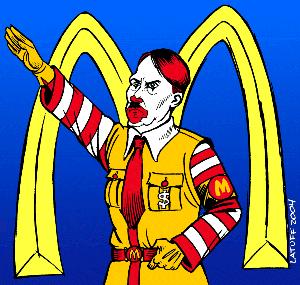
While the Warsaw Pact was formally dissolved on July 1, 1991, which also marked the end of the Cold War, NATO continues to operate as it always has done, but why? Its sole purpose, to defend Europe from a possible Soviet invasion, has vanished. I need to point that that since the fall of the USSR and end of the Warsaw Pact, many of its former members have opted to join NATO, including Poland, the Czech Republic, Albania, Bulgaria, Croatia, Slovenia, and the Baltic States of Latvia, Estonia, and Lithuania.

We also need to be reminded that US support of NATO was due largely to add our economic and military weight to a Europe which was still struggling to recover from the Second War, now 73 years past, is no longer valid either (in fact, Germany, now reunified, is ranked as the fourth largest economy in the world, with the UK and France ranked 5th and 6th respectively). Militarily, each of the NATO members work in cooperation in developing, manufacturing, and deploying military equipment, so why are we there?

If we examine the costs to operate NATO, it's not cheap. According to NATO itself costs in 2017 were $946 billion dollars. The UK contributes just over $55 million dollars to NATO (equal to 2.1% of its Gross Domestic Product or GDP) while France spends just under $45 million dollar or 1.8% of its GDP. Germany spends about $45.5 million dollars on NATO, which equates to 1.2% of its GDP. Italy contributes right at $23 million dollars; about 1.1% of its GDP. Canada gives a tad over $21 million dollars to NATO, which is 1.3% of its GDP. Meanwhile Turkey and Spain both provide about $12 million dollars each or 1.5% and 0.9% respectively of their GDP. Greece, which has long been a troubled economy, still manages to contribute $4.7 million, or about 2.4% of its GDP.

Newcomer nations such as Poland has anted up with just over $10 million dollars, which is equivalent to 2.0% of their GDP, while Romania provides $3.6 million; 1.8% of it GDP. The Czech Republic gives a little over $2 million dollars to NATO and Hungary sends $1.4 million dollars, which is equal to 1.1% GDP for both countries. Other members nations provide a lot less in terms of actual dollars, but in many cases, it still represents a substantial portion of their GDP. Bear in mind that while these percentages of GDP don't seem like a lot, they represent the final values of all goods or services at the time of purchase. In this case, this the equivalent of capital being taken out of the economy and being given to nation rather than reinvested back into the economy. For larger countries, this doesn't really have much of an overall effect, however, for the smaller nations or the ones in serious economic trouble like Greece, it's a big deal.

Now, I bet you'd like to know where the US stands in its contribution to the defense of NATO wouldn't you? Well, here you go. US Taxpayers pony up just under (barely) $686 million dollars (yelp, you read that correctly). That represents a whopping 3.6% of our GDP (remember, the next closest country is UK which provides just over $55 million dollars or 2.1% of their GDP). That's a pretty substantial difference any way you want to look at. So, again I have to ask why? Why are US Taxpayers on the hook for maintain a military organization for which we get very little bang for our bucks?

The prime purpose of NATO, to defend against the USSR, no longer exists; in fact, if you look at the new member nations, many of whom are former Warsaw Pact members, Putin's Russia is pretty much surrounded on practically all sides. Militarily, Russia is in a far worse position than it was at the height of the Cold War in the early 1960's, or even in 1990 when it ended. So, while President Trump may have (in his usual fashion) overstated America's position with regards to NATO, there is no question that we pay far more than any nation. In fact, with a published budget of $946 billion dollars, NATO couldn't function without us; at least on the scale that it does, but does it even need to?

In 1949, when NATO came into existence, the USSR was indeed expanding. It had gobbled up most of Eastern Europe. It was looking to expand in Africa, South and Central America, Cuba, and (in conjunction with China) into Asia; notably Korea and, later, Vietnam along with Laos and Cambodia. It was also seeking to expand, at least its influence, into space. In some of these areas, it was successful, however, in most, it failed for various reasons (including CIA sponsored coups and assassinations not to mention "backdoor" support of various groups). However, Europe was still weak. The war had just ended only four years earlier, and while both sides had nuclear weapons, their range was still limited.

Today, either side can drop multiple bombs anywhere it pleases. The likelihood of a conventional invasion, especially of Europe, is all but non-existent. Modern Russia is all but surrounded by NATO member States (which, in my opinion, is actually a far more dangerous situation than in pre-1990). Of course, there are many today in high places who are busy trying to rekindle the Cold War; it's like they need a super enemy to match their military super state. Personally, I don't see the point. There are other, potentially far worse, issues facing not just us as a nation, but that of Russia and especially Europe right now. Perhaps it's time to put NATO to bed and start addressing those issues.


Defense Expenditure of NATO Members Visualized (Infographic)

The World's biggest economies in 2018

North Atlantic Treaty Organization (NATO) Homepage

NATO vs. Warsaw Pact: How the Ultimate Cold War Showdown Could Have Killed Millions

Saturday, November 11, 2017

How Armistice Day Became Veteran's Day


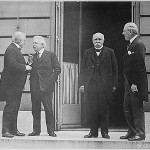
On November 11th, America honors its veterans as well as its brave men and women in uniform around the world. A day known as "Armistice Day" or "Remembrance Day" until 1954, when the name was changed to "Veteran's Day". But have you ever wondered about the story behind the day? How did we come to celebrate that particular day and how its history still affects us today? Ninety-nine years ago, the Armistice ending World War I was signed. The "Great War" or "War to End All Wars" as it was euphemistically called was perhaps the bloodiest conflict the world had ever seen to date . The ceasefire was to go in effect on November 11th at 11:00 (the date and time was chosen simply because it had a "poetic quality" to it). However it wasn't until six months later that the powers involved sat down to sign the peace agreement in Paris and lasted until December 13th, whereby there would eventually be three extensions lasting until January 20, 1920, when peace was finally ratified in Europe at 4:15. It was fought with 19th Century strategy using outdated ideas and strategies which simply hadn't kept pace with the technology of war.

As a result, World War I was a war of mass slaughter, disease, poison gas, and shell shock (what we now called PSTD). It created new military terms too which became popularized in lexicon of the average man or woman, but especially for those who had been "over there"; terms like "tanks", "ace", "trench warfare", "gassed", "buzz saw" (meaning a machine gun), doughboy, "meat wagon" for an ambulance (often converted butcher wagons. hence the name). There was also "No Man's Land", U-boats, "Mustard Gas", AEF (American Expeditionary Forces), reparations and numerous more. Personal names too became popularized and the stuff of legend; names like Eddie Rickenbacker, Alvin York , John Pershing, Billy Bishop, Lusitania, and of course, Manfred von Richthofen---the feared "Red Baron".

In its wake, World War I left behind 10,080,026 million dead on the Allies' side, with approximately half of that representing civilian deaths. 12,812,271 million were wounded. The Central Powers had 8,341,264 military deaths and 2,330,00 civilian deaths. Another 8,751,85 were wounded. Even after all this time, even those numbers are considered a best guess by many as bodies were either never found or were simply unidentifiable. To put it another war, the Allies lost 36% of its military and 20% of its civilian population while the Central Powers lost 22% of its military and 22% of its civilian population.

Was it worth it? That's a question asked by millions after the war ceased, especially by those who had fought and survived the carnage. I think it was that sense of relief, pent up anxiety and anger which was the catalyst for the complete abandon that was the Roaring Twenties; fueled by ample qualities of bootleg booze. That was also the hope of the Versailles Treaty, which was flawed and full of petty jealousy, nationalistic arrogance, and misplaced blame which merely reset the stage for the next war, which was to come a mere short quarter century later, and it was to be bloodier than the first. The war had not just destroyed millions of lives but also billions of dollars in property damage. The actual total cost of war to the Central Powers was $60,643,160,000. The costs to the Allies was even higher, $125,690,477,000. It's hard to imagine such carnage and costs would be tolerated by any the citizens of any country today. The war also destroyed empires.

The fate of the Central Powers was now be determined by its vengeful former enemies. As an aside, Germany did not expect to be treated as a belligerent power. It was argued by Germany's representatives that Germany had merely honored its treaty with Austro-Hungary, which was no different than how the other great powers of Europe had done. Germany, now a republic following the abdication of the Kaiser, was given the impression that it would be treated as an equal at the table. It would be out of this that the infamous "Stab-in-the-Back" myth would arise since it was left to the representatives of the newly formed democratic republic to negotiate as a defeated nation. The irony was the majority party of the Republic was the Socialist Democrats, with most of its leadership being Jewish.

Gone now was the Imperial German Empire, and with it, the Prussian mystique Alsace-Lorraine, and Germany's industrial heartland---the Ruhr Valley. The industrial Saar Region and City of Danzig were under the control of the League of Nations. Northern Schleswig went to Denmark, West Prussia and Silesia were given to Poland, the Hultschin District went to Czechoslovakia while the territory of Memel was absorbed by Lithuania. Belgium acquired Eupen and Malmedy. Control of the Rhineland was given to the French< Germany faced the destruction of its air force and emasculation of its navy and army. All toll, Germany lost 13% of its territory---27,000 square miles and 1/10 of its population (about 7 million people) plus all of its colonies. As if that wasn't severe enough, Germany was ordered to pay war reparations---a "fine" of sorts" in the amount of 132 billion gold Marks, or an equivalent of US $33 billion dollars; all for a war Germany never started.
The Austro-Hungarian Empire of the Hapsburgs ceased to exist. It lost close to 2/3 of its total territory. Austria and Hungary were divided. Six regions were formed into the nation of Czechoslovakia. Seven other regions were to make up the new nation of Yugoslavia. Meanwhile, Transylvania and Bukovina were ceded to Romania. Tyrol and Trieste were handed over to Italy. Galicia, Orava, Spitz, and the Duchy of Cieszyn were handed over to Poland. Restrictions were also placed in their respective militaries.

The Ottoman Empire too was gone. Its territories fell to France and England, which added to their empires. Out of this would come the Mandate of Palestine, Lebanon, Syria, and Mesopotamia. Greece, Georgia, Yemen, and Armenia regained its independence for the Ottomans. The Emirate of Transjordan, the creation of Saudi Arabia and the British Protectorates of Kuwait, Bahrain, and Qatar and control of the island of Cyprus. The newly created nations, formed by France and England, took little regard for the religious, ethnic, or tribal differences. Later, following WWII, the British would bow to international pressure and recent history, and begin allowing Jewish survivors of the Holocaust to migrate into Palestine, which ignited a fuse that has caused grave consequences ever since.

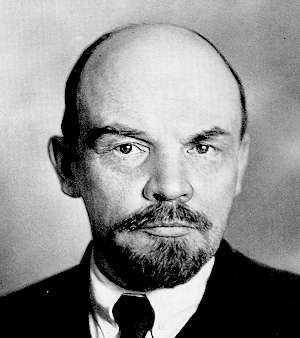
Imperial Russia's empire crumbled first, in 1917, when Czar Nicholas II, of the Romanov Dynasty, abdicated and the Imperial government was overthrown by a Provincial Government headed by Alexander Kerensky; a lawyer, social activist, and member of the Socialist Revolutionaries (the "SRs").Despite his attempts at reform, Czar Nicholas's efforts proved to be too little or too late. In October/November of that same year Lenin's Bolsheviks had seized control of the government. Russia withdrew from the war after signing the Brest-Litovsk Treaty with Imperial Germany. The price of peace was extremely high. Russia was forced to forfeited a large swath of land, one quarter of its population, and nine-tenths of its coal mines.

In order to force Russia to remain in the war, the Allied Powers--primarily Britain and the US, invaded Russia at the port of Archangel. However, the invasion made little headway, and the troops were withdrawn. Russia descended into a Civil War which would leave millions dead. Many more died of starvation afterwards as the economy collapsed. The Czar, his wife Alexander, their family, and several ministers would among the war's victims. By 1921/22, Lenin had enacted the New Economic Program (or NEP), which permitted a limited ownership of land and private enterprise. The result bore almost instance positive results to the economy (Lenin's long term economic and political objectives, despite popular myths, was to "shrink the government down to the size of a post office"; to create a country devoid of bureaucrats and one of self-government and volunteer ad hoc committees to run the country). However, with Lenin's death in 1922, the Georgian, Joseph Stalin, was able to consolidate power and began remaking Russia in his own imagine. The result would prove disastrous for Russia...and the world.

England and France didn't escape unscathed. While they, along with the US, dictated terms to their former foes, and acquired vast amounts of land, resources, colonies, and resources, while reducing the once mighty German Empire to the status of a second tier nation. Efforts could now be focused on calculating the value of their gains, while playing lip service to President Woodrow Wilson and his League of Nations (neither major power had any real interest in ceding power to anyone, let along an upstart country like the US). Nevertheless, League of Nations aside, America proved she was a first class industrial power with her own colonies thank you very much. It was American effort which turned the tide of war away from the Central Powers and to the Allies.

But for England, its victory was bittersweet. It was said that the "Great War" had cost the Empire an entire generation of men, which wasn't far from the truth, just over 886,000 men. It still remained the strongest naval power in the world, especially now that Germany's was hamstrung thanks to tonnage restrictions loss of its U-boat fleet, not to mention the destruction of its air force. Ireland was successful in obtaining its independence from England in 1916 (with the exception of Ulster). Far off colonies were again stirring amid talk about their own independence, yet just around of 25% of the world's land mass was under the British Union Jack flag. England's economy too had been affected, and it had to turn its attention to rising unemployment and poverty, not to mention the flu epidemic which was to cost many more lives. While the sun hadn't yet set on the British Empire, there was very much a chill in the air.

Perhaps France fared the best of the nations. It had picked up some valued territory thanks to Germany and the Ottoman Empire; land which could prove quite valuable with the additional shipping routes and strategic ports, along with a new and growing energy source---oil. True, France took a beating in terms of devastated towns and cities, but the revenues generated from the new colonies should, in time, make up for it. France had also lost an estimated 1,400,000 individuals. It had also made up for its humiliating defeat at the hands of Kaiser Wilhelm I and his imposing Chancellor, Otto von Bismarck. However, France too was beginning to feel the pangs of independence from her colonies.
As for the League of Nations, championed by President Wilson, it's fate would be little better than that of the Central Powers. Neither France or England were going to surrender their global dominance and submit to the discretion of nations they consider their inferior, and I suspect that included the United States, who was just now beginning to emerge as a player on the world stage whereas both France and Great Britain had held the world's attention for centuries now. Other powers such as Spain, Portugal,and Holland were mere shadows of their former selves.

Nevertheless, the US really wasn't really a factor since Wilson's own Congress voted not to approve its membership. Ultimately, however, 63 nations would join the League. It's goal was a noble one; to formulate a forum to discuss and debate issues such as world peace, child labor, gradual disarmament, women's voting rights, ways to improve international relations, working conditions and safety issues, as well as ways to impose enforcement of agreements among member nations (such as economic sanctions). Although the League of Nations would continue to remain in existence until April 18, 1946 when it was replaced by the new United Nations, its chief failure was its inability to enforce its resolutions, especially on non-member nations. The United Nations would, in many respects, address and correct some of these shortfalls, yet many of the issues still remain, especially as they related to national sovereignty.

So, now you know the back story to Veteran's Day; a day to acknowledge and honor our men and women in uniform and our veterans. We also must remember those who have fallen in their defense of this country (which is the reason behind Memorial Day) as well as those who are still missing. In my opinion, one cannot and should not be separated from the other.


The Financial Costs of the First World War


World War One Centennial Gallery


Tuesday, September 29, 2015

Does 'la Papa' really know best?


Pope Francis flew some 7000 miles to the United States to tell Americans to "welcome strangers in our midst", a reference to immigration---particularly illegal immigration--into this country. He then asked Americans to reject a "mindset of hostility". The Pontiff went on to say "...on this continent ... thousands of persons are led to travel north in search of a better life for themselves and for their loved ones, in search of greater opportunities," the Pope said. "Is this not what we want for our own children? We must not be taken aback by their numbers, but rather view them as persons, seeing their faces and listening to their stories, trying to respond as best we can to their situation. To respond in a way which is always humane, just and fraternal."

While I respect for Pope Francis for his openness and humility, which has been so often been lacking in past Popes and other religious leaders, I'm afraid he was barking up the wrong tree. America is literally a land of immigrants. Practically every population, language, and religion on the planet is represented by this country. America takes in more immigrants than any other nation and gives more in aid than any other nation. Although born in Argentina, Pope Francis seems woefully ignorant of our immigrant situation, not to mention Europe's. At present, the US has some 12 million illegal immigrants currently living in the states (some estimates push that number as high as 20 million) with thousands crossing the border daily.

America has been a highly welcoming country. 38.5 million foreign born immigrants have come to this country just since 2009. Roughly half are women. Two-thirds of those have become naturalized citizens. 46.9% are Latino or Hispanic, 23.9% are Asian, while 8.2% are black or African. The remaining 17.5 are either of another race (mainly white) or are of a mixed race. So the Pope is really off base telling America to "open its arms". What the aforementioned statistics should loudly say is that America is perhaps the most accepting nation in the world. Nevertheless, we are also a nation of laws. We have borders just as every other nation does, including Vatican City. All we ask is that if you want to come here, that you do it legally. Is that so difficult to understand? Yes, America does accept immigrants from other countries who are fleeing their homeland because of some natural or manmade crisis such as war, famine, genocide or some form of violent persecution---just under 75,000 came in 2009 alone. Most of these refugees came from Cuba, the Congo, Iran, Burundi, Vietnam, and Somalia. However, few of the estimated 12 million illegal immigrants now living in this country fit that criteria.

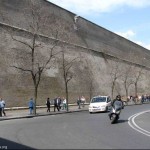
As for the Vatican City, a nation-state and seat of the Catholic Church, however, does not accept illegal immigrants or refugees. Those wishing to legally immigrant into Vatican City must first apply for special permission for residency. Most choose to settle outside the city walls (yes, I said "city walls". Vatican City is surrounded by a tall reinforced stone wall), in Rome. Although the official position of the Vatican has been that all immigrants has specific migratory rights (since humans are basically a nomadic species), the size and limited resources of Vatican City (approximately 108 square miles with roughly 10 people per square mile) make open acceptance impossible. So, if viewed more as a city-state than a nation-state, Vatican City would be comparable to many middle to small cities around the world. Yet, many of these cities have been forced into accepting immigrants and refugees. So, what's the difference?

I think the difference is multifold. First, many of the middle and small sized towns are not solely self-reliant. They get money and resources from the state and/or nation. Many are surrounded by farmland and ample useable water, plus they have an adequate infrastructure with the potential to expand. Ok, what about Vatican City? Though it's size is finite, it has more than ample financial resources thanks to its vast real estate holdings, national treasures (which are, frankly, simply priceless), and the outstanding revenue stream derived from the thousands of parishes throughout the world. If the Vatican was viewed as a corporation (which in many respects it is), it would be among the world's richest (the Vatican's bank, for instance, is estimated to have some 20 billion dollars in gold reserves on deposit just in the US alone. In addition, it receives some $850 million just from the 85 million Catholics living in North America---and there are some 2.1 billion Catholics in the world!). Another estimate claims that the Vatican's bank has some $8 billion in assets not including its various real estate holdings. Being located within Rome, there is adequate room to settle immigrants and refugees, with the permission of Rome's mayor and the Italian government, a good infrastructure as well as sufficient water and food.

So, my point here is that, as a head of state, Pope Francis could easily address the issue of immigration, either within Vatican City itself or some place within Italy or through its various global real estate holdings and, of course, where its political and religious influence allows. It would make far more sense for the Vatican to use its considerable wealth and power to promote resolutions that would allow refugees to remain or return to their home countries. As an aside, approximately 2/3 of Hispanics and Latinos are Catholic, so it obviously behooves the Pontiff to promote more immigration---legal and illegal--into the predominately Protestant United States. Just saying.

Finally, while the Pontiff, speaking at the United Nations, called on the US and other countries to be more "accepting" of immigrants, there was nothing in any of his speeches which called on immigrants to be more accepting of their chosen hosts. Nothing was mentioned about learning and using the host nation's primary language, of respecting or even adopting any of the host country's traditions and customs (not to mention other religions). Many seem to becoming only for what government handouts they get with no intent on integration. He made no appeal to the immigrants to leave behind old tribal, racial, religious or ethnic hatreds and start anew. There has already been several outbreaks of violence between various groups of immigrants in Europe. He said nothing about the newcomers cooperating with officials, avoiding violence or blending in with society. In fact, it seems that the Pope was pushing a one sided agenda; that the host nations must cower to the immigrants. That, in my opinion, was a critical mistake since while most of the nations have in fact been generous in their welcoming, it has been the immigrants who have proven to be disruptive, violent, and demanding that their host country forego their traditions---cultural and religious---in favor of theirs, and that my friends is wrong. It only sows the seeds for mistrust, prejudice, and violence. So, when handing out policy advice, how about a little less of "do as I say not as I do" ok?

Pope's immigration message draws praise, criticism from advocacy groups
http://www.usatoday.com/story/news/2015/09/24/pope-immigration-congress-speech-advocates-tussle/72699836/


Why Immigration is Different for Pope Francis
http://time.com/4046634/pope-francis-us-visit-immigration/


Frequently Requested Statistics on Immigrants and Immigration in the United States
http://www.migrationpolicy.org/article/frequently-requested-statistics-immigrants-and-immigration-united-states-1


Pro-Immigration Pope Lives in Vatican City With The Strictest Immigration Policies in the World
http://www.thegatewaypundit.com/2015/09/pro-immigration-pope-lives-in-vatican-city-with-strictest-immigration-policies-in-the-world-video/


How rich is the Vatican?
http://www.ibtimes.co.uk/how-rich-vatican-so-wealthy-it-can-stumble-across-millions-euros-just-tucked-away-1478219

Saturday, September 20, 2014

The Game Plan

Let's assume illegal immigration and the blatant refusal of the US government to secure the border, is simply part of a secret agreement--an addendum if you will--to NAFTA, which at its heart was designed to create an open border between Canada, the US, and Mexico, was extended to some of other nations south of border. Suppose further that the Latin American nations have chosen either to enact that portion of the agreement that allows its citizens unrestrained access to the US either directly or indirectly through Mexico, and because Washington was unable to "sell" NAFTA (though it passed, it has remained unpopular)---for whatever reasons such as a downturn in the economy, job outsourcing, union opposition, crime, unexpected prolonged wars or especially open immigration, decided to "dump" their children on our border, perhaps as a pointed reminder, or frustration over Washington's foot dragging? If true, does the hidden terms work both ways? What if Americans or Canadians decided to "invade" Mexico or South America in droves? How would their governments react? One or two, or even a few dozen would likely be imprisoned since they have (ironically) a no tolerance policy for illegals or those who aide them in anyway. But what about a few hundred or even thousands? What if these illegal Americans or Canadians demanded access to public services--such as health care or education, and in English? If Mexico's refusal to release a single US citizen, US Marine Andrew Tahmooreisi, is any indication, neither the US or its Latin American neighbors are prepared to deal with reverse illegal immigration, but I think they'd certainly be willing to discuss the situation with us.

There seems to be a global interest in the concept of "democratic liberalism", or as it's sometimes referred to, "friendly capitalism without borders". Think of it as democratic socialism as practiced by, say, Germany as opposed to Scandinavia. Social services, now paid for by States or a federal government, would instead be paid for through a transnational organization of some sort, perhaps the UN or one of its agencies. There has been, after all, much interest in expanding its role along with the influence of the UN, WTO, and/or World Bank, which collectively already controls much of the world's finances (along with the Federal Reserve) and dispersal of capital.

How could this be accomplished? The simplest tool would be a tax levied on a federal government and thus either directly or indirectly on the public. State specific programs would of course remain in place. This transnational "public welfare" tax would detail its own unique qualifications, which would be resident neutral and administered by each host country (notice "host" as opposed to "sovereign"). Since this would eliminate all or most other federal programs, administrative costs should be generally cheaper. The formula for taxation could be based on GDP, which would mean poorer countries would pay the least while richer countries would pay the most. While one could argue against this loss of sovereignty, it could increase the globalization of the commerce and through its concept of "open borders", enhance the development of worker movements since movement of workers would be unimpeded; something I'm sure would be unintended by the powers that be.

But as alluded to earlier, something happened. The US isn't playing the game as it's supposed to. There's the fact that America is becoming more fascist; certainly more "police state" like. To be more precise, corporations are behaving more feudalistic. In keeping with the concept, our national government is assuming the role of a dukedom; that, they are acting like overlords or administrators serving their lieges and lords. There is nothing "democratic" or "socialistic" here since we are not becoming more democratic by seceding more power to the People, nor are the People more in control of their own collective destinies, while government serves less our needs and more the needs of K Street and the 1%. States are increasingly losing powers guaranteed under the Constitution as well and must beg with hat-in-hand on bended knee for the funds to keep local governments going.

Meanwhile, threats to the expanding modern feudal State continues. Putin's Russia, and to a lesser degree, China and India (which tends to hedge its bets thanks to job outsourcing), have resisted dominance by the global "McState" and are threatening to undermine the US dollar as the defacto global currency; a currency backed solely on the "faith and trust" of a bankrupt government--economically, politically, and morally. Should they succeed, it would collapse the US economy as our unsustainable debts become due but it would have dire consequences worldwide in this interconnected world economy, eventually collapse the economies of the rest of the world like a house of cards. As the saying goes, when the US sneezes, the rest of the world catches a cold, and this cold would be terminal.

Then there's the situation in the Middle East, which appears, at least to yours truly, to have been initally an attempt to increase control of oil reserves and oil production, by these feudalistic corporations and away from these artificially created nation-states, and now appears to have spunned out of control. We are now faced with brutal terror organizations which we helped to create, arm, train, and finance, to deal with the last terroristic organization which we created, armed, trained, and financed ad nauseam.

These terrorist groups, which are being portrayed by the corporate media, to operate virtually at will, could, in truth, be easily snuffed out by the power of the US military. But what's the point in that? At present, "terror" is a useful tool in the arsenal of the Corporate State. It inspires fear at home, and thus in the name of security, increases the "demand" for security, or to call a spade a spade, a police state. After all, businesses require stability in order to operate. People require a sense of safety in order to feel comfortable to go about their daily affairs, which just so happens to includes spending money, so what's the loss of freedom among friends...or big brothers? By the way, this "necessary evil" for the care and grooming of a fascist or feudalistic society is never a requirement for either a democratic or socialistic State. So much for the notion we're becoming "socialist".

So, there you have it folks; "the plan" as I've termed it, and an explanation in a nutshell. An addendum to an agreement between Canada, Mexico, and the US to do away with borders, and an apparent reaction by Latin American leaders to Washington's delay in implementing their portion of the agreement due to their (perhaps chagrin) inability to sell it to the US People. Russia, China, and to a lesser extent, India, resisting this latest variation of the game of Risk by the WTO among others while holding a gun at our heads and one at their own. A spiraling problem in the Middle East as the result of failed plans to secure oil reserves by destabilizing resistant governments with the use manufactured "terrorists" who aren't following the playbook. You would think that after Watergate, they would have stopped using amateurs. But, on the upside, using terrorists as sort of the all purpose bogeyman behind every lamppost, an opportunity to expand government monitoring and police power under the auspices of "security" while corporate control of Washington not only increases, but emerges from the shadows. So my fellow Americans, what are you prepared to do? And then what are you prepared to do?