Home of the Militant Middle, Another Opinion ("A/O") is an Independent oriented "OpEd" blog for those looking for unbiased facts free of partisan drama and who are willing to question the Status Quo.
Showing posts with label Globalization. Show all posts
Saturday, September 28, 2019
Climate Change: Real or Not?
Isn't Greta Thunberg just the cutest little zealot you've ever seen? Don't you just love how this 16 year old Swedish sophomore gives that intense glare and little pout as she lectures members of Congress about global warming? I half expected her to cross her arms and stomp off. But, there she is, all the way from Sweden, which is currently being destroyed by invading so-called "Migrants", chastising politicians (I refuse to call them "leaders" or "representatives" since they are neither) in Washington and at the United Nations about "climate change" complete with her very own "how dare you" sound bite (soon to appear on t-shirts everywhere no doubt). Doesn't she know that these people are literally owned by the same corporations who are busy at polluting this world of ours? Can she be really that naive?
The little sixteen year old has shown some moxie though. After all, she is facing off against Congressmen and Senators who could otherwise be busy "dialing for dollars", playing golf, or enjoying some corporate paid junket somewhere. Of course, they have gotten use to playing the part of a piƱata or the "public crusader", at least while the cameras are rolling. In truth, they couldn't begin to care less as long as their corporate owners are happy.
Of course, the topic of climate change isn't new. I remember it from the early 1970's, when President Nixon signed off a variety of bills calling for reducing water and air pollution, imposing fines for littering in public parks and on highways, reducing the use of fossil fuels, ending lead gas, and recycling (including the introduction of biodegradable plastics). Who could ever forget the famous TV commercial featuring Chief Iron Eyes Cody with that single tear rolling down his cheek as someone throws a bag of garbage at this feet? We created "Earth Day" (April 22, 1970). Heck, it was even called the "Ecology Movement" and had its very own flag!
Students from elementary school all the way to high school were expected to do their part by picking up trash, reporting offenders, "adopting" stretches of highways, and, of course, writing their Congressmen and Senators, not to mention local businesses. There were even field trips out to streams to help pick up plastic bottles, papers, check the water quality content and discuss endangered native wildlife (being teenagers, the only "endangered wildlife" most of us were concerned about was our own).
I remember reading books about a pending mini-ice age, mass pandemics, and the "Population Bomb", which would trigger a mass die off since we would be unable to fed this surge in population. It all seemed pretty bleak to those of us who were trying to pay attention to all the "experts". Congressional committees were promised to "study the data". There were hearings as one scientist after another testified about our pending disaster as a species. Washington pretended to get onboard (especially during election time) as well as did various businesses, big and small; that is, until the next "crisis-de jure" came along and the all seeing eye of the media focused its attention elsewhere. I guess, when you think about it, not much has changed.
So is climate change for real? Of course it is! Otherwise, we would be living on a dead planet, which means that we would be well on our way to becoming just a part of another mass extinction event on this planet along with every other living organism. In its 4.5 billion or so year history, our planet has been everything from a "water world" to being pockmarked marked by constant meteor shows and erupting volcanoes filling the caustic air which hot ash. We've gone from being this floating ball of fire to being a frozen ball of ice countless times.
This planet has experienced approximately five global mass extinctions thanks to a host of natural disasters. The worse one was about 250 million years ago. It killed off 96% of all aquatic life and approximately 70% of all life on land. It took millions of years to recover (the last major extinction event was about 66 million years ago, which killed off the dinosaurs, not to mention much of the plant and marine life). This was due to a combination of meteor strikes, triggering dramatic climatic changes thanks in large part to volcanoes eruptions which released massive amounts of Co2 gas into the air.
It just so happens that Mankind has existed within a relatively calm window of time; where the climate has stable and enabled life on this nondescript rock to flourish. Now you can call that divine intervention or just a happy coincidence. The fact is that Mankind has been pretty lucky, at least up to now. Of course, there's been several events which have nearly wiped out Mankind over the millennia (called "bottlenecks"). Perhaps the worse was about 77,000 (which was a few days ago in geological time). This is referred to as the "Toba Super Eruption" and it took place at Lake Toba in Sumatra, Indonesia. It's effect was global and it nearly wiped all life on this planet, including us.
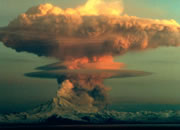
This enormous volcanic explosion created, essentially, a "nuclear winter", dropping the overall surface temperature by nearly 36 degrees! It dropped almost six inches of ash over the whole of Asia and threw up toxic ash which nearly blotted out the sun, killing off massive amount of vegetation, animal and sea life for close to 1000 years. Human life on the planet was reduced to an estimated 20,000 individuals; in some places it was as few as 1000 isolated people desperately trying to survive. But survive we did, and as the earth slowly recovered, so did our numbers.
So, there's no doubt that climate change does happen, often brought on by non-human events such as volcanoes, meteors, shifts in the tectonic plates which cause earthquakes and can trigger tsunamis among other things, changes in weather patterns, and even naturally occurring shifts in the planet's axis---called a "true polar wander"--- affecting the growth or decline of ice sheets at the opposing polar poles (the earth wobbles on its axis at a rate of roughly 1 degree per 1000 years). But what about now? Are we facing another mass extermination event as those like Greta Thunberg would claim?
Species have been vanishing from the earth from the get go. Over the past 100 hundred years, approximately 500 species have gone extinct. That means they're gone forever. There are currently over 3000 species on the endangered list (the Endangered Species Act was passed into law in 1973 under President Nixon). The majority simply couldn't adapt to the ever changing environment which affected their habitat. However, many have vanished as a direct or indirect result of Man, be it over hunting or deforestation, water pollution, or destruction of their ecosystem which impacted their food supply or breeding grounds.
The United Nations' Food and Agriculture Organization (FAO), says we lose some 18 million acres of forests every year (that's about the size of Panama, or to put it another way, 27 soccer field per minute per day). Much of this never replaced; just land stripped of it trees and much of its vegetation, leaving unprotected topsoil. Much is done illegally and on land belonging to indigenous tribes. According to the World Wildlife Federation, 15% of all greenhouse gas (which leads to the warming of the upper layers of the atmosphere and helps increase global temperatures) is a direct result of deforestation. As a result, trees, which absorbs up to 80% of the Co2 emitted, are eliminated from the equation (trees and other vegetation taken in the Co2 animals (including us) give off. In turn, they emit oxygen which we need to breath in a symbiotic relationship between Earth and Man). Without trees (which can store 3000 billion tons of Co2), the buildup of greenhouse gases increases, destroys the protective ozone layer which in turn causes a temperature rise (not to mention decreases the amount of breathable oxygen).
70% of the earth is covered by water. From space, we look like a big blue ball. Our bodies are comprised almost totally of water. Without water we'd die within days, and yet we have access to just over 1% of the earth's fresh water. 60% of our water comes from surface water (water not directly received from the oceans). Most comes from streams, rivers, and water stored deep in the earth. However, 80% of all ocean pollution originates from land sources; mainly waste (much of it toxic) produced by human activity.
The United States alone produces some 34 billion gallons of wastewater (which includes raw sewage) every day! As an aside, while wastewater is typically treated at various plants in and near cities and towns, the EPA estimates that 850 billion gallons still enter the water systems untreated; treatment facilities are overwhelmed. The world's largest polluter of water is, by the way, China.
The UN estimates that around 930 million of China's 1.3 billion population consume at least partly polluted water every day while 20 million ingest water that's radiated; half of the population lacks safe drinking water. 1/3 of all industrial waste and 90% of household sewage enters the waterways completely untreated. India isn't much better. 63% of household waste enters its waterways completely untreated. The result, like in China, is a massive die off of its rivers, stream, ponds, and wells used for drinking water (while India does have laws on the books to prevent its water pollution, corruption has proven to be a major problem).
Air pollution is another serious contributor to the increase in greenhouse gases, as well as health problems which affect not just human life, but animal and plant as well. 91% of the world's population live in or near to an area which exceeds the UN's minimum guidelines for air quality. According to the World Health Organization, the worst offender is China which produces 30% of world's pollution. The United States is second with 15% of world's air pollution, followed by India which contributes 7%. Russia is fourth with 5%.
Rounding out the top five is Japan which produces 4% of the world's air pollution. Despite various national laws and international agreements, the International Energy Agency (IEA) estimates that air pollution with increase by 150% by 2050. Couple this with the growing deforestation taking place in Brazil and elsewhere, and we have a real problem. Meanwhile, the world's ruling Oligarchies, along with the governments they own, are busy undermining alternative energy sources such as solar, wind, hydro, along with other forms of transportation away from oil/gas consumption. By the way, of the top 50 most polluted cities, the majority of them are located in the China, followed by India (which has the top five worst polluted cities), Bangladesh, Pakistan, and the Middle East.
Lastly, arable land; the land which is capable of growing our food. According to the United States Department of Agriculture, demand for food (especially wheat, barley, oats, and rice) has outpaced production 9 of the last 10 years. Approximately 50,000 acres are being lost annually due to overuse, erosion, changes in weather patterns (too much or not enough rain for instance), and development. Too much of what was once farmland has now become subdivisions and shopping centers. The result has been over use of the remaining land, including the increased dependence on man-made chemicals, which create their own toxicity over time. Meanwhile, erosion is occurring at 27 times the natural rate according to the USDA (to put it another way, that's a loss of 11,000 pounds of fertile topsoil per acre compared to the natural rate of 400 pounds per acre).
Globally it's even worse. Scientists have estimated that the world has lost 1/3 of its arable land over the last 40 years. Erosion, globally, is happening at a rate of 100 times the natural rate. Iceland for example is losing 38,800 acres of formerly productive land each year. 30% of available land worldwide is now used to support livestock---cattle, chicken, pigs, etc instead of crops. Meanwhile, with a global population expected to reach 9 billion people by 2050, scientists say we need to increase food production by at least 50% before then, otherwise we can expect worldwide starvation and famine.
So, is Greta Thunberg and others correct? Well, yes and no. Yes in that the earth is changing. That's not just to be expected, but to be encouraged. A planet which doesn't experience climatic and seismic change is one that is dying. What we have to hope for is that those changes occur within a small window in terms of temperature; a "Goldilocks zone" that's not too hot or too cold or we're all in big trouble. There's also no doubt that we are grossly polluting the planet, destroying its ecosystems, and exhausting its ability to support us, but that doesn't necessarily affect the climate does it? That only affects life on the planet.
However, Man's consumption of natural resources is accelerating at a faster rate than Mother Nature can replenish them, such as deforestation. This could result in an increase in greenhouse gases and eventually in a rise in the earth's temperature which potentially could cause a cascading effect. Regardless, we can expect species to vanish at an increasing rate as their habitats and food sources disappear.
Our pollution of the water and air, as well as the loss of arable farming land will make life harder to sustain for the majority of us (the wealthy will do just fine thank you). The oceans will increasingly be less and less able to support us as we overfish and kill off large areas while the polluted air will increase greenhouse gas eat away at the protective ozone layer, trigger rising temperatures, cause all sorts of lung damage and even various forms of cancers. Of course, how quickly this will occur is open to debate. Lastly, we can expect to see more and more wars over access to decreasing natural resources, especially sources of fresh water, and arable land.
In the end, we too may vanish; the result of greed and our failure to replenish Mother Earth. We need to think and act in terms of sustainability. We need to develop sustainable alternative sources of energy, food production, and transportation, not to mention restricting the development or harvesting of virgin land. If that means nationalizing certain industries (such as oil and gas) in order to encourage alternative means of energy, transportation, or restricting their pollution and redirecting their cleanup from taxpayers back to the industry sector itself then so be it. We must become better caretakers of this planet. For now, it's the only home we have. While we may need this old blue and green orb floating all alone in the vastness of the universe, the earth can and will get along quite nicely without us. Think about that.
Deforestation: Facts, Causes, and Effects
https://www.livescience.com/27692-deforestation.html
Water Pollution in China
http://factsanddetails.com/china/cat10/sub66/item391.html
50 most polluted cities in the world, ranked
https://www.cbsnews.com/pictures/the-most-polluted-cities-in-the-world-ranked/11/
World running out of farmland
Labels:
air,
climate change,
deforestation,
ecology,
environmentalism,
farmland,
food,
Global Warming,
Globalization,
greenhouse gases,
Greta Thunberg,
natural resources,
Oil,
Oligarchy,
pollution,
sustainability,
UN,
water
Saturday, December 22, 2018
Christmas Time in 2018: Some Lessons To Consider
Well, Christmas time is upon us once again, and once more we hear the refrain of "Peace of Earth and good well to all", yet when it comes to shopping for Christmas gifts, we're hardly very "peaceful". It seems that it's all about grabbing what you can, including elbowing, punching, scratching, and outright knock downs and drag outs over some toy, piece of technology, or item of clothing which will be obsolete in a matter of months. People have complained for decades about how commercial and materialistic Christmas has become with all its glitz and glamour, around the clock advertising, and mindless buying sprees.
There are currently some 26 wars or conflicts being waged around the world as I write this with Ten of them have the potential to escalate, and none of them have anything to do with Donald Trump being the President. In fact, the majority of them involve religious extremism led by a militant version of Islam versus everyone else (as an example, two young girls on vacation in Turkey were recently murdered---beheaded---by extremist). The next biggest cause resulted from the usual economic reasons, which is control of resources including the Civil War in Syria, the growing situations in East China Sea and the Crimea and the political/economic instability in Afghanistan, Iraq, and elsewhere , followed by ethnic violence.
Often these situations overlap with religion, economics, politics, and ethnic or sectarian violence all playing a factor in varying degrees. There is the increasing likelihood of violence in other places, which are currently simmering, such as Europe due to the increasing violence and strain on the social infrastructure caused by the mostly under educated and poorly skilled "migrants"; many of whom having embraced a radicalized Islam.
In today's America, we are facing increasing problems with our decaying infrastructure,an antiquated tax system, and some would argue, even our social system as "Identify Politics" continues to grow, pitting groups and individuals against each other along every conceivable line. Income inequality is growing. Internationally, we are facing challenges not just from old enemies, but from new ones as well.
The old adage, "Peace on Earth and good well to all" seems far more appropriate today than ever before. It seems that not only is America spinning apart, but so too is the whole world. Perhaps we should remember that Christmas celebrates the symbolic birth of Jesus approximately 2000 years ago (scholars will tell you that the actual birth likely took place in the Spring. Early Christians celebrated the nativity on March 28th before the adoption of December 25th). This was a time when Judea was an occupied country, militarily, politically, and religiously by the Romans military along with a puppet government (in those days politics and religion were merely different sides of the same drachma), a corrupt and collaborating religious elite, a pervasive Greco-Roman religious pantheon, and by Greek philosophy.
There was social chaos, uprisings, protests, and violent reprisals, especially in the northern area of the Galilee, known for being a hotbed of troublemakers. Just 9 months prior to his birth, there had been a serious uprising against Roman authority just a short sling shot's throw away, in nearby Sepphoris (Sepphoris, which is largely forgotten today by all but a few biblical historians and archaeologists, was the major Greco-Roman city in region and considered a bustling "modern" city of its time where there was able work to be had).
The short lived revolt was led by a certain Judas ben Ezekias just shortly after Herod the Great died, and when Mary, the mother of Jesus, would have been about 13 or 14 years old. Part of the revolt included attacking the royal palace and its armory. The initial success of ben Ezekias' revolt resulted in other protests and revolts breaking out all over the country. The Roman governor of Syria, who oversaw the Galilee, a nasty individual by the name of Publius Quintilius Varas, led three Roman legions and auxiliary troops, mostly from Greece, to crush the uprising in typical Roman fashion; that is to say, with utter ruthlessness.
As an aside, women, or rather young girls were typically married off within a month of having their first period. Boys were deemed men, and thus subject to marriage on their 13th birthday. Marriages were almost always arranged by their parents; usually within the same village or at most, the next adjacent community. In some cases, if there were no available children of marrying age, an agreement would be negotiated (along with fee or down payment) with any women in the village who happened to be pregnant that if their child was healthy and of the suitable gender, they would be "promised" upon reaching the age of maturity. As a result, most villages were heavily interconnected through marriage.
Sepphoris, which had fallen into rebel hands, was burnt to the ground on orders from Varas and thousands of Romans and auxiliary troops laid waste to almost all of the Galilee, including neighboring Nazareth (which likely had under 30 families living there at the time) with the usual Roman efficiency and zeal , which naturally included executions, beatings, and rape (since this was viewed as a revolt against Roman authority, anyone found or even suspected of being guilty was subject to the Roman punishment for treason par excellence, crucifixion.
Men and even some women would be nailed to a crossbeam and hoisted onto a fixed post all along the main roads and left to die, which could take up to a week, after which their bodies were ordered to be left to rot where they would be devoured by birds and wild animals (as an aside, because wood was so scarce, the crosses would be repeatedly reused; often removed and transported to where they were needed except in Jerusalem, where there was a fixed point for execution of those convicted of treason). The point of this form of punishment was to both inflict a slow painful death and to serve as a warning to all to might think about defying the power of Roman. So, in effect, it was to inspire terror). The trauma of Varas' brutal response left the entire region in shock and fear of the Romans for years to come...as intended. Those rebels not killed in the fighting or later executed were sold into slavery with many going to the mines in Spain or Britain, which was as good as a death sentence.
It was into this particular world that Jesus, or Yeshua as he was actually known, was born (the fact that he survived childhood was itself something of a miracle given the extremely high rate of infant mortality and death of the mother). Life in occupied Judea was never easy. In addition to be a political/religious hot spot, it was also one of the more poorer areas where there was few private ownership of land except by rich estate holders. Many worked for these individuals, working their fields on the few arable tracts of land which was available or tending to the grape or olive orchards (wine and olive oil were major commodities).
Others earned a living fishing and selling their catches in the local marketplaces while others, who tended to be on the lowest end of social totem pole just above beggars, were the tradesmen. Common belief was that Jesus, like his father, Joseph, was a carpenter. However, that's not accurate. Wood was a rare commodity and usually only used by the well to do. Thus, most tradesmen were engaged in some sort of stonework, though they were by necessity, jack-of-all-trades (the term used to describe Joseph's occupation is "tekton" which actually means simply a builder and typically applied to someone who built with stone, which was the most common building material available. By the way, unlike today, children started helping out almost as soon as they could walk. In fact, everyone contributed in some way as a matter of survival. Women would tend to the children as well as weave if they were able, or make and/or paint pottery, help their husband sell their wares or catches in the marketplace, and whatever else they could do.
Life was a daily struggle, and under the yoke of Roman rule, it could be especially hard especially when it came to taxation, which could take the form of coinage or produce (by weight). In addition, religion was not something optional; something you did one day a week. It was a daily thing. Practically everything act was governed by some religious law, which is one reason many younger or particularly ambitious Jews decided to embrace the Greco-Roman influence of their occupiers. Greco-Roman philosophy and especially its religion still involved a certain amount of religious "duty", but far less than required under strict Judaic law. However, there were certain obligations that even the most lax Jew tended to follow, and that included donations to the Temple during High Holidays such as Passover, which was hard especially for the poor, which, no doubt, Jesus' family was.
For example, when Jesus was born, his parents were required to participate in practice called "Redemption of the First Born". In theory, the first born child or animal had to be "redeemed" based on a passage in the Bible which said that the first born child or animal belonged to God (Numbers 8:17). Obviously no one was going to sacrifice their first born child, so they were required to buy them back. The costs was five silver shekels. In lieu of cash, a lamb could be offered. Well, if you were wealthy, that wasn't a problem, but if not, that became an issue. Heck, you may not even own a lamb or know anyone in your village who owned a lamb! But there was an out. The Torah stipulated that in case of dire poverty, the parents could offer either two doves or two pigeons as a burnt offering (Leviticus 12:8).
Is this what Jesus' parent's did? Well, they were likely poor enough to qualify. Well, in the Book of Luke (Luke 2:24), that's exactly what we're told they did. Both Joseph, Mary, and Jesus make a trip to the Temple in Jerusalem (which was no easy day trip. They likely had to travel the 65 or so miles on foot, which could also be dangerous, and likely spend the night beside the road if they were unable to complete the journey during the day. Once there, they likely made the Temple their first stop. While there, they may have stayed with relatives in order to save money, which they didn't have much of to begin with. They may have done some sightseeing, as long as it was free, and headed back as soon as possible. I can imagine Joseph seeking a day job in order to earn extra money to feed his family. After all, this wasn't a vacation. If they weren't working, they weren't eating.
Education was a luxury which only a very small handful of individuals could afford, and those were mostly the elites such as the political and religion class, and certain individuals in the upper echelons on the military and perhaps a few well-to-do merchants. In Jesus' case, it's extremely doubtful that he was literate, at least not fully. He would have been taught a passage or two for his Bar Mitzvah. Whether or not he was able to read the passage or simply memorized it is open to debate. If he did learn any more than that, he was indeed a lucky child because that meant that he lived close enough for someone educated to teach him (for free, which was rare in itself) and that his family could afford for him take time away from work (highly unlikely), but there were some extremely rare exceptions.
Most learning took place after work and the evening meal, and was primarily oral (the day started just before sunrise and ended when there was just light enough to walk home, which was about 45 minutes to an hour from Sepphoris to Nazareth). Learning by listening and memorizing stories was the most common form of education, especially among the poor. Even in Greece, known for its higher learning, the use of oral traditions was still common. Children would either listen to stories told by their parents, or other parents and the village elders (if there was an actual reading taught, this would have been the time and place).
It would have been a difficult childhood for anyone of this place and period. Life under Roman occupation could be brutal, especially in a place known for its active opposition as the Galilee was. However, the Romans did tend to be tolerant of most religions, including Judaism. By and large, most religions had no problem with the Romans when it came to religion. As a general rule, subject peoples were usually denied the right to practice their religion by a conquering power. A conquered people were typically required to destroy their old gods and adopt the new ones. Temples or other places of worship were either destroyed or "purified" with fire to make temple fit for the new religion. In the case of the Romans, they allowed their subject peoples to believe as they saw fit provided they paid at least a nominal homage to the Emperor, usually in the form of a statue in the main temple. Normally, this wouldn't have been a problem, except for the Jews of Judea. Their religion explicitly prevented them from doing so (Exodus 20:1 -17). Specifically, it was the Second and Third Commandments which were the problem.
The Second Command read "Thou Shall Not Have Any Other Gods Before me". The Third Commandment, which followed along the same lines, said "Thou Shall Not Make Unto Thee Any Graven Image(s)". Plus, we have to recall that the Temple was considered sacred in the extreme, and while local Roman appointed governors might contribute money and labor to its repair or building, there was simply no crossing the line when it came to placing a statue of the Emperor or Imperial eagle or any other symbols on or near the Temple. Ultimately, this was to the result in being the biggest source of opposition by the Jews, and to their downfall.
We can try and imagine what this moment in history must have been like, but truthfully it's difficult at best. It's almost as if we trying to look at an alien society. It was one which, on one hand, was devoted to the Torah and to its religious institutions and priestly class, which it followed to the letter. On the other hand, it had become unwieldy and corrupt. It's most powerful religious leader, the High Priest, was appointed by the Roman governor, who also made the recommendations for the Sanhedrin who were then appointed by the High Priest. In short, Roman controlled the religious life of the people.
Roman also controlled its social and economic life through taxation and the issuance of licenses (which usually came with a nice kickback). Judea also face the encroachment of a fundamentally different religion, along with a system of philosophy which attracted its young people (some males went as far to reverse the procedure of circumcision, which was extremely painful, just to fit in with the sons of Greeks and Romans). It was increasingly common for young Jewish men not just to abandon the faith of the fathers, but to even adopt the customs of the Greeks and Romans; of going to public baths and exercising in the nude, which was forbidden under Jewish religious law. They stopped learning the Torah and started learning Greek or Latin, and studying the works of Greek authors (many of those Jews who could afford an education usually sought out a Greek one instead of a religious based one). Thus, it was feared by the more traditional that Judaism and Jewish Identity may fade away along with the nation itself.
This was the world into which Jesus was born. Perhaps by knowing a little more about the reality of it, we may come to appreciate ours a little bit better, and that just might help us strive a bit harder to find "Peace on Earth and good well to all".
10 Conflicts to Watch in 2018
CFR: 26 Global Conflicts
Labels:
2018,
Christianity,
Christmas,
conquest,
Galilee,
Globalization,
Holidays,
intolerance,
Jesus,
Judaism,
Judea,
Marxism,
Oligarchy,
poverty,
Radical Islam,
Religion,
Roman Empire,
Taxes
Saturday, July 08, 2017
Protesting for Fun and Profit: The G20 and Its Consequences
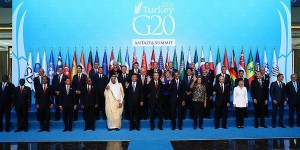
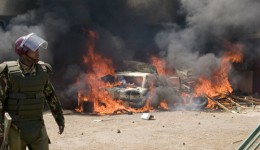
Did you know that Hamburg Germany is currently on fire? Well, not the whole city. Just sections really. The reason for the fires, which mostly consists of cars and trash set ablaze in the middle of the road, as well as the obligatory looting and general mayhem, is the result of the G20, which currently meeting there. What is the G20 you ask? Well, set back and I'll be happy to explain it to you. For those of you who follow Another Opinion on a regular basis, you've often read my rants about the Oligarchy and how America is no longer a democratic or constitutional republic. Well, that's where the G20 come into play.
The G20 or Group of 20 is a international forum comprised of the top 20 economies and central banks whose polices literally control the world's economics (as an aside, it was decided in 2009 that the G20 would replace the G8. The G20 itself was created the year before in 2008). They determine virtually everything involving global trade, including who gets loans and credit to bailouts and the wavier or reduction of interest charges and whose debts get written off ("forgiven"), though the prime responsibility is maintain a stable global economy. Currently, the G20 is comprised of the United States, Germany, France, Argentina, India, Indonesia, Mexico, Russia, South Korea, Japan, China, Italy, the UK, Saudi Arabia, Turkey, Australia, Brazil, Canada, South Africa, and the European Union which is represented by the European Commission and European Central Bank.
The G20 came out the rubble of World War II in response to the need to "manage" world economies in order to create a more balanced trade environment and foster closer cooperation between the world's leading economies and oversight of developing economies. The first incarnation of the G20 was the Bretton Woods conferences, followed by International Monetary Fund and World Bank, and the World Trade Organization. It was Germany's Hans Eichel, a member of the Social Democrat Party (or SDP) and the finance minister under Chancellor Gerhard Schroder, along with Canada's Finance Minister (and future Prime Minister) Paul Martin and US Treasury Secretary Larry Summers who created the G20. Martin is a member of Canada's Liberal Party while Larry Summers is a Democrat and served in President Bill Clinton's Administration. It's understood, however, that Eichel and Summers were the driving force for the creation of the G20 through their respective roles in the G7, later G8, to manage the developing debt crisis's that were happening at the time. Nevertheless, the role agreed to by the member nations was the "governance of the world's economy".
Collectively, the G20 accounts for 85% of the gross world product; 80% of world trade; and 2/3 of the world's total population. The current chairpersons of the G20 are Germany's Angela Merkel and Argentina's Mauricio Macri, which, given Germany's internal migrant issues and the present state of Argentina's economy, doesn't exactly exude confidence, especially when you look at some of the other member nations. Notably absent are most of Africa, the Middle East, and the Oceania nations. However, of these, Africa, has the weakest and most unstable countries. This agenda of the summit is the rise and spread of global terrorism (and religious extremism), climate change, and of course, global trade. It should be pointed out that the G20 invites non-member nations and organizations such as the World Bank Group, the Association of Southeast Nations and the International Labour Organization to attend its meetings as a "guest".
So, if you ever wanted to know who or what the Oligarchy is, there you go. In addition, there are dozens of think tanks which deal with developing policies on a vast array of topics such as the environment and pollution, overpopulation, food production, poverty, resource development, and sustainable economic growth. They work hand in glove their respective governments on policy and given its transnational role, just as often with member governments, associations, academic institutions and global corporations on setting coordinating polices. In short, this is the world government---albeit still taking shape---that many of you were taught to fear in Sunday School and in sermons. It is also the global governance which threatens organized labor by being able to so easily transfer production and manufacturing across international borders in order to obtain the cheapest labor and/or avoid various taxes. Some would also argue, that organizations like the G20, facilitate the "raping" of natural resources, leaving behind a decimated local environment while enriching government officials, corporate executives and investors.
But that's not all. Many also believe that groups like the G20 are the main cause behind various wars and conflicts. Why you ask? Because their role, under the label of "global governance", is to maintain economic stability in order for trade and financial growth to take place. In other words, it's about control--control over economic development, both world and individual national economies, and resources, as well as resource acquisitions. It means obtaining whatever natural resources exist in a given country, which may mean resettling a native population, the temporary or permanent loss of local food sources, damage to the environment including loss of clean drinking water or farmland, and so forth. Generally, the powers that be can usually be bought, but sometimes they want to much or they're just obstinate and won't cooperate. Then additional pressure can be brought to bear on an escalating scale with military intervention (either direct or covert) being the last resort. Of course, it's always presented as being in the national interest while painting the other nation's government with a wide---and often unsubstantiated---brush of various nasty charges like having weapons of mass destruction, the use of chemical weapons, or in support of "the people's demand for democracy", etc. In reality, it's about not getting onboard with the petro-dollar as its trade currency, access to various indigenous resources, and so forth.
This brings us to Hamburg and what's going on there. While estimates vary wildly, most put the number of protesters well into the thousands according to attendees. Most are anarchists, meaning that they just don't simply oppose corporate globalization, but also the government's---any government---interference in their personal lives. They simply want to be left alone and live a life free from the dictates of some government bureaucrat. Freedom and democracy in its truest form. Naturally and to not waste a good riot, you have wannabe "Socialists" or Communists. Then too you have those who are there simply to thrash everything and loot as much as possible. These are usually the most violent types, which means they're the ones who get the most media coverage and are presented to the watching public as the anarchists, neo-Socialists or born again Communists. They are the ones throwing Molotov cocktails, glass bottles, rocks, and starting fires as well as doing the looting. Rounding out the lot are various special interest groups such as Kurds, and opposition political parties like the Scottish Independence Party, who are there in the hopes of getting some free media coverage. For the time being, the usual Muslim protesters and Sharia law enforcement gangs have been keeping a low profile, perhaps out of fear of getting their collectives butts kicked. If so, they may have more common sense they I gave them credit for. However, some Kurds are using the occasion to draw attention to their plight.
Reports from various news outlets state that despite the use of body armor, water cannons, armored vehicles and standard anti-riot tactics, approximately 160 police officers have been injured---some seriously---while dozens of protesters have been arrested or detained. Estimates , according to the police and reporters put attendance among the rioters as high as 100,000 to perhaps 75,000. Ironically, it's being reported that some of the rioters are demanding the implementation of Socialism or Communism while others, specifically those from countries like Venezuela, are demanding an end to their current form of government---Socialism! Others are demanding open borders while others want closed borders and tighter control over immigration, as well as more money directed towards alternative energy research, ending poverty and a reduction in military budgets. These same reports point out the many of the rioters are from countries other than Germany, and describe the protesters are mostly college educated, employed, middle class and/or "trust fund babies". As an aside, there are "sympathy protests" taking place in other countries, such as in Venezuela's capital, Caracas. One witness to all the riots, Laura Zeriadtke, said that what she as witnessed was nothing less than a "Civil War". Many would agree.
I believe that what we are seeing is a seismic shift in the global body politic. People are rejecting the adoption of this implementation of a new form of Fascism; Perhaps "Friendly Fascism" as the late great Dr. Bertram Gross had coined the growth of corporate-government partnership. People demand the imposition of "Socialism" without truly understand what "socialism" is. The same goes for the Communism. I would also have to ask whose "Communism"? Stalin's? Lenin's? Mao?, Castro's or Ho Chi Minh? Kautsky's? Luxemburg's? Maybe Che's or Marx's? Each were different and none actually followed what Marx and Engel wrote. In truth, they were only variations of totalitarianism (except maybe Luxemburg and Kautsky). As for Socialism, that's never actually be tried despite claims to contrary. What has been attempted is democratic socialism, which, in fact, was quite successful, that is until the vast influx of migrants who didn't share the same work ethic, traditions or social values. Instead, they simply drew on the system like a piglet does on a sow, without contributing back to it . As a result, their economic systems are being strained to the breaking point. People are rejecting globalization, at least the corporate control of markets and nations.
Historically, people have always willingly surrendered their freedom for security---personal and economic. Always. I think the ruling Oligarchs are banking on this holding true again. They provide control, be it economic, political, social or personal. In exchange, we have a certain measure of safety and security. Never mind that our privacy is gone or greatly compromised. Never mind that ordinary businesses are regulated to the hilt or that we are taxed to the point that we might as well simply sign over our checks. After all, someone has to pay for this new found protection right? The only problem is that an increasing number of people worldwide are catching onto the scam. We know that the elections are rigged. We know that the politician class doesn't represent us. They represent the corporations who underwrite their campaigns and help write or lobby for certain policies.
We know that there are two sets of laws---one for the wealthy and one for the rest of us. We've seen it happen too often not to know. Right now, the ruling class is doing everything in its power to divide us along as many line as possible. Divided, we are weak and powerless. United we can topple any Oligarchy or ruling clique, and they know it. We know it too in increasing numbers. What's happening in Hamburg and elsewhere are but the opening salvos in a socio-economic war that's a old as civilization. A war between the ruling elite and the rest of us. The difference is that the stakes are far higher now than they were a few generations, centuries, or millennia ago. It's time we demand our freedoms back.
Peaceful protests mark the end of the G20 summit hours after riots
More than 100 police injured in Hamburg riots
G20: Activists riot overnight in Hamburg...
Labels:
Communism,
economics,
Economy,
fascism,
freedom,
G20,
G7,
Germany,
Globalization,
Hamburg,
IMF,
Labor,
Oligarchs,
Oligarchy,
Protests,
riots,
Socialism,
trade,
unions,
World Bank
Thursday, January 01, 2015
A Look Forward and a Last Look Back
Well, 2014 is in the history books and what a year it was too. We had a missing plane, more beheadings by black clad religious nut jobs who shouldn't be allowed to play with sharp objects, shootings and protests over alleged racial bias while most of us, regardless of race, thought racism was finally a thing of the past. Turns out that it's alive and well, and can found among the well dressed race baiters in suits and ties in lieu of those previously in hoods. We've seen looting and burning, all in the name of justice allegedly denied---the logic of that simply escapes me.
There was, of course, the invasion of Crimea and further saber rattling along the Ukrainian border, punctuated by a downed airliner and the innocent dead. Let's talk about real justice denied. We had North Korea doing its own saber rattling and hacking Sony...or did they? Putin continued grow in political stature while the rest of world scoffed at the United States, or to be more specific, it's political leadership or lack thereof. We witnessed a political spanking of the Democrats at the midterm elections by the GOP while the public's approval for either party or even the not-so-supreme Supreme Court continued to plummet into single digit numbers. Both parties are just different flavors of the same bland Kool-aid and we're finally realizing it with now nearly 50% of voters registered as Independent.
America officially became an oligarchy in 2014 as we lost the democratic republic bequeath to us by Washington, Jefferson, Adams, Hancock, and numerous others (my personal favorite being Sam Adams). Benjamin Franklin was famously asked while leaving the Constitutional Convention of 1787 if we had been given a republic or monarchy. Without hesitation, Franklin remarked that we had been given a republic if we can keep it. Well, ole Ben, We the People failed to keep vigilance over your republic like you warned, but the upside is that we have reality TV, iPods, smart phones, and video games, so who needs freedom?
Obama, that clown prince of, well, political clowns, again decided to ignore the American People and issued an executive order proposing amnesty for some 5 or 6 million illegal immigrants. The good news is that the other 5 or 6 million are still illegal at least for now. We had some 60,000 children dumped on our southern border and despite "promises" they would be sent to their nearest relative or sponsor, they seemingly "vanished". Some 96% of them simply didn't show up...and to think they even "promised" too. Huh. What do you think about that? And what has been done to locate these missing waifs? Uh, that would be nothing. Mostly because then Attorney General Eric Holder didn't want them found and restricted border agents from making arrests, and besides, Obama cut the budget for ICE and immigration enforcement. Oh, and the criminal gangs which accompanied these individuals across the border? You know, the ones known for their violence? Seems nothing has been done to find them either.
We saw some pretty nasty weather in 2014 too. Seems like if wasn't forest fires and droughts, it was record levels of snow fall, mudslides, and flooding (is California even still there?). It seems the Arctic Circle is continuing to melt and yet the Antarctic appears to growing, by some 6,600 square miles since 1978. But is this because of a warming planet, a normal natural cycle, Man, or simply the case of a seriously miffed Mother Nature? Personally, I don't think there's a clear cut answer. I have no doubt that the planet is warming, albeit not all at once and not evenly throughout the planet. We also have consider that for its 4.54 billion year history, the earth has not been a very hospitable place. Its climate has ranged from being a molten furnace with a atmosphere comprised of mostly sulfur and methane to a lifeless dirty snowball devoid of anything approaching a sustainable atmosphere.
Man has been fortunate to have existed during a rather stable period, albeit with a few ice age events. Nevertheless, given the population of the earth---some 7 billion souls (which is approaching the maximum sustainablity of 9 to 11 billion), and the levels of pollution we pump into the air, ground, and oceans, as well as the over production of the soil (with or without genetically modified seeds), there's no way that I can see that Man has not and is not dramatically affecting the climate. Is it all Man's fault? No. I think a certain amount is the result of natural climatic changes, but we are having a negative impact. Accordingly, we must think in terms of what we as a species can do to minimize our environmental impact, and that means curtailing the emissions we pump into the air, the deforestation of jungles and primordial forests, and over harvesting of the oceans and soil. Naturally, that's not in the best interests of short sighted governments or profit driven corporations who care for nothing about the consequences.
On a related issue, we are no less dependent on oil. More effort needs to go into solar, wind, and hydro power. While our dependenceon Middle Eastern oil is lower, it's not low enough and as long as we depend in any significant degree on Middle Eastern oil, we will be tied to the quagmire that passes for Middle Eastern politics. However, every effort to develop alternative energy sources is met with stiff resistance by the oil industry; it's in their economic interest to ensure our dependence on oil, and on them, even if it includes invading oil rich countries under whatever pretext happens to be handy. I know this won't go down well with many of my conservative and libertarian friends, but since---as the oil and natural gas industry claim---energy is a matter of national security, we should nationalize the energy industry; control its production, storage, and delivery, which of course, includes price. Even if it's not nationalized, it needs to be stringently regulated. We also need to create industry based cleanup funds instead of taxpayer based funds. If a particular company is abandoned or sold but unable to cleanup any environmental damage, rather the public being responsible, I think the industry should be responsible. This would give it a measure of self-policing and with it, self regulating responsibility.
So with that said, what is in store for us in 2015? Well, dusting off the ole crystal ball, let's peer if we can into the not so distant future. I think 2015 will mostly be a continuation of 2014 in most respects. We will continue to see groups like ISIS evolve; expand in places while contracting in others. We'll learn that ISIS, like Al Qaeda, are manifestations of US foreign policy if not outright creations of the CIA and similar groups. However, many more innocent bystanders are yet to die over religion. The family and friends of those killed at Benghazi will find no justice. The wall of silence has firmly been erected by the Washington elites. There will be a lot of the usual political posturing and jockeying for position by would be 2016 presidential candidates. In the end, there won't be anyone or anything new. More dirt. More lies. More scandels. Meanwhile, the patience and temper of the American will grow shorter. Washington doesn't get it. We don't want more rhetoric. Talk of "reform" means nothing. PR firms and political handlers will begin work in earnest but their message will fall on largely deaf ears. Americans want a total and complete overhaul of a political system which no longer represents us, and that means everyone in Washington must go; no exceptions. I think we'll see even more protests and perhaps violence as the American People seem to finding their voice, and their backbone.
I think there will be repeated attempts to stoke the racial fires,, mostly by professional race baiters, and by the power elites who have more to lose by a united people than by any riots or lootings. Americans are waking up to the fact that much of these divisions between us are manufactured. Those pulling the strings need us divided and at each other's throats lest we begin to focus on those actually responsible for what's happening. The illegal immigration topic will continue much as before. The People say "no". The government say "we don't care".
Technology will keep marching on as methods and means to redirect our attention with newer and brighter "shiny objects" continue. To be sure, some of it will actually be useful while much will be simply to keep us diverted from what really matters. More bread and circuses as the Romans said. Social media will expand and morph while the powers that be will renew their efforts to control, regulate, and tax it. That must not ever be allowed to happen.
Internationally, tensions will continue, especially in the Middle East. I wouldn't be surprised to see something happen to trigger a nearly all out confrontation between Israel and perhaps some radical Moslems---possibly Hamas, Al Qaeda, and/or ISIS? If that happens, prepare for all hell to break lose. Israel doesn't back down and Israel does not lose. Tensions between Pakistan and India will flare up over the disputed territory of Kashmir. Ultimately, a joint administration will have to be worked out. North Korea will continue to publicly make threats while quietly behind the scenes and probably through Chinese back channels, looks for ways to end its economic and political isolation. The key is doing so in a way that makes it look like the West blinked first. Russia will continue to flex its muscle and will find some surprising new friends in Europe, especially Germany. The key will be another face saving measure but in the Ukrainian-Crimea region; perhaps a reduction or removal of NATO missile and monitoring sites which now ring Russia's southern frontiers or allowing forward placed early warning sites in Poland and southeastern Europe--- or even in former East Germany in exchange for a Russian withdrawal? Europe has found that it can no longer count on the US until there is a change in regimes, and perhaps even a change in governance. That works to Russia's advantage. With China as the top economy in the world, look for it to start flexing its muscle, and matching it with its military, long the largest in the world, as it continues to acquire vital mineral, water, and agricultural rights. Cuba needs to be careful of its new relationship with the US.
All in all, I think 2015 will see the world better off than it was in 2014, even if only slightly. People have increasingly become aware of our interconnectedness, whether we want it or not. We have also come to see that other peoples are not the villains we've been told they were, but that's not to say there aren't plenty of villains out there. Most of us want pretty much the same things like living our lives in peace with our friends and family. However, the biggest villains seem to be the ones we call "leaders" or more specifically, those behind the scenes pulling the strings. Only as a united people, regardless of where we call home, or our religion, or our skin color, gender, or sexual orientation, can we find the peace we all want. So what do you think? Is 2015 a good time to start? I think so. Happy New Year everyone!
Opposite behaviors? Arctic sea ice shrinks, Antarctic grows
http://phys.org/news/2012-10-behaviors-arctic-sea-ice-antarctic.html
How Many People Can Earth Support?
http://www.livescience.com/16493-people-planet-earth-support.html
There was, of course, the invasion of Crimea and further saber rattling along the Ukrainian border, punctuated by a downed airliner and the innocent dead. Let's talk about real justice denied. We had North Korea doing its own saber rattling and hacking Sony...or did they? Putin continued grow in political stature while the rest of world scoffed at the United States, or to be more specific, it's political leadership or lack thereof. We witnessed a political spanking of the Democrats at the midterm elections by the GOP while the public's approval for either party or even the not-so-supreme Supreme Court continued to plummet into single digit numbers. Both parties are just different flavors of the same bland Kool-aid and we're finally realizing it with now nearly 50% of voters registered as Independent.
America officially became an oligarchy in 2014 as we lost the democratic republic bequeath to us by Washington, Jefferson, Adams, Hancock, and numerous others (my personal favorite being Sam Adams). Benjamin Franklin was famously asked while leaving the Constitutional Convention of 1787 if we had been given a republic or monarchy. Without hesitation, Franklin remarked that we had been given a republic if we can keep it. Well, ole Ben, We the People failed to keep vigilance over your republic like you warned, but the upside is that we have reality TV, iPods, smart phones, and video games, so who needs freedom?
Obama, that clown prince of, well, political clowns, again decided to ignore the American People and issued an executive order proposing amnesty for some 5 or 6 million illegal immigrants. The good news is that the other 5 or 6 million are still illegal at least for now. We had some 60,000 children dumped on our southern border and despite "promises" they would be sent to their nearest relative or sponsor, they seemingly "vanished". Some 96% of them simply didn't show up...and to think they even "promised" too. Huh. What do you think about that? And what has been done to locate these missing waifs? Uh, that would be nothing. Mostly because then Attorney General Eric Holder didn't want them found and restricted border agents from making arrests, and besides, Obama cut the budget for ICE and immigration enforcement. Oh, and the criminal gangs which accompanied these individuals across the border? You know, the ones known for their violence? Seems nothing has been done to find them either.
We saw some pretty nasty weather in 2014 too. Seems like if wasn't forest fires and droughts, it was record levels of snow fall, mudslides, and flooding (is California even still there?). It seems the Arctic Circle is continuing to melt and yet the Antarctic appears to growing, by some 6,600 square miles since 1978. But is this because of a warming planet, a normal natural cycle, Man, or simply the case of a seriously miffed Mother Nature? Personally, I don't think there's a clear cut answer. I have no doubt that the planet is warming, albeit not all at once and not evenly throughout the planet. We also have consider that for its 4.54 billion year history, the earth has not been a very hospitable place. Its climate has ranged from being a molten furnace with a atmosphere comprised of mostly sulfur and methane to a lifeless dirty snowball devoid of anything approaching a sustainable atmosphere.
Man has been fortunate to have existed during a rather stable period, albeit with a few ice age events. Nevertheless, given the population of the earth---some 7 billion souls (which is approaching the maximum sustainablity of 9 to 11 billion), and the levels of pollution we pump into the air, ground, and oceans, as well as the over production of the soil (with or without genetically modified seeds), there's no way that I can see that Man has not and is not dramatically affecting the climate. Is it all Man's fault? No. I think a certain amount is the result of natural climatic changes, but we are having a negative impact. Accordingly, we must think in terms of what we as a species can do to minimize our environmental impact, and that means curtailing the emissions we pump into the air, the deforestation of jungles and primordial forests, and over harvesting of the oceans and soil. Naturally, that's not in the best interests of short sighted governments or profit driven corporations who care for nothing about the consequences.
On a related issue, we are no less dependent on oil. More effort needs to go into solar, wind, and hydro power. While our dependenceon Middle Eastern oil is lower, it's not low enough and as long as we depend in any significant degree on Middle Eastern oil, we will be tied to the quagmire that passes for Middle Eastern politics. However, every effort to develop alternative energy sources is met with stiff resistance by the oil industry; it's in their economic interest to ensure our dependence on oil, and on them, even if it includes invading oil rich countries under whatever pretext happens to be handy. I know this won't go down well with many of my conservative and libertarian friends, but since---as the oil and natural gas industry claim---energy is a matter of national security, we should nationalize the energy industry; control its production, storage, and delivery, which of course, includes price. Even if it's not nationalized, it needs to be stringently regulated. We also need to create industry based cleanup funds instead of taxpayer based funds. If a particular company is abandoned or sold but unable to cleanup any environmental damage, rather the public being responsible, I think the industry should be responsible. This would give it a measure of self-policing and with it, self regulating responsibility.
So with that said, what is in store for us in 2015? Well, dusting off the ole crystal ball, let's peer if we can into the not so distant future. I think 2015 will mostly be a continuation of 2014 in most respects. We will continue to see groups like ISIS evolve; expand in places while contracting in others. We'll learn that ISIS, like Al Qaeda, are manifestations of US foreign policy if not outright creations of the CIA and similar groups. However, many more innocent bystanders are yet to die over religion. The family and friends of those killed at Benghazi will find no justice. The wall of silence has firmly been erected by the Washington elites. There will be a lot of the usual political posturing and jockeying for position by would be 2016 presidential candidates. In the end, there won't be anyone or anything new. More dirt. More lies. More scandels. Meanwhile, the patience and temper of the American will grow shorter. Washington doesn't get it. We don't want more rhetoric. Talk of "reform" means nothing. PR firms and political handlers will begin work in earnest but their message will fall on largely deaf ears. Americans want a total and complete overhaul of a political system which no longer represents us, and that means everyone in Washington must go; no exceptions. I think we'll see even more protests and perhaps violence as the American People seem to finding their voice, and their backbone.
I think there will be repeated attempts to stoke the racial fires,, mostly by professional race baiters, and by the power elites who have more to lose by a united people than by any riots or lootings. Americans are waking up to the fact that much of these divisions between us are manufactured. Those pulling the strings need us divided and at each other's throats lest we begin to focus on those actually responsible for what's happening. The illegal immigration topic will continue much as before. The People say "no". The government say "we don't care".
Technology will keep marching on as methods and means to redirect our attention with newer and brighter "shiny objects" continue. To be sure, some of it will actually be useful while much will be simply to keep us diverted from what really matters. More bread and circuses as the Romans said. Social media will expand and morph while the powers that be will renew their efforts to control, regulate, and tax it. That must not ever be allowed to happen.
Internationally, tensions will continue, especially in the Middle East. I wouldn't be surprised to see something happen to trigger a nearly all out confrontation between Israel and perhaps some radical Moslems---possibly Hamas, Al Qaeda, and/or ISIS? If that happens, prepare for all hell to break lose. Israel doesn't back down and Israel does not lose. Tensions between Pakistan and India will flare up over the disputed territory of Kashmir. Ultimately, a joint administration will have to be worked out. North Korea will continue to publicly make threats while quietly behind the scenes and probably through Chinese back channels, looks for ways to end its economic and political isolation. The key is doing so in a way that makes it look like the West blinked first. Russia will continue to flex its muscle and will find some surprising new friends in Europe, especially Germany. The key will be another face saving measure but in the Ukrainian-Crimea region; perhaps a reduction or removal of NATO missile and monitoring sites which now ring Russia's southern frontiers or allowing forward placed early warning sites in Poland and southeastern Europe--- or even in former East Germany in exchange for a Russian withdrawal? Europe has found that it can no longer count on the US until there is a change in regimes, and perhaps even a change in governance. That works to Russia's advantage. With China as the top economy in the world, look for it to start flexing its muscle, and matching it with its military, long the largest in the world, as it continues to acquire vital mineral, water, and agricultural rights. Cuba needs to be careful of its new relationship with the US.
All in all, I think 2015 will see the world better off than it was in 2014, even if only slightly. People have increasingly become aware of our interconnectedness, whether we want it or not. We have also come to see that other peoples are not the villains we've been told they were, but that's not to say there aren't plenty of villains out there. Most of us want pretty much the same things like living our lives in peace with our friends and family. However, the biggest villains seem to be the ones we call "leaders" or more specifically, those behind the scenes pulling the strings. Only as a united people, regardless of where we call home, or our religion, or our skin color, gender, or sexual orientation, can we find the peace we all want. So what do you think? Is 2015 a good time to start? I think so. Happy New Year everyone!
Opposite behaviors? Arctic sea ice shrinks, Antarctic grows
http://phys.org/news/2012-10-behaviors-arctic-sea-ice-antarctic.html
How Many People Can Earth Support?
http://www.livescience.com/16493-people-planet-earth-support.html
Labels:
1%,
2014,
Al Qaeda,
China,
Congress,
Economy,
Europe,
Global Warming,
Globalization,
illegal immigration,
ISIS,
Israel,
Moslems,
Obama,
Oil,
Politics,
Race,
Religion,
riots,
Russia
Saturday, September 20, 2014
The Game Plan
Let's assume illegal immigration and the blatant refusal of the US government to secure the border, is simply part of a secret agreement--an addendum if you will--to NAFTA, which at its heart was designed to create an open border between Canada, the US, and Mexico, was extended to some of other nations south of border. Suppose further that the Latin American nations have chosen either to enact that portion of the agreement that allows its citizens unrestrained access to the US either directly or indirectly through Mexico, and because Washington was unable to "sell" NAFTA (though it passed, it has remained unpopular)---for whatever reasons such as a downturn in the economy, job outsourcing, union opposition, crime, unexpected prolonged wars or especially open immigration, decided to "dump" their children on our border, perhaps as a pointed reminder, or frustration over Washington's foot dragging? If true, does the hidden terms work both ways? What if Americans or Canadians decided to "invade" Mexico or South America in droves? How would their governments react? One or two, or even a few dozen would likely be imprisoned since they have (ironically) a no tolerance policy for illegals or those who aide them in anyway. But what about a few hundred or even thousands? What if these illegal Americans or Canadians demanded access to public services--such as health care or education, and in English? If Mexico's refusal to release a single US citizen, US Marine Andrew Tahmooreisi, is any indication, neither the US or its Latin American neighbors are prepared to deal with reverse illegal immigration, but I think they'd certainly be willing to discuss the situation with us.
There seems to be a global interest in the concept of "democratic liberalism", or as it's sometimes referred to, "friendly capitalism without borders". Think of it as democratic socialism as practiced by, say, Germany as opposed to Scandinavia. Social services, now paid for by States or a federal government, would instead be paid for through a transnational organization of some sort, perhaps the UN or one of its agencies. There has been, after all, much interest in expanding its role along with the influence of the UN, WTO, and/or World Bank, which collectively already controls much of the world's finances (along with the Federal Reserve) and dispersal of capital.
How could this be accomplished? The simplest tool would be a tax levied on a federal government and thus either directly or indirectly on the public. State specific programs would of course remain in place. This transnational "public welfare" tax would detail its own unique qualifications, which would be resident neutral and administered by each host country (notice "host" as opposed to "sovereign"). Since this would eliminate all or most other federal programs, administrative costs should be generally cheaper. The formula for taxation could be based on GDP, which would mean poorer countries would pay the least while richer countries would pay the most. While one could argue against this loss of sovereignty, it could increase the globalization of the commerce and through its concept of "open borders", enhance the development of worker movements since movement of workers would be unimpeded; something I'm sure would be unintended by the powers that be.
But as alluded to earlier, something happened. The US isn't playing the game as it's supposed to. There's the fact that America is becoming more fascist; certainly more "police state" like. To be more precise, corporations are behaving more feudalistic. In keeping with the concept, our national government is assuming the role of a dukedom; that, they are acting like overlords or administrators serving their lieges and lords. There is nothing "democratic" or "socialistic" here since we are not becoming more democratic by seceding more power to the People, nor are the People more in control of their own collective destinies, while government serves less our needs and more the needs of K Street and the 1%. States are increasingly losing powers guaranteed under the Constitution as well and must beg with hat-in-hand on bended knee for the funds to keep local governments going.
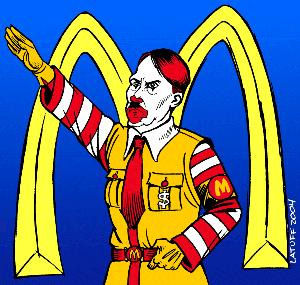
Meanwhile, threats to the expanding modern feudal State continues. Putin's Russia, and to a lesser degree, China and India (which tends to hedge its bets thanks to job outsourcing), have resisted dominance by the global "McState" and are threatening to undermine the US dollar as the defacto global currency; a currency backed solely on the "faith and trust" of a bankrupt government--economically, politically, and morally. Should they succeed, it would collapse the US economy as our unsustainable debts become due but it would have dire consequences worldwide in this interconnected world economy, eventually collapse the economies of the rest of the world like a house of cards. As the saying goes, when the US sneezes, the rest of the world catches a cold, and this cold would be terminal.
Then there's the situation in the Middle East, which appears, at least to yours truly, to have been initally an attempt to increase control of oil reserves and oil production, by these feudalistic corporations and away from these artificially created nation-states, and now appears to have spunned out of control. We are now faced with brutal terror organizations which we helped to create, arm, train, and finance, to deal with the last terroristic organization which we created, armed, trained, and financed ad nauseam.
These terrorist groups, which are being portrayed by the corporate media, to operate virtually at will, could, in truth, be easily snuffed out by the power of the US military. But what's the point in that? At present, "terror" is a useful tool in the arsenal of the Corporate State. It inspires fear at home, and thus in the name of security, increases the "demand" for security, or to call a spade a spade, a police state. After all, businesses require stability in order to operate. People require a sense of safety in order to feel comfortable to go about their daily affairs, which just so happens to includes spending money, so what's the loss of freedom among friends...or big brothers? By the way, this "necessary evil" for the care and grooming of a fascist or feudalistic society is never a requirement for either a democratic or socialistic State. So much for the notion we're becoming "socialist".
So, there you have it folks; "the plan" as I've termed it, and an explanation in a nutshell. An addendum to an agreement between Canada, Mexico, and the US to do away with borders, and an apparent reaction by Latin American leaders to Washington's delay in implementing their portion of the agreement due to their (perhaps chagrin) inability to sell it to the US People. Russia, China, and to a lesser extent, India, resisting this latest variation of the game of Risk by the WTO among others while holding a gun at our heads and one at their own. A spiraling problem in the Middle East as the result of failed plans to secure oil reserves by destabilizing resistant governments with the use manufactured "terrorists" who aren't following the playbook. You would think that after Watergate, they would have stopped using amateurs. But, on the upside, using terrorists as sort of the all purpose bogeyman behind every lamppost, an opportunity to expand government monitoring and police power under the auspices of "security" while corporate control of Washington not only increases, but emerges from the shadows. So my fellow Americans, what are you prepared to do? And then what are you prepared to do?
There seems to be a global interest in the concept of "democratic liberalism", or as it's sometimes referred to, "friendly capitalism without borders". Think of it as democratic socialism as practiced by, say, Germany as opposed to Scandinavia. Social services, now paid for by States or a federal government, would instead be paid for through a transnational organization of some sort, perhaps the UN or one of its agencies. There has been, after all, much interest in expanding its role along with the influence of the UN, WTO, and/or World Bank, which collectively already controls much of the world's finances (along with the Federal Reserve) and dispersal of capital.
How could this be accomplished? The simplest tool would be a tax levied on a federal government and thus either directly or indirectly on the public. State specific programs would of course remain in place. This transnational "public welfare" tax would detail its own unique qualifications, which would be resident neutral and administered by each host country (notice "host" as opposed to "sovereign"). Since this would eliminate all or most other federal programs, administrative costs should be generally cheaper. The formula for taxation could be based on GDP, which would mean poorer countries would pay the least while richer countries would pay the most. While one could argue against this loss of sovereignty, it could increase the globalization of the commerce and through its concept of "open borders", enhance the development of worker movements since movement of workers would be unimpeded; something I'm sure would be unintended by the powers that be.
But as alluded to earlier, something happened. The US isn't playing the game as it's supposed to. There's the fact that America is becoming more fascist; certainly more "police state" like. To be more precise, corporations are behaving more feudalistic. In keeping with the concept, our national government is assuming the role of a dukedom; that, they are acting like overlords or administrators serving their lieges and lords. There is nothing "democratic" or "socialistic" here since we are not becoming more democratic by seceding more power to the People, nor are the People more in control of their own collective destinies, while government serves less our needs and more the needs of K Street and the 1%. States are increasingly losing powers guaranteed under the Constitution as well and must beg with hat-in-hand on bended knee for the funds to keep local governments going.
Meanwhile, threats to the expanding modern feudal State continues. Putin's Russia, and to a lesser degree, China and India (which tends to hedge its bets thanks to job outsourcing), have resisted dominance by the global "McState" and are threatening to undermine the US dollar as the defacto global currency; a currency backed solely on the "faith and trust" of a bankrupt government--economically, politically, and morally. Should they succeed, it would collapse the US economy as our unsustainable debts become due but it would have dire consequences worldwide in this interconnected world economy, eventually collapse the economies of the rest of the world like a house of cards. As the saying goes, when the US sneezes, the rest of the world catches a cold, and this cold would be terminal.
Then there's the situation in the Middle East, which appears, at least to yours truly, to have been initally an attempt to increase control of oil reserves and oil production, by these feudalistic corporations and away from these artificially created nation-states, and now appears to have spunned out of control. We are now faced with brutal terror organizations which we helped to create, arm, train, and finance, to deal with the last terroristic organization which we created, armed, trained, and financed ad nauseam.
These terrorist groups, which are being portrayed by the corporate media, to operate virtually at will, could, in truth, be easily snuffed out by the power of the US military. But what's the point in that? At present, "terror" is a useful tool in the arsenal of the Corporate State. It inspires fear at home, and thus in the name of security, increases the "demand" for security, or to call a spade a spade, a police state. After all, businesses require stability in order to operate. People require a sense of safety in order to feel comfortable to go about their daily affairs, which just so happens to includes spending money, so what's the loss of freedom among friends...or big brothers? By the way, this "necessary evil" for the care and grooming of a fascist or feudalistic society is never a requirement for either a democratic or socialistic State. So much for the notion we're becoming "socialist".
So, there you have it folks; "the plan" as I've termed it, and an explanation in a nutshell. An addendum to an agreement between Canada, Mexico, and the US to do away with borders, and an apparent reaction by Latin American leaders to Washington's delay in implementing their portion of the agreement due to their (perhaps chagrin) inability to sell it to the US People. Russia, China, and to a lesser extent, India, resisting this latest variation of the game of Risk by the WTO among others while holding a gun at our heads and one at their own. A spiraling problem in the Middle East as the result of failed plans to secure oil reserves by destabilizing resistant governments with the use manufactured "terrorists" who aren't following the playbook. You would think that after Watergate, they would have stopped using amateurs. But, on the upside, using terrorists as sort of the all purpose bogeyman behind every lamppost, an opportunity to expand government monitoring and police power under the auspices of "security" while corporate control of Washington not only increases, but emerges from the shadows. So my fellow Americans, what are you prepared to do? And then what are you prepared to do?
Labels:
1%,
Canada,
China,
Corporations,
fascism,
Feudalism,
Globalization,
illegal immigration,
Mexico,
NAFTA,
New World Order,
Oil,
Russia,
social change,
Socialism,
Terrorism,
unions,
United Nations,
WTO
Saturday, June 14, 2014
The New Crisis in Iraq
In what can only be described in terms of Vietnam, thousands of US trained, financed, and equipped Iraqi soldiers tucked tail and ran in face of the onslaught of "The Islamic State of Iraq and Syria" (ISSI). Those of us old enough to have fought in Vietnam, or at least remember the unwhitewashed version of events will recall how, after announcing the gradual withdrawal of US combat troops from Vietnam, the US military undertook what was called the "Vietnamization" of the South Vietnamese troops ("ARVN"), starting with the development of a core of group leadership within the South Vietnamese military, followed by upgrading of equipment, which included weapons, tanks, artillery, helicopters, and training of regular soldiers. However, as North Vietnamese regulars ("NVA") and Viet Cong, the guerrilla irregular forces also known as the "NLF", advanced, the South Vietnamese military crumbed and fled; throwing away weapons and uniforms along the way. Not much different here.
The ISSI is an extremist Sunni Moslem guerrilla force with a history of fighting in Syria's long and bloody civil war, which makes them battle hardened. It's goal is to create a strictly interrupted Sunni oriented Islamic state. What sets them apart from other Islamic groups, including Al Qaeda, is their brutality; so much so that even Al Qaeda (which is also Sunni) has disavowed them and Iran, which is predominately Shiite, may intervene. When Al Qaeda and Iran are nervous, that's worth noting. With Obama's announcement of a US withdrawal timetable from Iraq, a tactical mistake, groups are rushing in to fill the void in light of a highly unstable, untested, and corrupt government (much like Afghanistan). You will recall that the US trained Iraqi (and Afghani) soldiers have proved to be unreliable, especially in light of their sudden attacks on fellow US soldiers, much like the Viet Cong did after infiltrating the South Vietnamese military (in both cases, usually reported by the corporate media as "friendly fire").
In quick succession, the ISSI has overrun towns and cities that took months for US forces to bring under control, not including the hundreds if not thousands of US and Coalition troops wounded, maimed, and killed in the attempt. Thus far, thousands of retreating and deserting of Iraqi soldiers and civilians have been executed or wounded, with hundreds of young girls and women reportedly raped. United Nations observers report a stream of some 300,000 refugees pouring into neighboring countries, which are already overflowing with refuges from previous wars. Their economies are already stretched to the breaking point (the US had previously taken in some 85,000). And, as in all situations such as this, food, water, shelter, medicine, and sanitation become very real life or death issues. Meanwhile, the ISSI have captured several weapon depots full of US military equipment and material; much of it expected to see action in the seizure of Baghdad and the rest of Iraq and perhaps even in Syria or against neighboring Iran or Jordan;. While their goal is nothing short of establishing a strict Sunni oriented Islamic State, the Shiite majorities in Southern Iraq and neighboring Iran may still have something to say about this. However, if there's one positive in all of this, the much maligned Kurds have use this opportunity to seize areas long claimed in the north.
While many will be quick to jump on the Obama Administration for this latest crisis, let's not forget that it was George W. Bush and Dick Cheney who got us into the quagmire in the first place. Under the guise of "weapons of mass destruction", Bush decided to pick up where his daddy, George Bush Sr. left off in the first Gulf War ("Desert Storm"). There was no need to invade Iraq as we all now know. Saddam Hussein had no "weapons of mass destruction". His ground and air defenses had been decimated previously by coalition troops. There was an effective "no fly" zone in place, and what's more important, Hussein, for the tyrant he was, kept the religious extremists in check. He ruled Iraq with an iron fist. He had demonstrated repeatedly that he could be far crueler than his enemies; an important treat in a maniacal dictator. The main reasons I suspect were to install a regime friendly to US and Western corporate interests and to gain some measure of control of Iraqi oil facilities, and to be able to put US troops on the doorstep of Iran. Hussein, the US installed strongman, had become to unreliable. The invasion of Iraq and subsequent death of Hussein will long be remembered as a tremendous intelligence and political blunder and perhaps the turning point in US global dominance. As the old saying goes, "the devil you know is better than the devil you don't know".
Former Secretary of State Hillary Clinton recently said that the ISSI and its rapid success was a total surprise. If she really means that, then her competence in strategic analysis is truly lacking. Given the history and instability of the region, there was no way a political void would be tolerated. The Iraqi (and indeed, the Afghani and Syrian) government is ineffective. It has little to no credibility with the majority of the people. While the West and other nations may think the democracy is the greatest thing since sliced bread, democracy is not for everybody. In fact, of the nations around the world that have embraced democracy, not a single one has embraced the American form of democracy. Instead, they adopt the English form of proportional representation . Some societies, however, prefer a "strong arm" government. They feel secure. Crime is not much of an issue since these types of governments have a serious "zero tolerance" attitude toward crime (except their own). The economy is generally stable and they're free from fear of the types of uncertainty that a democracy can bring. Theocracies, on the other hand, have often proven to be the most oppressive and retardant forms of government.
Of course, I'm not praising dictatorships. Not at all. But what I am saying is that we have to have a foreign policy which respects the traditions and desires of other peoples. Too many times the US has intervened to overthrow a democratically elected government because it didn't fit with our foreign policy objectives (but ironically, we've usually supported the installation of right wing military juntas; most of which have proven to be very brutal), which is more often than not dictated by corporate interests rather than humanitarian interests.
As of this writing, Obama is trying to figure out how to salvage the situation. It should be an interesting decision for him. Obama's Presidency has been, up to now, a near complete failure (he's likely to go down in history as America's worse, and perhaps most divisive President). He desperately needs "something" to show that he can be a tough and effective leader (he could learn much from Russia's Vladimir Putin in that regard). This crisis in Iraq may well be that "something". He didn't start the war. It was something he inherited from the previous administration. But how he resolves it may show whether or not this rather politically inexperienced former community organizer has the right mettle. But, as always in such matters, at what costs to the American People will his legacy be forged?
Hillary Clinton Warns Of Jihadists
http://www.huffingtonpost.com/2014/06/12/hillary-clinton-syria-islamist-state_n_5486133.html?utm_hp_ref=mostpopular&icid=maing-grid7%7Chtmlws-main-bb%7Cdl13%7Csec3_lnk4%26pLid%3D488630
Iraqi Kurds Seize Oil Rich City of Kirkuk
http://www.huffingtonpost.com/2014/06/12/iraq-kurds-seize-kirkuk_n_5487184.html?utm_hp_ref=mostpopular
UN: 300,000 Iraqis Became Refugees This Week
http://www.huffingtonpost.com/2014/06/13/iraq-refugees_n_5491139.html?utm_hp_ref=mostpopular
Iraqi Insurgency: Hundreds May Have Been Killed During Sacking Of Mosul
http://www.huffingtonpost.com/2014/06/13/iraq-insurgency-mosul-human-rights-reports_n_5491023.html?utm_hp_ref=mostpopular
4 Key Things To Know About The Islamic Surge In Iraq
http://www.npr.org/blogs/parallels/2014/06/12/321376130/four-key-things-to-know-about-the-islamist-surge-in-iraq?utm_campaign=storyshare&utm_source=twitter.com&utm_medium=social
Labels:
Afganistan,
Al Qaeda,
democracy,
Desert Storm,
George W Bush,
George W Bush Sr,
Globalization,
Gulf War,
Iran,
Iraq,
Islam,
ISSI,
Kurds,
President Obama,
refugees,
Shitte,
Sunni,
Syria,
Terrorism,
Vietnam
Sunday, June 08, 2014
Sacred Cows
I've never been accused of being a conformist. I think going my own way or thinking my own thoughts was just something I was born with, much to the exasperation of my teachers, bosses, and my mother (for which, I'm sure, accounts for more than a few white hairs). Perhaps I am a noncomformist, but it has never been a matter of being "rebelling" simply for its own sake. I've always preferred thinking and doing out of the box, and I'm sure the results always spoke positively for themselves. I've never been afraid of questioning an assumption or challenging a tradition, and questioning presumed authority (or authority figures) for that matter. Times and circumstances are constantly changing, and we must change and adapt with them or be swept away by them.
Ironically, despite this, I'm still a fairly conservative guy, at least concerning most things. For instance, I ardently believe in the foundation established by our Founding Fathers, through the Constitution and the Bill of Rights. Of course, some in Washington and elsewhere are saying that the Constitution is too "restrictive" or too "inflexible" for today's vastly more complex problems. Perhaps that's because today's problems have become more complex because of over regulation, over legislation, and over taxation. Perhaps what we need is a more simpler approach to government. By that I mean, perhaps the federal government should govern less and allow states more authority to deal with situations closer to home. It seems like the government's solution to everything is to legislate a situation to the point where it needs additional legislation to correct new problems which arose out their efforts to solve the original problem in the first place, while at the same time, leaving rather convenient loopholes for their corporate masters to exploit at our expense. After all, haven't we been told that money is free speech and those with the most money get to speak the loudest, and it's the loudest who get Washington's attention right?
But that's not what I'm wanting to discuss at the moment. What concerns me is that many conservatives are so stuck with preserving the past, they've lost sight into what's important. Let's look at the marriage issue briefly. I grew up (and believe) that marriage is between a man and woman. It's the basic foundation not just of America, or Europe, or even Asia, but of society itself. It's the core around which civilization itself has been built. But, as society has become more complex and gender roles have evolved, not to mention technology and self perception, so too has the concept of what constitutes a "family" , and by extension, a marriage. If two individuals---two adults---happen to be attracted to each other and want to make a lifelong commitment, who am I to say "no"? Sure, I could cite some biblical verses, but what does my faith have to do with theirs?
For that matter, let's not forget that the religious texts used by Jews, Catholics, and Protestants, as well as Muslims and their Koran, were written thousands of years ago, in another time and place, and for another people who had different societal needs and values. Providing a stable loving relationship seems to me to be more important than whether I agree or not with their choices. Who am I to decide who someone can love or not? And what if a particular church or other religious institution is willing to sanctify the union? How does that say about other religious institutions who don't? My own pragmatic conservatism (and touch of libertarianism ) also tells me it's none of my business or anyone else's.
Speaking politically, conservatives are getting their collective clocks cleaned where same-sex marriage has become an issue simply because the largest voting bloc, the Millennials, see this a critical issue. Overwhelmingly, the Millennials--those 30 and under---see no problem with gays, lesbians, or transgendered individuals, and certainly they have no issue with gay marriage by a wide margin---70%. Those that do tend to be the 40 and older crowd, which also happens to be a shrinking demographic while Millennials are the largest segment to come along since the Babyboomers (and as group, are more numerous than Boomers). Therefore, the party which accepts this political reality (whether or not they agree with it personally), will thrive while the other party will find itself repeatedly punished at the ballot box, perhaps to the point of political irrelevancy. This also speaks to the increasing candidacies of individuals running independent of party; something Millennials also favor by large numbers.
Let's take another issue--global warming. Those on the political Right insist that at best, global warming is myth; an attempt by the some in the government and certain industries, to tighten the noose around our energy policies. At worse, global warming, if it exists, is a natural cycle. A minor hiccup. Either way, Man doesn't play any significant role. Yet, most of those behind these claims are those business most likely to be negatively impacted, such as coal, oil, gas, and automobile industries. Some of those on the Left want much greater regulation of these industries it is true. They haven't met a regulation or tax they didn't like. They too dance to their own puppet masters.
My thoughts on global warming are this---the overwhelming majority of climatologists and other scientists---97%--- agree that the earth is getting warmer. The polar ice caps, which are not only our largest sources of fresh water, but also reflectors of solar heat, are melting; especially the Arctic (think of it as the earth's thermostat).The oceans are becoming warmer...much warmer...and less salty thanks to melting Arctic. Storms are becoming more frequent and more violent. Fertile lands are becoming more arid. Ocean life is dying. Water shortages are becoming more severe, more frequent and lasting longer. Co2, especially the type which has the chemical signature produced by manufacturing, and is the primary culprit in global warming, has dramatically increased over the last 100 years. Although I believe Man is the main cause of global warming, it really doesn't matter to me if someone else thinks it's all part of a natural cycle. The fact of the matter is that it's real; it's happening now; and we're all at risk.
So, Man-made or cyclical, we need to do whatever we can now to keep it from spiraling out of control. That means cutting CO2 emission anyway we can. For states which depend on coal production, they're going to take a huge economic hit. That's why they need to be preparing now before they become the proverbial buggy makers in the horseless carriage age (yes, I appreciate the irony of that analogy). Those states need to invest heavily in alternative income producing sources sooner rather than later. The auto industry needs to be given an ultimatum---produce exclusively vehicles with low to no CO2 emissions along with a non-moveable "drop dead" date which carries a stiff fine for each day missed. Other countries already have widely available and low emission mass transit (such as Iceland, whose mass transit vehicles run on hydrogen fuel cells. Their only emission is water vapor), so why don't we? The same goes for any industry which pumps CO2 into the air. Stiff financial penalties for any industry which fails to comply. Activists too can participate by bring pressure on corporations not just by protesting and bring attention to non-compliant companies, but by also becoming stockholders and speaking out at stockholder meetings. Meanwhile, the US needs to make alternative energy a national security issue. After all, we've been talking about it since Jimmy Carter and the original oil embargo in the mid '70's.
Smaller countries such as Germany get a substantial amount of their energy--27%-- from alternative energy sources, principally solar and wind. We have almost 1/3 of the country which would be ideal for solar energy production. We have more than ample offshore areas which would be excellent for energy producing windmills, yet we generate only 13% of our energy needs through alternative energy sources. Solar panels could be required for all new resident and commercial projects; planting green gardens on buildings and high rise tops to help adsorb CO2 emission. Planting of more CO2 absorbing trees and developing better means of conservation. Encouraging more home gardens, rain water conservation, and "buy local" projects in order to cut back oil and gas consumption as well as vehicle emissions.
No, the US can't do this alone, but it doesn't have too. There are already dozens of nations engaged in some form of CO2 reduction. A few countries, like China, aren't. Economic and political pressure needs to be applied to those refusing to comply. If we fail to act, and soon, we will be facing not just more deadly storms, rising water, or hotter temperatures, but an increase in brownouts or blackouts, higher prices for gas, oil and electricity. Food and water prices will skyrocket to the point where even basic commodities are unaffordable for the average family, and I wouldn't rule out food shortages or water rationing, which are already happening in some parts of the world. And let's not forget that the increased temperatures melting the polar ice caps are also killing off some species, and thawing areas frozen over for tens of thousands of years, releasing dormant and potentially deadly bacteria from its hibernation, as well as an increase in insect infestations (and who needs more spiders, flies, or mosquitoes?).
Now if these aren't reason enough, remember that global warming is of key concern to Millennials. After all, it will be their generation more so than ours how will be impacted the most. Once again, the party or individual that best embraces this will be the party which will succeed. At present, the Left may have the advantage since they accept global warming as the problem it is. Left on their own devises, they will gladly over regulate and tax. However, on the Right, they are heavily populated by the religious Right. I would assume they would embrace a biblical stewardship of the earth and demand changes in current environmental policies. The same would hold true for most other religions too. As for me, conserving the environment couldn't be any more conservative an ideal since it protects the planet, the air, the water, the animals and humanity while at the same encourages innovation for safer and longer lasting energy sources (besides, how much safer or longer lasting can you get than the sun and wind?).
Topics as diverse as these are sacred cows to those who oppose or resist change. Change isn't easy to embrace, especially when it affects our moralistic or economic self interest. However, all things change and evolve. It's a fact of nature. Those that do not adapt will wither and die. Be it an individual, a nation, or a world. That too is a fact of nature. We must adjust our perceptions of what it means to be a family just as must examine the environmental footprint that we leave, individually and as society.
Why the fight over same-sex marriage is over
http://www.washingtonpost.com/blogs/the-fix/wp/2014/03/10/why-the-political-fight-over-same-sex-marriage-is-over-in-1-chart/
5 Reasons Millennials Are Going To Save The World
http://www.huffingtonpost.com/2013/11/05/millennials-save-the-world_n_4174079.html
NRDC and Global Warming
http://www.nrdc.org/globalwarming/
Iceland: 100% renewables example in modern era
http://reneweconomy.com.au/2012/iceland-a-100-renewables-example-in-the-modern-era-56428
Iceland phasing out fossil fuels for clean energy
http://www.cnn.com/2007/TECH/science/09/18/driving.iceland/index.html?iref=newssearch
Germany Sets New Record
http://thinkprogress.org/climate/2014/05/13/3436923/germany-energy-records/
Climate Hot Map
http://www.climatehotmap.org/
NOAA & Global Warming
https://www.ncdc.noaa.gov/monitoring-references/faq/global-warming.php
Subscribe to:
Posts (Atom)


.jpg)