Showing posts with label Rome. Show all posts

Saturday, October 14, 2023

These Disunited States: The Coming 'Great Divorce'

One of the most coveted honors of ancient Rome was that of "Citizen". Originally it was bestowed on the truest and most loyal of allies and brought with it numerous benefits including the right to own land, receive a grain allowance, and the right to vote.

However, over time the honor became less and less important as it was sold to the highest bidder or given out to partially any group which settled within Roman borders (with or without permission) and promised to follow the laws (which they did in varying degree). In time, the title of "Citizen" lost any real value. Sound familiar?

As more and more  diverse peoples settled within Rome's boundaries and the Empire lost its ability (and will) to enforce "Pax Roma" ("Roman Peace"). Pax Roma meant the adoption of Roman laws, customs, traditions, values, language, and culture.

Rome eventually became a hodgepodge of many differing peoples living in their own mini-kingdoms, speaking their own tongue, following their own customs, and so forth. Of course, there was a merger in varying degrees of cultures, values, and laws, but the single cohesion that was once Rome was gone.

If any of this sounds familiar, it should. Not only are we confronting "balkanization" here in the United States, we're seeing throughout the West thanks to unrestricted migration (which looks more like an invasion than a immigration)  and weak, ineffectual or incompetent politicians. However, not all of this is coming from outside. Much of it is coming from within our own country.

In the United States we're seeing growing demands on both sides of the political spectrum for an amicable divorce of sorts. Some groups are wanting to be given wide swaths of land to create their own mini-nation, while others are looking for semi-autonomous fiefdoms in and around cities.

Then there are those ethnic groups who have already simply established their own defacto enclaves complete with a dominate non-English language, traditions, and so forth. In some areas in Europe, like London or Paris, there are areas with their own police force and court system to enforce Sharia and other laws (recently, religious "police", used to enforce Sharia law, have been reported in New York).

The official police have little or no real authority within these areas. Unwary residents (and tourists) not following prescribed guidelines risk being detained, arrested, and/or fined! In the U.S., we even have some groups and prominent individuals attempting to supplant our National Anthem with their own. They even are demanding their anthem be played at all events where the National Anthem is played. Some are insisting that their own flag be flown alongside (or above) the Stars and Stripes.

Recently, here in the U.S., we had another shooting in a major city, Rge shooting took place in a heavily black neighborhood, As a result, a large crowd had gathered and was becoming unruly. The police dispatched all available officers along with EMS as you would expect in order to render assistance and bring the situation under control. However, when officers arrived a riot almost broke out. Why? Because one of the police officers was white!

While you'd expect the residents to cooperate under the circumstances, the situation suddenly got worse.   The residents began to block officers as tried to provide assistance ad started becoming aggressive. The reason was because there was a white officer present. In order to calm the situation and get to the wounded individual, the white officer was persuaded to leave the scene (along with the "encouragement" of his fellow non-white officers).

What the event signified is a change in attitude concerning policing whereby only certain racial or ethnic officers will be allowed to patrol on certain areas to encourage racial or ethnic "sensitivity".  Meanwhile predominately white areas will have to accept whoever shows up in order to avoid imagined charges of "racism". This change in attitude toward community policing is something that wouldn't have even been considered just a few years ago, but it's reflective of the growing split in the country.

Around the world there are literally hundreds of separatists and secessionists movements. Some of these exist as part of a nationalist movement to push out the last vestiges of colonialism or to carve out a historical homeland such as "Aztlan" (whose name ironically means "land of whiteness") among Hispanics.

Aztlan is a mythical or semi mythical homeland of the ancient Aztecs who believed the land, which comprises much of the western U.S., was given to them by their chief deity, Huitzilopochtli (where have we heard a similar story like that before?). Beginning in the late 1950's, Chicanos of the southwest United States adopted the myth as history, and with it all the symbolism that went it.

They've created many of the trappings of expected of a nation---a flag, an anthem, media, promoted a cultural revival and even created a quasi political organization, "La Raza" (which means "The Race"), to help elect or promote like minded individuals, and to serve as a loose shadow government, all of which whose sole aim is to resurrect Aztlan.

But the Chicanos aren't the only ones. In Hawaii, there is a strong movement to reclaim Hawaii's historic sovereignty. What many people don't know is that unlike the other states, Hawaii was once an independent nation with its government, head of state, laws, and everything else which goes with being a sovereign country.

In 1893, the United States, with political pressure (ie: money) from powerful business interests, staged a coup against the Kingdom of Hawaii. In 1898 Hawaii was declared a "protectorate" but was in a fact considered a defacto colony until 1959 when it became the 50th state (it's strategic importance was felt with the Japanese attack on December 7, 1941). The U.S. currently has 16 protectorates and territories it oversees. The largest and most populous of which is Puerto Rico.    

Other groups, such as the League of the South, a political and cultural revival organization, seeks to recreate a "free and independent Southern Republic".  Their goal is not to revive the Antebellum South, but to protect the history, traditions, heritage, and culture of southeastern United States, which had been largely settled by Northern English, Scots, Irish, and Welsh colonists (along with a strong Spanish and French influence), unlike the North whose primarily settlers were English and Continental Europeans, especially Germans.

Politically, they maintain that the states voluntarily joined the union, and thus had the right to leave on their own accord, something President Lincoln vigorously opposed.Joining the union was not a one way Faustian bargain. Many historians and students of the Constitution tend to agree that the Founding Fathers would have supported the South's assertion in that regard.  

A group with a similar objective is the 2nd Vermont Republic. Vermont was a independent republic from 1771 through 1791. The group, formed in 2003, has been relatively successful locally. Leaning libertarian,  it opposes the "tyranny" of a corporate run America and loss of control by ordinary citizens. There is also an effort to include New Hampshire and possibly Maine in this newly reconstituted republic.

Even Alaska has a growing independence movement under the auspices of the Alaskan Independence Party, which was founded in 1984, and whose ideology is basically conservative and libertarian. They call for a limited government, low taxes, strong gun rights, and more direct government. 
And then there is Oregon. The state is divided by the Cascade Mountains, with the majority of the population on the east or coastal side. Here is where you'll find most of the high paying jobs, along with the high tech businesses and universities. On the western side of the mountains you'll find mostly small communities and lots of farms where the cattle actually outnumber the people. But that's not all.

On the coast side, you'll likely find mostly a college educated younger population which is considered extremely liberal. Groups like Antifa and BLM are popular and active here. There are vibrant LGBQT communities, especially around Portland. Western Oregon is primarily rural. The population is older and more settled with families having lived there for generations...and they are conservative. What they call "traditional" with "family values", and one other thing. They all want a divorce. 

Specifically, they want a divorce from their fellow Oregonians on the other side of Cascades. The reason is as old as the U.S. itself. The capital of Oregon, Salem, and it's largest city, Portland, are heavily dominated by progressives, which doesn't set well with these conservative farmers.

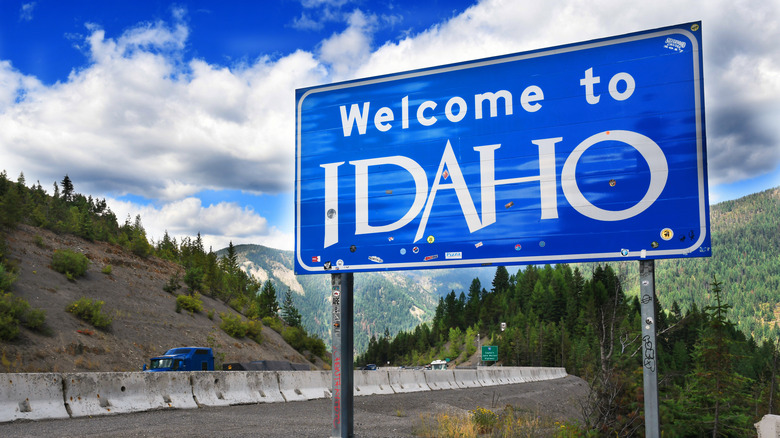
Unfortunately, with the population differential on either side of the Cascades, there is no way the conservative Westside has or will ever have a equal say.  Therefore, 13 western counties representing 63% of the land mass but only 9% of the population, are seeking to merge with the equally rural and conservative state of Idaho.

The divorce is called the "Greater Idaho Movement', and it's definitely taken root, and Idaho is interested. There's even countless precedents for similar divorces going back to the founding of the country. It's nothing personal. Sometimes things just don't work out. For instance,  in 1861, 48 western counties in Virginia decided they didn't want to secede from the Union and voted to remain. Those counties became the West Virginia in 1863. (the new state was originally named "Kanawha").

So why hasn't it happened? Well, there are several reasons. One of which involves getting the Oregon and Idaho state legislatures on the same page (and Oregon isn't too keen about losing the tax revenue). Once the two states come to an agreement, it then has to be approved by the U.S. Congress since the shift in population would affect the House's representation, which is based on population, would be determined. To further explain the significance of this succession of counties would have at the local, state, and national levels.

A breakup of this size would be significant. Not only would it change the map, but it would also affect the state's representation in Congress. It could also impact the direction both states takes on local issues for years or decades to come.

Such a move could also set the stage for other successions, not to mention the possible creation of modern city-states. Imagine dominate cities such as Atlanta Georgia or Louisville Kentucky, which are the economic engines of their respective states, could become more independent while incorporating adjacent areas (Louisville is facing its own potential succession problem. There's a growing interest in southwest Jefferson County to break away from an ineffectual metro government and merge with neighboring Bullitt County).  

Hypothetically, some have proposed some areas going the racial, ethnic, or religious route by becoming semi-independent enclaves such as East LA in California or Laredo Texas which both have a 95% Hispanic majority.  South Fulton Georgia is 93% Black while Jackson Mississippi and Detroit Michigan are both over 80% Black. Dearborn Michigan has the largest Muslim population in the United States and growing.

This would easily go hand-in-hand with the secessionist goals of Black and Hispanic groups or Muslims struggling to cope with Western values and cultures. Throughout Europe, and especially in England. There, newly arrived migrants---mostly Muslim---have already set up their own defacto semi-autonomous zones complete with courts, police, religious laws, and all the other requirements needed to be a transplanted community nearly indistinguishable from Damascus or Baghdad. 

America was founded to welcome all peoples who came here legally and sought freedom. Migrants were expected to leave the past behind and become Americans. The government has twice devalued the status of "citizen" by granting amnesty to thousands who came here illegally and appears to be prepared to do it again.  But one has to wonder if, after 200 years, the time has come for each to go their own way just as Rome did.

If you enjoyed the article, please consider passing it along to others and don't forget to subscribe. It's free! Lastly please be sure to "like" us on whatever platform you use to read anotheropinionblog.com. It helps with the algorithms and keeps our articles in circulation. Thank you!


Video: Breaking Up? Nationwide Separatist Movement is Growing


Aztlan and the Chicano Movement


Territories of the United States


Vermont Independent


'Greater Idaho' movement to absorb rural counties from Oregon gain momentum


Black Separatism


Saturday, November 18, 2017

Playing Political "Musical Chairs": Do We Understand What's Happening?


It seems that whenever some political issue makes the headlines, however briefly, there suddenly seems to be a proliferation of sites popping up with some outrageous claim about capitalist exploitation of the masses, or trying to equate socialism with communism. Invariably, there are the usual "harrumphs" from naive sheeple.

Whenever some brave soul steps up to offer a point or two of clarification, these political zombies go into attack mode; which usually involves calling the hapless do-gooder all sorts of names (like the wannabe "intellectuals" they are) and making repeated attempts to ridicule the argument with warmed over tripe acquired from the pages of some populist partisan rag. 

When asked to explain their fanatic defenses, they tend to spew the same ole garbage, albeit slightly rephrased. In other words, these "walking dead" zealots seem to be simply latching on to anything which reaffirms their currently held beliefs, however wrong they may be.

So, with having gotten that off my chest, I am going to brave a walk through the minefield of political ignorance which seems to be so common these days (thank you public school systems for your spectacular achievement in dumbing down the quality of the American education). Of course, I speak of the general population which tends to get their news and from their opinions based on Facebook, Twitter, and other social media posts. 

Obviously I'm not talking about the readers of Another Opinion, who tend to be an authority questioning bunch when it comes to seeking out the facts, where ever that search may lead and who are unafraid to challenge authority (something I very much admire). With that, I am going to try and briefly explain the differences in political philosophy as concisely as possible. For some of you this may be remedial. For that I apologize. However, some---perhaps most---who just "assumed" the authors of those politically partisan sites were being honest, I hope this comes as a fresh breeze.

First, what is democracy? Quite simply, it's when the public come together and freely discuss topics of mutual concern, and once there is an agreement, decide what to do next such as appoint a committee, allocate money from the public treasury (which obviously also had to be previously discussed and agreed to). The notion of a democracy started with the Ancient Greeks (Athenians actually). 

In its original form, it excluded certain groups such as women, slaves, criminals, non-citizens, or individuals under a certain age (in fact, the more authoritarian and militaristic Sparta afforded women in general more personal and political rights). Over time, a democracy became too complex and thus entered the republic, made famous by Rome.

The republic (from the Latin "res publica" meaning public matter) took the notion of a democracy and simplified it. Citizens would elect representatives to undertake the governance of society. In what some may have considered a mistake, they also gave them wide desecration over the treasury. The treasury would be maintained by mandatory taxes (again, the wisdom of this is still considered a bit "iffy"). Nevertheless, it allowed the People more time to tend to their personal business while their elected representatives ran the government. 

Overtime, this too became more complicated and it didn't take long for the servants to become the masters; usually humbled only during elections. A republic is possibly not the best form of government since often times the Will of the People is ignored in favor of a few wealthy and influential types, and costs are imposed on the citizenry without their consent (though nearly always with some concocted justification). However, when it does run smoothly, it's the best of the worst to represent the general interests of the People.

As for kingships and dictatorships, I'll just briefly touch on these since they don't really have much effect on us these days. Basically, the concept of kingships arose early after diverse populations of people came to live, work, and trade as a single group. To avoid attack or possible exploitation by other groups, an individual was chosen as the "protector" or king. His (or sometimes "her") role was to represent the people, including and especially, when it came to their defense and needs. 

Overtime, this role greatly expanded and in most cases, a religious element was introduced to make it appear that the king (or queen) was divinely chosen, and thus "rule by divine right" was born (during the same time, the priesthood also came about. It claimed that they alone understood the wishes of the gods. It wasn't long before the king and priesthood began to work in tandem to protect each other's interests). The upside was that kingships provided stability---politically and economically. The downside was little or no freedom. Nearly everything is scripted or controlled.

In a few cases, kingships became all powerful (ie: the Czar of Russia) while others were subject to the ruling nobles (thank you Magna Carta). Dictatorships aren't much different in principal. They usually come to power as a result of a real or manufactured crisis. Their rule tends to be more authoritarian and often without input from a legislative body (any input usually comes a small select group of "advisors" and/or "consultants" who owe their position---and life---to the thug-in-charge). 

 In some cases, such as with less developed territories, tribal kings act as a dictator with absolute or near absolute control. As an aside, for most of our civilized existence, a kingship was the dominant form of government until the Enlightenment and Reformation periods which began to challenge absolute rule and the "divine right" of kings. So while it doesn't affect us much these days, it wasn't that long ago when it did (and both forms of governments still exist in some parts of the world).

Now, fast forward to the early 19th Century (when kingships were very much still in existence), and to a couple of Germans living in Westphalia. One was the descendant of a converted Jewish family (now Lutheran). The other was an agnostic Lutheran of middle class origin, whose family owned a successful cotton mill. 

Their names were Karl Marx and Friedrich Engels. Together they challenged the entire social, political, and economic system of not just their time, but even down to ours with just two books, "Das Kapital" and "The Communist Manifesto".

Their philosophy would be called "Marxism". Their economic-political system was to be called "Communism". The name itself is derived from the concept of "community", came about as a result of Victor d'Hupay, a French Enlightenment philosopher of the 1790's, who drew on the notion of religious or "primitive" communism based on hunter-gatherer societies, the Essenes, and the early Christian movement. Additional ideas were drawn from several of the Utopian society which were popular in England and elsewhere (especially the Paris Commune of 1871).

The notion of "Communism" was the sharing of resources equally. The idea was that the State would control all means of production and distribution to contributing individuals on a "as needed" basis ("each according to their needs" as Marx wrote). In time, the State would simply dissolve from a lack of use or need. Once this occurred, people would exist in a "socialist" society (if this sounds a bit like the original Greek concept of "democracy", it's by no accident). The first so-called "communist state" was Russia. This came about in 1917, during the latter half of World War I. At the time, Russia was ruled by the last European absolute monarchy, Czar Nicholas II.

World War I, as many of you know, was started by a Serbian nationalist, Gavrilo Princip, who assassinated the Hapsburg Crown Prince, Franz Ferdinand and his wife Sophie in Sarajevo. As a result, the Austro-Hungarian Empire, of which Serbia was a member, demand retribution. Serbia was unable (and unwilling) to comply. Thus, Austro-Hungary declared war on the tiny state. Serbia dusted off an old trade agreement it had with the Russian Empire, and requested Russia's assistance. As a result, the Habsburgs requested the assistance of the German/Prussian Empire based on its mutual assistance treaty. 

Although the Kaiser, Wilhelm II, didn't want a war and made several attempts to mediate a peace, posturing by Great Britain and France, which had a mutual assistance agreement with Russia, made war inevitable (plus there George V of England and Kaiser Wilhelm II had a macho thing going on between them, and Germany had militarily humiliated France in 1871. So, France was looking to get even. Additionally, this could also be called a family feud since Czar Nicholas, King George V, and Kaiser Wilhelm were all cousins; descended from Queen Victoria).

Many, especially among the ruling elites, felt that any war would be relatively brief--six weeks---and might actually be beneficial like "letting off steam of a boiling pot". What happened was more like Europe falling into Hell. Russia was far from prepared economically, militarily, or politically and was thoroughly devastated. In February 1917, the Czar was peacefully overthrown and a democratic republic was installed under Alexander Kerensky. His insistence in remaining in the war led to his undoing, and in October, he was overthrown by the Lenin's Bolsheviks, who installed what he called a "communist" government.

For Lenin, trying to achieve power proved to be easier than obtaining it. Lenin had intended to make government all but obsolete---"the size of a local post office". However, the economy collapsed and the country fractured. There followed a bloody two year civil war. Millions died. Lenin's measures were too draconian. 

In the end, he modified the political-economic situation with NEP--the New Economic Program--which allowed for moderate capitalism. Things improved. But then Lenin died. After a brief power struggle, Joseph Stalin obtained power, and the political-social-economic form of government we think of as "Communism" was born.


Stalin reversed Lenin's NEP, implemented collectivization of farms, revoked land reforms, imposed a harsh authoritarian police state, enforced by mass executions, starvation, and a horrific system of prisons known as the "Gulag". Under Stalin, the state owned and controlled everything. Everyone worked for the state. Industry was owned by the state. Unions and worker committees (soviets), which Lenin believed were essential, were outlawed unless sanctioned by the state---namely Stalin. This then is what we think of when someone mentions "Communism"; not the Marx version, or Lenin's ideal, but Stalin's Hell on earth.

Socialism, or more properly, democratic socialism, is a admixture of socialism and a democratic republic. In theory, it means that the people own the means of production and distribution. How a factory or business is operated would be determined by its employees. Think of it in terms of ESOPs---employee stock ownership plan, or employee owned businesses, credit unions, worker run unions, etc.

 The government's function is solely to make life easier for its citizens. To do this, there is often high taxation. However, with it, nearly everything is either free to all or subsidized for all, so all benefit.

Democratic Socialism has been highly popular in Scandinavia for decades. Germany and the Lowlands have a version of it. Many in this country have called it a failure, which couldn't be further from the truth. In reality, it's been extremely successful. What may be deemed a "failure" has been the mass influx of migrants who don't share the same work ethic or values of their host. Rather than work and contribute in order that everyone benefits, they simply draw from the system, which has caused a great economic and political strain.

Lastly, let's talk about Oligarchy. While not a distinct economic form, its effect has a strong bearing on the economy. Oligarchies have existed periodically throughout history, but almost always under a democracy or a republic. An Oligarchy is where a small group or clique assume near absolute control over the political system of a nation and through it, control the economy to its advantage.

Sometimes this is referred to as a plutocracy which means "rule by the rich". It is through an Oligarchy that Fascism occurs. Fascism is a "partnership" between rich powerful corporations (or individuals) and the government (its founder, Benito Mussolini, said that Fascism could more accurately be called "corporatism").


Under Fascism, it doesn't matter which is the dominant "partner". Fascism occurs when there is a loss of economic balance between the poor, the Middle Class, and the Upper Class; specifically in the ownership of wealth and the control of governmental power. With fascism, you tend to see a decline in the Middle Class, growth of the poor, more government control, an increase in surveillance/police state tendencies, manipulative control of the media/increase in propaganda and efforts to restrict alternative news sources, more wars/conflicts over assets and resources, attempts to divide the population for better control, increase in taxes, two-tier legal system, decline in unions and employee influence, more corporate influence over government or usurping government power. Any of that sound familiar?


Hopefully, this will help explain the differences between various types of government systems. I also hope too that it will keep you from being confused or misled by those who are operating from their own agendas. I seek simply to clarify. Of course, if you follow Another Opinion or my frequent posts on the various social media sites, you already know that America is a de facto Oligarchy. We are on the fast track toward fascism, whether you call it "Left Fascism" or "Right Fascism", the end result is the same.

However, one thing is for certain---it's not socialism. In truth, we have one political party---the Corporate/Fascist Party, which has two wings; pick either one you want. Red Kool-Aid or blue Kool-Aid, the results are the same unless you put the cup down and back away. Think for yourself. Always question.

Tuesday, September 29, 2015

Does 'la Papa' really know best?


Pope Francis flew some 7000 miles to the United States to tell Americans to "welcome strangers in our midst", a reference to immigration---particularly illegal immigration--into this country. He then asked Americans to reject a "mindset of hostility". The Pontiff went on to say "...on this continent ... thousands of persons are led to travel north in search of a better life for themselves and for their loved ones, in search of greater opportunities," the Pope said. "Is this not what we want for our own children? We must not be taken aback by their numbers, but rather view them as persons, seeing their faces and listening to their stories, trying to respond as best we can to their situation. To respond in a way which is always humane, just and fraternal."

While I respect for Pope Francis for his openness and humility, which has been so often been lacking in past Popes and other religious leaders, I'm afraid he was barking up the wrong tree. America is literally a land of immigrants. Practically every population, language, and religion on the planet is represented by this country. America takes in more immigrants than any other nation and gives more in aid than any other nation. Although born in Argentina, Pope Francis seems woefully ignorant of our immigrant situation, not to mention Europe's. At present, the US has some 12 million illegal immigrants currently living in the states (some estimates push that number as high as 20 million) with thousands crossing the border daily.

America has been a highly welcoming country. 38.5 million foreign born immigrants have come to this country just since 2009. Roughly half are women. Two-thirds of those have become naturalized citizens. 46.9% are Latino or Hispanic, 23.9% are Asian, while 8.2% are black or African. The remaining 17.5 are either of another race (mainly white) or are of a mixed race. So the Pope is really off base telling America to "open its arms". What the aforementioned statistics should loudly say is that America is perhaps the most accepting nation in the world. Nevertheless, we are also a nation of laws. We have borders just as every other nation does, including Vatican City. All we ask is that if you want to come here, that you do it legally. Is that so difficult to understand? Yes, America does accept immigrants from other countries who are fleeing their homeland because of some natural or manmade crisis such as war, famine, genocide or some form of violent persecution---just under 75,000 came in 2009 alone. Most of these refugees came from Cuba, the Congo, Iran, Burundi, Vietnam, and Somalia. However, few of the estimated 12 million illegal immigrants now living in this country fit that criteria.

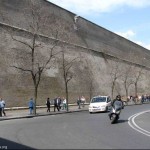
As for the Vatican City, a nation-state and seat of the Catholic Church, however, does not accept illegal immigrants or refugees. Those wishing to legally immigrant into Vatican City must first apply for special permission for residency. Most choose to settle outside the city walls (yes, I said "city walls". Vatican City is surrounded by a tall reinforced stone wall), in Rome. Although the official position of the Vatican has been that all immigrants has specific migratory rights (since humans are basically a nomadic species), the size and limited resources of Vatican City (approximately 108 square miles with roughly 10 people per square mile) make open acceptance impossible. So, if viewed more as a city-state than a nation-state, Vatican City would be comparable to many middle to small cities around the world. Yet, many of these cities have been forced into accepting immigrants and refugees. So, what's the difference?

I think the difference is multifold. First, many of the middle and small sized towns are not solely self-reliant. They get money and resources from the state and/or nation. Many are surrounded by farmland and ample useable water, plus they have an adequate infrastructure with the potential to expand. Ok, what about Vatican City? Though it's size is finite, it has more than ample financial resources thanks to its vast real estate holdings, national treasures (which are, frankly, simply priceless), and the outstanding revenue stream derived from the thousands of parishes throughout the world. If the Vatican was viewed as a corporation (which in many respects it is), it would be among the world's richest (the Vatican's bank, for instance, is estimated to have some 20 billion dollars in gold reserves on deposit just in the US alone. In addition, it receives some $850 million just from the 85 million Catholics living in North America---and there are some 2.1 billion Catholics in the world!). Another estimate claims that the Vatican's bank has some $8 billion in assets not including its various real estate holdings. Being located within Rome, there is adequate room to settle immigrants and refugees, with the permission of Rome's mayor and the Italian government, a good infrastructure as well as sufficient water and food.

So, my point here is that, as a head of state, Pope Francis could easily address the issue of immigration, either within Vatican City itself or some place within Italy or through its various global real estate holdings and, of course, where its political and religious influence allows. It would make far more sense for the Vatican to use its considerable wealth and power to promote resolutions that would allow refugees to remain or return to their home countries. As an aside, approximately 2/3 of Hispanics and Latinos are Catholic, so it obviously behooves the Pontiff to promote more immigration---legal and illegal--into the predominately Protestant United States. Just saying.

Finally, while the Pontiff, speaking at the United Nations, called on the US and other countries to be more "accepting" of immigrants, there was nothing in any of his speeches which called on immigrants to be more accepting of their chosen hosts. Nothing was mentioned about learning and using the host nation's primary language, of respecting or even adopting any of the host country's traditions and customs (not to mention other religions). Many seem to becoming only for what government handouts they get with no intent on integration. He made no appeal to the immigrants to leave behind old tribal, racial, religious or ethnic hatreds and start anew. There has already been several outbreaks of violence between various groups of immigrants in Europe. He said nothing about the newcomers cooperating with officials, avoiding violence or blending in with society. In fact, it seems that the Pope was pushing a one sided agenda; that the host nations must cower to the immigrants. That, in my opinion, was a critical mistake since while most of the nations have in fact been generous in their welcoming, it has been the immigrants who have proven to be disruptive, violent, and demanding that their host country forego their traditions---cultural and religious---in favor of theirs, and that my friends is wrong. It only sows the seeds for mistrust, prejudice, and violence. So, when handing out policy advice, how about a little less of "do as I say not as I do" ok?

Pope's immigration message draws praise, criticism from advocacy groups
http://www.usatoday.com/story/news/2015/09/24/pope-immigration-congress-speech-advocates-tussle/72699836/


Why Immigration is Different for Pope Francis
http://time.com/4046634/pope-francis-us-visit-immigration/


Frequently Requested Statistics on Immigrants and Immigration in the United States
http://www.migrationpolicy.org/article/frequently-requested-statistics-immigrants-and-immigration-united-states-1


Pro-Immigration Pope Lives in Vatican City With The Strictest Immigration Policies in the World
http://www.thegatewaypundit.com/2015/09/pro-immigration-pope-lives-in-vatican-city-with-strictest-immigration-policies-in-the-world-video/


How rich is the Vatican?
http://www.ibtimes.co.uk/how-rich-vatican-so-wealthy-it-can-stumble-across-millions-euros-just-tucked-away-1478219