Showing posts with label LGBTQ. Show all posts

Saturday, March 09, 2024

Descent into the Abyss: Crime, Drugs and Homelessness in America's Major Subways

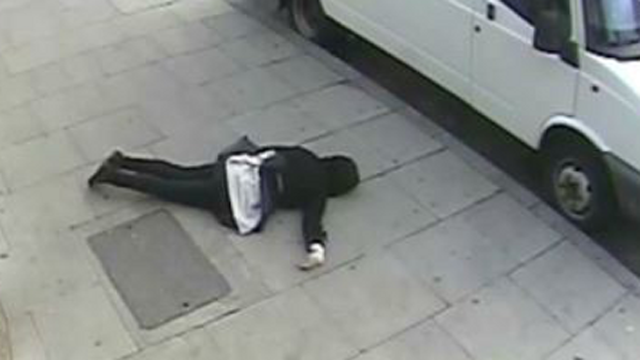
I'm sure most of us have seen short video clips on the internet (including TikTok and elsewhere) of individuals, mostly seniors, handicapped, and typically Asian, white, Hispanic, or gay are randomly being punched in the face and knocked out while the assailant either nonchalantly either walks off as if nothing happened or picks up the victim's cell phone, IPad, or maybe their wallet, and walks away without a care in the world.

In fact, it's become so common that it has its own name---the "knockout game". In a majority of cases, the victims  are chosen because they appear unaware and vulnerable. In mostly of these cases, the perpetrator will quietly walk up from behind and hit the victim as hard as they can, knocking them out cold.  By the time someone comes along to help them, their attacker is long gone.

 While many of these attacks happen on sidewalks or street corners,  a large number of them occur in subways. New York's subway system is the largest and busiest in the North America. It encompasses  472 stations on 25 different routes along 665 miles of track.  And despite some 400 surveillance cameras (which aren't live streamed) there's been instances where subway surveillance cameras have even caught individuals attempting to shove  a passenger onto the tracks and into the path of  a oncoming subway train.

There have been countless other instances where passengers are aggressively harassed by these street thugs. In most instances the harassment involves physical  confrontation and rummaging through the victim's personal possessions such as briefcases or purses in search for money or valuables, not to mention stealing laptops and cell phones. 

It's worth mentioning that reports of murder on subways aren't unusual. During an eight month period covering 2022-2023, the New York Transit Authority reported five murders. In 2022 there eight cases of reported rape. Robberies accounted for 396 of the crimes reported in 2022. In 2023, the number of reported robberies was 353, a 11% drop.

Felony assaults stayed about the same from 2022 through 2023 at 374 to 372. There were 700 reports of grand larcenies in 2023, down from 730 the year before. Burglaries, which aren't typically associated with transit related crime and often involve breaking into public lockboxes or storage containers jumped from four in 2022 to ten in 2023. Recently there has been several reported cases of knife attacks in members of the LGBQT community, which has gained a lot of national attention.

Vandalism is rampant when it comes to New York's subway system as dozens of subway stations are "tagged" with graffiti. At the same time, trains, both inside and out, are regularly spray painted ("tagged"), costing New York taxpayers millions to have the "street art" removed.

Nevertheless, the New York Police Department reported just under 9000  transit related arrests in 2023. Meanwhile, some 115, 908 summons were issued by the NYPD for reported crimes. By comparison, let's look at subway related crime in Chicago. So, what else are authorizes doing to make riders safe?

In a unique move, New York Governor Kathy Hochul (D) has announced the purchase of 5,400 cameras to be installed in 2,700 transit cars, including several hundred "hidden" cameras. In addition, the governor is ordering 1000 security professionals to man the various stations and subway cars. This will include 750 members of the New York National Guards, state police, and MTA officers to check all bags at the busier stations.  Way to go governor!

Chicago's subway system covers 224 miles of track along 145 stations. According to the Chicago Transit Authority, it spent $26 million dollars to install 3,600 surveillance cameras  along the line, with extra emphasis along Belmont Street and the "Red Line". 
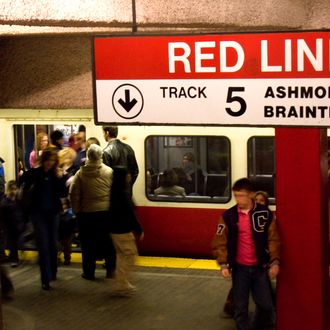
Still, in 2023, there was 4.7 violent crimes per every one million rides, which is down from 6.2 in 2022. Even non-violent crimes, such as pick pocketing and petty larceny, are showing signs of dropping. The CTA also reported that just 43.5% of reported crimes took place on a CTA train and of those, 35.6% took place on a CTA platform. 

Overall, violent crime, however, was down 16% from August 2022 through August 2023. So, what's the most common complaint about the CTA now that crime seems to be down? It's that many of the stations and some of cars have a strong smell of urine due to the city's large homeless population.

One of the key reasons is that authorizes in City Hall have agreed to spend more money to hire additional police and security officers as well as increase the number of patrols (many of these private security firms include officers with K-9 units, which historically have proven to be a serious deterrent, along with the addition more security cameras, bringing the total to  33,000.

San Francisco's Bay Area Rapid Transit (aka "BART") operates the largest subway system on the West Coast.  BART was established in 1957 as a means to link San Francisco, Oakland, and Sausalito to the numerous "bedroom" communities which were sprouting up throughout the Bay Area such as Fremont and Daly City. 

BART operates 50 stations along 131 miles of track, including a nine mile spur to Antioch. It also operates a 3.6 mile tube under the San Francisco Bay connecting Oakland and San Francisco. which has a maximum depth of 135 feet below sea level. (and having traveled it countless times, it was very cool!).

Unlike Chicago's subway system, BART has continued to see a rise in crime, especially open drug use, particularly among the city's burgeoning homeless population. Other complaints is just how filthy the cars and stations have become due to the increase in illegal immigrants as a result of the city's ill-conceived "sanctuary city" policy and changes in laws concerning the homeless.

As a result, ridership on the BART has dropped significantly while those who continue to ride say they routinely bring disinfectant. However, like with Chicago's subway system, it doesn't help much with stench, even for individuals who regularly wearing air filter masks.   

46% of BART riders have reported actually witnessing a crime, ranging from simply stepping over fare gates without paying to open drug use to physical assaults. When it comes to crime, robberies at knife or gun point, are up. In 2023 there were 224 reported violent crimes (in 2022 it was 180).  Of those, armed robberies made up 136 of those while assaults make up the balance.

Rapes have also increased, including attacks during broad daylight. In one instance, a mentally handicapped woman was sexually assaulted, and while he was caught and arrested, he was ultimately changed with two counts of misdemeanors battery, thus avoiding jail time. 

The Bay Area, and San Francisco in particular, has the largest gay community of any major city in the United States. Nevertheless, officials report attacks on gays have significantly increased, especially in the BART. The attacks range from ordinary harassment to assault. But many of the attacks are intentionally hate oriented crimes directed toward gays. One such series of attacks involved the attacked using a razor blade and cutting the victims hands. Many of the assailants arrested are Muslim asylum seekers, though not exclusively.

According to authorities, there are over 4000 security cameras throughout the system. While station activity can reviewed within seconds, incidents on the trains cannot. Only certain cars have cameras and those record events and are reviewed later!  Not surprising, 85% of BART users have said they've reduced or stop their ridership because of rising crime, open drug use, and not feeling safe. A lack of adequate sanitation is a serious problem too. 

However, if those issues could be resolved, 64% of former BART riders said they would resume riding. 79% said they would feel safer if BART would increase the number of security or police officers on each train. Ironically, 33% added that they wouldn't trust the officers to treat everyone fairly. Guess they're concerned about being "PC".

As an aside, London's famous subway system, known as the "Underground" is having similar problems, thanks primarily to the recent increase of "migrants" from Africa. and parts of the Middle East Thefts and robberies have increased 83% over last year---10,836 just between April and September 2023 alone; Assaults have risen 30% to 22,294 in 2023 while ridership has dropped 11% and shows no signs of coming back.

Meanwhile, crime on Moscow's "Metro" subway system is virtually nonexistent, but that's not to say its crime free. Instances of pick pocketing are not unusual. However, reports of violent assault, armed robbery, or rape are practically unheard of.  In addition, the trains are clean, well lit, and typically free of  a homeless population. The reason is because of the presence of security (which can be pretty aggressive toward offenders) and strict laws. The stations are bright, well lit and clean. The public too are very proud of their Metro. Regular riders of Moscow's Metro are known for having a low tolerance of crime no matter how petty.

So what does this all mean? It means that the three more prominent cities, known for their liberal illegal immigration policies, are facing a crisis of their making due to their open door policies. Compounded by this has been their traditionally liberal judicial policies when it comes to crime and punishment. As a result, these major engineering achievements have become dangerous and unsafe for the average resident as well as unprofitable to operate.

Not only has crime become a serious problem, but so has the issue of homelessness as each of the stations have become de facto "shelters". Public restrooms, which were known for being clean and well stocked, are now no longer open, which means the homeless will use anything and everything as their personal restroom, including the trains.

San Francisco's recent changes in laws concerning the homeless permits them to freely occupy public park as camp sites, as well as sleeping in alleys and doorways without being disturbed. Businesses may not keep them out of their stores (including restrooms). They're free to roam about in the stores (even high end ones) without interference. They are free to panhandle and pretty much anything else without interference by law enforcement. In addition, they are allowed to use public sidewalks, trash cans, sewer drains or whatever as restrooms. Can you imagine?

Speaking of stores, a change in a Californian law prohibits taking steps to prevent shoplifting and petty theft. Employees are no longer allowed to detain, block, or say anything to these thieves. All they can do is call the police (who may or may show up to take a report) and alert their managers. The result is a 81% increase in thefts. One example is San Francisco's main business center along Market Street, which is now almost totally deserted, costing the city millions in tax revenue.

The thefts have also had a ripple effect. It's resulted in dramatic price increases as stores pass along the costs to consumers. It's also resulted in stores closing, some are moving while others are closing permanently. Either way the result is the same, and while depressed communities are complaining about the loss of access to grocery and drugs stores, they ignore the economics of the thefts.

What further proof do we need that the United States needs a comprehensive immigration policy to eliminate its  de facto "open door" policy and halfhearted enforcement. Along the same lines, the federal government needs to take steps to end "sanctuary" cities.
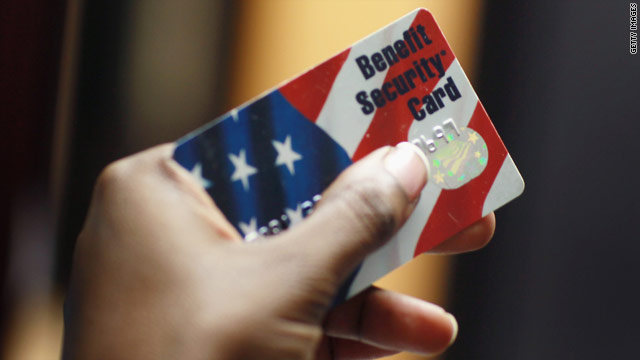
Some have suggested that the best solution is to restrict any taxpayer assistance directed toward the city. New York alone receives $396 billion in federal aid.  However, of that just 9% of New York City's budget is derived from federal aid and of that, the majority goes to 11 agencies which deal with poverty relief.

Another related and just as serious issue is that of homelessness especially veterans, the disabled, mentally ill, and children. There is simply no excuse whatsoever that this country, as wealthy as it is, should have a homeless problem of this magnitude. Many are homeless due to lack of affordable housing. Others because their salaries are unable to keep up with the rising cost in practically everything (especially medical and prescriptions), as well as mental illness and chronic drug and alcohol abuse.

In December 2022, President Biden proposed a "housing first" strategic plan to reduce homelessness 25% by 2025. So far that plan is showing no signs of working. In 2023, there was an estimated 653,104 chronic homeless individuals in the United States, a 12% increase over the previous year. The number of homeless veterans is estimated at 35,574, an increase of 7% over 2022. 

As an aside, California, and in particular San Francisco and Los Angeles, leads the nation with the highest homeless population. It's followed by New York, with the Big (Rotten) Apple being the epicenter. Illinois is 11th in nation. It should be pointed out that since 2020, homelessness has dropped an overall 40%, which obviously contributes to drop in crime in Chicago's subways.
All these are the consequences of a inadequate immigration policy, a lack of affordable housing, a failed healthcare system, and substandard education (which includes a serious lack of discipline), and poor planning. Crime must be seriously addressed, especially race based assaults which get brushed off by the media. Current efforts at non-stigmatizing so-called "petty theft" and shoplifting or dismissing it because as a side effect of race is destined for economic and social disaster in short order.

America could still have a "Silver Age " ahead of it, but only if these problems are seriously addressed in a open matter free from politically correct ("woke") imposed censorship. That will require a focused effort, dedicated and well informed individuals and non-partisan discussion. if not, then a our decline will not only continue, it will accelerate exponentially.  


If you enjoyed the article, please consider passing it along to others and don't forget to subscribe. It's free! Lastly please be sure to "like" us on whatever platform you use to read anotheropinionblog.com. It helps beat the algorithms and keeps our articles in circulation. Thank you!


New York subway crime sees downturn so far this year whilearrests and summons soar


Gov. Kathy Hochul sending National Guard members to New Yorksubways combat ongoing crime


Chicago transit violent crime down as police, securitypatrols increase


CTA Crime Continues Downward Trend


BART commuters say crime, open drug use keeping people awayfrom the transit system.


46% of BART riders say they witnessed crime in the system,poll shows


Moscow's Metro


London's lawless Underground...


Knockout Game


Wednesday, April 21, 2021

America's Future: A Look Down the Road

Our last couple of articles looked the decline of organized religion in America. In case you missed them, let's say it looks pretty bleak. The decline began in the 1960's, during the heyday of the Babyboomers, and its continued ever sense with nearly 40% of both Millennials and Gen Z identifying as agnostic or atheist.  But, religion is only part of the downward trend. Politics, or more precisely, partisan politics, is another trend which is on the decline too.

As most of you should know by now, partisan politics, that is, registration with a political party, has been on a death spiral for several decades and shows no indication of pulling out. This is particularly true for the two largest corporate owned parties, the Democrats and Republicans.

It used to be that practically everyone was either a Democrat or Republican. Not anymore. Independents are closing in on the 45% mark while about 32% remain Democrat and 25% to the Republicans.

The majority of Independents are Millennials (1981-1997) and Gen Z (1998-2012), followed by Babyboomers (1946 -1964) and Gen X (1965 -1980). Babyboomers used to be the largest generational demographic in history (69.56 million) until the Millennials came along (72.12 million). Gen Z is the third largest demographic (67.17 million), which is just ahead of Gen X (65.17 million).

"Boomers" were collectively known as the "Hippie" or "Flower power" generation. They were also called the "Me Generation" since everything tended to be about them because of their numbers and disposable income's affect on the economy. When it came to politics, Boomers tended to lean to the Left; at least the first cohort (1946 -1954) did. These were your stereotypical "Beatniks" and Hippies. They were all about "free love", peace, and drugs.

Politically, they were optimistic about the future. They bragged about embracing Marx, socialism (or even Communism) and idealized individuals like Che Guevara. They were involved with the early anti-war protests, the Civil Rights movement, and Cesar Chavez's farm labor movement. The second Boomer cohort (1955-1964) turned out to be a bit more conservative.

They were also much more pessimistic. They were involved with the radicalization of the anti-war movement, which also came to include the Feminist movement, the LGBT movement, the Environmental movement, and the pro-Native American movement (such as AIM---American Indian Movement) to restore Native lands and honor treaties.

They were defined by the Kent State shootings, the Weathermen, SLA, Black Panthers, Watergate and Nixon's resignation, and forced bussing. More so than their older siblings, they were part of the "greed is good" mindset, the Go Go 1980's and Reaganism. It was disco, sex, and drugs for them.

Today, it's the Millennials and Generation Z. Overall, both groups are pretty Left leaning. A large segment (70%) of Millennials support some form of socialism, while a smaller number likes libertarianism. Neither group favor partisanship, and both dislike being labeled.

Millennials are more likely than not to be registered as Independent, followed by Democrat, and lastly, as Republican. The same can be said of Gen Z. Millennials are the highest educated demographic to date, however, Gen Z shows signs that they'll likely overtake Millennials in that regard. 

In addition, Gen Z is also more likely to pursue a career in trades or vocational school than the Millennials. 38% of Gen Z identify as liberal. 27% as moderate, and 18% as Conservative. Among other voter groups, 37% identified as liberal, 30% as moderate, and 35% as conservative.

Both groups show similar interest in the climate (which they believe is warming thanks mainly to deforestation and industrialization), and in racial and gender issues. Gen Z is by far the most racially diverse demographic in recent history with 40% being Hispanic. Additionally, 60% identify as LGBTQ (of that, 72% are bisexual). They also say that minorities routinely face discrimination, especially blacks.

What's important to note about these issues is that both groups, but especially Gen Z, have said these are key issues when it comes to either religion or politics. In short, whether it's a church or political party, they have to be open when it comes racial and ethnic diversity, sexual identity or climate warming.

While both groups believe there is an inherit "racist bias" built into society, Generation Z is the most active in that regard.  63% of Gen Z is very supportive of the protests we had last year. 61% support the protesters themselves, despite all the vandalism, looting, and arson they committed.  As an aside, 68% of Gen Z  support BLM while 48% oppose the actions of the police.

By contrast, 51% of older registered voters supported the protests while 42% oppose them, including 43% of Silents. 49% support the protesters while 44% oppose them. 54% back BLM. 39% of older voters don't. 66% support the police compared to 28% who don't.

It's worth noting that not just 70% of Gen Z believe in a larger and more pro-active government,  so does 64% of Millennials,  53% of Gen X, and 49% of Boomers. By contrast, 61% of Silents (1928-1945) disagree. Silents, by the way, are the children of the WWII "Great Generation", who grew up during the Great Depression, the War Years, and the subsequent post-war  "boom" years of Truman and Eisenhower.

Both groups favor some form of democratic socialism with a progressive free market similar to some of the Scandinavian countries. In addition to the above, 70% of Gen Z believe that a larger and more activist government could end income inequality, provide universal healthcare similar to Canada, provide universal subsidized housing and childcare, a base income, and tuition free college.

In discussing politics, it's worth mentioning that although Joe Biden won the recent presidential election, he did so only with the reluctant support of Gen Z. 45% admitted that they specifically voted against Trump rather than for Biden. By contrast, just 26% of the other demographics said they specifically voted against Trump not for Biden (thus, Biden became the "anybody but Trump" candidate).

Furthermore, 77% of Gen Z disapproved of Trump's job performance as did 68% of Millennials and 52% of Babyboomers. Gen X was about even, with a slight edge against Trump's performance. The only group which strongly supported Trump's job performance was the Silents.

Another important figure to keep in mind is the 2020 was the first time that the number of Millennials and Gen Z equaled that of Gen X, Babyboomers, Silents, and the Greatest Generation combined.  By 2028, Millennials and Gen Z will dwarf these four groups. To put it another way, by 2028, politics will be dominated (and perhaps dictated) by the Millennial and Gen Z generations. So what does that mean?

America has been on a leftward trajectory since the late 1960's with small deviations inserted periodically (Ford, Reagan, Bush I and II, and Trump). The combined efforts by the Babyboomers (mainly the first cohort), Millennials, and Gen Z has been toward a democratic socialist country akin to Sweden or Denmark.

Meanwhile, the second Babyboomer cohort and Gen X has given us some ideological balance to the Right. Nevertheless, the sheer numbers all but ensures that the conservatives are in serious trouble unless they can swing the Gen Z crowd.

But despite the leftward tilt of the country, the Democrats have nothing to cheer about. First off, both parties are owned by Corporate America. We are a Corporatocracy run by a handful of mega rich and powerful Oligarchs. This, by definition, indicates neo-fascism. The Republic is dead in all but name.

Any "socialism" will likely be superficial; just enough to appease the masses as they say. It will equalize what remains of the middle and lower classes while excluding the upper tier. We will transform from nationalistic citizens to global consumers. Our "loyalties" will be to products, not nations.

Despite the fact that voters are abandoning both parties in droves and becoming Independent, the political system is still very much in charge, thanks to its corporate overseers and levels of corruption.  Still, the Democratic Party would like to remove their chief competitor, the Republicans, like any other sensible crime family would.

To do that, they need more numbers, and that's only going to happen by allowing illegal immigrants into the country as fast as they can, and then either giving them "amnesty" or removing the means whereby they can be identified as illegals. That means eliminating voter identification, which also helps to increase fraud in Democratic controlled inner cities.

The end result will be a GOP with a small, mainly rural, base.  In a worse case scenario (or best case, depending on your perspective), the Democrats will dominate national elections and many of the larger cities, with the GOP getting what's left over. Both parties will remain under the thumb of their corporate overlords as they continue to deny majority Independents and third parties a voice.

America will remain a surveillance state under a corporate/government neo-fascist partnership. In time, it could (and will likely) morph into a full fledge police state, especially if its citizenry loses its right to bear arms, and corporate pressure to restrict free speech and assembly continues (particularly on social media, which is the number one preference of Millennials and Gen Z for news and current events). 

Meanwhile, technology will become more personally invasive. 70% of Gen Z already believe it's the solution to all our problems and 61% think it could solve income inequality. I think compliance will not be requested. It will be expected.  I wonder what happens when they find out it was all a lie? What do you think?


In Defense Of Liberty


6 things to know about Gen Z, politics, and 2020


On the Cusp of Adulthood...


Generation Z and Religion: What New Data Show


Election Statistics Show Growing Percentage of IndependentVoters


Saturday, August 15, 2020

Kamala Harris: A Lady in Waiting...for the Presidency?


Well, it's official. Kamala Harris is Joe Biden's pick for Vice President should he win the election in November. Of course, this should come as no surprise to readers of Another Opinion. Back on April 11th ("Sanders' Supporters get "Berned" and "Sleepy Joe" Looks for a Running Mate") I reviewed ole Joe's top ten choices based on his own criteria that his running mate would need to be a woman and "someone of color'. Although there were a number of decent choices, the one which stood out was Kamala Harris. Apparently Joe agreed.

So, what do we know about Ms. Harris? Back in April, I pointed out that Ms Harris was 55 years old. A lawyer, the former California Attorney General, and 27th District Attorney for San Francisco. The junior Senator (elected in 2017) represents Oakland and is a both a protégé and good friend of senior Senator and former San Francisco mayor, Diane Feinstein, as well as the current Speaker of the House, Nancy Pelosi, who also hails from the Bay Area. She also has a good background in foreign policy.

In addition, Ms. Harris is known as a capable debater and isn't afraid to mix it up. As I stated back in April, Kamala Harris has moxie. There are also the intangibles. She looks good on camera and comes across as personable, though I wouldn't say she has the charisma of Bill Clinton or a Ronald Reagan. Nevertheless, she has all qualities that Joe Biden lacks which is going to be important in what will be likely be an all out slugfest against the incumbents, President Trump and Vice President Pence.

We also need go ahead and say it---Joe Biden has serious health issues. I think it's unlikely that he will survive a term as president. In all likelihood, Biden will either be forced to step down or will die in office. I don't say this lightly or to be partisan in any way. Anyone who has watched Biden over the last year or two can see an man who is obviously having mental issues (by the that I mean the ability to focus as well as memory). Physically he looks weak; like someone who is easily fatigued.

Former White House physician, Dr. David Scheiner, has stated that the nearly 80 year old Biden isn't a healthy guy too. He has high cholesterol, which could affect his blood pressure, an irregular heartbeat, and a history of aneurysms. As Dr. Scheiner has said, Joe Biden is a good candidate for a stroke.

Given the pressures of being president, those odds increase dramatically (we've all seen how the presidency ages people just who are younger and better shape, physically and mentally). So, the hard cold reality is that Biden's choice of Vice President takes on more significance than usual. With that in mind, we need to take a closer look at Ms. Harris.

Kamala Devi Harris was born on October 20, 1964 in Oakland California ("Devi" is Sanskrit for "goddess"). Her mother, Shyamaia Gopalan, was from Tamil Nadu India. She was a doctor of endocrinology and specialized in breast cancer research and treatment. She died in 2009 of colon cancer.

Her father is British Jamaican born Donald J. Harris, an economics professor emeritus at Stanford University who specializes in Post-Keynesian Developmental Economics. For those of you without an economics background, this is a branch of economics originally developed by famed British economist, Dr. John Maynard Keynes in 1936. It's reference to "Post-Keynesian" refers to its more progressive approach regarding income distribution, interest rates and its effect on employment with respect, in this case, to developing economies such as found in the Third World. If it sounds "Left leaning" it's because that at its core it is.

Dr. Harris, who is bi-racial, was born St. Ann's Bay Jamaica. He obtained his Bachelor of Arts degree from the University of London and his doctorate in 1966 at UC Berkeley. In keeping with the typical career of an academic, Dr. Harris has taught at a number of schools around the country as well as the West Indies. He was a Fulbright Scholar in Brazil (1990 and 1991) and in Mexico (1992).

Dr. Harris and Dr. Gopalan meet as students at UC Berkeley where both were student activists involved with the civil rights movement. They were married in 1963 and subsequently divorced in 1971. Both of Kamala's parents are naturalized citizens. For what it's worth, Dr. Harris has publicly stated that some of his ancestors owned large tracts of land and were slave owners.

According to Kamala, both her and her younger sister, Maya, grew up attending a black Baptist Church and a Hindu Temple in keeping with the traditions of both parents. Kamala attended the predominantly black private college, Howard University in Washington DC, where she obtained a BA in Political Science and Economics.

Harris interned for Senator Alan Cranston (D), served on the school debate team, actively demonstrated against South African apartheid on campus, and was a member of the first ever all black Greek sorority, Alpha Kappa Alpha. She obtained her law degree from the University of California Hastings School of Law in San Francisco in 1989 and passed the bar the following year.

That same year, Harris was hired as a Deputy District Attorney for Alameda County. In 1994, she was appointed to the California Unemployment Insurance Appeals Board and the California Medical Assistance Commission by her then boyfriend and California Assembly Speaker, Willy Brown (D).

1998 was a big year for Ms. Harris. It seemed to mark the turning point in her burgeoning political career. That year she was hired as the Assistant San Francisco District Attorney and became the Chief of the Criminal Division where she and her team of five attorneys prosecuted major crimes including homicide, robbery, burglary, and sexual assault cases. Two years later she was hired to work for the City Attorney's office where she oversaw the Family and Children's Services Division where she represented in child abuse and neglect cases.

In 2003, Kamala Harris became California's "first woman of color" to be elected as District Attorney where she earned a reputation for being tough on crime. When she took over the office, the felony conviction rate was just 50%. By 2009, it stood at 76%. Drug dealer convections rose from 56% to 76%. When it came to violent crimes, she achieved a conviction rate of 87% for murder and 90% for felony gun violations. While she was able to reduce gang violence and truancy within her district, Harris went on record to state that she didn't support the death penalty.

In 2011, Harris took another step up the political ladder when she was elected State Attorney General, a position she held until 2017 when she was elected to the U.S. Senate. During her term as AG, she pursued a number of popular issues such as reducing the state's truancy, prison reform, created a Mortgage Fraud Strike Force, helped introduce a Homeowner's Bill of Rights, required software and technology companies to amend their agreements to provide full disclosure of the use of private information, and requiring companies, such as banks, rent-to-own companies and others to provide full disclosure of contract terms (such as undisclosed late fees, penalties for early payoff, and monitoring remotely keystrokes and built in cameras).

Ms. Harris also credited with championing a wide array of public safety and privacy as well as environmental measures while cracking down on sex crimes, especially against minors, and on the drug cartels which have invaded California and the U.S. Southwest. Overall, her tenure as State Attorney General was seen as a positive one for the general public.

After California's Barbara Boxer (D) decided to hang it up in 2016 after 24 years in the U.S. Senate, Harris was the first to throw her hat in the ring. She won a highly competitive election against several veteran politicians. However, Harris was able to secure the support of a number of key power brokers, and won all but four counties with nearly 60% of the vote.

Currently Ms. Harris serves on the important Budget Committee, the Select Committee on Intelligence, Homeland Security and Governmental Affairs (Federal Oversight and Emergency Management and the Regulatory Affairs Federal Management subcommittees), Additionally, she serves on the Judicial Committee's Constitution, Privacy and Technology, Oversight, Agency Action, Federal Rights and Federal Courts subcommittees. She is a member of the Congressional Black Caucus, Congressional Caucus on Women's Issues, and the Congressional Asian Pacific American Caucus. She is also a strong advocate of LGBQT issues and open borders, supporting San Francisco's "sanctuary city" status.

On a personal note, Kamala married Doug Emhoff, an entertainment law attorney, in 2014. Emhoff, who is Jewish, was born in Brooklyn New York in 1964. He and his family moved to California when he was 17. He attended California State University at Northridge and the USC Gould School of Law. Kamala is a step mother to two children from Emhoff's previous marriage. Kamala and Doug have an estimated personnel net worth of $5.8 million.

As for Kamala's sister, Maya, she's also an lawyer as well as a public policy advocate, and a hired political analyst for MSMBC. She was one of three senior public policy advisors for Hillary Clinton's failed 2016 presidential campaign. Maya previously served as the Executive Director for the ACLU of Northern California and as Senior Associate of PolicyLink, which is a "research and action" institute focusing on low income communities of color.

Given Kamala's professional and academic track record, you can see why I thought she would be picked by Joe Biden as his running mate. The other nine contenders simply couldn't hold a match to Kamala's credentials. Throughout her career she has been described as "smart as a whip", "determined", "dedicated" and "loyal" , which is rare in politics.

Her top financial backers include unions, gay and lesbian groups, law firms, the entertainment industry, plus various real estate and telecommunications groups. She doesn't get much PAC money but what she does get comes primarily from women's issues and human rights groups, liberal Democrat and pro-choice organizations. Approximately 52.4% of her donors are women and most of it comes from in-state. However, she get a fair of money from out-of-state donors too, particularly New York, Massachusetts, Florida, Pennsylvania, Washington State, Georgia, and Illinois. As an aside, during her short lived run for the Democrat Presidential nomination, the majority of her donors were billionaires.

Since her election to the Senate in 2017 she has shown herself to be a dyed-in-the-wool Democrat who supports every Democrat measure coming down the line. If you're a hardcore partisan, I guess that's a good thing, but partisanship is not what we need today. We need to find ways which bring us together across party lines (especially since both parties, which are corporate owned, are dying), race, gender and whatever else. I hope she can do that, especially given the strong probability that she'll end up at the helm should Biden win in November.


Kamala Harris


Political Positions of Kamala Harris


OpenSecrets: Kamala Harris (D-CA)


Kamala Harris Has More Billionaire donors than any other Democrat candidate running for president


Hollywood's Top Power Players Favor Kamala Harris in Early Campaign Donations


Saturday, September 07, 2019

In God We Trust? Well, Maybe: The Trend of Religion in America


Pick up any piece of American currency and you will find the words "In God We Trust" somewhere on it (it first appeared on coins starting in 1864). We sing patriotic songs like "God Bless America" and say the Pledge of Allegiance with the words "under God" , added by President Eisenhower in 1954 to set us apart from the "godless" Communists at the urging of a wide range of groups like the Knights of Columbus and various veteran organizations As an aside, it was also President Eisenhower who signed the bill approving the use of the phrase "In God We Trust" on all US currency in 1956. Even when you take an oath in a court of law, you're asked to tell the trust "so help you God" with your hand on a bible no less and the Ten Commandments appear in every courtroom.

Of course, there are those who claim that America was founded to be a "Christian" nation, though in truth it was founded to be a religious neutral nation; that is, a nation where all religions were welcome and where there would be no official state religion, unlike Europe where government's tended to have a state approved religion and all others had to obtain both permission to practice and to pay a special tax in addition to the state "pew" tax. Nevertheless, America was a nation which took great pride in its religious tolerance and in its devotion; adopting Judeo-Christian ethics into its laws. And so we remained since our founding as nation, that is, until recently.

Back when President Eisenhower signed those two bills into existence, approximately 70% of households attended some sort of religious services on a regular basis. 97% of Americans identified as "Christian", be it Protestant (70%), Catholic (24%), or Mormon (3%). Those numbers remained pretty much consistent through 1979 when there was a slight, but noticeable drop. In that year, those who identified as "Christian" dipped to 88%. While still a significant majority, it marked the first time the percentage dipped under 90%.

Since then, despite fluctuations, the overall trend has been generally downward. Today that number in barely 48%. Those who answered in the affirmative when asked if they were a "born again" or Evangelical Christian was just 36%. In 2018, 68% of those who identified as belonging to an organized religion said they hadn't attended a religious service within the last seven days. While 72% said that religion was generally important, only 33% admitted to having attended a religious service within the last month. When asked if they thought religion (regardless of their denomination) could help provide a solution to today's problems, only 46% said yes. 46% also said that organized religion had "to much" influence, however, 54% thought that organized religion should have more influence.

When it came to confidence in organized religion, 38% said they did while 33% said they had only a "some" confidence in organized religion and 29% had little or no confidence. Another interesting response was on the bible itself. When asked if they thought the bible was literal word of God, just 24% agreed while 47% said it was just the "inspired" word of God. The balance either thought it was myths, fables, or legends. As an aside, 87% said they believed in a god or higher power.

For those who identified as belonging to an organized faith, but didn't attend services on a regular basis, 44% said they preferred to worship on their own (and additional 21% said that was a contributing factor). 61% said they were turned off by organized religion, while 65% said they weren't quite as religious as they once were. The least most cited reason for not attending was not feeling welcome. 65% said that wasn't a factor and 55% said being asked for money wasn't a big deal either.

In terms of religion by region, the Midwest is 73% Christian (the majority is Evangelical Protestant at 26% followed closely by Catholic with 21%. Mainline Protestant was 19%). However, 22% identify as "none". Out West, 64% identified as Christian (Catholic was the slight majority with 23% while Evangelical Protestant was 22% while Mainline Protestants was only 11%). Nevertheless, 28% opted for "none". In the Northeast, 65% said they were Christian (Catholics were a clear majority with 30%. Mainline Protestants were 15% while Evangelicals were 13%). Interestingly, the "none" were 25%. . Nationally, other religions, such as Jewish, Hindi, Buddhist, or Muslim all tended to 4% or under. In most cases, they were around 1%.

Lastly, the South, which has traditionally been seen as highly religious and conservative; home of the "Bible belt". Here, 76% identified as Christian (34% as Evangelical Protestants, 15% Catholic, and 14% Mainline Protestant), and yet the "none" still polled 19%. The "belt buckle" of the Bible belt, Kentucky, showed 76% Christian. 49% were Evangelical with 11% Mainline Protestant, and 10% Catholic. Non-Christian religions totaled just 2% in the Bluegrass State. However, the "none" had a remarkable 22% showing. So, what's happening?

From practically its beginning, Christianity has been essentially a European religion despite having partial roots in the Middle East. However, that appears to be changing, and rapidly. Starting from about 1991 to 2014, white Protestants, which has made up the majority of Christians in America since its founding, have been on a steep decline. During the period mention, white Protestant churches have declined by one third, and will continue to accelerate downward as white America declines in population.

As a result, studies show that most congregations now have under 100 members with hundreds of churches being either forced to merge or simply closing. The worse hit are the Mainline churches such as a Methodists, Lutheran, United Church of Christ, Disciples of Christ, Catholic, and Presbyterian as well as Evangelical churches such as Baptist, Pentecostal and others. However, not all churches are in decline.

Those which are actually growing are the traditional Roman Catholic and Assemblies of God to name just two. However, a few others--both Mainline and Evangelical--are showing signs of life. The growth has been coming almost exclusively from recent immigrants, especially Hispanics and from Africa. In fact, 71% of the growth in traditional Roman Catholic congregations has been from Hispanics. Further, the cultural center of Catholicism in the US is shifting from the Northwest to the South along with this change. In addition, multiracial churches, once almost unheard of, are increasingly the "new normal" across the board.

Globally, Christianity continues to be the world's largest religion. It's greatest area of growth has been primarily in Africa, followed by Asia. However, it should be pointed that studies have indicated that the Americanized version of Christianity overseas is viewed with the most suspension and has seen the least success in sustained growth. Some blame this on the so-called "Trump Effect", that is, the "America First" or "Pax Americana" resulting from Trump's alleged populist nationalism. Those denominations which promote a more "liberal" or inclusive ideology seem to be showing the most signs of growth (this includes opposition to the concept of "American Exceptionalism").

Of course, this isn't to say that the once popular ideology of Liberation Theology, an admixture of Marxism and Evangelicalism popular among the poor in Latin America, Africa, and Asia, is making a comeback, at least not yet. Thus, globally, Christianity continues to thrive, as well as domestically, though primarily among nonwhite populations as well as churches which embrace multiracial, and thus multiculturalism along with a more liberal and modern interpretation of the scriptures which can embrace different cultures and traditions different from the longstanding Western or European version of Christianity.

So what's the long term future of religion, especially Christianity? Some might cite Islam which appears to be growing on all fronts, especially in Asia and Europe. However, that notion is deceptive. In Europe Islam is on the rise to be sure. However, the explanation is actually multi fold. First, the population of native Europeans has been on steady decline since the end of World War Two. In fact, the birthrate isn't capable of even maintaining the current population; bare one child per couple.

Meanwhile, the EU's catastrophic open door immigration policy has led to a rise of immigrants, often low skilled and largely uneducated, flooding European cities. The majority of these immigrants are from Africa and the Middle East, and most are Muslim. The birth rate among these individuals is approximately five children per family; nearly doubling or tripling every few generations. At that rate, they will easily overtake the native European population within a matter of a few decades (in many communities this has already happened).

In addition, since the end of the last war, religious attendance has also been on the decline. Combine this will the rise of Muslim immigrants, and we can see Europe's pending disaster, especially if we include the refusal of the various governments to enforce existing laws, allowing the application of Sharia, and failure to protect the local population from violence, harassment, intimidation, or enforcing acceptance of "no go" zones and changing cultural and social norms. As a, interesting side note, while the Muslim population abroad increases, the birthrate among Arab populations in their home countries are on the decline.

In Asia, it's not a matter of population replacement or a decline in religious adherence. It is, however, the result of Muslim extremism and in some case (such as China), a history of general religious suppression which has been the main cause. This is especially true when other religions, such as Christianity or Buddhism, have been officially prohibited. In other cases, it has been a reluctance of the various governments to respond to the increased religious and cultural violence such as in India, Nepal, or the Philippines.

Lastly, there has been a fear by more religiously tolerant Muslim nations, such as Saudi Arabia, Kuwait, Qatar, or Syria, to counter the violence out of fear of sparking a more direct conflict with extremist (much like trying to appease a bully). The result is that certain minorities such as the Kurds, the Yazidis, and Assyrian Christians are sacrificed and face slavery and genocide.

Finally, we need to address the "none" I mentioned earlier. The "none" are not a single monolithic group. They are, actually, individuals who do not adhere to a particular religion, aka secular. Some are agnostic while others are atheists, while others are pagan, Wiccans, Humanists, and so forth. It's interesting to note that the single largest group are, in fact, those who identify as secular. What's more is that secularism is the world's fastest growing religious demographic. Even Islam is quickly losing the war against secularism, as is Hinduism, Buddhism, and even paganism which a few years ago was seen as the fastest growing religion in the world.

In Saudi Arabia, an estimated 24% are privately non-believers. In Lebanon it's 37%. Ironically, one explanation has been a direct result of the increase in Islamic extremism. It should be pointed out that secularism too can be just as extreme and intolerant as Islam, Christianity, or any other religion, especially when it comes to forcing people, especially children, into situations where they have to accept certain lifestyles or prohibits them from their own religious or social expression (case in point, requiring children to attend LGBTQ programs or fining people for not using the "correct" pronouns). Neither form of extremism is acceptable.

So, do we still trust in God? The answer is a qualified yes. Americans are still a generally religious bunch. However, our long held notion of religion is changing. It's no longer a mono-racial institution. It is increasingly comprised of individuals who weren't born in America and whose native language isn't English. Most are Hispanic, African, or even Asian. We also have a broader diversity of religions than ever before, especially among Hindus, Buddhists, and Muslims, as well as nontraditional belief systems such as paganism and Wicca. It's also increasingly more socially liberal than it once was.

In addition, Americans, as well as the world, has increasingly become secular. It's not that they reject God (or a higher power) so much as they reject organized religion with its inflexible dogma. It's also that they see both the good and bad in all religious systems, especially its intolerance of others. However, as stated earlier, it too has its extremist who attempt to push their beliefs on others including the acceptance of specific lifestyles, behaviors, and/or prohibit others from the practice of their beliefs which must be curtailed. We have to remember that in this interconnected world, that each must be accorded the right to their own religious expressions without interfering with the expression of others so called as no one is harmed in the process.


Gallup Poll: Religion


Pew Research: Religious Landscape Study


Where is Christianity headed? The View from 2019


The Rise of Humanism


The World's New Major Religion: No Religion


Saturday, June 09, 2018

Having Your Cake and Eating It Too: The Supreme Court Ruling in Masterpiece Cakeshop, Ltd vs. Colorado Civil Rights Commission


I guess I should have known something was up. I noticed a sudden large increase in the number of emails received, most of which were from Left oriented organizations. While most are from some ubiquitous sounding organization like "United for Intergalactic Peace" or "Surrender Now", several were from LGBTQ groups, and others which promoted transgender "self-identification". Each mentioned some recent apocalypse sounding event in their headline beckoned me to open and read on. I usually get a broad cross section of political emails from all political corners; each pushing its own cause and citing some recent tribulation (real or imagined) which they felt warranted my immediate attention and as always, begging for money to make it go away. However, this seemed like an unusually lot, even for me.

However, before I got the opportunity to delve into this mystery, I received a phone call from a friend of mine asking if I heard the latest news. Knowing that could be just about anything, especially sense I follow and usually write about news from a national and even global perspective, I had to acknowledge that I was stumped (of course, I was secretly hoping it had something to do with all the emails). Still, the two mysteries just might be related I thought. As it turned out, they were.

Back in 2012, an ordinary baker by the name of Jack Phillips was asked by a gay couple, David Mullins and Charlie Craig to bake them a wedding cake. Phillips, who owns Masterpiece Cakeshop, politely declined to accept their order for the wedding cake (usually a very profitable project with a big markup) because of his religious beliefs. Mr. Phillips claimed to be a very traditionalist Christian, has said all along that his religious beliefs prohibited him from partaking in any way with an event which goes against his faith's religious tenets, which so happens to include gay marriage. Apparently Mullins and Craig couldn't accept his answer, and neither did the Colorado Civil Rights Commission which said that Phillips had no such religious freedom and his refusal to bake the cake was violation of Mullins' and Craig's civil rights.

Nevertheless, the couple insisted that Phillips bake their wedding cake, which was repeatedly refused, which makes me wonder why? It's not like there weren't other professional bakers capable of doing at least as good of a job; maybe even better. It's not like they couldn't have asked around in their local LGBTQ community for recommendations for another baker. Nope. It had to be this one and only this one. Again, I ask why? My personal opinion is that the couple saw this as a potential payday. An opportunity to gain some national notoriety and maybe a large financial "piece of the pie" if you'll pardon the pun. Besides, if you force someone into making a wedding dress, drapes, or a cake in this case against their will, what kind of product do you think you're going to end up with?

Apparently the Supreme Court, in a rare act of common sense, had ruled 7 -2 in favor of allowing the Colorado baker, Jack Phillips, to decided who he does business with or not. Imagine that. You, as a business person, getting to decide whether or not you want to accept someone's business. I'm sure we've all seen signs on the doors of various establishments which read "No shoes. No shirt. No Service" or something similar. These proprietors were telling prospective customers that they have certain criteria which has to be met if you want to come in and get service. if you didn't meet these requirements, feel free to move on.

Of course, did the Supreme Court really have any other choice in making their decision? The Bill of Rights provides us with the freedom of association, meaning we get to hang out with whomever we want without interference by the government (provided, of course, no crime or criminal behavior is implied). That means you can associate with folks who role-play, follow a certain religion or philosophy, cross dress, or whatever. It's up to you and it's not any of the government's business. The Bill of Rights also provides us with freedom of religion, which means that the government will do whatever it has to not to interfere with those beliefs, so long as those beliefs are legal and fall within the general norms of society as a whole (that means no religious based rapes, human sacrifice or beheadings).

Some would argue that using the "freedom of association" or "freedom of religion" argument would mean refusing to associate with anyone you don't like under the mask of "religion". However, Justice Anthony Kennedy, who wrote for the majority, said business owners can't deny services or goods to individuals under neutral public accommodation laws, otherwise it a "community-wide stigma inconsistent with the history and dynamics of civil rights" could result. Justice Kennedy went on to say that Phillips acted within reason based on his religious beliefs, which had remained consistent throughout. He added that may have been a one off decision, and the verdict on similar cases in the future might be quite different. True. I wonder how the Court would rule if some Southern "redneck" requested a Muslim caterer to provide a pork-laden spread or a Hindu caterer to provide cooked steaks and hamburgers with their order. It's coming folks. It's coming.

Now, as everyone who knows me personally or reads my articles knows, I couldn't care less about someone's gender, race, orientation, religion, or whatever else. I may or may not agree with their choice, but it's not for me to decide; it's theirs. However, people have to understand that not everyone is going to playing along in their personal drama. People will look at you funny. People will speak out--- rightly or wrongly. That's just the way it is in our relatively free society. If I seriously don't like something about you, I'm obviously not going to invite you to participate and no law is going to make me. If you get "offended", that's just too bad. By the same token, if I don't get to play in your "reindeer games" because of my opinion or whatever guess what? I'm a big boy. I'll somehow manage to live. It also means that while we disagree in one area, that doesn't mean we disagree across the board. We accept the fact that not everyone is going to agree with everything we say or do. That's known as maturity.

Just because you made a conscious decision about your lifestyle (tattoos or body piercing for instance), that doesn't mean you get a free pass. If you decide that you self-identify as a dog or space alien, and you go out and spend a bunch of money having yourself surgically altered to fit in with your new persona, well good for you. Hopefully, it makes you happy. But don't expect to be greeted with open arms by society as a whole. If you decide you're going to be omni-sexual, pan-sexual, or whatever, then great; whatever floats your boat. But, again, that doesn't mean you're going to get to float that boat in just anybody's pool. There are consequences for your actions, good or bad. No one is ultimately responsible for the decisions you make but you, so suck it up and get over it.

As an aside, I personally believe there are two and only two sexes---male and female, and regardless of how you self-identify, Mother Nature wins out as she always does. As for your sexual or life choices, I really don't care. It's not my business. For that matter, it's really not anyone's business other than those directly affected, which means that neither do I particularly care or need to know. Now, whether it's a psychological disorder, a simply a genetic mutation, or one of Satan's demonic minions as some claim, I don't know. I've known a lot of folks who are gay, Lesbian, transgendered, bisexual in my lifetime, and I can't say a single one was the product of a "choice" . It was just the way they were. It may have been a choice on their part to "come out", but their sexual orientation was never a choice in itself.

Now, having said that, not everyone agrees. Some people believe for personal reasons that "something" is wrong with them. That's fine. That's their decision based on their upbringing or life experiences. Meanwhile, there are others who believe being gay or whatever is a violation of their religious beliefs, and to violate those beliefs is to disobey God or whatever deity they worship. That deserves as much respect as does someone else's personal decisions about themselves, be it body piercings, tattoos, or coming out. So, kudos to Mr. Phillips for standing his ground for his religious beliefs and a polite nod to at least seven of the nine Justices for getting it right for once (now, if only they would go back and revisit their "Citizens United", which was one of their biggest mistakes). The trouble with diversity is that it's diverse, and we have to get used to it. That's also it greatest strength.


Supreme Court rules for Colorado baker in same-sex wedding cake case


Supreme Court rules on narrow grounds for baker who refused to create a same-sex couple's wedding cake


Saturday, October 14, 2017

Identity Politics: The Politics of Selfishness

Identity Politics. The politics of the Self-serving. Politics based on a single issue or single set of interrelated issues. What is it exactly and how does it affect the social and politics landscape? What's now known as "Identity Politics" emerged out of the splinter groups that formed during the late 1960's and early 1970's, which also coincided with a break from the "revolutionary" Civil Rights and Anti-War political movements which actually began in the late 1950's and early 1960's "Beatniks" movement. To be more specific, the Beatnik Movement in the late 50's and early 60's produced a mindset which tended to "anti-social". We saw it in the activist movements such as the "Freedom Riders" which began to convalesce around the Jim Crow laws, which were prevalent in many of the Southern States, and ultimately led to the Civil Rights Movement of the early to middle 1960's. Labor unions and many religious institutions became more engaged in these movements as well and pushed for changes in employment practices, voting equality, equality of pay across gender lines, and so forth. This same "anti-social" movement was incorporated into the arts, such as the folk rock music of that era or various movies ( 1955's "Rebel With A Cause" starring James Dean and Marlon Brando's "The Wild One" from 1953 or his 1954 "On The Waterfront " as well as Sidney Poitier performances in 1967's "To Sir, With Love" and "Guess Who's Coming To Dinner" all come to mind).

Eventually these movements merged into a social movement which rejected past practices from Washington regarding a whole ranges of issues, which , by the early 1970's came to included the environment, the treatment of Native Americans, Urban Renewal Projects which sought to remove blighted areas and replace them with safer and more modern public apartments (including dropping the name "projects" in order to salve over any negative stigmatism, imposing hiring quotas such as Affirmative Action and equal pay legislation. Much of this evolved out of President Lyndon Johnson's "War on Poverty" initiative, and included food stamps, welfare, WIC, and free medical clinics for low income families. As time passed, the "radical" aspect began to dissipate from these various causes and a more self-centered attitude began to replace it, resulting the phrase of the time as "The Me Generation". However, the movement aspect hadn't completely disappeared. It was during this point, which was approximately the middle 1970's, that the feminist and Gay Rights movements blossomed.

Fast forward to now, the grandchildren of this---my---generation, known collectively as the Millennials, have stepped forward to create and promote "Identity Politics", which first began to appear around the election of Barack Obama as America's first bi-racial President. The fact that Obama considers himself to be black gave rise to the expression of "self- identifying". Thus, Identity Politics is the self-identifying of basically whatever you choose---straight, gay, bisexual, post or omni sexual, or something with "oppressed" often added, to include perhaps a gender (i.e. feminist) or race (black, Hispanic, Asian), maybe body size ("plus size" or "extra petite"), and so forth. It is promoted through protests, shouting down speakers and opposition to free speech in general, traffic blocking, riots, and the occasional race baiting by a loosely based group which anointed itself the "Social Justice Warriors" or simply the SJW, which includes the ironically named Antifa (for Antifascist) and Black Lives Matter (BLM). Based, therefore, on whatever designation chosen, they believe that they can ridicule your political position. However, there is one caveat that I intentionally didn't mention---Whiteness. Each of these descriptions mentioned above must be juxtaposed against what is termed as "White Privilege". If you're like most people, you have to stop and ask yourself "what privilege?". yet the very fact that you do have to ask yourself that question is considered to be an admission of privilege by default.

Essentially "White Privilege" is defined as the built in advantages one has because whites have been the dominate racial group of this country. Specifically, white males from Europe (especially Western Europe). It was exclusively their customs, traditions, and laws which were imposed on not just the indigenous population, but all subsequent populations which came here either by force or choice. It was this dominance which led to the establishment of patriarchal society based on mostly Western European norms. As a result, women were relegated to a second tier status as homemaker, wife, and mother, while men were the bread earners, owned all real property, could vote (it should be noted that originally, this applied only to land owners regardless of gender and members of a State approved religion). The male of the household made all decisions as it related to the family, while the wife was in charge of "home and hearth". Other races, Native American, black, Asian, etc were reduced to a third class status(even though some of the other social conventions applied to their society as well, and would continue within their sub-group). As society in the US evolved, much of these social norms stayed more or less the same, at least up to the relatively modern times, beginning more or less around the 1864 and Lincoln's Emancipation Proclamation and then in around the turn of the 20th Century and the Women's Suffragette Movement.

The Identity Movement looks at each alleged societal infraction, be it race, gender, or whatever, as cause to corrected by those deemed "guilty" of the crime. And who might that be you ask? Whites of course. Whites as a whole are responsible for slavery for instance, and thus owe some form of reparation in the form of a tax break, or a imposed tax on whites, or a cash settlement.
Naturally, whites didn't start the institution of slavery, which is as old as Mankind itself. In fact, every people on the is planet have either engaged in or were subject to some form of slavery. Again, the white male social establishment is (allegedly) responsible for holding back those who adhere to non-traditional gender roles while holding back women in the workforce through glass ceilings and pay equality discrimination. At the same time, the while males dominated society is responsible for imposing unrealistic female body stereotypes, not to mention indirectly directing little girls into certain "acceptable" roles. Even commercialization is at fault with girls wearing dresses and playing with dolls and "Suzie Homemaker" cooking stoves while boys wear pants and play with soldiers or are encouraged to be doctors, firemen, and such. For years, boys took shop class while girls were directed into home economic classes.

Thus, Identity Politics is group oriented and purposes that its "liberation" can only be achieved by the group itself, and with the acquiescence of a self-depreciating majority. By that, I mean that the only way the oppressed group can liberate itself, it's though the cooperation of its target group, which in this case would be majority whites since they "control" a closed society. However, to do this, the dominant group has to be made to feel guilty of whatever slight they're being accused of. Think of it as a confessional of sorts. You have to accept that you are guilty of some "sin". Then in order to relieve yourself of that guilt, you have to first acknowledge the sin and then compensate for it in some way. Sounds pretty good if you're not on the "guilty" side of the table doesn't it?

The problem with Identity Politics is that it makes a number of false assumptions. First, it makes the assumption that all members of the offended group suffer the same indignities. Not all women feel they're are "chained to the stove", and not all think they're capped by their gender on the corporate ladder. Certainly they are neither restricted by level of education or by what profession they chose to enter. By the same token, gays and all those who embrace an alternative sexual identity are limited to what they may achieve. Yes, society as a whole has certain set of mutually agreed to social values, especially when it comes to appearance and behavior (I'm talking about, for instance, people walking around with their pants hanging around their knees, certain tattoos and their placement, along with body piercings). Of course, society has advanced to the point where tattoos and some body piercings are socially acceptable whereas a few decades ago they weren't, which is another ill conceived assumption. When it comes to race, again their standard "group think" doesn't hold. Not everyone in a given racial group are restricted from advancement. True, that some are, but usually that's because of some bad choices they and they alone are responsible for.

For instance, take murder rates by race. Yes, blacks have the highest rates while Asians have the least. Why is that? Well, according to various reports, it's because they were killed by other blacks. Same for prison. The majority of inmates are black. Why? Is it because the judicial system is skewed in favor of other racial groups? Or is it because they commit the crimes? Again, statistical data suggest it's the latter. I'm sure it's true that there are some judges who sentence more harshly than others, and there's no doubt there are some bad cops out there but that still accounts for tiny percentage, although it's the most hyped by the corporate media. But let's also consider education.

Among racial groups, Asians have the highest high school graduation rates, followed by whites, with Hispanics and blacks at the bottom. Could it be that Asian and white populations put more emphasis on education than the other two groups? Among black and Hispanic groups who do graduate from high school most achieve middle class status or better, especially if they further their education. How about poverty? While poverty is a factor, it's often not the determining factor in obtaining either a high school diploma or GED (as an aside, in looking at public assistance, more white families---especially single parent households----receive public assistance than any other group).

Identity Politics and their so-called Social Justice Warriors seem to overlook the individual. They see only groups, and then, only in terms of "oppressed" and "oppressor". It also ignores historical societal development which shows that one demographic is usually dominate over another, i.e. paternal vs. maternal, educated vs. uneducated, and so forth. They also forget that people don't fit neatly into blocks. Each groups has its successes and its failure. However, there is one key factor which may be absent. That missing component is the culture of success, and what it takes to succeed---a quality education, drive, self-respect and self confidence. Identity Politics seeks equal outcomes along the lines of totalitarianism while our democratically based society seeks equal opportunities. However, it's been Western Culture that has fostered the intellectual and moral drive which has eliminated barriers to women and other minorities, opened up education to whomever wants it, provided the opportunity to advance in social class, permitted freedom of speech and expression, gave its citizens the right to vote while removing restraints of monarchy or dictatorship, and allowed its citizens freedom of or from religion. Thus, it's been Western Culture which, over time, has consistently remodeled itself into a more inclusive society. This is something that Identity Politics overlooked. What it hope to avoid, in my opinion, is that we have more in common with each other than not.


Prison Policy Initiative


The National Center for Educational Statistics


The Daily Signal: New Study on High School Graduation Rates, Gender, and Parental Marriage