When you think of poverty, what comes to mind? Is it some third world country, perhaps in Africa. or Asia, or maybe even in Latin America? Perhaps too you think about cardboard shacks, raw sewage, dirt for roads, no indoor plumbing, filthy water for washing and drinking, and little kids---barely clothed if at all---playing around garbage dumps while slightly older children rout through recently discarded refuse for anything of use. Electricity, if there is any, consists of a few bare bulbs dangling for a cord, sporadically dimming or blinking going out, leaving its occupants huddled in the dark. And almost always, just a few miles away, live the obscenely rich in their townhouses and walled estates; who throw out more food in a day than some of these people see in a week. If they're lucky, some of the poor are employed by these individuals, not that they actually make much money, but they at least have jobs which provides some relief from the misery of their poverty, and they earn at least something. If they're lucky, some can sneak some of the scraps and throw outs back home. The city where many live, just a few miles away, glows throughout the night. No brownouts there. No cold nights or oppressively hot days, not in their climate controlled condos or mansions, or in their chauffeur driven luxury cars. This was what income inequality looks like for the vast majority of the world's population.
While the United Stated sends billions of dollars and in-kind aid overseas, much of it goes to corrupt petty warlords, generals, so-called "Presidents" and their cronies in exchange for American access to their airspace, or refueling fields, or securing favorable conditions for US corporations, all under the auspices of a "positive foreign policy" of course. Most of the these wannabe dictators personally despise the US and everything it supposedly stands for, but they sure love our handouts. Only a small percentage of US aid actually makes it to the people. Most of it is squirreled away in private bank accounts, or skimmed off as bribes or sold on the black market. Is there any wonder rampant famines continue to exist? Why, with the billions not just the US exports, but the UK or Europe send every single year for decades, is there still inadequate drinking water, disease, insufficient or even no housing, let alone schools or proper irrigation and farming.
A very good friend of mine once told me that Communism doesn't arrive with tanks and warships. Communism comes with hunger and a sense of hopelessness. To bring that more current, one could argument that fanatical religious extremists don't arrive with massivearmies or navies, but with zealous fervor to stamp out what they see as corruption of their religious ideals in the face of inequality. Religion is a powerful weapon. It always has. It offers comfort in exchange for control. After all, how you argue or compromise with God? Even our so-called allies are hedging their bets and quietly financing and arming these black clad "psychopaths for God" with the same foreign aid dollars we giving them! Of course, it too is based on fear. Perhaps a great deal of fear. If you look at the history of West, you will find the expansion of our ideals alien to the native inhabitants. Alien in the sense that they are often treated as inferior; of where they are dispossessed in their own land; of where there is vast inequality.
We've overthrown democratically elected governments that we didn't agree with (or to be more accurate, that certain corporate interests couldn't work with). In exchange for overthrowing these governments (or assassinating or jailing their leaders), we've helped to install brutal military juntas who conveniently grant special "concessions" to a few privileged corporations in the name of "free trade" while the US government quietly continues to prop them up as they go about torturing, imprisoning, and murdering their own people. While Communism may not come with tanks and warships, it appears the corporate capitalism does.
Hard words to hear, but every word is true. I know you know it too. Just about every military venture from the 1890's to present day has been about using US taxpayer's dollars and blood of our US military service men and women in order to boost the bottom line for some corporation (with the possible exceptions of WWI, WWII, and the Korean War, but you can bet great sums of money was made supplying all sides). We did in Cuba, El Salvador, Panama, Nicaragua, Mexico, Africa, and Southeast Asia. Yeah, I know we weren't and aren't the only ones, but those other countries aren't my concern. This country is. Our Founding Father's warned us repeatedly about "foreign entanglements". They also tried to teach us about a limited government and the perils of allowing a powerful centralized government to emerge, not to mention the potential danger of banks and artificial entities that we call corporations today (they also warned us about the folly of political parties too but did we listen?). We grew lazy as a nation. Instead of being vigilant of our freedoms, we trusted government to protect them---something akin to letting the wolves guard the henhouse...and likely with the same expected results.
So, now we're faced with illegal immigrants pouring in from Latin America and a government either unable or unwilling to doing anything it; hoping they can ignore the American People long enough the problem becomes so severe that it can't reversed and the invasion of America become a fait accompli, with corporations getting a overabundance of potential workers to fill a limited number of jobs, which will, of course, drive down wages and benefits while also decreasing the likelihood of employee unrest (after all, with union representation at an all time low, everyone could be easily replaced by the next warm body standing in line for failing to toe the corporate line). However, with unions largely left impotent these days thanks largely backwards looking and greedy leadership, they see only the potential to fill their nearly empty coffers with low skilled worker's dues without offering them any real power.
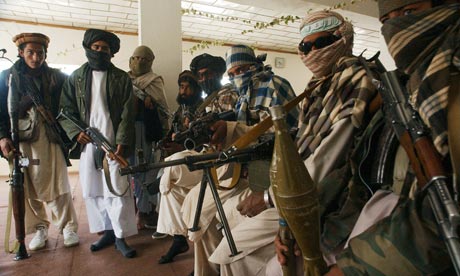
Overseas, we're fighting wars where we should not be involved, but to a large degree were responsible for starting so that our new oligarchy could make a killing...figuratively and literally. Those who attacked us on 9/11 were originally US trained and financed to fight the Russians when they invaded Afghanistan; they were even celebrated in the media as "freedom fighters", and then we abandoned them. Those who attacked us on that fateful day in September planned and operated from Afghanistan. That should have been our one and only target. Iraq had no "weapons of mass destructions", but Saddam Hussein was holding together a tender box and keeping a troubling Iran at bay (besides, we overthrew the previous Iraqi government and put him in power. He also supplied us with cheap oil and secure bases. We counted Hussein as a "key regional ally" for decades just like we did for the Shah of Iran, Noriega and Batista). We implicitly gave him the go ahead to invade Kuwait, and then "liberated" it amid public promises of government reforms for its citizens after oil profits dropped, while privately obtaining special concessions for its oil and removing a potential regional military threat for Saudi Arabia, again, in exchange for further oil concessions.
Such is the world we now live in, where individual lives and fates of nations are dictated by potential profits. In the end, a few,secreted away in private boardrooms, has reaped a whirlwind of profit and power while the rest of us has reaped the whirlwind. Is it any wonder that corporate capitalism is so despised by the majority of the world's population? Even here at home, corporate capitalism is increasingly looked down on by the next generation, the Millennials, not to mention some of the graying Babyboomers. Our democratic republic has been replaced by an oligarchy and we're on the short track toward fascism. This is not what our Founding Fathers wanted for us. This is not what we wanted for ourselves. It sure isn't what we want for our children and grandchildren. The only real question of any substance is what are we prepared to do about it?
Home of the Militant Middle, Another Opinion ("A/O") is an Independent oriented "OpEd" blog for those looking for unbiased facts free of partisan drama and who are willing to question the Status Quo.
Showing posts with label multinational corporations. Show all posts
Sunday, February 15, 2015
Sunday, March 23, 2014
What's Really At Stake in the Crimea
As most everyone knows, the Crimea now officially has been returned to the Russia, despite Obama's finger pointing and posturing. It kind of reminds me of a parent threatening to "count to three" if their wayward child doesn't do as they're told, and just before getting to "three", they either try to make some sort of deal or start over counting to three, only to walk out of the room in frustration while mouthing some idle future threat over their shoulder. Meanwhile, the little tike goes about their business in blissful reassurance that nothing of consequence happened or will likely happen. Such has been Putin's reaction to Obama's sanctions.
Ever since Russian Special Forces seized control of key installations, roads, and airports throughout the Crimea, catching the US and Western governments flatfooted in an apparent failure of the intelligence, Putin has been busy solidifying his hold on the predominately Russian peninsula following the overthrown of the pro-Russian Ukrainian president,Victor Yanukovych. At stake, though not much discussed in US, are the vast naval facilities in Sevastopol, currently the home of the Russian Black Sea Fleet, Yalta, and extensive offshore natural gas reserves.
President Obama made numerous implied threats; basically demanding that Russia withdraw. Obama has even implied that only the US has the "right" to such interventions, as the people of Crimea voted overwhelming to leave the Ukraine and return to Russia. The Crimea has been a part of Russia since 1753 and Katherine the Great, where it remained until 1991 and the fall of the Soviet Union and Eastern Bloc. 58% of the population are ethnic Russian, while the predominant language spoken in the Crimea is Russian, not Ukrainian.
Obama, in what has to be considered "unique" response, issued sanctions, but not on the Russia government. Nope. Obama issued sanctions on approximately 33 individuals--advisers, diplomats, and government officials---personally close to Putin. Typically governments deal with governments in the appropriate fashion, but issuing sanctions against individuals has got to be a first in the annuals of international diplomacy. The sanctions are suppose to restrict their entry into the US and freeze any personal assets held in the US. In addition, they will hopefully have a negative effect on Russian stocks traded domestically, and the Russian Stock Exchange, the MICEX. Although the stocks did take a slight hit, most on the "revenge list" were far from intimidated and thought it was a joke at best.
Slightly more serious, Standard and Poor's, as well as Fitch Ratings cut Russia's credit rating, citing a potential slowing of the economy as a result of the sanctions (how does "sanctions" against individuals affect a country's credit rating?). Moody's has already downgraded Russia to Baa1 status. The MICEX has fallen 2% ---14% on the year---since the sanctions were imposed while the ruble has remained stable. As far as the effect on the various individuals, not so much. Since most are billionaires, impact would be slight, and additionally, most claim to have little in the way of assets in the US. Meanwhile, Obama is trying to get the EU, lead by Germany's Merkel, to take similar action, not to mention various credit card companies which would have an impact on tourism.
However, there's a fly in the ointment for Merkel and the rest of Europe in the form of Russian oil and gas. Europe has become heavily dependent---40% on average---on Russian oil and gas, so any serious sanctions, let alone military action, would obviously result in Putin turning off the tap (32.6% and 38.7% respectively as of 2007). That would kill Europe's already puttering economy, and likely collapse economic support for Greece, Spain, and Portugal (and Italy and France aren't doing too the swift either). Germany gets 36% of its oil and gas from Russia while France gets 14%. Greece receives 76% while Austria depends on 49%; Poland 48%; Bulgaria 92%; Italy 27%, Hungary 60%, and the Czech Republic on 77.6% as examples. So, with all that's at stake, let's cut to the chase and discuss what this is really all about.
As I previously reported, the Crimea is, for all intent and purposes, Russian. Russia will no more surrender its naval bases and access to the Black, Avov, Aegean, or Mediterranean seas any more than the US would give San Diego or Corpus Christi to Mexico. But that's not what is really is at issue here. Again, as I had previously reported, aside from tourism and a marginal agricultural economy, the crown jewel is the vast offshore oil and natural gas reserves which Europe and especially the US, would like to have access to. How much are we talking about? How does 7 million tons annually sound? What's more, Exxon and UK/Dutch Shell had a tentative contract with Ukraine to those reserves worth at least $1 billion dollars. Now with Russia in control, production will fall to the state owned Gazprom. And you thought this was all about the Crimean and Ukrainian people because the media told you so didn't you? Silly rabbits.
While the Cold War ended essentially in 1991 with the fall of the USSR, what we are now witnessing is the start of a new type of cold war---an economic war. Natural resources are quickly drying up. Despite a shift to shale gas, the US oil production is expected to peak by 2019 according to the US Energy Information Administration, and Middle Eastern oil capacity is at or near peak production capabilities, with the exception of a few nations, most notably Iraq and Iran. Meanwhile, China has been on an all out buying spree in Africa and South America to acquire rights to minerals and other natural resources. What is happening here is the global financial institutions of the West, most notably the US, turning the economic screws to get access to those offshore reserves behind a screen of "sanctions" and nothing more. Transnational corporations openly exercising power that was once the prevue of national governments. Welcome to the New Cold War.
Crimea's economy in numbers and pictures
http://rt.com/business/crimea-economy-referendum-results-102/
Russia Credit Outlook Cut as US, EU Widen Sanctions List
http://www.bloomberg.com/news/2014-03-20/russia-outlook-cut-to-negative-by-s-p-as-obama-widens-sanctions.html
With Crimea annexation Putin expands oil and gas empire
http://www.csmonitor.com/Environment/Energy-Voices/2014/0321/With-Crimea-annexation-Putin-expands-oil-and-gas-empire
Europe's dependence on Russian oil and gas makes it hard to enact meaningful trade sanctions
http://news.nationalpost.com/2014/03/03/europes-dependence-on-russian-oil-and-gas-makes-it-hard-to-enact-meaningful-trade-sanctions/
US Energy Information Administration: Petroleum and Other Liquids
http://www.eia.gov/dnav/pet/hist/LeafHandler.ashx?n=PET&s=MCRFPUS2&f=A
Climate Progress
http://thinkprogress.org/climate/2011/02/09/207484/wikileaks-peak-oil-saudi-arabia-reserves-overstated/
Peak Oil?
http://www.geo.cornell.edu/eas/energy/the_challenges/peak_oil.html
Labels:
China,
Crimea,
Dutch Shell,
Europe,
Exxon,
Gas,
Gazprom,
Globalization,
Iran,
Iraq,
MICEX,
Middle East,
multinational corporations,
Oil,
Oil Companies,
President Obama,
Putin,
Russia,
Ukraine,
Victor Yanukovych
Monday, November 11, 2013
That Sense of Uneasiness
Do you sense it? That feeling of uneasiness which seems as if it's soaked into everything like a faintly discernable odor, from the nightly news to random conversations with strangers while standing in line at the grocery store or sitting at the doctor's office. Nothing feels safe or secure. Very little, if anything, has that sense of familiarity or comfort to it any more. You subconsciously find yourself on guard every time you go out, or when your children go out to play or even go to school, or something as innocent as when you let your pets out at night. You're not sure what or who is safe anymore. Even the sacred has a sense of hollowness about it.
Corruption, crime, violence in government, schools, the courts, and even our places of worship has almost become commonplace and almost brazen; we barely take time to even register it unless it reaches a new level depravity. How often to do hear of a teacher raping one of their students? Now ask yourself how common that was when you were in school. Or what about the trusted pastor who has for decades used their religious authority to abuse children, only to see them moved to a new state or new church where they can continue while the victims are threaten and intimidated for saying anything. Or politicians sending naked pictures of themselves and showing remorse; no humility when found out. We see or hear practically every day about deeper levels of the debauchery that would have made Genghis Khan flinch so often we've almost become numb.
Society seems to be decaying. Our so-called political leaders are more concerned about their careers and pleasing the new crowners of power---transnational corporations while "We the People" have been stunned into apathy. We need to rebuild; to regenerate a society based on the traditional values or norms which have stood the test of the ages; which can provide the foundation to create a stable new society; norms like the family unit (and by extension, close friends), neighborhoods, and community.
We must find ways, large or small, to become less dependent on governmental institutions and the corporatization of society; to break the chain of control. We need to take only what works the best and leave the rest to rot in the wastelands of history. By that, I mean accepting from government only those things society can't do alone. We need to look to ourselves by volunteering, developing local networks for mutual support, shopping and buying local whenever possible, grow as much as we possibility, start our own cottage business if possible, and even barter.
The time has come when we need to circumvent a dying system; to ignore it; to refuse to acknowledge its authority over us. This is the same technique that other passive revolutionaries such as Gandhi used. Gandhi defeated the British Empire at its imperial height by convincing the Indian People to ignore it. After years of violence, the Irish employed similar techniques. Sergey Nechayev, the Russian anarchist, employed these techniques too, shaking the Czarist regime to its core so much so that Nechayev was declared the most dangerous man in all of Imperial Russia (Sergey was even denied his name. After being sentenced, he was henceforth referred to simply as "the prisoner in cell number 5". Nechayev also wrote the treatise, "The Revolutionary Catechism" which has been employed by nearly every group bent on societal change since its publication in 1869 ).
To refuse to accept the dominance of the system is to deny its power, and denying acceptance of this power is to deny its authority. Thus, to deny its authority is perhaps the ultimate act of non-violent revolution an individual can offer, though perhaps the word "revolution" should more properly be rendered as "devolution" since we're talking about return to our collective roots of community through acts of citizen activism.
Labels:
America's future,
Crime,
fascism,
Global Economy,
Global Warming,
Globalization,
multinational corporations,
Obama,
Occupy,
Russia,
social change,
Tea Party,
Washington DC,
WTO
Sunday, April 08, 2007
Working Class Stiff
Well, it’s been awhile since I’ve had the opportunity to sit down and write an article. Actually, I’ve been pretty busy. The company I’ve worked for over the last 18 years was recently bought out by a French-Belgian business insurance concern, so you can imagine the changes we’re experiencing as we adopt a whole new outlook on business. Of course, the workload has dramatically increased as their claims are transferred to us, where we’ve had to familiarize ourselves with the business insurance industry while updating, correcting, following up with clients and attorneys, and generally jumping in with both feet as we take over the handling of their claims.
We’ve actually increased our day-to-day handling of claims by a third to half (I’ve gone from working approximately 400 claims to well over 600). Naturally there are all the normal concerns arising from a takeover over like salaries, benefits (especially health insurance), holidays, and so forth. I guess only time will tell what we can expect since management has been very closed mouth about how this will effect us, as they’ve been from the beginning. Management, which owned the company and have remained on staff since the buyout, made out like the proverbial “bandits”, or at least that’s our general perception judging by the expensive new cars and SUVs showing up in the parking lot and the number of vacations to expensive hot spots they’re taking.
I suppose some would argue that’s just the “Capitalist Way”, and I guess they would be right. Management rakes in big bucks while salaries for everyday working stiffs have been cut or remained stagnant. Benefits are cut or eliminated. Plants are closed. Jobs are outsourced overseas. The result for the average American employee is less and less earned “real” income, which has created a dramatic gap in income levels between the rich and everyone else. Have you been reading what the salaries of CEO’s are making? According to a Forbes article in 2005, salaries for CEOs increased 54% from 2004. Mine didn’t. Did yours? I was cut 1/3. The average compensation package for a Fortune 500 company in 2005 was $14.78 million dollars. Even lousy CEOs who’ve been canned are walking away with packages worth tens of millions of dollars. Here’s an interesting statistic I came across in an old USA Today article from March 3, 2003 (which just goes to show you how bad a problem this really is). According to the article, in 2002 the median CEO income was $1,017 an hour. Obscene. I am reminded of a quote by Napoleon, who once said that the reason for religion is to keep the poor from hanging the rich. Amen brother.
Back to what I’ve been doing of late, as some of you know, I’m an “education fanatic”. It seems like I’m constantly taking a class, attending a seminar or lecture, participating in a survey or even more likely reading a book (I generally keep about three going at all times). I think education is the key to just about everything from personal wellbeing to creating economic growth. Well, about eight months ago I was invited to attend an interview with the prospects of teaching college part time. As you may well imagine, I couldn’t resist. As most everyone said at the time, “you’re a natural”. I found out that some 100 or so folks were also invited. It was quite a diverse group. It was the most incredibly interesting and talented pool of people since I attended my MENSA meetings in San Francisco back in the ‘70’s.
We each had to give the prerequisite brief bio of ourselves in the front of everyone, and then we broke up into two groups. We were asked to put on a short instruction before the group (we were warned to prepare for this during our initial interview). Mine was a SWOT analysis of my decision to run for State Representative in 2004 (SWOT stands for Strengths, Weaknesses, Opportunities and Threats). There were former and current professors (many with doctorates), engineers, business owners, HR folks, and the list went on and on. I was fascinated with each one and could have spent hours picking their brains. Roughly 30 folks were selected to come back for the faculty training program, including yours truly! I don’t think I could have been more ecstatic.
We went through a pretty intensive five week training program covering just about everything from grading papers to group and individual presentations (given my years of public speaking experience, I really relished that part). Finally graduation came. We lost a few individuals, but the class remained pretty much intact. Around a month later, I was invited back to begin teaching part time at night, and I’ve loved every minute of it since (I later learned that only about 5 of those who graduated were asked back to teach). I can think of few jobs which so aptly combine my love of learning, reading, debating with speaking (and to think, they actually pay me to do this!)
Kentucky Politics
Have you all been keeping on the governor races? I haven’t been following it to close lately. Frankly, they’re a little boring this time around. No one really seems to be standing out. On the Democratic side, it looks the race is coming down between Steve Henry and Bruce Lunsford. Neither is exactly burning up the campaign trail. Steve seems to have the “common” touch with most people (especially among the veterans) while Lunsford has the bucks. Both men have more baggage than a mule train. Steve’s running mate is virtually unknown former Property Valuation Clerk from Fayette County named Renee True. She seems likable enough, but Steve really needed someone with a bit more pizzazz. Attorney General Greg Stumbo is Lunsford’s running mate. His reputation has taken some serious hits too, especially over the handling of his investigation of current governor, Ernie Fletcher. Even the unions appear to have abandoned the Lunsford/Stumbo ticket despite Stumbo having Larry Clark’s half brother, Danny Ross on his staff as Labor Liaison (I’m still not sure why an Attorney General needs a labor liaison). As some of you may know, Larry Clark (D-46) is Speaker Pro Tem. As for the rest of the pack, they’re fading fast, mainly because of a lack of name recognition, money, key issues, or a combination of all three.
On the Republican side, Governor Fletcher is pulling ahead of his nearest competitor, former Congresswoman Anne Northup. At last count, he was up 9%. While this is good from his perspective, I would expect to see an incumbent governor a lot further ahead. Of course, one could argue that he’s facing a “name” opponent in Northup. As for Anne, she appears to be struggling in getting her message out. I’ve read on several conservative blogs, in addition the Courier Journal, about Anne’s fundraisers all but falling flat. I find it hard to believe that someone as experienced as Anne would be having so much trouble getting attention from the loyal GOP money crowd. But then, Anne isn’t a Congresswoman any more while Ernie is Governor. Even the once vaulted “Anne’s Army” of volunteers isn’t what it used to be.
Perhaps I’m being a little over cynical, but Anne has shown she is vulnerable in her loss to John Yarmuth (D) and while Fletcher has taken a beating from Democrat Greg Stumbo and the press, most feel it was politically motivated (though no doubt, some of it was justified). I guess it just boils down to backing an incumbent verses a challenger, no matter who that challenger is. I also think her current campaign manager Michael Clingaman has a lot to do with it to. It’s his job (as it is with any campaign manager) to make sure their candidate gets their message out; that it’s on target; and it’s accurate. I’m just not seeing that happening from Anne’s camp, and the interest in her campaign seems to bear that out. To use a historical analogy, Anne needs a General Grant not a McClellan. After inaction following on inaction, Lincoln told McClellan he would like to “borrow his army” if McClellan wasn’t going to use it. Lincoln went through a lot of generals before finding Grant. Like Lincoln, Anne needs to “borrow” her campaign back and if she can’t find her “Grant”, she needs to become her own general and go for broke if she’s serious about winning this.
As for Harper, he’s preparing a new set of commercials which are loosely based on the tongue-in-cheek ads that Mitch McConnell aired in his successful bid to unseat Dee Huddleston. His race has just never gained much traction. Maybe the humor will get folks talking about his campaign. Harper hasn’t had much success in the fundraising department and has had to fund his campaign mainly out of pocket. As an aside, I read where his campaign manager resigned, citing personal issues, so for now it looks like he’s on his own.
Subscribe to:
Posts (Atom)


