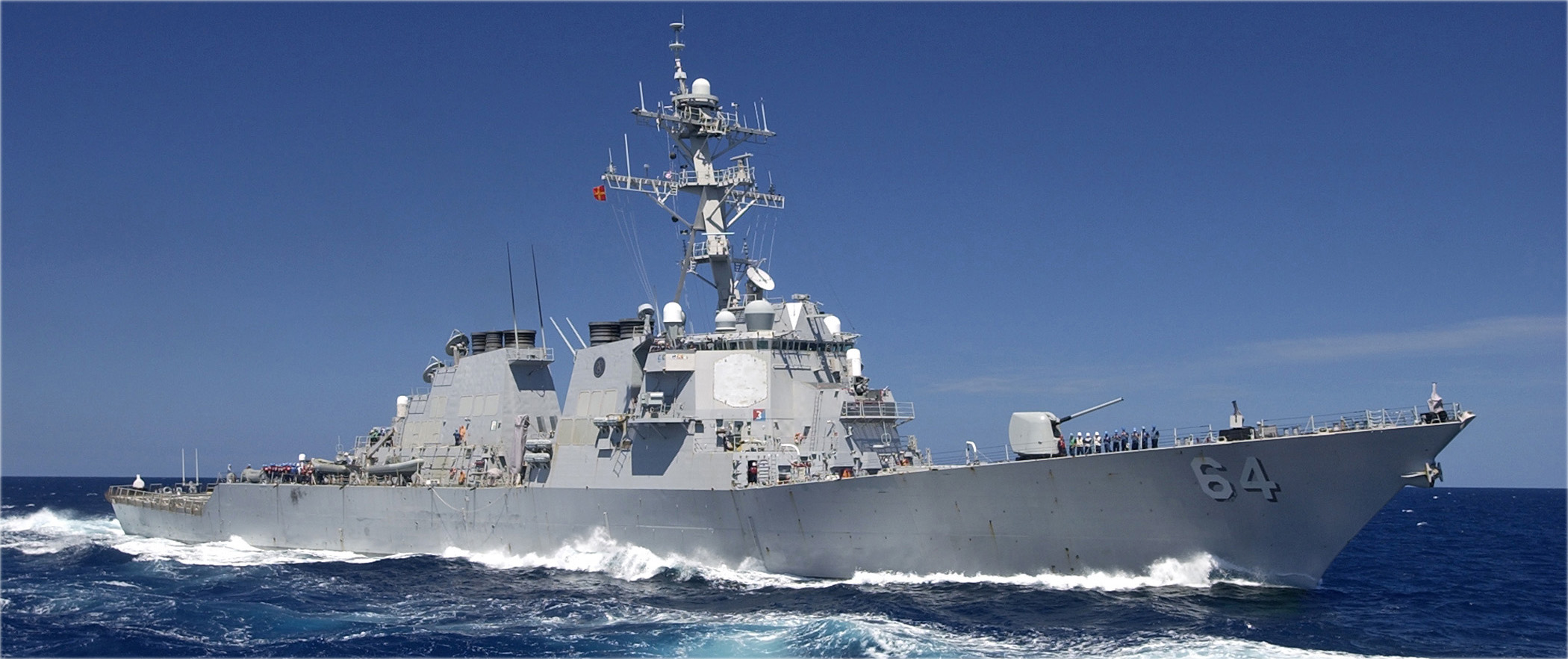
On December 3, 2023, a seven hour long attack on three
commercial ship and the guided missile destroyer, the USS Carney, took place in
the Red Sea as the U.S. warship patrolled the area. The attack by ballistic missiles
came from Yemen in four separate waves. The Pentagon claimed the attack was the
work of Iran, through which the terrorist Houthi organization carried it out.
The Pentagon went on to claim that the USS Carney shot down three of the
attacking missiles.
The U.S. Navy ship detected a "anti-ship ballistic
missile" launched from an area controlled by the Muslim terrorist group
directed toward the "M/V Unity Explorer", a 656 foot general bulk
cargo ship built in 2016 sailing under Bahamas registration. Weighing in at 61,000 tons fully loaded, she recently departed Port Said in Egypt bound
for Singapore. At the time of the attack, the Unity Explorer was carrying grain
from U.S. based Cargill. She is owned
and managed by Ray Shipping of Tel Aviv Israel.
The "Number 9", also came under attack. Built in
2007, the cargo container sails under Panamanian registration. Ironically, the 856 foot ship was sailing from
Singapore and bound for Port of As Suways (Suez Port) in Egypt. The ship is
owned by Number 9 Ltd/Cargo Harbor of England and managed by Bernhard Schulte
Shipmanagement out of Newcastle-upon-Tyne in Northeast England.
A third ship, the bulk carrier "M/V AOM Sophie II",
was also attacked by the Houthi missiles. Like the "Number 9", the
AOM Sophie II, built in 2021, sails under Panamanian registration. At 751 feet,
she has a 43,500 gross tonnage. Her
registered owners are Kyowa Kisen Company, Ltd and Green Spanker Shipping S.A.
while she is under the management of Cleanseas Shipmanagement, Inc., located in
Manila, Philippines.
The USS Carney (DDG-64), a heavily armed Arliegh-Burke
guided missile destroyer, is part of the USS Gerald R. Ford Carrier Strike
Group operating in the region as part of a two prong U.S. naval carrier strike
force which includes the USS Dwight D. Eisenhower. Each strike force consists
of approximately eight warships plus one aircraft carrier and eight squadrons
of attack aircraft plus one squadron of support planes and helicopters. That's a helluva lot of firepower.
In addition, there is likely increased submarine activity, not
to mention spy planes, drones, and dedicated satellites as well as communications
monitoring.
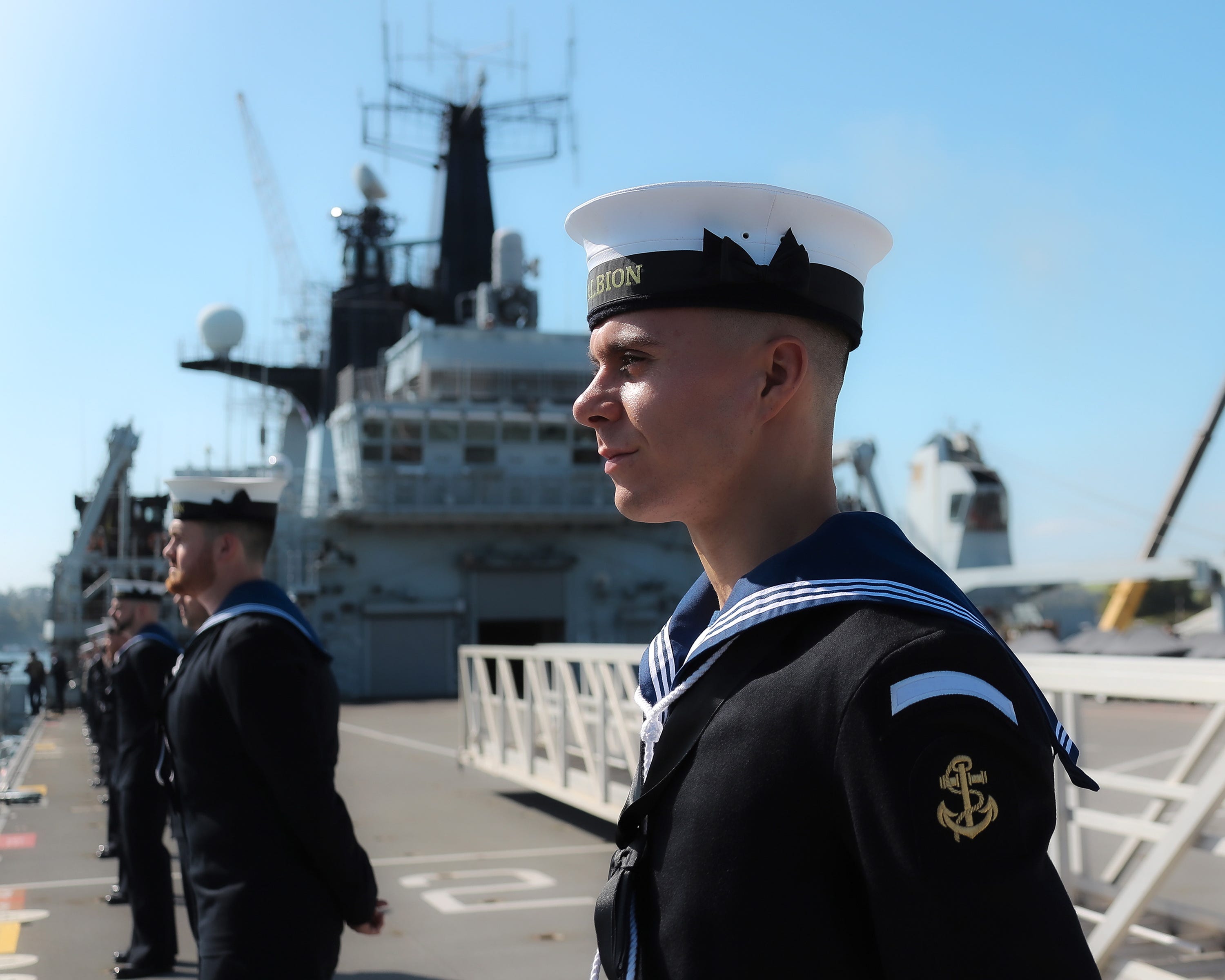
The British also sent a
carrier based strike group to the area along with a detachment of Royal
Marines, as part of a coordinated military show of force as well as to provide
air and naval support for Israel.
Perhaps the key reason for the attack, other than its
proximity to the war zone, is its ownership by Ray Shipping of Tel Aviv Israel.
The sinking of cargo ship would have serious consequences for global shipping
in the region since it could block all traffic going through the Red Sea. The
Red Sea accounts for 30% of the world's cargo traffic.
However, Houthi military command in Yemen, while
acknowledging the attacks, stated that their intelligence indicated the three
commercial ships had ties to Israel. As indicated above, only one of the cargo
ships has Israeli ties. The Houthi have previously sent guided missiles from
Yemen up the Red Sea toward Israel settlements in the south. These missile
attacks were successfully intercepted.
The Pentagon went on to say that it would pursue all
appropriate responses in coordination with its allies and partners, which
presumably means Great Britain, which has a carrier strike force offshore at
Gaza, and the Israeli military, which is currently conducting military
operations in Gaza. By the way, if Yemen sounds familiar, it might be because in 2000, Al Qaeda was almost successful in sinking the USS Cole while it was docked in Yemen's Aden harbor. 17 sailors were killed and 37 were injured.
Meanwhile, it should be noted that the International
Criminal Court ("ICC") has initiated a criminal investigation for
alleged war crimes against Israel under Article 31 of the Geneva Convention for
the deaths of civilians in Gaza and the West Bank dating back to 2014.
These deaths result from not just military attacks, but also
the alleged deliberate withholding of water, food, medicine, and electricity
according to
the Chief Prosecutor for
the ICC, Karim Khan. Mr. Khan, a British attorney, claims that some 2.3 million
people have been affected.
The Israeli-Palestinian crisis, contrary to popular opinion,
didn't start with Israel's 1948 Declaration of Independence. The situation
actually dates back to the early 1900's when various Zionist organizations
began lobbying in earnest for a Jewish homeland due to the centuries long
progroms, Many progroms restricted
Jewish ownership of property, limited job opportunities and access to higher
education, and resulted in numerous murders, rapes, and physical attacks. The most notable of the Zionist Movements
were led by Max Nordau, Chaim Weizmann, and Theodore Herzl.
Control of what was then called the Palestinian or British
Mandate came about after the fall of the Ottoman Empire in 1918 and the seizure
of lands by the British and French empires (between 1920 and 1948, the Levant
was known as "Mandatory Palestine" per the League of Nations Mandate
for Palestine). The earlier Balfour Declaration of 1917 guaranteed British
support for the creation of Jewish homeland in Mandatory Palestine, but didn't
say when.
This was followed by the creation of the Zionist Commission
for Palestine under Chaim Weizmann, president of the British Zionist Federation,
in 1918 which aggressively promoted Zionist activities in the region such as
smuggling Jews into Palestine to build up the numbers and give Jews a stronger
voice for statehood. They also actively fundraised to raise money for Zionist
programs. While the British continued to
drag their feet on the issue, World War II brought the matter to a head.
Capitalizing of the horrors of the Holocaust amid the
Nuremberg Trials and an unrelenting public relations campaign by various
Zionist organizations plus global support (especially from Hollywood, Wall
Street, and other financial institutions), the British finally relented and agreed
to the creation of a two part state known as the 1947 United Nations Partition
with Jerusalem falling under a UN trusteeship.
While the proposal was rejected by the Arabs, David ben
Gurion, the head of the Jewish Agency for Israel since 1935 and part of the
World Zionist Organization, declared independence for the new State of Israel
on May 14, 1948. Ironically, some leaders at the time joked that had it not
been for Hitler and the Nazis, it's likely there wouldn't have been ample
support of the creation of a Jewish state, and thus Hitler should be credited
as the step-father of Israel.
Immediately following the declaration, armies from Egypt,
Jordan, Iraq, Syria, Yemen, Saudi Arabia, Lebanon, along with a composite of
"volunteers" from Libya, Morocco, Iran, the UAE, and other Arab
nations known as the Arab Liberation Army, invaded. Fighting with weapons
scrounged from every corner of the world, including German WWII surplus, Israel
bitterly fought back.
Following a nearly ten month long war, a ceasefire was
arranged. Israel retained all its land plus captured 60% of the land originally
designated as part of the State of Palestine. The West Bank and East Jerusalem
fell under the administration of Jordan and Gaza fell to Egyptian
occupation. But the real losers were the Palestinians.
Approximately 700,000 Palestinians were either evicted or
forced to flee from their homes in what became known as the "Nakba"
(the "catastrophe"). Meanwhile, 260,000 Jews were evicted from
various Arab nations with another 100,000 were trapped in Jerusalem. Approximately 7000 Arabs were killed and
13,000 civilian (mostly Palestinians) perished. The Israelis lost 4,200
fighters and 2000 civilians.
This became the first of a long series of wars and terrorist
attacks in which Arab nations have sought to "push the Jews into the
sea" as former Egyptian President Gamal Abdul Nasser once said, and yet while
the damage and loss of life has been tremendous on all side, Israel remains.
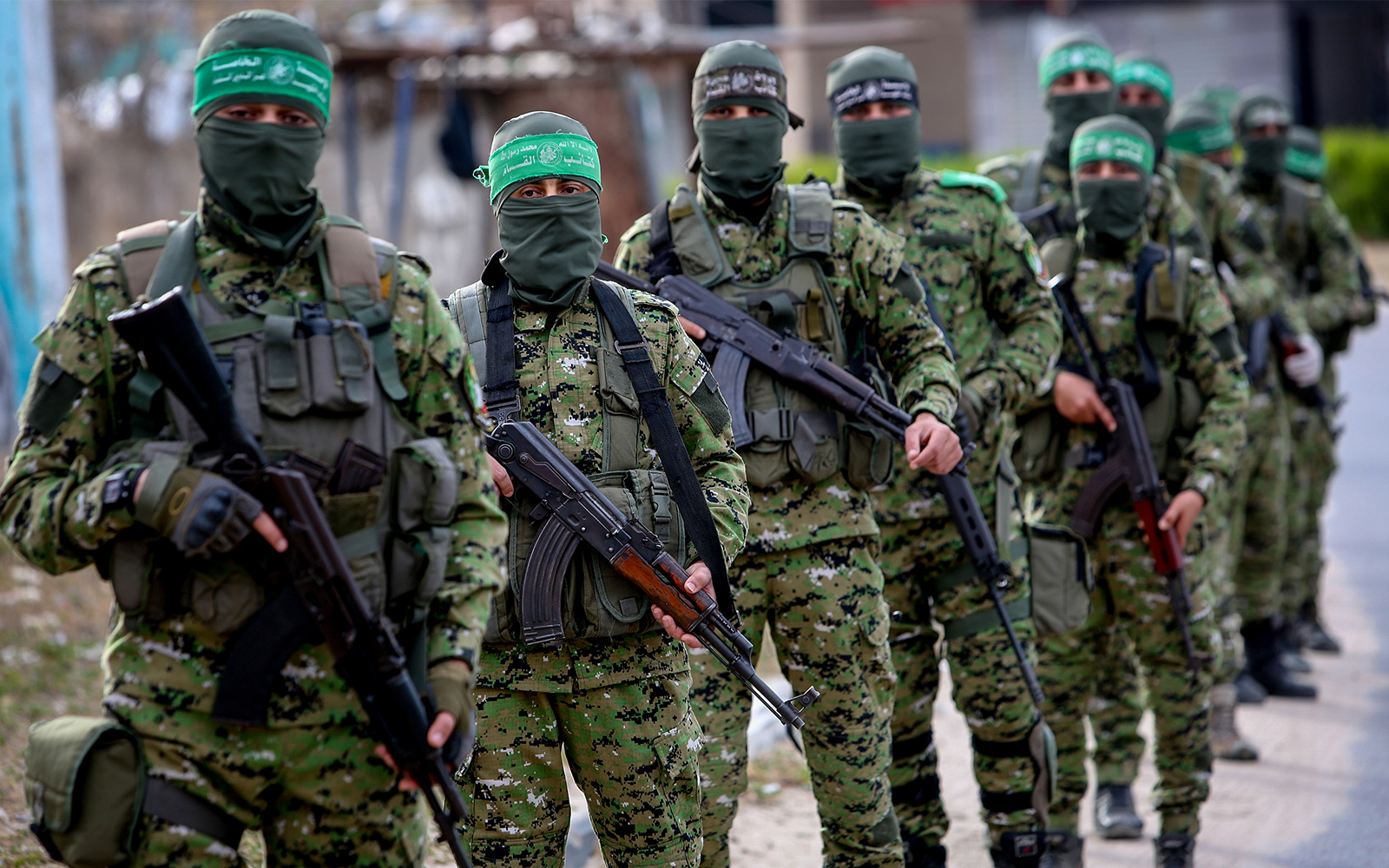
Today, Israel still faces a number of enemies hell bent on
its total annihilation, including Hamas in Gaza, Hezbollah in Southern Lebanon,
the Houthi in Yemen, Boko Haram in Nigeria, the Taliban in Afghanistan,
ISIS/ISIL in Iraq and Syria,
Al Qaeda in
Saudi Arabia, the Al-Nusrah Front in Syria, along with dozens of others
scattered around the world.
However, the most threatening is the Islamic Republic of
Iran, a extremist state if there ever was one. The Islamic government has
repeatedly vowed to "wipe Israel off the map" by any and every means
possible, including nuclear, even if it meant its own total destruction.
Iran regularly underwrites, trains, and arms the majority of
these terrorist groups, including Hamas and Hezbollah (they refer to the Israel
and the United States as "Little Satan" and "Big Satan").
And while the people of Gaza are regularly sent billions in global aide (the
U.S. alone has sent $5.2 billion dollars), much of it is sidetracked by Hamas
which it uses for its own purposes.
How is Hamas able to do this you ask? Simple. Hamas is the
elected government in Gaza. In 2006, Hamas won the Palestinian legislative
election for Gaza and the West Bank. In 2007, they militarily defeated Fatah, a
secular nationalist political party which once dominated the governing Palestine
National Authority. Politically, Hamas controls 44.45% of the legislative seats
while Fatah has 41.43% of the seats. The balance are a hodgepodge of various,
mostly Marxist, socialist, or theocratic oriented parties.
So, where does this leave us? The United States has been
itching to get at Iran ever since the hostage crisis in 1979 when 52 Americans
were held hostage for a year. Attempts by the Carter Administration to free
them failed, and in one particular case, horrendously. The fact that Iranian
aided terrorist groups also helped bring about the defeat of U.S. and coalition
occupation forces in Afghanistan and Iraq as well as flustered U.S. plans in
Syria hasn't helped the situation.
The U.S. sees the situation in Gaza as another attempt by
Iran to spread its influence (especially at the expense of U.S. regional allies
like Saudi Arabia) and encircle Israel. There's no question the U.S. will do
whatever it can to destabilize the Islamic State or that our naval presence is,
in truth, little more than bait with a B1 bomber attached.
Whether Iran takes the bait remains to be
seen.
But what about the Palestinians? They been used for decades
as global pawns for an agenda which no longer belongs to them, and what do they
have to show for it? Tens of thousands
are dead, maimed, disabled with millions living a Diaspora, and despite rhetoric
to the contrary, they live under the iron boot of a military state. It's
poverty rate is 31.9% and a quarter of the population are unemployed.
Meanwhile, Hamas get rich on the misery of their
own people. It
has an investment portfolio, including real estate, valued at over $500 million
and a military budget of $300 million. Yet more Palestinians will die due to starvation,
lack of medicine and medical care, potable water, or disease than the war. Why? Many blame Israel, but what about Hamas? Surely by now the time has
come to beat swords into plowshares. If not, then when?
If you enjoyed the article,
please consider passing it along to others and don't forget to subscribe. It's
free! Lastly please be sure to "like" us on whatever
platform you use to read anotheropinionblog.com. It helps beat the algorithms and keeps
our articles in circulation. Thank you!
Gaza War: US, British Marines 'Train for Action'; 2nd US
Carrier Reported Near West of Cyprus
Total Causalities, Arab-Israeli Conflicts: 1860 - Present
Israeli Casualties of War
ODNI: Terrorists Groups
Gaza is plagued by poverty, but Hamas has no shortage ofcash. Where does it come from?
'Hell on earth': Israel unrest spotlights dire conditions in
Gaza
International aid to Palestinians
Where Hamas gets its money and why it's so hard to stop,
even as the U.S. steps up efforts






.jpg/150px-Operation_Protective_Edge_(14481235829).jpg)