Showing posts with label corporate influence. Show all posts

Friday, October 31, 2025

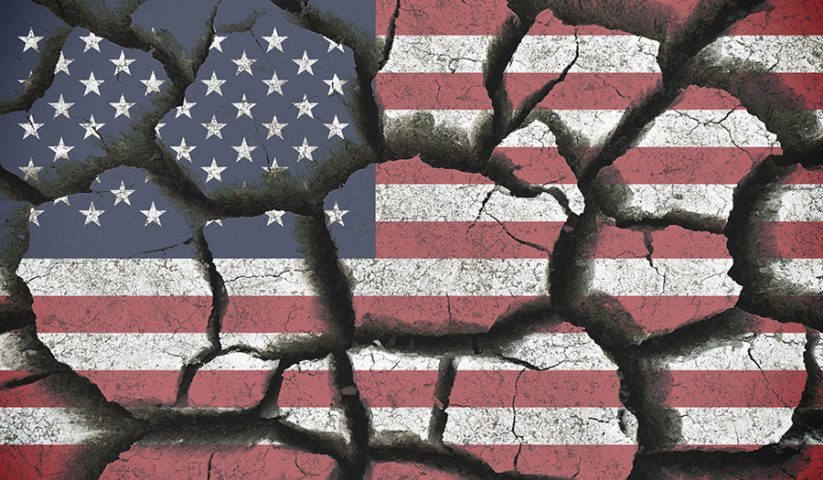
Can We Restore Our Republic?


The Ancient Romans had an expression which said that “time was fleeting’. The "Eternal Empire" as Rome was called existed little more than the proverbial blink of an eye in retrospect despite lasting well over a thousand years. One thing for sure is that time is fluid. It has a nasty habit of becoming the past before we've had the opportunity to reflect on its present. 

Perhaps America's fate will be similar to Ancient Rome's. It too was ruled by two powerful political blocs --- the Optimates and the Populates --- which were the approximate equivalent of the Republicans and Democrats respectively, and in turn were dominated by Rome's powerful and wealthy elites. But, after 482 years, the Republic fell and Rome became a dictatorship although the facade of a Republic was allowed to continue for a few more decades. 

What happened to Rome (and indeed, to most of History's republics) was not so much the result of an external threat, although that also happened, be it in the form of "illegal migration" or the near perpetual wars Rome fought throughout its history. Rome's fatal weakness , however, was internal. It was the corruption, greed, arrogance and incompetence of its ruling class, which by definition, shouldn't have existed in a Republic had it functioned properly as ours once did. 

It was partly the diversion of resources to serve the needs of the wealthy rather than the poor. It was the undermining of Rome's middle class, the backbone of the Republic, through over taxation. It was Rome's slowly decaying infrastructure as its attention focused on putting out fires throughout the edges of its empire. Even Rome's social safety net became too great of a burden. Rome also suffered under the weight of slavery while we bear the weight of a different form of slavery --- economic debt. 

Eventually, even the old maxim attributed to the poet Juvenal about keeping the populace occupied with "bread and circuses" to avoid civil revolt could no longer hold the empire together (Emperor Trajan exiled Juvenal for his comment. Apparently speaking truth to power was just as dangerous then as now). The idea was to keep the masses fed and pre-occupied in order to maintain power. 

Of course, our modern equivalent of "bread and circuses" being entertainment (includes sports, video games, movies, the internet, etc.) and consumerism with just enough media propaganda to keep the masses frustrated and confused. We’ve been transformed from citizens into consumers whose “loyalties” are to products. 

For the average Roman, there was no sudden "thud" as the Republic collapsed. The fall of nations are rarely sudden or dramatic except in time of war or some unexpected economic implosion (unexpected to all but those paying attention). The fall is typically gradual with growing peaks and valleys. Roads or bridges aren't repaired timely, or the repairs are of inferior quality. 

The quality of education becomes worse. In place of innovation, a mentality of "good enough" develops. Goods seem often shoddy quality. Crime is increasingly out of control. Taxes seem to spiral ever upward but with less and less to show for it. The last thing to be affected, however, is almost always the military. Even when Soviet Russia imploded, its military remained strong to the last. 

Ironically, the last to experience the collapse are those at the top. They're so insulated from reality they have little concept of the seismic political shift occurring under their feet. They believe that the same old platitudes and appeasements will keep working (ie: "let them eat cake") and allow them weather out the storms. They construct structures to protect them and to keep power in their hands while we’re left feigning for ourselves. 

America is no longer a Republic. Like ancient Rome, the myth is still being perpetuated by the elites to keep the masses pacified. They believe that if the illusion is allowed to continued, they can hang onto power (and wealth) a little longer. They know intuitively that at some point the masses will wake up to the scam being played out under their noses, but hope they'll be long gone or fully insulated by then. 

Unlike Rome which, after a series of social upheavals, transformed from a Republic into a militaristic dictatorship under a single powerful leader, America has turned into an Oligarchy pretty peacefully. But to be more specific, we've become a Corporatocracy, which I suspect is a term that some of you have never heard of before (unless you’re regular readers of A/O). 

A Corporatocracy is quite simply a form of government controlled by either corporations or corporate interests, which, in turn, is a type of plutocracy or rule by the wealthy. Who in their right mind can deny that Washington, as well as every state capitol or local city hall isn't dominate by a wealthy few? Money buys power. Power makes money. 

Washington has near 15,000 lobbyists representing corporate interests. These lobbyists provide the money (and perks) needed to make elections happen. They ensure that those who cooperate remain in office and those who don't are defeated. These same lobbyists "help" write legislation either directly or through so-called experts they retain. In a nutshell we actually have are two political cliques who are beholden to competing corporate interests (think of it as Coke vs Pepsi arrangement but cooperate to keep out any competitors). 

Under a Corporatocracy, which literally owns both parties, political outsiders such as third parties or Independents (who, by the way, are the country's largest political bloc) are keep out of any debates and off ballots whenever possible. They also use the media, which they own, to degrade, humiliate, or simply ignore any challenger. Thus, voters are virtually forced to pick between one of two pre-determined and pre-approved choices. 

The goal of a Corporatocracy is to remove any and all barriers which interfere with corporate profits. Through their control of government which includes not just those selected (err, I mean "elected") but also the governmental bureaucracy itself via appointments and the judicial system to provide the appearance of legitimacy. They  use "think tanks" to direct domestic and foreign policy and the media to manipulate public opinion. 

Domestically, the only acceptable form of chaos is the one which is managed. Take for example what's currently happening here in States. In addition to the COVID virus, we're witnessing BLM and Antifa running amuck. We're subtly being encouraged to be "afraid". 

The COVID virus was sold as some amorphous death cloud lingering around the next corner while neo-Marxist BLM and Antifa anarchists are planning to impose Communism (or worse, “socialism”) on unsuspecting Americans. Meanwhile, Trump and his supporters are nothing more than better dressed versions of Nazis and Fascist! 

The truth of matter is that both BLM and Antifa has used high profile incidents which should never have happened and turned them into political events. It's also true that BLM has a strong racist bent to it and Antifa behaves more like the old Nazi "Brownshirts" they allegedly opposed (as an aside, the Communists of that era had their own group of thugs known as the "Red Front". They fought the Brownshirts blow for blow). 

Social order is a precondition for capitalism and democracy to function properly, and that includes Corporate capitalism. Normally, the type of chaos we experienced from Antifa and BLM would have the ruling class quaking in their Gucci's, but it's not and I'll tell you why. 

First, there will be no "socialism" or "Communism" takeover despite what political front groups tell us on social media. Neither are conducive to the neo-fascist environment that a Corporatocracy needs to operate in. Both Communism and socialism require total government ownership of everything, and that ain't gonna happen. 

The elites will never willingly surrender their wealth or control over government and the economy, but they will use the fear of these political system as a bogeymen to scare the people into demanding that the government "do something" to protect them. Historically, people have always been willing to sacrifice freedom for security. 

In 1933, it was the Reichstag fire which Hitler used to push through the "Enabling Act" which ultimately gave him near absolute power in Germany. But before that it took a volatile economy, a political climate where the use of scapegoats were plausible, a series of assassinations, a high crime rate, mounting external threats and finally the fire itself to make the Enabling Act possible (not to mention the subsequent trial of three Bulgarian communists and a 24 year old Jewish Dutch Communist willing to admit to setting the fire to bring it to a head). They each played their part of (to borrow from Lenin) "useful idiots" just as BLM , Antifa, and their supporters are now playing their part. 

America is being transformed. There is absolutely no doubt about it. That transformation is as profound as Rome's was from a Republic to a militaristic dictatorship. There will be no socialism or Communism in our future nor a return of our cherish democratic and Constitutional Republic, at least not in the near term, and not as long as the Oligarchy remains in power. Our best hope is to demand changes which transfers the balance of power back to the people. 

How? I talking about term limits; a level political playing field that allows all parties and individuals the same ballot access and inclusion in debates; ending Citizens United and taking unlimited corporate money out of politics; ending corporate participation in writing legislation; allowing nationwide voter referendums; ranked choice voting; equal ballot access; mandating the former government officials not be allowed to engage in lobbying directly or indirectly for a minimum of ten years after they leave office; voter approval for tax, fee, rate, or salary increases of elected officials. 

Lastly, require that all elected officials resign from whatever party they're a member of once they are sworn in. The only loyalty should be to the people they were elected to represent. Only then can we restore America back to the People.


If you want to know more about this article's topic, please check out the links below. If you enjoyed the article, please consider passing it along to others and don't forget to subscribe. It's free! Lastly please be sure to "like" us on whatever platform you use to read anotheropinionblog.com. It helps with the algorithms and keeps our articles in circulation. Thank you! 


Corporatocracy


The U.S. is an Oligarchy? The Research, Explained


Lobbying Data Summary


The 20 companies and groups that spent the most money to influence lawmakers


Thursday, June 05, 2025

The "Gospel" of Partisan Politics

I am a frequent and often requested respondent on the site "Quora". Over the past 5 or so years, I've had somewhere in the neighbor of 10 million viewers and have my answers included in a number of dedicated spaces which are similar to encyclopedia entries. My specialties are history (especially military history and WWII in particular), economics, theology, humanities, community organizing and activism, management/employee relations, sociology, and of course, politics. 

Recently I was asked a rather unusual political question. The individual wanted to know which of the two corporate controlled parties (the Democrats or the Republicans) considered their particular brand of political dogma to be "gospel", which I took to mean as not based on their professed "ideal", but on their reality. Below is my answer. How would you have answered?  Does either party govern the way they claim to do? 

Which party sees its dogma as political “gospel”? Simple. They both do. That’s why we have such a wide and deep partisan divide. Each believe they know what’s best for the country and the American People. Each has a nearly inflexible political dogma which has lead to intolerance for anyone who isn’t as “pure” as they are. Compromise, which used to be considered the hallmark of modern politics , is now viewed with contempt.

The only thing the two corporate owned parties seem to agree on is their opposition to third parties and Independents (who happen to the nation’s majority voters) because they represent a threat to their control and power. Independence of thought or the development of critical thinking skills are to be discouraged and ridiculed.

Secondly, both agree on pursuing every means of self-enrichment, primarily for the benefit of their controlling corporate clique. It’s not by chance that power doesn’t rest in the hands of the voters, but boardrooms. There’s a reason why we’ve transitioned from a Republic to a corporatocracy and why we’re led by an oligarchy of very wealthy individuals.

As long as we remain divided, we are easier to control and manipulate, which is why both parties have largely purged moderates/centrists for their ranks. It’s why money is “free speech”. It’s why corporations, those legal fictions, have not just the same rights as people, but in many cases, have rights that exceed flesh and blood citizens. So, which party sees its ideology as “gospel”? The answer is that both do, and their gospel was written on Wall Street and their prophets can be found on “K” Street. 


Thank you for reading "Another Opinion", the Op/Ed blog page for the "militant middle".  Here at "A/O" we truly value our readers. At A/O we seek the facts as they exist, not partisan talking points.  We hope you find our articles informative and engaging. Comments are welcome, provided they are not vulgar, insulting or demeaning.  Another Opinion is offered without charge and is directed toward all independent and free-thinking individuals. We ask, however, that you "like" us on whatever platform you found us on in order to keep our articles available for free to others. Lastly, in order to keep costs down, we depend on passive marketing, and therefore, depend on our readers to please forward our posts along. Below you will find links to the sources we used in writing this article. Thank you. 

Friday, January 20, 2023

The Non-Alignment Movement: The Key to Global Sustainability and Peace?

Most people know that following the end of World War II and the defeat of Axis Powers in 1945, a schism occurred.  The Western  Allied Powers split from its former partner, Soviet Russia. As former Prime Minister Winston Churchill so eloquently put it, an "iron curtain" fell across Europe, separating the West from the East in more ways than one and marked the beginning of the Cold War which lasted until 1989.

These historically independent countries, "liberated" by Soviet Russian forces from their Axis occupiers, were effectively sealed off from the West. They were deprived of the opportunity to choose a government and economic system based on the will of the people as per the agreements of the Yalta and Potsdam conferences.

A few were permitted to have an "election", however only Communist candidates appeared on the ballot while in some cases votes were counted by pro-Communist officials, appointed by Soviet Russian political officers.  As Stalin famously said, "I consider it completely unimportant who in the party will vote, or how; but what is extraordinarily important is this—who will count the votes, and how".

Although the four principal powers---France, England, Russia, and the U.S.--- had agreed on free and open elections, Soviet Russian forces quickly proceeded to flush out any nationalist, pro-democratic (including social democratic) or pro-capitalist supporters. All non-Communist newspapers and radio broadcasts were immediately shut down.

In lieu of a free and open democratic expression, Stalinism was imposed on the people. Any even suspected of opposing were arrested. A few were afforded the opportunity to "confess" their guilt through show trials and to have their families and friends publicly denounce them.

Most never went to trial. Instead, they were immediately detailed to the brutal work camps of the Gulag where, despite the length of their sentence, faced a life expectancy of no more than five years. Others were simply murdered. In short, one oppressive occupier merely replaced the other.

However, what many people don't know was that the world didn't fall neatly into two competing ideological camps, Western capitalism on one hand and Communism on the other.  There was a third alternative. It was called the Non-Aligned Movement (NAM).  It sought a balancing act between the two great superpowers, the United States and its allies and the USSR and its supporters.

Formed in 1961, the Non-Alignment Movement (NAM) was the collective brainchild of Gamal Abdel Nasser of Egypt, Yugoslav President Josip Tito, India's Prime Minister Jawaharlal Nehru, Ghanaian President Kwame Nkrumah, and Indonesian President Sukamo.

The movement eventually expanded to encompass 120 countries. It represented 58% of the world's population (or about 4.57 billion people) along with 36.1% of the world's habitable areas.  In terms of economic output, its member nations export roughly $4.499 trillion dollars in goods and services.

Among its agreed upon principals was the opposition of colonialism and imperialism, foreign aggression and occupation (militarily or economic), foreign domination, and any form of outside interference by a foreign nation or block of nations. It also opposed any form of apartheid.  Its emphasis would be on mutual cooperation and support. The movement was designed to represent a center path which avoided the Soviet Bloc and Western Bloc.

With the fall of the USSR and end of the Cold War, the movement appeared adrift and without a political purpose.  With only one world "superpower", it considered facing obsolescence like that predicted for NATO.  However, that perception quickly changed as new post-Cold War blocks began to form. China's rapid economic expansion too proved to be powerful alternative to Western hegemony. 

As a result, NAM adapted to the changing political and economic events. While retaining a policy opposing economic and political neo-imperialism and colonialism and supporting peaceful co-existence and mutual co-operation, it expanded beyond trade to include support to improve access to quality education, a reduction in global poverty, opposition to social injustice and gender equality.

For example, all but two countries in Africa (Sudan and Western Sahara) are members of NAM. Nevertheless, half of the countries in Africa's Sub-Sahara have poverty rates of 35% or higher (the international poverty rate is subsisting on less than $1.90 per day). By 2030, half of world's population living in poverty will be in Africa, followed closely by South Asia. As an aside, about 689 million people currently live in extreme poverty with about 3.4 billion living on its edge.

NAM also reiterated its strong opposition to cultural homogenization or the grafting of foreign influence on native symbols, culture, dress, medicine and so forth  while deliberately suppressing native language, values, traditions, or religion.  What does this mean?

A few good examples would be the forced homogenization of a nation hell bent on the self-created myth of "manifest destiny" on the culture and beliefs of native peoples like 19th century America, or the British Empire's attempt to "civilize" India, and the Catholic Church's forced conversion of indigenous populations. Sadly, history is chalk full of other examples.

Operating under the umbrella of the United Nations, NAM  has adopted policies such as self-determination of Puerto Rico and the Western Sahara, democratic reform of the UN's Security Council to make it more transparent and effective, broader expansion of technology to second and third tier nations, restructuring debt and trade agreements, and economic investment in poorer countries.    

Long term sustainability is also another major key goal for NAM members. This includes development of natural resources in a environmentally responsible fashion, as well as the development of sustainable housing, electricity, fresh water, and expanded healthcare. 

Of course there has been criticism, especially from the West (and particularly the United States). Some of criticism pertains to ongoing internal conflicts along ethnic and religious lines and political corruption while some members are in conflict with each other (such as Iran and Iraq or India and Pakistan) in violation of NAM's founding principles. Other criticisms points to a policy of self-interest at the expense of fellow member states and a lack of defined objectives for both the short and long term development of NAM. 

While one of the key principals of the Non-Aligned Movement has been gender equality, it's worth noting that none of its 31 chairmen since its establishment in 1961 has been a woman. Worse still is that several of its members deny even the most basic equality for women such as the right vote, hold public office, drive, own property, hold a job, or obtain an proper education.

Noncompliance with these archaic laws can in some instances result in public beatings or caning, fines, or even stoning. In a few countries, female genital mutation is tolerated (at least unofficially). Much the same can be said for the treatment of homosexuals. Doesn't say much for equality does it?

Lastly, the loudest complaint (which comes primarily from the U.S.) is that the Non-Aligned Movement has been especially harsh toward Western capitalism and yet lenient when it comes to Communism.  Doesn't sound evenhanded does it? But  when you consider that many of NAM chairmen have been Communist or Communist sympathizers, it makes sense that it would affect their credibility. 

Meanwhile, in a few of the member nations, political opposition groups are either restricted or outlawed while freedom of speech, religion, and assembly are curtailed (especially if its criticism of the government). Violators are often fined, tortured, imprisoned, and in some cases "disappeared".

Since these are predominately poorer countries, many feel they've been taken advantage of by the West, and there's likely some truth in this. Western countries have a long history of exploiting weaker nations. It's at the heart of colonialism (however, domestic "colonialism" is also to blame as one tribe or ethic group seeks to exploit a weaker one).  

Today, in the era of growing neo-fascist corporate globalism, we have a new form of colonialism where  governments are openly and covertly bribed (it doesn't sound so insidious if you think of it in terms of "corporate sponsorship"). This usually works since these corporations control not just the political parties, media, and finances of their country, but the domestic and foreign policies of their respective governments. It's all about control of and access to assets and resources.

So, while Neo-Cons on both sides are trying to rekindle a new Cold War, where does the Non-Aligned Movement go from here? Some see the movement as flawed from the beginning. They can't comprehend a non-aligned stance by any nation. Their political imagination is in black and white as if this was some playground game where you have to "pick a side".

It reminds me of America's deepening political abyss where Democrats and Republicans can't comprehend the non-partisan political stance of an Independent. Some will grudgingly "permit" Independents (who are the majority of voters) and third parties types the option of "leaning" Democrat or Republican as if they were closet partisans, which couldn't be further from the truth.  This is especially true of the corporate media and pollsters.

The fact of the matter is that the majority of nations today don't want a new Cold War. They don't want to be forced to align with a kleptocratic and yet fragile Russia, an imperialistic and unstable China, a fractured EU, or a failing American Empire (and they certainly don't want backwards theocratic state)  Many nations are rethinking capitalism as much as they are reconsidering socialism or even Communism in its present form.

Perhaps too it's time to find a whole new system.  One thing is for certain, no one system is right for everyone and that's why globalism will fail. Humanity, for all its technological arrogance, is still tribal, but that's how we're hardwired. We're also too self-serving, both individually and nationally.

Ultimately, we want what's best for us and damn the rest. That's why there are wars. It's also why we still have poverty on a global scale and millions starving in a world where 1.1% of the population controls nearly half of the world's wealth.  The ruling oligarchy may own the oil and gas but the poor have the matches.

The Non-Aligned Movement, for all it's (many) flaws recognizes our tendency towards self-interest and thus conflict. However, despite political and economic ideologies, ethnic and religious divisions, agrees to find ways to accept these differences and try to work together as best as possible.

The era of the one size fits all Pax Americana has ended. Any attempt to put Humpty Dumpty Uncle Sam back together again will fail just as utterly as any attempt to reconstruct Cold War alliances. Meanwhile, the more China attempts to impose its particular flavor of despotism on its neighbors and trading partners, the more it will be rejected in favor of human freedom. That too is part of our nature for we are a rebellious species.

At best we may see a world of loose regionalism and cooperation, but not at the expense of national interests or identity even if it's preservation means it balkanization to save some part of the original. Thus perhaps the Non-Aligned Movement may prove to be the best model to be emulated. 


If you want to know more about this article's topic, please check out the links below. If you enjoyed the article, please consider passing it along to others and don't forget to subscribe. It's free! Lastly please be sure to "like" us on whatever platform you use to read anotheropinionblog.com. It helps with the algorithms and keeps our articles in circulation. Thank you! 


Latin America and the New Non-Alignment

https://foreignpolicy.com/2022/12/23/latin-america-2022-nonalignment-world-cup-messi-migration/


Non-Aligned Movement

https://en.wikipedia.org/wiki/Non-Aligned_Movement


World Data: Member States of the Non-Aligned Movement

https://www.worlddata.info/alliances/non-aligned-movement.php


NTI: Non-Aligned Movement (NAM)

https://www.nti.org/education-center/treaties-and-regimes/non-aligned-movement-nam/


No cold war, please: How Europeans should engage non-aligned states

https://ecfr.eu/article/no-cold-war-please-how-europeans-should-engage-non-aligned-states/


The New Non-Aligned Movement

https://www.heritage.org/global-politics/commentary/the-new-non-aligned-movement


Friday, September 09, 2022

Breaking Our Faustian Bargain With Partisan Politics

Would it surprise you to know that many of the Founding Fathers opposed the creation of political parties? They feared that partisan politics would tear the nation apart, creating separate cliques of special interests whose only commonality would be to strip the citizens of their natural sovereignty.  Even the poster boy for Federalism, Alexander Hamilton, called political parties "the most fatal disease" of populist governments.

James Madison, the man considered the "Father of the Constitution", thought that if not for a strong Constitution, political parties could rip the nation apart. Thomas Jefferson, perhaps the most intelligent man ever to occupy the presidency, strongly opposed partisan parties. He thought it was a mistake not to make some provision for the regulation of parties in the Constitution to keep them in check. I suspect he was right.

Our first and arguably greatest president, George Washington, even warned us against the dangers of political parties in his farewell address. But he did more than just warn the nation, he showed us how we could work around our political differences.

President Washington (who, by the way, was a defacto Independent), recognized that differing political opinions were the norm, not the exception, choose to put men of competing political opinion in offices in order to force them to compromise for the sake the nation.

Washington understood that while it may make for a rocky administration, it would benefit the nation and its citizens in the long run by seeking middle ground in lieu of narrow minded partisan conformity, such as what we have now.  For example, Washington appointed Federalist, Alexander Hamilton, who wanted a strong central government and was supported by Northern business interests which wanted to rekindle trade with England, as his Treasury Secretary.

Meanwhile, Washington appointed Thomas Jefferson, who wanted a small limited government and had the support of mostly Southern farmers and tradesmen as his Secretary of State. Jefferson was also a supporter of the French, who came to our aid in our war for independence, and were a long standing enemy of England.  The result was finding a common middle ground that was best for the country and not necessarily for either political clique.

All this begs the question about the need or importance of political parties today, especially given their ownership by Wall Street and cliques of the super wealthy. As most (hopefully) Americans now know, we're no longer a Constitutional or democratic Republic with a free and non-partisan press.

We've become a Corporatocracy under the control of a group of wealthy elites whose only interest is in acquiring control, be it control over assets, resources, or us. The media serves as their propaganda arm; to manufacture news to influence our opinions and divert our attention from the real issues. Heck, we can no longer trust our votes to count! It seems like it's all a nightmare doesn't it?

Apparently the majority of Americans agree since both of the two corporate parties are in decline. They've been in decline for around 20 years. The largest political bloc, with 42% of registered voters, is Independents. A growing number of political scientists even predict that within the next 20 years, one or both of the two corporate parties could likely cease to exist (the money is on the Republicans going extinct). So, what can we do to restore the balance of political power? 

President George Washington took the high road. He did his upmost to stay above the political mudslinging (which may be one reason he's so revered over 200 years later). Washington believed that once someone took office that regardless of which "faction" they adhered to, their role was to serve all the people, not just their side.

Most Americans don't realize that when their candidate loses, in our "winner-take-all" political system, they are no longer represented for the duration of that term, be it two, four, or six years. Without term limits or ending partisan gerrymandering, it could be as long as 30 or 40 years if not longer! Imagine that. Paying taxes without anyone from your district to champion your political interest.

True, you might still be able to get a hole filled or a tree trimmed, but that's a big difference from getting support on specific piece of legislation. Of course, you could always go to the time and expense of moving and leaving your home and neighborhood. But on the other hand, why should you? Aren't these people elected to office your representative?

We know that the two parties are corrupt. We know whose interests they serve, and it isn't ours. We know that candidates of both parties tend to lie or distort what they'll do "for" us (actually "to us") if elected. First off, no one person can successfully "stand up" to special interest when that special interest finances their party and probably their campaign.

Besides, we aren't fools. We know that no single individual can do anything. Everything is run by and through committees, which are party controlled, which means ultimately corporate controlled. Legislation is even written and reviewed by corporate lobbyists. All we end up doing is making a Faustian bargain; a deal with the devil to be burned last, but there are some things we can do. 

The principal reason for partisan elections is to ensure the continuity of a specific ideologically and maintain political control for the financial benefit of the party's corporate sponsors. It's the same reason sports teams try to win races. It looks good for the team and it makes everyone money (except the fans. They pay the money). But what if a political office doesn't do either? What if it just enforces existing laws. What if its partisan leaning unintentionally implies partiality and bias?

The State Office of Attorney General is the chief lawyer for the people.  They are also the chief legal adviser to the governor, the state legislature, and the state's various agencies. In the United States, attorney generals are elected in 43 states (not including territories) and appointed in the remaining seven.

In every single instance they are partisan. They are either Democrat or Republican. In fact, there are 27 Republican and 23 Democrat Attorneys General. The only non-partisan Attorney Generals are found in the Territory of the Northern Mariana Islands and the Territory of Guam, both of which are in the South Pacific.

Now, I don't know about you, but I prefer to get my legal advice from someone who's impartial. Since an Attorney General's job is simply a legal function, and doesn't make laws (although they are supposed to provide a non-bias legal opinion on various laws proposed by the partisan legislature), wouldn't you want someone without a dog in the fight? It's like the coach of the Chicago Bears calling plays for the Green bay Packers. Why then isn't the Attorney General's Office non-partisan?

Staying on the legal topic, the same can be asked of city or county attorney generals. Why are these offices partisan? Judges have their own personal political opinions, yet are elected in non-partisan races. Why wouldn't we want the same of an attorney elected to represent the community and it citizens? Their partisanship by definition presumes a political prejudice. 

Another key political office is Secretary of State. There are 47 Secretary of States, of which 35 are elected by voters while the remaining 12 are appointed by a partisan governor. Of the 47, 27 are currently Republican and the other 20 are Democrat. None are non-partisan. Why?

The Secretary of State is charged by the state constitution with maintaining business records for the state, commissioning and regulating notaries public, keeping official records, and in most cases, maintaining the state seal. However, its most important job is as chief election officer. They administer elections, oversee and report official election results and voter registration, which is locally managed by a local clerk for the Board of Elections (sometimes called the County Clerk or County Elections Clerk), another elected partisan office.

In most states, County Clerks also oversee registration and licensing of boats, trailers, and vehicles, marriages licenses, issue permits, title transfers, delinquent property taxes, recording legal documents, maintain deed records, and handle voter registration. They are also tasked with the retaining and training election officers (who are paid with public tax dollars) to work the polls.

However, did you know that only Democrats and Republicans can be election officers? Yelp. State law in some places (like Kentucky) say that registered non-partisan voters like Independents and third parties can't serve, but their taxes still go to pay for partisan only election officers. Sounds shady to me!

The Office of Secretary of State passes no laws. It votes on no legislation. It's strictly an administrative office, so why is it partisan? Why would anyone trust an office run by partisan politician who is charge election results, voter registration or hiring election officers? As an aside, the County Clerk also appoints individuals to oversee election matters pertaining to Republicans and Democrats. No one oversees Independents or third parties. So what happens to the nation's largest political bloc?

In each state, the corporate party with the least number of registered voters is assigned Independent, third party, and "No preference" voters. Naturally, they couldn't care less about those individuals, but someone has to get stuck with them right? In short, they are ignored. The corporate party with the largest number of voters also gets the lion's share of board and commission appointments. That means the largest voter demographic and third parties are simply ignored by the political system.

Several other elected state offices are just as guilty of playing partisan politics with voters such as the Auditor, Treasurer, Transportation, Agriculture, and Commerce equally all have no law making capabilities. Collectively, these offices are referred to as Constitutional offices. They exist by virtue of the state's constitution and are strictly administrative in their function, yet they're partisan.  

Other offices, not elected, are just as important, such as Commissioner of Insurance, Labor, or Public Education. These administrative offices are appointed by the governor primarily based on party affiliation, and not solely on qualifications (in a few states, the Office of Lt. Governor is also appointed, while in other states they may run as a single ticket or independently).

In none of our state constitutions (nor in the federal constitution), does the chief executive make laws. That role is designated solely for the state legislature(as an aside, Nebraska is the only state with a non-partisan state legislature). The governor, however, does sign or reject bills which comes before them. Obviously, a partisan governor is more likely to sign (and promote) bills passed by their corporate party and reject those by the opposition instead of evaluating them based solely on their merit and benefit to the citizens of the state, which makes much better sense. The same holds true for mayors or county commissioners.

We also shouldn't forget the County Court Clerk, Property Valuation Administrator, City Tax Assessor, County Sheriff, County Constable and/or Magistrate, or County Judge. These are almost always partisan offices. Tell me, why would you want a partisan sheriff, tax assessor, or County Court Clerk?  None of these publicly elected offices should be politically biased. None.

The only elected partisan offices should be those which write laws or establish policy along ideological lines (and even that's questionable). Increasingly, some municipalities have gone to all non-partisan metro councils and assemblies, which only makes sense. Their job is to serve the residents as impartially as possible, not dictate lifestyles. You can't do that when you're serving a political party which is owned by a conglomerate of corporations and special interest groups.

So what do you think? Should elected administrative and appointed offices which don't make laws or establish policies be partisan or should they retain their administrative function as established by constitution or law and serve everyone equally?  Personally, I think President Washington had it right.


If you want to know more, please take a look at the links below. If you enjoyed the article, please consider passing it along to others and don't forget to subscribe. It's free! Lastly please be sure to "like" us on whatever platform you use to read A/O. It helps with the algorithms and keeps our articles in circulation. Thank you! 


George Washington's Mt. Vernon: Political Parties


George Washington Warned About Political Infighting in HisFarewell Address


Jefferson County Clerk's Office: Election Officer Information


Ballotpedia: Attorney General (state executive office)


Ballotpedia: Secretary of State (state executive office)


Gallup: Party Affiliation Trend Since 2004


Partisan vs. Nonpartisan Elections


Non-partisan Democracy


Friday, March 11, 2022

The Death of RT America: The War in the Ukraine and Freedom of Speech


I think most people haven't grasped the significance of RT America being so abruptly shutting down. Admittedly, RT America was a news and talk show channel underwritten by the Russian Government, and yet everyone was completely free to report on any topic, be it about Biden, Trump, Putin, the economy or the climate, as long as it was objective. Yet, it abruptly closed over the course of just a day.

It might be a side effect of all the sanctions imposed on Russia. It might have been the result of various Western platforms dropping RT America through indirect pressure from the Biden Administration or their corporate ownership. It could also be because many of RT's on air personalities openly opposed the war in the Ukraine and blamed not just Russia, but NATO, the U.S., and the Ukraine for creating the situation.  Perhaps it was simply a combination of all the above.

There's no doubt that RT America brought a different perspective. It wasn't quite a Russian perspective, but it was certainly not necessarily a Western one. It was definitely not one which favored Biden or his administration. The BBC, which is underwritten by the British government gives the British point of view, and no one complains, so what's with RT America?

There's no question that U.S. media presents "news" from a highly slanted point of view. After all, it's owned by just five corporations. They manipulate everything we see and hear. They influence our emotions about any given topic. They impact our opinions. Heck, they even decide what stories we get to report and from what angle. No wonder most consider the media to be the propaganda arm of the Corporatocracy and its controlling Oligarchy.

When we look at the Ukraine, we're told that U.S. sanctions are affecting Putin and his cronies; the super rich oligarchs. RT America claimed that Zelenskyy's government in Kiev is corrupt, anti-democratic, and a functioning oligarchy of its own. They pointed to deals concocted between Joe Biden's son, Hunter and individuals in Zelenskyy's government. 

They also pointed to China and claimed that the CCP--the Chinese Communist Party---and the relatively handful of large corporations it permits to operate (and are part owners with), is another example of a corrupt oligarchy, and yet according to our media, the U.S. is free from corruption; it's an open and successful democracy protected by a Constitution. Yeah, right. Does anyone actually believe that?  Of course not.

The Economist Intelligence Unit, part of The Economist Publishing Group, reports that for the fifth year in a roll America is listed as a "flawed democracy". Polls after polls prove that the American People aren't as stupid as the politicians in Washington, or the media, think we are.  Their approval ratings have been consistently low for decades (it's currently at 20% with a disapproval rating of 75%).

We know elections are rigged. It's called gerrymandering, electioneering, and rigged ballots, and it's getting worse every election cycle (I was a victim of electioneering when I first ran for office in 2002).  Stalin recognized this subtle power play when he said that it didn't matter how many people voted, but who counted the votes.  

We know that no one actually represents us. Thanks to Citizens United, corporations have pushed the average voter out of politics. They literally own both parties and the vetted clones they call "candidates". In our "winner take all" system, when your choice loses, no one is there to represent your interests. We fought a revolution over that---taxation without representation remember?

The system is also rigged to keep third parties and Independents from having any real chance at getting elected. First of all, the media works with both parties to downplay any non-corporate (that is, Democrat or Republican) candidates. They're treated as sideshow attractions. They are denied access to debates at the federal level (and sometimes at the state and local levels).

If a "non-vetted" or pre-approved candidate (such as a Donald Trump or Ralph Nader) or rogue party member (like a Bernie Sanders or Dennis Kucinich) run, they are subject to all sorts of harassment and ridicule. They are denied funding, access to media, and various forms of support.

If by some miracle they're actually elected, you need to go no further than Trump or Sanders to see how far the Status Quo will go to make them look like a joke and render them ineffective. As an aside, the Status Quo still isn't finished with Trump. Although he's been out of office for over a year, they are still going after him every which way they can.

They want to ensure that Trump will never again run for office; that his personal reputation is utterly destroyed (including his credibility); that he is broken financially; and that no one else will again try to do what he did, and they'll change the rules to be sure like they did after Ross Perot ran in 1992. Only those with a unwavering loyalty to the Status Quo need bother to file.

Corporations control American politics. Their lobbyists literally write much of the legislation which they chaperon through committees (with each tacking on a little extra something for their trouble). The government creates agencies to farm out certain regulatory, enforcement, and management to unelected anonymous bureaucrats, often leaving the taxpayers with little or no real recourse.

At the same time, big dollar corporate players come and go through a never ending "revolving door" between government and Wall Street.  The result is often removal of regulatory boards and restrictions, plus tax breaks, exemptions, and highly lucrative contracts, while simultaneously, creating more regulation and higher taxes for small businesses and us, barriers to government contracts, and legislation to reduce or eliminate competition for Big Business. 

Case in point, during the COVID lockdown, small local and regional businesses were order to shut down to (allegedly) prevent the spread of the virus. Meanwhile, large corporations were exempt. Large corporations were "entitled" to tax credits and no/low interest loans to cover costs and wage. Not so the small moms and pops.  Big Business was given preferences to deliveries in order to keep shelves stocked and their businesses going. Local businesses were on their own.

Now, we're facing rising inflation, higher food and gas costs. Do you think it will affect any of the wealthy? No, but it will affect most all other Americans. It will certainly affect small businesses. It's worth pointing out too that with rising inflation and higher costs, many of those small companies which survived the COVID lockdown are not likely survive this latest economic blow.

Most Americans don't realize that the U.S. has been on a quasi-wartime economic footing for decades. War stimulates the economy. It's profitable. It eliminates "excess" unemployment and keeps Big Business going. When the economy is good, unemployment is low, which means fewer people enlisted in the military and less money for the military machine. 

When the economy is bad, unemployment and underemployment are high and companies slow down. People join the military to have a paying job, and the military industry rakes in billions. You would think there are more peaceful ways to keep the economy humming along and growing than through a sector of government and industry which demands perpetual death and destruction. 

The U.S. has been at war in some form or fashion since Ronald Reagan. This is about the same time as our economy changed from a mainly high paying manufacturing one to a relatively low paying service one. Additionally, with the export of manufacturing jobs, a lot of good paying middle class union jobs went with them.

This quasi-wartime economy not only helped Big Business at home by reducing competition, wages and benefits, it created a type of partnership or merger between government and these corporations called a "Corporatocracy". This allowed them to use the weight of the U.S. government (and by extension, its military) to force open markets overseas and to acquire access to assets and resources.

If monopolistic "competition" (or arm-twisting)  doesn't work in obtaining access to, say an oil reserve somewhere, there is always the usual bribery. If that doesn't work, then there is bullying, If that's not effective enough, there's always intimidation with possibility of government sanctions or even being denounced as a "despot" or "tyrant" like in Argentina, Iran, Panama, South Vietnam, or Syria. 

They might expose some of the dirt they've acquire on you or your government (after all, they're responsible for the dirt). They could accuse you of not being "democratic" or of "crimes against humanity".  This could lead to a "regime change" or invasion in the name of "liberty" or "freedom" like in the case of Iraq or Libya.  

The situation in the Ukraine, as I pointed out earlier is another good example. Putin and his Oligarchs have been demanding security, which means no Ukraine membership in NATO since that means missiles, troops, tanks and so forth on his border.

Despite NATO promises to the contrary, starting in 1989, NATO has expanded into all the former Warsaw Pact nations and joined the EU. This has had the effect of isolating Russia and literally putting it under the gun...or missile. But what's really at stake?

Besides being the home of Russia's largest naval base (at Sebastopol), the Black Sea is also home to a vast amount of oil and gas. The Ukraine had worked out a deal with the West to allow Western oil and gas companies access to these reserves in exchange for a kickback....I mean a fair share of the profits for all shareholders, which may just so happen to include government officials.  

That's when Russia said "hands off the Crimea"  not just protect  its naval base or the Russian citizens who make up the majority of the Crimea's population, but also the estimated 10 billion barrels of oil and 3.8. trillion cubic feet of natural gas worth in the trillions of dollars in and around the Crimea.

Russia has long opposed not just the military presence of NATO in the Ukraine and the proximity of NATO ships to its naval base at Sebastopol. It wasn't real happy about the Ukraine joining the EU either. More importantly, it doesn't want to see  a lot of Western oil and gas companies siphoning off those same reserves under the Black and Avov seas.

Currently, Russia supplies the EU with about 40% of its natural energy along with 70% of Germany's. That's a lot of control and money that Russia would like to maintain and the Ukraine and the West would like to gain access to. 

And so, we now have an old fashioned Cold War Era proxy war between Russia's Oligarchs, the Ukraine's Oligarchs, and, of course, our own Oligarchs in Washington. The only ones truly happy with the situation are the arms dealers. As Republican Senator Hiram Johnson say about war in 1918---"truth is the first causality".  The U.S. has framed this war in its usual fashion, a liberty hating tyrant ruthlessly invading a democratic country as honest as our own for no reason whatsoever (sarcasm intended).

RT America, while Russian funded, provided context to the war, even though it strongly opposed if for no other reason than humanity's sake. Now it's no more. Now we will hear only one side of the story in true fascist fashion.  As Joseph Goebbels once remarked, "Always accuse the other side of that which you are guilty".

In closing, you may be interested to know everyone affiliated with RT Moscow, the hub of RT News, from on air personalities to writers, lighting staff, and camera crew, resigned a few days later. Not over what happened at RT America, though that may have been a factor, but over a war they collectively all opposed. I'd like to see MSNBC, FOX, ABC or the other media outlets owned by our Oligarchs have the courage to do the same.

If you want to know more, please take a look at the links below. If you enjoyed the article, please consider passing along to others and don't forget to subscribe. It's free! Lastly please be sure to "like" us on whatever platform you use to read A/O. It helps with the algorithms and keeps our articles in circulation.


RT America ceases production and lays off most of its staff


Another grim global report card: A 'flawed democracy' 5 straight years


Gallup: Congress and the Public


"No to War": Entire Staff of Russian TV Channel Resigns Live On-Air


Saturday, January 15, 2022

Big Pharma: A Monopoly in Need of a Cure

 In last week's article we discussed some of the monopolies which dominate the American economy, and by extension, Congress, the Judiciary, and the Presidency.  While powerful, especially the financial sector, perhaps none are currently more powerful than Big Pharma. Just how big and powerful?

While we get to that in just a moment, but consider this. 70% of all Americans are dependant in some way, be it medicine or medical equipment, on what Big Pharma says we need. For the majority of that 70%, what they receive is critical to their overall health and even their very survival.

So, just who is "Big Pharma" anyway? Names such as Bayer, Pfizer, Moderna, or Johnson and Johnson are household names we're familiar with, particularly thanks to the Covid pandemic. However, many others are simply unknown except through their products which are extensively marketed.

 Starting in reverse order with the tenth largest and most influential global pharmaceutical company (all revenue is from 2020) is Sonfi, the French manufacturer of Zantac, Plavix, and Ambien, reported just over $41 billion dollars in revenue. Next is Pfizer, whose revenue was about $42 billion. Bristol Myers Squibb racked up $42.5 billion dollars. GlaxoSmithKline was seventh with $43.5 billion dollars.

In sixth place was Janssen, which is part of Johnson and Johnson. Their revenue in 2020 was $45.5 billion dollars. AbbVie, the maker of Humira, made $45.8 billion dollars. Merck earned a under $48 billion. Novartis, a Swiss producer of drugs such as Ritalin, earned its shareholders $48.6 billion dollars. Second place belongs to Roche Pharmaceuticals (a division of the Roche Group), manufacturer of Valium, and also a Swiss company. It's revenue for 2020 was a staggering $49.5 billion dollars.

Finally, the top earner in 2020 was a state owned Chinese company named Sinopharm, whose revenue was $50.4 billion dollars. Sinopharm is headquartered in Beijing China. It's official name is the China National Pharmaceutical Group Corporation, a holding company for China National Pharmaceutical Corporation, China National Pharmaceutical Industry Corporation, the China National Pharmaceutical  Foreign Trade Corporation, and the China National Medical Device Corporation.

 In 2009, Sinopharm merged with China National Biotec Group. You may be more familiar with their subsidiary---the Wuhan Institute of Biological Products. Sinopharm is known for R&D and the production vaccines, included the widely distributed BIBP vaccine which is being used in the treatment of Covid-19. Other leading companies which didn't make it into the top ten included AstraZeneca (12th), Eli Lilly (14th), Bayer (16th), or Novo Nordisk (17th).

As an aside, Moderna is a pharmaceutical and biotechnology company focusing on RNA therapeutics and vaccines dealing with the immune system. It's only commercial product to date is the Moderna Covid 19 vaccine.

In the U.S., the deepest pockets belong to six companies, Eli Lilly with a market value of $98 billion, GlaxoSmithKline with $103 billion, Merck has a market value of $164 billion, Pfizer $212 billion dollars, Novartis at $273 billion, and Johnson and Johnson with a market value of $274 billion. 

It's worth noting the Big Pharma doesn't spend the majority of its substantial profits on developing on medication or devices. In fact, marketing receives 19 times more funding than development, all to provide you, the customer, with that nice warm and fuzzy feeling you get watching one of those homey  "one of us" commercials on TV, radio, in print, or social media because they care.

Going further, the top 14 U.S. pharmaceutical companies spent a combine $31 million dollars just on lobbying Congress in the first quarter of 2021. Pfizer alone spent $3.7 million.  The trade association, Pharmaceutical Research and Manufacturing spent 8.6 million on Congress for that same quarter.

That doesn't include the millions they spend on wooing doctors, pharmacists, dentists, optometrists, hospitals, nursing homes or rehab centers, nor does it include money spent on medical associations, professional medical unions, colleges, seminars, or trade shows hawking their latest wonder drug or medical devise. After all, where did you think all those "samples" or other medical items (include anatomical displays and posters) you see at the doctor's office come from? 

Lastly, they spend millions yearly cultivating what they call "thought leaders" in the medical and pharmaceutical field. Thought leaders are individuals who widely respected locally, regionally and nationally that are used to promote various drugs or devises to other professionals in the medical industry. This is often the reason physicians recommend one pill or product over another. These "thought leaders" are usually very well compensated for their endorsement with trips to fancy getaways for "seminars" (all expenses paid), honorariums, and other very nice perks.

In 2020, 2/3 of Congress cashed a check from Big Pharma. The majority of money, 7.1 million, went to Republicans while Democrats received 6.6 million, but that's still just part of the story. Big Pharma spent $263 million dollars in 2021 lobbying Congress. Every member of Congress had a minimum of three lobbyists from Big Pharma knocking on their door. What were they trying to buy?

Big Pharma abhors the idea of the Federal Government passing legislation capping prescription prices (and who can blame them with a captive market of 70%?). They equally hate the notion of allowing individuals to shop around for their prescriptions in places like Canada or Mexico (where they often cite a lack of quality or oversight) and elsewhere.

The truth of the matter is that the quality of these drugs, if bought from reputable companies, are the same or better than here in the U.S.. The main difference is that the price of drugs are four times more expensive in the U.S. as they are elsewhere, and that's just the way Big Pharma likes it.

Lobbyists for Big Pharma don't always focus on every legislator. Often, they'll concentrate on key committee members who have the clout to either push through a piece of legislation (which they wrote), or just as importantly, has the ability to keep other pieces of legislation they oppose tied up in committee. This is thanks to Congress's rigid hierarchy, but also to the extensive and always up-to-date research they compile of not just every legislator, but also their key staffers.  They often know beforehand who they can count on and who they can't.

The top influence buyers are Starkey Hearing Technologies, which gave around $564,000 to members of Congress; the majority of which went to Republicans. However, Masimo Corporation (maker of medical devises) gave all of its $533,714 to Democrats. Pfizer split its $487,000 equally between the two parties. RAAS Nutritionals gave all its $400,000 to Democrats.

Other donors included Abbotts Labs which donated slightly more of its $284,000 to the GOP. Johnson and Johnson did just the opposite with its $275,000. Eli Lilly gave most of its $214,000 to Democrats too, as did the remaining top 20 donors.

The top Big Pharma lobbyist for 2021 was the trade association, Pharmaceutical Research and Manufacturers, Inc which gave $22,903.000 (mainly to Democrats), dwarfing the other four leading lobbying organizations, whose donations hovered between $7 and 9 million each.

Big Pharma has fought to keep the conversion of name brand drugs (like Bystolic, which is used for controlling difficult to maintain blood pressure) from becoming generic because that would substantially lower prices and effectively remove that drug from their inventory, which affects their bottom line.

Therefore, pharmaceutical companies make minor changes in their drug patients (in what's called "evergreening") to extend their control over various drugs and keep prices artificially high. "Evergreening" is something some member of Congress would like to see, but not so Big Pharma.

Speaking of generics, it's worth noting the very little new drugs are actually developed in-house by some of the major drug makers. Using a 2017 annual report, STAT, which analyses the biomedical, pharmaceutical, and medical industry, looked at 62 new products belonging to Pfizer and Johnson and Johnson (44 for Pfizer and 18 for J&J).  Out of the 44 new products, only 10 were developed by Pfizer and two of Johnson and Johnson's 18. 

In looking at the drug market in general, 81% of all new developments came from outside sources. Typically one of the big pharmaceutical companies will acquire the rights to the new drug and sit on it without ever developing it for the market or, alternatively, will "lease" out the patent for research purposes.

At this point you are probably wondering who is suppose to keep Big Pharma in check. Well, the answer is (at least theoretically) the Food and Drug Administration (FDA). But all is not as it seems. The role of the FDA is to monitor the pharmaceutical and medical industry while verifying its claims, help regulate prices, and approving any new drugs brought to the public market. Additionally, the FDA is partially funded by this same industry through user and other fees.

However, with decades of cutbacks in funding, the FDA has now come to rely on those it regulates for its operational budget. Big Pharma provides 75% of the FDA's funding of its drug review budget. In effect, since the drug and other companies control the purse strings, the FDA has become all but impotent.

Should the FDA attempt to push back or exert to much control, all the drug companies has to do is reduce, delay, or stop introducing anything which generates a fee in order to have an impact.  As a result, in December of 2021, the House Committee on Oversight and Reform released a very revealing report about the clout of Big Pharma and its influence over the FDA.

For instance, the prices of the top leading 12 drugs used by Medicare recipients increased 250% simply by using various market strategies to avoid conversions to generics to minimize competition as well as "hiding" real profits and extending their monopoly over these drugs by decades. Furthermore, these same 12 drugs are now priced at over 500 times what they were when they were first introduced to the market.   

The same report also discovered that the top 14 drug companies spent $577 billion dollars on stock buybacks and dividends over the last previous five years, which was $56 billion more than was spent on research and development. These same 14 companies also received millions in taxpayer based grants and subsidies designed for the development of new drugs, not to mention huge tax breaks.  

So, what does this mean for you and me? It means simply that the medical industry, like any other industry, is largely confined to a few very wealthy and influential corporations whose first loyalty is its officers and shareholders. It also means that the care of the patient is often secondary to the profit made from some pill or device. A cured patient is a lost customer. Lower prices are lost profits.

Big Pharma will continue to peddle its influence in the halls of Washington, and closer to home in state legislatures while it has a pill for every ill to sell to us, real or imagined. Professional medical associations are often motivated by the bottom line to move patients through like an assembly line.

The more patients seen the greater the billable hours and drugs or whatever else sold. Meanwhile insurance companies second guess doctors in order to minimize costs, overriding recommendations even to the point of harm to the patient.

Western medicine, unlike in the East, is focused mainly on the treatment of symptoms and outcomes, whereas in Eastern medicine the focus is on prevention first. Medical professionals in the West tend to ignore natural or homeopathic cures, which may take a little longer, has fewer (if any) side effects, preferring what some call "controlled poisons" whose potential side effects can be worse than the illness.  Sadly, we can say the same about Big Pharma, whose profit over patient side effects are killing America.  The ancients saw healing as a gift from the gods. Today it's big business and profit.

If you want to know more, please take a look at the links below. If you enjoyed the article, please consider passing along to others and don't forget to subscribe. It's free! Lastly please be sure to "like" us on Facebook or whatever platform you use to read A/O. It helps with the algorithms and keeps our articles in circulation.


Pharma 50: The 50 largest pharmaceutical companies in theworld


STAT: Do large pharma companies provide drug developmentinnovation? Our analysis says no


Pharma campaign Cash Delivered with Surgical Precision


The Biopharmaceutical Industry Provides 75% Of The FDA's Drug Review Budget


OpenSecrets: Pharmaceutical and Medical Products