Showing posts with label colleges. Show all posts

Friday, November 22, 2024

America's Global Economic Performance and Our Failing Schools


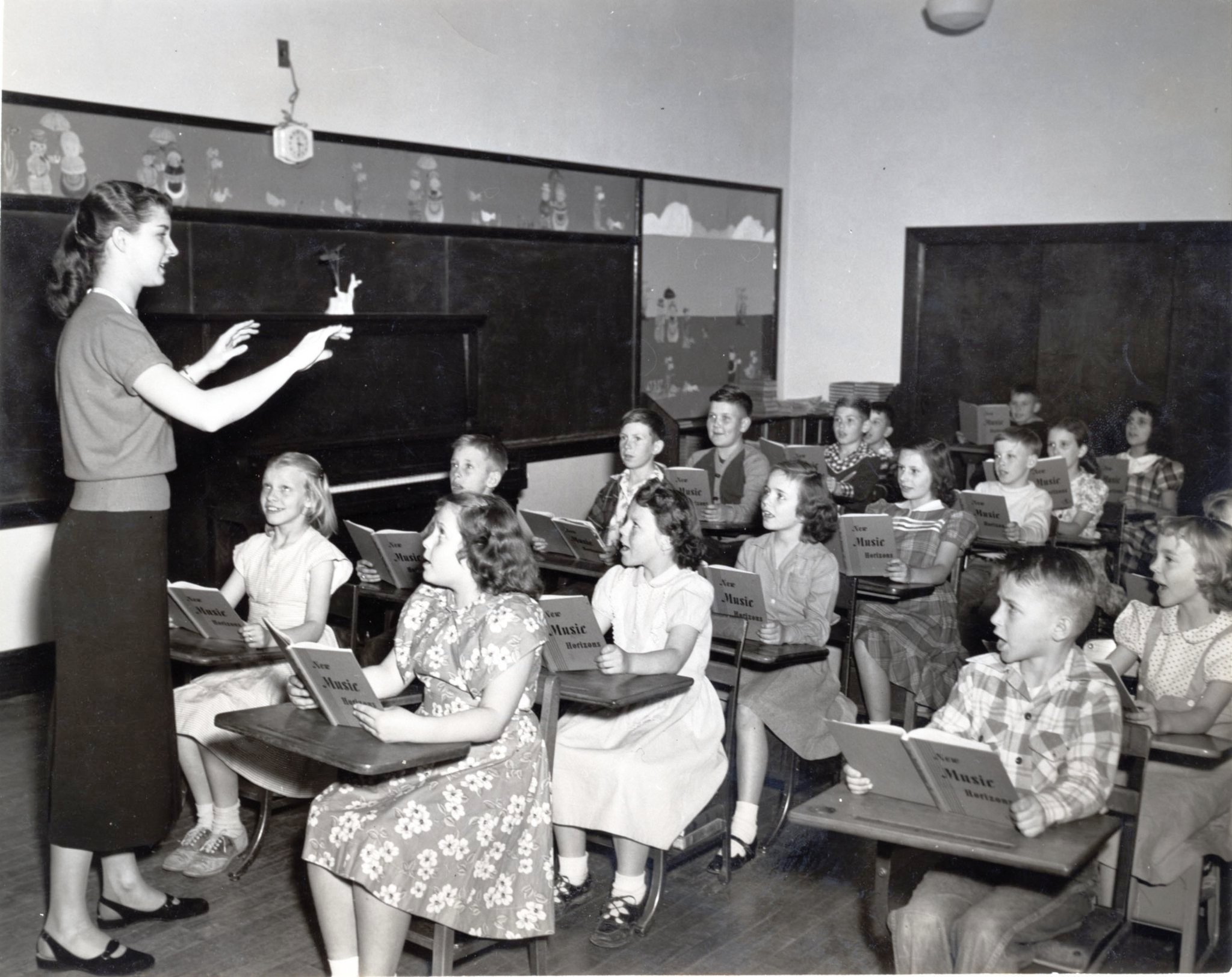
Many of the things we took for granted when we were in school back in the 1950's, 60's, and '70's are not considered "politically correct" these days. It seems that the emphasis is more on not "offending" anyone or promoting a culture where nearly everything is acceptable, no matter how irrational. Kids can't tell time using a analog clock or write cursive but they get to pick which gender they want to be and no one has to even tell their parents! You send "Johnny" or "Mary  to elementary school in the morning and they come home as "Johanna" or "Mark"! What the hell?  I was happy if I got to pick out my shirt for school let along my gender! Besides, everyone knew girls had cooties. 

Today kids have story time read to them by individuals dressed like they belong in some sort of John Waters' movie.  They can now choose what they want to study (or not) based on their racial or gender identity.  Disrupting class isn't at all uncommon and often excused as being a part of their "learning culture" or symptomatic of some attention disorder we never heard of when we were kids in school.

 Assaulting teachers while trying to teach class or enforce discipline isn't unusual (and woe unto the teacher who physically responds). Teachers in their 20's or 30's getting caught having sex with kids barely in puberty happens so often it's barely news worthy.  Professional ethics aside, what about simple  morality?

 I personally happen to support saying the Pledge of Allegiance (if you don't want to participate, fine. Just don't interfere with those who do). Strict discipline in the classroom, active participation of the parent or guardian, and teaching civics are essential. If they don't understand the function of government and their role in society as citizens, how can they protect their freedoms? Volunteering 90 days at the end of senior year performing some civic service such as Habitat for Humanity, helping out at the VA hospital, Meals on Wheels, participate on a police or firefighter advisory board, helping seniors or working as an election officer should be mandatory before graduating. 

 I am especially keen on learning being the focus of education. Anything beyond that (sports, band, cheerleading, or whatever) should be a privilege for maintaining good grades. Poor grades or disciplinary issues and the privileges are suspended until the grade or behavior situation is corrected. Repeated offenses and they're revoked. Period.
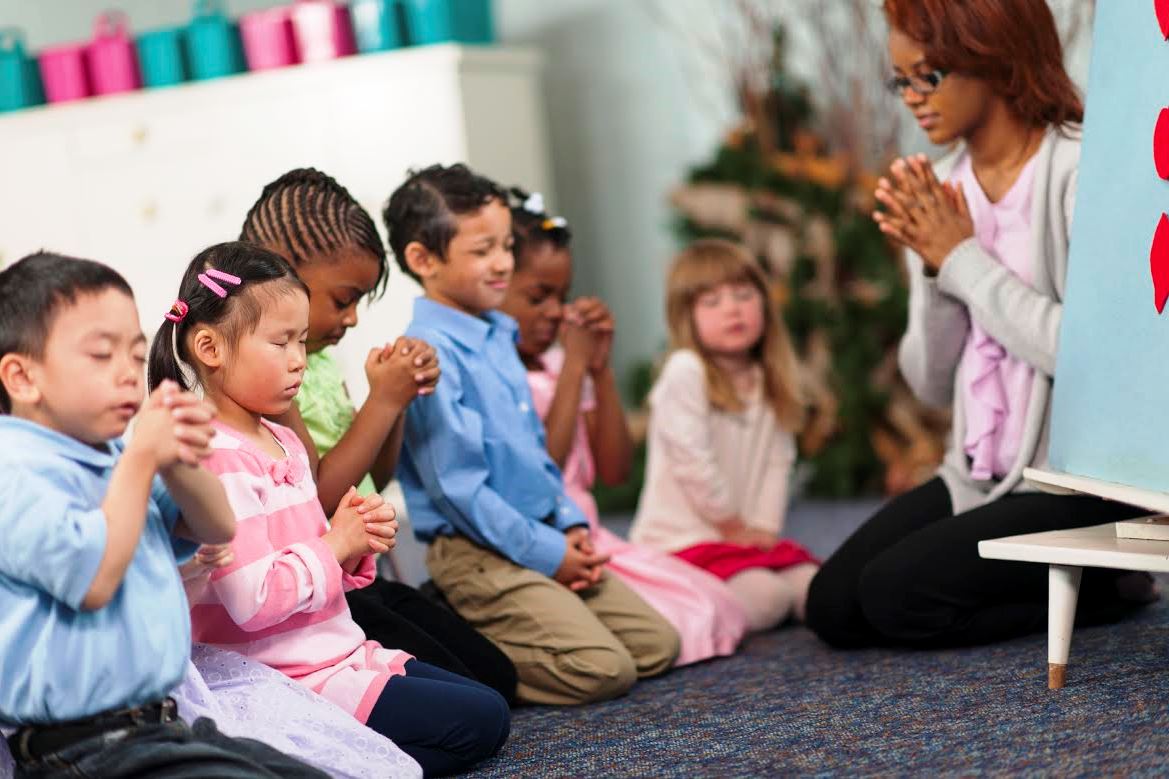
Some individuals and groups want to promote the introduction of their agenda a denominational prayer in public school and teaching creationism in public school either alongside evolution or to the exclusion of evolution all together. If that's want you want for your child, great. Send them to a parochial school.

 I have no problem with a minute of silence to get yourself mentally ready for the day ahead. If you want to quietly say a little prayer (or have a little prayer circle), have at it. If you want to do a quick mediation, or some late minute cramming for the test you forgot about or get your homework in order, that's fine too. Just be respectful of others. I do not support the notion of mandatory participation in someone else's religious expressions unless it's part of a comparative religions class examining all faiths.

Another key issue is the emphasis on higher education. I also don't believe college is for everyone or necessary for every or even most jobs. Sure, there are some occupations where higher education is needed because of the intellectual nature of the work. However, there are jobs where someone with a proper high school education should be able to do quite well. One reason employers ask for a college degree is just to get a qualified applicant at what would otherwise be the high school  equivalent.

 I've seen high school "graduates" barely function on a 8th grade grammar or reading level or can do math much beyond a 6th or 7th grade level. You can all but forget about basic geography and history (but boy oh boy do they known or video games!).  One resulting outcome is the lowering of colleges and universities minimum admission standards to create an artificial parity based on race or gender rather than academic performance. This is nothing more than a quota system based on discrimination.  

Far too often, teachers and school administrators "fail students forward" rather than hold them back out of fear of being accused of racism, genderism, or whatever the victim card du jure happens to be.   The most common excuse is that failing little "Brad" or "Babs" hurts their self esteem. I think saddling them with a worthless education or bleak employment opportunities is worse than bruised feelings.

Is it any wonder that the United States consistently performs in the lower half of the second tier globally? The U.S. ranked 16th out of 81 industrial countries according to a 2022 test of 15 year olds as administered by the Organization for Economic Cooperation and Development (OECD). We placed 16th in science among the same 81 countries. When it came to mathematics, we were 34th. The top five highest scores all belonged to Asian nations with Japan, Taiwan, Singapore and Macao consistently being among the top performers. 

These are some of our current and future economic competitors for high paying jobs and market shares, which affects employment levels, quality of life, and other key metrics.  If we think of education as an investment in human capital or part of our economic national security, we're losing the battle.

Although the U.S. spends more taxpayer money per student than other countries, we are obviously not getting our money's worth. Incoming President Trump is putting together an advisory committee---the deceptively named "Department of Government Efficiency" (it's not an actual government agency)  led by Elon Musk and  Vivek Ramaswamy. Their job is to review various government projects, programs, and departments and find a way to make them work better and within budget.

 I suggest they start with our school system and find ways to improve our performance. After all, everything starts with education (there are some who, since the 1990's,  have been calling for the disbandment of the Department of Education and a return of educational authority back to the states). As an aside, the Department of Education was elevated to a cabinet level position in October 1979 by President Jimmy "Peanut" Carter (D-GA).

This was just four years after the advent of the disastrous court ordered  fiasco known as "forced busing" which effectively eliminated neighborhood schools. Students as young as six and seven years old, were put onto school buses and shipped all over town for hours at a time each way. This implementation of "social engineering" was intended to create balance in the schools academically and racially.
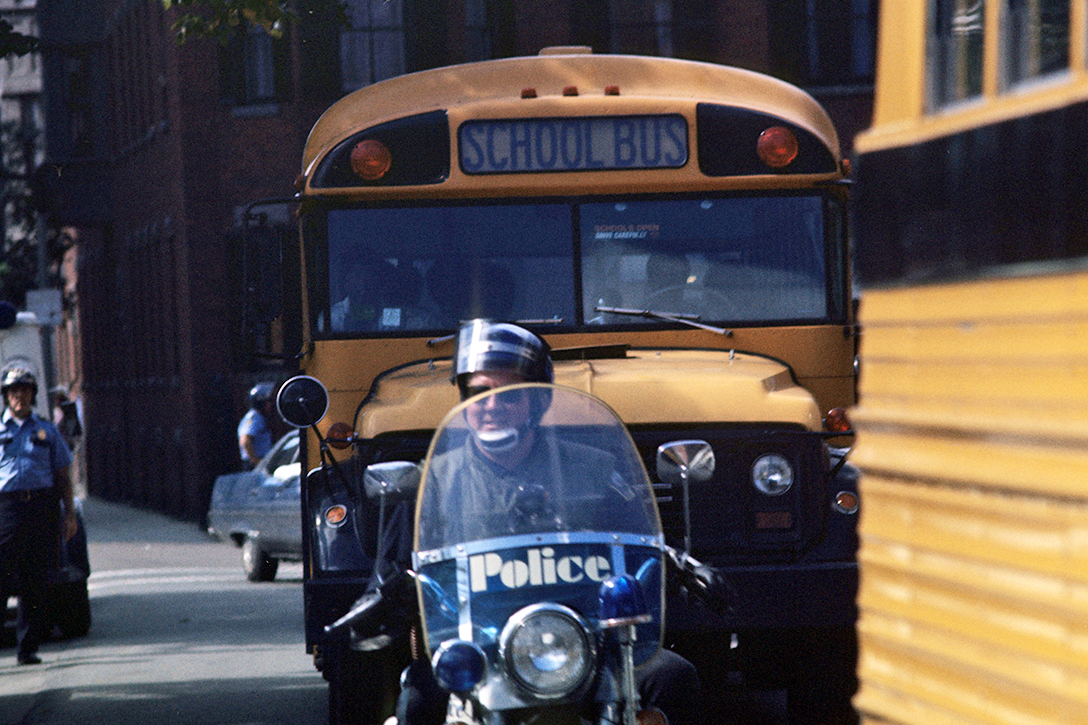
What it accomplished was a general lowering of academic performance which continues to this day. A better option would have equalizing the money spent on each student and rotating teachers. However, that would have produced a battle with the powerful teacher unions. So, what can we do about it?    

One potential solution is to weed out not just the academically unprepared, but also  redirect individuals who lack the interest or aptitude for higher education. One option would be to adopt a system similar to Germany's where students are tested periodically throughout years K - 8, and channeled into programs which lead to two years degrees, trade or technical schools, or on to higher education. It's one of the reason's Germany has one of the world's most advanced economies in the world.  Of course, the final decision belongs to the student (and parents) who may choose the academic path of their preference.

Students unprepared academically are re-immersed back into the subjects they poorly performed on via in person or online tutoring while extracurricular actives such as sports are put on hold. Students may be required to attend before or after school instruction. In some cases, this may take place during the summer. Until they can pass those courses, they should remain  suspended from  any non-academic events.  

The result is that the abilities and interests of the student is targeted  instead of trying to funnel them onto a path where they have little or no ability or interest. Trade or technical school is one such option. Unlike Europe, America faces a serious shortage of carpenters, welders, plumbers, electricians, glaziers, construction equipment operators, cyber security specialists, and other skills. It's a economic sector where there are real shortages and great opportunities. Making six figures annually isn't unheard of. Neither is owning your own business, where income opportunities can be even higher.

In a 2023 survey, there was a shortage of approximately 374,000 skilled workers in construction. The Association of General Contractors of America had a 70% positive response rate about concerns over the availability of skilled contractors and subcontractors in the upcoming years. 80% of those surveyed said they were worried about unfilled positions long term in the construction industry.

Between now and 2023, the renewable energy industry alone will need 1.1 million more workers worldwide and another 1.7 million to operate the equipment. According to a January 2024 U.S. Bureau of Labor report, the manufacturing industry in the U.S. has a staggering 584,000 unfilled job openings.

Among the reasons for the critical shortage of skilled workers is that the current workforce is slowing but steadily aging out. Almost 70% of supervisors in just the electrical trades are Babyboomers who are quickly reaching or passing retirement age.  More individuals are retiring and leaving than are replacing them. Another explanation is the push by school counselors, college recruiters, and a negative public perception about blue collar workers in general.

The truth is that training for a career in the trades is far shorter and cheaper than getting a Bachelor degree from a college or university. Training, on average, is two years or less plus a short apprentice period which may start simultaneously while being paid with benefits (the average apprentice earns roughly 50% of a skilled worker's salary). It takes about three weeks to qualify for your CDL license needed to be a long haul truck driver (the average salary--with experience--is just over $78,000 yearly).

Typically the cost of attending a trade or technical program can range from just a few thousand dollars to roughly $30,000 with an average cost of $15,000. Many of those attending a trade program are often hired before graduating (some start work will still attending school).

Compare that with the cost to obtain a four year degree. The current average is approximately $10,490 per year for in-state students. For out out-of-state students, that cost can jump to as high as $24,000 per year. If you plan on attending one of the top schools, the cost can be a lot higher. There are a few cheaper options (like attending a unaccredited institution), but remember that you get what you pay for and that's nowhere more true than in education.
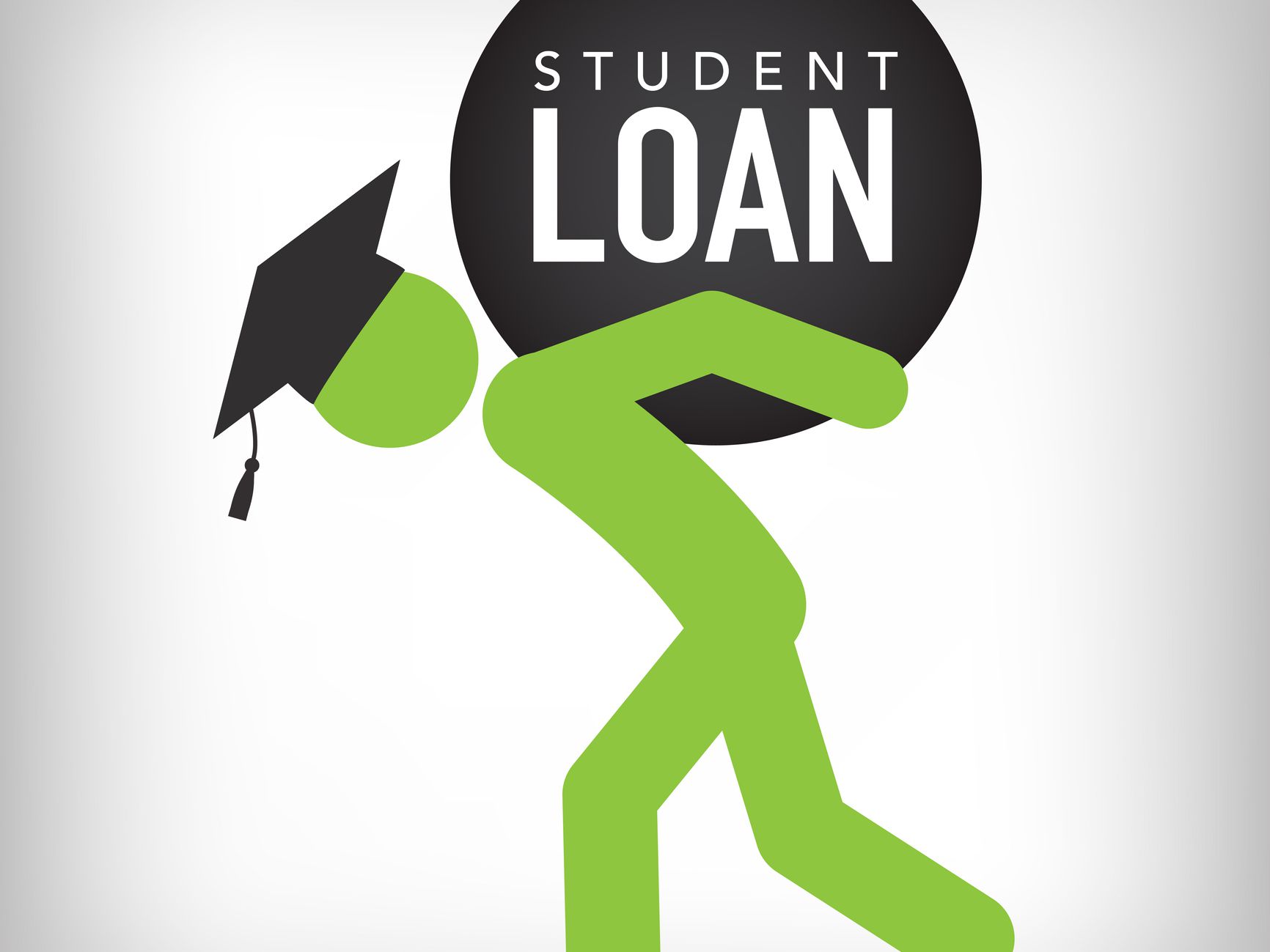
Then there's the debt. On average, 61% of those who graduate from a public university leave with diploma in one hand and a bill for $31,960 in the other hand. Over their four years, the majority of students will occur a debt of at least $30,000 by the time they leave. The average federal student loan debt is $37,853 dollars. If you pursue a Masters degree, the costs and debt will be substantially higher.

It used to be that many American workers graduated from high school with a functional degree and would get a good paying job with benefits down at one of the local manufacturing companies. They'd join a union for job security and they were pretty much set. For a large percentage of the country, it was a near guarantee to their entry into the Middle Class. It wasn't uncommon for this path to be multigenerational, but those days are long gone.

Starting in the late 1970's American began transitioning out of manufacturing and largely into the lower paying (and the less secure non-union) service industry. What industry remained has become more automated, replacing most positions. The only ones with job security and a good paycheck are the ones who repair or program the production line robot. But that's not the half of it.

Our parents and grandparents didn't have to face is the level of competition we do. Today, workers not just compete with each other for scarce well paying jobs, nor is their competition in the next town or state. Today's employee faces competition for work thousands of miles away, in countries like India and China where unions don't exist and people will work for next to nothing (and forget about benefits. They're happy just to have a job!). This is where America is losing ground, and when we look back at math and science score of our students, the future doesn't look to bright for the U.S..

When  it comes to technology, the world leader is Japan (Japan is also the world's most literate nation). Second is South Korea followed by China which has a knack of acquiring, studying, and adapting U.S. and global  technology. You don't have to look much further than the America's F-35 and China's J35A stealth fighter jets for proof.
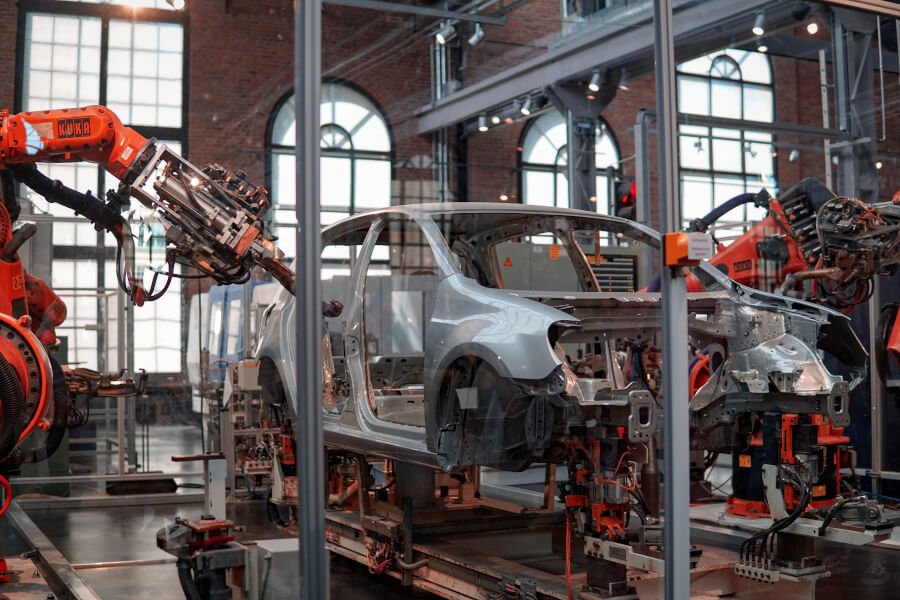
In fourth place the good ole U.S. of A. Behind us is Germany, a country the size of Wisconsin and with a reputation for high quality engineering and efficiency thanks to their excellent dual avenue academic system which puts the trades on equal ground with higher education without the stigmatism as we mentioned earlier. Of course, we wouldn't expect anything else from the Germans.  As an aside, Russia graduates the most engineers of any country followed by the U.S. and Iran according to UNESCO.

 Singapore, a former British colony, is next (remember at the beginning of this article where I mentioned that the top five nations in academic math and science among 15 year olds were all Asian?). Coming in seventh place is Russia. Another country with a "gift" of mimicking U.S. technology. Great Britain, the United Arab Emirates (UAE), and Switzerland round out the top ten.

The key to the future is innovation. It's where tomorrow originates. So, who leads the world when it comes to innovation? That honor goes to Switzerland which dominates its second place competitor, Sweden. The United States has dropped to third place and is just ever so barely ahead of Singapore and the UK. For now, this may get us by, but not for long. Not at the pace the world is changing. How long can we hold on? Only time will tell. But one thing is for certain. If we don't do radically improve our school system and the quality of graduates, we may be facing a bleak future as the world's largest Banana Republic.


Thank you for reading Another Opinion! We hope you enjoyed this article and will pass it along. Please don't forget to subscribe. It's free! Lastly, please "like" us on whatever platform you use to read anotheropinionblog.com. It helps beat the algorithms and keeps our articles in circulation. Please find below the links we consulted in researching this article. 


Department of Government Efficiency


U.S. Education Rankings Compared to Other Countries


Tradespeople wanted: The need for critical trade skills inU.S.


These countries have the most technological expertise


Friday, May 03, 2024

Protesting God's Chosen People: What's Happening on America's College Campuses?

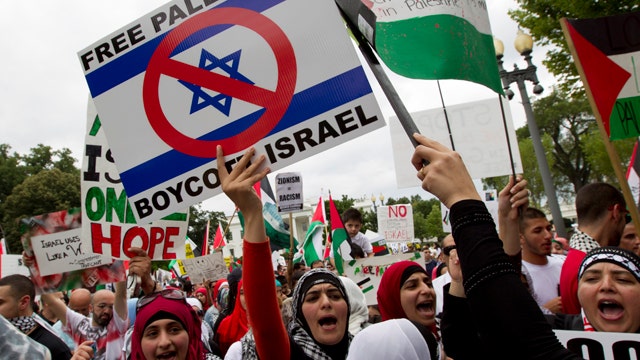
Originally I had intended to write about the protests taking place on several college and university campuses in America, however, I realized that there was much more going on here. The protests appear to be about  a number of issues such as college investments in the defense industry, at least partly, by disinvesting  of anything which supports Israel. 

They want  their school to disinvest of anything which supports Israel. They are also protesting Israel ending its so-called "genocide" of Gaza and occupation of Palestine. What's more is that the protesters have started shouting down Jewish students on campus and blocking them from class. In short, these are anti-Israeli protests, which is a rarity here in America. They have become anti-Semitic protests. 

In addition, the protestors would like to see a change in U.S. foreign policy towards Israel. Specifically cutting back or eliminating all military support and ending what some call America's "blanket approval" of supporting nearly everything Israel does, especially towards the Palestine.  

There's big money in war and no doubt the various institutions are making good money on their investments in the defense industry. Keeping the U.S. a war footing  is a great way to stimulate an otherwise lackluster economy. Also many of these colleges have 6+ figure contracts with the DoD and defense contractors to conduct research for them and don't forget, college campuses are stocked with potential recruits like fish in a pay lake!

While the students would like to see a change in U.S. foreign policy toward Israel, the exchange of goods aren't the primary concern of the students. Their focus is on what the U.S. provides Israel in terms of military aid. That figure is around $15 billion dollars. 

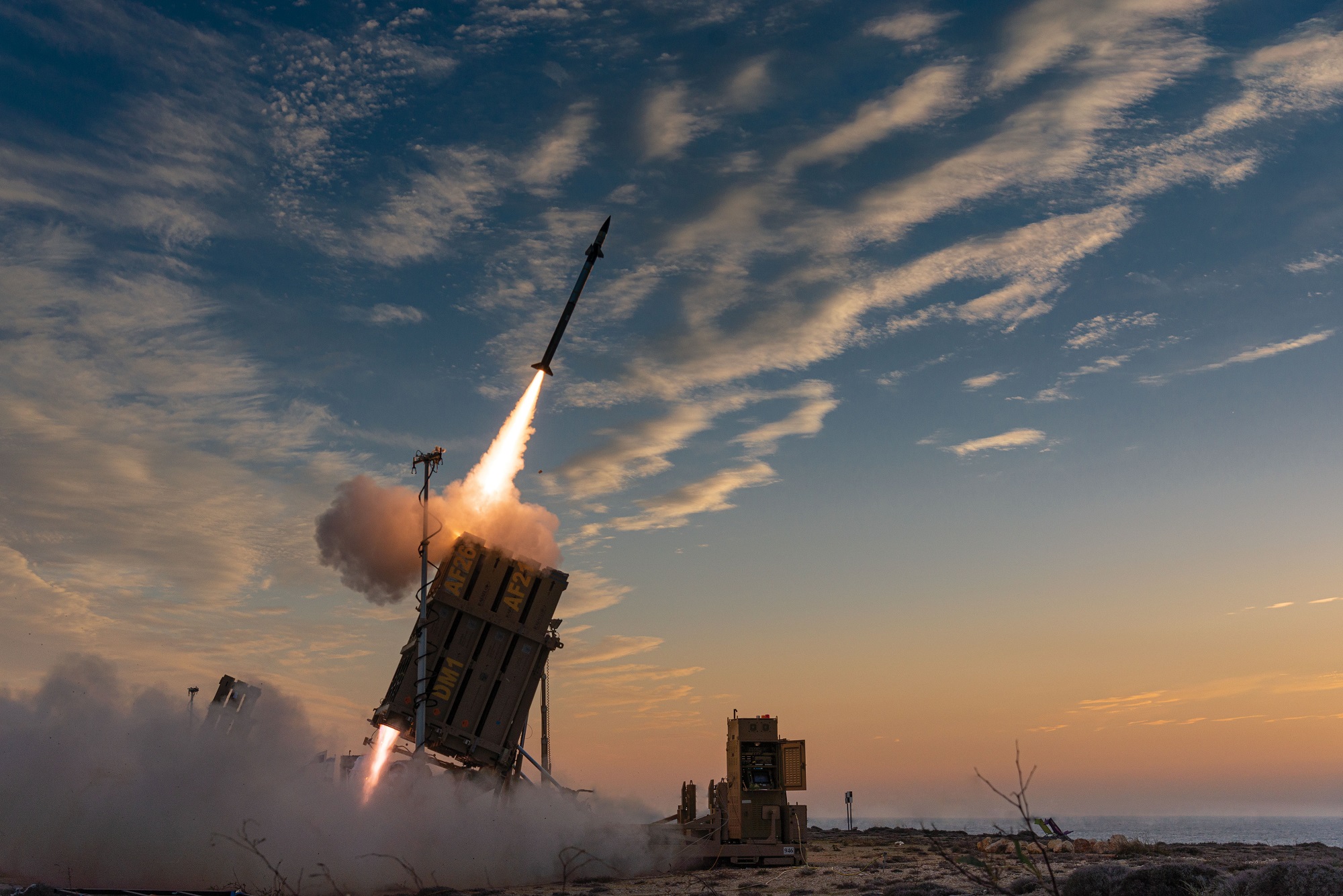
Of that, the majority of the money---$5 billion---goes towards Israel's "Iron Dome" which is used to protect Israel from missile attacks, primarily launched by Hezbollah and Hamas (and more recently, ISIS and Al Qaeda operating in Syria). In addition, the U.S. military, with President Biden's authorization, has agreed to replenish all of Israel's ammunition used in their war with Hamas.

The protestors are also calling for Israel to end its reprisal against Hamas because of all the deaths and injuries of civilians in Gaza. In listening to some of these protestors (many of whom are wearing a Palestinian "keffiyeh" or headscarf made famous by the terrorist group "Black September" when they murdered the Israel Olympic team in 1976), they seem to think that the war is Israel's fault.

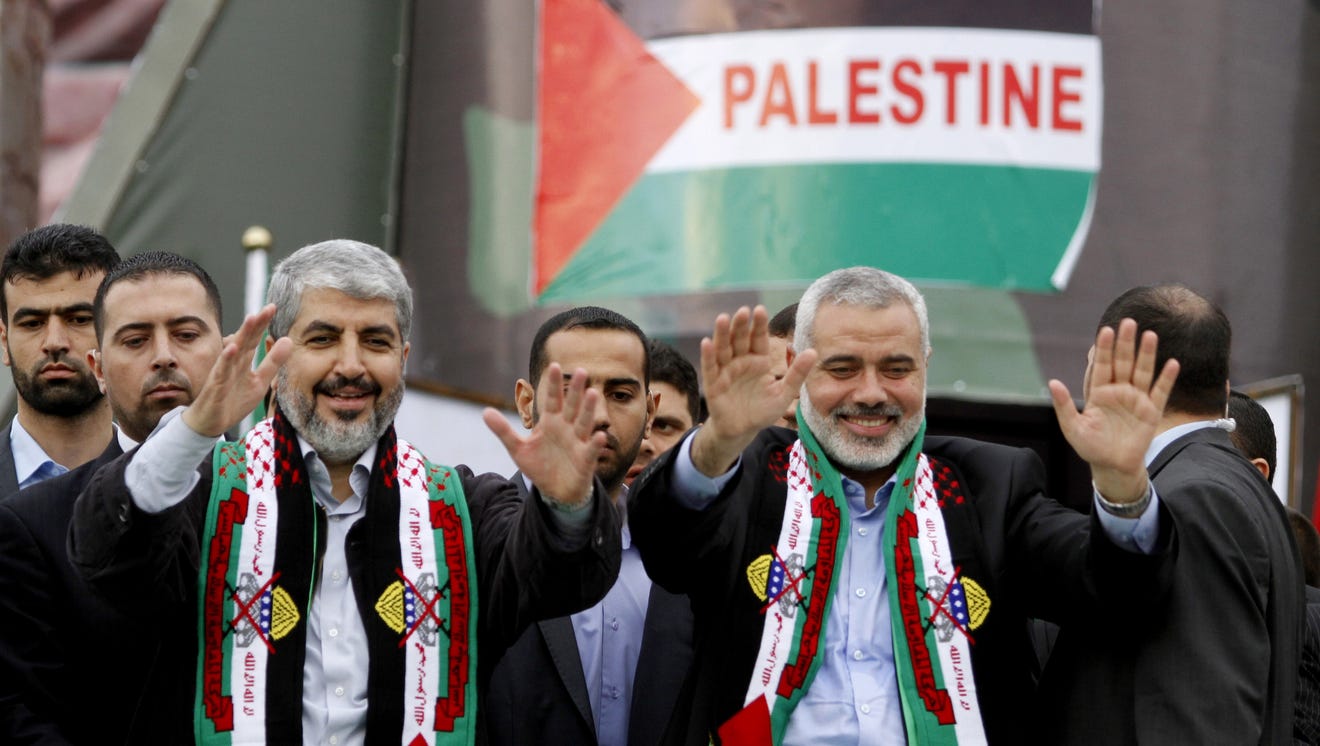
The truth is that Hamas, a terrorist organization which hijacked the government in Gaza, attacked Israelis at a open concert on October 7th, murdering 1,139 individuals (695 civilians, 373 members of the security force, and 71 foreign nationals), not including the dozens who were beaten and raped, nor does it include the hostages taken by Hamas.

Israel, which had been enduring dozens of missile attacks by Hamas on a regular basis, made the decision to put an end to Hamas, and who could blame them? How many times do you have to keep getting hit by rocks before you decide to fight back? No other nation (the U.S., China, and Russia included) would have tolerated this, and Israel won't either.

As an aside, Russia has repeatedly responded to terrorist attacks by Georgian separatists and groups like ISIS-K with at least equal ferocity. Meanwhile, while not facing large scale terror attack, China has had a number of smaller scale terror, but nevertheless responded with equal zeal and intensity.

It should also be pointed out that while Hamas is "officially" the government of Gaza following the overthrow of the previous government, it is a terrorist organization first and foremost. It has regularly used civilians as shields. It routinely fires missile batteries hidden in schools or next to hospitals and mosques. Homeowners are forced at gunpoint to allow Hamas to store weapons and ammo in their homes. It intercepts humanitarian aid and sells it on the global black market to buy more weapons.

The people of Gaza see only a fraction of the aid sent to them. Recently, there was a report of dozens of UN and other trucks packed with food, fresh water, medical supplies, and clothes, however, they were hung up on the Israeli side of the border. Do you think that's out of spite by Israel?

No. It's because Israel was await for a safe opportunity to release the vehicles out of concern that Hamas will hijack the shipment and either sell it or store it for its own use. The other problem was that if Israel escorted the convoy in, there would be a strong chance the convoy could be ambushed, killing Israeli soldiers, aid workers, and Gaza residents. 

Other issues being promoted by the protestors is their claims that Israel is engaged in genocide and/or is an apartheid nation along the lines of South Africa (if you want to accuse anyone of genocide, look no further than here and our treatment of Native Americans). Israel is home to Christians, Jews, and Arabs. In fact, ethnic Jews comprise about 73.6% of the population while 21% are Arabs. While the majority of these a Muslim, there is a sizable population of Druze and Arab Christians. 

Roughly 45% of Jews living in Israel are "Mizrahi" or Oriental Jews, meaning they come from North Africa or Asia. 31.8% are Ashkenazi or European Jews. Many descend from survivors of the Holocaust (originally, most of the founders and settlers of Israel were Ashkenazi). 12.4% came from Soviet Russia or one of the Soviet Bloc nations. 3% are "Beta" Jews from Ethiopia (meaning they're also racially black Africans). Finally, about 7.9% are a mix.

About 21% of Israel's population is Arab. Most are Sunni Muslim, although there are some affiliated with the Shiite "Alawites". 18% are either Druze or Christian Arabs. Palestinians account for about 20% of Israel's population. It should be pointed out that the Palestinians in the West Bank also operate their own government (the same government had been ousted by Hamas in Gaza).

As an aside, while the overall population of Jews are shrinking in Israel, the population of Muslims are growing and will likely outnumber Jews within the next few generations. In addition, Israel is home to Christian Copts, Assyrian Christians, nomadic Bedouins, Samaritans, Armenians, and Circassians.

So, in looking at the demographics as noted above, it would appear these college protesters would have a hard time trying to justify their claim that Israel is actually a apartheid state in the sense that there are many diverse populations living in this small nation. 

I would be amiss in pointing out that Israel has repeatedly given up land in exchange for peace, ranging from the Sinai to the West Bank to parts of southern Lebanon and Western Syria.  In practically every occasion, the peace has been broken (and not by Israel), leaving the region in much the same position as it had been.

However, I don't want to make it appear that Israel has entirely clean hands and everything is the fault of the Palestinians, which is hardly the case. Israel's greatest flaw in dealing with the Palestinians has to do with the small but extremely influential Jewish hardliners. One such group is the "Temple Mount and Land of Israel Faithful Movement". 

Their notoriety stems from their occupation of the Temple Mount in East Jerusalem and demands to allow Jews to pray at the Al-Aqsa Mosque (the third holiest mosque in Islam). Of course, behind their "demands" is a deep seated belief that the Temple Mount is historically theirs and the mosque needs to be removed so that a Third Temple can be built there. 

It's worth noting that there are many fundamentalist Christians who believe the same thing, albeit for slightly different reasons. They believe that the Third Temple was be built on the Temple Mount in order to facilitate the Second Coming of Jesus. 

Obviously, that doesn't set well with either Palestinians, moderate Jews., or with Muslims everywhere. Nevertheless, while it seems that all sides are aware of what would likely happen should anything happened to the mosque, the hard core extremists don't seem to care since, from their perspective, God will intervene on their behalf.

Groups like the "Temple Mount and Land of Israel Faithful" believe in the old boundaries of the Jewish Kingdom which allegedly stretched from Egypt's border to the Euphrates River in Iran and encompassing parts of Syria and Lebanon. They also believe that only Jews should live in Israel. That means forcing out anyone who doesn't belong there, especially the Palestinians.

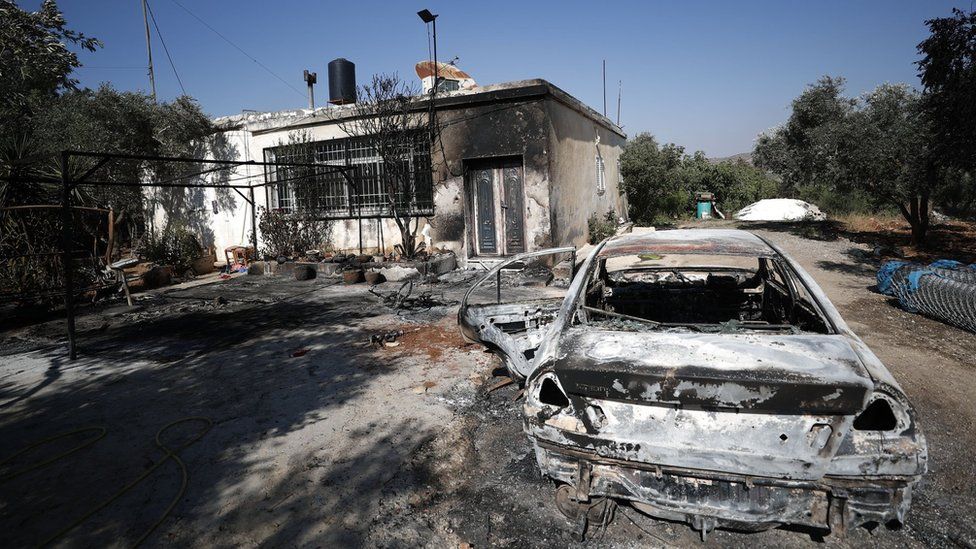
As a result, these ultra conservative groups regularly establish illegal settlements (some seem to rise literally overnight). Often they force Palestinians out of their homes overnight, barely giving them time to pack. They routinely defy police and even the military sent in to stop them. While these Palestinians can and do file complaints with the Israeli government or try to resist, the government is typically reluctant to do anything. and the settlers usually prevail.

Currently there are over 279 illegal settlements, comprised of  around 3500 housing units in the West Bank which include approximately 700,000 settlers living there. There are around 200,000 illegal settlers living in East Jerusalem.  

But while these extreme Orthodox settlers are responsible for much of the land grab of Palestinian land, they aren't the only ones. The Israeli government is known to show up occasionally (complete with bulldozers) and just announce they are taking possession of the land.

In March of 2024, the government under Prime Minister Benjamin Netanyahu, announced they were seizing some 2000 acres in the Palestinian West Bank, which is suppose to belong solely to the Palestinian people and the Palestinian government. 

The ultra conservative finance minister, Bezalel Smotrich, who lives in an illegal settlement, said there was "no room for half measures" and added that Israel has a historical right to Judea and Samaria (modern West Bank). U.N Human Rights Chief, Volker Turk called the move a "international war crime".  

So, what does all this tell us about the college protesters and their demands? Colleges aren't going to disinvest their interests in defense industry stocks any more than they're going to turn down multimillion dollar research contracts from the DoD or military contractors. It just ain't going to happen. Israel was the one who was brutally attacked on October 7th, but then too, they had been under regular missile attacks by Hamas. The October 7th attack (massacre would be a more accurate term) begged for a quick and severe response, which Israel delivered.

It's true that the situation in Gaza is beyond critical. It is quickly approaching a human catastrophe on an epic scale, yet Israel is prepared to render immediate aid. Nevertheless, Hamas continues to see the people of Gaza only as pawns and human shields. What happens to them matters less than making Israel look bad in the world's eyes, which it has done.

Hamas has the added advantage of winning the propaganda war with American college students who have swallowed Hama's "BS" hook, line, and sinker. As an aside, it also shows how little American college students know about the Middle East and how lazy they've become in doing their due diligence when it comes to proper research before staging protests.  

Lastly, Israel is not technically an apartheid state. It has a wide and diverse population with the largest minority---the Arabs---likely to dominate the nation within the next 100 years if not sooner. However, where the students are correct is the treatment of Palestinians.

Despite the Israeli government's rhetoric about equality, it's clear that the Palestinians are treated no better than second class citizens...at best. They remind me of Native Americans during the "Great Westward Migration". Any lie and by any means will do as long as they're gone. Somehow, the people of Israel must do what the government is to afraid to do, and that's to say "no" to the extremist.

One more thing about the protestors. Something has been happening on these college and university campuses which I didn't think was possible in America. It's not the brazen defying of administration (that's pretty cool actually) although there will be consequences. No, what we've started seeing is the rise of anti-Semitism among some of the students and its tolerance by others. Anti-Semitism is an evil as vile as any. It should be snuffed out wherever it's found.

The Israeli people must link arms with the Palestinians. They must see and accept them as neighbors. Israelis need to remember Rabbi Hillel's famous quote "what is hateful to you do not do to your neighbor". Until this happens, the situation will continue to worsen until something unforgivable happens. When that occurs there will be no more Palestinians and no more Israel. Only tears.


If you enjoyed the article, please consider passing it along to others and don't forget to subscribe. It's free! Lastly please be sure to "like" us on whatever platform you use to read anotheropinionblog.com. It helps beat the algorithms and keeps our articles in circulation. Thank you!


Israel Policy Forum: West Bank Settlements


Who are the Israeli settlers and why do they live onPalestinian lands?


The hardline Israelis stoking violence in East Jerusalem


Demographics of Israel


Uyghur Genocide: Why Most Muslim Countries Remain Silent


Saturday, April 13, 2024

How to End Student Debt in a Sensible Way

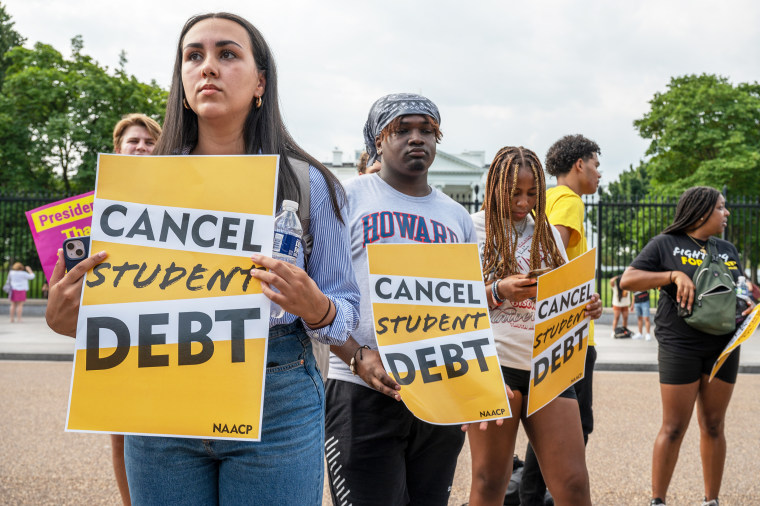
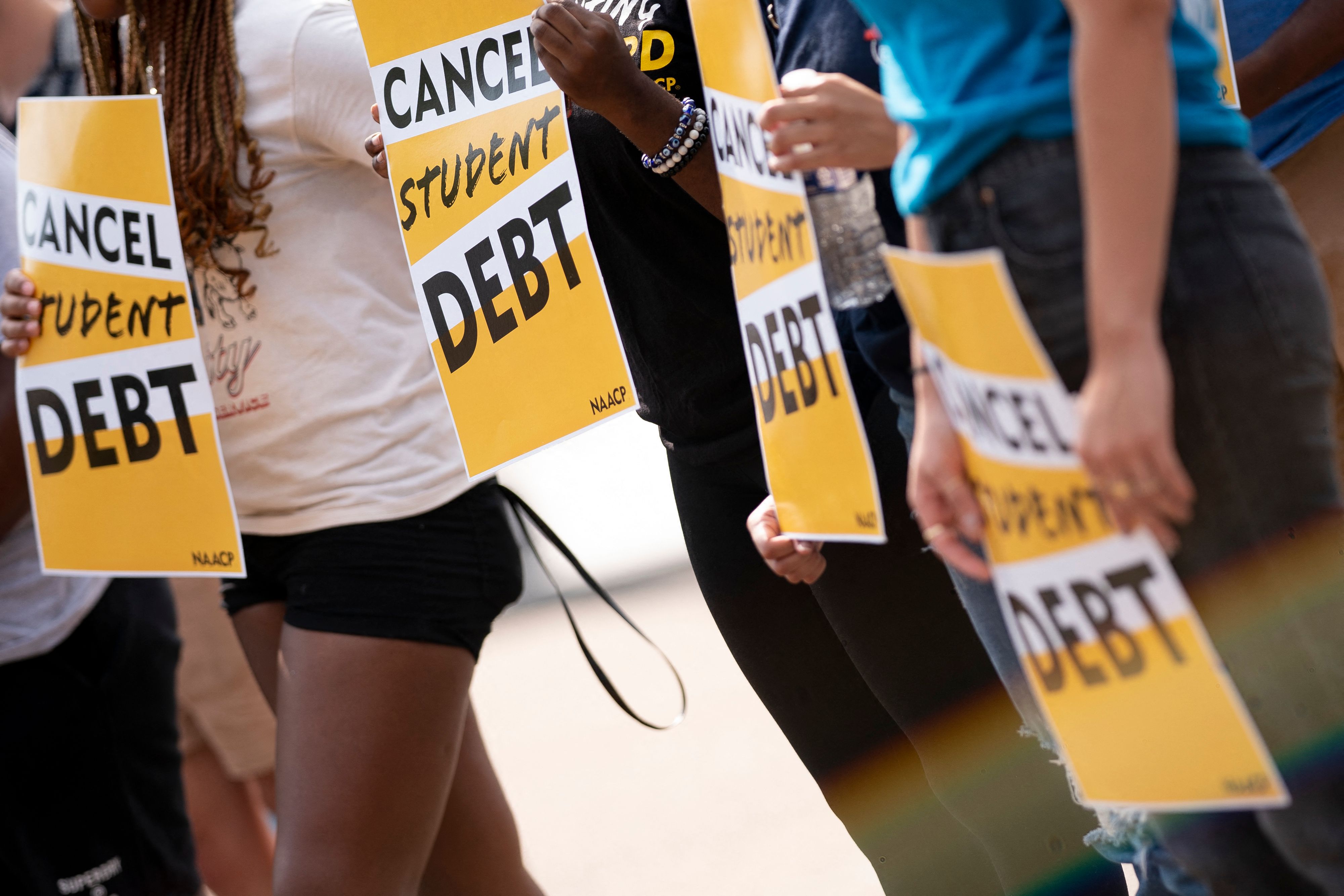
Well, old  "Doddering Joe" Biden has been out on the campaign trail again peddling one of his few big issues---paying off everybody's school debt. It seems a shame that after nearly four years in office, and he has virtually nothing to show for except a disaster with Afghanistan and a rocky economy. Even the school debt matter is little more than pie in the sky, but at least it sounds good to college students and hopefully, at least for Biden, that will translate into votes this November.

I guess you can't blame the students. Most of these young adults have racked up thousands of dollars in debt without thinking much about the long term consequences. The average tuition cost for 2021-2022 academic year was $10,740 for resident students at four year colleges. For out of state students it's double that at $27,560 dollars. Room and board for the academic years runs an additional $11,950.

Is any wonder that the average college student carries a debt of $38,290 according to Experian (this is usually in the form of federal student loans). Private student loan debts amount to $54,921. The total academic debt exceeds $1.74 trillion dollars, and that's the amount Biden is wanting us to pick up the tab for, which begs the question, just where does Biden think that money will come from?

Maybe he thinks we can just take it out of our savings account, but oh wait, nearly a quarter of Americans don't have a savings account. 23% of Americans can't come up with $1000 for an emergency. Of those who do have a savings account, 49% have less than $500 while 36% have $100 or less available!

In fact, according to a 2023 survey by Payroll.org, 78% or over 3/4 of all Americans live paycheck to paycheck, which is a 6% increase over 2022. The average American's  household debt runs about $104,250. In 2023, the total mortgage debt of all Americans was $12,252 trillion dollars! 

So how do most Americans live? They borrow it! The average credit card for household in 2023 was $6,501. Nationally credit card debt amounted to $1,129 trillion dollars. In married households, it common that both adults work. Some often hold down two or sometimes three jobs to make ends meet. 

Is it any wonder that 11.6% of Americans live at or below the national poverty line? That's roughly 37.9 million of us. Again, I ask where President Biden thinks we're going to find the money to take on someone else's debt when we can't pay our own? Obviously the student debt---all $1.74 trillion dollars of it---isn't simply going to vanish into the blue.

One way would be for Biden to ask the Federal Reserve to print money to pay the student debt. The problem with that is printing off more money isn't magic. "Someone" still has to pick up the tab, that "someone" is usually the U.S. taxpayer in the form of inflation.

 With inflation, the costs of pretty much everything goes up, from food, medical care, and mortgage to the costs of utilities and interests rates on damn near everything, but usually not wages. Thus you have to pay more with the same amount of money.   

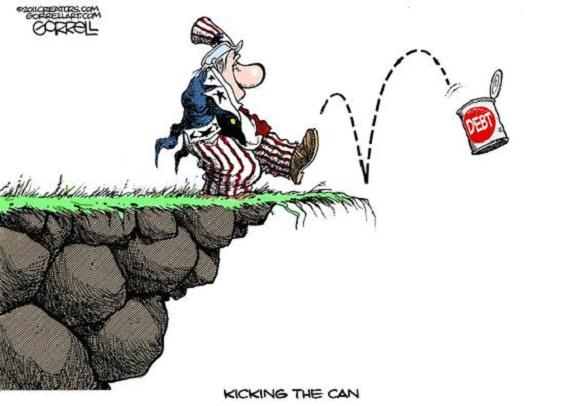
The U.S. sells its debt in the form of Treasury bonds. This, however, is nothing more than kicking the "honey pot" down the road a short piece while paying interest on top of it. Bear in mind too that countries like China, a potential nemesis, owns about 10.17% of our debt (Japan owns the most at 14.52%. The UK is third with 9.16% of our debt). U.S. investors (mostly corporate) owns the most at 32.5% followed by foreign corporate investors which own 29.3%.

When looking at college debt, 53% of federal student loan debt is $20,000 or less. 47% of college debt is actually owed by just 10% of college students who have debt in access of $80,000. 51% of those with a bachelor's degree owe under $30,000. 10% of students have private student loans (which also tend to have higher interest rates ) also had almost double the student debt.

So, with all that debt, how many graduates found work in their chosen field? Most studies show that just 47% are using the their degree in the field  of their choice (the majority of those are in fields like computer science, accounting, actuary science, medicine, or law).

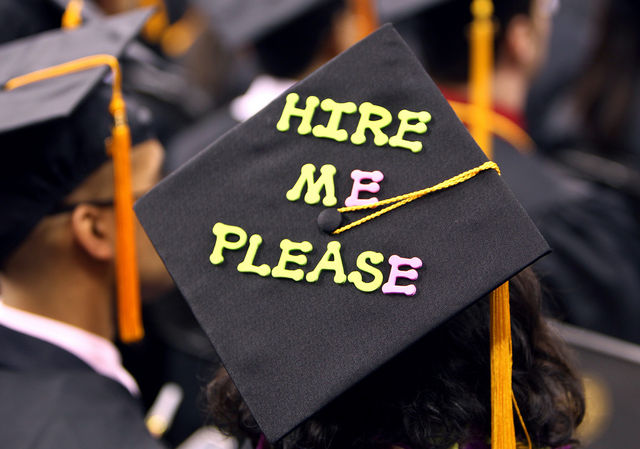
What's of note is that 52% of college graduates are underemployed a year after graduation or not working in their academic field.  33% are unemployed one year after graduating. Meanwhile, 47% have jobs which don't require a four year college degree! To put it another way, it means a substantial number of college graduates have degrees in which there is little or no demand for regardless of their GPA and they're stuck with a big ole debt.

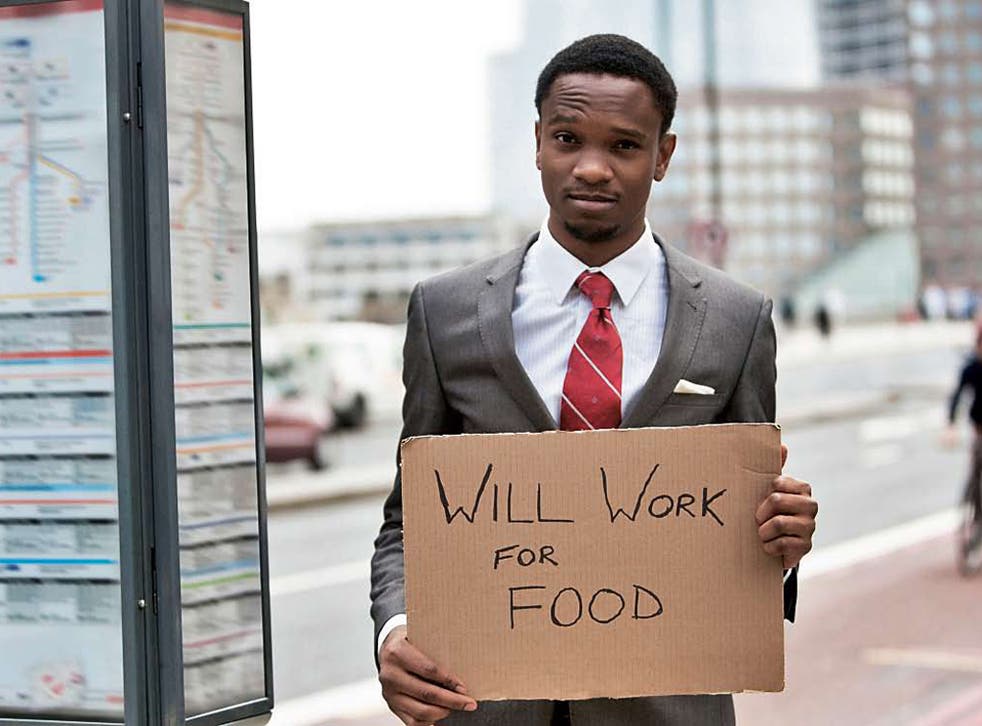
Unfortunately, the majority of those going to college are doing so because they've been conditioned to think a college education is the only way to get a decent job. In fact, there's almost an entire industry that's trying to convince high school students to go to college!

They hear it from their teachers, from guidance counselors to college enrollment professionals (many of whom earn a commission for every student enrolled) and companies peddling loans. Many HR people have changed their job requirements to require a four year degree when in the past a simply high school diploma was all that was needed (if that!) without changing the salary or benefit levels very much. 

In Europe (and most notably Germany which ranks first in the world with a 99% literacy rate and a academic performance ranking of .94%  out of 1.00%), they have a much more advanced approach when it comes to education. Children, beginning in pre-school, are evaluated at regular intervals to measure their interests, aptitudes, and academic performance to determine whether a child should be steered toward the trades or higher education.

It needs pointing that in Europe, unlike America, there is no stigma among children going one track or the other, and no child is locked into a given path. They may opt to change direction at their discretion (along with the parent's approval). In addition, as in America, the trades often pay well, they're in high demand, and often offer good benefits. Finding a unemployed plumber, carpenter, or electrician in Europe (or anywhere else) is damn near impossible!

America needed to revamp its academic system and adopt something similar. Not every individual needs to go to college and not every job requires a four year degree...or its crippling debt. Secondly, the requirements to graduate from high school has been repeatedly "dumbed down" since the late 1960's (at the same time schools started throwing out the need for discipline in classrooms). Want proof? Compare a math, English, or science book from the 1950's with one from now. How many students today could successfully get through one? Not many.

We've developed the bad habit of "flunking" students forward out of fear of upsetting their fragile little egos or angering their parents and getting sued. Teachers spend more time babysitting or worrying about getting jumped than teaching. The result is an academic system which has failed everyone.

It's time to return to stronger academic requirements...and performance in order to graduate.  For students who don't want to learn or disrupt others, get them out of the classroom since it's doubtful the "board of education" will ever be reintroduced. Nevertheless, there's no reason these individuals should be allowed to interfere with the education of those there to learn.

As an aside, during the 2021/22 school year, Homeland Defense reported 327 school related shootings resulting in 188 deaths or injuries. During the same period, 43% of  educators know of a teacher, principal, or someone affiliated with the public school system who've been assaulted by at least one student (often they're jumped by groups). Of this, 20% have been principals. Attacks on school bus drivers have risen 121% between 2001 and 2022. This is completely unacceptable. 

Suspending them does no good. That's what they want---to be out of school. Put them to work doing something they don't want to do like janitorial work at the local jail or prison. Maybe assign them to picking up trash along the roads. Send them to a "juvi" bootcamp. Let them find out what life without a solid education is really like.

As an aside, high school teachers and academic advisors need to change their mindset. Not every student needs to be guided toward college or the military.  The military is a good option for some people, but not all. Not everyone has the right temperament or physical ability for the military. For those who do, they can get good job training if they pick the right rating or MOS (always think about whether your selected MOS or rating is easily transferable to the civilian world after you get out). The military also offers decent benefits, and you'll sure grow up fast!

For those not going to college or lack the urge to "be all they can be", there's the trades. Often overlooked or ignored, the trades are a great way to make a living and provide for a family. First, the pay can be great. So can the benefits. You can work for yourself or someone else (a terrific option to gain experience). You can go union or not. Basic training is generally short and often there is little or no debt. Lastly, there's a huge and growing demand for most all trades. It is a seriously great way to go.

America has a failing  (or failed) school system. Academically, the United States ranks 36th in world for mathematics and 24th in science. By comparison, the top five highest scores in math all go to Asian countries. The Scandinavian countries rank in the top tier across the board.

Overall, the U.S. in 33rd out of 44 advanced industrial countries academically, placing us in the middle of the bottom tier. It's common in the U.S. nowadays for employers (including the military) to provide remedial classes in reading comprehension and basic math for so .   How do we expect to compete globally with results like that?

Next, employers need to reevaluate their job requirements. Does every position actually require a four year degree? If so, then you need to also reevaluate your pay scale and be prepared to pay out a lot more for your potential new employees. Otherwise, employers need to bring their job requirements more in line with what the job actually calls for.

The world doesn't need another art major any more than it needs another gender or race centered major. If we're to reduce college debt, either colleges are going to need to cut their tuition rates (which won't ever happen) or a new approach is going to have to happen to help graduates quickly gain employment to they can start paying off their debt.

That means they need to reassess their choice of majors. All new admissions or undecided majors, along with school councilors, need to review each student's proposed major/minor. Part of the review needs to include a look as the job demand for that particular degree. If there is little or no demand for that job, the applicant must either choose a new major or include a second major (or expanded minor) in a field where there is a demand that's complementary to their major.

For instance, if an applicant choose history as a major, then they need to back that up with courses in something like law, biology, or financial analysis; something where there's an actual demand in the job market. If they choose an art major, then they need to support it with a expanded advertising or marketing minor. The same goes with gender or African-American studies, anthropology, humanities, and so forth. If they combine their desired degree with something employable to fall back on then maybe they can stay out of their parent's basement!

Another opinion is to offer lower interest rates to students pursuing degrees that are in demand, thus making them less of a risk to the lender.  The average interest rate among all student borrowers is 6.87% for federal loans (just over 94% of all student loans. For undergraduate loans, it's a little less at 5.50%.  For those seeking graduate or professional degrees, the interest rates on loans range from around 7.05% to 8.5%. Interest rates from private lenders varies wildly, typically from 3.99% to 13.99 for fixed rates and 5.24% to 13.99% on variable rates.

Much of this is determined by the borrower's credit history and employment status. Other factors include their current debt load or whether they have a co-signer or not and their credit worthiness.  If someone is majoring in a degree where there is a demand, and thus the likelihood of  them getting hired quicker, they would obviously be a better credit risk and thus should be rewarded with better credit terms.

But none of this is what President Biden is peddling. His solution is to wave his magic ink pen and make all student debt suddenly disappear---poof! Just like they never promised to pay it back. Maybe this would be their final lesson --- you don't have to take responsibly for the decisions you make. "Someone" (meaning the government) will bail you out, which means everyone else will have to pay for your bad choices and broken promises.

If you think about it, it kinda makes sense in a twisted sort of way. The United States is the worse debtor nation in the world. The federal debt tops $34 trillion dollars and yet it routinely spends money it doesn't have. Washington can barely make payment on just the interest, which was $725 billion dollars as of July 2023. That's 14% of entire federal budget. But no worries. They can always raise the debt ceiling and go on their merry way!

At the same time, unlike nearly household in America, Washington has consistently refused to adopt a balanced budget amendment which would prohibit them from spending more than they take in.  Is it any wonder then that college graduates and others should expect someone else to pay their bills?


If you enjoyed the article, please consider passing it along to others and don't forget to subscribe. It's free! Lastly please be sure to "like" us on whatever platform you use to read anotheropinionblog.com. It helps beat the algorithms and keeps our articles in circulation. Thank you!


What is the average student loan debt in 2024--- and whatare the impacts?


Average debt in America: 2023 statistics


Nearly Half Have Less Than $500 in Savings: How To Build UpYour Balance in 2024


Average Cost of College Tuition


37.9 million Americans are living in poverty, according tothe U.S. Census. But the problem could be far worse


Living Paycheck to Paycheck Statistics 2024


58 Trade school vs. college statistics for 2022


New college grads are more likely to be unemployed in today's job market


Average Student Loan Interest Rate


Friday, April 07, 2023

Has Mainstream Media Become a Threat to Democracy?


We all know that American has transformed from a Constitutional Republic into a surveillance state under run by an oligarchy or kleptocracy. Corporations literally own both major parties. Their lobbyists write legislation which is beneficial to them.  So, what to the greatest threat to the remnant of our democracy?

According to a Gallup poll taken in late October 2022, the biggest threat is the mainstream media. I guess that shouldn't be too surprising. After all, everything we watch, read, or listen to is owned by just five corporations. Our impressions or opinions are largely determined by the spin they put on any given topic. We dance to their tune.

According to the poll, just 34% of the public trust the media. That's a far cry from the days of Walter Cronkite, Chad Huntley and David Brinkley, Roger Mudd, Frank Reynolds, or Howard K. Smith when the overwhelming majority of public hung on every word they said.

We literally put our trust in individuals like these to tell us the truth about what was happening at home and around the world without any political spin or bias, and rarely was our trust misplaced. We could depend on radio show hosts like Paul Harvey or talk show hosts like Merv Griffith and Dick Cavett.  

But those days are long gone. We've gone from journalists and reporters who were interested in uncovering the truth of what was happening and giving it to us unfiltered. They had the conviction of their morals and integrity as media professionals to do no less.

Today, we live in a world of media celebrities posing as "journalists". The news isn't about facts as much as it about their version of the "facts". It's about manufacturing stories for the sole purpose of garnering higher ratings, which translates into advertising dollars, and manipulating or manufacturing opinions.

The Gallup poll goes on to say that 37% of those surveyed had absolutely no trust whatsoever in mainstream media. That's the highest percentage ever recorded by Gallup. 28% of the responded reported having very little trust in what the mainstream media tells them while just 27% said they had a "fair amount" of trust in what they were being told. 

When broken down by political ideology, we find that on 27% of Independents (the nation's largest political bloc) have any trust in the media. Republicans show the least amount of confidence in the media at just 14% while Democrats have the highest with 70%. Perhaps that's not surprising since studies have shown that mainstream or "establishment" media tends to have a liberal or left leaning bias.

Social media has followed suit with its increasing tendency toward censorship under the false guise of "community standards". Most media sites employ the use of bots looking for trigger words or phrases which is a not-so-subtle means of censorship.  Most of the time these bots will block a posting based simply on the words picked up without any understanding of the context.

When broken down by age and education, the level of confidence in being provided with a accurate and balanced account of a given story varies greatly. For instance, among Democrats those in the 35 to 55+ age bracket strongly trust the mainstream media with a 71% to 79% range. Those under 35 years of age have a slight majority---51%---level of trust.

Now compare that to Republicans in the same age brackets that just 6% to 15% have confidence in what the media reports. Among the pre-35 age bracket, its 16%. As for Independents, the younger groups has a 26% level of confidence while the older age brackets run from 32% to 40% which is still significantly less than Democrats.

When it comes to education, those Republicans who graduated from college with a four year degree had a 11% level of confidence in the media. Those without a college degree had a slightly higher level of trust---12%. For Independents, non-college graduates had a 28% level of confidence while graduates had a 40% trust in the information they were receiving.

However, when it came to Democrats the results were dramatically different. Both college graduates and non-college graduates were virtually the same with 71% and 70% respectively. This seems to reflect a preconceived notion that the information they were taking it was accurate and their level of education (which presumably included honing their critical thinking skills) were unaffected.

Of course one could argue that institutions of higher learning were already geared to pushing a liberal or Left leaning agenda. According to one study, 72% of college students believe that their professors have  political agenda or has sought to influence their student's political ideology.

In another study which looked at all faculty  members regardless of their specialty, 72% self-identified as liberal while just 15% said they were conservative. It's worth noting that conservatives failed to have a majority in any major, including business.  

In a 2022 study, more than 80% of Harvard's faculty self-identified as being liberal (37% said they were "very liberal"). That trend is fairly consistent through these Ivy League institutions which traditionally has turned out many of our political and business leaders. Princeton University is considered the most conservative of the ivy League colleges followed by the University of Pennsylvania  (Trump attended their Wharton School of Business). 

In the area of Communications, Political Science, and English, which produces the majority of media personalities, those who identify as liberal are among the highest. 75% of Communications professors identify as liberal compared to 14% who claim to be conservative. 81% of those who teach Political Science say they're liberal as opposed to just 2% who admit to being conservative. Among English professors, 81% are liberal while only 3% are conservative.

It's worth noting that 55% of Economic professors and 49% of Business professors reported being liberal as were 84% of teaching Performing Arts and Psychology. Conservatives reported their highest percentage---49%---in the area of Nursing along with 39% of those who teach Economics.

It should also be pointed out that one third of students have said their professors have ridiculed them because of their political beliefs and of this one third, 48% believe they've received a lower grade because of their political opinions.

So, if you're like most college students who are focused on maintaining a high GPA, you keep your mouth shut and your opinions to yourself in the hopes of getting a good grade and perhaps a recommendation from your professor to a potential employer.

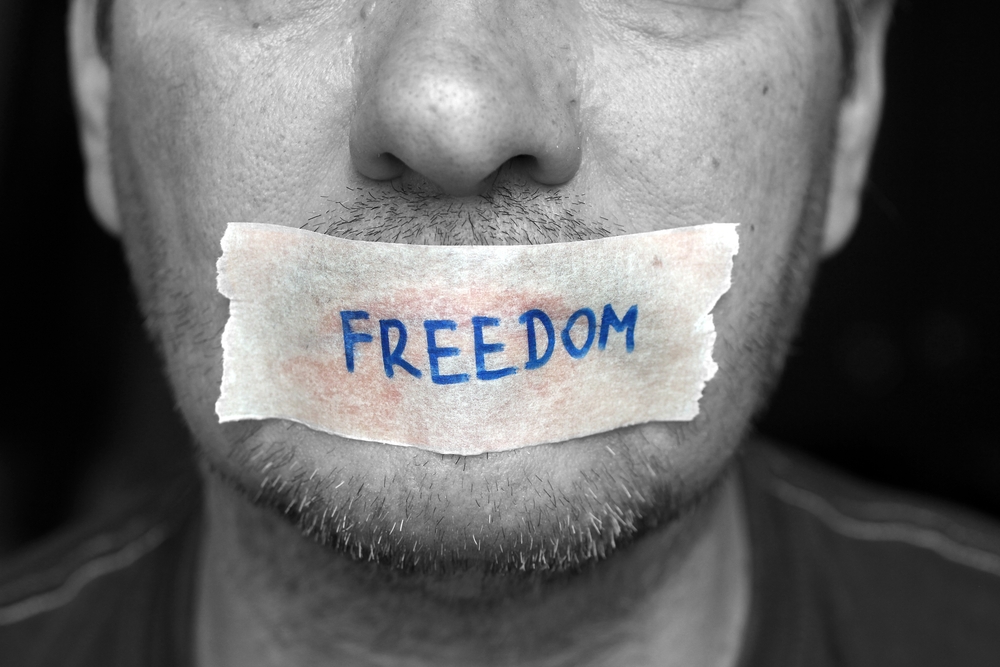
What this all comes down to is freedom of speech and expression be it verbally or in print. Our Founding Fathers made free speech and expression first when it came to the Bill of Rights along with the freedom to practice whatever faith we wanted, the right to peacefully assemble, and the right to petition the government to address our grievances. So, is this right under threat by the ruling oligarchy?

In a poll conducted on behalf of Times Opinion and Siena College, some 84% of those surveyed said that our freedom of speech is seriously under threat. Some of the respondents---46%--- admitted that they have had to monitor what they say out of fear of some sort of reprisal. Many claim that cancel culture is largely to blame for this. Only 21% said they felt comfortable with speaking their mind.

Proponents of cancel culture claim that its purpose is to hold individuals and groups accountable for their actions or words, while those opposed say that's its nothing more than intimidation and an attempt to force people or groups to self-censor out of fear of verbal or physical attack.  As an aside, 40% of Millennials and Gen Z surveyed expressed the opinion that the First Amendment was "dangerous" and should be changed  to prevent "offensive" speech.

According to a poll by Pew, 58% of those surveyed said that calling people out on social media was justified while 38% said it typically resulted in harsh and often unjustified punishment. a majority of Democrats and liberals---75%----are fine with calling people out while 56% of Republicans and conservatives disagree. They believe that individuals are unfairly being punished or bullied for expressing an opinion, albeit an unpopular one.

So, where does that leave us? It appears that the majority of Americans believe that freedom of speech and expression are under attack. In fact, 59% of Americans who feel we have a serious issued with the First Amendment being undermined. The majority want a media which provides them with the basic facts in which to make their own decision instead of pundits trying to make our decisions for us.

I couldn't agree more. I don't want to listen to a bunch of talking heads trying to talk over one another in what amounts to nothing more than confusing verbal cacophony of noise in an attempt to score more personal rating points which is why I tend to avoid so-called "political talk shows".

At the same time, I don't want some well manicured puppet spin the day's news in a not-so-subtle effort to manipulate my opinion on some issue. They try to talk and act as if they're our most trusted friend, so I for one know I'm being conned right off the bat. It's not so much that I care that they are liberal or whatever. It's the fact that they pretend I'm not intelligent enough to notice!

What Americans want is a media that's honest. Just tell the facts--both sides---and allow us the common  respect to make up our own minds. The same goes for social media which tries to hide its private agenda behind rules and regulations designed to suppress differing opinions. And to borrow from the great broadcaster, Walter Cronkite, "that's the way it is" or, at least the way it should be again.  


If you want to know more about this article's topic, please check out the links below. If you enjoyed the article, please consider passing it along to others and don't forget to subscribe. It's free! Lastly please be sure to "like" us on whatever platform you use to read anotheropinionblog.com. It helps with the algorithms and keeps our articles in circulation. Thank you! 


Who is the biggest threat to democracy? Most people say themedia


72% of College Students Believe Professors InfluencePolitical Views


ResearchGate: Political Identification of College Professorsby Field


More than 80 Percent of Surveyed Harvard Faculty Identifiedas Liberal


Americans and 'Cancel Culture': Where Some See Calls for Accountability, Others See Censorship,Punishment


Friday, September 02, 2022

The Forgiven and the Damned: Biden's Student Debt Forgiveness Program and Taxpayers


President Biden caused quite a stir recently, fulfilling a long standing promise to end student debt. As typical with many of Biden's proposal, it appears he didn't think this one through particularly well. The end result will be a much needed, albeit limited financial relief for the estimated 48 million current and former students with $1.75 trillion dollars owned.

To properly understand Biden's proposal, it's important that we first understand the term Biden uses. So, to begin with, let's get our terms correct.  Instead of calling Biden's proposal "debt forgiveness", the more appropriate term we should use is "debt transfer", which is a more accurate description of what it really is. But before we get into the specifics of Biden's "debt transfer" plan, let's take a look at student debt in general.

Loan debt has been the bane of students for decades. Some cite it as the price we pay for higher education. Others call it nothing more than a money generating scheme with naive and often desperate young adults (and their parents) as the "pigeons" to use the old carnie term for unaware victims of con games. After all, since at least the 1980's, we've been told that the only way to succeed is to go to college.

Approximately 45.4 million current and past student have some form of federal loan debt, of which 4.7% was already 90 days in arrears just in the first quarter of 2022. The average monthly payment is about $300, with most loans require the borrower to pay 10% - 20% of their gross income, based on how much they're earn.

 55% of graduates with a four year bachelor degree owe, on average, just under $30,000 in student debt regardless of whether they attended a private nonprofit or public college or university. 68% of those graduating a private nonprofit college or university has a debt of $31,450 or more. 66% of those graduating from a public institution owed $26,900. 83% of those graduating from a for-profit college or university with a four year degree had a debt of just under $40,000.

Between 2020 and 2021, students and/or their parents borrowed near $96 billion dollars to cover the cost of education with just 13% of that being private and/or non-federally backed loans. Direct loans amounted to $1.38 trillion dollars shared by 37.2 borrowers. FFEL Loans were the largest, with $225 billion loaned out to a little under ten thousand applicants. Perkins Loans, totally $4.2 billion dollars,  went to 1.5 million individuals. The grand total was $1.61 trillion dollars loaned to 43.4 million unique applicants!

The above numbers represent just a snapshot of the debt crisis. It doesn't include other forms on loans such as Stafford, Grad PLUS, or money borrowed on insurance plans, 401K and other retirement plans, home mortgages, credit cards, and so forth, which represents tens of billions in principal, interest, fees, and penalties.  It's obvious that the student debt situation is out of hand. Some would even say it's critical, and you would find few who disagree. However, before we look at Biden's plan, let's consider a few facts about higher education.

First and perhaps more importantly, not every job needs someone with as BA or BS degree. In decades past, most graduates of high school were adequately equipped academically for the majority of jobs. However, starting the mid 1970's, the quality of high school education took a tremendous nosedive. Students were being graduated who had a 6th or 7th grade math ability or read at an 8th grade level. Their knowledge of grammar and spelling was horrendous, while their grasp of history, ethics, the sciences, or literature were virtually non-existent.

Beginning in primary school, discipline all but vanished along with parent participation. At the same time, a rise in poverty among students meant more kids were showing up hungry. As a result, schools turned increasingly into publicly funded daycares. Critical thinking skills were essentially out the window as the focus turned more on sports to attract and keep students than on academics.

As a result, employers had to resort to remedial education for many of their new hires and the demand for college education began just to have the same intellectual level of an applicant they had just 10 or 20 years earlier. Along with this change, universities and employers began downplaying the need for the trades; those educated to do jobs which required physical and mental skills such as electricians, plumbers, carpenters, or mechanics.

Instead, savvy marketing drew new high school graduates to the higher priced colleges with promises of riches in four or six or eight "short years" and away from the less expensive and shorter trade schools. Thus began the rise of sustained student debt as tuition continuously rose and students were "fee" to financial death.

By way of a brief comparison, the cost of a college education is highest in the Northeast and West. It's cheaper in the South, Midwest, and Plains states. The average cost of a four year public college for in-state students is about $21,035 per year (or $84,140 for the full four years plus assorted fees). For a in-state student attending a private four year college, it's about $32,768 (you can roughly double that if you're either a out-of-state student or add another 1/3 if you're going to a for profit college).

If you attend a trade school, the average is about $33,000...for the entire program! Of course, depending on where and what degree, tuition can run $3,800 to $15,000 per year (most programs are two years or less, and in some cases, you can start earning in six to eight months). The figures used here for both college and trade are averages as of 2022. Tuition always changes, and usually upward.

 College admissions and academic administrators also starting not just encouraging students to major in degrees with little or no employment demand, they also started creating new degrees with little real world value (such as gender or race studies). Hey, all to keep the money flowing! Meanwhile, for many colleges, the focus turned from critical thinking skills (the hallmark of higher education) to even greater revenue generating sports programs, leaving some academic departments limping along.

President Biden's "debt transfer" proposal is said to "wipe out entirely" the debt of approximately 1/3 of those with federal loan debt. That's about 16 million individuals. The program includes a $10,000 dollar debt "forgiveness" (specifically, the federal government---meaning taxpayers---will pick up the tab).

This will apply to those earning $120,000 dollars or less (or a combined household income of $250,000). In addition, the federal government will "forgive" up to $20,000 in Pell Grants. Total costs for taxpayers? About $300 billion dollars. Of course, this assumes Biden's "debt transfer" proposal gets past all the anticipated legal challenges.  

By the way, don't expect any "thank you" cards from Millennials or Gen Z's. They have a reputation of self-entitlement. I bet they're going to be surprised to learn that once any type of government welfare goes into effect, it rarely if ever ends, so they expect to be paying off someone else's debt down the road! How's that for a bite in the butt of the two "I love Socialism" generations Capitalist style? 

Anyway, assuming that this portion of the Biden plan survives all the legal challenges, the president's staff claim that about 90% of those earning $75,000 a year or less (which is most Americans) will be the prime beneficiaries. The plan also includes changes in the federally based "Income Driven Repayment System" (IDR).  

Under the IDR, a student's monthly loan repayments is adjusted based on their income after graduating. Students are currently required to pay between 10% and 20% of their annual income for the first 20 years, after which the balance is "forgiven" (that is, picked up by taxpayers). According to one report, between 2010 and 2020, enrollment in the IDR jumped from roughly 10% of eligible applicants to 32%.

With Biden's plan, participants will now have to pay just 5% any undergraduate debt (and up to 10% on graduate or professional school debt such as law or medical school). This covers a repayment plan over 10 to 20 years, depending on debt size and annual income level. The proposal will also include a change in the amount of income not currently covered.

Under the current plan, IDR doesn't include repayment on income up to 150% above the poverty level (based on family size, etc). So if your income is, let's say 155% above the poverty line, your payments would be based on that 5% under the current plan and everything 150% or under is exempt.  

The new plan will adjust that up to 250% over the poverty line, meaning the minimum repayment amount is based on less income, thus significantly lowering the size of the amount due.  It also removes any accrued interest.

As a result, it encourages individuals to borrow as much as possible rather what they need. I see a lot of parties and beer runs in the near future. But fear not! The new IDR changes also encourage colleges to raise tuition since a greater percentage of debt is now being "forgiven"...and picked up by you and me via the government. So, taxpayers get all the debt of a college education but without all those pesky term papers and dust collecting degrees. 

Biden, however, suggested that individuals qualifying under the new IDR wouldn't abuse the opportunity to borrow more money with no interest, have lower monthly payments, and earlier debt termination. Instead, they would use the money saved on the loan payments to invest or spend back into the economy. They could even double up on payments if they wanted too. He also downplayed the likelihood that universities would significantly raise tuition as well.  Yeah...right Joe. Wink. Wink.

As another aside, under Biden's plan, there also could be an unintended consequence---money not paid back could be taxable at the state level  According to the Tax Foundation, there are 13 states which could treat any debt "forgiven" $10,000 or over as earned income. This includes Kentucky (naturally), Arkansas, Wisconsin, Virginia and West Virginia, Hawaii, Idaho, Minnesota, South Carolina, New York, Pennsylvania, and Massachusetts.

The Tax Foundation estimates that amount of tax to be paid could range from $300 up to $1000 or more.  To stick the knife in a little deeper, that figure could double if the debt originated from a Pell Grant and is at least $20,000 is "forgiven". So, what's the total damage of Biden's plan to taxpayers?

Well, according to the University of Pennsylvania's famed Wharton's Business School of Business (and President Donald Trump's old alma mater), taxpayers could end up stuck with a final bill of somewhere between $650 billion to $1 trillion dollars, thus proving again the old adage that no good deed goes unpunished. Not even ones designed to improve approval ratings and reelect Democrats in November. 


If you want to know more, please take a look at the links below. If you enjoyed the article, please consider passing it along to others and don't forget to subscribe. It's free! Lastly please be sure to "like" us on whatever platform you use to read A/O. It helps with the algorithms and keeps our articles in circulation. Thank you! 


A Look at the Shocking Student Loan Debt Statistics for 2022


There's a giant loophole in Biden's student debt relief that could make college even more expensive. Here's how it works


Biden's student loan forgiveness could be taxable in some states


List of States That Might Tax Student Debt Loans Dwindles


The Value of Trade Schools in Today's Economy


Average Cost of College Textbooks


Saturday, February 23, 2019

Education: America vs. the World---Where Do We Stand? Pt 3 of 3 of Our "Where America Ranks" Series


The Greek inventor Archimedes once said that given a lever long enough and a fulcrum on which to place it, he could move the world. If knowledge is the fulcrum, then education is the lever which can move the world. Education can open doors as well as minds. It is not only the measure of success of the individual, it's the measure of success for a nation. Unless its properly nurtured, a nation will stagnate and eventually decay economically, politically, and societal. So, where does America stand in terms of quality of education when compared to the world? How does our students compare to other developed nations in the areas of math, science, and reading?

As we've examined in our previous two articles of this series, much of what we're told about America doesn't gel with the published facts. We have one the worst healthcare systems of any developed nation; in some areas such as prenatal care, number of beds, and availability of healthcare professionals we actually rank in the second tier along with second world economies and crippling income inequality which puts us near the bottom tier among developed nations. In terms of freedom, we again rank only in the second tier in several areas, and even overall, we're nowhere near the top. So much for being the "leader of the free world". Now, according to a 2018 report by Business Insider, the US ranks 27th overall in education; down from sixth place in 1990 (their report also ranks the US in 27th place in terms of healthcare).

The 2018 "World Top 20 Project" which focuses solely on education and its affect on each nation's economy, the top ten nations are South Korea, Finland, Norway, Russia, Hong Kong, Japan, Estonia, Latvia, Israel, and Sweden. The United States came in 24th out of the 201 nations examined. While that places the US in the top 25%, we still fell behind nations like Kazakhstan (15th), the former Soviet Republic of Georgia (17th), China (20th), Croatia (22nd), and Saudi Arabia (23rd). Why is that?

One explanation cited in the reports is the decline in spending by 3% while student growth increased by 1% between 2010 and 2014. Meanwhile, Turkey increased its spending on education by 76% along with similar growth in spending in China and Brazil. According to the Program for International Student Assessment (PISA) which measures 15 years students in developed and developing nations, the US ranks 38th out of 71 countries in math, and 24th in science and reading; all of which placing the US well in the second tier. Interesting, the top nations were Singapore (which topped all three categories), along with Japan, Estonia, Taiwan and Finland in Science; Hong Kong, Macao, Taiwan and Japan in Math; and Hong Kong, Canada, Finland, and Ireland in reading. What makes this so interesting is that these countries were all ranked higher than the US in terms of overall freedom and/or healthcare. As an aside, the top ranked US schools according to US News and World Report's 2018 edition, which are in Massachusetts, New Jersey, Utah, New Hampshire, and Iowa still fall far behind all the top Asian and several of the European schools (Kentucky, by the way, was ranked 34th while Indiana was 35th).

In terms of higher education, Masters and More, which publishes a ranking of the best countries to pursue a post-bachelor's degree based a Pearson, a multinational education and publishing company, the top nations are South Korea, Japan, Hong Kong, Singapore with Finland coming in fifth. Rounding out the rest of the top ten are the UK, Canada, the Netherlands, Ireland, and Poland. The US came in 14th out of the 40 countries represented and just behind Russia and ahead of Australia. The report looked at the primary and secondary school systems (which lays the foundation for higher education) as well as the colleges and universities. According to Pearson's CEO, Jon Fallon, the rankings "strongly reflect the economic growth of the countries", meaning that there is an obviously correlation between the quality of education and the economic success of each nation. But just how true is that?

The US spends more per student than any other country according to a Organization for Economic Cooperation and Development (OECD) report. The report says that the average amount spent per student from primary through high school is $10,759. However, the US spends $16,268 per student. As pointed out earlier, the US is, however, on the decline in spending per child by an average of 4% between 2010 and 2014. Meanwhile, the other OECD nations have increased their spending an average of 5%. Of course, that still means the US is currently spending more per child yet getting worse results than those who spend less.

The report suggests that one reason it that teachers in the US are seen as individuals who were unable to doing anything else whereas in other countries teachers are viewed as "professionals" on par with doctors, engineers, or lawyers. Accordingly, not only are they more respected in society, they are also better paid. American school teachers make on 65% of what their peers in other countries earn. The highest paid teachers are in South Korea, followed by Canada, Finland and Germany. In fact, US school teachers actually fall below the OECD average.

Another explanation is that the requirement to getting into a teaching program in other countries is much tougher than the US. Prospective teachers are expected to have higher GPA out of high school and do better on their college entrance examinations that their American counterparts. In Finland, it's easier to get into law or medical school than a teaching program. In addition, foreign students in teaching programs are required to take much more academically rigorous courses. They are also required to take continuing education courses, like their American peers, however, the courses are considered much tougher and more on par with other professionals.

Also discipline is far more strict in international school systems than they are in the US. Unlike the US, there is a zero tolerance for any bad behavior, back talk, profanity, sloppy dress (uniforms are the norm), and needless to say, violence against teachers or other students---even bullying---is a non-starter. These school systems expect---insist---that parents instill respect and discipline in their children and that carries over to the schools where physical punishment, though rare, can be enforced. Parents are also expected participate in any school functions. Failure to do so will usually warrant the attention of school administrators. I strongly suspect that excuses aren't tolerated.

Some have argued that bad behavior results from low income or "disadvantaged" children, especially among minorities, yet according to OCED, there are 37 other countries with are economically poorer and have fewer resources than the US yet they consistently outperform the US academically. One possible reason it that schools in Europe, and especially Asia, set and demand higher academic standards that American schools, and that translates into discipline in school. In fact, it's their official academic policy and practices. Children in Singapore for instance, are given a thorough assessment prior to first grade in order to determine if they meet the minimum grade criteria. If they fall below the bar, they must first be brought up to speed before being allowed to start.

Students are also regularly tested in ensure they meet minimum grade criteria before being passed to the next grade unlike many American school systems which "fail forward" students out of fear that parents will complain or allege "discrimination". American schools seem to have adopted the Washington solution to dealing with problems which amounts to kicking the can down the road and letting someone else deal with it. The end result is students graduating with a high school diploma but having only a functional eighth or ninth grade education or less in terms of reading.

In Germany, which is noted for its academic excellence, students are tracked academically as well as to their interests. In Germany, students may be tracked for higher education or for one in the trades, which is another key difference. In the US, it's assumed that all individuals are destined for college regardless of whether they are so inclined. As a result, you see students racking up crippling debt and ending up with useless degrees. It also artificially raises the bar for getting a job.

The majority of employment opportunities should require no more than a high school degree or perhaps even a six month or two year technical certificate. Meanwhile, critically needed trade jobs, which require less education and are far cheaper, go unfilled. In addition, these jobs typically pay much better than the average four or six year degree and have better benefits. In Germany (and the rest of the world), there is no stigma between someone in the trades and some with professional degree, which can't be necessarily said of the US.

So, in terms of education the US is no better off than when we looked at its ranking on freedom or healthcare. At best, the US education system is well out of the top ten list and typically falls towards the middle of the second tier. The main reasons do not include the amount of money spent on each child (we top the list), but on attracting less the best into the teaching profession. This is due to both the perception that a career in education is somehow inferior, therefore the criteria is lowered, and that teachers are poorly paid when compared to their peers elsewhere.

The second reason is that expectations for students are set lower for US students than elsewhere, and that includes discipline. Respect should be a given, not something we bargain for in order to avoid violence in the classroom. We've allowed ourselves to become so focused on meaningless labels as part of a group rather than on our potential as individuals. Students should be individually tracked and constantly monitored as to their performance. Parents must be made a part of the solution rather they expecting teachers to serve as their glorified, if underpaid, babysitters. Lastly, students should be expected to perform and not "flunked through" or "failed forward". They either meet minimum expectations and move on or their they don't. If they don't, they must be held accountable and meet the criteria before moving on. A high school diploma must be made to mean something again. Also, I believe way too much emphasis is placed on sports, especially at the Jr High School and High School levels rather than on academics. Only a tiny percentage make it into professional or even semi-professional sports but everyone needs critical thinking skills and know how speak and write properly along with how to read and
do math.

The third key reason is attempting to herd students through a system where they may or may not fit. Not everyone is college material and not every job needs someone with a college degree. If a high school diploma is restored to its former value, most graduates can handle the majority of jobs out there. Technical and trade schools are an excellent option for many students. They pay well, have great benefits and they're in high demand. They also can be earned quicker and at a fraction of the cost of a four year degree. Students who do chose to attend college should be strongly encouraged to obtain degrees which have some market value (ie: requiring a Art History or Minority studies degree to also have a mandatory dual major in business, accounting, or computer science). Coming out with a worthless degree and tens of thousands of dollars in debt makes no sense at all and creates additional financial problems down the road.

A nation's overall success depends on the quality of its citizens. A uneducated populace is a little better than herd of sheep waiting to be led to slaughter. It's one of the key reasons---if not the key reason---democracies and republics fall. For the tyrant, an educated populace is dangerous. They know the limits of government. They understand and will defend their rights. An educate citizenry also provides the best opportunities for a strong economy, and that means job growth and economic stability. It also means a better quality of life for everyone, and who doesn't want that? As our readers know, America is an Oligarchy now, run by a professional political class of plutocrats who think they know better than us. One can almost track their rise alongside our decline in education, and with it, our standing as a nation of free people. The only question we need to answer is this---what are we prepared to do about it? Lastly, I would like to thank you for reading and your comments. I hope you've enjoyed this three part series about how America ranks with the rest of the world in the areas of freedom, healthcare, income inequality, and education, which are at the core of every nation's success or eventual downfall.


The US was once the leader in healthcare and education--now ranks 27th in the world

US students' academic achievement still lags that of their peers in many other countries

World Top 20 Project: International Education Database

40 Top Education Systems in the World

The US spends more on education than other countries. Why is it falling behind?

US News and World Report: Education Rankings