Showing posts with label school debt. Show all posts

Saturday, September 11, 2021

Frustration with a Failing Democracy


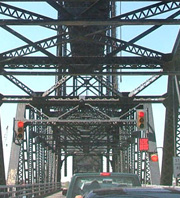
It's often been said that you can tell the political condition of a country by looking at its infrastructure. Well, if that's true, then we should be in  ICU on life support with a minister preparing to read us our last rites.  America currently has approximately 4 to 6 million miles of road which are in need of dire repair at a cost of some $2 trillion dollars or more according to the American Society of Civil Engineers. That includes 73,000 bridges which are deemed "structurally deficient",  meaning they're unsafe.

In addition, there are 600,000 bridges over 20 feet in length which are pretty sketchy too. They add that at the current rate of disrepair, we may have reached the stage where our roads will decline at a faster rate than we can repair them.

The decline in the quality of America's roads doesn't reflect the increasing congestion, which leads to more accidents or poor air quality due to car and truck emissions. Some believe additional tolls would cut down on the congestion and provide additional revenue.

However, studies by the Department of Transportation have shown that while they help, they come nowhere near covering the costs to actually fix the problem. Another example of government's "Band-Aid" approach.  What the United States needs to do is invest more in energy saving mass transit such as electric light rail, trams, and trolleys, as well as electric or biofuel public transit like other industrial countries have done.

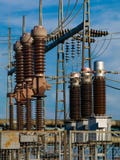
While we're at it, the U.S. also has one of the least efficient national electrical grids in the world. Currently, our national power grid covers some 7 million miles and produces around $4 billion dollars of electricity. It's the largest power source of its kind on earth. Bigger than Russia's and bigger than China's, and yet it struggles to keep up with demand, not to mention its vulnerability to terrorist cyber-attacks.
Adding to the problem is that multi-billion dollar companies like Google, Facebook, Walmart, and others are bypassing state and local utilities and going direct to producers, which deprives local municipalities badly need tax revenue.  Local governments stymie competition by giving energy producers a monopoly over electrical output. In some cases, local government is also the sole stockholder (this also applies to water too).

Municipalities also encouraged legislation to cap or limit the percentage that individuals who generate "excess" electricity through the use of alternative sources can sell back to local utilities or remove themselves from the local grid, making it all but impossible to "disconnect" from the grid.

Energy experts say that it would take an estimated $1 trillion dollars minimum just to bring our energy needs current, and make it both more efficient, and environmentally friendly. Rest assured that the public will pay for it one way or another. Meanwhile, rates keep going up with nearly 100% approval from public commissions and boards which are suppose to review rate requests and protect the public. But what do you expect when you have former energy executives on these boards?

However, what is needed to fix the problem, is practically unthinkable to most politicians and government bureaucrats---more taxes. Americans already feel they are grossly overtaxed as it is. On average, about 30% of the average American worker's wages goes to pay taxes. While that sounds like a lot, the average worker's tax rate, according to the 37 member OECD, is 34.6%, which puts the U.S. among the 30 lowest taxed country among industrial nations.

While individuals in other nations pay more in taxes, they typically also get more in return. Specially, better education for their children and themselves, Asian and European countries tend to be at the top of the list, especially in the areas of science and math, and yet we tax more per student than these same countries.

Speaking about kids, a 2020 report from UNICEF on child poverty placed the U.S. 34th among 35 countries along the worse with roughly 20% being "food insecure". Blacks and whites were about equal while Hispanics were slightly higher. Asian children had the lowest rates of child poverty. Single women with children was by far the worse off.

Another report, this one from the Congressional Research Services dated April 14, 2021, showed that the poverty rate among adults 80 and over was just around 13.6% (it was highest among single women). For those 65 to 69, it was 8.4%, and 7.4% for those age 70 up to 74. From 75 to 79, the poverty rate was 9.2%.

Worldwide, the highest poverty rate among seniors was in South Korea, with nearly half of those 66 and older living in poverty. Next was China with 39%, followed by the U.S. Where seniors fared the best was in Scandinavia, the Netherlands, France, Germany, the UK, and Japan.

We need to reinvest in this country, which means improving our infrastructure. It means becoming less dependent on fossil fuels. Corporate industries, not the public, should fund cleanups and restore the environment. We should stop penalizing research and innovation into alternative energy sources or renewable material. That same goes for people who use solar panels, water barrels, windmills, or plant local or community gardens.   

Education should be restructured to educate. Not to cater to the latest political cause, be it liberal or conservative. Every child must master the fundamentals---writing, reading, grammar, and math--at their grade level. They also should be taught to balance a checkbook and keep a household budget. No more placing the blame for a child's inability to learn on their race. If they fail, then they fail and should repeat the grade.

 Education should be honest. That means teaching the facts and both sides of social issues. They must  be taught critical thinking skills. They'll need it in the real world. Discipline is must. There can be no learning without it. Lastly, not everyone is college material (or will play professional sports). That's fine. Provide an alternative route such as the trades.

They should also be taught that while degrees in Women's Studies or "African/Black Studies", and philosophy sound good and noble, they aren't likely to get a job with them. They'll have a unemployable degree and staggering debt. So, pick a major where there's a demand, and then, maybe, minor in one of those other noble sounding programs.

Our children are increasingly coming under the control of the State, be it federal or local. They want to eliminate the parent.  I suspect that if they could take them straight from the crib, they would. Of course, their argument is that most parents aren't willing to take an active role in their children's upbringing, let alone their education, for one reason or another so "someone" has to.  

The most cited reason is that children are being raised by someone other than the parent (like a aunt/uncle or grandparent) or that one of the parents is absent and/or have a unstable home environment, which brings me to the next point. We must reexamine our social safety net and remove or modify those items which reward parental absenteeism.

Finally, we need to ensure that neither our children nor our seniors are "food insecure". There is no excuse for it in a country as resource rich as America. We throw away more food than some countries consume.

Along the same lines, we can do a heck of a lot better when it comes to medical care.  Did you know that we're the only industrial countries in the world without some form of national healthcare? "Obamacare" was a sophomoric try, but at least it was an effort. Personally, I think single payer coverage is a much more reasonable way to go, and potentially cheaper too.

Through a combination of corporate, public, and individual participation, a basic coverage could be given to all U.S. citizens. It could allow employers and the public an opportunity to buy additional insurance from the marketplace. We also need to regulate the healthcare industry as whole to curtail outrageous fees and prescription prices. This could be done by allowing the government to set caps on prescriptions as well, and allowing purchases from approved companies located outside of the U.S.. Even allow some procedures or services to be paid for in cash. 

There should also be a change of focus. The countries which rank higher than us in terms of healthcare have a different focus for instance. Here in the States, we concentrate on post treatment or reactive care, whereas other countries focus on preventative care which keeps people healthier longer and lessens the severity of illnesses so that everyone benefits. Some even make use f alternative treatment and medicines like herbs or time off for "mental health".   

While this may sound bleak (and it is), there is still a silver lining. We have the ability to fix these and other problems. We also have the resources. All that's missing is our resolve to do it.  The best place to start is at the bottom; that is, at the local level. That's where we can have the best impact. Most communities already have food banks or after school tutoring available, and speaking as a community organizer of over 40 years, I can assure you that they love volunteers.

If you can't do it in person, consider doing online volunteering. There's lots of programs available. Better yet, start one if you can't find one you'd  want to join. Attend board and commission meetings, be it school board, zoning, water, or energy. The majority are open to the public, and it's a great way to get your feet wet!  

With a little research for the rules and regulations in your area, you can also start petition campaigns. Attend community meetings which are typically held monthly by local politicians. Start a "letter to the editor" campaign. If you own as little as one share of stock, you can attend their shareholder board meetings, which usually allow up to 15 minutes to address the board (though you're actually speaking to other shareholders in attendance). That's plenty of time to expose what they're doing and ask for change.  

You could even run for office, but if you do just remember that both parties are owned by corporations, and they don't like reformers despite what they claim in their commercials. Therefore, if you're going to be a "boat rocker", count on doing it mainly by yourself, and hopefully, with family and friends support. Parties often promise money and other support to their candidates. Unless you're already a big name, don't hold your breath, especially if they think you're serious about change.  

Instead, you'd be better off lobbying sitting politicians (regardless of their party) on behalf of your neighborhood, community, or a focal issue. Be sure to brush up on what you can and can't do as a citizen lobbyist.  I've found this route to be the most rewarding.  Besides, they can be a little more cooperative when they know you aren't after their seats.

America is at war, but it's not against Al Qaeda, the Taliban, or even Russia or China. This war is one between a corporate and government partnership which is neo-fascist in character and led a group of very wealthy individuals and corporations against us; the ordinary citizen and voter. The object of the war is the creation of surveillance state with the possibility of occasionally acting like a police state.

This new system, which is called an Corporatocracy, will create its own image which we will be conditioned to identify with. Wars will be fought for "freedom" or some other emotionally charged word, while in truth it will be about corporate access to markets or control of assets and resources.  Our loyalty will be defined by products we choose rather than to our nation. We will be encouraged to focus on video games, reality shows, or work and to leave politics to our intellectual and social betters who know what's best for us.

They want a compliant workforce which is just smart enough to do their jobs and nothing more. They want control of every aspect of our lives. To get that, they must divide us every which way they can. They will control our children in order to forge new generations of worker drones who will rely on the State without question. That means rewriting history and the future. We're already seeing that with the removal of statues, censorship of books, and curriculum taught to our children.

Don't expect it to stop until we've forgotten the truth and bought into their manufactured reality. It can be stopped. I've given you some pointers above. The question then becomes, will we?


How 35 countries compare on child poverty (the U.S. isranked 34th)


CRS Senior Poverty Rates


Saturday, February 23, 2019

Education: America vs. the World---Where Do We Stand? Pt 3 of 3 of Our "Where America Ranks" Series


The Greek inventor Archimedes once said that given a lever long enough and a fulcrum on which to place it, he could move the world. If knowledge is the fulcrum, then education is the lever which can move the world. Education can open doors as well as minds. It is not only the measure of success of the individual, it's the measure of success for a nation. Unless its properly nurtured, a nation will stagnate and eventually decay economically, politically, and societal. So, where does America stand in terms of quality of education when compared to the world? How does our students compare to other developed nations in the areas of math, science, and reading?

As we've examined in our previous two articles of this series, much of what we're told about America doesn't gel with the published facts. We have one the worst healthcare systems of any developed nation; in some areas such as prenatal care, number of beds, and availability of healthcare professionals we actually rank in the second tier along with second world economies and crippling income inequality which puts us near the bottom tier among developed nations. In terms of freedom, we again rank only in the second tier in several areas, and even overall, we're nowhere near the top. So much for being the "leader of the free world". Now, according to a 2018 report by Business Insider, the US ranks 27th overall in education; down from sixth place in 1990 (their report also ranks the US in 27th place in terms of healthcare).

The 2018 "World Top 20 Project" which focuses solely on education and its affect on each nation's economy, the top ten nations are South Korea, Finland, Norway, Russia, Hong Kong, Japan, Estonia, Latvia, Israel, and Sweden. The United States came in 24th out of the 201 nations examined. While that places the US in the top 25%, we still fell behind nations like Kazakhstan (15th), the former Soviet Republic of Georgia (17th), China (20th), Croatia (22nd), and Saudi Arabia (23rd). Why is that?

One explanation cited in the reports is the decline in spending by 3% while student growth increased by 1% between 2010 and 2014. Meanwhile, Turkey increased its spending on education by 76% along with similar growth in spending in China and Brazil. According to the Program for International Student Assessment (PISA) which measures 15 years students in developed and developing nations, the US ranks 38th out of 71 countries in math, and 24th in science and reading; all of which placing the US well in the second tier. Interesting, the top nations were Singapore (which topped all three categories), along with Japan, Estonia, Taiwan and Finland in Science; Hong Kong, Macao, Taiwan and Japan in Math; and Hong Kong, Canada, Finland, and Ireland in reading. What makes this so interesting is that these countries were all ranked higher than the US in terms of overall freedom and/or healthcare. As an aside, the top ranked US schools according to US News and World Report's 2018 edition, which are in Massachusetts, New Jersey, Utah, New Hampshire, and Iowa still fall far behind all the top Asian and several of the European schools (Kentucky, by the way, was ranked 34th while Indiana was 35th).

In terms of higher education, Masters and More, which publishes a ranking of the best countries to pursue a post-bachelor's degree based a Pearson, a multinational education and publishing company, the top nations are South Korea, Japan, Hong Kong, Singapore with Finland coming in fifth. Rounding out the rest of the top ten are the UK, Canada, the Netherlands, Ireland, and Poland. The US came in 14th out of the 40 countries represented and just behind Russia and ahead of Australia. The report looked at the primary and secondary school systems (which lays the foundation for higher education) as well as the colleges and universities. According to Pearson's CEO, Jon Fallon, the rankings "strongly reflect the economic growth of the countries", meaning that there is an obviously correlation between the quality of education and the economic success of each nation. But just how true is that?

The US spends more per student than any other country according to a Organization for Economic Cooperation and Development (OECD) report. The report says that the average amount spent per student from primary through high school is $10,759. However, the US spends $16,268 per student. As pointed out earlier, the US is, however, on the decline in spending per child by an average of 4% between 2010 and 2014. Meanwhile, the other OECD nations have increased their spending an average of 5%. Of course, that still means the US is currently spending more per child yet getting worse results than those who spend less.

The report suggests that one reason it that teachers in the US are seen as individuals who were unable to doing anything else whereas in other countries teachers are viewed as "professionals" on par with doctors, engineers, or lawyers. Accordingly, not only are they more respected in society, they are also better paid. American school teachers make on 65% of what their peers in other countries earn. The highest paid teachers are in South Korea, followed by Canada, Finland and Germany. In fact, US school teachers actually fall below the OECD average.

Another explanation is that the requirement to getting into a teaching program in other countries is much tougher than the US. Prospective teachers are expected to have higher GPA out of high school and do better on their college entrance examinations that their American counterparts. In Finland, it's easier to get into law or medical school than a teaching program. In addition, foreign students in teaching programs are required to take much more academically rigorous courses. They are also required to take continuing education courses, like their American peers, however, the courses are considered much tougher and more on par with other professionals.

Also discipline is far more strict in international school systems than they are in the US. Unlike the US, there is a zero tolerance for any bad behavior, back talk, profanity, sloppy dress (uniforms are the norm), and needless to say, violence against teachers or other students---even bullying---is a non-starter. These school systems expect---insist---that parents instill respect and discipline in their children and that carries over to the schools where physical punishment, though rare, can be enforced. Parents are also expected participate in any school functions. Failure to do so will usually warrant the attention of school administrators. I strongly suspect that excuses aren't tolerated.

Some have argued that bad behavior results from low income or "disadvantaged" children, especially among minorities, yet according to OCED, there are 37 other countries with are economically poorer and have fewer resources than the US yet they consistently outperform the US academically. One possible reason it that schools in Europe, and especially Asia, set and demand higher academic standards that American schools, and that translates into discipline in school. In fact, it's their official academic policy and practices. Children in Singapore for instance, are given a thorough assessment prior to first grade in order to determine if they meet the minimum grade criteria. If they fall below the bar, they must first be brought up to speed before being allowed to start.

Students are also regularly tested in ensure they meet minimum grade criteria before being passed to the next grade unlike many American school systems which "fail forward" students out of fear that parents will complain or allege "discrimination". American schools seem to have adopted the Washington solution to dealing with problems which amounts to kicking the can down the road and letting someone else deal with it. The end result is students graduating with a high school diploma but having only a functional eighth or ninth grade education or less in terms of reading.

In Germany, which is noted for its academic excellence, students are tracked academically as well as to their interests. In Germany, students may be tracked for higher education or for one in the trades, which is another key difference. In the US, it's assumed that all individuals are destined for college regardless of whether they are so inclined. As a result, you see students racking up crippling debt and ending up with useless degrees. It also artificially raises the bar for getting a job.

The majority of employment opportunities should require no more than a high school degree or perhaps even a six month or two year technical certificate. Meanwhile, critically needed trade jobs, which require less education and are far cheaper, go unfilled. In addition, these jobs typically pay much better than the average four or six year degree and have better benefits. In Germany (and the rest of the world), there is no stigma between someone in the trades and some with professional degree, which can't be necessarily said of the US.

So, in terms of education the US is no better off than when we looked at its ranking on freedom or healthcare. At best, the US education system is well out of the top ten list and typically falls towards the middle of the second tier. The main reasons do not include the amount of money spent on each child (we top the list), but on attracting less the best into the teaching profession. This is due to both the perception that a career in education is somehow inferior, therefore the criteria is lowered, and that teachers are poorly paid when compared to their peers elsewhere.

The second reason is that expectations for students are set lower for US students than elsewhere, and that includes discipline. Respect should be a given, not something we bargain for in order to avoid violence in the classroom. We've allowed ourselves to become so focused on meaningless labels as part of a group rather than on our potential as individuals. Students should be individually tracked and constantly monitored as to their performance. Parents must be made a part of the solution rather they expecting teachers to serve as their glorified, if underpaid, babysitters. Lastly, students should be expected to perform and not "flunked through" or "failed forward". They either meet minimum expectations and move on or their they don't. If they don't, they must be held accountable and meet the criteria before moving on. A high school diploma must be made to mean something again. Also, I believe way too much emphasis is placed on sports, especially at the Jr High School and High School levels rather than on academics. Only a tiny percentage make it into professional or even semi-professional sports but everyone needs critical thinking skills and know how speak and write properly along with how to read and
do math.

The third key reason is attempting to herd students through a system where they may or may not fit. Not everyone is college material and not every job needs someone with a college degree. If a high school diploma is restored to its former value, most graduates can handle the majority of jobs out there. Technical and trade schools are an excellent option for many students. They pay well, have great benefits and they're in high demand. They also can be earned quicker and at a fraction of the cost of a four year degree. Students who do chose to attend college should be strongly encouraged to obtain degrees which have some market value (ie: requiring a Art History or Minority studies degree to also have a mandatory dual major in business, accounting, or computer science). Coming out with a worthless degree and tens of thousands of dollars in debt makes no sense at all and creates additional financial problems down the road.

A nation's overall success depends on the quality of its citizens. A uneducated populace is a little better than herd of sheep waiting to be led to slaughter. It's one of the key reasons---if not the key reason---democracies and republics fall. For the tyrant, an educated populace is dangerous. They know the limits of government. They understand and will defend their rights. An educate citizenry also provides the best opportunities for a strong economy, and that means job growth and economic stability. It also means a better quality of life for everyone, and who doesn't want that? As our readers know, America is an Oligarchy now, run by a professional political class of plutocrats who think they know better than us. One can almost track their rise alongside our decline in education, and with it, our standing as a nation of free people. The only question we need to answer is this---what are we prepared to do about it? Lastly, I would like to thank you for reading and your comments. I hope you've enjoyed this three part series about how America ranks with the rest of the world in the areas of freedom, healthcare, income inequality, and education, which are at the core of every nation's success or eventual downfall.


The US was once the leader in healthcare and education--now ranks 27th in the world

US students' academic achievement still lags that of their peers in many other countries

World Top 20 Project: International Education Database

40 Top Education Systems in the World

The US spends more on education than other countries. Why is it falling behind?

US News and World Report: Education Rankings


Sunday, October 22, 2017

What Does Halloween and Politics Have in Common?

Halloween. My most favorite of annual holidays. After all, what's not to like? You have cool fall weather with the smell and crunching of falling leaves, not to mention the vibrant colors. Then you have all the kiddos dressing up like their favorite villain or super hero knocking on the door and that near unison shout of "Trick or Treat" as they bravely hold up their plastic pumpkins, bags, or optimistically, a pillow case in the hopes of a successful treat hunt. Of course, Halloween gives adults the excuse to dress up too; be it their favorite monster or character from TV, the movies, or simply their imagination. Halloween is also a time to watch classic horror movies (Lugosi, Karloff, Price, Lee, Lorre, Hitchcock, or Chaney) or more modern fare such as the "Slash and Gore" genre (Freddy Kruger, Jason, Saw or Leatherface),witches, demons, or the latest from Stephen King, plus let's not forget "The Great Pumpkin Charlie Brown" or "The Rocky Horror Picture Show" ("It's a jump to the left..."). Then there are all those sweet "leftover" goodies...and we don't even need another excuse, it's Halloween!

Of course, Halloween is meant for fun; at least these days. We know it's fake, though we enjoy the bit of fright it brings. But what are we really afraid of? What is it that actually scares us? I'm pretty sure it isn't the prospect of Zombies or mummies. So what is it that makes us worry or uncomfortable? Well, according to an article in 'Market Watch' by Jacob Passy, our top ten fears, as published by Chapman University, are, from least to most, as follows. Starting with tenth place is air pollution. 45% of Americans are most worried about foul or dirty air, which I could see as a real problem, particularly in some cities like Los Angeles or Louisville (California has 7 cities in the top 10 for worse air quality. Pennsylvania has 2 and Kentucky has 1). Coming in ninth is North Korea at 48%. Apparently, a sizable number of Americans are worried that the "Boy Dictator" may not be bluffing this time and just might launch an attack against South Korea, Japan, Guam, Hawaii, Alaska, or maybe the West Coast on a good wind day. However, 52% think the Kim Jong Un is simply trying to obtain more freebies from the West to keep his economy running for a bit longer, and why not? By threatening a war with South Korea, Japan, or America, the Kim Dynasty has been able to extort billions in aid and credit which has kept the Hermit Nation in kimchi . But if Kim was to launch a nuclear or chemical attack against the U.S. or its allies in the Pacific, American response would be swift. Who knows? A ill-conceived attack could result in South Korea suddenly becoming an island .

Next on the list is global warming/climate change. It too came in at 48%. Apparently, large minority of Americans aren't buying the line from Republicans that the earth isn't getting hotter. Perhaps it has something to do with increase in the number and intensity of storms, tornados, and hurricanes. It may be the dry weather and longer lasting droughts or maybe the number of forest fires and the increase in so-called "dead zones" in parts of the oceans. Of course, their concern could be the seemingly increase in sea ice resulting from large chunks of the Arctic melting. Of course, some well known scientists such as Stephen Hawking, Michio Kaku, and Neil deGrasse Tyson claim that the existing scientific data indicates that there is an increase Earth's overall temperature (just saying). Of course, that still leaves 52% who think that the changing conditions are simply the result of cyclical weather patterns. As for the other data, they're called "seasons".

Another 48% of those polled said their greatest fear is that the U.S. will be involved in another war. Sorry, but I think that's practically guaranteed. Since America's founding in 1776, we have been at war---declared or not---222 years out of 239 years. That represents 93% of our history since our we told the Brits to take a hike. Folks, that's not good. Right now, we have been at war longer than at any time in our nation's existence. Sadly, I don't see any prospect of this changing. America, as many of you know, is no longer a democratic republic. We let that slip away while focusing on mindless TV programs, sports or video games, not to mentioned accepting the dumbing down of schools. We were kept busy trying to keep our jobs, finding healthcare, and so forth. We saw the growing number corrupt or incompetent millionaire politicians and keep reelecting them. We saw the government take some action, like the Wallstreet Bailout and while we said "no", Washington did it anyway without any fear of repercussions. Besides, they could always manufacture a new "crisis" to distract us anytime they wanted. As the founder of Athenian democracy, Pericles (495 BC - 429 BC), once said, "Just because you do not take an interest in politics doesn't mean politics won't take an interest in you".

America is now an Oligarchy; a plutocracy. Our foreign and domestic polices emanate from boardrooms and backroom deals. This Oligarchy is not about money. Heck, they literally control the money supply. This is about control. Control of assets and resources. If they can't get what they want through co-opting, bribery, intimidation, or extortion, then they will seek to use our military if necessary as their enforcers. Domestically, they've neutered most unions, while others have simply been brought into the fold. They've exported good paying manufacturing jobs overseas where they don't deal with union salaries and benefits, safety issues, wage and hour, etc. All they have to do is grease the right palms. Domestically, you and I get what's left. Yes, some jobs are pretty good. They pay great and benefits, but they're few and far between. Those who go to college end up with a monstrous loan debt which will take decades to pay off, and still with no assurance of a job. Those who go no further than high school have an equally tough time finding a job, unless they went to a trade school. Luckily for this "excess" demographic the military is always hiring. Wars and pseudo-wars are what keep our economy going. Without them, our economy tanks. Meanwhile, we've become economic serfs ("wage slaves" as some say) where our credit rating represents our value to the system.

Medical bills are next on the list; again at 48%. I can easily see why many have a fear of this, especially those with pre-existing injuries or seniors. No matter what side you're on, I think most of us can agree that we are facing a healthcare crisis. Originally, people simply bought coverage out of pocket or got it through their employer (especially before the manufacturing jobs were exported). Obamacare was a nice effort, but ill-conceived and ultimately a failure. President Trump is trying to rewind the healthcare clock, and that too isn't going to work. Let's also not forget than many healthcare professionals have taken early retirement, gone into consulting or private healthcare groups. In some cases, this leaves individuals with substandard care and overworked doctors, nurses, and staff. It's true that the U.S. was the only developed nation without a nationalized healthcare system. It was equally true that we didn't worry about waiting lists or whether our care was subject to some bureaucratic committee's approval (ironically called "death panels") like they in some countries with nationalized healthcare.

What added salt to the wound was that the President, Judicial System, Congress, and Federal employees were exempt from Obamacare. It was like they were saying that Obamacare was beneath them and that rubbed people the wrong way. Personally, I prefer a single payer plan. It would provide a basic level of courage and would allow for individuals or employers access to buy from supplemental plans. That way, small businesses could at least compete with larger companies for potentially better qualified employees while low income individuals would still have at least some coverage. Additionally, it would require everyone--including all government employees---to participate. What's good for the goose is good for the gander.

Not surprising , therefore, is fear of not having enough money for the future is next on the list. 50% of those surveyed said that running out of money was a real concern. Given our discussion about healthcare, that's understandable. For those with 401K or other retirement plans, there is the issue of market volatility. My best advice is diversity and a willingness to ride out the highs and lows. You have to think long term. Downsizing and the loss of a job as a result of consolidations or mergers represent another real concern. One has to worry about rising taxes and fees, which never seem to end. Another factor to consider is the extremely high cost of college, often with mediocre prospects of finding a decent job after graduating for many majors. Those who obtain engineering and applied science degrees tend to do the best (both of these disciplines require excellent math skills by the way).

An alternative to a four or more year college degree without debt in the six figure range, is through trade school. First, and most importantly, there is real demand for plumbers, tool and die machinists, electricians, heavy equipment operators, carpenters, and auto mechanics. Secondly, most programs are reasonably affordable, while many have apprenticeships which allows the student to earn as they learn. Lastly, you can earn great money in the trades and you have the option to work for someone or go into business for yourself (as an aside, these jobs aren't exportable), and the jobs are transferable. You can go anywhere and find a job.

The next two fears are closely related, so we'll treat them as such. One is drinking polluted water at 50% and the other is pollution of the oceans, lakes, and streams with 53%. It seems to me that polluted drinking would be a byproduct of polluted waterways and oceans. However, this could also be viewed as part of a failing infrastructure. As some of you might know, America has a serious issue with outdated and decaying infrastructures such as dams, dikes, roads (including interstates and US highways), crumbing bridges, our electrical grids, sewage systems (including pipelines which can easily be over 100 years old), and, of course, our water treatment plants.

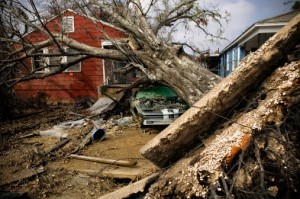
As Hurricanes Katrina, Irma, and Harvey showed us in New Orleans, Huston, and parts of Florida, it doesn't take much to create a backflow into the water treatment plants to effectively shut down the city's water supply, which often takes weeks or longer to clean up. Texas Governor Greg Abbott estimated that Hurricane Harvey created between $150 billion to $180 billion in damages. A German disaster firm, Center for Disaster Management and Risk Reduction, estimated that the damage to the infrastructure in Texas would top $267 billion, while home damage was estimated at $35 billion. For the record, the 2005 Hurricane Katrina, then the most expensive in U.S. history, cost $108 billion.

Next on our list of top fears for 2017 is "Trumpcare", which polled at 55%. Like the ones we just discussed, this could tie back into America's fear of the increasing cost of medical care as well as the fear of not having enough money over time; especially for any type of retirement or unexpected emergencies. Given the relationship between categories, I think it's safe to assume that healthcare, employment, and retirement are the key domestic issues affecting most Americans, and they should be. These issues affect us personally more so that infrastructure or pollution issues. As, it's the failure of Washington to find a solution which is also causing serious concerns for most of us.

At the time of Obamacare, House Republicans fought tooth and nail to defeat it. It was ultimately save by the Supreme Court when it, unconstitutionally, rewrote the bill into a tax. Nevertheless, House Republicans repeatedly stated that once they won the White House, and assuming they maintained a strong factor in the House, Obamacare would be "smothered in the cradle". Senior Senator Mitch McConnell (R-KY) said that House Republicans would continue to work on the matter and would have workable plan available to "pull out of the drawer" when the opportunity arose. Well, they didn't. They had nothing. Zippo. Nada. Zilch. They lied. And you know what? Nobody really expected them too. Voters knew damn good and well that nothing would be done, and as usual, the public was right.

Finally, we come to America's top fear, which shouldn't come as a surprise. In fact, it's the same fear that Americans have had decades. 74% of Americans are afraid of our corrupt government. Going back to 2015, that figure, which was also ranked top, was 58%. According to Gallup, the approval rating for Congress stands at 16%, which is pretty darn good when you consider that in early November 2015 it was only 9%. Interestingly, I had to go back to the week of June 12, 2005 just to reach 50%! In most countries, an approval under 55% is enough to set off alarm bells and brace for a possible coup at the polls or a revolution in the streets. Yet, we endure decades of poor Congressional approval ratings with barely a whimper. Why? As I've often said, Americans know our political system is broken beyond repair. We've come to accept that the time for reform is long past. No amount of tweaking is going to work. Uncle Sam is on life support with no pulse or brain activity. All that awaits him is for those who loved Uncle Sam the most, ordinary Americans, to perform a final act of compassion for him and pull the plug, and then to start our great experiment all over again. Hopefully, we will have learned from our mistakes.


Americans are most afraid of this---hint: it's not Obamacare or terrorism


America has been at war 93% of the Time--222 out of 239 Years-- Since 1776


Hurricane Harvey could cost $190 billion, Topping Hurricane Katrina


Gallup News: Congress and the Public