Showing posts with label U.S.. Show all posts

Thursday, September 11, 2025

Are You Smarter Than You An Eighth Grader? Population Intelligence From Around the World

Have you ever watched a world leader and thought that they were some sort of a buffoon or wondered how on earth they managed to become a head of state? Russia’s Boris Yeltsin is a good example. Not only was he a heavy drinker, but he always acted like he didn’t have a lick of sense as we say in the South. France’s Emmanuel Marcon is another example of someone who seems to be out of his league, but he’s far from the only one. 

Another individual was George “Dubya” Bush. He seemed to mess up nearly everything he did. Bush managed to graduate with a so-called “Gentleman’s C” which typically means a C-/D+. Barack Obama wasn’t exactly stellar either.  Not exactly what you’d expect for a U.S. President.

Congress is full of such individuals, and increasingly, we’re finding judges, governors, mayors, and local officials so lacking in intelligence that they shouldn't be out in public unsupervised or be allowed to hold sharp objects!

Are our euphemistically named “leaders” a reflection of the people they’re supposed to lead? Like me, I’m sure you’ve worked some place where those in charge were dumber than a box of rocks. Unfortunately, however, we are now living in a society where mediocrity is the norm. Anyone who excels or stands out is viewed with suspicion. 

Kids are routinely placed in sub-par schools where conformity is encouraged. Everyone is equally dumbed down so as to not “offend” lower performing students. As in sports, where everyone gets a trophy, so now in academics everyone gets a diploma whether they actually earned one or not. How else do you explain kids graduating high school with an 8th grade reading and literacy level, a 7th grade knowledge of history, geography, or civics, or that just 37% were academically prepared for entry level college math and science?

At work, we try to do “just enough” and to keep our heads down. We just want to get through the day, collect our paycheck, and go home. If we can somehow slip through without the boss knowing our name, that’s celebrated as a personal victory. Questioning authority is seen as making waves or labeling you as a troublemaker.

Your fellow employees don’t like it because it brings unwanted attention their way and your supervisor doesn’t like it because it means they may  address yet another problem. If the average workplace had a color, it would be dull gray. Is it any wonder then that when we graduate so many underachievers we find ourselves in a milquetoast society?

The Nobel Prize was seen at the epitome of excellence (their prestige was damaged when they started focusing on political correctness over achievement as in the case of President-elect Barack Obama who was awarded the prize for…well…nothing actually). Nevertheless, the United States has the most laureates at 420. The next closest is the United Kingdom with 142 and Germany at 115. India has won 13. China has 8. Russia has 30, and Japan has 31.

The reason for America’s dominance has been well-funded research (mainly by the military and corporations), historic academic freedom, and our emphasis on mathematics and the hard sciences, the very areas where our schools are struggling today. As an aside, do you know which ethnicity has won the most Nobel awards? The answer is Jews. One in ten of all Nobel Prize recipients have been Jewish.

What nation owns the most patents? That honor goes to China according to the World Population Review. They report that China has some 798,347 patent grants. The majority of these are in the areas of digital communications, artificial intelligence, and computer technology (China has 70% of AI patent applications). Two other areas with a high number of patents filed are medical and renewable energy technology.

As for the United States, we have a distant 323,410 of all patents granted. Japan and South Korea are next at 201,420 and 135,180 respectively. India rounds out the top five with 30,490.  It bears mentioning that Asia leads the world with the number of patents filed, accounting for 68.7% of all patents filed globally.  Of that, 70% came from China. It also holds the majority of the world’s trademarks. Not shabby China. Not shabby at all.

In addition, women account for 17.7% of the inventors as indicated on the patent applications, up from 10.9% in 2009. Most of their inventions pertain to the biotechnology and food chemistry industries. It's odd then that some countries view women as third class citizens; as being inferior and therefore makes it criminal for them to be educated or try to reach their maximum potential. 

Given the aging population, especially in the West, another question of interest is which countries have the most number of medical doctors per capita. At first blush, you would think the U.S., China, or India given their population density. Well, you’d be wrong. The nation with the most doctors based on percentage of their population is Cuba which has almost 94 doctors per 10,000 residents. In fact, Cuba is very well known for sending its physicians abroad, especially to poor and developing countries.

Sweden has almost 72 doctors per 10 thousand individuals while Belgium has 64. Greece has just over 63 doctors per 10,000 people. Norway has roughly 52. By comparison, Russia has 38 physicians for every 10 thousand. In India, the world’s largest populous country, its only 7.27. It’s 25 in Canada and just slightly better in Mexico with 25.6. In the United States, the number is 35 physicians for every 10 thousand.  Lastly, in Africa it’s mostly under 10 physicians for every 10 thousand with the majority of countries having under 2 doctors per 10 thousand.

As a side note, the U.S. Northeast has the most number of active doctors with New York producing the most. The majority of doctors in the U.S. are White or Asian. The fewest number are Black. Most of the applicates to medical school are foreign born, with most coming from India, Pakistan, the Caribbean, the Philippines, and Mexico.

Finally, the overwhelming majority of doctors come from upper income families. 75% of doctors comes from families whose incomes are in the top 40%, and of those, 30% are from families in the top 5% income bracket! The high cost of a medical degree (and subsequent debt) make it nearly impossible for applicants coming from poor or working class backgrounds----just 5%---to succeed.  Maybe that explains the “God complex” some seem to have.

All of what we’ve discussed so far presupposes one thing---intelligence. So, what countries tend to have the highest IQs? It’s long been said that education is the key to success. However, that’s just one factor. Opportunity and financial means are also critical. However, none of it matters unless you have the intellectual aptitude.

The average IQ score is 100, be it an individual or a nation. These results are only “best guess” averages, extrapolated from a percentage of the population since, after all, you can’t test everyone in a nation! Secondly, since we’re dealing with entire populations, obviously no country will measure as “genius” or “gifted”, but some are certainly above average.

China has the highest overall IQ of any country with a national average of 107.19, which would be pretty decent for an individual. South Korea was second with 106.43, just beating out Japan with 106.40. Surprisingly, Iran was fourth. It’s average was 106.3. Singapore was fifth with an average national IQ of 105.14.

Russia came in sixth with an estimate national IQ of 103.16. Mongolia, Armenia, and Australia were nearly tied at 102.86, 102.58, and 102.57 respectively. Canada was 101.65 while Thailand’s average IQ was 101.52. Luxembourg had the global average IQ of 100, followed closely by Iceland at 99.99.

Vietnam’s national IQ average was 100.12. Greece was 100.07. The United States came in 30th place with a national IQ of 99.74, just barely beating out Czechia which had an estimate national IQ of 99.73. The UK’s was 99.68. Germany’s average IQ was 99.64. As an aside, the national IQ for France was 101.42, putting them in 17th place (yes, we got beat by the French!). Mexico's was 95.52.

The highest estimated IQ in the Middle East belongs to Lebanon with 99.39, putting them in 37th. Israel was next, in 45th place, with an average IQ of 99.07, tying Turkey. Other Middle Eastern countries were the UAE with an average of 96.8. India was 99.08. Egypt’s average national IQ was 97.21, Kuwait was 95.02, and Algeria had an estimated IQ of 97.01.

Among the nations of South and Central America, Uruguay’s and Ecuador’s national IQs were near identical at 95.01 and 95.00 respectively. Chile’s was 95.38. Argentina’s IQ was an estimated 94.39 and Brazil’s was 92.92 with an IQ of 93.17 for Columbia. 

In Africa, South Africa had the highest with an estimated national average of 94.11. Kenya ‘s IQ was 91.22. Zimbabwe was 90.21 compared to Ghana with 90.25. The Ivory Coast was 88.42, Senegal’s average national IQ was 88.27 and the Congo was 88.01. Angola’s estimated national IQ was 85.33, and in last place at 126 was Gabon, whose average IQ was 85.08. The average IQ for a sub-Saharan African is 80.

It should be mentioned too that overall, IQ scores worldwide have been on the decline, reversing a trend of rising scores throughout much of the 20th century thanks to better nutrition and healthcare, more access to schools, quality education (and discipline) better qualified teachers, and generally secure environments needed to foster learning. This decline (known as the “Reverse Flynn Effect”) first started appearing in the late 1970’s and accelerated in the 1990’s.

The most notable regions of decline has been in Scandinavia, which had long been noted for producing a highly intelligent population. The UK, France, and the United States has also seen a decline in IQ scores. Latin America has remained largely stable while Africa has seen some improvements. Asia, on the other hand, has experienced stable IQ scores or in some cases, a significant rise.

Studies have shown that the decline in IQ scores have been most prevalent in the areas of mathematics, logic, and verbal reasoning. The significance of this is that these are the very areas needed for an advanced technological society as well as in medicinal research. Spatial reasoning, however, has actually improved. Could that be from playing so many video games?

It should come as no surprise that Asia’s dominance in academic testing and it’s rising IQ scores correspond to its growing dominance economically, especially in the areas of AI, technology, and communications. If the West is to remain competitive, it must reverse this trend by demanding academic excellence from its schools, including restoring discipline in the classroom and an emphasis on academic rigor. Excuses will no longer cut it. Additionally, we must accept that not every job requires a college degree. Most only need individuals who had 12 years to master the basics. Trades schools are another area seriously lacking our attention despite high demand, good pay, and low debt.  

Countries like South Africa and Iran have made serious social blunders while Europe is caught in an ever tightening spiral downward thanks to political weakness (that can be said of Canada as well). Africa has the resources but it lacks the infrastructure and leadership thanks to petty graft and prejudices.  Latin America has the potential, but does it have the will? That remains to be seen. In the interim, it appears that the Sun is rising ever higher in the East.  


 Thank you for reading "Another Opinion", the Op/Ed blog page for the "militant middle".  Here at "A/O" we truly value our readers. At A/O we seek the facts as they exist, not partisan talking points.  We hope you find our articles informative and engaging. Comments are welcome, provided they are not vulgar, insulting or demeaning.  Another Opinion is offered without charge and is directed toward all independent and free-thinking individuals. We ask, however, that you "like" us on whatever platform you found us on in order to keep our articles available for free to others. Lastly, in order to keep costs down, we depend on passive marketing, and therefore, depend on our readers to please forward our posts along. Below you will find links to the sources we used in writing this article. Thank you. 


Nobel Prize by Country 2025

https://worldpopulationreview.com/country-rankings/nobel-prizes-by-country


Patents by Country 2025

https://worldpopulationreview.com/country-rankings/patents-by-country


Here’s the top 10 countries who filed the most patents globally

https://www.patentrenewal.com/post/herere-the-top-10-countries-who-filed-the-most-patents-globally


AI Patents by Country Revealed: The Top 15 Countries Dominating the 2025 Landscape

https://arapackelaw.com/patents/ai-patents-by-country/


Doctors per Capita by Country 2025

https://worldpopulationreview.com/country-rankings/doctors-per-capita-by-country


Average IQ by Country (2025 Update)

https://www.thecaliforniacourier.com/average-iq-by-country-2025-update/


American IQ Scores Have Rapidly Dropped, Proving the ‘Reverse Flynn Effect’

https://www.popularmechanics.com/science/a43469569/american-iq-scores-decline-reverse-flynn-effect/


American IQs rose 30 points in the last century.  Now they may be falling

https://thehill.com/policy/technology/3922608-american-iqs-rose-30-points-in-the-last-century-now-they-may-be-falling/

Saturday, October 21, 2023

A Nation Out of Balance: Wealth Inequality in America

Did you know that the top 400 richest individuals in America are worth a combined $4.5 trillion dollars? Of those, the top four are worth about $1.9 trillion dollars. Do you think you have what it takes? Just to make it into the top 400 you'll need a minimum net worth of $300 billion dollars. In addition, the top 20 are worth 30% more than they were this time last year. So, who are these modern day descendents of King Midas?

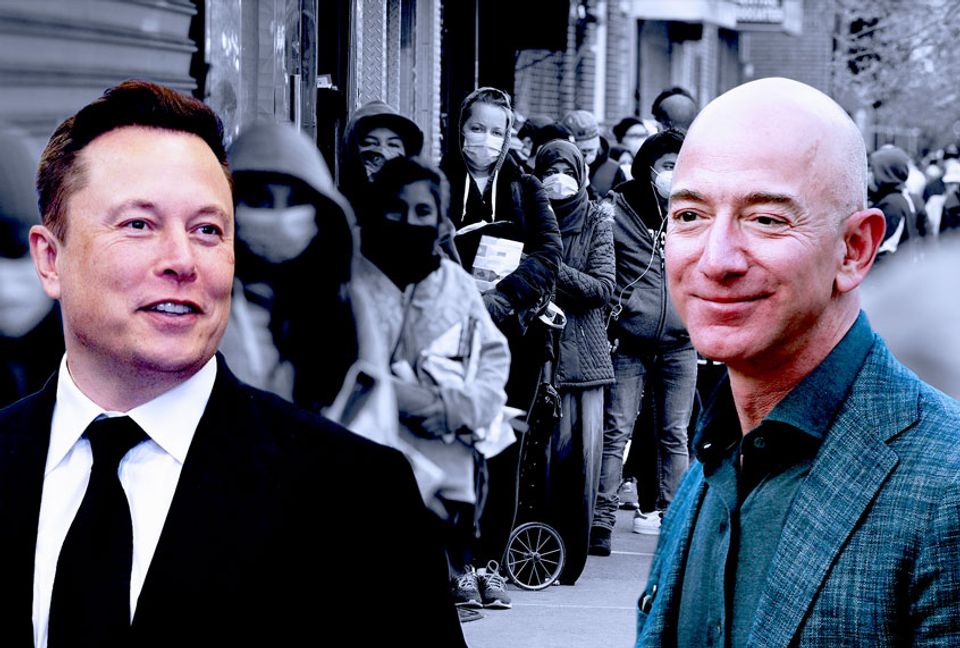
The top five wealthiest individuals are Elon Musk ($180b) at the top, followed by Jeff Bezos ($114b), Bill Gates (135.8b), Larry Ellison ($119.5b), and Mark Zuckerberg ($117.5). Zuckerberg is also the youngest at 39. Warren Buffet is the 7th richest person and Charles Koch ($54.2b), the villain of liberals everywhere, is 17th. Julia Koch ($54.2b), widow of Charles' brother, David, is 18th, making her one of the wealthiest women in the world.  

As an aside, these are the richest individuals in America. Globally, Bernard Arnault of France is the second wealthiest person, behind Musk with a net worth of roughly $174 billion. The balance of the list is the same, making the top 9 out of 10 richest Americans.

Meanwhile, Michael Bloomberg ($69b), the bane of conservatives, is actually much richer, clocking in at 10th place.  Of course, these figures are approximate. By the time it took just to type the figures, they already grew several hundred thousands of dollars. And for those who like to gloat, former President, Donald Trump, is no longer among the top 400 wealthiest. According to Forbes, "The Donald's" wealth has dropped from $3.2 billion to $2.6 billion. While that puts him about $300 million dollars shy of the top 400, I doubt Melania is having to clip coupons.

But what about us ordinary Americans? How do we stack up? As of 2022, the "official" poverty rate in the United States was 11.5% or around 37.9 million people. The number of children living in poverty as of 2022 was 12.4%, up from 5.2% in 2021. However, the actual poverty rate of Americans is much higher, especially when you consider that 49% of Americans are dependent in some matter on government services. That translates to roughly $1.19 trillion dollars or 20% of the federal budget.   

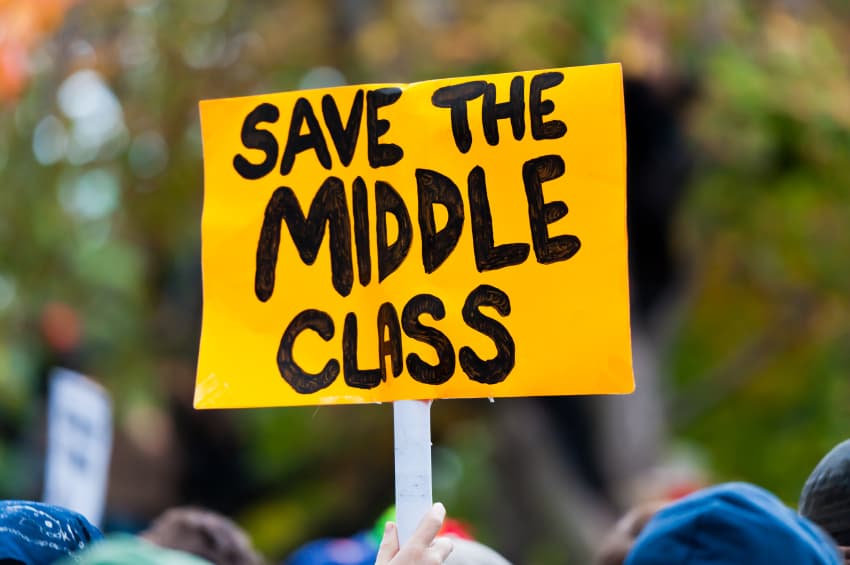
Historically it's been the middle class which has provided the economic and social structure to society. The middle class provides the overall stability which keeps capitalist democracies afloat. Ideally, a society should have a relatively small upper class and a small lower class with a large center. However, that's not the case anymore.

In 1971, 61% of Americans were middle class. By 2021, it was just over 49%.  To make matters worse, those in the upper third of the middle class dropped significantly to middle income while many of those previously in middle portion either remained the same or dropped into the lower middle class, thus making the lower middle class the largest of all the economic classes.

Minorities, which had struggled for decades to reach a middle or upper middle class lifestyle (reaching their zenith in the 1980's) have dropped to middle or lower middle income. The decline of the middle class coincided with the closure of factories and exportation of good paying, and mostly union jobs overseas in the name of improving shareholder profitability and staving off corporate raiders.  

The decline of the middle also coincided with growth of the lower class which increased to 25% of the population (some studies put the figure closer to 29%). Of that 13% were classified as "working poor" while 12% were defined as "underclass". Note that none of this takes into consideration those who are under employed or have simply given up looking for employment.

I should also mention that the rate of homelessness has also grown along with the decline of the middle class. Currently 22% of the homeless are categorized as "chronic", meaning they are unable to be find regular shelter. 5% of the homeless have children with them (defined as those under age 25).  6% of the homeless are veterans. The majority of homeless, 21.5%, are men. 13.3% are women.  

When we take a look at wages, the situation becomes more dire. As of 2022, the average company CEO made a whooping 670 times more than the average employee---not the lowest paid employee mind you, but the middle income earning employee. That means for every dollar the average employee earns, the CEO gets $670. In 2021, that ratio was 399-to-1. By 1989, it was 59-to-1, and in 1965 CEO's made $29 dollars for every dollar the average employee made. 

Between 1979 and 2022, the pay of senior company executives went up 1209.02% while the average worker's compensation went up 15.3%. It's worth noting that since 1975, prices overall have increased by 361.41%, or to rephrase it by saying that it would take $5.72 in 2022 to buy the same amount a dollar in 1975 would. Thus when adjusted for inflation, the purchasing power of a dollar relative the rise in wages, which helps to explain, at least partially, the decline of the middle class.

When we look at the situation globally, the picture is much the same. The upper 10% take home 52% of the income while the poorest 50% has just 8%. In terms of overall wealth, the top 10% control 85% of all wealth while the bottom 90% control 15% with the poorest segment owning a mere 2%. The top 1% control 50% of the world's wealth.  

Compare that with the U.S. where, according to the Federal Reserve, as of 2021, the top 1% controlled 32.3% of the total wealth while the bottom 50% controlled just 2.5%. As of the end of the second quarter of 2023, the Federal Reserve said that the top 10% control 69% of the total wealth while the lowest 50% had just 2.5%. The top 1% controlled just over 1/4 of the total wealth in the U.S..  

Globally speaking, the United States has the fifth worse level of income inequality out of the top 35 industrialized nations. Only Bulgaria, Turkey, Mexico, and Costa Rica were worse off. The U.S. also still had the highest disparity between CEOs and workers by a large margin. The next closest was Switzerland where the wage disparity between CEO's and workers was 148%, followed by Germany at 147% and Spain at 127%.

As an aside, it should be pointed out that the COVID-19 pandemic contributed to the growing wage disparity since senior executives continued to receive their full compensation while the majority of the workforce was at home receiving next to nothing beyond unemployment and a couple of small government handouts (aka "stimulus checks").  

Also don't forget about their considerable investments in pharmaceuticals,  healthcare, and medical research. During the pandemic, Jeff Bezos, Mark Zuckerberg, Elon Musk, and six other billionaires made $360 billion dollars during the deadly outbreak. 

From March 5, 2020 through March 5, 2021, the height of the pandemic, Elon Musk's wealth increased by $118 billion dollars. Jeff Bezos saw an increase of $58 billion while Larry Paige and Sergey Brin saw their wealth grow by $33 and $32 billion dollars respectively. Mark Zuckerberg's portfolio increased by $29 billion, while Larry Ellison's grew by $28 billion. Bill Gate's financial worth blossomed by $24 billion. Two other billionaires, Steve Ballmer and Michael Dell saw their wealth grow by $23 billion and $18 billion. Money begets money, and they have a lot of money to beget! 

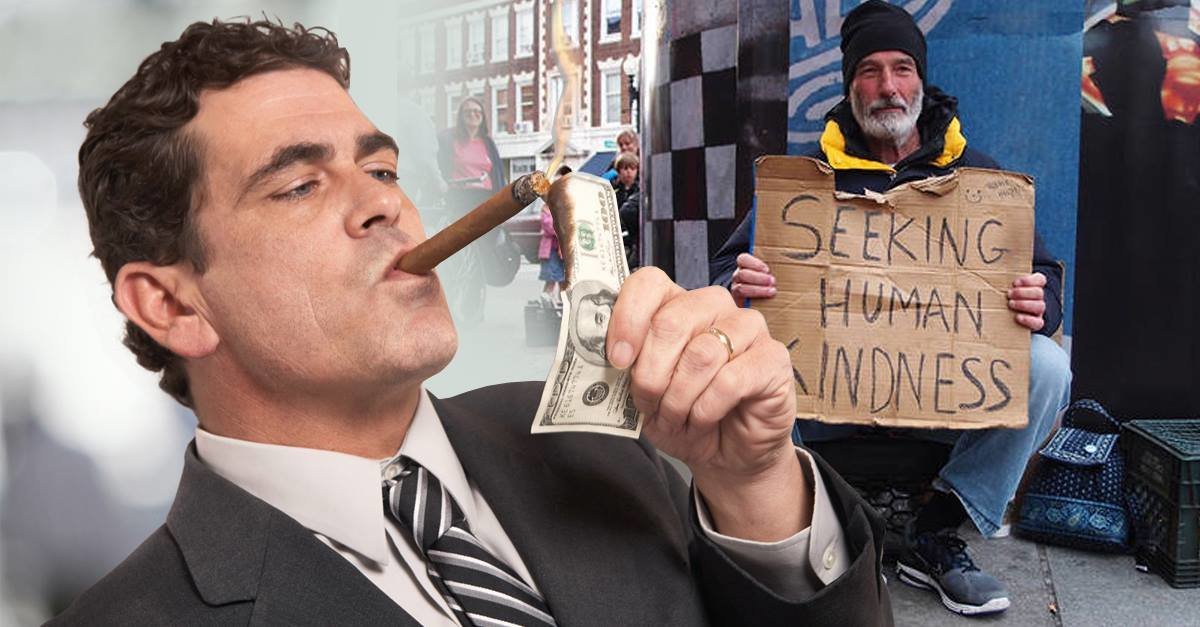
The ever expanding wealth inequality has effectively created a two tier society both in the United States and abroad. The middle class has historically been the glue which held capitalist democracies together. Even during feudal times, it was the well-to-do peasant class which helped prop up the monarchies. The middle class has provided an incentive for the lower classes to try to achieve economically and socially while providing a social barrier for the upper classes.

It has been said that the middle class is the only thing protecting the rich from being murdered by the poor. However, if the middle class no longer has as much to protect, then there is no reason it shouldn't make common cause with the lower class which has happened previously in history. If that should occur, there would be a complete upheaval in society.

The choice, therefore, that we all must accept is either fundamental and real change in how society functions economically and politically, including possibly a defacto cap on individual wealth and a minimum corporate tax, or face a real threat of more radical changes at home and globally.

There is no longer a middle ground. Attempts by politicians or the corporate media to divert our attention with another "crisis de jure" or even their blatant refusal to protect their financial interests just aren't going to cut it anymore. It's past time that we took charge of this country again.  

In addition to the links below which explain the statistics mentioned above in greater detail, I've also include two short videos below which illustrate what we've discussed more entertainingly. We hope you enjoy them and will let us know what you think about the decline of the middle class and bifurcation of society politically and economically.


Video: Wealth Inequality in America: Visualizedfor 2023 (13:19)

Humphrey Yang


Video: Wealth Inequality in America (6;23)

politizane


If you enjoyed the article, please consider passing it along to others and don't forget to subscribe. It's free! Lastly please be sure to "like" us on whatever platform you use to read anotheropinionblog.com. It helps with the algorithms and keeps our articles in circulation. Thank you!


List of wealthiest Americans by net worth


Donald Trump drops from the Forbes 400 list of richest Americans. Here's what changed


For most U.S. workers, real wages have barely budged fordecades


Wage gap between CEOs and US workers jumped 670-to-1 lastyear, study finds


These charts show the growing income inequality between the world's richest and poorest


OCED: Income Inequality


State of Homelessness: 2023 Edition


Friday, August 19, 2022

Religion, Freedom, and Americans

According to a Gallup Poll from December 2021, 75% of Americans identify with some form of religion. Of that, 69% named Christianity as their religion of choice.  When asked for specifics, 35% said Protestantism while 22% said they were Catholic. However, 12% said declined to say.

 Meanwhile, 7% of those surveyed said they weren't Christian. Of those, 2% professed to being Jewish, while 1% each identified as Muslim or Buddhist. 3% declined to answer. But it's worth noting that 22% of those interviewed said they had no religious preference.

The significance of this survey comes into focus when you look at a similar survey conducted in 1971 when 90% of those interviewed identified as Christian, a 15% drop over 50 years, or about two generations. Further highlighting the shift was that in 1971, just 6% said they weren't Christian and a mere 4% had no religious preference.

The 2021 Gallup Poll said that 49% of those who adhere to a religion felt said that it was important to them.  Another 27% said it was "fair" important, while 25% felt it was of little or no particular importance.  But back in 1965, it was quite different. Then 70% of those survey said religion was "very important" to them. That dropped to 52% in 1978 before rising to 60% in 1990 where it remained consistent until 1996 before dropping to its present level of below 50%.

Church membership and attendance are two other key factors affecting religion in America. In 2000, Gallup asked participants if they attended a religious service in person or online, 44% said they did. Compare that to 49% in 1958 who attended services. By 2021, that number had dropped to just 29%.

When it came to membership, the numbers are just as bad. When Gallup first asked respondents if they formally belonged to a church back in 1937, 73% said yes. In 1999, that number was still pretty high with 70% saying they were. However, in 2021, that figure had dropped off to 47%.

The decline was primarily among those under 30 years of age, while it remained fairly stable among seniors.  For those born before 1946, those belonging to a organized religion dropped from 77% to 66%. From Babyboomers (1946 - 1964), that number went from 67% to 59%. Gen X (1965 - 1980), the figure declined by 12%, 62% to 50%. Finally, Millennials (1981 - 1996). Just 36% are belong to some religious denomination. As for Gen Z, 34% were unaffiliated with any religion.

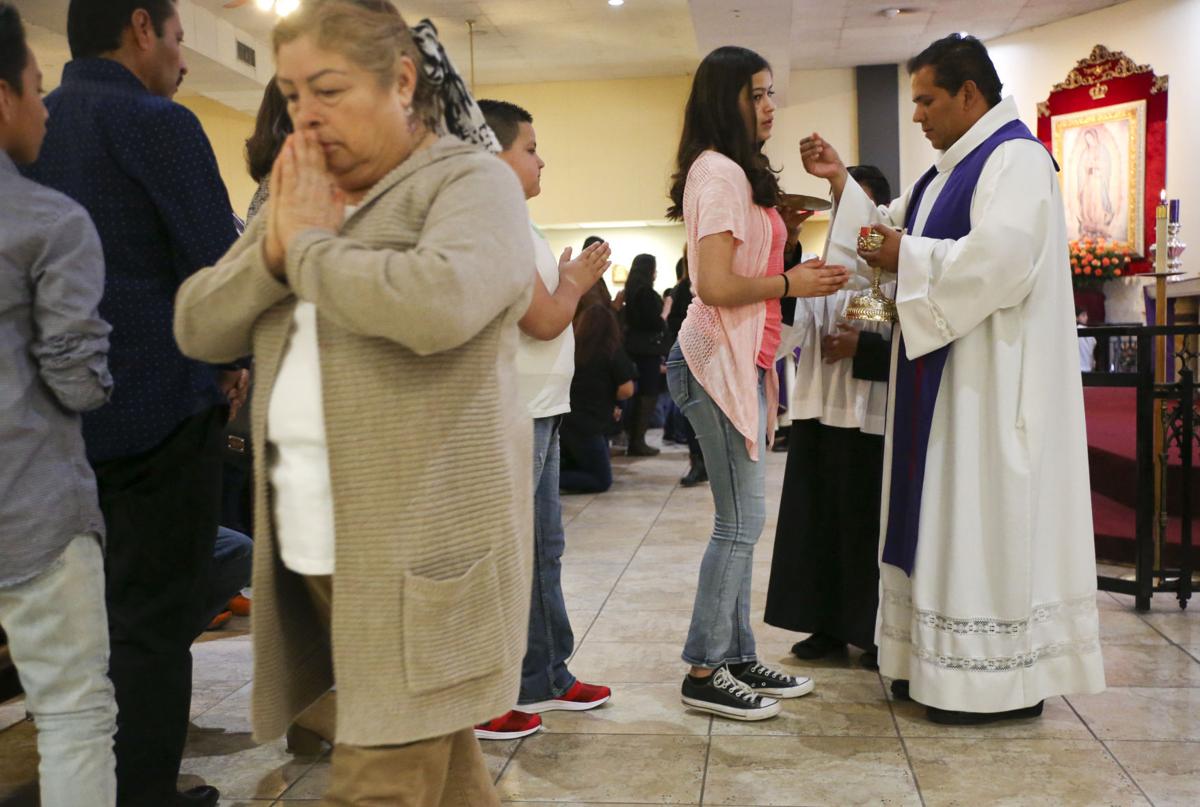
When we break those numbers down further in order to get a clearer picture things get really interesting. First, the largest drop in membership was among Catholics who've dropped from 73% in 1998 to 58% as of 2020. For Protestants, it went from 73% to 64%, with mainstream churches (Lutheran, Baptist, Methodists, Presbyterian, United Church of Christ, etc) being hit the hardest. Even Evangelical churches, which had the largest growth just a few years ago, are seeing record number declines.

Women, once the staple of church membership, has dropped by 20% over the last 20 years, down to 53%. 18% for men or 46%. Among whites, 59% attend, a decline of 16%. For blacks it's was slightly worse--- a 19% decline to 59%. For Hispanics, however, the numbers were worse. Since 2011, church membership among Hispanics has dropped off to just 37%.

As an aside, a 2018 Pew study showed that for the first time ever, the majority of Hispanics in America are no longer Catholic (something I'm sure certain Catholic service organizations were expecting when encouraging Latinos to illegally enter America). In 2009, the number of Hispanics who considered themselves Catholic was 57%. By 2019, that number had dropped to 47%.

Hispanics who considered themselves Protestant rose from 23% to 26%. Of those, the majority self-identified as Evangelical. 3% said they were no longer Christian, while an impressive 23% said they were agnostic, atheist, or nothing in particular.

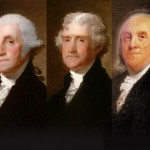
There's a great line from the novel "Dune", written by Frank Herbert that says "When religion and politics ride in the same cart a whirlwind follows". Although there's nothing in the Constitution about separation of church and state, America has done a great deal to keep religion and politics as separated as possible. It's not that the Founding Fathers disapproved of religion, far from it.  They were just fearful of a state created religion like what had forced others from Europe.

Under a state religion, others exist at the discretion and magnanimity of those in power; to be granted or withdrawn at a whim. In addition, the state church imposed a tax on the citizens as well as on the non-state churches. In addition, the members of these non-approved churches were required to support their minister and church which represented another tax burden many couldn't afford.

The decline of religious membership and participation among Liberals went from 56% to 35% over the last 20 years, a 21% drop. Among moderates, they experienced a 21% as well, going from 66% to 45%. Perhaps not unexpectedly, Conservatives fared the best, falling 14% from 78% to 64%, which still represents a majority.

When we break it down along partisan lines, Independents, who are the nation's largest political demographic, fell from 59% to 41%; a 18% drop.  Democrats saw the largest drop, going from 71% down to 46%, which represents a falloff of 25%.   Again, as expected, Republicans had the least drop. Over the last 20 years, they've gone from 77% to 65%, which once again still leaves them with a majority of participants.

It's ironic that the Left it portrayed by the media as being morally superior, while accusing Conservatives and Republicans of corrupting Christianity; of advocating a form of "neo-fascism" Christian Theocracy the way the Taliban has corrupted Islam. After all, wasn't it said that if fascism ever came to America it would be wrapped in the flag and carrying a bible?

 They cite the Right's push for mandatory prayer in school while ignoring other faiths and the non-religious, while also encouraging pray at social functions, not to mention limiting or prohibiting diversity and cultural inclusivity (aka "multiculturalism").

The Right, on the other hand, cite the need to recreate a "melting pot" where no one group is better than the other. At the same time, for a society to prosper, they argue that a society must share a set of common values and a common language. "You have to stand for something or you'll fall for anything", isn't that the promise of a "anything goes" society? 

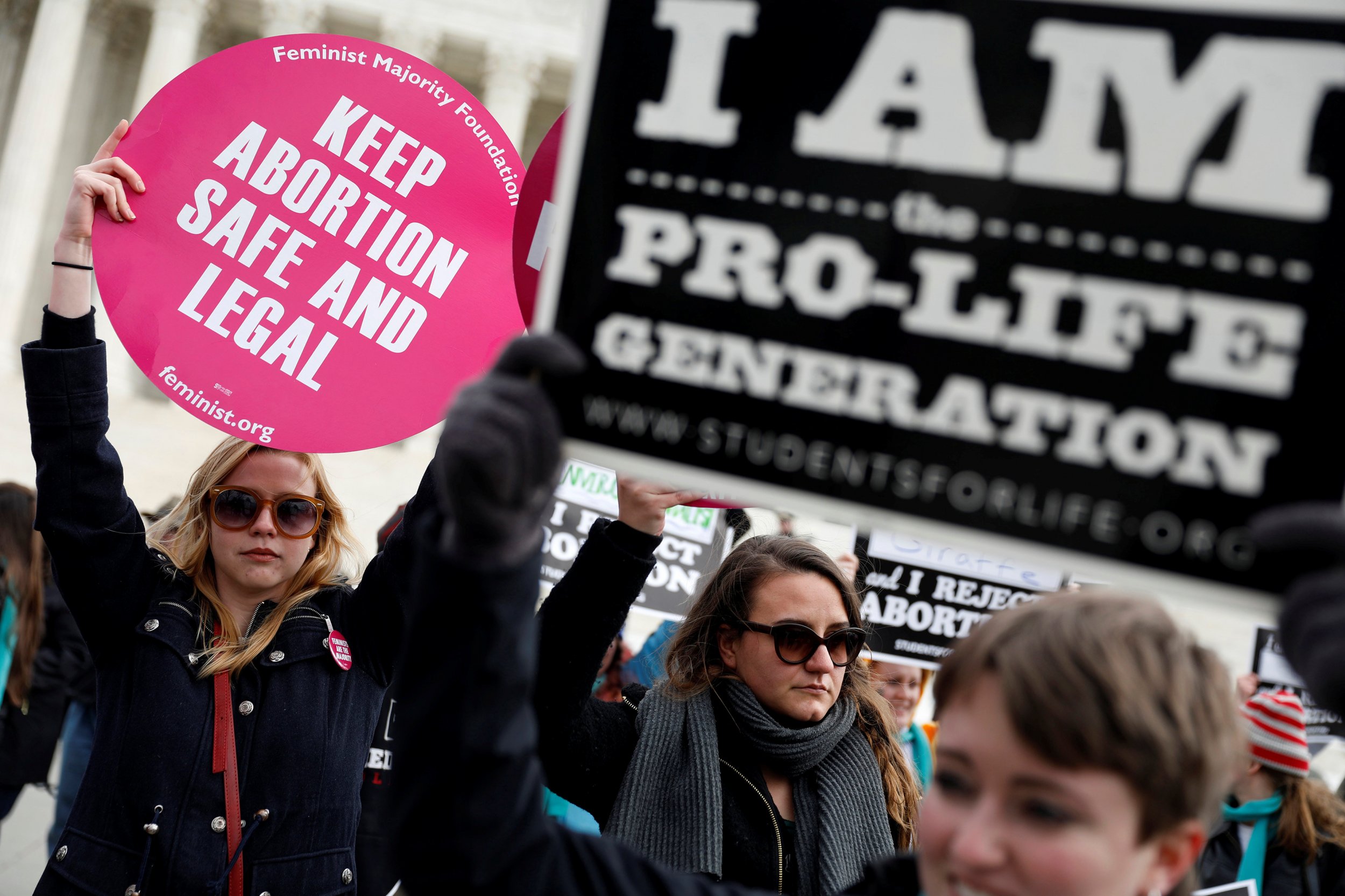
They also point out that the religious Right was behind the move by the Supreme Court to reverse Roe v. Wade, and thus making abortion illegal. The Left sees abortion as a "pro-choice" issue, whether anyone else agrees with it or not. It's their position that a woman has the right to do with her body as she pleases while the religious oriented Right hold that that option ended the moment she became pregnant. 

Even what constitutes a "unborn child" is disputed! The Right says that at the moment of conception, life has begun and all future decisions must be based on that. Meanwhile, the Left believes the process of life (cell division) may technically begin at conception, but you don't have a "life" until there's a heartbeat and brain activity (the absence of which is near uniformly acknowledged as death by the medical community). 

There are some on the Right who believe that the pregnancy must come to term no matter the circumstances of the pregnancy (ie: rape or accidental) or possible medical disabilities that might bring up to and including those affecting the mother's wellbeing, and will cite cherry picked passages from the scripture of their choice to support their claims. But what if the individual isn't of their faith or culture? What then? 

Other issues which separate the Left and Right along religious lines include the acceptance of homosexuality, the admission of female clergy (or gay clergy), the role of women in church and at home just to name a few. None of these even touch on groups like the Amish, Mennonites, Quakers, Mormons, and other non-traditional religions which have either in part or in totality rejected aspects of modern society.

As an aside, the Mormons are one of the few Christian sects which has actually maintained their numbers. While the Utah based church hasn't grown, it's numbers haven't dropped off like other Protestant denominations have (in 2020, the growth rate was 0.6%. In 2021 it was 0.85%). It's primary areas of growth has been in Africa despite a significant drop in missionaries (thanks mainly to Covid-19).

So, what religious based groups are doing well?  In the U.S., the fastest growing organized religion is Islam, albeit the numbers themselves are extremely small. Islam makes up less than 1% in the U.S. and it's growth rate has been 0.6% to 1.5% over the past few years. Nothing to write Mecca about! However, Islam is expected to surpass Judaism in the very near future with Islam reaching eventually about 2.8% of the population compared to 1.8% for Jews. Non-organized religions such as pantheism, paganism, Wiccan, Native American, and African faith systems are also growing rapidly as is the more secular Humanism.  

It's also worth noting that since the collapse in the 1980's of Communism in Eastern Europe, churches have made a comeback in a big way. Under Communism, atheism was the defacto "state religion". Nevertheless, efforts to suppress or even outlaw religion under Communism was largely unsuccessful. Growth mainly among Eastern Orthodox, Catholicism, and Lutheranism has rapid and sustained.

Even in the former center of Communism, Moscow, President Vladimir Putin is a semi-regular attendee at religious services where 71% openly identify as Orthodox, 10% Muslims and 15% who remain "unaffiliated".  87% of Poland are Catholic. 95% of Romania and Moldavia adhere to some religion. 84% for Croatia, and so the story goes.

Religious freedom was denied the people of Eastern Europe for nearly 50 years. Now it's back with a vengeance. Perhaps you have to lose something to realize its value, which for the people under Communism not only included freedom of religion, but by extension, freedom of expression and speech, association, movement, ownership of property, equality of justice, and control over our own persons.

Religion is not mandatory in the West. Those days of autocracy and official religions have thankfully long passed. Today we have the option to accept or reject it. In other parts of the world the people don't have that choice. The state has made the decision for them as to what's acceptable or not, and the penalty for rejecting that decision can be brutal, if not fatal. Migrants to Europe, who claim to be seeking economic and social freedom, are trying to impose their repressive religious and social values on the very citizens whose nations accepted them.

The Founding Fathers intended to create a new society where we had the freedom of religion (which by definition also includes freedom from religion). This freedom meant you could freely practice your religion but you couldn't impose it on others. It also meant the state was prohibited adopting any religion or from imposing any religious beliefs or penalties in its citizens. For its time, this was huge.

Our Founders bequeath to us a freedom of choice, which implied, among other things, the right to believe as we were so inclined too, as well as freedom of speech and expression, association, the right to a fair trial, and the right to defend ourselves from those who would seek to deprive us of these and other rights, which goes to the Founder's belief in the natural and preeminent rights of the individual.


If you want to know more, please take a look at the links below. If you enjoyed the article, please consider passing it along to others and don't forget to subscribe. It's free! Lastly please be sure to "like" us on whatever platform you use to read A/O. It helps with the algorithms and keeps our articles in circulation. Thank you!  


U.S. Church Membership Falls Below Majority For First Time


How Religious Are Americans?


Mainstream Protestants Make Up Shrinking Number of U.S.Adults


"Seven Sisters" of Mainline Protestantism Still Bleed Members


Majority of Hispanics in the U.S. no longer Catholic newstudy finds


The Unlikely Rebound of Mainline Protestantism


Sunday, March 05, 2017

The Changing Face of Religion in America Today


It's a common theme among those of the political Right that America was founded as a "Christian" nation. The fact of the matter is that America was established as a nation open to all religions without preference to one above another; something very rare, especially when you consider that each European country typically recognized one "official" religion and while they may (or may not) allow other faiths to practice independently, everyone still had to pay (usually literally) homage to the official State religion such as in the form a tax (or "pew tax " as they were sometimes called) so that in addition to financially supporting your church and pastor, you also had to financially support the State church too. Thus, America's position of no official church was considered more than just unique, but like so much of our revolution, it was seen as downright radical. That doesn't mean religion didn't play a part in the political life of our nation. It did, often strongly, but it was almost always some form of Christianity since that was the dominant religion in this country, and has been up until relatively recently.

In the beginning, most of the Founding Fathers, and indeed most of the Colonists were Protestants of one sort or another. However, with the arrival of immigrants from differing countries such as Catholic Ireland and Southern Germany, the Eastern Orthodox Southern Europeans, the Lutheran Northern Germans and Scandinavians, and the Jews of Germany and Eastern Europe, and the incorporating of former territorial lands from Catholic France (Louisiana Purchase) and Spain (Florida and parts of Mississippi and Alabama), and well as Alaska from Eastern Orthodox Russia, along with Texas, Colorado, Wyoming, California, New Mexico, Arizona, and Nevada from Catholic Mexico, the religious complexion of the ever expanding America changed accordingly. Nevertheless, America remained strongly Protestant, at least in politics, and especially at the federal level. Of course, religious influence varied, as one would expect, from region to region and city to city. Yet, even with the influx of immigrants, change was usually gradual since it took time for people to spread out. Today, America is facing another religious makeover. This time, however, the change is coming more rapidly, and it's much more dramatic.

According to a January 17, 2017 Pew Report, under President Barack Obama, religious identification dropped off significantly during his eight years in office; perhaps another unintended legacy of the Obama Regime. While still America's dominant religion, Christianity dropped from 78% of population to only 71%. The report stated while Evangelical Protestantism, characterized by predominately black and/or Southern churches, the more mainstream Protestant churches such as Methodist, Presbyterianism and Lutheranism, along with Catholicism took the biggest hit. A slightly earlier Pew Report from July of 2015, showed that Islam was the fastest growing religion in the world while unaffiliated, which has been rising, is showing signs of slowing down and even reversing in some places. In the US, however, unaffiliated continues to remains strong, Islam is making inroads.

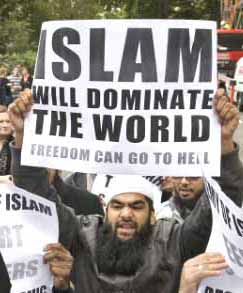
The 2015 Pew Report predicts that by 2050---only 33 years away---Islam will be at near parity with Christianity. In Europe, already reeling under recent influxes from the Middle and Near East, will see Islam making up a minimum of 10% of the total population. If present changes are any indication, the future impact will change the entire political, social, and economic face of Europe. India will remain a majority Hindu, but again, the percentage of Muslims will rise substantially in the subcontinent, making India the home to the largest Muslim population anywhere in the world, including Egypt or Indonesia. Hinduism, nevertheless, will continue to grow, though at a slower rate, as well as Judaism. According to the report, Buddhism will remain basically stable with little change. In the US, Christianity will continue to decline; from 3/4 of the total population to 2/3. Judaism will lose its status as the second largest non-Christian faith, being replaced by Islam, and settling at the third spot. As an aside, the report points out that three out of every four Christians will be living in sub-Saharan Africa.

The most obvious reason for this change is fertility rates throughout the world, but especially in industrial nations such as Japan, which is graying rapidly, and Europe; most notably central Europe and Scandinavia. One reason is the level of education. Researchers have determined that the more educated a population is the less likely they are to have children, or at least exceed the replacement level of two (the replacement level is the number of children needed to maintain or grow a population. Two children is considered "population maintenance" since they represent one child per parent). In addition, better educated societies are also usually more economically affluent. Fewer children are required to help support the family. On the other hand, poorer populations tend to high numbers of children since children are seen as a source of potential workers, especially in agricultural based economies. Additionally, some religions, such as Islam and Hinduism, simply encourage large families. The average number of children among Muslim women is 3.1 while it's 2.1 for the non-Muslim world (as an example, the fertility rate is 1.4 in Japan, Germany and Italy. Canada is 1.6, Russia and Denmark are 1.7, Norway is 1.8, while the US is 1.9 yet Nigeria is 5.4 and Ethiopia is 4.1) At the same time, various religions view women as "inferior" and of little societal value outside of their role as "breeders" and keepers of their husband's home and hearth.

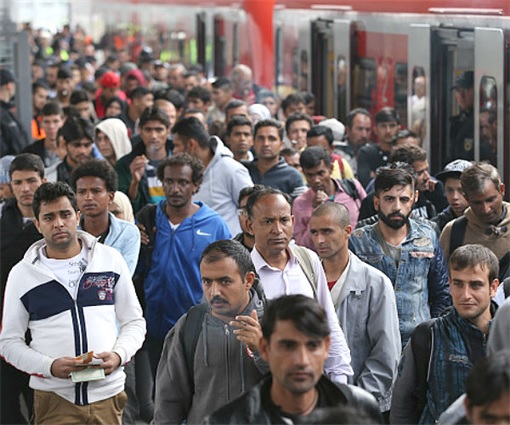
So, how does this fare for the U.S.? A more recent Pew Report from January 2016, indicates that Muslims make up just 1% of the total population. However, that number is certain to change. Under President Obama, the U.S. engaged in a change of its foreign policy when it came to immigration. As a result, the U.S. would open its door to over one million immigrants from the Middle East, mostly Syria, Iraq, and Afghanistan, although many are in fact actually coming from places like Egypt, Sudan, Lebanon, Iran, and other parts of the Near East and would not be considered war refugees. While these individuals are overwhelmingly Muslims, others actually from the war torn areas of Syria and Iraq who are not Muslim, such as the Assyrian Christians, who are the oldest Christian sect in the Middle East, the Yazidis, and even the Kurds, are being denied an opportunity to leave, be it for Europe, the U.S., or elsewhere even though the world is keenly aware that each group have been a principal target of ISIS and other extremist Muslim terrorist groups. Thousands have been hanged, beheaded, shot, and murdered in every other conceivable way while young girls have been forced into sex slavery. Those very few who have made it to the Muslim dominated refugee camps in Europe have often been beaten, raped, robbed, or killed. Of course, there are the other, predominately Muslim, refugees coming to America from Somalia, Sudan, Ethiopia, and other poor countries.

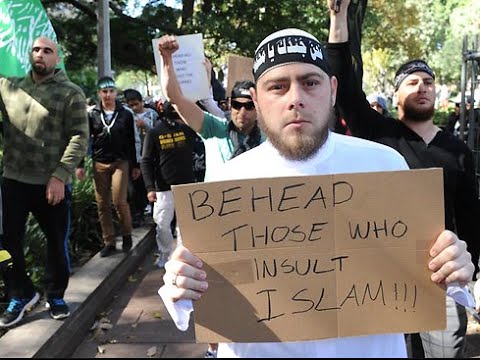
As a result, the Muslim population in America, will go from the current level of 1% to perhaps as high as 3%, and continue to rise thanks to current immigration quotas and fertility rates (with the current trend globally, Islam will become the world's largest religion by the end of this century. Islam will make up the majority of the world's population with Christianity and Hinduism being at near parity with 35%). As in the past, these demographic changes will result in a change in everything. Most importantly, however, will be the changes in the body politic. Many of the Islamic extremists, who seem to dominate the conversation both here and in Europe, are demanding the adoption of Sharia Law and its universal application to everyone, Muslim and non-Muslim alike. Already there are "no go" places in Europe, such as England and France, where Sharia law is applied, complete with Sharia courts and roving Sharia "police" patrols who seek to enforce Sharia law on anyone they find in violation. A few have begun demanding that the famous neighborhood British pubs bordering these "no go" zones be shut down. These courts even impose fines, "taxes" and other penalties while local authorities are either powerless or unwilling to do anything to reassert national laws.


In Germany, where their love of beer and pork are legendary, local Imams (Islamic religious teachers) have begun demanding that Germany cease serving beer and any pork products or face possible "reprisals" (and yes, that includes the Oktoberfest). Some business owners have cowered and removed the items from their public menus, although they are still available, they must be consumed in private. Women in Germany and Scandinavia (and other countries), especially young women, are often harassed, attacked, raped, and occasionally murdered or disfigured for being alone without a male escort or for how they are dressed. Some have begun insisting that women be removed from schools (women are not be educated according to some interpretations of Islamic doctrine). In Africa and the Near East, it's not uncommon for girls attending village schools to be randomly beaten with canes or have acid thrown in their faces and that men and women be separated at all events as well as wear head scarves. There are even reports of roving "rape gangs" attempting to impose their own "penalty" for any non-Sharia compliant females they see. The attacks occur as often in daylight as night. Some have been at parks, beaches, public gyms and swimming pools. Local officials, including the police, have sought to defuse the situation by shifting the blame onto the victims.

What we are witnessing is more than just the influx of refugees from poor, uneducated countries, or from countries with a different religion. We've experienced those before. There is often a cultural shock on both sides and period of adjustment, but eventually the new group blends in with the existing population with some adaptation and little practical changes religious beliefs. This is different. This is a clash which involves the basic tenets of Western society such as relationships between individuals, gender equality---women have few rights and a second or even third class societal status (or the right to work, vote, equal pay, no driving, no freedom to go anywhere without a male escort). There is little freedom of expression, be it movies and television shows (or very limited genres) , music, dress, expression, as well as the freedom of association. Some adherents of radical Islam firmly believe in no movies or television or music such as rock, pop, jazz, country, R&B, Rap, and so forth. They believe in complete and absolute separation of the sexes. Strict restriction of what women can and cannot wear, what can and cannot be exposed, denial of women's right to open expression or to vote).

Men too must maintain certain "conservative" appearance and a mandatory beard. In short, they don't believe the same basic freedoms which are the foundations of Western Culture. They believe this must be applied to everyone regardless of their religious beliefs (in fact, non-Muslims must either convert or pay a rather steep religious "tax"). They insist on a universal prohibition of certain foods regardless of your religion or culture, oh, and no alcohol. That's right, no beer, wine, whiskey, vodka, or anything else. No smoking---of anything---either. Oh, if you're gay, bisexual, transgendered, or whatever, you are going to be very unhappy. Those are crimes and they punishable by death. No exceptions. So, what we are facing is a influx of individuals whose culture, values, and religion are all rolled into one. Where there are no exceptions. Their tenets are absolute. They don't negotiate them and they are unalterable. Thus, what we have are challenges to our Western cultural foundation with its values and traditions with it notion of democracy and individual freedom; to our Constitution and the rights it outlines; to our rule of a common law free from religious or sovereign dictate.

In Europe, we are witnessing what is referred to as "population replacement' which is when one group, usually the native population, is systematically replaced by a newer population and with it, a wholesale transformation of society. We could be, at some point in the near future, witness the same event here in the United States. We already have populations refusing to adopt the predominate language, English, or our culture in favor a "multiculturalism" which fosters separation rather than inclusion as did the "melting pot" concept. Now, with this latest threat, we may see the ultimate folly of multiculturalism.


Pew Report: Religion Plummeted in America During Obama Era


The Future of World Religions: Population Growth Projections 2010-2050


A New Estimate of the US Muslim population


Islam Will Surpass Christianity To Become The World's Largest Religion, New Report Say