Showing posts with label Protestants. Show all posts

Saturday, September 30, 2023

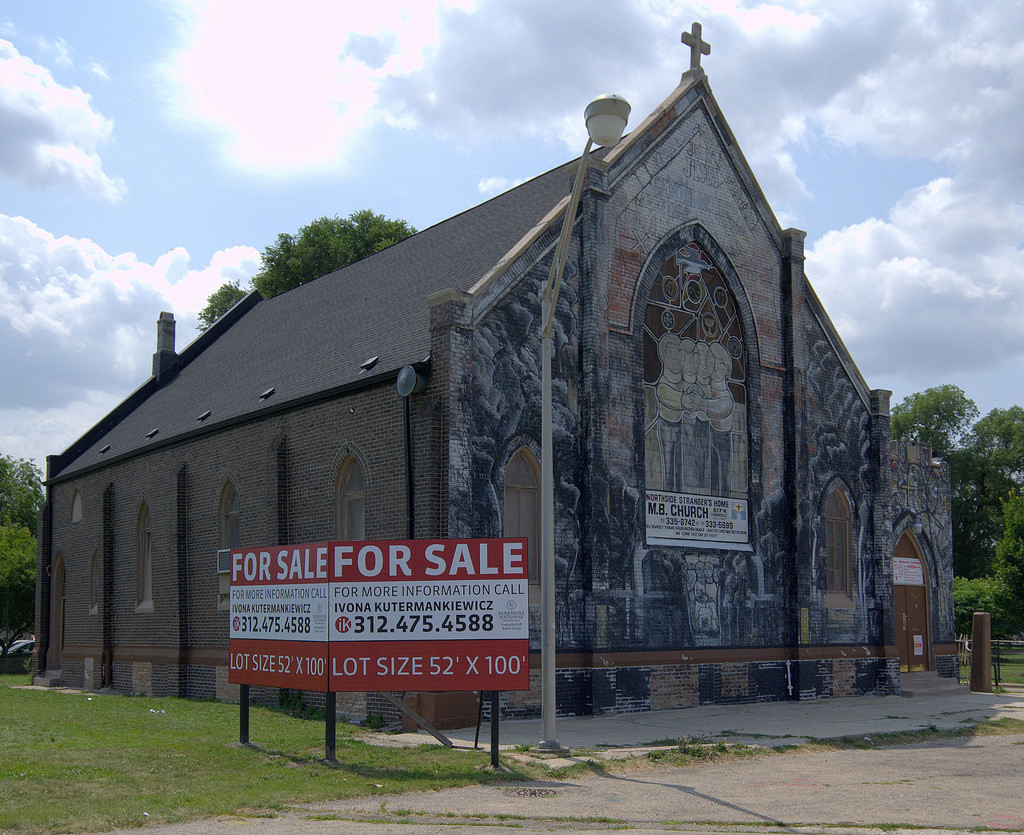
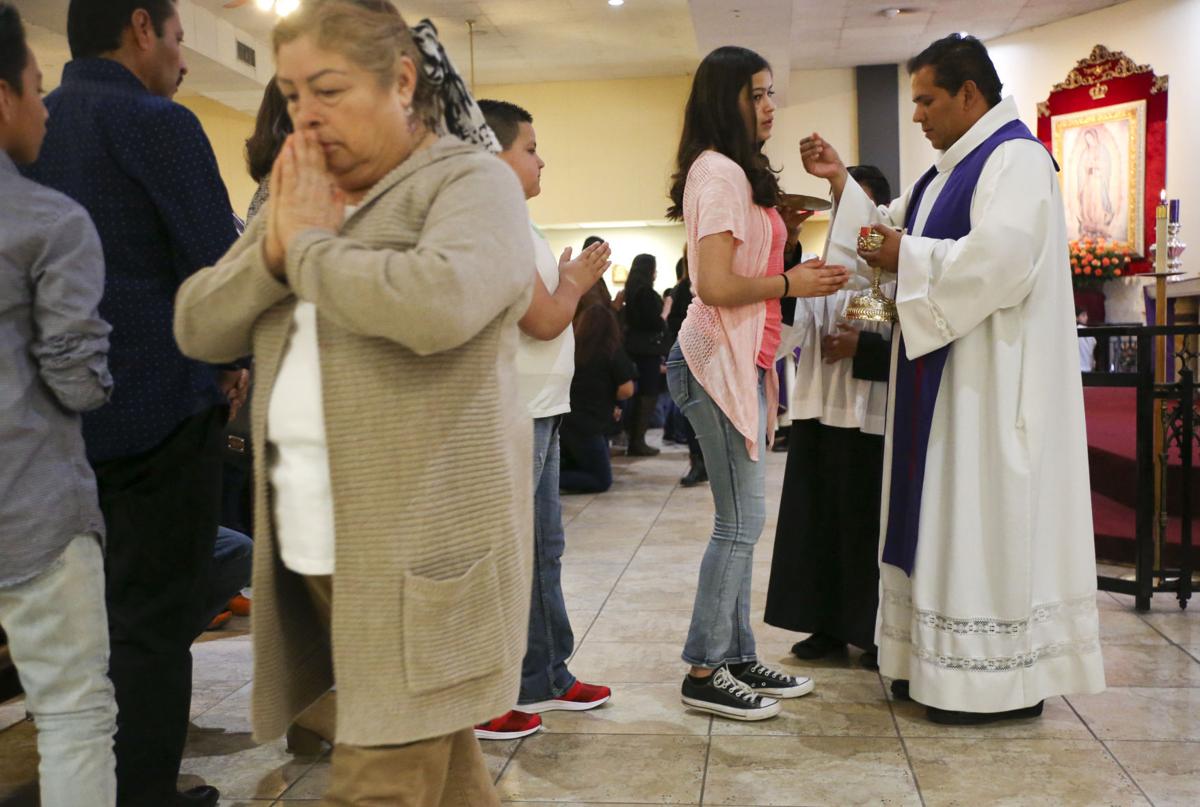
Religion In A Post-Republic America: The Decline of Christianity?


When the populace begins to distrust the institutions upon which society is built, the time is not long off when there will be some sort of change, possible violent or not, but there's little doubt that significant change is on the way. According to several recent polls, trust in our key institutions are at record lows with little data to indicate any significant improvement.

The most fundamental institution affecting Americans is religion. In the preceding generations, one could argue the society, and especially the family unit, revolved around organized religion. According to a Gallup poll, just 32% of Americans said they had a great deal or a lot of trust in religion. 36% said that had "some" confidence while 33% had little or none.

According to the Billy Graham Center at Wheaton College, some 70% to 84% of all churches are seeking a decline in membership. A Pew survey conducted two years ago indicated that the fastest growing religious category in the U.S. was "none". The report also said that if "unaffiliated" was a religion, it would be the largest in the United States.  If the present trend continues, it will reach a de facto majority status by 2070.

However, among those who hold to some sort of faith, non-dogmatic "spiritualism" comprises the largest chunk of the unaffiliated. Of those who adhere to dogmatic Christian religious institution, the Church of Latter Day Saints or Mormons are the fasting growing. The largest growing non-Christian religious institution in the United States is Islam. By 2040, Islam is expected to be the second largest religious institution in America.

As an aside, Mormonism is on track to become the largest Christian religion, the Churches of Christ, Assemblies of God, and the Catholic Church are the runners up. It's worth noting that all three of the Protestant churches and the Catholic churches are considered socially conservative although most are registered Democrat, leaving about one third registered Republican.

Liberal churches on the other hand are showing the fastest decline in membership. Churches regarded as being "liberal" or "progressive", some of which include the United Churches of Christ, Lutheran, Presbyterian, Episcopal, and the Methodists. This is most notably due to their stance on issues like gay marriage and LGBQT rights, abortion, and women in the pulpit. 

The massive increase in immigrants from Latin America as well as Africa and Asia will spur the growth for the Catholic Church in the United States. Whether they will continue to register Democrat while remaining socially conservative remains to be seen. 56% are registered Democrat while 28% are Independent and 14% are Republican, although many are switching to Independent. 

Incidentally, the majority of immigrants---61%---are settling in just five states, Texas, Florida, California, New York and New Jersey. It's worth noting that four of these, New York, Texas, Florida, and California, also have the highest number of Electoral College votes which, in our antiquated "winner-take-all" electoral system, determines the winner of the Presidency and not the popular vote. 

Globally, by 2050 there will be approximately the same number of Muslims as there are Christians. In India, which now has the largest population of any nation, Hinduism will remain the majority religion but not by much. Islam will make up a large minority. In fact, because of the large Indian population, by 2050, there will be more Muslims just in India than in all of Indonesia. In Europe, Muslims will comprise at least 10% of the total population with the majority living in Western Europe.

Buddhism will hold its hold globally and remain about the same size, although its number will grow in the United States. The majority of Buddhists in America are converts, with the majority being white and former Protestant. By 2050, Buddhism will be the 10th largest population group by religion. Buddhism tend to lean Democrat in significant numbers.  

While Judaism, which is predominantly Left leaning in the U.S., will likely grow worldwide, it will no longer be the largest non-Christian religion in the United States. That honor, as stated above, will go to Islam. Politically, however, it will make little difference since they both tend to vote Democrat  with 68% of Muslims and 64% of Jews being registered Democrat. 

It's worth mentioning that while agnostics, atheists, and Humanist currently make up a significant segment of the "unaffiliated" in the United States (as well as in France and Germany), their numbers are projected to decline globally. Folk religion and neo-paganism (such as native African, Nordic and Wiccan)  will also continue to enjoy a resurgence globally, especially in the United States, although their numbers will not keep pace with the growing world population and thus their overall percentages will decline.

In our increasingly technological and sterile world, you would think that religion everywhere would be in decline. Various polls, however, show that the majority of Americans side with religion over science. In fact, just 29% of those polled by Pew in a 2019 study said they would always or most always trust science over religion. 40% of Americans believe solely in Creationism while 33% believe in evolution under the direction of a divine influence or plan. Note too that this percentage is fairly consistent globally among Christians and non-Christians religions that follow some form of established dogma.

So, what's the future of religion, particularly Christianity, in the United States? In 1990, 90% of all Americans identified as Christian. By 2050, that number is expected to be 54%, and within 50 years, it's expected to be just 46% while those who identify as secular will rise from around 30% now to 52% by then. Liberal leaning churches will decline, with many closing their doors for good.

The largest non-Christian religion will be Islam, replacing Judaism for the first time, and smaller size congregations will gradually replace the mega-church (which are often half jokingly referred to as "Six Flags over Jesus" or "Churchmarts"). Many services in the future will take place in private residences, harkening back to early Christianity when services were often led by women who were in charge of the home. 

Christianity will also likely be more racially and ethnically diverse than at any time in American history. Services conducted in multiple languages along with a sharing of cultures.  They will also likely be conservative, creating possibly a new schism in the form and function of Christianity itself. 

If you enjoyed the article, please consider passing it along to others and don't forget to subscribe. It's free! Lastly please be sure to "like" us on whatever platform you use to read anotheropinionblog.com. It helps with the algorithms and keeps our articles in circulation. Thank you!


The fasting growing US religious affiliation? 'None', poll says


The Future of World Religions: Population Growth Projections2010 - 2050


Modeling the Future of Religion in America


U.S. Religious Groups and their political leanings


What is the Future of Religion in America?


The Future of Liberal Christianity


Is There a Future For Progressive Christianity in America?


Friday, August 19, 2022

Religion, Freedom, and Americans

According to a Gallup Poll from December 2021, 75% of Americans identify with some form of religion. Of that, 69% named Christianity as their religion of choice.  When asked for specifics, 35% said Protestantism while 22% said they were Catholic. However, 12% said declined to say.

 Meanwhile, 7% of those surveyed said they weren't Christian. Of those, 2% professed to being Jewish, while 1% each identified as Muslim or Buddhist. 3% declined to answer. But it's worth noting that 22% of those interviewed said they had no religious preference.

The significance of this survey comes into focus when you look at a similar survey conducted in 1971 when 90% of those interviewed identified as Christian, a 15% drop over 50 years, or about two generations. Further highlighting the shift was that in 1971, just 6% said they weren't Christian and a mere 4% had no religious preference.

The 2021 Gallup Poll said that 49% of those who adhere to a religion felt said that it was important to them.  Another 27% said it was "fair" important, while 25% felt it was of little or no particular importance.  But back in 1965, it was quite different. Then 70% of those survey said religion was "very important" to them. That dropped to 52% in 1978 before rising to 60% in 1990 where it remained consistent until 1996 before dropping to its present level of below 50%.

Church membership and attendance are two other key factors affecting religion in America. In 2000, Gallup asked participants if they attended a religious service in person or online, 44% said they did. Compare that to 49% in 1958 who attended services. By 2021, that number had dropped to just 29%.

When it came to membership, the numbers are just as bad. When Gallup first asked respondents if they formally belonged to a church back in 1937, 73% said yes. In 1999, that number was still pretty high with 70% saying they were. However, in 2021, that figure had dropped off to 47%.

The decline was primarily among those under 30 years of age, while it remained fairly stable among seniors.  For those born before 1946, those belonging to a organized religion dropped from 77% to 66%. From Babyboomers (1946 - 1964), that number went from 67% to 59%. Gen X (1965 - 1980), the figure declined by 12%, 62% to 50%. Finally, Millennials (1981 - 1996). Just 36% are belong to some religious denomination. As for Gen Z, 34% were unaffiliated with any religion.

When we break those numbers down further in order to get a clearer picture things get really interesting. First, the largest drop in membership was among Catholics who've dropped from 73% in 1998 to 58% as of 2020. For Protestants, it went from 73% to 64%, with mainstream churches (Lutheran, Baptist, Methodists, Presbyterian, United Church of Christ, etc) being hit the hardest. Even Evangelical churches, which had the largest growth just a few years ago, are seeing record number declines.

Women, once the staple of church membership, has dropped by 20% over the last 20 years, down to 53%. 18% for men or 46%. Among whites, 59% attend, a decline of 16%. For blacks it's was slightly worse--- a 19% decline to 59%. For Hispanics, however, the numbers were worse. Since 2011, church membership among Hispanics has dropped off to just 37%.

As an aside, a 2018 Pew study showed that for the first time ever, the majority of Hispanics in America are no longer Catholic (something I'm sure certain Catholic service organizations were expecting when encouraging Latinos to illegally enter America). In 2009, the number of Hispanics who considered themselves Catholic was 57%. By 2019, that number had dropped to 47%.

Hispanics who considered themselves Protestant rose from 23% to 26%. Of those, the majority self-identified as Evangelical. 3% said they were no longer Christian, while an impressive 23% said they were agnostic, atheist, or nothing in particular.

There's a great line from the novel "Dune", written by Frank Herbert that says "When religion and politics ride in the same cart a whirlwind follows". Although there's nothing in the Constitution about separation of church and state, America has done a great deal to keep religion and politics as separated as possible. It's not that the Founding Fathers disapproved of religion, far from it.  They were just fearful of a state created religion like what had forced others from Europe.

Under a state religion, others exist at the discretion and magnanimity of those in power; to be granted or withdrawn at a whim. In addition, the state church imposed a tax on the citizens as well as on the non-state churches. In addition, the members of these non-approved churches were required to support their minister and church which represented another tax burden many couldn't afford.

The decline of religious membership and participation among Liberals went from 56% to 35% over the last 20 years, a 21% drop. Among moderates, they experienced a 21% as well, going from 66% to 45%. Perhaps not unexpectedly, Conservatives fared the best, falling 14% from 78% to 64%, which still represents a majority.

When we break it down along partisan lines, Independents, who are the nation's largest political demographic, fell from 59% to 41%; a 18% drop.  Democrats saw the largest drop, going from 71% down to 46%, which represents a falloff of 25%.   Again, as expected, Republicans had the least drop. Over the last 20 years, they've gone from 77% to 65%, which once again still leaves them with a majority of participants.

It's ironic that the Left it portrayed by the media as being morally superior, while accusing Conservatives and Republicans of corrupting Christianity; of advocating a form of "neo-fascism" Christian Theocracy the way the Taliban has corrupted Islam. After all, wasn't it said that if fascism ever came to America it would be wrapped in the flag and carrying a bible?

 They cite the Right's push for mandatory prayer in school while ignoring other faiths and the non-religious, while also encouraging pray at social functions, not to mention limiting or prohibiting diversity and cultural inclusivity (aka "multiculturalism").

The Right, on the other hand, cite the need to recreate a "melting pot" where no one group is better than the other. At the same time, for a society to prosper, they argue that a society must share a set of common values and a common language. "You have to stand for something or you'll fall for anything", isn't that the promise of a "anything goes" society? 

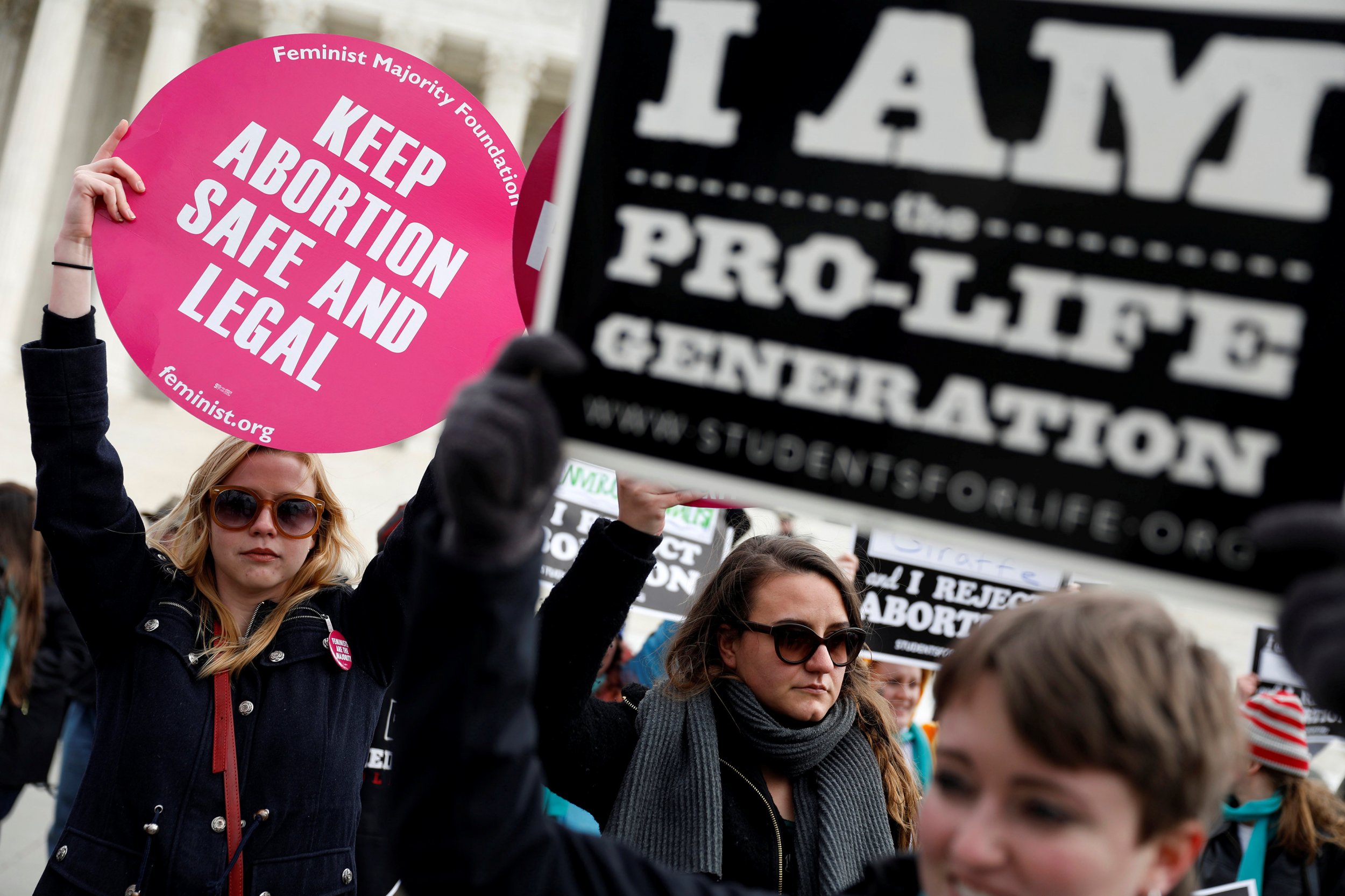
They also point out that the religious Right was behind the move by the Supreme Court to reverse Roe v. Wade, and thus making abortion illegal. The Left sees abortion as a "pro-choice" issue, whether anyone else agrees with it or not. It's their position that a woman has the right to do with her body as she pleases while the religious oriented Right hold that that option ended the moment she became pregnant. 

Even what constitutes a "unborn child" is disputed! The Right says that at the moment of conception, life has begun and all future decisions must be based on that. Meanwhile, the Left believes the process of life (cell division) may technically begin at conception, but you don't have a "life" until there's a heartbeat and brain activity (the absence of which is near uniformly acknowledged as death by the medical community). 

There are some on the Right who believe that the pregnancy must come to term no matter the circumstances of the pregnancy (ie: rape or accidental) or possible medical disabilities that might bring up to and including those affecting the mother's wellbeing, and will cite cherry picked passages from the scripture of their choice to support their claims. But what if the individual isn't of their faith or culture? What then? 

Other issues which separate the Left and Right along religious lines include the acceptance of homosexuality, the admission of female clergy (or gay clergy), the role of women in church and at home just to name a few. None of these even touch on groups like the Amish, Mennonites, Quakers, Mormons, and other non-traditional religions which have either in part or in totality rejected aspects of modern society.

As an aside, the Mormons are one of the few Christian sects which has actually maintained their numbers. While the Utah based church hasn't grown, it's numbers haven't dropped off like other Protestant denominations have (in 2020, the growth rate was 0.6%. In 2021 it was 0.85%). It's primary areas of growth has been in Africa despite a significant drop in missionaries (thanks mainly to Covid-19).

So, what religious based groups are doing well?  In the U.S., the fastest growing organized religion is Islam, albeit the numbers themselves are extremely small. Islam makes up less than 1% in the U.S. and it's growth rate has been 0.6% to 1.5% over the past few years. Nothing to write Mecca about! However, Islam is expected to surpass Judaism in the very near future with Islam reaching eventually about 2.8% of the population compared to 1.8% for Jews. Non-organized religions such as pantheism, paganism, Wiccan, Native American, and African faith systems are also growing rapidly as is the more secular Humanism.  

It's also worth noting that since the collapse in the 1980's of Communism in Eastern Europe, churches have made a comeback in a big way. Under Communism, atheism was the defacto "state religion". Nevertheless, efforts to suppress or even outlaw religion under Communism was largely unsuccessful. Growth mainly among Eastern Orthodox, Catholicism, and Lutheranism has rapid and sustained.

Even in the former center of Communism, Moscow, President Vladimir Putin is a semi-regular attendee at religious services where 71% openly identify as Orthodox, 10% Muslims and 15% who remain "unaffiliated".  87% of Poland are Catholic. 95% of Romania and Moldavia adhere to some religion. 84% for Croatia, and so the story goes.

Religious freedom was denied the people of Eastern Europe for nearly 50 years. Now it's back with a vengeance. Perhaps you have to lose something to realize its value, which for the people under Communism not only included freedom of religion, but by extension, freedom of expression and speech, association, movement, ownership of property, equality of justice, and control over our own persons.

Religion is not mandatory in the West. Those days of autocracy and official religions have thankfully long passed. Today we have the option to accept or reject it. In other parts of the world the people don't have that choice. The state has made the decision for them as to what's acceptable or not, and the penalty for rejecting that decision can be brutal, if not fatal. Migrants to Europe, who claim to be seeking economic and social freedom, are trying to impose their repressive religious and social values on the very citizens whose nations accepted them.

The Founding Fathers intended to create a new society where we had the freedom of religion (which by definition also includes freedom from religion). This freedom meant you could freely practice your religion but you couldn't impose it on others. It also meant the state was prohibited adopting any religion or from imposing any religious beliefs or penalties in its citizens. For its time, this was huge.

Our Founders bequeath to us a freedom of choice, which implied, among other things, the right to believe as we were so inclined too, as well as freedom of speech and expression, association, the right to a fair trial, and the right to defend ourselves from those who would seek to deprive us of these and other rights, which goes to the Founder's belief in the natural and preeminent rights of the individual.


If you want to know more, please take a look at the links below. If you enjoyed the article, please consider passing it along to others and don't forget to subscribe. It's free! Lastly please be sure to "like" us on whatever platform you use to read A/O. It helps with the algorithms and keeps our articles in circulation. Thank you!  


U.S. Church Membership Falls Below Majority For First Time


How Religious Are Americans?


Mainstream Protestants Make Up Shrinking Number of U.S.Adults


"Seven Sisters" of Mainline Protestantism Still Bleed Members


Majority of Hispanics in the U.S. no longer Catholic newstudy finds


The Unlikely Rebound of Mainline Protestantism


Saturday, September 07, 2019

In God We Trust? Well, Maybe: The Trend of Religion in America


Pick up any piece of American currency and you will find the words "In God We Trust" somewhere on it (it first appeared on coins starting in 1864). We sing patriotic songs like "God Bless America" and say the Pledge of Allegiance with the words "under God" , added by President Eisenhower in 1954 to set us apart from the "godless" Communists at the urging of a wide range of groups like the Knights of Columbus and various veteran organizations As an aside, it was also President Eisenhower who signed the bill approving the use of the phrase "In God We Trust" on all US currency in 1956. Even when you take an oath in a court of law, you're asked to tell the trust "so help you God" with your hand on a bible no less and the Ten Commandments appear in every courtroom.

Of course, there are those who claim that America was founded to be a "Christian" nation, though in truth it was founded to be a religious neutral nation; that is, a nation where all religions were welcome and where there would be no official state religion, unlike Europe where government's tended to have a state approved religion and all others had to obtain both permission to practice and to pay a special tax in addition to the state "pew" tax. Nevertheless, America was a nation which took great pride in its religious tolerance and in its devotion; adopting Judeo-Christian ethics into its laws. And so we remained since our founding as nation, that is, until recently.

Back when President Eisenhower signed those two bills into existence, approximately 70% of households attended some sort of religious services on a regular basis. 97% of Americans identified as "Christian", be it Protestant (70%), Catholic (24%), or Mormon (3%). Those numbers remained pretty much consistent through 1979 when there was a slight, but noticeable drop. In that year, those who identified as "Christian" dipped to 88%. While still a significant majority, it marked the first time the percentage dipped under 90%.

Since then, despite fluctuations, the overall trend has been generally downward. Today that number in barely 48%. Those who answered in the affirmative when asked if they were a "born again" or Evangelical Christian was just 36%. In 2018, 68% of those who identified as belonging to an organized religion said they hadn't attended a religious service within the last seven days. While 72% said that religion was generally important, only 33% admitted to having attended a religious service within the last month. When asked if they thought religion (regardless of their denomination) could help provide a solution to today's problems, only 46% said yes. 46% also said that organized religion had "to much" influence, however, 54% thought that organized religion should have more influence.

When it came to confidence in organized religion, 38% said they did while 33% said they had only a "some" confidence in organized religion and 29% had little or no confidence. Another interesting response was on the bible itself. When asked if they thought the bible was literal word of God, just 24% agreed while 47% said it was just the "inspired" word of God. The balance either thought it was myths, fables, or legends. As an aside, 87% said they believed in a god or higher power.

For those who identified as belonging to an organized faith, but didn't attend services on a regular basis, 44% said they preferred to worship on their own (and additional 21% said that was a contributing factor). 61% said they were turned off by organized religion, while 65% said they weren't quite as religious as they once were. The least most cited reason for not attending was not feeling welcome. 65% said that wasn't a factor and 55% said being asked for money wasn't a big deal either.

In terms of religion by region, the Midwest is 73% Christian (the majority is Evangelical Protestant at 26% followed closely by Catholic with 21%. Mainline Protestant was 19%). However, 22% identify as "none". Out West, 64% identified as Christian (Catholic was the slight majority with 23% while Evangelical Protestant was 22% while Mainline Protestants was only 11%). Nevertheless, 28% opted for "none". In the Northeast, 65% said they were Christian (Catholics were a clear majority with 30%. Mainline Protestants were 15% while Evangelicals were 13%). Interestingly, the "none" were 25%. . Nationally, other religions, such as Jewish, Hindi, Buddhist, or Muslim all tended to 4% or under. In most cases, they were around 1%.

Lastly, the South, which has traditionally been seen as highly religious and conservative; home of the "Bible belt". Here, 76% identified as Christian (34% as Evangelical Protestants, 15% Catholic, and 14% Mainline Protestant), and yet the "none" still polled 19%. The "belt buckle" of the Bible belt, Kentucky, showed 76% Christian. 49% were Evangelical with 11% Mainline Protestant, and 10% Catholic. Non-Christian religions totaled just 2% in the Bluegrass State. However, the "none" had a remarkable 22% showing. So, what's happening?

From practically its beginning, Christianity has been essentially a European religion despite having partial roots in the Middle East. However, that appears to be changing, and rapidly. Starting from about 1991 to 2014, white Protestants, which has made up the majority of Christians in America since its founding, have been on a steep decline. During the period mention, white Protestant churches have declined by one third, and will continue to accelerate downward as white America declines in population.

As a result, studies show that most congregations now have under 100 members with hundreds of churches being either forced to merge or simply closing. The worse hit are the Mainline churches such as a Methodists, Lutheran, United Church of Christ, Disciples of Christ, Catholic, and Presbyterian as well as Evangelical churches such as Baptist, Pentecostal and others. However, not all churches are in decline.

Those which are actually growing are the traditional Roman Catholic and Assemblies of God to name just two. However, a few others--both Mainline and Evangelical--are showing signs of life. The growth has been coming almost exclusively from recent immigrants, especially Hispanics and from Africa. In fact, 71% of the growth in traditional Roman Catholic congregations has been from Hispanics. Further, the cultural center of Catholicism in the US is shifting from the Northwest to the South along with this change. In addition, multiracial churches, once almost unheard of, are increasingly the "new normal" across the board.

Globally, Christianity continues to be the world's largest religion. It's greatest area of growth has been primarily in Africa, followed by Asia. However, it should be pointed that studies have indicated that the Americanized version of Christianity overseas is viewed with the most suspension and has seen the least success in sustained growth. Some blame this on the so-called "Trump Effect", that is, the "America First" or "Pax Americana" resulting from Trump's alleged populist nationalism. Those denominations which promote a more "liberal" or inclusive ideology seem to be showing the most signs of growth (this includes opposition to the concept of "American Exceptionalism").

Of course, this isn't to say that the once popular ideology of Liberation Theology, an admixture of Marxism and Evangelicalism popular among the poor in Latin America, Africa, and Asia, is making a comeback, at least not yet. Thus, globally, Christianity continues to thrive, as well as domestically, though primarily among nonwhite populations as well as churches which embrace multiracial, and thus multiculturalism along with a more liberal and modern interpretation of the scriptures which can embrace different cultures and traditions different from the longstanding Western or European version of Christianity.

So what's the long term future of religion, especially Christianity? Some might cite Islam which appears to be growing on all fronts, especially in Asia and Europe. However, that notion is deceptive. In Europe Islam is on the rise to be sure. However, the explanation is actually multi fold. First, the population of native Europeans has been on steady decline since the end of World War Two. In fact, the birthrate isn't capable of even maintaining the current population; bare one child per couple.

Meanwhile, the EU's catastrophic open door immigration policy has led to a rise of immigrants, often low skilled and largely uneducated, flooding European cities. The majority of these immigrants are from Africa and the Middle East, and most are Muslim. The birth rate among these individuals is approximately five children per family; nearly doubling or tripling every few generations. At that rate, they will easily overtake the native European population within a matter of a few decades (in many communities this has already happened).

In addition, since the end of the last war, religious attendance has also been on the decline. Combine this will the rise of Muslim immigrants, and we can see Europe's pending disaster, especially if we include the refusal of the various governments to enforce existing laws, allowing the application of Sharia, and failure to protect the local population from violence, harassment, intimidation, or enforcing acceptance of "no go" zones and changing cultural and social norms. As a, interesting side note, while the Muslim population abroad increases, the birthrate among Arab populations in their home countries are on the decline.

In Asia, it's not a matter of population replacement or a decline in religious adherence. It is, however, the result of Muslim extremism and in some case (such as China), a history of general religious suppression which has been the main cause. This is especially true when other religions, such as Christianity or Buddhism, have been officially prohibited. In other cases, it has been a reluctance of the various governments to respond to the increased religious and cultural violence such as in India, Nepal, or the Philippines.

Lastly, there has been a fear by more religiously tolerant Muslim nations, such as Saudi Arabia, Kuwait, Qatar, or Syria, to counter the violence out of fear of sparking a more direct conflict with extremist (much like trying to appease a bully). The result is that certain minorities such as the Kurds, the Yazidis, and Assyrian Christians are sacrificed and face slavery and genocide.

Finally, we need to address the "none" I mentioned earlier. The "none" are not a single monolithic group. They are, actually, individuals who do not adhere to a particular religion, aka secular. Some are agnostic while others are atheists, while others are pagan, Wiccans, Humanists, and so forth. It's interesting to note that the single largest group are, in fact, those who identify as secular. What's more is that secularism is the world's fastest growing religious demographic. Even Islam is quickly losing the war against secularism, as is Hinduism, Buddhism, and even paganism which a few years ago was seen as the fastest growing religion in the world.

In Saudi Arabia, an estimated 24% are privately non-believers. In Lebanon it's 37%. Ironically, one explanation has been a direct result of the increase in Islamic extremism. It should be pointed out that secularism too can be just as extreme and intolerant as Islam, Christianity, or any other religion, especially when it comes to forcing people, especially children, into situations where they have to accept certain lifestyles or prohibits them from their own religious or social expression (case in point, requiring children to attend LGBTQ programs or fining people for not using the "correct" pronouns). Neither form of extremism is acceptable.

So, do we still trust in God? The answer is a qualified yes. Americans are still a generally religious bunch. However, our long held notion of religion is changing. It's no longer a mono-racial institution. It is increasingly comprised of individuals who weren't born in America and whose native language isn't English. Most are Hispanic, African, or even Asian. We also have a broader diversity of religions than ever before, especially among Hindus, Buddhists, and Muslims, as well as nontraditional belief systems such as paganism and Wicca. It's also increasingly more socially liberal than it once was.

In addition, Americans, as well as the world, has increasingly become secular. It's not that they reject God (or a higher power) so much as they reject organized religion with its inflexible dogma. It's also that they see both the good and bad in all religious systems, especially its intolerance of others. However, as stated earlier, it too has its extremist who attempt to push their beliefs on others including the acceptance of specific lifestyles, behaviors, and/or prohibit others from the practice of their beliefs which must be curtailed. We have to remember that in this interconnected world, that each must be accorded the right to their own religious expressions without interfering with the expression of others so called as no one is harmed in the process.


Gallup Poll: Religion


Pew Research: Religious Landscape Study


Where is Christianity headed? The View from 2019


The Rise of Humanism


The World's New Major Religion: No Religion


Saturday, April 21, 2018

A Place To Belong: Assimilation or Conquest?


The history of the world has been primarily one of conflict. The main source of the that conflict has been the result of a clash of cultures, resulting in wars, conflicts, genocides, brought about by manufactured starvation through the withholding or deliberate destruction on natural resources, the intentional infection of various people by some biological agent (whether they actually understood as such or not), enslavement, or simply being breed out of existence. I'm sure there are many more examples, but you get the picture.

Direct conflict seems to be the most common. We don't know how many people have died as a result of wars or conflicts down through history, though we can make reasonable guesses with increasing accuracy we come closer to the actual event, but even that's occasionally sketchy since no one really takes time to count the dead during a battle and often, war crimes are hidden or written off as something else. We do know, for instance, that approximately 100 million died just in the 20th century alone; perhaps more when events like trauma, wounds, the long term effects of disease or radiation are factored in.

So what happens when cultures come into conflict? Well, first, I think we should define "cultures" to get a better understanding of what we're talking about. Webster's New World Dictionary defines culture as "the ideas, customs, skills, arts, etc of a given people in a given period: civilization". It also includes in the definition "mannerisms or speech". I would expand this to includes values based not just on a common history, but also on a common religion when that religion has been thoroughly integrated throughout society to the exclusion of all others.

Hinduism, which is prevalent in India, is a good example. It, along with a common historical tradition, has created its own value system, including moralistic code of conduct and behavior towards others. It has superimposed a caste system and specific conduct both within the caste and in dealing with those outside of one's own caste for instance (of course, the caste system has, to a large degree, broken down due to outside influences, the least of which being improved education. We can find the same thing in Japan (which has its own history of a caste system as well), China, and throughout Asia and Africa.

Again, most of this has faded due to the influence of mostly outside factors, especially as they became increasingly in contact with the West, which has tended to be more egalitarian by comparison. Both China's and Japan's feudal systems began to lose their influence after contact with American, British, Dutch, and Portuguese sailors increased. Initially, contact was based on the notion of trade; mostly of goods, etc, but pretty soon it encompassed the trade of ideas. I guess we can chalk that up to natural human curiosity! After all, Mankind is an inquiring species. We are hardwired to investigate and explore; to learn through trial and error.

But what if we must deal with two (or more) cultures which come into conflict? Where both are firmly entrenched through their own common histories, evolved laws, values, especially those based on religion or a political ideology? What happens then? When we look at Rome, with its Greco-Roman values and religion(s), we generally find conflict; often violent conflict. We find two competing social systems struggling for dominance. Eventually, it comes down to the one with the strongest military and best social organization which is able most successfully to impose itself on the other. Of course, it's not entirely a "one-way street". Even the weaker culture is sometimes able to imprint itself on the more dominant culture, especially if its stronger than the other in that area (certain medical practices or engineering techniques for instance).

The Celts were, to varying degrees, able to withstand the Roman legions, and thus avoid complete assimilation. The Germanic tribes were much more successful since they were militarily superior to their Celtic cousins as well as made better use of natural barriers. Eventually, Rome began to adopt and adapt to other cultures, languages, and even religions in the name of multiculturalism, even though many had little or no skills which could benefit the Empire; many didn't even bother to learn the language. However, everyone followed the same Roman laws and paid homage to the dominance of the Roman State, at least for a time. But in time, even that failed and Roman collapsed into a series of petty kingdoms, which rose and fell in relation to their own interactions with other cultures. China suffered a similar fate, despite a relatively homogenous population.

However, religion, is often see as a unifying factor, which it is; at least except for the religions it's seeking to replace. It's not uncommon to see the new religion replace the old religion by adopting some of the more popular traditions of the previous religion, including sacred sites. In England for instance, the Christian missionaries would often take over a sacred pagan site by dedicating it to a certain religious figure or "saint" (especially if the "saint" is a native to the region) and/or rededicate it to a specific "miracle" similar to, but slightly different, from the previous religion.

Also, another form of eradication of the previous religion is by converting their gods into sometime to be feared or made fun of. For instances, fairies and sprites, and gnomes became "demons". Snakes, once seen as symbols of power and knowledge, were now reinterpreted as harbingers of evil, like black cats or ravens were. Some are ridiculed, or simply made to be forgotten. The Celtic god of the hunt, Cernunnos, also known as the "horned god" which represented the male aspect of nature, became the prototype of the "devil" or Satan. The more dominate female aspect of nature, such as "The Great Mother", Isis or Hera, was now viewed as evil and twisted; something designed to trick or corrupt Man. Meanwhile, other popular gods and goddesses were renamed and remade as a "saint" or a venerated individual of the new religion such as the Celtic goddess "Brigantia" who became the Christian "Saint Brigit".

So, while religion can be a unifying factor, it can--and usually is---used as a tool of conquest. A more direct form of conquest is, of course, political ideology. Political ideology is pretty straight forward. It's a system of ideas, both theoretical and practical (if based on historical precedence) designed to create a form of societal governance. Out of this, laws to guide (or rule) society are created. These laws tend to evolve out of common practice or traditions and common values (which are, themselves, are strongly influenced by religion or prominent philosophies). Naturally, the dictates of unfolding events and the Will of the King or ruling elite, has a big influence as well.

What happens when a society, which has had time to incorporate a single religion into not just its government (thus becoming a theocracy), but also throughout every aspect of its society into one where the lives of ordinary people are solely governed by the dictates of its religious and political leaders? Historically, we often find that society stagnate. They can evolve and develop as one would expect of a society because of their strict religious dictates. Now, that's not to say they remain frozen in place. They do develop along certain, often very restricted lines so long as the authority of their religion is never brought into question.

That's the cardinal rule which can never be violated under any circumstances. One bright spot is that despite the monolithic structure of a religion, there are always variations within its structure; however, these are usually well defined distinctions. So, while one sect may not be as strict or repressive in one area, that isn't to say it isn't as or more repressive or strict in other areas. It also doesn't keep one sect from attempting to impose its interpretation on the other either. This brings us to the most pressing and relevant question.

What happens when two entirely different cultures, with wholly unique religions, traditions, values, and political ideologies come into contact? Let's look at the West. As a whole, the West tends to be very independent oriented; the individuality of the individual is paramount. It tends to be open when it comes to expressing new ideas or even values. Government is, at least in theory, democratic in that the majority decides based on the present needs of society (in some countries, this still holds true to a degree, while in others, such as the US, it's devolved into an Oligarchy where voters are given the illusion of choice by picking from pre-approved candidates who will represent the needs and wants of a small economic elite).

In terms of social values, there is little variation of the value of genders. Women and men are basically treated the same. Females have equal access to education and opportunities to succeed on their own, as well as hold any position they desire. The same goes for those who step outside traditional gender roles (ie: the LGBTQ communities). This is also true of races. Despite the recently manufactured "racial crisis" in America, anyone who applies themselves can succeed, but equal opportunity does not mean equal results. Much of that depends on the individual themselves, irrespective of their race or gender.

When it comes to religion, the West is highly diverse. At its core, the West has been Christian since roughly the 10th century. At one time, it was nearly unified in that belief, being either Catholic or Eastern Orthodox until the Martin Luther and the Protestant Revolution or Reformation in the 16th Century (and the subsequent Counter Reformation by the Catholic Church) which spread throughout Europe.

Nevertheless, Christianity has been the dominant religion of the West. Judaism has also had a strong presence in the West, beginning with the ancient Romans (most were teachers, slaves, or traders). Of course, Jews were never entirely accepted by Christianity despite its claim of common roots in Judaism. In more recent years, we've seen a decline in organized religion and a rise in more secular beliefs (or in no religious beliefs at all), as well as alternative beliefs. In past centuries, such beliefs were as good way to get tortured, hanged, or burnt at the stake by religious/state authorities. However, it has been the expanse of democratic beliefs; the sovereignty of the individuals, which has made this possible.

Now, can you imagine what would happen with this society comes into contact with another which holds that the state, not the individual, is superior; where gender differences are seen as absolute and any variations (such as education or having a profession, especially one of authority) are ruthlessly enforced or those who cross traditional gender lines are simply beaten, raped, murdered or disfigured out of hand for violating religious laws? What happens when the very notion of democracy and rule of the people by and for the people is seen as abhorrent and in direct conflict with the accepted religious laws? Even basic notions of free expression or speech are largely forbidden; where questioning religious or political authority could be fatal.

What about the notion that female children can "marry" men three or four times their age or that small boys are allowed to be raped? Even females, regardless of their age, may be attacked or raped if out alone or even in pairs, unless they are accompanied by a male relative? How do you feel about being attacked, raped, or beaten if you aren't properly dressed as dictated by someone else's religious laws? How do you feel about having no pets? What about not being allowed to drive or vote? How about watch movies in public, dancing or go clubbing?

How do you feel about slavery? What would you say to a society which, based on its religion, says anyone not of their religion may be stripped of everything and sold into slavery...or murdered indiscriminately? Your only possible alternative would be to pay a steep tax. What would you say if you were told you have very few personal, or even basic, rights because of your gender or religious beliefs? What about demanding that your religion must not "interfere" with theirs, or simply demanding that you not smoke, drink, or eat pork products---or even that none of these can even be advertised? Now, how would you feel if this same society requires you to follow their religious/societal dictates regardless of your personal beliefs?

What do you think the outcome would be if these two vastly differing societies came in close contact with each other? Which of the two would ultimately dominate the other and enforce its will on the other? Well, that's the situation Europe now finds itself in, and that may soon be the situation that the US, Canada, Iceland, Ireland, and Australia may find itself in. The notion of opening one's home to strangers in trouble is an old one; a compassionate one. However, how does handle that same situation when you're inviting individuals into your home who intend on seizing your home and all its possessions; even demanding that you leave?

Historically, differing cultures have rarely coexisted in peace, at least for long. One of two things usually happen. The first is that the host country, under the naive guise of multiculturalism, is fractured; balkanized or divided internally with the gulf becoming wider and deeper until the nation effectively stops being one. At that point, there is usually a Civil War or revolution to decide the country's fate. Sometimes these divisions are based on mythological claims of empire, but like all wars, are often violent and affects everyone, but especially more so if religion is a factor since one is fighting--- murdering and dying---for their god. Obviously, there can be no compromise. That's where we now stand in the West. The only real question is who will dominate; who will be vanquished and who will conquer?


Sunday, March 05, 2017

The Changing Face of Religion in America Today


It's a common theme among those of the political Right that America was founded as a "Christian" nation. The fact of the matter is that America was established as a nation open to all religions without preference to one above another; something very rare, especially when you consider that each European country typically recognized one "official" religion and while they may (or may not) allow other faiths to practice independently, everyone still had to pay (usually literally) homage to the official State religion such as in the form a tax (or "pew tax " as they were sometimes called) so that in addition to financially supporting your church and pastor, you also had to financially support the State church too. Thus, America's position of no official church was considered more than just unique, but like so much of our revolution, it was seen as downright radical. That doesn't mean religion didn't play a part in the political life of our nation. It did, often strongly, but it was almost always some form of Christianity since that was the dominant religion in this country, and has been up until relatively recently.

In the beginning, most of the Founding Fathers, and indeed most of the Colonists were Protestants of one sort or another. However, with the arrival of immigrants from differing countries such as Catholic Ireland and Southern Germany, the Eastern Orthodox Southern Europeans, the Lutheran Northern Germans and Scandinavians, and the Jews of Germany and Eastern Europe, and the incorporating of former territorial lands from Catholic France (Louisiana Purchase) and Spain (Florida and parts of Mississippi and Alabama), and well as Alaska from Eastern Orthodox Russia, along with Texas, Colorado, Wyoming, California, New Mexico, Arizona, and Nevada from Catholic Mexico, the religious complexion of the ever expanding America changed accordingly. Nevertheless, America remained strongly Protestant, at least in politics, and especially at the federal level. Of course, religious influence varied, as one would expect, from region to region and city to city. Yet, even with the influx of immigrants, change was usually gradual since it took time for people to spread out. Today, America is facing another religious makeover. This time, however, the change is coming more rapidly, and it's much more dramatic.

According to a January 17, 2017 Pew Report, under President Barack Obama, religious identification dropped off significantly during his eight years in office; perhaps another unintended legacy of the Obama Regime. While still America's dominant religion, Christianity dropped from 78% of population to only 71%. The report stated while Evangelical Protestantism, characterized by predominately black and/or Southern churches, the more mainstream Protestant churches such as Methodist, Presbyterianism and Lutheranism, along with Catholicism took the biggest hit. A slightly earlier Pew Report from July of 2015, showed that Islam was the fastest growing religion in the world while unaffiliated, which has been rising, is showing signs of slowing down and even reversing in some places. In the US, however, unaffiliated continues to remains strong, Islam is making inroads.

The 2015 Pew Report predicts that by 2050---only 33 years away---Islam will be at near parity with Christianity. In Europe, already reeling under recent influxes from the Middle and Near East, will see Islam making up a minimum of 10% of the total population. If present changes are any indication, the future impact will change the entire political, social, and economic face of Europe. India will remain a majority Hindu, but again, the percentage of Muslims will rise substantially in the subcontinent, making India the home to the largest Muslim population anywhere in the world, including Egypt or Indonesia. Hinduism, nevertheless, will continue to grow, though at a slower rate, as well as Judaism. According to the report, Buddhism will remain basically stable with little change. In the US, Christianity will continue to decline; from 3/4 of the total population to 2/3. Judaism will lose its status as the second largest non-Christian faith, being replaced by Islam, and settling at the third spot. As an aside, the report points out that three out of every four Christians will be living in sub-Saharan Africa.

The most obvious reason for this change is fertility rates throughout the world, but especially in industrial nations such as Japan, which is graying rapidly, and Europe; most notably central Europe and Scandinavia. One reason is the level of education. Researchers have determined that the more educated a population is the less likely they are to have children, or at least exceed the replacement level of two (the replacement level is the number of children needed to maintain or grow a population. Two children is considered "population maintenance" since they represent one child per parent). In addition, better educated societies are also usually more economically affluent. Fewer children are required to help support the family. On the other hand, poorer populations tend to high numbers of children since children are seen as a source of potential workers, especially in agricultural based economies. Additionally, some religions, such as Islam and Hinduism, simply encourage large families. The average number of children among Muslim women is 3.1 while it's 2.1 for the non-Muslim world (as an example, the fertility rate is 1.4 in Japan, Germany and Italy. Canada is 1.6, Russia and Denmark are 1.7, Norway is 1.8, while the US is 1.9 yet Nigeria is 5.4 and Ethiopia is 4.1) At the same time, various religions view women as "inferior" and of little societal value outside of their role as "breeders" and keepers of their husband's home and hearth.

So, how does this fare for the U.S.? A more recent Pew Report from January 2016, indicates that Muslims make up just 1% of the total population. However, that number is certain to change. Under President Obama, the U.S. engaged in a change of its foreign policy when it came to immigration. As a result, the U.S. would open its door to over one million immigrants from the Middle East, mostly Syria, Iraq, and Afghanistan, although many are in fact actually coming from places like Egypt, Sudan, Lebanon, Iran, and other parts of the Near East and would not be considered war refugees. While these individuals are overwhelmingly Muslims, others actually from the war torn areas of Syria and Iraq who are not Muslim, such as the Assyrian Christians, who are the oldest Christian sect in the Middle East, the Yazidis, and even the Kurds, are being denied an opportunity to leave, be it for Europe, the U.S., or elsewhere even though the world is keenly aware that each group have been a principal target of ISIS and other extremist Muslim terrorist groups. Thousands have been hanged, beheaded, shot, and murdered in every other conceivable way while young girls have been forced into sex slavery. Those very few who have made it to the Muslim dominated refugee camps in Europe have often been beaten, raped, robbed, or killed. Of course, there are the other, predominately Muslim, refugees coming to America from Somalia, Sudan, Ethiopia, and other poor countries.

As a result, the Muslim population in America, will go from the current level of 1% to perhaps as high as 3%, and continue to rise thanks to current immigration quotas and fertility rates (with the current trend globally, Islam will become the world's largest religion by the end of this century. Islam will make up the majority of the world's population with Christianity and Hinduism being at near parity with 35%). As in the past, these demographic changes will result in a change in everything. Most importantly, however, will be the changes in the body politic. Many of the Islamic extremists, who seem to dominate the conversation both here and in Europe, are demanding the adoption of Sharia Law and its universal application to everyone, Muslim and non-Muslim alike. Already there are "no go" places in Europe, such as England and France, where Sharia law is applied, complete with Sharia courts and roving Sharia "police" patrols who seek to enforce Sharia law on anyone they find in violation. A few have begun demanding that the famous neighborhood British pubs bordering these "no go" zones be shut down. These courts even impose fines, "taxes" and other penalties while local authorities are either powerless or unwilling to do anything to reassert national laws.


In Germany, where their love of beer and pork are legendary, local Imams (Islamic religious teachers) have begun demanding that Germany cease serving beer and any pork products or face possible "reprisals" (and yes, that includes the Oktoberfest). Some business owners have cowered and removed the items from their public menus, although they are still available, they must be consumed in private. Women in Germany and Scandinavia (and other countries), especially young women, are often harassed, attacked, raped, and occasionally murdered or disfigured for being alone without a male escort or for how they are dressed. Some have begun insisting that women be removed from schools (women are not be educated according to some interpretations of Islamic doctrine). In Africa and the Near East, it's not uncommon for girls attending village schools to be randomly beaten with canes or have acid thrown in their faces and that men and women be separated at all events as well as wear head scarves. There are even reports of roving "rape gangs" attempting to impose their own "penalty" for any non-Sharia compliant females they see. The attacks occur as often in daylight as night. Some have been at parks, beaches, public gyms and swimming pools. Local officials, including the police, have sought to defuse the situation by shifting the blame onto the victims.

What we are witnessing is more than just the influx of refugees from poor, uneducated countries, or from countries with a different religion. We've experienced those before. There is often a cultural shock on both sides and period of adjustment, but eventually the new group blends in with the existing population with some adaptation and little practical changes religious beliefs. This is different. This is a clash which involves the basic tenets of Western society such as relationships between individuals, gender equality---women have few rights and a second or even third class societal status (or the right to work, vote, equal pay, no driving, no freedom to go anywhere without a male escort). There is little freedom of expression, be it movies and television shows (or very limited genres) , music, dress, expression, as well as the freedom of association. Some adherents of radical Islam firmly believe in no movies or television or music such as rock, pop, jazz, country, R&B, Rap, and so forth. They believe in complete and absolute separation of the sexes. Strict restriction of what women can and cannot wear, what can and cannot be exposed, denial of women's right to open expression or to vote).

Men too must maintain certain "conservative" appearance and a mandatory beard. In short, they don't believe the same basic freedoms which are the foundations of Western Culture. They believe this must be applied to everyone regardless of their religious beliefs (in fact, non-Muslims must either convert or pay a rather steep religious "tax"). They insist on a universal prohibition of certain foods regardless of your religion or culture, oh, and no alcohol. That's right, no beer, wine, whiskey, vodka, or anything else. No smoking---of anything---either. Oh, if you're gay, bisexual, transgendered, or whatever, you are going to be very unhappy. Those are crimes and they punishable by death. No exceptions. So, what we are facing is a influx of individuals whose culture, values, and religion are all rolled into one. Where there are no exceptions. Their tenets are absolute. They don't negotiate them and they are unalterable. Thus, what we have are challenges to our Western cultural foundation with its values and traditions with it notion of democracy and individual freedom; to our Constitution and the rights it outlines; to our rule of a common law free from religious or sovereign dictate.

In Europe, we are witnessing what is referred to as "population replacement' which is when one group, usually the native population, is systematically replaced by a newer population and with it, a wholesale transformation of society. We could be, at some point in the near future, witness the same event here in the United States. We already have populations refusing to adopt the predominate language, English, or our culture in favor a "multiculturalism" which fosters separation rather than inclusion as did the "melting pot" concept. Now, with this latest threat, we may see the ultimate folly of multiculturalism.


Pew Report: Religion Plummeted in America During Obama Era


The Future of World Religions: Population Growth Projections 2010-2050


A New Estimate of the US Muslim population


Islam Will Surpass Christianity To Become The World's Largest Religion, New Report Say


Saturday, March 28, 2015

What do you believe?

How religious is America? What would be your best guess? According to a survey taken in August of 2014 on behalf of the Religion News Service, America is in the midst of a "great decline" among the mainstream churches. In 1994, 94% of those who attended church identified with that church. Today, that is about 85%. Church membership is down from 69% ten years ago to approximately 59%. Speaking of church attendance, that's down to about 53% in 2014 compared to 62% in 1994.

The role of religion has declined too. In 1994, 88% said religion was important in their lives. Today, only 78% say it's important. In terms of relevance, that too has declined, albeit not significantly, from 79% to 70%. However, what may actually be a more important indicator is the result of five Gallup polls averages which shows that overall religious importance has declined from 78% to 69%. That is significant. According to a recent Gallup Poll, 53% of those surveyed said they were satisfied with religion's role in public life. While that is a majority, its certainly isn't a commanding majority, especially when you consider than in January 2001, that number was 64%, and a year later, in 2002, that number was 68%.

How does that break down along demographic lines? This is an important question given that religion has been interwoven into the
fabric of America since Jamestown, and religion is still reflected in the voting booths. 9 in 10 Americans believe in God; that's 92%. Going back to "the Greatest Generation" of the WWII era, that number was 96%. Between 1953 and 1967, it was incredible 98%. Women tend to believe in God more than men (94% to 90%). Older Americans too believe in God more than those between 19 and 29---94% to 84% (perhaps older populations are simply covering their bases!). The most interesting aspect of the poll was how the percentages changed when the respondents were asked if they believed in a "Universal Spirit" or a "higher power". That number jumped by 12%. This would seem to mean that while there's a strong belief in a Creator, fewer identify with the more dogmatic version of organized religion.

Millennials (ages 18 to 33) are the next big demographic wave to hit as we've often discussed on this blog. With 50% of them self-identifying as independent, Millennials have no love for the current social/economic/political system. This includes the two party duopoly, the corporate capitalist economic system, with a split between small "L" libertarianism and democratic socialism (with the later getting the slight nod), as well as discrimination of any sort, including gay marriage, or interracial mixing. They are the most diverse of all the generations (43% are non-white). They tend to vote Democrat, though they are not aligned with the Democrat Party; they just like the more liberal stance of Democrats on social issues than the GOP (for instance, 68% favor gay marriage while 69% support legalization of marijuana). So it should come as no surprise that Millennials have little positive to say about religion; at least organized religion. Millennials have proved to be both optimistic about the future and on the whole, willing to roll of their sleeves and get to work when they find an issue or cause that's important to them. They are also the most technologically connected of any generation. They've never known a time without handheld electronics, computers, or social networks. They are also more inclined to delay marriage and have the largest percentage of debt (mostly school loans).

When it comes to religion, 36% say they consider themselves as religious, with almost 30% say they are not affiliated with any religion (read "organized religion"). This compares to 21% of Gen X (ages 34 to 49), 16% of Boomers (ages 50 to 68) and 9% of the Silent's (69 to 86) who say they aren't religious. When they are affiliated with a religion, few are members of conservatives churches since the majority are liberal to very liberal on social issues. 58% of Millennials say they believe in God, while 28% say they believe, but they're not entirely sure actually exists, and 11% say they don't believe in God at all. Compare this with 69% of their older Gen X brethren, 73% of their Boomer parents or 74% of their Silent generation grandparents.

So, what's the takeaway here? I think it's the realization that religion---particularly mainstream organized religion---will likely decline as Silents and the first wave Boomers (those born between 1945 and 1964) age out. Non-organized religions, especially non-traditional faiths like those which emphasis spirituality (Native American, Wiccan), as well as Buddhism or even moderate Islam will continue to take hold due to the increased internationalization of the average American continues amid the decline of the once dominate WASP (with the increase of Hispanics, remember most are Catholic and while some are embracing Protestant churches, most remain, at least nominally, Catholic). What is expected to remain stable is the traditional mostly conservative and socially active black churches such as the Baptists, and AME.

In addition, Millennials do not support church activism when it comes to politics. Again, I think we can, therefore, expect the
role of the religious Right to decline inasmuch as their influence on political matters. For some, this will be viewed as a very bad thing, however, with the largely left of center and even somewhat democratic socialist ideals held by Millennials, the conservative Right as we know it now may become marginalized to a more localized role and off the national stage as a key player. The only way they can avoid this is by adjusting their political plank on social issues to the middle or even slightly center left. This will certainly mean a complete overhaul of the Republican and/or Tea Party as well as a strong commitment the ideals of the Constitution which, at least, the libertarian Millennials support. However, at present, with the near stranglehold the far Right has on the Republican Party (and increasingly on the Tea Party), change may not be possible until the GOP and/or Tea Party accepts that its ideals are out of touch with most Americans. Therefore, the strategy has to be adapt, change or die (as an aside, please recall that America is now governed by a oligarchy comprised of the 1% and a few key corporations, so that too will have to be addressed regardless of all other considerations).

On another level, religion, regardless of denomination, has served as a basic foundation to establishing and maintaining a moral foundation for most Americans. America was founded on Judeo-Christian values along with ideals from the Enlightenment. Religion laid out a set of broad guidelines or boundaries of behavior; or what's acceptable and what's not, which was usually reinforced by our parents and the schools we attended. Americans have always turned to religion when times were rough, either personally or for the nation as a whole. It has been a guiding light or safe harbor. It's also provided inspiration for us individually and for us as a nation. How does the decline in religion impact this? First, I think it's instrumental in defining our moral compass. Just look around you or watch the television and you'll see what happens when people lose their moral guideposts. I guess you can say that this system of Judeo-Christian values and ideals of the Enlightenment helped to create the American character.

Because of the all the trauma and societal betrayals by the government, legal system, education system, and churches, we've lost the ability to trust our institutions. In fact, there is very little institutionally speaking that we have any faith in (perhaps our military is all that's left). That's not to say America is becoming atheist. We still crave a spiritually rudder. That's clearly shown by the nominal levels of those who claim to be atheists as shown in the surveys, not to mention the strong numbers of those who are looking outside of mainstream religions. I think too that the expanse of science has played a part. The more knowledge we as a species acquires, the further back we push back the veils of superstitions and myths, and yet, we still cling to the idea if not the belief in God, and I think we always will. Personally, I find God in the beauty and complexity of life; from the simplest of life forms to the vastness of the Cosmos. I also think that because of the cross pollination of ideas and cultures through technology and globalization, we're gradually learning to accept that there is more than one path to reach what we commonly refer to as God, and that can only be a good thing. Ultimately, we are one species; more similar in our aspirations, emotions, and fears than not. We will either evolve together or we shall perish together.


5 Signs of the 'Great Decline' of Religion in America
http://tobingrant.religionnews.com/2014/08/01/five-signs-great-decline-religion-america-gallup-graphs-church/

U.S. Satisfaction With Religion Settling at Lower Levels
http://www.gallup.com/poll/181532/satisfaction-religion-settling-lower-levels.aspx

Poll: 9 in 10 Americans Still Believe in God
http://www.huffingtonpost.com/2011/06/06/belief-in-god-poll_n_872059.html

Millennials in Adulthood
http://www.pewsocialtrends.org/2014/03/07/millennials-in-adulthood/

Generation Atheists! Millennials to religion--get out of politics!
http://www.salon.com/2013/11/04/were_raising_a_generation_of_atheists/