Showing posts with label Religious Right. Show all posts

Friday, August 19, 2022

Religion, Freedom, and Americans

According to a Gallup Poll from December 2021, 75% of Americans identify with some form of religion. Of that, 69% named Christianity as their religion of choice.  When asked for specifics, 35% said Protestantism while 22% said they were Catholic. However, 12% said declined to say.

 Meanwhile, 7% of those surveyed said they weren't Christian. Of those, 2% professed to being Jewish, while 1% each identified as Muslim or Buddhist. 3% declined to answer. But it's worth noting that 22% of those interviewed said they had no religious preference.

The significance of this survey comes into focus when you look at a similar survey conducted in 1971 when 90% of those interviewed identified as Christian, a 15% drop over 50 years, or about two generations. Further highlighting the shift was that in 1971, just 6% said they weren't Christian and a mere 4% had no religious preference.

The 2021 Gallup Poll said that 49% of those who adhere to a religion felt said that it was important to them.  Another 27% said it was "fair" important, while 25% felt it was of little or no particular importance.  But back in 1965, it was quite different. Then 70% of those survey said religion was "very important" to them. That dropped to 52% in 1978 before rising to 60% in 1990 where it remained consistent until 1996 before dropping to its present level of below 50%.

Church membership and attendance are two other key factors affecting religion in America. In 2000, Gallup asked participants if they attended a religious service in person or online, 44% said they did. Compare that to 49% in 1958 who attended services. By 2021, that number had dropped to just 29%.
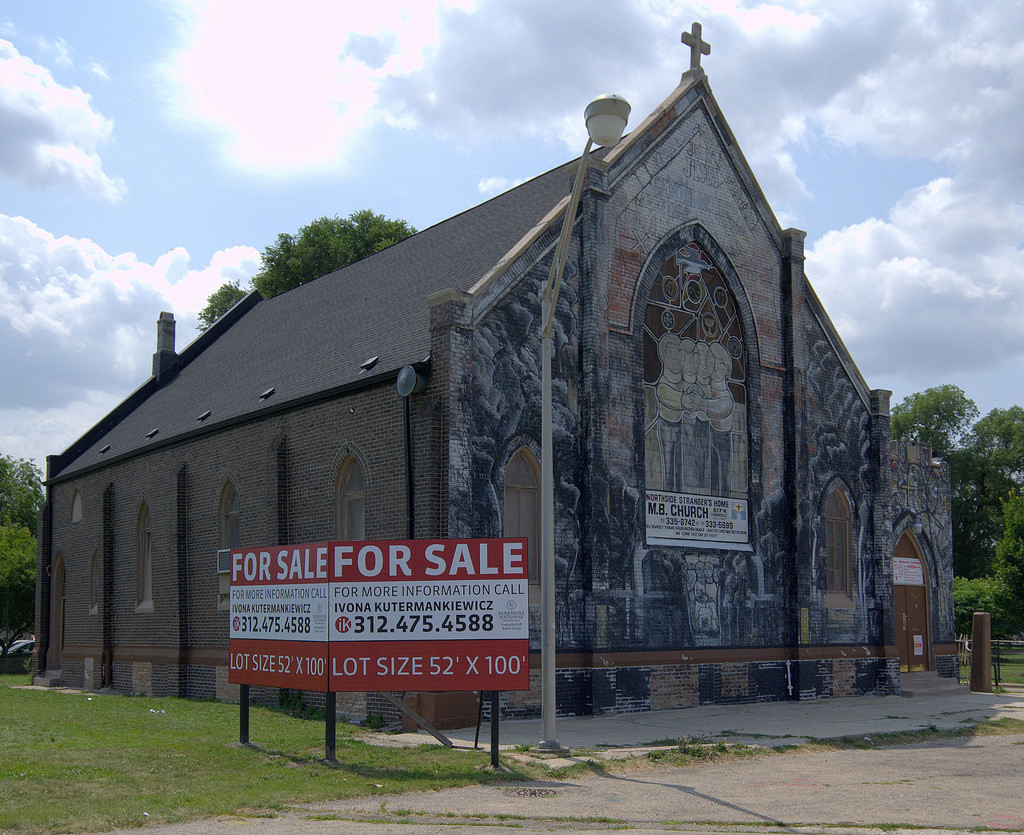
When it came to membership, the numbers are just as bad. When Gallup first asked respondents if they formally belonged to a church back in 1937, 73% said yes. In 1999, that number was still pretty high with 70% saying they were. However, in 2021, that figure had dropped off to 47%.

The decline was primarily among those under 30 years of age, while it remained fairly stable among seniors.  For those born before 1946, those belonging to a organized religion dropped from 77% to 66%. From Babyboomers (1946 - 1964), that number went from 67% to 59%. Gen X (1965 - 1980), the figure declined by 12%, 62% to 50%. Finally, Millennials (1981 - 1996). Just 36% are belong to some religious denomination. As for Gen Z, 34% were unaffiliated with any religion.

When we break those numbers down further in order to get a clearer picture things get really interesting. First, the largest drop in membership was among Catholics who've dropped from 73% in 1998 to 58% as of 2020. For Protestants, it went from 73% to 64%, with mainstream churches (Lutheran, Baptist, Methodists, Presbyterian, United Church of Christ, etc) being hit the hardest. Even Evangelical churches, which had the largest growth just a few years ago, are seeing record number declines.

Women, once the staple of church membership, has dropped by 20% over the last 20 years, down to 53%. 18% for men or 46%. Among whites, 59% attend, a decline of 16%. For blacks it's was slightly worse--- a 19% decline to 59%. For Hispanics, however, the numbers were worse. Since 2011, church membership among Hispanics has dropped off to just 37%.

As an aside, a 2018 Pew study showed that for the first time ever, the majority of Hispanics in America are no longer Catholic (something I'm sure certain Catholic service organizations were expecting when encouraging Latinos to illegally enter America). In 2009, the number of Hispanics who considered themselves Catholic was 57%. By 2019, that number had dropped to 47%.
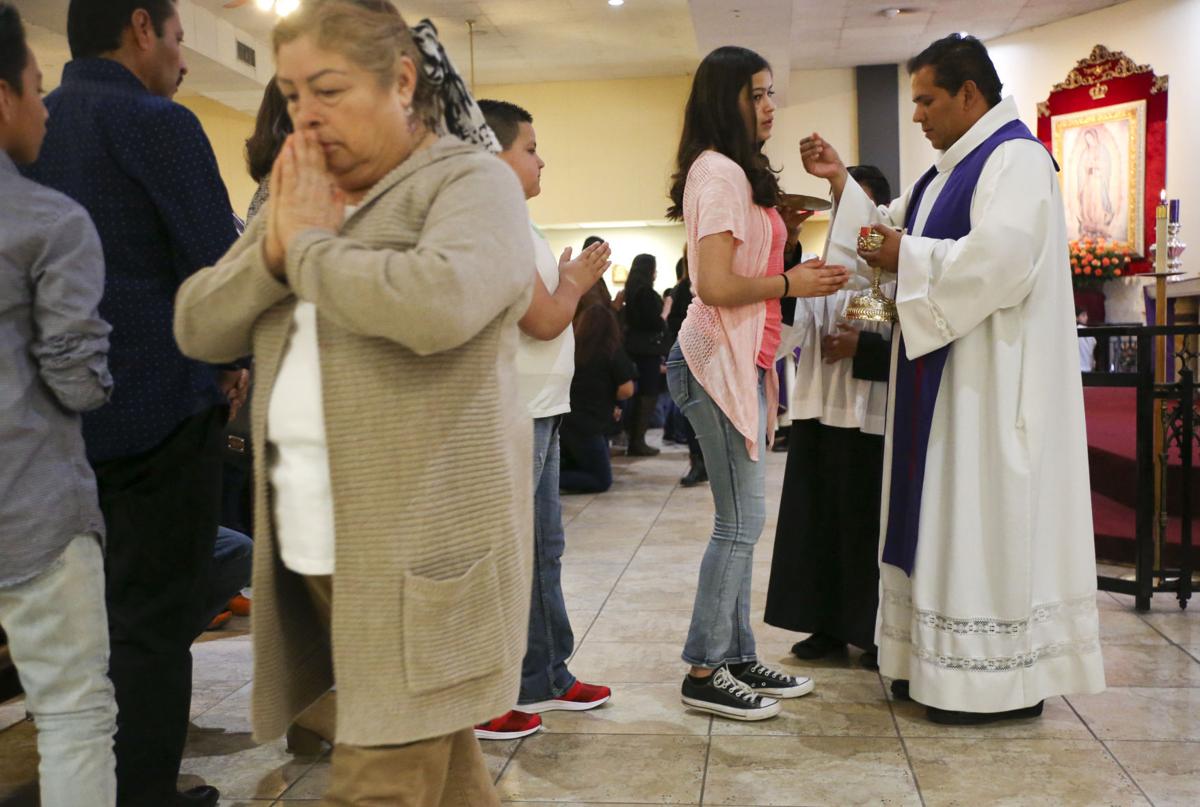
Hispanics who considered themselves Protestant rose from 23% to 26%. Of those, the majority self-identified as Evangelical. 3% said they were no longer Christian, while an impressive 23% said they were agnostic, atheist, or nothing in particular.

There's a great line from the novel "Dune", written by Frank Herbert that says "When religion and politics ride in the same cart a whirlwind follows". Although there's nothing in the Constitution about separation of church and state, America has done a great deal to keep religion and politics as separated as possible. It's not that the Founding Fathers disapproved of religion, far from it.  They were just fearful of a state created religion like what had forced others from Europe.

Under a state religion, others exist at the discretion and magnanimity of those in power; to be granted or withdrawn at a whim. In addition, the state church imposed a tax on the citizens as well as on the non-state churches. In addition, the members of these non-approved churches were required to support their minister and church which represented another tax burden many couldn't afford.

The decline of religious membership and participation among Liberals went from 56% to 35% over the last 20 years, a 21% drop. Among moderates, they experienced a 21% as well, going from 66% to 45%. Perhaps not unexpectedly, Conservatives fared the best, falling 14% from 78% to 64%, which still represents a majority.

When we break it down along partisan lines, Independents, who are the nation's largest political demographic, fell from 59% to 41%; a 18% drop.  Democrats saw the largest drop, going from 71% down to 46%, which represents a falloff of 25%.   Again, as expected, Republicans had the least drop. Over the last 20 years, they've gone from 77% to 65%, which once again still leaves them with a majority of participants.

It's ironic that the Left it portrayed by the media as being morally superior, while accusing Conservatives and Republicans of corrupting Christianity; of advocating a form of "neo-fascism" Christian Theocracy the way the Taliban has corrupted Islam. After all, wasn't it said that if fascism ever came to America it would be wrapped in the flag and carrying a bible?

 They cite the Right's push for mandatory prayer in school while ignoring other faiths and the non-religious, while also encouraging pray at social functions, not to mention limiting or prohibiting diversity and cultural inclusivity (aka "multiculturalism").

The Right, on the other hand, cite the need to recreate a "melting pot" where no one group is better than the other. At the same time, for a society to prosper, they argue that a society must share a set of common values and a common language. "You have to stand for something or you'll fall for anything", isn't that the promise of a "anything goes" society? 

They also point out that the religious Right was behind the move by the Supreme Court to reverse Roe v. Wade, and thus making abortion illegal. The Left sees abortion as a "pro-choice" issue, whether anyone else agrees with it or not. It's their position that a woman has the right to do with her body as she pleases while the religious oriented Right hold that that option ended the moment she became pregnant. 

Even what constitutes a "unborn child" is disputed! The Right says that at the moment of conception, life has begun and all future decisions must be based on that. Meanwhile, the Left believes the process of life (cell division) may technically begin at conception, but you don't have a "life" until there's a heartbeat and brain activity (the absence of which is near uniformly acknowledged as death by the medical community). 
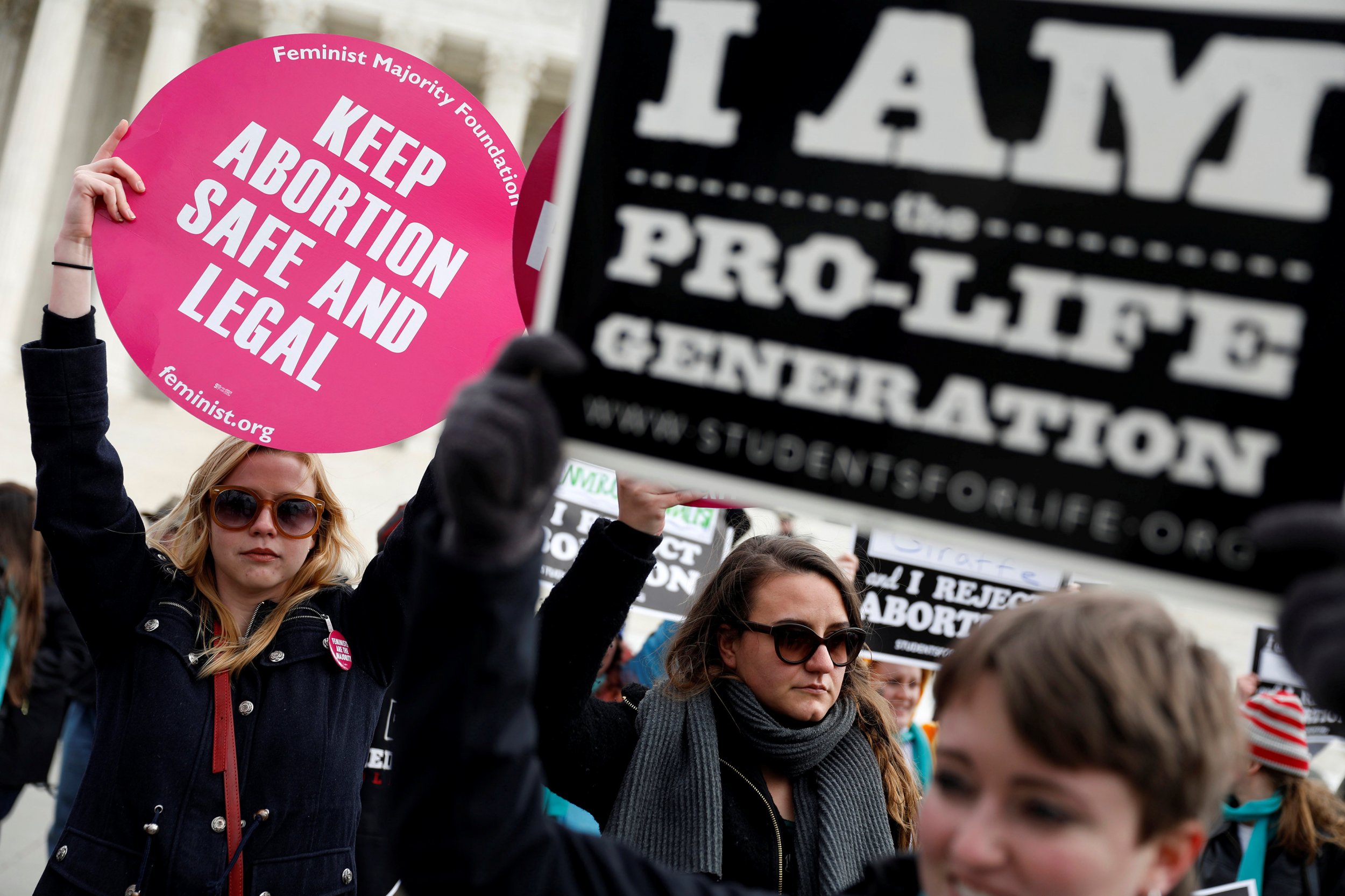
There are some on the Right who believe that the pregnancy must come to term no matter the circumstances of the pregnancy (ie: rape or accidental) or possible medical disabilities that might bring up to and including those affecting the mother's wellbeing, and will cite cherry picked passages from the scripture of their choice to support their claims. But what if the individual isn't of their faith or culture? What then? 

Other issues which separate the Left and Right along religious lines include the acceptance of homosexuality, the admission of female clergy (or gay clergy), the role of women in church and at home just to name a few. None of these even touch on groups like the Amish, Mennonites, Quakers, Mormons, and other non-traditional religions which have either in part or in totality rejected aspects of modern society.

As an aside, the Mormons are one of the few Christian sects which has actually maintained their numbers. While the Utah based church hasn't grown, it's numbers haven't dropped off like other Protestant denominations have (in 2020, the growth rate was 0.6%. In 2021 it was 0.85%). It's primary areas of growth has been in Africa despite a significant drop in missionaries (thanks mainly to Covid-19).

So, what religious based groups are doing well?  In the U.S., the fastest growing organized religion is Islam, albeit the numbers themselves are extremely small. Islam makes up less than 1% in the U.S. and it's growth rate has been 0.6% to 1.5% over the past few years. Nothing to write Mecca about! However, Islam is expected to surpass Judaism in the very near future with Islam reaching eventually about 2.8% of the population compared to 1.8% for Jews. Non-organized religions such as pantheism, paganism, Wiccan, Native American, and African faith systems are also growing rapidly as is the more secular Humanism.  

It's also worth noting that since the collapse in the 1980's of Communism in Eastern Europe, churches have made a comeback in a big way. Under Communism, atheism was the defacto "state religion". Nevertheless, efforts to suppress or even outlaw religion under Communism was largely unsuccessful. Growth mainly among Eastern Orthodox, Catholicism, and Lutheranism has rapid and sustained.

Even in the former center of Communism, Moscow, President Vladimir Putin is a semi-regular attendee at religious services where 71% openly identify as Orthodox, 10% Muslims and 15% who remain "unaffiliated".  87% of Poland are Catholic. 95% of Romania and Moldavia adhere to some religion. 84% for Croatia, and so the story goes.

Religious freedom was denied the people of Eastern Europe for nearly 50 years. Now it's back with a vengeance. Perhaps you have to lose something to realize its value, which for the people under Communism not only included freedom of religion, but by extension, freedom of expression and speech, association, movement, ownership of property, equality of justice, and control over our own persons.

Religion is not mandatory in the West. Those days of autocracy and official religions have thankfully long passed. Today we have the option to accept or reject it. In other parts of the world the people don't have that choice. The state has made the decision for them as to what's acceptable or not, and the penalty for rejecting that decision can be brutal, if not fatal. Migrants to Europe, who claim to be seeking economic and social freedom, are trying to impose their repressive religious and social values on the very citizens whose nations accepted them.

The Founding Fathers intended to create a new society where we had the freedom of religion (which by definition also includes freedom from religion). This freedom meant you could freely practice your religion but you couldn't impose it on others. It also meant the state was prohibited adopting any religion or from imposing any religious beliefs or penalties in its citizens. For its time, this was huge.

Our Founders bequeath to us a freedom of choice, which implied, among other things, the right to believe as we were so inclined too, as well as freedom of speech and expression, association, the right to a fair trial, and the right to defend ourselves from those who would seek to deprive us of these and other rights, which goes to the Founder's belief in the natural and preeminent rights of the individual.


If you want to know more, please take a look at the links below. If you enjoyed the article, please consider passing it along to others and don't forget to subscribe. It's free! Lastly please be sure to "like" us on whatever platform you use to read A/O. It helps with the algorithms and keeps our articles in circulation. Thank you!  


U.S. Church Membership Falls Below Majority For First Time


How Religious Are Americans?


Mainstream Protestants Make Up Shrinking Number of U.S.Adults


"Seven Sisters" of Mainline Protestantism Still Bleed Members


Majority of Hispanics in the U.S. no longer Catholic newstudy finds


The Unlikely Rebound of Mainline Protestantism


Saturday, May 18, 2019

Slipping Off the Mask of Identity Politics


We've all heard the terms---LGBQT Equality, Alt-Right, Black Nationalism, Senior Entitlements, Veteran Needs, and countless others. These are all examples of the latest trend on modern political landscape--- Identity Politics. In fact, identity politics can now be used to define issues germane solely to seniors, urban vs rural, education, culture, ethnic origin, religion, race, disability, and so on.

There's really nothing new about identity politics. It's been around from almost the moment we started coming together to form villages, towns, and cities thousands of years ago. Mankind is tribal. We've always been tribal. We are hardwired to be tribal. Tribalism is what has protected us, provided for us, sheltered us, and enabled us to develop sub-specialties which led to the creation of economies and thus civilizations. Identity politics is our incarnation of tribalism.

The modern notion of tribalism or identity politics began in the early 1960's with the likes of King, Abernathy, Randolph, Young, Wilkins and the Civil Rights Movement they led which sought to create social and economic parity between the black community and white community. This later resulted in the creation of a competing parallel moment which sought to replace the white, mostly male, political, social and economic leadership with a black counterpart. In fact, in some cases, it sought to create a competing counterculture; a separate society which wanted instant change "by all means possible". This was the black nationalism of Huey Newton and Malcolm X. Nevertheless, the concept of modern identity politics was born.

The term itself is thought to have first emerged in 1977 as part of a political manifesto put out by Barbara Smith, one of the founders of a black Lesbian feminist group, the Combahee River Collective, which also had a strong Marxist bent to it. What's different is that today's version is more about the creation of a very narrow demographic which is focused on just a few issues for their own benefit at the expense of all other issues and groups.

Under Classical Marxism, the notion of identity politics was already well defined. It was the working class---the proletariat---against the bourgeoisie; that is, the owners and Capitalists. However, the objective was to change the social structure in order to benefit all not just the working class. Under National Socialism (aka "Nazism"), it was about removing one group---the Jews---and replacing them with another group---the "Aryans", and with it, creating a new social, economic, and political order.

Nowadays, it's not about changing the social order. It's about substituting one group for another so society itself doesn't change. Just one's place in it. The Far Left, as well as the Democratic Party, are often accused of promoting identity politics, both in terms of claiming solidarity with each group and sub-group's goals while at the same accusing Conservatives and the Republican Party of backing the Alt-Right or Alternative/Far Right, which is the politically correct term associated with "white nationalists", "white supremacists", "white nationalism" and others on the so-called Far Right (we are to believe this includes the Tea Party, pro-life, and those who are anti-illegal immigration or pro 2nd Amendment).

Of course, it should go without saying that there are those on the Right who maintain that the extreme Left and Democratic Party are trying to promise everything to everybody in order to cobble together a new political base which includes black and Hispanic nationalist groups like Black Lives Matter and La Raza, as well as those who have pro-Marxist or pro-socialist leaning, radical feminists, pro-choice, and pro-amnesty group along with those who'd like to restrict or prohibit gun ownership and stifle free speech. Even those like Antifa, which often behaves like the Fascist it says it opposes, are being courted.

Regardless of who accuses who of what, the end result has been a further division of this country by those who are solely interested in their own issues at the expense of everyone else. It's not like these groups are able to achieve any real political clout beyond the regular news cycle. Nevertheless, the corporate media makes them seem larger and more powerful than they actually are. The real special interest group, the moneyed powerbrokers, continue on with politics as usual.

These other groups do nothing more than serve as a distraction from what's really happening behind the scenes in Washington and on Wallstreet. We find ourselves fighting against each other on issues and causes which mean little or nothing. The identity politics of old may have organized around one segment of society, their ultimate objective was to transform society as a whole for the betterment of all; not to the exclusion of all as it is today.

It's time we take stock of what we have in common with each other and not in the manufactured differences which the media promotes. As long as we remain divided, we cannot focus on the crimes and violence being committed at home and abroad in our name. Only by coming together as unhyphenated Americans will we be able to address these modern day robber barons; the globalists who seek to undermine our national sovereignty, undercut our Bill of Rights, and usurp our Constitution.

We've become an Oligarchy. Power is in the hands of a ruling political class comprised of plutocrats and an elite clique of very powerful and wealthy CEOs. There is still time to take our country back and restore what we've lost, but the sands are quickly running out of our nation's hourglass. We're seeing our freedoms chipped away piecemeal. There's an invasion taking place in Europe and countless attempts to repeat the experience within our borders. Jobs, especially union jobs, are exported overseas, leaving many Americans scrambling to find ways to pay their bills and keep food on the table while taxes and public utility rates increase in order to pay for these unwelcome changes.

Even our children and grandchildren aren't safe. Through the inclusion that's identity politics, we have drag queens reading to our kids...in school libraries... about the normalcy and joys of gay relationships . Some have even been putting on excerpts from their routines! I couldn't care less about someone's sexual proclivities, but damn, should children be exposed to this stuff at such a young age? Others are trying to claim that pedophilia is normal; just another "sexual orientation" like any other. The hell it is!

Being called a "racist" is now justified if you, for instance, happen to disagree with someone of another race (this works only one way of course). It seems to be a handy little tool to get what you want or to get out of trouble. Reverse racism has become acceptable to the point where whites and even Asians are expected to feel ashamed of their racial and/or ethic heritage. There are even white females who feel that they're "obligated" to have sex with a minority male in order to "atone" for some mythical transgression of their ancestors. Shouldn't we simply focus on ending racism period? At one point, not that many years ago, racism had all but vanished.

There are those who seem indignant that the majority of Americans support protecting our borders, our national sovereignty or not using taxpayer money to support those here illegally. Those individuals talk about so-called "migration rights" as if a secure border is somehow a bad thing. There are religious organizations and church who think they're are exempt from federal laws concerning immigration; that we should "embrace" foreign languages, values, and traditions at the expense of our own. Even some cities and states believe they can ignore federal immigration laws with impunity, and still have the audacity to demand more federal dollars to cover the cost! This is yet another form of identity politics.

When it comes to religion, it's just as crazy. Under the facade of modern identity politics, Christians, as well as Jews, Hindus, and Buddhist, among others, are expected to curtail their religious practices so that one group doesn't feel "offended" or excluded. There are even LGBQT and feminists groups who support this when, in truth, that religion would murder the other two without a second thought because that's part of its guiding dogma. It would be their "religious duty"! Again, identity politics.

The irony (and humor) here is nearly overwhelming. It would be like "Hasidic Jews for Nazis" in 1934. Meanwhile, the US is attempting to impose "democracy" on a people who barely have any concept of democracy while attempting to gain control through military means of their natural resources.

We are under surveillance in some form or fashion nearly every moment of our lives (for our own protection we're told). We watch helplessly as wars and conflicts are orchestrated under the banner of "spreading democracy" or overthrowing some tyrant (which, as usually the case, we helped to install and whose usefulness has expired) while deals over the control of resources and assets are made in boardrooms and on Capitol Hill.

The United States was intended to be a unique experiment in the history of Mankind. It was to be a place where anyone from anywhere, regardless of their circumstances, including race, religion, or ethnic group could come and start over. All we asked was that you leave behind your past prejudices and hatreds; that you accepted our laws and values, and you did it legally. There was no room for hyphenated loyalties. You were an American or you weren't. Naturally, it helped if you spoke out language. Whatever you brought with you in terms of traditions and so forth was blended in with every other immigrant. It was called the "The Melting Pot", and it made us a great nation.

Today, we're told to embrace "multiculturalism"; where everyone could bring a piece of their home country with them, along with all its petty bias and hatreds. You could even bring a system of religious laws not compatible with democracy, and yet we're told to accept those differences as if nothing will ever happen. Identity politics once again. Of course, all we have to do is watch world news to see that's not true. The social and religious values are different; often brutally so. The work ethics is different. One society believes in hard work and self-improvement while the other believes in getting by off of others.

This is the other side of identity politics. It says that all societies have equal value and thus are fully compatible with ours; that no society is better than another. This doesn't encourage building a stronger society, but one which will result in a balkanized nation. Of course, by breaking us down into the smallest denominator, we're more controllable; more manageable, and if you're setting at the very top of the food chain and your goal is absolute control, then that's exactly what you want.

Saturday, January 12, 2019

Merging Religion and Politics or Stop Letting Your Dogma Chase My Karma


"Many will come in my name, claiming, ‘I am he,’ and will deceive many. 7 When you hear of wars and rumors of wars, do not be alarmed. Such things must happen, but the end is still to come. 8 Nation will rise against nation, and kingdom against kingdom. There will be earthquakes in various places, and famines. These are the beginning of birth pains." (Mark 13: 6-8). This passage is from the Christian New Testament. Most would consider it to be a dark and foreboding passage, while others---the "true believers"---consider it a warning with an ultimately happy ending...of sorts. It's about the so-called "End Times" which is a popular theme among the three Abrahamic religions; namely Judaism, Islam, and Christianity.

Groups like ISIS/ISIL/DASH, Al-Qaeda, Boku Harem, and other such terrorist organizations openly proclaim that it is their "divine mission" to provoke not just the West, but any and all nation which isn't under Sharia law in order to "hasten" the coming of the 12th Iman, which is their equivalent of the Messiah. Some even claim that that individual already exists but is waiting for the right moment to appear. This individual will be seen as the Prophet Muhammad reborn. Along with him will come Jesus, who is seen as a lesser prophet, whose job is to convert all non-believing Christians. After their successful victory, there will be a divinely inspired Caliphate to rule the world for eternity.

In Judaism, they await the coming of their two (or three) messiahs. Specifically, a return of the ancient prophet Elijah who will precede the Messiah ben Joseph, who is sometimes called Messiah ben Ephraim. This individual will be followed by the long awaited Messiah ben David. However, before any of these individuals can appear, certain conditions must first be meet. First, the Jews must return to their ancient homeland, Israel. Next, they must rebuild their ancient temple (for the third time) and reestablish the priesthood, both of which were destroyed by the Roman in 70 CE under the command of future emperor, Titus. Of course, there are numerous sub-plots which have to take place such as a great persecution of the Jews, the birth of "pure" white bull (that is, one without any physical flaws or marks) and so forth.

Ben Joseph will do battle with an evil ruler from the North named "Armilus", who is born of "a woman of marble" in Rome, will ultimately kill ben Joseph and leave his body in the streets of Jerusalem. Armilus and his minions will then descend on the nation of Israel and will be defeated by its new leader, ben David. Ben Joseph is brought back to life, along with all the "devout" Jews who've died down through the centuries, thanks to Elijah, along the world and its "true believers" will enter a new "Messianic Age", said to last 1000 years.

Christians have a different take, however. They believe that Jesus, their messiah, will return after the rise of two really nasty and evilly possessed individuals, the "Anti-Christ" and the "False Prophet" (some interpretations claim they are actually one individual). The "Anti-Christ" will come to power over a reconstituted Roman Empire with the "False Prophet" acting as his PR man. Together, they will seduce the world and force everyone to accept his personal brand or stamp---666---or the "Mark of the Beast". Those that refuse will be unable to conduit any financial transactions, buy food, etc. As an aside, the number is sometimes written as "616". Either way, it was intended to be symbolic of the then current reigning emperor, Nero Caesar.

A some point, Christians will be singled out for persecution (some Christian theologians claim this will include Jews as well). Meanwhile, things will go to "hell in a hand-basket". There will be all sorts of natural (or not-so-natural) disasters like in increase in volcanic eruptions, extreme changes in the weather and earthquakes, rampant diseases, starvation, and, as alluded to in the opening paragraph, wars and rumors of war. Eventually, Israel will be left standing alone with small pockets of Christian "true believers", and just when it looks like all is hopelessly lost, the dark and ominous clouds (these seem to be required in any apocalyptic story) will open and Jesus will coming riding down on his white horse (naturally) surrounded by an army of angels. A horrific battle in the heavens between the demon armies of Satan and Jesus and those on the ground will ensure; centering in a valley called Megiddo (hence the term Armageddon).

Ultimately, the Anti-Christ and his PR guy, the "False Prophet", are defeated, bound, and thrown into a lake (or pit) of fire for a 1000 years along with any remaining demons; his evil earthly minions follow him into the pit shortly afterwards. Meanwhile, any non-believing Jews remaining will convert on the spot, and a new divinely led or inspired era will ensue; one which includes a "New Jerusalem" and a divine kingship.

Now, I admit that I've given the abbreviated version of events. To spell out the apocalyptic visions of all three of the Abrahamic faiths in detail would take way to long: there are literally dozens of texts which deal with each religion, and hundreds of additional books examining each point, not to mention the dozens of books excluded from officially sanctioned scripture. However, I wanted to point out the difference and similarities of each of the three religions, which share a common origin, starting with their mutual founder, Abraham, who is credited with being the literal father of Judaism and Islam through Sarah and their son Issac and Hagar and Ishmael respectively.

All three believe there will be mounting violence and destruction. Some of it will be natural, while parts will be either divine retribution for straying from the "righteous path", while some demonic power reins over the balance of it in the form of wars, disease, pestilence, and their derivatives such as famine, a lack of fresh water, toxic pollution, and so forth. In the case of Islam, they believe they must act to help bring about the arrival of the 12th Iman, which includes destroying all those who are non-believers.

Judaism, on the other hand, believes it has a divine right to restore its former glory, especially the restoration of its temple complex on its original site and priesthood. The only problem, however, is that the site of the original temple is now occupied by the Dome of the Rock and the Al-Aqsa Mosque, which were built between 692-693 by the Umayyad Caliph, Abd al-Malik ibn Marwan, which was about 55 years after the capture of Jerusalem by the invading Muslim armies. As an aside, some Islamic scholars believe that al Malik purposely built the site as an alternative hajj (a mandatory religious pilgrimage) to Mecca and its "Ka'bah", considered the most sacred structure in Islam, since at the time Mecca was under the control of competing sect led by an individual named Ibn al-Zubayi.

Nevertheless, many Jewish theologians and scholars hold that the temple complex must be completed for restoration of Israel's former glory (some scholars don't believe in a literal return, but more of a "Messianic Age" or a second "golden age" for Israel. However, they also recognize that to do so meaning removing---likely by force--the existing mosque, which will be like throwing a firecracker into a hornet's nest.

Christians tied their end-of-days story closely to the Jewish tale, with an obviously emphasis on themselves as previously described. They believe pretty much everything that the Jews do, except they are the intended victims, or at least as much as the Jews are. Their biggest difference is that their messiah returns a second time, from heaven, while the Jews believe theirs will come for the first time, and will be divinely inspired, but not a god or demigod; just a purely mortal human being.

What's interesting about all three interpretations is that for each, the other one's "messiah" is their demonic bad guy. So, for the Muslims, the Jewish reborn Elijah and Messiahs ben Joseph and ben David, are the "Spawns of the Devil". Jesus is actually a Muslim and a sidekick to the 12th Iman. His role is to convert or destroy non-believing Christians. Meanwhile, the 12th Iman and his forces are the evildoers of Judaism and Christianity. Now the really scary part of all this is that each believe with absolutely certainty that they are correct; there is no debate and definitely no questioning. This means that each is on a deliberate path to mutual self-destruction in order to see their particular vision come to pass.

An interesting side note to all is that is that neither Buddhism, Hinduism, nor Shintoism and any of the Shamanic religions contain this type of doomsday scenario, which is at the core of the three Abrahamic faiths. For the Buddhists, it's more of a natural, cosmic event. Think of it as the Big Bang in reverse followed by a simultaneous new Big Bang and the cycle of creation repeats. In Hinduism, which also follows a cyclical philosophy, the god Vishu returns in the final comic cycle (known as a "kalpus") as the god or avatar "Kulki", on a white horse carrying a flaming sword resembling a comet with a long tail, and destroys the forces of evil which has come to destroy all those seeking enlightenment. Interestingly, this final, fourth, cycle is known as the "Kali Yuga", which so happens to be our present one. Once this destruction takes place, the cycle of creation repeats.

The majority of shamanic or "natural" religions such as Wicca, paganism, Native American, Tengri, and so forth, all have their take on how things end, but they tend to believe that Mankind in general is blame, not any specific individual or entity is the cause. Mankind loses its connection to the Earth and to Nature. As a result, we destroy ourselves out of our own willful ignorance, arrogance, and old fashion greed. In a sense, Nature fights back to rid itself of what is "making it sick" as some of these religions believe. The Mayans predicted that we will (and have) enter a final cycle whereby there will be great change. However, it will not make an "end" has some have tried to predict. Just the end of one cycle and the beginning of another, and with all ends and new beginnings, there is change, often major change. It reminds me of a line from Frank Herbert's novel Dune in describing religion and politics, "the religion and politics ride in the same cart, the whirlwind follows".

So, just what does all of this have to do with politics? Actually a lot. There was time, not very long ago historically, where religion and politics were one in the same; different sides of the same coin. In some societies, such as exist in Islam, it still is. However, there seems to be a unconscious belief in the other two Abrahamic religions which hasn't fully divorced itself from the political secular and the private religious. At the same time, the native or natural religions may be on to something. We have, as a species, lost our way. Violence has dramatically increased, especially over matters of religion. Instead of allowing each other the right to believe or not believe as we decide, we're seeing an dramatic increase by some that all must comply or die.

That's wrong any way you look at it in my opinion. Whatever choice we make is ours and ours alone. If there is a Hereafter or some Divine Justice, then that's between us as individuals and that entity, not some person who claims to know the Divine Mind and what's best for us. It was just a few weeks ago that two Scandinavians girls were murdered; beheaded by a group of "men" who thought that by lobbing off the heads of these two innocent girls, they were appeasing their god! Throughout Europe, and increasingly in the US, Australia, and elsewhere, we see the same group demanding that all must "submit" or face death (of course, if we pay a tax and forfeit our natural rights, we get to live at their discretion). That ideology is fundamentally opposed to both Western and Eastern Thought. It seeks to deny us as individuals the right of free choice. It imposes a tyranny which is nothing less than enslavement.

However, every religion, philosophy, government, or political ideology which attempts to prohibit independent thought, the questioning of its so-called "authority", or our blind obedience to it is nothing less enslavement by other means. This "disease"--- for lack of a better term---is spreading across the world like one of those apocalyptic black clouds. If it's allowed to go unchecked, it will lead to either the shackling of the Human Spirit or to its destruction. Ultimately, we are our own deliverers; our own "messiahs". We are the ones who've fashioned the shackles and we are the ones who have the keys to unlock those shackles and our potential as a species. We can have faith, but it will be us as individuals and together, who must save Humanity.


Dome of the Rock Shrine

Buddhist Theories About the End of the World

Hindu Eschatology

Apocalypse Prophecies: Native End of the World Teachings


Sunday, June 08, 2014

Sacred Cows


I've never been accused of being a conformist. I think going my own way or thinking my own thoughts was just something I was born with, much to the exasperation of my teachers, bosses, and my mother (for which, I'm sure, accounts for more than a few white hairs). Perhaps I am a noncomformist, but it has never been a matter of being "rebelling" simply for its own sake. I've always preferred thinking and doing out of the box, and I'm sure the results always spoke positively for themselves. I've never been afraid of questioning an assumption or challenging a tradition, and questioning presumed authority (or authority figures) for that matter. Times and circumstances are constantly changing, and we must change and adapt with them or be swept away by them.

Ironically, despite this, I'm still a fairly conservative guy, at least concerning most things. For instance, I ardently believe in the foundation established by our Founding Fathers, through the Constitution and the Bill of Rights. Of course, some in Washington and elsewhere are saying that the Constitution is too "restrictive" or too "inflexible" for today's vastly more complex problems. Perhaps that's because today's problems have become more complex because of over regulation, over legislation, and over taxation. Perhaps what we need is a more simpler approach to government. By that I mean, perhaps the federal government should govern less and allow states more authority to deal with situations closer to home. It seems like the government's solution to everything is to legislate a situation to the point where it needs additional legislation to correct new problems which arose out their efforts to solve the original problem in the first place, while at the same time, leaving rather convenient loopholes for their corporate masters to exploit at our expense. After all, haven't we been told that money is free speech and those with the most money get to speak the loudest, and it's the loudest who get Washington's attention right?

But that's not what I'm wanting to discuss at the moment. What concerns me is that many conservatives are so stuck with preserving the past, they've lost sight into what's important. Let's look at the marriage issue briefly. I grew up (and believe) that marriage is between a man and woman. It's the basic foundation not just of America, or Europe, or even Asia, but of society itself. It's the core around which civilization itself has been built. But, as society has become more complex and gender roles have evolved, not to mention technology and self perception, so too has the concept of what constitutes a "family" , and by extension, a marriage. If two individuals---two adults---happen to be attracted to each other and want to make a lifelong commitment, who am I to say "no"? Sure, I could cite some biblical verses, but what does my faith have to do with theirs?

For that matter, let's not forget that the religious texts used by Jews, Catholics, and Protestants, as well as Muslims and their Koran, were written thousands of years ago, in another time and place, and for another people who had different societal needs and values. Providing a stable loving relationship seems to me to be more important than whether I agree or not with their choices. Who am I to decide who someone can love or not? And what if a particular church or other religious institution is willing to sanctify the union? How does that say about other religious institutions who don't? My own pragmatic conservatism (and touch of libertarianism ) also tells me it's none of my business or anyone else's.

Speaking politically, conservatives are getting their collective clocks cleaned where same-sex marriage has become an issue simply because the largest voting bloc, the Millennials, see this a critical issue. Overwhelmingly, the Millennials--those 30 and under---see no problem with gays, lesbians, or transgendered individuals, and certainly they have no issue with gay marriage by a wide margin---70%. Those that do tend to be the 40 and older crowd, which also happens to be a shrinking demographic while Millennials are the largest segment to come along since the Babyboomers (and as group, are more numerous than Boomers). Therefore, the party which accepts this political reality (whether or not they agree with it personally), will thrive while the other party will find itself repeatedly punished at the ballot box, perhaps to the point of political irrelevancy. This also speaks to the increasing candidacies of individuals running independent of party; something Millennials also favor by large numbers.

Let's take another issue--global warming. Those on the political Right insist that at best, global warming is myth; an attempt by the some in the government and certain industries, to tighten the noose around our energy policies. At worse, global warming, if it exists, is a natural cycle. A minor hiccup. Either way, Man doesn't play any significant role. Yet, most of those behind these claims are those business most likely to be negatively impacted, such as coal, oil, gas, and automobile industries. Some of those on the Left want much greater regulation of these industries it is true. They haven't met a regulation or tax they didn't like. They too dance to their own puppet masters.

My thoughts on global warming are this---the overwhelming majority of climatologists and other scientists---97%--- agree that the earth is getting warmer. The polar ice caps, which are not only our largest sources of fresh water, but also reflectors of solar heat, are melting; especially the Arctic (think of it as the earth's thermostat).The oceans are becoming warmer...much warmer...and less salty thanks to melting Arctic. Storms are becoming more frequent and more violent. Fertile lands are becoming more arid. Ocean life is dying. Water shortages are becoming more severe, more frequent and lasting longer. Co2, especially the type which has the chemical signature produced by manufacturing, and is the primary culprit in global warming, has dramatically increased over the last 100 years. Although I believe Man is the main cause of global warming, it really doesn't matter to me if someone else thinks it's all part of a natural cycle. The fact of the matter is that it's real; it's happening now; and we're all at risk.

So, Man-made or cyclical, we need to do whatever we can now to keep it from spiraling out of control. That means cutting CO2 emission anyway we can. For states which depend on coal production, they're going to take a huge economic hit. That's why they need to be preparing now before they become the proverbial buggy makers in the horseless carriage age (yes, I appreciate the irony of that analogy). Those states need to invest heavily in alternative income producing sources sooner rather than later. The auto industry needs to be given an ultimatum---produce exclusively vehicles with low to no CO2 emissions along with a non-moveable "drop dead" date which carries a stiff fine for each day missed. Other countries already have widely available and low emission mass transit (such as Iceland, whose mass transit vehicles run on hydrogen fuel cells. Their only emission is water vapor), so why don't we? The same goes for any industry which pumps CO2 into the air. Stiff financial penalties for any industry which fails to comply. Activists too can participate by bring pressure on corporations not just by protesting and bring attention to non-compliant companies, but by also becoming stockholders and speaking out at stockholder meetings. Meanwhile, the US needs to make alternative energy a national security issue. After all, we've been talking about it since Jimmy Carter and the original oil embargo in the mid '70's.

Smaller countries such as Germany get a substantial amount of their energy--27%-- from alternative energy sources, principally solar and wind. We have almost 1/3 of the country which would be ideal for solar energy production. We have more than ample offshore areas which would be excellent for energy producing windmills, yet we generate only 13% of our energy needs through alternative energy sources. Solar panels could be required for all new resident and commercial projects; planting green gardens on buildings and high rise tops to help adsorb CO2 emission. Planting of more CO2 absorbing trees and developing better means of conservation. Encouraging more home gardens, rain water conservation, and "buy local" projects in order to cut back oil and gas consumption as well as vehicle emissions.

No, the US can't do this alone, but it doesn't have too. There are already dozens of nations engaged in some form of CO2 reduction. A few countries, like China, aren't. Economic and political pressure needs to be applied to those refusing to comply. If we fail to act, and soon, we will be facing not just more deadly storms, rising water, or hotter temperatures, but an increase in brownouts or blackouts, higher prices for gas, oil and electricity. Food and water prices will skyrocket to the point where even basic commodities are unaffordable for the average family, and I wouldn't rule out food shortages or water rationing, which are already happening in some parts of the world. And let's not forget that the increased temperatures melting the polar ice caps are also killing off some species, and thawing areas frozen over for tens of thousands of years, releasing dormant and potentially deadly bacteria from its hibernation, as well as an increase in insect infestations (and who needs more spiders, flies, or mosquitoes?).

Now if these aren't reason enough, remember that global warming is of key concern to Millennials. After all, it will be their generation more so than ours how will be impacted the most. Once again, the party or individual that best embraces this will be the party which will succeed. At present, the Left may have the advantage since they accept global warming as the problem it is. Left on their own devises, they will gladly over regulate and tax. However, on the Right, they are heavily populated by the religious Right. I would assume they would embrace a biblical stewardship of the earth and demand changes in current environmental policies. The same would hold true for most other religions too. As for me, conserving the environment couldn't be any more conservative an ideal since it protects the planet, the air, the water, the animals and humanity while at the same encourages innovation for safer and longer lasting energy sources (besides, how much safer or longer lasting can you get than the sun and wind?).

Topics as diverse as these are sacred cows to those who oppose or resist change. Change isn't easy to embrace, especially when it affects our moralistic or economic self interest. However, all things change and evolve. It's a fact of nature. Those that do not adapt will wither and die. Be it an individual, a nation, or a world. That too is a fact of nature. We must adjust our perceptions of what it means to be a family just as must examine the environmental footprint that we leave, individually and as society.

Why the fight over same-sex marriage is over
http://www.washingtonpost.com/blogs/the-fix/wp/2014/03/10/why-the-political-fight-over-same-sex-marriage-is-over-in-1-chart/


5 Reasons Millennials Are Going To Save The World
http://www.huffingtonpost.com/2013/11/05/millennials-save-the-world_n_4174079.html


NRDC and Global Warming
http://www.nrdc.org/globalwarming/


Iceland: 100% renewables example in modern era
http://reneweconomy.com.au/2012/iceland-a-100-renewables-example-in-the-modern-era-56428


Iceland phasing out fossil fuels for clean energy
http://www.cnn.com/2007/TECH/science/09/18/driving.iceland/index.html?iref=newssearch


Germany Sets New Record
http://thinkprogress.org/climate/2014/05/13/3436923/germany-energy-records/


Climate Hot Map
http://www.climatehotmap.org/


NOAA & Global Warming
https://www.ncdc.noaa.gov/monitoring-references/faq/global-warming.php


Wednesday, November 19, 2008

Gay Marriage: Should It Be Legal?

Did hear the comedian Wanda Sykes was gay? Well, it’s been all over the entertainment news sites recently, but frankly I don’t care. Don’t get me wrong. I like Wanda Sykes. She’s a hilarious comedian, but I really don’t think I need to know who she or anyone else for that matter likes to sleep with. And as for folks like Rosie O’Donnell (remember when she was considered sooo sweat and nice? She even had her own doll. Now we have “mean” Rosie), Ellen Degeneres (a friend of mine calls her “Ellen Degenerate”), Clay Aiken, and all the rest. Who cares? Get over it.

Sexual preference is about as personal and private as it gets. What you like is your business and no one else’s as long as it involves consenting adults right? However, children are another matter, and one that should never ever be tolerated. Punishment of pedophiles should be swift and severe. I couldn’t care less if it’s “humane” or not---that’s my opinion at least. You don’t abuse kids. Period). So, where am I going with this? The answer is gay marriage. Should a couple of the same sex, who happen to be in love, be allowed to marry just like everyone else?

Certainly gay relationships have been around since the beginning. Remember Xerxes of Persia and his Immortals? How about King Phillip of Macedon and his Companions? Of course, there was his son, Alexander the Great. In fact, Socrates, Plato, and most of the Greek philosophers were believed to be gay, or at least bisexual. It wasn’t out of the norm at all in ancient Greece. The great Homer wrote about it in his epics. In Rome, it wasn’t unusual, though a bit more frowned upon in certain circles. Gay relationships were all but unheard of in the more “barbaric” lands occupied by the Germans and Celts, and later, among the Vikings and Huns (for that matter, in the Mongol East either).

Throughout the Middle Ages, gay relationships existed, though (ironically) hided from view from the Catholic Church (where it ran amok or is that a monk?). In fact, it continued down through the Victorian and Edwardian Periods where it was slightly vogue and risqué (does Oscar Wilde rang a bell?), down to the modern period. But throughout, it almost always in the shadows. Many an actor and actress was rumored to be gay, but “forced” to marry as “cover” by the Hollywood studio moguls eager to cash in on their stars. The point I’m trying to make is that gay relationships have and continued to exist, but never, to my knowledge, did gay marriages ever take root. Why?

Marriage has always been seen as a fundamental building block of civilization. It provided the safety net for creating, nurturing, and protecting a family. But many of those aspects have gone. No longer is it necessary for a male to provide for or protect a female. No longer is necessary for a female to even be married when deciding to have children. A doner is all that is required. Women today are quite capable of taking care of themselves in every way, and men are just as adapt as roles traditionally set aside for women. So, does marriage, therefore, carry the same weight that it did originally? For that matter, does it carry the same weight it did just 50 years or 25 years ago?

From the gay perspective, they are just like anyone else in love, and should be allowed to marry…just like everyone else. Recent ballot initiatives seem to indicate that voters disagree. While there are sporadic exceptions, voters have come out in huge numbers to reaffirm that marriage is between one man and one woman. In California for example, where you would expect the gay marriage initiative to pass, voters defeated Proposition 8 by 52%. In 2004, Kentuckians voted 74% against gay marriage, along with 10 other states (Arkansas, Georgia, Michigan, Mississippi, Montana, North Dakota, Ohio, Oklahoma, Oregon and Utah). Why?

Frankly, I don’t know. I think political scientists and all those talking heads on the various news programs will be analyzing the results for months and perhaps years to come in some cases. I don’t think the vote was meant to be “anti-gay”, but it may be that people still believe in the institution of marriage as it was originally intended. It could be a reflection of their parent’s morals or dogma taught by their churches or synagogues, either of their youth or where they currently attend (especially among mainstream and conservative religious institutions). Those on the Religious Right would say that G-d (or Allah, Buddha, etc) abhors homosexuality and by extension, the concept of gay marriage.

However, those who support gay marriage would argue that they shouldn’t be held to the criteria of someone else’s religion. Besides, what if there was a church willing to marry them? After all, should the government be allowed to impose restrictions on religion? What about the concept of separation of Church and State? I think that until the US Supreme Court finally rules on the issue, we will see other states open marriage to those of the same sex, only to be reversed later. What will prove to be interesting to watch is if whether a gay marriage from one state will be recognized in another state where it’s still illegal.

While we’re on the topic, what about private businesses who want to offer insurance to same sex couple like they do to heterosexual couples? Should a company be allowed to provide the same health or survivor benefits to a couple regardless of gender? After all, we’re talking about an estimated 1.2 million gays in the US according to the 2000 Census. Should this be strictly an internal corporate decision? What about gays teaching in public schools? Is it appropriate, and if so, should there be any restriction on who or what grades or subjects they teach? How about adopting children? Of course, there is the question of whether gays should be allowed in the military.

Personally, I could care less about someone’s sexual orientation. I believe in treating someone as I want to be treated (as a disclaimer before proceeding further, I’m strictly uber-hetro). I believe in the traditional roles of marriage between a man and woman. I think a male and female role model is critical to the well rounded upbringing of a child. Two daddies or two mommies just aren’t going to get it from my point of view. The law already provides for survivorship. Caretaker or “next of kin” issues are up to the individuals in involved (or should be). If a board of directors decides to provide insurance that cover same sex couples or live-in hetro couples that‘s their decision. Of course, that also means that you or I don’t have to frequent these same institutions if we disagree. When I was in the military, all I cared about was whether the person next to me did their job. What they do on their on their own time and off base was none of my business so long as it doesn’t affect unit cohesion and efficiency. Teachers are there to teach. In short, my main focus is keeping government and other groups out of my personal life as much as possible. Of course, I’m the first to acknowledge there are exceptions to most everything I’ve said. So, now, I’d like to hear from you. Do gays have an inherent “right” to marriage? If not, what about civil unions? How did you arrive at your decision?


Fluency: Leading in the Midst of Change
By Phoebe Eng, keynote speaker at Linkage’s 10th Annual Summit on Leading Diversity in Atlanta, GA, March 16-18, 2009

Some of you may remember the 1985 hit song, "We are the World," produced by Quincy Jones and an inspiring cast of musicians who sang about working together, past our differences. Or perhaps you remember the tremendously successful United Colors of Benetton ad campaign back in the 1980s, celebrating young faces of every color, signaling the look and feel of a world without borders. Media images like these showed us the world and nation, as we wanted ourselves to be -- pictures and soundbites of many races cooperating, communicating, and sharing opportunity and fortune.

If only it were that simple. Almost 25 years later, we are still struggling to make that vision real -- in our business practices, in the running of our cities, and, now, in the context of great cultural, demographic, and economic changes brought on by globalization.

As 21st century leaders, you know that building, guiding, and sustaining truly diverse communities is tremendously difficult work. Over the last decade, city populations and workforces have changed faster than at any point in history -- job relocation, mobile commerce and ease of travel have changed our cities' demographics quickly and often. Immigrant and new communities continue to influence and change the culture of our cities. Young families and children supplant the aging baby boomer generation, again, changing the character and priorities of a community.

At the same time as we become a more diverse, more prosperous nation, our cities have also become more segregated. In fact, studies from SUNY Albany, UCLA, and the Harvard Graduate School of Education have reported that segregation of our children has worsened over the last decade, even as we live in more integrated areas. As newcomer groups grow in critical mass, so does the tendency to organize along racial, ethnic, or other group-affiliated lines. Changing demographics and the growth of ethnic enclaves have made race awareness and identity politics an effective means of voicing the needs of some of our cities' otherwise marginalized groups.

Amid all of this, civic and corporate leaders are confronted with difficult choices every day. Worthy projects from different community sectors must compete for limited resources. Appointments and commissions must be assigned in ways that satisfy all the interests represented in our constituency groups, assuring each of them adequate representation. From time to time, leaders also face crisis-fueled change, forcing them to guide their communities quickly through controversies.

Does this sound stressful? Indeed, scenes of a diverse community can be those of chaos, fiefdoms, even balkanizing, as some futurists and scholars predict. Alternatively, some see these times as momentous, opening the door to the grandest and most inspiring of challenges.

How does one lead a community, whether local or global team, in the midst of huge demographic and economic shifts? How do leaders create communities where all constituents feel included, counted and equally receiving of the opportunities offered by a community? And how do we have difficult conversations that turn our best intentions into action and accountability, not only from our leaders, but from ourselves?

The answers to these questions are certainly many and varied, depending on a community's specific composition and the issues it faces. Nevertheless, one of the most important skills of a leader through changing times will be a skill set of cultural fluency. This is not necessarily language fluency, as that term is usually used. Fluency is the skill set of understanding and being understood past apparent borders. To know one's constituents and address their needs effectively, 21st century leaders must practice and hone their fluency skills.

Over the past few years, I've talked to many fluent leaders: opinion shapers, thought leaders in business and communities, artists, teachers, media creatives, all who understand that their ultimate success depends on how deeply and quickly they can identify common ground and transcend boundaries between their constituents. Fluent leaders are servant leaders who willingly assume the place of liaison, the diplomatic negotiator, the arbiter of compromise.

What are some of the qualities of a fluent leader? They understand the value of nuance. They readily deal with complexity, knowing that solutions to real problems require many levels of information and analysis. Every one of the fluent leaders I've interviewed is also insatiably curious. They are lifelong learners who have honed their vision and their life's purpose through constant exposure to different experiences.

Perhaps most importantly, these leaders also understand that the practice of fluency is not a Pollyanna-esque, naive vision of the world, where a handshake, a kind word, or a dabble into a diversity program will suffice. It is quite the opposite. Fluency work is hard "detail" work that requires courage. To be a fluent leader means having some enemies, crossing boundaries, and entering into the necessary struggles to challenge leaders and systems that benefit from closemindedness, fear, and simple formulae.

As we work toward uniting our communities, we have shown that we want to trade together, learn about one another, work side by side, make money together, and even build our families -- across cultures and across our differences. Yet without knowing how to bridge what are often daunting chasms across race, religion, class, and culture, creating workable diverse alliances can often be impossible. Basic misunderstandings can thwart our earnest attempts at generating commerce and a vibrant exchange of ideas. Communications break down. Relationships fail.

In our quickly changing communities, the art of fluency becomes a crucial leadership approach for anyone wishing to become an aware global citizen and an effective global leader. And it is the only way forward if we are truly committed to creating a world, and a nation, where all can flourish to their fullest potential.


Author Bio
Phoebe Eng is the Director of Creative Counsel and the 1000 Voices Archive, a national collection of leadership stories from cities across America. As a strategist, she has presented to and advised a wide range of groups from the US Department of Justice, the Federal Trade Commission, many Fortune 500 companies, chambers of commerce, and universities. Eng has worked with the Ford Foundation and the Ms. Foundation for Women and on several UN World Conferences. Eng will be presenting a keynote address at Linkage’s 10th Annual Summit on Leading Diversity in Atlanta on March 16-18, 2009.

Linkage’s 10th Annual Summit on Leading Diversity in Atlanta, GA, March 16-18, 2009, is the nation's premier event on best practices in diversity and inclusion. For more information or to register call 781.402.5555 or visit www.linkageinc.com/div


Breaking the Cycle of Violence:

Survivor Corps is a global network of people helping each other to overcome the effects of war and conflict and give back to their communities.

In 2008, Survivor Corps grew from Landmine Survivors Network. The organization has expanded its mission to help all survivors of war. Landmine Survivors Network was co-founded in 1997 by two landmines survivors, Jerry White and Ken Rutherford. From the late Princess Diana of Wales to Her Majesty Queen Noor of Jordan the organization received support, praise and partnerships at the highest levels.

Survivor Corps focuses on the unique contribution and leadership of conflict survivors because we believe no one is better equipped and motivated to break cycles of violence than those who have survived war.

Our programs currently help survivors in: Albania, Armenia, Azerbaijan, Bosnia-Herzegovina, Burundi, Colombia, Croatia, El Salvador, Ethiopia, Georgia, Jordan, Kosovo, Macedonia, Montenegro, Serbia, Uganda, Rwanda, United States and Vietnam.

Our signature peer support program connects survivors with survivor role models to offer encouragement and motivation. This is crucial to helping new survivors find hope, get jobs, and get on with their lives.

Through our community building programs, survivors rebuild communities broken by war by connecting diverse survivor groups and former enemies through collective action.

By training and organizing survivor advocates to campaign for their rights, survivors change the world by raising their voices together and addressing the challenges they face in life after war and conflict.

Our Campaigns Make History:

• The Nobel Peace Prize-winning International Campaign to Ban Landmines. (The 1997 Mine Ban Treaty survivors helped negotiate what was the first arms control agreement in history to include provisions to help victims of the weapon.)

• The Convention on the Rights of Persons with Disabilities to end discrimination and bring equal opportunity to 650 million people with disabilities around the world.

• The Convention to Ban Cluster Munitions being negotiated in 2008 to end the use of cluster bombs and help victims of this indiscriminate weapon.

Survivor Corps
2100 M Street, NW, Suite 302
Washington, DC 20037
Yahoo! Map | MapQuest Map | Google Maps
(202) 464-0007 - Telephone
(202) 464-0011 - FAX

Geneva Office
rue de Cornavin, 11
1201 Geneva
Switzerland
+41-22-732-2841 - Telephone
+41-22-732-2842 - Alternate Telephone
+41-22-732-3882 - FAX

Please direct email contacts to: info@survivorcorps.org

Web Address: http://www.survivorcorps.org

Sunday, June 15, 2008

Getting Pumped at the Pump

On the way to work last Wednesday, I stopped to buy gas, at what I thought was an outrageous price of $3.98 a gallon. On the way home, the price here in Louisville had jumped to $4.15 a gallon! What on earth happened between 7:30 AM and 6:00 PM? Had some refinery been blown up? Had there been some cataclysmic rupture of a pipeline, spilling millions of gallons of crude on the frozen tundra of Alaska (again)? Had some oil tanker run aground (again)? Nope, it was none of those. As it turned out, according to the local news, the price of gas was simply “adjusting” to the new barrel price of $131. Whew, and I thought it was something serious like some greedy little oil sheik or profit grubbing oil execs. It was just some harmless “self adjusting”. Kind of like the type we’re all making in our buying habits, like paying for more for cans of peas, corn, bread, steaks, fish, and even butter (I just read where people are starting to give up their pets because they no longer can afford the pet food). It seems that the pump prices where just catching up to near current pricing of oil. The price I had paid that morning was the based on the price of oil from a couple of months ago. The price on the way home was based on the cost of the same barrel a few weeks ago. According to the oil industry analyst being interviewed, the price at the pump was still “adjusting” and should settle down at around $5.00 to $5.50 a gallon. Luckily that will just be in time for summer vacations. We sure don’t want a fluctuating pump price while visiting all those national parks, resorts, and beaches do we? Then again, who can afford to go on vacation?

I guess what got my goat (which I may have to start riding to work) was what had happened the day before. The Republicans already have some serious issues to contend with, like a “to-be-named-later” official recession, devastating natural disasters affecting homes, businesses, a housing market collapse brought on by speculative lending practices, and crop failures, as well as two wars, and ongoing terrorists threats (not to mention illegal immigration, China, North Korea, exporting of jobs, a health care crisis, a collapsing airline industry, and deteriorating national infrastructure). And to make matters worse, George W Bush is still president. So, what is the dumbest thing the National GOP could do? The Senate GOP blocked a bill that would have imposed a tax on the billions of windfall profits the oil companies are raking in.

According to GOP House leaders, the windfall tax would do little to reduce the price of gas at the pump. Well, maybe it wouldn’t, but it sure would make the public feel better to know somebody was at least trying to do something to stop economic rape of the public. The Democrat sponsored bill would have added a 25% tax on “unreasonable” profits made the oil companies, who, for the first three months of this year, racked up $36 billion dollars in pure profit. Republican leaders commented that they thought the tax would “do more harm than good”. Yeah, but to whom? The people they were elected to represent or the folks who pay for their junkets? The Democrats needed 60 votes to get the bill through. The received only 51, including from seven Republicans who voted for the people, while one Democrat and the remaining Republicans voted “no” in support of the oil companies. The bill would have also rescinded tax breaks to the oil companies, which is expected to save them $17 billion dollars over the next 10 years.

In a second act of stupidity the same day, the Senate Republicans voted to block extending tax credits, which were scheduled to expire, for wind, solar, and other alternative energy development, including energy conservation and efficiency research. I don’t care what your party affiliation is, but when the people you represent are suffering emotionally and financially and you are in a position to do something about it (even if only symbolically), then you do it. Failure to do so is arrogance at best, and borders on political suicide. The failure to help voters at the pump now will---not may--- result in the voter helping the GOP out of office in November. Frankly, I hate to see it, but perhaps a little comeuppance will do the GOP leadership some good.


The Future of the Right

I came across a recent article in which presidential historians are predicting that based on past trends, the John McCain led Republicans are headed for a serious thumping this November. Given what I cited in the previous article, I started thinking about the GOP and its future. Certainly, as a national player, the Republican Party won’t fade away, though many political pundits think it could, at least for awhile, devolve into little more than a regional player (mainly in the Bible-belt South). It is also certainly true that many of the traditional Republicans in the Northeast and Central Western States have already walked away.

Historically, the Republicans were a conglomeration of several third parties. Today, there appears to be three principal groups. The prevalent group most people are familiar with are the Christian Right Republicans (sometimes called Social Conservative Republicans). They are less interested in fiscal issues or government size than they are with social ones such as abortion, same sex marriage, prayer in school, posting of the Ten Commandments, etc. They are best illustrated by George W Bush, Jerry Farwell, and Pat Robertson.

The next group is the Goldwater or Libertarian Republicans. As the name implies, they are interested in getting government out of your life as much as possible. They believe in the old adage that “the government which governs the least governs the best”. Keen on small government, low (or no) taxes, they support private initiatives over public programs. Barry Goldwater, the “father” of the modern Conservative Movement, Ronald Reagan, and Ron Paul are the three best examples.

The last group is the Progressive Republicans (sometimes called the Teddy Roosevelt or Moderate Republicans). It is this group which has historically been the most successful. They are quite at home before a corporate Board of Directors as they are in a Union Hall (in fact, they’ve often been some of Labor’s biggest supporters). Progressives believe government should be kept to a minimal if possible, but should always be used to keep and maintain a level playing field. Unlike the Christian Right or Libertarian Republicans, they believe social issues are essentially private issues. Who you love and choose to marry is a personal issue (whether or not they personally agree with it). Abortion, while it should never be used as a form of birth control, is primarily a private issue and should at least remain an option when the life or health of either the mother or child is at risk. They believe in avoiding foreign wars unless national security is at risk. They supported breaking big business rackets or trusts. They support national programs (like the creation of national parks, the Clean Air and Clean Water Acts, employee protection such as OSHA and various anti-discrimination legislation, etc.) when private action alone won’t work. However, they are firm believers that there is no room for hyphenated Americans. Once a citizen, you are an American first and last. Your loyalty is to this country alone, and that means not only learning the language, but also civic participation. The group is best represented by Teddy Roosevelt, Eisenhower, Nixon, Ford, and George H. Bush.

The Moderate and Libertarian Republicans having either been leaving the GOP since the Newt Gringrich led “Republican Revolution” and the rise of the Social Conservatives, or forced to sit on the sidelines. The Social Conservatives under the Reagan and Gringrich leadership could do no wrong, and it seemed the Democrats could do no right. Nevertheless, their results were at first astonishing. Following on the heels of the “Revolution” however was Bill Clinton, and despite his inability to keep his pants zipped, lead the country to the best economic growth it had ever seen. Internally, the Socially Conservative Republicans (perhaps because of their stinging loss of the presidency) began “Rino” hunting. The term “Rino” is intended to be a derogatory word meaning “Republican in Name Only” and implied that, in a phrase, “if you ain’t with us, you’re against us” (the Democrats have a similar term for ultra conservatives in their party, whom they call a “Dino”). Their idea was to work against a fellow Republican, even if it meant supporting a Democrat if that Republican wasn’t conservative enough. Such was the widening fissures in the Right’s control of the GOP and weakening of the party.

Lastly was the election of George W. Bush. Starting off as the butt of every late night comedy routine, Bush emerged as the dynamic leader of a stricken nation following the cowardly 9/11 attacks. And for awhile, he was. However, Bush (and many would say Rove, Cheney, and Rumsfeld) led the nation into a military and economic quagmire that we may be decades in extricating ourselves from. Now we are faced with a so-called Republican moderate in Senator John McCain and a unproved Junior Senator from Illinois by the name of Barack Obama for President.

The Chinese philosopher and military strategist, Sun Tzu once said “know your enemy and know yourself and you will find victory”. To which I reply, know your enemy’s philosophy and know your own, and you will find victory. The Republicans want to take America back to a time of Ronald Reagan. The Democrats want to take America forward to a “time of Hope”. Americans have seen the past. We know the promises it held. But we know where those same promises have also led us. I think Americans will choose a future which holds out a promise of hope over a past which has led no where.

As for the Republicans, perhaps it’s time to return to the future and again embrace the values which made it so successful like personal responsibility, an entrepreneurial spirit, and a sense of social moderation.


I alluded earlier to the failure of government to maintain our infrastructure. Regular contributor “Moderate Man” has a few words on the subject himself. See what you think.

America’s Infrastructure Needs an Overhaul

America’s infrastructure needs an overhaul from top to bottom. It desperately needs leadership from the executive office. Someone with vision and determination. It also needs funding and tax reform to make it work for centuries to come. Our country started over two centuries ago with no infrastructure and a smaller population. My, look at what we have grown into! Not only has our land mass expanded, but so has our technology and population. We have 8,420,000 total road miles (2,308,602 are urban and 6,111,987 are rural), of which 87,944 miles are interstate and of those, only 46.5% are listed in good condition, according to the Department of Transportation. The county has 169,346 miles of oil pipelines and 1,437,500 miles of natural gas pipelines. America has 157,000 miles of high voltage transmission power lines with 10,000 power plants. Usually there are disruptions in service in the summer months. There are networks consisting of 120,000 miles of major railroads.

Meanwhile, the country’s publicly funded rail, Amtrak, has only 505 stations in 46 states on 22,000 route miles. It only owns 3% or 730 route miles. America has over 25,000 miles of commercially navigable waterways and over 19,900 airports. This vast system also includes over 500 major urban public transit operators and more than 300 ports on the coasts, Great Lakes, and inland waterways with 26,000 total miles of navigable channels. According to the Department of Transportation, 72,520 of America’s bridges (599,766 total bridges in America) are listed as structurally deficient and 79,804 are listed as functionally obsolete. That will make you feel safe the next time you cross a bridge. America has 79,000 total dams blocking 600,000 miles of rivers (about 17% of all rivers in America). Dams don’t last forever. Experts indicate there are one TRILLION dollars needed in water and sewer projects around the country. Think about that the next time you brush your teeth. Transportation contributes 11 percent of the nation’s gross domestic product, amounting to approximately one trillion. Transportation accounts for 19 percent of spending by the average household in America-as much as food and health care combined-and second only to spending on housing. Although it might be more due to the recent fuel increase costs.

The U.S. transportation system carries over 4.7 trillion passenger miles of travel and 3.7 trillion ton miles of domestic freight generated by about 270 million people, 6.7 million business establishments, and 88,000 units of government. Rail and maritime transportation each account for over 11 percent of the tonnage carried. America’s transportation system each year carried 2.7 trillion miles of travel by cars and trucks, more than 9 billion trips on public transit, more than 640 million passengers boarding’s on airplanes, 21 million trips on Amtrak, and nearly 700 million rail freight train miles. Our country in short, uses the infrastructure very heavily. It needs maintenance and replacement in sections. We don’t need to be rebuilding other country’s infrastructure. Fix our own first! The solution is simple, but not easy. Infrastructure should be revenue dedicated and untouchable for other federal agency expenditures. The same for national defense and social security. There should be a tax at the point of profit for these 3 items and a fourth for the rest of the federal government expenses. This doesn’t include any state or city taxes that could be added. Take care of America first!


Moderate Man


Poll Results

With gas prices rising, I asked if oil companies should be nationalized. 40% of you said “no” and the free market should dictate prices. 35% of you thought oil companies needed stronger governmental regulation, while 15% thought oil companies should be nationalized.

Friday, October 05, 2007

Is the GOP Down for the Count?

Is the Republican Party really on the ropes? Is it about to be reduced to a marginalized, perhaps predominately Southern reactionary political party? Well if you believe the article "End of an Era" from the progressive site, TomPaine.Com, you can just about kiss the GOP goodbye (http://commonsense.ourfuture.org/end_era?tx=3).

While I don’t think anyone can realistically deny that the Grand Old Party is in serious trouble across the board, could this be a blessing in disguise? Even an opportunity to reshape the direction of the Republican Party or reinvent it? If the premise of article is correct, the traditional corporate base which set the economic agenda is abandoning the party, while at the same time the evangelicals, who have dominated the social issues within the GOP since the 1980s are also hitting the road. Even the conservative youth seems to be vanishing.

So, with the pillars of the party seem to be crumbling, who’s left to mind the store? Certainly not the moderates. The moderates, who once controlled the party for decades and took it to phenomenal political heights, have all but left the GOP, after having been targeted from the ultra conservative elements within their own party, or they’re sitting on the sidelines watching their once proud party implode against the backlash of an unpopular war, unstable economy, increasing governmental intrusion, and a social agenda now seen as extreme by many. Yet, I have to wonder if the time may have come again for a return to the GOP of old; an updated version of the ideals of the TR/Goldwater/Eisenhower/Nixon/Ford era of Republicanism?

This type of idealism focused less on the current central platforms of the GOP, such as gay marriage, prayer in school, abortion, and more on broader issues such as individual responsibility, civic participation, lower taxes, a smaller federal government, stronger states rights, and a sense of taking care of America first. I would dare say that they while none of these GOP icons would, for instance, approve of “gay rights” as such, they would no doubt support their right to live their lives as they saw fit. Barry Goldwater said,”Equality, rightly understood as our founding fathers understood it, leads to liberty and to the emancipation of creative differences; wrongly understood, as it has been so tragically in our time, it leads first to conformity and then to despotism”. He also said, “I think every good Christian ought to kick Falwell right in the ass.” I guess that aptly expressed his opinion about the Religious Right.

They would undoubtedly had promoted a greener approach to business (if you have any doubt, just look at Teddy Roosevelt’s Reclamation Act of 1902 which set aside money to create major dams, reserving 125 million acres for national forests, and 68 million acres of coal lands. He established 2500 water-powers sites and created the first wildlife refuge on Pelican Island, Florida. Richard Nixon was responsible for the creation of The Environmental Protection Agency in 1970, The Water Quality Improvement Act of 1970, the National Air Quality Standards Act of 1970, and The Resource Recovery Act of 1970 for example). A far cry from what you see happening in Washington by either party today isn’t it?

Most people like to give credit to President Johnson (and to a lesser extent, JFK) for the Civil Rights Movement, but it was Eisenhower who first intervened on behalf of black students attempting to enroll at the all white Central High School in 1957 when Ike dispatched federal troops to ensure their safety. In 1960, under the Eisenhower Administration, the Civil Rights Act was passed, and thus provided federal sanctions against anyone attempting to block the registration and voting rights of blacks ( it was, by the way, President Eisenhower, who had the words “under God” inserted into the Pledge of Allegiance). Oh yes, do I need to remind anyone of Lincoln’s role in area of “civil rights”?

What about business and Labor? TR used antitrust laws to breakup railroad, beef, oil, and tobacco combines. He strengthened the Interstate Commerce Commission in its regulation of the then all powerful railroads. He earned the reputation as a friend of Labor by requiring the owners of the Anthracite Coal Mines in Pennsylvania to negotiate with striking miners who were attempting to organize. He also championed consumers with the Meat Inspection Act, Pure Food and Drug Act of 1903. Eisenhower signed into law the Interstate Highway Systems Act in 1956, modeled on the German Autobahn, and thus connecting America for the first time. Nixon signed in law in 1972 the Consumer Product Safety Act, which created the Consumer Product Safety Commission and charged it with setting product safety standards and banning unsafe products from the US marketplace.

Speaking of protecting consumers, let’s not forget ole Jerry Ford. In 1975, this moderate Republican signed into law four bills to help consumers make informed decisions and provide equality in the marketplace. What were they? The Fair Credit Billing Act, the Real Estate Settlement Procedures Act, the Equal Credit Opportunity Act, and the Magnuson-Moss Warranty Act. In 1974, Ford signed also signed into law Campaign Reform Act to help reduce campaign finance abuses, and the following year, he signed the Extension of Voting Rights Act which extended the Voting Rights Act of 1975.

This is by no means meant to an all inclusive list nor to imply that there wasn't negative issues (such as Watergate and Nixon's resignation) during their respective administrations. It is, however, meant to illustrate the type of Republican Party which once was, and whose time may yet come again given the current crisis within the GOP and the country. The 2007/2008 election cycle will no doubt decide the future the Grand Old Party.


Should Ex-Nazi Guard to be Deported?

World War II ended just over 62 years ago, in 1945, and yet in many ways the war continues, or at least its legacy. The Japanese Government recently apologized to the Koreans for the enslavement of Korean women (young girls really) who were forced into prostitution by and for the Imperial Japanese military (the so called “good time girls”). Germany has repeatedly apologized for Holocaust and has paid out tens of millions of dollars in retribution to survivors or their relatives. The hunt for stolen art and hidden assets continues; though many of their rightful owners either perished in the horrors of the concentration camps or have simply died of old age. Some may never be properly identified. Many of the war criminals have been captured and executed, or eluded the hangman’s noose and died in some safety of some benefactor far from the Fatherland. Perhaps only one or two of these men remain at large, though well into their 90’s and in too poor health to stand trial for their crimes. Recently declassified records have reveled how the US conspired to protect and use some Nazi war criminals and engineers (Operation Paperclip) as well as assorted banking and financial connections by major US companies before and during the war with the Nazi Government. There were obviously a lot of dirty hands. Time it seems has indeed marched on as the attention of the world has turned elsewhere and World War II falls more and more into the pages of history.

Now there is a story out of Lawrenceville Georgia, a small quaint mixed middle class community 30 miles outside Atlanta. According to the US Department of Justice’s Office of Special Investigation and the Office of Homeland Security, 85 year old Paul Henss was a Nazi guard at the infamous Dachau and Buchenwald concentration camps between 1942 and 1944. They claim that Henss trained attack dogs used in guarding prisoners and may have actually be a guard himself. Government officials also say the Henss had been a member of the Hitler Youth.

Paul Henss came to the United States, through New York, in 1955. He has lived a rather unremarkable life—the last 10 years of which in Georgia. Married, he retired many years ago and seemed according to the various media reports to be confused about the whole episode. Henss acknowledged that he did enlist in the Hitler Youth at 19, and later joined the elite SS where he was assigned to taking care of German Shepherds and Rottweilers—grooming, feeding, training of the dogs at both camps, but denies he had any other role. Henss has said that his tenure at Dachau and Buchenwald was brief, only a few months, and he spent most of his enlistment on the Eastern Front fighting the Russians. He added that he was never questioned about his past when he entered the US, and apparently didn’t volunteer any information either. Government documents allege Henss joined the Hitler Youth (not considered to be a criminal organization) in 1934 as a 12 or 13 year old boy and later joined the Nazi Party in 1940. In 1941, records show that he joined the Waffen SS (the armed SS, or non-political military units). A year later he was assigned to dog handling.

Neighbors interviewed seemed rather surprised at the allegations. Henss has repeatedly denied being a war criminal (and there are no former prisoners accusing him of war atrocities). Henss is said to be in poor health, with hearing and heart problems, and uses as walker. So, given this, and with so many years having passed, should he be deported? He has lived quietly in the United States for 52 years. He came legally into the United States. He was never charged as a war criminal by any tribunal, and let’s not forget that the current pope was also a member of the Hitler Youth (wonder if that means he would be denied entry into the United Stated?). Henss worked, raised a family, and retired. Basically, a model citizen. So what happens if he’s deported back to Germany? Will he be arrested? Serve jail time? Probably not. He’ll basically live there until he dies, and no doubt his body will be returned to his adopted home for burial.

Given all this, one has to wonder if the government simply singling him as an “easy target” rather than pursuing illegal immigrants, a much more serious threat than an old man who’ll have to answer for any crimes he may have committed soon enough. Perhaps the time has come to close this dark chapter of Man’s history.