Showing posts with label Civil Rights. Show all posts

Friday, June 20, 2025

“No King” But Plenty of Fools? Civil Disobedience Then and Now


Growing up in the 1960’s and 70’s, I remember watching major historical social events such as Hispanic civil rights activist and labor leader Cesar Chavez leading his migrant field worker’s  on a “1000 Mile March” (or "Peregrination") from the farm fields of Southern California up along the coast educating farm laborers about their newly won rights, including the right to organize.

Then there was no looting or defacement of the Lincoln and Washington monuments. No one peed in the Lincoln Memorial Reflecting Pool while listening to Rev. Martin Luther King Jr’s stirring “I have a Dream” speech (aka “March for Jobs and Freedom" speech, 1963).  

There were the famous protests for civil rights led by likes of Rev. King,  A. Phillip Randolph, Rev. Ralph Abernathy, such as the Montgomery Bus Protest (1965/66), the Birmingham campaign (1963), the Selma march (1965), or the Chicago Peace March (1967) or the March against the Vietnam War (1967). Then there was the “Poor Peoples Campaign in 1968 which was aimed at alleviating the economic poor and improving housing for all races, but where was the violence? There wasn't any.

 Chavez, King, Abernathy, and all the others never intentionally blocked traffic. They never looted or defaced property. They didn’t try and keep people from going to their jobs to earn money in order to put food on their table or keep a roof over their head. They didn’t try to keep ambulances from helping individuals in crisis.

No one blocked the fire department from trying to save someone’s home and their possessions, not to mention their lives? They didn’t loot, commit arson, deface public and private property, throw trash cans everywhere or set bonfires in the middle of road? None of that happened? They didn’t intentionally assault anyone? They didn’t even spit on anybody or scream in their ear? Once again, the answer is no. Leaders repeatedly reminded their followers to avoid violence at all costs. They were also encouraged to respect people’s personal space.

Vehicles weren’t attacked with rocks, bricks, chairs, or pummeled with boards and hammers.  Protest signs weapons. They simply conveyed a message.  What about protesters randomly attacking police officers or federal agents? That rarely happened, and when it came to assaults and law enforcement, protestors were just as often on the receiving end.

Didn’t  “social justice warriors” like King, Chavez, Wilkins, and Abernathy modelled their protests after the anarchist, Mahatma Gandhi? Afterall, aren’t you supposed to substitute yourself in place of the message?  Isn't ending dialogue the goal right?

Well, no. While they did model their protests on Gandhi, he was all about non-violence, passive resistance, and trying to create dialogue. Gandhi wasn't an anarchist although some try to portray him as such today. So, today’s protests and protestors (aka “social justice warriors”) are nothing like their Civil Rights movement counterparts. So, if not the Civil Rights Movement, what about other protests? Incidentally, while Caser Chavez was a major proponent of migrant rights and founder of the United Farm Workers, he opposed illegal immigration, believing it harmed those here legally and gave the impression that all Hispanics were criminals. 

There were the anti-war protests, often led by individuals like Tom Hayden, Jerry Rubin, and Abbe Hoffman.  in Lafayette Park, the National Mall, and the campuses at universities like Berkeley, Kent State, Chicago, and throughout the U.S., as well as the 1971 Mayday Protest. There was the protests by Native Americans, led by individuals like Dennis Means, Russell Means, and Clyde Bellecourt. They led a series of non-violent protests (known as the “Trail of Broken Treaties), including occupying the offices of the Bureau of Indian Affairs, but that too was non-violent.

Following a notoriously violent police raid in 1969 on a gay nightclub in New York’s Greenwich Village, gays, fronted by leaders like Phyllis Lyons and Frank Kameny, began openly (yet peacefully) protesting for a change in laws to decriminalize homosexuality. The “Women’s Liberation Movement” , whose leadership included Bella Abzug, Democratic presidential candidate, Shirley Chisholm, and Gloria Steinem, also started in the 1970’s over a number of issues ranging from equal pay and treatment at work, abortion, separate credit and financial rights, etc. None of these protests involved spitting on people, arson, or looting (although a few innocent bras were burned).

In Chicago, in 1968, there was the infamous “police riot”, ordered by Chicago political boss Mayor Richard Daley during the Democratic Party National Convention, on anti-war demonstrators.  The result was 11 deaths and nearly 800 injuries, which include 152 officers. The officers used nearly everything at their disposal. They were wildly swinging their batons and deploying voluminous amounts of tear gas, causing confusion and panic among the protestors and innocent bystanders. Many of the injuries were head and neck related or the result of being trampled.  

The following year, in 1970, on the relatively quiet campus of Kent State University in Ohio, just over 300 or so students had gathered to protest the expansion of the war in Vietnam into Laos and Cambodia. The Ohio National Guard was called in to maintain “control” over loud but otherwise well behaved students. For reasons still unclear, 28 members of the National Guard opened fire on the peaceful crowd.

By the time the shooting stopped some 13 seconds later, 67 rounds had been fired and four students lay dead. Two were 19 and two were 20. Nine students were badly injured. Although there was a hearing, not one of the 28 members of the National Guard or their officers, were found guilty. As a result, over four million students across the country staged a mass walk out and there was no looting. No arson. A friend of mine, who was a student journalist at Kent State at the time, told me that despite the anguish and anger, there was no talk of revenge on the National Guard members or the judge.

None of this is intended to imply that the 1960’s and ‘70’s lacked violence from the Left. They did, and lots of it, such as the Watts Riots in LA which spread across the nation or the riots following the murder of MLK in 1968. However, the majority of violence, as it pertains to protests, didn’t come from the protestors themselves. It came for the “Establishment” and those on the Far Right. So, what happened? What changed?

By the mid-1970’s, protesting was becoming organized and financed. There were individuals called "coordinators" who were considered “experts” at organizing a protest (Saul Alinsky is considered to be the "father" of modern protests). They would train or bring in certain individuals to be “squad leaders” to lead the direction of the protests, who continuously reported to the coordinators.

They would also work with coordinators and others to create local specific slogans for signs and banners which were produced out of state and shipped in to avoid being traced by law enforcement with other signs, more generic, were homemade. 

Seminars would be formed to help participants learn how to deal with police tactics, passive resistance, how to non-aggressively provoke the other side and law enforcement, and deescalate any anxiety participants might have. They would also practice ways to non-aggressively resist, rehearse their message, and gain the media’s attention in a way to make it appear that they have the moral high ground.

Links would be established with like-minded groups, organizations and legal aid societies, including a bail fund.  Key individuals would be given an 800 phone number which will connect them to a lawyer  on standby who will help with the bail and obtain their quick release from jail.

By the early 2000’s, tactics changed again. Protests became almost indistinguishable from riots. Violence, once shunned by earlier organizers (including Alinsky), became virtually “de rigueur”. The actions of the individuals took the forefront, often obscuring the message of the protest. 

Actions could include trying to block vehicles with your body (especially if the media was present), ignoring the other person’s personal space while over emphasizing yours, shouting (or screaming) the opposition down, spitting on someone to provoke a reaction,  exaggerated acting to an action, using certain words, phrases, or sounds to rally and surround a perceived “threat”, as well as protesting without a permit or illegally blocking traffic (even King obtained a permit).

Physical violence, with the aim to intimidate and demoralize the other side, has also found its way into modern “protests” in a way that would have appalled Dr. King, Cesar Chavez, or Shirley Chisolm. As an aside, some use protests today as a cover for looting, theft, arson, disfiguring or destroying public and private property (which is solely intended to create an added strain on local first responders).  If these wannabe “social justice warriors” truly want to change the system, they need broad public support across social, racial, and economic lines. What they are doing is not how you get it. Mayhem, rather than the message, seems more and more to be the objective. That only weakens the message and prevents the change you want. 

Many of today’s faux revolutionaries think they’re recreating the “social revolution” of their grandparents from the 1960’s and 70’s, when, in fact, they’re acting like spoiled or coddled children not getting their way in a toy store. They spend to much time in the world of make believe instead of reality. In the words of their ideological model, Vladimir Lenin, they are little more than “useful idiots”.  How can you be  an “anarchist” while living in mom and dad’s basement and off their parent's credit cards? The closest many will get to Marx is watching Harpo, Groucho, and Chico on late night TV. 

Personally, I’m not sure I’d even give them that. I prefer to think of them as cannon fodder and eventual statistics. Their ‘60’s and 70’s predecessors were mostly successful with their goals when based on non-violence. The actions of the current generation  will likely result in failure because of choice to use violence. Regardless, if they continue with their present strategy, the end result will be that they accomplish nothing with the exception of alienating people to their cause and enhancing the power of the surveillance state and the empire.  


Thank you for reading "Another Opinion", the Op/Ed blog page for the "militant middle".  Here at "A/O" we truly value our readers. At A/O we seek the facts as they exist, not partisan talking points.  We hope you find our articles informative and engaging. Comments are welcome, provided they are not vulgar, insulting or demeaning.  Another Opinion is offered without charge and is directed toward all independent and free-thinking individuals. We ask, however, that you "like" us on whatever platform you found us on in order to keep our articles available for free to others. Lastly, in order to keep costs down, we depend on passive marketing, and therefore, depend on our readers to please forward our posts along. Below you will find links to the sources we used in writing this article. Thank you. 


 An Organizers Guide To Protests and Political Change


How to Organize a Protest


APWU: Our Labor History: Cesar Chavez Leads “1000 Miles March”for Farm-Worker Rights in California


Cesar Chavez


Cesar’s Thousand Mile March: A 59 Day Trek


Martin Luther King Jr.: 8 peaceful protests that bolsteredcivil rights


Malcolm and the Civil Rights Movement


Speaking and Protesting In America: Protesting in the 1960’sand 1970’s


Leaders in the Struggle for Civil Rights


Anti-War Protests of the 1960-70’s


1968 Democratic National Convention Protests


The Whole World Was Watching…


Kent State Shootings


Watts Riots


Saturday, March 16, 2024

Is America Ashamed of its Flag? The Politicization of the Stars and Stripes

The U.S. Army's prestigious Academy at West Point has made the decision to remove the "Duty, Honor, Country" motto from its mission statement. In its place will be "Army Values", whatever the hell that is supposed to mean. The words "Duty, Honor, Country" has been part of West Point's code of conduct and its celebrated oath since 1925.and is just as venerated as our flag.

On March 11th, 2014 in St. Leon Indiana, a student named Cameron Blasek, was told to remove his American flag from the back of his pickup truck. Blasek, a senior at East Central High School, was hauled in front of the school principal and told that his flag was unacceptable and could not be displayed while on school property. Failure to do so would be grounds to be written up for subordination (which I presume is a big deal, at least to the principal)

The student refused and even cited chapter and verse from the school handbook as to what's permissible and what's not. Meanwhile, word got out and spread like wildfire throughout the entire school (as gossip is known to do in high school). The following day, the principal announced that they were reversing their decision and dropping the matter, but not before other students showed up flying their own American flags!  No explanation from the principal was ever given as to why he thought flying an American flag was not acceptable. Kudos everyone for standing up to bullying, even if it was the school principal!

In August 2023, "Jaiden", a 12 year old attending The Vanguard School in Colorado Springs Colorado, showed up wearing a Gadsden Flag patch sewn onto his backpack. Many of the teachers seemed to disapproved of this early American flag and eventually one teacher ordered him to remove it as being "disruptive to the classroom environment".

One of the teachers mistakenly claimed that the flag had "origins with slavery" (let's hope she doesn't teach history). In truth, it was often referred to as the 'Tea party flag". However, others reported that the only "disruption" was how excited the other students were at seeing the flag (probably because it had a snake on it). 

The young man  refused to remove the flag and as a result, his parents were brought in and despite giving the teacher in question a short history lesson about the flag, the matter was reported to the Vanguard School Board of Education. They called an emergency meeting to discuss whether displaying a symbol of the American Revolution on a personal backpack was permissible or not.

The incident was picked up by the local media and the next thing you know Colorado Governor Jared Polis (D) weighed in on the issue and reiterated what Jaiden's parents had said concerning the history of  the flag and the fact it had nothing to do with slavery. Governor Polis called this a "great teaching moment" (presumably for the history deficient teacher and members of the school board). Ironically, the flag's iconic motto, "Don't Tread on Me" was intended to warn the British not to ignore our liberties.  

The Gadsden flag with its familiar gold background and rattlesnake, is one of the first American flags of the American Revolution. Founding Father, Ben Franklin, even recommended it for our first official national flag. The naval version of the flag, with its red and white stripes in lieu of the gold background, is still flown on the bow of the U.S. Naval warships.

The final decision was that Jaiden was allowed to keep his Gadsden flag on his backpack. As an aside, it didn't take long after the decision was made for other students showing up with Gadsden sticker and put them all over their lockers. Way to go everyone, especially you Jaiden!

in 2016, the principal of Travelers Rest High School in South Carolina told students that they were prohibited from waving U.S. flags at their upcoming football game. In addition, the flag would not be flown outside of the school stadium. The reason? The opposing team was made up of mostly Hispanic students and the principal was afraid that a display of national pride would hurt the feelings of the other team.

The backlash from the school alumni, students, and the community immediate and loud. Nevertheless, the principal, Lou Lavely responded by saying that the presence of the flag could be seen as "taunting" and "unsportsmanlike" as well possibly provoking a hostile environment. However, school officials disagreed with Lavely and reversed his decision.

At the end of August 2021, a video showed up of a teacher for the Newport-Mesa Unified School District getting her class started for the day. As with most schools across America, this usually includes everyone standing to recite the Pledge of Allegiance, except on this occasion the teacher had a different idea.

The teacher, Kristen Pitsen, thought it would be a great idea to say the pledge to the rainbow colored LGBQT "Progress Pride" flag instead. When asked where the American flag was by students, Ms. Pitsen said it was "lost" but she'd try to find it. The video was, oddly enough, posted on Ms. Pitsen's own TikTok account. The video has subsequently been removed as has Ms. Pitsen.

The video was widely reported, including to the School Board and despite this being California, Ms. Pitsen was removed from the classroom pending further investigation. Ms. Pitsen taught English at the Back Bay HIgh School. Other reports indicate Ms Pitsen had previously posted videos of collection of LGBQT flags in her classroom and Ms. Pitsen saying in one video, "I pledge allegiance to queers".

As an aside, Ms. Pitsen apparently doesn't take saying the Pledge of Allegiance very seriously. She allegedly said in a  now deleted video, "I always tell my class to stand if you feel like it, don't stand if you feel like it, say the words if you want, don't say the words if they don't want to". In this case, the students stood but didn't say the pledge.

The spokesperson for the Newport-Mesa Unified School District said that all the LGBQT flags have been removed. They also posted on their webpage "showing respect for our nation's flag is an important value our district instills in our students and it's an expectation of our employees. We sake this matter seriously and are investigating and addressing it".  So do we.

In a related incident which occurred just a month later in September 2021, a Oregon teacher decided to take down the American flag too. The reason? "It stands for violence and menace and intolerance",  at least according to Ms. Gail Grobey. She also added that the flag is "the most political symbol there is".

Ms. Grobey is another English teacher Newberg High School in Newberg Oregon and former president of the Newberg Education Association. Ms Grobey went on to say that she's attempting to activate her union into opposing a recent ban on all "overtly political" symbols on school ground. This ordinance specifically includes Black Lives Matter and LGBQT flags and symbols.

She thinks that if these flags are banned, then so to should the American flag.  Accordingly, she has removed the American flag from her classroom and added that "Big Brother wants to control what we support or what we talk about". The Black Lives Matter is a political and social movement which many people believes symbolized hatred and racism.

The LGBQT and its symbols represent a different sexual orientation which certain segments of the population find offensive, mainly due to religious reasons. However, in a secular nation like ours, one's religious beliefs are purely theirs to act on but they don't apply to everyone else.

Thus you can oppose something because they offend your sense of morality, but you don't get to force everyone else to go along. They can, however, vote against proposed LGBQT bills or choose not to associate with members of the gay community, they can't make everyone else do the same. Nevertheless, LGBQT is still a political and social movement.

In the case of the U.S. flag, this is our sovereign flag. It was chosen to represent the American People, not the white European Americans. Not the Hispanic Americans. Not to Asian Americans. Not Black Americans. Not Christian, Jewish, Muslim, atheist, pagan, or agnostic Americans. 

It represents all Americans. And yes, some terrible things have been done under that flag (Native Americans come to mind as well as our attempts to overthrow popularly elected governments), but far more awe inspiring and magnificent things have too including the 1794 Slave Act which prohibited slaves from being brought to America.

These slaves, which I should remind some, were captured, beaten, and sold by other African tribes. Europeans didn't traipse through the jungle in search for victims. This was done by African tribes (who had been doing it long before Europeans ever showed up. They were sold to other Africans as well as the English, Spanish, Dutch, and Portuguese slavers along with Arabs. As an aside,  I've yet to hear the outrage and demand for "reparations" from these African tribes who preyed on their own people and who were most responsible for the slave trade in the first place.

What about the 19th Amendment giving women the right to vote, the Emancipation Proclamation in 1864 which followed on the heels of the British Slavery Abolition Act of 1833 which effectively ended slavery in the West? Throughout Mankind's long history on this planet, never had this been done on this scale and economic impact. Meanwhile, slavery continued in Africa (and still does), the Middle East (and still does) and parts of Asia (and still does).

There was the Civil Rights Act of 1964, the establishment of the Agricultural Labor Relations Board in 1975 to help protect migrant workers, the Clean Air Act of 1970 and Clean Water Act of 1972, and many more. And, of course, we're still trying to work through other issues as a nation. Things often don't happen the we think they should, but that doesn't mean we stop trying. That's why we still show respect to the American flag despite its checkered history, otherwise where does it stop?

If there can be BLM flags in classrooms, public streets, or in government buildings, why not Hispanic flags (especially the nationalist Chicano "Aztlan flag?) After all, Hispanics are our largest minority and projected to the largest population segment within the next 30 years.  Besides, much of what's Western America belonged to Mexico well into the early 19th century. 

What about Asians or Pacific Islanders? They have a strong presence on the West Coast and deserve representation too. Don't forget too that Japanese-Americans suffered the indignity of being forced into prison camps and the loss of the basic rights for merely being Asian. 

Personally, I think if anyone deserves special recognition it's Native Americans. They dealt with attempted genocide, countless broken treaties, planned starvation, repeated evictions of their land, discrimination, and forced settlement on reservations no better than rural ghettos which suffer from many of the same issues as inner city ghettos---rampant crime, drug and alcohol abuse, poverty, poor schools, high unemployment.  A lack of electricity, running water, and indoor plumbing is still not uncommon on many reservations. 

Why shouldn't Christian flags be flown on government property? That's our dominate religion and there are many who believe America was intended to be a "Christian nation". But if we allow them, why not the Jewish "Star of David"? Their influence on our nation is undeniable.  But why not Muslim, Buddhists, Wiccan, or atheist flags?  Because only the American flag unites all elements of society. There is one flag to represent all Americans just as their is one national anthem for all Americans. 

Nevertheless, that doesn't prevent some elements of society from still attempting to discredit national pride and its most basic symbol of America, our flag. The only flag which deserves to be flown or displayed in government buildings, public schools or on public property is the Stars and Stripes.  There are plenty of other places to display flags belonging to social moments, including private residences and property.

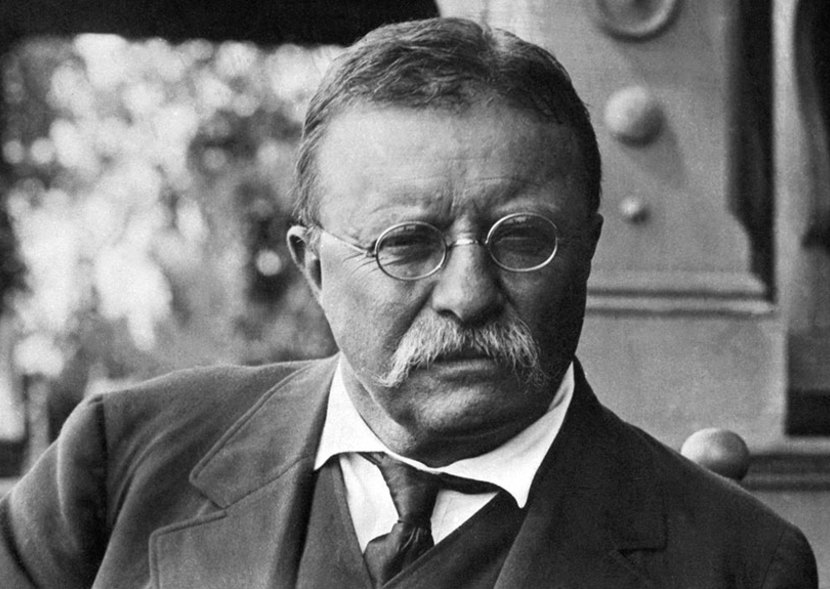
In closing, let me leave you with a quote from our 26th president, Teddy Roosevelt (and my personal favorite), which he delivered in 1912. It's just as true now (or maybe more so) and it was 112 years ago:

“In the first place, we should insist that if the immigrant who comes here in good faith becomes an American and assimilates himself to us, he shall be treated on an exact equality with everyone else, for it is an outrage to discriminate against any such man because of creed, or birthplace, or origin. But this is predicated upon the person's becoming in every facet an American, and nothing but an American...There can be no divided allegiance here. Any man who says he is an American, but something else also, isn't an American at all. We have room for but one flag, the American flag... We have room for but one language here, and that is the English language... and we have room for but one sole loyalty and that is a loyalty to the American people.”

If you enjoyed the article, please consider passing it along to others and don't forget to subscribe. It's free! Lastly please be sure to "like" us on whatever platform you use to read anotheropinionblog.com. It helps beat the algorithms and keeps our articles in circulation. Thank you!


Student says school told him to removeAmerican Flag from his truck


Colorado school is forced to let student keep Gadsden flagon his bag after teacher ordered him to remove it....


Teacher removed after Having The Class Pledge of Allegianceto the Pride Flag


Oregon teacher removes American flag from classroom, says it stands for 'violence, menace and intolerance'


The American Flag Was Banned at a South Carolina High School


GOP Lawmakers: Flying a Pride flag, a BLM flag, 'has no place inside our government buildings'


Saturday, April 17, 2021

The Babyboomers and Millennials: The Generational and Religious Divide


Last week, I wrote about the decline of organized religion in the U.S.. In addition last week's article looked at how Babyboomers, Millennials, and Gen Z, have influenced this decline which began in the 1960's. This week, we'll get a more specific, starting with the Babyboomers and continuing with the Millennials.

Babyboomers (1946 - 1964) were the product of a society which experienced, on the one hand, one of the most prosperous economies in the country's history, and on the other hand, perhaps America's most violable period.  It was a traditional childhood and youth in one sense but would ultimately led to violent rejection of traditional values, anti-war protests, clashes over race relations and civil rights, which, between 1955 and 1975 took the nation from one which trusted the government to one which had utter contempt for the government.

It was during the 1960's and early 1970's that many Boomers turned their back on organized religion, although there was a brief and intense resurgence as noted by the popularity of musicals like "Godspell" and "Jesus Christ Superstar" which attempted to find a new relevance and interpretation in religion. At the same time, "Fiddler on the Roof" attempted to revive Judaism's historic belief in its traditions and values while plays, like "Hair" and  "Oh! Calcutta!" explored society's changing morality, especially its sexual morals.

The same, or similar expression of disconnect found expression in music, art, and even TV shows like "All in the Family", "The Smother Brothers Comedy Hour", and Rowan and Martin's "Laugh In".  Even network comedies like "Get Smart", "Love American Style", and others carried a anti-establishment undertone. It's not surprising then to expect that religion too would be affected.

Rock groups like The Beatles, The Rolling Stones, among others  had a profound effect on that generation's view of organized religion (in a sense, their "message" came to replace that of the pulpit's).  Groups like these introduced society to the Eastern philosophies, mysticism, yoga, acupuncture, mantras, meditation, holistic and herbal medicine, and Swami whose names we couldn't pronounce.

In addition, first cohort Boomers (1946 - 1954), were largely Left leaning politically. They promoted an idealistic vision of socialism, and began viewing the Cold War as nothing more than propaganda war by Wall Street over who controlled what natural resources and allowed military bases. 

By the late 60's, Boomers started moving to communes as a socialistic experiment and to "get back to nature". They joined small collectives, growing their own food, sharing chores, making their own clothes. Those who, for whatever reason, weren't able to join in, however, started forming neighborhood associations and block watches to take care of their piece of the New American Dream

They also started petition drives and formed boycotts against "unfriendly" or "anti-nature" corporations which wanted to pave over the "bunny fields". From thus the concept of the "NIMBY"---Not In My Backyard was born and remains very much alive today. It was also the birth of consumer advocacy,citizen lobbyists, grassroots environmentalism, and community activism.

The Boomers involvement with protecting the environment, especially air and water, ultimately resulted in the passage of the Clean Air and Water Act and creation of the EPA (1970) just as they had done earlier with the passage of the Civil Rights Act in 1964, which was later expanded in Title VII to include other categories such as gender and age discrimination.

Meanwhile, the second cohort of Babyboomers (1955 - 1964), which embraced many of the same ideals as their older siblings, tended to be less optimistic. They had been more deeply affected by the outcome of the Vietnam War (in part, due to the nightly "body count" on the evening news) and America's failure to secure victory after a nearly 20 year war and the loss of almost 60,000  (mostly young) men and women amid a mountain of lies by the military, Congress, and the Presidency which just seem to grow.

Lies, such as Watergate, caused  Boomers, along with much of America, not just lost its faith in the government and it's institutions, but even its religion was affected as we headed into the 1980's thanks to the rise of the "Televangelist" and the political activism of the "Moral Majority". Sadly, we've never recovered and as I wrote last week, the trend has turned into a death spiral. 

Babyboomers, who rejected materialism in the 1960's went on to be the wealthiest generation up to date, giving us the "Go Go 80's", shopping malls, timeshares, and modern day "greed is good" robber barons like Carl Icahn, T. Boone Pickens, and Ivan Boesky.  Boomers have been behind trends such as healthy eating and fitness craze, disco and mullets (my apologies), McMansions, wine clubs, along with countless others. 

As they age, many of the things Boomers have clung on to will begin to fade (and not just vinyl records or eight tracks). We're talking about traditional brick and mortar businesses (even banks, schools, especially universities are at risk), cable only TV, home ownership, big cars, professional football and, perhaps, boxing (due to head injuries) along with baseball (which is cited by Millennials as "too slow"), and  organized religion just to name a few.

A study by the University of California at Santa Barbara's sociology department indicated that around 42% of Boomers dropped out of organized religion all together, yet 33% never dropped out. Those individuals tended to be conservative, fundamentalist, and were Reagan supporters. However, 25% are slowly returning. Of those, the majority are leaning to liberal and less traditional churches or religious institutions. Their biggest hang-ups? The need for less formality, pro-choice, and LGBT acceptance.

Today, about 88% of Babyboomers describe themselves as "believing in God" or being "pretty sure" God exists (God or some sort of "higher power"). 83% said that religion still had a positive impact on their life. The survey didn't define "religion" as being formal or the same as a less structured "faith system".


When it came to attending some sort of religious service during the year, 71% said they did (but only 38% was weekly). However, when asked if they attended some other religious program (such as bible study or prayer group), 57% said no. When asked if they prayed, 77% said they did; 61% daily and 16% weekly. When asked if they meditated, 56% said they did. Of that, 45% was weekly, while 42% didn't ("prayer" and "meditation" were viewed as being separate from each other)

The same poll asked Babyboomers if they felt a sense of inner peace or spiritual well being. Only 14% said no. 84% did, at least some of the time.  44% also said they didn't read religious scripture of any sort. Just 38% did so weekly while 17% did so occasionally. Of those who did, 35% thought it was literal word of God. 29% said it could be...maybe...or shouldn't take literally. 29% said it wasn't the literal word.

When asked about Heaven and Hell,  74% thought that Heaven existed in some form. 26% didn't think it existed or weren't convinced. As for Hell, 59% believed it existed. 41% didn't think there was a Hell or wasn't sure.  So, how does this compare to the Millennials?

Millennials (1980 - 1996) are, for the most part, the grandchildren of the Babyboomers. They seem to have inherited much of their grandparent's distrust of the government, institutions, and organized religion. However, Millennials are also more dismissive of Boomers (the common Millennial phrase "Ok Boomer" is usually intended to be a polite dismissal of something a Boomer has said or done). 

Many believe that the current social and financial hardships they face as a generation are the direct result of Babyboomers, which they view as greedy and inconsiderate (typical of the "Me Generation). Millennials are the first generation whose quality of life didn't meet or exceed their parents.

Boomers  benefited from their parent's level "living wage" jobs, lifelong employment, employer provided healthcare and retirement (which was often the result of unionization). While Boomers attended college at higher numbers than any previous generation, their debt level was relatively low, especially compared to Millennials, due to many programs which have since been discontinued, including the original GI Bill.

 Millennials are, as we all know, more diverse than Boomers, especially along race, sexual orientation, and ethnic lines, not just as a group, but among their personal relationships. As a group, they tend to have far fewer friends than their grandparents at the same age. They're also more likely to have more health issues like high blood pressure, diabetes, Crohn's, and depression. They are also more likely to have an addiction problems. Millennials are more likely to marry later in life and have fewer children whereas Boomers had more children. Boomers also tend to divorce more often, even as they age.

When it comes to the importance of religion, just 38% of Millennials said it's very important. 29% said it was only "somewhat" important while 33% wasn't impressed with it. 28% attend religious services regularly. 38% did so just a few times a year and 34% said they never do.

Asked about prayer, 36% said no thank you. 39% said they prayed daily while 35% did so occasionally. By contrast, 42% meditated (though only 27% did regularly) while 58% didn't.  When asked if they participated in some sort of religious activity, a whopping 62% said no. Only 18% did on a weekly basis. The remaining 20% was a "hit or miss". 

When asked if they read religious scripture, 53% said no. Only 25% did so weekly. When it came to believing what they read, it didn't fare much better. 20% thought it was the literal word of God while the remaining 80% weren't so sure, which included 44% who said it wasn't. Heaven and Hell? 68% believe in a Heaven; 32% not so much. As for Hell, 56% said yes but the rest didn't think so.

The downward trend of religion seems to have begun in the 1960's, although the seeds were certainly planted much earlier; likely the outgrowth of the private hell brought home by the veterans of WWII and Korea. Babyboomers were said to have been the most spoiled group in recent history; totally devoted to materialism in their childhood yet by their 20's embracing a idealistic form of socialism, and again returning to "conspicuous consumption" and corporate greed by their 30's. Now, once more, returning to the nomadic spiritualism of their youth as they enter their senior years.  

Perhaps it was an attempt by their elders to buy them things they themselves couldn't afford during the Great Depression or during the war years. A vain attempt to buy happiness which left a spiritual void in their children. Maybe the same could be said of the Millennials. They too were spoilt by their parents and grandparents, only to be left feeling hollow inside.  

Millennials have a sense of anger at what they see as misused consumption by their elders, leaving them in no mood to be lectured by a generation which seemed to have had it all and blew it. Now they find themselves adrift financially, politically, and spiritually.  However, with no societal anchor to be found with their parents, grandparents, or great grandparents, the deciding fate of organized religion and perhaps society itself lays with the Gen Z, the new kids on the generational block.


Religious composition of Baby Boomers


Generational cohort by religious group


Why Millennials distaste for Babyboomers is justified


Religious composition of younger Millennials


Saturday, July 25, 2020

Slavery and The Attempts to Rewrite Our History

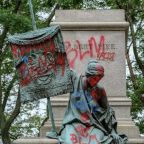
3,941 statues have been removed, destroyed or vandalized since the death of George Floyd thus far. Their assault is interesting in that every attack is an attempt to bring about social change. This always includes the demonization of the past and either its eventual co-opting with a new identity or its utter removal. What is true in politics is often true in religion as well.

Old gods, goddesses, and sacred spaces were typically converted into demons, symbols of evil, or places to avoid by the new faith. Often traditions, such as the celebration of the equinoxes, were co-opted and given a new meaning; Easter and the use of painted eggs and rabbits (symbols of fertility) or Christmas and the evergreen tree and candles (rebirth and the hope for the return of Spring).

Sacred spaces such as springs or groves, dedicated to some ancient spirit, often for healing, were rededicated as symbols of the new religion by taking the popular god or goddess and rededicating them as a "saint"; sometimes with a slight name change to make it less obvious. The Bible's snake or serpent is portrayed as the incarnation of Satan and evil. However, that same snake had been the symbol of knowledge, wisdom, and protection by the Mesopotamian religion which had preceded it.

In politics, the removal of old symbols of power or status, such as the Nazi swastika (which itself was an much older symbol of good fortune and eternity) or the toppling of the Imperial Russian Romanov statues and symbols along with the destruction of Russian Orthodox Churches were the symbolic replacement of one system and what it represented with new symbols signifying new loyalties. It is the substitution of one set of values and traditions with another.

However, as in religion, former political symbols are often co-opted into a representation of evil (like the swastika, the fasces or the Confederate flag) just as individuals whose stances oppose the new system are routinely demonized regardless of the facts. This is especially true when viewing the past by the standards or morality of the present time rather than the historical perspective of their time.

For instance, a minority of people criticize America's Founding Fathers because most of them owned slaves (14 of the 21 Founding Fathers owned slaves at some point in their lives). However, they are judging these individuals from the advantage of over 200 years of change. They measure them by the values and morals of our time, not theirs. The majority of the Founding Fathers viewed slavery as abhorrent, often freeing what slaves they had (note too that most were inherited, not purchased).

The use of slaves was seen as essential to the economy, especially in the South, whose economy was highly labor intensive. We were also in the midst of a war with the most powerful nation on the planet at the time. We trying to create a new country. While many of the Founding Fathers called for the abolishment of slavery as an institution, it would have meant the utter collapse of the Southern colonies, whose support was critical (in fact, it was in the Southern colonies where the colonialists were having the most success against the British).

If the Northern colonies had insisted on an end to institutional slavery, as a few did, the rebellion would have failed. The colonies would have remained British. As for the institution of slavery, rather than ending the importation of slaves in 1808 or dissolving the institution itself in 1863 through Lincoln's "Emancipation Proclamation", it's highly likely that it would have continued (slavery formerly ended in the U.S. in 1865 with the adoption of the 13th Amendment). As it was, when the U.S. formally ended the importation of slaves in 1808, not quite 32 years after formally obtaining our independence, it effectively killed slave trade as a business in the West.

The British, through the Royal African Company among others, were the world's largest slave trading nation although more Arabs were actually engaged in the slave trade than the British due to their proximity while African tribal leaders remained the central purveyors of slaves, without whom there would have been no slaves to sell.

Thus, as a result of our 1808 prohibition, the British Government began purchasing the freedom of all slaves within the empire through the 1833 Slave Abolition Act using money it had borrowed. The debt was paid through taxes by the British people and wasn't paid off until 2015. It's something the United States should have done as well, but couldn't.

The result was the bloodiest war this nation has ever engaged in with an estimated 655,000 causalities. That's more than in any other war experienced by this country. The financial cost of the war, while hard to accurately determine, was estimated at about $7 billion dollars in 1860 dollars. That works out to be around $75 billion in 2008 dollars, when the last study was done. So, would it have been cheaper if Lincoln had purchased and freed all the slaves, assuming that would have even been possible?

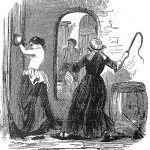
According to the 1860 census, there were some 3,950,000 slaves in the United States at that time. About 30% of the population owned any slaves at all (the average was three). Ownership varied greatly from state to state but most Southerners owned none. Just 4% of slave owners were the wealthy plantation owners we typically think of. Slave value was based on age, gender, and skill level. Nevertheless, based on 1860 data, the average slave was worth about $800 back then.

Again, using 1860 dollars, that works out to be $2.7 billion dollars. In today's money, that's roughly $72 billion dollars or around $3 billion cheaper than the war itself, which doesn't take into consideration the lives impacted, the effect on the economy or subsequent cost of rebuilding after the war. It also doesn't include the social costs of Reconstruction or the divisions which still remain.

The British Slave Abolition Act occurred nearly three decades before the Civil War began in 1861 (the war almost began in the 1850's but was averted through the "Great Compromise"; cobbled together by triumvirate of Daniel Webster, Henry Clay, and John C Calhoun). So, why didn't Lincoln simply use executive power to buy all the slaves?

In 1772, the British Chief Justice Lord William Mansfield ruled that slavery was inconsistent with English law. As a result, Britain began the legal process of ending slavery throughout the empire. In 1787, during the Constitutional Convention in Philadelphia, it was held that slavery was not a moral issue, but an economic one, thanks to the clout of powerful Southern delegates (notably South Carolina and Georgia). Attempts by various states to prohibit slavery were repeatedly overruled by lawyers for the powerful Board of Trade, located in London, which oversaw international trade.

It was during the convention that the infamous "three-fifths" clause was determined. It stated that slaves were worth only 3/5 of a person for taxation and representation purposes. This provided the legal framework for slavery to continue despite the desires of many delegates. It was also repeatedly emphasized by the Southern delegates that the purpose of the convention was the creation of a political union, not a moral one. Any "moral considerations" were to be left to the individual states. As an aside, let's remember too that the many of delegates, regardless of where they were from, wanted to create a relatively weak federal government which would have little power over the issues like slavery.

In addition, thanks in no small part to Eli Whitney's cotton gin, introduced in 1794, the South provided the economic resources for the emerging nation to compete on the world stage. "King Cotton" as it would become known went from producing 500,000 pounds in 1793 to 93 million pounds by 1810, representing half of all U.S. exports from 1820 to 1860 (it's worth noting that prior to the cotton gin, slavery, especially on a large scale, was dying due to the high cost).

Northern industrialists profited handsomely on Southern exports to the North, especially cotton, corn, wheat, tobacco, rice, and other warm climate crops, which were processed and sold overseas (most notably to Great Britain). There was every financial incentive for slavery, which was at the heart of the South's economic engine, to continue. Nevertheless, the slaves were freed.

As of 1865, about 88% of all blacks in America were slaves. Of the remaining 12%, they were either freed black men and women, mostly likely but not exclusively---living either in the industrial North or in Indian Territory out West. A small percentage were actually slave owners themselves (as hard as that is to believe). There are approximately 37,144,530 non-Hispanic blacks currently living in America (while the overall black population in the U.S. is on the decline--currently second behind Hispanics---the largest growth is from Hispanic blacks from places like Brazil and the Caribbean islands).

The best estimate among historians and sociologists is that about 60% of all non-Hispanic blacks can trace their ancestry to a slave living in America at some point prior to 1865. For most people their slave era ancestor was somewhere between six and eight generations ago. So, it's worth noting that at seven generations for instance, for every 254 people live today, they share one common ancestor. Thus, around 254 blacks today share a single black slave ancestor. If we were to award reparations (which I am strongly opposed to), is that the formula we should use? Just a thought.

So, what was Lincoln's plan for all the freed slaves? Early on, Abraham Lincoln repeatedly stated that he didn't want to get involved in the slavery issue, and would leave it alone for the time being if it meant preserving the union. It wasn't until 1862/63 that his position changed. He knew he had to cut the legs from under the South's economic engine, and that meant ending slavery. It should be noted that his famous Emancipation Proclamation applied exclusively to the states which had left the union to form the independent Confederate States of America. Thus, technically, it had no legal standing in any of the Confederates States and Lincoln knew it.

Although Lincoln was assassinated in 1865, before he could start taking any concrete steps regarding the disposition of the former slaves, it appears that the "Great Emancipator" as he would come to be known subscribed to the notion of "colonization". Specifically, it meant relocating former slaves to Latin America, the Caribbean , or to the newly created nation of Liberia. Liberia was formed in 1820 by former slaves, most of whom came from the U.S.

In 1861, Lincoln has initially asked Congress for funds to do just that. However, Congress declined, citing the expense. From that point forward, Lincoln began to solicit funds wherever he could to help with this project. It should be pointed out, that Lincoln strictly favored voluntary colonization and not its forcible relocation of anyone. It's interesting to contemplate what American would have been like had Lincoln lived and been able to move forward on his plan isn't it?

There are many facets of slavery to consider. It did not originate in America and the Founding Fathers did what they could given the political, social and economic realities of their time while fighting a war against the most powerful nation on the planet. Lincoln too was constrained by the economic, social and political realities of his age not to mention a divided nation at war.

Today, there are many misguided individuals and groups attempting to assign blame where it doesn't exist. They are attempting to judge these individuals through the lenses of the 21st Century. They are, in effect, trying to rewrite history to fit a narrative which has little to nothing to do with actual history. We've witnessed a great many changes since 1776, 1787, or even 1865. The great majority of them for good, especially for minorities. Few minorities from history can say that.


Slavery in the Constitutional Convention


Founding Fathers and Slaveholders


Facing facts About Lincoln and his views on slavery


A List of statues across the U.S. toppled, vandalized, or officially removed amid protests


Saturday, June 27, 2020

Some Thoughts on Reparations and Equality


As I stated in my previous article, the concept of "reparations" presupposes some injury or harm incurred as a result of inappropriate action taken by another party. In recent decades, the descendents of American slaves have been asking and demanding that they be compensated for the enslavement and treatment of their distant ancestors.

There's no question that the institution of slavery was and remains inhuman and barbaric, even though it continues today; mainly by Muslim terrorist groups who capture and sell mostly young Assyrian or Coptic Christian or Yazidi girls from Africa or the Middle East as sex slaves yet few react.

However, the Civil War in America ended in 1865, which ended 155 years ago. For most, that would be their 2x or 3x great grandparents. At what point is it simply too far back to matter? How would this be imposed? After all, not every black in America at the time was a slave. In fact, a few even owned slaves themselves. What about those who were slaves, but not in the United States or who came here after 1865? Then, what about children of mixed racial ancestry, are they entitled to some share of reparations? Does it matter if it happened 200 years ago or just last year?

What about Native Americans? They were not only held as slaves, but would often take captives as slaves---white, black, Hispanic, and even Asian. Should they receive compensated or is it a wash? We mustn't forget that some whites were enslaved as well. I'm not talking about indentured servitude which was a form type of slavery but one of limited duration with some type of compensation at the end of it, which was something slaves didn't get.

There was a small class of Europeans who were enslaved in America, often due to their inability to speak the language or understand the laws. Many remained that way for their entire lives, or for a few, until they could escape. Should they receive some reparation as well? Then there are Hispanics who also owned slaves (notably mostly Native Americans, but blacks and even Asians as well). Are they exempt, not because of the injustice was similar but because their skin is wrong color?

To muddy up the waters even more, what about those slaves who left no direct descendents? How are they to be remembered? What about those who were enslaved for a period, and then freed (often given land and livestock), are their descendents entitled to something for the time of their enslavement or does their freedom and land offset that?

Finally, how do we prove that someone is descended from an actual slave? Just being black for instance is not proof in itself that one is a descendant of African slaves. We also need to decide at what point culpability should begin in order to decide the degree of financial responsibility. We obviously want to make sure those responsible for slavery are the ones who ultimately pay for it right? That would be both the legal and moral thing to do.

In what would become the United States, the Spanish, French, Portuguese, Dutch, and English all had settlements here, and all were engaged in the slave trade (especially the Spanish who enslaved just about anyone who wasn't Spanish). Therefore, should those whose slave ancestry extended back to before the founding of the U.S. in 1776 look to one of those countries for compensation or should the U.S. Government do so on their behalf? Perhaps since so many countries are involved it should be taken up by the United Nations.

Of course, that brings up a technicality. For those whose ancestors were before 1776 and remained enslaved after that date, who would be primarily responsible? Those under whose jurisdiction they were originally enslaved or whose jurisdiction they became after the founding of the United States? Perhaps it should be split, but at what percentage? Anyway, the U.S. forbid the importation of slaves after 1807. So, if the ancestor came here between 1776 and 1807, the U.S. would obviously be solely responsible.

Since we're interested in culpability, let's not stop there. African slaves acquired by the slave traders obviously from Africa, but how? African tribes were in near constant war with neighboring tribes. Anyone captured was usually enslaved, either for use by the victor or sold off to another tribe (on some occasions, the chief would enslave some local troublemaker or someone who had something he wanted).

With the arrival of Europeans, a new customer was added to the mix. The tribal chief would bring captured individuals to a port where they would be inspected and purchased, which turned into a highly profitable business. In addition, Arab merchants were active purveyors of slaves; buying and selling not just Africans, but Asians, and even any Europeans they managed to capture off ships. Among some the practice still continues. Muslim Arabs have been taking Africans as slaves since at least 652 AD.

Of those brought to America, practically all came from just two regions. The first was Senegambia, which is the area between the Senegal and Gambia rivers which comprises today's Senegal, Gambia, Mali, and Guinea-Bissau. This area alone counted for just half of all slaves brought to this country. The second area was in the west-central Africa making up the countries of Angola, Gabon, and the Democratic Republic of the Congo and areas around the Congo River.

Finally, the rest came from the "Slave Coast" of today's Ghana and Ivory Coast. A small percentage originated from an inlet called the "Bight of Biafra" on the Nigeria and Cameroon coast. It should be pointed out that according to most historians, only 3.5% of all slaves sold were brought to North America. The bulk went the Caribbean (notably Jamaica and the Lesser Antilles), central and south America to work alongside native populations.

So, since these are now nations, who were actively and willingly engaged in the slave trade business (in fact, they were pivotal to its success), shouldn't they be responsible for the lion's share of any reparations? What about the Muslim terrorists who continue the practice? How do we deal with that? And surely we mustn't forget all the institutional churches or their religious orders who owned slaves. They shouldn't be allowed to hide behind their altars.

Now we need to give some thought to individual responsibility. Since many people (erroneously) believe the Civil War was all about the issue of slavery, how are we going to treat those who fought for the North and the South? Are those whose ancestors were Confederates to pay a higher percentage while those whose ancestors served in the Union to pay less? What if the Confederate ancestor owned no slaves as the vast majority did (just under 4% of all Southerners at the time owned any slaves whatsoever), are they equally responsible? What if a Union ancestor did own slaves, as many from the border states of Maryland, Kentucky, and Missouri did?

What compensation or offset should anyone whose ancestor died for the North receive? After all, "if" the war was all about slavery and they gave their life or was wounded, shouldn't that count for something? What about Quakers? Many of my ancestors were Quakers, and they were the most staunch of Abolitionists and who made up most of the Underground Railroad. Without their influence, slavery may never have ended.

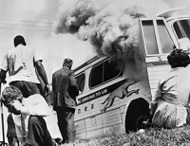
Should some consideration be given to those whose more recent ancestors were involved in the education of former slaves or who, in defiance of local norms, risked their livelihoods and even their lives to employ blacks, Native Americans, Asians, or migrant Hispanic sharecroppers? What about those who participated in the Civil Rights Movement such as the "Freedom Riders", or worked to bring about equal housing, equal employment, ending poll taxes (all of which affected poor whites as well)? Several of the Freedom Riders were beaten up and at least three were murdered.

My questions aren't intended to be taken totally as sarcasm or rhetorical. They are intended to point out that this is a highly complex issue with numerous factors to consider. 75% of blacks believe they are entitled to reparations while 85% of whiles strongly oppose it. 42% of Hispanics said they would support some type of reparations. Of course, those on the Left tend to support some form of reparation while those on the Right oppose it, and many on both sides oppose any form of cash compensation.

So, how much are we talking about anyway? At this point, no one really knows, but estimates have put the figure as high as $15 billion up to $5 trillion dollars. In a time where the federal government is $26 trillion dollars in debt (which takes about 81% of our GDP), and with most states as well as local governments broke, that seems unlikely. So, what other solutions are there? Tax credits? The government needs every tax dollar it can get. Some have proposed grants for higher education.

However, we need to consider the fact that there are already numerous scholarships and grants which are race based (whites are excluded). The United Negro College Fund is one such organization along with the Congressional Black Caucus Fund, while hundreds of colleges and universities offer race based programs, including reduced tuition. In fact, there are literally dozens of such programs making millions of dollars available. There are also 37 black only colleges and universities. Something no other race is afforded.

There have been countless government programs since 1865 which have empowered not just former black slaves, but all minorities and those of low income. The same goes for housing, medical care, daycare, employment, and so forth across the social network. The opportunities are there for those willing to take advantage of them.

What neither the government nor society can do, however, is force individuals to take advantage of the opportunities given to them. They can't keep individuals from destroying property or neighborhoods, especially when they don't have a vested interested in it; the taxpayers do. They can't make people learn, especially when high academic achievement is disparaged as "acting white".

They can't make people take jobs, even though they are given preference due to their race and not their qualifications, and they certainly can't make them either do their job, let alone excel at it since they assume that race or some other qualifier provides a form of disciplinary insulation. In lieu of that, shouldn't everyone be treated and measured according to their abilities and performance instead?

Reparations are about compensation for an injury. When that injury is as old as Mankind, what is just? How do we balance that with the fact that at one time or another, every people on the planet has been slave and slave owner. No one is without guilt. I think the best form of reparation is equality and insuring that it will never happen again to anyone or any group. In America, and in much of the world, that's been done. It's not perfect. Nothing usually is, but it's a good start, and it will take all of us working together to make it better.


What part of Africa did most slaves come from?


Where Did African Slaves Come From And Where Did They Go?

2020 Democrats have started to clash over slavery reparations, but new poll shows most liberal support the idea


Most oppose reparations for slavery: poll


Saturday, February 17, 2018

Parkland High School: Another Mass Shooting. Another Series of Excuses


Another mass shooting. More innocent lives taken, This time is was ordinary school kids. Young men and women, boys and girls really, just starting their lives. Again, it's the ole story about people "suspected" this or that individual was up to something, or that there were warning signs and yet no body acted. In this case, it seems that his classmates all knew. So did many of his teachers and apparently the neighbors too; Oh, and the police apparently were familiar with this kid but failed to do a follow up. That's the beauty of hindsight. It's always so crystal clear, yet it's the here and now that we always seem to have trouble with.

Of course, there are always the chatterboxes on TV or the radio with their "fill-in-the-blank" analysis (there's nothing like "instant expertise". Just add crisis--real or imitation--- and stir the pot vigorously). Naturally, you have those wanting to blame the weapon, as if it's the incarnation of evil and possesses the hapless soul of whoever touches it. If only we ban all guns, all the carnage will all magically disappear, like the knife attacks in China, machete attacks in the UK, or the recent rash of attacks using trucks and vans in France and Germany, and the countless bombings! I suppose a fork, or hammer, or rock, or pointy stick will do the job just as well don't you?

Mass shootings have become almost the norm, going back to Columbine High School, which is considered the "standard" by those who study such things, including would-be shooters themselves. More recently we had the mass shooting in Las Vegas, of which we still know nothing (I guess officials are still having trouble coming up with a believable narrative given the number of times they've changed their story). Now we have a new mass murderer. This time the suspect in question, Nikolas Cruz, who was allegedly on some sort of behavior modification drugs (as were the others we're told), had been expelled and sought out revenge for the dastardly deed! I guess he couldn't put on his big boy pants and toughed it out huh?

So Cruz plotted his revenge down to the nth degree, from his choice of weapon, an AR-15 semi-automation rifle, which because of its designed, is often misidentified as an "assault rifle"; presumably for sensationalism effect, to his means of transport (an Uber driver), to the appropriate time his cold and cowardly rampage would start. The thing, again, that I find so interesting is how unsurprised everyone was when the shooter was identified.

When I was in school, way back in the 1960's and 1970's, some thought the world was spinning apart. America was a divided nation. There was the Civil Rights Movement along with the Watts and Harlem riots among others, the Vietnam War and with it, the anti-war protests. There were the sit-ins and campus occupations, "love-ins", and mass concerts. There was the Chicago Police Riot and the murders at Kent State. There was the "La Causa" and the United Farm Workers led by Cesar Chavez.

With all this came church fire bombings (and several deaths), the attacks on the "Freedom Riders" (and the murders of three young activists by the KKK in the deep South), the assassinations of John and Bobby Kennedy, Martin Luther King Jr, and Malcolm X. We had international and domestic terrorist groups. Some were mainly political, like the PLO, Black September, the Baader-Meinhof Group (aka the Red Army Faction), the Weathermen, the American Indian Movement, and the SLA. Some were politically and racially driven like the Black Panthers, the KKK and Neo-Nazis. A few were more socially oriented like the Feminist (or "Women's Lib") Movement, Gay Pride, or the senior's activist group, the "Gray Panthers".

Despite all of this, I don't recall any mass shootings (with the possible exception of Kent State, and that was by the Ohio National Guard). I recall seeing a lot of posturing by groups brandishing rifles and pistols. There were millions of recently returned veterans; many of whom feeling rejected and angry. Some of these returning veterans were suffering from some form of PTSD (Post Traumatic Shock Disorder). All were highly trained to fight and kill, and yet there were no public mass shootings. Of course, there were a number of pretty brutal beatings by various police departments as a result of some protest, but no mass shootings, and certainly none involving school children. Why is that you think?

Personally, I think there are a number of reasons, but the most important of which was discipline, be it in school or at home. First off, when you went to school, you were expected to learn. That meant doing what the teachers asked you to do. It also meant respecting your teachers, not ignoring them; not giving them any lip; not threatening them and absolutely not trying to start a fight with them. At the same time, it also meant respecting the students and certainly not teachers having sex with them. That's the wrong kind of education!

In addition, students respected each other enough not to disrupt class. If you didn't want to learn, fine. Just don't try to drag others down with you. When you failed to do as asked you were sent to the principal's office. Usually this was bad news because it often meant that your parents were notified (more on that in a moment). At other times, it meant a whoop on your behind by the gym teacher with their custom made paddle, and that generally got your attention (and it also meant that your parents were definitely going to be notified).

In most cases, nothing the school could do was as bad as having to face your parents when you got home. The punishment was often more psychological and involved things like being grounded (which meant no going outside) and/or no friends over, no TV or phone access. Sometimes, it meant sentencing you to your room, etc. In some cases it meant some form of corporal punishment (there were, sadly, also instances of rather brutal beatings by a few which would be worthy of jail time today). Worse of all, I think, for many individuals it was the disappointed expressions by their parents. Of course, there was those who simply didn't care which seems to be near epidemic these days.

Nevertheless, respect for others was expected from and by everyone, and along with that came discipline. I am not talking about lockstep conformity, but order and following school guidelines for behavior. Because everyone showed others respect, and there was discipline in the classroom, there were rarely fights in school or on campus. There was no need for metal detectors. No one was bringing guns. Kids weren't trying to cut off the hands of other students in shop class. No one was attacking the teachers or running amuck, and yet guns and other weapons were readily available (and with far less legal restrictions).

Since those days, discipline has gone out of the schools. Attacking a fellow student or teacher may mean getting expelled, which is simply an early vacation. Disrupting class means that everyone will be just as likely to fail the test as you are. In fact, education has been repeatedly dumbed down across the board to accommodate these students. I suppose someone figured out that if the material was to far over the head of some student, they'd get frustrated and decide to act out and keep anyone from learning, so just dumb it down. Just as gangs run the prisons, petty thugs and Dillinger wannabes try to run the schools. At least, that's sure how it appears to me!

At home, parents have largely all but stopped parenting. They've ceded control of their children to the State. Meanwhile, there is little or no respect for anyone; not to teachers, to parents, to authorities, or to the public in general. There are no consequences for their actions. Many grow up with a sense of entitlement; that somehow the world owes them just for breathing. Instead of discipline, there is simply medication to control their behavior, and when they get older, medication turns into drugs---be it prescription or street.

To make matters worse, most of these kids walk or sit around with their face in a "Smartphone" or on a laptop. They live increasingly in a digital world; one which includes very violent games that desensitizes players to scenes of carnage and death (and worse, believe there is a reset button which brings "people" back to life...as if nothing ever happened). These children (and adults) lose or never develop social skills and the ability to interact with other individuals. They don't know history. They don't know ethics or civics. They don't understand how to rationally discuss topics, especially with those who may disagree with them.

So what do they do? How do they react? They panic. They act out with violence. They try to disrupt what's going on around them because they can't cope with different opinions. They protest...be at school, at an event...or on streets and highways (then they get upset because people don't stop and coddle their "outrage"). They demand no "free speech" or open forums (seriously). Is it any wonder some of these same individuals become violent? It's what they've been conditioned by society to do.

As for the argument about guns and the Second Amendment, I've heard people argue that the Founders didn't intend for ordinary citizens to have guns, except for hunting and self protection in the wilds. Now that we've become "civilized", and can buy our food at the local supermarket, who needs guns? As for self protection, we have the police. We have pepper spray. We have whistles. Besides, perhaps they just need money or whatever for their drug or booze addiction. Perhaps they had a crappy childhood. Maybe their religion tells them it's ok and we're suppose to go accept it. If we just give them whatever they want, then maybe they won't murder us or brutalize us...too badly. Yeah, right.

You and I have a inherent right to protect ourselves, our possessions, and the lives of others if threatened with serious harm. We do not have a duty to forfeit any of these, even at the risk of terminating the bad guy's life. That is, of course, my own opinion, but I won't hesitate for a fraction of a second. If, on the other hand, you're fine with whatever happens, be it being robbed of your money, your possessions, your life or that of your family and/or friends, that's your call.
If you are a woman and you're ok with being raped and/or beaten to a pulp, that's also your call...but don't start whining about it or demanding that others do the same thing just to make yourself feel better about your decision. As the old saying goes, "if guns are criminalized, only criminals will have guns" is absolutely true. Don't be naive enough to expect the bad guys to turn in their guns. They will always have what they want and what they need. If you're unarmed, then so much the better for them.

Also, our Founding Fathers understood that government---all government---was not to be trusted. Given human nature, power tends to corrupt no matter how good the intentions. As Lord Acton once said, "power corrupts, and absolute power corrupts absolutely". It was the absence of guns which made the despots of modern Europe, Africa, Latin America, and Asia possible. Just like in distant past, it often was the absence of adequate weapons which made tyrants possible. Our Founding Fathers wanted us to have the ability not just to hunt, or defend ourselves from the lowlifes of the world, but most of all, from government (perhaps the lowest of the lowlifes).

Some may argue that we have the police and/or military for that. Well yeah...and who do you think they work for? The government. Very few (in the beginning) will stand with the people in the event of a revolt or revolution, and while each take an oath to uphold the Constitution, also included in that oath is a duty to follow the orders given to them. It won't be easy for many to decide which of the two they should follow. America, as most of you all should already know, is not the country it was intended to be. We're an Oligarchy; a plutocracy with an ever growing police state mentality. The notion of a democratic Constitutional Republic is long gone. It's just not reality not matter how badly we want to believe. Americans may find that the day to restore the intent of the Founders is closer than they think.

On a personal note, I can understand the need to curtail full auto weapons (which an AR-15 is not) without a special permit (and even then, they must be keep at a secure site such as a police station or armory), as well as restricting body armor (not to many bears or moose shoot back), full auto conversion kits and "bump stocks", armor piercing shells, again, without certain restrictions and permits. As it now stands, new guns must be registered. This includes a background check for any criminal or mental health issues. However, as we've seen, too often the system fails at this stage and those who shouldn't have a gun get one.

Until a full record check can be completed, no weapon should ever leave the store. The same goes with pre-owned rifles and pistols. This may hurt used gun dealers but it would add another layer of safety. Perhaps dealers of used guns can work out arrangements with local gun store owners to store the item with them until the background check is completed (alternatively, with the local armory or police since they're doing part of the background check anyway). However, undermining our 2nd Amendment is the wrong thing to do, and may lead down a path we don't want to tread. Even without guns, people will find other lethal means to do harm. Meanwhile, let's start restoring some discipline back into the schools and respect back into society.


Parkland high school shooting: At least 17 killed, suspect in custody, Florida sheriff says


Knife-wielding attackers kills 29, injure 130 at China train station


Another Machete Attack in the UK


Attack in Paris