Showing posts with label Generation Z. Show all posts

Saturday, April 17, 2021

The Babyboomers and Millennials: The Generational and Religious Divide


Last week, I wrote about the decline of organized religion in the U.S.. In addition last week's article looked at how Babyboomers, Millennials, and Gen Z, have influenced this decline which began in the 1960's. This week, we'll get a more specific, starting with the Babyboomers and continuing with the Millennials.

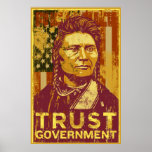
Babyboomers (1946 - 1964) were the product of a society which experienced, on the one hand, one of the most prosperous economies in the country's history, and on the other hand, perhaps America's most violable period.  It was a traditional childhood and youth in one sense but would ultimately led to violent rejection of traditional values, anti-war protests, clashes over race relations and civil rights, which, between 1955 and 1975 took the nation from one which trusted the government to one which had utter contempt for the government.

It was during the 1960's and early 1970's that many Boomers turned their back on organized religion, although there was a brief and intense resurgence as noted by the popularity of musicals like "Godspell" and "Jesus Christ Superstar" which attempted to find a new relevance and interpretation in religion. At the same time, "Fiddler on the Roof" attempted to revive Judaism's historic belief in its traditions and values while plays, like "Hair" and  "Oh! Calcutta!" explored society's changing morality, especially its sexual morals.

The same, or similar expression of disconnect found expression in music, art, and even TV shows like "All in the Family", "The Smother Brothers Comedy Hour", and Rowan and Martin's "Laugh In".  Even network comedies like "Get Smart", "Love American Style", and others carried a anti-establishment undertone. It's not surprising then to expect that religion too would be affected.

Rock groups like The Beatles, The Rolling Stones, among others  had a profound effect on that generation's view of organized religion (in a sense, their "message" came to replace that of the pulpit's).  Groups like these introduced society to the Eastern philosophies, mysticism, yoga, acupuncture, mantras, meditation, holistic and herbal medicine, and Swami whose names we couldn't pronounce.

In addition, first cohort Boomers (1946 - 1954), were largely Left leaning politically. They promoted an idealistic vision of socialism, and began viewing the Cold War as nothing more than propaganda war by Wall Street over who controlled what natural resources and allowed military bases. 

By the late 60's, Boomers started moving to communes as a socialistic experiment and to "get back to nature". They joined small collectives, growing their own food, sharing chores, making their own clothes. Those who, for whatever reason, weren't able to join in, however, started forming neighborhood associations and block watches to take care of their piece of the New American Dream

They also started petition drives and formed boycotts against "unfriendly" or "anti-nature" corporations which wanted to pave over the "bunny fields". From thus the concept of the "NIMBY"---Not In My Backyard was born and remains very much alive today. It was also the birth of consumer advocacy,citizen lobbyists, grassroots environmentalism, and community activism.

The Boomers involvement with protecting the environment, especially air and water, ultimately resulted in the passage of the Clean Air and Water Act and creation of the EPA (1970) just as they had done earlier with the passage of the Civil Rights Act in 1964, which was later expanded in Title VII to include other categories such as gender and age discrimination.

Meanwhile, the second cohort of Babyboomers (1955 - 1964), which embraced many of the same ideals as their older siblings, tended to be less optimistic. They had been more deeply affected by the outcome of the Vietnam War (in part, due to the nightly "body count" on the evening news) and America's failure to secure victory after a nearly 20 year war and the loss of almost 60,000  (mostly young) men and women amid a mountain of lies by the military, Congress, and the Presidency which just seem to grow.

Lies, such as Watergate, caused  Boomers, along with much of America, not just lost its faith in the government and it's institutions, but even its religion was affected as we headed into the 1980's thanks to the rise of the "Televangelist" and the political activism of the "Moral Majority". Sadly, we've never recovered and as I wrote last week, the trend has turned into a death spiral. 

Babyboomers, who rejected materialism in the 1960's went on to be the wealthiest generation up to date, giving us the "Go Go 80's", shopping malls, timeshares, and modern day "greed is good" robber barons like Carl Icahn, T. Boone Pickens, and Ivan Boesky.  Boomers have been behind trends such as healthy eating and fitness craze, disco and mullets (my apologies), McMansions, wine clubs, along with countless others. 

As they age, many of the things Boomers have clung on to will begin to fade (and not just vinyl records or eight tracks). We're talking about traditional brick and mortar businesses (even banks, schools, especially universities are at risk), cable only TV, home ownership, big cars, professional football and, perhaps, boxing (due to head injuries) along with baseball (which is cited by Millennials as "too slow"), and  organized religion just to name a few.

A study by the University of California at Santa Barbara's sociology department indicated that around 42% of Boomers dropped out of organized religion all together, yet 33% never dropped out. Those individuals tended to be conservative, fundamentalist, and were Reagan supporters. However, 25% are slowly returning. Of those, the majority are leaning to liberal and less traditional churches or religious institutions. Their biggest hang-ups? The need for less formality, pro-choice, and LGBT acceptance.

Today, about 88% of Babyboomers describe themselves as "believing in God" or being "pretty sure" God exists (God or some sort of "higher power"). 83% said that religion still had a positive impact on their life. The survey didn't define "religion" as being formal or the same as a less structured "faith system".


When it came to attending some sort of religious service during the year, 71% said they did (but only 38% was weekly). However, when asked if they attended some other religious program (such as bible study or prayer group), 57% said no. When asked if they prayed, 77% said they did; 61% daily and 16% weekly. When asked if they meditated, 56% said they did. Of that, 45% was weekly, while 42% didn't ("prayer" and "meditation" were viewed as being separate from each other)

The same poll asked Babyboomers if they felt a sense of inner peace or spiritual well being. Only 14% said no. 84% did, at least some of the time.  44% also said they didn't read religious scripture of any sort. Just 38% did so weekly while 17% did so occasionally. Of those who did, 35% thought it was literal word of God. 29% said it could be...maybe...or shouldn't take literally. 29% said it wasn't the literal word.

When asked about Heaven and Hell,  74% thought that Heaven existed in some form. 26% didn't think it existed or weren't convinced. As for Hell, 59% believed it existed. 41% didn't think there was a Hell or wasn't sure.  So, how does this compare to the Millennials?

Millennials (1980 - 1996) are, for the most part, the grandchildren of the Babyboomers. They seem to have inherited much of their grandparent's distrust of the government, institutions, and organized religion. However, Millennials are also more dismissive of Boomers (the common Millennial phrase "Ok Boomer" is usually intended to be a polite dismissal of something a Boomer has said or done). 

Many believe that the current social and financial hardships they face as a generation are the direct result of Babyboomers, which they view as greedy and inconsiderate (typical of the "Me Generation). Millennials are the first generation whose quality of life didn't meet or exceed their parents.

Boomers  benefited from their parent's level "living wage" jobs, lifelong employment, employer provided healthcare and retirement (which was often the result of unionization). While Boomers attended college at higher numbers than any previous generation, their debt level was relatively low, especially compared to Millennials, due to many programs which have since been discontinued, including the original GI Bill.

 Millennials are, as we all know, more diverse than Boomers, especially along race, sexual orientation, and ethnic lines, not just as a group, but among their personal relationships. As a group, they tend to have far fewer friends than their grandparents at the same age. They're also more likely to have more health issues like high blood pressure, diabetes, Crohn's, and depression. They are also more likely to have an addiction problems. Millennials are more likely to marry later in life and have fewer children whereas Boomers had more children. Boomers also tend to divorce more often, even as they age.

When it comes to the importance of religion, just 38% of Millennials said it's very important. 29% said it was only "somewhat" important while 33% wasn't impressed with it. 28% attend religious services regularly. 38% did so just a few times a year and 34% said they never do.

Asked about prayer, 36% said no thank you. 39% said they prayed daily while 35% did so occasionally. By contrast, 42% meditated (though only 27% did regularly) while 58% didn't.  When asked if they participated in some sort of religious activity, a whopping 62% said no. Only 18% did on a weekly basis. The remaining 20% was a "hit or miss". 

When asked if they read religious scripture, 53% said no. Only 25% did so weekly. When it came to believing what they read, it didn't fare much better. 20% thought it was the literal word of God while the remaining 80% weren't so sure, which included 44% who said it wasn't. Heaven and Hell? 68% believe in a Heaven; 32% not so much. As for Hell, 56% said yes but the rest didn't think so.
The downward trend of religion seems to have begun in the 1960's, although the seeds were certainly planted much earlier; likely the outgrowth of the private hell brought home by the veterans of WWII and Korea. Babyboomers were said to have been the most spoiled group in recent history; totally devoted to materialism in their childhood yet by their 20's embracing a idealistic form of socialism, and again returning to "conspicuous consumption" and corporate greed by their 30's. Now, once more, returning to the nomadic spiritualism of their youth as they enter their senior years.  

Perhaps it was an attempt by their elders to buy them things they themselves couldn't afford during the Great Depression or during the war years. A vain attempt to buy happiness which left a spiritual void in their children. Maybe the same could be said of the Millennials. They too were spoilt by their parents and grandparents, only to be left feeling hollow inside.  

Millennials have a sense of anger at what they see as misused consumption by their elders, leaving them in no mood to be lectured by a generation which seemed to have had it all and blew it. Now they find themselves adrift financially, politically, and spiritually.  However, with no societal anchor to be found with their parents, grandparents, or great grandparents, the deciding fate of organized religion and perhaps society itself lays with the Gen Z, the new kids on the generational block.


Religious composition of Baby Boomers


Generational cohort by religious group


Why Millennials distaste for Babyboomers is justified


Religious composition of younger Millennials


Saturday, July 20, 2019

Censoring Gender Pronouns: No Disrespect Intended


Sometimes I just have to sit back and marvel at the level of stupidity some people engage in. Take for instance a recent measure Berkeley City Councilmember Rigel Robinson and City Manager, Dee Williams-Riley, introduced on July 16th of this year. The Councilmember proposed eliminating all gender related terms and descriptions. That means no more "he", "she", "him" or "her" pronouns, but wait...there's more.

Also included with the proposal was a list of terms that he wants removed from all government documentation and usage. For instance, terms like "manhole", "policeman", "chairman", and "manpower" are now to become "maintenance cover", "police officer", "chairperson", and "human effort" or "human power". By the way, In some locales, there are proposals to fine you if you don't comply with these changes.

In addition, words like "salesman", "craftsman" and "journeyman" are to be replaced with "salesperson", "craftsperson", and "journeyperson". "Maiden" (as in maiden name) is now going to be "family name", which isn't too bad I suppose. However, "fraternity" and "sorority" are now going to "social group", but if it pertains to college clubs, then it will be "Collegiate Greek system residence". "Heirs" are going to become "beneficiaries" while "watchmen" become "guards", but there's more silliness to come!

"Men and women" are to be removed and replaced with "people". "Master" is now "Skipper", "Captain", or "central". The term "sportsmen" is out. In its place is "hunter" (in California, I'm sure the term "brute" or "animal abuser" can be substituted). Both "sister" and "brother" will become "sibling". Out too will be the use of phrases such as "sir" and "ma'am" which won't play here in the South.

You will be expected to ask beforehand how someone wants to be addresses such as "Mr.", "Mrs.", "Miss" or perhaps "Moon Visitor 12" since undoubtedly someone is not going to want to be limited to the mere two gender roles nature has bestowed on us (I believe we're up to 74 "genders" now). People will be identified by their non-gender specific roles in documents rather than "he" or "she".

I should point out that while this ordinance was introduced in a city council meeting, the notion of using non-gender related terms is spreading to businesses. Signs are being posted asking patrons not to refer to someone as "Sir" or "Miss" or using a gender specific pronoun in calling someone (I suppose adjectives such as "fat son of a bitch" which uses two gender defined terms while "damn bitch", or "lazy bastard", which use one each, are still perfectly acceptable).

Given how tied we are to the commercial world and all the products we buy, some items are going to have to change. For instance, Gordon's Seafood is going to have to lose the beaded fisherman while StarKist Tuna will have to change the name of its mascot, "Charlie" to something gender neutral. I suppose the same will hold for "Uncle Ben" and "Aunt Jemima". "Mr. Clean" will have to become "Gender Free Clean". Gone will be "Mr. Coffee" as well, along with a long list of other gender specific products.

Then there's the matter of entertainment. With today's recycled ideas, particularly comic book heroes, it looks like there needs to be a lot of changes starting with "He-Man", "She-Ra", "Batman", Batgirl", "Wonder Woman", "Superman" and "Supergirl", and "Hellboy". We need to do away with "Ant-man", "Aquaman", the "Scarlet Witch", the "Watchmen", "Ironman", and especially the "X-Men" which is quite gender specific.

However, to their credit, the folks over at Marvel must have seen this coming. They recently took the progressive step of taking one the most uber-macho Norse gods, Thor, who was also a super popular superhero, and turned him into a female. That's right. Odin's son was given a "gender reassignment" by the good folks at Marvel. How well this is going to play remains to be seen, but it's not expected to go over too well. No word yet on Dr. Jane Foster. Meanwhile, we await the introduction of gender neutral and transgendered super heroes.

Of course, if you haven't guessed by now, I'm joking, at least about some of this. However, what the Councilmember Robinson and others have done are very real, and it is spreading. We've seen where male athletes have entered women's sports as "transgendered" athletes and completely dominated their competition. There have been naturally born female athletes in MMA and wrestling who've not only be decisively beaten, but severely injured by their much more powerful "Y" chromosome carrying "female" opponents.

The situation has become so bad, that female athletes have started refusing to compete against these "transgendered" individuals, and rightly so. They have appealed to the various sanctioning bodies and demanded that "something" be done; perhaps create a separate league for these individuals or to require them to compete at heavier weight classes to even the odds a little. Meanwhile, female athletes are increasingly refusing to compete against transgendered competitors; not because they are transgendered mind you, but because they still have their masculine strength and speed, and that creates an unfair and often unsafe advantage.

In terms of businesses, the line between male and females has started to blur. In some places (such as New York, Chicago, and San Francisco) it's not uncommon to see guys wear makeup or instead of cologne, using perfume. Guys getting manicure and pedicures aren't uncommon, nor are seeing guys at spas getting facials. It's not over unusual to see guys wearing styles traditionally identified with women (including certain fabrics and colors).

Certain television shows such as "Rue Paul's Drag Race", "Project Runway", "Under the Gunn", "Project Accessory" and many many others have essentially "normalized" homosexuality (one of the biggest icebreakers was "Queer Eye for the Straight Guy" which was about how to teach straight males to dress well). I guess you could even say "gay is in". Today, it's seen as no big deal. In fact, in some cities being straight can actually hold you back professionally. Who would have thought?

We've read or heard about dozens of gay actors and actress from the "Golden Era of Hollywood" who would never in a million years come out; it would have instantly destroyed their careers. Same goes with musicians, writers, producers, directors and so on. Nowadays, some of the most popular and powerful individuals in Hollywood (and Broadway) are gay; individuals such as Jodie Foster, Zachary Quinto, Neil Patrick Harris, Robin Roberts, Jim Parsons, Elton John, Wanda Sykes, and countless more.

Personally, I have no particular issue with individuals who are gay. Unlike some, I don't think people "choose" to be gay, at least not per se. I think you are born with that tendency already there. Why that is I have no idea. Science has reported that testosterone levels throughout the world have been on the decline. Plus, we have to remember that with a increasingly old population, testosterone levels decrease at a rate of about 1% per year after age 30 (testosterone peaks at about 20 years of age). But testosterone levels may have nothing to do with it since it's only one part of the gender equation.

I think one of the main reasons is simply acceptance. It was kept in the "closet" for so long, and now it's out, and with it, a certain power in numbers. According to Gallup, around 4.5% of the US population is gay, that is, LGBTQ, which is less than what many American's think, especially if your opinion is based on the corporate media's projection of gay influence in America. Naturally, that figure doesn't include those who've "experimented" or with those who support gays in some way.

Nevertheless, we've become a much more open society, and with that, there has been a trend toward a more socially liberal society (this trend basically got started in the late 1950's and has continued since despite periodic---and brief---shifts to the Right socially). Given the Millennials are strongly trending Left socially while their younger siblings may be headed even further Left, we can expect this to continue for some time to come.

Socially conservative (including those who identify as religiously conservative) will remain a vocal opponent, however, their numbers are on the decline and expected to continue in that direction for the foreseeable future. Of course, there will be pockets around the country where conservatives will dominate the political and cultural landscape and all things gay will remain more or less suppressed.

As for me, while one's sexual orientation makes little difference to me, I will continue to address males and females accordingly (as an aside, I believe there are two genders--male and female. What you do with yours is your business, but that doesn't mean I have to go along with you). At the same time, don't attempt to force me to conform to something I disagree with. If you have a problem with that, then you have my apologies but not my sympathies. If you chose, for whatever reason, to openly live as someone of the opposite gender, I commend your courage.

However, I was brought up to say "please" and "thank you" as well as "no sir" and "yes ma'am". If I interact with someone who is obviously a female, I will treat them accordingly, which means opening doors, pulling out the chair, and all of the other things you'd expect from a Southern gentlemen. Obviously that means referring to you with the appropriate feminine pronouns. By the same token, if you are by all indications a male, then I will treat you accordingly, and includes using all the gender appropriate grammar. Where I come from, that's the proper thing to do. No disrespect intended.


Berkeley Municipal Code Revision Related to the Use of Gender Neutral Language

Berkeley City Council Votes to Ban Gender Specific Words

Berkeley Municipal Code Revision Related to the Use of Gender Neutral Language

Gay Hollywood: 41 Out and Proud LGBT Stars

Why modern men are losing their testosterone

Americans Still Greatly Overestimate US Gay Population


Saturday, June 22, 2019

Changing Times: The Generational Evolution of American Politics


Do you trust the government? Your answer just might reflect how you will vote this coming November and, just perhaps, who you will vote for President in 2020. It used to be that it was fairly simple to decide. If you were liberal, you wanted a larger and more comprehensive government, and thus you would vote Democrat. If, however, you preferred a smaller and more decentralized government, you were more likely to vote Republican. Those days, however, are pretty much behind us.

The key factor was that both parties were once comprised of a large and influential core of moderates, who offset the more radical and extremist viewpoints of some of its party members. However, over the last 30 or so years, both parties have all but purged moderates from their ranks; some, for instance, would actually work against their fellow party member if they were suspected of being anything less than a ideological purist.

Today, the extremes in both parties call the shots while the moderates, which tend to represent the average American, had left both parties to become Independents or, in some case, joining third parties (particularly the Libertarians and Greens). Many of today's young adults (aka the "Millennials" and their younger cohorts, "Generation Z") are prime examples. For instance, Millennials (1980 - 1994) are the largest voting bloc since the Babyboomers. As a whole, they lean Far Left with many embracing democratic socialism (which is not the same as Communism by the way) with a small contingent supporting libertarianism (the ideology, not the political party).

However, their younger siblings, Generation Z (1995 - 2015) are just the opposite. They are leaning much further to the Right and are more likely to moderately conservative and/or embrace libertarianism with only a small minority supporting liberalism, let along democratic socialism. Perhaps this is because of the influence of the Babyboomer grandparents. You see, "Babyboomers" (such as myself) weren't one large population of Flower Children and Hippies. In fact, there were fundamentally different sects of Babyboomer known as First Cohort and the Second Cohort.

The First Cohort (1945 - 1955) were pretty much your stereotypical "free love and peace" hippie types. These were the ones we tend to see when watching documentaries about the 1960's with flowers in their hair, painted faces, Monterrey Music Festival and Woodstock. Many of these the earlier members of this cohort were also part of the "Beatnik" movement.

They were also the ones who protested the war in Vietnam, burned draft cards, marched for Civil Rights, conducted sit-ins, and other protests. They would have been affected by the death of President Kennedy, the "Red Scare", the "War on Poverty", and Watergate. These would have also been the grandparents of many of today's Millennials (their children would be known as Gen X, who, in turn, are the parents of the Millennials).

The Second Cohort (1956 - 1964 and to which I proudly belong) were different. They were more anti-establishment. They were also more assertive when it came to defying authority (forced busing comes to mind). They also supported Civil Rights, opposed the war in Southeast Asia, and so forth. They were also the ones who pushed for legislation to restrict polluted water and air, nuclear waste, and equality in the workplace. This was the cohort which saw the birth of the gay pride and women's liberation movements.

As a whole, this generation was just as "anti" almost anything, but they had more of a conservative/libertarian bent to them. This group was deeply influenced by the Cold War and expansion of Communism, the murders of Robert Kennedy and Martin Luther King, the moon landing, Iranian hostage crisis, the oil embargo, economic recession, and AIDs (of course, the First Cohort would have been affected too, but in a different way due to their age and life experiences). These are, generally speaking, the grandparents of Generation Z (sadly, we were also the ones responsible for polyester suits, pointy collar shirts, lip gloss, and disco. My apologies).

Unfortunately, neither political party seems to recognize this. They keep peddling the same old ideology and policies, albeit repackaged in something bright and shiny, which is being rejected by both groups. Again, unfortunately, thanks to mistakes like Citizens United, corporations now control both parties, their politicians, and, of course, the government which is why America has become an oligarchy.

What I find interesting is that the Millennials seem to be okay with the notion of a highly centralized government, even if it comes with a loss of personal privacy, provided they are essentially provided for. You could even say that they see Big Brother more as a "Uncle Buck"! On the other hand, Generation Z is more interested in entrepreneurship. They prefer to keep government at an arm's length. They rather have government more as a resource than a dorm mother.

As an example of the mentality of the two groups, Millennials are all about college and racking up massive amounts of debt to get the degree they want but not may be able to find a job doing whereas Generation Z is more interested in trade and vocational education; finding jobs where there is critical demand, good wages, having a chance to go into business for one's self, and best of all, little or no school debt.

Times are a changing as Bob Dylan once said. But the two corporate owned political parties haven't accepted that, at least not yet. As a result, both may fade away. For nearly 20 years, registration for Democrats and Republicans nationally have been in steady decline with no signs of stopping. Meanwhile, Independents have been the nation's largest political bloc for around 14 years, and that trend is continuing to grow. Even third parties are seeing an increase in membership. Of course, at the state and county levels, one party or the other may dominate in registration right now, but that too is changing. It's like boasting about who has the best seat on the Titanic while the rest of the passengers are already in rowboats and rowing as far and fast as they can away.

So, now for the elephant (or donkey) in the room. Will Millennials have their way and will America become "socialist"? The answer is, of course, no. As I said earlier, America is an oligarchy, and oligarchies are not one for giving up neither power nor wealth which is what would be required under any form of "socialist" government. Bear in mind that "socialism" (which, again, is not the same as Communism no matter how many times pressure groups try to convince you otherwise) means public ownership. Even limited socialism (ie: democratic socialism) would mean major regulation of businesses as well as strict control of public and private--corporate---finances, including Wall Street. Do you think that's even a remote possibility? Yeah, me either.

But, socialism does have some good points such as national healthcare (such as Medicaid and Medicare), a national safety net like unemployment insurance, or other programs like Social Security, OSHA, wage and hour laws, the right to unionize, equal pay, food safety, clean air and water, the GI Bill, etc. Remember that when all of these programs were first introduced, the elites howled that they would mean the end of the nation as they knew it. Well, perhaps that was a good thing.

Of course there were and remain flaws in these many of these laws (thanks mainly to special interest groups trying to get a piece of the taxpayer's dollar) such Affirmative Action which promotes hiring based on race or gender rather the ability, or receiving government aid based on the number of children you have rather than discourage you from having more children you can support, or for that matter, government programs which actually encourages breaking up families rather than keeping them together (such as receiving more benefits if the male head of household is absent). At the same time, there are programs which do help minorities (including women) who might otherwise not get a break by leveling the playing field (which government should do).

There have been or are currently existing programs which have been called "socialist" which have forced corporations to take responsibility for their actions, such as price fixing, monopolies, pollution and cleanup (though taxpayers have been wrongly forced to contribute as well). But fear not! Corporations have managed to either get around many of these restrictions by having them watered down or repelled altogether thanks to their often very cozy relationship to lawmakers, or simply hiring away the regulators!

With America now an oligarchy, it's highly unlikely that we'll see a repeat of government regulations or any other program that challenges the ruling elite's grip on Washington. As it already is, the oligarchy has begun a not to subtle program to demonize anything they disapprove of as "socialist". Thus through repetition, the average citizen will come to automatically equate socialism in any form as "bad", "evil" while at the same time massively growing government as the expense of our liberties regardless of which party is in control. Kind of ironic isn't it?

Meanwhile, Generation Z keeps plugging away. Like their older Millennials brethren, they were born into a society of technology. They have no concept of a world without smart phones, computers, WiFi, and all the rest. They are also the most racially diverse of all the generational groups. The notion of discrimination based on gender, sexual orientation, race, or any of the other factors is almost a foreign concept to them, which I think is a good thing, especially because they came upon this on their own; likely due to the fact they are more exposed to "mixed" social environments. To have a gay, transgendered, or mixed race friend is no different to them than having a friend with different colored eyes or hair (even if it is fuchsia).

Another interesting aside about Gen Z is that they appear to be more religious than their older peers. 41% attend religious services compared to just 18% of Millennials. They are also less likely to drink or do hard drugs. As a result, both corporate controlled political parties will continue their race to the bottom while the Babyboomers start to exit History's stage. The fight will be next be between the Millennials and Gen Z over not just the future of America, but of the world. I suspect the Millennials will increasingly find their goals defeated; pinned between the ageing Boomers and the increasingly influential Gen Z. However, I need to point out that there are some polls which may be picking up on a future trend.

According to a recent Pew Report, as liberal as Millennials are, Generation Z may prove to be even more liberal. Gen Z are starting to show signs which indicate that may welcome are more "active" federal government. First, the Pew report from January of this year indicates that only 30% overall approve of Trump's job, compared to 29% of the Millennials or 49% of Babyboomers. 70% of Generation Z wants to government to do more to solve national problems. Among Republican/Republican leaning Gen Z, 43% say blacks are mistreated (compared to 82% who are Democrat or lean Democrat).

As an interesting aside, 70% of Gen Z Republicans say they want to see government do more (ie: a larger more pro-active federal government). They also strongly believe climate change is not only real, but is the direct result of human activity. 64% say they want stricter gun laws. 60% of Gen Z Republicans approve of President Trump's performance so far. Oh, and by the way, there are already strong indications that the majority of Gen Z will register as Independents rather than as a Democrat or Republican, owning to their sense of "uniqueness", personal independence, and avoidance of labels.

Yes, there will be some neo-socialist programs instituted along the way just to keep pace with the changing times but it will be Generation Z which will likely have the final say in the matter, at least for the time being. Ultimately, the Democrats and Republicans are going to be forced to change, jettisoning their respective extremist agendas, or become extinct. There's no in between. Third parties, while never assuming a major role in national politics, will exert an increasing influence on the local level.

Meanwhile, the Independent Movement will continue to grow and will likely seize power on a national level with the aid of Gen Z and Millennials, along with some graying Gen Xers (the Millennial's parents). Who knows, there may be an old Babyboomer or two in there too! Nevertheless, the ruling Oligarchy, which is not in the least "socialist", will seek to prevent this from happening any way it can. Bear in mind too that, given the fact we're already an oligarchy, wanting more government in your life means having more corporate control of your life. That should prove to be an interesting confrontation whose outcome will likely affect the nation for many generations to come.


Generation Z looks a lot like Millennials on key social and political issues
Babyboomers

Generation Z

What king of voters will Gen Z be?

A New Generation's Political Awakening


Sunday, September 16, 2018

Wolves in Sheep's Clothing: Two New Polls and Name Calling


"Democrats Want Socialism!" Agh!! Run for the hills everyone! Well, perhaps not so much. While, that was the headline of the first story I saw this morning, I think it was more about shock value and provoking people to respond without exploring further. Yes, there has been a recent interest in socialism here in the US, most among Millennials thanks in large part to failed presidential candidate and self-proclaimed social democrat, Bernie Sanders.

Vermont Senator Sanders, an Independent who switched to Democrat, ran an unsuccessful campaign against Hillary Clinton in 2016 for the Democrat Party Nomination. Hillary Clinton and the key players in the DNC, were concerned enough to rig the Primary elections against and then worked to silence Sanders supporters at the Democrat Convention. Ultimately, Hillary won the nomination as planned while DNC Chairwomen Debbie Wasserman-Schultz was fired for her role in rigging the Primary (she was hired the next day by Hillary's campaign to be a "coordinator"), As a aside, the DNC later acknowledged the Primary had been fixed and simply blew it off.

Meanwhile, Hillary was never able to win over many of Bernie's supporters, and eventually lost to Donald Trump. Interestingly, many of those who bought into Bernie's message of democratic socialism never went away. Instead, they've been spreading the message among other Millennials. So is there any danger that the Millennials will eventually turn America into a "Socialist Paradise"? The short answer is "no". While the Millennials are the largest voting demographic, they aren't the sole demographic and their political clout, while powerful, is likely to be temporary. So, let's take a look at the numbers.

According to the CBS Poll, 57% of Democrats and those who lean Democrat have a favorable opinion of democratic socialism. Two years ago, in 2016, it was 58% and in 2010 and 2012 it was 53%, so obviously Trump obviously can't be blamed! However, when we break those numbers down, we find that 51% of those with a positive opinion of democratic socialism were between 18 and 29 years of age (ie: the Millennials). Only 28% of those 65 and older had a favorable opinion (60's era Babyboomers).

On the other side, those who identified a Republicans or leaned Conservative only 16% favored democratic socialism (I question why anyone who was Republican or leaned Conservative would favor socialism but it's not my poll). 71% favored Capitalism (or apparently some form of it). In 2016, it was 68%. Oddly, in 2012 while 72% of those who leaned Right supported Capitalism, 23% didn't. In 2010, the favorable percentage was the same while those who supported democratic socialism was 17%, which makes me wonder if Capitalism may have a "soft underbelly". I wouldn't expect those favoring democratic socialism from the Right to be that high, but so it is.

Before we go any further, I need to point out that "Socialism" is not the same as "democratic socialism", and neither are the same or even kissing cousins to Communism. While differences between socialism and democratic socialism are subtle, they are different. First off, "Socialism" remains a theory. Despite claims by various leaders and governments to be "socialist", the fact is that socialism have never actually been successfully applied. Socialism is rule by the people; committees or unions. Businesses are independent and run by employees. Each employee has an equal voice in how things are run (employees are the managers/owners). The employees elected someone as "management". They also elected a representative to work with other employee elected representatives on larger projects such as the state, which is committee based. However, everything works off of ad hoc committee.

On the other hand, democratic socialism has been tired, and rather successfully too. The governments of Scandinavia have been using it for decades. Historically, these nations are consistently ranked highest in terms of quality of education, happiness and quality of life, lowest in crime, healthcare (which is primarily preventative rather than reactive care). The biggest criticisms comes from Capitalist nations like the US over the high taxes, which are indeed high. However, it is the citizens who approve taxes (or not) based on what they get for their money. In America, representatives make that decision for the citizens. Even countries which haven't adopted democratic socialism, like the UK, France, and Germany, they still have aspects of it in place.

The biggest flaw with democratic socialism is that it requires everyone to participate equally in order for everyone to benefit equally. Recently these nations have been accepting immigrants from third world countries who lack the education , work skills, and most importantly, the work ethic which are essential for democratic socialism to properly work. They tend to simply set back and draw on the system without contributing anything to it. In addition, their moral values have proven to be entirely different, which has resulted in a dramatic increase in crime like rapes, murders, and robbery. They also lack the same respect for the environment that the Scandinavians and other Europeans have. The results is trash everywhere and public defecation and urination. Lastly, they have failed to integrate into the society's where they've settled; in many cases creating "no go zones" for the locals and police.

As for countries like Venezuela, Cuba, and others who've claimed to be "Socialist", they obviously aren't. What they are is the same ole economic central planning Communist states which have failed worldwide under the veneer of a new and more popular name (by the way, while Venezuela's so-called "socialism" has failed, neighboring Brazil's is a rousing success, but you won't hear about that!). They differ only slightly from the Communism of Stalin and Mao. In no way can they be compared to countries like Iceland, Sweden, Denmark, or Norway by any measure. Now that we've gotten that cleared up, let's move on to another poll which I found to be equally worrisome.

According to a poll conducted by the Victims of Communism Memorial Foundation, 58% of Millennials favored Socialism (the democratic kind), Communism, or Fascism over Capitalism. Yikes! In terms of percentage, 44% favored democratic socialism, while 7% each like Communism and Fascism which represent the Left/Right extremes. Democratic socialism is one thing, but Communism or Fascism are something quite different, but more of a possibility than they think (more on that in shortly). What perhaps is more disconcerting is that excluding Millennials, only 59% of the others polled favored Capitalism compared to 34% who preferred democratic socialism, with 4% wanting Fascism and 3% backing Communism.

With America being the bastion of Capitalism in the world, does this indicate a possible trend away from a Capitalist economic system? I have to wonder if these responses are the result of our failure to adequately teach history (without any political slant one way or the other). It could also be indicative of our failure to incorporate Civics, sociology, and political science in the school curriculum (a lack of resources is often cited as the reason, but there always seems to be enough resources available for non-essential activities likes sports). The same argument could apply to higher education, which offer all sorts of completely useless classes which, if anything, reinforces the political bubble they've become so comfortable with rather than to think critically and explore other Truths.

Proof of this, as revealed by the poll, was that only 33% of Millennials surveyed were able to correctly define democratic socialism, which sadly was about average with the rest of those surveyed. Millennials also had the least "unfavorable" opinion of Communism at just 36%. Meanwhile, only 51% could correctly define Capitalism, which was the lowest demographic surveyed (the average was 67%). Could this be the result of their honest preference for other systems like Communism, or is it the result of ignorance and their "bubble" mentality? Millennials define our present economic system as a "burden" on them (the only group to say so) and added that they felt the Capitalist system "worked against them" (again, the only group to make that claim).

In looking at other groups, 56% of those surveyed had an unfavorable view of Communism, and of those, 63% said they would be "insulted" if anyone associated them with Communism (only 44% of Millennials were). Generation Z, the group coming up behind the Millennials, had a different attitude. 43% of them were able to correctly define democratic socialism and 66% of Generation Z felt that the Capitalist system worked for them, although many were, as of yet, too young to be in the workforce full time.

As an aside (and I can't resist), there's an interesting comparison to be made here. The opinions of the Millennials seems to be a reflection of their grandparents, the Babyboomers. However, there are two distinct cohorts of Babyboomers which most people aren't aware of. The first cohort were born from 1946 to 1955. These were the "Flower Children" of the 1960's. They tended to be very liberal, experimental (like communes and drugs), individualistic, and supported social causes. They were also viewed as "anti-establishment" and supported Far Left politics.

The second cohort (the one I belong to) was born between 1956 and 1964. This group was pessimistic, distrustful of the government, individualistic, and more rebellious. These were the anti-war and Watergate protestors; those who lost faith in the political system. The former group remained Democratic leaning and liberal while the latter leaned Republican, conservative and nowadays, more Independent. It seems we have a parallel between the Millennials and Generation Z based on the influence of their grandparents the way the grandparents of the Boomers, products of the 1920's and 1930's, influenced them.

Amusingly, the poll also revealed that Millennials looked up to individuals like Karl Marx with 32%, Che Guevara getting 31%, Vladimir Lenin at 23%, and 19% for Mao Zedong. "Uncle Joe" Stalin received just 6%. Not so different from their Babyboomer grandparents! Ironically, none of those mentioned were fascist, although 7% favored Fascism as stated earlier. I also mentioned that I would discuss this later. Well, it's later. So let's delve in shall we?

As readers of Another Opinion know, I often write about the ruling Oligarchy; the plutocracy which now controls the government (I won't use the word "our" because the government is clearly not the American People's any longer). First, we need to remind ourselves what Fascism is. Modern Fascism, as created by Italian dictator, Benito Mussolini, is the merger or partnership of big business and government for the mutual benefit of both. He said that Fascism would have been more aptly named "Corporatism" since that's how it's organized and functions (it's really feudalism brought current).

Unlike Communism, the state didn't own all the businesses and there was no capitalism. Everyone worked for the state, regardless of where they were actually employed. Under Fascism, capitalism was alive and very well. Unlike democratic socialism, the employees and workers had little or no say much of anything---union or not. Under Nazism, a form of Fascism, the state was the senior partner and everyone was answerable to the party, which answered to a supreme leader while capitalism still flourished. Fascism operates more like a corporate board of directors. The leader can be hired and fired like anyone else and the state wasn't always or necessarily the "senior" partner.

The Oligarchy, if it operates similar to any political or economic system, comes the closest to operating like a fascist or even neo-feudal like system. Big business and the government operate hand in glove. It controls the press, business, the military, the police, and national security apparatus. You can't argue that there isn't a revolving door between Big business and the government, or that lobbyists, working on behalf of the corporate elite, influence (to be polite) government, up to and including writing legislation.

Corporations finance campaigns and the politicians themselves. Or that we have a two tier legal system; one set of laws for the elites and another set for the rest of us. You can't argue that the media isn't solely controlled by a small clique (six to be exact) which dictates what we see, hear, how we're entertained, and what we're suppose to think about any given issue. We're also told what to like, what to buy, and even when. We live and die economically by our credit rating. It essentially determines our value to the system. It's our digital leach.

It dictates wars and conflicts. Anytime a country rejects its overtures, be a refusal to adopt the petrodollar, access to resources, assets, or potential consumers, the government and media mount to a saber rattling campaign to whip up the public and manufacture some justification for a bombing campaign or even an invasion. Usually the unfortunate target backs downs and suddenly we're all best buddies again. Then too, sometimes it manufactures enemies. Why? Conflict is good for business. It stimulates the economy, reduces unemployment, and best of all, it's highly profitable.

Fascism is Big Business and Big Government run amuck. Historically, Fascism borrows from the Left and the Right. It tends to advance slowly but not always. It's opportunistic if nothing else. It uses the history and traditions of its host country as its cover like the proverbial wolf in sheep's clothing. Which is why the Fascism of Italy differed from that of Hungary or Spain, which was different from that of Romania, Bulgaria, or Germany. It's adaptive, but like any beast, it's always hungry and if it's to survive, it must forever be devouring.

So, whether they know it or not, the Millennials, and perhaps even Generation Z, may be getting what they want without understanding it. However, it won't be the Constitutional Republic which we were bequeath by our Founding Fathers and so foolishly lost. In addition to what I've already mentioned, we've witnessed the increased militarization of the police, an ever growing surveillance system with the equally growing cooperation of Big Business, increased censorship, increased restrictions on various rights, and a nefarious attempt to divide us in as many ways as possible, like the article I mentioned at the beginning; the Left calling the Right "Nazis" or "Fascist" and the Right calling the Left "socialist" and "Communist" as well as pits races or other groups against each other on the basis of nothing.

As long as we fight each other, we can't focus our attention and efforts on the real enemy---the Oligarchy itself. Sadly, the public as a whole has the attention span of a two year old. Collectively, we seem to be society with ADHD! The Oligarchy know this and they use it. We have to snap out of it. We have to find ways to come together; to prevent ourselves from being divided. This isn't a Republican or Democrat thing. It isn't a white or black or Native American, Hispanic, or Asian issue. It's not gay or straight, nor is it Atheist, pagan, Protestant, Jewish, Catholic, Buddhist, Hindu, or any other religious group matter.

It's a American problem, and it's about whether we want our country back or not. The choice is yours. I should point out that while we're facing a consolidation of power by the Oligarchs, it's not limited to the US. Their reach is everywhere, Asia, Africa, Europe, and it's attempting to expand into Russia. That's why Putin is often portrayed as the villain and there's a lot of effort being made to rekindle the Cold War with Russia. So, in truth, it's a Humanity thing. The only question is what are we going to do about it?


Millennials would rather live in a socialist, communist, fascist nation than under capitalism


Millennials aren't satisfied with capitalism--might prefer a socialist country study finds


Millennials prefer socialism to capitalism


What is the difference between Communism and Socialism?