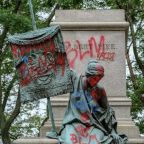
3,941 statues have been removed, destroyed or vandalized since the death of George Floyd thus far. Their assault is interesting in that every attack is an attempt to bring about social change. This always includes the demonization of the past and either its eventual co-opting with a new identity or its utter removal. What is true in politics is often true in religion as well.
Old gods, goddesses, and sacred spaces were typically converted into demons, symbols of evil, or places to avoid by the new faith. Often traditions, such as the celebration of the equinoxes, were co-opted and given a new meaning; Easter and the use of painted eggs and rabbits (symbols of fertility) or Christmas and the evergreen tree and candles (rebirth and the hope for the return of Spring).
Sacred spaces such as springs or groves, dedicated to some ancient spirit, often for healing, were rededicated as symbols of the new religion by taking the popular god or goddess and rededicating them as a "saint"; sometimes with a slight name change to make it less obvious. The Bible's snake or serpent is portrayed as the incarnation of Satan and evil. However, that same snake had been the symbol of knowledge, wisdom, and protection by the Mesopotamian religion which had preceded it.
In politics, the removal of old symbols of power or status, such as the Nazi swastika (which itself was an much older symbol of good fortune and eternity) or the toppling of the Imperial Russian Romanov statues and symbols along with the destruction of Russian Orthodox Churches were the symbolic replacement of one system and what it represented with new symbols signifying new loyalties. It is the substitution of one set of values and traditions with another.
However, as in religion, former political symbols are often co-opted into a representation of evil (like the swastika, the fasces or the Confederate flag) just as individuals whose stances oppose the new system are routinely demonized regardless of the facts. This is especially true when viewing the past by the standards or morality of the present time rather than the historical perspective of their time.
For instance, a minority of people criticize America's Founding Fathers because most of them owned slaves (14 of the 21 Founding Fathers owned slaves at some point in their lives). However, they are judging these individuals from the advantage of over 200 years of change. They measure them by the values and morals of our time, not theirs. The majority of the Founding Fathers viewed slavery as abhorrent, often freeing what slaves they had (note too that most were inherited, not purchased).
The use of slaves was seen as essential to the economy, especially in the South, whose economy was highly labor intensive. We were also in the midst of a war with the most powerful nation on the planet at the time. We trying to create a new country. While many of the Founding Fathers called for the abolishment of slavery as an institution, it would have meant the utter collapse of the Southern colonies, whose support was critical (in fact, it was in the Southern colonies where the colonialists were having the most success against the British).
If the Northern colonies had insisted on an end to institutional slavery, as a few did, the rebellion would have failed. The colonies would have remained British. As for the institution of slavery, rather than ending the importation of slaves in 1808 or dissolving the institution itself in 1863 through Lincoln's "Emancipation Proclamation", it's highly likely that it would have continued (slavery formerly ended in the U.S. in 1865 with the adoption of the 13th Amendment). As it was, when the U.S. formally ended the importation of slaves in 1808, not quite 32 years after formally obtaining our independence, it effectively killed slave trade as a business in the West.
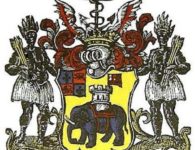
The British, through the Royal African Company among others, were the world's largest slave trading nation although more Arabs were actually engaged in the slave trade than the British due to their proximity while African tribal leaders remained the central purveyors of slaves, without whom there would have been no slaves to sell.
Thus, as a result of our 1808 prohibition, the British Government began purchasing the freedom of all slaves within the empire through the 1833 Slave Abolition Act using money it had borrowed. The debt was paid through taxes by the British people and wasn't paid off until 2015. It's something the United States should have done as well, but couldn't.
The result was the bloodiest war this nation has ever engaged in with an estimated 655,000 causalities. That's more than in any other war experienced by this country. The financial cost of the war, while hard to accurately determine, was estimated at about $7 billion dollars in 1860 dollars. That works out to be around $75 billion in 2008 dollars, when the last study was done. So, would it have been cheaper if Lincoln had purchased and freed all the slaves, assuming that would have even been possible?
According to the 1860 census, there were some 3,950,000 slaves in the United States at that time. About 30% of the population owned any slaves at all (the average was three). Ownership varied greatly from state to state but most Southerners owned none. Just 4% of slave owners were the wealthy plantation owners we typically think of. Slave value was based on age, gender, and skill level. Nevertheless, based on 1860 data, the average slave was worth about $800 back then.
Again, using 1860 dollars, that works out to be $2.7 billion dollars. In today's money, that's roughly $72 billion dollars or around $3 billion cheaper than the war itself, which doesn't take into consideration the lives impacted, the effect on the economy or subsequent cost of rebuilding after the war. It also doesn't include the social costs of Reconstruction or the divisions which still remain.
The British Slave Abolition Act occurred nearly three decades before the Civil War began in 1861 (the war almost began in the 1850's but was averted through the "Great Compromise"; cobbled together by triumvirate of Daniel Webster, Henry Clay, and John C Calhoun). So, why didn't Lincoln simply use executive power to buy all the slaves?
In 1772, the British Chief Justice Lord William Mansfield ruled that slavery was inconsistent with English law. As a result, Britain began the legal process of ending slavery throughout the empire. In 1787, during the Constitutional Convention in Philadelphia, it was held that slavery was not a moral issue, but an economic one, thanks to the clout of powerful Southern delegates (notably South Carolina and Georgia). Attempts by various states to prohibit slavery were repeatedly overruled by lawyers for the powerful Board of Trade, located in London, which oversaw international trade.
It was during the convention that the infamous "three-fifths" clause was determined. It stated that slaves were worth only 3/5 of a person for taxation and representation purposes. This provided the legal framework for slavery to continue despite the desires of many delegates. It was also repeatedly emphasized by the Southern delegates that the purpose of the convention was the creation of a political union, not a moral one. Any "moral considerations" were to be left to the individual states. As an aside, let's remember too that the many of delegates, regardless of where they were from, wanted to create a relatively weak federal government which would have little power over the issues like slavery.
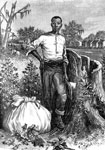
In addition, thanks in no small part to Eli Whitney's cotton gin, introduced in 1794, the South provided the economic resources for the emerging nation to compete on the world stage. "King Cotton" as it would become known went from producing 500,000 pounds in 1793 to 93 million pounds by 1810, representing half of all U.S. exports from 1820 to 1860 (it's worth noting that prior to the cotton gin, slavery, especially on a large scale, was dying due to the high cost).
Northern industrialists profited handsomely on Southern exports to the North, especially cotton, corn, wheat, tobacco, rice, and other warm climate crops, which were processed and sold overseas (most notably to Great Britain). There was every financial incentive for slavery, which was at the heart of the South's economic engine, to continue. Nevertheless, the slaves were freed.
As of 1865, about 88% of all blacks in America were slaves. Of the remaining 12%, they were either freed black men and women, mostly likely but not exclusively---living either in the industrial North or in Indian Territory out West. A small percentage were actually slave owners themselves (as hard as that is to believe). There are approximately 37,144,530 non-Hispanic blacks currently living in America (while the overall black population in the U.S. is on the decline--currently second behind Hispanics---the largest growth is from Hispanic blacks from places like Brazil and the Caribbean islands).
The best estimate among historians and sociologists is that about 60% of all non-Hispanic blacks can trace their ancestry to a slave living in America at some point prior to 1865. For most people their slave era ancestor was somewhere between six and eight generations ago. So, it's worth noting that at seven generations for instance, for every 254 people live today, they share one common ancestor. Thus, around 254 blacks today share a single black slave ancestor. If we were to award reparations (which I am strongly opposed to), is that the formula we should use? Just a thought.
So, what was Lincoln's plan for all the freed slaves? Early on, Abraham Lincoln repeatedly stated that he didn't want to get involved in the slavery issue, and would leave it alone for the time being if it meant preserving the union. It wasn't until 1862/63 that his position changed. He knew he had to cut the legs from under the South's economic engine, and that meant ending slavery. It should be noted that his famous Emancipation Proclamation applied exclusively to the states which had left the union to form the independent Confederate States of America. Thus, technically, it had no legal standing in any of the Confederates States and Lincoln knew it.
Although Lincoln was assassinated in 1865, before he could start taking any concrete steps regarding the disposition of the former slaves, it appears that the "Great Emancipator" as he would come to be known subscribed to the notion of "colonization". Specifically, it meant relocating former slaves to Latin America, the Caribbean , or to the newly created nation of Liberia. Liberia was formed in 1820 by former slaves, most of whom came from the U.S.
In 1861, Lincoln has initially asked Congress for funds to do just that. However, Congress declined, citing the expense. From that point forward, Lincoln began to solicit funds wherever he could to help with this project. It should be pointed out, that Lincoln strictly favored voluntary colonization and not its forcible relocation of anyone. It's interesting to contemplate what American would have been like had Lincoln lived and been able to move forward on his plan isn't it?
There are many facets of slavery to consider. It did not originate in America and the Founding Fathers did what they could given the political, social and economic realities of their time while fighting a war against the most powerful nation on the planet. Lincoln too was constrained by the economic, social and political realities of his age not to mention a divided nation at war.
Today, there are many misguided individuals and groups attempting to assign blame where it doesn't exist. They are attempting to judge these individuals through the lenses of the 21st Century. They are, in effect, trying to rewrite history to fit a narrative which has little to nothing to do with actual history. We've witnessed a great many changes since 1776, 1787, or even 1865. The great majority of them for good, especially for minorities. Few minorities from history can say that.
Slavery in the Constitutional Convention
Founding Fathers and Slaveholders
Facing facts About Lincoln and his views on slavery
A List of statues across the U.S. toppled, vandalized, or officially removed amid protests
Home of the Militant Middle, Another Opinion ("A/O") is an Independent oriented "OpEd" blog for those looking for unbiased facts free of partisan drama and who are willing to question the Status Quo.
Showing posts with label statues. Show all posts
Saturday, July 25, 2020
Slavery and The Attempts to Rewrite Our History
Labels:
3/5th clause,
Antifa,
Asians,
Blacks,
BLM,
Civil Rights,
civil war,
Constitution,
Hispanics,
Lincoln,
looting,
minorities,
protesting,
racism,
Religion,
Reparations,
rioting,
Slavery,
statues
Saturday, September 23, 2017
America: Is Destroying Statues and Disrespecting the National Anthem the Answer?
Forty. That is approximately how many Confederate memorials and statues which have been removed thus far (the number varies slightly, depending on the source). However, there are some 700 Confederate plaques, memorials, and statures still remaining to be either melted down and sold for scrap, or simply hidden away for all eyes to see. While a few of these statues were erected recently, many are closer to be being at least a century old. These forty or so remembrances were erected to honor and remember those who fought and died for the Southern Cause. Many of these range from small plaques to the side of a mountain.
Former South Carolina Governor Nicky Halley removed the Confederate Flag from the state capitol. Now she is Ambassador to the United Nations. Other states which still have references to the "Southern Cross" (or "Stars and Bars" as it's more commonly known) in their state flag, such as Florida, Mississippi, Georgia, or Alabama have been under pressure to remove them or adopt a new flag. We've also seen where demands that the bodies of Confederate General Nathan B Forrest and his wife be dug up and removed from a public cemetery and moved to a private cemetery by none other than Memphis Mayor, AC Wharton. Yet, while it hasn't actually happened yet, the Left doesn't have any shortage of members who would be glad to do it. Forrest was one of the South's greatest general (as an aside, while Forrest's body and that of his wife haven't been removed, there was an attempt by members of Antifa and BLM to remove the bodies which was thwarted). Can you ever imagine that Americans would stoop that low? It's not like we have no respect for the dead or honoring those who've fallen. Both the South and North fought for what they believed was right; both sides invoked God aid their cause.
Of course, much more has been done. Efforts have been made to prevent the display or selling of Confederate flags or memorabilia on public property. Some small businesses located on Civil War battlefields have been forced to close. There has been demands to change the names of streets, schools, and universities, along with any mascots or other references to the Confederacy (in full disclosure, I briefly attended J.E.B. Stuart Junior High School (go Rebels!) during the late 60's). The reason, if that's the proper word for it, is that the Confederacy was our own "evil empire" to borrow from the President Ronald Reagan and his remark about Soviet Russia. According to the Far Left (aka the Alt-Left), every Southerner at the time was a whip carrying low brow illiterate brut determined to carry on the institution of slavery for its own glory while the noble North, immune from slavery's ill-gotten profits was determine to liberate the down trodden of the South through its destruction.
Of course, that's all so much hogwash. Just under 4% of the entire South owned any slaves at all. Of that, around 2% owned more than three slaves and few yet owned enough to qualify as a plantation. Most of the South was small businesses and Yeoman farmers where the slave and their masters worked side by side and ate the same food. In some border states, free black landowners even owned black slaves (some scholars thing that the reason for this was that these individuals may have been distant relatives and the black slave owner was trying to keep them together). The beneficiary of Southern labor was primarily Northern businessmen who had a vested interest in perpetuating the slave economy since it produced low priced products. Who could resist a deal right? However, the importation of slaves ended decades before the Civil War (in 1808 to be exact); it was a fading industry. Technology was gaining ground. Slaves could be replaced and greater profits earned. Even the President of the Confederacy, Jefferson Davis, remarked that without the war, the institution of slavery would have ended on its own within a decade. Union President Abraham Lincoln stated several times that his interest wasn't on slavery, but the preservation of the nation. Even his famous "Gettysburg Address" and the Emancipation Proclamation, which followed one of the bloodiest and most destructive battles, Gettysburg, reemphasized this.
Lincoln understood that the South would not give up. It would fight as long as it could field soldiers. So, with his famous address Lincoln hoped he could hasten the end of the war. His Proclamation, which was technically illegal since it pertained to states which had seceded and he did not control, freed all slaves in the states which left the union. It was his hope that by doing this, the slaves would leave the fields and the crops would start to rot literally on the vine and in the ground. Knowing that this would mean mass starvation and since the overwhelming majority of Confederate soldiers were small Yeoman farmers, Lincoln anticipated they would begin deserting in order to tend to the crops and keep their families from starving. However, the Proclamation didn't include those slave holding states which, while sympathetic with the Southern Cause, did not leave the union (as an aside, many of these states didn't even affirm the 14th Amendment ending slavery until the 1970's. Seriously).
Ok, so much for the history lesson. The war has been over for 150 years. Nowhere was Confederate memorials, plaques, or the display of Confederate flags and so forth been an issue. Not during Reconstruction, as disastrous to the South as that was. Not during or after any of the other great upheavals in American history such as the Spanish-American War, World War I and II. Not during the fights for Women's Suffrage or right to unionize. Not during Korea or Vietnam. It wasn't an issue during the era of the Civil Rights Movement; the "Freedom Riders", the marches by Dr. Martin Luther King Jr and Reverend Ralph Abernathy. It was never raised as an issue by Malcolm X or Bobby Seale. Even when the Confederate flag was hijacked by the KKK or later by neo-Nazi groups. People knew the difference; to separate those who fought and died for a war which ended over a century ago and those who sought racial division.
Why wasn't anything said or done under President Johnson's "War on Poverty"? I can't recall anyone from either the Democratic or Republican parties making an issue out of this...ever. Not even during the era of the Dixiecrats. Where was the outcry under Reagan, or Bill Clinton, or especially, during the two terms of Barack Obama? Certainly, if there was ever a time to ban flags on graves of Confederate war dead or make statues and other inanimate objects illegal, that would have been the time. But it didn't happen. Why is that I wonder? What happened? A few weeks ago, a young black female entered a Hobby Lobby store and begin a tirade over a display of stemmed cotton in vases. This individual went off; talking about how the display was an affront to her since her ancestors were (allegedly) slaves who were forced to pick cotton. WTH? Naturally, I wondered if she owned any cotton clothing or sheets.
As if that's not bizarre enough, we've had masked and unmasked members of "Antifa" and BLM try to block traffic on streets and highways, attack police officers during their "peaceful" demonstrations, shout down speakers who were invited to speak at their colleges and universities, dousing people with various nasty stuff, and tearing down statutes, plaques and anything else they didn't approve of. But that isn't the end of it. Not only have these individuals gone after Confederate flags, memorials, and the occasional dead rebel, they're expanding this to include remembrances of others they dislike like Theodore Roosevelt (what's not to like about "Teedy"?), FDR, Jefferson and the rest of our Founding Fathers, as well as prominent individuals whose ancestors may have owned slaves, and yes, even their mythic benefactor, Ole Abe himself. I'm surprised that they haven't tried to dig him up just to shoot him again. They've convinced some athletes at football games to disrespect the playing of the National Anthem.
While this statement hasn't set well with fans, it has spread to high school, junior high schools, and various football leagues (of course, many of these kids haven't the foggiest as to the real meaning , they know that their football heroes on TV are doing it and it gets them some attention). The fact is that if these rich jocks want to make a political statement, that's fine. They just need to do it on their own time, that that of the fans who pay good money to set in those seats or the fans at home for which advertisers pay big bucks to reach. Fans want to see a game. Period. If these players want to express their political opinions, do it on their time, not that of the fans or the advertisers.
There's also been a litany of other strange acts of outrage, like "cultural appropriation". Just what is that you wonder? Well, it's where one racial or ethnic group claims that a particular hair style, item(s) of jewelry, clothing, music, or even manner of speaking is exclusively theirs; no other groups is entitled to the use or part of what's being claimed. For instance, there is a YouTube video about a white girl around 14 or 15, being harassed and assaulted by some black girls (should I say girls of color?) in the same age bracket. The reason is because the white girl was wearing a hair style called "cornrolls". The black girls were demanding that the white girl remove them (I have no idea how you do that). Anyway, there has been an increase in this behavior. To my knowledge, "ethnic appropriation" of European culture hasn't been an issue. No one is demanding a stoppage to wearing shoes eating pizza, book reading, and so forth although there does seem to be a problem with the European habit of wearing a belt or suspenders to hold up one's pants which isn't being appropriated as much as it should. The fact is everything has been appropriated from somebody at sometime. That's what happens when people and cultures intermingle.
From my perspective, I think the growing "fad" or whatever it is of perpetually being "offended" by everything has gone on long enough. No one ever promised that you would never be offended by something in this life. I'm "offended" by all the wars-for-profit, corrupt politicians and governments, the encroaching surveillance state into my private life, poverty, lack of basic medicine or medicines with 3000% markups. I get ticked off by greedy warlords and corporations who prevent some from having fresh clean water or ample food. I get really miffed to see those weak abused by the strong. And yes, I get seriously irked when I'm asked to "press one" for English. I won't do it. Not now. Not ever. America is a multicultural nation, but that doesn't mean that each racial, religious, or ethnic group lives in its own enclave. Like my hero, ole "rough and ready" TR, I don't believe in hyphenated Americans. You're an American or not. You can keep your culture. You can keep you language. But in this nation, we speak English. We have certain traditions and core values. We accept people as they are and we don't try to impose our values or religion on others. If that's an problem, the solution is simple. Leave. Now. We may even wave bye.
Meanwhile, this "offended" fad needs to end. Like now. All of it started after Hillary Clinton was denied her coronation. All of it. I don't know who is behind it, but there is certainly money financing these "protests" and "demonstrations". I suspect it's to make Trump look bad and to keep occupied putting out fires. Even his own party is working against him, and naturally the media is. There used to be a tradition in this nation where we gave a new president the benefit of doubt and opportunity to prove themselves regardless of where we voted for them or not or our personal opinion of them (Harry Truman and Barack Obama are two cases in point). Lastly, I had many ancestors who fought on both sides during the Civil War and none owned slaves. One, a Confederate officer lost his arm. One, a Union sergeant, starved to death at the Andersonville POW camp just a few days before its liberation. I also had ancestors who were held as slaves--not indentured servants mind you. They were Irish, Scots, and German. Their oppressor in each case was the English (there's other lines who've been oppressed since time immemorial. Their oppressors were the stuff of legends; the Egyptians, Assyrians, Romans, French, the Vatican, Russians, Muslims, Spaniards, and Germans).
I had numerous ancestors who were oppressed over religious issues. Many didn't survive. Some did. But for all those who did, they excelled and prospered. What they lived through was put to good use. They honed work skills to become the best and they focused on education. Because no whatever happened, they wouldn't be depended on anyone because skills and education are two things that can never be taken from you. They refused to fall into the trap of generational entitlement. That's just another form of slavery.
We cannot allow our nation to be bullied into forgetting or covering up its history. We need it. It's a part of who we are, good or bad. It has made us the strongest country in the history of the world. We speak English. It's the thread that binds the fabric of this nation together. We come from every corner of the earth. Practically every religion in the world can be found here. While there are differing cultures, they ultimately blend into just one---American. So, if you're offended about a block of stone or piece of metal because you don't like the image or the message. turn your head and keep walking. That piece of stone or metal may mean the world to someone else and what's important to you may mean nothing. We are a nation of laws where no one should be exempt regardless of their income bracket, political connections, race, gender, sexual orientation or what your preferred entity of choice tells you. Again, if that's a problem, you're free to leave. Maybe that's the ultimate beauty of our country.
A Running list of Confederate Monuments Removed Across the Country
Confederate Monuments Are Coming Down Across the United States: Here's a List
The African Slave Trade
Introduction to Cultural Appropriation
Labels:
Anti-Trump,
Antifa,
Barack Obama,
Blacks,
BLM,
Civil Rights Movement,
civil war,
Confederacy,
Donald Trump,
Free Speech,
Lincoln,
MLK,
Protests,
racism,
Slavery,
statues,
Whites
Subscribe to:
Posts (Atom)


397260_20150624_020641.jpg)


