Showing posts with label Labor laws. Show all posts

Friday, July 12, 2024

The Importance of Getting it Right: America's Domestic Dilemma

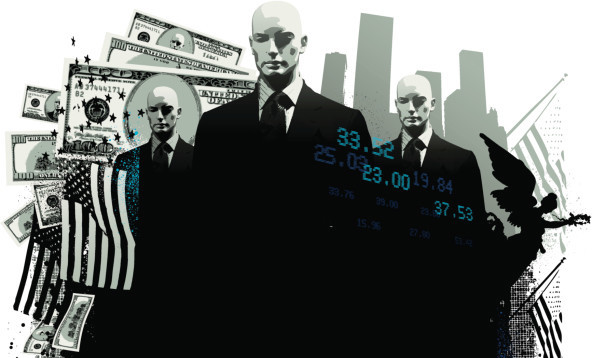
Right now there are some very powerful groups working non-stop around the clock to pit us against each other every way possible. They manipulate what we watch, listen to, or see as much as possible. After all, just 5 mega corporations own 96+% of all media. They've totally ignored the fact that nearly half the country is registered Independent---43%. Nearly half the country wants nothing from the corporate own uniparty.

Remember this too. The Nazis came to power under the banner of "law and order" and national security with just 43% of the total vote. Lacking a majority, the Nazi's were compelled into a coalition government with industrialist Alfred Hugenberg's conservative German National People's Party (DNVP) in order to take power.  But once the Enabling Act was in place by March 23,1933, the ill-conceived  response to the February 27th Reichstag fire allegedly started by "Communists agitators", the German Republic was all but over.  And it took Hitler just 52 days.

The Democrats and Republicans are both minority parties with roughly 25% of registered voters each. but you wouldn't know it from the media or how the country is run. They've created a two tier legal system and a political class system. They've quietly overthrown our Republic at the behest of a neo-fascist corporatocracy led a super rich oligarchy (or kleptocracy if you prefer, it really doesn't matter. The results for us are the same), and while we were busy playing on our "smart phones" or watching some reality show.

Freedoms are routinely and gradually  suppressed in the name of "national security" in order to protect the populace from scapegoat enemy.  Historically it's been the "Jews", Protestants or Catholics, blacks, Chinese, the Irish, and so on. But, it need not be a group, it can just as easily be a abstract idea; a "catch all" if you will. For instance, "socialism" and Communism" are typically bandied about as if they're one and the same, which they're obviously not. But none of that really matters as long as you're made afraid of it. Why?

The corporate state will always employ a "us versus them" mindset using every resource they have available in order to make and keep you afraid of something. They will use that fear to justify their existence. It will be the foundation of their control.

Let me ask you a question. What do the following laws all have in common? The Fair Labor Standards Act of 1938 which, among other things, prohibited the use of child labor, created the 40 hours work week, and provided for a minimum wage, the National Labor Relations Act, of 1935 (aka "the "Wagner Act") or the Social Security Act of 1935. Any guesses?

What about Title VII  of the Civil Rights Act of 1964, which prohibits discrimination based on age, race, gender, national origin, religion, or sexual orientation, or the 19th Amendment (passed in 1919) giving women the vote?  How about the Federal Unemployment Act of 1935 which provides unemployment benefits to out of work employees or the Indian Mineral Leasing Act of 1938 which gave Native American tribes more control of the extraction of natural resource on tribal land. Give up?

Every single one of them were labeled either "socialist" or Communist. Every. Single. One. Most of these were passed during Franklin D. Roosevelt's administration, which didn't go unnoticed by the powerful industrial elites of the time who ridiculed Roosevelt as a "traitor to his class" (he came from a wealthy upper New York family), as a closet socialist or Communist (take your pick). Wall Street did everything it could (legal or not) to defeat, or at least delay these laws, but ultimately failed. But, can you honestly say your life would be better off without most or all of these laws?

But it doesn't end there. Not by a long shot. The Civil Rights Act of 1964, and "War on Poverty" initiative  signed by the Democratic President, Lyndon B Johnson, was vilified as being a Communist plot to destabilize the country as was the creation of Medicare and Medicaid in 1965.  The Consumer Product Safety Act, Clean Air and Clean Water acts on 1972, all of which were signed by Republican arch conservative Richard Nixon, were also hailed as being "socialist". Of course, "Obamacare"  which help provide critical medical care for those without any (in many cases because their employer couldn't afford to offer any).  

 It's the same in every totalitarian government.  Different actors. Same script.  As Nazi propagandist genius, Joseph Goebbels, once advised "publicly accuse your enemy of doing what you're already secretly doing". Our "Enabling Act" arrived  in 2001 under the flag waving title of "The Patriot Act" and  we've never looked backed despite the slow transformation of the U.S. into a surveillance state. Fascism, in all its incarnations---populist, traditional, benevolent, or religious, all ends the same. It's about control.  

Fascism, which is really just another name for corporatism, can declare itself as  being "liberal" (China, North Korea, East Germany, North Vietnam, Somalia, Yemen, and others were labeled as "Democratic Republics"). The famous quote (erroneously attributed to author Sinclair Lewis) said that fascism, when---not if--- it comes to America, "will be wrapped in the flag  and waving a cross" as well as "American fascism, when it eventually arrives, will be government of, by, and for profits." Sounds a lot like today's Oligarchy doesn't it?

Echoing that statement, James Waterman Wise Jr , author of numerous books including "Our Bill of Rights: What it Means To Me" and "Thomas Jefferson: Then and Now" penned in the  Feb. 5, 1936 edition of Christian Century (considered the flagship magazine of mainstream Protestantism since 1900). He remarked, "If fascism comes, it will not be identified with any 'shirt' movement, nor with an insignia, but it will probably be 'wrapped in the American flag and heralded as a plea for liberty and preservation of the constitution".

These "friendly fascists" might claim to know the "Will of God" and promise to return us to time of more traditional family values. Such is "friendly fascism". It may claim to be socially conservative if that is what it takes to get your compliance just as easily as it claims to be "all inclusive". But regardless of its outward message, Fascism will always ultimately insist on your total and unwavering compliance.

The assault on our nation has been a gradual one. It creeps forward in one place and makes a strategic  but temporary retreat in others areas, but overall, their agenda always advances. It's a process known as "incrementalism" or "gradualism". Notice for instance how the educational system have been "dumb down". Did it happened over a month or even a year? Nope. It's been happening over decades.

Schools have gone from teaching critical thinking skills to teaching "Critical Race Theory". Some of these same schools are now encouraging "gender selection" by kids who barely know what "gender" means! Worse still is that the parents don't even have to be notified. Schools and libraries are trying to ban certain American classics such as "Huckleberry Finn", "Tom Sawyer" , "1984" and "Animal Farm", "Of Mice and Men", "To Kill a Mockingbird", and "A Farewell to Arms" . Even "Little Riding Hood" and Anne Frank's "Diary of a Young Girl" have fallen to censors!

Meanwhile, liberals claim that books about race (especially those placing certain racial minorities in a positive light), history books offering a different perspective of events, as well as books about sexual orientation and gender are being banned by schools and libraries at the same rate.

This, of course, raises the question as to where books should be banned at all? Perhaps we should go back to the age specific criteria for children is strictly enforced just as all decisions made about students should involve the parent.  After all, isn't the ultimate objective to encourage kids to read, develop their critical thinking skills, expand their intellectual horizons and help make them responsible citizens?

People are expected (and in some places, mandated by law) to play along with other people's fantasies by referring to a biological male  who "identifies" as a female as "she/her" or by female who believes they're a male as "he/him". Even more oddly, some don't even want to be referred by a gender specific pronoun since they're "gender fluid" and want to be known as "them/they", but it gets weirder.

There are those individuals who "self-identify" as animals---dogs, cats, whatever---and they want to be treated that way. Some even show up in school dressed as the animal of their delusion...err..choice... and wants act, be talked to, and even fed from a bowl at lunch  (I wonder if they go outside to the restroom, sniff other people's butts, or if they've figured out how to lick their privates yet?).  

Anyway,  I don't care who or what someone believes that are, although much of this I believe is a cry of attention or simply a mental illness. It's really none of my business, but why must I have to reinforce their self-delusion and play along? What about my moral compass?
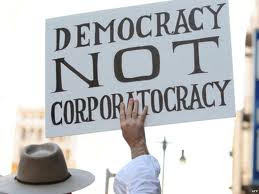
In the long run, all the corporate state cares about are workers just smart enough to do their jobs, but not smart enough to challenge their authority, and certainly not individuals who think for themselves. Those people are dangerous.

If we're are pitted against each other, then we won't be paying attention to what they're doing. In a short order, the mask will slip and then drop completely and you can bet they won't bother even asking for our support or anything else.   They will demand and you will comply.

In that same instant, when they finally stop pretending to care about rising gas and food prices, the environment, unemployment, high taxes, or having an open border, you will have to decide for yourself, for your family, and for grandchildren yet unborn if it's better to stand on your feet and take a unmovable stand as a free man or women to fight for democracy and a return of our Republic, or to live forever on your knees having never knowing freedom ever again.  Remember, no decision is still a decision by default. But for those who come after you, it will be far too late. The decision will have already been made for them by your inaction.

As  Dr. Klaus Schwab of the globally powerful and influential World Economic Forum recently said, when speaking about the WEF's "Great Reset Initiative", that "you will own nothing and be happy". Another aspect of the "Great Reset" is to create a more "sustainable planet" by promoting greater economic deregulation of businesses, and in particular large transnational corporations (of the corporatocracy type) and  giving them a greater role in global governance "at the expense of government".  Does that sound like "socialism" or "Communism"? Not to me. In fact, it's almost the textbook definition of fascism.

There's no question that America has slipped into a corporatocracy under the leadership of a group of mega-rich oligarchs. They thrive on creating chaos and promising us order. Their sole goal is control, be it assets, resources, or us as their economic serfs, forever chained to debt. Our "worth" determined by our credit rating and to afraid to speak up for ourselves for fear of losing our jobs.  A roadmap is already being laid out for us and those who follow who will "own nothing and be happy". Will you willingly go down that road or will you fight to preserve our democracy and for a return of our Republic? We have to get this right the first time.  


If you enjoyed the article, please consider passing it along to others and don't forget to subscribe. It's free! Lastly please be sure to "like" us on whatever platform you use to read anotheropinionblog.com. It helps beat the algorithms and keeps our articles in circulation. Thank you!


Dept of Labor: Summary of Major Laws of the Department ofLabor


The Sinclair Lewis Society


World Economic Forum


openDemocracy: Conspiracy theories aside, there's something fishy about the Great Reset


Great Reset


25 of America's most unexpectedly banned books


Independent Party ID Tied for High; Democratic Party for NewLow


Saturday, September 02, 2023

Labor Day and its Socialist Origins

 Labor Day. That three day weekend holiday which marks the "official"  (more or less) end of Summer. It typically means picnics, last trips to the lake, beach, or public pools before they're all closed.  For many it marks the beginning of another school year while for others it's all those Labor Day sales! Although nothing beats "Black Friday" or "Cyber Monday" in terms of sales and deep discounts, Labor Day is considered by retailers to be the third biggest retail shopping day in terms of sales volume.  

But what is "Labor Day" really? Well, it was intended to be a day to honor the working men and women, particularly those belonging to a union, who built this nation and kept it running. Labor Day was signed into law by President Grover Cleveland on June 28, 1894 establishing the first Monday of September as a national holiday, and yet despite its 129 year history, so few of us know the full story of Labor Day or its socialist beginnings.

Yes, you read that right. Labor Day was established essentially as a socialist holiday. The origins of Labor Day began starting in the 1880's with the rise of trade unions and the labor movement, primarily in response to dangerous working conditions, poor wages, long hours, a lack of healthcare, and miserable housing. Working women had it just as bad as the men, which was pretty bad. Even children as young as six or seven were often pressed to working in conditions well beyond their years.

Some employers, like Ford, even required workers to follow a certain moral code or social guidelines like no drinking, smoking or mandatory church attendance (of the employer's choice) just to remain employed! Company inspectors made routine visits to ensure compliance while others were required to live in so-called "company towns" and were paid in "script", thus attaching them to their employer.

Work related injuries, respiratory diseases like black lung, and premature deaths were common, and yet there was no legal recourse with the employer or state. The misery and coarseness of everyday life can't be stressed hard enough because in today's world such misery can hardly be imagined. These were just some of the conditions which led to workers slowly organizing into unions and associations whose governance was based on the majority vote and "an injury to one is an injury to all" mentality. 

 The origins of Labor Day can ultimately be traced to two individuals, Peter J. McGuire and Matthew Maguire. Peter was born in New York City in 1852, the son of a poor Irish Catholic immigrants. He was the co-founder, along with German immigrant Gustav Luebkert, of the United Brotherhood of Carpenters and Joiners of America in 1881.

McGuire later joined with Austrian born Adolph Strasser, the president of the Cigar Makers Union, to found the Socialist Democrat Workingman's Party of North America (Strasser, along with Samuel Gompers, would later found the American Federation of Labor or AFL).  The unions sought to merge social democracy with improving living conditions of the masses.

McGuire, by now a vice president of the AFL, is generally credited with being the first to propose the creation of a national day recognizing the labor movement in America after an earlier visit to Toronto Canada to see the May Day celebrations ("May Day", celebrated on May 1st, is also known as the International Day of the Worker) at a convention of the Knights of Labor in 1882. 

The other individual given credited with helping to establish Labor Day is Matthew Maguire. Matthew was the general secretary of the Central Labor Union of New York, Brooklyn and New Jersey (or known simply as the CLU), which later merged with what became the AFL-CIO. The union, which was strongly Marxist, was originally founded in 1867 in New York and ultimately spread to Philadelphia.

The union was closely tied to the United Labor Party, a combination of a number of unions and organizations such as the Socialist Labor Party, the Knights of Labor, the Central Labor Union  and another 113 similar unions and labor associations.

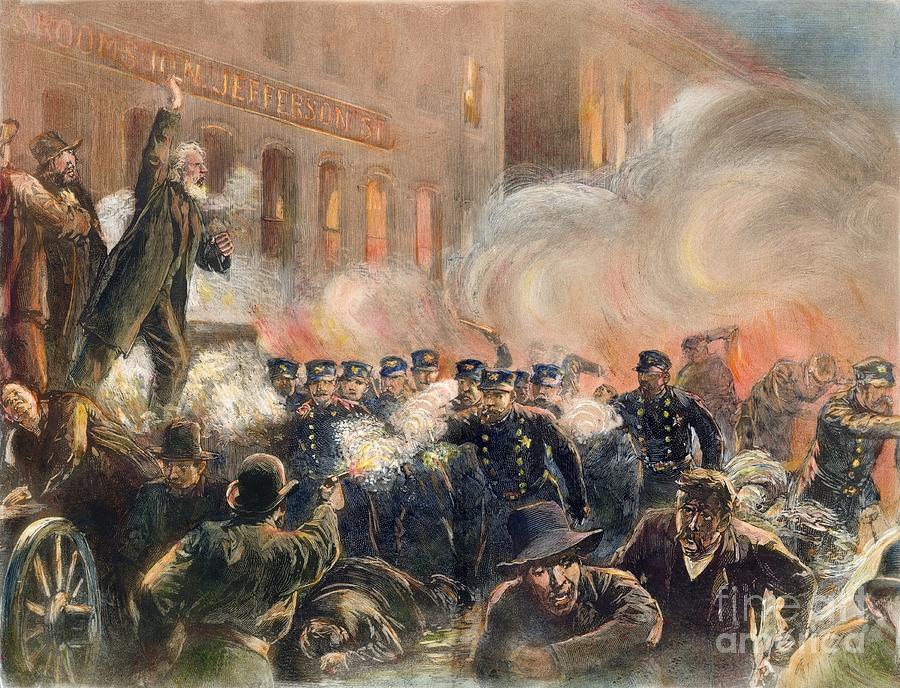
The party, which was formed following the Haymarket Riot of 1886, promoted  free trade, the secret ballot, a single tax on all private property, ending child and convict labor, and promoting low fares on public transportations and discounts on public utilities for low income families. 

It is alleged by some that Matthew Maguire had first suggested setting aside a day to honor working men and women to CLU leadership, and after some discussion, the suggestion was approved. Others, however, suggest that Matthew was merely given credit for the suggestion since he was the general secretary. Nevertheless, the CLU is believed to be the first union to begin promoting parades, festivities and so forth to honor working men and women of the labor movement.

The popularity of the labor holiday quickly spread from city to city and state to state, becoming either an official holiday or a de facto one with parades, picnics, speeches, and so forth. By 1894, 30 of the 44 U.S. states had made it an official holiday. In that same year, Congress (obviously recognizing a winning issue with labor) proposed a bill making it a federal holiday. It was signed by President Grover Cleveland in June, and was to go into effect that September. It should be pointed out that the new law pertain only to federal employees and it took until the 1930's before the holiday was legally celebrated everywhere.

Ironically, the first Labor Day came immediately following the infamous "Pullman Strike" which was two closely related strikes involving members of the American Railway Union led by Eugene V. Debs, the Pullman Palace Car Company, the producer of railroad cars, and unorganized workers living in the company town of Pullman. 

These individuals were demanding the right to organize and protesting their living conditions, overpriced food sold by the sole company owned store, excessive utility and water rates, and low pay (employees were also paid in "script" which made it all but impossible to go somewhere else) while others were protesting a recent wage cut and working conditions. 

Pullman cited declining revenue following the financial Panic of 1893 as the reason for cutting wages. Within four days of the strike, 125,000 railroad workers were involved. It ended with  57 injured, 70+ dead, and 4 arrested.

As an aside, Eugene V. Debs, who was born in Terre Haute, Indiana, was a member of the Brotherhood of Locomotive Firemen and an ardent democratic socialist and labor activist. He was elected to the Indiana State House of Representatives in 1885 and ran for president four times under the Social Democrats and Socialist Party banners. He co-founded the International Workers of the World (IWW or aka "The Wobbles"). 

Because of the socialist convictions, Debs was arrested in 1918 on ten counts of alleged sedition (he had been urging workers to resist the draft). Sound familiar? Debs was stripped of his right to vote for life and was sentenced to ten years in prison. Nevertheless, he continued to run for the presidency behind bars!  Debs still received 914,919 votes. The Pullman Strike would later become known as "The Debs Rebellion". 

In researching this article I came across four very informative and entertaining videos pertaining to Labor Day and other events mentioned here. I'm providing a link below. Most are fairly short in duration, but quite educational nevertheless. Hope you enjoy and have a great Labor Day weekend.

If you enjoyed the article, please consider passing it along to others and don't forget to subscribe. It's free! Lastly please be sure to "like" us on whatever platform you use to read anotheropinionblog.com. It helps with the algorithms and keeps our articles in circulation. Thank you! 


Video: The History of Labor Day (2:18 minutes)


Video: Labor Day's Violent Beginnings (2:34 minutes)


Video: The Haymarket Tragedy (5:51 minutes)


Video: The Pullman Strike (5:31 minutes)


Saturday, September 02, 2017

Is Labor Day Still Relevant Aside From Being A Three Day Weekend?

Labor Day. The (more or less) official day marking the end of Summer the same way Memorial Day marks the beginning of Summer. Typically, we use these days as sort of "markers" to plan our vacations and DIY outside jobs like painting the house or building a new deck, plus it provides the exclamation point to a three day weekend. Of course, it's always a time for sales! But, what is Labor Day besides a seasonal placeholder? Have you ever wondered way Labor Day even exists?

Well, as the name implies, Labor Day was set aside to celebrate or recognize "Working Class America". It is a tribute to the ordinary men and women who've made this country so successful; to the innovations everyday individuals have made to and for the collective good of us all. Whereas holidays like Memorial Day honor those brave men and women who have given their lives in the protection of this nation and its freedoms, Labor Day honors the collective "us", be it coal miners, teachers, first responders, truck drives, factory workers, garbage workers, and so on. It is "our" day.

I've often thought that the symbolic placement of Labor Day was somewhat appropriate. After all, when the work is finally done, only then does the worker have an opportunity to set and appreciate the joys of his or her labors. Thus, Labor Day falls at the end of the Summer, and all the hard work has been completed. In the same sense, Memorial Day comes at the beginning, and as such, we first honor those who've come before us and laid down their lives for our sakes.

Labor Day was, historically, primarily a localize event throughout the latter half of the 19th century. The First State to make Labor Day a state holiday was Oregon, which did so on February 1, 1887. The reason was primarily to attract skilled labor from the East Coast to work in its mining and lumber industry. Within the same year, others states passed their own legislation to make Labor Day a state holiday. Among these, were New York, which had been the center of the labor movement as a result of mass influx of immigrants from Europe; many of whom had been exposed to the ideas of worker rights thanks to mainly to the Socialist and democratic political groups . Other states included Colorado, New Jersey, and Massachusetts. By the close of the century, 23 states had proposed and adopted a day to honor workers. On June 28, 1894, Congress voted to make the first Monday of September a national holiday throughout the nation, its territories, and the District of Columbia.

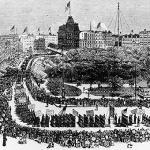
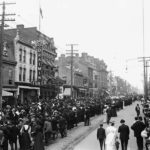
The first actual celebration of Labor Day was in New York City on September 5, 1882 in conjunction with the Central Labor Union which encouraged other unions as well as businesses to participate. By 1884, Labor Day was seen as a celebration of workers complete with festivals, displays, speeches by politicians and community leaders, labor representatives, and parades designed to promote the comradeship of the various trade and labor unions. In addition, the American Federation of Labor (the AFL), introduced a proposal in 1909 that the preceding Sunday was to be dedicated to educational training such as the history of the union movement, how to organize, and the various objectives of the Labor Movement like gender equality, improving working conditions, child labor laws, 40 hour work week, the right to collectively bargain and organize, women's right to vote, and so forth. Many of these would eventually become federal laws. Workers were also taught about the Socialist Movement, which organized labor had, at least partially, had sprung.

Over time, many of goals proposed by organized labor became law. Federal agencies were created to protect workers---union or non-union---such as the Department of Wage and Hour, Occupational Safety and Health Agency (OSHA), the Department of Labor, the Department of Health, Education, and Welfare, the Department of Health and Human Services, and Department of Housing and Human Services, the creation of a Labor Relations Board to mention a few. Meanwhile, various laws were enacted such as the Fair Labor Standards Act of 1938 (which was amended in 1963 to include the Equal Pay Act of 1963), the Civil Acts Act of 1964, the Age Discrimination in Employment Act of 1967, as well as various acts to prevent discrimination based disability, gender, sexual orientation, religion, ethnic heritage, or race.

Some have wondered if we really need to continue to celebrate Labor Day. After all, many of their original aims have been accomplished through federal legislation. Some unions, such as the AFL-CIO, are reduced to promoting so-called "amnesty" for the approximately 11 million illegal immigrants currently in the US. However, they're not promoting amnesty and allowing some 11 million individuals to skip to the head of the line out of the pure kindness. The majority of these illegal immigrants work in low income service or manual jobs; jobs which have a union unit such as for unskilled labor, hotel housekeeping, horse and dog track workers, and various trades such as roofing and carpenters. Today, the number of union members are declining rapidly (as of 2016, only 6.4% of private industry employees belonged to a union. Union membership peaked at 35% in the early 1950's), along with the coffers of these union. Unions would like to see the Federal Government turn a blind eye to illegal immigration in order to sign up these individuals. It would not just boost their numbers, but the dues paid would greatly enlarge their bottom line.

While union employees tend to earn more on the hour along with better benefit packages than their non-union compatriots, many companies have opted to move, be it to another state or out of the country, in order to avoid paying the higher union salaries and employment packages; thus increasing their bottom-line---even when factoring in shipping (union employees earn, on average 20% more than non-union employees). In addition, close to 35% of public employees belong to a union with teachers and librarians, trainers, those engaged in protective services having the highest overall rate of unionization. Men tend to more likely to belong to a union (based on historical employment in factories) at slightly above 11%, women still make up just over 10% of union membership. Based on race, black workers make up the greatest percentage of union members; greater than whites, Hispanics, or Asians. By age, the majority of union members are over 45 years of age and older. So those most greatly affect by the decline of union membership as a result of business relocation, closure, acquisition or passage of "At-Will" and "Right to Work" legislation tend to be older black males along with white males and females.

Before I go further, I think that I should explain "At-Will" employment since some of you may not have heard of it before or might be unclear as to what it is. At-Will means that you are hired by an employer "at will"; that is, you may be let go for pretty much any reason other than those which would violate existing federal laws such as race, religion, gender, and so forth. At the same time, you may accept, reject, or leave a job at your discretion. Therefore, employment is by mutual agreement between both parties---the employer and the potential employee. In a "Closed Shop" environment, if hired, you must join the union at that location. You have no alternative if you want the job. Membership is mandatory. However, you get the benefit of the union such as better wage and benefit package, restrictions on mandatory overtime, guidelines for promotions, terminations, and shift or job changes. You also have the benefit of having to a union steward in the event of a dispute or harassment by another employee or member of management. There are additional perks, depending on the industry and union.

Right to Work laws, which are an extension of the 1947 Taft-Hartley Act which prohibited employers to hire only union employees, are similar to At-Will laws. Right to Work assumes that, like At-Will, in that you were offered and accepted an offer of employment. However, you are not required to join a union if one exists at your place of employment. In most cases, unions are still required to protect your interests even if you aren't a dues paying member. Many say this is unfair in that an employee who opted out of union membership would be entitled to union benefits since it costs the union both time and money. At the same time, Right to Work laws hurt the bargaining power of unions since it not just reduces the number of dues paying members, but in the event of a strike, it would still leave employees working. At present there are 28 Right to Work states.

Personally, if this is the wave of representation, I think it should be modified to where a non-union employee is exempt from any union benefit, including representation by a steward, salary and/or benefit negotiations, and so forth. Hiring salary should be based on industry and state average, and not necessarily what the union negotiated If, as an employee, you think you can do better without a union, great. Have at it. However, you're on your own when comes to protecting your shift, specific job, work schedule, benefits, wages, and so on. You will also have to fight your own battles--- with no shop steward or union help unless you want to pay for it.

I'm not being critical of the individual who opts out of a union. That's their right, but I don't think the union should be under any obligation to assist them in any way. By the same token, I think unions have a duty to make employees want to join a union based on what it actively does. I've seen a lot of unions which were absolutely worthless when it came to protecting or helping its employees. The only things they were good at was being the company's "bagman", rubber stamping contracts, and trying to bully employees. I think too that unions should be active and visible in the community like the old activist unions of the 30's and 40's through the late 60's and early 70's.

Lastly, unions shouldn't be a "one trick pony" and operate as the cash cow for the Democratic Party. I've personally witnessed politicians make fun of unions as "ignorant" and still get endorsed. I've seen them not use any union "bugs" on their campaign literature or support legislation which would clearly hurt unions and they still get their endorsements, along with PAC money and volunteers. I've watched politicians who've never been a union member or who have worked against unions, get endorsed. At the same time, I've seen some very pro-labor Republicans or other party, who are shop stewards, union officers, or active union members, not get a second look let along any campaign contributions or endorsements. Then you see these same union officials whine about a lack of representation. You think?

Unions need friends on both sides of the aisle; they need to reach across party lines. In fact, they need to reach outside of party lines to Independents (Indies are the largest political demographic and growing) and Libertarians or the Green Party (who are the third and fourth largest political parties respectively). Better yet, organized labor should seriously consider forming its own Labor Party. The U.S. is the only industrial nation which does not have a political party dedicated to Labor. Even many second and third world nations have a Labor Party, and who is to argue that America's two parties aren't bought and paid for by the ruling Oligarchy? We just get to pick between the red "Kool-Aide" or the blue "Kool-Aide".

So there you have it friends. That's the brief history of Labor Day and the state of organized Labor. Most of its original goals have been met; they are now federal laws, with the majority being backed up with state and local laws, regulations and ordinances. Unions have been devastated by the shift from an industrial based nation to a service based nation. Kids are encouraged by" guidance councilors", teachers, and others to go to college where many wind up with a useless degree and a lifetime of debt when they would be better off going to a trade or technical school. At least there, they earn a skill where there is a real demand---some have a critical shortage---at a fraction of the time and cost. In fact, most graduates of trade schools will earn more than their college bound classmates over their lifetime. In Europe, especially Germany, technical and trade schools are looked upon with the same respect as a four year degree. In fact, all German unions provide additional education and a work-study program complete with On-The-Job-Training (OJT). Many, if not a majority, are hired straight out of the program.

I think there is still a place for unions. In fact, I think there is still a critical need for unions. However, they have to adapt and change; something they've often failed to do. I've provided some suggestions above. I hope some union member reads this and takes it to heart. Unions have given this nation so much. Without them, there's a good chance of going backwards in terms of employee rights, job safety, wages and benefits, especially since we are now an Oligarchy whose sole interest is control, be it resources, assets, governments, or us. Happy Labor Day everyone!


Department of Labor: History of Labor Day


Bureau of Labor Statistics: Union Members Summary


50 Years of Shrinking Union Membership In One Map


Right-To-Work Laws: Myths vs. Facts


Sunday, August 31, 2014

Labor Day


Labor Day! Whoopee! That wonderful day created to give everyone a three day holiday from that crappie job they secretly (and sometimes not so secretly) hate. For parents everywhere, it's the "official" start of the school year and chance for some peace and quiet, not to mention actually getting something accomplished around the house. Maybe one last cookout and pool party before closing it for the year. For kids, it supposed to mark an end to summer and one last outing to the lake or beach or some overpriced theme park. It also means only 60 more days to CanDay...err...Halloween...and...hey... that means just 120 more days to Debt Day...err...Christmas, followed shortly thereafter by Remorse Eve, also known as New Year's Eve or for some, "Amateur Night", and then we get to start all over again! For many adults, Labor Day also means the end of dieting until next January and no more trying to fit into those ever shrinking swimsuits (also known as "why-bothers"---kinda like lite beer if you think about it) and finally actually getting to eat something and covering it up with sweaters and heavy coats.

Isn't that what Labor Day is supposed to be about? Just simply another date on the calendar marking another day to buy something as part of our capitalistic "cycle of life"? You know, when we're suppose to forget about the petty and trivial meaning of the day, and instead go out and spend money we don't have for...for what exactly? Frankly I'm not sure, but I imagine Hallmark has a card for it whatever it is. But since Labor Day is at hand, let's take a look at it.

Labor Day. Well, it really isn't the last day of Summer. That's actually September 21st according to the Farmer's Almanac. And the first day of school? Well, no. For most kiddos that started about a week or two ago. And is there's really some reason why, when the temperature outside is still in the 90's and most of us are walking around in shorts and sandals, that we need to see faux autumn leaves lining store aisles amid Halloween costumes on one side and Thanksgiving decorations on the other side? I even saw a Christmas ad recently. A Christmas ad! Seriously? Anyway, I digress. Sorry. I was about to start talking about Labor Day (...Christmas...geez).
Aside from sales, Labor Day is supposed to be a day for us...ordinary working men and women. While most of the world celebrates May 1st as the "International Day of Labor", Americans, always a little different, decided that the first Monday of September would be a day celebrating the American labor movement. Labor Day itself was first promoted by the Knights of Labor and the Central Labor Union following the Haymarket Massacre, which had initially begun as a protest for an eight hour work day and in reaction of the killing of several workers the day before by the local police, in Chicago on May 4, 1886. It ended with deaths of approximately 11 individuals and the wounding of around 130 others. Then President Grover Cleveland (D-NY) vetoed the idea of an official labor holiday on May 1st (socialism was very much alive and popular), and decided to go with the day put forth by the Knights of Labor.

This was but one instance when the struggle for worker rights, including the 40 hour work week, safe working conditions, laws protecting child (child labor was especially notorious in Pennsylvania, West Virginia Kentucky, and other parts of Appalachia where kids as young as 9 routinely went to work in the coal mines), worker's compensation, holiday pay, a livable day's wages, equal rights, and so forth was still in its infancy. Labor, at the time, was strongly influenced by the concept of guilds brought over from Europe and was heavily promoted by various socialist groups, as well as political anarchists (especially among recent Irish, German, and Eastern European immigrants), women's rights and child welfare groups, and other similar human rights organizations. The core concept being that those who added value to businesses by the sweat of their brow were just as important as those who added capital; a concept that has not changed despite changes in technology. Remember, this was the era of the Robber Barons; of Carnegie, Mellon, Gould, Vanderbilt, Rockefeller, and later, to Ford and other industrialist. Work could be, and often was, brutal and dangerous.

Today, we have numerous federal and state laws protecting employees, such as paying overtime, limiting hours worked, proper conduct
by employers, safe working conditions, even offshoots like food inspection, processing, and preparation, the Civil Rights Movement, Women's Equal Voting Right, safe highways and roads, pensions, and air safety. And yes, the 40 hour work week and three day holidays like Labor Day! But we're facing other forms of worker disenfranchisement such as off shoring jobs to avoid paying decent wages and/or benefits. Some companies have laid off employees or simply opted to close. Unfair wages, with CEOs making 354% more than the average employee! According to Bloomberg, CEO salaries have increased 1000% over the pay of average workers since 1950. Even burdensome "Obamacare" instead of a single payer form of healthcare like most country's have, with the costs being transferred to individuals in the form of higher premiums or indirectly by picking up the tax.

Today, we have some unions working almost hand-in-glove with companies against the very employees they're supposed to represent; insuring workers toe the company line and keep off the strike line. Union corruption, long a problem since the 1930's, remains a problem today as some union bosses attempt to control elections; making unions virtually their own fiefdoms. Many unions bosses earn just as much as their corporate counterparts, which just isn't right. We have unions pushing for amnesty for illegal immigrants. Why? Because they expect most will join easy entry low paying mostly union jobs and that will boost the revenues in the union coffers. Outside of public sector jobs, unions are virtually non-existent in the private sector; 36.8% vs. 7.6%. In fact, the majority of union members are 45 and older--9% are at least 65--and mostly male (13.4% vs. 11.4%).

Of course with the decline of unions, beginning around 1954, the middle class has declined, which should tell you that companies don't, own their own, pay decent wages. Sill, according to a August 31, 2011 Gallup Poll, 52% of Americans support unions, though a poll taken a week later indicated that 55% believed that unions would continue to become weaker. Interestingly, 48% of Democrats thought unions would become weaker while 58% of Republicans and 57% of Independents did. Not surprisingly, 78% of Democrats supported unions while only 28% of Republicans did. 52% of Independents supported unions as well. 42% of Americans would like to see unions have a lesser role, while 30% wanted a great influence and 25% was happy where it is. 69% of Republicans would like to see unions have less influence compared to 42% of Independents while on the other hand only 45% of Democrats wanted unions to have a stronger influence. Interesting, especially when one considers the overall opinions of the public's opinion of the two main political parties has continued to plummet; the majority of people are now Independents---approximately 45% (the GOP had 23% and the Democrats had 29%. However, 40% leaned Republican while 42% leaned Democrat). In fact, in a October 2013 Gallup Poll, 60% of those surveyed said we needed a third party! Astonishingly, 81% of your fellow Americans rarely or never trust the federal government according to Gallup.

So, what does this all mean? Well, it means we're all grateful for everything organized labor has done for us, but we don't appear to confident that unions can do anything else, and at the same time, we're far less confident in government and in the two political parties can produce positive changes. As a whole, we're basically liberal leaning. Perhaps what's needed is a union based political party like most democratic countries have, or even better, independent pro-labor candidates. Recently, 12 independent unions candidates won local elections in upper state Ohio; something the status quo corporate media didn't widely report. Geez, I wonder why? So, while we munch down on those hotdogs and chips and pondering the extinction of the Middle Class; our declining economic wellbeing; or the latest sale at some discounter, be sure to give a kind word of "thanks" to any union folks you know or come across while you're out shopping. Overall, Labor has proven to be Americas best bargain.


The Labor Movement
http://www.ilwu19.com/history/labor.htm

Labor Unions in the United States
http://en.wikipedia.org/wiki/Labor_unions_in_the_United_States

Share of the Work Force in a Union Falls to a 97 Year Low, 11.3%
http://www.nytimes.com/2013/01/24/business/union-membership-drops-despite-job-growth.html?_r=0

Ohioans Elect Two Dozen City Councilors on Independent Labor Ticket
http://labornotes.org/2013/12/ohioans-elect-two-dozen-city-councilors-independent-labor-ticket

CEO-to-Worker Pay Ratios Around the World
http://www.aflcio.org/Corporate-Watch/Paywatch-Archive/CEO-Pay-and-You/CEO-to-Worker-Pay-Gap-in-the-United-States/Pay-Gaps-in-the-World

CEO-to-Worker Pay Ratio Ballooned 1000 Percent
http://www.huffingtonpost.com/2013/04/30/ceo-to-worker-pay-ratio_n_3184623.html