Showing posts with label Confederacy. Show all posts

Friday, May 24, 2024

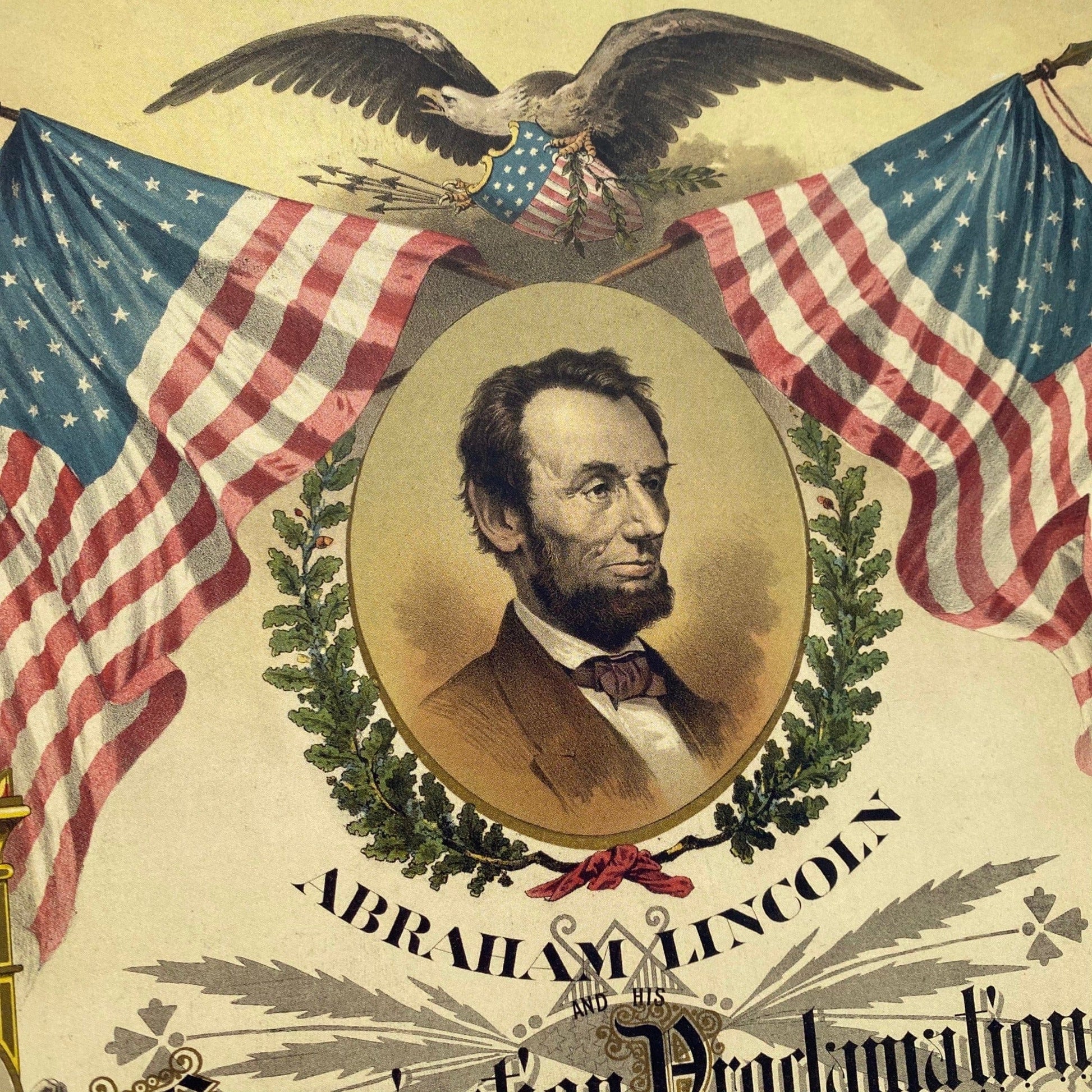
Lincoln's Emancipation Proclamation and the 14th Amendment: Surprising Facts You Didn't Know

 Everybody knows at least the basics of what Abraham Lincoln's "Emancipation Proclamation" was about. Once upon a time (before the dumbing down of public education), students everyone in the U.S. had to memorize at least a portion of it. In some schools, all of it, along with the Preamble of the Constitution. and the Gettysburg Address. It was part of the Civics program which went hand-in-hand with our history classes (which have also largely gone by the wayside).

Of course, if you know anything about the proclamation then you should be familiar with the 14th Amendment which was passed by Congress in 1868. Well, I'm going to provide you with some interesting and often overlooked facts about both which you probably didn't know.  I suspect that it may come as a shock for some of you. So, let's start with Lincoln's famous Emancipation Proclamation first.  

Contrary to popular belief, slavery was not the primary or sole reason for the start of the Civil War. However, it was seen as an important issue especially among certain groups, including Quakers, abolitionists, and some evangelical groups. One of the more famous abolitionist was, of course, John Brown, who attempted to spark something of a revolt with his ill-fated raid on a arms depot at Harpers Ferry, Virginia in 1859.

The question of slavery was a serious issue even before the Civil War with a majority of the states wanting to put an end to it, while the South refused, citing its dependence on the use of slaves. During our revolution for independence from the British, it was commonly accepted that without the support of the South the war would be lost (and indeed, the war was ultimately decided in the South), Therefore, the Northern representatives were left with no choice but to except the hated institution...for now.

Shortly after the end of the Revolutionary War in 1783. the importation of slaves into the U.S. was signed into law by President Thomas Jefferson in 1807 (becoming enforced in 1808) again caused a major riff between the industrialized Northern states and the largely agricultural Southern states. The riff came to a head  by the early 1800's and the United States came very close to ceasing to be.

However, a solution was reached in 1850 known as the "Great Compromise"  dealing with the admission of slave states into the union. It was engineered by Senator John C. Calhoun (D-SC),Senator Henry Clay (Whig-KY), and Senator Daniel Webster (Federalist-MA). Sadly, the "Great Compromise" is often overlooked in most history classes, and while it didn't "save" the nation as such, it did prolong the bloodiest war in U.S. history.

The issue of abolition was an important factor leading up the Civil War, thanks to individuals like Brown, Fredrick Douglas, Harriet Beecher Stowe, and John Quincy Adams, it was never the central cause despite what we're taught in our watered down and often distorted history classes in high school (or sometimes, even in college; all of which are intended to fit into a particular political agenda).

The key issues were more about economics and admission of free vs. slave (these are where slavery comes in), tariffs, and ultimately, the supremacy of the Federal government. This was more than interpretation of the Constitution's 10th Amendment. ("...the powers not delegated to the United States by the Constitution, nor prohibited by it to the States, are reserved to the States respectively, or to the people"), it was whether the states or the Federal government would be dominant.

Many Northern senators believed that the Federal government held all power not expressly assigned to the states as mentioned in the Constitution.  Most Southern senators said that the states held all governing powers not expressly given to the Federal government. That issue wouldn't be resolved until the final outcome of the Civil War.

Personally, based on my read of statement in question, and knowing how the Founding Fathers loathed a strong Federal government (and government in general), I tend to side with the South on their interpretation of the amendment, but that's just me. It should be noted that the descendants of most of the Founding Fathers also agreed with the South's position. So, what did Abraham Lincoln think about slavery as an issue and how did this affect his Emancipation Proclamation of 1863?

While campaigning for the presidency, Lincoln repeatedly said that he had no intention of trying to end  or interfere with slavery as an institution. That may come as a surprise to many people, especially those who've been taught to see Lincoln as a second coming of Moses, however, that wasn't the case, at least in the beginning. 

Even after winning the election, Lincoln said in his First Inaugural Address to the nation on March 3, 1861 that the Federal government "held no authority to interfere with the institution of slavery where it already exists". He went on to say that, as president, he wouldn't seek to interfere with any state's right to govern the institution.

That doesn't mean that Lincoln agreed with slavery as an institution ("I am naturally anti-slavery. If slavery is not wrong, then nothing is wrong"). His first and primary goal was the preservation of the union. Secondly, he wanted to restrict (if not outright ban) the entry of pro- slave territories into the union as new states. Nevertheless, despite his best efforts, he failed. before he even had begun. The first state to secede was South Carolina in November 1860 following Lincoln's election. Other states soon followed until there were 11 in total, forming the Confederate States of America (CSA).

While all of the states were slaveholding, four states that held slaves didn't secede ---Maryland, Kentucky, Delaware, and Missouri (in anticipation of their leaving, Kentucky and Missouri were given stars on the Confederate flag). As an aside, did you know that several Native American tribes sided with the Confederacy? In 1861 the Cherokee, Chickasaw, Choctaw, Seminole, Muscogee (Creek) all signed agreements of support in exchange of being guaranteed title to territories west of the Mississippi River.

 The War between the States began (officially) on April 12, 1861 with the assault on Ft. Sumter in Charleston Harbor (with South Carolina having seceded in 1860, the fort was viewed as foreign occupiers on their territory). The war was naively expected by both sides to be over in a matter of weeks. Bull Run, Shiloh, and Antietam soon removed the nation from that illusion.

By the time of Lincoln's Emancipation Proclamation in 1863, the war had gone worse than expected by the North. Unless something dramatic was done to strategically shift the balance of power, the best outcome that could be expected was a draw.  

As in nearly every conflict down through history, the ability to successfully wage war rests on the economy's ability to sustain the effort. The South's ability to wage war rested on its agriculture. According to the last census before the war in 1860, there were approximately 4 million slaves in the South, making up roughly 30% of its population (compare that to the West Indies where about 85% of the entire population were enslaved).

It should be pointed out that only a few landowning families--mostly large plantations--- owned any slaves. The overwhelming majority of Southerners were too poor to own any slaves at all.  Nevertheless, if, somehow, the South's economy could be disrupted, Lincoln thought, then perhaps the war could be brought to a close.

At this point in late 1862, Lincoln had to accept that despite his promises not to interfere with the institution of slavery, the country was at war with itself,  men were dying daily (the average was 504 per day), and the abolitionists hadn't gone away. If anything, they had grown in number and become a powerful political force. It was time for Lincoln to play his trump card.

On January 1, 1863 Lincoln delivered the "Emancipation Proclamation". It's often overlooked by nearly everybody that the proclamation didn't end slavery in America as claimed. The proclamation freed those enslave only in the states which had seceded from the union and were now a part of the Confederacy ("...that all persons held as slaves within the rebellious states are, and henceforward are free").  But what about the slaveholding states which remained part of the union?
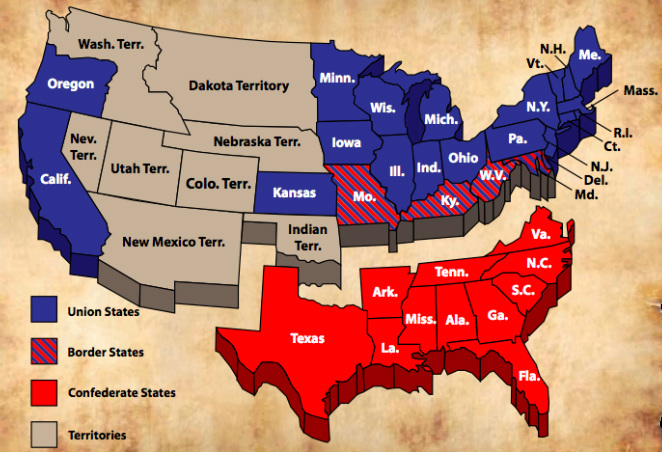
It meant that those slaveholding states which didn't secede, regardless of their sentiment, were excluded from the proclamation. Thus slavery continued in Kentucky, Maryland, Delaware, West Virginia, and Missouri until the end of the war (the tribes which sided with the South were unaffected. Native American tribes long held slaves of all races  before, during, and after the war).

The second interesting observation is that despite Lincoln's decree, those states which had legally (at the time) left the union, were now part of a independent and separate nation known as the Confederate States of America with its own president (Jefferson Davis), its own Congress and Constitution, its own legal system and currency. and so forth.

That meant that President Lincoln was attempting to impose a unlawful degree on an defacto independent nation! It would be like a President issuing a decree to Canada or Mexico! The decree therefore had no legal standing, and no doubt Lincoln knew it. But if it could hamper the South's war efforts, it was worth the bluff. and it worked

At first slowly, then in droves as word spread, slaves began to abandon their fields and head north or to the western territories. Even though slavery comprised a small percentage of its population, the effect was cataclysmic for the South. With crops being left to rot in the field and the economy now in turmoil, soldiers began deserting to harvest the crops in order to prevent their families from starving. 

This left the South's military further undermanned. In addition there was diminishing food and supplies reaching  Confederate troops, whose supply lines were overstretched already. It give the North the edge it needed.  By 1865 the war was over and the South lay in ruins. It would be decades before it would recover. In some ways it never has. 
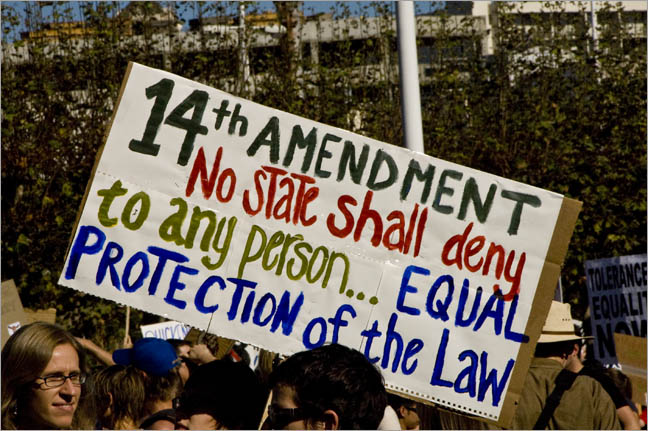
Following the war, the 14th Amendment essentially codified Lincoln's "Emancipation Proclamation",  along with the 13th which formally abolished slavery as an institution, was passed in 1868.  thus ensuring all those previously held as slaves were now fully U.S. citizens with all the rights which go along with it. The 15th amendment, passed in 1869, provided for the right to vote (it, however, excluded all Native Americans).  The trio of amendments prevented (at least on paper) any states from denying equal rights to all those held in slavery. 

The 14th also forbid any former member of the U.S. government who participated with the "rebellion" from public office and denied any and all compensation incurred by the Confederate government, including loans or contracts (as well as slaveholders, meaning they wouldn't be compensated for the loss of their slaves).

As an aside, Confederate soldiers were eventually allowed compensation for service connected injuries and pensions for Confederate widows as early as 1867 by the state whom they served. The Federal government expanded existing military benefits in two Congressional Acts to cover Confederate soldiers and their widows. One in 1927 and the other in 1957, long after many were dead. 

It should be pointed out that 28 of the existing 37 states were needed to ratified the amendment in order for it become law (which they received), but did you know that despite the passage of the 14th Amendment by Congress in 1868, several states didn't ratify it until later (in some cases, much later)? While most states ratified the law in 1868, several notable states held out. The 14th Amendment wasn't ratified by Texas or Mississippi until two years later, in 1870. 

Three of the slaveholding border states which didn't secede  decided to take their sweet time about it.   Delaware ratified it in 1901. Maryland got around to it in 1959 (as did California which had become a state in 1850).  But the "winner" was Kentucky. It waited until March 18, 1976, nearly 108 years later! The fourth slaveholding  border state, Missouri, was the 17th state to ratify the amendment in 1868 along with West Virginia, another slaveholding border state.
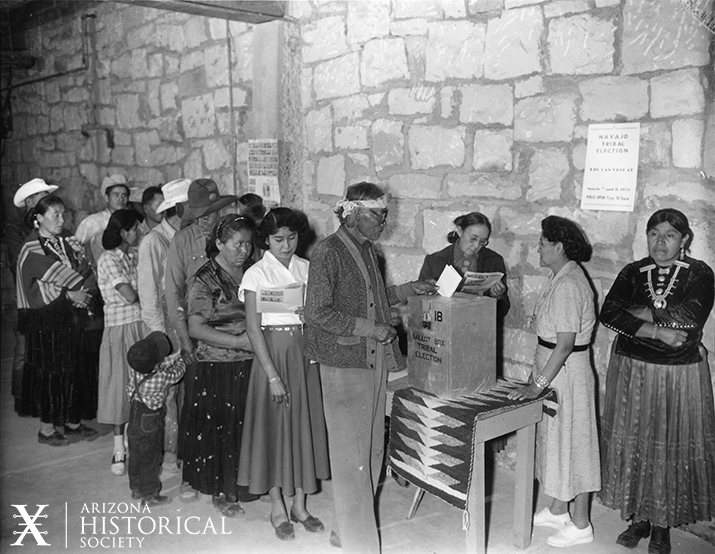

Lastly, I think it's important to point out that while the 14th Amendment provided equal rights and protection under the law to all former slaves as well as children born of foreign parents (legal or illegal), Native Americans weren't granted the same rights until 1924. That's 56 years after the passage of the 14th Amendment. 187 years after America's independence.

The  "Indian Citizenship Act of 1924", or the "Snyder Law" as it became known, was signed into law by President Calvin Coolidge (R) on June 2, 1924. It finally gave equal rights and protection under the law to all Native and Alaskan Americans. A sad commentary on "land of the free and home of the brave" don't you think? Never assume your freedoms are necessarily guaranteed or protected by anyone.


If you enjoyed the article, please consider passing it along to others and don't forget to subscribe. It's free! Lastly please be sure to "like" us on whatever platform you use to read anotheropinionblog.com. It helps beat the algorithms and keeps our articles in circulation. Thank you!


National Archives: Emancipation Proclamation


The Roles of State and Federal Government


Kentucky's Abraham Lincoln


14th Amendment: Citizenship Rights, Equal Protection,Apportionment, and Civil War Debt


Ratification of Constitutional Amendments


There were 4 million enslaved people counted in the 1860census...


What Is the Snyder Act of 1921 and who does it apply to?


Saturday, July 04, 2020

The Left's Attempts to Whitewash Jesus

We've long been accustomed to seeing images of a fat bald laughing Chinese looking Buddha. It seems to be in every Oriental business, and nobody says anything, least of all practicing Buddhists. So what right? Well, not really. Buddha, or as he was actually known, Siddhartha Gautama, was actually born in Nepal, not China. The name "Buddha" is also a title like the term "Christ" is. It means "enlightened one".

So, he wasn't Chinese. That's one stereotype debunked. He was from an aristocratic and wealthy family. His father was the king of the Shakya, an ancient kingdom somewhere on the Nepal-India border. Thus Buddha was a prince. It's also unlikely that he was fat. Most people from Nepal tend to be slender.

Descriptions of him state that was tall with dark hair and blue eyes. He had long earlobes due to the heavy ear rings men of his class wore. His skin color was a light golden brown. Early in life he wore his hair long and typically tied it in a topknot. He also wore a beard as was customary. After his enlightenment, he shaved his head and beard.

There's hasn't been any serious controversies about his appearance, not even the fact that he would be considered a Caucasian. In fact, the image of Buddha has been adapted by nearly every country where Buddhism was established, be it Korea, Japan, Thailand, the Philippines, India, or even China. Evidently the estimated 488 million Buddhists in the world are alright with that.

Understanding Muhammad's appearance is a bit more difficult since Islamic law forbids any "graven images" of their prophet. However, there are a few images and descriptions, although those are highly idealized. While the Sunni sect frowns on images of Mohammad, the Shia are a little more open about it, provided the images are "respectful", so here's what we know.

Muhammed is described as being of medium height (approximately 5'10). He was handsome with an oval face (some texts make mention of him having a large head for his frame). His eyes were black with long eye lashes. His hair was black and wavy. His beard was black and he had a fair amount of body hair.

Being Semitic, his complexion is described as being relatively fair with a slight ruddy complexion rather than the typical light brown of Arabs (bearing in mind that Arabs are Semites and are classified as Caucasians). His built was neither stocky nor slender, although in old age he put on weight (like all of us). In short, he's described in generic terms as being an average looking guy so as practically everyone could identify with some feature of him.

As for Moses or David, we have a similar problem. Outside of biblical sources, there are no independent sources for the historical existence of either individual. Moses was born in Pharaonic Egypt of Semitic ancestry (his name, "Moses", is believed by most biblical scholars to be of Egyptian origin and means "drawn out" or "drawn from", the rough equivalent of "son of" with the name of some deity preceding it such as Thutmose , the "son of Thoth", the Egyptian god of writing, wisdom, and magic.

Nevertheless, pseudo-historical sources like Josephus, Manetho, Philo, among others have described Moses as having a ruddy complexion with long white hair and beard in old age. He was said to have been tall (bearing in mind the King Ramesses II aka the Great, a possible contemporary, was considered tall at 5'7". He also had red hair). Given that he was allegedly raised in Pharaoh's court (though we're not told which pharaoh), he was likely well educated and ate well.

If he was a priest (as was likely), he would have been shaved head to toe as hair was offensive to their gods and bathed in scented oils daily. After he began the Exodus, he would have grown out his hair and beard the majority of Semites; it's natural color most likely being black.

King David supposedly had a ruddy continence and may even have had reddish hair. We're told that he had "beautiful eyes" but not their color. He was considered handsome. He would have grown a full beard as he grew into manhood. Unfortunately, there's not much more than that. The sources, as limited as they are, were more interested in their unique characters than their physical appearance. That brings us to Jesus.

I remember going to Sunday school back in the late 1950's and early 1960's and seeing pictures of a tall, slender, blue eyed man with fair skin and typical European features, complete with reddish blonde hair and beard. Other than the red and blue robes, he looked like he would have been more at home in Chaucer's England with all its knights, lords, and ladies. But this was, or so we were told, the Christian messiah, Jesus of Nazareth, or Yeshua as he was actually known.

There have been numerous attempts throughout the centuries to present a portrait of Jesus. Some show him with dark hair and a beard, dark eyes but still with a fair complexion. It's worth nothing that some of the earliest drawings of Jesus show him with short hair and clean shaven. Of course, like Buddha, how Jesus is portrayed depends very much on the intended audience.

In Asia, he has Asian features. In Africa or in black churches, he is given black features and skin color. In places like India or among Native Americans, he is shown with corresponding features. By the same token, those from southern Europe and the Middle East show him with dark hair, eyes and an olive complexion. In short, again like Buddha, Jesus is made to look like the people in the community where he is being presented.

The radical Left has recently begun to attack the image of Jesus, especially the one I recall from my childhood. However, their reasoning is not to portray Jesus historically, but to foment more racial division by making him as a person of color. Their aim is an indirect assault on the America they loathe by going after the things and personages held dear by most Americans. That's why they've turned their attention from statues and symbols of the Confederacy to the Founding Fathers to Jesus.

Unfortunately, the symbols of the Confederacy have long been hijacked by groups promoting racial, ethnic, and religious hatred and violence. That made them easy targets despite attempts to return the discussion of the Civil War back to the issue of state's rights. Next came the Founding Fathers.

Perhaps it should be expected that these too would be easy targets because despite what these imperfect individuals managed to create---a democratic republic governed by a constitution and based on individual sovereignty---they still owned slaves. They have overlooked the forest for the trees. Yes, many owned slaves. Yes, the majority deplored the institution of slavery and many had the personal courage and conviction to free their slaves, they nevertheless didn't destroy the institution.

The historical fact was that slavery was essential to the economy of the southern colonies and it was there the rebellion was having its greatest successes. Had the issue been forced, the southern colonies would have withdrawn their support and the rebellion---and hope for a new nation---would have gone with them. The truth is that these were imperfect men living in imperfect times where slavery was considered normal and nature. To have said anything at all was daring in itself.

Remember too that in their day, only men---no women---who owned property and belonged to the Anglican Church could participate in politics. These were also a very devout people. Church attendance was seen as mandatory. They believed the bible was the literal word of God. Therefore, as slavery (as well as the subservience of women) were condoned within its pages, it must therefore be part of the Divine Plan.

No doubt we would disagree with these interpretations today, they did not. To question was seen as blasphemous . It was enough to even get you arrested and jailed! This is where the Left also makes a key mistake. They attempt to apply modern judgments on individuals and events which occurred over 200 years ago (the same can be said about the Civil War). We cannot judge the past based on our moral standards. We must view it from the standpoint of their time and their morals.

As for what the historical Jesus may or may not have looked like, thanks to technology, genetics, forensic anthropology, and archeology, we have a much better idea than we did 1000 or 500 or 100 or even 50 years ago when the vast majority of paintings, statues, and illustrations were done.

First off, we know he was a Semitic, which makes him a Caucasian. Like most Semitics he would have been generally light skinned at birth and due to the climate, would have developed a darkish tan. Most Semitics of the period were short and somewhat stocky, so we can presume he was too. They also usually had brown or hazel eyes and dark, somewhat curly hair as opposed to straight or kinky.

Jesus is described as being the son of a "tekton" which is often mistranslated as "carpenter". The correct meaning of the word is "builder", but what kind of builder? Wood was a scarce resource. Only the well-to-do could afford to import wood for doors, tables, chairs, and so forth. The most common and affordable building material was stone. Therefore, he would have likely been a stonemason, though probably worked with other materials much the same way as a handyman does.

Working with stone, as anyone who has done it can tell you, is hard dirty work. Therefore, we can be pretty safe in saying that he would have been muscular and had a lot of stamina. But being on the low end of the social and economic ladder, don't think he was buffed. In addition to being somewhat short and broad shouldered, he would have been slender (due to his meager diet) but on the muscular side.

In keeping with the Roman occupiers, short hair and clean shaven would have been the norm among the educated and upper classes. Besides, it was practical in dealing with the heat not to mention lice. Many Jews of the time tried to emulate the Romans. Some when so far as to engage in routine Greco-Roman behavior, and not just in their grooming habits.

They commonly worked out in the nude, bathed in public baths, and engaged in philosophical discussion at the various open air "schools". They adopted the diet of their conquerors, which was contrary to Jewish dietary law, included shellfish and pork. A few even had their circumcision reversed (which was also seen as a rejection of their Jewish heritage since circumcision was viewed as a religious rite and symbol of their convent with God).

However, we're told that Jesus was a devout Jew, so it's highly doubtful he engaged in any of these practices. We can therefore assume that while his hair was moderately short (as was custom at the time as cited previously), he likely kept his beard and adhered to a strict---if meager---Kosher diet along with all the other religious requirements of the Torah.

So, perhaps the radical Left is correct in reminding us that Jesus wasn't Nordic or that the Founding Fathers were products of their time, despite their collective genius. We need to accept them for what they were, flaws and all, and to be grateful that despite their circumstances, they existed at all or were able to accomplish all they did. It's up to us to build on what they did and to preserve what remains true despite the radical Left's hatred for the freedoms we celebrate daily in this country.


White Jesus Statues Should Be Torn Down, Activist Shaun King Says


Black Lives Matter leader: It's time to tear down statues of "white Jesus"


Physical characteristics of the Buddha


Male Grooming in Ancient Egypt


What Did Jesus Look Like?


Depictions of Muhammad


Saturday, June 20, 2020

The Triumph of Evil as Good Does Nothing...Again: Protestors, Looters, and Reparations

The Irish born British political philosopher, Edmund Burke, is credited with saying "the only thing necessary for the triumph of evil is for good men to do nothing". The quote, taken from a letter he had written around 1770 to a friend named Thomas Mercer, dealt with political apathy. Right now, we have dozens of public officials throughout the United States guilty of just that. They are allowing their towns and cities (some of which having the population of small countries) to be trashed and looted.

We're seeing people assaulted or even killed by piss-ant punks in the name of their "right" to protest. We're witnessing businesses being robbed; property vandalized or worse, burned to the ground. Yet, these officials still do nothing. Why? Are they afraid of making some group mad at them for enforcing the law? Are they worried about name calling like little kids on the playground at school?

I don't understand it. I really don't. They hide in their offices behind walls of security and pretend nothing is happening. They go to their upscale homes with manicured lawns each afternoon, safe behind taxpayer paid police officers while neighborhoods are being burned and looted. These are exactly the type of people that Edmund Burke was talking about some 200 years ago. They are the ones who've chosen to do little or nothing while anarchy is allowed to run rampant; while people are being robbed, beaten or killed. Violence only begets more violence.

Meanwhile, city councils sit back and do nothing too. Sure, they pander to the local media, but what is that really accomplishing? Maybe building up some brownie points to pull out for their next reelection where they can claim to be "tough" on crime or "supportive" of the protestors, depending on which way the wind happens to be blowing? These too are the people that Burke spoke about.

Oh, for what it's worth, I've notice that the cities and towns where the protests and looting have been the worse also tend to have a Democrat dominated local government, including mayor. I don't know if that means anything as I suspect incompetence and cowardice are non-partisan attributes.

For decades, at least going back to when Bill Clinton was President and certainly through the eight years of Obama, we heard nothing but how militant and organized the Right was, especially the "Tea Party", which was the bane of liberals everywhere. Yet, here we are in 2020 and I'm not seeing much of a response from the mean ole nasty Right-wingers are you? Where are all those homegrown militias the Left Wing media warned us about when you need 'em?

Right now, it's privileged Far Left snot nose kiddies playing at being revolutionaries. We see individuals barely old enough to shave throwing rocks or bricks at people and cars and actually expecting no one to say or do anything about it! We see young blacks ganging up on mostly lone white kids who are either just going from point "A" to point "B" or worse, thinking they're going to be accepted as part of the "big change" just because they're out in the street protesting. In most cases the only thing being "accepted" is their ass whooping as seen on social media the world over.

We see spoiled truants smashing windows and setting fires to buildings with the only real results being that people have lost a job and paycheck while the owners simply collect their insurance money and move to someplace a little safer. How does that "empower" anyone? How does that bring improvement to neighborhoods, especially those on the economic bubble which needs those jobs?

We see whites on bended knee begging for "forgiveness" for something they never did. Some are demented enough to don manacles while others kiss or wash the feet of imaginary victims. It's nauseating. This behavior is no more than a form of self-loathing by the emotionally or psychologically weak. Some simply buy off their "sins" with cash, credit cards, or other things.

Perhaps worse of all is the removal of statutes, which marks our collective past for good or bad. But it's not just statutes, it's books, movies, flags, and everything else which we share in common. Trying to destroy or rewrite history doesn't work. It never has. Don't believe me? Look at the old Soviet Union. Look at Communist China or Cuba. Take a look at Nazi Germany or the old Communist Bloc.

Nowadays, we've got sports figures condoning disrespect to the flag and National Anthem by "taking a knee". I guess they don't see all the good this country has done for them or people like them. If it wasn't for all that flag represents, they wouldn't have those multi-million salaries. Hell, they wouldn't have gone to college on "full ride" scholarships. Most wouldn't have been able to afford to go to school period if it wasn't for the taxes paid by the citizens of this country who are represented by that flag.

They seem to have forgotten that sports is just that...a game. It's merely a form of entertainment no different than movies or video games. It's a form of escapism. It isn't necessary to our way of life. It's the fans, hard working men and women, who make their elitist lifestyles possible. These jocks might consider showing them a little respect and stand for the flag and anthem. If they want to "protest", they should do it on their time not ours.

By the way, that flag and anthem also represents the millions of lives that have been lost or altered in countless wars and conflicts in service to this country. Without those men and women, there's no telling where these coddled rich jocks and their ilk would be right now. Destroying or defacing the memorials and graves of these fallen heroes is a scar on the soul of this nation.

As for blaming "white people" for slavery, that's pure BS. Slavery has existed since civilization began. It probably existed in one form or another since we fell out of the trees on some African savannah! Ever religion has condoned slavery. It's in virtually every religious text. Want to purge Confederate memorials, why not start with purging the Jewish and Christian symbols and religious texts first?

After all, those in the South and North who benefited from slavery saw it as a biblical directive. Even the Islamic Koran supported slavery. In fact, slavery is still practiced by some Muslim groups to this very day. You want reparations or apologies? Great. Start with God. After all, it's all written in his holy books.

Reparations presupposes that someone was "injured" and needs to be compensated in some way. Now, I don't know of any slaves in this country let alone slaveholders. In fact, no one's parents, grandparents, or even great grandparents either owned slaves or were slaves. There are damn few whose 2x great grandparents qualify. We also cannot apply the morals and values of today to events of a bygone era.

We need to remember that the United States was not responsible for slavery. We were, however, one of the first to end it. Slaves were prohibited from being imported into this country in 1807 and slavery was formally ended on January 1, 1863 with the "Emancipation Proclamation". Great Britain, France, Spain, Portugal, and the Dutch brought slavery to these shores long before there was a U.S. of A.

In addition, the native peoples of this continent engaged routinely in slavery and had for centuries. Even after the arrival of Europeans, they continued to use slaves. In fact, they even sold slaves to the Europeans. Eventually, Europeans were even captured and enslaved by native tribes just as they were in turn. Everyone was fair game!

Meanwhile, back in Africa, African tribes were attacking and capturing rival tribes and enslaving them (not to mention local troublemakers or those they were envious of). Later, they turned it into a business by selling them to other tribes, or European and Arab merchants. Many an African tribal chief became very wealthy thanks to the sale of human beings, but I don't hear the Left talking about this. Why do you suppose that is? Why isn't anyone asking them for reparations or apologies?

As for the Arab merchants (who also dealt in Asian slavery), it wasn't uncommon for them to capture ships with Europeans onboard and sale them into slavery. In fact, Boko Harem, al Qaeda, ISIS, al Nursa and others are still engaged in the slave business to fund terrorism. The big difference these days is that they prefer young Christian girls who are sold into sex slavery.

An interesting aside is that some Europeans sold other Europeans into slavery, albeit illegally. This was especially true of those individuals didn't speak the language or know the laws. I'm not talking about indentured servitude now. I'm talking about actual slavery. I should know. It happened to some of my ancestors. It was often the Irish, Welsh or Scots who were sold to the Arab merchants by the British who, in turn, sold them to other Arabs or Asians. Slavery was perhaps the first truly global business.

As for this country, it has done more than any nation to make up for the failings of its past, be it in terms of equal housing, voting or holding office, owning businesses, serving in the military, etc. Perhaps the greatest gift this country has bestowed is that of education. The minorities in this country are afforded the best educated in the world, and they receive the lion's share of scholarships and grants.

The ongoing protests in this country right now is over a perceived abundance of white police brutality toward blacks; not Asians, not Hispanics, and not Native Americans. Could it be that whites simply make up the majority of police officers in this country because they're largest demographic? As an aside, according to the U.S. Census Bureau, white males are actually now an official minority in this country.

Could there be a culture, especially among young males, which encourages a distrust of authority figures (including teachers), which in turn encourages them to ignore or flee from police officers, not to mention resisting or fighting with them? Play stupid games, win stupid prizes (including wooden boxes). Wouldn't it make more sense to just do as told and then take it to court with a lawyer? I rather be temporarily inconvenienced than permanently dead. Maybe too change should come from within.

As for the looting, that doesn't help their cause. It makes them into criminal punks looking for an excuse to steal and destroy property which simply reinforces the stereotype they claim they're trying to change. Lastly, playing in traffic. Yes, they have a right to protest; more power to them. But they don't have a right to block streets or highways. None whatsoever. Who among them is going to be responsible for delaying an ambulance with a heart attack victim, fire truck racing to save someone's home, a police officer going to an accident or a husband taking his expectant wife to the Emergency Room? Will those financially backing these protestors accept responsibility? I seriously doubt it.

Meanwhile, do motorists have an obligation to stop? Well, yes in the sense that they don't want to injure or kill anyone, even an idiot with a sign, if they can help it. But if they are surrounded or feel endangered or even threatened, do they have a right to protect themselves? I would think they would be entitled to the same rights as to when someone breaks into their home, but that's just a guess. I know what I would do to protect myself or others with me.

So, as Burke said, all that's required of good people is to do nothing for evil to triumph; evil, which I might add includes violence, looting, or the destruction of property. Meanwhile, mayors and other elected officials sit and twiddle their thumbs. Perhaps we should give them a reason to do something rather than to do nothing. Want to know more? Check out the links below.


These are all the cities where protests and riots have erupted over George Floyd's death


It's a cult: Thousands of Whites Grovel In Front of Blacks Begging For Forgiveness


Total Humiliation: Thousands of Whites Kneel in Front of Blacks asking for Forgiveness for being White Devils


The Bible and slavery

Yazidi sex slaves raped by dozens of ISIS fighters reveal five years of hell to charge abusers with war crimes


Slavery in 21st Century Islamism


The White Slaves of Barbary


African Slave Traders
https://www.thoughtco.com/african-slave-traders-44538


Monday, October 21, 2019

Hymns That Reverberate Down to Today: A Book Review

Book Review of "Hymns of the Republic: The Story of the Final Year of the American Civil War" by S.C. Gwynne
Published by Scribner

There are lot of books available about the American Civil War, and it's little wonder. It was the bloodiest chapter in American History. More Americans died between 1861 and 1865 than in any war before or since. Interest in the Civil War has never waned. Its repercussions are still felt to this day, some 155 years after the cannons and rifles fell silent.

A few of these book have become classics. "Hymns of the Republic: The Story of the Final Year of the American Civil War" by S.C. Gwynne is destined to become another. Mr. Gwynne has done more than just recite the traumatic events of the war's final year. He transports his readers back in time. He has put flesh to bone with the skill of a surgeon and brought these men and women whose actions defined an era back to life.

Through Mr. Gwynne's remarkable talent, he has allowed us to see into the minds of not just men like Lincoln, Davis, Grant, Lee, Sherman or Jackson, but of other significant individuals such as Clara Barton, Fredrick Douglas and understand their decisions from their eyes. Gwynne strips away the halos and horns; removes the illustrious from their pedestals and shows us the souls of the men and women who lived through this remarkable and terrible time in American history, and in doing so plows ground often left bare to reveal remarkable treasures long forgotten.

Through the author we relive the great battles; to see how they unfolded and what impacted each calculation. Gwynne exposes the fleeting strokes of genius and nagging doubts which tormented the men whose decisions would affect thousands of lives, adding drama to each page as it's turned. In addition, Mr. Gwynne's "Hymns of the Republic" moves beyond that to provide us with glimpses into the lives of the ordinary soldier and the average civilian who often paid the price, sometimes the ultimate price, of war.

Of particular note is the amount of attention Mr. Gwynne gives to the life of the common slave, be it the ordinary man or woman tolling side by side with their master on small farms throughout the rural South or on the large plantations. Great emphasis , often missing from similar books, is placed on those few willing to take charge of their destiny; of how their escape from bondage to take up arms in the Union Army to occasionally find that life was little better than it had been under their old masters. Prejudice, hatred and bigotry were traits not confined to the South.

It is said that to forget history is to repeat history. America today is more divided than at any other time since the decade preceding the war. It's critical for us to understand how and why this war took in order to avoid repeating its costly mistakes. Anyone with an interest in history, the Civil War, or the lives of those who lived it will thoroughly enjoy "Hymns of the Republic: The Story of the Final Year of the American Civil War" by S.C. Gwynne. This is a must buy! 325 pages.

Saturday, August 31, 2019

400 Years of Slavery in the New World


"Slaves, obey your earthly masters with fear and trembling, with a sincere heart, as you would Christ" Ephesians 6:5

2019 marks 400 years of slavery in the New World. An event worthy of remembrance. However, to read the articles and hear the speeches, you would be inclined to think that slavery sprung into existence as a result of some nefarious plot concocted by the twisted mind of an Englishman, a Spaniard, a Portuguese, or perhaps a Dutchman to enslave his fellow man solely for profit; a scheme to enslave one and only one group of people by one and only group of another people. Obviously this couldn't be further from the truth.

Slavery has been part of the human condition almost from the beginning of civilization some 6000 years ago (if not longer). It has destroyed civilizations and communities as much as it has individual families. The ancient Sumerians, Hittites, Assyrians, Babylonians, and Egyptians all talked about taking slaves (usually the result of war). Greece and Rome, upon whose foundations the West was built, were depended on slaves, as were the ancient Indian, Muslim, and Chinese empires. Not only are the ancient texts full of references, but even the sacred writings of most all modern religions are full of references to slavery (not to mention religious institutions themselves direct involvement with slavery). Most refer to the treatment of slaves or under what conditions they could be sold and so forth. Rarely was there a reference about the depravity of the institution. So much for religious infallibility.

There is hardly a group or tribe on this planet who haven't, at some time or another, hasn't been subjugated. While most has resulted from conquests, some have voluntarily sold themselves into a form of slavery called indentured servitude. Typically these individuals had no choice if they were to survive their living conditions. Many were recruited out of the slums of cities, especially poor houses and other places of destitution. Others, however, were simply individuals looking to leaving for the New World and a chance to start over but were to poor to pay their passage or to buy the land they needed to get started.

Either way, they willingly (some would say coerced) sold their labor to someone willing to pay their fare and provide work, food, and shelter in exchange for a set number of years of often backbreaking work. Many of these individuals didn't survive the voyage while others died during their servitude. It wasn't uncommon that owners would work these individuals beyond their prescribed term since the indentured worker had little ways of determining how long they had actually worked.

At the end of the their service, if they survived, they were to be rewarded with their freedom and typically some previously agreed to payment of sorts, usually a specified amount of land and/or cash along with seed and perhaps a few rudimentary pieces of equipment to get started. It was a very tough existence and not all were successful.

While indentured servitude is most closely associated with early European settlers, especially the Irish, Welsh, and Scots, it existed well back into antiquity. The Bible mentions, for instance, in Exodus 22. 2-6: "When you buy a Hebrew slave, he shall serve six years, and in the seventh he shall go out free, for nothing. If he comes in single, he shall go out single; if he comes in married, then his wife shall go out with him. If his master gives him a wife and she bears him sons or daughters, the wife and her children shall be her master's, and he shall go out alone. But if the slave plainly says, ‘I love my master, my wife, and my children; I will not go out free,’ then his master shall bring him to God, and he shall bring him to the door or the doorpost. And his master shall bore his ear through with an awl, and he shall be his slave forever". Thus six years was considered an acceptable term of servitude, which we would associate with being indentured.

However, this appears to have more of an exception than a rule. Slavery was, for the vast majority, a fact of life and it was often brutal. While some speak of a "bond" between slave and master as a form of informal agreement, it was clearly to the benefit of the owner. Nevertheless, a slave could not be compelled to do what they refused to do. However, the result was usually beatings and/or death. Yet for the master, that represented a loss of investment and labor, which had to be protected.

Slaves from Africa for instance, didn't simply appear at the ports, ready for iron chains. They were typically prisoners; the result of tribal wars where one side fought and captured another. The losers were quartered and then sold to roving coastal slave traders from Europe, Asia, or the Middle East. From there they were shipped to various ports and resold several times before reaching their final destination. Some Europeans too found themselves sold into slavery, often as a result of some unscrupulous sea captain tricking immigrants who didn't speak the language or know anything about where they were.

Such was the case of some of my ancestors coming from Germany to escape religious persecution. Not speaking any English and trusting the ship's captain, they thought they were headed to Maryland but ended up in Virginia where they were sold to the Virginia Colonial Governor by the ship's captain who unable to afford his docking tax (he blew it on booze and prostitutes before leaving port in England). Fortunately, two of my ancestors managed to escaped and were latter able to help free their fellow passengers.

"Slaves are to be submissive to their own masters in everything; they are to be well-pleasing, not argumentative, not pilfering, but showing all good faith, so that in everything they may adorn the doctrine of God our Savior". Titus 2:9-10

As with the empires of the past, modern empires continued in the slave traded through the early part of the 19th century when slave trade effectively ended in the West. The empires of Great Britain, Spain, Holland, Portugal, and Italy all stopped dealing in human flesh. However, slavery continued in Africa, especially through the efforts of Arab and Asians slave traders (the slave trade remained alive and well in Asia too). Of course, this isn't to say that slave-like conditions didn't continue to exist. As an aside, the Ottoman Empire, continued with the dealing in slavery well into the 20th century.

The colonial powers, which now included Imperial Germany (until 1918), continued to treat native populations, mostly in Africa and the Pacific Rim, as little more than ignorant children. While they were employed and received a wage, working conditions were often horrific, yet competition for the limited jobs (often in mines or factories) which included housing and basic medical care, was stiff. Nevertheless, the colonial powers did employ native populations in their military, police, local administration, office managers, and so forth.

As a result, a professional middle class was created which afford their children with the opportunity to attend leading schools. For some, this meant entree in to places like Cambridge, Oxford, the Sorbonne, or the universities of Madrid, Heidelberg, or Berlin. For the less well off, schools were created which at least provided a medicorum of education; a bit more than basic reading, writing, grammar, science, history, and mathematics. It should be pointed out that many of these schools were tied to churches and social reform groups and less so directly connected with the colonial government who incorporated their own agenda.

In time, this colonial system created lawyers, doctors, engineers, and other well educated professionals along with professional soldiers, journalists, police officers and a bustling class of small businessmen and entrepreneurs (this was especially the case in India, Egypt, Morocco, and South Africa). Thus, colonialism brought with it an end to the slave trade and a great of economic and social opportunities, it also included a strong measure of exploitation as well as discrimination against the native populations.

"Slaves, in reverent fear of God submit yourselves to your master, not only those who are good and considerate, but also to those who are harsh". 1 Peter 2:18

In the American colonies, religion was viewed as the foremost moral authority, and with it, basis for slavery as an institution. Men such as the famous Puritan minister, Cotton Mather, spoke in favor of it as did Judge John Saffin. Nevertheless, the importation of slaves in America ended in 1808. Slavery gradually ended in the more industrial northern states, though it continued in the primarily agricultural south (it should be pointed out the industrial north heavily benefited from the cheap products produced by the south's slave based economy). However, the common stereotype of a land chock full of plantations with their gentlemen owners sipping their mint juleps on the front porch and the all the Southern Belles busily chirping away about the latest cotillion is purely myth.

In truth, out of a population of 5.2 million whites in 1860, only approximately 6% owned any slaves at all (the average was just three), while plantations, the homes of the very wealthy, comprised just under 3% or about 150,000 individuals. Most owners typically worked shoulder to shoulder with their slaves; ate the same food, and shared many of the same hardships. Among the wealthy plantation owners, the vast majority didn't employ white "taskmasters" with whips to beat or brutalize the slaves into submission. We should also note that there were examples of blacks owning black slaves or of having never been slaves.

Such treatment would have likely had the opposite effect as you can imagine. The field supervisors as they were called were almost always trusted slaves who understood the nature of the work involved, be it planting cotton or other crops, chopping lumber, or working in small factories, but I'm getting a little ahead of myself. As for the relationship between slave and master (or for that matter, between the white and black populations), commentators at the time stated that the relationship was typically one of respect, even to the point of taking on a paternalistic quality in some cases.

The general attitude toward slavery in the South was typically threefold. The first was its immediate end. Men like General Robert E Lee held this position which stated that slavery was an outdated and inhumane system which no longer served its purpose. The future of the South lay in its industrialization as quickly as possible. The second position, shared by individuals like President Jefferson Davis, was that slavery was a doomed institution and industrialization of the South was the future.

However, slaves lacked, in many cases, a basic education as well as lack of understanding of laws and general business dealings. Therefore, they believed that slaves should be educated to the point where they could be freed and would be able to adequately function in society. Davis and others had instituted as series of reforms on their plantations to do just this. It was Davis' intent to implement this throughout the Confederacy as quickly as the war permitted. Later, after the war, Davis stated that had been able to implement these reforms, slavery in the South would have ended within ten years and without any bloodshed.

The third perspective was that the institution of slavery was just. Why? Because the Bible held it to be so, and it was their belief that the Bible was the literal truth as pronounced by God. While America was at that time considered a rather devout nation where organized religion held preeminence, it was especially so in the South which had been settled mainly by Northern English, Scots, Irish, and the Welsh who were predominately fundamentalist Protestants (Jefferson Davis declared, in 1861, that the Confederacy was a Christian nation and would forever remain so, and was included as such in the Confederate Constitution which was ratified on March 11, 1861).

Following the war, things changed unimaginably. Gone was the entire social order, and with it starvation, disease, and new found poverty. Northern influence, be it good or bad, was everywhere. It didn't take long for resentment, anger, and violence to surface. Recovery for the nation was going to be a slow process, but especially so for the South which had been nearly leveled. For whites, it would be starting over from virtually nothing. For the newly freed slaves, they were going to have to adjust to a world they knew little about; some preferred to remain with their former owners while others were able to quickly adapt.

Since 1865, numerous laws have been enacted to create a level playing field, be it in terms of voting, employment, housing, and general integration into society. It's not been easy for anyone, but perhaps more so for these former slaves and their descendants. However, by the 1960's, much of this had been overcome. Pockets of discrimination still existed (as it did for other groups such as Jews, Catholics, or even Asians), but we seemed to have finally come together as Americans by the close of the 1960's. Racism had, in fact, become the subject of ridicule and comedy by the early 1970's (as illustrated by the comedy of Mel Brooks, Robin Williams, Eddie Murphy, and others). But sadly this wasn't to last.

"One who oppresses the poor to increase his wealth and one who gives gifts to the rich---both come to poverty". Proverbs 22:16

By the late 1990's, racism (or what passed for "racism", whether real or not) was rekindled. Today, anyone who disagrees with someone of color, particularly if they're white--the only way racism seems to work---is automatically accused of being a "racist". The corporate media, through its marketing and advertising, has begun to impose certain stereotypes and standards on society. Whites are now suppose to feel "guilty" for so-called "white privilege" although no legislation has awarded them any such honor. In fact, whites alone among all racial groups, are actually denied the same social benefits as other racial groups. Naturally this isn't meant to imply that pockets of actual racism doesn't exist, nor that racism is all one sided. Any racially different group can be guilty of racism. It's just that the media downplays or ignores this fact.

We hear of "reparations" for what occurred over 150 years ago. Paid to whom I wonder? Not all blacks in America descend from slaves or whose ancestors were slaves in America. In fact, many actually owned slaves and/or were never slaves themselves. But if reparations were to be paid, would it include European slaves? How about Asian? What about Native Americans? After all, they were sometimes held as slaves and at other times, owned slaves. Who would pay these "reparations"? Just America? Why not England, Spain, Portugal, Italy, Sweden, and Holland too? They were just as involved. Of course, we can't forget the African tribes who started the process can we? Nor should we forget the Arab or Asian slave traders who were directly involved. Seems like a lot of blame to go around.

The fact of the matter is that slavery has been a disease which has affected Mankind from the beginning, and unfortunately it still continues in places today. Muslim extremists like ISIS, Al Qaeda, Boko Harem and others still engage in slavery, mostly of Yazidi and Christian women and young girls, but also of boys and men too. Slavery among some Africa tribes also exists, and yet the world has done little to put an end to this savage practice. Until we do, there's plenty of blame to go around. We should look at this 400 year anniversary as a warning. Like any disease, it will grow and metastasize until we muster the courage to eradicated it once and for all from the planet. Perhaps that's the best form of reparation.


Saturday, May 26, 2018

Reflections on Memorial Day


For perhaps the majority of people, Memorial Day is simply the "official " kickoff of Summer; a four day weekend. Public pools are opened in most communities while families and friends enjoy cookouts or start their vacations. All of that is well and good, but that was never the intent of Memorial Day. Memorial Day was set aside originally as "Remembrance Day".

Today, "Remembrance Day" as Memorial Day was originally called, is more about remembering to bring the charcoal, hotdogs and hamburgers, and sun screen than as a day of national and familial or even personal reflection on the lives lost in defense of this nation's freedoms. As a nation, many of us would go visit cemeteries to plant flags, attend some form of religious or even secular service, or even watch a parade honoring our veterans and first responders. Not so much anymore.

Nowadays, it's becoming harder and harder to find volunteers to place flags on the graves of the fallen; the only true heroes in my opinion. In the case of the Civil War, which was the bloodiest war ever fought by this nation (more lives were lost during the War Between the States than all other US wars combined), it has become "politically incorrect" to honor the Confederate dead. Many towns and cities have removed Confederate statues, while some are simply vandalized with little effort made to catch and punish the perpetrators.

At cemeteries, it has now become unacceptable to fly the Stars and Bars over the graves of Confederate dead, or even to place small Confederate flags on their graves. It's a shame really, and bit ironic that the graves of British dead as a result of the American Revolution or the War of 1812 are permitted a Union Jack to be placed on their graves. The Japanese aren't denied the red and white Imperial "Rising Sun" at US controlled sites in the Pacific (which are maintained by Japanese military associations).

It's odd to when you think about how much misinformation is put out about this greatest tragedy in American history; most of it in a coordinated manner with the sole intent on rewriting history; to create to new political narrative which is so foreign from the original issues that those who fought in this war over 150 years ago would never recognize. But historical politics aside, those who fought and died for the "Lost Cause" were, above all else, Americans.

They believed in the Constitution and the Bill of Rights. They believed that God was on their side, as was the Spirit of the Founding Fathers. They believed in individual freedom and personal responsibility. They believed in the rights of the States and in a limited federal government. As an aside, the majority of the descendants of the Founding Fathers living at that time supported the cause of independence for the Southern States. Yes, slavery was an issue, but not the sole issue and certainly not an issue limited to the South. It impacted the entire nation, but it was not the central issue as we've been misled to believe.

But slavery and its impact is not the topic of this article. Respect and remembrance of the fallen is. Never should we disrespect those who fought and died for this country, regardless of what color uniform they wore or our modern political sensibilities dictate. We have only a distorted understanding at best of what happened over a century ago. Don't forget that it's the victors who write the histories, which often changes as the political winds blows.

We should also never allow our fallen be dishonored regardless of our political beliefs. We are Americans first; before we are Independents, Liberals, Conservatives, whatever political party we belong to, or even our personal opinion about a given war, be it on US soil, the Pacific, Middle East, Europe, or the jungles of Southeast Asia and regardless of our skin color or ethnic background. Death doesn't make a distinction, why should we? We should honor them in the way they would want to be honored.

On a related note, I feel that I need to comment briefly about the recent NFL decision regarding kneeling during the playing of the National Anthem. For those of you who haven't heard, NFL owners have finally come together (due in large part to falling revenues as fans went elsewhere to spend their money) to ban kneeling by players during the anthem. The league has, in all fairness, left it up to the teams whether to remain in the locker room during the playing of the anthem, or come onto the field as they've always done (individual players may also elect to stay in the locker room).

However, if teams elected to come onto the field and one or more players kneel, that team will be accessed a 15 yard penalty on the opening kickoff. The league also approved an $89 million dollar "social injustice" platform to help address issues which allegedly underlined some of the protests. Sounds pretty fair to me. Nevertheless, as expected, many of the "talking heads" on the various talk shows oppose the policy, claiming that the team owners "caved" or were "cowards", which is complete hogwash.

First and foremost, football is a business. The overwhelming majority of Americans found the actions of these players disrespectful; disrespectful to active duty military, veterans, first responders, and finally, to America itself. As a result, the NFL lost millions of dollars in sports related revenue. Television ratings took a nose dive and stadiums were left with hundreds of empty seats. Advertisers started looking elsewhere to place their ads. Sports related merchandise sales also took a huge hit. Americans spoke with their most powerful weapon---not the vote (which has become increasingly meaningless anyway)---but their dollars. That's something business types understand well.

Fans told the NFL and everyone else associated with the games, "Don't disrespect our flag. We're here to watch a game---a game---not be subjected to someone's political rant", and they are right. Once players put that uniform on, they represent the team, the owners, and the NFL. Their decision to make a political statement on our time---the fans---has no place on that field. If they want to protest out on the street, in front of a courthouse, or wherever---on their own time, then so be it. Great. Have at it. But as players, they do not have the right to our time to air their political grievances. It was this kind of "look at me" behavior which killed professional baseball as America's unofficial national sport a few decades ago, and America has never forgotten. It would appear that neither have NFL team owners.

Americans are, by and large, a pretty relaxed and easy going bunch, but there are a few things we won't stand for. Disrespecting our flag, our nation, our military and veterans--both living and fallen---are just a few of them. So, as you and yours celebrate Memorial Day, take a moment or two to remember those who made this all possible, regardless of the war or color of their uniform. They were ordinary Americans, once full of life and dreams with families and loved ones...just like you and me .


New policy requires on-field players to stand for anthem


Remembrances on Memorial Day

Saturday, September 23, 2017

America: Is Destroying Statues and Disrespecting the National Anthem the Answer?


Forty. That is approximately how many Confederate memorials and statues which have been removed thus far (the number varies slightly, depending on the source). However, there are some 700 Confederate plaques, memorials, and statures still remaining to be either melted down and sold for scrap, or simply hidden away for all eyes to see. While a few of these statues were erected recently, many are closer to be being at least a century old. These forty or so remembrances were erected to honor and remember those who fought and died for the Southern Cause. Many of these range from small plaques to the side of a mountain.

Former South Carolina Governor Nicky Halley removed the Confederate Flag from the state capitol. Now she is Ambassador to the United Nations. Other states which still have references to the "Southern Cross" (or "Stars and Bars" as it's more commonly known) in their state flag, such as Florida, Mississippi, Georgia, or Alabama have been under pressure to remove them or adopt a new flag. We've also seen where demands that the bodies of Confederate General Nathan B Forrest and his wife be dug up and removed from a public cemetery and moved to a private cemetery by none other than Memphis Mayor, AC Wharton. Yet, while it hasn't actually happened yet, the Left doesn't have any shortage of members who would be glad to do it. Forrest was one of the South's greatest general (as an aside, while Forrest's body and that of his wife haven't been removed, there was an attempt by members of Antifa and BLM to remove the bodies which was thwarted). Can you ever imagine that Americans would stoop that low? It's not like we have no respect for the dead or honoring those who've fallen. Both the South and North fought for what they believed was right; both sides invoked God aid their cause.

Of course, much more has been done. Efforts have been made to prevent the display or selling of Confederate flags or memorabilia on public property. Some small businesses located on Civil War battlefields have been forced to close. There has been demands to change the names of streets, schools, and universities, along with any mascots or other references to the Confederacy (in full disclosure, I briefly attended J.E.B. Stuart Junior High School (go Rebels!) during the late 60's). The reason, if that's the proper word for it, is that the Confederacy was our own "evil empire" to borrow from the President Ronald Reagan and his remark about Soviet Russia. According to the Far Left (aka the Alt-Left), every Southerner at the time was a whip carrying low brow illiterate brut determined to carry on the institution of slavery for its own glory while the noble North, immune from slavery's ill-gotten profits was determine to liberate the down trodden of the South through its destruction.

Of course, that's all so much hogwash. Just under 4% of the entire South owned any slaves at all. Of that, around 2% owned more than three slaves and few yet owned enough to qualify as a plantation. Most of the South was small businesses and Yeoman farmers where the slave and their masters worked side by side and ate the same food. In some border states, free black landowners even owned black slaves (some scholars thing that the reason for this was that these individuals may have been distant relatives and the black slave owner was trying to keep them together). The beneficiary of Southern labor was primarily Northern businessmen who had a vested interest in perpetuating the slave economy since it produced low priced products. Who could resist a deal right? However, the importation of slaves ended decades before the Civil War (in 1808 to be exact); it was a fading industry. Technology was gaining ground. Slaves could be replaced and greater profits earned. Even the President of the Confederacy, Jefferson Davis, remarked that without the war, the institution of slavery would have ended on its own within a decade. Union President Abraham Lincoln stated several times that his interest wasn't on slavery, but the preservation of the nation. Even his famous "Gettysburg Address" and the Emancipation Proclamation, which followed one of the bloodiest and most destructive battles, Gettysburg, reemphasized this.

Lincoln understood that the South would not give up. It would fight as long as it could field soldiers. So, with his famous address Lincoln hoped he could hasten the end of the war. His Proclamation, which was technically illegal since it pertained to states which had seceded and he did not control, freed all slaves in the states which left the union. It was his hope that by doing this, the slaves would leave the fields and the crops would start to rot literally on the vine and in the ground. Knowing that this would mean mass starvation and since the overwhelming majority of Confederate soldiers were small Yeoman farmers, Lincoln anticipated they would begin deserting in order to tend to the crops and keep their families from starving. However, the Proclamation didn't include those slave holding states which, while sympathetic with the Southern Cause, did not leave the union (as an aside, many of these states didn't even affirm the 14th Amendment ending slavery until the 1970's. Seriously).

Ok, so much for the history lesson. The war has been over for 150 years. Nowhere was Confederate memorials, plaques, or the display of Confederate flags and so forth been an issue. Not during Reconstruction, as disastrous to the South as that was. Not during or after any of the other great upheavals in American history such as the Spanish-American War, World War I and II. Not during the fights for Women's Suffrage or right to unionize. Not during Korea or Vietnam. It wasn't an issue during the era of the Civil Rights Movement; the "Freedom Riders", the marches by Dr. Martin Luther King Jr and Reverend Ralph Abernathy. It was never raised as an issue by Malcolm X or Bobby Seale. Even when the Confederate flag was hijacked by the KKK or later by neo-Nazi groups. People knew the difference; to separate those who fought and died for a war which ended over a century ago and those who sought racial division.

Why wasn't anything said or done under President Johnson's "War on Poverty"? I can't recall anyone from either the Democratic or Republican parties making an issue out of this...ever. Not even during the era of the Dixiecrats. Where was the outcry under Reagan, or Bill Clinton, or especially, during the two terms of Barack Obama? Certainly, if there was ever a time to ban flags on graves of Confederate war dead or make statues and other inanimate objects illegal, that would have been the time. But it didn't happen. Why is that I wonder? What happened? A few weeks ago, a young black female entered a Hobby Lobby store and begin a tirade over a display of stemmed cotton in vases. This individual went off; talking about how the display was an affront to her since her ancestors were (allegedly) slaves who were forced to pick cotton. WTH? Naturally, I wondered if she owned any cotton clothing or sheets.

As if that's not bizarre enough, we've had masked and unmasked members of "Antifa" and BLM try to block traffic on streets and highways, attack police officers during their "peaceful" demonstrations, shout down speakers who were invited to speak at their colleges and universities, dousing people with various nasty stuff, and tearing down statutes, plaques and anything else they didn't approve of. But that isn't the end of it. Not only have these individuals gone after Confederate flags, memorials, and the occasional dead rebel, they're expanding this to include remembrances of others they dislike like Theodore Roosevelt (what's not to like about "Teedy"?), FDR, Jefferson and the rest of our Founding Fathers, as well as prominent individuals whose ancestors may have owned slaves, and yes, even their mythic benefactor, Ole Abe himself. I'm surprised that they haven't tried to dig him up just to shoot him again. They've convinced some athletes at football games to disrespect the playing of the National Anthem.

While this statement hasn't set well with fans, it has spread to high school, junior high schools, and various football leagues (of course, many of these kids haven't the foggiest as to the real meaning , they know that their football heroes on TV are doing it and it gets them some attention). The fact is that if these rich jocks want to make a political statement, that's fine. They just need to do it on their own time, that that of the fans who pay good money to set in those seats or the fans at home for which advertisers pay big bucks to reach. Fans want to see a game. Period. If these players want to express their political opinions, do it on their time, not that of the fans or the advertisers.

There's also been a litany of other strange acts of outrage, like "cultural appropriation". Just what is that you wonder? Well, it's where one racial or ethnic group claims that a particular hair style, item(s) of jewelry, clothing, music, or even manner of speaking is exclusively theirs; no other groups is entitled to the use or part of what's being claimed. For instance, there is a YouTube video about a white girl around 14 or 15, being harassed and assaulted by some black girls (should I say girls of color?) in the same age bracket. The reason is because the white girl was wearing a hair style called "cornrolls". The black girls were demanding that the white girl remove them (I have no idea how you do that). Anyway, there has been an increase in this behavior. To my knowledge, "ethnic appropriation" of European culture hasn't been an issue. No one is demanding a stoppage to wearing shoes eating pizza, book reading, and so forth although there does seem to be a problem with the European habit of wearing a belt or suspenders to hold up one's pants which isn't being appropriated as much as it should. The fact is everything has been appropriated from somebody at sometime. That's what happens when people and cultures intermingle.

From my perspective, I think the growing "fad" or whatever it is of perpetually being "offended" by everything has gone on long enough. No one ever promised that you would never be offended by something in this life. I'm "offended" by all the wars-for-profit, corrupt politicians and governments, the encroaching surveillance state into my private life, poverty, lack of basic medicine or medicines with 3000% markups. I get ticked off by greedy warlords and corporations who prevent some from having fresh clean water or ample food. I get really miffed to see those weak abused by the strong. And yes, I get seriously irked when I'm asked to "press one" for English. I won't do it. Not now. Not ever. America is a multicultural nation, but that doesn't mean that each racial, religious, or ethnic group lives in its own enclave. Like my hero, ole "rough and ready" TR, I don't believe in hyphenated Americans. You're an American or not. You can keep your culture. You can keep you language. But in this nation, we speak English. We have certain traditions and core values. We accept people as they are and we don't try to impose our values or religion on others. If that's an problem, the solution is simple. Leave. Now. We may even wave bye.

Meanwhile, this "offended" fad needs to end. Like now. All of it started after Hillary Clinton was denied her coronation. All of it. I don't know who is behind it, but there is certainly money financing these "protests" and "demonstrations". I suspect it's to make Trump look bad and to keep occupied putting out fires. Even his own party is working against him, and naturally the media is. There used to be a tradition in this nation where we gave a new president the benefit of doubt and opportunity to prove themselves regardless of where we voted for them or not or our personal opinion of them (Harry Truman and Barack Obama are two cases in point). Lastly, I had many ancestors who fought on both sides during the Civil War and none owned slaves. One, a Confederate officer lost his arm. One, a Union sergeant, starved to death at the Andersonville POW camp just a few days before its liberation. I also had ancestors who were held as slaves--not indentured servants mind you. They were Irish, Scots, and German. Their oppressor in each case was the English (there's other lines who've been oppressed since time immemorial. Their oppressors were the stuff of legends; the Egyptians, Assyrians, Romans, French, the Vatican, Russians, Muslims, Spaniards, and Germans).

I had numerous ancestors who were oppressed over religious issues. Many didn't survive. Some did. But for all those who did, they excelled and prospered. What they lived through was put to good use. They honed work skills to become the best and they focused on education. Because no whatever happened, they wouldn't be depended on anyone because skills and education are two things that can never be taken from you. They refused to fall into the trap of generational entitlement. That's just another form of slavery.

We cannot allow our nation to be bullied into forgetting or covering up its history. We need it. It's a part of who we are, good or bad. It has made us the strongest country in the history of the world. We speak English. It's the thread that binds the fabric of this nation together. We come from every corner of the earth. Practically every religion in the world can be found here. While there are differing cultures, they ultimately blend into just one---American. So, if you're offended about a block of stone or piece of metal because you don't like the image or the message. turn your head and keep walking. That piece of stone or metal may mean the world to someone else and what's important to you may mean nothing. We are a nation of laws where no one should be exempt regardless of their income bracket, political connections, race, gender, sexual orientation or what your preferred entity of choice tells you. Again, if that's a problem, you're free to leave. Maybe that's the ultimate beauty of our country.


A Running list of Confederate Monuments Removed Across the Country


Confederate Monuments Are Coming Down Across the United States: Here's a List


The African Slave Trade


Introduction to Cultural Appropriation