Showing posts with label invasion. Show all posts

Wednesday, October 14, 2026

The Impact of IQ on Immigration and the West

 In today’s increasingly complex world of technology, automation, and AI, intelligence is more important than ever, and yet we find critical thinking, logic, reasoning, and language skills, not to mention knowledge of history, geography, the sciences, and mathematics, are in serious decline, especially in the West.  

One is reminded of a Star Trek Next Generation episode, “Samaritan Snare” (Season 2: Episode 17). The plot centers around a race of seemingly advanced humanoid aliens called the “Plakleds” who scavenge, steal, or trade technology without actually understanding any of it. When it ceases to work, they are forced to scrap it or play the sympathy card to get others with the proper expertise to fix it. In this episode, they’ve become adapt at playing off the sympathy of an intellectually arrogant and bemused Enterprise crew while feigning helplessness. In doing so, they manage to kidnap Jordy, the Enterprise’s chief engineer, who had beamed over to fix a seemingly minor technical problem.

As viewers quickly learned, while the Plakleds are excellent intergalactic schemers, they aren’t particularly bright. In fact, by 24th century standards, they would be considered little better than imbeciles with photon torpedoes and phasers (when they work). Modern society faces a very similar problem in that many societies which are highly dependent on technology (especially as it relates to weaponry) lack not just the ability to build or repair their technology, they barely understand it!  At the same time, some of these societies are guilty of threatening the very nations they are dependent on for their own survival.

So, I thought it would be interesting to take a look at the average intelligence (IQ) of various countries around the world, particularly those who are part of the invasion of the West and extrapolate the possible outcome for that country. After all, this is supposedly the "replacement" population, so how does it compare to the native population?

In Western Europe, practically every country has been affected by migrants. Most claim they trying to evade social or economic unrest in the home country (whether such as situation actually exists), seek employment (though economic “sanctuary” is not recognized by international law or the fact they are largely unskilled). As an aside, the majority are single, in excellent health, and are of military age. Hardly the picture of some needy immigrant.

The majority originate from Bangladesh, Egypt, Afghanistan, Sudan, Algeria, Eritrea, Morocco, Senegal, and Somalia. The majority of these migrants tend to settle in the most advanced industrial counties of the UK, France, Germany (where they completely lack either the skills or education to become self-sustaining residents), as well as Spain, Italy, the Lowlands, and Scandinavia with their famous social safety nets

According to the 2026 edition of World Population Review, the average IQ for the UK is 101.12. For Ireland, it’s 98.22. In Germany, it’s 98.32. In France the average IQ is 100.12 while the Spanish IQ is roughly 102. In Sweden and Norway, it’s about 98 and 99 in Finland. In the Lowlands, the average IQ is about 100. The same for Italy and the Balkans. So, let’s see what these migrants contribute intellectually.

For the Bangladeshi, the average IQ score is around 97.32, which is compatible with most European countries.  Egypt is 98.74. Among the Afghanis, it’s 89.31, which hardly fits. The average IQ among the Sudanese is 78.87, which would be considered functionally impaired by the educational standards of most Western nations.

Algeria’s IQ average is 97.53, especially in the northern areas which had the most influence from French colonists. The same came be said of Morocco for the same reason. It’s average IQ is 97.24. Eritrea’s estimated average IQ is just 75. As for Senegal, it’s estimated to be about 80, while Somalia’s average IQ is a mere 83.84, the lowest official score of any nation. Aside from just a couple of nations, the majority of these migrants are intellectually not compatible with European society, not to mention that in addition to their low intelligence, their social (including religious) values and standards do not fit with that of Europe’s.

What about the United States? As expected, the majority of immigrants (legal and illegal) to the U.S. are from Mexico, followed by Central America (Honduras, El Salvador, and Guatemala). Lastly, the U.S. receives a smaller number of immigrants from the Caribbean nations, South America (notably Venezuela), Asia, the Middle East, and various African countries.  

So, to make our comparison, what’s the average American’s IQ? According to the Review, our average is 101.04 (for Canada, it’s 102.09). How does this compare to that of or immigrants? The average Mexican has an IQ of 93.64. For Honduras and Guatemala, it’s just over 90, while El Salvador, it’s slightly better at 91. As an aside, the average IQ for Costa Rica and Nicaragua, it’s 93.80 and 87.75.

 In Panama, it’s 91.65. Excluding Cuba, the average IQ among the other Caribbean island nations is around 90. (for the record, Cuba, which has a near 100% literacy rate, the average IQ is 96.40. Venezuela’s average is 92.61 and in Columbia it’s 94.62. Interestingly, Peru’s IQ of 100.20, is nearly as high as that of the U.S., and is one of the highest in South America. 

With that said, let’s take a look at some other key nations. First, top six nations with the highest IQs are all Asian. Hong Kong has the highest of any nation with an average of 107.73. South Korea’s is 106.97 while China’s is 106.48, followed closely by Macau with 106.32 and Japan with 106.30. Finally, Taiwan has an average IQ of 105.80. Is it any wonder that the West, especially the U.S., are so heavily dependent of Asian innovation?

Among Middle Eastern nations, Iran has the highest national average with an impressive 104.80 (yes, the same country we recently picked a fight with). In Israel, it’s 98.57. In Yemen, their IQ is 93.43 while in neighboring Oman, it’s 92.18. The average IQ in Saudi Arabia is 94.07 while Iraq has 93.62. Afghanistan’s is 89.31. The average in India is 98.44. In Australia, it’s 104.45, Vietnam’s Average is 102.26. Finally, Russia. The average IQ for a Russian is 103.78. For someone from Belarus, it’s 101.50. In Ukraine, it’s 95.66.

So, what does this all mean? Well, first off, here in America we tend to think of ourselves as being slightly superior intellectually to everyone else. As the intelligence test results reveal, we are far from it. Some could argue that, at least when it comes to intelligence tests, diversity hasn't proven to be our strength.

Secondly, with our national IQ of 101.04, it’s worth noting that among the nations we’ve been to war with lately, their national IQ’s have been similar to or just below ours. In two unsuccessful wars, Vietnam's IQ was significantly higher than ours, although Afghanistan was the opposite. Now we face a similar situation with Iran as we did with the Vietnamese.

In Russia's war with Ukraine, the Russians present the higher IQ, and in Europe, which has a comparable IQ to the U.S., it’s being overrun (many say conquered) by individuals with significantly lower levels of measured intelligence. It also bears mentioning that in addition to Europe’s suicidal immigration policy, the migrants are outbreeding the native populations by a 1 to 8 ratio which also would collapse any country.

Perhaps the lesson here is that accepting large numbers of individuals without the education, skillset, social (and religious) values, intellectual acumen and willingness to adapt will only bring your country down to their level, not raise them up to yours. Such thinking is as illogical as it is naive. Coupling this with suppressing your own citizens is a sure recipe for a societal collapse and an inevitable replacement.

Europe’s only solution at this point appears to totally acquiesce to the invaders and accept complete capitulation (as most of Europe’s so-called “leaders” seem to want) or face a full-on civil war against both the migrants and its governmental collaborators (ideally, it would be nice if those professionals who actually contribute to society could be saved, but at this point, that level of culling seems all but impossible.    

While the United States, given its size and huge amounts of natural resources, is more capable of absorbing incompatible migrants, it’s already found that an open immigration policy can have disastrous results ranging from education, welfare, medical care, employment, crime, the judicial system, and placed as huge burden on taxpayers who are forced to pick up the tab for all this without a second by Washington politicians. It has forced the native population to increasingly adapt to immigrants who refuse to learn English or adapt to American culture and values. We’ve already seen large pockets of the country become virtual foreign islands within the nation.

Immigration, and the exchange of ideas, cultures, and goods, is a good thing. After all, as the saying goes, we all came from somewhere. However, given today’s complexity, unrestricted or unrestrained immigration is national suicide. Nations must choose between selecting those who would be beneficial  or face a mass of locust-like destruction to their society. Eastern Europe and much of Asia seem to have taken the right approach. The question now is whether it’s too late for Europe and if the U.S, Canada, and Latin America can adjust and come up with an equitable solution. 

Immigration, in the final analysis, is about self-interest, be it that of the individual or host country. Those seeking to improve their lives and have something positive to offer the host country should be welcome, while with nothing positive to offer; who refuse to adapt, to abuse, destabilize, or destroy their host country should be aggressively rejected.  


World Population Review: Average IQ by Country 2026


EU population diversity by citizenship and country of birth


An Analysis of Unauthorized Immigrants in the United Statesby Country and Region of Birth


Average IQ by Country


IQ compared by Country


Saturday, October 28, 2023

The Expanding War in Gaza: Prelude to Armageddon or An Opportunity?


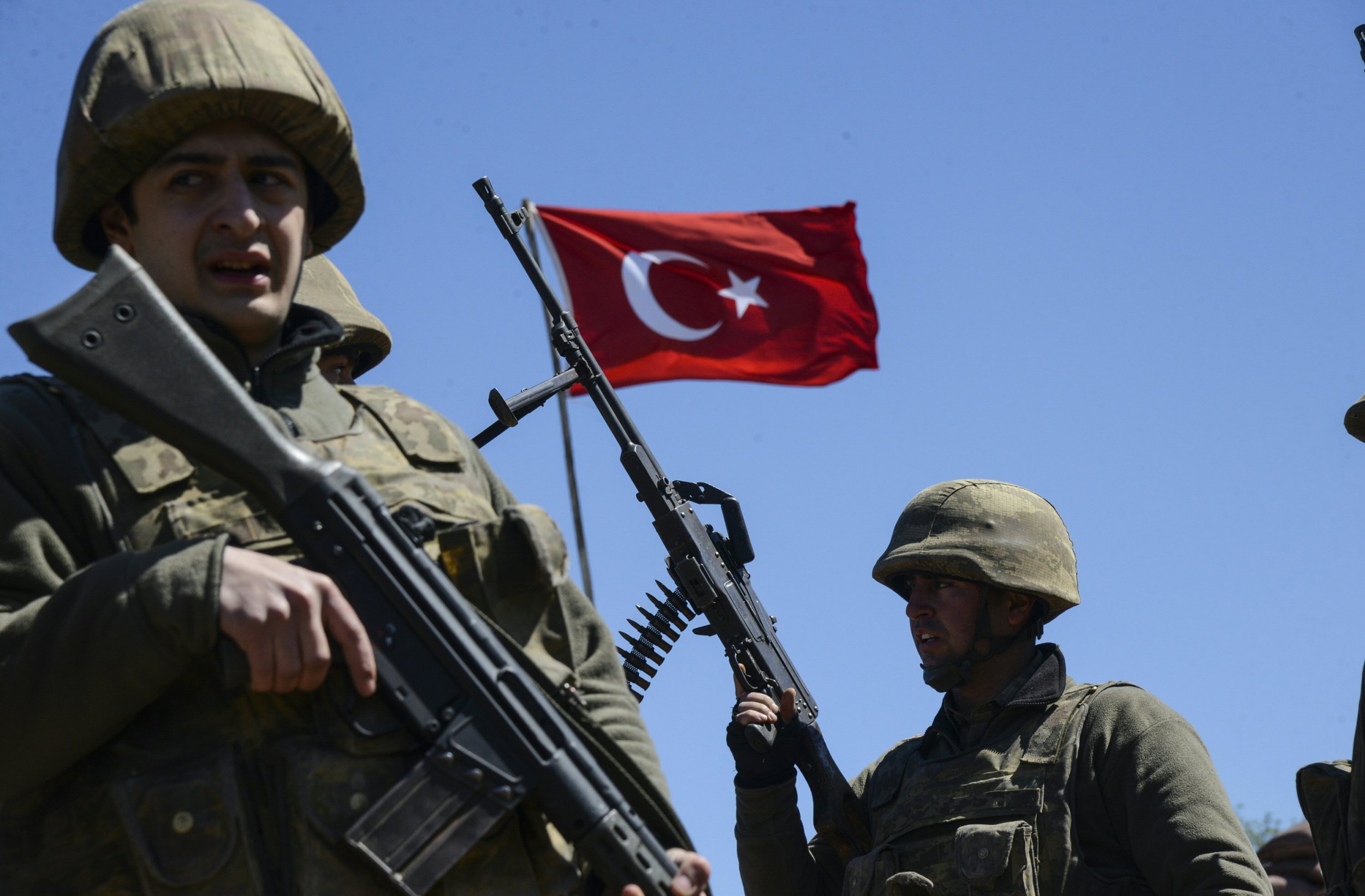
There's something happening which doesn't bode well for NATO, Europe, the U.S. or the Middle East and that "something" is Turkey. Turkey, which has NATO's second largest army, may represent the chink in NATO's defensive shield. Not only is Turkey one of the strongest of the mutual defensive organization, it also happens to be the only one which has a majority Sunni Muslim population.

While there are other nations in Europe which have a Muslim history, such as the former Yugoslav countries of Kosovo, Serbia or Bosnia and Herzegovina, none can match the sheer size of Turkey . NATO depends on Turkey not just for its military, but also for its strategic importance at the eastern end of the Mediterranean and proximity to Russia's underbelly...and Ukraine.

It's location offers a perfect tactical point to monitor all Russian ship movement---military and civilian---in and out of the Black Sea through the Bosporus Strait.  It provides prime real estate for listening stations and an excellent staging point for missiles aimed at key Russian military sites such as the vital Sevastopol naval base, as well as the oil and gas fields in the Crimea.  Obviously, Moscow is easily within reach of land based missiles, not to mention "boomer" ICBM submarines lurking in the Black Sea and nearby Mediterranean.

As an aside, Turkey's strategic position was put to the test back in 1962 when the United States secretly placed not just listening stations in Turkey, but also nuclear "Jupiter" missiles batteries capable of hitting Moscow within minutes, not to mention sites within the Warsaw Pact, which included the countries of Ukraine, Hungary and Romania.

 The Soviet Union, led by Soviet Premier Nikita Khrushchev, responded in-kind by putting listening stations and their own "R-12" intermediate range thermonuclear missiles in Cuba, resulting in a standoff known as the "Cuban Missile Crisis", which brought the world as close to total nuclear annihilation as it has ever come (and hopefully ever will).  

President John Kennedy and Premier Khrushchev were able to work out a deal whereby Soviet missiles would be withdrawn from Cuba provided U.S. missiles were removed from Turkey (which the U.S. quietly did several weeks later so as not to alarm the America public or look as if we were backing down to our allies), which brings us back to Turkey again.

During the 1960's and since, Turkey has provided the manpower to fuel the burgeoning economic success of post-WWII Europe, especially Germany which had become Europe's economic engine. The result was a massive influx of mostly Muslim Turks into Germany and elsewhere in Europe (about three million ethnic Turks now live in Germany along with roughly 3 million throughout the rest of Europe).

However, all isn't well between Turkey and its European/NATO allies. The rise of a radicalized Islam in neighboring countries has resulted in pressure on the traditionally secular Turkish Government, currently led by President Recep Tayyap Erdogan and his conservative/right wing "Justice and Development Party" to become more assertively Islamic. It should be pointed out that Turkey's Constitution specifically prohibits political parties which promote Islam or Sharia law.

The party, which utilizes the initials "AK" or "AKP", considers itself to be pro-liberal economically and  conservative democrat domestically, following the ideals originally set forth of the founder of modern Turkey, Mustafa Kemal Ataturk, in what's termed as "Kemalist Reforms".  However, others have described Turkey as being democratically Islamist, which has been strongly denied by President Erdogan. 

Some claim that Turkey is following a "neo-Ottomanist" foreign policy designed to make itself the dominant power in the Near East (which would obviously puts it at odds with Saudi Arabia and Iran).  Indeed, a growing number of groups within Turkey are wanting to see the country slide further to the right and become more openly Islamic, if not like theocratic Iran, than at least like a democratic version of Saudi Arabia or Kuwait.

This leaves Turkey's government essentially walking a tightrope, which occasionally has spilled over in Turkey's relationship with Europe and the U.S. led NATO's support of Israel versus Turkey's obligation to side with the Palestinians and Hamas, which Erdogan does not consider to be terrorists.  The last thing President Erdogan wants is to face a situation like that of President Assad and Syria.

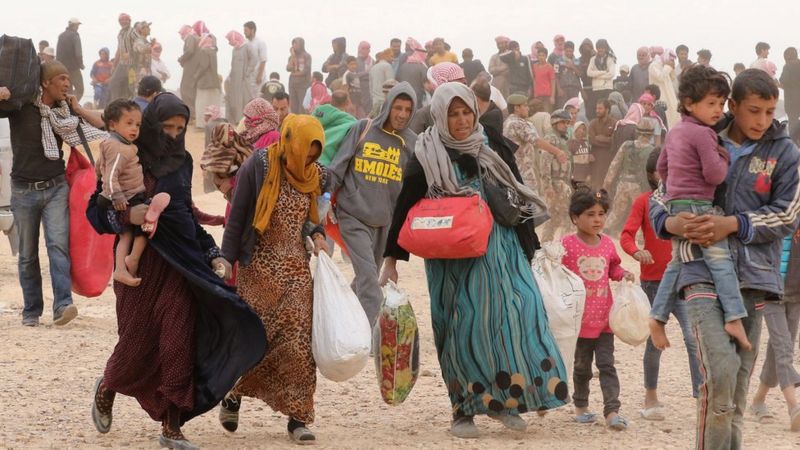
Turkey has promoted the "open border" policy of Europe, which has become extremely unpopular among Europeans due to the rise in crime and attacks on non-Muslim women for not being "modestly dressed" and demands for more conformity with Sharia law. Some have even called for an end to Oktoberfest due to the Muslim prohibition on alcohol! The number of legal and illegal influx of so-called "migrants" has resulted in approximately 22.8 million migrants coming to Europe with more arriving almost daily.

Most of these arrivals are single young males of military age.  Entire areas of European communities are now defacto Muslim enclaves, operating under their own laws (mainly Sharia) with their own representatives, courts, taxes, and police despite national laws to the contrary. As many don't work, there's been a tremendous strain placed on the economic safety net on the host nations, resulting in higher taxes and lower living standards for the native populations. There's even been calls for the locals to leave since their country is no longer theirs. It now belongs to the migrants! 

This influx has also impacted national foreign policies too. Many of the European countries have supported Israel since its inception in 1948. However, the large Muslim populations now make that position difficult to maintain in the face of massive protests, threats of riots and boycotts to force a withdrawal of support for Israel and more aid for Hamas and the people of Gaza.

In recent years, President Erdogan has repeatedly "threatened" to flood Europe (his NATO allies) with "millions" of  refugees from Syria. Turkey had previously granted temporary asylum and medical aid  to the Syrian refugees to help slow down the influx into Europe via Greece contingent on the EU  creating  a "safe zone" in Syria for the refugees, which haven't happen. Cyprus has joined with Turkey in the call for "safe zones".  Meanwhile, Turkey has created relatively safe "buffer zones" in their own in Syria.

As an aside, Turkey had  been used as staging point for these massive columns of migrants moving into Europe. In addition, Erdogan has also threatened to order Turkish nationals home from Europe, which could have a critical impact of Europe's economy due to the shortage of workers and overall decline in population. Europe's population has declined due to fewer women having children, smaller families, and its aging population, not to mention the impact of COVID-19.

Meanwhile, Turkey has forced Kurds out of refugee settlements in its east border. The Kurds had been under threat of genocide from ISIS, with many of their men having been murdered (mostly beheaded, hanged, or simply shot) while women and children were sold into slavery (girls as young as 7 or 8 were sold as "sex slaves" along with young women and others). Turkey and the Kurds have had a long history of conflict, which has often included Syria, Iran and Iraq, over the issue of Kurdish homeland.  

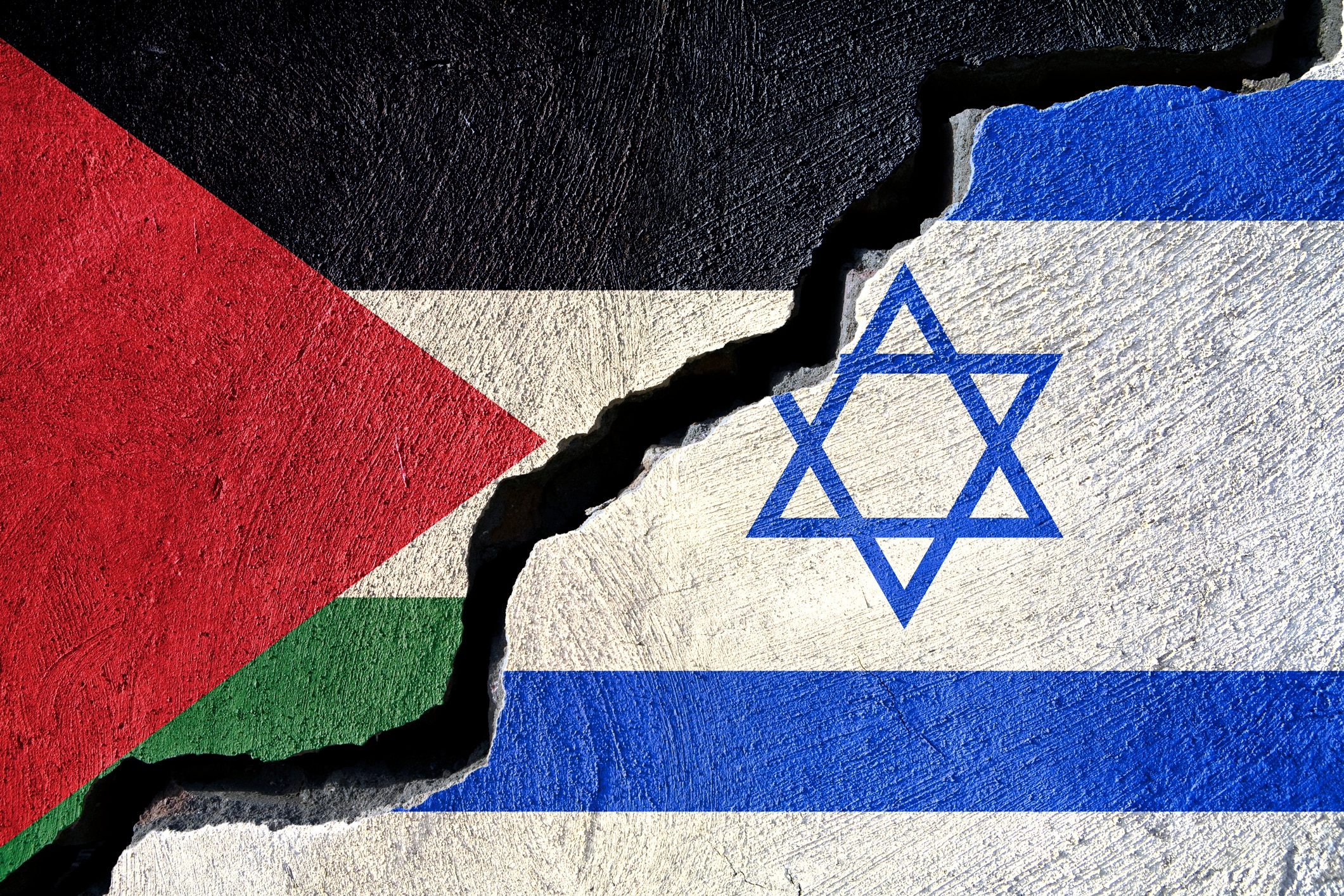
Turkey has also reiterated its pro-Palestinian stance as well as Erdogan has repeatedly demanded that Israel stop its military operations in Gaza. Israel responded to the brutal surprise attack by Hamas which resulted in the initial murder of 1400 men, women, and children (with many of the children being beheaded) with equal ferocity.  

Hamas's attack came by land, air, and sea, and was supported by missile and drone attacks. The air support came by way of hang gliders. In addition, Hamas also attempted to torch residences and businesses. Israel's Benjamin Netanyahu has sworn total destruction of the terrorist organization and a "substantial reduction of Gaza".  The U.S. has sent two aircraft carrier task groups into the region, along with extra missile batteries while the UK has provided an aircraft carrier strike group.

Meanwhile, pro-Palestinian Hezbollah, designated terrorist group located in Southern Lebanon, has launched limited missile attacks into Northern Israel along the Golan Heights and promised to invade if Israel didn't halt its military actions in Gaza immediately. Hezbollah is substantially larger than Hamas. Both are backed by Iran.

As if that weren't bad enough, ISIS and Al-Qaeda factions in Syria have fired missiles into Israel while former guerrilla fighters or "Jihadist" from Afghanistan and Iraq have begun to gather along Jordan's border with Israel. Jordan, meanwhile, has called up its military to prevent any attempts by Jihadists to cross its borders into Israel. 

President Erdogan, while accusing Israel of deliberate attacks against the people of Gaza, has spoken with other regional leaders to ask that they apply additional pressure on Israel to stop its military operations. Erdogan has called Israel's attacks "genocide", which is a slight exaggeration, was not unexpected, and yet Hamas did intentionally plan and attack Israeli civilians knowing full well Israel's response.

Hamas knowingly placed weapons, ammo, communications and observation sites, missile batteries, artillery and tunnels in or near homes, schools, and hospitals, hoping Israel would hit them so they could accuse the Israelis of inhumanity and war crimes. Sorry, but you don't use people as shields. That's cowardice and criminal. If anyone is guilty of  attempted genocide, it must also include Hamas.

In the interim, Turkey has spoken out against American and British support of Israel as large pro-Gaza  protests are happening not only in Turkey and Europe, but also in Asia, Canada and even the United States. It appears Israel no longer has the worldwide support it once did, despite murderous attacks by those who've sworn to wipeout Israel and every single Israeli (it's even in their constitution).

So what happens next? The U.S. has obligatory urged Israel not to invade Gaza, but knows it will happen regardless. Might Turkey feel obliged to intervene on behalf of Gaza? Would this affect the solidarity of Turkey and the other members of NATO, especially the U.S. and UK? If that were to happen, how would it affect NATO's presence in Turkey and what about the ongoing war in Ukraine? Turkey is a vital staging point for weapons and supplies.

Might NATO sacrifice Turkey for Ukraine?  If so, Turkey could open its borders to allow a defacto invasion of Europe by migrants, ironically following the same route of the invading Ottomans in 1683, or withdraw its nationals from Europe's factories. Such a move could prove to be an economic catastrophe. Would support of Gaza also imply support of a internationally recognized terrorist group?

Would Turkey attempt to convene a coalition against Israel? There's no question that Turkey would like to recreate the power and prestige of the Ottoman Empire at the expense of Iran's growing regional influence. As a "free agent" Turkey would look extremely appealing to a expanding China too. Also, an expanded war involving Turkey would put a strain on America's military presence which it may not be able to deal with.

A recent Pentagon study revealed that the U.S. military was not up to fighting on multiple fronts. In fact, of all the armed force branches, only the U.S. Marines were 100% combat ready (hooyah devil dogs!). Thus an expanded conflict in the Middle East could give China the opening it needs to invade Taiwan, especially if North Korea's Kim Jong Un could be persuaded to get frisky with the Seoul.

Meanwhile, Israel might just start feeling a cold wind coming its way as Europe finds itself unable to  provide previous levels of support thanks to the large Muslim influx which could cause possible political instability at home. That pretty much leaves the U.S. and Israel, and with the U.S. having its own increasingly serious internal problems, it's not a wholly reliable ally.

Perhaps the solution (if there is one) is to reject Ukraine's application to join NATO while strengthening economic ties. Israel and the Palestinians need to revisit the idea of a "two state" solution. After all, the land wasn't exactly vacant when Israel moved in---neither 3000 years ago or in 1948. People may have been able to get away with it back then but not nowadays.

Nevertheless, Israel is not going anywhere, even if it means turning all that sand into glass. Everyone needs to formally accept Israel's existence, put on their big boy "sirwal" and get over it (you may substitute for a "wizrah"). No one is forcing them to trade or anything else with Israel. They just have to want peace.  And while we're at it, isn't time the Kurds were finally given a homeland too?   


If you enjoyed the article, please consider passing it along to others and don't forget to subscribe. It's free! Lastly please be sure to "like" us on whatever platform you use to read anotheropinionblog.com. It helps with the algorithms and keeps our articles in circulation. Thank you!


Turkey's Erdogan calls on Israel to stop its attacks on Gaza 'amounting to genocide'


Turkey moves ahead with its threats to send refugees to EU


Turkish president threatens to send millions of Syrian refugees to EU


Changing continent: The EU's population is declining, new figures reveal


Depopulation trends in Europe: what do we know about it?


The Jupiter Missiles and the Endgame of the Cuban Missile Crisis: A Matter of "Great Secrecy"


Justice and Development Party (Turkey)


Thursday, March 17, 2022

Bringing the War in the Ukraine to an End


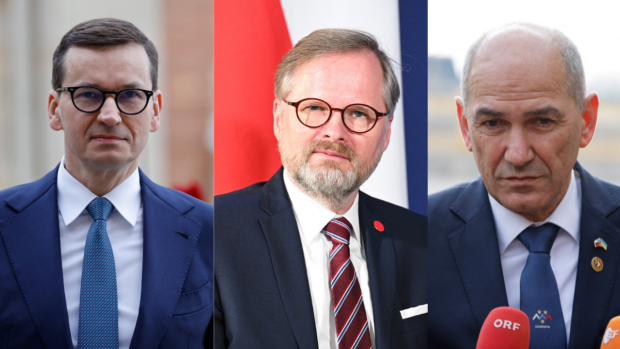
The leaders of Poland, the Czech Republic and Slovenia announced that they were going to Kiev to meet with Ukrainian President Zelenskii and other Ukrainian leaders. It's odd that three weeks after the invasion began, and with the capital, Kiev, increasingly surrounded and pounded by Russian shells and missiles, that the leaders of these countries would chose now to visit Kiev?

Could it have anything to do with the fact that all three countries are not just members of the European Union (EU) but also NATO (as well as being former members of the Warsaw Pact)? What, if anything, is the significance of their visit? 

Article 5 of the NATO Agreement, which has been oft discussed since the invasion, states that an attack on one NATO member constitutes an attack on all. An attack doesn't have to be a some sort of provocative act like an invasion, or a EMP attack, a blockade or embargo, or no fly zone.

An attack could be construed as the death of a leader of NATO member country too. These three individuals, Polish Prime Minister Mateusz Morawiecki, Slovenian Prime Minister Janez Jansa, and Czech Prime Minister Petr Fiala, are putting themselves in direct harm's way and risking a expanded war, but why? 

Ukrainian President Zelenskii has long been pressing for membership into both the EU and NATO.  Russian President Vladimir Putin has equally adamant that NATO membership of the Ukraine was a line in the sand that will not be crossed. Putin isn't happy about membership in the EU, which lessens Ukrainian dependence on Russia, but NATO membership was non- negotiable. 

The three leaders of these former Warsaw Pact nations are hoping, and literally betting their lives, that their presence in Kiev will force a temporary ceasefire; maybe even rekindle a new and a more serious round of negotiations to bring the invasion to a halt, and prompt a withdrawal of Russian troops. 

If, on the other hand, any one or all of them are killed, it could trigger Article 5. If that should happen, it would give NATO the justification it needs to intervene in the Ukraine. NATO troops, tanks, planes, and missiles, are already amassed along their respective borders with Russia.

It's unlikely they would invade Russia and more likely they would brace against a Russian incursion on their border as  NATO forces would cross into the Ukraine to try and force a cease in hostilities. But how would Russia react? Would they see it as an attempt to end their invasion? Would it be viewed as intervening in a situation which doesn't concern them, or would Russia viewed it as a declaration of war?

Putin is no dummy. In fact, he is highly intelligent and experienced. He's repeatedly outmaneuvered Western leaders time and again; making them look foolish. The only Western leader he's acknowledged any respect for was President Donald Trump. I suspect that's less due to Trump's intelligence or political acumen, and more to his unpredictability plus the fact that Trump wasn't beholden to the "Deep State" which controls America and the EU. Putin too has been opposed to this same Deep State which has been trying to either corner Russia and isolate it or force its compliance on Russia. 

Putin, since before the invasion, has tried to shore up his relationship with China, knowing that the West's most likely reaction to the invasion would be severe sanctions. However, given the fact that Russia and China have long been a "frienemies", and the fact that Russian forces have failed to overrun the Ukraine as predicted, China seems to be hesitant in providing too much support beyond moderate economic aid. 

Besides, if Russia and NATO (which includes the U.S.) get into a protracted war, it would economically and militarily hamper everyone, leaving China as the last man standing without having fired a shot. India, China's other big competitor, would have nowhere to turn thanks its decades long policy of nonalignment.

Russian military has shown thus far to be ineffective, despite its overwhelming numbers, against a NATO and U.S. equipped Ukrainian military. The result has been Russia's increasing frustration and desperation for a quick and decisive end. A German style blitzkrieg this hasn't been. As the war has dragged on, Russia's fears of another Afghanistan grows daily. So does its concerns of a expanded war with NATO, which would likely involve the U.S., making matters worse.

Even though the United States just finished a 20 year war in Afghanistan, a war which it all but lost as did Russia, the U.S. still has a powerful military, albeit weaken and somewhat depleted. Putin has repeatedly pointed out that it has nukes, perhaps hoping that the mere threat will buy him a little more time in the Ukraine. But he knows too that NATO has nukes. So does the United States, and the first one to use them will be just as dead 15 minutes later. There are no winners in a nuclear war.

Putin has recently announced that its forces have discovered 30 bio-military laboratories. Laboratories which have all the fingerprints of the U.S. on them. The implication is obvious. That the U.S. was secretly developing pathogens for military use in clear violation of international agreements. Could this be in retaliation of the U.S. accusing Russia of supplying bio-weapons on Syria which resulted in two attacks, killing dozens of combatants and civilians?

It could be. The accusations in Syria turned out to be false. The chemical signature of the weapons were not Russian. Independent analysis indicated European origin; possibly German or England. Here again, independent analysis has shown no U.S. bio-weapon labs in the Ukraine. That's not to say the labs are a complete fabrication. On the contrary, they very much do exist.

These labs, which receive U.S. financial support, were widely known. In addition, they receive aid, financial and otherwise, from the EU and World Health Organization (WHO). Their purpose was never military. They were strictly civilian and focused on finding vaccines to various viruses, unlike the COVID-19 virus which appears to be a weaponized version of the flu.

So why would Russia claim these 30 labs were bio-military? It's difficult to answer. Putin's military advisers had to know that the truth would be outed pretty quick. The labs and their funding were too open. Everyone knew they were there and what they were doing, unlike, say, Wuhan, which operated in secret.

Secondly, it has to go back to Putin's frustration. We can see this in the attack on two nuclear facilities in the Ukraine, including the infamous Chernobyl.  Russian troops repeatedly pounded the facilities with rockets and heavy artillery knowing full well that the assault could trigger a nuclear meltdown and massive radiation leak similar to the Chernobyl accident in 1986. That's how desperate the Russian military is in bringing the Ukraine to its knees.

They've already admitted using thermobaric weapons ("vacuum bombs"), which were originally developed by the U.S. in the 1960's for use in Vietnam and subsequently banned under the Geneva Convention. These weapons sucks all the oxygen out of an area, which it uses to create a high energy explosion and intensive blast wave. It's capable of sucking all the air out of human beings or anything living, filling their lungs with liquid, with the resulting explosion vaporizing every living thing.

Russia previously used these "vacuum bombs" in Chechnya and Syria. This is barbarism on a scale seldom matched in human history. For this alone Putin and his generals should be tried as war criminals for crimes against humanity, but we all know it will never happen.

Throughout, Ukrainian President Zelenskii has pleaded with the world for help. He has asked for medical supplies, food, generators, gas and oil, and most of all, weapons. He was recently given the unique and rare opportunity to speak to members of Congress (and indirectly the American People). He has asked for the U.S. and NATO to create a no-fly zone over parts of the Ukraine and to open corridors for fleeing refugees and for incoming military supplies.  

Putin has indicated that any no-fly zone would be contested, which would again be viewed as a declaration of war. As an aside, previous corridors for refugees have failed; often lasting a few sporadic hours. Meanwhile, NATO sits on the sidelines. It sends military and humanitarian aid as it can, but it too has to be careful.

Russia controls 40% of Europe's oil and gas. It controls 70% of Germany's, which is the economic engine of Europe. The U.S. could provide some to Europe, but it couldn't make up the 40%. Perhaps the Middle East and Canada could pick up the slack, but again, nowhere near what it would lose if Russia cut it off. As an aside, the Ukraine, with its energy reserves, could potentially replace Russia as Europe's supplier.

As for Argentina, with its massive oil and gas reserves, it could definitely use the economic stimulation. However,  Russia has seen to it that it's firmly in their corner.  That puts the EU between a rock and a hard place. In short, between the sanctions, threat of nukes, and energy dependence, Russia, Europe, the U.S. and indirectly the world, has a death grip on each other as it did just prior to the start of World War One.  And again, like the First World War, it would only take one stupid mistake to trigger what truly would be "the war to end all wars".

So, how does this get resolved? First and foremost, the fighting stops immediately. Secondly, Putin and Zelenskii have to act like the leaders they pretend to be and sit down and talk. Putin insists that the Ukraine is an "artificial" country created in Vladimir Lenin during the Russian Civil War and that Russians and Ukrainians are the same people.

Well, that's partially true. The Ukraine has long existed, dating back to the Viking Rus. Russia (which takes its name from the Rus) was one of the conquered lands. Both grew and evolved as all nations do. Both peoples are largely Slavic and Scandinavian. They speak similar but different languages. They have similar as well as different cultures, traditions, and values. But, nevertheless, the Ukraine is an independent and sovereign country. Period.

Putin must accept that. He must also accept that Kiev has the right to establish its own laws, policies, and alliances. That means if it wants to join the EU, it has that right. It also has the right to join NATO for its own national security, which, in part, stems from its fear of the Russian bear. Putin must also acknowledge this.

Given Russia's history, is rightfully afraid for its national security too. That's something Zelenskii must acknowledge. It has been invaded from the east by Mongols (as was the Ukraine), and twice by the West (Napoleon and Hitler). In 1989, Gorbachev was assured by President Bush that NATO would not expand "one centimeter", and yet by 1991, it was on Russia's border with its missiles, tanks, artillery, and troops from the Baltic to the Ukraine, and now the Ukraine wants to complete that encirclement.

Both nation can acknowledge their mutual fear and mistrust of the other and use it to create a non-aggression treaty. No further attacks on the Ukraine and in exchange, no NATO presence on its border by Russia. The Ukraine may provide for its own national defense (which has been pretty good thus far) however it pleases less NATO. The Ukraine can make whatever trade agreements it wishes as a sovereign nation. A mutual trade agreement between the Ukraine, Russia, and the EU could benefit everyone.

As for the four provinces in the Donbass, recent polls, demographics and history has shown a natural link to Russia just as in the Crimea. If that's what they want, then so be it. Those who don't want to live in a pro-Russian Donbass should have the right to migrate to an independent Ukraine and vice versa.  

I suspect Putin invaded the Ukraine to make a point. No NATO. He intended it to be a quick in and out. It turned out to be anything but thanks to the determination of the Ukrainian military and the tenacity  of its people who've given a lesson in patriotism to the world. Nevertheless, as a result of a Putin's ill conceived venture, the world is teetering on global disaster.

The infamous "Doomsday Clock" has been moved ahead to 100 seconds until oblivion for Humanity. That's one minute and forty seconds left for Mankind. That's the closest we've ever been to Armageddon. It won't matter who pushed the first button anymore than who pushed the last button. The only winners will be the cockroaches. Those little bastards can survive anything.

We have other, more serious, issues to focus on such as the climate, poverty, famine, potable water, energy, diseases and viruses. What we don't have time for is pissing rights to a piece of property or who gets to stand atop the highest dung heap. Let's end the war in the Ukraine and elsewhere as rational thinking human beings instead of knuckle dragging primates (apologies to our primate cousins).  

  If you want to know more, please take a look at the links below. If you enjoyed the article, please consider passing along to others and don't forget to subscribe. It's free! Lastly please be sure to "like" us on whatever platform you use to read A/O. It helps with the algorithms and keeps our articles in circulation.


Leaders of 3 EU countries take train to Kyiv in show ofsupport for Ukraine


Zelenskyy tells US Congress, 'We need you right now'


The Fallout From Russia's Attack on Ukrainian Nuclear Facilities


Ukraine War: Fact-checking Russia's biological weapons claims


Russia confirms use of thermobaric 'vacuum bombs' in Ukraine, UK says


At doom's doorstep: It is 100 seconds to midnight


Friday, March 04, 2022

Understanding What's Happening in the Ukraine and its Likely Outcome

Wars are often like divorces. They're messy, full of misunderstandings, and the fallout often lasts for years, decades, or even lifetime. In addition, it's often difficult to determine who the "good guy" or "bad guy" is. Usually, it's a little of both. That's the situation in the Ukraine with the Ukrainian People paying the price for misunderstandings which should have never occurred or been allowed to fester.

Anyone who follows global politics knew (or should have known) what was going to happen in the Ukraine, particularly with the U.S. pushing for full admission of the Ukraine into NATO.  Beginning in 1989 with the collapse of the Warsaw Pact, which provided Russia with not just trading partners, but also a military buffer zone separating itself from the NATO and the EU. Many of these countries had been under Russian influence going back to the time of the Czars.

At that time, Russian President Mikhail Gorbachev claims that he had been assured that the West would not exploit the situation, nor would NATO expand to the East, and yet that's exactly what happened. Each admission of a former Warsaw Pact nation into NATO put NATO troops, tanks, artillery, and missiles on Russia's border. Needless to say, the Russians protested but took no military action. But even then they had drawn a line in the sand---no NATO membership for the Ukraine. Not then. Now ever.

Starting in 2013/14 President Obama's Administration began backing groups which were attempting to overthrow the duly elected pro-Moscow candidate Viktur Yanukovych in the Ukraine (the Euromaiden Revolution of 2014). Senator John McCain even went to Kiev to show U.S. support for the ultra right wing Svoboda Party.  Victoria Nuland, the assistant Secretary of State for European and Eurasian Affairs, travelled to Kiev on three occasions to show support for Svoboda (and even handed out cookies to the anti-Yanukovych demonstrators!).  

It was during this time that Hunter Biden, President Biden's son, was invited to joined the board of directors of Burisma, a Ukrainian energy company (he remained on the board until April 2019). Allegedly, there is an email from Vadym Pozharskyi, an advisor (lobbyist) for Burisma, thanking Hunter for introducing him to his father, who was then vice president under Obama.  It's worth noting that Joe Biden, in 2016, called for the dismissal of Ukrainian prosecutor Viktor Shokin, who was investigating charges of alleged corruption of Burisma officers.  What business was it of his?

There's no question that Yanukovych was corrupt or that his administration was equally inept. However, that gave the Obama Administration no right to interfere with another country's government (a tried and true tradition of U.S. presidents). Nevertheless, in 2014, Yanukovych was ousted in what amounted to a U.S. supported coup, and a new, pro-Western government led briefly by Oleksander Turchynov was installed, who was followed a few months later by Petro Poroshenko.

It was under Poroshenko that the Ukraine began to take a more nationalist agenda. Poroshenko opposed joining NATO, which he felt would "ruin" the country. He also opposed the pro-Russian separatist in the four eastern provinces in the area known as the "Donbas" as unrepresentative of anyone and denounced the mounting reports of genocide. He also opposed nuclear weapons for the Ukraine and encouraged a more decentralized government.

Poroshenko promised to oppose the growing influence of the Ukrainian oligarchs, which had begun their rise in 1991 with the Ukraine's declaration of independence.  Unfortunately, corruption had again become a problem (thanks largely to the oligarchs). By 2019, Poroshenko was out and current president (a former actor and comic---the perfect training for a politician),  Volodymyr Zelenskyy was in. It should be pointed out that he ran and was elected as an Independent under the banner "Servant of the People".

Zelenskyy promised to end the decades long hostiles with Russia and engage in talks with Putin as soon as possible. At the same time, he sought to end the ongoing situation in the Donbas Region between pro-Russian separatists (with the aid of pro-Russian mercenaries and support from Moscow) and pro-Ukrainian forces, which also include a contingent of neo-Nazi Ukrainians opposed to Russia.  However, at the time of Putin's invasion of the Ukraine, Zelenskyy was planning on sending additional troops and supplies eastward to put down the recent increase of activities of the pro-Russian separatists.

In the years preceding the Ukrainian invasion, Putin was on record protesting the expansion of NATO into former Warsaw Pact nations, putting troops, tanks, artillery, and missiles directly on its border. However, while Putin protested and pointed to assurances from various American Presidents that NATO would not move "one centimeter" from its 1989 positions, he did nothing. That is, until 2008, when President George W. Bush began campaigning for the membership of former Soviet Republic, Georgia, into NATO.

In 1991, Georgia declared its independence from Russia. Shortly afterwards, various separatists groups began to fight for control of their own small parts of the country. Some of these were pro-Russian.  Georgian officials began a campaign to bring these areas back under control of the Georgian government. Simultaneously, Georgia began to foster a closer economic relationship with the West.

This didn't go down well in Moscow. Putin, who had become president of the Russian Federation in May 2000, had warned that a pro-Western position was "not desirable" and NATO membership was unacceptable. Shortly afterwards, Moscow began a crack down on Georgians living in Russia and started applying economic pressure on the tiny country.

By April 2008 the situation had deteriorated  to the point where Russian troops invaded Georgia. The fighting lasted until July 2008. In August of 2008, Russia recognized two pro-Russian breakaway states, the Republic of Abkhazia and the Republic of South Ossetia. By the way, Georgia is not or will likely ever be a member of NATO any time soon.  Sound familiar?

Putin has been consistent in his demands restricting NATO advancement in regions it considers key to its national security. Take the Crimea for instance. Although the Crimea ceded with the rest of the Ukraine in 1991, it has considered itself a separate region uniquely tied to Russia. It has been under Russian control since Czarina Catherine the Great in 1784. It's been the home of Russia's Black Sea Fleet since 1783 (and its only year around warm water port), plus it provides access to the Mediterranean Sea.

In terms of demographics, 67.9% of the Crimea identifies as Russian, with 15.7% as Ukrainians and 10.6% as Crimean Tatars. The rest is a smattering of Belarusians, Jews, and Armenians. Most, around 58%, belong to the Eastern Orthodox Church. About 15% are Muslims, with the balance not belonging to any specific religion.

In 2014, there was a public referendum in Crimea regarding rejoining the Russian Federation. The referendum had a record turnout of 87% of eligible voters. Of that, 97% voted in favor of reintegration with Russia. In Crimea's largest city (and home of the Black Sea Fleet), Sevastopol, there was a 89% voter turnout and an approval of the referendum by 97%. 

It's worth noting too that shortly after the Ukraine declared its independence in 1991 (which still included the Crimea), Kiev oligarchs and certain government officials made a deal with several Western oil and gas companies, including Exxon and BP, to tap into the recently discovered oil and gas reserves under the Black and Azov seas. How much oil and gas are we talking about? About 10 billion barrels of oil and 3.8. trillion cubic feet of natural gas worth in the trillions of dollars.

Russian annexation of the Crimea has ensured Russia's economic and energy future for many decades or even centuries to come. Bear in mind too that Europe---that is, the European Union or "EU"---gets about 40% of its oil and gas from Russia. Germany, the EU's economic engine, receives roughly 70%. So all this posturing from NATO in truth means very little. Even the U.S., with its vast oil and gas reserves, imports about 3% of its oil and gas from Russia (this compares to 61% from Canada, 10% from Mexico, and just 6% from Saudi Arabia).  

So, what does all this mean? First and foremost, it means whether you like him or hate him, Putin is man of his word. He insisted that there would be no NATO membership for Georgia, and there is none. He also divided up the country the same way he is doing in the Ukraine.  He has consistently said no NATO in the Ukraine, and it appears there won't be regardless of the outcome of the war.

Secondly, the Ukraine wasn't the pushover Kremlin strategists predicted it would be. The Ukrainian military has done an amazing job in blunting the Russian advance (even with the use of "vacuum bombs" which vaporizes people and animals) The people of the Ukraine have done a historically remarkable job in standing up to the Russians, be it in terms of fighting or just confronting them face to face. They've shown a level of patriotism and courage the West hasn't witnessed in decades; certainly not in the UK, Germany, France, or the United States. 

The Ukraine's ability to impede Russia's state of the art military may also have an impact on the sale of Russian hardware to other countries like China, India, or Iran. Until now, the Russians have done quite well competing against the UK, Germany, France, and the U.S.. Maybe not so much anymore. Additionally, while the West and others have imposed formal and informal sanctions on Russia, it's unlikely to be anything more than symbolic and may negatively impact the West more so. 

Putin said in a interview by CNN and the BBC on February 25th, that the West (particularly the U.S.) mislead Russia about NATO advancement following the fall of the Warsaw Pact in 1989 and Soviet Russia in 1991. He reiterated his position that there was already too much offensive NATO weaponry, including missiles, on his border. He added that the United States wouldn't stand for the same thing on its border with Canada or Mexico. In short, if Russia can't feel safe, nobody is going to feel safe.

To drive home the point, two long range TU-160 bombers (capable of caring nukes) along with support aircraft, have flown to Venezuela to conduct "joint military maneuvers". In short, he was making a point of possibly stationing long range bombers and even missiles in Venezuela to give America a taste of its own medicine. He has also warned Sweden and Finland to withdraw their requests to join NATO. In light of Georgia and the Ukraine,  I would take that "request" very seriously.

The next issue is whether Russian troops will remain or withdraw them following some sort of agreement. In Georgia, he withdrew his troops following the recognition to the two breakaway provinces and permanent withdrawal of the NATO application. Occupying a country is expensive, it ties down troops and equipment, and it's never really secure.

I suspect he will either reach an agreement with Ukrainian President Zelenskyy regarding NATO and formal succession of the four Donbas provinces or he will replace the Zelenskyy Government with a pro-Moscow one, which will agree to those terms. Given the intense resistance of the Ukrainian military and people which would only intensify with a puppet regime, the former option would be the preferred one.

Except for us ageing Babyboomers, most have forgotten about the Cuban Missile Crisis in 1962. As a brief refresher, we caught Russians setting up nuclear capable intermediate SS-4 ballistic missiles in Cuba (In 1959 Castro ousted General Fulgencio Batista, a corrupt U.S. puppet and strongman, from power). The confrontation brought the U.S. and the USSR to the precipice of nuclear war.

What the American and Western public didn't know at the time was that we had installed nuclear capable Jupiter intercontinental ballistic missiles in Turkey aimed at Russia in 1961. Russian President Nikita Khrushchev decided that two can play the same deadly game. Eventually, President John Kennedy agreed to withdraw the missiles in Turkey in exchange for removal of the missiles in Cuba and because cooler heads prevailed, we're still here to remember it...and use it as a lesson in the Ukraine.   

 If you want to know more, please take a look at the links below. If you enjoyed the article, please consider passing along to others and don't forget to subscribe. It's free! Lastly please be sure to "like" us on whatever platform you use to read A/O. It helps with the algorithms and keeps our articles in circulation.


 CATO Institute: America's Ukraine Hypocrisy


Radio Free Europe: Lavrov Claims Obama's Remarks Prove U.S. Backed Ukraine 'Coup'


Crimea oil and gas will not come easy for Russia


Many predicted Nato expansion would lead to war. Thosewarnings were ignored


Russia wants NATO forces out of ex-Warsaw Pact states:Lavrov


Friday, January 28, 2022

The Howling Dogs of War: Russia's Planned "Blitzkrieg" of the Ukraine or Posturing?

Tensions between NATO, the United States, and Russia seem to be growing by the day as Russian continues building up troops along its border with the Ukraine---100,000 so far--- with mounting troop concentrations in Belarus's border with the Ukraine. 

Meanwhile, NATO is moving men and material east as hardware, including "Javelin" anti-tank missiles are being sent south from Estonia and Stinger anti-aircraft missiles from Lithuania and Latvia, with U.S. approval, not to mention around 8500 American troops now on alert. The Ukraine has thus far received approximately 90 tons in what's labeled as "lethal aid" and the promise of more to come from the U.S..

Russia is moving massive amounts of tanks, artillery, and armored  personnel equipment comprising 60 battle groups ever closer to its border with the Ukraine (and especially its capital, Kiev/Kyiv) like a predator preparing to leap its prey.  Ships from Russia's largest naval base at Sebastopol, located in the Crimea side of the Black Sea, have begun their "military exercise" in the area along with 20 ships from its Baltic Fleet.  

At the same time, a U.S. naval strike force, led by the aircraft carrier "Harry S Truman", along with French warships (including the aircraft carrier Charles De Gaulle) and other foreign naval ships have been placed under NATO command as they head eastward toward the Black Sea. Numerous aircrafts, notably state of the art F-15 and F-35 fighters, are being sent east from as far away as Spain as round the clock surveillance flights begin.   

Russia is putting its famed paratroops into staging areas, and, although there are no confirmed reports, may have already prepositioned its elite Spetsnaz special forces either along or just inside the Ukrainian border with the intention of staging a "false flag" or staged attack on Russian forces as a pretense for launching a limited "punitive" attack the Ukraine and its capital, Kiev reminiscent of Germany's pre-invasion of Poland in 1939. 

The speed at which tensions have built around the Ukraine to the point of an all out war is both amazing and alarming. What has happened to trigger this confrontation? What's really going on?


The Ukraine and Russia have had a long and often troubled history dating back to the 1100's. The Ukraine, known as "Europe's bread basket", has faced oppression from the Czars, the 1917-21 Russian Civil War which included pro and anti Soviet forces along with Ukrainian nationalists, forced collectivization under Stalin and the famines of 1932 and 1933 resulting in the deaths of millions from starvation, and its early support of invading German troops in 1941 as "liberators" from Stalin.

In 1989, President George H.W. Bush promised Russian President Gorbachev, that in anticipation of the collapse of the USSR, the U.S. would not encourage NATO expansion to the east into former Warsaw Pact nations, which is exactly what happened starting in 1991.  As an aside, the Warsaw Pact was formed following WWII as a buffer between Soviet Russia and the West, particularly Germany. It also provided Russia with a captive economic zone. 

In 1991, the Ukraine formally gained its independence from Russia. However, its wasn't as "clean" as it seemed. While the Ukraine chaffed under Russia domination, approximately 30% of the population supported Russian policy and rule, especially in the east and south, with the majority of Ukrainians spoke Russian. The extreme eastern part of the Ukraine, the Crimea, had long been central to the Russian navy, providing it with a year around warm sea port and access to the Mediterranean Sea through the Bosporus Straits.   

Nevertheless, following published news of a secret oil deal between the Ukrainian Government and various Western oil companies relating to the discovery of vast oil and gas reserves, the Russian military reasserted itself in the Crimea in 2014. By the way, this preceded a public referendum in February of the same year, in which 83% of the 95.5% Crimeans who voted were  in favor of rejoining the Russian Federation.

 Since then there's been repeated accusations of "regime changes", both pro-Western and pro-Moscow, including most recently by Russian President Putin as Kiev has sought closer contact with the European Union (EU) and submitted its application to join NATO. 

The problem from Moscow's perspective is that despite President Bush's earlier assurances in 1989, most of the former Warsaw Pact nations have sought and received not just closer economic connections with the EU, but have also joined NATO; Poland, Hungary, the Czech Republic in 1999, the three Baltic states of Latvia, Lithuania, Bulgaria, Estonia, Romania, Slovenia and Slovakia in 2004, Albania and Croatia in 2009.

Thus, NATO virtually surrounds Russia on its Western front. All that would be needed to complete the noose around Russia by the West would be the acquisition of just one country---the Ukraine. That would represent thousands of troops, tanks, aircraft, and missiles aimed point blank at Moscow, despite NATO's claim to be solely a defensive organization.

With the Ukraine, NATO would add another naval base at Odessa (Western Naval Base) and Berdyansk (Azoz Naval Base). At only 300 miles from Moscow using the M3 Highway, there would be even more military with quick access into the Russian frontier, not to mention aimed at point blank range at the Russian naval base of Sebastopol, which is only 340 miles from Odessa and 290 miles from Berdyansk.

It would be like a massive military buildup on the U.S./Mexican border aimed directly at our second largest naval base in San Diego. I don't think we would quietly sit back and do nothing do you? Some of you remember how we reacted when the Soviet Union placed missiles in Cuba, which is 90 miles from Florida, back in 1962 in retaliation of our "Minutemen" missiles in Turkey aimed at Russia. We stood on the razor's edge of nuclear war until reason on both sides prevailed.

Meanwhile, as President Biden (or his handlers) continue to saber rattle about Russia's "imminent" invasion of the Ukraine and the hell that it would bring, President Putin has repeatedly said that he does not intend or want to invade the Ukraine. His positioning of Russian troops are there to send a stern message that he would not accept a noose around Russia's neck.

While he dislikes the prospects of a Western leaning Ukraine, Putin has said that he won't accept a military presence by NATO on his border. Russia has already taken serious economic hits with former Warsaw Pact nations aligning with the EU, and somewhat amazingly, while Moscow has loudly protested, didn't launch any military operations when Poland or Romania, or Latvia joined NATO. But the Ukraine would be step too far.

Within the past few days, France and Germany, the powerhouses of Europe, have asked that NATO and Russia to step back and take a breath. Neither side wants war. In fact, the only one screaming "war!" is Washington. Europe is dependent on Russian oil and gas. Germany, the industrial and technological heart of Europe, gets 40% of its energy from Russia. However, Russia needs European imports just a much. Even the Ukraine is partly reliant on Russian imports. A war is a no win situation all around.

As for Washington, the U.S. just made a messy withdrawal from Afghanistan and looked like a bumbling idiot to the most of the world in the process. We fought a 20 year war and came out with bupkus. The Taliban, which we were told were all but defeated, were back in charge before our last planes left the Kabul airport. Al Qaeda, responsible for the cowardly 9/11 attacks are back too. So is ISIS, while other terrorists groups suddenly feel empowered to do as they please. 

The only people happy about the outcome in Afghanistan and Iraq are the military contractors and energy companies which racked in trillions of dollars, and now the "dogs of war" are howling for more blood and carnage. Despite the fact that the U.S. military is in serious need of a total overhaul in terms of repairs and replenishment of supplies and spare parts, the "death dealers" are ready to go again.

 Personally, I've always thought that the ones who want war should be the first to fight. That includes those who push for military intervention or "regime change" for the sake of natural resources or to force open markets for greed's sake. 

It's a long "honored" tradition among presidents and their administrations to be seen as heroic military leaders. For some reason, it makes them seem  "strong" or "courageous"; they are willing to stand up to the enemy---real or manufactured---for the sake of "spreading democracy" and the "American Way". 

In truth, it's more often for the sake of psychotic level greed, be it installing some brutal military junta, bribing an existing president and their government, or using the U.S. military for simple intimidation.  

With Biden's ratings being what they are (a low of 39%) and upcoming midterm elections set to deal the Democrats with another disaster, Biden, and by extension, the Democrats, need to be seen as strong and proactive, but that ain't happening. The Democrats are viewed as out of touch and authoritarian thanks to their so-called "mandates", inability to deal with the pandemic, inflation, or the supply chain crisis.

 As for Biden, he's seen as a pitiful doddering old man; as someone with early onset of dementia and incapable of being a strong president. Having said that, the Republicans are exactly superheroes either. Their approval ratings haven't been good for awhile either. They have a disapproval rating of 56%, compared to the Democrats, who have a disapproval rating of 55%.

In Russia, Putin has an approval rating of 65%, which, for an American president would be terrific, is actually bad for Putin. Since April 2018, when his approval rating was 82%, his rating has dropped and continues to drop. He needs restore his previous approval level by looking tough. Regarding the situation with NATO and Ukraine, 69% of Russians don't believe there will be a war. As to who is responsible for all the drama, 50% of Russians say the U.S.,16% blame the Ukraine and 4% blame Russia.

So, let's decipher what all this means. For a number of reasons, not the least of which is the history between Russia and the Ukraine, the Ukrainian government wants closer economic contact with the EU and to join NATO. Russia, on the other hand, doesn't want another NATO military presence on its border, which already exists from the Baltic States down the length of its entire Western border.

With 57% of the land being arable and only 4% under irrigation, the Ukraine can offer the West a lot, from corn, wheat, and barley to coal, steel, machinery, and providing another major source of oil and gas. Plus it's a great transition site to Turkey (another NATO ally and member of the EU), and on into the Middle East, India, not to mention its tremendous economic development potential. And despite its current situation with Russia, the Ukraine still exports more than 60% of its products to Russia and other former Soviet Republics.

There is no reason why this shouldn't continue. The Ukraine is in a perfect position as an intermediary between East and West. However, and while Kiev has a right to join NATO, that doesn't necessarily mean it's should. With a uneasy neighbor to the north in Russia, it may be a very dangerous thing to do, especially if Russia believes its defending its own national sovereignty.

Also, all this posturing by the U.S. and NATO to isolate Russia could push Putin closer to China and countries like Iran as a matter of necessity. How does that serve our interests? Frankly, Russia would make for a better friend to the EU and U.S. than as an enemy.

A non-military NATO partnership may be the best solution for all concerned (ie: no NATO military bases or hardware---particularly missiles---allowed) but maintaining a strong defensive military, plus allowing equal naval access to its ports by both NATO, the U.S. and Russia. Meanwhile, allowing Kiev to be economically engaged with Russia, the EU, and whomever it wishes (this will require Russia to acknowledge the Ukraine's national sovereignty which it currently does not). War benefits no one except the few.

Speaking of which, Biden is in trouble. Okay, but so what? That does not give him the right to push for war thousands of miles away, even if it's only bluff. The Chicken hawks and death merchants are the only ones who stand to gain. Well, they've gained for the last 20 plus years now. They can set back and quietly count their gold for a change.  Let's have peace for change of pace. What do you say NATO? Putin? Let's find a compromise.


If you want to know more, please take a look at the links below. If you enjoyed the article, please consider passing along to others and don't forget to subscribe. It's free! Lastly please be sure to "like" us on Facebook or whatever platform you use to read A/O. It helps with the algorithms and keeps our articles in circulation.


If Russia invades, sanction its oil and gas


Assessing the Conventional Force Imbalance in Europe


Party Favorability Ratings Near Parity; Both ViewedNegatively


Do you approve of the activities of Vladimir Putin aspresident (prime minister) of Russia?


Ukraine's Major Exports


Navy Puts Carrier Under NATO Control As Russian ShipsConverge On The Mediterranean


Saturday, October 19, 2019

Ceasefire in Syria: Buying Time for the Kurds and the Region


There's a tenuous truce right now between Syrian, Kurdish, and invading Turkish troops. The truce and ceasefire went into effect on October 17, just days after US forces withdrew from the northern region of Syria, separating Kurdish forces and Turks massing on their eastern border. The ceasefire agreement came as a result of---or perhaps despite of---a October 9th letter sent to Turkey's President, Recep Tayyip Erodogan, and President Donald Trump in which he urged the Turkish President not to be a "tough guy" or a "fool".

President Trump went on to say that the U.S. could and would use economic sanctions to disrupt the Turkish economy, and closed with a promise to follow up with a phone call. Allegedly the Turkish president wadded up the letter and threw it into the trashcan. The letter was written the same day Turkish forces began crossing into northern Syria. Whether or not the letter was taken seriously or should have been worded more diplomatically, it appears to have had the desired result.

The Kurds, who were instrumental in the defeat of not just ISIS, but also in the downfall of Saddam Hussein, have had a long standing feud with the Turks, primarily over the issue of sovereignty. Part of the land occupied by the Kurdish people over the last 5000 years or so, includes eastern portions of Turkey, as well as part of northern Syria, northern Iraq, and western Iran.

Following the end of World War I and the collapse of the Ottoman Empire, the Kurdish people had been promised a independent homeland by the victorious allies (principally France and England who acquired the lion's share of the Middle East). However, just a few years later, that promise was broken and the Kurdish people were divided up between four newly created countries---Iran, Iraq, Syria, and Turkey---with a semi-autonomous territory called Kurdistan created in northern Iraq.

Meanwhile, the Kurds were subjected to purges and genocide. Turkey even refused to acknowledge the Kurds on the eastern border, referring to them as "Mountain Turks" instead, along with attempts to suppress their language and culture. In Iraq, Saddam Hussein wage a catastrophic war on the Kurds, including the use of nerve and saran gas attacks. Things weren't much better in Iran or Syria.

So why the invasion? An interesting question to be sure. Partly because a measure of stability has been re-established in the region with the defeat of ISIS. In addition, Syria, a long standing major Russian ally, is much more weakened militarily and economically because of its recent civil war with factions within the country (the U.S. was also looking at not just weakening Syria, but in toppling its president, Bashar el-Assad, in hopefully of a more pro-American government, which would deprive Moscow of a key ally in the region). In addition, it would allow the US an opportunity to put surveillance and perhaps ground forces close to Syria's border with Washington's archenemy, Iran. Perhaps this would give the Turks an opportunity to seize territory in northern Syria, as well as to get rid of the newly embolden Kurdish fighters and put an end to the idea of a independent homeland for the Kurdish people once and for all.

Another key factor is that the semi-autonomous province of Kurdistan sits on approximately 1/3 of Iraq's oil and gas reserves. Nothing in geopolitics gets more attention than the control and flow of oil and gas, which was a key factor in removing former ally, Saddam Hussein, who got a little too big for his britches with the invasion of Kuwait and it's oil production (as well as proximity to the Persian Gulf and their regional enemy, Saudi Arabia). Meanwhile, in Iran, the Kurds have been engaged in a "hot and cold" with whoever was in charge, for a independent homeland, especially since 1918. Since 2014, the intensity has increased to a much more "hot" insurgent war. Since 1946, there has been approximately 28,000 fighters killed, while from 1980 to 2000, around 30,000 civilians have died with no signs of easing hostilities.

President Erdogan alerted Trump on October 6th of his intentions to invade and requested that U.S. troops in the area be evacuated. Trump agreed, and the small detachment of soldiers and equipment were moved further south. What prompted Trump to do so, knowing full well that our Kurdish allies would likely be annihilated is unknown. At first there was a quip about the Kurds not "helping" us in World War II. I don't know if he was serious or not, but no one was smiling. The Pentagon and members of Congress on both sides of the aisle were quick to criticize Trump's decision. In the eyes of the world, especially the Middle East which places a very high value on trust and loyalty, this didn't go down well.

Now President Trump is trying to force the Turks back out of Syria and minimize any damage to the Kurds. However, damage has already taken place. Kurdish troops guarding captured ISIS prisoners have been forced to flee the area, leaving the battle-harden ISIS fighters (in at least one case, around 1000 ISIS prisoners were able to escape thanks to the Turkish backed Free Syrian Army).

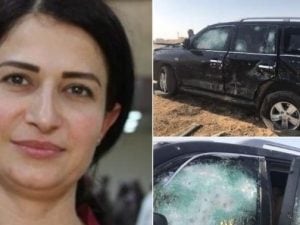
In addition, a key Kurdish politician and women's right advocate, Hevrin Khalaf, along with eight others, were ambushed and murdered by Turkish supported rebels who oppose Syria's President Assad. Hevrin was secretary-general of the Future Free Syria Party and a key diplomatic figure in trying to find a peaceful settlement to the situation in Syria and the region. Thus far, approximately 38 civilians have been killed since the October 9th invasion began.

Trump's blunder is serious. It has damaged our image in the eyes of not just our friends and allies, but has also provided a strategic opening for our enemies. They will use this opportunity to show that the United States isn't to be trusted; that it's better to deal with them than an American government whose support ebbs and flows based on its current needs. It will be surprising if North Korea's Kim Jong-Il, Russia's Vladimir Putin, or China's Xi Jinping don't make use of this error in judgment.

Another factor is that while Erdogan has agreed to a ceasefire, he has not agreed to a withdrawal of Turkish forces. This may result in a potential Syrian-Turkish clash. Given the strategic importance of Syria to Russia, there's little doubt that Putin will not allow any attempts at seizing either territory or toppling the Assad Government. Given that Turkey is a member of NATO and an important trading partner of the EU, that will prove to be interesting, especially given that an attack on one NATO partner is viewed as an attack on NATO itself.

How will the other NATO countries respond if Russian troops are introduced en-masse in Syria? In addition, China is also a friend of Syria, supplying it with an array of weapons as well as economic trade (Russia and China are supporters of the Iranians as well). Meanwhile, Israel sits isolated with its back to the Mediterranean with Iranian back Hezbollah to the north and Iranian back Hamas to the south. Not a position I'd like to be in.

So where does that leave us? First, it leaves President Trump with mud on that orange face of his. He has to first find a way to protect our Kurdish allies while at the same time convincing our NATO ally to back out gracefully. He has to be aware of Russia's keen attention to the situation (as well as China's). I would suggest that he be sure to keep both in the loop and well informed of what we're doing. Any misstep could set in motion something no one wants.

Meanwhile, he has to allow Erdogan to save face, especially in the eyes of the Muslim/Arab world. Turkey is 99% Muslim (mainly Sunni), however, it's also very secular and tends to be Westward looking. That makes Erdogan vulnerable to Muslim extremists who would love to turn Turkey into another Iran. As an aside, it would prove to be interesting to see how NATO would deal with a extremist backed civil war in Turkey, especially one supported by Iran. The potential affect could devastate the world economy, especially in Europe.

Trump will have to also find a way to reestablish trust with our Kurdish allies. It's essential, particularly given that ISIS is down but not out in the region. The Kurds not only provided us with military or logistic support, they were major sources of military intelligence. Without them, we would have had a much harder time not just defeating Saddam, but also in defeating ISIS.

Now that Turkish backed groups are busy freeing ISIS prisoners, we can expect that they'll be back with a vengeance. You can expect a uptick in terrorist attacks throughout the region, as well as in Africa, Europe, and even in Asia which has a large Muslim population. Lastly, you can bet that they'll look for ways to strike the U.S. both overseas and domestically.

I generally like Trump. I like his pro-American attitude and willingness to challenge that corrupt bipartisan status quo which has taken control of the government. As I've written many times before, and as academia has verified, America is an Oligarchy. Our Republic is gone. All that's left is the illusion of what we once had similar to what ancient Rome experienced. Trump has shown the moxie to fight back.

Naturally, he's being fought tooth and nail every step of the way by Democrats and Republicans and their corporate owners. Whoever advised Trump to step aside and allow the Turks to invade either knew nothing of political realities of the region or intended to intentionally sabotaged him, knowing the potential outcome of what those actions would bring. I don't know which is worse. I know that control, be it of assets, resources, or us, is the name of game and that lives matter little to the Oligarchy.


Turkish Backed Forces Are Freeing Islamic State Prisoners


Kurdish politician, other civilians 'executed' by Turkey-backed group