Home of the Militant Middle, Another Opinion ("A/O") is an Independent oriented "OpEd" blog for those looking for unbiased facts free of partisan drama and who are willing to question the Status Quo.
Showing posts with label oil crisis. Show all posts
Saturday, October 05, 2019
Ensuring the Flow of Oil: Coping with an Increasingly Belligerent Iran
As you may noticed (in between hoopla over Trump's phone call the Ukrainian President or the increased calls for Trump's impeachment by the Democrats) that things are heating up---again---in the Middle East. This time it was an alleged attack by the Houthi rebels, a radical Muslim group, in Yemen. This time it was an attack on Saudi oil production. The attack came by way of armed drones and was directed at the world's largest oil processing plant.
The plant, owned by Armaco and is located in Abquiaq, was hit by ten drones which resulted in taking out half of Saudi Arabia oil processing capabilities (the plant is also responsible for 5% of the world's total production). Although the drones were said to have come from Yemen and was launched by the Houthi rebels, Saudi officials were quick to point the finger at Iran, which has had a long and often violent history with the Saudi government (a second, smaller, oil facility was also attacked).
Saudi officials stated that the attacks were too well planned and implemented, as well as too technical, to have been carried out by the Houthis alone. In addition, the drones appeared to be based on Iranian models which are produced in North Korea. The drones have an approximate range of 186 miles, which means that besides being able to targets in Saudi Arabia, they could also hit locations in Kuwait, the United Arab Emirates, and other countries in the region (as an aside, while these were short range models, other similar drones have a ranges up to 930 miles).
In addition, Iran is believed to have been a solid sponsor of the Houthis, along with other extremists groups in the region such as the Hezbollah in southern Lebanon and Hamas in Gaza, not to mention Boko Haram in Nigeria and the remnants of Al Qaeda and ISIS/ISIL. As for the Houthi, who are officially called "Ansar Allah" or "Supporters of Allah", they are mostly Sunni Muslims and have been active since around 2014 (interestingly, thought while mainly Sunni, they follow the Shia "Zaidi" philosophy, which demands that they take an active role in opposing what they see as "social injustice" against fundamentalist Islam). As of 1994, Zaidi Muslims made up just 0.05% of the Muslim population worldwide.
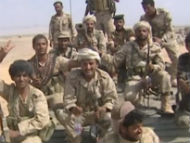
They also claim to be anti-Imperialist (meaning the U.S. and the West), anti-Zionist (anti-Israel), and Muslim revisionist (ie: party like it's 724!). They are also nationalist and believe they have a divine right to reclaim lands lost in the past---real or imagined. Finally, they claim allies throughout the entire Middle East, including Syria, Oman, Iran, as well as Eritrea and North Korea. In addition to the recent attacks by the Houthi rebels, with possible aid from Iran and North Korea, there has been the more direct actions taken by the Iranians themselves.
In May and June of this year, six ships were attacked by the Iranian's Revolutionary Guard Corps Navy (IRGCN). Four attacks occurred in May just north of the UAE while two tankers, one British and the other Japanese, were rocked by Iranian mines just east of the Strait of Hormuz in the Gulf of Oman. Surveillance footage showed an Iranian naval patrol boat attempting to recover an unexploded mine from one of the damaged ships. Just prior to the attacks, Iran naval forces attempted to shoot down a U.S. Navy drone patrolling the area.
As if that wasn't bad enough, the IRGCN has been doing its best to harass U.S. naval warships in the Gulf; the presence of American and other warships in the region is to keep the shipping lanes open and safe and the oil flowing. In June, the IRGCN fired several missiles at the USS Maddox (DD-731) and the USS Turner Joy (DD-951) as the operated in the Gulf of Tonkin, off the coast of Vietnam (neither ship was hit). While the Iranians have long been demanding that the U.S. and other "imperialist" nations stay out of the Gulf waters, lest they face attack by the IRGCN, the attempted attacks off the coast of Vietnam came as something of a bemused surprised. Apparently the Iranians now believe they control the waters in and around the South China Sea! I wonder what the Vietnamese government thinks of their uninvited "protectors"?
Meanwhile, the Iranian government has promised to send ships (up to four) to the Gulf of Mexico and along the Atlantic Coast with further promises to make possible ports of call; perhaps in Cuba and Venezuela. The move is likely an effort to try and intimidate Washington in a "see how it feels" grade school move. Whether the Iranian Navy pays a visit to this side of the globe is really irrelevant.
However, what is more disconcerting is not whether Iran sends ships to the Gulf of Mexico or the Atlantic Coast, it's the fact that Iran has been doing everything possible to provoke the U.S. and its allies at nearly every turn. They've repeatedly found reasons---excuses---to resume the develop of their nuclear reactors (or, as most of the world believes, its nuclear warhead capability, just like its buddy North Korea has been doing).
Its long standing support of Hezbollah and Hamas has proved to be a serious threat to Israel's security. Its support of terrorists groups in Africa and throughout the Middle East are just as dangerous. It's even thought that the Iranians have helped trained and possibly fund terrorist cells crossing our southern border. In fact, several individuals have been caught, in El Salvador and in Mexico. So what's at play here? Why would a little piss ant country like Iran want to pick a fight with the U.S., Great Britain, Israel, or for that matter, Saudi Arabia and the other Gulf State countries?
Iran has had a chip on its shoulder since the Iran Revolution and the hostage crisis of 1979. I can't say that I blame them. The U.S. and Great Britain had long played politics in Iran, and for that matter, the entire region. We've overthrown their governments, manipulated control over their oil productions, and treated them more as subject than economic partners. The overthrow of the Shah was meant as a message that enough was enough; the answer to all their problems they were told was the return to Islamic fundamentalism.
Since then, Iran was has been trying to exert itself as power unto itself. They totally broke from their dependence on the West. They fought the U.S. backed Iraqis, under another dictator we supported, Saddam Hussein, to a standstill. What's more is that they decided that the U.S. and Israel were the two big evils in the world; the forces most capable of stopping them from a revived Islamic Caliphate (they even nicknamed America and Israel "Big Satan" and "Little Satan" respectively). They repeatedly promised to wipe Israel off the face of the map and destroy America's power and influence. As far-fetched as it seems, these are not intended to be idle threats.
Iran allied itself with the former Soviet Union (and now Russia), as well as China and North Korea. They have found common cause with nearly every anti-American, British, or Western nation they could find. They have sponsored terrorist groups wherever possible. The objective is not a full-on assault on American or Western forces. Despite their espoused willingness to die for Allah, they intend to get some mileage with those threats first.
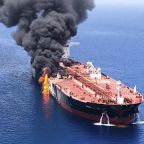
The idea is to needle the Americans and its allies; to inflict as many small wounds as possible to weaken the West. It's also to intimidate the West and to try to make themselves seem more powerful than they are in reality. Of course, they'll strike hard whenever the opportunity presents itself. Their hope is that if America or Great Britain for instance, do respond, that they can turn this into a "Islam vs. the Infidels" battle. That's one reason they sponsor groups willing to attack countries like Saudi Arabia who are generally pro-Western. In addition, most Saudis adhere to a competing and larger Islamic sect---Sunni. The Iranians are Shiite, which brings me to a seemingly unrelated issue---oil production.
While the United States is the world's top oil producing nation (and the top consumer of oil and gas), Saudi Arabia is the second largest, and as I previously said, it's most Sunni, except in the Al Hasa region, which has a large Shiite population and produces the majority of the country's oil and gas. Russia is third (and a major supplier of oil and gas to Europe). While modern Russia is largely Christian (Eastern Orthodox), it has large minorities of Muslims, mainly in the south (about 6.5% of Russia's total population is Muslim. The majority are Sunni while about 10% are Shiite).
Next comes Canada followed by China. While officially an atheist nation, China does have a several provinces which are home to large Muslim populations (approximately 1.8% of China's population is Muslim); the largest of which is located in the Uyghur province in the northwest. Of China's 55 "officially" recognized minorities, ten of them are Sunni Muslim groups. As an aside, despite being a top producer of oil and gas, China and India are also the largest importers of oil and gas after the U.S due to their growing economies.
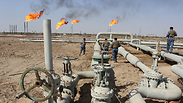
Following China, Iraq is the sixth largest producer of oil and gas. It hold the world's fifth total reserves, which represent 18% of the total reserves in the Middle East and 9% of the world's total reserves. It's worth noting that 67% of the Iraqis are also Shiite. However, the Sunnis have dominated the historically pro-Western governments (Saddam Hussein was a Sunni). Iran, which is about 95% Shiite, is the seventh largest producer with the fourth largest proven oil and gas reserves.
In eight place is the United Arab Emirates (UAE). It hold the seventh largest proven oil and gas reserves in the world. 85% of its citizens are Sunni. Brazil is ninth, but expect that ranking to rise as its ability to develop access to its reserves grows along with its economy. Finally, in tenth place is Kuwait. While 95% of its exports are oil and gas, its production level has been decreasing over the last couple of years. Nevertheless, it still has ample reserves to draw on. About 65% of its population is Sunni.
Other key players of note include Nigeria, which accounts for 6% of the world's production; Libya and Algeria with 3% each, Angola with 5% and Venezuela with 4%. Of these only Venezuela doesn't have a Muslim population, and of those who do, they also all have an Iranian presence in one form or another (remember, for instance, that Boko Harem has been very active in Nigeria as well as the Islamic Fighting Movement in Libya). It's also worth nothing that the majority of the major oil and gas producers---30 in all---are members of OPEC. Also, Saudi Arabia, Canada, and Russia are the world's largest net exporters of oil and gas. Other regional populations to consider include the Kurds, of whom 85% are Sunni while 78% of Turks identify as Sunnis.
So, what does all this mean? Simply this, Iran intends to exert its influence by affecting the safe flow of oil and gas in the Gulf region. This, in turn, will cause the price to fluctuate and ultimately increase as tensions rise and ebb due to the uncertainty factor. This will obviously affect the world's economies, especially in the West. A weaken economic West means a more vulnerable West, and a West less willing or perhaps unable of protecting its allies.
It also means an increasingly politically unstable West as government attempt to find ways to satisfy their oil/gas needs, fund its militaries, and meet domestic demands amid rising prices for not just heating oil and gas, but for food as well, and taxes (a particularly bad winter for instance could be catastrophic). Plus the increased pressure on governments in the Gulf region will also affect the stability of their governments amid increased terrorists attacks and declining trade with the West.
Of course a direct confrontation with Iran could produce the same results as well as create a banner to rally various Muslim extremists under and also provide opportunity for anti-Western powers to join together to take down the "Big Satan" while wiping the "Little Satan" off the map as promised.
Attack on the Saudi oil field a game changer in Gulf confrontation
The World's Top Oil Producing Countries
Houthi Movement
Labels:
China,
drone attacks,
Europe,
extremism,
Gas,
Gulf of Hormuz,
Houthi,
Iran,
ISIS,
Israel,
Middle East,
Muslims,
North Korea,
Oil,
oil crisis,
Saudi Arabia,
Terrorism,
United States,
US Navy,
Yemen
Sunday, August 21, 2005
Corporate Welfare
I’m sure just about everyone has noticed that a bipartisan Congress gave some $4 billion dollars worth of subsides and tax credits to the oil companies, and yet oil company executives belly ache about how much money they’re not making. We notice their “plight” every time we buy gas, oil, or anything else made with petroleum (like plastic). We notice Exxon made $7 billion dollars in profit the first three months of this year, but that’s just a fraction of the story.
Last year, according to the Spark newsletter, Exxon made after-tax profits of $26 billion dollars, an increase of 52% over 2003. Chevron-Texaco made $13 billion, an 86% increase from the previous year. Shell Oil was up 48% over 2003, with $19 billion dollars in profits. Poor babies. I suppose the increase in pump prices is to compensate oil companies for hiring more accountants to count all the money they’re raking in.
Continuing increases in oil prices will in the long run severely damage the economy. People will stop spending as much in order to compensate for the increase in gas and oil prices. The decrease in purchases will lead to a decrease in sales, which in turn will lead to layoffs. Service businesses, ranging from anyone in the transportation industry down to the pizza delivery person, will see a decrease in business in direct relationship to the increase in costs of their services as a result of the cost of oil and gas. Manufactures of high end vehicles such as trucks and SUVs will see a decrease in purchases as customers move to more cost effective cars. Businesses which use petroleum based products, which includes everything made of plastics, will see the costs increase. While some of the increase can be offset internally, it will eventually be passed on to the consumer in the form of higher prices for such things as milk (plastic containers) and computers. For fun, take a minute and look around. Count the number of items made of plastic. That will give you an idea of where the increases will come from.
In short, consumers will have less disposable income, and will make adjustments to compensate for the increase. Manufactures will be forced to increase costs to adjust for the increase of supply costs on their end. With less money to go around, companies will be forced to reduce costs in the form of “sales” which may offer a short term boost in the economy, but will make the economy more instable, forcing marginal companies to either layoff or close. Housing and “big ticket” sales will suffer as folks have less money to spend, and are increasing worried about the economy, which feeds into an increasing unstable economy. The Fed may have to step in to reduce interest rates in order to artificially stimulate the economy. This may, again, have short term benefits, but doesn’t address the cause. The long term result could be a recession.
In 1976, during the “Oil Crisis”, then President Jimmy Carter promised Americans that the US Government would do whatever was necessary to harness alternative energy sources. Well folks, we’re more dependent on foreign oil than ever before, and geo-political nature of world is far more dangerous and volatile than ever. The hated “oil rich Sheiks” of the 1970s turned out to be the same US oil companies that boasted such impressive profits cited above. Oil companies stifled any real efforts to develop alternative energy while it was still in its infancy. President Bush recently remarked that he couldn’t understand the public’s concern over the increase in pump prices, and cited that the increases had “been gradually coming over time.” What he meant to say was that the oil company’s dominance over energy has been gradually coming over time. My solution would be simple. First, invest heavily in alternate fuel sources. Set “non-breakable” time tables, and require oil companies to contribute to its financing. After all, since they spent millions trying to stop it, seems only fair they should now have to fund it. Second, demand auto manufactures develop energy efficient cars and trucks (as an aside, the auto industry has been very successful in dodging this one. In fact, cars are less efficient now than just 10 years ago). Set specific “drop dead” dates with stiff financial penalties, and accept no more whiney ass excuses. Third, nationalize oil and gas companies, along with all other energy and water producing facilities. Industries that have such an effect on national security and the public’s well being should not be in the hands of folks motivated solely by profit. Fourth, and perhaps the most important, put the presidents, CEOs, and boards of directors on trial for war profiteering, for clearly that’s what it is.
Subscribe to:
Posts (Atom)


