Showing posts with label LBJ. Show all posts

Saturday, August 28, 2021

Vietnam and Afghanistan: A Comparison

The U.S. left behind approximately to 2.2 billion dollars in equipment in Afghanistan. The equipment, however, wasn't discarded as some media outlets would have you believe. Instead, the equipment was "given" to the Afghan military and police force, who we spent the last 20 or so years training and working with.

However, as soon it was announced that we would be leaving Afghanistan, the Afghan military and police forces seemed to have started planning their exodus from the scene too. It appears that the old adage about leading a horse to water but not being able to make them drink is applies to the Afghans. We can train them. We can equip them. We can hold their hand (metaphorically speaking), but, ultimately, we couldn't give them the will to fight for their own country.  We couldn't instill willpower.

Instead, the Afghan military and police (or security forces), simply threw down their weapons, changed clothes, and walked (or ran) away, leaving the Taliban to walk in and take whatever they wanted, which, in this case, included helicopters, Humvees , tanks, drones, rockets, artillery, and thousands of assault rifles, small arms, Kevlar vests, communication equipment, medical supplies, and millions of rounds of ammo. That doesn't include "brick and mortar" assets like buildings, roads, runways, and the necessary infrastructure to set up either a top class military or government.

Meanwhile, in the capital of Kabul, the government, known for its corruption, and which we "helped" to install, packed its bags, looted what they could, and high tailed it out of town in private jets as thousands of Afghans do everything in their power to board U.S. and allied transports out of the country while risking their lives in the process as the Taliban's noose around the airport tightens.

The whole scenario is reminiscent to older Americans of the collapse of South Vietnam and the ultimate Fall of Saigon, complete with images of helicopters evacuating embassy personnel from roof tops but there are some notable differences which deserve exploring.

America seemed to stumble into Vietnam, unlike Afghanistan, which came as a direct response to the cowardly 9/11 attacks by Al Qaeda and its leader, Osama bin Laden. In the case of Vietnam, a territorial "possession" of an imperial France, it was an ideological war to stop Communism and potential new front against the USSR and China.
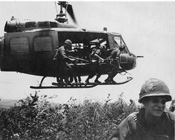
The Vietnamese People had been waging a guerilla war for independence against a imperial France since around 1887, when it was forcefully incorporated into French Indochina, which included Laos, Cambodia, and Thailand, which didn't end until 1954, with a brief inter lieu of Imperial Japanese occupation from 1940 to 1945.

After the war ended in 1945, France reneged on its promise of independence a second time (claiming that the Vietnamese weren't "ready" to govern their country), but it was exhausted and broke from the war, as were the British. The USSR and China began sending weapons and supplies to aid Viet Minh, as the nationals, led by Ho Chi Minh, were called by 1950. President Eisenhower, fearful of the so-called "domino" effect of Communism, sends "advisors" to aid the French in response.

Following their defeat at Dien Bien Phu in 1953 the French threw in the towel, and withdrew (it was 1947 for India when Britain agreed to India's independence). In 1954, Eisenhower used America's new role as a global leader at the Geneva Conference to publicly support a democrat republican South Vietnam, while the north was under the control of the Communist. The conference divided the country at a demilitarized 17th Parallel with a communist North and republic South.  

As an aside, in 1919, following the end of WWI, the Vietnamese sent a delegation to the Versailles Conference to ask France, and the nations attending, to add them in obtaining independence (and to expose France's pre-war promise of independence). Instead, they were ignored and ultimately walked out. In 1945, Ho Chi Minh sent a letter to President Truman asking him to support their demand for self-determination. Their letter went unanswered. 

It's worth noting that North Vietnam, which called itself the Democratic Republic of Vietnam, was Communist, had been unaligned with the USSR and China prior to 1954.  After the U.S. officially threw its support behind South Vietnam, known as the Republic of Vietnam, the North officially aligned with Soviet Russia and China in response to offset the weight of the U.S. economically and militarily.

The French had lost 75,581 military personnel. 64,124 were wounded, and around 40,000 became POWs. The insurgent Viet Minh lost approximated 191,605. Financially, the war cost three billion francs, of which the U.S. picked up 30% of the tab as part of its war against the spread of Communism.

Up to 1954, the war was largely seen as a war of independence from Imperial France. After that, it became a civil war. The U.S. refused to sign the Geneva Accords and demanded an election supervised by the UN, along with the South Vietnamese Government. An election as a peaceful resolution to the current, and possible future hostilities in Vietnam, however, the President of South Vietnam, Ngo Dinh Diem, refused.

With a propped up government in the south, America found itself involved in a civil war, whether it wanted to be or not by 1955. In 1959, the North began a guerilla campaign in against the Saigon Government in the south. In 1960, President John Kennedy authorized additional advisors to be sent, including 400 specially trained Green Berets along with the use of "Agent Orange".

 In 1963, Kennedy approved the assassination of South Vietnamese President Ngo Dinh Diem, who was highly unpopular and openly corrupt, and the overthrow of his government which was carried out by the ARVN (Army of the Republic of Vietnam) with aid from the CIA.  By this time, U.S. troop levels had reached 16,000.  He was replaced by General Duong Van Minh (a military junta continued to control the government until its fall in 1975). America's role in Vietnam's civil war increased under President Lyndon B Johnson, following the assassination of John Kennedy in 1963.

1964 marked the jumping off point in the war. In what became known as the "Gulf of Tonkin Incident", the USS Maddox reported coming under attack from three North Vietnamese torpedo boats for allegedly violating their territorial water (the captain of the Maddox maintained they were in international waters). The Maddox returned fire after a warning shot failed. Planes from the USS Ticonderoga joined the fray along with the USS Turner Joy.   

It was reported that one torpedo boat was sunk and the other two were damaged (one heavily). Later, a second attack was reported with the Maddox and Turner Joy firing at radar indicated targets. No debris or bodies were found and it was determined that a second attack did not occur. Following the incident, President Johnson increased troop levels to just over 23,000. By 1967, that number had reached 485,600. 

Despite official claims that the war was virtually won and the North was on the ropes, 1968 saw the bitter fight for Khe Sanh, the My Lai Massacre, and the Tet Offensive, along with the assassinations of Dr Martin Luther King and Senator Bobby Kennedy, both of whom opposed the war. Support for the war at home all but evaporated . Accepting that reelection was all but impossible, Johnson announced on national television that he would not run for president again.

Richard Nixon, however, saw an opportunity, and despite running (and winning) on promises to bring U.S. involvement to end, saw American troops numbers reach 536,100.   The next few years saw brutal fighting while American's saw nightly on television the mounting futility of the war. Meanwhile, Nixon disconnected the dollar from the gold standard, resulting in rising inflation and an increase in prices and unemployment. A new economic term, "stagnation" was introduced to the American public.

In 1972, while the U.S. increased its bombing of the North, troops were reduced down to 24,000 amid negotiations with the North. In 1973, the draft ends as America "officially" enters a recession (the expression at the time was that "a recession in Washington and a depression in the heartland") and OPEC triggers an oil embargo. America's attention to the war was increasingly being diverted.

1975 saw the last American troops, embassy personnel, members of the South Vietnamese Government evacuated, and ordinary civilians jumping fences, breaking through gates, and do everything possible to board U.S. planes and helicopters, often from roof tops of official buildings. Meanwhile, Soviet made tanks rumbled into Saigon as North Vietnamese troops spread out everywhere. These are images people today recall when comparing our exit from Kabul to Saigon.
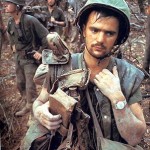
The war resulted in 58,220 men and women dead or missing.  For those who care about such things, the majority were white, 49,830. 7,243 were black. 349 were Hispanic, 226 were Native American, and 139 were Asian.  Most were men, or to be more honest, young men; boys really. Drafted at 18, some weren't old enough to drink or vote and have a say as to what became of them and their lives.

Financially, the war cost American Taxpayers $168 billion dollars (that's equivalent to $1 trillion in 2019 dollars). Of course, that doesn't include the millions in military equipment left behind, nor does it take into consideration the dozens of planes and helicopters dumped overboard on Navy carriers to make room for the hundreds of refugees.

The cost of the war in Afghanistan is still be tabulated, but estimates are over $2.231 trillion. Even the final count of the dead and wounded remains unfinished. We can say that 7,067 died at as direct result of the war, which doesn't include our coalition partners, whose deaths number over 110,000. It also doesn't include the 30,177 service men and women who lost their lives to fighting personal battles as a result of suicide. We may never know that final figure. We are still adding to those numbers daily from Vietnam veterans. It also doesn't take into accounted the wounded or disabled, which is in the thousands.  

The world as well as many at home saw Vietnam as America's first military defeat. Some are starting to claim that Afghanistan is our second. However, there are some key differences. Vietnam was in truth a civil war that we had no business in, but the mindset of the time was one of stopping the expanding influence of Communism.

Western foreign policy was built on the premise of the so-called "domino effect".  As one nation fell to Communism, so would its neighbor and so on.  Well, it never really happened. Ultimately, the USSR fell. Now former Communist nations are largely democratic and engage in capitalism, albeit in a limited form, including a united Vietnam, Russia, and China.  
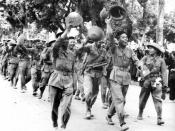
We willingly failed to see Vietnam for the civil war it was, and chose to see it as stopping the spread of Communism in Southeast Asia. We assumed that everyone wanted to be like America. In that we were wrong. Not everyone wants or is ready for democracy or capitalism. We have repeatedly failed in that regard.

 Afghanistan was different. It was run by a religiously radical Taliban who protected those responsible for the cowardly attacks of 9/11. Our goal was to capture or kill those responsible. It that we were successful.  Al Qaeda was decimated. It's leader, Osama bin Laden killed along with most of its leadership. The Taliban too removed from power and a more modern government installed. However, as in Vietnam, it provided to be largely inept and corrupt.

In both wars, politicians increasingly dictated the course of the war. In Vietnam, it was more direct with politicians second guessing generals. In Afghanistan, it was the military leadership which had become more political. Certainly, they were much more media savvy.  Public perception made our returning Vietnam vets into "baby killers" thanks to the media. Today, thankfully, those veterans, as well as those returning from Iraq and Afghanistan are much more respected and appreciated.

For our rivals, which includes China, Afghanistan represents a second defeat. Naturally, the Taliban, along with Iran and militant Islam, see it as a victory, not just against the "Great Satan", but for their radical ideology, whose ranks are sure to growth along with their boldness. Whether the world, and more importantly, average Americans, see it as a defeat or a victory, or something in between remains to be seen.


Vietnam War Facts, Costs, and Timeline


The Assassination of Ngo Dinh Diem


Politics And The Vietnam War


Saturday, September 10, 2016

Who Supported What? Republican and Democrat Support of Key Issues


In my last article, "What's the Truth Behind Republican Claims of Supporting Black Civil Rights?", we examined the Republican claims that the GOP was responsible for "freeing the slaves", securing individual and voting rights of former slaves and those held in various forms of bondage, which was accomplished during and just after the Civil War while Democrats did everything in their power to thwart Republican efforts and turn back the hands of progress. We also looked at who was largely responsible for the passage of the Affordable Care Act, or as it's more commonly known, "Obamacare". As it turned out, the Republican claims were mostly true, but with a very important caveat. The Republicans who supported these measures were moderate and liberal Republicans, including Abraham Lincoln (a moderate) and Ulysses S. Grant (liberal), and those that opposed the "Civil Rights Act of 1866" as the various amendments were called, were conservative Republicans (Andrew Johnson) and reactionary Democrats.

My article also pointed out, as I have in numerous other articles, moderate and liberal Republicans (spitefully called "RINOs" or Republicans In Name Only) have been mostly booted out of the Grand Ole Party. Those who either went to or were already members of the Democratic Party (where they were tagged with label "DINOs" as in Democrats In Name Only), found themselves equally unwelcome, and so became Independents, which is now America's largest voting bloc and growing rapidly; Indies already exceed the total number of Democrats, who lag behind in second place and the much more distant Republicans, and are expected to exceed their combined numbers in only five years. As for Obamacare, the conservative and ultra conservative (aka the Far or Religious Right) Republicans, some Democrats and unions along with corporate lobbyists and professional associations opposed Obama's version, which was transformed from a unconstitutionally compulsory bill to a tax, which the Constitution permits Congress to levy. Nevertheless, many did support a much more efficient and cheaper form of national healthcare called "Single Payer" (which was also not a tax). Under "Single Payer", everyone would have the same core insurance with an option to purchase supplemental plans from insurance providers, but Congress, the President, and others in government would not be exempt as they are under Obamacare. Thus, money more so than party won the day and the vote.

Nevertheless, I thought it would be interesting to apply the same inquiry to more recent pieces of legislation such as women's right to vote, the Civil Rights Act of 1964, as well as the Clean Air and Clean Water Acts. Which political party was the central supporter to these key important issues? Let's start with Women's Suffrage and the right to vote. Few people know that women in America have had, at different times and places, the right to vote. In 1776, New Jersey allowed both genders to vote, provided they were property owners. However, by 1807, the law was changed to prevent women from voting anywhere in the state while in Uxbridge Massachusetts, women were allowed to vote as early as 1756. In 1848, the Liberty Party became the first political party to include women's suffrage as part of its party platform. It shouldn't come as a surprise to know that the Liberal Party, primarily a abolitionist or anti-slavery party, had as it's first presidential nominee was a Kentuckian named James Birney in 1840 and was closely tied to another political party called the "Free Soil Party" which included former Whigs and "Barnburner Democrats". Later, the Liberal Party would merge with the Free Soil Party which would shortly afterwards merge into the Republican Party along with Whigs and other, smaller, "third" parties). Thus, the women's suffrage movement begin as part of the anti-slavery movement which sought in provide equal rights across the board regardless of race, bondage circumstances, or gender.

In the same year, 1848, Susan B. Anthony and Elizabeth Stanton began their colorful careers to gain equal voting rights for women as well. In 1850, Lucy Stone organized the National Women's Right Convention in Worchester, Massachusetts, thus bring together the three key figures of the movement which would span over 70 years. Together, they campaigned on the issue of equal rights which resulted in the passage of the 14th Amendment giving blacks equal rights as well as the right to vote. Their efforts bore fruit first in Wyoming in 1869 and then in Utah in 1870 (however, women were stripped of their right to vote in 1887 with the passage of the Edmunds-Tucker Act by Congress (this was mainly anti-Mormon Bill whose focus was on the issue of polygamy . Its sponsors was Republican George Edmunds of Vermont and Democrat John Tucker of Virginia). By 1900, Idaho and Colorado had given women full rights, including the right to vote, and so it continued until June 4, 1919 when the Senate approved the amendment by a vote of 56 to 25. The bill was filibustered by Democrats to prevent a roll call vote until their Senators could be present. Nevertheless, 82% of Republicans (36) and 54% of Democrats (20) voted in favor while 18% of Republican (8) and 46% of Democrats (17) voted against, and thus the 19th Amendment passed allowed to proceed and was state ratified in 1920 (Tennessee was the final state to ratify the Amendment on August 18, 1920) with encouragement from Democratic President Woodrow Wilson. Republican Speaker of the House, Fredrick Gillett, sign the constitutional amendment bill into law. All in all, pretty bipartisan wouldn't you agree?

So, how about the Civil Rights Act of 1964? The Civil Rights Movement, which led to the signing of the 15th Amendment by President Lyndon B. Johnson (D-TX), was one of this nation's most traumatic experiences, along with the antiwar movement just a few years later which brought forth such diverse individuals as Rev. Martin Luther King, Rev. Ralph Abernathy and Malcolm X. The Civil Rights Act was more than a anti-discrimination issue. It was a voting issue and a labor issue as well. The bill came to be a central domestic policy piece of President John Kennedy (D-MA) following in the footsteps of the Civil Rights Acts of 1866 and 1875 and was aimed at ending discrimination of all kinds, from education to hiring, voting to opening up hotels, theaters, restaurants, stores, parks, and all other public facilities, burst onto the national scene in the first half 1963 in the form of riots, protests, fire hoses, and police dogs (in truth, there had been other, more sporadic incidents dating back to the 1930s, 40s, and 50s. It had been President Eisenhower (R-KS) who had begun to take steps to address these issues just before his term as President ended and had encouraged Kennedy to carry the matter forward).

Following Kennedy's assassination in November of 1963, Johnson picked up the torch and pressed forward using the power of the Presidency and his considerable skills (the so-called "Johnson Treatment"). Debate on the bill was intense on all sides and several attempts to stifle its passage or usher through more watered down versions were made on multiple occasions. Finally, a compromised bill made its way through the Congress and was signed by President Johnson on July 2, 1964. The June 26, 1964 edition of the Congressional Quarterly stated that 69% of Senate Democrats voted yes on the bill (46 to 21) while 82% of Senate Republicans vote yes (27 to 6). As an aside, all of the Southern Senate Democrats voted no. On the House side, 61% of House Democrats vote yes (152 to 96) along with 80% of House Republicans (138 to 34). 92 of the 103 Southern House Democrats voted no. It was further noted in the Congressional Quarterly that despite having a Democrat President, the Congressional Democrats had a much lower than expected support for the bill. It should be noted that the majority of Northern and some West Coast Democrats (i.e. California) were liberal leaning while overwhelming majority of Southern Democrats along with some Midwestern were very conservative. On the overhand, the majority of Republicans were moderates (later to be called "Rockefeller Republicans) with a minority leaning to conservative. Johnson himself was generally a moderate leaning Democrat (JFK, for the record, regarded himself as a conservative, especially on foreign policy).

As for the Clean Air Act, it became law in 1955 under moderate Republican, Dwight "Ike" Eisenhower as the "Air Pollution Control Act". This was the first federal law designed specifically to reducing industrial pollution and for providing funds to find methods for reducing pollution. In 1963, the Clean Air Act, which aimed to actually control pollution came into being. In 1967, the Air Quality Control Act was passed and signed into law by President Johnson . It's objective was to enforce interstate monitoring of pollution as well as establishing specific monitoring stations and study methodologies. Further amendments to the law were made in 1970 (often called the "Clean Air Extension Act" or the "Muskie Act" after the support of Senator Edmund Muskie of Maine (D) which was sign into law by President Nixon) , 1977 (signed into law by President Jimmy Carter (D-GA), and again in 1990 (signed into law by President George H.W. Bush (R-TX), considered by many to be the last of the Rockefeller Republicans.

The Clean Water Act became law in 1972 under the Presidency of Richard Nixon. The purpose of the bill was to ensure the availability and access of all Americans to clean water plus water treatment, discharges from various industries such as coal, oil and gas, and manufacturing as well as the strengthening and expanding existing laws pertaining to protection of wetlands (up to this point, many industries simply dumped waste water directly into rivers and streams unfiltered). The law also established monitoring and water quality standards and enforcement guidelines. Under the recommendation of President Nixon, the Environmental Protection Agency was also created with the purpose of protecting human and environmental health as well as providing the means of enforcement.

As you hopefully have noticed, most of the amendments and laws were the result of bipartisan cooperation, mostly between moderate or liberals on both sides of the aisle. However, by the time of President Reagan's "Southern Strategy", the GOP had begun to purge itself of all centrists and with the Speakership of Newt Gingrich (R-GA), there was an all out transformation of the Republican Party. On the Democratic side, Bill Clinton was often cited as the last center Left President, and ever since, the Democrats have sought with equal zeal to purge themselves of all center and conservative leaning party members. What is left on both sides are ideological extremes with no interest in cooperating. Both parties have equally sold themselves to the highest corporate bidders to the point where there is really difference between the two. Both parties now find themselves bought and paid for by the Oligarchs who now rule this nation formerly of ours.
The revolving door between six or seven figure corporate jobs and the government has been removed, leaving simply an connecting hallway. As for all those disowned moderates or centrists, they became Independents; the single largest voting bloc in America and growing rapidly. Within the next five years, there will be more Indies than Democrats or Republicans combined, which is just another tangible measure of just how far both corporate party are with the American People (though the corporate media still tries to divert our attention and either ignore or downplay the obvious). Finally, you know the facts should your hear or read some piece of party or media propaganda about who did what and cares more about the American People.


19th Amendment to the U.S. Constitution: Women's Right to Vote
http://www.archives.gov/historical-docs/document.html?doc=13&title.raw=19th+Amendment+to+the+U.S.+Constitution%3A+Women's+Right+to+Vote


Clean Air Act of 1963, Clean Air Act of 1970, & Clean Air Act of 1990 (Summary of Major Points)
http://redgreenandblue.org/2016/02/29/clean-air-act-of-1963-clean-air-act-of-1970-and-clean-air-act-of-1990-summary-of-major-points/


Summary of the Clean Water Act
https://www.epa.gov/laws-regulations/summary-clean-water-act