Showing posts with label Houthi. Show all posts

Saturday, January 20, 2024

With the 2024 Presidential Election Approaching, Is Biden Trying To Pick A Fight With Iran?


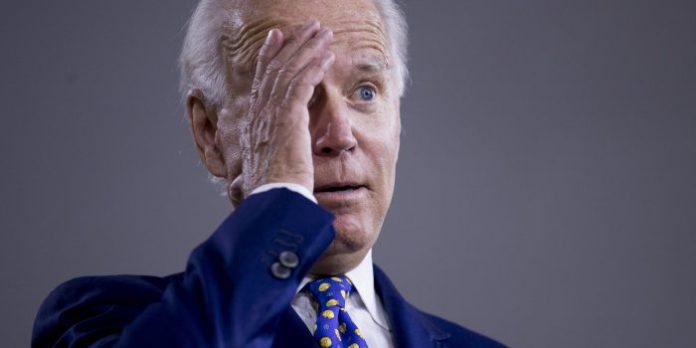
Americans like a strong leader. Something no one has ever accused Biden of being. It's not surprising then that as we go into the 2024 Presidential Election, Joe Biden is  perhaps the weakest incumbent in recent U.S. history. His approval ratings are the lowest of any president over the past 15 years. Even former president, Donald Trump, has an approval rating of 75% among Republicans, despite the bipartisan Establishment's best (or worst) efforts to destroy his character.  So, what's Biden to do?

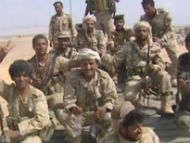
Traditionally, America has never liked  to "switch horses mid-stream"  during a war or other national crisis, and that's what Mr. Biden is hoping for. In fact, he's counting on it. Biden has intentionally put U.S. military forces directly in harm's way in order to virtually guarantee to provoke a crisis with the radical Houthi in Yemen. The Houthi, along with other terrorist groups including ISIS/ISIL, Al Qaeda, Hezbollah, the Taliban, Boko Harem, and others are believed to be actively supported by America's arch-nemesis, Iran

It's worth mentioning that there are approximately 100,000 members of the Houthi. They control roughly two thirds of  the most populated areas in Yemen. Hezbollah, which is most active in southern Lebanon, numbers to about 100,000 as well with roughly 60,000 full time and part time  fighters.  Boko Harem, which operates mainly in Nigeria, Chad, northern Cameroon, and Mali, is much smaller with roughly 15,000  followers.

No one knows for sure how many members of Al Qaeda are left. During the 20 year war in Afghanistan, thousands of so-called "freedom fighters" came from surrounding areas to take part in fight against the "Great Satan" (aka the U.S.). Best estimates indicate that as many as 20,000 of these "freedom fighters" were killed or seriously wounded. Currently it's believed that Al Qaeda/Al Nusra have about 3000 members.  

ISIS/ISIL came into being as a spinoff of Al Qaeda which they saw as too moderate. The United Nations has previously reported that volunteers from as many as 80 countries have ventured from their homeland to join ISIS (many were self recruited via the internet. ISIS has been unique among the terrorist organizations in its technological sophistication).
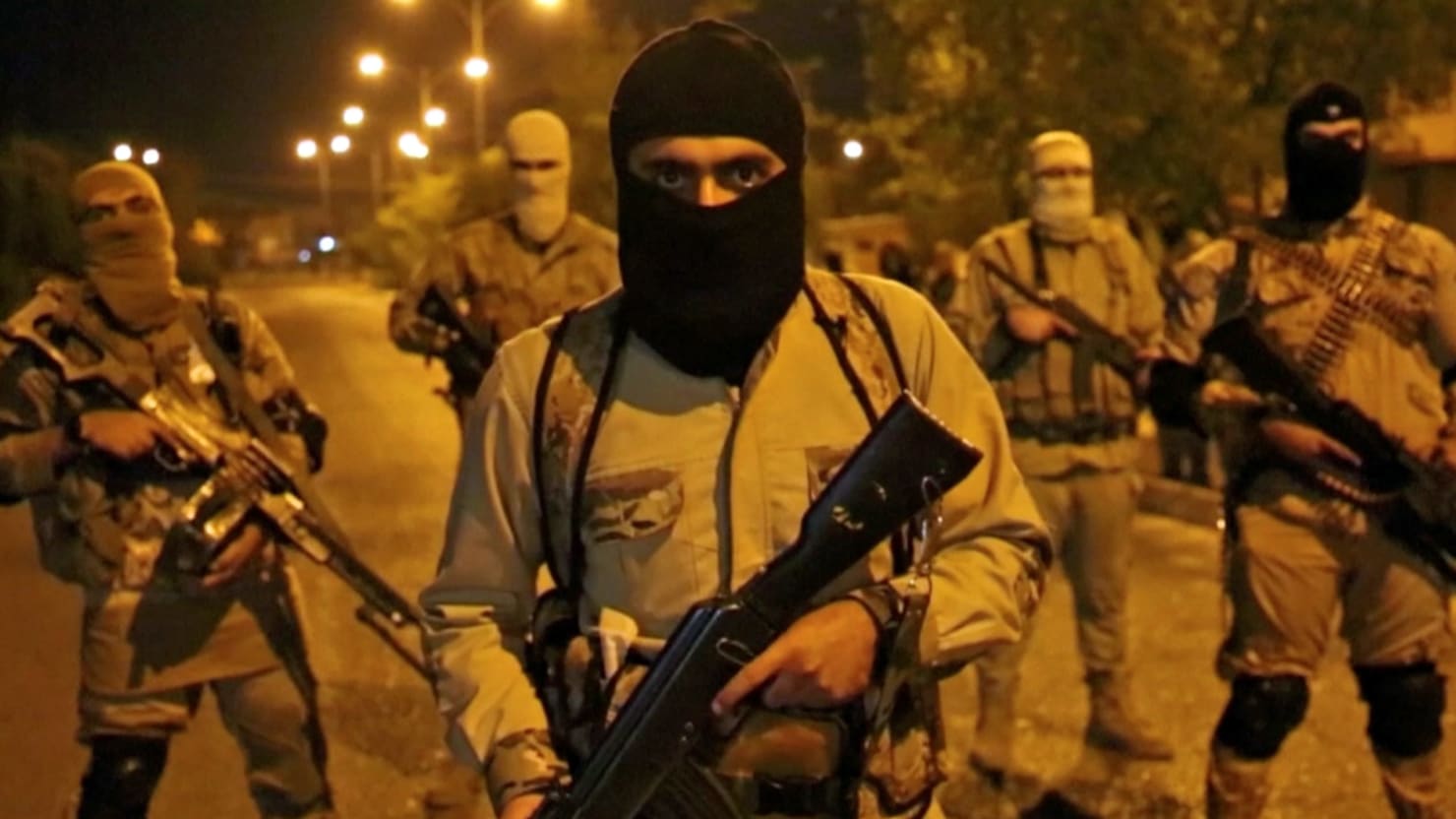
According to UN and U.S. intelligence reports, ISIS/ISIL may have had as many as 200,000 followers at one point. While many have killed, wounded, or simply drifted away, ISIS/ISIL still remains a potent force, especially in Afghanistan and parts of Syria which it has declared to be part of the "Islamic State". Nevertheless, best estimates put the number of active fighters at around 15,000 - 20,000.   

Behind all these organizations stands Iran, the archenemy of the United States since the Hostage Crisis of 1979 and the overthrow of the Shah. America, via the CIA, had previously overthrown the center-left government of Mohammad Mosaddegh, in 1953 and replaced it with Mohammad Reza Shah Pahlavi, a secular, pro-Western and very conservative autocratic.  

However, in 1979, the Shah, as he was known, was overthrown by the followers of Ayatollah Ruhollah Khomeini. Out went the Shah and a secular Iran and in its place Iran became an extreme theocratic country. All traces of equality and secular democracy went out the door. During the takeover, the radical Revolutionary Guard seized 52 U.S. embassy workers. They were constantly threatened with being murdered.

President Jimmy Carter authorized a rescue attempt which was poorly planned, poorly executed, and ultimately failed.  After 444 days, the hostages were finally freed as soon as Ronald Reagan was sworn in as president. Ever since, the United States has been trying to pick a fight with Iran.  Iran, on the other hand, has been attempting to exert its influence throughout the region, and has made repeated threats to destroy Israel (aka "the little Satan). To help accomplish this, Iran has sponsored  terrorists groups throughout the Middle East and beyond.       

All of these various terrorist groups have tend to subscribe to a intense hatred of the United States, Israel, and the West. This includes our democratic ideals such as religious and gender equality, free speech, free choice, and so forth. Some of these groups would love to prohibit music of all genres, dancing, singing, alcohol and drugs all types, smoking, or swimming just as an example.

Women may not be uncovered, nor can they vote, speak out, go anywhere without a male escort, drive, or even be educated. Gays in all their varieties are considered an "abomination". As such, they are to be killed without hesitation.  

President Biden previously sent two U.S. naval carrier strike forces, led by the USS Gerald Ford and USS Dwight Eisenhower, to the eastern Mediterranean and parked them off the coast of Gaza (the British dispatched a carrier strike force as well as part of the united show of force).  Officially, our presence was to "monitor" the situation between the Israelis and its ongoing operations in Gaza against the terrorist group Hamas.   

However, that role almost immediately changed from one of neutral monitoring to active participation as the U.S. has repeatedly intercepted missiles and attack drones sent by the Houthi in Yemen. Thus far about a dozen missiles and around 21 armed drones have been intercepted.

On Biden's orders, planes from the U.S. carriers made several strikes on Houthi compounds in Yemen,  resulting in several Houthi rebels and Yemeni civilians being killed and six wounded. That action has provoked a series of massive protests throughout Yemen as a violation of Yemeni territorial sovereignty.

Meanwhile, the Pentagon announced in early January that the USS Gerald Ford strike group would be returning home. It will be replaced by the USS Bataan, an amphibious assault ship and centerpiece of a Marine centered Amphibious Assault Group capable of delivering 1,687 Marines anywhere they're needed. In this case, Israel.  It also has a impressive complement of attack helicopters and short-hop attack aircraft such as the F35B Lightning II and the AV-8B Harrier II.
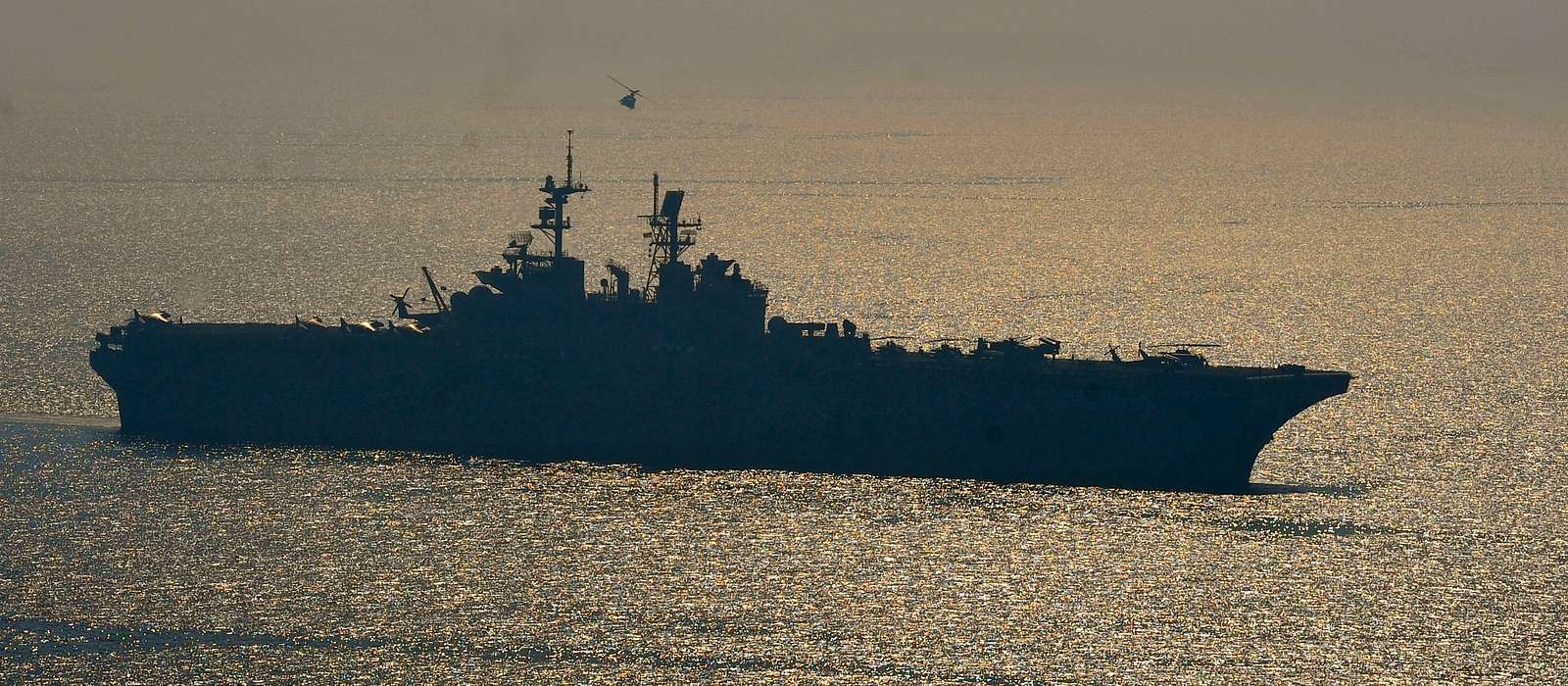
The USS Mesa Verda, a amphibious transport ship with a complement of 700 officers and enlisted personnel (of which 550 are Marines) , and USS Carter Hall, a amphibious dock landing ship with a crew of 24 officers, 397 enlisted sailors and about 500 Marines, make up the remaining complement of replacement ships. 

As an aside, the USS Bataan was used in the 2020 targeted killing of Iranian Major General Qasem Soleimani of the Islamic Revolutionary Guard and commander of the Quds Force, which I'm sure hasn't go unnoticed by Tehran's military leadership. In addition, in 2008/9, the Bataan and Peleliu  were secretly used as prison ships to hold suspected terrorists.

As if intentionally trying to makes matters worse, Biden sent a private message to Iranian President Ebrahim Raisi advising that the U.S. was "prepared" for any actions the Iranian government cared to undertake, in what can only be characterized as a clear and unambiguous threat designed to provoke the Iranians. But what of Biden's assertion that the U.S. was prepared? It turned out, he lied.

According to a Department of Defense "Fact Sheet", our military faces shortages on practically every front.  Equipment, spare parts, and resources from secondary or even non-military sources are having to be diverted to meet demand by the military. U.S. naval ships are in serious need of a general overhaul while aircraft in the Air Force and Navy need a complete update amid critical spare part shortages.

The U.S. Department of Defense also raised the question as to whether our armed forces would be able to adequately engage in a multi-front conflict on a sustained level. The report went on to provide an analysis of the readiness of each of the military branches.

First was the U.S. Army which was characterized as "marginal" by the DoD with having only 62% of the total manpower needed to meet its minimum operational goals. The Army lacks adequately trained personnel to deal with the modern high tech battlefield. The Army is aging at a rapid rate, making it less combat effective. That's because fewer young people are enlisting and/or staying in.

The Navy's capabilities are rated as "weak to very weak". To be effective, the Navy needs a battle ready fleet of at least 400 ships. It currently has 298, and the majority of those need overhauling. The fleet is expected to shrink further to 280 ships by 2037. Meanwhile, China has been aggressively increasing its regional fleet which could mean defending Taiwan from a Chinese invasion may be problematic at best.

The fighting capability of the Air Force is listed by the DOD as "very weak" which is dangerous since control of the air is the single key deciding factor in most every battle. The USAF is currently at 86% of its minimum strength and facing a shortage of around 650 pilots.  Most planes are at least 32 years old and because of a lack of spare parts, pilots are barely getting in adequate flight time to meet minimum standards to retain peak performance.

The Space Force is seen as a "weak" with its role still not clearly defined. However, like all the other military branches, it has to cope with aging equipment, a lack of properly trained personnel, and few spare parts.

Finally, the Marine Corp. Out of all the military branches, only the Marines were viewed by the DOD as being "combat ready" despite facing the same issues when it came to having ample aircraft and military equipment, spare parts, and adequately trained individuals.

As an aside, the Department of Defense report also mentioned our nuclear capabilities. There's no question that we are living in a far more dangerous world as rouge nations such as North Korea and Iran press ahead with their nuclear weapons programs and delivery capabilities. North Korea has been acting like a spoilt kid the way it's been lobbing missiles in the direction of South Korea, Japan, and even Hawaii just to see what kind of reaction they can provoke.

Iran has been actively developing its nuclear capabilities amid its incessant threats that once developed, they intend to use them against Israel even if it means their own destruction. What kind of country dedicates itself to its own national genocide?  Of course, we face the ever present possibility of a "dirty bomb" being used by some fanatic against a ill-defined "infidel" country. Of course, top on that list would be the United States (aka "the Big Satan"), particularly given our porous southern border.

Biden's recent taunt of Iran or stirring the hornet's nest in Yemen aren't the smartest moves a president could make, but that's what he's done. There's no question that Biden's moves are politically motivated. He's trying desperately to boost his ratings and project the image of a strong leader.

Sadly for Biden is that he has never been seen as a strong leader. Of what can be said about it him historically, much of it isn't complementary.  Worse still is that what the world sees is a tired old partisan politician who is quickly losing his grip on reality.

The worse thing that can happen right now is for Biden to get us embroiled in a war, either directly or indirectly with Iran. Despite his empty bravado, we are not prepared and our enemies know it. It really just a matter of whether they want war or peace. Meanwhile, we need to avoid stoking a fire in the Middle East which could spill over into a invasion of Taiwan by China and a move by North Korea against the Seoul in the south.  

In Europe, the situation in Ukraine shows no signs of ending anytime soon and the EU is facing a mounting crisis over the unchecked mass influx of migrants from Africa and the Middle East. At home we're seeing our nation balkanize over political correctness, "wokeness", rekindled racism, rising crime, a fundamentally unstable economy as the invasion along our southern border goes unchecked.

While we do need a strong leader, Biden has clearly demonstrated for all to see that he is no longer competent enough for the job of President and Commander in Chief.  However, the Right needs to accept the fact that Trump's credibility may have been irreparably damaged by this point as to be no longer effective, which leaves us with a serious national dilemma.  With both parties potentially having a lame duck candidate, is there anyone capable of unifying and leading the nation at this critical juncture in our history? 


   If you enjoyed the article, please consider passing it along to others and don't forget to subscribe. It's free! Lastly please be sure to "like" us on whatever platform you use to read anotheropinionblog.com. It helps beat the algorithms and keeps our articles in circulation. Thank you!


DOD Fact Sheet: Sequestration's Impact to Regain Readiness


Executive Summary of the 2023 Index of U.S. MilitaryStrength


The USS Gerald R Ford aircraft carrier is returning homeafter extended deployment defending Israel


5 killed in U.S.-led strikes in Yemen, Houthi rebels say


The Evolution of Islamic Terrorism: An Overview


Saturday, October 05, 2019

Ensuring the Flow of Oil: Coping with an Increasingly Belligerent Iran


As you may noticed (in between hoopla over Trump's phone call the Ukrainian President or the increased calls for Trump's impeachment by the Democrats) that things are heating up---again---in the Middle East. This time it was an alleged attack by the Houthi rebels, a radical Muslim group, in Yemen. This time it was an attack on Saudi oil production. The attack came by way of armed drones and was directed at the world's largest oil processing plant.

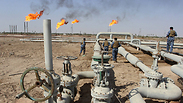
The plant, owned by Armaco and is located in Abquiaq, was hit by ten drones which resulted in taking out half of Saudi Arabia oil processing capabilities (the plant is also responsible for 5% of the world's total production). Although the drones were said to have come from Yemen and was launched by the Houthi rebels, Saudi officials were quick to point the finger at Iran, which has had a long and often violent history with the Saudi government (a second, smaller, oil facility was also attacked).

Saudi officials stated that the attacks were too well planned and implemented, as well as too technical, to have been carried out by the Houthis alone. In addition, the drones appeared to be based on Iranian models which are produced in North Korea. The drones have an approximate range of 186 miles, which means that besides being able to targets in Saudi Arabia, they could also hit locations in Kuwait, the United Arab Emirates, and other countries in the region (as an aside, while these were short range models, other similar drones have a ranges up to 930 miles).

In addition, Iran is believed to have been a solid sponsor of the Houthis, along with other extremists groups in the region such as the Hezbollah in southern Lebanon and Hamas in Gaza, not to mention Boko Haram in Nigeria and the remnants of Al Qaeda and ISIS/ISIL. As for the Houthi, who are officially called "Ansar Allah" or "Supporters of Allah", they are mostly Sunni Muslims and have been active since around 2014 (interestingly, thought while mainly Sunni, they follow the Shia "Zaidi" philosophy, which demands that they take an active role in opposing what they see as "social injustice" against fundamentalist Islam). As of 1994, Zaidi Muslims made up just 0.05% of the Muslim population worldwide.

They also claim to be anti-Imperialist (meaning the U.S. and the West), anti-Zionist (anti-Israel), and Muslim revisionist (ie: party like it's 724!). They are also nationalist and believe they have a divine right to reclaim lands lost in the past---real or imagined. Finally, they claim allies throughout the entire Middle East, including Syria, Oman, Iran, as well as Eritrea and North Korea. In addition to the recent attacks by the Houthi rebels, with possible aid from Iran and North Korea, there has been the more direct actions taken by the Iranians themselves.

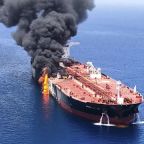
In May and June of this year, six ships were attacked by the Iranian's Revolutionary Guard Corps Navy (IRGCN). Four attacks occurred in May just north of the UAE while two tankers, one British and the other Japanese, were rocked by Iranian mines just east of the Strait of Hormuz in the Gulf of Oman. Surveillance footage showed an Iranian naval patrol boat attempting to recover an unexploded mine from one of the damaged ships. Just prior to the attacks, Iran naval forces attempted to shoot down a U.S. Navy drone patrolling the area.

As if that wasn't bad enough, the IRGCN has been doing its best to harass U.S. naval warships in the Gulf; the presence of American and other warships in the region is to keep the shipping lanes open and safe and the oil flowing. In June, the IRGCN fired several missiles at the USS Maddox (DD-731) and the USS Turner Joy (DD-951) as the operated in the Gulf of Tonkin, off the coast of Vietnam (neither ship was hit). While the Iranians have long been demanding that the U.S. and other "imperialist" nations stay out of the Gulf waters, lest they face attack by the IRGCN, the attempted attacks off the coast of Vietnam came as something of a bemused surprised. Apparently the Iranians now believe they control the waters in and around the South China Sea! I wonder what the Vietnamese government thinks of their uninvited "protectors"?

Meanwhile, the Iranian government has promised to send ships (up to four) to the Gulf of Mexico and along the Atlantic Coast with further promises to make possible ports of call; perhaps in Cuba and Venezuela. The move is likely an effort to try and intimidate Washington in a "see how it feels" grade school move. Whether the Iranian Navy pays a visit to this side of the globe is really irrelevant.

However, what is more disconcerting is not whether Iran sends ships to the Gulf of Mexico or the Atlantic Coast, it's the fact that Iran has been doing everything possible to provoke the U.S. and its allies at nearly every turn. They've repeatedly found reasons---excuses---to resume the develop of their nuclear reactors (or, as most of the world believes, its nuclear warhead capability, just like its buddy North Korea has been doing).

Its long standing support of Hezbollah and Hamas has proved to be a serious threat to Israel's security. Its support of terrorists groups in Africa and throughout the Middle East are just as dangerous. It's even thought that the Iranians have helped trained and possibly fund terrorist cells crossing our southern border. In fact, several individuals have been caught, in El Salvador and in Mexico. So what's at play here? Why would a little piss ant country like Iran want to pick a fight with the U.S., Great Britain, Israel, or for that matter, Saudi Arabia and the other Gulf State countries?

Iran has had a chip on its shoulder since the Iran Revolution and the hostage crisis of 1979. I can't say that I blame them. The U.S. and Great Britain had long played politics in Iran, and for that matter, the entire region. We've overthrown their governments, manipulated control over their oil productions, and treated them more as subject than economic partners. The overthrow of the Shah was meant as a message that enough was enough; the answer to all their problems they were told was the return to Islamic fundamentalism.

Since then, Iran was has been trying to exert itself as power unto itself. They totally broke from their dependence on the West. They fought the U.S. backed Iraqis, under another dictator we supported, Saddam Hussein, to a standstill. What's more is that they decided that the U.S. and Israel were the two big evils in the world; the forces most capable of stopping them from a revived Islamic Caliphate (they even nicknamed America and Israel "Big Satan" and "Little Satan" respectively). They repeatedly promised to wipe Israel off the face of the map and destroy America's power and influence. As far-fetched as it seems, these are not intended to be idle threats.

Iran allied itself with the former Soviet Union (and now Russia), as well as China and North Korea. They have found common cause with nearly every anti-American, British, or Western nation they could find. They have sponsored terrorist groups wherever possible. The objective is not a full-on assault on American or Western forces. Despite their espoused willingness to die for Allah, they intend to get some mileage with those threats first.

The idea is to needle the Americans and its allies; to inflict as many small wounds as possible to weaken the West. It's also to intimidate the West and to try to make themselves seem more powerful than they are in reality. Of course, they'll strike hard whenever the opportunity presents itself. Their hope is that if America or Great Britain for instance, do respond, that they can turn this into a "Islam vs. the Infidels" battle. That's one reason they sponsor groups willing to attack countries like Saudi Arabia who are generally pro-Western. In addition, most Saudis adhere to a competing and larger Islamic sect---Sunni. The Iranians are Shiite, which brings me to a seemingly unrelated issue---oil production.

While the United States is the world's top oil producing nation (and the top consumer of oil and gas), Saudi Arabia is the second largest, and as I previously said, it's most Sunni, except in the Al Hasa region, which has a large Shiite population and produces the majority of the country's oil and gas. Russia is third (and a major supplier of oil and gas to Europe). While modern Russia is largely Christian (Eastern Orthodox), it has large minorities of Muslims, mainly in the south (about 6.5% of Russia's total population is Muslim. The majority are Sunni while about 10% are Shiite).

Next comes Canada followed by China. While officially an atheist nation, China does have a several provinces which are home to large Muslim populations (approximately 1.8% of China's population is Muslim); the largest of which is located in the Uyghur province in the northwest. Of China's 55 "officially" recognized minorities, ten of them are Sunni Muslim groups. As an aside, despite being a top producer of oil and gas, China and India are also the largest importers of oil and gas after the U.S due to their growing economies.

Following China, Iraq is the sixth largest producer of oil and gas. It hold the world's fifth total reserves, which represent 18% of the total reserves in the Middle East and 9% of the world's total reserves. It's worth noting that 67% of the Iraqis are also Shiite. However, the Sunnis have dominated the historically pro-Western governments (Saddam Hussein was a Sunni). Iran, which is about 95% Shiite, is the seventh largest producer with the fourth largest proven oil and gas reserves.

In eight place is the United Arab Emirates (UAE). It hold the seventh largest proven oil and gas reserves in the world. 85% of its citizens are Sunni. Brazil is ninth, but expect that ranking to rise as its ability to develop access to its reserves grows along with its economy. Finally, in tenth place is Kuwait. While 95% of its exports are oil and gas, its production level has been decreasing over the last couple of years. Nevertheless, it still has ample reserves to draw on. About 65% of its population is Sunni.

Other key players of note include Nigeria, which accounts for 6% of the world's production; Libya and Algeria with 3% each, Angola with 5% and Venezuela with 4%. Of these only Venezuela doesn't have a Muslim population, and of those who do, they also all have an Iranian presence in one form or another (remember, for instance, that Boko Harem has been very active in Nigeria as well as the Islamic Fighting Movement in Libya). It's also worth nothing that the majority of the major oil and gas producers---30 in all---are members of OPEC. Also, Saudi Arabia, Canada, and Russia are the world's largest net exporters of oil and gas. Other regional populations to consider include the Kurds, of whom 85% are Sunni while 78% of Turks identify as Sunnis.

So, what does all this mean? Simply this, Iran intends to exert its influence by affecting the safe flow of oil and gas in the Gulf region. This, in turn, will cause the price to fluctuate and ultimately increase as tensions rise and ebb due to the uncertainty factor. This will obviously affect the world's economies, especially in the West. A weaken economic West means a more vulnerable West, and a West less willing or perhaps unable of protecting its allies.

It also means an increasingly politically unstable West as government attempt to find ways to satisfy their oil/gas needs, fund its militaries, and meet domestic demands amid rising prices for not just heating oil and gas, but for food as well, and taxes (a particularly bad winter for instance could be catastrophic). Plus the increased pressure on governments in the Gulf region will also affect the stability of their governments amid increased terrorists attacks and declining trade with the West.

Of course a direct confrontation with Iran could produce the same results as well as create a banner to rally various Muslim extremists under and also provide opportunity for anti-Western powers to join together to take down the "Big Satan" while wiping the "Little Satan" off the map as promised.


Attack on the Saudi oil field a game changer in Gulf confrontation


The World's Top Oil Producing Countries


Houthi Movement