Showing posts with label Mayor Greg Fischer. Show all posts

Saturday, September 19, 2020

It's Time For Louisville to Settle Up With Fischer

***Due to Blogger's new format change, there are random changes font size and colors***


$12 million dollars. That's what the City of Louisville, under embattled mayor Greg Fischer has agreed to pay the family of Breonna Taylor who was shot and killed back in March during a police raid of her apartment, along with a promise of police reform.  What does this settlement actually represent?

To many it was a just and reasonable settlement as a result of a botched raid resulting in Ms. Taylor's death (she was hit eight times according to police reports) with one officer suffering a gunshot wound to his upper thigh. The other two officers were uninjured. Others see it as smart business. An attempt to avoid a possible jury trial and a much higher court award, especially given our current political climate.

Still others see it as nothing short of a bribe; an attempt to buy off the Taylor family while covering up a series of screw ups from the mayor's office through the Louisville Metro Police Department (LMPD) all the way down to the officers on the scene. So, which is it? A reasonable settlement aimed at putting a tragic episode and civil unrest behind us or another cover up by the mayor's office.

What is known to a reasonable degree was that Taylor, along with her former boyfriend, Jamarcus Glover, and her current boyfriend, Kenneth Walker, were allegedly part of a drug ring. According to the police, a jailhouse informant told them that drugs were being sent to Taylor's address, which was backed up by a postal inspector. Taylor's apartment was supposedly being used to store drugs and money with Taylor allegedly acting as Glover's bookkeeper while in jail on earlier drug charges.

Acting on this information, Detective Joshua Jaynes obtained  a "no knock" warrant from Circuit Court Judge Mary Shaw and coordinated the two prong raid. One was Glover's residence, and the other, about ten miles away, was Taylor's apartment. Unbeknownst to the officers raiding Taylor's residence, Glover, the main suspect, had been arrested earlier at his home was being held in jail.  Nevertheless, the raid went forward.

While the raid on Glover's residence was without incidence, things didn't go well at the second address. At around  12:40 on the night of March 13th, undercover officers Brett Hankison, Jonathan Mattingly, and Myles Cosgrove, under orders not to use their body cameras, allegedly announced themselves and busted through Taylor's door. Walker and Taylor were asleep at the time.

The commotion prompted Walker, who stated that he thought someone was breaking in, to fire a single "warning shot" which hit officer Mattingly in his upper thigh, near his femoral artery. Nevertheless, all three officers returned fire, blindly shooting into the dark apartment.


At some point during the fray, Taylor exited the bedroom into the hallway and was hit approximately eight times.  Walker claims that went immediately to Taylor who, by that point was either dead or rapidly dying. Walker surrendered without further incident.

Investigation afterwards showed that the police fired somewhere between 20 and 25 bullets, some of which going into the adjacent apartment. Following standard police procedure, all three officers were put on paid administrative leave pending further investigation (Hankison was later fired). However, Taylor's death in conjunction with George Floyd's in Minneapolis, prompted civil disobedience on a scale not seen in Louisville since the 1960's Civil Rights Era or anti-forced busing protests of the 1970's.

The protests quickly devolved into riots, looting, and a dramatic increase in violence, including arson, carjackings, and random shootings while the police were allegedly told  informally to "stand down" (something the mayor has denied although others have insisted is true). What was supposed to be "justice" for Taylor became a racial and political issue.

Meanwhile, the LMPD has dragged their feet at every turn as things unraveled. They've provided incomplete and inaccurate reports, delayed the ballistics report (which, six months later, was only recently turned over to the FBI). The postal inspector now says that he never told Jaynes that drugs were being delivered to Taylor's apartment and residents claim the police never announced themselves.

As if this wasn't bad enough, LMPD's Chief of Police, Steve Conrad, was forced to resign amid numerous scandals ranging from misuse of the budget to rampant sexual abuse in the LMPD's Explorer Program for young boys and girls (throughout, Mayor Fischer continued to deflect criticism of Conrad, and "encourage" the media to drop their inquiry).

Finally, as the investigation of Taylor's death continued at a snail's pace, rumors began to swirl about so-called "back room" deals with developers to acquire property owned by the city at deeply discounted prices, including property allegedly owned by Kenneth Walker (Beonna Taylor's boyfriend at the time of her death) and knowledge about a possible affair by the mayor. However, without details, those stories may be just that...stories, but nothing would come as a surprise from this administration.

So, while the FBI is conducting its own ballistics investigation based on material provided by the city six months after the fact, and while the state's Attorney General, David Cameron, is still conducting his investigation, Mayor Fischer announced a settlement with Ms. Taylor's family for $12 million dollars.


Metro Council was unaware of the settlement prior to its announcement. The media, which is deeply embedded in the local power structure, was caught off guard. Groups behind the protests/riots were equally unaware. They were supposedly here to get  "justice" for Breonna Taylor now find out that it was apparently about the money. Of course, I'm sure they'll have their hand out too.

Louisville, on the other hand, has been long struggling financially. The mayor has tried repeatedly to raise taxes, citing shortfalls in the budget (in part due to millions spent on his pet projects like bike lanes). The Board of Education is pushing for a 7% hike in property taxes, claiming they need yet more money while outside reports indicate that the school system is top heavy in administrative personnel and paid well above national levels while the teachers remain underpaid, yet use their own money to buy needed supplies. Besides, the schools aren't open thanks to COVID-19.

Public utilities are another source of revenue. Their rate increases seem constant yet they're not effectively monitored. Still, like the school board, what they want they get. Ever since the City/County merger in 2003, the residents of Jefferson County have lost their advocates. Previously it was the a board of Aldermen and a mayor, who were fairly evenly matched in terms of political clout. The same for the county, which had a Judge Executive and three district commissioners plus separate administrations with its own police force and police chief, and separate tax revenue stream.

The city's power structure was primarily Democrat while the county's was Republican. The city was often in a fiscal hole while the county managed its money pretty well. The merger, which was drawn up by the local power elite, changed all that for the worse.

 What the community ended up with was a powerful mayor akin to the old city hall bosses of a century past, and a weak Metro Council, which is too large to be effective. The city is in constant search for money. The actions of the past mayor and now his handpicked successor has more than driven the point home. Fischer's behind the scenes settlement agreement, whether rightly or wrongly offered, serves as  a great example that his power.

There is no question that the LMPD is in need of serious and immediate reform from the Chief's office all the way down to the officer on the street. I served on the old Jefferson County Police Department's Citizen's Advisory Board from 2001 to 2005. I was selected to serve on the Service Awards Committee which reviewed reports involving officers whose actions exceeded the call of duty.

I had also served on the Kentuckiana Interfaith Community Forum on Police & Community Relations, which was a panel of about a dozen community leaders which examined police and community relations. In each of these groups we would review incidents in detail. We would hear from the officers involved, their partner, commanding officer and citizens as needed for details.  


The vast majority of these individuals were outstanding police officers.  I rarely ever came across anyone who had a racial, gender, ethnic, or religious bias. If they did, they hide it well. The officers recommended for some sort of commendation typically deserved it and more.


What has happened to the local police department post merger I don't know, but it doesn't have the character or confidence it once had. It had no confidence in its previous Chief of Police, Robert White, and it most certainly didn't have faith in Steve Conrad. As for the mayor, Greg Fischer, the police and others in government have little to no confidence in his leadership.


The community as a whole has lost its confidence in his ability to lead the city as well. In fact, the only reason he won reelection was that the local Republican East End clique has failed to build the necessary community wide base it needs to win the seat (the last Republican mayor elected was in 1965). I'm not saying that the City of Louisville needs a Republican mayor. I am saying, however, that the city needs new ideas and a new approach. What it has been doing is clearly not working.


Mayor Fischer, I believe, overstepped his boundaries with this covert settlement. He has once more shown that he backs those who are of use to him politically or personally, and that apparently doesn't include the ordinary police officer. If he was confident in the steps taken officers on the night of March 13th, he would be demanding an immediate trial. Instead, he has once more tucked tail. 


If Mayor Fischer was confident of his decision, he would have included the Metro Council instead of leaving them hanging on the line. If Fischer was confident in his leadership as mayor he would have put a quick end to the rioting, looting, car hijackings, gang violence, and shootings which is plaguing the city while permitting peaceful and orderly protests to continue.
 

Instead, his inaction has led to the vandalism of whole sections of downtown which, in addition to the largest settlement paid by any city in recent history, will cost taxpayers millions more to clean up. Was this an attempt to buy off the Taylor family in order to keep the matter out of the courts because he knew his failure of leadership, and by extension, the police, would prove to be too much? Maybe.

Regardless, his failure has and will result in more businesses closing and/or moving out of downtown, thus putting Louisville on track to becoming another "doughnut" city like Detroit or West Memphis (as if the virus hasn't done enough damage). Louisville continues to show that it's no long in the same league as its (former) peer cities like Nashville, St Louis, Indianapolis, and Cincinnati.  

The shooting of Breonna Taylor, irrespective of whether she was into drugs, a fired EMT, or whatever, was uncalled for. Shooting randomly into a dark room is not good policing. A ordinary "flash bang" could have eliminated the threat long enough for officers to secure the area without endangering anyone.


This matter may yet find its way into the courts. We are still awaiting the FBI's and Attorney General David Cameron's reports. There is also still the matter of Jamarcus Glover and Kenneth Walker to consider yet. Meanwhile, it's time to clean house, starting with Greg Fischer.


Saturday, November 04, 2017

Sanctuary Cities and Crime: A Lethal Combination


"Sanctuary Cities" tend to be a very controversial topic as you may well imagine. After all, it's topic which deals with human lives and our treatment of fellow human beings, the notion of "just" versus "unjust" laws, and economics, which of course, impact everybody in one fashion or another. Many will argue that use of "Sanctuary Cities" is little more than an attempt to usurp Federal authority over immigration laws; laws which some feel are unjust in that it denies individuals the freedom of movement and opportunity to seek self-betterment through economic means. In short, "Sanctuary Cities" revalidate the notion of being an American, such as the pursuit of happiness and individual sovereignty. Opponents , on the other hand, see sanctuary cities and other communities as nothing more than an attempt to circumvent Federal laws by aiding and abetting criminals.

As proof, some point to the unspoken policy of the liberal media to downplay the seriousness of the crime and refer to these individuals as "undocumented" or "unauthorized" immigrants rather than as illegal immigrants, and certainly never as criminals even though technically, although that would be their correct designation. The media also attempts to portray these individuals as simply being hardworking individuals holding down regular jobs trapped by an unjust system and hounded by inbred uneducated genetic throwbacks (a characterization that opponents of illegal immigration would strongly object to).

In addition, some would argue that the use of "Sanctuary Cities" is little more than an attempt to increase Federal aid money, which is based on population counts, as well as to fill low paying and hard to fill jobs. Just another attempt expand the "Nanny State" on the backs of taxpayers. At present, there are some 300 so-called sanctuary cities and towns in the United States with Louisville Kentucky, a mid-size city on the Ohio River, becoming the latest to join its ranks. Best estimated put the number of illegal immigrants currently living in the U.S. at 11.3 million. The majority of these individuals live in California, Nevada, New York, Florida, New Jersey, and Illinois, while other states, including Louisiana, Alabama, Kansas, Georgia, and South Carolina have seen a significant rise in population.

Prior to 2015, the majority of illegal immigrants were from Latin America, with a majority of those being from Mexico. However, an April 2017 Pew Survey indicates that may be changing. Pew's report shows that the number of illegal Mexicans has dropped from a high of 6.4 million in 2009 to 5.6 million as of 2016. So, who is making of the difference? According to the poll, most of the new arrivals are from Asia, Haiti, and Central America. Nevertheless, there hasn't been a significant drop in the overall population of illegal immigration despite the drop of Mexicans crossing the border illegally. This is mainly due to efforts to bringing extended family members into the country to join those already here.

As for employment, Pew's poll indicates that illegal immigrants account for 8 million individuals; mostly employed in low paying positions such as hotel/motel housekeeping, the construction industry, childcare and custodial. The poll also notes that, for the first time, the majority of illegals living in the U.S. have been here for at least a decade, which brings us back to "Sanctuary Cities". It should come as no surprise that the population of illegal immigrants entering "Sanctuary Cities" has increased, and continues to do so. Sanctuary cities and towns tend to provide a wide array of services which helps them find jobs, medical care, housing, educational for themselves or children, and perhaps most important of all, ways to evade law enforcement and circumvent government red tape. However, with the influx of illegal immigrants, also comes the criminal element. As with the turn of the 20th Century, immigrants arriving from mostly poor and patricidal countries such as Italy, Poland, and Russia eventually brought with them the criminal gangs from the Old World, which would adapt and reorganized for the same reasons as before----power, money, and prestige.

Crime in Sanctuary cities usually go unreported. Most of the crimes are petty act of vandalism, panhandling, drunk and disorderly conduct, harassment, and general low level crimes. In most cases, the police let the individual off with a warning (assuming they can be found and identified), while other are briefly held and released. ICE (short for Immigration and Customs Enforcement), the federal agency charged with arresting and deporting those here illegally, are not notified as per the overarching policy of being a Sanctuary City.

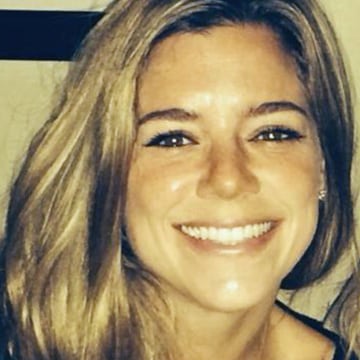
Take this case in point. San Francisco has long been a Sanctuary City, and with it a policy of not reporting the arrest or detention of illegal immigrants and of not cooperating with ICE agents. In July of 2015 Kathryn Steinle, a 32 years old, was walking along the city's famous Pier 39, near Fisherman's Wharf with her father, when she was attacked and murdered by Juan Francisco Lopez-Sanchez, an illegal immigrant with a long rap sheet of mostly petty crimes. However, of note, Mr. Lopez had been deported five times previously until finding "sanctuary" from authorities in San Francisco. Just a few months previous, Mr. Lopez was arrested on drug charges. The charges were (inexplicably) dropped, and despite ICE having learned of his arrest and making a formal request to be turned over to them, Mr. Lopez was released just prior to the arrival of ICE agents. The reason? San Francisco's policy of non-cooperation with federal authorities due to their "sanctuary" status. Had they cooperated, Ms. Steinle would likely still be alive. According to the Center for immigration Studies, of the estimated 8,100 illegal aliens arrest for a crime and subsequently released, 1900 were rearrested within a 9 month period on charges totaling 7500 charges according to a 2014 study.

The U.S. Department of Justice and the U.S. Sentencing Commission reported that as of 2014, that illegal immigrants were convicted and sentenced for committing over 13% of all crime in the U.S. The Justice Department reports that for the same period, 19% or 12,000 criminal cases filed by prosecutors were for violent crimes committed by illegal aliens. 22% or 13,300 were for felony drug charges. The U.S. Sentencing Commission found that 75% of all criminal defendants who were convicted and sentenced for federal drug violations were illegal immigrants. Want more? How about this. The FBI reported that from 2005 to 2008 there were 67,642 murders committed in the U.S., and from 2003 until 2009 there were 115,717 murders. The General Accounting Office indicates that 25,064 of these were committed by an illegal immigrant.

In California alone, which has a prison population of 130,000, 2400 of the inmates are illegal immigrates who had been convicted of murder. Additionally, for every 100,000 illegal immigrants, 92 are imprisoned for a violent crime. Does that sound like a low number to you? Compare it to this. For every 100,000 legal immigrant and citizen, only 74 are convicted for any crime. In Arizona, this number is 64 per 100,000 compared to 54 citizen and legal immigrant. In New York, the number is three times higher. For every 100,000, 169 illegal immigrants are imprisoned compared to 48 legal immigrant and citizen. The numbers are similar across the board and show that despite comprising just 3.8% of the overall population, illegal immigrants are responsible for the majority of violent and drug related crimes regardless of the "sanctuary" status where the crime was committed.

But this isn't the worse it. Not by a long shot. As I stated above, illegal activity by gangs typically follows the migration patterns of their identifying group (ethnic, religious, tribal, etc). During the turn of the 20th Century, and especially during Prohibition, criminal gangs became headline news. Previously relegated to the back page local newspapers, the likes of Al Capone and "The Outfit", "Dutch" Schultz, the Purple Gang, Dion O'Banion and his North Side Gang, "Legs" Diamond. Owney Madden, the Harlem Gang, Murder Incorporated, "Bugsy" Siegel and Frank Costello captivated the public's imagination. The majority of these criminal groups were mostly ethnic, Sicilian/Italian, Jewish, Irish, Black, or German. The gangs today are no different. Some of Russian, Chinese, Japanese, Mexican, Columbian, black, or Bosnian. Today's gangs however, are far more ruthless. While the gangs of the past seem to have a moral compass, at least when it came to "civilians", today's gangs have little regard for human life, and even less of personal property.

The top ranked gangs are often far above the capabilities of local law enforcement. In many cases, they nearly exceed government forces in places like Mexico or Latin America. Here in the U.S. it usually takes the training and resources of federal agencies to gain an handle on the situation, which presents a problem for sanctuary towns and cities who, on one hand, thumb their noses are federal laws, and on the other hand hold it wide open for federal money needed to equip or train police officers or pay for the formation of special units and any overtime. Quite the pickle should Washington opt to play the same game as cock-sure mayors or other local officials, not to mention the inevitable backlash from citizens.

So, who are these gangs? According to federal law enforcement agencies, the most lethal is MS 13, which has about 10,000 members currently in the U.S.; possibly more. MS 13 was found in Salvadorian community in Los Angeles in the 1980s and operate out 40 cities (and yes, most of those are sanctuary cities). Barrio 18 (aka The 18th Street Gang or M 18) is another highly dangerous gang. According to the FBI, M 18 has "tens of thousands" members operating throughout the U.S. which, as with MS 13, includes sanctuary cities. They are active in prostitution, drug trafficking of all types, murder for hire, kidnapping, and extortion.

Barrio Azteca has several thousand member who operate primarily in the South, but also is believed to have operations in Pennsylvania, Texas, Massachusetts, and along the Eastern Seaboard. This gang is affiliated with the powerful Juarez Drug Cartel out of Mexico. They are involved with trafficking cocaine in its various forms as well as murder for hire, especially within the federal prison system and so-called "high profile" killings. The Trinitarios originated in New York City back in the late 1980s. The gang is mostly make up of individuals from the Dominican Republic. In addition to NYC, they gang operates in New Jersey, Connecticut, Rhode Island, Pennsylvania, Ohio, and North Carolina. In addition to specializing in murder for hire, the gang is highly involved in oxycodone, crack cocaine, marijuana, and cocaine.

Chicago has its small mini-gangs (sometimes referred to "splinter" gangs which broke off larger, more powerful gangs like Gangster Disciples and the Hit Squad in the 1980s). These gangs do it all, from drug trafficking, petty crime, murder, prostitution, extortion; you name it. These gangs, which are made up mostly of juveniles (their average age is 14) are responsible for Chicago's massive murder count. An interesting aside, most of these gangs operate out of Al Capone's old South Side. Two other, more recognizable, gangs are the Crips and Bloods. The Crips were originally formed and operate out Los Angeles. This gang is a little different from the other mentioned. They are involved in bank robberies, armored car heists, store robberies, carjacking, armed assault, burglaries and rapes. Their arch rival, the Bloods, started back in the late 1960s and is one of the oldest gangs listed. The Bloods are involved in pretty every form of crime from drugs to murder and armed robbery. Like many of the other gangs, the Bloods and Crips have chapters scattered across the U.S. It should be pointed out that as much as the Crips and Blood dislike each other, they have something else in common besides their criminal activity. Both gangs are utterly despised by the Hispanic gangs already mentioned.

So, this is another plus being a sanctuary city will bring its residents, increased crime and violence, along with turf wars which have no regard life. City governments find themselves constantly trying to play catch-up with the addition costs illegal immigration brings to so-called "sanctuary" cities, just in terms of basic services. The result, thanks to higher taxes, is often local residents moving out as illegal immigrants move in. Local police, no matter how tough they think they are, struggle daily in matching the firepower of these gangs which follow the migration of immigrants, both legal and especially illegal. Meanwhile crime of all sorts increase as the gangs move in. These same gangs have no qualms about shooting cops. We'll cover more of the "bonuses" of being a sanctuary city in later issue.


5 facts about illegal immigration in the U.S.


Map Showing How Many 'Sanctuary Cities' Are Sheltering Illegal Immigrants in the US---And Where They Are


The Truth About crime, illegal immigrants, and sanctuary cities


USDJ: History of Street Gangs in the United States


10 Of The Most Lethal Gangs In America

Saturday, October 28, 2017

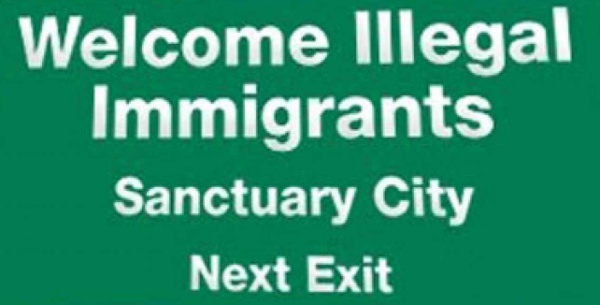
Louisville's Folly: A Transition To A Sanctuary City?


The City of Louisville Kentucky, famous for its Kentucky Derby , production of whiskey, and as a shipment hub took a significant step on October 25, 2017. Whether that step will be good or bad remains to be seen. The City's local government, the 26 member Metro Council, which is dominated by Democrats, voted most along party lines, 16 to 7, to become a so-called "sanctuary city". The Metro Mayor, Greg Fischer, also a Democrat, was extremely pleased with the result of the vote. Fischer had been promoting the notion that becoming a "sanctuary city" for the past year or so. Fischer claims the status would be benefit the City's 740,026 residents. As an aside, many residents were surprised, not to mention stunned, when they learned the results of the vote since there was little pre-noticed made available to public that the subject would be on the agenda Thursday night. For better or worse, it appears that the deed is done. So, let's discuss what being a "sanctuary city" actually means and what the residents of Louisville can expect, based on other "sanctuary cities".

So, just what is a "sanctuary city"? A "sanctuary city" is a metropolitan city or town which have voted not to cooperate with federal law enforcement agencies, such as ICE or the U.S. Border Patrol, in the identification and detention of individuals who are in the United States illegally. The intent is to make individuals feel welcome, and to encourage them to make use of taxpayer funded social services, as well as other services provided by religious and private institutions (both of which are usually registered as 501c3 institutions which means they are tax exempt). These type of institutions have a long history of encouraging individuals to seek temporary shelter with them regardless of their immigration status. These institutions often assist in aiding individuals with obtaining healthcare, completing official forms, permanent residence, helping to get children enrolled in school (along with taxpayer paid tutors and/or translators. In some cases, volunteer tutors or translators can be used) and employment through networking with other groups and individuals who will protect their immigration status. In some states, these tax exempt institutions will also assist individuals in obtaining a driver's license (including translations for the written portion of the test), and as a "ride along" to aid in translating instructions from the testing officer.

The status of being a "sanctuary city" also provides a cover whereby government officials and police officers are prohibited from ascertaining an individual's immigration status regardless of the circumstances. Nevertheless, should they learn that, for instance, an individual detained for whatever reason is here illegally, they are not required to report the incident to the appropriate federal authorities. Additionally, it's hoped that these individuals will report any and all crimes they witness. However, in the countries these individuals come form are known for having corrupt government officials and law enforcement; where brutal treatment of anyone who speaks out is common place. There is little trust or faith in law enforcement and an obvious reluctance in going to the police. In the case of health issues, the immigration status of the individual or family member, need not be reported to authorities. However, health related issues, such as a drug addiction or communal illness like TB, measles, small pox, etc, must still be reported to the appropriate health agencies--local, state, or federal irrespective of the immigration status, which is not reported.

At present, there are approximately 300 "sanctuary cities" now in the U.S. Proponents claim that it's not the responsibility of local cities and towns to aid in the enforcement of federal laws. While opponents argue that federal laws supersede any and all state or local statutes and ordinances. Certainly, the willingness of local municipalities to accept federal money in exchange for enforcement of various laws pertaining to housing, education, healthcare, and so forth would support the opponent's argument. Many supporters of "sanctuary" status and amnesty for illegal immigrants like use the phrase "No One is Illegal" during demonstrations and protests, while opponents often point out that, while technically correct, and individual's action(s) can be illegal, especially when there is intent in addition to action in committing the crime. A common argument used by proponents of "sanctuary cities" and/or amnesty for illegal immigrants is the involuntary separation of family members.

People immigrate for various reasons, but mostly it's to avoid some form of persecution or for economic gain. Every nation has its own established immigration laws and the procedures one must follow in order to legally enter the country; most also have quotas as to how many of what immigrant status it can accept, such as student, professional or skilled, refugee, etc. Illegal immigrants are those who knowingly decide to ignore the various laws of a given country and simply enter, hopefully, under the radar. Some manage to avoid detection for years or even decades, while most are discovered much more quickly. These individuals are usually quickly deported after a quick health checkup to confirm they aren't carrying some virus, along with a criminal background check to confirm no outstanding warrants. What's a serious concern to every nation, is that individuals with untreated or undiagnosed diseases are entering their country, which might cause a health crisis. The other concern is, of course, the criminal element. Illegal entry is a necessity for many criminals, especially those who belong to gangs and/or drug cartels.

Of course, this isn't to suggest that every illegal immigrant is carrying some deadly disease or belongs to some criminal outfit. Most are coming to simply seek employment; some even send money back home to help support their family. Nevertheless, they have chosen not to obtain a work visa or "green card" for some reason. Therefore, their decision and their decision only is the sole reason for any family separation or hardship. Had they obtained a green card instead of take trying to take a shortcut, they wouldn't be faced with the problems they brought on themselves and their family.

While few illegal immigrants have any serious criminal records, that's not to say that there are those here illegally who do. In 2016, a study performed by the University of California (Riverside) and Highline College in Des Moines, Washington, confirmed what many have suspected, namely that there is a relationship between an increase in violent crime and sanctuary cities. The researchers looked at 54 cities in 19 states, plus the District of Columbia, from 2000 through 2014. They then compared the data gathered between sanctuary cities and non-sanctuary cities. The results showed "significant" increases in not just violent crimes, but also property crime, child abuse, as well as aggravated rape. In some cases, according to the report, these increases showed double compared to non-sanctuary cities.

Part of the reason for the increase is that word travels fast. Criminal gangs, which often have significant percentages of illegal aliens (up to 80% according to a 2013 FBI "National Gang Report"), tend to gather in cities where they don't have to worry about local police holding individuals for ICE, not to mention that basic economics dictate that criminal gangs follow the immigrant, legal or not. However, there are some reports which differ from data gathered by ICE and other federal law enforcement agencies, which claim that there is no relationship between increased crime and sanctuary status. Nevertheless, these are often based on studies taken from reported crimes at the local level, which, admittedly, are often underreported by the police. Of course, none of this is to imply that every illegal immigrant is violent; however, their illegal status does make them by definition a criminal.

So, what are to make of this? Frankly, I don't know. Certainly Louisville's Metro Council could have used the local media more vigorously in announcing that the topic of Louisville becoming a "sanctuary city" would be on the agenda at its upcoming meeting. It's failure to do so speaks volumes of its intent. With almost half of the Metro Council as well as the Office of Mayor are coming up for reelection; this will definitely be an issue. Lastly, I think the residents of Jefferson County can legitimately hold the existing Mayor, Greg Fischer, and the Metro Council entirely accountable for any increase in crime as result of this little power play. Until such time as federal laws concerning immigration and the disposition of illegal aliens are changed, state and local governments have a Constitutional duty to abide by federal laws, especially so long as they continue to accept federal money to pay for various domestic programs. Remember, one of the chief outcomes of the Civil War supposedly established the supremacy of federal jurisdiction over state or local . I think the state and local governments who have or are considering "sanctuary city" status should recall the old say, "Who pays the piper calls the tune". You can't have it both ways.


Data In! Sanctuary Cities Have Higher Crime Rates


'Sanctuary City' crime wave in 43 states


Crime drops in Phoenix after city drops sanctuary city status former cops say


The Truth About Sanctuary Cities and Crime Rates


FBI Data Backs Up Trumps Claims on Illegals and Crime