Showing posts with label soft money. Show all posts

Saturday, October 24, 2020

A Message to America


***Due to Blogger's new format change, there are random changes font size and colors***


America has been engaged in so-called "nation building" since World War II ended in 1945. It all started with the Marshall Plan, named after its originator, former General George Marshall. The intent was simple enough; to keep Europe, which had been devastated by 12 years of war, from a total collapse. Not only was Germany a heap of ruble, but so was most of the rest of Europe, from France in the west to the Soviet Union in the east and from Sicily in the south to Norway in the north. 

As a result of mistrust and rapidly rising tensions between the former wartime allies, Stalin refused to allow the U.S. to deliver badly needed supplies, including drinking water, food, and medical supplies, to countries under its control. Part of the reason was enforce its dominance over these countries and in the case of West Berlin, to force the Allies out; this abandoning West Berlin to the Soviets.

Of course, around the clock airdrops by the Americans ensured that West Berliners were able to stave off Soviet imposed starvation. Meanwhile, American supplies flooded the rest of Europe, including England which had been brought to its knees by the war. Not only were food, fresh water, and medical supplies delivered, but so was everything imaginable to rebuild Europe, from concrete and construction equipment to manufacturing machinery to ordinary consumer goods.

Not only did the U.S. save Europe from economic and social collapse, it also did the same for Asia, including its former enemy, Japan. As a result, not only did America emerge from WWII as the most powerful military power in the world, but also as the most powerful economic nation on the planet. It was at this time that the U.S. began flexing its newfound global muscle.


At the same time, the Soviet Union, our former ally, was engaged in an all out attempt to compete with the U.S. by stripping the countries it occupied of everything of worth, from technology to scrap metal to scientists and engineers. The "Cold War" was on. From there on out the two countries would be engaged a war of wills which would involve trade wars, embargos, proxy wars, and competing propaganda. Each would do its upmost to infiltrate and undermine the other at every opportunity.

During this period, both nations focused on influence expansion by attracting allies. Part of this involved the concept of "nation building". Nation building was an attempt to help developing countries (often newly independent former colonies) create new governments complete with infrastructures and militaries. It was essential in keeping or pulling a country from the other's political orbit.

Like the U.S., the Soviet Union, sponsored campaigns and candidates in addition to aid. Once a friendly government was installed (some were elected as in the case of Chile or Argentina or the result of a guerilla insurgency as in Cuba or Angola). The war in Vietnam was more complicated. It was, in fact, a civil war as much as a ideological war. The Communist North was supplied, trained, and occasionally aided by "volunteers" from the USSR and China. The same for North Korea in that war.

As for America, we relied less on elections and more on backing military coups and juntas. If there was an election that we opposed, we did our best to disrupt it by discrediting the opposition, and if that didn't work, we would often support an overthrow of the government which often included assassinating it president and other key figures. This was what the world saw as our "spreading American democracy" which was often hidden from the America Public.


Meanwhile, powerful American corporations would step in to seize....I mean negotiate...control of natural resources or economic markets. Anyone who objected (and couldn't be bribed) were typically intimidated with threat of U.S. military might. They would usually be denounced in the media while trade would suddenly be reduced to a trickle or aid was cut off as a case was manufactured to depose them (usually involving alleged civil rights violations) as a precursor to a U.S. sponsored coup.

At this point, most leaders simply took the bribe and looked the other way.  As an aside, the truth about civil rights violations was usually true. However, as long as they cooperated, it was officially ignored. Case in point---Saddam Hussein, Augusto Pinochet or Jorge Videla. In time this corporate-government partnership became a merger of sorts into what we have today---a Corporatocracy comprised of interconnected plutocrats, or to put it much simpler, an Oligarchy.

As for our efforts at nation building, the U.S. Government spent billions if not trillions aiding countries into developing  capitalistic democracies.  Yet, despite all the money spent (that is, taxpayer money) how many countries do you think developed a government based on the U.S. model? Take a guess. We'll come back to it shortly.

Obviously for the Corporatocracy to succeed, it was necessary that both political parties be brought under its control. Controlling one party just so the other could undo everything or worse, rat them out wouldn't do. As a result, they slowly worked to oust anyone who wouldn't play ball. That included the majority of the moderates on both sides.
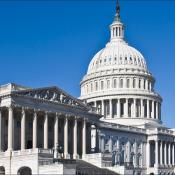

It also included anyone with pesky morals (some still exist, but they're a small minority and can do little). As former Speaker of the House, Sam Rayburn famously said, "To get along you have to go along".  Is it any wonder that the majority of Congress are multimillionaires? If they weren't went they first went in, they either soon became one by going along or they weren't reelected. How do you think that happens?

Now back to my question. How many countries adopted the U.S. model of government? The answer is zero. Nix. Nada. Goose egg. Instead, they adopted the English parliamentary or proportional representation form of government. It allows every party to have seat based on the percentage of seats it won in the election. Thus, everyone still has a say even if their party didn't win a majority of seats.

Under the U.S. model, it's a "winner take all" form of government. That means if your party won, you theoretically have a voice (in truth you have no voice). If not, then you're out of luck. You have no representation. Doesn't sound real democratic does it?  Some people will argue that the English system is chaotic, cumbersome, and causes deadlocks. To that, I point to Washington and Congress as prima-facie evidence when it comes to legislative logjams.  

While the U.S. has mostly gotten out of the assassination business, it's still involved in removing governments and individuals that impede corporate interests. We are still involved with acquiring natural resources, forcing open markets, and so forth, though we might say "please" first. It reminds me of a quote from Chicago mobster Al Capone. He once said "You can get further with a kind word and gun than just a kind word". That kind word is now America's economic and military might.

Meanwhile, America has moved closer to becoming a fascist police or security state. Anyone past the age of 50 cannot look back and say this is the same country they remembered when they were 20 or even 30. Our education system has been repeatedly dumbed down. We have less to say about government policies or  tax increases. They had ridiculed and demonized any and all political or social alternatives.


Our infrastructure is fracturing and collapsing.  Most cities are struggling to survive. Many are imploding due to mismanagement. A few have become nothing short of cesspools where people routinely urinate or defecate on sidewalks, live in parks, and scatter used drug needles everywhere.  Up is down. Right is wrong. Alice would feel right at home.

Politicians, once elected, are virtually impossible to remove no matter how poor their job performance thanks to partisan gerrymandering. Unrestricted campaign financing (thanks to Citizens United and wrongly labeled as "free speech") has all but removed ordinary citizens from the process.  That's why we need to eliminate Citizens United and the concept of corporations as having the same (or greater) rights as people. It's why we need to impose term limits on politicians. Ranked choice voting wouldn't hurt either. 

Corporate power within government is near absolute. It controls virtually everything, from legislation to regulation. It dictates both foreign and domestic policies.  Meanwhile, we continue to lose our freedoms precious piece by piece. We are monitored constantly. Our opinions are shaped and manipulated by a cooperative media. We "vote", but only from a small cadre of pre-vetted candidates. Don't believe me?

Ask yourself why, out of  323.2 million Americans, is it that Biden and Trump are the best each party can produce? Can't San Francisco/Oakland/Sausalito do any better than Nancy Pelosi, Diane Feinstein, or Kamala Harris?  Was Dick Chaney or George W Bush the best the GOP had? How did someone like Barack Obama, with little to no professional or political experience become president? I could go on and on regardless of political party. I bet you can too.

With Independents comprising the largest political bloc in this country, why are they and third parties blocked from getting on the ballot or participating in the debates by both parties. What are they afraid of?  Why do they have to jump over barriers the other two don't have? Not much of a free and open democracy is it?


Regardless of the outcome of this election in November, very little of substance will actually change. The elites will get back to business as usual. Some of Trump's accomplishments will be overturn (unless it can be perverted to serve their interests somehow). Individuals like Hillary Clinton and Obama will be restored to their former pedestals while their past transgressions will be securely buried forever.

However, there are things we can do if we work together. As voters, we need to ensure that our voices are heard. We need citizen based ballot initiatives or referendums. We must have the final say on any tax or rate increases no matter how large or small. It's our money, not theirs. Same holds true for salary increases of elected officials.  We need to end partisan gerrymandering by establishing independent ad hoc boards to draw the districts based on the latest census records. We also need to impose term limits.

We must remove all barriers to Indies and third parties. What's good for the Democrats and Republicans is good for everyone seeking an office. They must also open all debates to every candidate. They should be given the same coverage by the media. In short, elections must be fair and open. We must end Citizens United. Corporations are not people. They don't deserve the same rights. We also need to end corporate funding of elections, be it direct or bundled. They should also not be allowed to "help" write legislation.

Political offices which are not engaged in legislation should be non-partisan. This includes offices like Secretary of State, Treasurer, County Clerk, Auditor, County Attorney, Attorney General, Circuit Court Clerk, Secretary of Agriculture, and County Sheriff.  Judicial offices are supposed to be non-partisan, but often they're not. Therefore, they should be required to declare their registration.

If we can do this, we can take a huge step forward into repairing our broken system, and that could help returning this nation to what it was intended to be---a Constitutional Republic.


Sunday, October 04, 2020

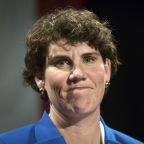
Amy McGrath vs. Mitch McConnell: A Breakdown and a Prediction


The McConnell vs. McGrath U.S. Senate race is probably one of, if not the most watched campaign in America next to the Presidential race. The latest polls show the incumbent McConnell with a pretty hefty lead over his challenger---52% to 41%. Forecasting models show McConnell with a 96% probably of being reelected, but as everyone who follows politics will tell you, anything can happen.

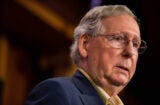
Senator Mitch McConnell (R-KY) is considered to be the single most "hated" politician nationally, even more so than President Trump, thanks to the media which never tires of batching him. In July, his unfavorable rating was at 47%, the highest of any senator. McConnell is usually portrayed as Machiavellian, a master manipulator, and someone who constantly impedes progress.

Well, the veteran McConnell is certainly Machiavellian and a master of the backroom deal, he is less a barrier to progress as he is someone who wants to slow down the process and examine the issue given how politicians tend over react to the latest poll and don't think things through---regardless of party.

So, what's at stake? What would change if Amy McGrath (D) should defeat McConnell?  If we look at the bigger picture first, we see that the Republicans have a commanding control of the Senate by a 53 to 45 margin (with two Independents). Mitch McConnell, by virtue of his seniority and mastery of insider politics, is the Senate Majority Leader. That means that he is the leader of the Senate Republicans. Basically, what McConnell wants McConnell gets from his fellow Republicans.

Being the Senate leader has been called the most powerful position in America's political power structure up to and including that of President in terms of raw power. However, it needs to be noted that the Speaker of the House is third in the line of succession behind the Vice President and President. In fact, the Founders originally intended that the Speaker be the primary leader of the country with the presidency being primarily a ceremonial office.


The number two position is the Senate Majority Whip, which is currently John Thune (R-SD). His primary job as "whip" is ensure Senate Republicans line up and support the Senate Majority Leader, McConnell. In the event there is a Republican President (Trump is in this case), McConnell serves as his top general as it were. Sort of an Eisenhower while the whip acts like a Omar Bradley.

So, if we have a Senate Majority leader, then we have a Senate Minority leader, which is Charles "Chuck" Schumer (D-NY). His party's Minority Whip is Richard Durbin (D-IL). Their roles mirror that of McConnell's and Thune's. As the minority, they typically oppose whatever it is the majority are trying to accomplish. In short, they are there to "impede" and promote their own---partisan---recommendations.

If there is a Democrat President and the Democrats remain a minority in the Senate, they will back whatever issues that individual is promoting while the majority Republicans will do whatever they can to oppose; the exact opposite of what's happening now. At some point a compromise is reached, but not always, especially given the divisiveness of today's politics and media bias. 

As an aside, in the House the Democrats have the majority. Therefore, they control the Speaker of the House post, which is Nancy Pelosi (D-CA).  The House Majority Leader is Steny Hoyer (D-MD). The Majority Whip is James Clyburn (D-SC).  On the minority side is Kevin McCarthy (R-CA) as the Minority House Leader.  Steve Scalise (R-LA) serves as the Minority Whip.


So, what happens if Amy McGrath should beat McConnell? Well, besides becoming perhaps the most popular politician on the Left and being on endless talk shows for months on end, not much else.

McConnell currently sits on some choice committees, including the Senate Select Committee on Intelligence, Senate Committee on Appropriations (where all the money is spent), Senate Committee on Rules and Administration, and the Senate Committee on Agriculture, Nutrition, and Forestry.

Should McGrath win she would not, despite some misconceptions, assume McConnell's mantle as Majority Leader or any of his committee assignments. In fact, McGrath would take her seat in the Senate as a junior minority senator. She can request specific committee assignments, but her committees will be determined by the Democrat Senate Leadership based on what seats are available (as the majority party in the Senate, the GOP gets the lion's share of committee choices and chairmanships).

 In short, should Amy win, she would be at the very bottom of the Senate dung heap. While she would have great name recognition, her political clout would be nil. Even if the Democrats should take control of the Senate, she would still be at the bottom of the pile. In order to be appointed to any of the prized committees, she'll need to work her way up like everyone else has. Perhaps a victory over McConnell might help grease her ascendency somewhat, but fame is fleeting, especially in the Senate.

How realistic is the prospect that Amy McGrath will defeat the wily incumbent? Mitch McConnell's use of some pretty clever commercials (everyone in politics remembers the bloodhounds) went a long way in helping him defeat incumbent, Walter "Dee" Huddleston (D-KY). Amy McGrath is trying the same tactic with some cute cartoon-like commercials portraying McConnell as a slow moving turtle stuck in a swamp of his own making at Trump's beck and call. Cute, but that's about it.


McGrath's campaign has enjoyed a lot of funding, mostly from outside the state (about $34 million), which has brought in around $46 million dollars, with about $16 million still on hand. She'll likely get a last push infusion to do a final all out media blitz. Meanwhile, so-called "soft money" support has been coming in but not at level Amy needs to take out McConnell.  So, where is her money coming from?

The majority of her donations are coming from retirees, education, attorneys, healthcare, businesses, individuals and companies in the entertainment industry, real estate developers, media, and technology companies. Interesting, she's getting a lot (over two million) from lobbyists and single issue groups. Unions, which knee-jerk their endorsement of Democrats, have only donated a little over $53,000.

Key donors have included the University of California, Walt Disney, Harvard University, Stanford University, Microsoft, AT&T, and  Kaiser Permanente, which is a managed care consortium. Alphabet, Inc (the parent company of Google and its subsidiaries) and Moveon.org. Democracy Engine, which bundles donations, gave her over just at $164,000.   


On the other side, McConnell has raised just under $37 million dollars and spent a little over $20 million of it, leaving about $16 million on hand; $27 million has come from out of state. Outside groups and "soft money" has been very supportive of the Senator.  For instance, his Leadership PAC has provided a bit over $5 million dollars, of which he's spent close to $4.7 million.

The majority of his direct donors has come from retirees, securities and investments, real estate firms, attorneys, and insurance companies. Some of the largest donations has come from UPS,  Votesane PAC,  NorPac (a pro-Israel political action committee), NRA, Goldman Sachs, Humana, and global investment companies  KKR & Company and  Apollo Global Management.

Donations to his Leadership PAC (which everyone in Congress has regardless of party) are principally pharmaceutical and health product manufacturers, insurance and real estate professionals again, electrical utility companies, and healthcare professionals. The major notables are Eli Lilly, Blue Cross/Blue Shield, Altria Group (a manufacturer of tobacco products), LHC Group (Louisville based senior care conglomerate), and Amgen, Inc., which is a multinational biopharmaceutical company.


So what's the bottom line? Amy McGrath, despite some impressive credentials (including being a former Marine, which being former Navy, I won't hold against her) and some cutesy commercials won't win this election. She lacks the resources, financial and otherwise, to defeat a seasoned pro like McConnell.

Even if by some fluke she should win, she won't be in a position to do the things she's promised to do (or, for that matter, any of those things she is being accused of "secretly" plotting to do). Politics doesn't work like that. It's a team sport. She'll need years to build up the clout inside and outside of politics to get much of anything accomplished. 

As for McConnell, at age 78, and with a six year senatorial term, I look for this election to be his swan song. He's served longer than most, and certainly longer than anyone from Kentucky. His legacy is secure. The Kentucky GOP has some prospects to put forward, including 4th District Representative, Thomas Massie. Amy McGrath would have a tough time against the popular Massie, but a much better shot than she does against McConnell. This isn't her time.


OpenSecrets: Mitch McConnell


Vote Smart: Amy McGrath's Finances


The Economist: Forecasting the U.S. Elections


Sunday, August 19, 2018

How to buy Congress and influence People (or are politicians cheaper by the dozen?)


Last week I provided you with the names and a little background information about of the "Big Six" mega-corporations which control 90%+ of all media outlets, and thus, our opinion as to what's happening in the world. These same six corporations also affect out entertainment, and not just the news. We touched on how this impacted our opinion of events and of the media itself, which we broke down along age demographics. I think many of you were surprised at the hold a relatively small group of individuals have on what we see, hear, and read. These six corporations decided what's news, how it will be presented, and how to spin it for any agenda they're a pushing at a given moment. They also control how we relax, be it video games, sports, or some show on television. In this issue, we're going to look at the top corporate political campaign givers.

Given that two Supreme Court misrulings, Citizens United and the McCutcheon's cases have completely altered the political landscape by declaring corporations are "people" and money as "free speech", it's important to know who the average Joe and Jane Public are competing against (given the corporations can contribute what it want while ordinary "flesh and blood types" citizens are still capped). We will start with the premise that money brings with it not just power, but also access to power and influence. For the majority of Americans, seeking public office is simply out of their reach because of the high cost of elections. It's no wonder that Congress is referred to as the "Millionaires Club". So, without further ado, let's take a look at some of the top Fortune 500 corporations.

AT&T, the telecommunications giant based in Texas raised $3,022,815 dollars. Of this, Republicans received 38.9% while Democrats got 60%. The Bank of America, located in North Carolina, pooled $2,931,246. Democrats got 41.4% compared to Republicans who got 57.9%. The Las Vegas Sands Hotel and Casino in Nevada pooled their earnings totaling $2,885,417 and gambled 62% of it on Republicans and 36.6% on Democrats. DISH Network, based in California, donated 42.8% of its $2,604,920 on the GOP and 55.4% on Democrats. Chicago based Boeing Industries contributed 55.4% and 43.8% of its $2,805,418 on Democrats and Republicans respectively. IBM, based in New York, raised $2,598,586. The Republicans got 29.7% whereas the Democrats took 68.9%.

Lockheed Martin, the aerospace giant based in Maryland, contributed 54.7% of its $2,364,432 to Republicans and 43.7% to Democrats. The New York based telecommunications corporation Version raised $2,532,495. Democrats pocketed 67.2% of it; Republicans just 32.7%. The California based social media platform, Facebook, contributed 91.3% of its $2150,277 to Democrats. Republicans got a paltry 7%. Exxon Mobil, the Texas based oil and gas conglomerate, donated 63% of its $2,134,633 to Republicans. Democrats got only 36%. Another Texas based oil and gas giant, Western Refining, directed 63.4% of its $2,148,865 to Republicans while Democrats saw 35.3%. The Chicago located energy company, Exelon gave 60.6% of $2,106,413 to Republicans. Democrats saw just 38.8%.

The New Jersey pharmaceutical company, Johnson & Johnson, had total donations of $1,981,003. Democrats got 52.2% compared to Republicans who got 45.4%. Pfizer, another monster sided pharmaceutical giant raised $1,943,348 and then donated 64.8% to Democrats and 34.8% to Republicans. General Electric, based in Boston, gave Democrats 56% of its $1,753,871 political finds. Republicans got just 43.2%. California located Intel, a technology corporation, put together $1,690,486. Republicans saw 25.4% of it while the Democrats saw 73.2%. Version, another high tech corporation, gave Democrats 67.3% and Republicans 32.7% respectively of its $2,253,405. Wells Fargo Bank, based in California with it $3,212,918 in available funds, donated 54.2% to Democrats and 44.7% to the GOP.

While these are some pretty impressive numbers, they're still chump change compared to the big spenders. Take Morgan Stanley for instance. This New York bases financial services company donated 54.9% of its $5,362,033 to the Republicans. Democrats got 44.1%. Another New York financial services and banking company, JP Morgan+Chase, contributed 54.5% of its allotted $6,173,244 to Democrats, while Republicans got 49.9%. Microsoft, the Washington base tech giant, had $7,222,345 to donate, and Democrats got 80.2% of it. Meanwhile, Republicans got 18.6%. Topping the list is Goldman Sachs. This New York based financial services corporation had $11,457,248 to donate. Hedging their political portfolio, they invested 52.2% in Republicans and 47% in Democrats. Now, if you think these numbers are mind boggling in both their size along with the amount of political favors and legislation they'll buy, sit tight. You haven't read anything just yet.

Did you know that just 2/3 of all individual campaign contributions come just 1/4 of 1 percent of voters? According to a CNBC article from April 2018, 30% of that money went directly to the candidate. The rest, called "soft money" contributions, went to groups who spent the money indirectly on behalf of the candidate or issue. So how much money are we talking about? Try $154 million dollars (and just the top 100 individual contributors). Of this, the majority leans Right or Conservative to the tune of $83 million dollars. $65 million leans Left toward Liberal candidates and causes.

Everyone has heard of the Koch Brothers, who are usually portrayed as the evil incarnate by the politically slanted media, however, they are far from the biggest contributors. They give just under a million dollars ($997,000) to Republicans, whereas fellow conservative Geoff Palmer, owner of GH Palmer Associates, donated $2,403,172 to Republicans. Robert Mercer of Renaissance Technologies gave $3.7 million to conservative causes and candidates. Steven Cohen of Point 72 Asset Management has given Republicans and conservative causes $3.4 million. Another partner from that same firm is Henry Laufer. He's not shy about spending money either. He donated $2.5 million to Democrats (I've got to get a job there!).

Now don't feel left out Democrats. You've got some big money behind you too. James Simons of the same corporations as Mercer, donated $3.2 million dollars to Democrats. The "evil villain" according to the political Right, George Soros, has given Democrats $1.4 million dollars. Now, compare those numbers with Donald Sussman of Paloma Partners who gave Democrats $6.1 million dollars. Barnard Marcus of the Marcus Foundation gave Republicans $5.5 million dollars while Fred Eyechaner of Newsweb donated $4.6 million to Democrats. George Marcus of Marcus & Millichap had $4.2 million for Liberals, and so the story goes. However, the two largest contributors haven't even been mentioned yet, so let's get to it!

Thomas F. Steyer of Fehr LLC is the top Democrat and liberal issues contributor. Steyer, who was born in 1957, is a hedge fund manager whose net worth is around $2 billion dollars. Steyer consider himself to be an environmentalist, philanthropist, and a liberal issues activist and fundraiser. His current political project is a campaign to impeach President Trump (of which he's donated some $10 million dollars thus far). But perhaps his biggest claim to fame is that he's the single largest contributor to Democrats and liberal causes in the amount of $16 million dollars. Obviously, that adds a whole to dimension to the old term "Limousine Liberal" doesn't it? However, as impressive at Steyer may be, he pales compared to the single largest private donor, Richard E. Uihlein. Uihlein is the owner of Uline, Inc, which is shipping supply distribution company, was born in 1945. Uihlein is a active contributor to Republicans and other conservative causes (he also has close friendship with Republican Senator Ted Cruz of Texas). So, how much as Uihlein given? A cool $21.1 million dollars.

This is just a sampling of the ruling Oligarchs in this country. They are part of the elite one percent. Thanks to their wealth they can and do buy the kind of political access that the ordinary American voter can't even begin to comprehend. Not only do they have the instant and full attention of anyone and everyone in Washington, they are able to influence legislation. Through their lobbyists and friends in Washington, they can create or kill bills at the snap of their fingers. There's a reason that Congress is called the "Millionaire's Club".

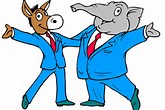
Political parties really don't meant much to them, even though they may contribute to one party or cause over another. When you get down to it, they support those who can get things done for them, and that usually translates into making them more money or getting them access to resources somewhere. If it's a Democrat who can do that best for them, then they'll get with that individual. If it's a Republican, then that's where they'll go. Ultimately, it comes down to this---both political parties are part of a single corporate owned party with differing special interests groups each trying to get their agenda through. However, it matters not to which party holds the majority because money buys a lot of favors and it's doesn't care if you're "red" or "blue" (as an aside, red and blue make green, the color of money).

If the Democrats were truly the "People's Party" and meant everything they claim, there wouldn't be the first Republican in office anywhere in the country. If the Republicans were true to their dogma, then not a single Democrat would exist, certainly not in City Hall, our state capitols, and especially Washington. However, they do exist and they do hold office, and they do cooperate, especially on issues of mutual importance. That is to say, they cooperate on matters their corporate masters want to see accomplished. Now, don't get me wrong. I like money. It's pretty handy and has a lot of uses like paying bills and buying groceries. But, I don't like what it buys when it comes to government, especially when it's for the benefit of a tiny few.

American voters are capped by how much they can donate to political campaigns and issues. However, thanks to the Supreme Court's duel mistakes (Citizens United and McCutcheon), corporations have become "people" (I prefer to think of them as "Frankensteins") and money has become "free speech", I think voters have been locked out of the political process, especially when you consider that while we're limited in how much we can donate, these Frankensteins can donate however much they want. We can't begin to compete or offset the amount of money they can donate.

Of course, key players in Washington have made it clear that there will be no realistic campaign finance reform. Even if someone had the backbone to try, no committee chairman would dare let it pass out of their committee lest they face the wrath of their party's whip and leadership. Besides, the corporate lobbyists would ensure that the bill was rewritten or amended to their favor. I would imagine too that whoever tried to write a serious campaign finance reform bill would find their career blunted. They would likely get booted off all their committees, and find themselves with no money or help when it came time for reelection (and a good chance of facing a formidable opponent recruited by their own party).

So, just as real campaign finances reform would be good for America, so to would be an end to gerrymandering (rewriting district lines to the benefit of a specific political party to ensure reelection), reforming the tax code, imposing term limits, a balanced budget amendment, national single payer health coverage and stopping the Capital Hill/K Street revolving door (K Street is where most of the lobbying firms are located). I think requiring the politicians in Washington to be subject to the same laws they pass would be nice too, along with ending a lifelong salary with benefits after they leave office, security, and other high dollar perks. But none of this will ever happen as long a money dictates legislation and motives in Washington and elsewhere in politics.


The 30 Fortune 500 companies that have thrown the most money at Republicans and Democrats in the last decade

Here are the 2018 campaign's biggest donors... so far

Top Organization Contributors