Showing posts with label school. Show all posts

Friday, April 04, 2025

Where Does Religion Fit in Today’s Politics?


What do you think about religion? Does it have a place in everyday society? What about in public education or in politics? In 1962, the Supreme Court ruled in Engel vs. Vitale (370 U.S. 421), to remove mandatory prayer in public schools. On November 17, 1980, the Supreme Court ruled in Stone vs Graham that a Kentucky Statute requiring the Ten Commandments be posted in every school was a violation of the 1st Amendment.

So, here we are, having seemingly completed some cosmic cycle. Again, we’re addressing the issue religion in not just society, but in our schools and as a part of our politics. The political Far Right (aka "Christian Right" or "Christian Fundamentalists") routinely call for voting their faith, provided that faith is Christian of course. After all, they argue, America was founded as a Christian nation while others are permitted to practice their faiths out of Christian kindness.

The Left, however, have a very different opinion. They argue that religion---any religion---does not belong in the public domain, especially our school system and in particular politics. Schools should be secular. If a parents wants their child to have religion inserted in their education, there’s plenty of private and religious based schools available.

As for  politics, candidates should be chosen not on their faith, but on their actions as it pertains to the overall public good. Religion in politics runs the risk of creating a fascist theocracy little different from Iran’s.  After all, doesn’t the Constitution call for a separation of church and state? Besides, if the Founding Fathers want a national religion, wouldn’t they have made it official?

Well, to address the first things first, no, the Constitution doesn’t call for a separation of church and state. That’s a misconception. The separation between church and state, while never specifically stated in the Constitution, is implied according to a Supreme Court ruling in 1868.

The court argued that the 14th amendment (which pertains to citizenship) also requires states to guarantee fundamental rights such as the First Amendment’s against the establishment of religion. In other words, neither the federal government nor states “may make no law respecting the establishment of religion” (aka “the establishment clause”).  

In 1947, the Supreme Court again addressed the issue when Justice Hugo Black wrote on behalf of the court in the matter of Everson vs Board of Education of the Township of Ewing (330 U.S. 1:1947), “Neither a state or the Federal Government can set up a church. Neither can it pass laws which aid one religion, aid all religions, or prefer one religion over another…In the words of Thomas Jefferson, the clause against the establishment of religion by law was intended to erect a ‘wall of separation between Church and State”.

While many of the Founding Fathers where “Christian” in the broad understanding of the term, their personal religious beliefs differed from person to person, and indeed, varied greatly over their lifetime. However, the main reason was that the monarchies of Europe tended to have a formal church which, while not necessarily adhered to, must still be financial supported.

 England had the Church of England (Anglian Church). France, Poland, and Italy had the Catholic Church as did the Austro-Hungarian Empire and Bavaria in Germany while most of Northern Europe had Lutheranism. Czarist Russia was Orthodox as was much of Eastern and Southeastern Europe.

Everyone, whether a member or the official church or not, was required to pay homage since, after all, the ruling monarch was the head of the church and/or ordained by “God” under the concept of “Divine Right” or “God’s mandation” to rule.

This political and religious doctrine established the legitimacy of a kingship and asserted that a monarch was not subject to any earthly authority. In the case of Catholics, since the pope was seen as God’s vicar on earth, monarchs were subject to his dictates on religious matters (though these were occasionally ignored).  

The Founding Fathers wanted to make their new experiment in democracy a nation open to all faiths. This meant that citizens weren’t required to acknowledge any religion but theirs. It meant that under the law, all religious persuasions were equal. It didn’t forbid, for instance, religious symbols in public property. It simply meant that all religions beliefs had the same access to public property. It meant too that no particular religious dogma held priority over any other.

There have been many instances throughout our history where there was a serious concern that one or another religious sect was going to try and assert dominance over the government. For instance, the Puritans and Pilgrims, who settled in the 1600’s, intended on establishing a religious community along their particular interpretations of the bible including that of premillennialism.  William Penn acquired large tracts of land in what’s now Pennsylvania for groups like the Quakers and Mennonites to practice their faith unimpeded.   

There was the First Great Awakening of the swept through the colonies in the 1730’s and 1740’s.  It was an early forerunner of today’s fundamentalists. The Second Great Awakening (approx. 1790 – 1840), which began in Kentucky and Tennessee, expanded the concept of “revivalism”.

A Third Great Awakening, running from around 1855 to 1930, fueled the belief in a postmillennial or pretribulation world and an imminent “Second Coming”. This was a new intensity in revivalism known as “Social Gospel” which applied biblical interpretation of societal issues such as poverty, establishing orphanages, education, ending slavery, prohibition, and to so forth.

Many pietistic movements also started backing the Republican party because of its adoption of an abolitionist platform. Certain  individuals came to prominence  like Dwight Moody who started his Moody Bible Institute or William Booth who established the Salvation Army or Carrie Nation’s Temperance Movement.

 Individuals like Martin Luther King Jr., Billy Graham, Pope John Paul II, the emergence “megachurches” and televangelists like Jerry Farwell and Pat Robertson are seen as early leaders of  what some call a  “Fourth Great Awakening”.

President Ronald Reagan is credited with firmly aligning Christian fundamentalism within the Republican Party which incorporates a conservative social conformity by merging issues like pro-Life, prayer in school, home schooling, patriotism or opposition teaching a LGBQT/transgender/gay agenda in school and what they identify as "socialism" into political action and ultimately legislation.  

President Trump’s election has rekindled the fervor in the fundamentalist movement which had faded under Clinton, Obama, and Biden, which brings us to the question about what Americans in general think about mixing religion and politics. Do the two belong in the same pew?

According to a March 19, 2024 Pew Poll, 80% of Americans said that organized religion was losing its influence on society. 82% of Protestants  and Catholics agreed as did 76% of Black Protestants and 74% of Hispanic Protestants. Also in agreement were 76% of Jews  who were polled.

When asked if their religious beliefs made them feel as if they were part of a minority, only Jews and Muslims said yes with 83% and 55% respectively. However, 48% of those surveyed said their religious beliefs put them in conflict with America’s current culture. This was especially true among white evangelicals (78%) and Jews (59%).

Politically, 84% of registered Republicans and those who identified as conservative said that religion’s influence was in decline. Democrats and liberals weren’t far behind with 78% agreeing that organized religion was in decline. In looking at age groups, those 18 to 60+ years of age were all in agreement with an average of 81%.

When addressing politics and public education, 49% of adults in general didn’t think any religious group was trying to impose their religious beliefs on society. This opinion was held by 65% of Protestants and peaked with 79% of white evangelicals and 71% of Hispanic Protestants. 39% of Black Protestants disagreed.

Among Catholics, 54% also thought no particular religious group was trying to impose their faith on them. However, 76% of Jews disagreed as did 72% of the religiously unaffiliated. 85% of agnostics also said religious groups were trying to impose their beliefs on them.

When we turn to politics again, 75% of Republicans and those leaning conservative thought that other conservative Christians weren’t trying to influence them. But 72% of Democrats and those who are liberal leaning said conservative Christians were trying to impose their beliefs on them.

That opinion was also held by those 18 to 49 years of age with a clear majority believing that they were being negatively impacted by conservative Christians. It was almost the exact opposite for those 50 and up with about 55% saying no.  

So, where does that leave us? In a 2022 poll by Pew, 73% of Americans said they wanted to keep religion away from politics. However, while the Constitution prohibits using religion as a criteria to run for or hold public office, there is nothing to prevent voters from using their own religious standards in determining who to vote for or what issues to support.

Therefore, our political landscape could very well be determined based not on one’s personal religion (or lack thereof) but on that of the voters. The more religiously conservative voters who show up at the polls the more like minded individuals will likely get elected.

For some, that idea is nothing short of terror, while for others its couldn’t come soon enough. The notion itself represents just one of the many growing divides facing America. The question is whether, in this no-compromise environment, can a compromise be reached before it’s too late?


Thank you for reading "Another Opinion", the Op/Ed blog page for the "militant middle".  Here at "A/O" we truly value our readers. At A/O we seek the facts as they exist, not partisan talking points.  We hope you find our articles informative and engaging. Comments are welcome, provided they are not vulgar, insulting or demeaning.  Another Opinion is offered without charge and is directed toward all independent and free-thinking individuals. We ask, however, that you "like" us on whatever platform you found us on in order to keep our articles available for free to others. Lastly, in order to keep costs down, we depend on passive marketing, and therefore, depend on our readers to please forward our posts along. Below you will find links to the sources we used in writing this article. Thank you. 


What is Separation of Church and State?


BRIA 13 4 a separating Church and State


Everson v. Board of Education


Justia: Everson v. Board of Education, 330 U.S. 1 (1947)


Divine right of kings


Americans Have Positive Views About Religions Role inSociety But Want It Out of Politics


First Great Awakening


Religions Role in Public Life


Christian Right


Religion in Politics


Saturday, June 04, 2022

Crime and Punishment: Race and Its Consequences

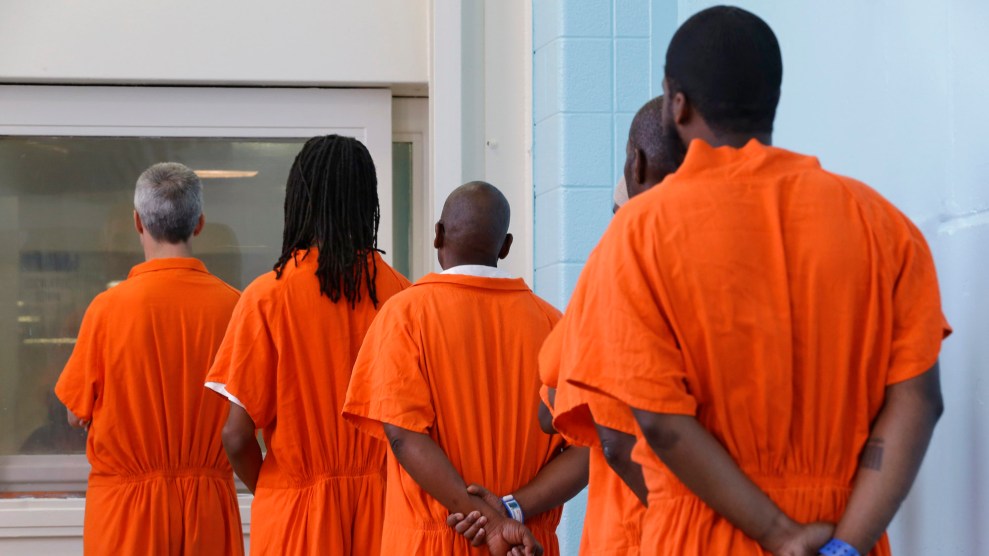
The U.S. has approximately 102 federal prisons, 1,566 state prisons, 2,850 local jails, 1,510 juvenile facilities, 186 immigration detention centers, 82 Native American/tribal jails, not including military prisons, civil commitment centers, mental health facilities, as well the numerous other correctional and detention centers scattered throughout U.S. territories.  Each operates independently from the other, but generally cooperates with the federal authorities in most situations. The result is a multilayered judicial criminal system.

All told, they hold somewhere around 2 million individuals. The most in the world.  Globally, one out of every five individuals behind bars are likely in a U.S. prison or jail. The majority---1 in 5---are in jail on drug charges. The average cost to house a inmate in a federal prison (in 2020) was $39,158 or about $120.59 per day. Prison, probation and parole generates a $81 billion dollar bill to the American taxpayer (the average salary of a police officer is $55,280 plus benefits or about $85,000).  

It's worth noting that much has been said of  "for profit" prison systems which allegedly attempts to make a profit on each prisoner via taxpayer dollars and use of prisoner labor (which some equate with Nazi or Soviet Era labor camps). However, the "for profit" prisons account for only 8% of all inmates.

About 71,000 are overflow population from state prisons while another 40,000 are being held at the behest of the U.S. Marshal Service and Bureau of Prisons.  Of these, the majority are housed in halfway houses or home incarceration which are being privately supervised and managed.

Approximately 13,000 inmates are outsourced from overcrowded and unsafe local jails. 16,000 are ICE (Immigration and Customs Enforcement) detainees, and 9,000 are youths who would otherwise be held in more expensive public detention centers.

When we look at the three percent of the U.S. population behind bars, we find that federal prisons hold about 208,000 inmates. Of those, the vast majority are being held on drug and immigration charges. 11,000 are for committing a violent crime; 7,000 for property crime, and about 59,000 on some other federal charge.

At the state level, which hold the most---roughly 1,042,000---the overwhelming majority (606,000) are imprisoned for violent crimes such as rape, assault, or murder. 159,000 are for property crimes such as burglary, car thief, or acts of vandalism. 146,000 are being held on drug and alcohol charges, including about 18,000 for DWI. Some 124,000 are incarcerated on public order charges which includes certain weapon violations, prostitution, disorderly conduct, or so-called "deviant behavior".

Local jails and detention centers house about 547,000 individuals. About 2/3 of those are awaiting trial while they remain behind bars on charges ranging from drugs, alcohol, assault, theft, burglary, or a public order charge. Typically they are regarded as flight risk or are unable to make bail. 

However, of the remaining 1/3, most are convicted and serving time on a public order charge such as prostitution or disorderly conduct, followed by property crime, which includes car theft (carjacking), burglary, or theft by unlawful taking. Closely behind comes drug and alcohol related charges, and those convicted of committing a violent crime.  A small percentage represents individuals who have violated parole (referred to as a "technical violation") without having been charged with a new crime.

Generally speaking, about 22,000 are held involuntarily due to a mental or psychological  impairment or deficiency.  Juvenile detention accounts for roughly 36,000 youths who are held on a variety of charges. Territorial incarnation includes places like Puerto Rico or Guam, and make up about 10,000 inmates. Tribal jails hold about 2000 individuals, mostly on charges involving prostitution, disorderly conduct, liquor or drugs, while the U.S. military is holding roughly 1000 service members.

As an aside, most accused military members are tried before a military tribunal. Charges typically involve intoxication, drugs, assault, or going AWOL/UA ( aka Absent Without Leave or Unauthorized Absence).  If convicted, they can face a myriad of penalties ranging from verbal or written reprimands, fines, loss of leave time, extra duty assignments, detention, loss of rank, up to a general or dishonorable discharge.

If other charges are involved, they are immediately discharged following competition of any penalties handed down by the tribunal and turned over to the appropriate civilian authorities where they may face additional charges and possible fines and/or jail time.

What about race or gender? Who faces the greatest likelihood of incarceration?  Do more women than men go to jail?  Which race is more likely to serve time in prison?

When it comes to adults (18+), 1 in 15 black males are incarcerated at some level.  It gets worse for black males between 20 and 34 when 1 in 9 are in jail. For Hispanic males, 1 in 54 over age 18 are serving time. As for white males 18+, that number is 1 in 106.

When it comes to women regardless of race or age, 1 in 265 are behind bars. Breaking it down, we find the number for black women between ages 35 and 39, the number is 1 in 100. For Hispanic women in the same age bracket, it's 1 in 297. For white women in the same age range, it's 1 in 355.

What does this tell us? Well, it's pretty obvious that black individuals, regardless of age or gender, are most likely to serve time than either Hispanics or whites (it should be noted that Asian incarceration numbers are low enough to be considered statistically insignificant). 

In fact, blacks are five times more likely to be incarcerated than whites and twice as likely than Hispanics. They are also more likely to serve longer sentences or to face higher bail than anyone else. Why are blacks, especially males, more likely to do time than any other group?

A report published by The Sentencing Project found that in 12 states, more than half of the prison population was black. Also, Hispanics were jailed at a rate of 1.3 times that of whites. Wisconsin, as an aside, had the highest rate of incarceration among blacks. The report revealed that one of every 36 blacks in Wisconsin were behind bars! The same report stated that Hawaii had the lowest racial disparity among inmates, but still jailed blacks at a rate of two to one over whites. What gives?

The majority of blacks arrested and imprisoned results primarily from drug related crimes. These cover everything from simple possession of drugs such as marijuana all the way up to more serious crimes such as manufacturing and sale of crack. It also included peripheral crimes related to drugs such as theft, drug paraphernalia, carjacking, armed robbery, burglary, and prostitution. Some of which involved gang activity associated with these crimes as well. 35% of blacks incarcerated are a gang member. Compare that to 46% of Hispanics and 11% of whites.

It's also interesting to note that while arrest among blacks had been rather consistent from 1920 onward, there was a dramatic upward surge starting in the 1970's and early 1980's, which just so happens to coincide with the second generation of the "War on Poverty", which was launched by President Lyndon Johnson in 1964, coming of age.  

One of the most notable and controversial aspects of the War on Poverty was how the newly created "Welfare State" rewarded single moms with children, thus kicking off the role of "broken" or fatherless homes. Single parents (mainly women) got more benefits and larger subsidies than those where a male was regularly present and contributed to the household income. 70% of criminals and 80% of inmates are from broken or dysfunctional homes. 85% of youths in jail or detention centers came from fatherless homes. Poverty became institutionalized.

Also worth pointing out is that this same period marked the start of forced busing in several states, which took black youth out of their neighborhoods and local schools and placed them in predominately white schools. The intent was to provide "disadvantaged" minority students an opportunity to attend higher performing predominately white schools in hope they would do better.  

In cases where forced busing was implemented, it tended to fail in raising the test scores of minority students while the scores of white students bussed to so-called black neighborhood schools remained equal to or higher than their pre-bussing test results.

As a result, academic standards were quietly lowered across the board, from elementary school through college.  The emphasis was changed from developing critical thinking skills, math, reading, and the sciences to "teaching the test" by which school districts received their funding. That hurts everyone.

 It also marked the period where discipline standards were dramatically lowered and incidents of threats and assaults on teachers and fellow students rose along with vandalism and theft. Interestingly, the average inmate is a high school dropout and can barely read at an eighth grade level. Black male students are three times more likely to be expelled for behavior issues than any other group. 

Lower academic standards naturally equated with less economic opportunities. Jobs, if available, tended to be lower paying, unstable, and with fewer or no benefits. Crimes (and the advent of gang activity) grew based a chance to earn "real money" and feel "respected".  Businesses increasingly relocated to areas with lower crime rates, thus making good jobs harder to find, along with their tax dollars. Cut backs in funding of social programs, plus public transportation, made the situation that much worse.

Meanwhile, the public's growing fear and intolerance of not just rising crime but also that of illegal immigration, which absorbed even more of taxpayer's dollars, forced authorities into making more arrested, imposing higher bail and longer sentences with fewer chances of parole.

Minorities became more dependent on overworked, underpaid, and often inexperienced public defenders with notoriously high conviction rates to defend them. Predominately white and Asian defendants, who were wealthier and better educated (relatively speaking), could afford more competent legal representation, had lower bail and were generally less likely to be convicted.

They are also more likely to obtain stable employment and adhere to parole requirements. Human nature being what it is, those perceived as being less "trouble" are processed out faster and given the most breaks, especially by an underpaid, understaffed and overworked justice system. So much for equal application of the law.

Simultaneously police departments were forced to downsize due by overtaxed citizens, forcing fewer officers to do more with less and adding to the pressure of the job. Increasingly, many police departments depend on federal grants just to operate. Not unexpectedly, the added stress and danger of the job created a "us versus them" mentality which brought the worse as we've seen lately.

Many tried to blame the breakdown of trust between the community, police, and judicial system on systemic racism and a "white superiority" complex. Racism is a factor, but not the key factor it's made out to be. Racism is not a one way street. Every group is capable of racism, which has been around since our beginning. Human beings are innately tribal, and thus racist. It's part of our DNA. It's what enabled us to survive.  However, we have, for the most part, adapted to accept humanity itself as our tribe.

The core of the problem is low academic standards. Those who tend to excel intellectually in most societies are also the ones who are most dominate. They organize society. They control industry. They write and enforce the laws. In organized democratic societies, skin color or other factors are of less importance than economic status, which is largely determined by their level of education.

A system which rewards or makes excuses for low academic performance, poor behavior, encourages a broken family unit (the building block of society) or institutionalizes a dependency or "handout" based society, creates the forces by which poverty, low productivity, and ultimately crime will flourish. The result is a society forced to deal with the mess it has created in ways it cannot sustain in the long run. 


If you want to know more, please take a look at the links below. If you enjoyed the article, please consider passing it along to others and don't forget to subscribe. It's free! Lastly please be sure to "like" us on whatever platform you use to read A/O. It helps with the algorithms and keeps our articles in circulation. Thank you!  


Mass Incarceration : The Whole Pie


Police Officer Salary in the United States


Annual Determination of Average Cost of Incarceration Fee(COIF)


U.S. Incarceration Rates by Race and Sex


The Color of Justice


Schools v. Prisons: Education is the way to cut prisonpopulation