Showing posts with label sanctions. Show all posts

Saturday, May 21, 2022

Uneasy Bedfellows: Sweden, Finland, NATO and Putin


Sweden and Finland, two Scandinavian countries to Russia's northwest formally submitted an application to join NATO on May 17th in light of Russia's invasion of the Ukraine. Russian President Vladimir Putin had previously warned both nations of the potential danger they faced by joining NATO rather than remaining neutral, which many took as an not so subtle Russian threat.

While Putin doesn't directly oppose the move by Sweden or Finland, NATO's Musketeer-like pledge of "one for all and all for one", makes it clear that any incursion by one NATO member would result in an appropriate military response on all NATO members, or so says Putin. So, why would Putin approve Finland and Sweden's admission to NATO and not the Ukraine's?

NATO came into being just after the end of World War II in 1945 as a means to offset a newly expanded Soviet Russia into the Soviet Union with the addition of so-called "liberated" nations from Nazi and fascist control. Later, in 1955, they would transform into the Warsaw Pact, which was in response to NATO, which was created in 1949, and intended as a buffer from a potential invading Western coalition.

Several nations, Sweden and Finland among them, wanted to maintain as military neutrality between themselves and the USSR. This was in part to keep open historic trade relations with Russia and its partners similar to the 1956 non-aligned movement which included India, Egypt, Yugoslavia and 117 other countries which sought to maintain a economic balance between the West and the Soviet states.

That, however, didn't preclude Sweden at least for conducting restricted joint military games with Europe. In 2017, Sweden held the largest war games in 20 years jointly with NATO members. In anticipation of joining NATO, Finland has participated in limited war games with NATO. Previously, there was always the fear of irritating the Russian bear.

Such fears gradually decreased after the implosion of the Warsaw Pact in 1989 and then, Soviet Russia in 1991, along with continual trade and economic integration which had created the European Union. Now, with the invasion of the Ukraine, that fear has reasserted itself and turned into one of self-preservation and urgency.

However, Sweden and Finland may have to hang on together a little longer. Turkey, the second largest military member of NATO (behind the United States) and one of two Muslim nations in NATO's (the other is Albania, which is 60% Muslim compared to 99% for Turkey) is opposing the entry of Sweden, and to a lesser degree, Finland, into NATO.

Under the rules of admission, any one member of NATO can oppose entry of a nation into its ranks. Turkey's President Erdogan has said that he opposes admission of Sweden and Finland over "security" issues and support of "terrorist" groups. Specifically, he is referring to the support of Sweden and Finland of the PKK---the Kurdish Workers Party---which promotes a free Kurdish State and allegedly has killed tens of thousands (mostly Turks) since 1984.

In addition, both Sweden and Finland have used their clout in the EU to oppose arms sells to Turkey with the express goal of using those weapons to fight Kurdish rebels known as the "YPG" or Syrian Kurdish People's Defense Units, which is linked to the PKK. Lastly, Erdogan opposes Swedish sanctuary of Fethullah Gulen's followers after a failed attempt to overthrow the Turkish Government in 2016. Gulen is a radical U.S. based Muslim cleric.

Finland has been part of the EU since 1995. Its largest trade partners are Sweden, Germany, and United States. Russia, which is Finland's 6th largest trading partner, gets 12% of its imports. Russia accounts for 5% of its exports. Notable but not overly significant.
Sweden, also an EU member since 1995, exports just 1.2% of its good Russia and in return gets back 2.5% in imports, so any economic effects from Russian sanctions would be minor at best. Sweden's largest trading partners are Norway, Germany, the United States, Denmark, and Finland, with Russia ranked 15th (as an aside, China is 6th in terms of exports, at $8.4 billion while Russia receives just $1.2 billion in exports).

So, economically, neither Finland or Sweden is of that important, and there's no reason to expect NATO membership would preclude an change in trade between either country and Russia. If anything, it may provide an additional conduit for trade between Russia and the West in the event of expanded sanctions.

So, why Russia would accept NATO membership of Finland and Sweden but not Ukraine? Does the answer again go to national security just as Putin has maintained all along? As far as Moscow would be concerned, the addition of NATO troops, ships, and particularly missiles in Sweden and Finland, will make little difference. If truth be known, Russian military planners long ago accounted for Sweden and even Finland in their response calculations should a war break out with NATO.  To paraphrase an old adage I adapted, "if you're not with me, you're against me. The only neutrals are in cemeteries".

While Sweden shares no common border with Russia, Finland does with some 830 miles of mostly inhospitable mountainous terrain, bitter cold, and dense forests with Russia. With Finland, the majority of its population and industry are located within 25 miles of Helsinki, which accounts for 27% of its total population (Finland only has a total population of about 5.5 million, and just nine cities with populations over 100,000).   

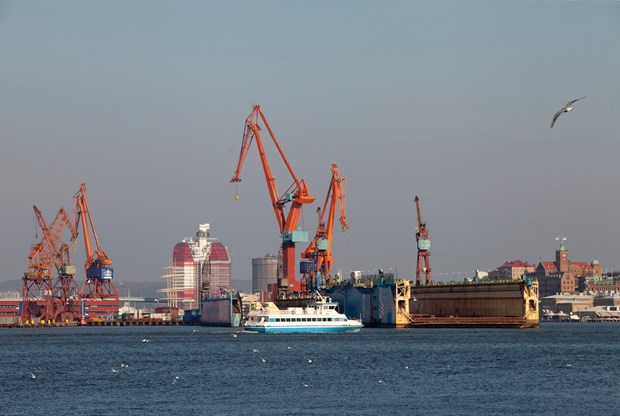
In Sweden's case, 85% of its 10.21 million population live in urban areas. About 3.3 million live in Stockholm and the surrounding metro area. The city of Gothenburg, Sweden's second largest city, has around 2 million, while another six cities have roughly 100,000 each.

Ukraine, on the other hand, has a 1,426 mile long border, which includes 199 miles along the Black Sea. Its land is among the most fertile in the world and it's moderately populated (both Russia and  Ukraine also share a similar language, history, and culture). Note too that Ukraine was occupied by the Soviets from 1922 until the collapse of the Warsaw Pact in 1989 before becoming independent in 1991. 

Russia's largest naval base since 1783 and home of the Black Sea Fleet is nearby at Sevastopol in the Crimea. It comprises an area of 334 square miles and a population of around 430,000 (when you add in surrounding towns and other populated areas, the total population jumps up to 510,000).

It's worth nothing that some military analysis believed that the Black Sea Fleet is the least prepared of the Russia's four main naval bases, ranking them in order of importance, Baltic, Northern, Pacific, and lastly, Black Sea. However, it is a key link between Russia and its ally, Syria. Then too, there's that matter of oil.

It was recently confirmed that the Black Sea shelf and the Azov Sea may potentially be one of the richest reserves in the world. Ukraine had, in fact, been quietly counting on acquiring full access to it and making closed doors deals with energy giants like Exxon, Dutch Shell, and BP (Europe receives approximately 40% of its oil and gas from Russia, with Germany---the EU's economic engine---getting 70% of its oil and gas from Russia), but then came the annexation of Crimea.

So, how much oil and gas are we talking about? Best estimates are 2.53 million tons of crude oil, 58.6 billion cubic meters of natural gas, and 1.231 million tons of natural gas condensate. That's more than enough to go to war for. It's estimated that Russia's annexation of the Crimea deprived Kyiv of some 80% of its energy potential.

If Russia manages to keep the four Donbass provinces as a result of the current war, it could possibly acquire most of the Ukraine's estimate 60 million tons of coal (90% of the Ukraine's coal lays in the Donets Coalfield, in the Donbass Region). While the Ukraine is rich in other natural resources, including gold, strategic metals, wood, and some of the most fertile soil on the planet, the loss of the Crimea oils and gas fields as well as the coal rich Donbass would severely hurt its energy needs.

Putin claimed the invasion of Ukraine was a matter of national security, and maybe it was, at least to a point. Putin didn't want NATO troops, artillery, tanks, and especially missiles on his border, and especially at the naval base in Sevastopol (even if it's a third rate base). He certainly doesn't want NATO surveillance staring him in the face.

But, it was the oil and gas of the Crimea which was key. And it's the coal rich Donbass region in the east that he wants. The war wasn't so much as a matter of national security as it is one of acquiring energy. In the near future it will be over the fertile soil like that of the Ukraine, strategic resources, and potable water elsewhere. Control of resources will the reason for all  future wars regardless of the "cause" assigned to it.

Since Sweden lacks a border with Russia and Finland's is so insignificant, Putin can use feigned indifference to their applications to join NATO. It doesn't hurt that Finland lacks oil and gas too. Otherwise, Finland's admission to NATO would be deemed a national security and denied just as in Ukraine. If Putin hoped to weaken NATO in his quest for oil and gas, he failed miserably.


If you want to know more, please take a look at the links below. If you enjoyed the article, please consider passing it along to others and don't forget to subscribe. It's free! Lastly please be sure to "like" us on whatever platform you use to read A/O. It helps with the algorithms and keeps our articles in circulation. Thank you!  


The leaders of Finland and Sweden say they will jointlysubmit their NATO applications


Finland and Sweden want to join NATO. Here how it works andwhat comes next.


Sweden's Top 15 Trading Partners


Finland's Top Trading Partners


Russia's naval base in Ukraine: Critical asset or point of pride?


Exxon and Shell win Ukraine oil bid


Energy in Ukraine


NATO chief sure spat over Sweden,Finland will be resolved


Fossil fuel companies are exploiting Russia's attack on Ukraine


Saturday, October 09, 2021

Reaping the Whirlwind: Ending Illegal Immigration

Once again, we're being force to turn our attention to our southern border. At present, there's over 200,000 immigrants gathered along the Mexican border looking to cross into America. Reports indicate that there another 60,000 or more working their way up from South and Central America in hopes of crossing too. 

Meanwhile, 1.1 million illegal immigrants have been caught this fiscal year. Many (perhaps a majority) are unvaccinated, be it Covid, TB, measles, mumps, chickenpox or whatever. What motivates these individuals to make a thousand mile (or more) trek to come to the United States?

The majority of these individuals are coming to seek a better life, which is pretty much the motive millions of others have made to come this once "Land of Plenty".  Many of the countries they are fleeing are rife with  governmental corruption, from the local cop on the street on up the line to the president. Nevertheless, "economic asylum" is not consider a bonafide reason for acceptance according to the United Nations and U.S. immigration law (even Amnesty International agrees).

Their economic opportunities are limited, primarily due to a poor social infrastructure, poorer education, and history of suppression dating back centuries in which wealthy and powerful land owners, in conjunction with the Catholic Church, conspired to keep the much poorer "peon" class of workers just that---poor and largely uneducated.  As a result, a large viable middle class never firmly took root.

Attempts to form unions or adopt a more "liberal" interpretation of the Christianity through doctrines like Liberation Theology which promoted breaking up large estates, better pay, and improved education, were crushed, often violently. In the case of Liberation Theology, everyone from bishops and priests down to parishioners were threatened with excommunication from the Vatican itself.  Union organizers, community activists, doctors, and teachers, were often beaten, jailed, and on numerous occasions, found to have "gone missing".

Meanwhile,  governments elected by popular vote (often democratic socialists) typically found themselves overthrown in violent coups (under the ubiquitous term of "regime changes"), such in as in Argentina, Paraguay, Columbia, Bolivia, and elsewhere, thanks to backing by the CIA and other agencies.  Key officials were assassinated, especially if these governments or their policies ran afoul of certain special interests in the U.S.. 

For instance, under CIA backed Chilean General Augusto Pinochet's government, an estimated 40,000 individuals suffered human rights violations (some were formally arrested. Many weren't). Some 10,000 were tortured. 1,312 were exiled, and at least 2,279 simply "disappeared", while dozens of opposition leaders and members of unions, political associations, and opposition media were assassinated.

With these ousters, right wing military juntas typically stepped in, with the blessing of the U.S State Department and the virtual guarantee of American economic and military aide (in exchange, of course, for strategic concessions of natural resources, support of U.S. regional policies, or perhaps the use of local facilities for military or intelligence purposes ("enhanced interrogation" anyone?).   

The end result, was the creation of a society which had a underlining theme of distrust of the government (including the police and military), which were often corrupt, an economy with a small and powerless middle class with limited opportunities; both of which being highly dependent on the U.S. corporations for jobs and foreign aid to keep their government afloat---$314 million just for fiscal year 2021 went to Latin America alone. 

What happens without American corporate investment or foreign aid? Take a look at Cuba or Venezuela. The U.S. imposed its embargo in 1963 (which was loosened in 2002 for Humanitarian purposes). Nevertheless, Cuba's economic development is decades behind most countries, despite past assistance from the former USSR and other countries which ignored the embargo, such as Venezuela, Mexico, Canada, Spain, Brazil, and the Netherlands.

It's worth nothing that in the 1950's, almost two-thirds of Cuba's imports came from the United States, not to mention billions in U.S. tourism which viewed Cuba as another Las Vegas or Reno but cheaper and with better weather and beaches! 

Beginning around 2004, Venezuela's President, Hugo Chavez, created the "ALBA", or the Bolivarian Alliance of the Peoples of Our America, which was designed to circumvent U.S. political and economic dominance of the region and the America led Free Trade Area of the Americas. 

 Thanks to Venezuela's booming oil soaked economy, ALBA also created a central bank of its own---the Unified System of Regional Compensation, which sought to provide financial support of regional countries, as well as help develop infrastructure, create a unified military for ALBA members similar to NATO, a trade arbitration court, collectively  improve education and medical care independent of the World Bank and IMF (International Monetary Fund) while simultaneously reducing the use of the U.S. Dollar as the default currency.  Needless to say, the U.S. was not pleased with ALBA or Hugo Chavez.

The collapse of the Venezuelan economy is viewed by many economists, political scientists, sociologists, and historians as one of the worse since the end of World War II, outstripping the fall of the USSR and the Eastern Bloc, Zimbabwe under dictator Robert Mugabe, post-war Europe and Japan, Cuba post-embargo, much of Africa, and perhaps even Haiti which has face numerous natural disasters amid an corrupt and incompetent government. 

The causes of Venezuela's collapse are as disputed as they are varied. Some claim that the collapse was over extension of Hugo Chavez's "socialist" or "populist" economic policies which focused on social welfare. Others point out that the economy was doing well until Chavez's death in 2013 of a massive heart attack and ongoing complications from stomach cancer. It should be noted that his supporters claimed and still maintain that because of his "independent" and "democratic socialist" polices, he was assassinated by the CIA; a charge the U.S. has steadfastly denied.

Before going further, we need to briefly examine Chavez's policies and political ideology. Chavez regarded himself as a populist first and foremost. He was an avid supporter of economic communes and co-ops, land reform, extending public education, ending income inequality (which took Venezuela from near the top of the worse in 1998 to one of the best, just behind Canada by 2011), improved healthcare ( particularly improved infant mortality rates), and greatly reduced poverty levels.

Chavez was never "anti-American". He considered himself a supporter of the American People. It was, however, the American government that he both disliked and distrusted. He was a strong opponent of what he regarded as "colonial imperialism", especially when it came to foreign corporate dominance of local economies, as well as "welfare economies" which were dependent on U.S. foreign aid.

In terms of ideology, Chavez was hesitant in referring to himself as a "Communist". He did acknowledge being a "Trotskyite" in that he believed in a "permanent revolution" for social justice. He was a "democratic socialist" which blended the best of capitalism with the best of socialism and democracy. Overall, he saw himself as a Marxist (which differs from the Stalinist version of Communism we're all so familiar with).

Chavez's chief failure was his economy's near total dependence on oil and gas to run the economy. He failed to develop an adequate supporting economic infrastructure such as manufacturing which could pick up the slack should oil and gas prices take a sustained drop in price (which it did). With this, his second major failure was his direct challenge to the IMF, World Bank, along with United States and its potential corporate investments which could have brought in jobs and tax revenues.

After Chavez's death in 2013, Nicolas Maduro was elected president based on his promises to continue with Chavez's policies. However, amid claims of corruption, incompetence, increased authoritarianism, inadequate trade partners, and economic sanctions by the U.S., the European Union, the Lima Group, and others, plus the lack of economic investments, the economy began to falter.

 Once U.S. sanctions were extended to include oil and gas, along with the suppression of oil and gas prices globally, the Venezuelan economy went into a freefall. Venezuela suffered mass unemployment, widespread power outages, massive shortages of food, fresh water and other necessities, plus a huge uptick in crime, especially gang violence backed by narco-crime cartels. The IMF has predicted that Venezuela's inflation rate by the end of 2021 will be 5,500%.  As an aside, in October 1923, the inflation rate in Germany's Weimar Republic was 29,500%. Prices doubled ever three and a half days.

Meanwhile, supporters of President Maduro blamed the U.S. for instigating a de facto economic coup to overthrow Chavez's polices to build a viable democratic socialist country by merging aspects of capitalism, democracy and socialism, bypassing the "predatory capitalism" of U.S. regional policies, the World Bank and the IMF. Maduro's supporters call it a undeclared "economic war" on Venezuela.

Nevertheless, the implosion of Venezuela's economy affected the entire region, including Honduras, Panama, and Columbia. Even larger economies such as Brazil and Mexico have been affected. The result is the mass exodus to "el Norte" and ultimately to what they hope will be a new start. Most don't want to become citizens. They have no interest in learning our laws, traditions, or values. They don't want to learn anymore English than necessary to get and hold a job. 

Many have been told by the drug cartel "coyotes" who led them on their thousand mile journey that America and "Tio Sam" will welcome them, along with their fellow Latinos in America (many "coyotes" make up to $10,000 per head illegally smuggling people into the U.S.). The "anti-illegal immigration" rhetoric they've heard is just that---rhetoric. It's "BS" by the corporate media to discourage the rest of the world from coming to America. If they can just reach and cross the border, all their problems will be over. They will receive free housing and healthcare, good paying jobs, and catered education for their children in Spanish...if they can just reach and cross the border.

Unfortunately, America's off again/on again immigration policy has created just enough doubt to make the stories of the coyotes believable. Build a wall. Tear down a wall. More border patrol. Less border patrol with reduced ability to apprehend. Meanwhile, we have defacto criminals in the U.S. willing to defy immigration laws to help people illegally cross the border. Most are churches and religious organizations who believe the Church is above any laws. They've built complex networks to help whisk individuals away from the border and on to a new life forever on the run. 

These naive "do-gooders" will pass them on to individuals who will teach them how to circumvent law enforcement and play the system to get free (and unquestioned) healthcare, housing, jobs, and how to get their children into schools (and often taught in their native language) as well as "free" legal assistance should they need it... all on the taxpayer's dollar of course.

Of course, all are subject to deportation the instant they're caught. But even that's not so bad. Anyone caught, either at the border or someplace else, is subject to a taxpayer paid medical checkup for one and all (along with any needed medication), three meals until they're put on a taxpayer paid bus or airplane and returned home where they're free to try it again.

We are seeing the thousands upon thousands trying to illegally cross our borders on a regular basis. Most are doing so as a result of our foreign policy, which is directed by powerful corporate players. Until we stop meddling in the affairs of other countries, we will continue to face the specter of illegal immigration which will increasingly stain our near broken social safety net and overwhelm us.

This doesn't mean withdrawing into ourselves and cocooning away from the world as we tried in the first half of the 20th Century. It does, however, mean that we stop interfering with other nation's elections regardless of whether we like who they chose or not. It also means that we should work within their economic and social policies to create a fair and just outcome. Until we do, we will continue to reap the whirlwind we've sown. Want to know more? Check out the sites below.


CRS: U.S. Foreign Assistance to Latin America and theCaribbean: FY2021 Appropriations


Bolivarian Alliance for the Peoples of Our America


Venezuela's Collapse Is the Worse Outside of War on Decades, Economists Say


How one migrant family got caught between smugglers, the cartel, and Trump's zero-tolerance policy


Migrant encounters at Us-Mexico border are at a 21 year high


U.S.-Mexico border apprehensions for the fiscal year surpass1 million this June


The Lima Group