Showing posts with label personal freedom. Show all posts

Friday, August 08, 2025

Freedom and Democracy: How Do They Stack Up Globally?


We’ve all heard that America is the home of democracy. The land of free and home of the brave. We hear it every time our National Anthem is sung. There’s few things which make us feel more secure and proud than watching Old Glory gently blowing in the breeze on a sunny day or watching a military parade rolls down the street. While there’s no questioning our military strength or the dedication of our men and women in uniform, have you ever wondered just how free we really are?

America was founded on the concept of individual freedom. We took on the world’s greatest superpower of the time over freedom and the notion of issues like taxation without proper representation, and yet here we are, some 250 years, and our Founding Fathers wouldn’t recognize the nation they fought to hard to create.

Most of our freedoms, even the most basic ones likes speech, expression, or right to bear arms are challenged on a daily basis And what about taxation without representation, the core reason we fought the British? How often do you get to vote on a tax or rate increase? Many of these are decided by some appointed committee, not by anyone you voted for. Some have built-in increases that don’t even require public debate.

 Partisan political primaries are taxpayer funded by state legislation. But what if you don’t belong to one of the two corporate owned and controlled political parties? Well, too bad.  Independents, who are the nation’s largest political bloc, and people who’ve joined a third party for whatever reason, are still required to pay for the Democratic and Republican primaries, and it gets worse.

While they are involuntarily taxed, they are legally prohibited from participating in their primaries (as an aside third party primaries are strictly self-funded. No taxpayer support)  Fair? No. Legal? Questionable. Democratic? Hardly. In keeping with the founding tradition of “no taxation without representation”? Hell no! So, I can almost hear you ask “well, if you don’t like it, why don’t you just vote them out?”. That’s a great question. Very logical, but the answer is, sadly, not quite so clear cut.

The reason is that both parties, in the spirit of bipartisanship (some might call it “collusion”) have made it nearly impossible for them to be voted out of office. Briefly, the 2010 Citizens United and the 2014 McCutcheon rulings, declared that corporations, which are actually artificial legal fictions, are now “people” with the same rights as ordinary flesh and blood humans, with one key exception, and that concerns “free speech”.

According to the (un)Supreme Court, declared that money is now the same as “free speech”.  And while we are free to voice our opinions via donations to political campaigns, we are capped in what we can give. Corporations, on the other hand, are not. Apparently they have more “free speech” than you or me, and that means more influence.  They can give essentially as much as they want (not that we have a spare $10 million laying around to give to some candidate). As a result, they finance not just campaigns and political parties but also fund so-called “leadership funds” (which are basically political “slush funds”), and through various legal loopholes run commercials and ads on behalf of a candidate or issue supported by that candidate. Independents and third parties typically don’t get a dime.

Through state legislation, unequal ballot access is the norm. That means there are one set of rules and requirements for Independents and third parties and another set for the two corporate owned parties. They don’t even have their own election representative to protect their interests! As a rule, they are lumped in with whichever party has the smallest voter numbers and forgotten.

Other issues, such a partisan gerrymandering all but guarantees control of a district by the majority party. It allows districts to be drawn to ensure they retain control of it. It’s a case of a party choosing the voters instead of voters choosing their representatives. This is why gerrymandered districts have reelection rates in the high 90% range.

Also, despite approval ratings in the upper 20% or low 30% range (and occasionally as low as 9%), Congress has a reelection rate of 97%. Do you think that’s by coincidence?  Corporate lobbyists help write (or write altogether) legislation as well as review bills, provide summaries, and so forth. Do you think any of this is for our benefit? Don’t bet on it.  So, I will again ask you, do you think we are free? How do compare with the rest of the world?

According to the 2024 “Freedom Index”, published by the CATO Institute, the freest country in the world in terms of personal and economic freedom, is Switzerland, followed by New Zealand and Denmark. The next three are Luxembourg, Ireland, and Finland. Seventh place is a three way tie between Australia, Iceland, and Sweden. Then comes Estonia, Canada, and Japan. Rounding out the top 15 economically and personally freest nations are Norway, Germany, and the Czech Republic.

Did you notice anything particular here? Who is missing? That’s right, the United States. We are not only not in the top five, we’re not in the top ten or even the top 15! What the hell? If we’re supposed to be the “home of the free”, why is nobody at home? Where are we?

Before getting to the U.S., I’d like to mention that according to the Freedom Index, of the top 15 freest country, the index points out that 13 of those 15 countries have seen a decline in their ratings. Just two saw improvements. The nation which has seen the greatest loss of personal and economic freedom was the Czech Republic with Finland and Canada close behind. Only Japan and Denmark have both experienced slight improvements at 0.07 and 0.02 respectively in personal and economic freedom.

As for the United States, we ranked 17th of the 165 countries on the Freedom Index. For the record, Mexico was 94th overall. India was 110th. Russia was 139th. Taiwan was 19th. Brazil was 70th, South Korea was 32nd, and China was 150th. The freest regions were North America, Western Europe, and Oceania. The least freest was the Middle East, Northern and Sub Saharan Africa, and South Asia. In terms of freedom for women, the top regions were North America, Western Europe, and East Asia. The worst areas for women were the Middle East, Northern and Sub Saharan  Africa, and South Asia.

When it comes to democracy, representative governments, political participation, civil liberties, and electoral pluralism, we need to turn to the Democracy Index compiled by the Economic Intelligence Unit of The Economist publication. They looked at various factors, such as to those just mentioned,  to determine just how effective the political system is in a given country. Countries were ranked as “Full Democracies” (10.00 – 8.99), “Flawed Democracies” (7.99 – 6.99), “Mixed” (5.99 – 4.99) and “Authoritarian” (3.99 - .99).

The chart rates each of the 165 countries surveyed on a scale of 0 to 10 with zero being the most authoritarian and ten being the most democratic. At the top of the list are Norway (9.81), New Zealand (9.61), Sweden (9.39), Iceland (9.38). and Switzerland (9.32) rounding out the top five democratic countries in the world.

These were followed by Finland (9.3), Ireland (9.19), Netherlands (9.0), Luxembourg (8.98), and Australia (8.85) finishing the top ten. Honorable mention goes to Taiwan (8.78), Germany (8.73), Canada (8.69), and finally Uruguay (8.67).  

As for the United States, we are ranked 28th of the 165 surveyed with a democracy rating 7.85. Again, not a real good selling point as the “home of the free”. In fact, the U.S. is actually listed as a “flawed democracy” and may be teetering on becoming a failing democracy.  Some of the main reasons for why are mentioned at the beginning of this article.

In fact, countries like Costa Rica (8.29), Mauritius (8.23), Estonia (8.13), and Malta (7.93) are more democratic than the United States. As if that’s not bad enough, we barely beat out Chile (7.83) and Slovenia (7.82). That’s not good people. Of course, there’s nothing wrong or negative about these countries. In fact, good on them for doing a great job representing their people. However, the United States can and should be doing a much better job serving the people and not on Wall Street executives.

Out of curiosity, I wanted to know what the least democratic nations on the planet were so that I could go ahead and mark them off any future itineraries should the occasion arise. Liberia was 5.57. Mexico was 5.32.  Palestine (West Bank) has a rating of 3.44, while Nepal was 4.6 (so much for Buddhist enlightenment). The North African nations of Morocco,  Tunisia, and Algeria  were 4.97, 4.71, and 3.55 respectively. Egypt was 2.79. The Democratic Republic of the Congo was 1.78, making it sound neither democratic or a republic.  

Saudi Arabia, a Sunni monarchy, was only 2.08. Yemen, home of the Houthi which keeps attacking Israel amid its claims of Israeli brutality in Gaza, has a 1.95 on the Democracy Index. Syria, which is still dealing with a civil war, was 1.32. Iran, an Islamic theocracy, was 1.96. Iraq was only a little better at 2.8. Jordan, another Sunni kingdom, was 3.28. Kuwait, also a Sunni monarchy, where we fought a war to liberate Kuwaiti oil under the guise of “restoring democracy”, has democracy rating of 2.78. South Africa was 7.16 and India was 7.29.

 Turkey, whose government is secular despite a 98% majority Muslim population, was a notable 4.6. The highest rated nation in the region was, not unexpectedly, Israel, the only parliamentarian democracy in the region. It’s democracy rating was 7.8 (remember, America’s was just 7.85). Russia was 2.03 while China was 2.11. Ukraine was 4.9 and Belarus was 1.99.  However, the worst places to be if you’re looking a democratic government were the Central African Republic (1.18), North Korea (1.08), Myanmar (0.96) and Afghanistan (0.25).

Finally, in terms of regions, Africa was 3.92 overall. Asia was 4.06. North America was 5.64. South America was 6.01. Europe was 7.41 and Oceania was rated 7.46. The Middle East as a region wasn’t specifically mentioned, but averaging the numbers would be approximately 2.11 (excluding Israel) on the Democracy Index.

Additionally, did you know that there are only 25 “full democracies” in the world today? There are 46 “flawed democracies” (of which the U.S. is one), 36 so-called “hybrid” governments or that global democracy had been declining for 19 years straight?  Just 20% of the world lives in a “free country”. 42% live in a “partly free” nation, and 38% live under some form of authoritarianism, all according to the Freedom House.

It’s bears mentioning that most of the nations facing the worse influx from migration from countries with little or no tradition of freedom or democratic governments are the ones highest on both the Freedom Index and the Democracy Index lists. This begs the question of what happens when a country or region with a history of personal liberty and economic freedom is overrun by peoples with a history and culture based on oppression?

Well, historically speaking, the latter will almost always win out unless the former has the will to either enforce assimilation through regulation and legislation or expels the latte by whatever means necessary. If you’re looking to create a society of compliance and blind obedience, then you do exactly what the West is doing now. There is no middle ground.

Thank you for reading "Another Opinion", the Op/Ed blog page for the "militant middle".  Here at "A/O" we truly value our readers. At A/O we seek the facts as they exist, not partisan talking points.  We hope you find our articles informative and engaging. Comments are welcome, provided they are not vulgar, insulting or demeaning.  Another Opinion is offered without charge and is directed toward all independent and free-thinking individuals. We ask, however, that you "like" us on whatever platform you found us on in order to keep our articles available for free to others. Lastly, in order to keep costs down, we depend on passive marketing, and therefore, depend on our readers to please forward our posts along. Below you will find links to the sources we used in writing this article. Thank you. 


Human Freedom Index


Democracy Index


Freedom House: Marking 50 Years in the Struggle ForDemocracy


Friday, December 23, 2022

America's State of Freedom: How Do We Compare?

There has been much discussion recently about the decline and pending fall of the American Empire, but how much of that is actually true? Is the United States as we know it tittering on collapse? Well, let's take a look at some of the studies, surveys, and polls to see where the U.S. currently stands on a number of key issues.

First up is freedom. After all, that's what we're known for ---"land of the free and home of the brave" right? According to the independent and non-partisan World Population Review, the top ten freest countries in the world are Switzerland, New Zealand, Denmark, Estonia (yes, the former Soviet Republic), Ireland, Finland, Canada, Australia, Sweden, and Luxembourg.  Wait. What? No United States in the top ten?  Nope.

Actually America comes in 15th place, just behind the UK and ahead of Japan and Germany. Also ahead of us are Iceland, Norway, and the Netherlands. The ten least freest countries are all in the Middle East and Africa (with the exception of Venezuela). Some include Egypt, Somalia, Iran and Iraq (naturally),Yemen, and the Sudan. 

Americans are known for their rugged individualism. It's the staple of practically every Western movie and TV show ever made.  Individualism, and with it our rights to personal freedom are at the core of what it means to be an American. So would it surprise you to know that the U.S. isn't in the top ten (again)? It's not even in the top 20 when it comes to personal freedom.

The United States has become a neo-fascist Corporatocracy. It's run (or managed if you prefer) by a relatively small clique of uber wealthy oligarchs (sometimes referred to a kleptocrats). These corporations and individuals have done their best to gradually impinge on our individual freedoms under the guise of "national security" (creating a surveillance state) and giving "personhood" to corporations.

So, the fact that we aren't in the top 20 shouldn't come as any surprise to you.  The countries with the greatest amount of personal freedom are all the "socialist"  Scandinavian countries as well as Japan, Australia, Ireland, Canada, Taiwan, Latvia and the Czech Republic (both former Soviet satellites),  the UK and others.

When it comes to personal freedom, the United States ranked an embarrassing 24th in the world. We are just behind Italy and ahead of Uruguay and Spain.  In terms of economic freedom, we did much better, which you'd expect with us being an Corporatocracy and all.  However, we're still not in the top five.

The top four most economically free are the Pacific nations of Taiwan, Hong Kong, Singapore, and New Zealand. Switzerland rounds out the top five. Coming in sixth place is the former Soviet republic of Georgia with the U.S. in the seventh spot. Ireland, Lithuania (another former Soviet state), and Australia rounding out the top ten. It's worth noting that most of the countries which ranked high in personal freedom ranked in the bottom half of the top 20 freest economic countries.

In looking at a report by the conservative Heritage Foundation for 2022, it's worth noting that the top economically freest countries are Singapore, Switzerland, Ireland, New Zealand, Luxembourg, Taiwan, and Estonia. The Netherlands, Finland, and Demark finish the top ten. 

The United States comes in 25th place between the UK and Georgia in the lower half of the "Mostly Free" column. We also became a debtor nation in 1985. An early warning? Germany was 16th and South Korea was 19th. The Ukraine was 130th while Russia was 113th. Both are in the "Least Free" section.

As an aside, America is also listed as a "flawed democracy". I've mentioned that this and other independent media sites are often "shadow blocked", so it should be no surprise that Reporters Without Borders should rank freedom of the press in the United States as barely satisfactory. In fact, the U.S. is ranked 43rd in the world. There are actually some third world nations ranked higher the U.S.!

Education has been called the "road to success" (or as John Wayne once said, "life is hard. It's harder if you're stupid). Either way, I have to agree. Education not only provides the individual with the keys to success, it also largely determines the success of a nation.

America has long struggled academically when compared to the rest of the world although we tend to spend more private and tax dollars on education than any other country. According to a 2021 academic report, the United States had the best overall educational system in the world followed the UK, Germany, Canada, France, Switzerland, Japan, Australia, Sweden, and the Netherlands.

When it comes to science and math, we ranked near the bottom of the second tier of developed nations. In the latest 2018 test of OECD (Organization for Economic Cooperation and Development),  we scored 478, which was below the average score of 489. The top five highest scoring countries were all Asian (Singapore, Macao, Hong Kong, Taiwan, and Japan).

In science, we did a little better, scoring just above the OECD average of 489 with a 502, but was well below the top five countries of Singapore (551), Macao (544), Estonia (544), Japan (529), and Finland (522).  In literacy, we ranked at about average with Denmark coming in first.

Another indicator of our decline is healthcare. You would think that with the resources that the United States has our healthcare would be second to none. Sadly, the U.S. has one of the worst healthcare systems of any industrial nation. While the world's overall life expectancy has continued to rise (it was 82 years old in 2020), it was 77 years of age in the U.S..

Meanwhile, mortality rates in the America have remained higher than in other OECD nations despite a general decline overall due to improved technology and medicine. The mortality rate in the U.S. dropped from 1980 to 2020 by 19% while for other industrial nations the drop was 43%.   

Early or premature deaths due to diseases and disabilities were also higher in the U.S. than elsewhere. In fact, they were roughly 37% higher. In 2019 (the latest record) non-age related deaths due to disease or disability were 26,061 per 100,000. The global average was 18,987. 

The United States also had the highest infant mortality rates of any OECD country as well with just under 24 deaths per 100,000 live births. The next closest country was Canada with 8.4 per 100,000. The Netherlands and Australia had the lowest with 1.2 and 2.0 respectively. The world average was 4.5.

Where we did well was with heart attack and stroke treatment. Using 2018 data for individuals age 45 or older over the first 30 days following the event, the mortality rate per 100 in the U.S. was 4.9 compared to 5.9 among industrial nation.. For strokes it was 4.1 versus 6.4, and for hemorrhagic (bleeding) strokes the mortality  was 19.4 as opposed to 20.7 globally.

But when it came to asthma, COPD, congestive heart failure, and diabetes we had mixed results. In measuring mortality rates per 100,000, the U.S. had 37.1 deaths related to asthma compared to an average among industrialized nations of 34.7. For diabetes, the U.S. had 226 versus 137.5.

However, with COPD we had 194.1 with 228 among comparative nations. When it came to congestive heart failure, the average among industrialized nations was 272.3. The U.S. had an appalling 411.7. There are 2018 figures, which are the latest measurements.

Finally, the United States ranks last when it comes to access to medical care and quality compared to other industrialized nations with the Netherlands, Australia, Sweden, Japan, and Austria in the top five spots.  It should also be noted that the U.S. places far less attention on preventative care and alternative medicinal treatment. There are fewer beds available in hospitals than in other OECD nations.

The United States also has among the highest prescription costs of most any nation in the world, which is attributable to its poor medical care coverage. The majority of nations have some form of nationalized (or "socialized" medicine if you prefer), resulting in lower costs and faster recovery but occasionally longer waiting times for non-life threatening treatment.

One component to having a long and healthy life is having a high overall quality of life. So how does the U.S. rank? As has been the trend for many years now, those "socialist" nations of Scandinavia have not just a better education system, better health care and higher life expectancy, they also have the highest quality of life, but they're not the only ones!

Sweden ranked number one, followed by Denmark, Canada, Switzerland, Norway, Finland, Germany, Netherlands, Australia, and New Zealand.  Other top nations include Ireland (#16), Japan (#14), and the UK (#12). As for the United States, we came in at #21, just behind Italy and Portugal but ahead of Poland and Singapore. By comparison, China and the United Arab Emirates are #24 and #25 respectively.

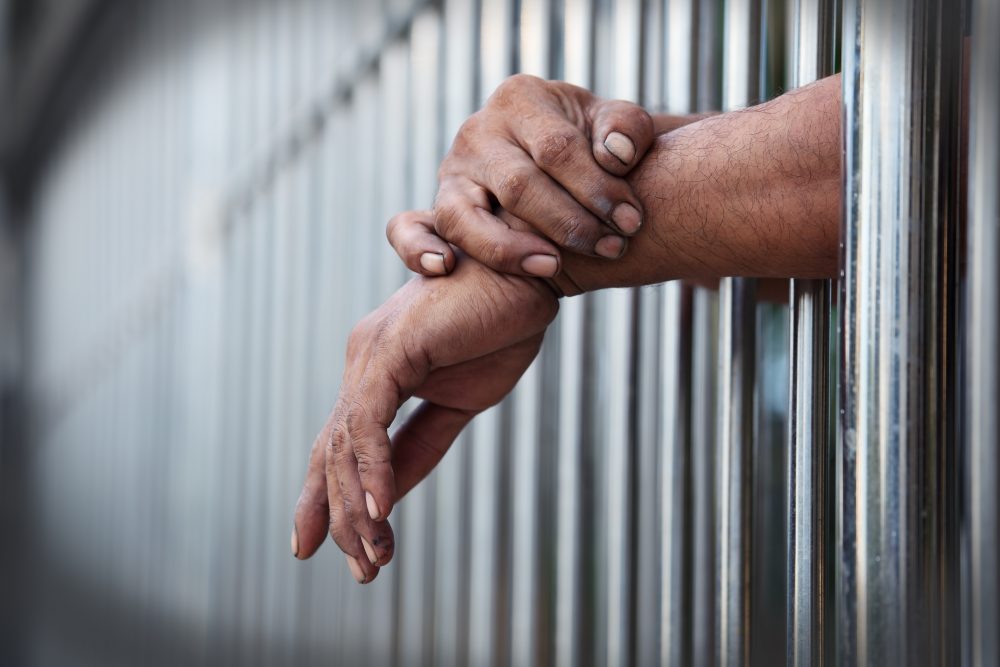
It's no secret that the U.S. has highest percentage of its population behind bars than any industrialized nation with an average of 625 individuals per 100,000, or to put it another way, with the U.S. having roughly 5% of the world's population, we have 25% of it behind bars. The states with the highest percentage incarcerated are Louisiana and Oklahoma. 90% of those behind bars are men.   

Following the United States is China, Brazil, India, Russia, and Thailand with the most number of people in jail (China and India dwarf the U.S. in terms of population). Israel and Bahrain have the least number of people behind bars. When examining the highest rates of incarceration based population, the U.S. again is number one followed by Rwanda, Turkmenistan, El Salvador, and Cuba.

In terms of voter approval, of the top 11 foundational institutions which support the federal government, only the military and small businesses have positive numbers. Congress consistently polls terrible. The disapproval rate for Congress is currently hovering around 77%.  In other countries their numbers would be concern for a revolt or revolution. In fact, 43% of Americans believe a civil war or revolution will occur within the next ten years.  

President Joe Biden has a disapproval rate of 51.4% while his Vice President, Kamala Harris, has a disapproval rating of 48.7%. The approval rating for former President Donald Trump is 55.7%, which seems to prove that persistent negative campaigning (aka "character assassination) works.

Meanwhile, only 30% of Americans approve of the direction the country is going in.  74% of Americans are sick and tired of bi-partisan bickering and finger pointing, including 78% of Independents, 82% of Democrats, and 68% of Republicans.  The average American has a consumer debt of nearly $100,000 while corporate CEOs earn approximately 324 times more than an average employee.  In 2020, the average corporate CEO made $670 dollars for every dollar an average employee earned.

As an aside, both corporate owned parties---Democrat and Republican---are losing more voters than gaining. Independents remain the largest political bloc and continues to grow while the Democrats and GOP battle over a shrinking piece of the political pie. Americans in large numbers disapprove of corporate lobbyists writing legislation, partisan gerrymandering, partisan offices, Citizens United while supporting citizen ballot initiatives, term limits, voter approval for tax, fee, and rate increases.

A country, no matter how large or developed, can't sustain numbers like these indefinitely, and yet that's exactly what Congress, the Presidency and Big Business expect. We continue to bolster corporations with taxpayer money and cut taxes for the rich while Americans struggle to make ends meet. In terms of poverty levels among OECD nations, America is third behind Costa Rica and Hungary.  

It's clear that the ruling Oligarchy will do nothing that impinges upon their growing control on power beyond smoke and mirrors. When citizens see no hope for real and meaningful change; when their propaganda or bread and circuses no long work, what then?  


If you want to know more about this article's topic, please check out the links below. If you enjoyed the article, please consider passing it along to others and don't forget to subscribe. It's free! Lastly please be sure to "like" us on whatever platform you use to read anotheropinionblog.com. It helps with the algorithms and keeps our articles in circulation. Thank you! 


World Population Review: Freest Countries 2022


2022 Index of Economic Freedom


Press Freedom Index


U.S. Education Rankings Are Falling Behind the Rest of theWorld


How does the quality of the U.S. health system compare toother countries?


U.S. Healthcare System Ranks Last Among 11 High IncomeCountries


Incarceration rates by country


Quality of Life


FiveThirtyEight: Polls


Congressional Approval Rating


Americans are sick of lawmakers bickering. They don't have much hope that will change


Wage gap between CEOs and US workers jumped 670-to-1 lastyear, study says


Poverty rates in OECD countries as of 2019


Saturday, February 09, 2019

Where Does American Stand On The World's Freedom Index? The State of American Freedom Pt 1 of 3 of Our "Where America Ranks" Series


Did you watch President's Trump's State of Union address? I watched most of it (including the Pelosi sideshow going on behind the President). I took particular note of how often Trump made reference to America being "great", which has been a central theme of his since the campaign. That made me wonder---just how "great" is America really? As most Americans already know, the United States is an Oligarchy; ruled (as opposed to governed) by a relatively small number of elites. Of course, these same elites and a few others, dominate the rest of the globe, or at least most of it. So, how does the US stack up in terms of overall freedom, income equality and social mobility, and finally, in terms of the quality of our education system? This article will be part one of a three part series which will examine those issues.

The first topic we'll look at is freedom. After all, the notion of "freedom" has been this country's mantra practically since its founding. It's why people from around the world want to come here. But just how "free" are we actually? We already know that the US has become essentially a surveillance state since 9/11, be it government agencies or corporations (as an Oligarchy, the two work in tandem anyway). As I wrote in my last article, the US has adopted a "enhanced" driver's license, which acts as a defacto national ID card, complete with a tracking chip and facial ID capability.

Our cell phones and social media monitors and records us, builds profiles of sites we visit, where we shop and purchased, not to mention even tracks us, and even anticipates our likes. Some people like that. Personally, I find it a little scary. It's too much private information in the hands of other people and computers. Our credit cards are chipped and so are our cars and trucks. Some people have watches which double not just as a time piece but also as cell phone, internet access point, and, of course, a monitoring devise. But these are more incidentals; reflections on the state of our personal freedom amid ever growing technology. What I want to know is how we ranked in terms of our basic freedoms.

One of the most important freedoms that American has been a free press, as covered under the First Amendment along with free speech and freedom of association. According to Reporters Without Borders, they researched the openness, independence, accurately, and self-censorship of the media. Out of 180 countries, the US is now ranked in the 45th spot, dropping two spots since Trump was elected President. This partly the result of a not so subtle propaganda war again the Trump White House and the proliferation of what's often called "fax news".

So, if the US is in 45th place, who came in first for the most honest, accurate, and fair media? That went to Norway, followed by Sweden in second place. Russia was ranked as 148th while China was 176th. In last place was North Korea. No big surprise there! According to the Human Freedom Index, which was compiled by the Cato and Frasier institutes, in terms of personal freedom, economic freedom, and amount of tax and regulations, the US is ranked in the 17th sport; a drop from its usual third place spot. Pretty sad for a country which prides itself as being the "Leader of the Free World" don't you think? The drop started around the time of Bill Clinton, and has continued to decline through the presidencies of George W Bush and Barack Obama, and now, into President Trump's administration.

The top spots went to Switzerland, Hong Kong, New Zealand, Ireland, and Australia. As an aside, Hong Kong was ranked number one in terms of economic freedom and second in personal freedom. In addition, Hong Kong was the top ranked place for innovation, be it technology, business, or government. At the bottom of the list was, starting at 155th place, Egypt, Yemen, Libya, Venezuela, and Syria. Venezuela, prior to Hugo Chavez, was ranked as the wealthiest country in Latin America and one of the most economic and personally freest countries. However, since the adoption of a Marxist version of Socialism, it's economic, social, and political systems has been in a free fall, making it one of the worse countries in the world to live in.

According to the website, Traveller, which is a travel site that rates the best countries and places to visit, the United States ranks 25th in personal freedom. The information came from The "Legatum Prosperity Index for 2018", which looks at a variety of factors such as crime, business environment, health, personal freedom, environment, among other factors. The report listed the US as first in terms of business environment and sixth in social capital. However, we ranked poorly in terms of governance (19th), economic quality (13th), personal freedom and natural environment (23rd each), health (35th), safety and security (43rd). In terms of education, we only made it to the 9th spot.

The top ranked countries (in order) was Luxembourg, Canada, New Zealand, Iceland, Ireland, Uruguay, Netherlands, Finland, Belgium, and Portugal. Also included among the top twenty were all the Scandinavian countries, Slovenia, Australia, Malta, the UK, Costa Rica and Spain. The least most tolerant countries included most of Africa and the Middle East (excluding Israel), along with Iran in the 5th spot, Russia in 9th place, Iraq in at 11th and China at 12th. However, according to the report, coming in first place as the least free country was Afghanistan.

In terms of healthcare, according to the World Health organization, the US ranks 37th in the world, behind countries most all European countries, as well as Canada, Oman, UAE, Saudi Arabia, Greece, Chile, Australia, and Morocco. In fact, the US ranked in between Costa Rica and Slovenia. That's actually pretty embarrassing if you think about it; a country like the US being ranked behind and in the midst of second tier countries.

The top spots went to Italy, France, San Marino, Andorra, Malta, and Singapore. Other nations in the top tier included Japan, all the Scandinavian countries, Spain, the UK, Ireland, Columbia, Saudi Arabia, Canada, and most of Europe. It goes to show that while "Obamacare" did improve overall healthcare in the US, it fell far short when compared to the rest of the world. In terms of healthcare performance, America actually ranks dead last.

The study, conducted by the non-partisan Commonwealth Fund, examined five areas. Namely, Access, Care Process, Administrative Efficiency, Equity, and Healthcare Outcomes. The study showed that while the outspends every other country, we somehow managed to fail three of the five issues with Americans having the highest mortality rate of any country in the study; much higher than their counterparts in Europe. The report cites essentially a lack to adequate quality care as the chief cause. America would have fared far better had it adopted a single payer health system and allowed individuals and companies to purchase supplemental insurance. This would have allowed even small businesses to a means to compete with the larger ones without the extra financial burden or forcing employees to find their own coverage, and for a far cheaper price.

However, the US did come in first place in one key, albeit dubious category. American was ranked number one in terms of incarceration. We imprison more of people than any industrialized nation in the world at a rate of 655 per 100,000. That's more than China, Russia, Cuba, or even North Korea. The closest country to us is El Salvador, which jails 609 per 100,000 and Turkmenistan with prison rate of 552 per 100,000. Cuba jails 510 individuals per 100,000 while for Russia it's 409 per 100,000. The top reason for the imprisonment in the US was due to drugs, possession or sell, followed by felonies of one sort or another.

Well, there you have it. For a nation which fancies itself as the bastion of freedom, it appears the facts don't back up the hype. In most of the studies, the US typically ranks between the middle and the low end of the second tier of whatever category we're looking at with one glaring exception. The problems we face are not partisan issues. This isn't solely the fault of the Democrats or the Republicans. It can't be attributed to the extreme Left or Right. This is a systematic failure in which both sides share the blame equally. This is what the partisan bickering has brought us, not to mention the corporate control of the agenda and the demise of labor unions (say what you want about unions, they at least ensured that their members received good wages and benefits). Our next installment will focus on income inequality. I hope you will join us.


US drops to 45 in countries in ranking of countries based on freedom of the press

US freedom ranking lower than you would think

Freedom around the world: The most (and least) free and tolerant countries

Countries with the most prisoners per 100,000 of the national population, as of July 2018

The Patient Factor: World Health Organization Ranking of World Health Systems


The US Ranks Last in Health Care Systems Performance