Showing posts with label Nazi Germany. Show all posts

Friday, May 30, 2025

The Secret “Theory of Stupidity” and How It Still Applies 80 Years Later

Recently I came across a short (about six minutes) video which I think helps to explains this rather unique predicament. The video was published by “Sprouts”, which provides short videos covering a wide range of topics such as philosophy, politics, psychology, and so forth. Sprouts is also open source, meaning that it’s free for anyone to use (provided they’re properly cited), including for work, school, or business (I know some of my former bosses would have greatly benefited from a few of these).

This particular video is entitled “The Theory of Stupidity”, which was written by the German Lutheran Pastor, Dietrich Bonhoeffer in March/April 1945 while sitting in a Nazi prison awaiting execution (he was hanged shortly after finishing his paper, just two weeks before the camp was liberated by American troops).

Dietrich Bonhoeffer was born on February 4,1906 in Breslau, Silesia, Germany  (aka Prussia which is now a part of Poland). He was born into a rather large upper middle class family (he had seven brothers and sisters, including a twin sister, Sabine). His father, Dr. Karl Bonhoeffer, was a  neurologist and psychiatrist as well as a noted critic of Sigmund Freud. His mother, Paula, was a school teacher and the granddaughter of Protestant theologian Karl von Hase and the landscape painter, Stanislav von Kalckreuth.  

Like Martin Luther, the principal founder of the Protestant Reformation, Dietrich had originally intended on attending law school as his brother Klaus had done but ended up majoring in theology. He studied at the University of Tubingen before transferring to the University of Berlin where he graduated summa cum laude. He went on to graduate with a Doctorate in Theology from Humboldt University of Berlin at the ripe old age of 21.

From birth until 1933, Bonhoeffer belonged to the Evangelical Church of the Old Prussian Union (also called the Prussian Union of Churches, a decree by King Frederick William III of Prussia to unite the Lutheran and Reform churches), which still exists in Germany today. In 1933, that all changed and Bonhoeffer decided to leave.

In 1933, the Nazis came to power. Almost immediately, they began integrating themselves into every aspect of society, including religion. Under the Nazis, they set out to purge the Christian religion of its Jewish roots with the introduction of what they termed “Positive Christianity” under the name of the German Evangelical Church which was known by several other names such as the “Protestant Reich Church” and more commonly, the “Reich Church”.   

How, in a society which produced some of the greatest theological and philosophical minds in the world, with individuals like Luther, Mann,  Arndt, Hegel, Kant, Schopenhauer, and Nietzsche, could this happen? Beginning in the late 1920’s, the post-Putsch Nazi party slowly began united the various conservative political parties, groups, and media. Among these was a special interest group within the Evangelical Church who self-identified as the “German Christians” which was ultimately led by Dr. Ludwig Muller.

These individuals were extremely socially conservative, very devout, pro-military, and held to a Pan-German ideology.  They were also anti-Semitic. In addition, they didn’t care much for Roma gypsies, gays, Slavs, Negros, mixed marriages, and the “degenerate” society of the Weimar Republic in general.

They didn’t have much use for other religions too like the Quakers, Jehovah Witnesses, Seventh Day Adventists, Baptists, or Mormons.  Like most other Germans, they opposed the Versailles Treaty and the notion of reparations. Lastly, they tended to be well connected.  Perfect fodder for the Nazis and their ilk.

The collapse of the German economy post-WWI with its hyperinflation and high unemployment, the social unrest triggered mainly by the Communists and others on the Far Left just made things worse (in November 1923, because of hyperinflation, 42 billion marks was worth exactly one U.S. penny). Overwhelmingly, Germans were really for a serious change. It was a time to return to a strong Germany. No more government corruption. No more high taxes.  No more social welfare, and no more crime.

Post WWI, Germany was plagued by violence (especially drugs and alcohol related). Nowhere was safe. As an aside, the Nazis were never pro-gun control although the Democratic Socialists who dominated Weimar government were.  The influx of “foreigners”  (mostly from the eastern portion of the Austro-Hungarian Empire, needed to end. Meanwhile the media spread propaganda (often funded by wealthy industrialists and special interests groups).

It was time to restore discipline and academic competence in schools and Germany’s status as a world leader in higher education. In short, it was time to restore traditional German family values of “Kinder, Kuche, Kirche” (Children, Kitchen, and Church).

This then were the core of the German Christians who would made up the Reich Church which would become the semi-official church of the Nazi Protestants (much has already been written about the Catholic Church, who relationship ran from appeasement to pro-Fascist and outright cooperation). This was the church Bonhoeffer left.

Starting in 1933 until the end of his life on April 4, 1945, standing on a Nazi scaffold at the Flossenbürg Concentration Camp, Bonhoeffer would be an outspoken leader of the Confessing Church which he helped to found along with other leading pastors such as fellow Lutheran ministers, Martin Niemoller, author of “First They Came…”.

For those who’ve never heard of the Flossenbürg Concentration Camp, it was located in Bavaria and began operations in 1938. It housed primarily political prisoners, criminals, aristocrats, and Jews of course. Approximately 100,000 unfortunate individuals passed through its gates, of which around 30,000 died, mostly of starvation, disease, and physical exhaustion. Prisoners were engaged in building various projects such as roads, bridges, buildings, and so forth. Later they were used in the production of Messerschmitt BF 109 fighter planes. The camp was liberated on April 23, 1945 by the U.S. Army.

To put things into further perspective, it’s worth mentioning that as of 1933, there were 65 million Germans. Of those, 45 million were Protestants. The majority were Reform and Lutheran. They  were served by approximately 18,000 ministers (not including lay ministers). Of these, about 3000 ministers adhered to the Reich Church while a near equal number were aligned with the Confessing Church (also known as the “Free Church”).

That left the majority of Protestant ministers, some 12,000, trying to avoid “taking sides” between the Nazis and those who opposed Fascism. I wonder how they tried to justify that position later on in life…and afterwards. From 1935 until the end of the war, some 700 pastors were arrested, including Dietrich Bonhoeffer.

What landed Bonhoeffer in the Flossenbürg Concentration Camp was his willingness to speak out (he was also accused of taking part in or know about the “20 July Plot” to assassinate Hitler in 1944 at his Wolfsschanze or “Wolf’s Lair” headquarters in Poland). He saw what was happening around him and decided that he must do something. So, he spoke out whenever he could. He wrote pamphlets, and he actively took part in numerous protests (while it was still possible). He openly discouraged his friends, family, parishioners, and students from attending Nazi events or from joining Nazis organizations (especially the Hitler Youth aka “HJ” or the BDM for young girls), which, at the time, was illegal.  

Bonhoeffer opposed the anti-authoritarianism of Fascism and its efforts to stifle democracy. While he (along with most Germans) supported reclaiming land lost at the end of the First World War and the penalties imposed by the Versailles Treaty, he opposed the invasion of Poland and the war which followed. Bonhoeffer was willing to step outside the bubble and challenge the Status Quo. Very few people are, then or now.

It should be mentioned that although Germany wasn’t at fault for starting WWI, the treaty forced it to accept the blame. It was stripped of all its colonies as well as its industrial heart, the Ruhr Valley, which included 48% of its iron ore and 10% of its coal, and 15% of its agricultural base. In total, Germany lost 13% of its territory in Europe (about 27,000 square miles) and about 12% of its total population (roughly 7 million citizens), in addition to paying reparations amounting to 132 billion gold marks or about $500 billion dollars in today’s money (it would have taken Germany 91 years to pay off).  

Ultimately, it wasn’t just the Nazis or the power of the state which resulted in the death of Bonhoeffer and others like him. It was the all-encompassing power of conformity. It was the systematic suffocation of independent thought. Critical thinking wasn’t just discouraged, it became heresy. People became willingly trapped in a bubble where they actively opposed  (and attacked) anything and everything which challenged their worldview. No one was entitled to any opinion which was counter to the Status Quo. Acceptance was seen as patriotism. This was “group think” writ large.

It was while awaiting his execution that Bonhoeffer wrote about this. He called it his “Theory of Stupidity”, but it was so much more than that. It was a firsthand account of human psychology and whether we have the moral courage to speak out against what we know to be wrong when others support it. History has shown that most of us don’t. We quietly go along. We won’t check our sources. We don’t go outside of our comfort zone.

The ”Theory of Stupidity”, despite its name, wasn’t intended to demean anyone. It was a message and warning from someone facing his imminent death who experienced the banality of evil and what happens to those, even the most intelligent among us, when we refuse to think for ourselves.

The video below is just under six minutes (I’ve included a slightly longer version at 20:35 minutes if you want to see how deep the rabbit hole really goes and how it applies to us today). I urge you to check either video out and see whether it resonates with you.


Thank you for reading "Another Opinion", the Op/Ed blog page for the "militant middle".  Here at "A/O" we truly value our readers. At A/O we seek the facts as they exist, not partisan talking points.  We hope you find our articles informative and engaging. Comments are welcome, provided they are not vulgar, insulting or demeaning.  Another Opinion is offered without charge and is directed toward all independent and free-thinking individuals. We ask, however, that you "like" us on whatever platform you found us on in order to keep our articles available for free to others. Lastly, in order to keep costs down, we depend on passive marketing, and therefore, depend on our readers to please forward our posts along. Below you will find links to the sources we used in writing this article. Thank you. 


Bonhoeffer’s Theory of Stupidity (5:58)


The Terrifying Theory of Stupidity You Were Never Meant toHear---Dietrich Bonhoeffer (20:35)


Dietrich Bonhoeffer


German Evangelical Church


Positive Christianity


Confessing Church


Martin Niemoller


Territorial evolution of Germany


Ludwig Muller


The Role of German Clergy and Church Leaders


The Brutal Execution of Dietrich Bonhoeffer---Resisting theNazis


Flossenbürg Concentration Camp


Saturday, May 08, 2021

Gun Control: Getting History Right

 I recently saw a post on one of my social media feeds which, frankly, annoyed me. The post read "In the 20th Century, China, Russia, and Germany killed over 125,000,000 of their own citizens! All three were Socialist Governments. All three disarmed their citizens FIRST!  Now, considering the Liberal goals of Socialism and Disarmament in the U.S. remember this: "Those who do not learn from history are bound to repeat it".  The backdrop contained a grinning skull aside the Capitol building, which, I'm sure, was to reinforce the ominous nature of the message.

The obvious intent of the post was to inspire fear that the Left would strip everyone of their guns and usurp the 2nd Amendment, which has long been use by the Far Right to motivate firearm enthusiasts and those interested in self-protection for decades now, as well as push their fundraising drives.

I have no issue with the general nature of the message itself. I'm a strong advocate of the 2nd Amendment, and I have no qualms when it comes to self-defense or protecting my family, friends, or possessions. If someone values my stuff more than their own life or want to inflict harm on someone I care about, they might want to reevaluate their life choices first.

However, as a amateur historian, I do have an issue with the part of the message concerning China, Russia and Germany. First, let's make it crystal clear, I'm no apologist for Communism, Marxism, Socialism, or Nazism. I am, nevertheless, a stickler for getting facts straight and not trying to bend or twist facts to fit a political message (especially one which tells me about not learning from history).

As I said, I am a published amateur historian (and political economist) with many decades of research under my belt. I regularly contribute to popular Q&A website, with emphasis on the two world wars where I've earned "Top Writer" status multiple times with tens of millions of views worldwide. I think that gives me some credibility. So, let's delve into this claim about China, Russia, and Germany being "Socialist" nations and disarming their populations.   

Between China and Russia, only China remains a Communist country. However, from 1917 until 1991, Russia was epicenter of global Communism. Revolution came to Tsarist Russia in February 1917 when a coalition of Left leaning factions forced Tsar Nicholas II to abdicate, leading to the formation of the Provincial Government led by Alexander Kerensky, a moderate Socialist and member of the Socialist Revolutionary Party (aka the "SRs").

Kerensky helped form the Russian Constituent Assembly, which was the first democratic government body in Russian history. It's worth noting that the Assembly consisted of numerous political parties, of which the most radical, the Bolsheviks, were a bit player at this point. However, due to various internal and external events (including continued military defeats), Vladimir Lenin and his Bolsheviks were able to successfully mount a putsch or coup (often called the "October Revolution"), which overthrew the Provincial Government and forever dissolved the democratic Assembly.

Previously, Kerensky had ordered all citizens (but not military) to turn in their guns out of fear of a counter revolution, but the possibility of a military led coup by pro-Monarchists and Far Right groups forced him to partially rescinded that order, returning them to the masses. However, those weapons mostly ended up in the hands of Lenin's Bolsheviks who lead an assault on the Winter Palace, thus overthrowing the Kerensky Government and ending Russia's experiment in democracy.  But it wasn't an end of the violence.

After Lenin's seizure of power, a bloody civil war (1917 -1923) ensued between the Bolsheviks and the pro-democracy and pro-Monarchists forces, as well as army units from Japan, Poland, China, Czechoslovakia, Yugoslavia, Mongolia, England, France, and the U.S. In addition, there were the "Separatists" of the three Baltic states, Estonia, Lithuania, and Latvia. As a result, weapons were disseminated to anyone willing and able to fight. The result was the death of some 10 million people.  

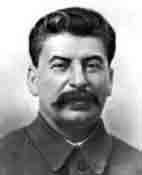
Following Lenin's death in January 1924, the "Man of Steel", Joseph Stalin began a brutal reign which lasted until his death in 1953. When we think of Communism, what we envision is Stalinism, which was not the same as Lenin's Communism which itself was even further from Marx's and Engel's vision.

Lenin had introduced "NEP" (New Economic Program), a type of limited free enterprise. Stalin eliminated it, along with private ownership of land and replacing it with "Collectivization".  It was disastrous for the Russian People; creating the largest man-made famine up to that point and the deaths of at least seven million people in an attempt to jump start the modernization of the economy and bring it on par with the West.

Simultaneously, Stalin instituted systematic statewide terrorism to "encourage" compliance.  Starting in December 1924, one of its first acts was, naturally, seizing all weapons (most were from the world war, and subsequent civil war). Only those authorized---the military and state security apparatus (like the NKVD---predecessor to the KGB) were permitted weapons. Those caught were sentenced up five years in prison per offense and/or fined.

There were a few exceptions, such as licensed ownership of smooth bore hunting rifles. In 1935, similar restrictions were applied to knives.  Beginning in 1941, citizens were encouraged to turn over all weapons (without question) to the Soviet military to aid in their war against Nazi and Axis forces.

Following Stalin's death in 1953, Soviet authorities began slowly loosening restrictions on firearms, including smooth bore shotguns, although registration was still required. To discourage illegal ownership, prison sentences were lengthened to 14 years. However, voluntary surrender of unregistered weapons carried no fines or punishment.

Communist China, founded in 1949 under Chairman Mao Tse-tung (Zedong), was based on the Stalinist model. Like Soviet Russia, it consisted of a all powerful central government under the direction of the Politburo with an elected chairman, who serves as a virtual dictator.  The system itself was intended to be repressive from the start.


When it came to gun control in China, one has to remember that China had been a autocratic monarchy for centuries until 1912 when the Qing dynasty was overthrown during the Xinhai Revolution. Private ownership was highly restricted. After China became a Republic, albeit a highly corrupt one, interrupted by a period small civil wars led by petty warlords (1916 -1928). It also endured invasion by the Japanese, marking the start of World War II and included a semi-covert civil war with Communist forces led by Mao, which ended in 1949 with Mao's victory. All of which made gun acquisition easier.

Nevertheless, gun ownership has always been restricted regardless of who was in power. There were a few exceptions, such as gamekeepers and licensed hunters. During the various wars and social upheavals, guns did occasionally fall into the hands of the masses, however, due to the strict punishment, most were eventually turned into the government voluntarily.   

Again, there were exceptions, such as Hong Kong, which was under British rule from 1841 until 1997. The same applied to Macau, which fell under Portuguese rule. The Miao people are allowed to own smooth bore muskets, though gunpowder is strictly controlled. Today, China remains highly repressive when it comes to guns---even toy guns---with very few exceptions.

Do you remember "Which of these is not like the other?" children's game? Well, in this case, it would be Nazi Germany. First, despite the official name of the ruling party, the National Socialist German Workers Party, Germany under Hitler wasn't "socialist" per se. Hitler's definition of "socialism" was actually "community". Thus, "National Socialism" actually meant a society or community of Germans by and for Germans.

It's true that under Hitler, Germany implemented a wide range of "social" (not "socialist") programs similar to what Britain, France, the United States and other Western nations did such as unemployment benefits, healthcare, mandated vacations, work safety laws, etc. He also legalized unions, albeit under a state union called "DAF" which stood for German Workers Front. Nevertheless, pre-war German workers did at least as well as their Western counterparts.

Also, unlike Russia and China (and Communist countries ever since) private enterprises remained private and thrived. During the war years, those key to the war effort received preference in terms of resources, contracts, and so forth. The Nazi Government did not, however, eliminate capitalism or seize control of private corporations as happens under Communism or Socialism.

As an aside, actual Socialists, as well as Communists, anarchists, and Social Democrats, were typically sent to detention camps for "reeducation" to use the political euphemism of the time. I suspect they wouldn't have been real fond of libertarians either.

As a point of historical reference, there was a "Left Wing" faction within the National Socialist movement, nominally led by brothers Otto and Gregor Strasser and SA Chief, Ernest Rohm. They wanted the concept of "socialism" to be much more literal than Hitler intended despite repeated warnings. 

However, that came to a quick end late June and early July 1934 during a purge known as "The Night of the Long Knives" in which Hitler and leading Nazis eliminated all non-Right Wing hardliners and political enemies. An estimated 150-200 individuals were murdered and hundreds more arrested; some were tortured and others imprisoned. Thus, ending any Left leaning tendencies within the Nazi Party.

When it came to gun control, one has to remember that following the carnage of WWI, there emerged a global pacifist movement. Everyone was sick and tired of death, bloodshed, and war. As a result, the new Weimar Republic's government, led by the Left Wing Social Democrat Party, instituted a policy of restricted gun ownership (the Weimar Republic was a democratic republic formed in 1919 followed the abdication of Kaiser Wilhelm II at the end of WWI). It was intended to be a literal attempt to turn "swords into plowshares", and was generally popular with the public.

As with Russia and China, there were exceptions for hunters, gamekeepers, and others with a demonstrable need. However, for the average citizen, gun ownership was curtailed through restrictions, aided by the creation of a gun registry. However, the Weimar Government wasn't long for this world.

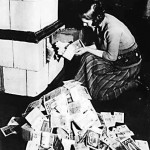
 In 1919, Germany was hit with a period of hyperinflation. Unemployment and inflation hit record levels. One person in three was unemployed. In December 1922, a loaf of bread was 160 Marks. By December 1923, it was 20,000,000,000 Marks!  In November 1923, one U.S. Dollar was worth 4,210,500,000,000 Marks. Some used what money they had to stoke fires to keep warm or cook...or as toilet paper. The Depression of 1929 hit Germany the hardest of all industrialized nations, making the situation dire.

Crime, alcoholism, and drug use was rampant. Germany was forced to pay huge reparations despite the loss of its industrial heart--the Ruhr, and most of its commercial shipping and fishing fleet (thanks to the Versailles Treaty). The country survived mainly on borrowed money and in-kind trade. When the Nazis came to power in 1933 as part of a coalition of conservative parties, Hitler repudiated the Versailles Treaty and its reparations, retook the Ruhr, and began a massive rebuilding of the economy. 

When it came to gun control, the Nazis actually removed restrictions with several exceptions. Those exceptions included Communists, Socialists, anarchists, non-citizens, and Jews. Criminals were also forbidden from possessing weapons as well as those of "questionable character", which included prostitutes, drug addicts or dealers, and alcoholics. Later, it applied to anyone deemed "unreliable" by the State.

As for the average German citizen, gun ownership was generally open, provided the guns were registered (preference went to those who were Nazi Party members). The notion that the Nazis took guns away from all its citizens is not entirely accurate (neither is the notion that the Nazis were "socialist" or "Left Wing"). So, the next time you see someone post something like I mentioned earlier or bring it up in conversation, you'll know better. Want to know more? Check out the links below. 


Gun Control in the Soviet Union


Gun Control in China


How the Nazis Used Gun Control


The Nazi gun control argument


German Economy in the 1920s