Showing posts with label Kabul. Show all posts

Saturday, September 04, 2021

The Fall of Afghanistan and the Fall of Empires


At 7:37 pm, Major General Christopher Donahue, the commanding  general of the 82nd Airborne Division out of Ft. Bragg North Carolina, became the last U.S. serviceman to leave Afghanistan as he boarded a C-17 in Kabul for home.  Within minutes of taking off, all around and in Kabul, guns shots could be heard as the Taliban celebrated their perceived victory over the American and allied armies. The infidels had been defeated. The "Great Satan" and his agents had been vanquished.

It's been said that every great empire which has invaded Afghanistan has not just been defeated, but collapses soon after. Examples which have often been cited include: Alexander the Great's, the Mongols, the British, the Soviets, and now, perhaps the Americans.  Well, maybe. Genghis Khan did it. So did Tamerlane, and the Persians, Turks, and others. So, it's true that empires have fallen after invading Afghanistan, but not necessarily because of Afghanistan. It's not the foregone conclusion that some think.

Nevertheless, for a great many people, there was just something about the last military flight out of Afghanistan in the darkness of Kabul which smacked of sneaking out; as if we were ashamed of what we accomplished or failed to accomplish. A thief in the night.  Our withdrawal was seen by the world as unorganized and chaotic. Not what you would expect from a superpower.

There are already stories of hundreds of Americans being left behind; stuck and surrounding by a Taliban looking for some "after occupation" revenge, and yet the last flights out of Kabul were all Afghan nationals. Of course, we can't forget the vast amount of military hardware left abandoned by the Afghan army; so much so that the Taliban now has a larger air fleet than Australia (albeit much of it in disrepair). Still, it now has tanks, Humvees, heavy trucks, artillery, drones, transports, night vision goggles, and everything else you would want for that despot on your Christmas shopping list.

Flashback to February 15, 1989, and Soviet General Boris V. Gromov, who walked behind a long column of tanks, and trucks carrying everything from soldiers to equipment, crossed the so-called "Friendship Bridge" over the Amu Dayra River, separating Afghanistan and Uzbekistan. The orderly withdrawal of Soviet troops, done in the light of day and with a bit of Russian military pomp, brought to an end a disastrous ten year war and a failed pro-Soviet government. 

Years later, the retired General Gromov confirmed that there were no Russians  remaining in Afghanistan, and added that Soviet Union was "done" with Afghanistan. Soviet troops destroyed or took with them nearly everything they could, leaving little to nothing for the mujahideen, which at the time included a embryonic Taliban and Al Qaeda.  So, what happened to us?

Our withdrawal and evacuation is being called by many as an example of a defeated military. The Chinese are using it to intimidate Taiwan and bully other nations. They claim that it shows that America can't be trusted to defend their friends or keep their word.  They are subtly urging nations to reconsider their allegiance to America and the Western Powers; suggesting that they move closer to the Chinese orbit.

When the Soviet troops began their pullout of Afghanistan in 1988, the American Pentagon and State Department used the occasion to call Afghanistan the USSR's "Vietnam". Now, Russia is reminding us and the world of its irony. The Soviet's attempted and failed to install a puppet government just as we did, and both imploded for pretty much the same reasons---tribalism, incompetence, and good ole corruption.

In 1994, the Taliban seized control of government and began imposing it radical version of Islam (curricular 950 AD). Now, 20 years after we invaded Afghanistan and overthrew the Taliban in our hunt for Osama bin Laden and the Al Qaeda leadership, they're back with  it's Taliban 2.0 and it promises to be even more retro! Besides, thanks to the Afghan army and an inept government, it now has state of art military hardware.

I guess what's important is that we're finally out (except for the 100 or so Americans left behind) and President Biden got some great photo-ops, except for those where he is looking at his watch as the caskets of dead U.S. servicemen and women go by (at one point, he looked like he was starting to wonder off. I guess it must have been past his nap time). I don't think we want to include any of the audio where family members of the fallen let Biden know what they thought of him and his clusterf*ck of an evacuation which unnecessarily cost even more American lives. 

Afghanistan was not another Vietnam. We didn't "sneak" out. We accomplished our stated objective. We took out Osama bin Laden and the leadership of Al Qaeda. We have a great deal to be proud of when it comes to the men and women who went there and did their job. We asked much of them and they delivered. But, like Vietnam, it became a political war, and by that, I mean it was about multi-million dollar contracts and prolonging a war for the purpose of greater profits.

Wars are rarely ever fought for the sake of freedom any more. They are fought for profit.  They stimulate dragging economies and artificially inflate sagging prices.  Wars help corporations gain access to markets or expand control over resources and assets. They also exist to reduce "excess" populations and artificially lower unemployment numbers which doesn't include those in uniform. 

Terms like "democracy", "equality", "justice", and even "freedom" are used to stir up the population, but it's pure propaganda. They're all lies. It may sound cynical, but wars are now a built-in part of domestic and foreign economic policy. That's why there's always at least one brewing somewhere.

There is, however, one curious connection between Vietnam and Afghanistan I'd like to mention. Flashback if you will to that terrible day in September 2001. Flight 77, leaving out of Washington-Dulles International Airport is hijacked by five Saudi hijackers with connections to Al Qaeda. Shortly after departing, the hijackers took control of the American Airlines Boeing 723 and redirected the doomed airliner to the Pentagon in Arlington County, Virginia.

Working at the Pentagon that day, in Veteran Affairs, was 69 year Max Bielke. Max, who was the deputy chief of the Retirement Services Division, was called a quiet and introspective guy. He was a big guy of German heritage, who grew up near Alexandria, Minnesota on a small farm. Max really cared about veterans and was instrumental in getting TRICARE passed by Congress, thanks to his hard work, attention to detail, and willingness to testify before nearly endless committees.

At the time of impact at 9:37, Max was hard at work in the west wing of Pentagon, doing what he loved the most, working on a new veterans program, alongside Lieutenant General Timothy Maude and retired Lieutenant Colonel Gary Smith. Max, Tim, and Gary were three of the 125 fatalities on the ground, along with 64 aboard Flight 77 who died that day at the Pentagon. There was something else about Max. Something special. He was, as expected, retired military. To be specific, he was a retired Master Sergeant from the Army, but that's not what made Max all that special.

You see, Max Bielke was the last official soldier to leave Vietnam.  He entered the history books on March 29, 1973, when he boarded a C-130  leaving Saigon for (as they say in the military) "anywhere but the hell here". The truth was, he was finally headed home just like General Donahue was 48 years later. When you're in the military, there's no other place you want to be. It's worth noting that just before he boarded the C-130, a North Vietnamese colonel gave him a rattan table mat with a pagoda weaved into it (a pagoda is a Buddhist symbol for success and luck). 

The Russians call our involvement and subsequent departure in Afghanistan an "irony" reminiscent of a second Vietnam, and perhaps it is. However, what I find to be more of an irony is the fact that the last soldier to leave Vietnam, who spent the rest of his life trying to help fellow veterans, should be a victim of a terrorist hijacking which triggered our involvement in another war; this one in Afghanistan. So, perhaps Vietnam and Afghanistan may have more in common than not.  


Photo shows the last US soldier leaving Afghanistan. He is acommander at Ft. Bragg


An Iconic Bridge Sees U.S. Allies Flee Afghanistan As TheSoviets Did


30 Year Anniversary Of Soviet Withdrawal From Afghanistan


Why Is Afghanistan the 'graveyard of Empires'?


Remembering the Pentagon Victims


Remembering The Lost


Saturday, August 28, 2021

Vietnam and Afghanistan: A Comparison

The U.S. left behind approximately to 2.2 billion dollars in equipment in Afghanistan. The equipment, however, wasn't discarded as some media outlets would have you believe. Instead, the equipment was "given" to the Afghan military and police force, who we spent the last 20 or so years training and working with.

However, as soon it was announced that we would be leaving Afghanistan, the Afghan military and police forces seemed to have started planning their exodus from the scene too. It appears that the old adage about leading a horse to water but not being able to make them drink is applies to the Afghans. We can train them. We can equip them. We can hold their hand (metaphorically speaking), but, ultimately, we couldn't give them the will to fight for their own country.  We couldn't instill willpower.

Instead, the Afghan military and police (or security forces), simply threw down their weapons, changed clothes, and walked (or ran) away, leaving the Taliban to walk in and take whatever they wanted, which, in this case, included helicopters, Humvees , tanks, drones, rockets, artillery, and thousands of assault rifles, small arms, Kevlar vests, communication equipment, medical supplies, and millions of rounds of ammo. That doesn't include "brick and mortar" assets like buildings, roads, runways, and the necessary infrastructure to set up either a top class military or government.

Meanwhile, in the capital of Kabul, the government, known for its corruption, and which we "helped" to install, packed its bags, looted what they could, and high tailed it out of town in private jets as thousands of Afghans do everything in their power to board U.S. and allied transports out of the country while risking their lives in the process as the Taliban's noose around the airport tightens.

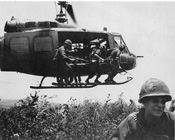
The whole scenario is reminiscent to older Americans of the collapse of South Vietnam and the ultimate Fall of Saigon, complete with images of helicopters evacuating embassy personnel from roof tops but there are some notable differences which deserve exploring.

America seemed to stumble into Vietnam, unlike Afghanistan, which came as a direct response to the cowardly 9/11 attacks by Al Qaeda and its leader, Osama bin Laden. In the case of Vietnam, a territorial "possession" of an imperial France, it was an ideological war to stop Communism and potential new front against the USSR and China.

The Vietnamese People had been waging a guerilla war for independence against a imperial France since around 1887, when it was forcefully incorporated into French Indochina, which included Laos, Cambodia, and Thailand, which didn't end until 1954, with a brief inter lieu of Imperial Japanese occupation from 1940 to 1945.

After the war ended in 1945, France reneged on its promise of independence a second time (claiming that the Vietnamese weren't "ready" to govern their country), but it was exhausted and broke from the war, as were the British. The USSR and China began sending weapons and supplies to aid Viet Minh, as the nationals, led by Ho Chi Minh, were called by 1950. President Eisenhower, fearful of the so-called "domino" effect of Communism, sends "advisors" to aid the French in response.

Following their defeat at Dien Bien Phu in 1953 the French threw in the towel, and withdrew (it was 1947 for India when Britain agreed to India's independence). In 1954, Eisenhower used America's new role as a global leader at the Geneva Conference to publicly support a democrat republican South Vietnam, while the north was under the control of the Communist. The conference divided the country at a demilitarized 17th Parallel with a communist North and republic South.  

As an aside, in 1919, following the end of WWI, the Vietnamese sent a delegation to the Versailles Conference to ask France, and the nations attending, to add them in obtaining independence (and to expose France's pre-war promise of independence). Instead, they were ignored and ultimately walked out. In 1945, Ho Chi Minh sent a letter to President Truman asking him to support their demand for self-determination. Their letter went unanswered. 

It's worth noting that North Vietnam, which called itself the Democratic Republic of Vietnam, was Communist, had been unaligned with the USSR and China prior to 1954.  After the U.S. officially threw its support behind South Vietnam, known as the Republic of Vietnam, the North officially aligned with Soviet Russia and China in response to offset the weight of the U.S. economically and militarily.

The French had lost 75,581 military personnel. 64,124 were wounded, and around 40,000 became POWs. The insurgent Viet Minh lost approximated 191,605. Financially, the war cost three billion francs, of which the U.S. picked up 30% of the tab as part of its war against the spread of Communism.

Up to 1954, the war was largely seen as a war of independence from Imperial France. After that, it became a civil war. The U.S. refused to sign the Geneva Accords and demanded an election supervised by the UN, along with the South Vietnamese Government. An election as a peaceful resolution to the current, and possible future hostilities in Vietnam, however, the President of South Vietnam, Ngo Dinh Diem, refused.

With a propped up government in the south, America found itself involved in a civil war, whether it wanted to be or not by 1955. In 1959, the North began a guerilla campaign in against the Saigon Government in the south. In 1960, President John Kennedy authorized additional advisors to be sent, including 400 specially trained Green Berets along with the use of "Agent Orange".

 In 1963, Kennedy approved the assassination of South Vietnamese President Ngo Dinh Diem, who was highly unpopular and openly corrupt, and the overthrow of his government which was carried out by the ARVN (Army of the Republic of Vietnam) with aid from the CIA.  By this time, U.S. troop levels had reached 16,000.  He was replaced by General Duong Van Minh (a military junta continued to control the government until its fall in 1975). America's role in Vietnam's civil war increased under President Lyndon B Johnson, following the assassination of John Kennedy in 1963.

1964 marked the jumping off point in the war. In what became known as the "Gulf of Tonkin Incident", the USS Maddox reported coming under attack from three North Vietnamese torpedo boats for allegedly violating their territorial water (the captain of the Maddox maintained they were in international waters). The Maddox returned fire after a warning shot failed. Planes from the USS Ticonderoga joined the fray along with the USS Turner Joy.   

It was reported that one torpedo boat was sunk and the other two were damaged (one heavily). Later, a second attack was reported with the Maddox and Turner Joy firing at radar indicated targets. No debris or bodies were found and it was determined that a second attack did not occur. Following the incident, President Johnson increased troop levels to just over 23,000. By 1967, that number had reached 485,600. 

Despite official claims that the war was virtually won and the North was on the ropes, 1968 saw the bitter fight for Khe Sanh, the My Lai Massacre, and the Tet Offensive, along with the assassinations of Dr Martin Luther King and Senator Bobby Kennedy, both of whom opposed the war. Support for the war at home all but evaporated . Accepting that reelection was all but impossible, Johnson announced on national television that he would not run for president again.

Richard Nixon, however, saw an opportunity, and despite running (and winning) on promises to bring U.S. involvement to end, saw American troops numbers reach 536,100.   The next few years saw brutal fighting while American's saw nightly on television the mounting futility of the war. Meanwhile, Nixon disconnected the dollar from the gold standard, resulting in rising inflation and an increase in prices and unemployment. A new economic term, "stagnation" was introduced to the American public.

In 1972, while the U.S. increased its bombing of the North, troops were reduced down to 24,000 amid negotiations with the North. In 1973, the draft ends as America "officially" enters a recession (the expression at the time was that "a recession in Washington and a depression in the heartland") and OPEC triggers an oil embargo. America's attention to the war was increasingly being diverted.

1975 saw the last American troops, embassy personnel, members of the South Vietnamese Government evacuated, and ordinary civilians jumping fences, breaking through gates, and do everything possible to board U.S. planes and helicopters, often from roof tops of official buildings. Meanwhile, Soviet made tanks rumbled into Saigon as North Vietnamese troops spread out everywhere. These are images people today recall when comparing our exit from Kabul to Saigon.

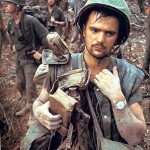
The war resulted in 58,220 men and women dead or missing.  For those who care about such things, the majority were white, 49,830. 7,243 were black. 349 were Hispanic, 226 were Native American, and 139 were Asian.  Most were men, or to be more honest, young men; boys really. Drafted at 18, some weren't old enough to drink or vote and have a say as to what became of them and their lives.

Financially, the war cost American Taxpayers $168 billion dollars (that's equivalent to $1 trillion in 2019 dollars). Of course, that doesn't include the millions in military equipment left behind, nor does it take into consideration the dozens of planes and helicopters dumped overboard on Navy carriers to make room for the hundreds of refugees.

The cost of the war in Afghanistan is still be tabulated, but estimates are over $2.231 trillion. Even the final count of the dead and wounded remains unfinished. We can say that 7,067 died at as direct result of the war, which doesn't include our coalition partners, whose deaths number over 110,000. It also doesn't include the 30,177 service men and women who lost their lives to fighting personal battles as a result of suicide. We may never know that final figure. We are still adding to those numbers daily from Vietnam veterans. It also doesn't take into accounted the wounded or disabled, which is in the thousands.  

The world as well as many at home saw Vietnam as America's first military defeat. Some are starting to claim that Afghanistan is our second. However, there are some key differences. Vietnam was in truth a civil war that we had no business in, but the mindset of the time was one of stopping the expanding influence of Communism.

Western foreign policy was built on the premise of the so-called "domino effect".  As one nation fell to Communism, so would its neighbor and so on.  Well, it never really happened. Ultimately, the USSR fell. Now former Communist nations are largely democratic and engage in capitalism, albeit in a limited form, including a united Vietnam, Russia, and China.  

We willingly failed to see Vietnam for the civil war it was, and chose to see it as stopping the spread of Communism in Southeast Asia. We assumed that everyone wanted to be like America. In that we were wrong. Not everyone wants or is ready for democracy or capitalism. We have repeatedly failed in that regard.

 Afghanistan was different. It was run by a religiously radical Taliban who protected those responsible for the cowardly attacks of 9/11. Our goal was to capture or kill those responsible. It that we were successful.  Al Qaeda was decimated. It's leader, Osama bin Laden killed along with most of its leadership. The Taliban too removed from power and a more modern government installed. However, as in Vietnam, it provided to be largely inept and corrupt.

In both wars, politicians increasingly dictated the course of the war. In Vietnam, it was more direct with politicians second guessing generals. In Afghanistan, it was the military leadership which had become more political. Certainly, they were much more media savvy.  Public perception made our returning Vietnam vets into "baby killers" thanks to the media. Today, thankfully, those veterans, as well as those returning from Iraq and Afghanistan are much more respected and appreciated.

For our rivals, which includes China, Afghanistan represents a second defeat. Naturally, the Taliban, along with Iran and militant Islam, see it as a victory, not just against the "Great Satan", but for their radical ideology, whose ranks are sure to growth along with their boldness. Whether the world, and more importantly, average Americans, see it as a defeat or a victory, or something in between remains to be seen.


Vietnam War Facts, Costs, and Timeline


The Assassination of Ngo Dinh Diem


Politics And The Vietnam War


Saturday, August 21, 2021

Afghanistan: The End or the Beginning? Lessons Learned

We've watched hundreds, if not thousands, of Afghanis break through the gates at the Kabul airport trying to cram their way onto a U.S. C-17 Globemaster; each flight capable of leaving out with 800 souls bound for who knows where, or some other aircraft. We've seen dozens trying to find ways to cling onto the sides of the planes as they roll down the runaway, picking up speed while dozens run alongside.

Most of those cling on to whatever they can grab a hold of before falling off harmlessly except for a few bruises and scraps.  There have some videos showing a few hapless individuals managing to hold on until they losing their grip and fall hundreds of feet to the ground below.

A few try to scramble into the landing gear bay, perhaps not aware that the automatic hydraulic door will instantly crush them like a tin can or trapped and left dandling outside of the bay doors, only to be ripped apart by the wind generated by the four huge Pratt and Whitney engines which can reach cruising speeds of over 500 miles per hour. Not a sight anyone wants to see.  

Anyone who manages to crawl inside gets only a brief, momentary reprieve. As the plane gains altitude, the temperature drops to below freezing and oxygen levels drops to precipitous lows causing blackouts. Their odds of surviving are somewhere between slim and none. Perhaps these desperate souls were unaware of what their actions would result in, but then perhaps they were willing to take that chance to leave an Afghanistan now in the hands of the Taliban.

No doubt there will be those who'll vocally criticize the U.S. Air Force, or Army or Marines, or whomever for not properly clearing the runway or providing better security at the gates. However, those people have no grasp of the force a desperate crowd can be. Very little can be done in times of utter fear and panic.

President Trump had assured the Afghan Government of a gradual and orderly pullout to be completed by September 11, 2021, the twentieth anniversary of Al Qaeda's cowardly attack on the United States which  resulted in the deaths of 2,977 innocent people. Say what you want about the American government, but the people have a strong sense of right and wrong. 9/11 clearly was the latter.

Joe Biden's accelerated evacuation appears more and more to the world to be less a withdrawal than a surrender, calling up images and comparisons to the Fall of South Vietnam and Saigon complete with helicopters landing on rooftops evacuating U.S. personnel.  It couldn't have been scripted any better.

We invaded Afghanistan in 2001 for the sole purpose of capturing or killing the "mastermind" of 9/11, Osama bin Laden, and the command structure of Al Qaeda.  The Taliban, a relatively small sect of ultra conservative Muslims, held an ruthless iron grip over Afghanistan, promised to turn over Bin Laden and his cohorts, provided we provided "proof" of guilt (by "proof" they meant releasing sensitive intelligence information and possibly sources). Our response was invasion.

We spent the next twenty years chasing the Taliban, Al Qaeda, and the thousands of fighters from all over the Middle East bent on a "martyr's death".  We chased them from cities to villages; from neighborhood to alleys, and eventually into the mountains and caves. We annihilated the Taliban and Al Qaeda with electronic ease. We picked off their leadership the way a well aimed flyswatter picks off an unaware fly, except those behind the "flyswatters" were hundreds of miles away in air conditioned buildings sipping a Starbucks.  

After ten years of hunting, a $25 million dollar bounty, and coming tenuously close, the most wanted man on the planet---Osama bin Laden---slipped from noose to loose again and again, thanks  it would seem, to our so-called friends, the Pakistani military, the Afghan military, and members of the Afghan tribal leaders.  

Ultimately, it was through the relentless and dedicated work of our various alphabet intelligence agencies, not to mention others in the region with much better intelligence sources than ours that our quarry was found.

 It turns out that bin Laden was living a rather boring existence within a high walled compound  just down the street from the Pakistan's version of "West Point" and close to a police station in Abbottabad. How convenient, especially coming from a "friendly" government who claimed no knowledge of Osama's whereabouts. It's not like the compound didn't stand out or that neither the police or Pakistan military didn't know who their neighbors were.

Aside from a few bodyguards, his wives and children, not to mention porno videos, there wasn't much going on at the bin Laden abode aside from the occasional messenger bringing updates (and probably more porn videos). It seems the bin Laden had worn out his usefulness to the holy cause except for the random propaganda piece.

Finally deep into the night of May 2, 2011, thanks to years of patience, The U.S. Navy's SEAL Team Six introduced bin Laden to a new type of laser tag game called "Where's Allah?". Despite hiding behind one of his wives, he lost, while President Barack Obama, Hillary Clinton and others watched "live" in shock, disbelief, and awe.  Several members of  the same SEAL team members were killed in an ambush barely three months later in what many called an act of sabotage and betrayal.

It should have ended for us then and there. We had met our stated objective. The Taliban was destroyed. Al Qaeda was in shambles. Most of the surviving "martyrs" wannabes either decided to seek another line of work or moved off to Syria where another war was accepting recruits to fill their ranks...and body bags.  Gotta love a job where there's always an opportunity for advancement.

Nevertheless, we stayed. After ten years of "helping" to build a "Pro-Western" Afghani government (wink wink), not to mention rebuilding the infrastructure, complete with cell phone towers and internet, which we had previously bombed into the Pre-Stone Age (the Soviets had bombed them into the Stone Age a few decades earlier---1979 to 1989), as well as the Afghani military and police force. As an aside, the USSR collapsed just over ten years later, in 1991. Just saying.  

Now, here we are, twenty years from the time we first set foot in Afghanistan, which we euphemistically called "Operation Enduring Freedom",  and ten years beyond our stated objectives, we're leaving. By the way, it was our longest war ever...thus far. We've gone through four presidents---George W Bush, Barack Obama, Donald Trump, and now Joe Biden (or whoever is running his administration).

 Over 100,000 Afghanis have been displaced. Just over 71,000 Afghani civilians---men, women, and children---died as a direct cause of the war. In the cities, life mostly returned to normal while out in the countryside, hundreds, if not more, were killed by tribal leaders on both sides who remain uncounted.  

Poverty also returned, but then poverty has always been a part of the history of Afghanistan, thanks to wars, backward religious zealots, and the ever present corruption. However, for the dispossessed---the women of Afghanistan---there was hope. Schools were built and women and girls were encouraged to attend. No more fear of public beatings, acid thrown in their faces, mutilation, or even murder.

Women could get jobs, go out by themselves, live on their own, and even openly date. They could go to beauty parlors and get their hair and nails done without worry of attack. They could shed the black skin of anonymity known as the burka. The invasion of 2001 had catapulted the women and girls of Afghanistan from the 10th Century to the 21st Century.  That's now likely all gone, along with most, if not all the trappings of the West. 

Despite his promises, Biden's ill-conceived and ill-prepared "evacuation" of Afghanistan has turned into a farce.  Biden stated publicly that the American and Allied trained and equipped Afghan military and police could easily hold off and even repel the Taliban, who began emerging from their holes like cockroaches in the dark as soon as they heard of our planned withdrawal from then President Trump, but Biden's actions was like a God-send (or I guess I should say a "Allah-send").

Province after province fell like Poland in 1939, and the capital, Kabul? It had capitulated in nine days. As for the Pro-Western President, Ashraf Ghani, he was last seen almost a week ago (as of this writing) headed for the airport and his private presidential plane followed with a convoy of limos and SUVs with ("allegedly") $169 million in cash and other valuables. 

I'm sure he plans on using all of the money (which mostly came from U.S. taxpayers) to fight the Taliban and return to power. Yeah, right. If history is any guide, I'm sure he's now top on the Christmas card list of several Swiss, Cayman, and Singapore bankers. Typically the loot goes first, closely followed by the despot and his henchmen.  However, Afghans by the hundreds are protesting in the streets despite the crackdowns and the Taliban's old nemesis, the Northern Alliance, is once again on the move.

Meanwhile, the Taliban is now the owner of not just a intact capital, but a largely modernized country (sans any bad Western influences which will be duly destroyed). But wait! There's even more ladies and gentlemen!  There are also the new owners of millions, if not billions of dollars worth of U.S. military equipment and spare parts.

 Everything from drones, surface to air missiles, heavy artillery, and tanks, to Humvees, the impressive "Buffalo", which is multi-wheeled mine protected and ambush resistant vehicle, not to mention thousands of machine guns, assault rifles, small arms, Kevlar vests, communications equipment, and other state of the art toys for big girls and boys who like to play rough (not including infrastructure like bases, roads, housing, or medicine and medical equipment). But the biggest prize of all is the intact air force. Yes, I said "air force".

They had acquired enough aircraft to make them the tenth largest air force on the planet; about 211 or so in all. It includes Blackhawks, general utility helicopters, approximately 33 militarized Cessna A-29 attack planes, possibly four C-130 heavy transports, and they got it all for free thanks to the Afghan military and you--the American taxpayer.  Oh, and they appear to now have several Soviet era Mi-17 attack and general utility helicopters. Now, only if they could find someone who could teach them how to fly these birds. Chow Mein anyone?

So, that's how wars seem to come to end these days. Not with unconditional surrender of a vanquished foe amid cheering crowds, streaming headlines, and sense of national unity and accomplishment. Instead, it's partisan finger pointing and talking heads talking over each other. I doubt today's America could unite enough defeat a Germany or Japan again. Perhaps Taiwan should heed China's warnings.

But you and I will remember our own, all 770,000 men and women who went there. We will  morn our dead, the 2,312 killed, along with the 20,666 men and women who were wounded and the thousands who will forever carry the memory of the war with them, and the thousands who will fight their own private war perhaps for a lifetime too, and those who will surrender to suicide. 

The thing about wars is that they're never clean and neat affairs. The ones who start them are never the ones who pay the cost; certainly not the ultimate cost. Our twenty year war cost you and I about $2.26 trillion dollars. That isn't a typo. The war itself cost around $887 billion dollars, while the rest has gone for medical care, disability payments, and associated costs. 

Meanwhile, companies like McDonald-Douglas made a profit of over $40 billion. Boeing made a tidy $20.8 billion dollars. General Dynamics, maker of various tactical, ordnances, and other cool hardware,  earned an even cooler $19.2 billion.

L3 Communications (the predecessor of Lockheed's Loral Corporation and Harris Corporation), which is involved with high tech communications, surveillance, as well as was command and control systems like those used by drones, and with customers like the CIA, Department of Homeland Security, NASA, and the intelligence community in general, spied themselves a declassified $9 billion. Lastly, everybody's favorite "spy-in-the-sky" and Edward Snowden's former employer, Booz Allen Hamilton, snuck in with just over $4 billion. 

Those are just a few of the some 20 "big dollar" defense contractors and co-owners of Congress (blue and red alike). It also doesn't include all the banksters, financial underwriters, or suppliers of concrete, MREs, boots, and so forth which make war so profitable for everyone except those who have to go fight it. But, then again, I hear there's a new one starting up again in Syria or Lebanon, and there's always Iran. I'm sure there's a outbound seat available on the next flight.


The Afghan War, by the numbers


The Taliban has access to U.S. military aircraft. Now whathappens?


Russian Embassy: Afghan leader fled with cars full of cash


Brown University/Watson Institute: Costs of War