Showing posts with label Iranian Hostage Crisis. Show all posts

Friday, June 27, 2025

Did We Do Right By Bombing Iran?

What’s your opinion about the United States bombing three nuclear sites in Iran? Did we have a national security or moral obligation to destroy Iran’s nuclear facilities and try to disrupt its potential nuclear bomb making capabilities? Was there an ulterior underlining motive? To address those, and other questions, we need to take a brief look back at the history of Iran and its relationship with the United States.

In 1953, the Prime Minister of Iran, Mohammad Mosaddegh, was overthrown via a CIA orchestrated coup (with the help of British Intelligence, MI6), under the direction of Kermit Roosevelt Jr, a intelligence officer with the CIA's Office of Policy Coordination, and grandson of President Theodore Roosevelt.   

Roosevelt had previously helped orchestrate the 1952 coup in Egypt with the Free Officers Movement to topple King Farouk. The movement was led by a small cadre of Egyptian and Sudanese officers and was led by Abdel Moneim Abdel Raouf, and included such future notables Gamal Abdul Nasser (who became close friends with Kermit Roosevelt), Salah Nasr, and Abdel Hakim Amer.

Mohammad Mosaddegh had been appointed prime minister by the democratically elected Iranian Parliament (the “Majlis”). He had also co- founded the National Front, a Left leaning pro-democracy, secular, and Iranian nationalistic political party. They also implemented a number of land and tax reforms aimed at helping the lower class.

Amid a period of political unrest, assassination, and emerging religious extremism, Mossadegh sought to maintain power and improve Iran’s economic stability by nationalizing its burgeoning oil and gas industry, beginning with the Anglo-Iranian Oil Company.

Eventually, following a series of constitutional crisis events, which included the Shah fleeing to Italy out of concerns for his safety, Mossadegh was forced to align himself with pro-Soviet factions (despite strongly disliking the Communists). This was all the CIA and MI6 needed. The result was an overthrow of his government (and future suppression of the National Front) under “Operation Ajax”.

The result was the installation of a much more pro-Western government under the direction of  CIA recommended General Fazlullah Zahedi as the new Prime Minister. Among the many changes implemented by Zahedi was ending nationalized oil and gas production and returning control to British, French, and American oil companies.

The CIA also organized guerrilla groups to disrupt pro-Communist groups. In addition, the CIA also directed Major General Norman Schwarzkopf Sr. (father of “Stormin Norman” of Gulf War fame) to Italy and “encourage” the Shah to return to Iran. He also helped organize and train Iran’s new security service, SAVAK, in order to help the Shah maintain power (in time the SAVAK would develop a reputation similar to Stalin’s NKVD which eventually became the KGB).   

All went well between the West and Iran until 1979 when Shah Reza Mohammed Pahlavi was overthrown by a small group of religious extremists led by the exiled cleric, Ruhollah Khomeini (incidentally, who was also named Time magazine’s “Man of the Year” in 1979) and was described as the “face of Shia Islam”.  He was later to be named the supreme leader in Iran and given the title of “Ayatollah ”, an honorific title of the “Twelver” Shia sect which was to become Iran’s official state religion (95% of the world’s Muslim population is Sunni, however, Iran is 95% Shia). He was also credited with labeling the U.S. as the “Great Satan” and Israel as the “Little Satan”.

Although the U.S. wasn’t happy that their man had been thrown out of power and forced to flee the country (he was given asylum in the U.S. for health reasons), what really irked the U.S. government was the seizure of 66 Americans, which included diplomats, civilian personnel, and a small security detail U.S. Marines, along with the U.S. Embassy itself in a series of assaults by the Muslim Student Followers of  the Iman’s Line, not to mention instigating hostilities with the CIA’s man in Iraq, Saddam Hussein which ultimately led to the Iran-Iraqi War.

The Iranian Hostage Crisis lasted from November 4, 1979 until January 18, 1981. During that time, then President Jimmy Carter made numerous unsuccessful attempts to resolve the situation. In October 1980, Carter authorized a rescue operation (euphemistically named “Operation Eagle Claw”) which was an all-around disaster and national embarrassment, representing a political, military, and intelligence blunder. Eight servicemen were killed and four were injured amid several mechanic failures and crashes.  

Largely forgotten today, there was also an attempted attack on the U.S. embassy in Pakistan by over 1000 pro-Iranians protestors and an aborted attempt to seize the Soviet Union’s embassy for its “Marxist and anti-god beliefs”.  Some U.S. embassy personnel were able to evade capture and hide in a Canadian embassy before being able to escape through an ingenious CIA ruse popularly called “The Canadian Caper” (a 2012 movie entitled “Argo” details this secret rescue operation).

Meanwhile, the Iranians made numerous threats about the imminent execution of the hostages unless the U.S. agreed to a number of demands (essentially blackmail), including the return of the Shah to face trial and probable execution (which was refused). The Iranians ransacked the American embassy, revealing great many political, diplomatic, and intelligence secrets. Finally, after 444 days, and the election of Ronald Reagan, the hostages were released (this was seen as a calculated insult directed at Carter for the attempted rescue operation).

Ever since, The U.S. military and intelligence community has been looking for a way to overthrow Iran’s theocratic regime. Accordingly, Iran has been ostracized, boycotted, and even had billions of its dollars held in U.S. bank accounts frozen, The result had little effect on Iran’s ruling elite although, as usual, the average Iranian felt the brunt of the embargos. Much of the money was ultimately returned. President Obama approved releasing $400 million in August 2016 and President Joe Biden released $6 million in September 2023 for "humanitarian purposes".

 Meanwhile the Iranian government helped organized, train, and finance numerous terrorist organizations whose sole intent was the destabilization of the West (especially the U.S. and Israel) as well as specific Asian nations by any means possible with the ultimate goals being creation of a global caliphate under their version of extreme Islam.

Key among these groups was Hamas, responsible for the October 7th attack on Israel which resulted in the butcher of over 1,139 men, women, and children. as well as seizing 251 hostages. They are also responsible for keeping the Gazans living in a state of terror. Hezbollah is another such group, which routinely launches missiles into Israel from Southern Lebanon.

 Boko Haram, who are known for their raids on African villages to capture women and girls to sell as slaves and butchering non-Muslims. The Houthi, who operate in Yemen, regularly launches missiles into Israel and is active in destabilizing the region. Of course, there is also ISIS, Al Qaeda, and Talban, who received support from the Iranians.

It’s believed that Iran has sponsored establishing sleeper terrorist cells in Europe, Canada, South America, and the United States, and is responsible for the hoard of immigrants into Europe (conquest through numbers?).  It’s been often noted that many of these so-called “migrants” are very fit, aggressive military age males, which isn’t typical of the average refugee (also notable is the lack of women, children and seniors accompanying them).

It should be mentioned that starting with the Ayatollah Khomeini, they have repeatedly promised to “wipe Israel off the map” by every means available, including the use of nuclear weapons, even if it meant their own total destruction. They have been responsible, directly or indirectly for attacks in Paris, Berlin, Tel Aviv,  and “lone wolf” operations in the United States and elsewhere as well as dozens of so-called “self-radicalizations” terrorists.

However, resistance has been growing, especially in Iran where women, long denied basic rights to education, employment, choice of marriage, physical mutilation of their genitalia, political suffrage, have been becoming more militant to their suppression, even to the point of risking death. It’s common for resisters to be blinded in one eye, tortured, suffer broken bones, face mutilation such has having their tongue, nose or ears cut off, or have acid thrown in their faces, and so forth. As an aside, this is, in part, those who back the Iranian regime or radical Islam are supporting.

Despite U.S. and Israeli warnings, Iran has been engaged in the development of a nuclear infrastructure, which they claim is for "energy purposes" only (and yet they sit on some of the world’s richest oil and gas reserves). Taking Iran’s threats seriously, Israel has done everything it could to deter Iran’s efforts overtly and covertly (I’m particularly impressed with the massive computer virus and the exploding cell phones of Iranian nuclear scientists. Bravo Israel! Very clever).

However, despite their best efforts not to provoke an all out war, Israel had little realistic options remaining except to go after Iran’s reactors. It’s noteworthy at how many countries, including those inside the United States, who turned on the Israeli government following the barbaric attack by Hamas on Israel or Hamas’s use of private homes, schools and hospitals to launch their missiles, store weapons, and hide some of the hostages it taken on October 7th (including a tunnel system under a EU hospital!).  

 Hamas has repeatedly attacked or hijacked relief columns of food, fresh water, and medicine, often selling it on the black market for either more weapons or to fund expensive vacations for Hamas leadership. Europe, especially Germany, long been an allies of Israel, now accuse the IDF of doing what Hamas is guilty of. Turkey, an EU and NATO member, even hinted at a possible direct intervention in Gaza. How would that affect NATO's mutual defense clause? Would that plunge NATO into war? 

Finally, this brings us to the bombing of Iranian nuclear facilities by U.S. bombers. Did we have a moral or political obligation to attack those sites? Every U.S. military intervention in the Middle East, from Lebanon, Kuwait, Syria, Afghanistan, and Iraq, regardless of the officially stated reason, has had the secondary goal of bringing us a little closer to Iran.  Was this then just an opportunity to strike Iran after all these years or was it, as President Trump said, an opportunity to make the world a little safer?

According to polls, most Americans opposed the bombings. A poll by The Hill showed that 56% of Americans in general disapproved of the bombings although 82% of Republicans were in favor. However, 60% of Independents (America’s political majority) weren’t happy with the bombings along with 88% of Democrats. 78% of Americans were concerned we will get drawn into a war with Iran.

Additionally, 71% of Democrats said they didn’t trust Trump to make the right decisions on behalf of the United States when it came to Iran.  62% of Independents said they had little or no confidence in Trump's decision ability. On the other hand, 51% of Republicans confirmed that they had a great deal of faith in Trump while 37% said they had a moderate amount of confidence in the president.

 It bears mentioning that prior to the current ceasefire, 59% of Americans in general thought that our attack on Iran actually made it more of a threat to the U.S. and the world. Many were concerned that our attacks might provoke Iran to launch more attacks on Israel either directly or through its many surrogates as well as possibly activate imbedded terrorist cells in Europe, Canada, or the United States.

Finally, there’s Israel itself. Aside from being the only democracy in the Middle East, it is also an important trading partner and a vital source of intelligence information in the region. It also provides a key strategic position for U.S. and allied operations in the Middle East and Africa. Iran has made it crystal clear that it intends to wipe Israel off the map even at its own destruction and there's no reason not to take them at their word. 

Such a fallout would trigger a dire humanitarian crisis regionally as well as globally. Israel’s beef with Iran is direct and personal. The outcome of Iran’s boast would have a severe impact on the rest of the world, not to mention on Humanity as well, which Iran and its cohorts abhor. A nuclear Iran is not just a threat of the survival of Israel. It’s a threat to the survival of Mankind too.


Thank you for reading "Another Opinion", the Op/Ed blog page for the "militant middle".  Here at "A/O" we truly value our readers. At A/O we seek the facts as they exist, not partisan talking points.  We hope you find our articles informative and engaging. Comments are welcome, provided they are not vulgar, insulting or demeaning.  Another Opinion is offered without charge and is directed toward all independent and free-thinking individuals. We ask, however, that you "like" us on whatever platform you found us on in order to keep our articles available for free to others. Lastly, in order to keep costs down, we depend on passive marketing, and therefore, depend on our readers to please forward our posts along. Below you will find links to the sources we used in writing this article. Thank you. 


 Free Officers movement (Egypt)


Kermit Roosevelt Jr.


Iran hostage crisis


October 7 Attacks


The Canadian Caper


56 percent disapprove of U.S. strike on Iran: Survey


Voters 51 – 42 Percent Oppose U.S. Joining Israel inMilitary Strike…


Islam in Iran


Nuclear facilities in Iran


Saturday, January 18, 2020

The Aftermath of Soleimani's Assassination and the Darker Side of U.S. Foreign Policy


On January 3, 2020 a U.S. drone took out one of the world's most ruthless terrorist, Iranian General Qassem Soleimani, the head of the dreaded Quds Force which is a specialized unit within the elite Revolutionary Guard. General Soleimani wasn't just feared throughout the Middle East. He was equally feared at home in Iran where his Quds Force were responsible for the torture and murder of thousands of ordinary Iranians. Yet, within hours after the announcement of his assassination, tens of thousands of Iranians took to the streets in protest of his death. Why?

You would think that death of someone as vile as Solemani would be reason to celebrate. Granted many of the protests were organized by the Iranian government who typically use paid organizers some are actually members of the Revolutionary Guard, YEGUP or the PAVA (internal security and the secret police respectively). They tend to bribe or threaten people into participating. Nevertheless, some of the protestors were legitimately upset by the assassination of a government official, hated though he may be, by the U.S. military.

Frankly, you can't blame them if you think about it. After all, how would the American People feel if a foreign power decided to bump off U.S. officials simply because they didn't like their policies towards their country? I think most Americans would be demanding scalps! What if they had assassinated a senior U.S. government official like the President or Vice President? As soon as we found out who was responsible, God help them. We'd turn the country into an uninhabitable wasteland.

Well, perhaps that's was the thinking of at least some of protesters following Solemani's death. Of course, more recently the protests are in response to the Iranian military shooting down an Ukrainian passenger plane and then blatantly lying about for days until overwhelmed proof exposed their lies. The Iranian government brought the Iranian People a step closer to war with the U.S. which would have lead to the utter destruction of their country and the deaths of millions, all because of a lie.

Here is something we tend to forget about in this country. We've get lied to as well, especially when it comes to U.S. foreign policy (and I'm not talking just about Benghazi, though it's a more recent example). Hell, the Gulf of Tonkin incident in 1964 which got us into a war in Vietnam was based on a lie. Let's remember too that in 1953 the U.S., through the CIA, overthrew a popularly elected government in Iran that it didn't like (that is, U.S. "hawks" and certain powerful corporations).

The result was installing Mohammed Reza Pahlavi, the Shah of Iran, who was far from a benevolent monarch. Thousands in Iran "disappeared" while numerous others were tortured or simply murdered. But nevertheless, the Shah supported an open door policy for U.S. military and economic interests. Of course, that wasn't the only time we overthrew a duly elected government. Actually, it's far from it.

In 1952, the U.S. backed Colonel Fulgencio Batista in overthrowing Carlos Prio Socarras, the popular Cuban president. The government which Basista inherited was rather prosperous by Latin America standards with good schools and medical care, a strong economy with a decent infrastructure and a generally open society. However President Prio was protective of Cuban interests from foreign influences, especially the American mafia and certain corporations which wanted control over key Cuban resources, particularly sugar. Enter Colonel Batista and his American backed military coup.

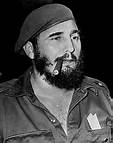
Under Batista, Cuba became a highly repressed society with very limited freedom of expression. Batista cracked down on anyone he viewed as the threat. Corruption was rampant. The infrastructure broke down, and with it the education and healthcare systems, at least for the ordinary Cubans. For the elites, life was good. In fact, it was very good. Batista ruled over Cuba until 1959 when he was ousted by Cuban revolutionary Fidel Castro.

At first it was assumed that Castro's demands for major reforms was just the usual political theatrics and the revolution was nothing more than one corrupt politician replacing another and nothing would change. However, Castro was serious when it came to reform. He threw out the mafia and after various corporations balked at improving their treatment and pay of Cuban workers (like providing health benefits, job safety, and time off), he simply kicked them out and nationalized the businesses. It was the same when it came to land reform where Cubans farmers weren't allow to own land but foreign nationals could! It created a sense of being outcasts in their own country.

It's also worth noting that at no time did Castro ever claim to be a Communist at this point. In fact, he repeatedly denied being a Communist and would often state publicly that he want a democratic government reminiscent of President Prio. After pressure by these "sore butt" corporate presidents (and no doubt the mob), it was decided that Castro had to go.

So, in typically fashion he was vilified and economic sanctions were imposed. Then we backed an invasion and attempted coup of U.S. trained and equipped Cuban rebels. However, this time we failed. It was only after the "Bay of Pigs" fiasco in 1961 that Castro announced that from then on he would be a Communist. Who could blame him? After all, Cuba was a tiny little island nation and it needed a powerful friend, which it found in the USSR to our chagrin. Despite the sanctions, Castro remained in power until 2011.

The U.S. had also supported military strongman, General Alfredo Stroessner of Paraguay in his coup, ousting Frederico Chavez, in 1954. Stroessner, who was responsible for deaths of thousands, including native Ache Indians who were also often enslaved, largely due to U.S. and European corporations wanting (and gaining) access to the country's forests, mines and grazing lands which the Ache considered sacred and refused to give up. The enslaved Ache were typically worked to death. Thousands more were imprisoned and upwards of 500 political detainees simply "disappeared". In 1974,the UN condemned the Stroessner Regime of slavery and genocide. Nevertheless, he retained power for 35 years until he too was ousted by a coup.

In 1964, the U.S. sponsored a military coup against Brazilian President Goulart out of fear of another Cuban type revolution. As a result, Field Marshall Castelo Branco seized power (with a detachment of U.S. Marines standing by in San Paulo just in case). Branco's regime, which last over 20 years, resulted in the destabilization of the economy amid vast corruption and the imprisonment, torture, and deaths of thousands of Brazilians.

The similar thing happened in South Korea with the U.S. backed coup led by General Park Chung-Hee in 1961. Thousands of either known or suspected pro-Communists or Leftists were arrested, tortured, and executed. Best estimates put the total over 100,000. Of course, anyone who voiced any opposition was subject to the same fate. In 1963 South Vietnam, the U.S. supported the overthrow and assassination of President Ngo Dinh Diem through a U.S. approved military coup led by General Duong Van Minh.

It's not that Ngo was the poster boy of a decent guy. He wasn't. It's just that his policies didn't jive with the interests of American "hawks" or the military/industrial complex which saw an opportunity to push back Communist expansion and make a pretty handsome profit to boot. Duong's military junta and subsequent government proved to be much more "cooperative" than his predecessor's.

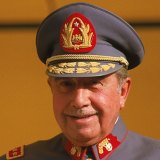
On September 11, 1973, the popular and democratically elected President of Chile, Salvador Allende, was brutally overthrown by a military coup led by General Augusto Pinochet. Thousands of "troublemakers", from labor leaders, politicians, educators, activists, and anyone viewed as a potential threat were systematically rounded up and executed. The slightest whisper of discontent could get you arrested and you could "disappear" into one of dozens of secret camps throughout the country. After decades in power, it's believed that at least 50,000 Chileans are known to shared this fate.

In 1976, the U.S. backed another military led coup in Argentina. This time is was to overthrow the widow of President of Juan Peron who was serving as the new president (she was Juan Peron's Vice President). Lieutenant General Jorge Rafael Videla was installed and remained the de facto president until 1981. In 1985, Videla was arrested and put on trial for crimes against humanity. It's estimated that as many as 30,000 Argentines were tortured and murdered. In addition it was learned that he sanctioned infant and child kidnapping while their mothers were held in prison camps (the children were sold). Videla was found guilty and sentenced to 50 years in prison. He died while still in prison in 2013.

In 1968, while publicly supporting the military coup by General Omar Torrijos in Panama, the U.S. began a long and lucrative relationship with his head of intelligence, General Manuel Noriega. While Torrijos was known to be corrupt, he was also known to be quite cooperative with U.S. foreign policy objectives in the region and a willing partner in the selling of Panamanian resources.

Torrijos first began receiving American support during the Nicaraguan Revolution which resulted in the removal of U.S. backed dictator, President Anastasio Somoza in 1973 (he had been installed in power in 1967). As a result, the U.S. needed a new and reliable partner, which they found in Torrijo. This relationship continued until Torrijos was killed in a plane crash in 1981.

Due to the useful relationship with Noriega, he was Torrijos' logical successor. That partnership lasted until 1989 when it was decided that he was no longer reliable. In addition, Noriega had made the cardinal mistake of acting on his own. He was eventually arrested and sent to the U.S. where he was tried and sent off to prison. Nevertheless, between Somoza, Torrijos and Noriega, tens of thousands were arrested, tortured, murdered, or simply made to vanish...all without a word from the U.S. Government.

These individuals, as horrible as they were, aren't meant to represented all of the euphemistically named "regime changes" that the U.S has engaged in, along with active encouragement of the same Oligarchy which now controls our country. Not by any means. Starting with the end of WWII in 1945 somewhere around 57 countries have experienced U.S. sanctioned "regime change"; some on multiple occasions. No telling how many changes of government or policies were impacted indirectly by the mere hint of a "regime change". To many in the world this is what "spreading democracy" looks like to them. How would we feel if the tables were reversed I wonder?

The U.S. isn't alone in coercing change in another country's politics, but it is by far much more active in doing so than its ideological enemies. It is also worth mentioning that overwhelmingly these changes have been in favor of very ruthless military juntas which violently suppressed those very ideals which we hold in the highest esteem. Things like freedom of speech, freedom of the press, freedom of assembly including the right to protest, the right to fair and speedy trial as well as the right of knowing what we're accused of and facing our accuser. The right to bear arms or being free from self incrimination as well as the freedom for "cruel and unusual punishment" which originally meant torture.

No doubt the Iranian People are glad that someone like General Soleimani is dead along with Abu Mahdi al-Muhandis who was another blight on the region. Nevertheless the Iranian People remember how the U.S. had previously removed previous government officials they didn't like. Surely they have to wonder whether this assassination was simply an attempt to remove a terrorist or a prelude to an invasion, which the U.S. has been threatening to do since the Hostage Crisis in 1979. Regardless, it should be remembered that we don't have clean hands either.


U.S. involvement in regime change

Mapped: The 7 governments the U.S. has overthrown

How the U.S. Government Has Supported The Deaths Of Hundreds of Thousands


Gulf of Tonkin incident