Home of the Militant Middle, Another Opinion ("A/O") is an Independent oriented "OpEd" blog for those looking for unbiased facts free of partisan drama and who are willing to question the Status Quo.
Showing posts with label legalized marijuana. Show all posts
Sunday, September 30, 2018
Bluegrass and Green Dollars: Corruption in Kentucky Politics
As readers of Another Opinion know, I've been writing a lot lately about the influence of money in politics. I've covered the biggest donors by industry, the military contractors, and the biggest names in the buying and selling of Congress game that we call "democracy" (in truth, it's only a name. We've been an Oligarchy; a plutocracy for quite awhile now. Our "Constitutional Republic" is more fit for historical fiction books than reality these days). Nevertheless, all this research made me curious about my home state of Kentucky.
Kentucky is known for Bluegrass, tobacco, whiskey, "fast horses and faster women". It's also been known for its backwoods "good ole boys" and rednecks too; of hillbillies living "down in the hollar", for moonshine and racing, be it horse, car, or whatever. If it goes fast, we want to do it. Kentucky is also known for coal mining (and diseases like black lung which strikes 1 in 5 miners and sludge which clogs rivers and streams), abject poverty, a "race to the bottom" educational system, and more recently, drug addiction. Out of its 120 counties, nine have among the highest poverty rates in the country (Owsley County is ranked third in the nation with a poverty rate of 45.2%). Kentucky itself is ranked 47th--third from the bottom. 25% of children in Kentucky live at or below the poverty line. Altogether, that's about 800,000 Kentuckians living at or below the poverty line.
It was once known for its railroads like the Louisville and Nashville (L&N), Southern Railway, and the Illinois Central. While those iconic railroads are gone, some have been replaced by the CSX , Norfolk Southern, and Canadian Pacific, Kentucky remains a key transportation hub for UPS, as well as DHL and FedEx. The largest city (town really) is Louisville, serves as the launch center for UPS under the rather euphemistically sounding "Louisville International Airport" (the only thing "international" about it is if you're in a UPS container. Other than that, it's just a connector). Regardless, Kentucky is still known for its manufacturing, from cars to appliances. However, Kentucky roads are ranked 16th overall with bridge quality ranked 24th and public transit usage is 32nd (also ranked low because of a lack of available public transportation. Many users have also reported unclean and/or unsafe conditions on the available public transit systems). Road quality, however, is actually pretty good. Kentucky is ranked in 7th place.
In terms of education, Kentucky is actually ranked 28th with a 88.6% high school graduation rate despite an overall poverty rate of 18.5% (14% is the national average). It's 8th grade NAEP proficiency test was 27.7% in math and 35.1% in reading. In terms of adults with a bachelor degree, Kentucky was the 5th lowest with a corresponding 15th lowest in terms of income at or above the national average.
The reason I mention all this is to demonstrate the poverty Kentucky experiences amid charges of corruption at the highest levels. Yelp. According to a Harvard study, Kentucky state government is one of the most corrupt in the country. Having been involved in politics for over 40 years, I can't say I was overly surprised by the report. Corruption comes in many forms, from outright bribery to the ever popular quid pro quo. I remember years ago a politician friend of mine telling me a rather amusing story to illustrate my point.
According to my friend, an older gentleman and incumbent, he had long been pressured to support a bill which he simply disliked; in fact, he hated everything about the bill. He was approached by fellow Representatives, by the party whip, by the bill's sponsors, and so on. Finally, after a particularly hard day, he retired to a popular watering hole to get away from all the BS and ponder how he was going to vote the following day. He had downed his second Scotch and water, when in walked one of the most beautiful women he ever saw. She was dressed professionally, but very enticingly all the same. She looked around and finally walked over, sat down beside him and asked his name, which he blurted out like some giddy school boy.
Feeling slightly chagrined, he finally managed to asked to buy her a drink, which she accepted with a smile. After a few more drinks (and more than a lot of flirtation), he paused, and then somewhat sheepish, apologized and said he forgot to ask her name. At that point, she leaned over, exposing her low cut blouse, and in a low sexy voice whispered into his ear, "I'm House Bill 123" (not the real number of course). He never said what happened after that, but hey, quid pro quo! House Bill 123 did pass by the way. Just saying.
Nevertheless, according to the report, compiled by the Harvard University Center for Ethics, Kentucky ranks third in terms of illegally corruption (only Arizona and California did it better). That's the typically dirty deals one usually thinks of when think about political corruption such as bribes, embezzlement, or rigged bids But when it comes to legal corruption, Kentucky is ranked number one in the country (finally, something we're good at besides basketball), coming in ahead of Illinois and Nevada which is saying something if you think about it for a minute! Legal corruption includes things like cronyism, extortion for votes, patronage, influence peddling, using work time for personal time, or nepotism.
Another example which I'm familiar is when an opponent openly violates election laws by campaigning inside the voting polls. By this I mean, handing people campaign literature as people as they signed in to vote or walking up to them as they entered the voting booth and passing out their campaign material. As with most places, Kentucky does not allow any campaigning within 300 feet of the polling place, and most certainly not inside the polling booth! This same example also included campaign signs well within the 300 feet limit of the polling place.
When disgruntled voters and other candidates called the Board of Elections to complain, nothing happened. They were told that there wasn't enough election officers to check out each location where the alleged violation was taking place, and, besides, unless they caught the offending individual in the act, there was nothing they could do! Oh, in case you're wondering how candidate and/or their supporters were able to do this in the first place, they were good friends who the poll workers who simply looked the other way! Another type of tried and true corruption is simply buying votes, either by good ole cash, or as one candidate did, by handing folks a box of Kentucky Fried Chicken as they left the polling place. Now, you can't get anymore "Kentucky Graft" than that!
As an aside, while not exactly considered corruption unless a government employee is being compensated in some way, is the removal of or tampering with political yard signs by opponents or one of the volunteers. Nevertheless, it's still a crime in Kentucky and most other states. In Kentucky it's a classified as "thief of property", a Class "A" misdemeanor which carries a one year in jail and $500 fine per sign. Anyone who defaces or otherwise destroys a political yard sign can be found guilty of a Class "B" misdemeanor for criminal mischief (third degree). This is punishable by 90 days in jail and a $250 fine. Naturally, they have to be caught in the act.
I've heard of an instance where a assistant vice principal of a public school would hire students to steal signs ($5 dollars for large signs and a $1 dollar for a regular yard sign). In some cases, public employees would be "hired" to steal signs, which can obviously be a fairly profitable business since yard signs often go out days or weeks prior to the election, signs are usually stolen late at night or during the wee hours of the morning while the general public is asleep; occasionally even replaced by the opponent's sign. Going hand-in-hand with this is where a public employee who supports a particular candidate, the candidate, or one of their volunteers attempt to intimidate a homeowner from putting out their opponent's yard sign. Of course, there has to be expectation that the threat was real. That too is a crime, and that too is part of the subtle corruption Kentucky politics is known for.
There are literally hundreds of dirty tricks just pertaining to campaigning alone, from convincing someone to run as a "ringer" in a race in order to draw votes away from your opponent, getting a business or union representative to bully groups into not endorsing your opponent (or simply buying them off), to laundering campaign contributions and finding ways to get donated money into the candidate's pocket. Speaking of endorsements, how about getting media oriented "endorsements" to buff up a candidate to make them look good? That can anything from correcting their misstatements to putting the right words in their mouths or just misquoting their opponent; whatever it takes to make them look good. Think it doesn't happen? Think again.
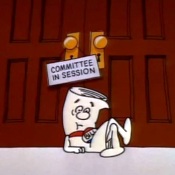
Lastly, another type of corruption which is popular, not just in places like Kentucky, but probably everywhere, is where legislators either refuse or delay to vote on bills which they believe may adversely affect key donors. Instead of hearing and deciding on the merits of a particular bill, they simply decide early on to vote it down, and usually, try and persuade their fellow members to do likewise (often with the tacit implication that if you support my vote, I'll support yours later on). A close cousin of this form of legal corruption is killing a bill in committee.
Before a bill actually makes it to the floor to be voted on, it has to go through at least one--usually more---committee in both the House and the Senate. An effective way to kill a bill is to make sure it never makes it out of committee. This is usually done on the basis of some "technicality" or pretense like needing "additional study" when the evidence is already clearly established. The upside is that occasionally there may be some legitimate issue which needs to be addressed before an informed decision can be made. On the other hand, this can be used to stop an otherwise good bill dead in its tracks.
One good example which is increasingly become overcome by the majority of state legislatures is over Marijuana. Some out-of-touch legislators ("old dinosaurs" as a friend of mine calls them) have tried to kill various bills proposing the legalization of the plant (or at least its decriminalization) for medical or recreational purposes. In a few cases, those leading the charge to stop passage of a bill out of committee have some undeclared vested interest such as ownership of land dedicated to another crop, stock ownership in potentially competing industries, or, as I said previously, donors who may be adversely affected (or if not them directly, then family or close friends). This too is a form of legal corruption which tends to get overlooked and shouldn't.
Now, if these kind of things can happen in a poor backwater state like Kentucky, can you imagine what happens in places like Nevada, Illinois, California, or worse, in Washington DC? These types of corruption, which some consider acceptable behavior, are a few of the reasons for imposing term limits and ending party lead gerrymandering. It's also why certain political offices such as Secretary of State and County Clerk, which oversee state and local elections, must become non-partisan, along with other non-law making political offices such as Treasury Secretary, Agricultural Secretary, State Auditor, and perhaps most importantly, State Attorney General. Locally, offices like Sheriff, County Attorney, Property Valuation Administrator, Circuit Court Clerk, Commonwealth Attorney (or the equivalent), Coroner, and similar offices should also be non-partisan and term limited (can you imagine any reason whatsoever why a Coroner or legal office needs to be partisan? Why would it even matter?). You would think that citizens would want these kind of positions to be non-partisan!
It's not until changes are made to the system that a state as poor as Kentucky can have any hope of changing things around and focusing on what really matters like children, education, nutrition, adding good paying jobs, and rebuilding a decay infrastructure. Of course, these type of changes need to be not just in Kentucky, but everywhere if we're to improve society. To quote President John F. Kennedy, "those who make peaceful revolutions impossible make violent revolution inevitable".
'Not enough jobs'. Nine of the 30 poorest counties in U.S. are in Eastern Kentucky
Kentucky Poverty Rate by County
Geographic disparity: States with the best (and worse) school
Harvard study: Kentucky's state government one of the most corrupt in the country
Labels:
bribes,
corruption,
Crime,
Democrats,
education,
election reform,
elections,
gerrymandering,
Harvard Study,
Kentucky Government,
legalized marijuana,
Oligarchy,
Partisanship,
poverty,
Republicans,
Term Limits,
UPS
Saturday, March 10, 2018
Kentucky Politics: The Surreal and The Absurd
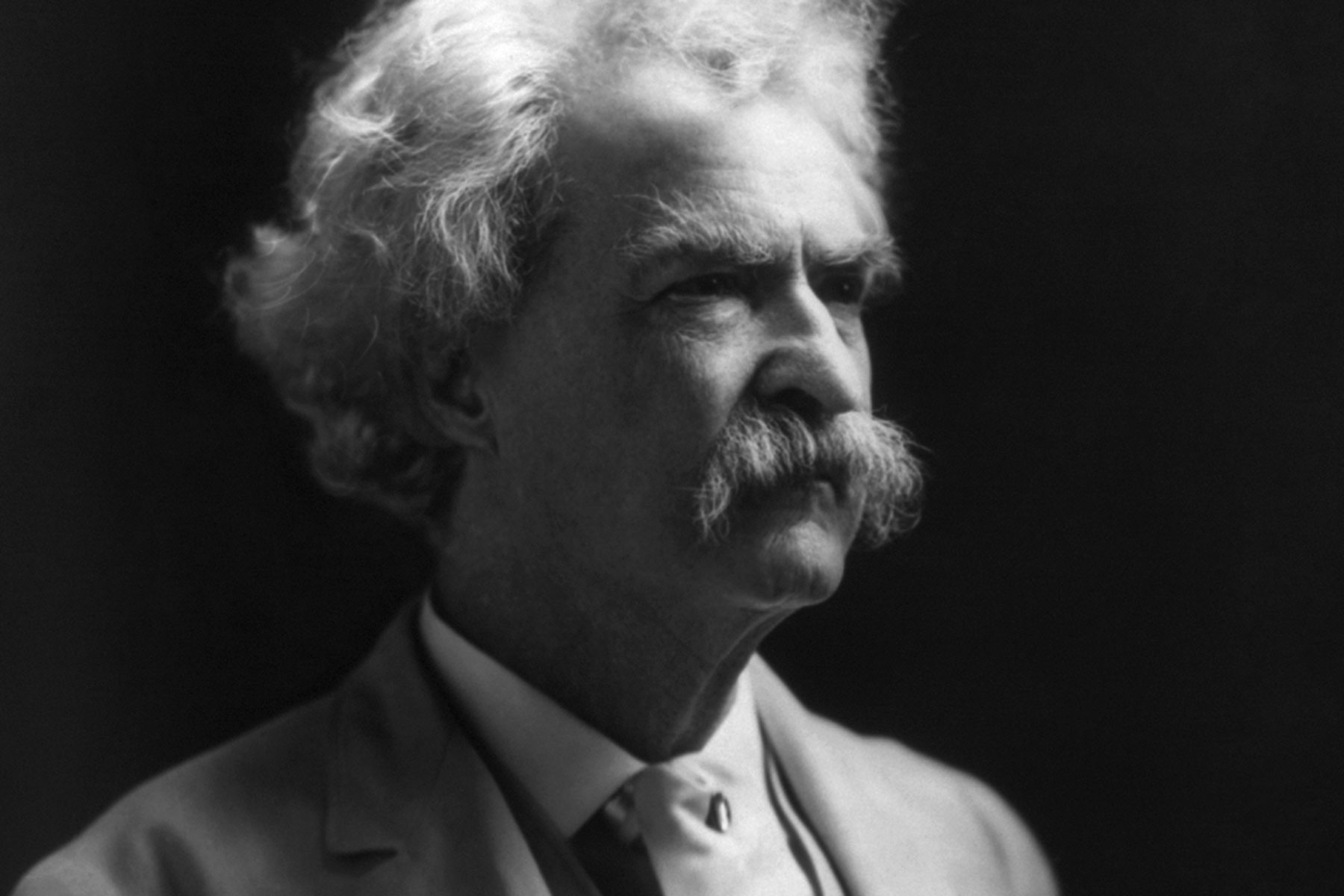
Now whether or not Mark Twain actually said that about Kentucky (which is the place the quote is usually attributed to), it's pretty accurate. Kentucky is usually rather slow and backwards when it comes to a number of things. Now, perhaps its' because Kentucky is a poor state and like to go with what they know, or because it's a conservative state and the people there just don't like a lot of change in general; they want to keep the slower, laidback, and friendly small town atmosphere, and who can blame them? Kentucky is a friendly place, but it's also a "mind your business" place too. Family and friends are all pretty tight knit.
There are a few exceptions, such as Louisville, which pretends to be a big city ("Louisville International Airport" with no international flights or "Louisville International Convention Center" with few or any international conventions, etc) but in reality is just a large, slightly Southern, country town. It's also a pretty cliquish town too, with a few individuals and groups pretty much calling the shots when it comes to politics and business.
Louisville boasts a single newspaper, which was once a decent newspaper if you can stand to read through its Left wing rhetoric. At Derby time (the Kentucky Derby, the first Saturday of May), Louisville transforms into a full blown "Southern town" as it claims its two minutes of the national spotlight before nodding off again (I swear, I hear more drawls than I ever hear any other time of the year coming from locals). Of course, the Derby used to be a big ole hometown community event with folks renting out their yards for parking, selling t-shirts, homemade cookies, drinks, and holding street parties. That's largely all gone now. The Derby has gone "corporate".
Locally, its often used as a metaphor as a requirement to line birdcages, wrapping fish (left side up naturally), or for puppy training. The other media, such as TV and radio, tend to lean left as well, so if you're looking for conservative or balanced news, this isn't the best place to find it (WDRB-41 is probably the closest you'll come to "balanced and fair"). Of course, there are exceptions and few beacons of non-partisan or conservative news here and there (a friend of mine, Ed Springston, has a popular conservative talk radio show---"The Ed Springston Show" on Blogtalk Radio for instance), and of course, yours truly who tries to keep it non-partisan and honest.
Politically speaking, Kentucky is a pretty conservative state, even among Democrats. Heck, I've known Republicans from other states who were more liberal than some of the Democrats I've met over my 40+ years of political and community activism. Some of the more liberal "hotspots" have been in places like Lexington (home of the University of Kentucky), the Newport area (which is close to Cincinnati), and of course, Louisville (or rather, parts of Louisville.
The southwest portion of Jefferson County, where Louisville is locate, and along the southern part of the county---Okolona and Fern Creek---are fairly conservative). Bowling Green and Paducah are also on the liberal side, and I guess you can include Frankfort, the state capital, too.
Kentucky's Democratic politics is dominated by the state party. Even in Louisville, which used to have a strong local party, the state party calls the shots and will often work against the local party when it comes to issues or candidates. I suspect that's pretty true across the state, especially in the more rural counties.
On the Republican side, the state GOP is pretty strong, although the local parties seem to have more clout than the local Democrat parties, except in Louisville, which essentially lacks a strong party organization and is often considered a "East end clique" (the "East end" is where the upper middle class, wealthy and local ruling elites tend to live. For those living west of I-65, which is more working class, racially diverse, and/or poor, it's occasionally viewed as "derogatory" term).
Nevertheless, the local GOP party is often viewed as focused on East end issues and maintaining the status quo sans those west of I-65. I recall that when I ran for state representative at the behest of the state and local party, they actually worked against me after they reached a deal with my Democrat opponent.
I thought it was a fluke, until I heard the same thing from a number of other candidates! Yet, we still get the projects no one else wants going to parts of downtown Louisville or in southwest Jefferson County. As an aside, myself and a few others fought for years to organize the southwest part of the county to keep this from happening. "Our" local newspaper accused me of "Balkanizing" the county while the power elites worked very hard to shut us down, including what many would consider some questionable elections.
Oh well, you live and learn...and don't forget (a dear friend of mine used to speak of the two corporate owned parties as essentially two mafia families who fight over turf and spoils, but always come together to protect their mutual interests and keep out the true reformers, and I was apparently seen as a "true reformer" and thus blacklisted) . Anyway, I believe other local GOP parties are more independent further out in the state, although I've often heard that some were fairly disorganized.
However, several have shown some remarkable improvements---complements to their new party chair people and executive boards! Nevertheless, both parties have made it virtually impossible for Independents and third parties to challenge their iron grip on elections, including prohibiting referendums and requiring obscenely high restrictions to qualify for getting on a ballot.
Speaking of the two political "mafia families", there are a couple of recent stories which you all may enjoy which reflects both the stereotypical backwards nature of Kentucky which is reflected in some of the selected...I mean "elected"...politicians Kentucky has. The first concerns medical marijuana.
Now before we go any further, I want you to know that I fully support the legalization of marijuana in general, but in particular medical marijuana as a substitute for the more dangerous and addicted pain medications now being prescribed (not to mention all the many other conditions it's been shown to successfully treat). To me, this is just common sense, and polls consistently show that it make good sense to the majority of not just Kentuckians, but to Americans in general.
Well, this issue recently came up in the (I'm not sure if I should insert "august" or "aghast" here) Kentucky Legislature. There has been several Kentucky State Representatives (notably Rep. Perry Clark, D-37) who've been working for many years to make medical marijuana legal, along with a number of other individuals with a wide variety of medical problems, and various organizations (especially veteran groups).
Of course, there are those with deep pockets who would like to see any type of legalization from happening, especially until they can figure out how to get a piece of the action. These are the types who put their interests first, regardless of what's good for anybody else. These are the people who usually pull the strings.
Kentucky House Bill 166 offered relief for those individuals, and the thousands and thousands of others who, because of increasingly draconian laws, are making difficult for individuals to obtain relief from chronic pain (sadly, many have turned to heroin or other, often more serious drugs, for relief and, as a result, have become involved in all sorts of crime). Leave it to the government to try and "fix" a problem by creating more and worse problems. The bill's main sponsor was Democrat John Sims of Flemingsburg. Going in, this bill looked like a "no brainer" and seemed destined to get out of committee without issue.
Rep. Jason Nemes, R-33 from Jefferson/Oldham counties, moved to pass over the bill; promising to work out "compromise" language concerning some previsions he opposes, resulting the bill being shelved for now. "For now" in the world of politics can be a damn long time, especially for people suffering from severe chronic pain.
Ironically, Rep Tom Burch, a Democrat from Louisville, said that while he expected Kentucky would eventually legalized medical marijuana, he also predicted that Kentucky would be last state in the nation to do so. Amen Tom, and you're in good company with Mark Twain too! As an aside, of the bill's 22 sponsors, three were Republicans (Reps. Jim Gooch, Gary Herald, and Bill Wells); the rest were all Democrats. Just saying.
The other bill that I want to mention, and seems to illustrate the stereotype backwardness of Kentucky through its Legislature, is Kentucky Senate Bill 48, which will prohibit children from getting married. Yelp, you read that right. The bill would ban individuals under 17 years of age from getting married, unless there is some mitigating reason---and approved by a judge and with parental approval if they are 16 or younger).
Apparently, there has been an issue about little kiddies getting married! Seriously. I can't imagine anyone anywhere at any time agreeing to allow their 13 or 15 or even 16 year old son or daughter to get married. However, a hearing on the bill's merits brought out individuals who testified about being sexual abused at 12 or 13 years old, and later forced to marry their abuser at 16 (some mentioned that their parents were married at 15 or 16, or younger). So, since this has apparently been an issue, do they set at the kid's table or do they get to set at the adult's table...with booster seats? What about bed time---any curfews? Inquiring minds you know!
Fortunately, the bill made it out of committee and will move on, but not without some serious debate. Apparently there was a "language" issue concerning parental responsibilities for those under 17 which was too vague and needed clarification according to the conservative Family Foundation. The matter was addressed through an amendment to the bill clarifying the rights of the parents. The bill was sponsored by Republican, Julie Adams of Louisville and shepherded by fellow Republican Whitey Westerfield of Hopkinsville, the Senate Judiciary Committee Chairman. The bill had five sponsors, three of whom were Republican and two were Democrat.
Now, Kentucky is trying to get ahead of the problems it created. Both of these bills illustrate Kentucky's politics, and in a broader sense, Kentucky itself. Kentucky has a serious drug problem, especially when it comes to abuse of opioids, as well as other drugs such as crack, alcohol, meth, and tobacco. Of late, Kentucky has cracked down on opioid prescriptions (especially "over-prescribing") in order to get a handle on the problem. However, like many (if not most) government "help", it's caused more of problem than it's solved.
As a result, there are more restrictions on doctors, insurance companies, and even producers of opioids. Many doctors have simply stopped prescribing pain killers, or greatly restricted the strength they'll write for and/or for the duration of the prescription. Who knew that state legislators were such medical experts they could over-ride medical professionals?
By making it harder to obtain pain killers, it has made many (legitimate and illegitimate) users turn to other, more dangerous drugs, such as meth, crack, heroin, and it's getting worse as the government crackdown continues. This, in turn, has resulted in a increase in crime, demand for treatment (and often repeatedly treatments), not to mention deaths which are sometimes incorrectly attributed to the opioids instead of the underlining factors such as being forced to turn to other addictive substances due to the current restrictions.
The solution, as least for many, was medical marijuana which grows plentifully in Kentucky (as an aside, Kentucky was a top producer of industrial hemp back in the 40's and earlier---when it was legal). It's all natural with little care or harmful pesticides required. Kentucky has the perfect soil and climate for it. With the decline for tobacco, the state's primary legal crop, Kentucky farmers need to a new "money" crop. Hemp, whether for industrial or recreational use, fits the bill perfectly. It would also pump millions of new tax revenue into the state's dusty coffers. So my question to those Legislators who opposed this is, quite simply, "what the hell were you thinking?"
As for Kentucky Senate Bill 48, I don't know what to say (which is rare). I mean, here we are in 2018---the 21st Century---and we're discussing child brides? C'mon, this is Kentucky (a little slow I admit), but heck, it's not some Middle Eastern or third world country for Pete's sakes! Yet, here we are, with the whole wide world watching, as we debate the legality of children getting married!
I don't know how or why this is even a topic to be honest. Frankly, I would have thought that this issue would have been addressed before 1918, not 2018. All the same, kudos to Rep. Adams and other sponsors for stepping up to the plate. Now, we've just got to get pass the issues of proper dental care, wearing shoes and marrying first cousins! Anyone up for another sponsoring a bill?
Kentucky medical marijuana bill shelved by House committee
Medical marijuana bill gets more testimony, but no vote Tuesday
Kentucky Senate Hears Bill to End Child Marriage
Bill to outlaw child marriage in Kentucky passes Senate committee
Kentucky medical marijuana bill shelved by House committee
Medical marijuana bill gets more testimony, but no vote Tuesday
Kentucky Senate Hears Bill to End Child Marriage
Bill to outlaw child marriage in Kentucky passes Senate committee
Labels:
child brides,
Democrats,
HB 166,
Hemp,
Independents,
Kentucky,
Kentucky Legislature,
legalized marijuana,
Louisville,
marijuana,
Mark Twain,
Metro Council,
opioid abuse,
opioids,
Politics,
Republicans,
SB 48
Subscribe to:
Posts (Atom)