Showing posts with label campaigns. Show all posts

Friday, May 15, 2026

Our Election Day "PSA" For Voters Everywhere!

 
Election day (May 19th) is fast approaching, and it seems that the airwaves and social media are full of “vote for me” commercials, not to mention the usual political entertainment, “mudslinging”. Along with the commercials, there’s the usual ubiquitous endorsements which are in truth nothing more than character references for the public.

Some endorsements are quite obvious. They’re from groups, individuals, or industries looking for “buying immediate access” which is shorthand for controlling or at least manipulation legislation as it pertains to them or the industry.

Some endorsements are less sinister. They aren’t necessarily looking for tax breaks or less government oversight. They’re really looking to improve child education, better healthcare, fresh water, or reduce pollution. To achieve these goals, they need an advocate in Congress. But these groups often have little or no money to donate. What money they have, which often comes from membership dues, are used to fund their project or to keep their doors open. However, money is the life blood of politics and influence typically goes to the highest bidder.

For instance, did you know that the average incumbent in the House has to raise $2900 every day (including weekends)? A challenger for the House has to raise around $3300 a day. Meanwhile, a U.S. senator has to come up with $15,300 per day. 75% of the average elected official’s time goes to fundraising for themselves or their party.

 It’s not unusual that these groups, despite their ultraistic objectives, are ignored by elected officials while Big Business continues unabated with their ownership of not just Congress, but the legal system, presidency, and even the government bureaucracy.

 So, what about the media and their candidate endorsements? Practically all media outlets, newspapers, TV, radio, and so forth have a specific political agenda. In fact, 98+ of all media is owned by just five corporations. It’s natural then that their endorsements are in line with their owners political interests, which don’t always (or even usually) coincide with the interests of the public. 

On occasion, they may give a reluctant halfhearted endorsement of a candidate on the opposing side provided they support at some of their side’s agenda. Besides, it keeps up the illusion of impartiality. Nevertheless, should the media be making endorsements in the first place?

The role of the media should be to provide accurate and balanced news so that we can make informed decisions. That means the news media needs to be non-partisan in their reporting. At election time the media (particularly newspapers) like to make their endorsements and urge you---the voter---support their agenda, yet their agendas don't necessarily represent our best interest.

Therefore, it’s best for you to do own research, which is easily found on the internet There are a host of non-partisan and unbiased sites available online (I’ve provided some links below). Armed with this information, you need to vote your conscience. Don't vote to be "anti" anything. Forget about party. We don't need any more negativity in the world. Instead, make your vote count "for" something you truly believe in. 


P.S.: Our apologies for the odd format. That appears to be an error on Blogger, our site's platform.  


Congressspends more than half their time dialing for dollars.


An insidelook at Congressional fundraising


How MoneyShapes Pathways to Power in Congress


Open Secrets


Your Voter’sGuide


Ballotpedia


See What’sOn Your Ballot


 Decide Whoto Vote For


Friday, June 18, 2021

A Lesson in Fractured Politics (and 10 Common Sense Solutions)

We've often discussed how America is no longer a Constitutional or democratic Republic over the years. America, as you know, is an Corporatocracy , run by an Oligarchy comprised small clique of very rich individuals who are pulling the political strings of this country.  As various academic studies have shown, the average taxpayer in this country has a statistically probably of zero percent of having any real influence on Congress. 

Compare this with corporations, who spend millions on lobbyists and millions more on financing campaigns and underwriting politicians, who have a near 100% likelihood of success in getting what they want from Congress (not to mention the fact that the same corporate lobbyists actually write the legislation they want passed). 

In 2020, 55 corporations alone spent $450 million dollars over three campaign cycles and sent 526 lobbyists to Washington to make sure they got what they wanted..and paid for..  So, is it any wonder that the majority of these same companies not only pay nothing in taxes, but often get back millions of taxpayer dollars?

Just so you don't think that only one party is to blame, remember that these lobbyists cater to both sides of aisle. The top two House and Senate Democrat committees received $1.45 million dollars while the same committees on the Republican side were given $1.3 million. In exchange for enabling them to avoid federal taxes, these same 55 corporations got back $3.5 billion dollars in paid taxes and avoided another $8.5 billion in potential taxes.

Who are these companies?  While you could just go down the list of major Wall Street companies, a few stand out. One is Archer Daniels Midland, the giant food conglomerate. They made $438 million dollars in pre-tax profit. Not only did they avoid paying any federal taxes, they actually got a tax rebate of $164  million dollars. Athletic apparel maker, Nike, made $2.9 billion dollars and paid nothing in federal taxes. Instead, they got a rebate of $109 million dollars.

FedEx earned a profit of $1.2 billion dollars and received a rebate of $230 million dollars. Of course, there are many more, and these don't even include companies like Exxon, Facebook, Apple, Netflix, Chevron, General Motors  and others like them who either paid no federal taxes, or next to nothing.

Of course, each one will tell you that they paid what taxes they were obligated to paid. But what they won't tell you is how their lobbyists, either directly or through trade and professional associations, were able to lobby members of Congress into sponsoring bills they (the lobbyists) wrote or helped write and shepherded through the various committees and onto the House and/or Senate floor for a final vote.


I'll Take Two Congressmen and Hold the Mayo

According to OpenSecrets, in 2020, lobbyists paid out $14,869,908 to Democrats and $14,175,224 to Republicans (the average "donation" was about $30,000). Another $129,095 went to other individuals such as senior staffers. Of the money given, almost all of it went to incumbents. Now, do you want to know who was the beneficiaries in 2020? Well, I'll tell you.

In 2020, the top beneficiary of Corporate America's largess was none other than Joe Biden who received $776,590.  David Purdue (R-GA) got $712,710. Kelly Loeffler (R-GA) took in $593,330. Next was Thom Tillis (R-NC) who was gifted $558,702. Mitch McConnell (R-KY) saw $537,229 in donations from lobbyists. Among other notables, Donald Trump (R) received only $269,112. Nancy Pelosi (D-CA) got $153,936. Dick Durbin (D-IL) picked up $145,600 while Liz Cheney (R-WY) saw $123,170.  Chuck Schumer (D-NY) got $116,463.

Now, while this might not seem like a lot, remember this was just one election cycle and doesn't include any in-kind contributions, nor does it include any monies donated by corporate lobbyists to various partisan committees (such as the National Republican Senatorial Committee which received $2,771,454  or Democratic Congressional Campaign Committee which took in $1,111,816).

Often these committees redirect money to certain campaigns, "Leadership Committees", or political action committees (aka PACs) which are set up to avoid donation caps and, in many cases, are designed to give the false impression of widespread popular support for some issue or candidate.

I would be remiss not to point out that most members of Congress put in an average 10 -12 hour day, of which over half is typically used not on "the People's business" as Nancy Pelosi likes to say, but on fundraising either for themselves, the party, a committee or PAC. As for writing bills, that's all subbed out to corporate lobbyists.

There should be no question in your minds that are Republic is gone. We have no one in Washington, or our state capitols, or even City Hall writing legislation for us. We the People can't even remotely hope to raise the kind of money that Corporate America does. Even unions can't compete. The best they can do is raising one dollar for every five dollars Wall Street gives. Such was the folly of Citizens United and unbelievable ignorance and political naiveté of the Chief Justices.

With gerrymandering practically guaranteeing a particular candidate's reelection and unlimited terms for most seats, who in their right mind can call this a democracy; a government of, by, and for the People?  To make matters worse, the same corporations which own government also own the media.

 That means they control and dictate content, and unless you have access to other sources of media outside the mainstream, you're not going to know what's really going on (as an aside, even your entertainment, be it music, movies, television, video game, or sports is controlled by the same folks. How does that make you feel---warm and fuzzy?). 


The House Always Wins

We're living in a dystopian society better constructed than the best SciFi author. Not even the great Ray Bradbury, Fyodor Dostoyevsky, Frank Herbert, Isaac Asimov, or George Orwell could have come up with this, although they came close! The question (indeed, the only real question which matters) is what, if anything, we can do about it?

I think that at some deep level, we already have a sense of what needs to be done. We know the system is broke beyond repair. "Reform" at this point would be like trying to duck tape the Titanic. I don't think even Flex Seal will work! First, we need to stop thinking like partisans. We're Americans first, last, and foremost. Second, we have to accept the fact that the Founding Fathers were right when it came to political parties---they're wrong for society. They serve an interest which isn't the American People.

Third, we need to register to vote and encourage others to vote. In fact, voter registration should be automatic when you turn 18. As an aside, yes, we need photo IDs to vote. It doesn't discriminate against anyone except those trying to rig elections. A picture ID is the only way to ensure the right people shows up to vote. We need to go back to paper ballots. They weren't always perfect, and they took a bit longer, but they were harder to manipulate.

Elections need to be held either on the weekend or it should be a federal holiday. Fourth, we need voter initiatives and referendums. It's our right as citizens to place issues on the ballot, which is why career politicians fear them. Fifth, we need term limits to end career politicians and the accompanying cronyism.

Next, we need to end gerrymandering. Politicians shouldn't be allowed to pick their voters. Seventh, we need Rank Choice Voting to ensure we get the best choices available. Eighth, we must have a level political field. That means that the same rules apply for Independent and third party candidates as it does for partisan ones.

If a Democrat or Republican need just three signatures to get on the ballot, then why should a Independent or third party candidate need a hundred or a thousand (or more, depending on the office)? It's discrimination and it's illegal. Additionally, the public deserves to hear all points of view. Therefore, all candidates on the ballot should be included in all debates.

 Ninth, no political office should be partisan. When you're elected, you are elected to serve everyone, not just those of your party. As it is now, if someone outside your party is elected for your district, you aren't represented for the length of that term.  You also get the privilege of still having to pay taxes despite not being represented. Let that sink in!  All incoming office holders should resign from their political party in order to represent everyone in their district and community or state as a whole.

Finally, we absolutely must get corporate money out of politics. Citizens United was wrong. It effectively removed the ordinary citizen from having any influence in politics. It made Congress a de facto Millionaire's Club. We need to create other ways of financing elections, including public financing, free (but limited) TV and air time for candidates, and restricting the length of "campaign season" as a number of other countries do (many limit it to 60 or 90 days).

As an aside, speaking of campaign finance reform and the "Millionaire's Club" Congress, I thought you'd find this interesting. Remember those financial beneficiaries of lobbyists I mentioned above? Did you know that Kelly Loeffler's net worth is $500 million? David Perdue's is $15.9 million. Dick Durbin's $3 million. Mitch McConnell's is over $22.5 million. Nancy Pelosi's net worth is $120 million, while Thom Tillis' is about $10.5 million. Finally, Joe Biden's net worth is over $9 million. Don't sound like "common folk" to me. Do they to you? Oh, and there some whose net worth is far greater.

None of this isn't about scare mongering. This is reality. You can research it yourself just as I've done over many years. It's a lot of work, but there's a lot of us too. Pick one or two from the list above and get busy, or maybe come up with one of your own. But know that we can do it. We've overcome greater obstacles in our nation's past. We have to do this if we want our country and our Republic back. The alternative is to prepare for the long dark night that is surely to come. if you want to know more, check out the links below. They're a great way to start.


Corporations That Paid Zero Federal Income Tax Spent $400million in Lobbying


55 Corporations Paid $0 in Federal Taxes on 2020 Profits


60 Top Corporations Paid $0 Federal Tax Dollars Under TrumpTax Law


OpenSecrets: Lobbyists


OpenSecrets: Top Recipients of Contributions from Lobbyists2020


Not A Single Person in Congress Actually Writes Legislation or Laws. It's All Subbed Out to K Street


When Lobbyists Literally Write the Bill


Saturday, December 07, 2019

Are We Still the "Land of the Free"?


America. Land of the free and the home of the brave. We've heard that refrain since we were children. There is no doubt that America is the home of the brave. We have one of the strongest militaries in the world, if not the strongest. We're not the largest, at least not in terms of manpower. That honor belongs to the China. We don't have the largest armor or mechanized military either. That goes to the Russians.

However, we do the best trained, best equipped, and most technologically advanced military in the world. We have the most powerful naval and air capability of any country, and while we don't have the most ground troops, if you were to include all those citizens who've decided to exercise their Second Amendment rights, I would argue that we are the best defended country in the world bar none! But what about "land of the free"? Just how "free" are we really?

Here we are, in the first quarter of the 21st Century, and as Americans we find ourselves being challenged on multiple fronts when it comes to our freedoms. We have those who are aggressively trying to curtail our right to own and use guns, be it for hunting, sport, or self defense. There are those who would restrict our right to free speech and freedom of expression as being inflammatory.

Thanks in large part to the events following 9/11 and the passage of the so-called "Patriot Act", our freedom of movement has been restricted as has our right to individual privacy. What's worse is that not only does the government monitor every electronic keystroke or word spoken, even corporations routinely spy on us. Of course too, corporations are now regarded as "people" with not just the same rights as flesh and blood human beings, but actually greater rights, especially when it comes to "free speech" which has been equated with money, and their "right" to donate nearly unlimited amounts of money to parties and candidates while we remain all but muted.

The result is that corporations can literally buy and control parties, candidates, and the entire electoral process, which is exactly what has happened. America is, as everyone should know by now, an Oligarchy; a neo fascist partnership between government and Big Business. We are left with the illusion of choice along with corporate controlled media---the modern equivalent to the Ancient Roman "bread and circuses"---to distract us.

The Oligarchy is not limited to America. It is nearly global in its scope (as one would expect of multinational corporations). How do we stack up against other countries when it comes to the various measurements of freedom? Where are in terms of education, income or healthcare? Can we still claim the title of "land of the free"? The first thing we need to understand is that America is not the largest "democracy", at least in terms of population. That distinction belongs to India, whose government is based on the British model (as are all other democracies in the world). The United States has a population of about 327.2 million people while India's population is roughly 1.337 billion (as an aside, Mexico, which is also a democracy, has a population of 129.2 million, making it one of the largest democracies in the world as well). Not what you expected I bet.

So, how do we stack in terms of overall freedom? Well, according to the World Population Review edition for 2019, the freest nation in the world is New Zealand. The "Kiwis" scored the highest across the board, which looked at personal, economic, and "Human Freedom" which includes incarceration, poverty, crime, etc. Next up were the Swiss, followed by Hong Kong, Australia and Canada. Denmark and the Netherlands were tied in sixth place, Ireland and the UK were tied in eighth place. Taiwan was tied with Norway in the tenth spot. In fact, we didn't even make it into the top 15. The U.S. came in 18th place, tied with the Swedes but ahead of the island nation of Malta.

To be fair, I looked at another report to get a better gage at where we stand. After all, how could the "land of free" be in 18th place? So I reviewed the Heritage Report of Economic Freedom for 2019. The U.S. did a little better, at least in part. We came in 12th place. The freest nations in terms of economics belonged to Asia with Hong Kong and Singapore taking the top two spots followed by New Zealand, Switzerland, and Australia. Ahead of us came the UK, Canada, the United Arab Emirates, Taiwan, and Iceland. A key component in today's global economy is technology, so how did we do?

The U.S. News and World Report listed the top ten nations in terms of technology based on R&D, patients, and innovation (all of which, of course, tie into education which we'll look at shortly). In tenth place was Sweden. Next came Switzerland with Russia in eighth place. The seventh spot went to Singapore then the UK. Germany was fifth, just behind the Chinese. South Korea took third place. The United States got the silver medal with second place. Who got first place in technology? That went, perhaps not unexpectedly, to Japan. How about education?

A nation's success is closely tied to its quality of education. Unfortunately, the United States wasn't just number one or even number two, but we didn't even make it into the top ten. According to the World Population Review for 2019, the U.S. is ranked over all 24th place, just behind France and ahead of Hungary. The top spot went to China, followed by Hong Kong and Finland. Other countries ahead of us included Australia, all of the Scandinavian nations (excluding Sweden), Japan, Taiwan, New Zealand, Germany, Canada, Slovakia, Estonia, and Poland. Among scores in reading, math, and science, we were near the bottom of the industrialized nations.

Issues such as poverty and nutrition are major factors affecting education, as are other issues such as crime and a stable home life. So, I turned my attention to those to see if they could affect our low rankings. According to a 2017 report by Quartz, America has the second highest poverty rate of any industrialized country, just behind Israel and ahead of countries like Spain, Greece (with its massive "migrant" problem), and Italy. The report went on to look at other factors like gender equality, obesity, renewable energy development, employment and infrastructure which I found interesting.

For the U.S., this was pretty much a mixed bag. In terms of obesity, which is partly a product of poor food choices, food availability, and nutritional education, we finally ranked number one...sort of. We were ranked as the most obese nation among industrialized nation with 36.4% of the country overweight, beating out New Zealand , Hungary, and Australia. Of course, obesity greatly affect your health and life expectancy. Again we were number one in terms of amount spent per person on healthcare at around $9,500 compared to Germany which spends about $6,200 per individual.

In terms of healthcare, the U.S. has the least number of available hospital beds (which, by extension, translates to access to overall care). While we had 2.9 beds available per 1000, France had 6.2 while Germany had 8.2. South Korea had 11.7 while Japan had 13.2. When it comes to life expediency, we are again at the bottom of the list of industrialized nation. The average life expediency for Americans was 78.8 years while for every other country on the list it was in 80's. In Israel, it was 82.2 years. In Italy it was 83.3 years, and in Japan, which tops the list, it was 83.7 years.

When we look at gender equality, the U.S. ranked last with the number of women serving on corporate boards of directors (including that of president and/or CEO) with an average of 16.2% On the other end was Iceland with 44%. Norway had 41% and France had 37%. Denmark, Germany, the UK and Belgium all had 27%.

In terms of energy, Americans have full access 24/7/364, despite an ageing, and in many cases, outdated electrical grid. However, what we don't have is access to renewable energy. Not only are we dead last, even Europe and Central Asia ranked higher than us (12% compared to 24.3%). The world, on average, gets 20.9% of its energy output from renewable sources. With respect to our infrastructure (roads and highways, bridges, sewers, etc), we again ranked last. On average, just 0.6% of our GDP was invested in repairing and/or updating our existing infrastructure. Australia, on the other hand, invested 1.9% of its GDP. Canada invested 1% of its GDP as did South Korea, Japan and France.

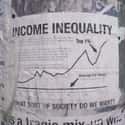
Another important factor to consider when looking at a nation's overall wellbeing is how affluent that country is. We've heard a lot about income inequality in the U.S., but just how bad is it really? According to the World Economic Forum, it's pretty bad. In fact, it's actually worse than we know. Despite America's overall prosperity, that wealth doesn't extend down to everyone. The WEF reported that of the top 30 industrialized nations, the U.S. ranked toward the bottom in income equality; 23rd to exact. It's wasn't just wages paid in which the U.S. lagged, but also in terms of its social safety net.

According to the Economic Policy Institute, CEOs, Presidents, and senior officers earn, on average, 271 times the salary of the average employee, not including perks (it's been as high as 299 times back in 2014. In 1978 it was "just" 30 times). The Middle Class, which was once the backbone of the nation, is now a mere shadow of its former self. In its place, we now have a poor/working poor/treading water divide and yet it still shoulders the bulk of the nation's taxes.

The WEF also reported that the U.S. performed worse of all 30 industrialized nation when it came to "inclusion development index" which includes age, health, gender, poverty, sustainability, and distribution of income. It also reported that the top 1% took home 26.3% more income as the entire remaining 99%. The Middle Class has seen a paltry 7% growth in income since 1995. In fact, the top 1% control over 40% of America's wealth while the richest 10% controls a whopping 70% of the nation's wealth.

An interesting side note is that the U.S. has among the lowest number of organized workers among industrialized nations, at just 10.6% of the total workforce. Only South Korea and Turkey ranked lower. The highest was Iceland with 91.8%. Canada and Ireland have 26.5% while the UK has 24.7%. Germany's union membership is 17.7% while Japan's is 17.4%. Quite obviously we need to do more to protect workers and small business owners. They have traditionally been the Middle Class of this country.

All in all, it certainly appears that we have some serious problems. With the recent rise in stifling free speech of some groups but not others by Far Left groups as well as the media (including social media platforms), attempts to restrict or prohibit gun ownership, monitor our movement, as well as the constant attacks on our privacy, we are in a bad place as a nation.

Discussions of "silent coups" and "character assassinations" (or even actual politically motivated murders), once the domain of the lunatic fridge just a few decades ago, is now commonplace. Distrust of the government, the political duopoly, and media are now seen as reasonable. The usurpation of our democratic republic by an Oligarchy is accepted as a fait accompli with a collective shrug. I seriously doubt our Founding Fathers would be proud of this nation if they could see it now. Not so much for how far we've fallen from what they had hoped for us as for our complacency; our apathy.


World Population Review: Education Ranking by Country 2019


World Population Review: Freest Counties 2019


Heritage Foundation: 2019 Index of Economic Freedom

Top Ten Countries for Technological Expertise

Forbes: Which Countries Have the Highest Levels of Labor Union Membership?


The richest 10% of households now represent 70% of all U.S. wealth

Saturday, November 03, 2018

The Folly of Newspaper and Other Endorsements


There was once a time when newspapers were viewed as the ever vigilant "crusaders" and defenders of public interest, albeit self-appointed and as often as not, the creators of their own hype (see "Yellow Journalism" links below), however, society grew up. Today, we have instant access to information the world over at our fingertips, and with it, the ability to do own investigation of candidates and the issues which are important to us.

For years, I've campaigned for the release of unedited transcripts of candidate interviews and full disclosure of the interviewer's names and their political affiliations. I believe that the public has a right to know exactly what a candidate has said about a particular issue, what their positions are on other issues, as well as the ideological slant the article or the so-called "endorsement", was written from. In short, I believe in full disclosure especially when it comes from the media.

I've been involved in politics for close to 40 years now. I have two Master's degrees with a MA thesis in Campaign Management. I've graduated from two leading candidate campaign schools, as well as several nationally prominent community and grassroots organizing programs plus several professional certificates in business management. I've run for office (winning some and losing some). I've managed or advised over 100 political campaigns, and successfully trained newcomers to politics. I've even served as a Congressional Aide and served as state chairman of union and on several national union committees. I've also been a part of candidate review committees which interviews each candidate and makes recommendations for endorsements. I know from whence I speak (or write in this case).

To many times over those years I've come across instances where candidates are misquoted, misattributed, or the "correct" answer inserted while the gaffs were carefully removed for a given candidate, making the "chosen" candidate look better than they actually were or making the better candidate look worse. I've seen where candidates are never interviewed or their positions on issues determined, yet an "endorsement" is still made under the lie that it's somehow unbiased and honest. I've seen ad nauseam where candidates are endorsed solely based on their political registration and no other factor. This is done not just by special interest groups, which you would expect, but by newspapers and other media outlets as well. This, in my opinion, is wrong and deceiving. I know all too well how the game is played; how endorsements are often "earned" and how palms are greased.

Today, in some locations, we have a partial solution with candidate interviews being taped or transcribed and made public and unedited. We need this in order to make an honest and unfiltered appraisal of their positions without an intermediary deciding for us what they said or meant. However, we are still not seeing full disclosure from media. We rarely see the names of those conducting the interviews or making the endorsements, and never are we given their political affiliations. That remains hidden. I believe that you, the voter, have a right to know exactly what questions were asked, how they were answered, and the political slant or bias of those asking the questions and making the endorsements. Anything less is a farce and attempt to manipulate the public.

As I have done for years, I urge readers to take a few minutes to do their own research and make their own decision about who to vote for. The Voter Guide, which is available in many newspapers is one such resource for you to consider. Other resources include visiting the candidate's web-page or contact the candidate yourself with your own questions. If you find that you happen to agree with a particular candidate's positions, fine. Then support that individual as a volunteer, with a financial contribution or with your vote. But do so as an informed voter. Don't let anyone think for you. Ever.

The role of the media is to present the facts in a impartial, balanced and fair manner, not to attempt to manipulate or sway public opinion to suit its own political agenda, even if they think it's "for your own good". Only you can decide what's in your own best interests. Can you imagine Fox, CNN, ESPN, CBS, ABC, or even Public TV making political endorsements? Neither can I, but even if I did I wouldn't take them seriously anymore than I do any other endorsements. So forget about your newspaper's or any other special interest group's endorsements. After all, they're pushing their own agendas and not necessarily looking out after your best interest. Remember too that endorsements are merely personal opinions, and not always the most informed ones at that. So think for yourself. Do your own research and then go vote. Don't let anyone take your decision away from you. America is counting on you.


Yellow Journalism: The Fake News of the 19th Century


PBS: Yellow Journalism

Saturday, October 13, 2018

Exposing More Political Dirty Tricks in Kentucky and Elsewhere


Apparently many of you have expressed interest in some of the more seemly ordinary everyday type of corruption which goes on at the campaign level. While I'm not sure why, perhaps because it's proximity and happens all around you, or if it's because of just how brazen it often it. Nevertheless, I will oblige your curiosity with some other examples that I'm aware of.

We've thus far discussed simple things like stealing yard signs, either outright or having the opposing camps (perhaps their supporters) place "bounties" on the signs. We've also talked about phony baloney newspaper and other types of endorsements, the use of "ringers" to draw votes away from the other side. We've also briefly ventured the area of vote buying, be it with cold cash or by willing voters a chicken dinner (which is oh so Kentucky). Of course, as in the old days, vote buying also consists of giving the voting accomplice liquor in exchange for their vote (or more accurately, votes) or hard cash.

As everyone knows, certain establishments are closed while the voting polls are open; establishments like liquor stores, bars, strip clubs, and so forth. One technique that used to be popular, and I'm sure remains so, is to go down to the local skid row and find a few willing volunteers who are willing to go vote in exchange for a pint of liquor (or these days, perhaps some other substance if it can be easily obtained). This technique works well where voter ID isn't used since the party hack has easy access to voter rolls and can tell by looking at the voter frequency just how often someone votes (often call "fidelity voting").

Since people's gender and age are also given, it's a simple matter of matching up your volunteer with, say three or four profiles, and take them around to the appropriate polling place. All the individual really needs to do is remember the name and address. After accomplishing their mission, it's just a matter of dropping them off and paying up. Sounds simple doesn't it? The volunteer isn't going to say anything. They got their booze. They're happy, and besides, vote buying is illegal. Vote buying is considered to be technically a "bribe", and can carry a fine of $10,000 and/or up to five years in jail. Obviously the reward doesn't justify the risk, but some will still try it.

One of the biggest curtailments to vote buying these days is voter ID. While some groups poo-poo the notion of showing a photo ID, claiming it causes some "undo" hardship on the voter, especially if they're a minority, the fact is that it doesn't. Nearly everyone has some form of photo ID these days, and if they don't (such people with no driver's license), a photo ID can still be easily obtained . In Kentucky, all you need is a social security card, a copy of your birth certificate, and a piece of postmarked mail with your address on it along with $12.00. The cards can be obtained at any of the County Clerks' Offices. Doesn't sound real difficult does it?

A similar, and perhaps more common form of voter fraud is as easy as taking a walk to the local cemetery. Seriously. While long considered to be something of a urban legend, the dead often find themselves remaining on voter rolls long after their death, while someone else shows up to vote in their name. Again, this is most common in places where a voter ID isn't required and where voter registries aren't regularly purged so that someone recently deceased, even five or eight years ago, remains on the voter registry. One of the most infamous cases of the dead voting is Lyndon Johnson's first senate race in 1948 in which approximately 202 dead Mexican-Americans voted at the last minute in Jim Wells County Texas. Oh, and they voted in alphabetical order! As an aside, it does seems that the dead tend to prefer Democrat candidates. Don't know why.

Another neat feature about requiring voter ID is that it cuts down on non-citizens from illegally voting, which is becoming a serious problem in a number of states which have large numbers of illegal immigrants. However, despite federal laws to the contrary, only 24 states are actually compliant with voting laws. Nevertheless, another disturbing trend is that some states and cities have started to allow illegal immigrants to vote in certain elections as part of their so-called "sanctuary" status. Personally, I think any state or locale which allows allow illegals to vote or for that matter, claims a "sanctuary" status and all that entails should forfeit any federal monies it receives.

Another "dirty trick" which is gaining in popularity is the good ole computer virus. Today every candidate has a web page. It's a common as having a palm card to pass out. However, websites can be easily disrupted several ways. First is the computer virus. One candidate I know had a very successful web page which was generating a lot of hits. So, a computer virus was sent to their website, hidden in a email as they usually are. Fortunately, this individual was able to detect it before opening and allowing the web page, which can cost several hundred dollars to create, to be destroyed. The candidate filed a complaint with the local party chairperson, but since this was a primary, the chairperson refused to get involved (except for the pleas not to release the incident to the local media in exchange for a promise to "investigate", which of course never happened). Apparently anything goes in primaries as Bernie Sanders recently discovered.

A similar trick is to try and overload the website with fake messages. Since every candidate wants to answer their email, a new trick is to get 10 or 15 individuals to send worthless emails demanding that the candidate personally respond. These individuals use different email addresses to make it look like there's more people than there really is. By keeping the candidate busy answering emails, it keeps them off the campaign trail. It can also create a situation where something the candidate writes can be used out of context, which often happens with speeches as we've all seen from TV commercials. Along the same lines, is trying to overload a candidates phone system in the same way.

However, if the opponent gets out on the campaign trail and starts out walking and knocking you, there is another common little trick which gets used a lot called "Pigeon-holding" (not "pigeonholing"). As a rule, a candidate has about 10 seconds from the time a prospective voter answers the door to make their pitch. After that, the average person tunes the candidate off and shuts the door. However, with pigeon-holding, the prospective voter is usually a friend or supporter of the opponent. Instead of letting the candidate make their 10 second spiel, they will keep asking questions. Of course, after usually getting a lot of doors slammed in their face, the candidate is delighted to have someone's full attention, except that it's a ruse.

Candidates deal in volume work. The more doors they knock on, the better the chances of getting votes. However, when they're pigeon-holed, they are kept in one spot for as long as possible, thus cutting down on the voters they meet. That usually helps their opponents who get the opportunity to knock on more door while their opponent is tied up. A variation on this trick is to also request signs, which candidates love to do since it shows support...and then "lose" the sign. They then contact the candidate or their headquarters and request another sign or two which of course also gets "misplaced", "stolen", or "destroyed" (usually they go out with the trash or are hidden behind the house or in the garage).

This will go on until the candidate or their staff gets wise to the ploy, but meanwhile they've cost the candidate money (remember, signs cost money) and time in delivering the signs (if you factor in the cost of assembling the signs---usually delivered in lots of 500 to 2000---as well as the costs of gas, the average yard sign cost about $5.00 each, and upward to $20 for the larger signs). As I previously mentioned, a certain candidate I know discovered that their signs---regular yard signs and the larger 3x5 signs were being stolen on a regular basis. They later learned that a public employee associated with the school system was paying students to steal the signs; $1.00 for the small signs and $5.00 for the bigger ones, plus $1.00 for each of the metal posts used to hold the 3x5 signs. That just breaks all sort of laws doesn't it? Then too, what moralistic lesson does that teach the students? By the way, most of the students involved were supposedly in Junior High School.

I have no doubt that these sorts of juvenile games are commonplace in just about every state, county, and burgh in the US. However do they really work? Actually, no. It's true that signs are a visible symbol of support and seeing a lot of signs for one particular candidate can be impressive, the fact is that signs don't vote nor do they necessarily persuade others to vote for that person. If someone has agreed to support you, stealing or defacing a yard sign won't change their mind. It will, however, tick them off and they will tell their neighbors and friends. Perhaps the most overlooked component to any campaign is word of mouth. People naturally tend to believe and trust what family and friends...and neighbors say about candidates, especially when one is believed to be trying to cheat or be underhanded. However, what yard signs do is reinforce name recognition which is important since that's all lesser informed many people seem to remember about the candidates.

Lastly (for this issue) is the ever popular rumor mill. Everyone who went through grade school knows the damage rumors can cause to someone's reputation. In fact, rumors tend to continue through school and sometimes even into one's place of employment (where it's given a thin veneer of respectability by being called the "gossip mill" or "grapevine"). Regardless, it largely the same. In politics, especially during elections it still happens except that it's often more subtle but every bit as vicious. Political rumors can be started in a infinite variety of ways, from "insider" leaks to the news media to little innuendos while talking to voters at the door or in a group. Sometimes they're in the form of a mailer or a radio or television spot (or even on the Internet).

Rumors are often hard to respond to since by the time you hear about them, they've been out there awhile. Therefore, some candidates strike first by putting out disclaimers up front and apologizing on behalf of their opponent for the lies that will likely be spread about them. Another example is a candidate who knew that their opponent had been lying about their record, took the unusual step of doing a side by side comparison of backgrounds---education, political or community, military and professional experience, and using both their opponent's own literature and public records. It caused quite a loud outcry from the opponent's camps. Not because it was untrue, but because the comparison made their candidate look bad!

However, while that's a positive example of dealing with rumors, most aren't so positive. Many rumors, founded or not, were floated around in Kentucky regarding an individual's alleged sexual orientation, despite being married with children (it was a "cover" so the rumor went). In fact, this happened to a few candidates who subsequently either lost or decided not to run. In New York this is what happened in a race between Ed Koch and Mario Cuomo in 1977 ("Cuomo not the homo"). Koch won by the way. Women often face far worse. From everything about their sexual orientation to being poor mothers or wives, to making sexual deals for campaign endorsements or contributions. However, it's been my experience that women can be far tougher than men when it comes to these sort of things. Perhaps it's because women have had a far more difficult time in the workplace than men and have had to endure more and work harder for the same respect (and money) given to men.

One way to help stave off some of these rumors is to be pro-active. By that I mean requesting a police background check and even requesting the FBI do the same thing. This provides added, and impartial, information to refute most claims. An employer reference, as well as references from respected community leaders (especially those who don't have anything to gain or lose with your election) are great. Another suggestion is having a generic rebuttal letter, radio, or television spot ready to go in an instant. Also, have a generic press release ready to go as well. That allows the candidate to get out in front of the issue before it gets out of hand, and buys time to prepare a more specific response.

Well, there you go. A few more examples of the corruption of the political system at its most basic level---the campaign. However, unfortunately corruption in politics has literally become institutionalized at the highest levels. When corporations are freely able to spend what they want to get the legislation they desire or to hire lobbyists to help write specific legislation, then you know it's gone too far. When there was more turn over in the old Soviet Politburo during the height of the USSR than in the present day US Congress, you know it has gone too far. When Congress has become a millionaires club and the average citizen is unable to afford to run for office, then you know it's gone too far. When the revolving door between government and the corporate world spins at such as dizzying speed that you can't tell the two apart, then you know it has gone too far. It's up to us to stop it.


Vote Buying Law and Legal Definition

Noncitizens, Voting Violations, and Elections

The DNC In Federal Court Admits It Rigged Its Primary For Hillary