Showing posts with label elderly. Show all posts

Friday, July 26, 2024

Age May be But A Number, But Can Youth and Enthusiasm Win Over Age and Experience?

"Count your age by friends, not years. Count  your life by smiles, not tears" ----John Lennon
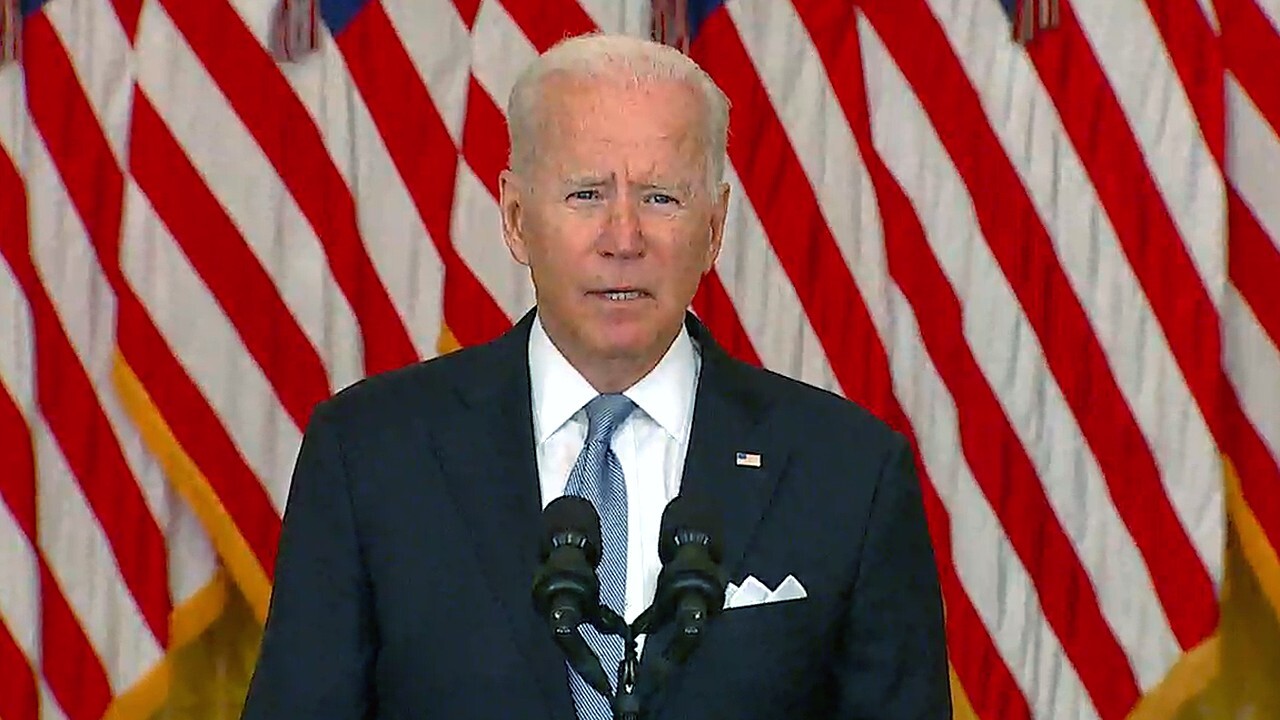

So, Joe Biden has been forced to step aside allegedly "for the good of the country and for the good of the Party". Biden is one of the longest serving politicians in Washington, starting in 1970. Now, Biden is one its oldest. Certainly the oldest serving president, having been elected at age 78.

Had Biden remained in the race and won (which was doubtful) he would have been 82 years old when sworn in. But how much does that really matter? Ronald Reagan was just shy of 70 when first elected (and yes, age was an issue then too), making him oldest person ever elected to the presidency at that point, and he went on to serve two terms.

Former Supreme Allied Commander in Europe, Dwight D. Eisenhower, was just 70 when he left office in 1961 (succeed by one of our youngest elected presidents, John F. Kennedy, who was a mere pup at 43. The youngest when elected was Teddy "TR" Roosevelt at age 42). The average age of presidents is 55 at the time of their inauguration.

It's worth noting at this point that the topic of age was intensely discuss by the Founding Fathers when it came to serving in Congress or the Presidency. However, they weren't concerned with placing a age cap on elected officials. In actually, they were more concerned with establishing a minimum age!

During the 1781 Constitutional Convention, Virginia's George Mason lobbied hard for establishing a minimum age. Many of the Conventioneers, lead by James Wilson of New Hampshire,  felt the someone should be at least 25 before seeking high office (remember that the mortality for men back then was about 40), which kind of makes sense actually.

However, Mason was able to convince his fellow delegates that (supposedly) age brought with it a measure of wisdom and maturity thanks to life's experiences. So, after the usual give and take, a compromise age of 35 was finally settled on as the minimum age to be elected as president. To be elected to the House of Representatives, the minimum age would be 25 (apparently wisdom and maturity aren't required as much there). For Senator you had to be 30 years old.  

Speaking of age, do you know why the minimum age to collect Social Security was set at age 65? Because the average life expectancy for men (the main bread winner) in 1935 was 60 years old (65 for women). Men had to beat the average by five years before they could apply!

So, if an "age cap" wasn't of any real consequence for our Founding Fathers beyond setting age floor, what's all the hubbub about Biden's age? I think the answer is a simple as it is obvious. We've all known individuals in their 40's, 50's or 60's who act like their octogenarians. They're sluggish, always tired and don't want to do anything that involves expending much energy (operating the remote doesn't count as expending much energy). Even their memory isn't quite what it used to be mainly because they don't challenge themselves intellectually.  

Then there's those individuals who are in their 70's, 80's and older who are constantly on the go. There are few household projects they won't tackle. They keep their minds sharp, be it actively watching game shows like "Jeopardy" or "The Weakest Link" and "competing" with the contestants to taking academic courses, learning a new skill, staying engaged with others, are proactive with their healthcare ,or so forth. These people boldly defy the age stereotype.

Despite his age going into office, Ronald Reagan developed a reputation for being active (like  riding horses or working on his 688 acre ranch at Rancho del Cielo). How many of us haven't seen photos of Reagan splitting wood? Even though Eisenhower was 70 when he left office in 1961, he continued to golf ("Ike" maintained a 14 handicap) but even while President, he never failed to get in 36 rounds of golf a week. 
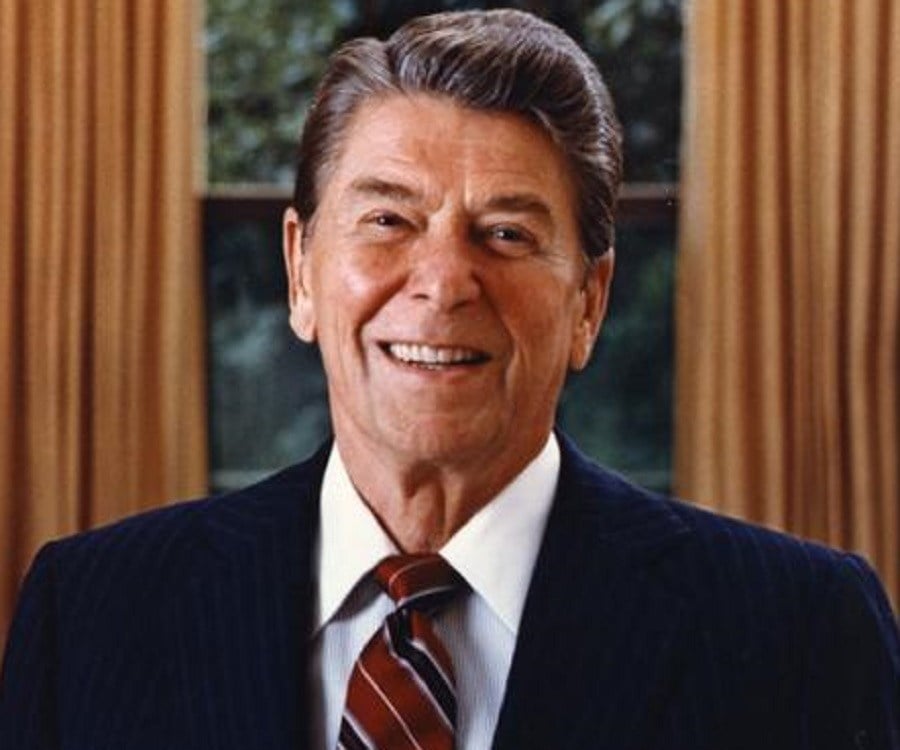
Nevertheless, age eventually catches up with all of us no matter how fast we run. For President Reagan the early signs of Alzheimer were already there as early as 1984 according to Reagan's son, Ron. By  the time Reagan was almost completed his second and final term, the symptoms were becoming harder and harder to overlook. However, his official diagnosis didn't come until October 1994, five years after leaving office. 

Well, that brings us to Donald Trump and Joe Biden. We'll start with "the Donald". At the time Trump was 70 years old when he was inaugurated in 2017. That made him the then oldest president ever elected. However, if age is just a number marking our trips around the sun, then what factor should we be most concerned with?  

Being President isn't for the faint of heart or the couch potato. The Presidency is a highly demanding around-the-clock job.  For the next four years you're never "off the clock". As proof, we've all seen the before and after pictures of presidents. Most look like they've aged decades instead of just 4 or 8 years no matter how young they looked going in.

So, perhaps the most critical factors are their overall health, physical stamina, and mental acuity.  There's no question that Trump is a physically fit individual. He does things that would exhaust someone half his age, and his physicals bear that out.  At 6'3" and roughly 244 pounds, Trump has been proclaimed by independent doctors to be healthy (though he could stand to lose a few pounds). His blood pressure runs around  121/79 with a heart rate of 63.

In addition, in preparation for this race, Trump clams to have completed five cognitive skills tests (as he mentioned in his debate with Biden) and successfully passed all of them. What's not disputed is that the former president aced the Montreal Cognitive Assessment, which is one of the most accurate cognitive tests available. When voters were polled  47% generally tended to agree that Trump was mentally pretty sharp (compared to only 28% for Biden), which brings us to Biden and his health.

Long before the June 27th debate between Trump and Biden there's been a lot of discussion about Biden's mental  and physical health. Countless videos showed him confused or forgetting words or names, a blank stare, getting angry over nothing, getting lost, or talking to empty space. Physically, he often walks stiff like he had trouble with his movement or balance, stumbling, or simply fumbling with stuff. This happens to all of us at some point, but it's become almost expected for the president, which is not normal.

Foreign leaders have said that Biden isn't the man they had known in the past. Many have commented that he seemed dazed, having difficulty concentrating, making decisions, getting lost, and so forth. Our enemies, and even some of our friends, have come to see Biden as feeble and weak. That  in turn makes America seem vulnerable. To our friends, it gives them pause as to whether we are still dependable. 

President Biden underwent his annual physical  in February 2024 and was pronounced as "fit to serve" and "no new concerns" by his doctors  According to a White House press release, Biden has never officially been diagnosed with Alzheimer, dementia, stroke, or Parkinson's Disease and that Biden had met with three neurologists on three separate occasions.

Nevertheless, it should be pointed out that Biden has repeatedly declined to take any cognitive tests, which understandably has failed to reassure party leadership or corporate donors, especially based on what they've been seeing and hearing.  If, in fact, Biden had taken some sort of acuity test, the White House isn't telling anyone, including Democratic leadership.

Perhaps too this is all a game of semantics. Biden hasn't been "diagnosed" with any neurological disorders, but he also hasn't taken any tests to confirm it, which appears to imply the "diagnosis" was based solely on observation and not on empirical evidence.   Therefore, the statement "fit to serve" was more likely intended to simply ease public and party concerns  and reinforce confidence in Biden's bid for reelection than an actual statement of fact.

But any speculation is now all moot. Biden succumbed to mounting pressure and withdrew from the race on July 21th. The last poll conducted 48 hours before his announcement showed that he was trailing in six key swing states and that support for his continued campaign had all but collapsed in Virginia and Minnesota.    

According to a Pew Report released just before Biden's announcement, almost 75% of the respondents felt that Biden wasn't mentally fit compared to Trump's positive 58%.  Only 24% said they would describe Biden as "energetic".  Just slightly under one third approved of his job performance (which has never been on the plus side),  This makes his job approval the lowest of any president seeking reelection.  

As a side note, on  issues such as honesty and compassion, Biden outperformed "the Donald". 48% of those polled said Biden was more honest than Trump who polled just 36%. When it came to compassion for the masses, Biden squeaked by with 49% compared to Trump's 44%.

However, the number which stands out the most was that 71% of Biden supporters no longer supported his reelection bid.  Only 23% wanted him to remain on the ballot. For a reelection campaign, that's catastrophic. On the other side of the aisle, an April poll showed that 35% of Republicans and conservatives wanted to see Trump replaced on the ballot. That number dropped to 26% as of July with 72% happy the way things are.

With Biden out, Trump will face off against the 59 year old Vice President Kamala Harris (the same age as Trump's running mate, J.D. Vance). Ms. Harris has the dubious designation of having the lowest consecutive approval rating of any Vice President of any party at any time in U.S. history. As of July 23rd, Harris has a 51.4% disapproval rate among Americans in general.

Key to her election bid is her approval rating among the nation's largest voting bloc---Independent voters--- and especially among Independent women where she is currently polling just 29% (and about the same among men).  Mainstream news outlets have been on full court press to try and make Harris more appealing to voters which, at this time, appears the equivalent of using a bucket to bail out the Titanic.

Age may very well be "just a number", but whether is bestows wisdom and maturity is entirely a different matter. However, with four months to go until the November election, it appears that experience along with some guile and cunning are beating out youth and lukewarm enthusiasm.


 If you enjoyed the article, please consider passing it along to others and don't forget to subscribe. It's free! Lastly please be sure to "like" us on whatever platform you use to read anotheropinionblog.com. It helps beat the algorithms and keeps our articles in circulation. Thank you!


Pew: Joe Biden,Public Opinion, and His Withdrawal From the 2024 Race


Gallup: Biden's Approval Hit New Low Before Exit From Race


Biden quitrace for reelection after agonizing over poll data, sources say


Fivethirtyeight:Do American approve or disapprove of Kamala Harris


What the White House and the president doctor's say about the president's health


Mental AcuityQuestions Catch Up With Trump


List ofpresidents of the United States by age


Most U.S.presidents have been in their 50s at inauguration


The 8 OldestU.S. Presidents in History


ElectoralHistory of Joe Biden


Saturday, October 02, 2021

Our Healthcare Rubicon: To Get Vaccinated or Not

We seem to have reached a line in the sand; a national healthcare "Rubicon" if you will.  Since the onset of the COVID-19 virus and the development of vaccines, there has been those who've declined, for one reason or another, to get vaccinated, especially with a average recovery rate of between 97% and 99.75%. That's fine. It's their choice. We are, after all, ultimately responsible for our own health, be it good or bad.

Hundreds of thousands of individuals routinely include a "DSR" (do not resituate) as part of their Living Will. By the same token, tens of thousands of people refuse to accept blood transfusions or other medical treatment as part of their religious or philosophical beliefs. At the same time, countless others routinely decline to get a flu, tetanus, hepatitis, or shingles vaccination.

Our concept of individual sovereignty as defined by the Constitution and Bill of Rights, not to mention the precepts of Western democracy itself, gives us a "God-given" right to make decisions for ourselves. 

As bad as the swine or chicken flu was, or given the deadly seriousness of the AIDs epidemic, there was no massive call for vaccinations or treatment. It was left up to the individual. Why is the government all but pounding on our doors, needles in hand, prepared to wrestle us to the ground if need be and force us to get vaccinated?

The CDC recently concluded a study of around 400 Kentucky patients and reported that "herd immunity" alone is not effective enough by itself (yet it was effective with other viruses). Therefore, regardless of one's health, age, or other risk factors, vaccinations should be made mandatory.

I remember as a child that when some kid came down with mumps, measles, chicken pox or whatever, the parents would get all the kids together so that everyone got exposed and got over it together. This was "herd immunity" and it's been used everywhere. It's the idea that eventually enough people would become exposed causing a general group immunity to a particular virus.

Those opposed to the vaccinations believe the same thing applies to COVID-19; that if exposed, a individual immunity would develop, and if enough people are exposed, then a group or herd immunity would develop. At the same time, they accept that there are those who are at a higher risk, and should get vaccinated, which would either artificially create a immunity to the virus, or at the very least, reduce the severity of the virus.

This was the approach used with the deadly 1919 "Spanish Flu" which killed about 676,000 Americans and about 500 million worldwide. About 42,770,00 Americans have reportedly died of COVID and roughly 5 million worldwide. However, based on the latest study by the CDC, that's not how they see it.

To date, we've seen some public and private businesses, hospitals, and healthcare associations require that their employees either get vaccinated or face possible sanctions, up to and including termination. Given the current situation we're facing in the business sector, and especially in healthcare, that could leave us critically shorthanded. What should we do?

If you're dealing with "at risk" individuals on a regular basis, such as the elderly or those with suppressed immune systems, wouldn't you want to go that extra step to insure they are protected as best as possible? Of course, to do that, it might mean getting that vaccination or take that pill even though you don't want to for whatever reason, but need to do in order to protect those you choose to in your chosen profession. This doesn't just include those in healthcare, including working in nursing homes and convalescent centers, but also EMS, firefighters, and police. 

The "Rubicon" I mentioned at the outset, isn't so much about whether you should or shouldn't get the vaccinations, but rather, do you have a moral obligation to do so? The argument today seems to be centered on whether they government (or your employer) has a "right" to order you to get the vaccination; that is, impede on your individual sovereignty.  

As with so many things these days, it's not all black and white. On the one hand, does the government have a right to force you to get an injection? You, as a human being, have the right to do with your body as you see fit so long as no one else is harmed or negatively affected or do you?

Shouldn't the government just advise you? They can (and should) provide you with the unvarnished facts of the situation, including the pros and cons of getting or not getting this or that vaccination (which, thus far, they've done a pretty poor job of doing) and then step back and allow you---the sovereign individual---to make your own decision and accept whatever consequences may result.

 Well, not exactly. There are two precedents to consider.  In 1905, the US Supreme Court ruled that a state government could force an individual to receive a vaccination in the event of a national emergency or be fined (Jacobson vs. Massachusetts).  In a second decision, the Supreme Court ruled in 1922 (Zucht vs. King) what unvaccinated students could be excluded from both public or private schools. 

However, both decisions were very narrowly defined and related to specific applications. Given the powers still inherent to the states, they can prohibit mandates to vaccinations.  As of August, 14 States have enacted legislation which prohibited mandatory vaccinations by employers, schools, or which required so-called "vaccination passports".  Federally, it's a bit different.

Currently, there are no specific federal laws which require federal employees or contractors to be vaccinated, nor are there any laws which can require citizens in general to be vaccinated, with a few exceptions such as immigrants seeking permanent residency, and the military, but should that include prisoners? Exemptions for medical or religious reasons are permitted as covered under the 1964 Title VII Civil Rights Act and the Americans with Disabilities Act (regular testing and mandatory masks can, however, still be required).

So, that means the states are out of the proverbial woods and can do as they want right? Well, again, not exactly. The federal government still has one ace up its sleeve. While the federal government doesn't (as of yet) have the legal authority to require vaccination mandates, which currently rests with the states, under Constitution's "Spending Clause", that could change.

The Spending Clause basically controls the money that states use to underwrite or supplement various programs. It's been suggested that Congress use the Spending Clause to "urge" states to enact some form of mandate on their own. Given that the majority of states couldn't financially survive without federal money, that's a pretty good incentive, while making it look like Washington's hands are clean.

What about employers? Can they mandate employees get vaccinated?  When it comes to corporations, things get a bit more complicated. The first thing we have to remember is that corporations are not democracies. The "Bill of Rights" doesn't apply there. Secondly, there's no single clear cut policy. Some are requiring all employees to be vaccinated, while others are requiring either proof of vaccination or to submit to weekly testing and even requiring masks.  

However, most employers, especially in industries with a current shortage of employees, are taking a "wait and see" attitude, partly to avoid any possible legal action by employees or unions, and to avoid a further loss of workers.

According, some employers are taking the "blanket approach" and requiring all employees, regardless of vaccination status, to wear masks while others are leaving it up to the employees. Either way, the employer must ensure that they are compliant with all state and federal laws (most notably Title VII and the Americans with Disabilities Act). Thus, the majority of employers are simply mirroring whatever the federal government does at present.

So, where does this leave us? For the average employer, it's mostly a matter of "monkey see monkey do" and mimic the federal government. For others, especially in healthcare, law enforcement and firefighting, vaccination is either strongly being encouraged or mandatory. As for the average person, states and local governments are taking a two prong approach.

The CDC is going all out to encourage citizens to get vaccinated, especially if they're high risk. Secondly, while not making masks mandatory, they are strongly urging mask usage, even if the individual was previously vaccinated in some instances. At the same time, while they are informing citizens of the dangers of exposure, they are leaving the final choice (and consequences) to the individual.

America is a unique country. Individually is as much a "national trait" as taking tea time or afternoon beer is to the English and Germans. Americans, in general, also have never trusted the government. In fact, this is a country born out of that distrust. Our trust of Congress, as well as the presidency and judicial system, along with local government, are at dismal levels, which doesn't help the situation. We don't even trust school systems, the news media, or even religious institutions anymore.

In the end, Americans will respond as we always have. Governments can make recommendations, or try to bully or scare us. They can try to circumvent existing laws by making it difficult on us (such as masks or weekly testing), but we will ultimately do what we want. Some believe that "herd immunity" will eventually save us while others believe that it's only through compulsory mass inoculation that we'll survive.

Personally, I believe it's largely an individual choice. Unless you're around those with compromised immune systems, the option of vaccination or no vaccination should be yours. By the same token, you and you alone are solely responsible for the consequences. There are folks who thought they had good immune systems and ended up in the hospital on a respirator...or the morgue.  Others, however, barely got a sniffle.

 Nevertheless, I don't believe that our right to chose, as "American" as that is, should supersede putting someone else at risk. We can be as individualistic as we like, but we don't have the right to put someone else's life at risk.  I believe that our humanity to others must come first.

So, you play your cards. You place your bets, and you take your chances. My advice is, as always, stay as informed as possible, be careful, and make your own decisions, but don't put your well being ahead of those who might not be so lucky if possible. Want to know more? Check out the references below.


Current constitutional issues related to vaccine mandates


Can Employers Mandate a Vaccine Authorized for EmergencyUse?


How the COVID Pandemic May End: Lessons From The 1918 Flu


COVID has killed about as many Americans as the 1918-1919flu


Coronavirus Recovery